Arquivo da tag: Violência

Educational Games to Train Middle Schoolers’ Attention, Empathy (Science Daily)

ScienceDaily (May 21, 2012) — Two years ago, at a meeting on science and education, Richard Davidson challenged video game manufacturers to develop games that emphasize kindness and compassion instead of violence and aggression.

With a grant from the Bill & Melinda Gates Foundation, the University of Wisconsin-Madison professor is now answering his own call. With Kurt Squire, an associate professor in the School of Education and director of the Games Learning Society Initiative, Davidson received a $1.39 million grant this spring to design and rigorously test two educational games to help eighth graders develop beneficial social and emotional skills — empathy, cooperation, mental focus, and self-regulation.

“By the time they reach the eighth grade, virtually every middle-class child in the Western world is playing smartphone apps, video games, computer games,” says Davidson, the William James and Vilas Research Professor of Psychology and Psychiatry at UW-Madison. “Our hope is that we can use some of that time for constructive purposes and take advantage of the natural inclination of children of that age to want to spend time with this kind of technology.”

The project grew from the intersection of Davidson’s research on the brain bases of emotion, Squire’s expertise in educational game design, and the Gates Foundation’s interest in preparing U.S. students for college readiness-possessing the skills and knowledge to go on to post-secondary education without the need for remediation.

“Skills of mindfulness and kindness are very important for college readiness,” Davidson explains. “Mindfulness, because it cultivates the capacity to regulate attention, which is the building block for all kinds of learning; and kindness, because the ability to cooperate is important for everything that has to do with success in life, team-building, leadership, and so forth.”

He adds that social, emotional, and interpersonal factors influence how students use and apply their cognitive abilities.

Building on research from the Center for Investigating Healthy Minds at UW-Madison’s Waisman Center, the initial stage of the project will focus on designing prototypes of two games. The first game will focus on improving attention and mental focus, likely through breath awareness.

“Breathing has two important characteristics. One is that it’s very boring, so if you’re able to attend to that, you can attend to most other things,” Davidson says. “The second is that we’re always breathing as long as we’re alive, and so it’s an internal cue that we can learn to come back to. This is something a child can carry with him or her all the time.”

The second game will focus on social behaviors such as kindness, compassion, and altruism. One approach may be to help students detect and interpret emotions in others by reading non-verbal cues such as facial expressions, tone of voice, and body posture.

“We’ll use insights gleaned from our neuroscience research to design the games and will look at changes in the brain during the performance of these games to see how the brain is actually affected by them,” says Davidson. “Direct feedback from monitoring the brain while students are playing the games will help us iteratively adjust the game design as this work goes forward.”

Their analyses will include neural imaging and behavioral testing before, during, and after students play the games, as well as looking at general academic performance.

The results will help the researchers determine how the games impact students and whether educational games are a useful medium for teaching these behaviors and skills, as well as evaluate whether certain groups of kids benefit more than others.

“Our hope is that we can begin to address these questions with the use of digital games in a way that can be very easily scaled and, if we are successful, to potentially reach an extraordinarily large number of youth,” says Davidson.

Wrongful Convictions Can Be Reduced Through Science, but Tradeoffs Exist (Science Daily)

ScienceDaily (May 22, 2012) — Many of the wrongful convictions identified in a report this week hinged on a misidentified culprit — and a new report in a top journal on psychological science reveals the paradox of reforms in eyewitness identification procedure. In our efforts to make sure that good guys don’t get locked up, we could let more bad guys go.

In the May issue of Perspectives on Psychological Science, a journal of the Association for Psychological Science, leading scholars in psychology and the law explore and debate various aspects of eyewitness identification procedures, providing a scientific foundation for this important social issue.

In recent years, researchers and policymakers have called for specific reforms to eyewitness identification procedures that would help to reduce the rate of false identification. These reforms affect various aspects of identification procedure, including how lineups are constructed, what witnesses are told prior to the lineup, and how police officers should behave during the procedure.

Such procedural reforms are often viewed as having ‘no cost’ — they reduce the false identification rate without affecting the correct identification rate. But psychological scientist Steven Clark (University of California, Riverside) argues that ‘no cost’ view may not actually be true. After extensive review of the existing data, Clark points out the paradoxical tradeoffs to reforms in eyewitness identification procedure. Existing data suggest that when we choose to enact reforms that are designed to reduce false identifications, we may also reduce the number of correct identifications at the same time.

But this tradeoff does not tell the whole story, say Gary Wells (Iowa State University), Nancy Steblay (Augsburg College), and Jennifer Dysart (John Jay College of Criminal Justice). While reform procedures may reduce the number of ‘hits,’ they do so by minimizing the influence of suggestive and coercive practices, such as biased instructions and cues from lineup administrators. Wells and his co-authors argue that the so-called ‘lost’ hits aren’t actually relevant, because hits that result from suggestive practices are not legitimate identifications. Eryn Newman from Victoria University of Wellington and Elizabeth Loftus from the University of California, Irvine agree, arguing that eyewitness identification evidence should be based solely on the independent memory of the witness, not on the results of suggestive or coercive procedures.

There is, however, a scientifically valid way to compare witness-identification procedures, say John Wixted and Laura Mickes, both of the University of California, San Diego. If we identify the procedures that reliably differentiate between innocent and guilty suspects over time and across different situations, we will be able to determine which techniques are diagnostically superior to others.

Until we have such comprehensive data, the best way to protect innocent defendants, says Larry Laudan of the University of Texas, is by clearly communicating the fact that eyewitness identifications, regardless of their format, are fallible. According to Laudan, we now have enough empirical data to be able to inform jurors about the error profiles of various eyewitness identification procedures. Sharing this information, he argues, is more important than trying to arrive at “the one unique and definitive format for conducting identifications.”

In the end, Clark points out that the goal of his article is not to argue for or against any particular witness identification procedure. Rather, he hopes to create strong links between social science data and public policy. “To the extent that social science research has a useful role in shaping policy decisions,” says Clark, “social scientists must do for policymakers what they do best and what policymakers cannot do for themselves: conduct careful studies, and provide a clear and complete analysis of the empirical data.”

  • Steven E. Clark et al. “Costs and Benefits of Eyewitness Identification Reform: Psychological Science and Public Policy,” Perspectives on Psychological Science, May 2012
  • Nancy K. Steblay et al., “Eyewitness Identification Reforms: Are Suggestiveness-Induced Hits and Guesses True Hits?”Perspectives on Psychological Science, May 2012
  • Elizabeth F. Loftus et al., “Clarkian Logic on Trial,”Perspectives on Psychological Science, May 2012
  • John T. Wixted et al., “The Field of Eyewitness Memory Should Abandon Probative Value and Embrace Receiver Operating Characteristic Analysis,” Perspectives on Psychological Science, May 2012
  • Larry Laudan et al. “Eyewitness Identifications: One More Lesson on the Costs of Excluding Relevant Evidence,”Perspectives on Psychological Science, May 2012

Ellen Cantarow: “… bizarre weather that seemed to be sending a meteorological message” (Tom Dispatch)

Tomgram: Ellen Cantarow, The New Eco-Devastation in Rural America

Posted by Ellen Cantarow at 5:25pm, May 20, 2012.

When workers drilling tunnels at Gauley Bridge, West Virginia, began to die, Union Carbide had an answer.  It hadn’t been taking adequate precautions against the inhalation of silica dust, a known danger to workers since the days of ancient Greece.  Instead, in many cases, a company doctor would simply tell the families of the workers that they had died of “tunnelitis,” and a local undertaker would be paid $50 to dispose of each corpse.  A few years later, in 1935, a congressional subcommittee discovered that approximately 700 workers had perished while drilling through Hawk’s Nest Mountain, many of them buried in unmarked graves at the side of the road just outside the tunnel.  The subcommittee concluded that Union Carbide’s project had been accomplished through a “grave and inhuman disregard of all considerations for the health, lives and future of the employees.”

Despite the “Hawk’s Nest Incident” and thousands of Depression-era lawsuits against foundries, mines, and construction companies, silicosis never disappeared.  In the decades since, asTomDispatch authors David Rosner and Jerry Markowitz have repeatedly demonstrated, industry worked tirelessly to label silicosis a “disease of the past,” even while ensuring that it would continue to be a disease of the present.  By the late 1990s, the Columbia University researchers found that from New York to California, from Texas all the way back to West Virginia, millions of workers in foundries, shipyards, mines, and oil refineries, among other industries, were endangered by silica dust.

Today, there’s a new silicosis scare on the horizon and a new eco-nightmare brewing in the far corners of rural America.  Like the Hawk’s Nest disaster it has flown under the radar — until now.

Once upon a time, mining companies tore open hills or bored through or chopped off mountain tops to get at vital resources inside.  They were intent on creating quicker paths through nature’sobstacles, or (as at Gauley Bridge) diverting the flow of mighty rivers. Today, they’re doing it merely to find the raw materials — so-called frac sand — to use in an assault on land several states away.  Multinational corporations are razing ancient hills of sandstone in the Midwest and shipping that silica off to other pastoral settings around the United States.  There, America’s prehistoric patrimony is being used to devastating effect to fracture shale deposits deep within the earth — they call it “hydraulic fracturing” — and causing all manner of environmental havoc.  Not everyone, however, is keen on this “sand rush” and coalitions of small-town farmers, environmentalists, and public health advocates are now beginning to stand firm against the big energy corporations running sand-mining operations in their communities.

Ground zero in this frac-fight is the rural Wisconsin towns to which TomDispatch’s rovingenvironmental reporter Ellen Cantarow traveled this spring to get the biggest domestic environmental story that nobody knows about.  Walking the fields of family farms under siege and talking to the men and women resisting the corporations, Cantarow offers up a shocking report of vital interest.  There’s a battle raging for America’s geological past and ecological future — our fresh food and clean water supplies may hinge on who wins it. Nick Turse

How Rural America Got Fracked

The Environmental Nightmare You Know Nothing About

By Ellen Cantarow

If the world can be seen in a grain of sand, watch out.  As Wisconsinites are learning, there’s money (and misery) in sand — and if you’ve got the right kind, an oil company may soon be at your doorstep.

March in Wisconsin used to mean snow on the ground, temperatures so cold that farmers worried about their cows freezing to death. But as I traveled around rural townships and villages in early March to interview people about frac-sand mining, a little-known cousin of hydraulic fracturing or “fracking,” daytime temperatures soared to nearly 80 degrees — bizarre weather that seemed to be sending a meteorological message.

In this troubling spring, Wisconsin’s prairies and farmland fanned out to undulating hills that cradled the land and its people. Within their embrace, the rackety calls of geese echoed from ice-free ponds, bald eagles wheeled in the sky, and deer leaped in the brush. And for the first time in my life, I heard the thrilling warble of sandhill cranes.

Yet this peaceful rural landscape is swiftly becoming part of a vast assembly line in the corporate race for the last fossil fuels on the planet. The target: the sand in the land of the cranes.

Five hundred million years ago, an ocean surged here, shaping a unique wealth of hills and bluffs that, under mantles of greenery and trees, are sandstone. That sandstone contains a particularly pure form of crystalline silica.  Its grains, perfectly rounded, are strong enough to resist the extreme pressures of the technology called hydraulic fracturing, which pumps vast quantities of that sand, as well as water and chemicals, into ancient shale formations to force out methane and other forms of “natural gas.”

That sand, which props open fractures in the shale, has to come from somewhere.  Without it, the fracking industry would grind to a halt. So big multinational corporations are descending on this bucolic region to cart off its prehistoric sand, which will later be forcefully injected into the earth elsewhere across the country to produce more natural gas.  Geology that has taken millions of years to form is now being transformed into part of a system, a machine, helping to drive global climate change.

“The valleys will be filled… the mountains and hills made level”

Boom times for hydraulic fracturing began in 2008 when new horizontal-drilling methods transformed an industry formerly dependent on strictly vertical boring. Frac-sand mining took off in tandem with this development.

“It’s huge,” said a U.S. Geological Survey mineral commodity specialist in 2009. “I’ve never seen anything like it, the growth. It makes my head spin.” That year, from all U.S. sources, frac-sand producers used or sold over 6.5 million metric tons of sand — about what the Great Pyramid of Giza weighs.  Last month, Wisconsin’s Department of Natural Resources (DNR) Senior Manager and Special Projects Coordinator Tom Woletz said corporations were hauling at least 15 million metric tons a year from the state’s hills.

By July 2011, between 22 and 36 frac-sand facilities in Wisconsin were either operating or approved. Seven months later, said Woletz, there were over 60 mines and 45 processing (refinement) plants in operation. “By the time your article appears, these figures will be obsolete,” claims Pat Popple, who in 2008 founded the first group to oppose frac-sand mining, Concerned Chippewa Citizens (now part of The Save the Hills Alliance).

Jerry Lausted, a retired teacher and also a farmer, showed me the tawny ridges of sand that delineated a strip mine near the town of Menomonie where he lives. “If we were looking from the air,” he added, “you’d see ponds in the bottom of the mine where they dump the industrial waste water. If you scan to the left, you’ll see the hills that are going to disappear.”

Those hills are gigantic sponges, absorbing water, filtering it, and providing the region’s aquifer with the purest water imaginable. According to Lausted, sand mining takes its toll on “air quality, water quality and quantity. Recreational aspects of the community are damaged. Property values [are lowered.] But the big thing is, you’re removing the hills that you can’t replace.  They’re a huge water manufacturing factory that Mother Nature gave us, and they’re gone.”

It’s impossible to grasp the scope of the devastation from the road, but aerialvideos and photographs reveal vast, bleak sandy wastelands punctuated with waste ponds and industrial installations where Wisconsin hills once stood.

When corporations apply to counties for mining permits, they must file “reclamation” plans. But Larry Schneider, a retired metallurgist and industrial consultant with a specialized knowledge of mining, calls the reclamation process “an absolute farce.”

Reclamation projects by mining corporations since the 1970s may have made mined areas “look a little less than an absolute wasteland,” he observes. “But did they reintroduce the biodiversity? Did they reintroduce the beauty and the ecology? No.”

Studies bear out his verdict. “Every year,” wrote Mrinal Ghose in the Journal of Scientific and Industrial Research, “large areas are continually becoming unfertile in spite of efforts to grow vegetation on the degraded mined land.”

Awash in promises of corporate jobs and easy money, those who lease and sell their land just shrug. “The landscape is gonna change when it’s all said and done,” says dairy farmer Bobby Schindler, who in 2008 leased his land in Chippewa County to a frac-sand company called Canadian Sand and Proppant. (EOG, the former Enron, has since taken over the lease.) “Instead of being a hill it’s gonna be a valley, but all seeded down, and you’d never know there’s a mine there unless you were familiar with the area.”

Of the mining he adds, “It’s really put a boost to the area. It’s impressive the amount of money that’s exchanging hands.” Eighty-four-year-old Letha Webster, who sold her land 100 miles south of Schindler’s to another mining corporation, Unimin, says that leaving her home of 56 years is “just the price of progress.”

Jamie and Kevin Gregar — both 30-something native Wisconsinites and military veterans — lived in a trailer and saved their money so that they could settle down in a pastoral paradise once Kevin returned from Iraq. In January 2011, they found a dream home near tiny Tunnel City. (The village takes its name from a nearby rail tunnel). “It’s just gorgeous — the hills, the trees, the woodland, the animals,” says Jamie. “It’s perfect.”

Five months after they moved in, she learned that neighbors had leased their land to “a sand mine” company. “What’s a sand mine?” she asked.

Less than a year later, they know all too well.  The Gregars’ land is now surrounded on three sides by an unsightly panorama of mining preparations. Unimin is uprooting trees, gouging out topsoil, and tearing down the nearby hills. “It looks like a disaster zone, like a bomb went off,” Jamie tells me.

When I mention her service to her country, her voice breaks. “I am devastated. We’ve done everything right. We’ve done everything we were supposed to. We just wanted to raise our family in a good location and have good neighbors and to have it taken away from us for something we don’t support…” Her voice trails off in tears.

For Unimin, the village of Tunnel City in Greenfield township was a perfect target. Not only did the land contain the coveted crystalline silica; it was close to a rail spur. No need for the hundreds of diesel trucks that other corporations use to haul sand from mine sites to processing plants. No need, either, for transport from processing plants to rail junctions where hundreds of trains haul frac-sand by the millions of tons each year to fracture other once-rural landscapes. Here, instead, the entire assembly line operates in one industrial zone.

There was also no need for jumping the hurdles zoning laws sometimes erect. Like many Wisconsin towns where a culture of diehard individualism sees zoning as an assault on personal freedom, Greenfield and all its municipalities, including Tunnel City, are unzoned. This allowed the corporation to make deals with individual landowners. For the 8.5 acres where Letha Webster and her husband Gene lived for 56 years, assessed in 2010 at $147,500, Unimin paid $330,000. Overall, between late May and July 2011, it paid $5.3 million for 436 acres with a market value of about $1.1 million.

There was no time for public education about the potential negative possibilities of frac-sand mining: the destruction of the hills, the decline in property values, the danger of silicosis (once considered a strictly occupational lung disease) from blowing silica dust, contamination of ground water from the chemicals used in the processing plants, the blaze of lights all night long, noise from hundreds of train cars, houses shaken by blasting. Ron Koshoshek, a leading environmentalist who works with Wisconsin’s powerful Towns Association to educate townships about the industry, says that “frac-sand mining will virtually end all residential development in rural townships.” The result will be “a large-scale net loss of tax dollars to towns, increasing taxes for those who remain.”

Town-Busting Tactics

Frac-sand corporations count on a combination of naïveté, trust, and incomprehension in rural hamlets that previously dealt with companies no larger than Wisconsin’s local sand and gravel industries. Before 2008, town boards had never handled anything beyond road maintenance and other basic municipal issues.  Today, multinational corporations use their considerable resources to steamroll local councils and win sweetheart deals.  That’s how the residents of Tunnel City got taken to the cleaners.

On July 6, 2011, a Unimin representative ran the first public forum about frac-sand mining in the village.  Other heavily attended and often heated community meetings followed, but given the cascades of cash, the town board chairman’s failure to take a stand against the mining corporation, and Unimin’s aggressiveness, tiny Tunnel City was a David without a slingshot.

Local citizens did manage to get the corporation to agree to give the town $250,000 for the first two million tons mined annually, $50,000 more than its original offer. In exchange, the township agreed that any ordinance it might pass in the future to restrict mining wouldn’t apply to Unimin. Multiply the two million tons of frac-sand tonnage Unimin expects to mine annually starting in 2013 by the $300 a ton the industry makes and you’ll find that the township only gets .0004% of what the company will gross.

For the Gregars, it’s been a nightmare.  Unimin has refused five times to buy their land and no one else wants to live near a sand mine. What weighs most heavily on the couple is the possibility that their children will get silicosis from long-term exposure to dust from the mine sites. “We don’t want our kids to be lab rats for frac-sand mining companies,” says Jamie.

Drew Bradley, Unimin’s senior vice president of operations, waves such fears aside. “I think [citizens] are blowing it out of proportion,” he told a local publication. “There are plenty of silica mines sited close to communities. There have been no concerns exposed there.”

That’s cold comfort to the Gregars. Crystalline silica is a known carcinogen and the cause of silicosis, an irreversible, incurable disease. None of the very few rules applied to sand mining by the state’s Department of Natural Resources (DNR) limit how much silica gets into the air outside of mines. That’s the main concern of those living near the facilities.

So in November 2011, Jamie Gregar and ten other citizens sent a 35-page petitionto the DNR. The petitioners asked the agency to declare respirable crystalline silica a hazardous substance and to monitor it, using a public health protection level set by California’s Office of Environmental Health Hazard Assessment. The petition relies on studies, including one by the DNR itself, which acknowledge the risk of airborne silica from frac-sand mines for those who live nearby.

The DNR denied the petition, claiming among other things that — contrary to its own study’s findings — current standards are adequate. One of the petition’s signatories, Ron Koshoshek, wasn’t surprised. For 16 years he was a member of, and for nine years chaired, Wisconsin’s Public Intervenor Citizens Advisory Committee.  Created in 1967, its role was to intercede on behalf of the environment, should tensions grow between the DNR’s two roles: environmental protector and corporate licensor. “The DNR,” he says, “is now a permitting agency for development and exploitation of resources.”

In 2010, Cathy Stepp, a confirmed anti-environmentalist who had previously railedagainst the DNR, belittling it as “anti-development, anti-transportation, and pro-garter snakes,” was appointed to head the agency by now-embattled Governor Scott Walker who explained: “I wanted someone with a chamber-of-commerce mentality.”

As for Jamie Gregar, her dreams have been dashed and she’s determined to leave her home. “At this point,” she says, “I don’t think there’s a price we wouldn’t accept.”

Frac-Sand vs. Food

Brian Norberg and his family in Prairie Farm, 137 miles northwest of Tunnel City, paid the ultimate price: he died while trying to mobilize the community against Procore, a subsidiary of the multinational oil and gas corporation Sanjel. The American flag that flies in front of the Norbergs’ house flanks a placard with a large, golden NORBERG, over which pheasants fly against a blue sky.  It’s meant to represent the 1,500 acres the family has farmed for a century.

“When you start talking about industrial mining, to us, you’re violating the land,” Brian’s widow, Lisa, told me one March afternoon over lunch.  She and other members of the family, as well as a friend, had gathered to describe Prairie Farm’s battle with the frac-sanders. “The family has had a really hard time accepting the fact that what we consider a beautiful way to live could be destroyed by big industry.”

Their fight against Procore started in April 2011: Sandy, a lifelong friend and neighbor, arrived with sand samples drillers had excavated from her land, and began enthusiastically describing the benefits of frac-sand mining. “Brian listened for a few minutes,” Lisa recalls. “Then he told her [that]… she and her sand vials could get the heck — that’s a much nicer word than what he used  — off the farm.  Sandy was hoping we would also be excited about jumping on the bandwagon. Brian informed her that our land would be used for the purpose God intended, farming.”

Brian quickly enlisted family and neighbors in an organizing effort against the company. In June 2011, Procore filed a reclamation plan — the first step in the permitting process — with the county’s land and water conservation department. Brian rushed to the county office to request a public hearing, but returned dejected and depressed. “He felt completely defeated that he could not protect the community from them moving in and destroying our lives,” recalls Lisa.

He died of a heart attack less than a day later at the age of 52. The family is convinced his death was a result of the stress caused by the conflict. That stress is certainly all too real.  The frac-sand companies, says family friend Donna Goodlaxson, echoing many others I interviewed for this story, “go from community to community. And one of the things they try to do is pit people in the community against each other.”

Instead of backing off, the Norbergs and other Prairie Farm residents continued Brian’s efforts. At an August 2011 public hearing, the town’s residents directly addressed Procore’s representatives. “What people had to say there was so powerful,” Goodlaxson remembers. “Those guys were blown out of their chairs. They weren’t prepared for us.”

“I think people insinuate that we’re little farmers in a little community and everyone’s an ignorant buffoon,” added Sue Glaser, domestic partner of Brian’s brother Wayne. “They found out in a real short time there was a lot of education behind this.”

“About 80% of the neighborhood was not happy about the potential change to our area,” Lisa adds. “But very few of us knew anything about this industry at [that] time.” To that end, Wisconsin’s Farmers’ Union and its Towns Association organized a day-long conference in December 2011 to help people “deal with this new industry.”

Meanwhile, other towns, alarmed by the explosion of frac-sand mining, were beginning to pass licensing ordinances to regulate the industry. In Wisconsin, counties can challenge zoning but not licensing ordinances, which fall under town police powers.  These, according to Wisconsin law, cannot be overruled by counties or the state. Becky Glass, a Prairie Farm resident and an organizer with Labor Network for Sustainability, calls Wisconsin’s town police powers “the strongest tools towns have to fight or regulate frac-sand mining.” Consider them so many slingshots employed against the corporate Goliaths.

In April 2012, Prairie Farm’s three-man board voted 2 to 1 to pass such an ordinance to regulate any future mining effort in the town. No, such moves won’t stop frac-sand mining in Wisconsin, but they may at least mitigate its harm. Procore finally pulled out because of the resistance, says Glass, adding that the company has since returned with different personnel to try opening a mine near where she lives.

“It takes 1.2 acres per person per year to feed every person in this country,” says Lisa Norberg. “And the little township that I live in, we have 9,000 acres that are for farm use. So if we just close our eyes and bend over and let the mining companies come in, we’ll have thousands of people we can’t feed.”

Food or frac-sand: it’s a decision of vital importance across the country, but one most Americans don’t even realize is being made — largely by multinational corporations and dwindling numbers of yeoman farmers in what some in this country would call “the real America.”  Most of us know nothing about these choices, but if the mining corporations have their way, we will soon enough — when we check out prices at the supermarket or grocery store. We’ll know it too, as global climate change continues to turn Wisconsin winters balmy and supercharge wild weather across the country.

While bucolic landscapes disappear, aquifers are fouled, and countless farms across rural Wisconsin morph into industrial wastelands, Lisa’s sons continue to work the Norberg’s land, just as their father once did. So does Brian’s nephew, 32-year-old Matthew, who took me on a jolting ride across his fields. The next time I’m in town, he assured me, we’ll visit places in the hills where water feeds into springs. Yes, you can drink the water there. It’s still the purest imaginable. Under the circumstances, though, no one knows for how long.

Ellen Cantarow’s work on Israel/Palestine has been widely published for over 30 years. Her long-time concern with climate change has led her to investigate the global depredations of oil and gas corporations atTomDispatch. Many thanks to Wisconsin filmmaker Jim Tittle, whosedocumentary, “The Price of Sand,” will appear in August 2012, and who shared both his interviewees and his time for this article.

Follow TomDispatch on Twitter @TomDispatch and join us on Facebook. 

Copyright 2012 Ellen Cantarow

Soldiers Who Desecrate the Dead See Themselves as Hunters (Science Daily)

ScienceDaily (May 20, 2012) — Modern day soldiers who mutilate enemy corpses or take body-parts as trophies are usually thought to be suffering from the extreme stresses of battle. But, research funded by the Economic and Social Research Council (ESRC) shows that this sort of misconduct has most often been carried out by fighters who viewed the enemy as racially different from themselves and used images of the hunt to describe their actions.

“The roots of this behaviour lie not in individual psychological disorders,” says Professor Simon Harrison who carried out the study, “but in a social history of racism and in military traditions that use hunting metaphors for war. Although this misconduct is very rare, it has persisted in predictable patterns since the European Enlightenment. This was the period when the first ideologies of race began to appear, classifying some human populations as closer to animals than others.”

European and North American soldiers who have mutilated enemy corpses appear to have drawn racial distinctions of this sort between close and distant enemies. They ‘fought’ their close enemies, and bodies remained untouched after death, but they ‘hunted’ their distant enemies and such bodies became the trophies that demonstrate masculine skill.

Almost always, only enemies viewed as belonging to other ‘races’ have been treated in this way. “This is a specifically racialised form of violence,” suggest Professor Harrison, “and could be considered a type of racially-motivated hate crime specific to military personnel in wartime.”

People tend to associate head-hunting and other trophy-taking with ‘primitive’ warfare. They consider wars fought by professional militaries as rational and humane. However, such contrasts are misleading. The study shows that the symbolic associations between hunting and war that can give rise to abnormal behaviour such as trophy-taking in modern military organisations are remarkably close to those in certain indigenous societies where practices such as head-hunting were a recognised part of the culture.

In both cases, mutilation of the enemy dead occurs when enemies are represented as animals or prey. Parts of the corpse are removed like trophies at ‘the kill’. Metaphors of ‘war-as-hunting’ that lie at the root of such behaviour are still strong in some armed forces in Europe and North America — not only in military training but in the media and in soldiers’ own self-perception.

Professor Harrison gives the example of the Second World War and shows that trophy-taking was rare on the European battlefields but was relatively common in the war in the Pacific, where some Allied soldiers kept skulls of Japanese combatants as mementos or made gifts of their remains to friends back home.

The study also gives a more recent comparison: there have been incidents in Afghanistan in which NATO personnel have desecrated the dead bodies of Taliban combatants but there is no evidence of such misconduct occurring in the conflicts of the former Yugoslavia where NATO forces were much less likely to have considered their opponents racially ‘distant’.

But, it would be wrong to suggest that such behaviour amounts to a tradition. These practices are usually not explicitly taught. Indeed, they seem to be quickly forgotten after the end of wars and veterans often remain unaware of the extent to which they occurred.

Furthermore, attitudes towards the trophies themselves change as the enemy ceases to be the enemy. The study shows how human remains kept by Allied soldiers after the Pacific War became unwanted memory objects over time, which ex-servicemen or their families often donated to museums. In some cases, veterans have made great efforts to seek out the families of Japanese soldiers in order to return their remains and to disconnect themselves from a disturbing past.

Professor Harrison concludes that human trophy-taking is evidence of the power of metaphor in structuring and motivating human behaviour. “It will probably occur, in some form or other, whenever war, hunting and masculinity are conceptually linked,” he says. “Prohibition is clearly not enough to prevent it. We need to recognise the dangers of portraying war in terms of hunting imagery.”

Panetta warns climate change having ‘dramatic impact’ on national security (The Hill)

By Carlo Munoz – 05/04/12 11:30 AM ET

Climate change has had a direct effect on national security, Defense Secretary Leon Panetta said this week.

Panetta told an audience at the Environmental Defense Fund that climate change has raised the need for humanitarian assistance and disaster relief, hitting national security in the process.

“The area of climate change has a dramatic impact on national security,” Panetta said. “Rising sea levels, severe droughts, the melting of the polar caps, the more frequent and devastating natural disasters all raise demand for humanitarian assistance and disaster relief.”

Panetta spoke to the Environmental Defense Fund on Tuesday at an event honoring the Defense Department for advancing clean-energy initiatives.
In recent years, the Defense Department and the services have spearheaded a number of alternative-energy initiatives and seemingly embraced environmentally friendly practices on the battlefield.

President Obama effectively put the Pentagon at the forefront of an ambitious alternative energy strategy during the State of the Union speech in January. The Navy and Air Force have already spent billions to integrate biofuels into their fleets of fighter jets and warships.

Marine Corps combat units in Afghanistan are using mobile solar panels to recharge batteries for their night vision and communications in the field. Solar power is also helping to run a number of Marine Corps combat outposts in the country.

But the Pentagon’s adoption of environmentally sensitive practices was driven more by the department’s dire fiscal situation than politics, Panetta said on Tuesday.

DOD spent roughly $15 billion to fuel its fighters, tanks and ships in 2012, the Defense chief said. The Pentagon spends $50 million on fuel each month to keep combat operations in Afghanistan going, Panetta added.

As oil prices continue to skyrocket, the department “now [faces] a shortfall exceeding $3 billion of higher-than-expected fuel costs this year,” according to Panetta.

In order to dig its way out of that financial hole, DOD has no choice but to look to alternative fuel technologies. Pentagon officials plan to invest more than $1 billion into developing those technologies in fiscal 2013, he said.

However, Republicans on Capitol Hill have taken issue with that decision, arguing the department will be sacrificing needed much-needed combat systems in favor of alternative energy work.

In March, Sen. John McCain (R-Ariz.) claimed the Navy’s ongoing biofuels work was devolving into another “Solyndra situation.”

During a March 13 hearing of the Senate Armed Services Committee, McCain compared the now-bankrupt solar-energy company, into which the White House sank $535 million in loan guarantees, to Navy-led efforts in alternative energy.

Rep. Randy Forbes (R-Va.), a member of the House Armed Services subcommittee on Seapower and Projection Forces, took Navy Secretary Ray Mabus to task in February over the service’s plans.

“Shouldn’t we refocus our priorities and make those things our priorities instead of advancing a biofuels market?” Forbes asked at the time.

Before Mabus could respond, the Virginia Republican took a clear shot at the secretary: “You’re not the secretary of the Energy. You’re the secretary of the Navy.”

Seca gera guerra por água no sertão do Nordeste (O Globo/Domtotal.com)

17/05/2012  |  domtotal.com
Estiagem já atinge população de 1.100 municípios da região, que já teve furtos e até morte.

Considerada a pior dos últimos 50 anos em alguns estados do Nordeste, a seca está provocando um confronto que só se imaginaria no futuro: a guerra pela água. Em Pernambuco, essa luta já começou com tiros, morte e exploração da miséria. Protestos desesperados são registrados não só lá, mas em várias regiões do semiárido, onde a estiagem já se alastra por 1.100 municípios. A população pede providências imediatas dos governos para amenizar os efeitos devastadores. A situação só não é pior já que as famílias contam com os programas sociais, como o Bolsa Família. Como observam agricultores, a preocupação no momento é maior com os animais, que estão morrendo de sede e fome, do que com as pessoas.

Na beira das estradas que conduzem ao sertão, o verde não mais existe. Ao longo das BRs 232 e 110, em Pernambuco, carroças puxadas a jumentos magros tomam conta das margens em busca de água. Nos 100 quilômetros de extensão da PE 360, que liga os municípios sertanejos de Ibimirim e Floresta, há 28 pontilhões sob os quais os córregos corriam fortes. Hoje, estão todos secos. Até mesmo o leito do Riacho do Navio – que ganhou fama na voz do cantor Luiz Gonzaga – esturricou. Na última quinta-feira, bois magros tentavam em vão matar a sede e tudo que encontravam era uma poça de lama escura naquele conhecido afluente do rio Pajeú.

Em Pernambuco, 66 municípios do sertão e do agreste estão em estado de emergência reconhecido. O quadro tende a se agravar já que a temporada de chuva está encerrada e os conflitos aumentam. Em Bodocó, no início do mês, o agricultor João Batista Cardoso foi cobrar abastecimento regular na sede local da Companhia Pernambucana de Saneamento (Compesa) e acabou morto. João Batista se desentendeu com o chefe do escritório da estatal, José Laércio Menezes Angelim, que disparou o tiro e hoje está foragido.

 “Pipeiros” distribuem água em troca de votos

Outra face cruel para as vítimas da seca é a exploração: se no passado eram os coronéis que manipulavam currais eleitorais distribuindo água, hoje as denúncias recaem sobre ‘pipeiros’, geralmente candidatos a vereador e seus cabos eleitorais, donos dos caminhões de água. A situação está tão grave que o governo decidiu rastrear todos os carros-pipa que circulam na caatinga. A Compesa começou a fazer operações para conter também o furto da água. Prevista para durar três meses, as ações contam até com helicóptero.

Até a última quinta-feira, foram detectados treze pontos suspeitos, com registro de desvio para campos irrigados. A água roubada do estado também abastecia reservatórios para carregar pipas e até mesmo um tanque com 50 mil peixes em Ouricuri. Segundo a Compesa, a perseguição aos furtos é para garantir água a 200 mil famílias.

— As barragens ficaram secas, o povo está com sede, mas o carro leva água para colher voto. Os donos dos caminhões ganham por dois lados: recebem do governo e o voto do povo. As pessoas prejudicadas não reclamam porque têm medo. Há culpa tanto do estado quanto do município – reclamou Francisco da Silva, sindicalista da região.

De acordo com o secretário de Agricultura, Ranilson Ramos, há 800 pipas rodando a caatinga, para atender as famílias.

Na Bahia, a seca é considerada a pior dos últimos 50 anos. A longa estiagem no estado já levou 234 dos 407 municípios baianos a decretar estado de emergência. O governo estadual já reconheceu a emergência em 220.

A seca está devastando as lavouras baianas e afetando a pecuária. Os preços dispararam: o quilo do feijão, por exemplo, aumentou 40% este ano. Em Salvador já custa R$ 8.

No Piauí, 152 municípios do semiárido, onde vivem 750 mil pessoas, estão sofrendo. No estado, um caminhão-pipa de até 15 mil litros de água não sai por menos de R$ 120 e as perdas das lavouras de milho, feijão e mandioca foram de 100% – contabilizou o presidente da Federação dos Trabalhadores na Agricultura (Fetag), Evandro Luz.

— A população padece de sede. Muita gente está há 40 dias sem água porque não tem dinheiro para comprar. Plantações inteiras foram perdidas – afirmou Luz.

Os presidentes dos Sindicatos dos Trabalhadores Rurais pediram à Central Nacional de Abastecimento cestas básicas para as famílias enfrentarem a fome.

No estado, não há chuva forte desde julho. Por falta de alimentos, pequenos criadores estão soltando o gado para que os animais procurem água e pasto.

— Vivemos a maior seca de nossa história — disse Wilson Martins, governador do Piauí, que em abril participou da reunião com a presidente Dilma Rousseff, que liberou R$2,7 bilhões para minorar os efeitos da estiagem e anunciou a Bolsa Seca de R$400. Segundo a Fetag, os recursos ainda não chegaram.

A reportagem é de Letícia Lins e Efrém Ribeiro e publicada pelo jornal O Globo, 12-05-2012.

Heartland Institute’s digital billboards make bombastic comparisons (+video) (The Christian Science Monitor)

New billboards designed by the Heartland Institute compare climate scientists to the Unabomber, and other mass murderers. Climate scientists and other writers respond.

By Stephanie Pappas, LiveScience / May 7, 2012

This billboard displayed in the Chicago area compared climate scientists to Ted Kaczynski, an anti-industrial mail bomber whose explosives murdered three and injured 23 more over two decades.

Image taken from heartland.org

Update, 5:23 p.m Eastern Time: In a statement by Heartland president Joseph Bast, the organization announced that it will be taking down the Unabomber billboard after only 24 hours. Bast wrote that the billboard was an “experiment” meant to “turn the tables” on climate-change advocates. 
“We know that our billboard angered and disappointed many of Heartland’s friends and supporters, but we hope they understand what we were trying to do with this experiment,” Bast wrote. “We do not apologize for running the ad, and we will continue to experiment with ways to communicate the ‘realist’ message on the climate.”

The “experiment” resulted in “uncivil name-calling and disparagement” from climate-change scientists and activists, Bast complained. 

Billboards popping up in the Chicago area compare climate change scientists and advocates with Unabomber Ted Kaczynski, murderer Charles Manson and Cuban dictator Fidel Castro.

The billboards, paid for the Heartland Institute, are designed to promote the organization’s International Congress on Climate Change in Chicago later this month. The Heartland Institute describes itself as a nonprofit devoted to promoting free-market solutions for social and economic problems.

Climate scientists are already reacting to the actions, calling them “truly heinous” and the work of individuals who don’t get real global-warming science. In addition, they say the billboards will only bring global-warming skeptics and those who support global warming further apart.

The first billboard, which went up along the Eisenhower Expressway in Maywood, Ill., today (May 4), according to a Heartland spokesperson, features a mug shot of Kaczynski with the words “I still believe in Global Warming. Do you?” and a Web address for the Heartland Institute. In a press release, the organization justified this juxtaposition by calling the support for human-caused global warming “nutty.”

“The point is that believing in global warming is not ‘mainstream,’ smart, or sophisticated,” the organization wrote. “In fact, it is just the opposite of those things.” [The Reality of Climate Change: 10 Myths Busted]

Climate scientists and mass murderers

Heartland further struck out at Peter Gleick, a prominent climate scientist who leaked internal Heartland documents online in February, revealing the Institute’s fundraising efforts and plans to spread doubt about climate change. Heartland claims that one of the documents was faked, referring to the occurrence as “fakegate” in their release.

Gleick says the documents were anonymously mailed to him and he sought the other documents to verify the information. The information in the disputed document is backed up in the other documents, the veracity of which Heartland has not disputed. Individuals named in these documents have confirmed that they were working with Heartland on the plans.

Nevertheless, Heartland has sought to portray itself as on the defensive. In its most recent statement, the organization writes that the leaked memo scandal “revealed that the leaders of the global warming movement are willing to break the law and the rules of ethics to shut down scientific debate and implement their left-wing agendas.”

“The people who still believe in man-made global warming are mostly on the radical fringe of society,” the statement reads. “This is why the most prominent advocates of global warming aren’t scientists. They are murderers, tyrants, and madmen.”

The target of their new campaign, Heartland spokesperson Jim Lakely said, is “people who aren’t otherwise following the global-warming debate.”

“Heartland is not usually in the provocation business, which is a common tactic of the global-warming alarmists,” Lakely toldLiveScience. “The reaction to this billboard has been interesting.”

Scientists respond

Unsurprisingly, some of the scientists who research climate change took umbrage at this portrayal.

“This is only the latest in a long history of truly heinous actions by the Heartland Institute,” said Michael Mann, the Pennsylvania State University climate scientist who originally published the famous “hockey stick” graph showing a rise in average global temperatures after the industrial revolution.

“The only thing I can think of here is that they are acting out of true desperation,” Mann told LiveScience.

News of — and jokes about — the billboards quickly spread around the social-networking site Twitter.

“#Heartland Institute believes in gravity. SO DID HITLER,” wrote Kevin Borgia, the director of the Illinois Wind Energy Coalition.

“Ted Kaczynsk[i] believes the world is round, and the Heartland Institute tries to persuade people that the world is flat,” tweeted Ken Caldeira, an environmental scientist at the Carnegie Institution in StanfordCalif.

Jason Samenow, a meteorologist at Washington Post, gave his response in a blog post on the newspaper’s website.

“Their approach won’t help different perspectives find common ground and work towards the most appropriate path forward,” Samenow wrote. “But maybe that’s what Heartland, in reality, is fighting against …”

Editor’s Note: The article was updated at 2:11 p.m. to correct Jason Samenow’s professional affiliation.

*   *   *

From the Heartland Institute website:

May 03, 2012

May 3, 2012 – Billboards in Chicago paid for by The Heartland Institute point out that some of the world’s most notorious criminals say they “still believe in global warming” – and ask viewers if they do, too.

Heartland’s first digital billboard – along the inbound Eisenhower Expressway (I-290) in Maywood – is the latest effort by the free-market think tank to inform the public about what it views as the collapsing scientific, political, and public support for the theory of man-made global warming. It is also reminding viewers of the questionable ethics of global warming’s most prominent proponents.

“The most prominent advocates of global warming aren’t scientists,” said Heartland’s president, Joseph Bast. “They areCharles Manson, a mass murderer; Fidel Castro, a tyrant; and Ted Kaczynski, the Unabomber. Global warming alarmists include Osama bin Laden and James J. Lee (who took hostages inside the headquarters of the Discovery Channel in 2010).

Bast added, “The leaders of the global warming movement have one thing in common: They are willing to use force and fraud to advance their fringe theory.” For more about the billboards and why Heartland says people should not still believe in global warming, click here.

Background

The Heartland Institute is widely recognized as a leading source of science and economics questioning claims that man-made global warming is a crisis. It has published two extensive volumes citing thousands of peer-reviewed studies: Climate Change Reconsidered 2009 (880 pages) and Climate Change Reconsidered: 2011 Interim Report (416 pages). Both reports are available online at www.nipccreport.org and www.globalwarmingheartland.org.

The Heartland Institute will host its Seventh International Conference on Climate Change from Monday, May 21 through Wednesday, May 23, 2012 at the Hilton Chicago Hotel, starting on the final day of the historic NATO Summit. The conference will feature more than 50 scientists and economists lecturing on their latest findings, as well as political leaders and dignitaries from around the world.

Vaclav Klaus, president of the Czech Republic, will deliver the first dinner address on May 21. More information about the conference — including registration information for the public and the media – can be found atclimateconference.heartland.org. Videos from past conferences and describing the upcoming conference are also available on that site.

For more information, contact Director of Communications Jim Lakely at jlakely@heartland.org or 312/377-4000.


Do You Still Believe in Global Warming?

May 3, 2012 – Billboards in Chicago paid for by The Heartland Institute point out that some of the world’s most notorious criminals say they “still believe in global warming” – and ask viewers if they do, too. The first digital billboard – along the inbound Eisenhower Expressway (I-290) in Maywood – appeared today.

The Heartland Institute is widely recognized as a leading source of science and economics questioning claims that man-made global warming is a crisis. The rest of this page provides answers to some of the questions you might have about these billboards. For more information, contact Director of Communications Jim Lakely atjlakely@heartland.org and 312/377-4000.

1. Who appears on the billboards?

The billboard series features Ted Kaczynski, the infamous Unabomber; Charles Manson, a mass murderer; and Fidel Castro, a tyrant. Other global warming alarmists who may appear on future billboards include Osama bin Laden and James J. Lee (who took hostages inside the headquarters of the Discovery Channel in 2010).

These rogues and villains were chosen because they made public statements about how man-made global warming is a crisis and how mankind must take immediate and drastic actions to stop it.

2. Why did Heartland choose to feature these people on its billboards?

Because what these murderers and madmen have said differs very little from what spokespersons for the United Nations, journalists for the “mainstream” media, and liberal politicians say about global warming. They are so similar, in fact, that a Web site has a quiz that asks if you can tell the difference between what Ted Kaczynski, the Unabomber, wrote in his “Manifesto” and what Al Gore wrote in his book, Earth in the Balance.

The point is that believing in global warming is not “mainstream,” smart, or sophisticated. In fact, it is just the opposite of those things. Still believing in man-made global warming – after all the scientific discoveries and revelations that point against this theory – is more than a little nutty. In fact, some really crazy people use it to justify immoral and frightening behavior.

Of course, not all global warming alarmists are murderers or tyrants. But the Climategate scandal and the more recent Fakegate scandal revealed that the leaders of the global warming movement are willing to break the law and the rules of ethics to shut down scientific debate and implement their left-wing agendas.

Scientific, political, and public support for the theory of man-made global warming is collapsing. Most scientists and 60 percent of the general public (in the U.S.) do not believe man-made global warming is a problem. (Keep reading for proof of these statements.) The people who still believe in man-made global warming are mostly on the radical fringe of society. This is why the most prominent advocates of global warming aren’t scientists. They are murderers, tyrants, and madmen.

3. Why shouldn’t I still believe in global warming?

Because the best available science says about two-thirds of the warming in the 1990s was due to natural causes, not human activities; the warming trend of the second half of the twentieth century century already has stopped and forecasts of future warming are unreliable; and the benefits of a moderate warming are likely to outweigh the costs. Global warming, in other words, is not a crisis. For a plain English introductory essay with lots of links to research that proves these points, see “Global Warming: Not a Crisis.”

Most people who still believe in global warming do so because they trust the United Nations, the so-called mainstream media, and leading political figures to be telling them the truth about a complicated scientific issue. That trust has been betrayed.

The government agency created by the United Nations to find a link between human activities and global warming did exactly what it was created and paid to do! By ignoring natural causes of climate variation, it claims to have found evidence of a human impact and an urgent need for the UN to be given more money and more power to solve the problem. See Robert Carter’s book, Climate: The Counter Consensus, for an excellent recent commentary on just how unreliable the IPCC has become.

The mainstream media are “in the tank” with environmental activists and big-government advocates, to the point that they deliberately and expressly censor dissenting views on climate. Even distinguished scientists who dissent from the global warming dogma, such as MIT’s Richard Lindzen and the University of Virginia’s S. Fred Singer, are regularly savaged and defamed by reporters for some of the largest-circulation newspapers in the country. See the Media Research Center’s 2008 report, “Global Warming Censored,” for a good account of media bias on this topic.

And nobody should believe politicians who say they want to raise taxes, give subsidies to their buddies, or regulate growing industries in the name of “global warming.” Politicians aren’t scientists, and they aren’t motivated by the search for scientific truth. Mostly, they want to raise taxes, redistribute wealth, and regulate industry because doing so increases their power and chances for reelection. Two good recent books that make this point are Climate Coup by Patrick Michaels and Eco-Tyranny by Brian Sussman.

4. But isn’t it true that 98 percent of climate scientists believe in global warming?

No, this is just a myth that gets repeated over and over by global warming advocates. The alleged sources of this claim are two studies. One is a survey that didn’t ask if global warming is bad or even how much of past warming was man-made. That survey also excluded all but 79 (not a typo!) of the thousands of people who responded to it in order to arrive at the 98 percent figure.

The other study reported the number of times global warming alarmists and realists appeared in academic journals, and found that a small group of alarmists appeared hundreds of times. That doesn’t mean they are more likely to be right. In fact, there are many reasons why realists appear to be published less often than alarmists.

A detailed analysis of these two studies appears in this essay: “The Myth of the 98%.

More broadly, the claim that there is a “scientific consensus” that global warming is both man-made and a serious problem is untrue. Sources used to document this claim invariably fail to do so, while more reliable surveys and examinations of the literature reveal that most scientists do not believe in the key scientific claims upon which global warming alarmism rests. For example, most scientists do not believe computer models are sufficiently reliable to make long-term forecasts of climate temperatures.

That goes to the very heart of the alarmists’ predictions and worries. For a detailed analysis of the claim of a “scientific consensus” on global warming, see this essay: “You Call This Consensus?

5. Are you saying anyone who believes in global warming is a mass murderer, tyrant, or terrorist?

Of course not. But we are saying that the ethics of many advocates of global warming are very suspect. Consider two recent scandals that exposed the way they think:

Climategate was the leak of emails from the Climatic Research Unit at the University of East Anglia in England in 2010 and 2011. The emails revealed a conspiracy to suppress debate, rig the peer review process to keep out of the leading academic journals any scientists skeptical of catastrophic man-caused global warming, hiding data, fudging research findings, and dodging Freedom of Information Act requests.

Fakegate was the theft in early 2012 of confidential corporate documents from The Heartland Institute by Dr. Peter Gleick, a leading climate scientist and president of the Pacific Institute for Studies in Development, Environment, and Security in Oakland, California. Gleick admitted on February 20 to using a false identity to steal the documents and then disseminating them – along with a fake memo purporting to be Heartland’s “climate strategy” – to sympathetic bloggers and journalists.

Megan McArdle wrote this about Fakegate in The Atlantic: “Gleick has done enormous damage to his cause and his own reputation, and it’s no good to say that people shouldn’t be focusing on it. If his judgement is this bad, how is his judgement on matters of science? For that matter, what about the judgement of all the others in the movement who apparently see nothing worth dwelling on in his actions?”

Robert Tracinski wrote this at Real Clear Politics: “The global warming alarmists are losing the argument, and the latest scandal–James Delingpole calls it Fakegate–shows just how desperate they have become.”

Poor judgement … believing the ends justify the means … desperation. Now do you see why we really shouldn’t be surprised to learn that Charles Manson, Fidel Castro, Ted Kaczynski, and other famous criminals believe in global warming?

6. Why should I believe The Heartland Institute?

We don’t think you should “believe” anyone. Do your own research. Come to your own conclusions. But since you ask …

The Heartland Institute has been conducting research into the real science and economics of climate change for more than 15 years. We have assembled hundreds of scientists to share their knowledge, participate in debates, and conduct peer review of our publications. Importantly, nobody here is paid to believe in global warming.

Heartland is a 28-year-old national nonprofit organization with offices in Chicago, Illinois and Washington, DC. Its mission is to discover, develop, and promote free-market solutions to social and economic problems. It is supported by approximately 1,800 individuals, foundations, and corporations. No corporation gives more than 5 percent of its annual budget.

Heartland has distributed millions of copies of books, booklets, videos, and reprints that examine the causes and consequences of climate change. It published two hefty volumes citing thousands of peer-reviewed studies: Climate Change Reconsidered 2009 (880 pages) and Climate Change Reconsidered: 2011 Interim Report (416 pages). Both reports are available online at NIPCCreport.org and GlobalWarmingHeartland.org.

Heartland has hosted six International Conferences on Climate Change attracting nearly 3,000 people. Many of the world’s leading scientists, economists, and political leaders have spoken at these conferences. Video of the presentations made at those events can be found online.

So if you are looking for objective research on climate change, we are a good place to start.

7. Should I attend the ICCC-7?

The Heartland Institute will host its Seventh International Conference on Climate Change from Monday, May 21 through Wednesday, May 23, 2012 at the Hilton Chicago Hotel, starting on the final day of the historic NATO Summit. The conference will feature more than 50 scientists and economists lecturing on their latest findings, as well as political leaders and dignitaries from around the world.

Vaclav Klaus, president of the Czech Republic, will deliver the first dinner address on Monday, May 21. More information about the conference – including registration information for the public and the media – can be found at climateconference.heartland.org. Videos from past conferences and describing the upcoming conference are also available on that site.

This year’s conference theme is “Real Science, Real Choices.” We will feature approximately 50 scientists and policy experts speaking at plenary sessions and on three tracks of concurrent panel sessions exploring what real climate science is telling us about the causes and consequences of climate change, and the real consequences of choices being made based on the current perceptions of the state of climate science.

Speakers for this year’s conference include:

  • Rep. Jim Sensenbrenner, R-WI
  • Dr. Harrison Schmitt, Apollo 17 mission
  • Walter Cunningham, Apollo 7 mission
  • Harold Doiron, former NASA scientist
  • Thomas Wysmuller, former NASA scientist
  • Joe Bastardi, chief forecaster, WeatherBell
  • Roger Helmer, MP, Britain

Past conferences have taken place in New York City, Chicago, Washington DC, and Sydney, Australia and have attracted nearly 3,000 participants from 20 countries. The proceedings have been covered by ABC, CBS, NBC, Fox News, the BBC, the New York Times, the Washington Post, Le Monde, and most other leading media outlets.

ICCC-7 is open to the public. Registration is required. More information is available at the conference home page. For media credentials, register here or contact Tammy Nash at tnash@heartland.org or 312-377-4000. For more information about The Heartland Institute, visit our Web site or contact Jim Lakely at jlakely@heartland.org or 312/377-4000.

Ásia corre o risco de ver deflagrada uma guerra da água (O Globo)

JC e-mail 4497, de 15 de Maio de 2012.

Planos da China de usar rios que nascem no Tibete alarmam os países vizinhos.

Atravessando o planalto do Tibete, cinco grandes rios – Indus, Brahmaputra, Irrawaddy, Salween e Mekong – carregam a água das geleiras dos Himalaias e das monções que abastece 1,3 bilhão de pessoas em vários países do Sudeste da Ásia. Agora, no entanto, este fornecimento está ameaçado pelos planos da China e de outros países da região de construir usinas, barragens e desvios em seu curso, o que pode gerar o primeiro grande conflito mundial em torno deste recurso cada vez mais escasso.

A luta pelo controle desta verdadeira “caixa d’água” continental teve seu primeiro contragolpe desferido pela Índia, onde a Suprema Corte do país ordenou no mês passado o início dos trabalhos para a construção de canais que vão interligar os principais rios indianos. No centro do projeto está uma estrutura de 400 quilômetros de extensão que vai desviar a água do Brahmaputra para o Ganges, visando a irrigar terras cultiváveis sedentas a cerca de mil quilômetros ao Sul.

A decisão indiana é uma reação aos planos chineses de construir barragens e desviar o Brahmaputra, um dos últimos grandes rios do mundo ainda sem modificações no seu trajeto pelo homem, mais acima no seu curso, no Tibete. No Cânion de Tsangpo, o governo da China pretende levantar duas gigantescas hidrelétricas, cada uma gerando mais do dobro da energia da usina de Três Gargantas, no Yangtsé, atualmente a maior do mundo. Além disso, ainda mais alto no curso do Brahmaputra, os chineses querem criar um desvio que levaria até 40% de seu fluxo para as planícies do Norte do país.

O choque entre os projetos de China e Índia – duas potências nucleares -, no entanto, deve fazer uma vítima ainda mais vulnerável: Bangladesh. O país depende do Brahmaputra para conseguir dois terços de toda água que consome, grande parte usada para a irrigação dos campos de arroz durante a longa estação seca da região. Com o fluxo do rio desviado e reduzido, cerca de 20 milhões de agricultores de Bangladesh podem ver suas plantações, e eles próprios, morrerem de sede.

“No caso do Ganges-Brahmaputra, já existem barragens como a de Farakka, construída pela Índia, que trouxe impactos reduzindo áreas úmidas [pântanos] em Bangladesh”, lembra Benedito Braga, professor de Engenharia Civil e Ambiental da USP e vice-presidente do Conselho Mundial de Água. “Mas não acredito que veremos um choque armado entre países por causa disso. Iniciativas como a comissão multilateral para gestão da bacia do Rio Mekong e a South Asian Association of Regional Cooperation (Saarc), fundada em 1985 com representantes do Butão, Índia, Paquistão, Nepal, Bangladesh e Sri Lanka, mas infelizmente sem a presença da China, mostram que há maior potencial para colaboração do que para conflito no caso da gestão das águas.”

Controle chinês – Até recentemente, a China havia focado a construção de suas usinas em rios que correm dentro do país. Mas, diante da explosão na demanda por eletricidade devido ao forte crescimento econômico, os chineses começaram a se voltar para os rios transnacionais. Nos últimos anos, o país já construiu uma série de barragens em afluentes do Brahmaputra e a primeira no curso principal do rio, a Usina de Zangmu, orçada em US$ 1 bilhão, deverá estar pronta em 2014. Depois, será a vez das obras no Cânion de Tsangpo, onde seriam instaladas as usinas gigantes de Motuo (38 gigawatts) e Daduqia (42 gigawatts). Para ser ter uma ideia do tamanho destas barragens, a usina das Três Gargantas, atualmente a maior do mundo, tem capacidade instalada de 22,5 gigawatts, enquanto Itaipu pode gerar até 14 gigawatts.

Mas a China não está de olho só na água dos rios tibetanos que fluem para Índia e Bangladesh. Suas ambições também preocupam outros países vizinhos. Outro atrito recente envolve a barragem de Myitsone, que os chineses estão construindo no Rio Irrawaddy, no Norte de Mianmar. Há três anos, a junta militar que governava o país aprovou a construção, embora 90% da energia que vai ser gerada na usina de 6 gigawatts será exportada para a China. No fim do ano passado, porém, o governo militar de Mianmar suspendeu as obras depois que dezenas de pessoas morreram em choques entre a polícia e moradores locais, cujas vilas serão inundadas pelo reservatório.

A confusa situação política em Mianmar deixa em dúvidas o destino das usinas de Myitsone e 12 outras planejadas pelos chineses na região – seis no Rio Irrawaddy e seis no Rio Salween. Muitas das barragens estão em áreas remotas designadas Patrimônio Mundial pela Organização das Nações Unidas por seus ecossistemas únicos de florestas e água doce. Depois que a construção da usina Myitsone foi paralisada, veio a público um relatório ambiental de 900 páginas encomendado pela própria China desaconselhando as obras da barragem pelo perigo de inundação dos ecossistemas listados pela ONU.

Já o impacto do projeto indiano de desviar o Brahmaputra para alimentar o Ganges foi avaliado por Edward Barbier, da Universidade do Wyoming, nos EUA, e Anik Bhaduri, do Instituto Internacional de Gerenciamento de Água em Nova Déli. Eles alertam que uma redução de 10% a 20% no fluxo do rio poderia deixar secas grandes áreas em Bangladesh. Além disso, com um fluxo menor de água doce, a água salgada da Baía de Bengala invadiria boa parte do delta do rio, causando uma verdadeira catástrofe ambiental.

A melhor prova de que as usinas podem provocar danos ecológicos graves está ali perto, no Rio Mekong, onde a construção de barragens pela China está mais adiantada. Até agora, o país já levantou quatro das oito hidrelétricas que pretende instalar no rio. Estas barragens capturam o fluxo de água das monções e o liberam durante a estação seca. O governo chinês argumenta que, ao regular o fluxo do rio, elas são benéficas, mas há três anos o Programa das Nações Unidas para o Meio Ambiente (Pnuma) alertou que o fim do pulso natural de inundação e seca é uma “ameaça considerável” aos ecossistemas na parte baixa do rio. No estudo para o Pnuma, Ky Quang Vinh, do Centro Vietnamita de Observação dos recursos Naturais e Meio Ambiente, mostrou que um pulso mais fraco faria a água salgada do Mar do Sul da China invadir mais de 70 quilômetros adentro do delta do Mekong, destruindo grandes extensões de plantações de arroz na principal região de produção do segundo maior exportador mundial do cereal.

A luta pela água dos Himalaias está acirrada, mas muitos especialistas argumentam que o aproveitamento do potencial hidrelétrico da região é fundamental se o mundo quiser que países como a China e a Índia alimentem suas crescentes economias com fontes de energia de baixa emissão de carbono. Numa região onde o abastecimento de água já está no limite, no entanto, a disputa pelo recurso pode acirrar os ânimos. A China foi um dos países que votou contra proposta de tratado da ONU para regulamentar o aproveitamento de rios transnacionais, deixando seus vizinhos praticamente como reféns de seus projetos.

“Na verdade, esta resolução sobre usos não navegáveis de rios transfronteiriços está para ser ratificada desde 1997”, lembra Benedito Braga. “Há 15 anos, portanto, o sistema das Nações Unidas não consegue colocar em prática esta proposta de regular o aproveitamento pelos países dos rios que correm além das suas fronteiras políticas”.

Braga destaca ainda que o próprio Brasil, Turquia, EUA, Israel e Áustria, entre outros países, são contra os termos da proposta da ONU por entenderem que ela interfere com o princípio da soberania dos Estados.

“A perspectiva para solução desta questão seria o conceito moderno de compartilhar os benefícios advindos da gestão racional e integrada dos recursos hídricos das bacias transfronteiriças e não simplesmente compartilhar a água”, defende. “Um exemplo típico disso é o aproveitamento hidrelétrico de Itaipu, onde Brasil e Paraguai dividem a energia gerada na bacia do Rio Paraná”.

Study links biodiversity and language loss (BBC)

13 May 2012

By Mark KinverEnvironment reporter, BBC News

Brazilian tribesman (Image: AP)The study identified that high biodiversity areas also had high linguistic diversity

The decline of linguistic and cultural diversity is linked to the loss of biodiversity, a study has suggested.

The authors said that 70% of the world’s languages were found within the planet’s biodiversity hotspots.

Data showed that as these important environmental areas were degraded over time, cultures and languages in the area were also being lost.

The results of the study have been published in the Proceedings of the National Academy of Sciences (PNAS).

“Biologists estimate annual loss of species at 1,000 times or more greater than historic rates, and linguists predict that 50-90% of the world’s languages will disappear by the end of the century,” the researchers wrote.

Lead author Larry Gorenflo from Penn State University, in the US, said previous studies had identified a geographical connection between the two, but did not offer the level of detail required.

Dr Gorenflo told BBC News that the limitation to the data was that either the languages were listed by country or there was a dot on the map to indicate the location.

“But what you did not know was if the area extended two kilometres or 200 kilometres, so you really did not get a sense of the extent of the language,” he explained.

“We used improved language data to really get a more solid sense of how languages and biodiversity co-occurred and an understanding of how geographically extensive the language was.”

He said the study achieved this by also looking at smaller areas with high biodiversity, such as national parks or other protected habitats.

“When we did that, not only did we get a sense of co-occurrence at a regional scale, but we also got a sense that co-occurrence was found at a much finer scale,” he said.

“We are not quite sure yet why this happens, but in a lot of cases it may well be that biodiversity evolved as part-and-parcel of cultural diversity, and vice versa.”

In their paper, the researchers pointed out that, out of the 6,900 or more languages spoken on Earth, more than 4,800 occurred in regions containing high biodiversity.

Dr Gorenflo described these locations as “very important landscapes” which were “getting fewer and fewer” but added that the study’s data could help provide long-term security.

“It provides a wonderful opportunity to integrate conservation efforts – you can have people who can get funding for biological conservation, and they can collaborate with people who can get funding for linguistic or cultural conservation,” he suggested.

“In the past, it was hard to get biologists to look at people.

“That has really changed dramatically in the past few years. One thing that a lot of biologists and ecologists are now seeing is that people are part of these ecosystems.”

Bruno Latour: Love Your Monsters (Breakthrough)

Breakthrough Journal, No. 2, Fall 2011

Latour - crying baby - AP.jpg

In the summer of 1816, a young British woman by the name of Mary Godwin and her boyfriend Percy Shelley went to visit Lord Byron in Lake Geneva, Switzerland. They had planned to spend much of the summer outdoors, but the eruption of Mount Tambora in Indonesia the previous year had changed the climate of Europe. The weather was so bad that they spent most of their time indoors, discussing the latest popular writings on science and the supernatural.

After reading a book of German ghost stories, somebody suggested they each write their own. Byron’s physician, John Polidori, came up with the idea for The Vampyre, published in 1819,1 which was the first of the “vampire-as-seducer” novels. Godwin’s story came to her in a dream, during which she saw “the pale student of unhallowed arts kneeling beside the thing he had put together.”2 Soon after that fateful summer, Godwin and Shelley married, and in 1818, Mary Shelley’s horror story was published under the title, Frankenstein, Or, the Modern Prometheus.3

Frankenstein lives on in the popular imagination as a cautionary tale against technology. We use the monster as an all-purpose modifier to denote technological crimes against nature. When we fear genetically modified foods we call them “frankenfoods” and “frankenfish.” It is telling that even as we warn against such hybrids, we confuse the monster with its creator. We now mostly refer to Dr. Frankenstein’s monster as Frankenstein. And just as we have forgotten that Frankenstein was the man, not the monster, we have also forgotten Frankenstein’s real sin.

Dr. Frankenstein’s crime was not that he invented a creature through some combination of hubris and high technology, but rather that heabandoned the creature to itself. When Dr. Frankenstein meets his creation on a glacier in the Alps, the monster claims that it was notborn a monster, but that it became a criminal only after being left alone by his horrified creator, who fled the laboratory once the horrible thing twitched to life. “Remember, I am thy creature,” the monster protests, “I ought to be thy Adam; but I am rather the fallen angel, whom thou drivest from joy for no misdeed… I was benevolent and good; misery made me a fiend. Make me happy, and I shall again be virtuous.”

Written at the dawn of the great technological revolutions that would define the 19th and 20th centuries, Frankenstein foresees that the gigantic sins that were to be committed would hide a much greater sin. It is not the case that we have failed to care for Creation, but that we have failed to care for our technological creations. We confuse the monster for its creator and blame our sins against Nature upon our creations. But our sin is not that we created technologies but that we failed to love and care for them. It is as if we decided that we were unable to follow through with the education of our children.4

Let Dr. Frankenstein’s sin serve as a parable for political ecology. At a time when science, technology, and demography make clear that we can never separate ourselves from the nonhuman world — that we, our technologies, and nature can no more be disentangled than we can remember the distinction between Dr. Frankenstein and his monster — this is the moment chosen by millions of well-meaning souls to flagellate themselves for their earlier aspiration to dominion, to repent for their past hubris, to look for ways of diminishing the numbers of their fellow humans, and to swear to make their footprints invisible?

The goal of political ecology must not be to stop innovating, inventing, creating, and intervening. The real goal must be to have the same type of patience and commitment to our creations as God the Creator, Himself. And the comparison is not blasphemous: we have taken the whole of Creation on our shoulders and have become coextensive with the Earth.

What, then, should be the work of political ecology? It is, I believe, tomodernize modernization, to borrow an expression proposed by Ulrich Beck.5 
This challenge demands more of us than simply embracing technology and innovation. It requires exchanging the modernist notion of modernity for what I have called a “compositionist” one that sees the process of human development as neither liberation from Nature nor as a fall from it, but rather as a process of becoming ever-more attached to, and intimate with, a panoply of nonhuman natures.

1.
At the time of the plough we could only scratch the surface of the soil. Three centuries back, we could only dream, like Cyrano de Bergerac, of traveling to the moon. In the past, my Gallic ancestors were afraid of nothing except that the “sky will fall on their heads.”

Today we can fold ourselves into the molecular machinery of soil bacteria through our sciences and technologies. We run robots on Mars. We photograph and dream of further galaxies. And yet we fear that the climate could destroy us.

Everyday in our newspapers we read about more entanglements of all those things that were once imagined to be separable — science, morality, religion, law, technology, finance, and politics. But these things are tangled up together everywhere: in the Intergovernmental Panel on Climate Change, in the space shuttle, and in the Fukushima nuclear power plant.

If you envision a future in which there will be less and less of these entanglements thanks to Science, capital S, you are a modernist. But if you brace yourself for a future in which there will always be more of these imbroglios, mixing many more heterogeneous actors, at a greater and greater scale and at an ever-tinier level of intimacy requiring even more detailed care, then you are… what? A compositionist!

The dominant, peculiar story of modernity is of humankind’semancipation from Nature. Modernity is the thrusting-forward arrow of time — Progress — characterized by its juvenile enthusiasm, risk taking, frontier spirit, optimism, and indifference to the past. The spirit can be summarized in a single sentence: “Tomorrow, we will be able to separate more accurately what the world is really like from the subjective illusions we used to entertain about it.”

The very forward movement of the arrow of time and the frontier spirit associated with it (the modernizing front) is due to a certain conception of knowledge: “Tomorrow, we will be able to differentiate clearly what in the past was still mixed up, namely facts and values, thanks to Science.”

Science is the shibboleth that defines the right direction of the arrow of time because it, and only it, is able to cut into two well-separated parts what had, in the past, remained hopelessly confused: a morass of ideology, emotions, and values on the one hand, and, on the other, stark and naked matters of fact.

The notion of the past as an archaic and dangerous confusion arises directly from giving Science this role. A modernist, in this great narrative, is the one who expects from Science the revelation that Nature will finally be visible through the veils of subjectivity — and subjection — that hid it from our ancestors.

And here has been the great failure of political ecology. Just when all of the human and nonhuman associations are finally coming to the center of our consciousness, when science and nature and technology and politics become so confused and mixed up as to be impossible to untangle, just as these associations are beginning to be shaped in our political arenas and are triggering our most personal and deepest emotions, this is when a new apartheid is declared: leave Nature alone and let the humans retreat — as the English did on the beaches of Dunkirk in the 1940s.

Just at the moment when this fabulous dissonance inherent in the modernist project between what modernists say (emancipation from all attachments!) and what they do (create ever-more attachments!) is becoming apparent to all, along come those alleging to speak for Nature to say the problem lies in the violations and imbroglios — the attachments!

Instead of deciding that the great narrative of modernism (Emancipation) has always resulted in another history altogether (Attachments), the spirit of the age has interpreted the dissonance in quasi-apocalyptic terms: “We were wrong all along, let’s turn our back to progress, limit ourselves, and return to our narrow human confines, leaving the nonhumans alone in as pristine a Nature as possible, mea culpa, mea maxima culpa…

Nature, this great shortcut of due political process, is now used to forbid humans to encroach. Instead of realizing at last that the emancipation narrative is bunk, and that modernism was always about attachments, modernist greens have suddenly shifted gears and have begun to oppose the promises of modernization.

Why do we feel so frightened at the moment that our dreams of modernization finally come true? Why do we suddenly turn pale and wish to fall back on the other side of Hercules’s columns, thinking we are being punished for having transgressed the sign: “Thou shall not transgress?” Was not our slogan until now, as Nordhaus and Shellenberger note in Break Through, “We shall overcome!”?6

In the name of indisputable facts portraying a bleak future for the human race, green politics has succeeded in leaving citizens nothing but a gloomy asceticism, a terror of trespassing Nature, and a diffidence toward industry, innovation, technology, and science. No wonder that, while political ecology claims to embody the political power of the future, it is reduced everywhere to a tiny portion of electoral strap-hangers. Even in countries where political ecology is a little more powerful, it contributes only a supporting force.

Political ecology has remained marginal because it has not grasped either its own politics or its own ecology. It thinks it is speaking of Nature, System, a hierarchical totality, a world without man, an assured Science, but it is precisely these overly ordered pronouncements that marginalize it.

Set in contrast to the modernist narrative, this idea of political ecology could not possibly succeed. There is beauty and strength in the modernist story of emancipation. Its picture of the future is so attractive, especially when put against such a repellent past, that it makes one wish to run forward to break all the shackles of ancient existence.

To succeed, an ecological politics must manage to be at least as powerful as the modernizing story of emancipation without imagining that we are emancipating ourselves from Nature. What the emancipation narrative points to as proof of increasing human mastery over and freedom from Nature — agriculture, fossil energy, technology — can be redescribed as the increasing attachmentsbetween things and people at an ever-expanding scale. If the older narratives imagined humans either fell from Nature or freed themselves from it, the compositionist narrative describes our ever-increasing degree of intimacy with the new natures we are constantly creating. Only “out of Nature” may ecological politics start again and anew.

2.
The paradox of “the environment” is that it emerged in public parlance just when it was starting to disappear. During the heyday of modernism, no one seemed to care about “the environment” because there existed a huge unknown reserve on which to discharge all bad consequences of collective modernizing actions. The environment is what appeared when unwanted consequences came back to haunt the originators of such actions.

But if the originators are true modernists, they will see the return of “the environment” as incomprehensible since they believed they were finally free of it. The return of consequences, like global warming, is taken as a contradiction, or even as a monstrosity, which it is, of course, but only according to the modernist’s narrative of emancipation. In the compositionist’s narrative of attachments, unintended consequences are quite normal — indeed, the most expected things on earth!

Environmentalists, in the American sense of the word, never managed to extract themselves from the contradiction that the environment is precisely not “what lies beyond and should be left alone” — this was the contrary, the view of their worst enemies! The environment is exactly what should be even more managed, taken up, cared for, stewarded, in brief, integrated and internalized in the very fabric of the polity.

France, for its part, has never believed in the notion of a pristine Nature that has so confused the “defense of the environment” in other countries. What we call a “national park” is a rural ecosystem complete with post offices, well-tended roads, highly subsidized cows, and handsome villages.

Those who wish to protect natural ecosystems learn, to their stupefaction, that they have to work harder and harder — that is, to intervene even more, at always greater levels of detail, with ever more subtle care — to keep them “natural enough” for Nature-intoxicated tourists to remain happy.

Like France’s parks, all of Nature needs our constant care, our undivided attention, our costly instruments, our hundreds of thousands of scientists, our huge institutions, our careful funding. But though we have Nature, and we have nurture, we don’t know what it would mean for Nature itself to be nurtured.7

The word “environmentalism” thus designates this turning point in history when the unwanted consequences are suddenly considered to be such a monstrosity that the only logical step appears to be to abstain and repent: “We should not have committed so many crimes; now we should be good and limit ourselves.” Or at least this is what people felt and thought before the breakthrough, at the time when there was still an “environment.”

But what is the breakthrough itself then? If I am right, the breakthrough involves no longer seeing a contradiction between the spirit of emancipation and its catastrophic outcomes, but accepting it as the normal duty of continuing to care for unwanted consequences, even if this means going further and further down into the imbroglios. Environmentalists say: “From now on we should limit ourselves.” Postenvironmentalists exclaim: “From now on, we should stop flagellating ourselves and take up explicitly and seriously what we have been doing all along at an ever-increasing scale, namely, intervening, acting, wanting, caring.” For environmentalists, the return of unexpected consequences appears as a scandal (which it is for the modernist myth of mastery). For postenvironmentalists, the other, unintended consequences are part and parcel of any action.

3.
One way to seize upon the breakthrough from environmentalism to postenvironmentalism is to reshape the very definition of the “precautionary principle.” This strange moral, legal, epistemological monster has appeared in European and especially French politics after many scandals due to the misplaced belief by state authority in the certainties provided by Science.8

When action is supposed to be nothing but the logical consequence of reason and facts (which the French, of all people, still believe), it is quite normal to wait for the certainty of science before administrators and politicians spring to action. The problem begins when experts fail to agree on the reasons and facts that have been taken as the necessary premises of any action. Then the machinery of decision is stuck until experts come to an agreement. It was in such a situation that the great tainted blood catastrophe of the 1980s ensued: before agreement was produced, hundreds of patients were transfused with blood contaminated by the AIDS virus.9

The precautionary principle was introduced to break this odd connection between scientific certainty and political action, stating that even in the absence of certainty, decisions could be made. But of course, as soon as it was introduced, fierce debates began on its meaning. Is it an environmentalist notion that precludes action or a postenvironmentalist notion that finally follows action through to its consequences?

Not surprisingly, the enemies of the precautionary principle — which President Chirac enshrined in the French Constitution as if the French, having indulged so much in rationalism, had to be protected against it by the highest legal pronouncements — took it as proof that no action was possible any more. As good modernists, they claimed that if you had to take so many precautions in advance, to anticipate so many risks, to include the unexpected consequences even before they arrived, and worse, to be responsible for them, then it was a plea for impotence, despondency, and despair. The only way to innovate, they claimed, is to bounce forward, blissfully ignorant of the consequences or at least unconcerned by what lies outside your range of action. Their opponents largely agreed. Modernist environmentalists argued that the principle of precaution dictated no action, no new technology, no intervention unless it could be proven with certainty that no harm would result. Modernists we were, modernists we shall be!

But for its postenvironmental supporters (of which I am one) the principle of precaution, properly understood, is exactly the change ofzeitgeist needed: not a principle of abstention — as many have come to see it — but a change in the way any action is considered, a deep tidal change in the linkage modernism established between science and politics. From now on, thanks to this principle, unexpected consequences are attached to their initiators and have to be followed through all the way.

4.
The link between technology and theology hinges on the notion of mastery. Descartes exclaimed that we should be “maîtres et possesseurs de la nature.”10
But what does it mean to be a master? In the modernist narrative, mastery was supposed to require such total dominance by the master that he was emancipated entirely from any care and worry. This is the myth about mastery that was used to describe the technical, scientific, and economic dominion of Man over Nature.

But if you think about it according to the compositionist narrative, this myth is quite odd: where have we ever seen a master freed from any dependence on his dependents? The Christian God, at least, is not a master who is freed from dependents, but who, on the contrary, gets folded into, involved with, implicated with, and incarnated into His Creation. God is so attached and dependent upon His Creation that he is continually forced (convinced? willing?) to save it. Once again, the sin is not to wish to have dominion over Nature, but to believe that this dominion means emancipation and not attachment.

If God has not abandoned His Creation and has sent His Son to redeem it, why do you, a human, a creature, believe that you can invent, innovate, and proliferate — and then flee away in horror from what you have committed? Oh, you the hypocrite who confesses of one sin to hide a much graver, mortal one! Has God fled in horror after what humans made of His Creation? Then have at least the same forbearance that He has.

The dream of emancipation has not turned into a nightmare. It was simply too limited: it excluded nonhumans. It did not care about unexpected consequences; it was unable to follow through with its responsibilities; it entertained a wholly unrealistic notion of what science and technology had to offer; it relied on a rather impious definition of God, and a totally absurd notion of what creation, innovation, and mastery could provide.

Which God and which Creation should we be for, knowing that, contrary to Dr. Frankenstein, we cannot suddenly stop being involved and “go home?” Incarnated we are, incarnated we will be. In spite of a centuries-old misdirected metaphor, we should, without any blasphemy, reverse the Scripture and exclaim: “What good is it for a man to gain his soul yet forfeit the whole world?” /

1. Polidori, John, et al. 1819. The Vampyre: A Tale. Printed for Sherwood, Neely, and Jones.

2. Shelley, Mary W., 1823. Frankenstein: Or, The Modern Prometheus. Printed for G. and W.B. Whittaker.

3. Ibid.

4. This is also the theme of: Latour, Bruno. 1996. Aramis or the Love of Technology. Translated by Catherine Porter. Cambridge, Mass: Harvard University Press.

5. Beck, Ulrich. 1992. Risk Society: Towards a New Modernity. London: Sage.

6. Nordhaus, Ted, and Michael Shellenberger. 2007. Break Through: From the Death of Environmentalism to the Politics of Possibility. Boston: Houghton Mifflin Harcourt.

7. Descola, Philippe. 2005. Par dela nature et culture. Paris: Gallimard.

8. Sadeleer, Nicolas de, 2006. Implementing the Precautionary Principle: Approaches from Nordic Countries and the EU. Earthscan Publ. Ltd.

9. Hermitte, Marie-Angele. 1996. Le Sang Et Le Droit. Essai Sur La Transfusion Sanguine. Paris: Le Seuil.

10. Descartes, Rene. 1637. Discourse on Method in Discourse on Method and Related Writings. Translated by Desmond M. Clark. 1999. Part 6, 44. New York: Penguin.

Lead Dust Is Linked to Violence, Study Suggests (Science Daily)

ScienceDaily (Apr. 17, 2012) — Childhood exposure to lead dust has been linked to lasting physical and behavioral effects, and now lead dust from vehicles using leaded gasoline has been linked to instances of aggravated assault two decades after exposure, says Tulane toxicologist Howard W. Mielke.

Vehicles using leaded gasoline that contaminated cities’ air decades ago have increased aggravated assault in urban areas, researchers say.

The new findings are published in the journal Environment International by Mielke, a research professor in the Department of Pharmacology at the Tulane University School of Medicine, and demographer Sammy Zahran at the Center for Disaster and Risk Analysis at Colorado State University.

The researchers compared the amount of lead released in six cities: Atlanta, Chicago, Indianapolis, Minneapolis, New Orleans and San Diego, during the years 1950-1985. This period saw an increase in airborne lead dust exposure due to the use of leaded gasoline. There were correlating spikes in the rates of aggravated assault approximately two decades later, after the exposed children grew up.

After controlling for other possible causes such as community and household income, education, policing effort and incarceration rates, Mielke and Zahran found that for every one percent increase in tonnages of environmental lead released 22 years earlier, the present rate of aggravated assault was raised by 0.46 percent.

“Children are extremely sensitive to lead dust, and lead exposure has latent neuroanatomical effects that severely impact future societal behavior and welfare,” says Mielke. “Up to 90 per cent of the variation in aggravated assault across the cities is explained by the amount of lead dust released 22 years earlier.” Tons of lead dust were released between 1950 and 1985 in urban areas by vehicles using leaded gasoline, and improper handling of lead-based paint also has contributed to contamination.

Violence in Men Caused by Unequal Wealth and Competition, Study Suggests (Science Daily)

ScienceDaily (Apr. 17, 2012) — Violence in men can be explained by traditional theories of sexual selection. In a review of the literature, Professor John Archer from the University of Central Lancashire, a Fellow of the British Psychological Society, points to a range of evidence that suggests that high rates of physical aggression and assaults in men are rooted in inter-male competition.

These findings are presented April 18 at the British Psychological Society Annual Conference held at the Grand Connaught Rooms, London (18-20 April).

Professor Archer describes evidence showing that differences between men and women in the use of physical aggression peak when men and women are in their twenties. In their twenties, men are more likely to report themselves as high in physical aggression, and to be arrested for engaging in assaults and the use of weapons, than at any other age. They also engage in these activities at a phenomenally higher rate than women.

Professor Archer highlights that sex differences in aggression are not observed in relation to indirect forms of aggression but become larger with the severity of violence. Indeed, at the extreme end of violence, there are a minimal number of female-female homicides in the face of a high male-male homicide rate. Interestingly, men are also much more likely to engage in risky behaviour in the presence of other men.

Professor Archer says that a range of male features that develop during adolescence arising from hormonal changes in testosterone accentuate aggressive behaviour. Examples include the growth of facial hair, voice pitch and facial changes such as brow ridge and chin size. He implicates height, weight and strength differences between men and women as further evidence of male adaptation to engage in fighting.

How does the environment influence aggression and violence? Professor Archer suggests there are two key principles — unequal wealth and a high ratio of sexually active men to women — that may increase physical aggression and violence in young men.

Professor Archer says: “The research evidence highlights that societal issues such as inequality of wealth and competition between males may contribute to the violence we see in today’s society.”

UK aid helps to fund forced sterilisation of India’s poor [climate change](The Guardian)

Money from the Department for International Development has helped pay for a controversial programme that has led to miscarriages and even deaths after botched operations

Gethin Chamberlain
The Observer, Sunday 15 April 2012

Sterilisation remains the most common method of family planning in India’s bid to curb its burgeoning population of 1.2 billion. Photograph: Mustafa Quraishi/AP

Tens of millions of pounds of UK aid money have been spent on a programme that has forcibly sterilised Indian women and men, theObserver has learned. Many have died as a result of botched operations, while others have been left bleeding and in agony. A number of pregnant women selected for sterilisation suffered miscarriages and lost their babies.

The UK agreed to give India £166m to fund the programme, despite allegations that the money would be used to sterilise the poor in an attempt to curb the country’s burgeoning population of 1.2 billion people.

Sterilisation has been mired in controversy for years. With officials and doctors paid a bonus for every operation, poor and little-educated men and women in rural areas are routinely rounded up and sterilised without having a chance to object. Activists say some are told they are going to health camps for operations that will improve their general wellbeing and only discover the truth after going under the knife.

Court documents filed in India earlier this month claim that many victims have been left in pain, with little or no aftercare. Across the country, there have been numerous reports of deaths and of pregnant women suffering miscarriages after being selected for sterilisation without being warned that they would lose their unborn babies.

Yet a working paper published by the UK’s Department for International Development in 2010 cited the need to fight climate change as one of the key reasons for pressing ahead with such programmes. The document argued that reducing population numbers would cut greenhouse gases, although it warned that there were “complex human rights and ethical issues” involved in forced population control.

The latest allegations centre on the states of Madhya Pradesh and Bihar, both targeted by the UK government for aid after a review of funding last year. In February, the chief minister of Madhya Pradesh had to publicly warn off his officials after widespread reports of forced sterilisation. A few days later, 35-year-old Rekha Wasnik bled to death in the state after doctors sterilised her. The wife of a poor labourer, she was pregnant with twins at the time. She began bleeding on the operating table and a postmortem cited the operation as the cause of death.

Earlier this month, India’s supreme court heard how a surgeon operating in a school building in the Araria district of Bihar in January carried out 53 operations in two hours, assisted by unqualified staff, with no access to running water or equipment to clean the operating equipment. A video shot by activists shows filthy conditions and women lying on the straw-covered ground.

Human rights campaigner Devika Biswas told the court that “inhuman sterilisations, particularly in rural areas, continue with reckless disregard for the lives of poor women”. Biswas said 53 poor and low-caste women were rounded up and sterilised in operations carried out by torchlight that left three bleeding profusely and led to one woman who was three months pregnant miscarrying. “After the surgeries, all 53 women were crying out in pain. Though they were in desperate need of medical care, no one came to assist them,” she said.

The court gave the national and state governments two months to respond to the allegations.

Activists say that it is India’s poor – and particularly tribal people – who are most frequently targeted and who are most vulnerable to pressure to be sterilised. They claim that people have been threatened with losing their ration cards if they do not undergo operations, or bribed with as little as 600 rupees (£7.34) and a sari. Some states run lotteries in which people can win cars and fridges if they agree to be sterilised.

Despite the controversy, an Indian government report shows that sterilisation remains the most common method of family planning used in its Reproductive and Child Health Programme Phase II, launched in 2005 with £166m of UK funding. According to the DfID, the UK is committed to the project until next year and has spent £34m in 2011-12. Most of the money – £162m – has been paid out, but no special conditions have been placed on the funding.

Funding varies from state to state, but in Bihar private clinics receive 1,500 rupees for every sterilisation, with a bonus of 500 rupees a patient if they carry out more than 30 operations on a particular day. NGO workers who convince people to have the operations receive 150 rupees a person, while doctors get 75 rupees for each patient.

A 2009 Indian government report said that nearly half a million sterilisations had been carried out the previous year but warned of problems with quality control and financial management.

In 2006, India’s ministry of health and family welfare published a report into sterilisation, which warned of growing concerns, and the following year an Indian government audit of the programme warned of continuing problems with sterilisation camps. “Quality of sterilisation services in the camps is a matter of concern,” it said. It also said the quality of services was affected because much of the work was crammed into the final part of the financial year.

When it announced changes to aid for India last year, the DfID promised to improve the lives of more than 10 million poor women and girls. It said: “We condemn forced sterilisation and have taken steps to ensure that not a penny of UK aid could support it. The UK does not fund sterilisation centres anywhere.

“The coalition government has completely changed the way that aid is spent in India to focus on three of the poorest states, and our support for this programme is about to end as part of that change. Giving women access to family planning, no matter where they live or how poor they are, is a fundamental tenet of the coalition’s international development policy.”

US police sentenced for Katrina killings (Al Jazeera)

The brother of Lance Madison (C) was shot dead on September 4, 2005, at the Danziger Bridge in new Orleans [Reuters]

Five ex-police officers given prison terms for roles in shootings and cover-up in days after Hurricane Katrina in 2005.

Last Modified: 05 Apr 2012 01:03

The brother of Lance Madison (C) was shot dead on September 4, 2005, at the Danziger Bridge in new Orleans [Reuters]
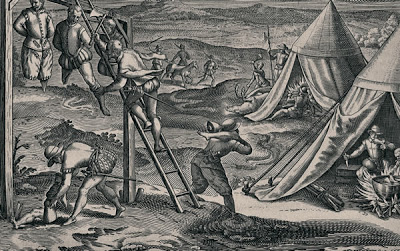
Five former New Orleans police officers have been sentenced to prison terms ranging from six to 65 years for their roles in deadly shootings of unarmed residents in the chaotic days after Hurricane Katrina.

The presiding judge lashed out at prosecutors for two hours on Wednesday on their handling of the case in which police shot six people at a bridge on September 4, 2005, killing two, less than a week after Katrina made landfall.

To make the shootings appear justified, officers conspired to plant a gun, fabricate witnesses and falsify reports. The case became the centerpiece of the US Justice Department’s push to clean up the troubled New Orleans Police Department.

Kenneth Bowen, Robert Gisevius, Anthony Villavaso and Robert Faulcon were convicted of federal firearms charges that carried mandatory minimum prison sentences of at least 35 years. Retired officer Arthur Kaufman, who was assigned to investigate the shootings, was convicted of helping orchestrate the cover-up.

Faulcon, who was convicted on charges in both fatal shootings, faces the stiffest sentence of 65 years. Bowen and Gisevius each face 40 years, while Villavaso was sentenced to 38. Kaufman received the lightest sentence at six
years.

Community ‘disservice’

Afterward, US District Judge Kurt Engelhardt accused prosecutors of cutting overly lenient plea deals with five other officers who cooperated with the civil rights investigation. The former officers pleaded guilty to helping cover up the shooting and are already serving prison terms ranging from three to eight years.

“These through-the-looking-glass plea deals that tied the hands of this court … are an affront to the court and a disservice to the community,” Engelhardt said.

The judge also questioned the credibility of the officers who pleaded guilty and testified against those who went to trial.

In particular, the judge criticized prosecutors for seeking a 20-year prison sentence for Kaufman, yet Michael Lohman, who was the highest-ranking officer at the scene of the shooting, received four years under his deal for pleading guilty to participating in the cover-up.

‘Unbearable’ pain

Engelhardt heard several hours of arguments and testimony earlier on Wednesday from prosecutors, defense attorneys, relatives of shooting victims and the officers. Ronald Madison and 17-year-old James Brissette died in the shootings.

“This has been a long and painful six-and-a-half years,” said Lance Madison, whose 40-year-old, mentally disabled brother, Ronald, was killed at the bridge. “The people of New Orleans and my family are ready for justice.”

Madison individually addressed each defendant, including Faulcon, who shot his brother: “When I look at you, my pain becomes unbearable. You took the life of an angel and basically ripped my heart out.”

Madison also said he was horrified by Kaufman’s actions in the cover-up: “You tried to frame me, a man you knew was innocent, and send me to prison for the rest of my life.”

Lance Madison was arrested on attempted murder charges after police falsely accused him of shooting at the officers on the bridge. He was jailed for three weeks before a judge freed him.

None of the officers addressed the court before they were sentenced.

Chaotic aftermath

Katrina struck on August 29, 2005, leading to the collapse of levees and flooding an estimated 80 per cent of the city. New Orleans was plunged into chaos as residents who hadn’t evacuated were driven from their homes to what high places they could find.

Officers who worked in the city at the time but were not charged in the bridge case on Wednesday told Engelhardt of the lawlessness that followed the flood, and that they feared for their lives.

On the morning of September 4, one group of residents was crossing the Danziger Bridge in the city’s Gentilly area in search of food and supplies when police arrived.

The officers had received calls that shots were being fired. Gunfire reports were common after Katrina.

Faulcon was convicted of fatally shooting Madison, but the jury decided the killing didn’t amount to murder. He, Gisevius, Bowen and Villavaso were convicted in Brissette’s killing, but jurors didn’t hold any of them individually responsible for causing his death.

All five officers were convicted of participating in a cover-up.

Is Some Homophobia Self-Phobia? (Science Daily)

ScienceDaily (Apr. 6, 2012) — Homophobia is more pronounced in individuals with an unacknowledged attraction to the same sex and who grew up with authoritarian parents who forbade such desires, a series of psychology studies demonstrates.

The study is the first to document the role that both parenting and sexual orientation play in the formation of intense and visceral fear of homosexuals, including self-reported homophobic attitudes, discriminatory bias, implicit hostility towards gays, and endorsement of anti-gay policies. Conducted by a team from the University of Rochester, the University of Essex, England, and the University of California in Santa Barbara, the research will be published the April issue of the Journal of Personality and Social Psychology.

“Individuals who identify as straight but in psychological tests show a strong attraction to the same sex may be threatened by gays and lesbians because homosexuals remind them of similar tendencies within themselves,” explains Netta Weinstein, a lecturer at the University of Essex and the study’s lead author.

“In many cases these are people who are at war with themselves and they are turning this internal conflict outward,” adds co-author Richard Ryan, professor of psychology at the University of Rochester who helped direct the research.

The paper includes four separate experiments, conducted in the United States and Germany, with each study involving an average of 160 college students. The findings provide new empirical evidence to support the psychoanalytic theory that the fear, anxiety, and aversion that some seemingly heterosexual people hold toward gays and lesbians can grow out of their own repressed same-sex desires, Ryan says. The results also support the more modern self-determination theory, developed by Ryan and Edward Deci at the University of Rochester, which links controlling parenting to poorer self-acceptance and difficulty valuing oneself unconditionally.

The findings may help to explain the personal dynamics behind some bullying and hate crimes directed at gays and lesbians, the authors argue. Media coverage of gay-related hate crimes suggests that attackers often perceive some level of threat from homosexuals. People in denial about their sexual orientation may lash out because gay targets threaten and bring this internal conflict to the forefront, the authors write.

The research also sheds light on high profile cases in which anti-gay public figures are caught engaging in same-sex sexual acts. The authors cite such examples as Ted Haggard, the evangelical preacher who opposed gay marriage but was exposed in a gay sex scandal in 2006, and Glenn Murphy, Jr., former chairman of the Young Republican National Federation and vocal opponent of gay marriage, who was accused of sexually assaulting a 22-year-old man in 2007, as potentially reflecting this dynamic.

“We laugh at or make fun of such blatant hypocrisy, but in a real way, these people may often themselves be victims of repression and experience exaggerated feelings of threat,” says Ryan. “Homophobia is not a laughing matter. It can sometimes have tragic consequences,” Ryan says, pointing to cases such as the 1998 murder of Matthew Shepard or the 2011 shooting of Larry King.

To explore participants’ explicit and implicit sexual attraction, the researchers measured the discrepancies between what people say about their sexual orientation and how they react during a split-second timed task. Students were shown words and pictures on a computer screen and asked to put these in “gay” or “straight” categories. Before each of the 50 trials, participants were subliminally primed with either the word “me” or “others” flashed on the screen for 35 milliseconds. They were then shown the words “gay,” “straight,” “homosexual,” and “heterosexual” as well as pictures of straight and gay couples, and the computer tracked precisely their response times. A faster association of “me” with “gay” and a slower association of “me” with “straight” indicated an implicit gay orientation.

A second experiment, in which subjects were free to browse same-sex or opposite-sex photos, provided an additional measure of implicit sexual attraction.

Through a series of questionnaires, participants also reported on the type of parenting they experienced growing up, from authoritarian to democratic. Students were asked to agree or disagree with statements like: “I felt controlled and pressured in certain ways,” and “I felt free to be who I am.” For gauging the level of homophobia in a household, subjects responded to items like: “It would be upsetting for my mom to find out she was alone with a lesbian” or “My dad avoids gay men whenever possible.”

Finally, the researcher measured participants’ level of homophobia — both overt, as expressed in questionnaires on social policy and beliefs, and implicit, as revealed in word-completion tasks. In the latter, students wrote down the first three words that came to mind, for example for the prompt “k i _ _.” The study tracked the increase in the amount of aggressive words elicited after subliminally priming subjects with the word “gay” for 35 milliseconds.

Across all the studies, participants with supportive and accepting parents were more in touch with their implicit sexual orientation, while participants from authoritarian homes revealed the most discrepancy between explicit and implicit attraction.

“In a predominately heterosexual society, ‘know thyself’ can be a challenge for many gay individuals. But in controlling and homophobic homes, embracing a minority sexual orientation can be terrifying,” explains Weinstein. These individuals risk losing the love and approval of their parents if they admit to same sex attractions, so many people deny or repress that part of themselves, she said.

In addition, participants who reported themselves to be more heterosexual than their performance on the reaction time task indicated were most likely to react with hostility to gay others, the studies showed. That incongruence between implicit and explicit measures of sexual orientation predicted a variety of homophobic behaviors, including self-reported anti-gay attitudes, implicit hostility towards gays, endorsement of anti-gay policies, and discriminatory bias such as the assignment of harsher punishments for homosexuals, the authors conclude.

“This study shows that if you are feeling that kind of visceral reaction to an out-group, ask yourself, ‘Why?'” says Ryan. “Those intense emotions should serve as a call to self-reflection.”

The study had several limitations, the authors write. All participants were college students, so it may be helpful in future research to test these effects in younger adolescents still living at home and in older adults who have had more time to establish lives independent of their parents and to look at attitudes as they change over time.

Other contributors to the paper include Cody DeHaan, Andrew Przybylski, and Nicole Legate, all from the University of Rochester, and William Ryan, from the University of California in Santa Barbara.

Canibais? Nós? Imagine! (Revista Geo)

Canibais viveram na América do Sul ou na Nova Guiné – mas com certeza não na Europa! Que engano! Ainda no século 19, a antropofagia era praticada em Berlim ou Paris; embora não de forma tão grotesca como na gravura (à esquerda). Na Europa, partes do corpo humano eram consumidas por razões médicas…

Por Andreas Weiser

Edição 31 – 2011

No dia em que fui preso ainda navegávamos a cerca de sete milhas de distância de Bertioga, quando os selvagens tomaram o rumo de uma ilha. Eles puxaram as canoas para a terra e depois me arrastaram para fora. Eu não conseguia ver nada de tão machucado que estava meu rosto. Também não conseguia andar por causa da lesão na minha perna; portanto, fiquei caído na areia. Os selvagens me cercaram e indicaram com gestos ameaçadores que pretendiam me devorar.”

Hans Staden é o nome do infeliz tão gravemente ferido, caído em uma praia no litoral brasileiro naquela ensolarada tarde de dezembro de 1553. Ele é um “lansquenê” (do alemão Landsknecht, soldado mercenário alemão). Staden era procedente da região do atual estado de Hesse, na Alemanha, mas estava a serviço dos colonialistas portugueses comandando uma pequena fortificação não muito distante da atual cidade de São Paulo.

Levianamente, ele havia se afastado demais da área protegida pelo forte, caindo nas mãos dos índios tupinambá, que estavam em pé de guerra com os portugueses. Prisioneiros inimigos costumavam ser escravizados pelos índios litorâneos – ou eram devorados. “Quando nos aproximamos da aldeia chamada Ubatuba, vi sete cabanas. Perto da praia na qual eles tinham largado suas canoas havia mulheres trabalhando na roça… Fui forçado a lhes gritar de longe em sua língua Aju ne xe remiurama, que quer dizer: ‘Eu, vossa comida, estou chegando’.”

O lansquenê não estava destinado ao consumo imediato. Os tupinambá o reservariam para ser devorado durante uma festividade. Staden permaneceu em cativeiro durante nove meses.

Durante esse tempo ele foi obrigado a assistir como os índios matavam e comiam outros prisioneiros. Em seus diários, o alemão descreve o ritual nos mínimos detalhes – e de uma forma tão distante que é como se o medo de logo chegar a sua vez o tivesse feito sair de si mesmo e se transformado em um observador imparcial.

Uma crônica do século 16 ilustra como o lansquenê (do alemão Landsknecht, soldado mercenário alemão que, nos séculos 15 e 16 servia sob o comando de oficiais de sua nacionalidade) Hans Staden cai nas mãos dos “nus comedores de gente”

“Eles fazem borlas de plumas para a clava com o qual matam o prisioneiro”, escreveu o lansquenê. “Quando tudo está preparado, eles determinam o dia em que o infeliz morrerá e convidam índios de outras aldeias para essa celebração.”

Depois disso, o drama na mata Atlântica se aproxima de seu clímax: “Por fim, um dos homens pega a clava, se posiciona diante do prisioneiro e lhe mostra a arma de tal modo que a vítima é obrigada a olhar para ela. Enquanto isso, o índio que matará o prisioneiro sai em companhia de outros 13 ou 14. Eles pintam os corpos com cinzas antes de retornarem à praça onde está o cativo.”

Segue-se uma troca de palavras entre o prisioneiro e o índio que irá matá-lo. Depois disso, o guerreiro “o atinge com a clava por trás na cabeça”.

Imediatamente, as mulheres esfolam o cadáver sobre uma fogueira. Em seguida, Hans Staden descreve como o morto é esquartejado. Um homem “corta suas pernas acima do joelho e separa os braços do torso; então quatro mulheres pegam essas quatro partes e, com grande gritaria de alegria, correm com elas ao redor da cabana. Depois disso, eles separam as costas com o traseiro da parte dianteira do corpo. Eles comem as tripas e também a carne da cabeça. O cérebro, a língua e todo o resto comestível da cabeça são reservados para as crianças. Depois que tudo isso aconteceu, cada um volta para sua oca levando a sua parte”.

ISSO REALMENTE PODE ser verdade? Os relatos de Staden não lembram demais aquelas histórias em quadrinhos de canibais em que o homem branco cozinha no caldeirão de um cacique da selva todo enfeitado com plumas e ossos?

Atualmente, muitos cientistas acreditam que está provado que os tupinambá, bem como outras tribos indígenas, de fato eram canibais. Ao que tudo indica, aquela fração de antropólogos que queria categoricamente absolver “o bom selvagem” da acusação de antropofagia foi refutada: um patologista e bioquímico comprovou a existência de traços de proteínas humanas em restos de excrementos e em panelas centenárias dos índios anasazi norte-americanos – provas irrefutáveis de canibalismo. Na Amazônia, pesquisadores documentaram casos de antropofagia ritualística até o século 20. Os índios wari, por exemplo, não consumiam apenas seus inimigos mortos mas também parentes falecidos. A ideia de enterrar um ente querido na terra úmida e mofada da floresta lhes era repugnante.

Nos anos 90, o indianista Werner Hammer ainda presenciou como os índios yanomami misturavam as cinzas de seus mortos em uma papa de banana e depois a consumiam. Desse modo a comunidade internalizava seus falecidos.

Pergunta-se também o quanto Hans Staden foi verossímil como cronista. Sua obra Viagens e aventuras no Brasil (o título original é: História Verdadeira e Descrição de uma Terra de Selvagens Nus e Cruéis Comedores de Seres Humanos, Situada no Novo Mundo da América, Desconhecida antes e depois de Jesus Cristo nas Terras de Hessen até os Dois Últimos Anos, Visto que Hans Staden, de Homberg, em Hessen, a Conheceu por Experiência Própria e agora a Traz a Público com Essa Impressão”) foi publicada pela primeira vez em 1557, em Marburgo, Alemanha. Ela é um dos primeiros documentos detalhados de um mundo que já não existe mais. Muitos consideram o relato de Staden autêntico – e pesquisadores brasileiros também o utilizam como uma fonte valiosa de informação.

A antropofagia: (não) era um tabu na Europa

O canibalismo como expressão extrema de miséria também existiu na Europa: soldados espanhóis comem condenados à morte

Hans Staden descreve sem refletir sobre o que ocorre à sua volta. Ele não compreende que os tupinambá não matam e comem seus prisioneiros pelo puro prazer de matar. Ele é intelectualmente incapaz de conceber que o canibalismo praticado por eles brota de sua crença mágica de se apropriarem da força física e espiritual do inimigo por meio do ritual antropofágico.

De certa forma, a cerimônia era até uma homenagem à força do oponente: na Amazônia daquela época, ter um fim desses era considerado sofrer uma morte honrosa, explica Richard Sugg, da Universidade de Durham, na Inglaterra. Uma de suas áreas de pesquisa é o chamado “canibalismo medicinal”. Mas, para Staden, os indígenas não passavam de selvagens que comiam suas vítimas movidos apenas por um “grande ódio e inveja”.

ESTA ERA UMA OPINIÃO que certamente estava de acordo com o espírito de época vigente na Europa. Na Espanha do século 16, os habitantes nativos do Novo Mundo eram coletivamente demonizados – inclusive como justificativa para sua submissão e escravização. Para os europeus, o canibalismo era um fenômeno fora de seus próprios limites morais e geográficos. Um tabu, um ato de anomalia proibido por uma questão moral. Eram selvagens os que comiam a carne de sua própria espécie – algo impensável em uma sociedade civilizada. Ou pelo menos era nisso que os europeus queriam acreditar. Porém, eles estavam completamente equivocados.

Antropólogos distinguem três tipos básicos de comportamento antropofágico: o canibalismo por fome, o ritualístico e o medicinal. O primeiro é uma estratégia de sobrevivência na luta pela existência nua e crua, que ocorre em todas as sociedades a qualquer momento.

Cenas da vida cotidiana dos índios tupinambá, do ponto de vista de Hans Staden. O guerreiro à esquerda carrega a clava com a qual os presos eram abatidos antes de serem esquartejados

Na época em que Hans Staden aguardava seu próprio sacrifício na América do Sul, a Europa sofria com epidemias, atrocidades da guerra e fome. As cidades foram vitimadas pela peste; mais tarde a guerra dos Trinta Anos (1618-1648) devastou grandes áreas do continente e uma catastrófica mudança climática destruiu uma colheita atrás da outra. A Europa mergulhou em uma terrível fome.

Testemunhas da Alsácia de 1636 relataram, por exemplo, que as pessoas iam aos cemitérios e desenterravam cadáveres para comê-los, ou cortavam os enforcados do cadafalso para consumi-los. No mesmo ano, uma pastora de gado de Ruppertshofen, no sul da Alemanha, teria “arrancado a carne dos ossos de seu marido morto; cortando-a em pedaços, cozinhando e consumindo-a com seus filhos”.

NOS TEMPOS MODERNOS, a mais absoluta necessidade também pode transformar pessoas perfeitamente normais em canibais. Foi o que ocorreu com os membros de uma equipe de rúgbi do Uruguai, cujo avião caiu nos Andes, em 1972. Isolados durante 72 dias na gélida cordilheira, os sobreviventes se alimentaram da carne de seus colegas mortos. Sob o título Sobreviventes dos Andes, o trágico e sinistro episódio foi recriado em um filme de Hollywood.

O mesmo aconteceu no cerco a Leningrado, na União Soviética, entre 1941 e 1944, quando o exército alemão cortou todo e qualquer fornecimento de víveres à cidade. Desesperadas, as pessoas viram-se diante de duas alternativas: morrer de fome (o que aconteceu com centenas de milhares) ou fazer o impensável – o que centenas de fato fizeram.

Já o canibalismo ritualístico, como o praticado pelos índios tupinambá, não é um ato de necessidade ou desespero. Nem o canibalismo medicinal – a variante europeia de práticas antropofágicas.

Carne fresca da forca: particularmente cobiçada

Saque de cadáveres na guerra dos Trinta Anos: os famintos desenterravam até caixões. O canibalismo medicinal era a variante socialmente aceitável dessas ações repugnantes

Essas duas formas de antropofagia tinham suas raízes na idéia de que o corpo humano, mesmo depois de morto, ainda continha forças que podiam ser transferidas aos vivos – um conceito que sobreviveu até os primórdios da modernidade na cultura dos tupinambá, wari ou yanomami; bem como entre os povos das florestas tropicais da Nova Guiné, que ainda viviam na Idade da Pedra, e entre muitos cidadãos de Londres, Paris ou Berlim.

Os canibais europeus também consumiam partes do corpo humano para se beneficiar das forças obscuras do morto; contudo, eles não capturavam pessoas para consumi-las. Na Europa, aproveitavam-se os corpos de vítimas de execuções.

NO SÉCULO 16, quando Hans Staden ainda aguardava a sua morte na América do Sul –, médicos e farmacêuticos europeus acreditavam plenamente na energia mágica que, segundo eles, emanava dos corpos de recém-executados. A ingestão de carne humana não era, de forma alguma, um ritual secreto, realizado à luz bruxuleante de velas. Na Europa, os membros dos mortos ou as substâncias derivadas deles farão parte durante séculos do repertório do tratamento médico. O comércio de múmias e partes de cadáveres se transformou em um ramo altamente lucrativo da economia.

O famoso médico, alquimista, físico e astrólogo suíço Paracelso é considerado o representante mais conhecido do canibalismo medicinal – e ele deixou instruções precisas. No século 17, seu seguidor Johann Schroeder escreveu: “O ideal é você pegar o corpo de um homem ruivo, de cerca de 24 anos, que morreu de morte violenta”.

Cabelos ruivos eram sinal de “sangue mais leve” e de “uma carne melhor”. Era considerado particularmente importante que o cadáver não tivesse “dessangrado” – sangrado até a morte; pois, de acordo com a escola de pensamento dominante, um corpo sem sangue era um corpo sem alma.

Os tupinambá trazem o prisioneiro (a partir da esquerda); duas mulheres dançam ao redor da fogueira. A vítima é desmembrada. Sua cabeça é fervida; Staden está presente e reza

Todavia, o poder inerente ao cadáver era um produto altamente perecível. Era preciso captá-lo sem demora, para que não se esvaísse. De acordo com a imaginação da época, quando alguém morria, o vínculo entre a alma e o corpo se dissolvia em um prazo de 3 ou 4 dias. Portanto, somente quem se alimentasse de um cadáver fresco (ou de produtos derivados dele) podia ingerir também a sua alma e beneficiar- se de seus poderes.

Acreditava-se que era principalmente o sangue que continha aqueles “espíritos vitais” (Lebensgeister, em alemão) que uniriam a alma e o corpo. Dizem que quando o papa Inocêncio VIII estava à beira da morte, em 1492, os médicos teriam sangrado três meninos para ministrar ao seu proeminente paciente o sangue deles. Depois do procedimento, os meninos teriam morrido – e a intervenção aparentemente também não teria ajudado o Santo Padre.

NAQUELA ÉPOCA, os médicos papais também desconheciam o princípio que Paracelso postularia pouco mais tarde: “especialmente eficazes”, escreveu ele em sua Arte Necromantia, “são a carne e o sangue de criminosos executados”.

“Por que justamente os cadáveres de criminosos executados são considerados a melhor substância possível?”, pergunta a pesquisadora sociocultural Anna Bergman em seu livro Der entseelte Patient (“O paciente desalmado” – até onde pude verificar, sem tradução para o português), que descreve em detalhes as práticas do canibalismo medicinal. Uma parte da resposta parece ser puro pragmatismo: “Como, de que forma obter cadáveres jovens e frescos sem se tornar um assassino?” Para Bergman, a recomendação de Paracelso tem motivos mais profundos, que se enraízam nos mundos imaginários mágicos e nos rituais de execução cristãos – que hoje nos parecem tão bizarros quanto a crença tupinambá em espíritos.

De acordo com a convicção reinante na época, a alma do “pobre pecador” era purgada de todos os seus males (pecados) nos porões das câmaras de tortura da Justiça (significando que o pecador confessava sua culpa) – uma analogia à crucificação de Jesus Cristo. Estes corpos que, arrependidos e purificados pela Graça Divina, despedem-se deste mundo no cadafalso, são particularmente cobiçados pelos canibais da Europa.

Sangue dos decapitados: remédio para as massas
 

QUANDO O SANGUE esguicha e jorra das artérias e veias do delinquente decapitado, os espectadores se amontoam na cerca ao redor do cadafalso com recipientes coletores em punho. Os assistentes do carrasco coletam o sangue e devolvem os recipientes aos seus respectivos donos – que bebem avidamente o líquido. São epilépticos convencidos de que seu sofrimento pode ser curado com o sangue fresco de um executado. Eles querem incorporar sua alma – afinal, Hildegard von Bingen já havia explicado a epilepsia como uma “evasão da alma que sai do corpo”.

Essa cena no cadafalso não se passa na Idade Média, mas em Göttingen, na Alemanha, em 1858. Naquele ano, o primeiro cabo submarino entre Europa e América entrou em operação; Karl Marx escreveu sua Contribuição à crítica da Economia Política e Rudolf Virchow apresentou sua teoria, segundo a qual as doenças surgem em consequência de perturbações nas células do corpo – que substituiu o antigo conceito sobre o funcionamento dos fluidos corporais.

Para os adeptos do canibalismo medicinal, a coleta do sangue no cadafalso é apenas o começo do aproveitamento dos mortos. Médicos e anatomistas assediam os carrascos para obterem partes do corpo particularmente cobiçadas. O povo mais simples, por sua vez, tenta se apossar por conta própria das preciosas partes (sem passar pelo caminho da medicina, cara demais para eles) e começa a praticar saques tanto ao cadafalso como nos cemitérios. Frequentemente, os restos mortais dos executados são completamente dilacerados após poucos dias.

Hans Staden escapou com vida; os tupinambá o deixaram viver – talvez por que ele lhes parecesse covarde demais? Seus relatos tornaram-se uma fonte etnográfica

O QUE OCORREU NA EUROPA foi uma diversificação daquela prática que teve seu apogeu no século 17. Muitas receitas circulavam entre a população; transmitidas oralmente na medicina popular ou artisticamente impressas em tratados eruditos. O médico Johann Schröder, por exemplo, autor do manual de medicina mais importante do século 17, recomenda “cortar a carne humana em fatias, ou pedaços pequenos”, temperá-la, curti-la em aguardente de vinho e, por fim, secá-la.

A gordura corporal também é um produto muito desejado. Em 1675, o professor de medicina Tobias Andreae desmembra uma infanticida morta por afogamento, derrete sua carne e obtém 20 quilos da chamada “gordura do pecador pobre” (expressão que definia os criminosos condenados à morte). E, na Grande Enciclopédia Universal de Zedler, de 1739, pode-se ler como transformar essa gordura em um medicamento antropofágico para uso doméstico. Não seriam, portanto, os europeus que deveriam ser chamados de “selvagens ferozes comedores de gente”? Foi precisamente isso o que aconteceu entre os habitantes da África ao sul do Saara até o século 20: mesmo sem conhecimentos detalhados sobre o canibalismo praticado no hemisfério norte, os negros acreditavam que os brancos eram antropofágicos.

OS EUROPEUS JÁ HAVIAM levantado demasiado suspeitas perpetrando crimes colonialistas. Por volta de 1800, o explorador escocês Mungo Park, especializado no continente africano, relata que os escravos acorrentados tinham certeza de que os homens brancos os estavam levando ao abatedouro e não para realizar trabalhos forçados. No Peru, a primeira insurgência contra os espanhóis foi desencadeada pelo boato de que os senhores coloniais estavam matando os povos indígenas para obter gordura corporal.

O comércio de matérias-primas canibalescas na Europa assumiu proporções transcontinentais, envolvendo múmias. Entre 1500 e 1900, os médicos, os farmacêuticos e até os charlatães prescrevem a seus pacientes partes de cadáveres embalsamados, em pó ou forma esférica (comprimido), como remédio contra quase todos os males.

O negócio com a chamada mumia vera aegyptica (a “verdadeira múmia egípcia”) assume tais dimensões que em pouco tempo a demanda por exemplares autênticos do reino dos faraós não pode mais ser atendida. Comerciantes e farmacêuticos apelam para falsificações e corpos embalsamados de mendigos, leprosos e vítimas da peste. Fetos abortados também são secados e vendidos como múmias infantis.

As verdadeiras múmias egípcias são um artigo de luxo. O rei francês Francisco I (1494-1547) sempre carregava consigo uma pequena quantidade da preciosa substância para, no caso de uma queda do cavalo ou outro ferimento se medicar imediatamente. O filósofo inglês Francis Bacon (1561- 1626) apostava tanto no poder de cura das múmias quanto o poeta Léon Tolstoi, no final do século 19. Ainda em 1912, a empresa farmacêutica alemã Merck oferecia em seu catálogo a mumia vera aegyptica – “enquanto os estoques durassem”. O preço era citado por quilo: na época, o equivalente a 17,50 marcos alemães.

As vozes céticas eram escassas. Um dos críticos mais proeminentes foi o humanista francês Michel de Montaigne que em pleno século 16 rotulou a mania das múmias como comportamento canibal e chamaou a atenção para a “crítica hipócrita” dos europeus em relação à antropofagia indígena.

Com toda razão, julga o historiador de medicina britânico Richard Sugg. Segundo ele, o canibalismo do Velho Mundo possuiu uma dimensão muito mais abrangente do que o dos índios. O consumo de múmias não era uma cerimônia mágica, mas uma parte da cultura cotidiana e da vida econômica. Na Europa, médicos e farmacêuticos faziam bons negócios com o canibalismo. No topo dessa rentável cadeia comercial estavam os carrascos e os ladrões de túmulos. “A antropofagia europeia influiu nas mais diversas esferas e países”, resume Sugg. “Não se pode compará-la ao canibalismo limitado praticado, por exemplo, por uma tribo no Brasil.” Segundo o historiador, os verdadeiros canibais viviam na Europa.

DURANTE O SEU CATIVEIRO, Hans Staden observou, incrédulo, como os índios tupinambá tratavam bem aqueles que eles haviam reservado para suas festividades: “Eles lhe dão uma mulher que cuida dele, lhe dá de comer e também se deita com ele. Se ela engravidar, eles criam a criança… Alimentam muito bem o prisioneiro e o mantêm vivo por algum tempo, enquanto fazem todos os preparativos para a celebração. Eles fabricam muitos recipientes para as bebidas e outros mais especiais para as substâncias com as quais o pintam e decoram”.

Antes de ser abatida, a vítima desfruta do maior respeito; os tupinambá até permitem que ela gere descendentes – embora o venerado inimigo seja obrigado a provar que é digno de seu papel. Como?

Os sobreviventes da queda de um avião nos Andes, em 1972, alimentaram-se durante semanas da carne de seus companheiros de viagem mortos. Seu drama de sobrevivência se transformou em um filme de Hollywood

OS ASTECAS, por exemplo, torturavam seus prisioneiros para pôr à prova a sua coragem e assim determinar se eles eram ou não adequados para uma cerimônia antropofágica, explica Richard Sugg. Segundo ele, as vítimas cooperavam com seus torturadores – na certeza de estarem sendo criticamente observadas pelo deus sol.

Hans Staden relatou que os tupinambá também davam grande valor à força física e mental do inimigo. Afinal de contas, estas eram as características mais importantes que pretendiam incorporar ao devorá-lo. O lansquenê de Hesse, no entanto, foi um completo fracasso nesse sentido.

As regras desse jogo sinistro permaneceram incompreensíveis para ele. Em sua terra natal, a Europa do século 16, as pessoas que comerão e a que será comida não estabelecem nenhum tipo de relacionamento antes da morte da vítima. Staden havia perdido toda a sua coragem. Ele implorou, suplicou, chorou e rezou aos brados ao seu deus. E depois descreveu a reação dos tupinambá com as seguintes palavras: “Então eles disseram: ‘Ele é um verdadeiro português. Agora ele grita desse jeito porque está com horror da morte’… Eles zombaram cruelmente de mim; tanto os jovens como os velhos”.

A cientista cultural brasileira Vanete Santana Dezmann presume que o pânico de Hans Staden o tenha tornado indigno aos olhos dos índios. O que fazer com um pedaço de carne impregnado de covardia? Talvez tenha sido por essa razão que os tupinambá o libertaram novamente após nove meses de cativeiro.

O medo devora a alma: Staden teve a sorte do medroso. Ele voltou para Hesse e, juntamente com um médico, escreveu o seu livro sobre os comedores de gente.

Em Marburgo, o lansquenê abandonou o mercenarismo e foi trabalhar em uma jazida de salitre. Ele morreu em 1576.

A história não nos transmitiu o que aconteceu com o seu corpo.

How did the KKK lose nearly one-third of its chapters in one year? (Slate)

Ku Klux Kontraction

By |Posted Thursday, March 8, 2012, at 4:55 PM ET

57886367

Members of the Fraternal White Knights of the Ku Klux Klan participate in the 11th Annual Nathan Bedford Forrest Birthday march July 11, 2009 in Pulaski, Tenn.Spencer Platt/Getty Images

The number of hate groups in the United States is on the rise, but the Ku Klux Klan is losing chapters, according to data released on Wednesday by the Southern Poverty Law Center. The number of KKK chapters dropped from 221 to 152 in just one year. Why is the Klan shrinking?

Consolidation and defections. The Klan is not a stable organization. There’s no real national leadership, and chapters are constantly appearing, disappearing, splitting, and merging. In 2010, to take one example, the True Invisible Empire Knights of Pulaski, Tenn., merged with the Traditional American Knights from Potosi, Mo. to form the True Invisible Empire Traditionalist American Knights of the Ku Klux Klan. (Note: this link, like others in this article, leads to an extremist website.) Such mergers decrease the number of chapters without necessarily changing membership totals. Not all the Klan’s losses are just on paper, though. Jeremy Parker, who led the Ohio-based Brotherhood of Klans, left the KKK for the Aryan Nations in 2010 and likely took a significant number of members with him. The Brotherhood of Klans was the second-largest Klan association in the country, with 38 chapters.

Membership totals are hard to track, because the Klan doesn’t willingly release member lists. Over the long term, the KKK is clearly contracting, since its rolls have shrunk from millions in the 1920s to between 3,000 and 5,000 today. But no one knows how membership has changed in the last few years.

Klan-watchers, however, suspect that the nation’s oldest domestic terrorist organization is indeed struggling to keep pace with other racist hate groups. Young racists tend to think of the Klan as their grandfathers’ hate group, and of its members as rural, uneducated, and technologically unsophisticated. The Klan doesn’t seem to have used the web and social media as well as its competitors. The group’s failure to effectively deploy technology is a bit of an irony, since one of those newfangled motion pictures, The Birth of a Nation, launched the KKK’s second era in 1915.

The Klan’s history of violence is another challenge to recruitment. The organization will always be associated with the lynching of innocent African-Americans in the 20th century, which puts off more moderate racists.

The KKK is also suffering from a proliferation of competitors. People who wanted to join a white supremacist movement back in the 1920s didn’t have a lot of choices. Today, there are countless options, enabling an extremist to find a group that matches his personal brand of intolerance. The more extreme groups in the burgeoning patriot movement cater to anti-Muslim, homophobic, and xenophobic sentiment, with less animosity toward African-Americans and Jews. Aryan Nations offers a heavy focus on Christian identity. Some groups preach more violence, while others offer a veneer of intellectualism.American Renaissance, for example, caters to “suit-and-tie” racists, offering pseudo-scientific papers on white supremacy. The group even holds conferences at a hotel near Dulles airport in Virginia.

Many young racist activists aren’t bothering to join groups at all anymore, further hampering the Klan’s recruitment efforts. Former KKK Grand Wizard Don Black in 1995 launched the website Stormfront, which enables individuals in the white supremacist movement to share ideas and read news stories reported from a racist perspective. The community-building site, and others like it, lessens the need for racists to socialize at Klan barbecues or introduce their children to Klanta Klaus at the KKK Christmas rally.

Number of U.S. Hate Groups Is Rising, Report Says (N.Y. Times)

By KIM SEVERSON – Published: March 7, 2012

ATLANTA — Fed by antagonism toward President Obama, resentment toward changing racial demographics and the economic rift between rich and poor, the number of so-called hate groups and antigovernment organizations in the nation has continued to grow, according to a report released Wednesday by the Southern Poverty Law Center.

The center, which has kept track of such groups for 30 years, recorded 1,018 hate groups operating last year.

The number of groups whose ideology is organized against specific racial, religious, sexual or other characteristics has risen steadily since 2000, when 602 were identified, the center said. Antigay groups, for example, have risen to 27 from 17 in 2010.

The report also described a “stunning” rise in the number of groups it identifies as part of the so-called patriot and militia movements, whose ideologies include deep distrust of the federal government.

In 2011, the center tracked 1,274 of those groups, up from 824 the year before.

“They represent both a kind of right-wing populist rage and a left-wing populist rage that has gotten all mixed up in anger toward the government,” said Mark Potok of the Southern Poverty Law Center and the author of the report.

The center, based in Montgomery, Ala., records only groups that are active, meaning that the groups are registering members, passing out fliers, protesting or showing other signs of activity beyond maintaining a Web site.

The Occupy movement is not on the list because its participants as a collective do not meet the center’s criteria for an extremist group, he said.

One of the groups that was moved from the “patriot” list to the hate group list this year is the Georgia Militia, some of whose members were indicted last year in a failed plot to blow up government buildings and spread poison along Atlanta freeways. They were reclassified because their speech includes anti-Semitism.

The far-right patriot movement gained steam in 1994 after the government used violence to shut down groups at Ruby Ridge, Idaho, and Waco, Tex. It peaked after the 1995 Oklahoma City bombing and began to fade. Its rise began anew in 2008, after the election of Mr. Obama and the beginning of the recession.

There have been declines in some hate groups, including native extremist groups like the Militiamen, which focused on illegal immigration. Chapters of the Ku Klux Klan fell to 152, from 221.

Among the states with the most active hate groups were California, Florida, Georgia, New Jersey and New York. The federal government does not focus on groups that engage in hate-based speech, but rather monitors paramilitary groups and others that have shown some indication of violence, said Daryl Johnson, a former senior domestic terrorism analyst for the Department of Homeland Security.

The Justice Department does not comment on the center’s annual report, but a spokeswoman said the agency had increased prosecution of hate crimes by 35 percent during the first three years of Mr. Obama’s presidency.

A version of this article appeared in print on March 8, 2012, on page A17 of the New York edition with the headline: Number of U.S. Hate Groups Is Rising, Report Says.

Vídeo da Comissão Europeia tem circulação suspensa (Opinião e Notícia)

XENOFOBIA

Peça publicitária mostra Europa atacada por chineses, brasileiros e indianos.

Por Felipe Varne – 8/03/2012

Uma bela mulher (usando o macacão amarelo imortalizado nas telas do cinema por Bruce Lee em O Jogo da Morte, e homenageado por Quentin Tarantino emKill Bill) caminha sozinha por um galpão abandonado. Subitamente ela é ameaçada pela presença de três homens. O primeiro, um ninja com traços orientais. O segundo, um homem de turbante e portando uma ameaçadora espada. O terceiro é um capoeirista acrobático e musculoso. Sem se intimidar, a mulher se concentra, e se multiplica em vários clones que formam um círculo ao redor do trio. As três figuras se tornam menos ameaçadoras, e os clones se sentam em posição de lótus, antes de se transformarem na bandeira da União Europeia.

O final do comercial que promove a expansão da União Europeia termina com a seguinte mensagem: “quanto maiores formos, mais fortes seremos”. A mensagem pode até ser verdadeira, mas o comercial foi retirado do ar às pressas, graças a uma enxurrada de comentários que acusaram a Comunidade Europeia de racismo e xenofobia.

Recebemos muitas mensagens sobre nosso último vídeo, incluindo algumas que se mostraram preocupadas com a mensagem que estava sendo passada.

O vídeo era uma experiência viral, visando atingir por meio de redes sociais e novas mídias, jovens entre 26 e 24 anos, familiarizados com artes marciais e vídeo games. As reações dentro dessa faixa etária foram positivas, assim como as dos grupos de testes nos quais o vídeo foi testado.

O vídeo apresenta personagens típicos do gênero das artes marciais: mestres de kung fu, kalripayattu e capoeira. Tudo começa com uma demonstração de suas habilidades e termina com todos os personagens demonstrando seu respeito mútuo, numa posição de paz e harmonia. O gênero foi escolhido para atrair os jovens e aumentar sua curiosidade a respeito de uma importante política da União Europeia.

O vídeo não tinha intenção alguma de promover o racismo, e nós obviamente lamentamos que ele tenha sido encarado desta maneira. Pedimos desculpas a qualquer um que tenha se ofendido. Por causa da polêmica, decidimos interromper a campanha imediatamente, e retirar o vídeo de circulação.

A mensagem acima é assinada por Stefano Sannino, diretor-geral do programa de expansão da Comissão Europeia. Nos tempos de crise, é natural que a União Europeia queira se fortalecer, e nada mais natural do que vender essa ideia aos jovens. Artes marciais e vídeo games são uma boa forma de atrair essa faixa etária, além de serem uma linguagem universal (algo importante quando o bloco em questão concentra um número gigantesco de idiomas e dialetos).

No entanto, a mensagem de Sannino se não é mentirosa, é, no mínimo, ingênua. Os três mestres, embora sejam muito habilidosos, não estão apenas demonstrando suas habilidades, e sim ameaçando a pobre mulher indefesa. Ou será que há algum outro motivo para que ela se multiplique em dez, formando um círculo ao redor do trio? E não é preciso ser nenhum gênio para ver que os mestres também não são apenas mestres, mas sim um chinês, um indiano e um brasileiro. China, índia e Brasil são integrantes do grupo dos BRICs, os países emergentes da economia mundial, que estão prosperando e crescendo, enquanto a Europa atravessa maus bocados. O quarto país do grupo, a Rússia, não apareceu no vídeo. Para isso existem duas explicações. Ou não foi possível encontrar um mestre de sambo (a mais famosa arte marcial da Rússia) a tempo, ou ironicamente, o país de Putin e Medvedev pode fazer parte dos planos de expansão da União Europeia. Ambas as opções soam absurdas, mas nada é impossível.

A Europa atravessa uma crise criada por ela mesma, e que apenas ela pode resolver. Ao buscar nos países emergentes um bode expiatório, a Comissão Europeia deu o primeiro tiro no pé. E ao apresentar desculpas esfarrapadas e subestimar a inteligência dos espectadores do vídeo, pode ter dado o segundo.

Stadium ban for EU hooligans undermines civil rights (The Limping Messenger blog)

February 3, 2012 by Tjebbe van Tijen

EUROPEAN FOOTBALL STADIUM BAN FOR HOOLIGANS… Ahmed Aboutaleb major of the City of Rotterdam rejoices today the European Parliament initiative for an European level implementation of banning locally convicted football hooligans from all EU stadiums. (1) This law initiative has been long in the making. An earlier document by the Council of the European Union “Resolution of the Council on preventing and restraining football hooliganism through the exchange of experience, exclusion from stadiums and media policy” dates back to the year 1997:

The responsible Ministers invite their national sports associations to examine, in accordance with national law, how stadium exclusions imposed under civil law could also apply to football matches in a European context.

However much I dislike football hooligans this is a juridical precedent which will have far reaching negative consequences for civil rights in general. Not only does it create yet another centrally managed person database that can be accessed by all EU police forces (like data on persons DNA, illegal migrants and so on) it is a further step in constructing a ‘central EU police force’ with all its inherent dangers. Such an EU-wide anti-hooligan law also means multiplied condemnation – for a big part of the European continent – on the basis of a local conviction.

Together with actual proposals (in the Netherlands) for ‘whole sale mass arrests’, not only hooligan “leaders”, but also of their “followers” (‘meeloophooligens’ is the Dutch term), we can be certain that such an extra-national banning and black-listing power, will be abused in ways beyond our imagination. Once such a law and its enforcement has been put into effect, other ‘social distinct groups’ whose behaviour is classified as unruly can get the same routine treatment in the future. The Council of Europe document of 1997 cited above speaks of “preventing and containing of disorder”, so one need not to be surprised when other forms of ”disorder” will be handled in the long run in the same way. For instance, when we take in account the frequent attempts by politicians – defending employers interest – to criminalise strike actions, trade union activists could be databased and blacklisted with the same ‘anti-hooligan routine’.

—-
(1) It is interesting to note that the ‘hooligan-ban’ proposals in the European Parliament plenary session of February 2. 2012, was part of a bundle of all kind of measures related to sport listed in this order: – Promote sport for girls; – Blacklist hooligans; – Make doping a criminal offence; – Regulate sport agents; -Combine learning and training. The resolution – thus packaged – has been passed with 550 votes in favour, 73 against and 7 abstentions. In the section of hooligans is also this sentence: “MEPs also call on Member States and sports governing bodies to commit to tackling homophobia and racism against athletes.” Something problematic in the sense of ‘civil rights’ has been hidden inside a package of mostly emancipatory proposals.

Desenvolvimento e destruição (Ciência Hoje)

O antropólogo Luiz Fernando Dias Duarte aborda na sua coluna de dezembro as contribuições críticas de uma antropologia voltada ao enfrentamento direto dos desafios que o projeto de desenvolvimento econômico apresenta para o planeta e as sociedades contemporâneas.

Por: Luiz Fernando Dias Duarte

Publicado em 02/12/2011 | Atualizado em 02/12/2011

Desenvolvimento e destruiçãoA locomotiva a vapor, ícone da Revolução Industrial, foi ao mesmo tempo um símbolo do progresso triunfante e um agourento fantasma a recobrir de cinza e fumaça os campos e as cidades. (foto: Jim Daly/ Sxc.hu)

Há poucas categorias tão onipresentes nas discussões atuais sobre a condição de nossas sociedades quanto a de ‘desenvolvimento’. Cadernos inteiros de nossos jornais dedicam-se regularmente aos desafios e dilemas que cercam o projeto do desenvolvimento econômico de nosso país ou de toda a humanidade.

De um modo geral, estamos informados sobre a permanente busca das políticas governamentais modernas de progresso material por meio da expansão das bases da atividade econômica, de sua circulação mercantil e de sua apropriação pelo consumo generalizado.

Mas sabemos provavelmente mais ainda sobre os riscos e ameaças que essa expansão vem acarretando para nossa população e para o planeta em geral. Nos últimos dias, quem não se assustou com o vazamento de petróleo na costa fluminense ou não se preocupou com a retomada das obras da hidrelétrica de Belo Monte no Rio Xingu e com a possibilidade de abertura do Parque Nacional da Serra da Canastra à exploração de diamantes?

Ainda aqui na Ciência Hoje On-line, meu colega Jean Remy Guimarães acaba de descrever com detalhes os desastres ambientais decorrentes da mineração desenfreada de ouro no Equador (Leia coluna Sobre ouro, ceviche e arroz).

A questão não é nova, porém. Desde o começo da Revolução Industrial contrapõem-se sistematicamente os desejos de uma constante e infinita melhoria das condições de reprodução econômica das populações e os alertas sobre a destruição física e a degradação humana acarretadas pelo industrialismo e pelas relações capitalistas de produção.

A imagem da locomotiva a vapor foi ao mesmo tempo um símbolo do progresso triunfante e um agourento fantasma a recobrir de cinza e fumaça os campos e as cidades. O próprio socialismo, crítico da desumanização proletária, não renegou o princípio do avanço ilimitado das forças produtivas e dá, ainda hoje, o aval à desastrosa modernização chinesa.

Mancha de óleo provocada pelo vazamento no poço da Chevron na Bacia de Campos, no norte fluminense. Ao mesmo tempo em que somos informados sobre a busca permanente das políticas governamentais de progresso material, sabemos dos riscos envolvidos, para a população e o planeta em geral. (foto: Agência Brasil)

Antropologia e desenvolvimento

Acaba de se realizar em Brasília a 2ª Conferência de Desenvolvimento (Code), organizada pelo Instituto de Pesquisa Econômica Aplicada (Ipea), com o propósito de “debater e problematizar as diversas formulações possíveis para conceitos, trajetórias, atores, instituições e políticas públicas para o desenvolvimento brasileiro”.

Diversas associações de ciências humanas juntaram-se a esse debate, tendo a Associação Brasileira de Antropologia organizado e participado de duas séries de mesas em que se assumiu o desafio do encontro.

Todos reconhecem a insanidade do sistema atual de exploração a qualquer custo dos recursos ambientais

Há duas vias possíveis para a discussão da relação entre desenvolvimento e antropologia.

A primeira segue o rumo da institucionalização crescente de uma ‘antropologia do desenvolvimento’, dedicada ao conhecimento das formas pelas quais se organiza esse campo, ou seja, as ações voltadas para o progresso material e a promoção social das populações humanas em situações desprivilegiadas ou vulneráveis em todo o planeta. Isso envolve particularmente o que se desenrola no plano internacional, associado à dinâmica da globalização.

A segunda via é a do reconhecimento e articulação de um vasto número de linhas de pesquisa antropológica que tem em comum abordar questões de reprodução, identidade e transformação social em contextos desprivilegiados, vulneráveis e subordinados a dinâmicas de grande escala, inclusive transnacionais.

No entanto, esses trabalhos não se voltam prioritariamente a uma problemática do ‘desenvolvimento’ em si. Constituem, assim, não uma especialização disciplinar, mas um foco, a que se pode chamar de ‘antropologia e desenvolvimento’.

No encontro de Brasília, antropólogos, sociólogos, economistas e cientistas políticos examinaram de diversos ângulos as formas contemporâneas do dilema do desenvolvimento.

“Todos reconhecem a insanidade do sistema atual de exploração a qualquer custo dos recursos ambientais e todos denunciam a violência com que os grandes projetos de desenvolvimento são implantados, em detrimento do interesse de amplas populações locais.”

Debate sobre Belo Monte no Congresso
Congressistas discutem com comunidades indígenas violações de direitos humanos na região onde funcionará a usina de Belo Monte, um dos grandes empreendimentos desenvolvimentistas do governo federal. (foto: Antonio Cruz/ ABr)

Desatino coletivo

Embora haja um grande ceticismo por parte desses atores em relação às possibilidades de plena assunção pelos governos atuais de uma nova visão de ‘desenvolvimento sustentável’, eles não pretendem esmorecer em sua ação combinada de estudos e intervenção pública, visando a conscientização e responsabilização pelo destino não apenas de nossa geração, mas de todo o planeta e, com ele, de toda a humanidade.

Essa verdadeira militância científica denuncia os procedimentos autoritários com que se afirmam os empreendimentos desenvolvimentistas e também os saberes que justificam tais políticas com argumentos naturalistas, tecnicistas, em que um abstrato ‘bem comum’ ocupa o lugar concreto do bem de todos e de cada um.

Luta por uma disposição democrática na condução dos projetos econômicos de grande escala, atenta ao que já se vem chamando de ‘justiça ambiental’ ou de ‘modernidades alternativas’.

É generalizada a consciência de que não se poderá mudar de um dia para o outro o paradigma do melhorismo iluminista, dessa aspiração de construção de um paraíso de consumo sobre a terra.

“Há conhecimento suficiente sobre a vida social, econômica e política de todo este mundo para deixar claro que o paradigma terá que ser desviado de um curso insano”

Há hoje, porém, conhecimento suficiente sobre a vida social, econômica e política de todo este mundo para deixar claro que o paradigma terá que ser modificado, nuançado, desviado de um curso insano.

A política da competição entre as nações, armada pela crescente interdependência econômica global, é por ora um estímulo ao desatino coletivo. A destruição se dá no Brasil, assim como no Equador, na China ou na África do Sul.

A antropologia se esforça para conhecer e dar a conhecer os infindáveis nódulos de tão grande trama e, nessa luta, não pode calar ao se deparar com os mil infernos localizados que essa inglória busca de gozo incendeia aqui e ali.

Mais do que o sentido, é o destino global do humano que está em jogo.

Luiz Fernando Dias Duarte
Museu Nacional
Universidade Federal do Rio de Janeiro