Arquivo da categoria: opinião pública

>Falhas de comunicação em série agravaram desastre histórico na Região Serrana do Rio (O Globo)

>
14.jan.2011

RIO – Falhas no sistema de comunicação entre a Defesa Civil do Estado e os 92 municípios possibilitaram que a causa do maior desastre na história do Estado fosse ignorado. Na terça-feira, horas antes das chuvas que deixaram mais de 500 mortos na Região Serrana, o órgão recebeu um boletim alertando para a existência de “condições meteorológicas favoráveis à ocorrência de chuvas moderadas ou fortes”.

O aviso foi emitido pelo Instituto Nacional de Meteorologia (Inmet) e repassado pela Secretaria Nacional de Defesa Civil (Sedec). Todas as comunicações foram feitas por e-mail. Ainda assim, pelo menos uma prefeitura local, a de Teresópolis, alegou não ter recebido o informe.

A formação da grande tempestade foi detectada inclusive pelo novo radar da Prefeitura do Rio, o doppler, instalado em dezembro no Sumaré. O aparelho é capaz de identificar a origem de grandes precipitações num raio de 250 quilômetros – mais do que o suficiente para abranger a Região Serrana. No entanto, as imagens que poderiam ter sido coletadas por esta estrutura não foram repassadas.

Estado: faltam meteorologistas
De acordo com o prefeito Eduardo Paes, mesmo que o radar tenha flagrado a formação de temporais próximo à Região Serrana, não seria possível emitir um alerta aos municípios.

– O radar fornece fotografias, mas o sistema de análise é mais complexo: ele envolve dados como imagens de satélite, dados geológicos e redes pluviométricas – pondera. – Nossos meteorologistas nunca poderiam fazer previsões de outras cidades sem ter essas informações.

Segundo Paes, sequer as imagens captadas pelo radar poderiam ter sido repassadas a outras instâncias:

– Não sei se o Estado e essas cidades têm meteorologistas.

A Secretaria de Saúde e Defesa Civil do Estado informou que a oferta da prefeitura é “genérica”, e ainda não houve tempo para decidir como serão feitas as análises das imagens do radar. Segundo a assessoria do órgão, os técnicos só seriam responsáveis pelo repasse dos boletins meteorológicos, por e-mail, aos municípios. Cada prefeitura seria encarregada de efetuar um plano de contingência. No entanto, a secretaria não divulgou se há meteorologistas em seu quadro de funcionários.

O problema também é destacado pelo meteorologista Manoel Gan, do Instituto Nacional de Pesquisas Espaciais (Inpe).

– Ainda faltam radares e outros sistemas de detecção de tempestades, mas o maior déficit é de profissionais – critica. – Esses equipamentos requerem mão de obra especializada. E, daqui a cinco anos, a grande maioria dos meteorologistas que ainda estão na ativa já terá se aposentado.

Sem as imagens do radar do Sumaré, a única previsão que subiu a serra veio do Inmet. O aviso especial 12/2011, emitido pelo órgão, foi enviado na terça-feira à tarde para a Sedec. Esta repassou os dados às 13h56m para a Secretaria estadual de Defesa Civil, ao comando-geral do Corpo de Bombeiros do Rio e à Secretaria Especial de Ordem Pública. O boletim alertava para o “índice significativo” de chuva acumulado em todo o estado, destacando a Região Serrana.

O prefeito de Teresópolis, Jorge Mário (PT), afirmou que o risco não chegou a ser comunicado para seu município:

– Não houve aviso de que poderia ocorrer aquela tragédia. A informação que eu tenho é que ela (a tempestade) não poderia ter sido prevista.

Na vizinha Nova Friburgo, o alerta chegou, de acordo com o secretário estadual de Ambiente Carlos Minc. A população, no entanto, não foi comunicada.

– Nosso equipamento que monitora a altura do rio em Friburgo funcionou, mas tem de haver um treinamento prévio para que as pessoas em suas casas sejam avisadas – ressalta.

Professor de meteorologia da Universidade Federal de Santa Maria, Ernani Nascimento elogia o investimento da prefeitura do Rio no radar de Sumaré, mas acredita que o sistema pode ser ampliado.

– Um sistema possível, já testado em Campinas, usa sirenes – lembra. – Alguns moradores têm pluviômetros em casa e são treinados para, com o equipamento, perceber a gravidade das precipitações. Se uma chuva for grave, eles acionam o alarme, permitindo que as pessoas evacuem suas casas.

A tragédia levou o governo do Estado e a prefeitura do Rio a recorrer à médium Adelaide Scritori da Fundação Cacique Cobra Coral (FCCC) que diz controlar o tempo. O convênio foi renovado na quarta-feira às pressas.

>Recorde de 2010 confirma aquecimento global e é alerta para desastres climáticos (O Globo, JC)

>
Extremo e perigoso

JC e-mail 4183, de 21 de Janeiro de 2011

Marcado por desgraças climáticas de todos os tipos, 2010 foi considerado na quinta-feira pela Organização Mundial de Meteorologia (OMM) uma prova de que o aquecimento global está em curso. Classificado como o ano mais quente desde 1850, quando os registros começaram, 2010 está estatisticamente empatado com 1998 e 2005.

Porém, ele confirma a tendência de aquecimento observada ao longo do século XX e neste começo do XXI. E a década de 2001 a 2010 foi a mais quente da História. Se as emissões de CO2 e outros gases-estufa não forem reduzidas, alertou a OMM, a Terra se tornará cada vez mais quente e instável.

Segundo a OMM, uma agência que integra as Nações Unidas, nenhum fator natural explica a elevação da temperatura do planeta. Os dois principais agentes naturais que influenciam a temperatura planetária foram descartados.

A ação de vulcões, na verdade, contribuiu para reduzir a temperatura e, possivelmente, aliviar o ritmo do aquecimento. Na última década a atividade solar também foi menor do que a normal, o que também teria contribuído para diminuir a temperatura.

As emissões por ação humana dos gases do efeito estufa, todavia, continuam a aumentar.

– 2010 confirma a tendência de aquecimento a longo prazo – declarou na quinta-feira, em Genebra, o secretário-geral da OMM, Michel Jarraud.

O ano de 2010 foi excepcionalmente quente em quase toda a África, no sul e no oeste da Ásia, na Groenlândia e no Ártico canadense. A camada de gelo sobre o Ártico no verão nunca esteve tão fina, tornando uma das regiões mais frias da Terra (a mais fria é a Antártica) o canário da mina do clima. A OMM alertou que embora a mais forte La Niña desde 1974 esteja em curso contribuindo para reduzir a temperatura global, a tendência é que 2011 também seja um ano marcadamente quente.

Todo tipo de evento climático extremo foi registrado em 2010. Os especialistas da OMM explicam que aquecimento global não significa necessariamente só mais calor.

Aquecimento global implica em extremos climáticos. E 2010 teve uma abundância de ondas de calor e frio extremos, enchentes, supertufões, desmoronamentos e secas.

Isso acontece porque a elevação da temperatura global lança mais energia no sistema climático da Terra. Essa energia desequilibra a delicada e complexa dinâmica climática. É por isso que nevascas e ondas de frio rigoroso podem ser ligadas ao aquecimento global.

– A tendência de aquecimento, infelizmente, prosseguirá e se fortalecerá ano após ano. Porém, a amplitude do problema será determinada pela quantidade de gases do efeito estufa que o homem liberará – alertou Michel Jarraud.

Um estudo independente apresentado esta semana e baseado em dados da própria ONU estimou que até 2020 a Terra estará 2,4 graus Celsius mais quente, com severas consequências na produção global de alimentos. Uma elevação de 2 graus na temperatura média é suficiente para intensificar e multiplicar chuvas, secas e ondas de frio e calor.

– Temos que agir depressa para limitar as emissões – frisou Bob Ward, do Centro de Pesquisa de Mudanças Climáticas Grantham, da Universidade de Londres.
(O Globo, 21/1)

>Pânico pode alimentar ceticismo da população a respeito do aquecimento global (FSP, JC)

>
Clima de alarmismo, artigo de Marcelo Leite

JC e-mail 4180, de 18 de Janeiro de 2011

Marcelo Leite é jornalista. Artigo publicado na “Folha de SP Online”:

A nova hecatombe na região serrana do Rio sugere que as previsões sobre desastres inomináveis no futuro, em decorrência da mudança do clima, podem não ser tão exagerados quanto afirmam os céticos do aquecimento global. Tudo depende de conectar causalmente esse tipo de desastre, e sua frequência, com as predições dos modelos climáticos de que uma atmosfera mais quente trará mais eventos meteorológicos extremos como esses – o que não é coisa trivial de fazer.

Pressupor tal conexão, no entanto, já foi muito criticado por pesquisadores do clima. Não haveria uma tragédia planetária por acontecer de imediato, como fantasiou o filme “O Dia Depois de Amanhã”. Agora, uma pesquisa de psicologia aplicada vem corroborar essa percepção, dizendo que mensagens alarmistas sobre a mudança climática podem ser contraproducentes e alimentar o ceticismo na população a respeito do aquecimento global.

O estudo foi publicado por Matthew Feinberg e Robb Willer em dezembro no periódico Psychological Science. Usaram dois experimentos para “provar” que mensagens alarmistas de fato aumentam o ceticismo por contradizerem a tendência das pessoas a acreditar que o mundo é justo.

Se a mudança do clima vai matar, empobrecer ou prejudicar também pessoas inocentes, como as crianças afogadas em lama no Rio, uma reação natural das pessoas seria duvidar de que o aquecimento global seja uma realidade. Li rapidamente o artigo e os dois experimentos não me convenceram muito, mas fica o convite para o leitor formar sua própria opinião.

A tese, porém, é boa. Com efeito, é de pasmar a capacidade de muita gente de não enxergar – ou não querer ver – como são abundantes os indicativos da ciência de que há, sim, uma mudança climática em curso.

Uma explicação, obviamente, é político-ideológica. Muitos optam por não acreditar em aquecimento global porque acham que é uma conspiração dos socialistas para extinguir a liberdade empresarial (por meio de regulamentação) ou a liberdade individual de dirigir jipões movidos a diesel, mas também há socialistas e comunistas – como no Brasil – convencidos de que a conspiração é de imperialistas americanos para impedir o desenvolvimento de países emergentes como o Brasil.

Quem reage irracional e psicologicamente ao alarmismo ou ideológica e canhestramente a fantasmas conspiradores vai ter razão de sobra para se tornar ainda mais cético diante do sítio de internet Global Warning (um trocadilho intraduzível entre Global Warming – aquecimento global – e Global Warning – alerta global).

Trata-se de um esforço para vincular aquecimento global com ameaças à segurança doméstica dos EUA – de bases militares ameaçadas de inundação à dependência de combustíveis fósseis importados. Ou seja, para sensibilizar o americano médio, conservador e republicano e diminuir seu ceticismo diante do fenômeno.

Se Feinberg e Willer estiverem certos, o tiro vai sair pela culatra. E os socialistas céticos tupiniquins vão babar um pouco mais de raiva dos imperialistas.
(Folha de SP Online, 17/1)

>Ministros anunciam novo sistema de monitoramento e alerta de desastres (G1)

>
JC e-mail 4179, de 17 de Janeiro de 2011

Presidente Dilma se reuniu com quatro ministros nesta segunda (17/1), entre eles Aloizio Mercandante, da C&T, e definiu estruturação do Sistema Nacional de Alerta e Prevenção de Desastres Naturais

Depois de uma reunião com a presidente da República, Dilma Rousseff, ministros do governo anunciaram nesta segunda-feira (17) uma reformulação no sistema de monitoramento, alerta e resposta a desastres, como o registrado na região serrana do Rio de Janeiro nos últimos dias.

Participaram do encontro os ministros da Defesa, Nelson Jobim; da Integração Nacional, Fernando Bezerra; da Justiça, José Eduardo Cardozo; e da Ciência e Tecnologia, Aloizio Mercadante.

O Ministério da Ciência e Tecnologia começará a trabalhar na estruturação do Sistema Nacional de Alerta e Prevenção de Desastres Naturais.

Segundo o ministro Mercadante, 58% dos desastres naturais no Brasil são inundações e 11% deslizamentos.

“O peso dos desastres naturais decorrentes de fortes chuvas está se acentuando, e nós precisamos recorrer aos sistemas de prevenção”, disse Mercadante.

Ele afirmou ainda que a capacidade de previsão do sistema de monitoramento do clima será ampliada por meio de um supercomputador do Instituto Nacional de Pesquisas Espaciais (Inpe). “Queremos já implantar parte desse sistema nas áreas mais críticas para o próximo verão”, disse o ministro.

Ainda de acordo com o Ministério da Ciência e Tecnologia, o Brasil tem cerca de 500 áreas de risco de deslizamento de encostas, onde vivem cerca de 5 milhões de pessoas. O número de locais com alerta para inundações chega a 300 em todo o país.

A intenção é gerar informações geoespecializadas dessas áreas de risco para aprimorar a capacidade de previsão. Segundo Mercadante, é preciso adquirir novos equipamentos e conectá-los em um sistema único. A previsão do governo para concluir o trabalho de montagem do sistema é de quatro anos.

A estrutura, segundo o ministro, deve contar com uma sede central de coordenação e escritórios espalhados pelas cinco regiões do país. O sistema será comandado pelo pesquisador Carlos Afonso Nobre, coordenador do Centro de Previsão de Tempo e Estudos Climáticos (CPTEC) do Inpe entre 1991 e 2003.
(Informações do G1, 17/1)

>Superprevisão do tempo? Pergunte ao Tupã (Agência FAPESP)

>
Especiais

Por Elton Alisson, de Cachoeira Paulista (SP)
29/12/2010

Um dos maiores supercomputadores do mundo para previsão de tempo e de mudanças climáticas é inaugurado em Cachoeira Paulista. Equipamento permitirá fazer previsões de tempo mais confiáveis, com maior prazo de antecedência e de melhor qualidade (foto: Eduardo Cesar/Ag.FAPESP)

Agência FAPESP – O Instituto Nacional de Pesquisas Espaciais (Inpe) inaugurou terça-feira (28/12), no Centro de Previsão do Tempo e Estudos Climáticos (CPTEC), em Cachoeira Paulista (SP), o supercomputador Tupã.

Com o nome do deus do trovão na mitologia tupi-guarani, o sistema computacional é o terceiro maior do mundo em previsão operacional de tempo e clima sazonal e o oitavo em previsão de mudanças climáticas.

Não apenas isso. De acordo com a mais recente relação do Top 500 da Supercomputação, que lista os sistemas mais rápidos do mundo, divulgada em novembro, o Tupã ocupa a 29ª posição. Essa é a mais alta colocação já alcançada por uma máquina instalada no Brasil.

Ao custo de R$ 50 milhões, dos quais R$ 15 milhões foram financiados pela FAPESP e R$ 35 milhões pelo Ministério da Ciência e Tecnologia (MCT), por meio da Financiadora de Estudos e Projetos (Finep), o sistema foi fabricado pela Cray, em Wisconsin, nos Estados Unidos.

O Tupã é capaz de realizar 205 trilhões de operações de cálculos por segundo e processar em 1 minuto um conjunto de dados que um computador convencional demoraria mais de uma semana.

Com vida útil de seis anos, o equipamento permitirá ao Inpe gerar previsões de tempo mais confiáveis, com maior prazo de antecedência e de melhor qualidade, ampliando o nível de detalhamento para 5 quilômetros na América do Sul e 20 quilômetros para todo o globo.

A máquina também possibilitará melhorar as previsões ambientais e da qualidade do ar, gerando prognósticos de maior resolução – de 15 quilômetros – com até seis dias de antecedência, e prever com antecedência de pelo menos dois dias eventos climáticos extremos, como as chuvas intensas que abateram as cidades de Angra dos Reis (RJ) e São Luiz do Paraitinga (SP) no início de 2010.

“Com o novo computador, conseguiremos rodar modelos meteorológicos mais sofisticados, que possibilitarão melhorar o nível de detalhamento das previsões climáticas no país”, disse Marcelo Enrique Seluchi, chefe de supercomputação do Inpe e coodernador substituto do CPTEC, à Agência FAPESP.

Segundo o pesquisador, no início de janeiro de 2011 começarão a ser rodados no supercomputador, em nível de teste, os primeiros modelos meteorológicos para previsão de tempo e de mudanças climáticas. E até o fim de 2011 será possível ter os primeiros resultados sobre os impactos das mudanças climáticas no Brasil com dados que não são levados em conta nos modelos internacionais.

Modelo climático brasileiro

De acordo com Gilberto Câmara, diretor do Inpe, o supercomputador foi o primeiro equipamento comprado pela instituição de pesquisa que dispensou a necessidade de financiamento estrangeiro.

“Todos os outros três supercomputadores do Inpe contaram com financiamento estrangeiro, que acaba custando mais caro para o Brasil. O financiamento da FAPESP e do MCT nos permitiu realizar esse investimento sem termos que contar com recursos estrangeiros”, afirmou.

O supercomputador será utilizado, além do Inpe, por outros grupos de pesquisa, instituições e universidades integrantes do Programa FAPESP de Pesquisa em Mudanças Climáticas Globais, da Rede Brasileira de Pesquisa sobre Mudanças Climática (Rede Clima) e do Instituto Nacional de Ciência e Tecnologia (INCT) para Mudanças Climáticas.

Em seu discurso na inauguração, Carlos Henrique de Brito Cruz, diretor científico da FAPESP, destacou a importância do supercomputador para o avanço das pesquisas realizadas no âmbito do Programa FAPESP de Pesquisa em Mudanças Climáticas Globais, que foi concebido para durar pelo menos dez anos, e para a criação do Modelo Brasileiro do Sistema Climático Global (MBSCG).

O modelo incorporará os elementos do sistema terrestre (atmosfera, oceanos, criosfera, vegetação e ciclos biogeoquímicos, entre outros), suas interações e de que modo está sendo perturbado por ações antropogênicas, como, por exemplo, emissões de gases de efeito estudo, mudanças na vegetação e urbanização.

A construção do novo modelo envolve um grande número de pesquisadores do Brasil e do exterior, provenientes de diversas instituições. E se constitui em um projeto interdisciplinar de desenvolvimento de modelagem climática sem precedentes em países em desenvolvimento.

“Não tínhamos, no Brasil, a capacidade de criar um modelo climático global do ponto de vista brasileiro. Hoje, a FAPESP está financiando um grande programa de pesquisa para o desenvolvimento de um modelo climático brasileiro”, disse Brito Cruz.

Na avaliação dele, o supercomputador representará um avanço na pesquisa brasileira em previsão de tempo e mudanças climáticas globais, que são duas questões estratégicas para o país.

Impossibilitado de participar do evento, o ministro da Ciência e Tecnologia, Sergio Rezende, gravou um vídeo, exibido na solenidade de inauguração do supercomputador, em que declarou o orgulho da instalação no Brasil do maior supercomputador do hemisfério Sul.

“Com esse supercomputador, o Brasil dá mais um passo para cumprir as metas de monitoramento do clima assumidas internacionalmente e entra no seleto grupo de países capazes de gerar cenários climáticos futuros”, disse.

>Resfriamento global para os próximos 20 anos (Jovem Pan Online)

>
09/01/2010 13h36

O jornalista André Guilherme e a meteorologista Aline Ribeiro entrevistam o professor da Universidade Federal de Alagoas, Luiz Carlos Molion. Segundo o estudioso o clima não está aquecendo, ele afirma que próximos 20 anos serão de resfriamento do planeta. http://www.jovempan.com.br

http://storage.mais.uol.com.br/embed_v2.swf?mediaId=954975

Tese do resfriamento global está ganhando força – 28/10/2009 08h45

E se cientistas começassem a defender a tese de que, em vez de esquentar, a terra está ficando mais fria? É isso mesmo. Essa tese, a do resfriamento global, está ganhando força entre estudiosos de todo o mundo. Faltando dois meses para o Congresso Mundial sobre mudanças climáticas, na Dinamarca, a polêmica promete aumentar. (Band News)

http://storage.mais.uol.com.br/embed_v2.swf?mediaId=363369

>Four in 10 Americans Believe in Strict Creationism (Gallup)

>
December 17, 2010

Belief in evolutionary origins of humans slowly rising, however
by Frank Newport

PRINCETON, NJ — Four in 10 Americans, slightly fewer today than in years past, believe God created humans in their present form about 10,000 years ago. Thirty-eight percent believe God guided a process by which humans developed over millions of years from less advanced life forms, while 16%, up slightly from years past, believe humans developed over millions of years, without God’s involvement.

A small minority of Americans hold the “secular evolution” view that humans evolved with no influence from God — but the number has risen from 9% in 1982 to 16% today. At the same time, the 40% of Americans who hold the “creationist” view that God created humans as is 10,000 years ago is the lowest in Gallup’s history of asking this question, and down from a high point of 47% in 1993 and 1999. There has been little change over the years in the percentage holding the “theistic evolution” view that humans evolved under God’s guidance.

Americans’ views on human origins vary significantly by level of education and religiosity. Those who are less educated are more likely to hold a creationist view. Those with college degrees and postgraduate education are more likely to hold one of the two viewpoints involving evolution.

December 2010 Views of Human Origins (Humans Evolved, With God Guiding; Humans Evolved Without God's Involvment; God Created Humans in Present Form) -- by Education

Americans who attend church frequently are most likely to accept explanations for the origin of humans that involve God, not a surprising finding. Still, the creationist viewpoint, held by 60% of weekly churchgoers, is not universal even among the most highly religious group. Also, about a fourth of those who seldom or never attend church choose the creationist view

December 2010 Views of Human Origins (Humans Evolved, With God Guiding; Humans Evolved Without God's Involvment; God Created Humans in Present Form) -- by Frequency of Church Attendance

The significantly higher percentage of Republicans who choose a creationist view of human origins reflects in part the strong relationship between religion and politics in contemporary America. Republicans are significantly more likely to attend church weekly than are others, and, as noted, Americans who attend church weekly are most likely to select the creationist alternative for the origin of humans.

December 2010 Views of Human Origins (Humans Evolved, With God Guiding; Humans Evolved Without God's Involvment; God Created Humans in Present Form) -- by Party

Implications

Most Americans believe in God, and about 85% have a religious identity. It is not surprising as a result to find that about 8 in 10 Americans hold a view of human origins that involves actions by God — that he either created humans as depicted in the book of Genesis, or guided a process of evolution. What no doubt continues to surprise many scientists is that 4 out of 10 Americans believe in the first of these explanations.

These views have been generally stable over the last 28 years. Acceptance of the creationist viewpoint has decreased slightly over time, with a concomitant rise in acceptance of a secular evolution perspective. But these shifts have not been large, and the basic structure of beliefs about human beings’ origins is generally the same as it was in the early 1980s.

Americans’ attitudes about almost anything can and often do have political consequences. Views on the origins of humans are no exception. Debates and clashes over which explanations for human origins should be included in school textbooks have persisted for decades. With 40% of Americans continuing to hold to an anti-evolutionary belief about the origin of humans, it is highly likely that these types of debates will continue.

Survey Methods

Results for this Gallup poll are based on telephone interviews conducted Dec. 10-12, 2010, with a random sample of 1,019 adults, aged 18 and older, living in the continental U.S., selected using random-digit-dial sampling.

For results based on the total sample of national adults, one can say with 95% confidence that the maximum margin of sampling error is ±4 percentage points.

Interviews are conducted with respondents on landline telephones (for respondents with a landline telephone) and cellular phones (for respondents who are cell phone-only). Each sample includes a minimum quota of 150 cell phone-only respondents and 850 landline respondents, with additional minimum quotas among landline respondents for gender within region. Landline respondents are chosen at random within each household on the basis of which member had the most recent birthday.

Samples are weighted by gender, age, race, education, region, and phone lines. Demographic weighting targets are based on the March 2009 Current Population Survey figures for the aged 18 and older non-institutionalized population living in continental U.S. telephone households. All reported margins of sampling error include the computed design effects for weighting and sample design.

In addition to sampling error, question wording and practical difficulties in conducting surveys can introduce error or bias into the findings of public opinion polls.

View methodology, full question results, and trend data.

For more details on Gallup’s polling methodology, visit www.gallup.com.

>COP-16: Só mesmo com ajuda do céu (JC)

>
JC e-mail 4147, de 30 de Novembro de 2010.

Clima mata 21 mil em 2010 e ministra pede ajuda aos deuses na Cúpula de Cancun

Desastres climáticos registrados nos primeiros nove meses deste ano foram responsáveis por 21 mil mortes – o dobro do número confirmado no mesmo período do ano passado, segundo dados divulgados pela organização humanitária Oxfam.

O relatório cita as enchentes no Paquistão, as ondas de calor na Rússia e a elevação do nível do mar em Tuvalu, como exemplos das letais conseqüências das mudanças climáticas. E o futuro não é nada promissor: um outro estudo revela que em 50 anos, o mundo estará 4 graus Celsius mais quente, o que vai impor severas alterações climáticas.

Os dados foram divulgados na segunda-feira (29/11), dia de abertura da 16ª Convenção da ONU sobre Mudanças Climáticas (COP-16), em Cancún, no México. A cerimônia de abertura foi marcada por discursos para forçar um novo engajamento dos países em torno de um acordo para conter o aquecimento global.

A secretária-executiva da convenção, Christiana Figueres, chegou a apelar para os deuses, pedindo que a deusa maia da Lua, Ixchel, inspire os negociadores dos 194 países que participam do evento.

– Bem-vindos à terra da deusa maia da Lua, Ixchel, que também era deusa da razão, da criatividade e da liderança – afirmou ela. – Que ela inspire a todos vocês, porque hoje (segunda-feira) vocês estão reunidos aqui em Cancún para chegar a uma sólida resposta às mudanças climáticas, usando razão e criatividade. Estou convencida de que daqui a 20 anos vamos admirar a tapeçaria que nos tecemos juntos e lembrar com carinho de Cancún e da inspiração da deusa Ixchel.

“Bem-vindos à terra da deusa maia da Lua, Ixchel, que também era deusa da razão, da criatividade e da liderança. Que ela inspire a todos vocês, porque hoje vocês estão reunidos aqui em Cancún para chegar a uma sólida resposta às mudanças climáticas, usando razão e criatividade. Estou convencida de que daqui a 20 anos vamos admirar a tapeçaria que nos tecemos juntos e lembrar com carinho de Cancún e da inspiração da deusa Ixchel”

Segundo o documento da Oxfam, as enchentes no Paquistão inundaram um quinto do país, matando 2 mil pessoas e afetando 20 milhões em razão da destruição de casas, escolas, rodovias e cultivos e da disseminação de doenças. Um prejuízo estimado em US$ 9,7 bilhões.

Na Rússia, as temperaturas excederam a média de julho e agosto em 7,8 graus Celsius, o que fez a taxa diária de óbitos em Moscou dobrar, alcançando 700. Pelo menos 26 mil focos de incêndio destruíram um quarto das plantações de trigo, gerando um problema nas exportações.

Os moradores da nação insular Tuvalu, no Pacífico, onde a elevação do nível do mar é de 5 a 6 milímetros ao ano, enfrentam cada vez mais dificuldades para manter cultivos, uma vez que a água salobra está invadindo as plantações.

E o futuro será muito pior, como apontam dados climáticos. As crianças de hoje vão alcançar a velhice num mundo 4 graus Celsius mais quente, onde certezas climáticas que valeram para os últimos dez mil anos não serão mais referência. Secas, enchentes e migrações em massa serão parte da vida diária já a partir de 2060.

Será provavelmente a década a partir da qual, pela primeira vez desde o fim da Idade do Gelo, a Humanidade terá que lidar com um clima global bastante instável e imprevisível. As previsões fazem parte de uma série de estudos científicos publicados na segunda-feira (29/11) sobre o mundo 4 graus Celsius mais quente.

As negociações em Cancún ainda giram em torno de tentar manter a elevação das temperaturas em, no máximo, 2 graus Celsius. Segundo muitos cientistas, no entanto, as atuais tendências revelam que um aumento de 3 a 4 graus é “muito mais provável”.

A maior preocupação é que uma elevação de 4 graus Celsius na temperatura média global – uma diferença tão grande quanto a que separa o clima atual daquele registrado na última Idade do Gelo – geraria transformações dramáticas no mundo, levando a secas, colapso da agricultura em regiões semiáridas e a um catastrófico aumento do nível do mar em áreas costeiras.

O anfitrião da COP-16, o presidente mexicano Felipe Calderon, fez um apelo para que os negociadores cheguem a um acordo para mudar os rumos da crise climática.

Ele disse que as futuras gerações irão cobrar, caso eles falhem em alcançar um resultado.

– Será uma tragédia que nossa incapacidade nos leve a falhar – afirmou, citando que em seu país só este ano 60 pessoas morreram por desastres causados pelo aquecimento da Terra.

(Catarina Alencastro, O Globo, 30/11/2010)

>Scientists and Journalists on ‘Lessons Learned’ (Pts. 1 & 2 – Yale Forum on Climate Change & The Media)

>
Scientists’ ‘Lessons Learned’

Scientists and Journalists on ‘Lessons Learned’ (Pt. 1)

November 18, 2010

By any account, it’s been a challenging 12 months for climate science, for climate scientists, and for the ever-changing face of journalism as its practitioners struggle, or not, to keep their audiences adequately informed and knowledgeable.

From the November 19, 2009, New York Times and Washington Post front-page initial news reports of hacked e-mails from the University of East Anglia (a place up until then unlikely to find itself on American newspaper’s front pages) … to subsequent findings of a silly factual mistake in the IPCC’s Fourth Assessment forecasting disappearing Himalayan glaciers just 25 years from now … to the disappointments of last December’s international negotiations in Copenhagen … to data pointing to growing uncertainty and confusion on the climate change issue in the minds of many Americans and their public officials ….

The list could go on, but why bother? It’s been a tough period, notwithstanding repeated subsequent independent investigations finding, by and large, no damage to the underlying science itself.

A tough year. And, no doubt, not the last one. An increasingly challenging political environment promises more interesting times ahead, both for the science and for the scientists who devote their lives to the subject. What’s more, who’s to say the hacked e-mails brouhaha (the term “climategate” only lends it a status and importance it really does not deserve) is the last controversy, or perhaps even the most serious one, to arise in the field?

So what have “they” learned from it all, those scientists who best know the climate change science disciplines and the reporters whose responsibility it is to share and help evaluate their findings? Will they, scientists and media alike, be better off next time for having had the learning experiences the past year has given them? Are they actually learning the lessons each field could and should learn from those experiences, and putting them to practice?

Those are questions Yale Forum Editor Bud Ward and regular contributor John Wihbey put to leading climate scientists and journalists covering the issue. Their responses are posted separately in a two-part series, dated November 18 and 23, 2010 (see Part 2).

What lessons has the climate science community learned from the experiences of the past year or so?

Anthony J. Broccoli – Professor, Department of Environmental Sciences. Director, Center for Environmental Prediction and Climate and Environmental Change Initiative, Rutgers University

The climate science community was reminded that the policy implications of climate science make it more than just an academic pursuit. As a consequence, higher profile climate scientists may find themselves subjected to a similar level of personal scrutiny as public figures receive. I worry that this will make some scientists more reluctant to interact with policymakers or publicly communicate their science.

Peter H. Gleick – President, Pacific Institute

… there is an improved realization of how impossible it is to keep the climate science questions and debates separate from the political and ideological debates. And I hope we’ve learned the importance of communicating accurately and constantly. Being passive in the face of political repression, ideological misuse of science, and policy ignorance moves us in the wrong direction. I would like to think the community has learned that depending on the “honesty” and “impartiality” of journalism is not enough … that without strong input from climate scientists, the wrong stories get reported, with bad information, and ideological bias.

Michael Oppenheimer – Albert G. Milbank Professor of Geosciences and International Affairs, Princeton University

I imagine that my colleagues’ views on this are rather diverse, and those I hear from are not necessarily representative. But one conclusion that seems common is the realization that climate science and scientists operate in a fishbowl, whether they stick to basic research or venture into policy applications. Like it or not, we are always “on the record.”

A second conclusion, bizarre as it may seem, is that mistakes like the Himalayan glacier episode have the potential to resemble airplane crashes: in some circumstances, almost perfect is not good enough.

Both of these realizations could have the unfortunate consequence of causing scientists, particularly younger ones, to avoid areas of research, like climate change, which are associated with public controversy due to the political process which parallels the science; or to avoid interacting with government, media, or the general public at all, even to explain the significance of their own research. I have not seen compelling evidence of such a trend but the possibility worries me.

Kerry A. Emanuel – Professor of Atmospheric Science, MIT

I do not feel I have my “ear to the wall” enough to provide a meaningful answer to this question. I would guess that at the very least everyone will be much more cautious about what they say in e-mail correspondence with other scientists, and that they will be more reluctant to interact with journalists who have behaved on the whole rather badly.

Malcolm K Hughes – Regents’ Professor, The University of Arizona

A number of climate scientists have learned that simply trying to do a good, responsible, and honest job of climate research according to established standards of professional conduct can lead to their becoming objects of suspicion, derision, disdain, and even hate. Some have already been subject to this for several years.

Many climate scientists are also learning that this surging assault on their integrity and that of their field is not a coincidence, but is the consequence of organized campaigns of disinformation. These have been originated by ideological, political and economic interests, and amplified by the technique of inciting what can only be described as mob behavior on the Internet and over the airwaves.

As a clearly intended consequence of the organized campaigns of disinformation, this “climate science is a hoax” propaganda has spread widely in the political arena. So, more of us than before fall 2009 have learned that we must work in a very different environment than existed when nobody outside the field cared much about climate science.

Benjamin D. Santer – Program for Climate Model Diagnosis and Intercomparison, Lawrence Livermore, National Laboratory

In the past year, we have seen ample evidence of the activities of powerful “forces of unreason.”

These forces of unreason seek to establish the scientific equivalent of what were once called “no-go” areas in Northern Ireland. Their actions send a clear warning to the scientific community:

This is the new reality of climate science in the 21st century.

Donald J. Wuebbles – The Harry E. Preble Professor of Atmospheric Sciences, University of Illinois

1. Be careful with what you write in emails or say over the phone. We all have a tendency to say things that can be misconstrued.

2. We have learned that data access and archival of climate observation and modeling results needs to be better communicated and more transparent. This does not mean the scientists should have to provide every single piece of interim analysis products like the deniers are currently hassling the community for — that is aimed at harassment not science transparency.

3. We acknowledge that occasional mistakes will happen (we are human), but we should aim at eliminating errors from the assessments (not a big issue when one can only find one error of any real significance in almost 3,000 pages of an assessment).

4. We need to strengthen the communication of the science.

5. We should make the expression of uncertainties more transparent.

Richard C. J. Somerville – Distinguished Professor Emeritus and Research Professor, Scripps Institution of Oceanography, University of California, San Diego

The climate science community has learned that it is in the cross-hairs of a ruthless disinformation campaign. The campaign is run by economic, political, and ideological interests opposed to many proposed policies that might deal meaningfully with the threat of climate disruption. This disinformation campaign is professional, well-funded, and highly effective. Its purpose is to destroy the credibility of mainstream climate science.

Polling data show that this campaign has already been successful in many ways. The public is confused and distrustful of reputable climate scientists. The public thinks that the science is controversial and does not understand the degree to which the expert community is in agreement on the reality and seriousness of man-made climate change.

John M. Wallace – Professor, Atmospheric Sciences, University of Washington

We’ve witnessed the lengths to which political activists will go in an effort to manipulate public opinion. Yet it seems to me that for all its notoriety, “climategate” has had only a very limited impact on public opinion. It may have served to widen the divide between climate change believers and naysayers, but it doesn’t seem to me that it has caused many believers to switch sides.

What lessons should it learn?

Kerry Emanuel

In my somewhat pessimistic view, there is very little a small community of scientists can do when up against a much larger and far better funded disinformation campaign involving a curious, symbiotic relationship between agenda-driven interests and journalists. It is clear that any mis-step, however innocent, or any less-than-tightly-worded statement can and will be used against the climate science community or to further someone’s political agenda.

There are a few concrete steps that I think scientists can and should take:

1. Campaign vigorously and unceasingly to get governments around the world to treat government-funded environmental data as a public good. This used to be the case and is still the case in some civilized countries like the United States, but other countries with a less well developed sense of public interest, such as England and France, hold environmental data as proprietary. This has caused much grief and has tangibly slowed the progress of science. It also played a role in “climategate” by forcing East Anglia scientists to withhold certain data sets that they had acquired under Europe’s unjustified and labyrinth data distribution policies.

2. Recognize that just as certain European governments view themselves more as money-making enterprises than as entities that serve the public interest, journalists are in business to make money, not to serve the public interest. If scientists would learn to speak with journalists with this in mind, rather than treating them as fellow scientists interested primarily in advancing knowledge, then many evils could be avoided. Remember that controversy sells while consensus makes extremely dull copy. Always treat maverick scientists with respect while making it clear that they are indeed mavericks.

3. Recognize that the IPCC process may be reaching the end of its useful life and may even start being counterproductive. It is not likely that the uncertainty in climate projections will be much reduced by adhering to the current paradigm of running ever more complex global climate models, and the desire to have a consensus may be discouraging new approaches.

Anthony J. Broccoli

The community should recognize that having a public face carries additional responsibilities, including the need to not only act properly, but also avoid the appearance of improper behavior. Good scientists have been defamed by having off-the-cuff remarks publicly disclosed.

To avoid future problems of this kind, perhaps scientists who are involved in international assessments should be provided with staffing to help them perform this civic duty efficiently and judiciously without compromising their effectiveness as scientists.

Peter Gleick

Climate scientists must learn that there is a committed band (both organized and unorganized) of climate deniers, with diverse often unclear motivations, determined to do and say anything to confuse the public and policymakers about science in order to avoid the policy debates. Climate scientists must learn that sticking with science and ignoring policy, when the science says something bad is going to happen, does nothing to move policymakers — there MUST be coordinated, consistent, and ongoing communication from climate scientists to the public and policymakers.

I HOPE that the climate science community has learned that we must ensure that our science is good, transparent, adequately reviewed, open source, and not based on ideology. And, of course, I hope that every climate scientist (we’re supposed to be smart, eh?) has learned that e-mails must always be assumed to be completely public!

Michael Oppenheimer

For me, the key lessons of the episodes of the past year are: Healthy skepticism in the media and the general public toward experts is easily manipulated and blown out of proportion by narrow political interests and died-in-the-wool contrarians. That’s the sea we all swim in, so scientists working on important problems that bear implications for policy can’t avoid it.

The only effective weapon against this is for scientists to increase trust by increasing transparency, not only toward their colleagues but toward the general public. Institutions like IPCC need to continually learn from past experience and remake themselves to improve their degree of openness and their overall performance, even when the latter is already exceptional.

Malcolm K. Hughes

It is always vital to improve how we work and how we communicate data, methods, and results. The artificial scandal based on the theft of material from the University of East Anglia has no bearing on this. It is essential that we not be intimidated, seduced, or diverted from doing good science in a careful and deliberative manner.

To this end we need to learn to do a better job of communicating to the public how we actually work and the “rules of the game” under which we operate. Much has been written about data availability, but misapprehensions abound among academic colleagues as well as media professionals. I have been asked the question “why will you people not release your data?” when the data have been available in the public domain for years.

Finally, true friends of science are needed to develop ways of providing support, including legal and media advice, to colleagues under attack from ideological, political, or economic forces. Just as happened with other science unwelcome to powerful interests, the attacks will continue as long as the issues of society’s response to climate change remain unresolved, and we need to learn how to better the practice of science.

Ben Santer

As climate scientists, we have to decide how to deal with this new reality. We can ignore it, and hope that it eventually goes away. We can try to find some “place of refuge,” where (if we are lucky) we may be able to isolate and insulate ourselves from these forces of unreason, and concentrate on our own research. We can remain silent, and hope that our professional societies and funding agencies will defend us, and will defend our ability to conduct research in the public and national interest. We can hope that the media will recognize the crucial importance of “getting the science right,” and will show the same assiduousness in pursuing true understanding of complex climate science issues as they did in reporting on non-existent conspiracies to fool the global population.

Or we can recognize that we have to adapt to this new reality; we can recognize that:

Our responsibility to funding agencies and society does not end with the publication of X papers in the peer-reviewed literature;

We have a larger, open-ended responsibility to speak truth to power, and to tell the public and policymakers, in plain English, why they should care about the science of climate change, and what this science tells us;

We have a responsibility to debunk myths and misconceptions about climate science. We cannot ignore ignorance;

We have a responsibility to defend friends and colleagues who are unjustly accused of serious professional misbehaviour;

Our ability to do research in the public interest is a precious privilege, not an inalienable right. If we do not fight to retain and protect this privilege, it may be in jeopardy;

We do not have the luxury of remaining silent.

Richard Somerville

The climate science community should learn that it is poorly equipped to confront this disinformation campaign. It should recognize that excellent scientific researchers are often poor science communicators. Scientists should realize that IPCC assessments, National Academy of Science reports, and statements by scientific societies often are difficult for non-scientists to read and understand. Scientists should acknowledge that the research community taken as a whole generally lacks communications skills in dealing with media, with the political world, and with the public at large.

Improving this situation will not be easy or quick. The climate science community must understand that it needs to work closely with professionals in communications, media, public relations, and many other fields. It should understand that this close collaboration must be sustained and will be expensive. It should seek financial and political support for this effort.

John M. Wallace

Surviving “climategate” is not enough. Those of us in the scientific community need to learn how to reach across that wide divide to engage our friends and neighbors who are not now and perhaps never will become deeply concerned about climate change for its own sake and convince them to support progressive policies on energy, resources, fresh water, food security, and environmental protection.

And is it moving effectively to put those lessons-learned into practice?

Anthony J. Broccoli

That remains to be seen. Most of us became scientists out of a desire to understand how the world works — and that’s what we’re good at. We’re not always as good at engaging in public discourse.

John M. Wallace

I fear that as long as we continue to use climate change as the sole (or even the main) justification for policy decisions, we never will be able to reach out across that divide to bring many of our friends and neighbors on board. To move forward effectively, I think we need to have a broader discussion of the scientific issues that will have a bearing on national and international policy over the next few decades.

Don Wuebbles

Data access and archival is the subject of a lot of discussion. I have been working with the American Geological Union to see if there should be a special committee, perhaps jointly with other science societies, on this issue. Various government agencies in the U.S. (e.g., NOAA, Department of Energy) and Europe have also been discussing this.

[In addition,] IPCC is putting even stronger attempts into the AR5 assessment [Fifth Assessment Report] to try to prevent errors.

Communication has not only received a lot of discussion, but there is an ever increasing set of analyses on how to do this (e.g., two recent papers / reports on the psychology of climate science). Also, many new efforts and several new organizations are aimed at better communication, including faster better organized, responses to the “scandals”. Several professional organizations, e.g., the American Meteorological Society, AGU, and the American Association for the Advancement of Science, are also taking this on as a special activity.

[Finally, there are] several recent papers/reports on representing confidence levels and uncertainties. I am in charge of the chapter for IPCC AR5 that will be considering how to respond for the next assessment.

Peter Gleick

I would love to see some serious effort to improve science reporting in the climate area. Even the best aren’t very good, or consistently good. But there is also growing confusion about what “reporting” actually is, and what venues for climate news still exist.

Michael Oppenheimer

Due to the relative ease of creating access to electronic data bases, a long term trend has been under way toward making data more available to colleagues since long before these episodes; and in several respects, IPCC has progressively “opened up” over time. In other ways, the jury is still out.

Malcolm K. Hughes

I’m aware of scattered efforts but I believe we need urgently to do a better job of preparing young scientists for the new conditions we face. This is a situation where powerful interests seek to discredit climate science and scientists, and where there is an internet mob ready to respond to every incitement.

We need more widespread and systematic training of young scientists on legal and ethical aspects of scientific work — intellectual property, privacy, ethics of authorship and of data exchange, and so on. There should also be widely available training in dealing with the media. Climate scientists in general do a very good job of sharing methods and data but get little credit for this. Somebody’s purported difficulties in getting data may be more newsworthy than the fact that huge volumes of data are freely available, including the great majority of those featured in the anti-climate science propaganda. A much better job needs to be done of making this known.

At the institutional level, IPCC continues to evolve to meet these challenges. One important aspect of the changes IPCC is making concerns the need to respond more flexibly and rapidly when issues of public controversy arise.

Kerry Emanuel

I have no idea.

Richard Somerville

While some individual scientists have clearly taken these lessons to heart, I see very little sign that attitudes in the broad climate science community have changed.

*   *   *

A Yale Forum Two-Part Special Feature:

Scientists and Journalists on ‘Lessons Learned’ (Pt. 2)

November 23, 2010

Climate science and climate scientists aren’t the only ones who have come under some withering scrutiny over the past 12 months. The controversies — or were they “pseudo-controversies”? — stemming from the hacked e-mails at a British university put the media also under the microscope for their handling of the breaking news and its aftermath. Why, some scientists wondered, were the media focusing on the “what” message of carefully cherry-picked “private” e-mail messages, and seemingly under-playing the “who” and “why” … as in who released the e-mails in the first place and why, if not to purposefully disrupt and derail last December’s Copenhagen climate negotiations?

For reporters, the slow and incremental ooze of the climate science news story overnight had become, with the first headlines of the e-mails release, a breaking news story. Widely criticized for injecting a “faux balance” standard in much of its earlier coverage of climate science, many news reports on climate science in recent years had moved away from that traditional news approach — too far away in the opinion of some. Climate science “skeptics,” by whatever name, had been garnering less and less of the science reporting news hole, as a critical mass of journalists increasingly came to accept basic aspects of climate science — Earth is indeed warming, and human activities play a significant part in that warming — as something approaching “settled” science. Pretty much along the lines that the sun rises in the east, tobacco smoking causes cancer, those sort of things.

For this second part of a Yale Forum special report on “lessons learned,” freelance writer John Wihbey asked respected science writers and journalism experts questions along the lines of those posed in Part I to leading climate science researchers: For the journalism community, what are the key “lessons learned” from the experiences and controversies of the past 12 months? What lessons should the media learn from those experiences? And are there any signs that those lessons learned are actually being put into practice in the newsroom?

What lessons has the climate journalism community learned from the experiences of the past year or so?

Richard Harris, NPR

We’re not really a community, but individually we strive to get to the bottom of the story — to get at the facts and present them to the public. We’ve learned that we have less and less influence on public discourse relating to climate change. The “climategate” story was not a product of journalism, but activism. The storyline was crafted by people with a desired objective; it was not an effort to weigh facts and reach a dispassionate conclusion. Many journalists made a serious effort to examine the facts and report what we found, but our voices were joined by many others who were not attempting to be dispassionate.

Curtis Brainard, Columbia Journalism Review

That’s a very difficult question to answer. I’d say that most journalists didn’t learn anything from the “climategate” and IPCC-errors pseudo-scandals. In fact, it was quite the opposite. Rather than providing a teaching moment for the climate journalism community, those events only served to confuse editors and reporters.

In the U.S., journalists didn’t seem to know what to make of the revelations, so they basically took a pass on trying to explain what was going on. When outlets such as The New York Times finally weighed in, their stories tended to confuse climate politics (the debate over what to do about GW) and climate science (that debate over what we know about the Earth and our influence upon it). That trend continued into the winter. When skeptics seized upon heavy snows in the eastern U.S. as a refutation of global warming, the Times attempted to rebut their arguments in a front-page article. Rather than quoting scientists to set the record straight, however, the story devolved into an unresolved argument between non-scientist political partisans. To its credit, the Times covered a string of reviews released in mid-summer that reaffirmed the integrity of the work of the IPCC and the scientists involved in the “climategate” affair, but most reporters ignored them, as they did the InterAcademy Council’s review of the IPCC, which was released a month or so later. The only real high point in climate journalism in the last year was the coverage of the summer’s extreme weather, including heat waves in the U.S., wildfires in Russia, and floods in Pakistan. The press actually produced quite a bit of nuanced coverage, which explained that while it’s impossible to peg any single weather event to climate change, many scientists felt that summer’s extremes would not have been possible without humanity’s influence on the climate system.

The trend seems to have been somewhat different in the U.K. press. It was British reporters that really led the charge vis-à-vis “climategate” and the IPCC-errors controversies. Clearly, reporters on the other side of the Atlantic learned not to put so much trust in scientists, which might be a somewhat valid lesson, if not for the fact that they got carried away with it. While they brought a few legitimate errors in the IPCC’s fourth assessment report to light — such as the overestimate of the melt rate of Himalayan glaciers — they often overplayed the significance of these errors and trumpeted other errors that weren’t errors at all. In July, for example, The Sunday Times was forced to retract an article that accused the IPCC of flubbing a statement about the Amazon rainforest’s sensitivity to climate change.

So, what has the climate journalism community learned from the events of the past year? Not much, unfortunately. I haven’t seen a marked improvement in the coverage. In fact, the amount of climate coverage has been in precipitous decline for the last year or so. One might be tempted to say that the events of the last year spooked editors and reporters, who are not unsure where to go with the climate story or what to make of the latest research. I’m sure that’s true to some extent, but other factors may have played a more important role. The global recession has, more than anything else, called attention away from global warming. In addition, political shortcomings such as the failure to produce an emissions-reduction treaty at COP15 in Copenhagen and the death of climate legislation in the U.S. Congress have both served to take the wind out of climate story’s sails.

Seth Borenstein, Associated Press

For science journalists — and that’s different from political and other journalists — the answer goes back to the old Russian proverb that Ronald Reagan made famous: Trust but verify. Starting with the hacked e-mails. Much of the initial coverage of the purloined e-mails was based on pre-digested e-mails leaked to the media and they looked sensational in and of themselves.

But context is key here. At the AP, we spent a week and five reporters pouring over one-million words to read them in context and found no grand conspiracy, but lots of cranky scientists (and ones who really could use a good editor themselves). On the flip side, we in the media have a tendency to read summaries and skim in a speedy manner through the main text. Some of the handful of errors in the IPCC reports, especially the Himalayan ones, on the face of them should have been noticed by reviewers and eagle-eyed science writers. In addition, reporters should have delved into the millions of details more and asked more questions. I fear the non-science journalists don’t look as much in the science details, don’t have the time or leadership that we have at AP, and thus didn’t learn the lessons that science journalists have.

Eric Pooley, Bloomberg Businessweek

Climate journalists have spent too much time preaching to the choir while there’s a riot going on outside the church. It’s important to report on, and debate, policies for mitigation, adaptation, and clean-energy acceleration, but these conversations occupy a parallel universe to the one in which the 2010 elections [were] unfolding, the elections where 19 of the top 20 Republican candidates for U.S. Senate are either climate skeptics or proud, aggressive deniers. Rep. Bob Inglis of South Carolina blames his loss in the Republican primary on his public assertions that climate change is real. Joe Manchin, a Senate candidate in West Virginia, has a TV spot in which he shoots a rifle bullet through a cap-and-trade bill — and he’s a Democrat. Can climate journalists do anything to counter this profoundly skeptical atmosphere?

We can try — and of course many of us have been trying. I saw some of my colleagues get a wake-up call last December in the big COP 15 media center in Copenhagen. I was talking with some climate journalists after Senator James Inhofe, the famously skeptical Oklahoman, came through the room. Some journalists began joking about Inhofe, so-called “climategate,” and the absurdity of those who claimed that the hacked e-mails were proof that climate scientists had cooked their data. The journalists were right — those claims were absurd — but they were also missing the point. Inhofe had just predicted that a U.S. climate bill was “not going to happen,” and he was right. While climate journalists in Copenhagen were studying the fine points of the latest REDD proposal, “climategate” was going viral on the internet and in the mainstream media. Soon CNN was hosting a debate on the validity of climate science, and I was pulling out my calendar to remind myself what year it was. Surely we couldn’t still be arguing the basic science in 2009 and 2010.

Andrew Revkin, “DotEarth“

I guess my first response is, what climate journalism community? There’s a variegated array of journalists and commentators who approached the developments of the past year or two with completely different responses and output. A batch of (mainly British) reporters and outlets did epic reportage on “climategate” that appeared to be stimulated in part out of a sense of betrayal, perhaps. Some of the overheated coverage got rolled back with corrections and apologies. American media covered the incident with far less intensity, perhaps better reflecting its marginal significance. Science blogs of all stripes dove deepest, but the incident, in the end, was notable mainly for reminding the public that science is — shocking news to some — an ugly process at times, particularly when its findings relate to very consequential issues facing society.

Media coverage of problems revealed in the workings of the Intergovernmental Panel on Climate Change was similarly variegated, with some overheated accusations not holding up but a decent learning experience for everyone on the fallibility of such vast group exercises. My guess is there’ve been few lessons learned out of coverage of the international climate treaty negotiations and the domestic battle over climate legislation.

David Biello, Scientific American

I’m not sure the climate journalism community has learned any lessons. In my view, we all continually repeat the mistakes of the past, either because of turnover that is bringing many “new” to the beat into the coverage scheme who are trained in the classic he said/she said style. Or because us old-timers are set in our ways and continue to make the same mistakes over and over again. One example, from my own magazine, is a recent profile of Judith Curry.

Elizabeth Kolbert, The New Yorker

I’m not sure there is a climate journalism community, so it’s hard for me to answer this question. There are a bunch of people who write fairly regularly about climate science and climate policy in the mainstream media, but as you point out there are many more writing about it in the blogosphere. I expect that ratio is only going to grow more lopsided as time goes on.

What lessons should it learn?

Andrew Revkin, “DotEarth”

If science media tried to sustain coverage of science (including climate science) as a process, including the ugly parts, the public might be less apt to be surprised by occasional revelations of conflict like those illuminated through the batch of hacked/liberated (pick your adjective depending on your worldview) e-mails and files.

Beware the lure of the front-page thought in gauging developments in complicated science pointing to a rising human influence on climate, lest you end up giving readers whiplash. Try rigorously to include context on the overall state of knowledge when framing stories on science around conflict, given that conflict is a constant in science.

Develop patience. The story of humanity’s entwined climate and energy challenges will outlive you. No single treaty, meeting, e-mail hack, IPCC report, or climate bill is a keystone.

Elizabeth Kolbert, The New Yorker

The obvious lesson of faux scandals like “climategate” is that they tend to be created by groups or individuals with their own agendas, and journalists ought to be very wary about covering them. The notion that there is some huge scientific conspiracy going on, involving dozens of researchers at different institutions, is pretty implausible on its face. This goes for climate science as for all other scientific disciplines. I’m not saying it can’t happen; it’s just hard to imagine how it would work. Conversely, it’s very easy to imagine why an individual or a group with an economic or political interest would want to claim that such a conspiracy existed. The burden of proof ought to be very high. Instead, it seems the bar was placed ridiculously low.

Curtis Brainard, Columbia Journalism Review

First and foremost, reporters should have learned that they need to do a better job of delineating the various questions that climate science seeks to answer. There is a tendency to treat climate science as one monolithic question — are humans heating up the world or not — rather than as a series of questions, each with its own level certainty/uncertainty. When that happens, uncertainty related to the timing, scale, and geographic distribution of impacts (advanced science) tends to be reflected as uncertainty about whether or not the world is warming and whether or not human industry is driving that warming (basic science). Or, as we saw with “climategate” and the IPCC errors, minor flaws in the research and/or minor behavioral flaws in individual scientists cast aspersions on every other area of climate science. So, following these events, reporters should have learned that they must be very careful, in each and every story, to specify what which parts of the science they are addressing and which parts they aren’t addressing.

Along these lines, the other lesson is that reporters do, in fact, need to be more aggressive and skeptical. As the various reviews and investigations of “climategate” and the IPCC have shown, the fundamental conclusions of climate science remain untarnished. However, the IPCC did make a couple legitimate errors, and these reports also found that the IPCC and some individual climate scientists need to be more transparent and open to alternative viewpoints. Reporters need to actively ferret out these problems on a weekly basis rather than waiting until climate skeptics and blogs discover them and blow their significance out of proportion. If journalists wrote more stories about where uncertainty exists in the science, and if they were more aggressive about challenging scientists on transparency issues, we wouldn’t have these pseudo-scandals erupt every time a climate scientist missteps.

The corollary to this is that, at the same time, reporters must defend those scientists that need defending because many, such as Ben Santer, have had to endure unreasonable challenges to their credibility in addition to overt threats of violence.

Delineating the various questions of climate science and being more aggressive and skeptical will help with the third lesson: the need to separate climate science from climate politics. The narrative of climate change tends to get boiled down into one of two false generalizations: it is totally certain (we have five years to save the planet!) or totally uncertain (it’s all a hoax!). When that happens, it becomes very easy for political partisans to invoke scientific disagreements in support of their own policy objectives, just as they did in media coverage following the “climategate” and the IPCC-errors controversies. In reality, however, those events had no bearing whatsoever on political debate, and therein lies the lesson for journalists. Science cannot settle all arguments about how the world should respond to global warming, because the answer to that question involves values, varying perceptions of risk, and political ideology, in addition to what we know (and don’t know) about the climate system. So, if a reporter is simply trying to cover what scientists know, or don’t know, about the climate system, politicians should be excluded. Conversely, if a reporter is trying to cover climate politics, he or she must not let sources stake their claims on oversimplified reductions of climate science.

Eric Pooley, Bloomberg Businessweek

Now climate journalists are getting back to basics — connecting climate change to people’s lives and showing how it is already affecting our weather and our economy. Instead of getting hung up on whether a particular extreme weather event was ’caused’ by climate change — an unanswerable question — we’re explaining that extreme weather events are already happening more frequently, and that the scientists say we’ll be suffering through more of these events in a warmer world. We’re connecting the dots in a careful, responsible way. Some local coverage of the Nashville flood did this, for example. The magazine and website where I work, Bloomberg Businessweek, is doing this as well, through regular reporting on how business copes with climate risk (here’s one example). A website sponsored by Environment Canada connects the dots in a different but also effective way. There are many other angles on this story, and I hope news organizations will explore all of them.

Richard Harris, NPR

I think we still need to do our best to dig into the science — as well as into allegations of misconduct. It’s still important for us to present what we find to our audiences, even knowing that there are many competing voices. The “climategate” e-mails, for example, did not undercut the science of climate change, but it did lay bare some less than noble behavior on the part of certain scientists. It’s important to air that out. Likewise it’s important to set the record straight on broadly repeated misconceptions, such as the rate of demise of the Himalayan glaciers.

David Biello, Scientific American

The lesson that should be learned is two-fold: one, we must always retain our skepticism. Don’t trust anyone. Verify everything. In cases where you can’t verify, triangulate (i.e., use multiple sources to get closer to the truth). Two, sometimes smoke doesn’t mean fire. There is a lot of politicking going on in this area, both in the academic sense and in the broader social sense. That makes for a lot of smoke, which would seem to suggest a major conflagration. Such a fire does not exist, unless it’s the one embedded in the hundreds of coal plants around the world.

And is it moving effectively to put those lessons-learned into practice?

Eric Pooley, Bloomberg Businessweek

When the next climate scandalette comes along, some news organizations will surely play to hype and get carried away with their coverage — in effect, becoming a handy transmission belt for the professional deniers. That’s why serious climate journalists need to investigate charges rapidly and communicate their findings widely — explaining what’s real and what’s not, clarifying what the scandal does and doesn’t say about climate science, and fact-checking any false claims that may be in the air. Inevitably, the multiple investigations exonerating the climategate scientists got far less attention than the wild initial allegations against them. If more experienced climate journalists jump into the fray early, they could help tip the balance toward honest reporting and away from hype.

Richard Harris, NPR

Journalism still takes its role very seriously, but of course there are fewer of us out there every day. Those of us with big platforms and credibility with our audience are putting the lessons leaned into practice — that is, we are still reporting the stories carefully and thoroughly as they emerge. But it is naïve to think that crisis management, through even the best journalism, will overwhelm deliberate efforts to color the facts in order to achieve philosophical or economic objectives.

David Biello, Scientific American

… Old-timers seem to make the same mistakes over and over (including me, darnit). Newcomers fall into the same trap of “he said, she said” that they then must laboriously climb out of over years of on-the-job training.

Curtis Brainard, Columbia Journalism Review

No, I don’t see journalists putting the lessons learned into practice because I’m not sure if they really learned them in the first place. There are a few reassuring signs, however.

The Sunday Times retracted its fallacious “Amazongate” article. Another positive development was the American Geophysical Union’s decision to award its Excellence in Science Journalism award to Pallava Bagla, an Indian journalist who broke and unraveled the story about how the IPCC overestimated the melt-rate of Himalayan glaciers. So, to some extent, the bad journalism is being condemned and the good journalism is being recognized.

There have also been a couple other good articles recently. Shortly before the midterm election, The New York Times had a great front-page story about climate denial being an “article of faith” for the Tea Party, which made it clear that the group’s climate politics are not synonymous with climate science.

There was also a long feature in Scientific American about Judith Curry, who studies hurricanes at Georgia Tech and has ruffled the feathers of her fellow climate scientists by engaging with skeptics. A lot of climate scientists were really unhappy with the piece, arguing that Curry is wrong and that the media attention should have gone to somebody who is making real progress with their research. Personally, though, I thought it was an excellent attempt to be more aggressive and skeptical with scientists and show that climate science is (as Andrew Revkin once put it) a very “herky-jerky” process. I get the feeling that if more people were exposed to that type of journalism they would begin to understand the scientists and science are not infallible.

For the most part, though, I don’t think climate coverage, on the whole, has gotten any better or any worse in the last year. In fact, I think the “climategate” and IPCC-errors controversies has had far less of an impact on public opinion and on journalism than a lot of people have assumed. What’s really plaguing coverage are the same things that have been plaguing it for years: a declining number of specialized reporters in newsrooms, less time and fewer resources for reporting, and all the “noise” created by blogs and the 24/7 cable news.

Andrew Revkin, “DotEarth”

Too soon to tell.

Seth Borenstein, Associated Press

Any signs that they are moving to put those lessons-learned into practice? This is much like natural disasters. People who have lived through a major hurricane tend to prepare better for the next one and take it more seriously. Those who haven’t, don’t. Science journalists and others who well reported the issue this past year will do a better job, those who didn’t or just skimmed the surface or parroted ideologues won’t. The trouble is — much like in disasters — the people who really need to learn are usually the ones who don’t. And those who work hard to be even better prepared next time were not the problem cases to begin with.

>Scientists Scramble to Bridge the Uncertainty Gap in Climate Science (N.Y. Times)

>
By AMANDA PETERKA of Greenwire
November 9, 2010

Skeptics of climate change — a good number of them about to take seats in Congress — often point to uncertainties or holes in the science as reasons for delaying or not taking action.

But uncertainty is the modus operandi of science, as Vaughan Turekian, chief international officer at the American Association for the Advancement of Science, describes it. Scientists report not only what is known but to what degree it is known.

“Science is never an open and closed case,” Turekian said.

Still, there is a fundamental difference between the way the public and policymakers see uncertainty and the way scientists do, which creates a gap that needs constant bridging, scientists say.

“When scientists talk about results they rarely focus on the things they know with great certainty. It seems counterintuitive to people who are not scientists, talking so much about what we don’t know,” said James McCarthy, a professor of oceanography at Harvard University.

“If you were to hear someone say, ‘I know with 100 percent certainty that the Earth’s climate will change or not,’ that would be a statement to walk away from because you would know right away that a scientist hasn’t made that statement.”

There are several coordinated efforts under way to bridge the gap. John Abraham, an associate engineering professor at Minnesota’s St. Thomas University, is creating a “climate rapid response team” of scientists who are open to addressing the politics of global warming. The American Geophysical Union, separately, is establishing a bank of climate scientists to serve as experts on global warming.

It is probably no coincidence that policy debates involving environmental issues have often been long and contentious. A number of environmental debates, including those over acid rain and the depletion of the ozone layer, have centered on scientific uncertainties.

Judith Curry, chairwoman of the School of Earth and Atmospheric Sciences at the Georgia Institute of Technology, blames climate scientists. She said the reason uncertainty has been especially played up in climate science is because “climate scientists were so vehement in their overconfidence, which just didn’t stand up given the complexity of the problem. … Trying to hide uncertainties just ends up compromising the scientists and confusing the policymaking process.”

Uncertainty, she said, should be used as information in the decisionmaking process. But for lawmakers, it is not easy to incorporate uncertainty into policy or to prove to constituents that an action is necessary. Moreover, the public is not well aware of how uncertainty is handled in science, according to Robert Costanza, director of the Institute for Sustainable Solutions at Portland State University In Oregon.

“That’s part of the problem, and that’s why the public opinion can be so easily manipulated because of that lack of basic understanding,” he said.

Government mechanisms

In the 1970s and 1980s, the United States had an Office of Technology Assessment, which analyzed complex scientific concepts, producing studies for Congress on subjects like the nation’s energy future and ecosystem management and giving advice on how to address issues. The office was defunded during the anti-big government wave that followed the release of the 1994 Republican document called “Contract with America” and the Republican takeover of the Senate during the first term of the Clinton administration.

Many other countries in Europe still have similar mechanisms, though, to assess the quality of scientific information. It is something the United States should consider again, said Thomas Dietz, vice chairman of the science panel in America’s Climate Choices, a study done by the National Academy of Sciences.

“We need to have a mechanism to take scientific understanding and make it available both to policymakers and to the public,” said Dietz, assistant vice president for environmental research at Michigan State University. “A lot of issues we don’t seem to have much space for a public discussion that doesn’t become heated and a matter of talking points and pundits.”

Scientists are waiting for integrity standards to come out of the Office of Science and Technology Policy, required by President Obama in a March 2009 executive order and a year-and-a-half overdue. Public Employees for Environmental Responsibility recently filed a lawsuit to obtain documents relating to the overdue standards. Without them, it has been difficult for government agencies to agree on policies for transparency, collaboration and public participation in data gathering and decisionmaking based on that data.

With the lack of government mechanisms, boosting science education in the United States might help the public understand the state of science and how to make decisions in the face of uncertainty, Dietz said. The most recent World Economic Forum report ranked the United States 48th in math and science education.

Strengthening science education, agreed Turekian, would strength critical thinking. And that, he said, is necessary to understand the complexity around climate change because the better you understand how scientific information is gathered, the better you understand the information itself.

“When you think about critical thinking, you don’t take as given either facts or counterfacts that are just imposed on you,” he said. “Rather, you take the time to sort of critically assess which uncertainties are more important and which uncertainties have nothing to do with the broader trends.”

The broader trends, he said, are understood: If atmospheric carbon dioxide is increased, there will be certain increases in temperature. The uncertainties that need more understanding are the feedback effects from increasing temperature, such as what warming would do to the makeup of clouds, and if clouds would lead to even more warming if they change.

That level of detail does not need to be known to put in place measures akin to insurance policies to guard against the range of effects, scientists tend to agree, though they also tend to stay out of the policy debate.

Costanza has tried to combine a precautionary principle with a polluter-pays principle in incorporating uncertainty into policy. The concept can also apply to environmental disasters like oil spills.

In his idea, companies that pollute or emit carbon dioxide must take out bonds that cover worst-case scenarios that would be held until uncertainty is removed. This would create an incentive for emitters to reduce uncertainty by funding independent research or adopting cleaner practices.

“If they don’t see it in financial terms, they’re going to try to avoid it or manage or manipulate the uncertainty rather than reducing it,” he said. “All it takes is a little muddying of the water so there’s not a clear answer to delay action for years and years. It takes a lot less money and effort to muddy the water than it does to clear the water.”

Copyright 2010 E&E Publishing. All Rights Reserved.

>New documentary recounts bizarre climate changes seen by Inuit elders (Globe and Mail)

>
Movies
By GUY DIXON
Globe and Mail – Tuesday, Oct. 19, 2010

Imagine how this feels: The land and weather are turning erratic and dangerous. Warmer, unpredictable winds are coming from strange directions. Severe floods threaten to wash away towns. And native animals, the food supply, aren’t behaving as they used to, their bodies less capable in the changing climate.

Even stranger is the fact that the sun now appears to set many kilometres off its usual point on the horizon, and the stars are no longer where they should be. Is the Earth shifting on its axis, causing the very look of the sun and stars to change?

These are the drastic conditions Northern Canadians, whose lives depend from childhood on their knowledge of the most minute details of the Arctic land and skies, say they see all around them. These observations by Inuit elders are detailed in a groundbreaking new documentary, Inuit Knowledge and Climate Change, by acclaimed Nunavut filmmaker Zacharias Kunuk (The Fast Runner, The Journals of Knud Rasmussen) and environmental scientist Ian Mauro.

The documentary – screening at Toronto’s imagineNATIVE film and media arts festival this weekend and streaming live at isuma.tv – is the first to ask Inuit elders to describe the severe environmental changes in the Arctic they are seeing and to do so in their own language. The tone of the film is intimate. The elders aren’t trying to cross a language barrier, or even speak to the Southern scientific community. They’re simply imparting their expert knowledge and wisdom – and the result will undoubtedly cause controversy.

“Over the years, nobody has ever listened to these people. Every time [the discussion is] about global warming, about the Arctic warming, it’s scientists that go up there and do their work. And policy makers depend on these findings. Nobody ever really understands the people up there,” Kunuk says.

It quickly becomes clear that the film, which blends scenes of Inuit life with elders sharing their insights, is an invaluable document. The elders describe in precise detail how seal, for instance, a staple in their diet, are behaving troublingly due to the thinning ice, how warmer winds are changing the snow and ice banks, making overland navigation difficult, and how major floods are hitting communities.

Yet the elders talk about all this without anger, only a tinge of sadness. Kunuk says this is an Inuit characteristic, based on the belief that the world is forever changing, whether at the hand of man or through natural cycles. “We know for a fact that way up in the high Arctic, there are mummified tree trunks [showing that the Earth’s climate was once totally different]. Also, when Inuit hunters talk about animals, they always talk about cycles, everything goes in cycles. We just have to adapt to it.”

However, the faintest trace of anger does arise when the elders talk about polar bears. Contrary to what conservationists and scientists say, the elders interviewed in the film believe the polar-bear population is increasing. They say more bears finding their way into communities, and the animals are being traumatized by scientists, who are putting radio collars around the bears’ necks and doing other research that disturbs their natural life, usually spent in almost total isolation and silence.

Most startling for the filmmakers, though, was the Inuits’ belief that along with pollution and environmental changes, caused mainly by Southerners, the Earth has actually changed its tilt. The filmmakers kept hearing this theory in different communities. Perplexed, they contacted the U.S. National Aeronautics and Space Administration for answers, but experts said this was impossible.

When the filmmakers presented some of their findings at the Copenhagen conference on climate change last year, the media picked up on these views of the Inuit subjects, film co-director Ian Mauro says, and alarm bells started to ring in the scientific community. “We had a litany of scientists come back to us, responding after seeing this news, saying, ‘This was great to be speaking to indigenous people about their views, but if you continue to perpetuate this fallacy that the Earth had tilted on its axis, [the Inuit] …. would lose all credibility.’ And so there was really this backlash by the scientific community.”

Still, the Inuit insist they see changes in the sun’s course and the position of the stars in the night sky. “These elders, when they were growing up, they were told to go out every morning, before having anything to eat. They were told to go out at the age of 5 every morning to observe the weather,” Kunuk says. “So when they started talking about the sun and the sunset, I was puzzled too. Everywhere I went, each community, I was getting the same answer: The sun does not settle where it used to. I mean, it [causes] alarm.”

The scientific explanation is that the warming Arctic air is causing temperature inversions, which in turn cause the light of the sunset to refract so that the sun appears to be setting a few kilometres off-kilter. “There is so much garbage in the air, it’s refraction that’s causing our elders to think our world has tilted,” Kunuk says.

But the filmmakers don’t include that scientific explanation in the film, nor any other comments from the scientific community. Instead, the film deals strictly with the elders’ observations and their belief that they have no control over climate change and they simply have to adapt.

“We have to. We have no choice,” Kunuk says, repeating the elders’ quiet words.

Inuit Knowledge and Climate Change plays Toronto’s Al Green Theatre, 750 Spadina Ave., Saturday at 7 p.m., as part of the imagineNATIVE film and media arts festival. The film will be simultaneously streamed on http://www.isuma.tv.

>‘Shrinking’ the Climate Problem (N.Y. Times)

>
October 28, 2010, 3:24 pm
‘Shrinking’ the Climate Problem
By ANDREW C. REVKIN

I’ve written here before about the substantial part of the climate challenge that isn’t out in the world of greenhouse gases and coal furnaces, but within the human mind.

Still, I was intrigued earlier this month when I heard from Renee Lertzman, a research fellow in humanities and sustainability at Portland State University, that she was speaking on “the myth of apathy,” the subject of a book she’s writing, at “Engaging With Climate Change: Psychoanalytic Perspectives,” a meeting of psychoanalysts and behavioral researchers in London.

In regarding the polarized, confused, paralyzed discourse around global warming for more than two decades (including my own focus on the field for so long), I’ve sometimes thought that Freud would have had a field day in this realm. Now his successors may be starting to dive in. (The photograph below is from the Freud Museum in London.)

Lertzman sent a link to the “Beyond the Couch” Web site of the Institute for Psychoanalysis, which held a fascinating list of talks at the meeting, including “Unconscious obstacles to caring for the planet,” “Engaging with the natural world and with human nature” and “Climate change denial in a perverse culture.”

I invited Lertzman to send a Dot Earth “post card,” which you can read below, followed by a brief set of followup questions and her replies:

I’ve just returned from speaking at the international headquarters of psychoanalysis, the Institute of Psychoanalysis, established in 1913 in London…. I imagine this was the first time eminent psychoanalysts, environmental professionals, activists and scholars have gathered within these hallowed halls to contemplate our current environmental predicaments. For two full days, almost two hundred people came together to “shrink” the climate change crisis….

Psychoanalysis may be most popularly known as an insular and esoteric relic of the Victorian era. However, it’s come a long way since Freud; this event ably demonstrated that psychoanalysis is an essential voice on these matters. At least it is, if we want to address the messiness of how the human mind can cope with such overwhelming issues.

What are the unconscious dimensions of climate change? Is it possible that anxiety and fear are profoundly impeding our abilities to respond proactively and creatively to our impending crises? How can we explain the inertia and paralysis on the part of both the public and our politicians?

While most psychological research on climate change is fixated on attitudes, behavior and cognition (i.e. barriers to action), psychoanalysis is mainly concerned with the ubiquity of the unconscious in everyday life. The concept of a “barrier” or “apathy” dissolves, as it’s assumed we all have conflict, ambivalence, contradictions — the bread and butter of psychoanalytic theory.

Topics ranged from consumption, identity and our disavowal of the human dependence on nature to issues of loss and mourning as we face a new relationship with oil, and the psychic complexities of inaction.

I was delighted to witness this historic event and the sense that finally, after much time, psychoanalysis was finally able to take stock of its environment and life outside of the consulting room. The psychoanalyst Hanna Segal wrote two decades ago about the insidious silence in the psychoanalytic community on political and social travesties.

Now it appears the silence may be breaking, and we can glean what we can from those whose work is about resistance to change, loss and mourning, anxiety and denial. We need these perspectives. I hope this signals a shift in the right direction.

I followed up with some questions:

Q: So what is the “myth of apathy” in the context of human reactions to the science pointing to a building risk from human-driven climate change?

A: The myth of apathy is the idea that apathy itself is a misleading and damaging concept, and tells us nothing about why people may find it difficult to take in, or respond to, human-driven climate change threats. The label of apathy presumes “what you see is what you get.”

Those working in psychotherapeutic fields know that nothing can be further from the truth. So reframing the myth of apathy presumes care and concern. The mantra in environmental sectors is, “We have to get people to care.” The “myth of apathy” presumes people do care but we need to consider how to support, channel and foster that care. This means investigating what may be complicating our creative and reparative impulses.

This includes recognizing that how we manage anxiety, particularly unconsciously, can lead to numbing, denial, projection (it’s all their problem), victimization (and I am not speaking of actual victims here) and so on. Psychoanalysts called this “splitting” — the ability to split up the world and our internal experiences so we don’t have to feel anxiety, pain or fear. If we leverage tools from the psychotherapeutic and psychoanalytic disciplines — such as how to support people in facing the truth about ourselves and our lives without “splitting” — we begin to see that what we may need to be doing is attending primarily to anxiety and loss first and then figuring out how to change behavior, second.

At the moment, we seem to have it the other way around, and are focused mainly on engineering human behavior, without consideration of unconscious, affective dimensions of these extremely challenging and often frightening problems. We need both: attention to “barriers” to action, and acute sensitivity to what may be happening emotionally that makes this so difficult. A psychoanalytic perspective places these dimensions in the foreground, and assumes that if we get to the root of the matter, behavior change will follow. Psychological work in this area, while important, continues to focus on conscious dimensions and behavioral change.

Q: Were there any powerful take-home points from the session on unconscious obstacles?

A: The most powerful take-home points were John Keene’s comments concerning anxieties when faced with actual limitations that climate change and other serious environmental issues present (i.e. our exploitation of non-renewable resources). Keene joins this up with how humans behave in groups, and how groups function to help manage our anxieties. Keene noted, “Many commentators are surprised at how difficult humans find it to change their behavior on the basis of sensible advice or of learning from experience. Facts are troublesome – stories and ideologies are easier.”

We often turn to others in social settings for stories and ideologies to help manage anxieties and seek comforting answers. Keene contends, “While thinking is hard enough for an individual in quiet contemplation, thinking clearly and acting in a group setting generates anxiety roughly in proportion to the size of the group. Here the individual is exposed to the risks of shame and criticism, isolation, fears of loss of one’s identity or at worst losing one’s mind. Our moral functions (super–ego functions), which push us to act in accordance with our ideals, and guard us from self-harm, operate largely out of awareness but become conscious as the voice of conscience or a sense of anxiety or alarm.”

Keene continues, “As I have suggested there is a universal tendency in group life for individuals groups and cultures to find people, structures and ideologies into which they can project their responsibilities in order to return to a childlike state. The cultural expectations that we grow in are the medium in which our individual super-egos swim and develop. As the world economy and its dominant business models drive the present surge towards growth with increasing pressure on the earth’s resources, this is probably the place to start to look at hope for the recovery of the world patient.”

All of this speaks to the fact that guilt, blame and moralizing don’t get us very far; that groups can actually hinder constructive environmental action; and that anxiety may be the largest unconscious obstacle to action (which is the theme of my work as well).

Q: What was your reaction to the session on climate denial in a perverse culture? what was the nature of the “perversion”?

A: “Perversion” here means something entirely different from what we commonly think of as perverse (i.e. “perverted”) — and is apt for thinking about how our culture is responding to human-driven climate change material. Paul Hoggett discussed how perversity (as a psychoanalytic concept) is a form of cultural behavior that functions in preventing coming to terms with loss — where outright rejection of reality becomes tenable. It is related to denial, but more insidious as a mode of conduct that is pervasive in corporate culture and particularly the financial institutions.

Hoggett drew on Susan Long’s work, The Perverse Organization and Its Seven Deadly Sins, as it applies to how we are dealing with climate change. The “sins” include prioritizing individual pleasures, instrumental relationships, and the collusion of others in the denial of reality. This is considered “perverse” behavior and has become normalized in our culture. At its essence it is an avoidance of reality on a massive scale, and an indulgence in omnipotent fantasies in order to avoid any sense of loss or sacrifice. Less clear is the antidote to a perverse culture — but we can imagine it relates in part to the support of intrinsic values, constructive group discussions and a recognition of the problem.

Q: My sense is that real action to change course on trends that matter (energy choices, balancing engineered and ecological systems) will only come if humans move away from “woe is me” and “shame on you” in considering environmental challenges and look inward for the source of problems — and solutions. Does your work, and the discussion at this meeting, reinforce or challenge that view?

A: These perspectives certainly reinforce the notion that we must look “inward” for the source of the problems: how we got into this situation in the first place, what sorts of mental, emotional, social and cultural forces shape our relations with nature, and what may be impeding our capacities for creative, reparative responses. A psychoanalytic view accepts that taking a moralizing or punitive tone supports the super-ego — our internalized task master — which leads usually to outright rebellion, and doesn’t get us very far. The same goes for using scare and alarm tactics.

My work, and the views reflected at this meeting, advocate both acknowledging the frightening or difficult aspects of these issues, and finding techniques to help people tap into our huge creative capacities. It’s a solutions approach but recognizes the emotional aspects of how we get to solutions. Our technological innovations require “engagement” — and “engagement” is about our emotional and affective investments in the world. The British psychoanalyst Donald Winnicott wrote about our capacity for concern as the basis of an ethics; that we have these capacities but they are fostered through creativity (and what he calls “play”).

So yes, it’s about looking inward with as much compassion as we can muster. Think of the therapist and the patient; does the therapist admonish the patient? Or provide support for facing the difficult truth? And then setting about finding creative avenues for action and collective responses.

>A New Kind of Crime Against Humanity?: The Fossil Fuel Industry’s Disinformation Campaign On Climate Change

>
By DONALD A BROWN on October 24, 2010 11:43 PM
Climate Ethics

I Introduction.

This post examines the question of whether some US companies are guilty of a new kind of vicious crime against humanity that the world has yet to classify. This post is not meant to be a polemic but a call for serious engaged reflection about deeply irresponsible corporate-sponsored programs that have potentially profound harsh effects upon tens of millions of people living around the world, countless millions of future generations, and the ecological systems on which life depends.

II. Corporate Disinformation Campaign

Although there is an important role for skepticism in science, for almost thirty years some corporations have supported a disinformation campaign about climate change science that has been spreading untruths and distortions about climate science. Several recent books document how this disinformation campaign began in the1980s including a book by Orkeses and Conway, Merchants of Doubt.(Orkeskes and Conway, 2010)

Although it may be reasonable to be somewhat skeptical about climate change models, some corporate sponsored participants in the climate change disinformation campaign have been spreading deeply misleading distortions about the science of climate change. These untruths are not based upon reasonable skepticism but outright falsification and distortions of climate change science. These claims have included assertions that that the science of climate change that is the foundation for calls to action to reduce greenhouse gas emissions have been completely “debunked” and that there is no evidence of human causation of recent observed warming. Reasonable skepticism cannot make these claims or others frequently being made by the well-financed climate change disinformation campaign.

Given that there are thousands of peer-reviewed scientific studies that support the consensus view on the dangers of continuing to emit increasing levels of greenhouse gases, that Academy of Sciences around the world have issued statements in support of the consensus view articulated by the Intergovernmental Panel on Climate Change , there are virtually no peer-reviewed scientific articles that prove beyond reasonable doubt that observed warming is naturally caused, that there are a huge number of attribution, fingerprinting, and analyses of isotopes of greenhouse gases that are appearing in the atmosphere that point to human causation, that the basic physics of exactly what happens when greenhouse gases are added to the atmosphere in terms of absorbing and reradiating heat has been understood for over 150 years, claims that the science of climate change have been completely “debunked” and that there is no evidence of human causation are patently false. These claims do not represent reasonable skepticism but utter distortion about a body of evidence that the world needs to understand to protect itself from huge potential harms.

On October 21, 2010, the John Broder of the New York Times, http://community.nytimes.com/comments/www.nytimes.com/2010/10/21/us/politics/21climate.html?sort=newest&offset=2, reported, that “the fossil fuel industries have for decades waged a concerted campaign to raise doubts about the science of global warming and to undermine policies devised to address it. According the New York Times article, the fossil fuel industry has ” created and lavishly financed institutes to produce anti-global-warming studies, paid for rallies and Web sites to question the science, and generated scores of economic analyses that purport to show that policies to reduce emissions of climate-altering gases will have a devastating effect on jobs and the overall economy.”

Without doubt those telling others that there is no danger heading their way have a special moral responsibility to be extraordinarily careful about such claims. For instance, if someone tells a child laying on a railroad tracks that they can lie there all day because there is no train coming and has never checked to see if a train is actually coming would be obviously guilty of reprehensible behavior.

Disinformation about the state of climate change science is extraordinarily if not criminally irresponsible because the consensus scientific view of climate change is based upon strong evidence that climate change harms:

(1) are already being experienced by tens of thousands in the world;

(2) will be experienced in the future by millions of people from greenhouse gas emissions that have already been emitted but not yet felt due to lags in the climate system; and,

(3) will increase dramatically in the future unless GHG emissions are dramatically reduced from existing global emissions levels.

These harms include deaths and harms from droughts, floods, heat, storm related damages, rising oceans, heat impacts on agriculture, loss of animals that are dependent upon for substance purposes, social disputes caused by diminishing resources, sickness from a variety of diseases, the inability to rely upon traditional sources of food, the inability to use property that people depend upon to conduct their life including houses or sleds in cold places, the destruction of water supplies, and the inability to live where has lived to sustain life. In fact, the very existence of some small island nations is threatened by climate change

As long as there is any chance that climate change could create this type of destruction, even assuming, for the sake of argument, that these harms are not yet fully proven, disinformation about the state of climate change science is extraordinarily morally reprehensible if it leads to non-action in reducing climate change’s threat when action is indispensable to preventing harm. In fact how to deal with uncertainty in climate change science is an ethical issue, not only a scientific matter, because in the case of climate change:

• If you wait until all the uncertainties are resolved it is likely to be too late to prevent catastrophic climate change.
• The longer one waits to take action, the more difficult it is to stabilize atmospheric concentrations of climate change at safe levels.
• Those most vulnerable to climate change include some of the poorest people in the world and they have not consented to be put at risk in the face of uncertainty.

The October 21 New York Times article mentioned above concludes that some US corporate sponsored activities are helping elect politicians that have been influenced by the most irresponsible climate change scientific skeptical arguments. These corporations are clearly doing this because they see climate change greenhouse gas emissions reduction strategies as adversely affecting their financial interests. This fact leads to even greater moral culpability for American corporations because their behavior is as offensive as if the person who tells the child train that no train is coming when they don’t actually know whether a train is on its way makes money by misinforming the child.

The October 21rst New York Times article concludes that the oil, coal and utility industries have collectively spent $500 million just since the beginning of 2009 to lobby against legislation to address climate change and to defeat candidates who support actions to reduce the threat of climate change. It would be one thing for an American corporation to act irresponsibly in a way that leads to harm to Americans, but because of climate change’s global scope, American corporation’s have been involved in behavior that likely will harm tens of millions of people around the world. Clearly this is a new type of crime against humanity. Skepticism in science is not bad, but skeptics must play by the rules of science including publishing their conclusions in peer-reviewed scientific journals and not make claims that are not substantiated by the peer-reviewed literature. The need for responsible skepticism is particularly urgent if misinformation from skeptics could lead to great harm. For this reason, this disinformation campaign being funded by some American corporations is some kind of new crime against humanity.

III. Conclusion

The international community does not have a word for this type of crime yet, but the international community should find a way of classifying extraordinarily irresponsible scientific claims that could lead to mass suffering as some type of crime against humanity.

By :

Donald A. Brown,
Associate Professor,
Environmental Ethics, Science, and Law
Penn State University
dab57@psu.edu

References:

Broder, John, (2010) “Climate Change Doubt Is Tea Party Article of Faith” New York Times, October 21, 2009, http://community.nytimes.com/comments/www.nytimes.com/2010/10/21/us/politics/21climate.html?sort=newest&offset=2,
Oreskes, Naiomi, and Erik. Conway, 2010, Merchants of Doubt, How a Handful of Scientists Obscured the Truth On Issues From Tobacco Smoke to Global Warming Bloosmbury Press, New York

>’Science as the Enemy’: The Traveling Salesmen of Climate Skepticism (Spiegel)

>
By Cordula Meyer
10/08/2010

A handful of US scientists have made names for themselves by casting doubt on global warming research. In the past, the same people have also downplayed the dangers of passive smoking, acid rain and the ozone hole. In all cases, the tactics are the same: Spread doubt and claim it’s too soon to take action.

Photo: Manhattan by night: The skeptics are accused of having links to energy companies.

With his sonorous voice, Fred Singer, 86, sounded like a grandfather explaining the obvious to a dim-witted child. “Nature, not human activity, rules the climate,” the American physicist told a discussion attended by members of the German parliament for the business-friendly Free Democratic Party (FDP) three weeks ago.

Marie-Luise Dött, the environmental policy spokeswoman for the parliamentary group of Angela Merkel’s center-right Christian Democratic Union (CDU), also attended Singer’s presentation. She said afterwards that it was “extremely illuminating.” She later backpedaled, saying that her comments had been quoted out of context, and that of course she supports an ambitious climate protection policy — just like Chancellor Merkel.

Merkel, as it happens, was precisely the person Singer was trying to reach. “Our problem is not the climate. Our problem is politicians, who want to save the climate. They are the real problem,” he says. “My hope is that Merkel, who is not stupid, will see the light,” says Singer, who has since left for Paris. Noting that he liked the results of his talks, he adds: “I think I achieved something.”

Salesman of Skepticism

Singer is a traveling salesman of sorts for those who question climate change. On this year’s summer tour, he gave speeches to politicians in Rome, Paris and the Israeli port city of Haifa. Paul Friedhoff, the economic policy spokesman of the FDP’s parliamentary group, had invited him to Berlin. Singer and the FDP get along famously. The American scientist had already presented his contrary theories on the climate to FDP politicians at the Institute for Free Enterprise, a Berlin-based free-market think tank, last December.

Singer is one of the most influential deniers of climate change worldwide. In his world, respected climatologists are vilified as liars, people who are masquerading as environmentalists while, in reality, having only one goal in mind: to introduce socialism. Singer wants to save the world from this horror. For some, the fact that he made a name for himself as a brilliant atmospheric physicist after World War II lends weight to his words.

Born in Vienna, Singer fled to the United States in 1940 and soon became part of an elite group fighting the Cold War on the science front. After the collapse of the Soviet Union, Singer continued his struggle — mostly against environmentalists, and always against any form of regulation.

Whether it was the hole in the ozone layer, acid rain or climate change, Singer always had something critical to say, and he always knew better than the experts in their respective fields. But in doing so he strayed far away from the disciplines in which he himself was trained. For example, his testimony aided the tobacco lobby in its battle with health policy experts.

‘Science as the Enemy’

The Arlington, Virginia-based Marshall Institute took an approach very similar to Singer’s. Founded in 1984, its initial mission was to champion then US President Ronald Reagan’s Strategic Defense Initiative (SDI), better known as “Star Wars.” After the fall of the Iron Curtain, the founders abruptly transformed their institute into a stronghold for deniers of environmental problems.

“The skeptics thought, if you give up economic freedom, it will lead to losing political freedom. That was the underlying ideological current,” says Naomi Oreskes, a historian of science at the University of California, San Diego, who has studied Singer’s methods. As scientists uncovered more and more environmental problems, the skeptics “began to see science as the enemy.”

Oreskes is referring to only a handful of scientists and lobbyists, and yet they have managed to convince many ordinary people — and even some US presidents — that science is deeply divided over the causes of climate change. Former President George H.W. Bush even referred to the physicists at the Marshall Institute as “my scientists.”

Whatever the issue, Singer and his cohorts have always used the same basic argument: that the scientific community is still in disagreement and that scientists don’t have enough information. For instance, they say that genetics could be responsible for the cancers of people exposed to secondhand smoke, volcanoes for the hole in the ozone layer and the sun for climate change.

Cruel Nature

It almost seems as if Singer were trying to disguise himself as one of the people he is fighting. With his corduroy trousers, long white hair and a fish fossil hanging from a leather band around his neck, he comes across as an amiable old environmentalist. But the image he paints of nature is not at all friendly. “Nature is much to be feared, very cruel and very dangerous,” he says.

At conferences, Singer likes to introduce himself as a representative of the Nongovernmental International Panel on Climate Change (NIPCC). As impressive as this title sounds, the NIPCC is nothing but a collection of like-minded scientists Singer has gathered around himself. A German meteorologist in the group, Gerd Weber, has worked for the German Coal Association on and off for the last 25 years.

According to a US study, 97 percent of all climatologists worldwide assume that greenhouse gases produced by humans are warming the Earth. Nevertheless, one third of Germans and 40 percent of Americans doubt that the Earth is getting warmer. And many people are convinced that climatologists are divided into two opposing camps on the issue — which is untrue.

So how is it that people like Singer have been so effective in shaping public opinion?

Part 2: Experience Gained Defending Big Tobacco

Many scientists do not sufficiently explain the results of their research. Some climatologists have also been arrogant or have refused to turn over their data to critics. Some overlook inconsistencies or conjure up exaggerated horror scenarios that are not always backed by science. For example, sloppy work was responsible for a prediction in an Intergovernmental Panel on Climate Change (IPCC) report that all Himalayan glaciers would have melted by 2035. It was a grotesque mistake that plunged the IPCC into a credibility crisis.

Singer and his fellow combatants take advantage of such mistakes and utilize their experiences defending the tobacco industry. For decades, Big Tobacco managed to cast doubt on the idea that smoking kills. An internal document produced by tobacco maker Brown & Williamson states: “Doubt is our product since it is the best means of competing with the ‘body of fact’ that exists in the minds of the general public.”

In 1993, tobacco executives handed around a document titled “Bad Science — A Resource Book.” In the manual, PR professionals explain how to discredit inconvenient scientific results by labeling them “junk.” For example, the manual suggested pointing out that “too often science is manipulated to fulfill a political agenda.” According to the document: “Proposals that seek to improve indoor air quality by singling out tobacco smoke only enable bad science to become a poor excuse for enacting new laws and jeopardizing individual liberties.”

‘Junk Science’

In 1993, the US Environmental Protection Agency (EPA) published what was then the most comprehensive study on the effects of tobacco smoke on health, which stated that exposure to secondhand smoke was responsible for about 3,000 deaths a year in the United States. Singer promptly called it “junk science.” He warned that the EPA scientists were secretly pursuing a communist agenda. “If we do not carefully delineate the government’s role in regulating … dangers, there is essentially no limit to how much government can ultimately control our lives,” Singer wrote.

Reacting to the EPA study, the Philip Morris tobacco company spearheaded the establishment of “The Advancement of Sound Science Coalition” (TASSC). Its goal was to raise doubts about the risks of passive smoking and climate change, and its message was to be targeted at journalists — but only those with regional newspapers. Its express goal was “to avoid cynical reporters from major media.”

Singer, Marshall Institute founder Fred Seitz and Patrick Michaels, who is now one of the best known climate change skeptics, were all advisers to TASSC.

Not Proven

The Reagan administration also appointed Singer to a task force on acid rain. In that group, Singer insisted that it was too early to take action and that it hadn’t even been proven yet that sulfur emissions were in fact the cause. He also said that some plants even benefited from acid rain.

After acid rain, Singer turned his attention to a new topic: the “ozone scare.” Once again, he applied the same argumentative pattern, noting that although it was correct that the ozone concentration in the stratosphere was declining, the effect was only local. Besides, he added, it wasn’t clear yet whether chlorofluorocarbons (CFCs) from aerosol cans were even responsible for ozone depletion.

As recently as 1994, Singer claimed that evidence “suggested that stratospheric chlorine comes mostly from natural sources.” Testifying before the US Congress in 1996, he said there was “no scientific consensus on ozone depletion or its consequences” — even though in 1995 the Nobel Prize had been awarded to three chemists who had demonstrated the influence of CFCs on the ozone layer.

The Usual Suspects

Multinational oil companies also soon adopted the tried-and-true strategies of disinformation. Once again, lobbying groups were formed that were designed to look as scientific as possible. First there was the Global Climate Coalition, and then ExxonMobil established the Global Climate Science Team. One of its members was lobbyist Myron Ebell. Another one was a veteran of the TASCC tobacco lobby who already knew the ropes. According to a 1998 Global Climate Science Team memo: “Victory will be achieved when average citizens ‘understand’ (recognize) uncertainties in climate science.”

It soon looked as though there were a broad coalition opposing the science of climate change, supported by organizations like the National Center for Policy Analysis, the Heartland Institute and the Center for Science and Public Policy. In reality, these names were often little more than a front for the same handful of questionable scientists — and Exxon funded the whole illusion to the tune of millions of dollars.

It was an excellent investment.

In 2001, the administration of then-President George W. Bush reneged on previous climate commitments. After that, the head of the US delegation to the Kyoto negotiations met with the oil lobbyists from the Global Climate Coalition to thank them for their expertise, saying that President Bush had “rejected Kyoto in part based on input from you.”

Singer’s comrade-in-arms Patrick Michaels waged a particularly sharp-tongued campaign against the phalanx of climatologists. One of his books is called: “The Satanic Gases: Clearing the Air about Global Warming.” Michaels has managed to turn doubt into a lucrative business. The German Coal Association paid him a hefty fee for a study in the 1990s, and a US electric utility once donated $100,000 to his PR firm.

Inconsistent Arguments

Both Michaels and Ebell are members of the Cooler Heads Coalition. Unlike Singer and Seitz, they are not anti-communist crusaders from the Cold War era, but smooth communicators. Ebell, a historian, argues that life was not as comfortable for human beings in the Earth’s cold phases than in the warm ones. Besides, he adds, there are many indications that we are at the beginning of a cooling period.

The professional skeptics tend to use inconsistent arguments. Sometimes they say that there is no global warming. At other times, they point out that while global warming does exist, it is not the result of human activity. Some climate change deniers even concede that man could do something about the problem, but that it isn’t really much of a problem. There is only one common theme to all of their prognoses: Do nothing. Wait. We need more research.

People like Ebell cannot simply be dismissed as cranks. He has been called to testify before Congress eight times, and he unabashedly crows about his contacts at the White House, saying: “We knew whom to call.”

Ebell faces more of an uphill battle in Europe. In his experience, he says, Europe is controlled by elites who — unlike ordinary people — happen to believe in climate change.

Einstein on a Talk Show

But Fred Singer is doing his best to change that. He has joined forces with the European Institute for Climate and Energy (EIKE). The impressive-sounding name, however, is little more than a P.O. box address in the eastern German city of Jena. The group’s president, Holger Thuss, is a local politician with the conservative Christian Democratic Union (CDU).

Hans Joachim Schellnhuber, director of the respected Potsdam Institute for Climate Impact Research and an adviser to Chancellor Merkel on climate-related issues, says he has no objection to sharing ideas with the EIKE, as long as its representatives can stick to the rules of scientific practice. But he refuses to join EIKE representatives in a political panel discussion, noting that this is precisely what the group hopes to achieve, namely to create the impression among laypeople that experts are discussing the issues on a level playing field.

Ultimately, says Schellnhuber, science has become so complicated that large segments of the population can no longer keep up. The climate skeptics, on the other hand, are satisfied with “a desire for simple truths,” Schellnhuber says.

This is precisely the secret of their success, according to Schellnhuber, and unfortunately no amount of public debate can change that. “Imagine Einstein having to defend the theory of relativity on a German TV talk show,” he says. “He wouldn’t have a snowball’s chance in hell.”

Translated from the German by Christopher Sultan.

>52 Percent of Americans Flunk Climate 101 (NY Times)

>
By FELICITY BARRINGER
Green: Science
October 14, 2010, 4:25 pm

A new study by researchers at Yale University suggests that Americans’ knowledge of climate science is limited and scattershot, with some understanding of basic issues like the contribution of fossil fuels to global warming and some singular misconceptions as well.

For instance, more than two-thirds of those surveyed believe that reducing toxic waste or banning aerosol spray cans will curb climate change. And 43 percent believe that “if we stopped punching holes in the ozone layer with rockets, it would reduce global warming,” the survey’s authors write.

Overall, just 1 in 10 of those surveyed said they were “very well informed” about climate change and 45 percent said they were not very worried or not at all worried about it.

If letter grades were given by the survey’s authors (based on absolute scores, not grading on the curve), 1 percent would have received an A, 7 percent a B, 15 percent a C, 25 percent a D and 52 percent an F.

Researchers said that the results “reflect the unorganized and sometimes contradictory fragments of information Americans have absorbed from the mass media and other sources.”

“Most people don’t need to know about climate change in their daily life, thus it is not surprising that they have devoted little effort to learning these details,” they write.

Some of the findings seemed mutually exclusive. For instance, the researchers note that an online survey conducted by Knowledge Networks this summer shows that, despite a blast of negative publicity about controversial e-mails to and from climate scientists at Britain’s University of East Anglia, large majorities of Americans trust scientists (72 percent) and scientific institutions (National Oceanic and Atmospheric Administration, 78 percent, National Science Foundation 74 percent) to provide accurate information on the subject.

Three-quarters say they want more information on the issue, but 45 percent say they are not very or not at all worried about it.

But climate skeptics have made some specific inroads. As the report’s authors found, 42 percent of those surveyed “incorrectly believe that since scientists can’t predict the weather more than a few days in advance, they can’t possibly predict the climate of the future.” More than a third (37 percent) think climate models are too unreliable to predict the climate of the future. And one-third believe, incorrectly, that most scientists in the 1970s were predicting an ice age.

The interlacing of knowledge and ignorance was a hallmark of the study. About 73 percent of Americans understand, correctly, that the current climate is not colder than ever before. But 55 percent believe, incorrectly, that the Earth’s climate is now hotter than it has ever been before, and about two-thirds believe, incorrectly, that the climate has always oscillated gradually between eras of warmth and eras of cold.

About 57 percent of Americans have both heard of the greenhouse effect and understand how it works. But one-third believe that because the climate “has changed naturally in the past, humans are not the cause of global warming today.”

About 45 percent understand that carbon dioxide in the atmosphere traps heat, but only a quarter know that methane does the same. And more than half think, incorrectly, that aerosol cans, volcanic eruptions or the space program contribute to climate change.

Slightly more than half understand that energy in fossil fuels comes from photosynthesis by plants over millions of years; just 29 percent understand that the sun was the ultimate source of energy in these fuels. Almost half say that fossil fuels are the fossilized remains of dinosaurs.

Three-quarters of those polled had heard nothing about coral bleaching or ocean acidification.

Perhaps not surprisingly, given the spottiness of the participants’ knowledge, most said they needed a lot more, some more, or a little more information on the subject (25 percent, 26 percent and 25 percent, respectively.)

The authors — Anthony Leiserowitz and Nicholas Smith of the Yale Project on Climate Change Communications and Jennifer R. Marlon of the Geography Department at the University of Wisconsin, Madison — conclude that widespread misconceptions “lead some people to doubt that climate change is happening or that human activities are a major contributor, to misunderstand the causes and therefore the solutions, and to be unaware of the risks.”

“Thus many Americans lack some of the knowledge needed for informed decision-making about this issue in a democratic society,” they write.

* * *

Find the original Yale report here.

>On Climate Models, the Case For Living with Uncertainty

>
Yale Environment 360
05 Oct 2010: Analysis

As climate science advances, predictions about the extent of future warming and its effects are likely to become less — not more — precise. That may make it more difficult to convince the public of the reality of climate change, but it hardly diminishes the urgency of taking action.

by Fred Pearce

I think I can predict right now the headlines that will follow publication of the next report from the Intergovernmental Panel on Climate Change (IPCC), due in 2013. “Climate scientists back off predicting rate of warming: ‘The more we know the less we can be sure of,’ says UN panel.”

That is almost bound to be the drift if two-time IPCC lead author Kevin Trenberth and others are right about what is happening to the new generation of climate models. And with public trust in climate science on the slide after the various scandals of the past year over e-mails and a mistaken forecast of Himalayan ice loss, it hardly seems likely scientists will be treated kindly.

It may not matter much who is in charge at the IPCC by then: Whether or not current chairman Rajendra Pachauri keeps his job, the reception will be rough. And if climate negotiators have still failed to do a deal to replace the Kyoto Protocol, which lapses at the end of 2012, the fallout will not be pretty, either diplomatically or climatically.

Clearly, concerns about how climate scientists handle complex issues of scientific uncertainty are set to escalate. They were highlighted in a report about IPCC procedures published in late August in response to growing criticism about IPCC errors. The report highlighted distortions and exaggerations in IPCC reports, many of which involved not correctly representing uncertainty about specific predictions.

“The latest climate modeling runs are trying to deal with a range of factors not dealt with in the past.”

But efforts to rectify the problems in the next IPCC climate-science assessment (AR5) are likely to further shake public confidence in the reliability of IPCC climate forecasts.

Last January, Trenberth, head of climate analysis at the National Center for Atmospheric Research in Boulder, Colo., published a little-noticed commentary in Nature online. Headlined “More Knowledge, Less Certainty,” it warned that “the uncertainty in AR5’s predictions and projections will be much greater than in previous IPCC reports.” He added that “this could present a major problem for public understanding of climate change.” He can say that again.

This plays out most obviously in the critical estimate of how much warming is likely between 1990, the baseline year for most IPCC work, and 2100. The current AR4 report says it will be between 1.8 and 4.0 degrees Celsius (3 to 7 degrees F). But the betting is now that the range offered next time will be wider, especially at the top end.

The public has a simple view about scientific uncertainty. It can accept that science doesn’t have all the answers, and that scientists try to encapsulate those uncertainties with devices like error bars and estimates of statistical significance. What even the wisest heads will have trouble with, though, is the notion that greater understanding results in wider errors bars than before.

Trenberth explained in his Nature commentary why a widening is all but certain. “While our knowledge of certain factors [responsible for climate change] does increase,” he wrote, “so does our understanding of factors we previously did not account for or even recognize.” The trouble is this sounds dangerously like what Donald Rumsfeld, in the midst of the chaos of the Iraq War, famously called “unknown unknowns.” I would guess that the IPCC will have even less luck than he did in explaining what it means by this.

The latest climate modeling runs are trying to come to grips with a range of factors ignored or only sketchily dealt with in the past. The most troubling is the role of clouds. Clouds have always been recognized as a ticking timebomb in climate models, because nobody can work out whether warming will change them in a way that amplifies or moderates warming — still less how much. And their influence could be very large. “Clouds remain one of the largest uncertainties in the climate system’s response to temperature changes,” says Bruce Wielicki, a scientist at NASA’s Langley Research Center who is investigating the impact of clouds on the Earth’s energy budget.

An added problem in understanding clouds is the role of aerosols from industrial smogs, which dramatically influence the radiation properties of clouds. “Aerosols are a mess,” says Thomas Charlock, a senior scientist at the Langley Research Center and co-investigator in a NASA project known as Clouds and the Earth’s Radiant Energy System (CERES). “We don’t know how much is out there. We just can’t estimate their influence with calculations alone.”

“Despite much handwringing, the IPCC has never worked out how to make sense of uncertainty.”

Trenberth noted in Nature, “Because different groups are using relatively new techniques for incorporating aerosol effects into the models, the spread of results will probably be much larger than before.”

A second problem for forecasting is the potential for warming to either enhance or destabilize existing natural sinks of carbon dioxide and methane in soils, forests, permafrost, and beneath the ocean. Again these could slow warming through negative feedbacks or — more likely, according to recent assessments — speed up warming, perhaps rather suddenly as the planetary system crosses critical thresholds.

The next models will be working hard to take these factors into better account. Whether they go as far as some preliminary runs published in 2005, which suggested potential warming of 10 degrees C (18 degrees F) or more is not clear. Of course, uncertainty is to be expected, given the range of potential feedbacks that have to be taken into account. But it is going to be hard to explain why, when you put more and better information into climate models, they do not home in on a more precise answer.

Yet it will be more honest, says Leonard Smith, a mathematician and statistician at the University of Oxford, England, who warns about the “naive realism” of past climate modeling. In the past, he says, models have been “over-interpreted and misinterpreted. We need to drop the pretense that they are nearly perfect. They are getting better. But as we change our predictions, how do we maintain the credibility of the science?”

The only logical conclusion for a confused and increasingly wary public may be that if the error bars were wrong before, they cannot be trusted now. If they do not in some way encapsulate the “unknowns,” what purpose do they have?

Despite much handwringing, the IPCC has never worked out how to make sense of uncertainty. Take the progress of those errors bars in assessing warming between 1990 and 2100.

The panel’s first assessment, published back in 1990, predicted a warming of 3 degrees C by 2100, with no error bars. The second assessment, in 1995, suggested a warming of between 1 and 3.5 degrees C. The third, in 2001, widened the bars to project a warming of 1.4 to 5.8 degrees C. The fourth assessment in 2007 contracted them again, from 1.8 to 4.0 degrees C. I don’t think the public will be so understanding if they are widened again, but that now seems likely.

Trenberth is nobody’s idea of someone anxious to rock the IPCC boat. He is an IPCC insider, having been lead author on key chapters in both 2001 and 2007, and recently appointed as a review editor for AR5. Back in 2005 he made waves by directly linking Hurricane Katrina to global warming. But in the past couple of years he has taken a growing interest in highlighting uncertainties in the climate science.

Late last year, bloggers investigating the “climategate” emails highlighted a message he sent to colleagues in which he said it was a “travesty” that scientists could not explain cool years like 2008. His point, made earlier in the journal Current Opinion in Environmental Stability, was that “it is not a sufficient explanation to say that a cool year is due to natural variability.” Such explanations, he said, “do not provide the physical mechanisms involved.” He wanted scientists to do better.

“Trenberth questioned if the IPCC wouldn’t be better off getting out of the prediction business.”

In his Nature commentary, Trenberth wondered aloud whether the IPCC wouldn’t be better off getting out of the prediction business. “Performing cutting edge science in public could easily lead to misinterpretation,” he wrote. But the lesson of climategate is that efforts to keep such discussion away from the public have a habit of backfiring spectacularly.

All scientific assessments have to grapple with how to present uncertainties. Inevitably they make compromises between the desire to convey complexity and the need to impart clear and understandable messages to a wider public. But the IPCC is caught on a particular dilemma because its founding purpose, in the late 1980s, was to reach consensus on climate science and report back to the world in a form that would allow momentous decisions to be taken. So the IPCC has always been under pressure to try to find consensus even where none exists. And critics argue that that has sometimes compromised its assessments of uncertainty.

The last assessment was replete with terms like “extremely likely” and “high confidence.” Critics charged that they often lacked credibility. And last August’s blue-chip review of the IPCC’s performance, by the InterAcademy Council, seemed to side with the critics.

The council’s chairman, Harold Shapiro of Princeton, said existing IPCC guidelines on presenting uncertainty “have not been consistently followed.” In particular, its analysis of the likely impacts of climate change “contains many statements that were assigned high confidence but for which there is little evidence.” The predictions were not plucked from the air. But the charge against the IPCC is that its authors did not always correctly portray the uncertainty surrounding the predictions or present alternative scenarios.

“We need to get used to greater uncertainty in imagining exactly how climate change will play out.”

The most notorious failure was the claim that the Himalayan glaciers could all have melted by 2035. This was an egregious error resulting from cut-and-pasting a non-peer reviewed claim from a report by a non-governmental organization. So was a claim that 55 percent of the Netherlands lies below sea level. But other errors were failures to articulate uncertainties. The study highlighted a claim that even a mild loss of rainfall over the Amazon could destroy 40 percent of the rainforest, though only one modeling study has predicted this.

Another headline claim in the report, in a chapter on Africa, was that “projected reductions in [crop] yield in some countries could be as much as 50 percent by 2020.” The only source was an 11-page paper by a Moroccan named Ali Agoumi that covered only three of Africa’s 53 countries (Morocco, Tunisia, and Algeria) and had not gone through peer review. It simply asserted that “studies on the future of vital agriculture in the region have shown… deficient yields from rain-based agriculture of up to 50 percent during the 2000-2020 period.” No studies were named. And even Agoumi did not claim the changes were necessarily caused by climate change. In fact, harvests in North Africa already differ by 50 percent or more from one year to the next, depending on rainfall. In other words, Agoumi’s paper said nothing at all about how climate change might or might not change farm yields across Africa. None of this was conveyed by the report.

In general, the InterAcademy Council’s report noted a tendency to “emphasise the negative impacts of climate change,” many of which were “not supported sufficiently in the literature, not put into perspective, or not expressed clearly.” Efforts to eliminate these failings will necessarily widen the error bars on a range of predictions in the next assessment.

We are all — authors and readers of IPCC reports alike — going to have to get used to greater caution in IPCC reports and greater uncertainty in imagining exactly how climate change will play out. This is probably healthy. It is certainly more honest. But it in no way undermines the case that we are already observing ample evidence that the world is on the threshold of profound and potentially catastrophic warming. And it in no way undermines the urgent need to do something to halt the forces behind the warming.

Some argue that scientific uncertainty should make us refrain from action to slow climate change. The more rational response, given the scale of what we could face, is the precise opposite.

POSTED ON 05 Oct 2010 IN Biodiversity Climate Climate Policy & Politics Science & Technology Australia

>As the World Burns (The New Yorker)

>
The Political Scene

How the Senate and the White House missed their best chance to deal with climate change.

by Ryan Lizza October 11, 2010

Lindsey Graham, Joseph Lieberman, and John Kerry each sought a kind of redemption through climate-change legislation.

On April 20, 2010, Senators John Kerry, Lindsey Graham, and Joseph Lieberman, along with three aides, visited Rahm Emanuel, President Obama’s chief of staff, at the White House. The legislators had spent seven months writing a comprehensive bill that promised to transform the nation’s approach to energy and climate change, and they were planning a press conference in six days to unveil their work.

Kerry, of Massachusetts, Graham, of South Carolina, and Lieberman, of Connecticut, had become known on Capitol Hill as the Three Amigos, for the Steve Martin comedy in which three unemployed actors stumble their way into defending a Mexican village from an armed gang. All had powerful personal motivations to make the initiative work. Kerry, who has been a senator for twenty-five years and has a long record of launching major investigations, had never written a landmark law. Lieberman, an Independent who had endorsed John McCain for President, had deeply irritated his liberal colleagues by helping the Republicans weaken Obama’s health-care bill. Graham, a Republican, had a reputation as a Senate maverick—but not one who actually got things done. This bill offered the chance for all three men to transform their reputations.

The senators had cobbled together an unusual coalition of environmentalists and industries to support a bill that would shift the economy away from carbon consumption and toward environmentally sound sources of energy. They had the support both of the major green groups and of the biggest polluters. No previous climate-change legislation had come so far. Now they needed the full support of the White House.

The senators sat around the conference table in the corner of Emanuel’s office. In addition to the chief of staff, they were joined by David Axelrod, the President’s political adviser, and Carol Browner, the assistant to the President for Energy and Climate Change. Lieberman introduced his aide, Danielle Rosengarten, to Emanuel.

“Rosengarten working for Lieberman,” Emanuel said. “Shocker!”

Kerry, Graham, and Lieberman knew that Obama’s advisers disagreed about climate-change legislation. Browner was passionate about the issue, but she didn’t have much influence. Axelrod, though influential, was not particularly committed. Emanuel prized victory above all, and he made it clear that, if there weren’t sixty votes to pass the bill in the Senate, the White House would not expend much effort on the matter. The Democrats had fifty-nine members in their caucus, but several would oppose the bill.

“You’ve had all these conversations, you’ve been talking with industry,” Emanuel said. “How many Republicans did you bring on?”

Kerry, the de-facto leader of the triumvirate, assured him that there were five Republicans prepared to vote for the bill. One of them, Lindsey Graham, was sitting at the table. Kerry listed four more: Susan Collins, Olympia Snowe, Scott Brown, and George LeMieux. With five Republicans, getting sixty votes would be relatively easy. The Obama White House and the Three Amigos would be known for having passed a bill that would fundamentally change the American economy and slow the emission of gases that are causing the inexorable, and potentially catastrophic, warming of the planet.

The Senate coalition that introduced the bill started to form in early 2009, when Lieberman instructed Rosengarten to work with the office of John McCain, Lieberman’s longtime partner on the issue. As the newest member of Lieberman’s staff, she was in charge of his climate portfolio, and Lieberman made a simple and oft-repeated demand: “Get me in the room.”

Lieberman had worked on climate change since the nineteen-eighties, and in recent years he had introduced three global-warming bills. He also had long been interested in a pollution-control mechanism called cap-and-trade. The government would set an over-all limit on emissions and auction off permission slips that individual polluters could then buy and sell.

By late January, 2009, the details of the Lieberman-McCain bill had been almost entirely worked out, and Lieberman began showing it to other Senate offices in anticipation of a February press conference. The goal was to be the centrist alternative to a separate effort, initiated by Barbara Boxer, a liberal from California and the chair of the Environment and Public Works Committee.

But the negotiations stalled as the bill moved forward. In Arizona, a right-wing radio host and former congressman, J. D. Hayworth, announced that he was considering challenging McCain in the primary. McCain had never faced a serious primary opponent for his Senate seat, and now he was going to have to defend his position on global warming to hard-core conservative voters. The Republican Party had grown increasingly hostile to the science of global warming and to cap-and-trade, associating the latter with a tax on energy and more government regulation. Sponsoring the bill wasn’t going to help McCain defeat an opponent to his right.

By the end of February, McCain was starting to back away from his commitment to Lieberman. At first, he insisted that he and Lieberman announce a set of climate-change “principles” instead of a bill. Then, three days before a scheduled press conference to announce those principles, the two senators had a heated conversation on the Senate floor. Lieberman turned and walked away. “That’s it,” he told an aide. “He can’t do it this year.”

In Barack Obama’s primary-campaign victory speech, in St. Paul, Minnesota, he said that his election would be a historical turning point on two pressing issues: health care and climate change. “We will be able to look back and tell our children that this was the moment when we began to provide care for the sick,” he said. “When the rise of the oceans began to slow and our planet began to heal.” During the campaign, he often argued that climate change was an essential part of a national energy strategy. “Energy we have to deal with today,” Obama said in a debate with McCain. “Health care is priority No. 2.”

After the election, Obama decided to work on both issues simultaneously. Representative Henry Waxman moved climate change through the House, while Max Baucus, of Montana, moved health care in the Senate. “The plan was to throw two things against the wall, and see which one looks more promising,” a senior Administration official said. Obama, in a February, 2009, address to Congress, said, “To truly transform our economy, protect our security, and save our planet from the ravages of climate change, we need to ultimately make clean, renewable energy the profitable kind of energy. So I ask this Congress to send me legislation that places a market-based cap on carbon pollution.”

In March of 2009, a senior White House official outlined a strategy for a “grand bargain,” in which Democrats would capitulate to Republicans on some long-cherished environmental beliefs in exchange for a cap on carbon emissions. “You need to have something like T. Boone Pickens and Al Gore holding hands,” the White House official told me. In exchange for setting a cap on emissions, Democrats would agree to an increase in the production of natural gas (the only thing that Pickens, the Texas oil-and-gas billionaire, cared about), nuclear power, and offshore oil. If Republicans didn’t respond to the proposed deals, the White House could push them to the table by making a threat through the Environmental Protection Agency, which had recently been granted power to regulate carbon, just as it regulates many other air pollutants.

The strategy had risks, including the possibility that expanded drilling off America’s coast could lead to a dangerous spill. But Browner, the head of the E.P.A. for eight years under Clinton, seemed to think the odds of that were limited. “Carol Browner says the fact of the matter is that the technology is so good that after Katrina there was less spillage from those platforms than the amount you spill in a year filling up your car with gasoline,” the White House official said. “So, given that, she says realistically you could expand offshore drilling.”

The day after the confrontation with McCain, Lieberman met with Browner in his office to discuss strategy. Perhaps sensing that Boxer would have a hard time gaining Republican support, Browner assured Lieberman that he would be “absolutely central” to passing a climate bill. Lieberman was flattered. As Waxman moved cap-and-trade through the House that spring and summer and Boxer prepared to write her version of the bill, Lieberman and his aides met with forty senators or their staffs, to assess their concerns and to develop ideas about his role in Browner’s strategy.

Lieberman knew that the issue was almost as much regional as ideological. When he went to lobby Evan Bayh, of Indiana, Bayh held up a map of the United States showing, in varying shades of red, the percentage of electricity that each state derived from burning coal, the main source of greenhouse-gas emissions in the United States. The more coal used, the redder the state and the more it would be affected by a cap on carbon. The Northeast, the West Coast, and the upper Northwest of the country were pale. But the broad middle of the country—Pennsylvania, West Virginia, Ohio, Kentucky, Indiana, Illinois—was crimson. (Indiana, for example, derives ninety-four per cent of its electricity from coal). “Every time Senator Lieberman would open his mouth, Bayh would show him the map,” a Lieberman aide said.

It often took some work to figure out what, above all else, each senator cared about. In Senate parlance, this is known as the “top ask,” and after every meeting Rosengarten compiled a list for Lieberman. The top ask of Senator Debbie Stabenow, of Michigan, was to insure that incentives given to farmers for emissions-reducing projects—known as “offsets”—would be decided in part by the U.S.D.A., and not just the E.P.A. “Ultimately, farmers aren’t crazy about letting hippies tell them how to make money,” Rosengarten said. Blanche Lincoln, of Arkansas, told Lieberman that she had a major oil refiner in her state—Murphy Oil—and she wanted to make sure that any cap-and-trade bill protected it.

Lieberman knew that he would need a Republican for every Democrat he lost. Like the White House, he concluded that significant subsidies for the nuclear-power industry could win Republican support. Lieberman coaxed nine Republicans into forming a group to write nuclear legislation that could be merged with whatever climate bill emerged from Boxer’s committee. By not automatically resisting everything connected to Obama, these senators risked angering Mitch McConnell, the Republican leader and architect of the strategy to oppose every part of Obama’s agenda, and the Tea Party movement, which seemed to be gaining power every day. The senators also knew, however, that they could exercise enormous influence on the legislation—and that their top asks would be granted.

George Voinovich, of Ohio, told both Harry Reid, the Senate Majority Leader, and Lieberman that the right nuclear language could win his vote, so Lieberman used a nuclear bill that Voinovich’s staff was drafting as the framework for the group. Lindsey Graham, who grew up in Central, South Carolina, near a nuclear plant, wanted tax incentives and loan guarantees to help the nuclear industry.

Meanwhile, the House bill, known as Waxman-Markey (for Edward J. Markey, of Massachusetts), passed on June 26, 2009, by a vote of 219-212. Eight Republicans supported it. But there were omens for the Senate. The White House and Waxman spent the final days before the vote negotiating with members of the House representing two crucial interest groups: coal and agriculture. Despite cutting generous deals, they ended up with only limited support. Worse, several members who had promised House Speaker Nancy Pelosi their votes reneged. One of them, Ciro Rodriguez, of Texas, ducked into the chamber, quickly cast a no vote, and then sprinted out. Anthony Weiner, a Brooklyn Democrat and one of Pelosi’s whips, chased after him, yelling, “Ciro! Ciro!”

As the scene unfolded on the floor, Rosengarten and other Senate aides watched from the gallery. Rosengarten turned to a colleague and said, “Now it’s our turn. We’ve got to go pass this thing in the Senate.”

When the Obama era began, John Kerry was looking for a new political identity. Like Lieberman, he had a strained relationship with the new President. Kerry had been scheduled to endorse Obama the day after Obama’s presumed victory in the New Hampshire primary. But Obama lost, and that night he nervously called Kerry and asked, “Are you still on board?” Kerry said he was. “Ninety-nine per cent of politicians would have walked away at that moment, because our odds of winning the primaries were quite low,” Dan Pfeiffer, now Obama’s communications director, told me in a 2008 interview. “It was a huge moment.” Kerry and his aides believed that, if Obama was the President, Kerry’s endorsement would give him the inside track in the competition for the job as Secretary of State. But Obama passed him over.

Kerry, as the chairman of the Foreign Relations Committee, could help steer the Administration’s foreign policy, but he wanted to play a big role in shaping Obama’s domestic agenda. In 2007, he had written a book about environmental activism, “This Moment on Earth,” and the issue was a rare one in which the junior senator from Massachusetts had a deeper interest than the senior senator, Ted Kennedy. For most of their quarter century together in the Senate, Kennedy was the legislator (the Americans with Disabilities Act, State Children’s Health Insurance Program, No Child Left Behind), and Kerry was the investigator (P.O.W.s in Vietnam, B.C.C.I., Iran-Contra). Now that could change. “This was Kerry’s opportunity to prove that he could be in a major, really historic piece of legislation,” Lieberman said.

At first, Kerry joined forces with Barbara Boxer, and spent months trying to find a Republican co-sponsor for her bill, which was almost a carbon copy of Waxman-Markey. In August, Rosengarten was eating lunch with Kerry’s climate-policy aide, Kathleen Frangione, at Sonoma, a Capitol Hill wine bar. Rosengarten said she had spent hours working on the nuclear legislation with Graham’s policy aide, Matthew Rimkunas, and she was shocked by something he had recently told her: Graham would have backed a climate-change bill that Lieberman had co-sponsored in 2007 if it had included the language supportive of nuclear power that they had just worked out. Kerry and Graham had to talk. Perhaps Kerry could split off from Boxer and try to work with Graham on a bipartisan bill.

Within days, Kerry and Graham were meeting in Kerry’s office to negotiate the language of a Times Op-Ed piece announcing their partnership. As they talked, Kerry suddenly found himself having to reassess his convictions on oil drilling, nuclear energy, and environmental regulations with someone he barely knew and whom he had reason not to like. In 2004, Graham had gratuitously told the Times that Kerry “has no charisma” and “doesn’t relate well to average people.” But the two men agreed that their eventual bill would have to help the nuclear industry and expand oil drilling. As they wrote the article, Graham introduced a third issue: revoking the E.P.A.’s authority to regulate greenhouse gases. Kerry was furious, but he eventually relented. The Op-Ed would include language signalling to insiders that E.P.A. authority would be curtailed: “Industry needs the certainty that comes with congressional action.”

The article ran on October 11th. The next day, Graham was holding a town-hall meeting in the gym of a high school in Greenville, South Carolina. His constituents were not happy. One man accused him of “making a pact with the Devil.” Another shouted, “No principled compromise!” One audience member asked, “Why do you think it’s necessary to get in bed with people like John Kerry?” Graham, dressed in a blue blazer and khakis, paced the floor, explaining that there were only forty Republicans in the Senate, which meant that he had to work with the sixty Democrats. A man in the bleachers shouted, “You’re a traitor, Mr. Graham! You’ve betrayed this nation and you’ve betrayed this state!”

Soon afterward, Graham called Lieberman. He was concerned that Kerry might drag him too far to the left, and he knew that Lieberman, a close friend with whom he had travelled during McCain’s Presidential campaign, could serve as a moderating force. Graham may not have remembered that Kerry and Lieberman had, according to a Senate aide, “a tense personal relationship.” (Lieberman and Kerry ran against each other for President in 2004. In 2006, Kerry endorsed and campaigned for Lieberman’s Democratic opponent in his Senate race.) “I’m happy to try and negotiate a bill with Kerry,” Graham told Lieberman. “But I really want you in the room.”

On October 28, 2009, Graham was eating dinner at the Capital Grille, an expense-account steakhouse on Pennsylvania Avenue, with Fred Krupp, the president of the Environmental Defense Fund, and Rick Davis, a Republican consultant who had managed McCain’s two Presidential campaigns. The E.D.F., virtually alone among green groups in trying to form bonds with Republicans, prides itself on being the most politically sophisticated environmental organization in Washington. Krupp, who has short gray hair and a Brooks Brothers look that announces his disdain for hemp-wearing environmental activists, had helped to educate McCain on climate change, and the two men became close. Now he wanted to do the same for Graham. He called Davis, who was an E.D.F. board member, and arranged the dinner.

Graham came to the issue strictly as a dealmaker. He saw the Democrats’ interest in capping carbon emissions as an opportunity to boost the nuclear industry and to expand oil drilling. But now Krupp explained the basics of global-warming science and policy: how carbon trading worked, how farmers could use offsets to earn an income from growing trees, and how different lobbyists would affect the debate. Krupp told Graham that the crucial feature of the policy was the hard cap on emissions. The House bill required American carbon emissions to be seventeen per cent below 2005 levels by 2020. As long as that number held, environmentalists would show flexibility on most other issues. The dinner lasted three hours. The next day, Kerry, Graham, and Lieberman held their first meeting as the triumvirate that became known to everyone following the debate as K.G.L.

Heckled at home, Graham began to enjoy a new life as a Beltway macher. “Every lobbyist working on the issue wanted time with him, because suddenly it became clear that he could be the central person in the process,” Krupp recalled. All sectors of the economy would be affected by putting a price on carbon, and Graham’s campaign account started to grow. In 2009, he raised nothing from the electric-utility PACs and just fourteen thousand four hundred and fifty dollars from all PACs. In the first quarter of 2010 alone, the utilities sent him forty-nine thousand dollars. Krupp introduced Graham to donors in New York connected to the E.D.F. On December 7th, Julian Robertson, an E.D.F. board member and a hedge-fund billionaire, hosted Graham at a small gathering in his Manhattan apartment. Some New York guests gave money directly to Graham’s campaign account. Others, at Krupp’s suggestion, donated to a new group called South Carolina Conservatives for Energy Independence, which ran ads praising Graham in his home state.

For years, Graham had lived in McCain’s shadow. But, as the rebellious politics of 2010 transformed McCain into a harsh partisan, Graham adopted McCain’s old identity as the Senate’s happy moderate. To Graham’s delight, on December 23rd Time posted an online article headlined “LINDSEY GRAHAM: NEW GOP MAVERICK IN THE SENATE.” The photograph showed Graham standing at a lectern with Lieberman and Kerry.

McCain, worried about his reëlection, had been throwing rocks from the sidelines as the cap-and-trade debate progressed. When Waxman-Markey passed, he Tweeted that it was a “1400 page monstrosity.” A month after K.G.L. was formed, McCain told Politico, “Their start has been horrendous. Obviously, they’re going nowhere.” After the Time piece appeared, he was enraged. Graham told colleagues that McCain had called him and yelled at him, incensed that he was stealing the maverick mantle. “After that Graham story came out, McCain completely stopped talking to me,” Jay Newton-Small, the author of the Time piece, said.

Other Republican colleagues taunted Graham. “Hey, Lindsey,” they would ask, “how many times have you talked to Rahm today?,” and the criticisms in South Carolina became more intense. But Graham gave every indication to Lieberman and Kerry that he could deal with the pressure. He wasn’t up for reëlection until 2014, and his conversations with them, and with Krupp, the White House, and the Manhattan environmentalists, seemed to be having an impact. At a climate-change conference in South Carolina on January 5, 2010, Graham started to sound a little like Al Gore. “I have come to conclude that greenhouse gases and carbon pollution” are “not a good thing,” Graham said. He insisted that nobody could convince him that “all the cars and trucks and plants that have been in existence since the Industrial Revolution, spewing out carbon day in and day out,” could be “a good thing for your children and the future of the planet.” Environmentalists swooned. “Graham was the most inspirational part of that triumvirate throughout the fall and winter,” Michael Brune, the executive director of the Sierra Club, said. “He was advocating for strong action on climate change from an ethical and a moral perspective.”

But, back in Washington, Graham warned Lieberman and Kerry that they needed to get as far as they could in negotiating the bill “before Fox News got wind of the fact that this was a serious process,” one of the people involved in the negotiations said. “He would say, ‘The second they focus on us, it’s gonna be all cap-and-tax all the time, and it’s gonna become just a disaster for me on the airwaves. We have to move this along as quickly as possible.’ ”

In early December of 2009, Lieberman’s office approached Jay Heimbach, the White House official in charge of monitoring the Senate climate debate. For Obama, health care had become the legislation that stuck to the wall. As a consequence of the long debate over that issue, climate change became, according to a senior White House official, Obama’s “stepchild.” Carol Browner had just three aides working directly for her. “Hey, change the entire economy, and here are three staffers to do it!” a former Lieberman adviser noted bitterly. “It’s a bit of a joke.” Heimbach attended meetings with the K.G.L. staffers but almost never expressed a policy preference or revealed White House thinking. “It’s a drum circle,” one Senate aide lamented. “They come by, ‘How are you feeling? Where do you think the votes are? What do you think we should do?’ It’s never ‘Here’s the plan, here’s what we’re doing.’ ”

Lieberman’s office proposed to Heimbach that the first element of the bill to negotiate was the language about oil drilling. Lieberman and Graham believed it would send a clear message to Republicans and moderate Democrats that there were parts of the bill they would support. Heimbach favored doing anything to attract Republicans, and, though he wouldn’t take any specific actions, he generally supported the strategy.

Graham asked Senator Lisa Murkowski, of Alaska, to write the drilling language. Murkowski was up for reëlection and would soon be facing a primary against a Sarah Palin-backed Tea Party candidate. Her price for considering a climate-change bill with John Kerry’s name attached to it was high: she handed over a set of ideas for drastically expanding drilling, which included a provision to open the Arctic National Wildlife Refuge to oil companies. Democrats had spent decades protecting ANWR, and even Graham didn’t support drilling there. But he passed the Murkowski language on to his colleagues to see how they would react.

The K.G.L. coalition had two theories about how to win over Republicans and moderate Democrats. One was to negotiate directly with them and offer them something specific for their support. After a year of that method, the coalition had one Republican, and its next most likely target wanted to drill in ANWR. Other Republicans were slipping away. Shortly before Thanksgiving, George LeMieux, of Florida, approached Graham in the Senate gym and expressed interest in joining K.G.L. “Let me teach you something about this town,” Graham told him. “You can’t come that easy.” Graham was trying to give the new senator some advice, according to aides involved with the negotiations: LeMieux would be foolish to join the effort without extracting something for himself.

But LeMieux didn’t have the chance to try that, as he soon became another casualty of Republican primary politics. He had been appointed by the Florida governor, Charlie Crist, who was then running in a tight Republican primary for the seat against another Tea Party favorite, Marco Rubio. LeMieux couldn’t do anything that would complicate Crist’s life. In a private meeting with the three senators in December, he told them that he couldn’t publicly associate himself with the bill. But, according to someone who was present, he added, “My heart’s with you.”

As for Olympia Snowe, the moderate Republican from Maine, who was known for stringing Democrats along for months with vague promises of joining their legislative efforts, she seemed to have a new demand every time Kerry, Graham, and Lieberman sat down with her. She also made it clear that granting her wishes—everything from exempting home heating oil from greenhouse-gas regulations and permanently protecting Georges Bank, a Maine fishery, from drilling—would not guarantee her support. She had used similar tactics to win concessions in Obama’s health-care bill, which she eventually voted against. “She would always say that she was interested in working on it,” a person involved in the negotiations said, “but she would never say she was with us.”

Another prospect was Susan Collins, the other Republican from Maine. She was the co-sponsor of a separate climate bill, with Maria Cantwell, a Democrat from Washington. Their bill, known as “cap-and-dividend”—the government would cap carbon emissions and use revenue from polluters to compensate taxpayers for energy-rate hikes—gained some environmental support. Kerry, Graham, and Lieberman believed that the bill was unworkable and was stealing valuable attention from their effort. They spent months trying to figure out how to kill it and win over Collins. Eventually, Graham and Lieberman’s offices devised a ruse: they would adopt a crucial part of the Cantwell-Collins bill on market regulation in the official bill. Then they would quietly swap it out as the legislation made its way to the Senate floor. Collins, however, never budged.

The second theory about how to win the Republicans’ support was to go straight to their industry backers. If the oil companies and the nuclear industry and the utilities could be persuaded to support the legislation, then they would lobby Republicans. Rosengarten called the strategy “If you build it, they will come.” This was the strategy Obama used to pass health care. He sent his toughest political operatives—like Rahm Emanuel and Jim Messina—to cut deals with the pharmaceutical industry and hospitals, which at key points refrained from attacking the bill. (The pharmaceutical industry actually ran ads thanking Harry Reid for passing the bill.) In early 2010, K.G.L. shifted its focus from the Senate to industry.

On January 20, 2010, the three senators sat down in Kerry’s office with Tom Donohue, the president of the Chamber of Commerce, perhaps the most influential interest group in Washington. Donohue, who has headed the Chamber since 1997, had in that period helped kill several attempts to pass climate-change legislation.

In most K.G.L. meetings, Kerry led off with some lengthy remarks. “He opened every meeting we had with a ten- to thirty-minute monologue on climate change,” one of the aides involved said. “Just whatever was on his mind. There were slight variations. But never did the variations depend on the person we were meeting with.”

That day, Kerry had something specific to offer: preëmption from carbon being regulated by the E.P.A. under the Clean Air Act, with few strings attached. Kerry asked Donohue if that was enough to get the Chamber to the table. “We’ll start working with you guys right now,” Donohue said. It was a promising beginning. Soon afterward, Rosengarten and two of Donohue’s lobbyists worked out the legislative text on preëmption. The Chamber was allowed to write the language of its top ask into the bill. It turned out that working with Washington interest groups was far simpler than dealing with Republican senators navigating a populist conservative uprising.

Three weeks later, Kerry and some aides were in his office discussing the progress of their bill. Someone mentioned T. Boone Pickens, the author of the so-called Pickens Plan, an energy-independence proposal centered on enormous government subsidies for natural gas, which is abundant, cleaner-burning than other fossil fuels, and sold by a Pickens-controlled corporation at some two hundred natural-gas fuelling stations across North America. Back in 2004, Pickens had helped to fund the Swift Boat Veterans for Truth, a group that ran a sleazy—and inaccurate—ad campaign proclaiming, among other things, that Kerry had lied about the circumstances that led to his Bronze Star and Purple Hearts.

Kerry had an inspiration. “I’m going to call T. Boone,” he said. Frangione was surprised. “You really want to call that guy?” she asked. Kerry told an aide to get Pickens on the phone. Minutes later, Kerry was inviting Pickens to Washington to talk. Rosengarten, who watched Kerry make the call, thought it was “a show of extraordinary leadership.” The following week, Pickens and Kerry sat in two upholstered chairs in the Senator’s office. Between them loomed a giant model of Kerry’s Vietnam swift boat. Kerry walked Pickens through the components of the bill that he and his colleagues were writing, but Pickens seemed uninterested. He had just one request: include in the climate legislation parts of a bill that Pickens had written, called the Natural Gas Act, a series of tax incentives to encourage the use of natural-gas vehicles and the installation of natural-gas fuelling stations. In exchange, Pickens would publicly endorse the bill. At the end of the meeting, the Senator shook hands with the man who had probably cost him the Presidency. Afterward, staffers in one of the K.G.L. offices started telling a joke: “What do you call a climate bill that gives Pickens everything he ever dreamed of?” “A Boonedoggle!”

The hardest choices involved the oil industry, which, by powering our transportation, is responsible for almost a third of all carbon emissions in the U.S. Under Waxman-Markey, oil companies would have to buy government permission slips, known as allowances, to cover all the greenhouse gases emitted by cars, trucks, and other vehicles. The oil companies argued that having to buy permits on the carbon market, where the price fluctuated daily, would wreck America’s fragile domestic refining industry. Instead, three major oil refiners—Shell, B.P., and ConocoPhillips—proposed that they pay a fee based on the total number of gallons of gasoline they sold linked to the average price of carbon over the previous three months. The oil companies called the idea “a linked fee.”

On March 23rd, the three senators met to discuss the linked fee, which they had been arguing about for weeks. The environmental community and the White House, which rarely weighed in on its policy preferences, thought the linked fee was disastrous because it would inevitably be labelled a “gas tax.” At one meeting, Joe Aldy, a staffer on Obama’s National Economic Council, advised Kerry, Graham, and Lieberman’s staffers to kill it. According to a person involved in the negotiations, Kerry told his colleagues that the Democrats might lose their congressional majority over the issue. But Lieberman, who had first proposed the linked fee, and Graham supported it.

Kerry, despite his hesitations, wanted the oil companies, which had already spent millions attacking Waxman-Markey, to support his bill. So the senators proposed a deal: the oil companies would get the policy they desired if they agreed to a ceasefire. According to someone present, Kerry told his colleagues at the March meeting, “Shell, B.P., and Conoco are going to need to silence the rest of the industry.” The deal was specific. The ceasefire would last from the day of the bill’s introduction until the E.P.A. released its economic analysis of the legislation, approximately six weeks later. Afterward, the industry could say whatever it wanted. “This was the grand bargain that we struck with the refiners,” one of the people involved said. “We would work with them to engineer this separate mechanism in exchange for the American Petroleum Institute being quiet. They would not run ads, they would not lobby members of Congress, and they would not refer to our bill as a carbon tax.” At another meeting, the three senators and the heads of the three oil companies discussed a phrase they could all use to market the policy: a “fee on polluters.”

On March 31st, Obama announced that large portions of U.S. waters in the Gulf of Mexico, the Arctic Ocean, and off the East Coast—from the mid-Atlantic to central Florida—would be newly available for oil and gas drilling. Two days later, he said, “It turns out, by the way, that oil rigs today generally don’t cause spills. They are technologically very advanced. Even during Katrina, the spills didn’t come from the oil rigs, they came from the refineries onshore.” From the outside, it looked as if the Obama Administration were coördinating closely with Democrats in the Senate. Republicans and the oil industry wanted more domestic drilling, and Obama had just given it to them. He seemed to be delivering on the grand bargain that his aides had talked about at the start of the Administration.

But there had been no communication with the senators actually writing the bill, and they felt betrayed. When Graham’s energy staffer learned of the announcement, the night before, he was “apoplectic,” according to a colleague. The group had dispensed with the idea of drilling in ANWR, but it was prepared to open up vast portions of the Gulf and the East Coast. Obama had now given away what the senators were planning to trade.

This was the third time that the White House had blundered. In February, the President’s budget proposal included $54.5 billion in new nuclear loan guarantees. Graham was also trying to use the promise of more loan guarantees to lure Republicans to the bill, but now the White House had simply handed the money over. Later that month, a group of eight moderate Democrats sent the E.P.A. a letter asking the agency to slow down its plans to regulate carbon, and the agency promised to delay any implementation until 2011. Again, that was a promise Kerry, Graham, and Lieberman wanted to negotiate with their colleagues. Obama had served the dessert before the children even promised to eat their spinach. Graham was the only Republican negotiating on the climate bill, and now he had virtually nothing left to take to his Republican colleagues.

But the Administration had grown wary of cutting the kind of deals that the senators needed to pass cap-and-trade. The long and brutal health-care fight had caused a rift in the White House over legislative strategy. One camp, led by Phil Schiliro, Obama’s top congressional liaison, was composed of former congressional aides who argued that Obama needed to insert himself in the legislative process if he was going to pass the ambitious agenda that he had campaigned on. The other group, led by David Axelrod, believed that being closely associated with the messiness of congressional horse-trading was destroying Obama’s reputation.

“We ran as an outsider and then decided to be an insider to get things done,” a senior White House official said. According to the official, Schiliro and the insiders argued, “You’ve got to own Congress,” while Axelrod and the outsiders argued, “Fuck whatever Congress wants, we’re not for them.” The official added, “We probably did lose part of our brand. Obama turned into exactly what we promised ourselves he wasn’t going to be, which is the leader of parliament. We became the majority leader of both houses, and we ceded the Presidency.” Schiliro’s side won the debate over how the White House should approach health care, but in 2010, when the Senate took up cap-and-trade, Axelrod’s side was ascendant. Emanuel, for example, called Reid’s office in March and suggested that the Senate abandon cap-and-trade in favor of a modest bill that would simply require utilities to generate more electricity from clean sources.

In early April, according to two K.G.L. aides, someone at the Congressional Budget Office told Kerry that its economists, when analyzing the bill, would describe the linked fee as a tax. After learning that, the three senators met with lobbyists for the big oil firms, and Kerry offered a new proposal: the refiners would have to buy permits, but the government would sell them at a stable price outside the regular trading system. This arrangement would make no economic difference to consumers: the oil companies would pass the costs on to drivers whether they paid a linked fee or bought special permits. But Kerry thought that the phraseology could determine whether the bill survived or died. The refiners surprised everyone by readily agreeing to the new terms. The linked fee was dead, and so, it seemed, was the threat of Kerry, Graham, and Lieberman’s bill being brought down by opponents attacking it as a gas tax.

Two days later, on April 15th, Emanuel and Browner hosted a group of prominent environmentalists at the White House for an 11 A.M. meeting. For weeks, the linked fee had been a hot topic among Washington climate-change geeks. Now the two groups that hated the policy the most were in the same room. According to people at the meeting, the White House aides and some of the environmentalists, including Carl Pope, the chairman of the Sierra Club, expressed their contempt for the linked fee: even if it was a fine idea on the merits, it was political poison. The White House aides and the environmentalists either didn’t know that the fee had been dropped from the bill or didn’t think the change was significant. The meeting lasted about thirty minutes.

Just after noon, Rimkunas, Graham’s climate-policy adviser, sent Rosengarten an e-mail. The subject was “Go to Fox website and look at gas tax article asap.” She clicked on Foxnews.com: “WH Opposes Higher Gas Taxes Floated by S.C. GOP Sen. Graham in Emerging Senate Energy Bill.” The White House double-crossed us, she thought. The report, by Major Garrett, then the Fox News White House correspondent, cited “senior administration sources” and said that the “Obama White House opposes a move in the Senate, led by South Carolina Republican Lindsey Graham, to raise federal gasoline taxes within still-developing legislation to reduce green house gas emissions.” Including two updates to his original story, Garrett used the word “tax” thirty-four times.

“This is horrific,” Rosengarten e-mailed Rimkunas.

“It needs to be fixed,” he responded. “Never seen lg this pissed.”

“We’re calling Schiliro and getting the WH to publicly correct.”

Graham was “screaming profanities,” one of the K.G.L. staffers said. In addition to climate change, he was working with Democrats on immigration and on resolving the status of the prison at Guantánamo Bay. He was one of only nine Republicans to vote for Obama’s first Supreme Court nominee, Sonia Sotomayor. Now Obama aides were accusing him of backing a gas tax, which wasn’t his idea and wasn’t even in the draft bill. Worst of all, the leakers went to Fox News, a move which they knew would cause Graham the most damage. He called one of his policy advisers that day and asked, “Did you see what they just did to me?” The adviser said, “It made him question, ‘Do they really want to get this done or are they just posturing here? Because why would they do something like this if they wanted to get it done?’ It was more than an attempt to kill the idea. It was also an attempt to tag him with the idea, and, if you want him to be an ally on the issue, why would you do that?” Graham’s legislative director, Jennifer Olson, argued that he should withdraw from K.G.L. that day.

Kerry called Browner and yelled, “It wasn’t his idea!” He added, “It’s not a gas tax. You’ve got to defend our guy. We’ve been negotiating in good faith, and how can you go and turn on him like this?” After talking to Graham, Lieberman walked into the office of his legislative director, Todd Stein. “If we don’t fix this,” the Senator said, “this could be the death of the bill.”

On April 17th, two days after the Fox story, an activist named William Gheen, speaking at a Tea Party event in Greenville, South Carolina, told the crowd, “I’m a tolerant person. I don’t care about your private life, Lindsey, but as our U.S. senator I need to figure out why you’re trying to sell out your own countrymen, and I need to make sure you being gay isn’t it.” The question, with its false assertion that Graham is gay, turned into a viral video on the Web. Then Newt Gingrich’s group, American Solutions, whose largest donors include coal and electric-utility interests, began targeting Graham with a flurry of online articles about the “Kerry-Graham-Lieberman gas tax bill.” That week, the group launched a campaign in South Carolina urging conservatives to call Graham’s office “and ask him not to introduce new gas taxes.”

Kerry and Lieberman spent hours alone with Graham, trying to placate him. They forced the White House to issue a statement, which said that “the Senators don’t support a gas tax.” Graham had talked to Emanuel and was satisfied that the chief of staff wasn’t the source of the leak. Eventually, the people involved believed that they had mollified him. By the time Graham showed up at the conference table in Emanuel’s White House office on April 20th, he had calmed down. But, if he was going to suffer a ferocious backlash back home, he needed the White House to be as committed as he was. He was not encouraged when Axelrod, speaking about Democrats in Congress, noted, “The horse has been ridden hard this year and just wants to go back to the barn.”

That evening, hours after the meeting ended, a bubble of methane gas blasted out of a well of the Deepwater Horizon oil rig, in the Gulf of Mexico, setting the rig on fire and killing eleven men. At the time, it seemed like a tragic accident, far away and of little consequence.

Kerry and Lieberman were desperate to accommodate Graham’s every request. The dynamics within the group changed. Aides marvelled at how Kerry and Lieberman would walk down the hallway with their arms around each other, while Lieberman and Graham’s relationship was tested by Graham’s escalating demands. The day after the White House meeting, the three senators and their aides gathered to discuss the status of the bill.

After the Fox News leak, a rumor had circulated that Congress wouldn’t pass a highway bill because of the Lindsey Graham gas-tax hike; Graham had to appease truckers in South Carolina. Now he insisted on eight billion dollars for the Highway Trust Fund, saying it was his price for staying. Frangione, Kerry’s aide, was “heartbroken,” a colleague said. It was an enormous amount of money within the confines of the bill, and spending anything on highways increased greenhouse-gas emissions. “Senator, please, just give me five minutes,” Rosengarten told Graham. “I’ll find your eight billion!” She and another Lieberman aide retrieved a spreadsheet they used to track all the spending and revenues in the bill. They fiddled with some numbers and—presto!—Graham had his money. (Later that day, Lieberman figured that, if they were going to spend eight billion dollars on highways, he might as well get some credit, too. He called the American Trucking Association to tell its officials the good news. They responded that they wanted twice that amount.)

Kerry, Lieberman, and their aides needed to keep Graham satisfied for five more days. If they persuaded him to attend the press conference unveiling the bill, he wouldn’t be able to turn back. All the other pieces were falling into place. The legislators met with the Chamber of Commerce to be sure that it would support the bill. Donohue, the Chamber president, said that he wouldn’t stand up with them at the press conference but that the Chamber wouldn’t oppose them, either.

There was just one more deal to make. The Edison Electric Institute represents the biggest electric utilities, and its president, Thomas Kuhn, was another grandee in Republican circles. The E.E.I. already had almost everything it wanted: preëmption, nuclear loan guarantees, an assurance that the cost of carbon would never rise above a certain level, and billions of dollars’ worth of free allowances through 2030 to help smooth the transition into the program. Now the E.E.I. had two new requests: it wanted a billion dollars more in free allowances, and it wanted the start date of the cap-and-trade regime pushed back from 2012 to 2015.

Within minutes, the senators had agreed to almost everything that Kuhn and his lobbyists were asking for. Their three staffers were dumbfounded. The K.G.L. side huddled near a water cooler and the aides staged a mini-rebellion against their bosses. “We were, like, ‘I can’t believe you just gave them all of that! You’ve got to be kidding, this can’t be the deal!’ ” one of them said. “And they were, like, ‘Well, we did it!’ You can’t put that amount of allowances on the table and take it back. You’ve dangled it. The baby’s already eating the candy.” In return for the candy, Kuhn promised that the E.E.I. would provide “a very supportive statement” when the bill was released.

In Lieberman’s office, staffers likened the E.E.I. meeting to the song “Dayenu,” which means “It would have been enough for us,” and is sung at Passover to celebrate the miraculous things God did for the Jews. “If He had brought us out from Egypt, and had not carried out judgments against them—Dayenu! If He had carried out judgments against them, and not against their idols—Dayenu!” Rosengarten imagined an E.E.I.-specific version of the song: “If they had given us the nuclear title, but not the cost collar, Dayenu! If they had given us the cost collar, but not pushed back the start date, Dayenu!” But at least the bill was essentially finished.

What became known as the Dayenu meeting took place on Thursday, April 22nd, Earth Day. A few hours before the meeting, the Deepwater Horizon drilling rig had sunk to the bottom of the Gulf. The spill began to spread; soon it would show signs of becoming one of the worst environmental disasters in history. Then, suddenly, there was a new problem: Harry Reid, the Senate Majority Leader, said that he wanted to pass immigration reform before the climate-change bill. It was a cynical ploy. Everyone in the Senate knew that there was no immigration bill. Reid was in a tough reëlection, and immigration activists, influential in his home state of Nevada, were pressuring him.

Senior aides at the White House were shocked by Reid’s statement. “We were doing well until Reid gave a speech and said it was immigration first. News to us!” a senior Administration official said. “It was kind of like, ‘Whoa, what do we do now? Where did that come from?’ ” Reid’s office seemed to be embarking on a rogue operation. In a three-day period, Reid’s office and unnamed Senate Democrats leaked to Roll Call, The Hill, the Associated Press, Politico, and the Wall Street Journal that the phantom immigration bill would be considered before the climate bill. Graham once again said that he felt betrayed. “This comes out of left field,” he told reporters. “I’m working as earnestly as I can to craft climate and energy independence, clean air and jobs, and now we’re being told that we’re going to immigration. This destroys the ability to do something on energy and climate.”

Graham didn’t tell the press that immigration was mostly just an excuse for his anger. That day, he had urged Reid to release a statement supporting the modified linked fee that Kerry, Graham, and Lieberman had used in negotiating with the refiners. Reid’s office greeted the request with suspicion. Reid and Graham didn’t trust each other. Reid’s aides thought the Republican leadership was trying to trick Reid into supporting something that sounded like a gas tax. The fact that Kerry and Lieberman were also supporters of the proposal did little to allay Reid’s fears. His aides drafted a pro-forma statement for Graham that promised simply that Reid would review the legislation. Graham dismissed the statement as meaningless. During one phone call, Graham shouted some vulgarities at Reid and the line went dead. The Majority Leader had hung up the phone.

At 10 P.M. the next day, Rimkunas sent Rosengarten an e-mail. They had worked together for seven months on the bill. Rosengarten had postponed her honeymoon—twice—to finish the project. They had travelled to Copenhagen together for the international climate conference and often teamed up to oppose Kerry’s office during internal debates. “Sorry buddy” is all the e-mail said. It was devastating. “Matt’s e-mail was a life low point,” she said. “It was actually soul-crushing.”

The next morning, a Saturday, Graham abandoned the talks. Lieberman was observing Shabbat and thus couldn’t work, use electrical devices, or talk on the phone. When his aides explained what was happening, he invoked a Talmudic exception allowing an Orthodox Jew to violate the Shabbat commandments “for the good of the community.” Kerry was in Massachusetts and immediately flew to Washington. The two men spent the morning trying to persuade Graham to stay. At about noon, Graham had a final conversation with Reid, who had nothing more to offer. Graham was out. He wrote a statement, and Olson, his legislative director, e-mailed a copy to Lieberman’s office. The public statement cited immigration as the issue, but attached was a note from Olson explaining that Graham was never going to receive the cover he needed from Reid on how they dealt with the oil refiners.

Rosengarten got the message on her BlackBerry while she was on the phone with Pickens’s policy people, who had no idea about the unfolding drama and wanted to make sure that their natural-gas goodies had survived the final draft of the bill. K.G.L., perhaps the last best chance to deal with global warming in the Obama era, was officially dead. As she read Graham’s definitive goodbye letter, tears streamed down her face.

By the end of April, about sixty thousand barrels of oil a day were flowing into the Gulf of Mexico. To many environmentalists, the Deepwater Horizon catastrophe was a potential turning point, a disaster that might resurrect the climate legislation. But in Washington the oil spill had the opposite effect. Kerry and Lieberman were left sponsoring a bill with a sweeping expansion of offshore drilling at a moment when the newspapers were filled with photographs of birds soaking in oil. Even worse, the lone Republican, who had written the oil-drilling section to appeal to his Republican colleagues, was gone. The White House’s “grand bargain” of oil drilling in exchange for a cap on carbon had backfired spectacularly.

For three months, a period of record-high temperatures in Washington, what was now called the Kerry-Lieberman bill was debated and discussed as if it were a viable piece of legislation, but no Republican stepped forward to support it. During one speech in early June, Obama said that he knew “the votes may not be there right now, but I intend to find them in the coming months.” He never found them, and he didn’t appear to be looking very hard.

Kerry and Lieberman abandoned their attempt to cap the emissions of the oil industry and heavy manufacturers and pared the bill back so that it would cover only the utility industry. The E.E.I. wanted even more if utilities were to be the only guinea pigs for cap-and-trade. This time, the electric companies demanded regulatory relief from non-greenhouse-gas emissions, like mercury and other poisons, as well as more free allowances. Kerry refused to discuss those pollutants, but, in what was probably the nadir of the twenty-month effort, he responded, “Well, what if we gave you more time to comply and decreased the rigor of the reduction targets?” The cap was supposed to be sacrosanct, but Kerry had put it on the table. As a participant said afterward, “The poster child of this bill is its seventeen-per-cent-reduction target. It’s the President’s position in Copenhagen. It’s equal to the House bill.” Now Kerry was saying they could go lower.

As hopes for any kind of bill faded, Kerry and Lieberman kept fighting. They met with Olympia Snowe, who, like Tantalus’ fruit tree, always seemed to be almost within their grasp. She had started talking to them about the utility-only bill, and the two senators begged her to allow them to mention her name publicly to reporters. “Can we please just say that you’re willing to have a conversation about options?” Kerry asked. “No, do not say that,” Snowe responded. Still, Kerry could not resist telling reporters that day, “Even this morning, Senator Lieberman and I had a meeting with one Republican who has indicated a willingness to begin working towards something.”

Meanwhile, there was someone who, like Snowe, was in favor of the bill but was not prepared to do more: Barack Obama. After the K.G.L. failure, environmentalists and congressional aides who work on climate change were critical of the White House. Many of them believe that Obama made an epic blunder by not pursuing climate change first when he was sworn into office. The stimulus failed to reduce unemployment to an acceptable level. The health-care law, while significant, only raised the percentage of people with insurance from eighty-five per cent to ninety-five per cent. Meanwhile, the amount of carbon dioxide in the atmosphere is already above the level that scientists say risks causing runaway global warming. According to the argument, Obama was correct when he said during the campaign that placing a price on carbon in order to transform the economy and begin the process of halting climate change was his more pressing priority.

No diagnosis of the failure of Obama to tackle climate change would be complete without taking into account public opinion. In January, the Pew Research Center asked Americans to rank the importance of twenty-one issues. Climate change came in last. After winning the fight over health care, another issue for which polling showed lukewarm support, Obama moved on to the safer issue of financial regulatory reform.

In September, I asked Al Gore why he thought climate legislation had failed. He cited several reasons, including Republican partisanship, which had prevented moderates from becoming part of the coalition in favor of the bill. The Great Recession made the effort even more difficult, he added. “The forces wedded to the old patterns still have enough influence that they were able to use the fear of the economic downturn as a way of slowing the progress toward this big transition that we have to make.”

A third explanation pinpointed how Kerry, Graham, and Lieberman approached the issue. “The influence of special interests is now at an extremely unhealthy level,” Gore said. “And it’s to the point where it’s virtually impossible for participants in the current political system to enact any significant change without first seeking and gaining permission from the largest commercial interests who are most affected by the proposed change.”

Kerry, Graham, and Lieberman were not alone in their belief that transforming the economy required coöperation, rather than confrontation, with industry. American Presidents who have attempted large-scale economic transformation have always had their efforts tempered—and sometimes neutered—by powerful economic interests. Obama knew that, too, and his Administration had led the effort to find workable compromises in the case of the bank bailouts, health-care legislation, and Wall Street reform. But on climate change Obama grew timid and gave up, leaving the dysfunctional Senate to figure out the issue on its own.

As the Senate debate expired this summer, a longtime environmental lobbyist told me that he believed the “real tragedy” surrounding the issue was that Obama understood it profoundly. “I believe Barack Obama understands that fifty years from now no one’s going to know about health care,” the lobbyist said. “Economic historians will know that we had a recession at this time. Everybody is going to be thinking about whether Barack Obama was the James Buchanan of climate change.” ♦

Read more http://www.newyorker.com/reporting/2010/10/11/101011fa_fact_lizza?currentPage=all#ixzz11iJj9kn4
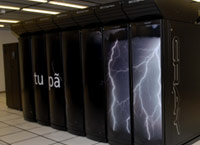
>In Science We Trust: Poll Results on How You Feel about Science (Scientific American)

>
Our Web survey of readers suggests that the scientifically literate public still trusts its experts—with some important caveats

By The Editors September 22, 2010 11

Scientists have had a rough year. The leaked “Climategate” e-mails painted researchers as censorious. The mild H1N1 flu out­break led to charges that health officials exaggerated the danger to help Big Pharma sell more drugs. And Harvard University in­vestigators found shocking holes in a star professor’s data. As policy decisions on climate, energy, health and technology loom large, it’s important to ask: How badly have recent events shaken people’s faith in science? Does the public still trust scientists?

To find out, Scientific American partnered with our sister publication, Nature, the international journal of science, to poll readers online. More than 21,000 people responded via the Web sites of Nature and of Scientific American and its international editions. As expected, it was a supportive and science-literate crowd—19 percent identified themselves as Ph.Ds. But attitudes differed widely depending on particular issues—climate, evolution, technology—and on whether respondents live in the U.S., Europe or Asia.

How Much Do People Trust What Scientists Say?

We asked respondents to rank how much they trusted various groups of people on a scale of 1 (strongly distrust) to 5 (strongly trust). Scientists came out on top by a healthy margin. When we asked how much people trust what scientists say on a topic-by-topic basis, only three topics (including, surprisingly, evolution) garnered a stronger vote of confidence than scientists did as a whole.

When Science Meets Politics: A Tale of Three Nations

Should scientists get involved in politics? Readers differ widely depending on where they are from. Germany, whose top politician has a doctorate in quantum chemistry, seems to approve of scientists playing a big role in politics. Not so in China. Even though most leaders are engineers, Chinese respondents were much less keen than their German or U.S. counterparts to see scientists in political life.

Build Labs, Not Guns

More than 70 percent of respondents agreed that in tough economic times, science funding should be spared. When asked what should be cut instead, defense spending was the overwhelming pick.

Techno Fears

Technology can lead to unintended consequences. We asked readers what technological efforts need to be reined in—or at least closely monitored. Surprisingly, more respondents were concerned about nuclear power than artificial life, stem cells or genetically modified crops.

U.S. vs. Europe

Europeans and Americans differ sharply in their attitudes toward technology. Higher proportions of respondents from Europe worry about nuclear power and genetically modified crops than those from the U.S. (In this grouping, Europe includes Belgium, France, Germany, Italy and Spain, but not Britain, where opinion is more closely aligned with that of the U.S.) In both Europe and the U.S., nanotechnology seems to be a great unknown. Europeans also expressed a mistrust of what scientists have to say about flu pandemics.


Suspicion Over the Flu

On June 11, 2009, the Geneva-based World Health Organization de­­clared the H1N1 flu outbreak a pandemic, confirming what virologists already knew—that the flu virus had spread throughout the world. Governments called up billions of dollars’ worth of vaccines and antiretroviral drugs, a medical arsenal that stood ready to combat a virus that, thankfully, turned out to be mild.

A year later two European studies charged that the WHO’s decision-making process was tainted by conflicts of interest. In 2004 a WHO committee recommended that governments stockpile antiretroviral drugs in times of pandemic; the scientists on that committee were later found to have ties to drug companies. The WHO has refused to identify the scientists who sat on last year’s committee that recommended the pandemic declaration, leading to suspicions that they might have ties to industry as well.

The controversy got a lot of press in Eu­­rope—­the Daily Mail, a British tabloid, declared: “The pandemic that never was: Drug firms ‘encouraged world health body to exaggerate swine flu threat’”; the controversy in the U.S. garnered little mention.

The brouhaha seems to have influenced opinion markedly in Europe. Nearly 70 percent of U.S. respondents in our survey trusted what scientists say about flu pandemics; in Europe, only 31 percent felt the same way. The figures represented the largest split between the U.S. and Europe on any issue in the poll.

Climate Denial on the Decline

Numerous polls show a decline in the percentage of Americans who believe humans affect climate, but our survey suggests the nation is not among the worst deniers. (Those are France, Japan and Australia.) Attitudes, however, may be shifting the other way. Among those respondents who have changed their opinions in the past year, three times more said they are more certain than less certain that humans are changing the climate.

>Negar para não mudar (Pesquisa Fapesp)

>
Política de C & T | Mudanças climáticas
Livro mostra como um trio de físicos se dedicou a combater a ideia do aquecimento global nos EUA

Marcos Pivetta, de San Diego*
Edição Impressa 175 – Setembro 2010

Nos tribunais, quando as evidências são enormes contra o réu e a condenação parece questão de tempo, os advogados de defesa sempre podem recorrer a uma derradeira tática: fomentar uma dúvida qualquer, às vezes sobre um aspecto secundário do delito, para turvar o raciocínio dos membros do júri e, assim, evitar ou ao menos postergar o quanto for possível a sentença. A partir do final dos anos 1980, uma versão desse clássico estratagema judicial – que, dentro e fora das cortes, fora usado eficazmente pela indústria do cigarro durante décadas para negar e minimizar os conhecidos malefícios do tabagismo – passou a ser empregada nos Estados Unidos para questionar a existência do aquecimento global e a contribuição das atividades humanas, em especial a queima de combustíveis fósseis emissores de gases de efeito estufa, no desencadeamento das mudanças climáticas.

Sempre que era divulgado um novo estudo de peso sobre a natureza do aquecimento global, três veteranos pesquisadores de enorme prestígio, abrigados numa entidade privada em Washington, o George C. Marshall Institute, saíam a campo para questionar os novos dados. “Primeiro, eles disseram que as mudanças climáticas não existiam, depois afirmaram que as variações de temperatura eram um fenômeno natural (tentaram atribuir a culpa a alterações na atividade solar) e então passaram a argumentar que, havendo as mudanças e mesmo sendo culpa nossa, isso não importava porque nós sempre poderíamos nos adaptar a elas”, afirmou a historiadora da ciência Naomi Oreskes, da Universidade da Califórnia em San Diego (UCSD), numa palestra realizada para jornalistas latino-americanos durante o 7o Taller Jack F. Ealy de Periodismo Científico, que ocorreu em julho nessa universidade. “Em todos os casos, eles negavam que havia um consenso científico sobre a questão, apesar de serem essencialmente eles mesmos os únicos que estavam contra.”

Ao lado do também historiador da ciência Erik Conway, que trabalha no Instituto de Tecnologia da Califórnia (Caltech), Naomi lançou em maio nos Estados Unidos o livro Merchants of doubt – How a handful of scientists obscured the thuth on issues from tobacco smoke to global warming (“Mercadores da dúvida – Como uns poucos cientistas ocultaram a verdade em temas que vão do cigarro ao aquecimento global”, numa tradução livre para o português). Na obra, muito bem documentada e que recebeu elogios na imprensa leiga e nas revistas científicas, Naomi e Conway, um especialista na história da exploração do espaço, mostram que já existe, e não é de hoje, um consenso científico sobre o aquecimento global, detalham a trajetória dos líderes do instituto e suas táticas de negação das mudanças climáticas.

Nos Estados Unidos, país que historicamente é o maior emissor de gases de efeito estufa e também o maior refratário a adotar políticas para mitigar as mudanças climáticas, a ação dos céticos do aquecimento global foi encabeçada nas duas últimas décadas por uma trinca de influentes físicos aposentados ou semiaposentados, todos hoje mortos: o especialista em física da matéria sólida Frederick Seitz (1911-2008), que participou do projeto da construção da bomba atômica durante a Segunda Guerra Mundial e foi presidente da Academia Nacional de Ciências dos Estados Unidos na década de 1960; o astrofísico Robert Jastrow (1925-2008), fundador e diretor do God-dard Institute for Space Studies da Nasa nos anos 1960 e uma figura importante na condução de vários projetos da agência espacial; e William Nierenberg (1919-2000), pesquisador apaixonado pelo mar que foi durante mais de 20 anos diretor do prestigioso Scripps Institution of Oceanography. Nenhum deles era um especialista em modelos climáticos, mas esse detalhe não diminuía sua influência na mídia e na administração norte-americana, sobretudo em governos republicanos.

Em 1984 os três fundaram o George C. Marshall Institute, cujo slogan era (e é) “ciência para uma política pública melhor”. O think tank, expressão em inglês usada para denominar esse tipo de instituto, tinha como objetivo original fazer lobby a favor do polêmico projeto de construção de um escudo espacial capaz de defender os Estados Unidos de um eventual ataque de mísseis balísticos disparados pela União Soviética. Apelidada de Guerra nas Estrelas, a iniciativa de defesa, concebida durante a administração de Ronald Reagan, nunca saiu do papel. Com a derrocada do império soviético entre o fim dos anos 1980 e o início dos 1990, o projeto do escudo espacial foi arquivado e Seitz, Jastrow e Nierenberg redirecionaram a atuação do instituto para um tema mais atual: o combate ao ambientalismo em geral e à negação do aquecimento global. “Eles tinham aquela ideia de que os ambientalistas eram como melancias: verdes por fora e vermelhos por dentro”, disse Naomi.

Ozônio e DDT – A dupla que escreveu o livro se conheceu numa conferência sobre história da meteorologia em 2004 na Alemanha e logo ambos perceberam que haviam chegado à mesma constatação: os cientistas que mais ativamente combatiam nos Estados Unidos a ideia de que a temperatura global do planeta estava aumentando eram os mesmos que, no passado recente, tinham negado ou ainda negavam a existência do buraco na camada de ozônio, os perigos da chuva ácida, os malefícios do pesticida DDT e os problemas de saúde causados pelo tabaco em fumantes passivos. “Em todos esses temas científicos, eles sempre estiveram do lado errado”, afirmou Naomi, que já deu aulas em Harvard, em Stanford, na New York University e hoje dirige o Sixth College da UCSD. “Quando descobrimos que Seitz tinha coordenado entre 1979 e 1985 o programa de pesquisa da R.J. Reynolds Tobacco Company, que investiu US$ 45 milhões em estudos científicos, vimos que tínhamos uma boa história.”

A atuação dos membros do instituto visava (e visa) mostrar que não havia consenso científico sobre a existência das mudanças climáticas e muito menos certeza sobre quais seriam as suas causas. Logo, diziam os cientistas do George C. Marshall Institute, o debate nesse campo da ciência estava totalmente aberto e não fazia sentido os Estados Unidos adotarem qualquer medida legal ou prática para diminuir o consumo de combustíveis fósseis. Exatamente a mesma tática foi empregada durante décadas por pesquisadores e médicos ligados ou patrocinados pela indústria do cigarro, que, a despeito das crescentes evidências dos malefícios do tabaco, negavam e minimizavam as conclusões dos estudos científicos.

Posta dessa maneira, a negação do aquecimento global parece ter sido alvo de uma conspiração encabeçada por um grupo de cientistas conservadores. Os autores do livro, no entanto, se apressam em descartar qualquer insinuação nessa linha. Eles dizem que não encontraram nada de ilegal na atuação de Seitz, Jastrow e Nierenberg e que tudo foi feito mais ou menos às claras. Entre os estratagemas do instituto, estava o de invocar um princípio clássico da imprensa norte-americana e ocidental: lembrar os jornalistas de que eles sempre têm de ouvir e dar espaço equivalente a visões contrárias às dominantes. Nas reportagens sobre mudanças climáticas, os dirigentes do George C. Marshall Institute e outros céticos do aquecimento global eram com frequência o outro lado.

Merchants of doubt apresenta Seitz, Jastrow e Nierenberg como fervorosos defensores da desregulamentação da economia, anticomunistas convictos, “falcões” a serviço da indústria dos combustíveis fósseis e de interesses conservadores. “O lobby deles foi muito eficiente porque a cultura americana da finada Guerra Fria era permeada pela crença no fundamentalismo dos mercados, na ideia de que os mercados eram, sempre e em todo o lugar, bons e que a regulamentação é sempre ruim”, diz Conway. “Essa ideia permitiu que a negação do aquecimento global funcionasse tão bem. A propaganda é mais eficiente quando se assenta em algo que as pessoas já acreditam.”

Reação ao livro – A publicação do livro levou a uma reação dos atuais comandantes do George C. Marshall Institute. Num artigo divulgado em junho no site do think tank, William O’Keefe e Jeff Kueter, respectivamente CEO e presidente do instituto, dizem que a obra carece de fundamentação científica e distorce a realidade. Eles defendem os bons serviços prestados à ciência pelos fundadores do instituto, dizem que Seitz, Jastrow e Nierenberg sempre foram anticomunistas e defensores do livre mercado – e que isso está longe de ser um defeito nos Estados Unidos.

De concreto, a resposta não desmente nenhum dos fatos centrais relatados no livro. Por exempo, O’ Keefe e Kueter admitem que Seitz realmente chefiou o programa de pesquisas da R.J. Reynolds depois de ter se aposentado do cargo de presidente da Universidade Rockefeller, algo que, segundo eles, não era segredo e estava na autobiografia do físico. Mas dizem que o intuito do programa não era gerar dados que questionassem os malefícios do cigarro. Pelo menos esse não era o objetivo de Seitz, ainda que pudesse ser o da indústria do tabaco.

Sobre a questão das mudanças climáticas, as respostas dos atuais dirigentes do instituto parecem dar mais razão a Naomi e Conway do que contradizê-los. “Na verdade, o único consenso (sobre o aquecimento global) que existe é entre aqueles que escrevem (o relatório do Painel Intergovernamental de Mudanças Climáticas, o IPCC, na sigla em inglês)”, afirmam O’Keefe, ex-vice presidente do Instituto Americano do Petróleo, e Kueter. Por isso, eles advogam mais pesquisas científicas sobre o tema e nenhuma ação imediata para diminuir as emissões de gases de efeito estufa: “Somos contra as políticas de reduções das emissões de poluentes e de mecanismos semelhantes ao Protocolo de Kyoto? Sim. Elas são caras e vão trazer pouco retorno ambiental”.

Para o climatologista Carlos Nobre, coordenador do Programa FAPESP de Pesquisa sobre Mudanças Climáticas Globais e do Centro de Ciência do Sistema Terrestre (CCST) do Instituto Nacional de Pesquisas Espaciais (Inpe), a atuação de lobbies conservadores ligados à indústria dos combustíveis fósseis, como o realizado pelo George C. Marshall Institute, atrasa a obtenção de um grande acordo mundial para a redução das emissões de gases de efeito estufa. “Eles sabem que estão numa batalha perdida, a exemplo do que ocorreu com o debate em torno dos malefícios do tabaco”, argumenta Nobre, que faz parte do time de 600 cientistas de mais de 40 países que compõem o IPCC. “O que eles querem é atrasar o máximo possível a adoção de medidas que forcem a indústria americana a reduzir suas emissões de poluentes.”

O físico Paulo Artaxo, professor da Universidade de São Paulo (USP), outro representante do Brasil no IPCC, pensa de forma semelhante. “Eles querem ganhar tempo”, afirma Artaxo. “Em ciência, nunca há 100% de certeza. Mas os dados compilados pelo IPCC representam a melhor ciência disponível sobre a questão do aquecimento global.” Em seu último relatório, o IPCC atribuiu, com um grau de 95% de confiabilidade, as mudanças climáticas ao aumento das atividades humanas no planeta. Criado em 1988, o IPPC não é perfeito e está corrigindo suas imprecisões e a forma de trabalhar. Mas seus dados, diz a maior parte dos pesquisadores, são uma razão para agir – e não para o imobilismo como defendem os céticos das mudanças climáticas.

A visão de Washington sobre o aque­cimento global mudou com a chegada do democrata Barack Obama à Casa Branca? Para Conway, a atual administração parece aceitar a realidade de que as mudanças climáticas são reais e decorrem essencialmente das atividades humanas. “Mas os Estados Unidos não têm sido muito pró-ativos nessa questão”, reconhece Conway. “Somos os líderes mundiais em ciência do clima. No entanto, em termos práticos, de medidas mitigadoras do aquecimento, os países escandinavos estão muito na nossa frente.”

* O jornalista Marcos Pivetta participou do 7o Taller Jack F. Ealy de Periodismo Científico a convite do Institute of the Americas.

>Women more likely than men to accept global warming

>
Published: Sept. 14, 2010 E-mail Editor ShareThis

Aaron M. McCright, associate professor of sociology
Michigan State University – News

EAST LANSING, Mich. — Women tend to believe the scientific consensus on global warming more than men, according to a study by a Michigan State University researcher.

The findings, published in the September issue of the journal Population and Environment, challenge common perceptions that men are more scientifically literate, said sociologist Aaron M. McCright.

“Men still claim they have a better understanding of global warming than women, even though women’s beliefs align much more closely with the scientific consensus,” said McCright, an associate professor with appointments in MSU’s Department of Sociology, Lyman Briggs College and Environmental Science and Policy Program.

The study is one of the first to focus in-depth on how the genders think about climate change. The findings also reinforce past research that suggests women lack confidence in their science comprehension.

“Here is yet another study finding that women underestimate their scientific knowledge – a troubling pattern that inhibits many young women from pursuing scientific careers,” McCright said.

Understanding how the genders think about the environment is important on several fronts, said McCright, who calls climate change “the most expansive environmental problem facing humanity.”

“Does this mean women are more likely to buy energy-efficient appliances and hybrid vehicles than men?” he said. “Do they vote for different political candidates? Do they talk to their children differently about global warming?”

McCright analyzed eight years of data from Gallup’s annual environment poll that asked fairly basic questions about climate change knowledge and concern. He said the gender divide on concern about climate change was not explained by the roles that men and women perform such as whether they were homemakers, parents or employed full time.

Instead, he said the gender divide likely is explained by “gender socialization.” According to this theory, boys in the United States learn that masculinity emphasizes detachment, control and mastery. A feminine identity, on the other hand, stresses attachment, empathy and care – traits that may make it easier to feel concern about the potential dire consequences of global warming, McCright said.

“Women and men think about climate change differently,” he said. “And when scientists or policymakers are communicating about climate change with the general public, they should consider this rather than treating the public as one big monolithic audience.”

>Trump offers to buy site of controversial center (CNN)

>
By the CNN Wire Staff
September 9, 2010 — Updated 2140 GMT (0540 HKT)

Donald Trump said he wants to buy the space “because it will end a … highly divisive situation.”

(CNN) — Real estate mogul Donald Trump has offered to buy the lower Manhattan site where a Muslim group plans to build an Islamic community center for 25 percent more than the current owners paid for it.

Trump made the offer Thursday in a letter to Hisham Elzanaty, an investor in the Islamic center site.

“I am making this offer as a resident of New York and citizen of the United States, not because I think the location is a spectacular one (because it is not), but because it will end a very serious, inflammatory, and highly divisive situation that is destined, in my opinion, to only get worse,” he wrote.

Trump further stipulated, as part of the offer, that if a mosque is to be built, “it would be located at least five blocks further from the World Trade Center site.”

Trump said he would pay cash for the site “with an immediate closing.”

“Hopefully, something good can happen!” he concluded.

There was no immediate response from Elzanaty.