Arquivo mensal: maio 2025

Artigos sobre o PL 2.159/2021 – Lei Geral do Licenciamento Ambiental

PL do licenciamento ambiental é “maior retrocesso em 40 anos”, diz ex-presidente do Ibama (Agência Pública)

Projeto de lei que desmonta regras de proteção ao meio ambiente deve ir a votação hoje (21) no plenário do Senado

Artigo original

21 de maio de 2025
Por Leandro Aguiar

Sob o argumento de que irá “desburocratizar” os processos de licenciamentos ambientais no Brasil, dinamizando a economia e gerando empregos, está para ser votado nesta quarta-feira (21), no plenário do Senado, o projeto da Lei Geral do Licenciamento Ambiental (PL 2.159/2021). Os relatórios foram aprovados nesta terça nas comissões de meio ambiente e de agricultura da Casa e o texto já seguiu, com regime de urgência, para o plenário.

Aprovado em 2021 na Câmara dos Deputados, onde tramitou por mais de 17 anos, o projeto foi apelidado de “PL da Devastação” por ambientalistas, e sua possível transformação em lei é vista por diferentes organizações como o mais grave ataque legislativo ao meio ambiente desde a redemocratização do Brasil. Caso aprovado no Senado, ele voltará à Câmara para mais uma votação, seguindo então para a sanção ou o veto da Presidência da República.

Em entrevista à Agência Pública, Suely Araújo, que presidiu o Instituto Brasileiro do Meio Ambiente e dos Recursos Renováveis (Ibama) entre 2016 e 2018 e atualmente é coordenadora de políticas públicas do Observatório do Clima, analisou alguns dos pontos que considera mais problemáticos no atual projeto. Pela organização, ela assinou uma nota técnica que analisa o texto em tramitação no Senado em comparação com o que foi aprovado na Câmara.

Na avaliação de Araújo, além de abraçar os “principais retrocessos” do PL aprovado na Câmara, os relatores do projeto no Senado, Tereza Cristina (PP-MS) e Confúcio Moura (MDB-RO), alcançaram uma proeza: piorá-lo. “Com o mecanismo do ‘autolicenciamento’, a proposta simplesmente transforma quase todas as licenças ambientais do país, cerca 90% delas, em um simples apertar de botão, em que sai a licença impressa sem a entrega de estudo ambiental pelo empreendedor e sem análise de alternativas técnicas”, critica.

O “autolicenciamento” é apenas um dos muitos pontos negativos do projeto elencados por Araújo. As condicionantes ambientais – espécie de contrapartida social e econômica que empreendimentos de grande impacto têm de oferecer às regiões afetadas – seriam flexibilizadas, assim como a validade de estudos ambientais, que poderiam ser desprezados pelo órgão expedidor das licenças ambientais.

Direitos indígenas e quilombolas, diz a especialista, também passam ao largo do projeto, que restringe a participação de autoridades que respondem pela proteção desses territórios na expedição das licenças, caso essas terras não estejam ainda formalmente homologadas. “É um negacionismo generalizado de direitos coletivos”, sintetiza Araújo.

Leia, a seguir, a íntegra da entrevista.

O Observatório do Clima produziu uma nota técnica sobre o PL do Licenciamento, em que afirma que os principais retrocessos presentes no texto aprovado em 2021 na Câmara dos Deputados estão mantidos. Quais são eles?

Há, por exemplo, a questão do autolicenciamento. Da forma como está, o projeto, que prevê uma ampliação das possibilidades de licença por adesão e compromisso (LAC), simplesmente transforma quase todas as licenças ambientais do país, cerca de 90% dos processos, em um simples apertar de botão em que sai a licença impressa, sem entrega de estudo ambiental pelo empreendedor e sem análise de alternativas técnicas locacionais.

O que o empreendedor botar no papel, vai ficar. Esse é o pior artigo, que faz do PL o caso mais grave de retrocesso em políticas ambientais nos últimos 40 anos. Além disso, contraria o entendimento do Supremo Tribunal Federal (STF), que determina que a LAC dos estados, que já existe hoje, só pode ser aplicada em empreendimentos de baixo risco e pequeno potencial poluidor.

Só que o texto do PL inclui [a possibilidade de que empreendimentos de] médio impacto e médio potencial [também peçam a LAC]. Com isso, eles pegam praticamente 90% dos processos de licenciamento, porque nem 10% dos processos de licenciamento têm o EIA, o estudo ambiental completo [esses não podem ser feitos via LAC].

Então isso implode com o licenciamento ambiental. Está nos dois textos [Câmara e Senado], e o texto do Senado consegue piorar, porque fala que a única coisa que o empreendedor entrega na LAC é um relatório de caracterização do empreendimento.

Há ainda uma emenda adicionada no Senado, um parágrafo que fala que a análise do relatório do empreendimento será feita por amostragem.

Ao priorizar o autolicenciamento e a flexibilização dos estudos ambientais, das condicionantes ambientais e do monitoramento, na prática, é possível afirmar que o licenciamento ambiental se tornará uma mera formalidade?

Essa é a questão. Eles veem o licenciamento como entrave, e entrave se tira da frente. Então eles priorizaram o autolicenciamento, sem estudo ambiental prévio. É o único tipo de modalidade de licenciamento que não entrega estudo, só entrega uma descrição, com algumas condicionantes prontas. Isso significa que ninguém vai analisar o local, nem alternativas técnicas, nem locacionais. O PL fere de morte a avaliação de impactos ambientais, como é praticado no Brasil e no mundo.

A avaliação de impactos ambientais, que precisa de análises alternativas, eles eliminam, porque na LAC o empreendedor entrega o que quer fazer. E pelo texto do Senado, ninguém nem está obrigado a ler isso. Bota no computador alguma inteligência artificial que seleciona as condicionantes e acabou.

Outro ponto destacado na nota técnica é de que o PL pode não só aumentar a poluição e o desmatamento, mas as desigualdades sociais. Como?

Ao tratar das condicionantes, o PL procura afastar todas aquelas que têm um perfil de políticas públicas.

Hoje existem condicionantes para mitigar impacto e para compensar. E uma das áreas em que essas condicionantes são aplicadas é o que a gente chama de meio socioeconômico. Por exemplo, se uma cidade, onde se instalou uma hidrelétrica, multiplicou por cinco seu tamanho em pouquíssimos anos, o empreendedor, que é o concessionário da hidrelétrica, tem que assegurar, por um tempo, a instalação de escolas, de postos de saúde, porque a prefeitura não vai ter dinheiro para isso. Estamos falando de cidades que multiplicaram várias vezes de tamanho em poucos anos, mas que ainda nem estão recebendo royalties ou qualquer compensação em razão da obra.

Mas pelo projeto, a hidrelétrica não mais teria de se responsabilizar por contrapartidas consideradas “sociais”. Parte-se do princípio de que tudo isso tem de cair no colo do poder público. Mas é claro que naquilo que é decorrente diretamente da obra, o empreendedor teria de ter responsabilidade. Assim como por ajudar a fiscalizar um desmatamento que está aumentando demais por causa da obra.

A nota técnica aponta, ainda, pontos do PL que seriam inconstitucionais. Se aprovadas, é possível que as novas regras de licenciamento ambiental cheguem ao STF, sendo anuladas pela corte?

Não tenho dúvida nenhuma, e provavelmente [será judicializado] por mais de um autor, entre os legitimados para irem diretamente ao STF. Porque tem vários pontos sobre os quais o Supremo já tomou uma decisão contrária [ao que o PL propõe].

Um dos exemplos é a LAC, que o Supremo decidiu que só pode ser usada em empreendimentos de baixo risco e pequeno potencial poluidor. O PL está contrariando isso.

Tem outro ponto, que é a parte das autoridades envolvidas no processo de licenciamento. Isso é inconstitucional de pai e mãe. Pelo PL, só seriam chamados para se manifestar os órgãos ligados à proteção dos direitos indígenas e dos quilombolas se forem [afetados pelo empreendimento] terra indígena homologada e território quilombola titulado.

Quer dizer, um território pode não estar titulado por omissão do Estado, e a partir dessa omissão estatal, o PL pretende tornar invisível perante o licenciamento ambiental o direito indígena e quilombola. Acontece que tanto os direitos indígenas quanto os direitos quilombolas estão expressamente defendidos na Constituição.

O PL estabelece que os pareceres de órgãos técnicos de Estado (como Funai) não tenham caráter vinculante, ou seja, poderiam ser desconsiderados pelos órgãos licenciadores. Como a senhora avalia este ponto?

Trata-se de uma desconsideração da importância dos direitos indígenas, dos direitos dos quilombolas, da importância do patrimônio histórico do país, da importância da saúde pública, porque tem processo em que o Ministério da Saúde se manifesta, quando o projeto é em zonas endêmicas de malária, por exemplo.

Então, é desconsideração de muita coisa. É um negacionismo generalizado de direitos coletivos.

Desde a promulgação da Constituição de 1988 tramitam no Congresso projetos de regulamentação nacional do licenciamento ambiental. Por que é tão difícil chegar a um consenso sobre o tema no legislativo?

O primeiro projeto foi de 1988, do ex-deputado Fabio Feldman. Ele queria regulamentar o EIA [Estudo de Impacto Ambiental], mas no curso desse processo, o conteúdo foi ampliado para regulamentar, em geral, o licenciamento ambiental. Esse processo tramitou por muitos anos e acabou sendo arquivado. Aí, em 2004, começou esse processo em que nós estamos hoje.

Ele começa por um parlamentar ambientalista, o ex-deputado Luciano Zica. Ele tem uma trajetória na área de qualidade ambiental de cidades e era da bancada ambientalista. Com o passar do tempo, esse texto, principalmente por influência da bancada ruralista e da Confederação Nacional da Indústria, que atuam juntas nesse processo, foi se tornando a lei da não licença e a lei do autolicenciamento.

Isso realmente significa um retrocesso histórico. Eu não conheço um texto com tantos problemas para a legislação ambiental como esse. A Lei da Política Nacional do Meio Ambiente, que institucionalizou o licenciamento em nível nacional, é de 1981.

Desde então, não vai haver nada com retrocesso tão forte. O licenciamento pode ser racionalizado, ninguém nega isso. Agora, o que eles estão fazendo é implodir com o licenciamento.

É muito assustador, é uma ferramenta que é importante em todos os países que têm política ambiental, é a principal ferramenta de prevenção de danos ambientais e socioambientais que existe no país. Um projeto como esse, eu acho que era melhor jogar fora e ficar com a confusão normativa que temos hoje, porque ninguém vai ganhar com esse texto.

E não vai trazer segurança jurídica, porque os próprios processos de licenciamento vão ser judicializados, mesmo que o conteúdo esteja em lei.

O texto em votação no Senado põe em risco a segurança hídrica nacional?

Sim, porque desvincula a outorga dos direitos de recursos hídricos e a certidão de uso do solo. A outorga é dada pelos órgãos de gerenciamento de recursos hídricos, e a certidão de uso do solo, pelos municípios. O projeto prevê que  o empreendedor, na licença, não precisa provar que tem outorga, nem que tem certidão municipal de uso do solo.

O que vai acontecer? O licenciador vai começar a dar licença, por exemplo, para uma termelétrica que não tem água [garantida]. Se não mostrar no processo que tem outorga de direitos de uso de recursos hídricos, o licenciador pode perder todo o trabalho dele, porque ele vai dar licença para uma termelétrica que não tem como captar água.

Então, essa desvinculação não ajuda em nada. Ela vai atrapalhar o empreendedor em vez de ajudar. Parece que está eliminando a burocracia, mas está atrapalhando, porque as coisas são conectadas. Eu não posso dar licença para um empreendimento, uma indústria em área urbana por exemplo, em uma área que for estritamente residencial. Mas se eu não tiver a certidão municipal de uso do solo, isso pode acontecer.

Se aprovado, o PL pode prejudicar acordos comerciais brasileiros com o exterior, ao contrariar compromissos internacionais de proteção ao meio ambiente assumidos pelo Brasil?

Olha, eu acho que o impacto será até mais amplo, porque os compradores vão saber que os nossos produtos estão sendo gerados sem controle ambiental. Isso vai gerar desconfiança, vai tirar a credibilidade dos produtos brasileiros.

Você enxerga esforços do governo para barrar a aprovação do PL ou para amenizar seu atual teor?

A ministra Marina Silva [do Meio Ambiente e Mudança do Clima] tem se manifestado com muita preocupação sobre as consequências do projeto. Há uma posição da liderança do governo que aponta problemas no projeto. Mas, na prática, essas manifestações ainda não têm tido a repercussão necessária. O governo não está conseguindo colocar obstáculos na votação desse texto. A impressão que dá é que vai passar de tratorado.

É possível acelerar os processos de licenciamento ambiental sem desbaratar a legislação que protege o meio ambiente?

Processos mais ágeis serão conseguidos com estudos ambientais melhores. Muitas vezes, no processo, o que o gestor agroambiental faz é devolver o estudo várias vezes porque ele faz uma demanda e o empreendedor nunca entrega o material completo.

Isso está acontecendo, por exemplo, no processo da perfuração do Bloco 59 na Foz do Amazonas. A Petrobras já teve N oportunidades de completar o estudo. O problema da incapacidade do empreendedor de entregar estudos completos ou de entregar estudos bons, robustos, é notório.

Muitos órgãos ambientais sofrem com esse problema. E vários tipos de empreendedores, tanto públicos quanto privados. Esse é um problema grave no licenciamento. Estudos insuficientes, malfeitos, copiados.

Outra coisa: os órgãos ambientais têm que ter equipe. Não dá para fazer milagre. Você trabalha com equipes que teriam que ser multiplicadas duas vezes, três vezes, em termos de número de servidores.

Isso no Ibama, que ainda tem servidor. Então, se houvesse estudos melhores e equipes completas, o licenciamento sairia de forma mais ágil.

Por que, mesmo existindo o licenciamento hoje, a gente convive com tantos problemas ambientais?

O licenciamento como é hoje tem problemas, tem dificuldades, mas nós mudamos o país com o licenciamento ambiental. Antes de ser regra nacional, a gente convivia com situações como a de Cubatão [cidade na Baixada Santista], com aquele polo industrial tão grande.

Cubatão era uma área absolutamente contaminada, com a população sofrendo problemas de saúde gravíssimos. Era chamado de Vale da Morte. Entre outros problemas que ocorriam, as crianças nasciam muitas vezes anencéfalas. É isso que o licenciamento ambiental mudou. O licenciamento mudou a realidade do país, com todas as suas dificuldades, com todos os seus problemas.

O duro é ver que em 2025, a gente pode estar voltando à situação como a de Cubatão. Porque isso ocorrerá se esse projeto for aprovado.

Edição: Giovana Girardi


Comissão do Senado aprova flexibilização do licenciamento ambiental; “Retrocesso”, alertam ambientalistas (Um Só Planeta/Globo)

Texto permite autolicenciamento para obras de médio porte

Artigo original

Por Lucas Pordeus León, da Ag. Brasil

20/05/2025 15h19  Atualizado há 6 horas

Brasília; Esplanada dos Ministérios
Brasília; Esplanada dos Ministérios — Foto: EBC

A Comissão de Meio Ambiente (CMA) do Senado aprovou, nesta terça-feira (20), por votação simbólica, o projeto de lei (PL) que cria novo marco para o licenciamento ambiental no Brasil com a flexibilização de regras para empreendimentos com impactos sobre o meio ambiente.

O PL 2.159/2021 é tido como um retrocesso por organizações ambientalistas e pelo Ministério do Meio Ambiente (MMA). Os especialistas que o criticam questionam a possibilidade de autolicenciamento por parte das empresas para obras de pequeno e médio portes, além da isenção de licença para determinadas atividades agropecuárias.

Por outro lado, a matéria é apoiada pela bancada ruralista e pelo presidente do Senado, Davi Alcolumbre (União-AP). Os defensores do PL argumentam que as regras atuais são contraditórias e burocráticas, o que paralisa obras e empreendimentos em todo o país, prejudicando desenvolvimento econômico. Ao mesmo tempo, sustentam que a matéria mantém a fiscalização ambiental.

O texto deve ser votado ainda na Comissão de Agricultura e Reforma Agrária e está na pauta do plenário do Senado nesta quarta-feira (21). Se aprovado, volta para nova análise da Câmara dos Deputados uma vez que o Senado alterou o texto original. Manifestaram-se contra o texto apenas os senadores do PT e a senadora Eliziane Gama (PDS-MA).

Eliziane argumentou que o texto apresentado no Senado é melhor do que o da Câmara, mas que ainda está “muito ruim”. Segundo a senadora, a lei é inconstitucional por liberar autolicenciamentos para obras de médio porte. Eliziane lembrou que o Supremo Tribunal Federal (STF) já derrubou leis estaduais com esse teor.

“[A barragem que se rompeu] em Brumadinho era de médio porte. Nós temos vários outros empreendimentos, não apenas em Minas Gerais, mas em outros estados, que são de médio porte. Se não considerarmos todo o processo de licenciamento ambiental como tem que ser, nós poderemos, em função do lucro e da competitividade, infelizmente, ceifar novas vidas”, afirmou a parlamentar.

O relator do PL na comissão, senador Confúcio Moura (MDB), disse que fez os ajustes possíveis para reduzir as divergências. Confúcio informou que o projeto, que tinha 80 pontos de discordâncias entre os senadores, ficou com apenas seis divergências ao final.

“Não ficou nem tanto ao mar, nem tanto à terra. Ficou o que foi possível. Sobre Brumadinho ser médio porte. Nós temos agora as condicionantes que o Poder ambiental vai usar para decidir o porte de cada empreendimento, como localização e natureza do empreendimento. Isso fica a cargo do órgão licenciador”, justificou.

O líder do governo no Senado, Jaques Wagner (PT-BA), criticou a transferência, para estados e municípios, do poder de definir o porte ou impacto ambiental das obras e empreendimentos no Brasil. Para ele, a mudança é “extremamente arriscada”.

“Nós estamos correndo risco de ter uma guerra ambiental. Quem facilitar mais o formato do licenciamento conseguirá atrair [o empreendimento]. Eu já fui governador, conheço a estrutura de prefeitura. Imagine, por exemplo, uma cidade pequena. A pressão de um grande empresário sobre o prefeito é muito grande. E eu acho que, às vezes, ele não tem estrutura para resistir a isso”, afirmou.

O líder do governo criticou ainda a decisão de desconsiderar órgãos técnicos no processo de licenciamento ambiental. “Desconsiderar órgãos técnicos, como a Funai [Fundação Nacional dos Povos Indígenas], que podem ser ouvidos, mas não são obrigados a ser acompanhados, eu acho que é fragilizar demais esse processo porque são órgãos técnicos, não políticos”, disse.

A relatora do projeto na CAR, senadora Tereza Cristina (PP-MS), disse que o texto não é perfeito, mas que precisa ser aprovado para destravar obras e empreendimentos no Brasil.

“As regulações [atuais] confundem e paralisam os processos e, muitas vezes, sobrepõem competências entre a União, os estados e os municípios. Isso causa insegurança jurídica. O licenciamento precisa ser visto e analisado com calma, só que, às vezes, são demoras sem necessidade, que atravancam o desenvolvimento. É claro que o meio ambiente precisa ser preservado, mas a lei que estamos discutindo não revoga nenhuma punição por crime ambiental”, comentou.

Já o senador Omar Aziz (PSD-AM) disse que o projeto seria um “presente para o presidente Lula” por destravar obras e criticou a legislação ambiental no país.

“É a solução de continuidade nas obras que não andam nesse país. Lá no meu estado, temos uma mina de potássio, de ureia e temos o fósforo, que fazem os fertilizantes E não querem que a gente aprove isso aqui porque o meio ambiente não permite que a gente trabalhe. Hoje, a gente vive hoje refém de uma política ambientalista que não interessa à nação brasileira”, afirmou Aziz.

Retrocesso

Organizações ambientais sustentam que o projeto representa o maior retrocesso em matéria de legislação ambiental dos últimos 40 anos, desde a Constituição de 1988.

A coordenadora do Observatório do Clima, Suely Araújo, reconhece os problemas do licenciamento, mas avalia que as mudanças propostas pelo Parlamento não resolvem problemas operacionais.

“Temos problemas? Temos. Os processos demoram e poderiam ser mais previsíveis. A gente pode discutir uma série de melhorias procedimentais. No lugar de garantir mais pessoal para realizar os licenciamentos, você começa a transformar o licenciamento em um apertar de botão. Essa é a distorção”, respondeu.

Já o Ministério do Meio Ambiente considera que o projeto viola princípios fundamentais da Constituição, que garante um meio ambiente equilibrado. O secretário executivo do ministério, João Paulo Capobianco, considera a matéria um grande retrocesso.

“O projeto viola, da forma como está, alguns princípios fundamentais que já foram trazidos pelo Supremo para resolver outras inúmeras questões ocorridas, principalmente, no governo anterior. O Supremo adotou o princípio do não retrocesso como um princípio basilar nas suas decisões e esse projeto de lei, evidentemente, traz um conjunto grande de retrocessos”, disse.

AI Is Deciphering Animal Speech. Should We Try to Talk Back? (Gizmodo)

gizmodo.comoriginal article

As scientists use machine learning to decode the sounds of whales, dogs, and dolphins, opinions vary on how best to deploy the technology.

Isaac Schultz

May 17, 2025


Chirps, trills, growls, howls, squawks. Animals converse in all kinds of ways, yet humankind has only scratched the surface of how they communicate with each other and the rest of the living world. Our species has trained some animals—and if you ask cats, animals have trained us, too—but we’ve yet to truly crack the code on interspecies communication.

Increasingly, animal researchers are deploying artificial intelligence to accelerate our investigations of animal communication—both within species and between branches on the tree of life. As scientists chip away at the complex communication systems of animals, they move closer to understanding what creatures are saying—and maybe even how to talk back. But as we try to bridge the linguistic gap between humans and animals, some experts are raising valid concerns about whether such capabilities are appropriate—or whether we should even attempt to communicate with animals at all.

Using AI to untangle animal language

Towards the front of the pack—or should I say pod?—is Project CETI, which has used machine learning to analyze more than 8,000 sperm whale “codas”—structured click patterns recorded by the Dominica Sperm Whale Project. Researchers uncovered contextual and combinatorial structures in the whales’ clicks, naming features like “rubato” and “ornamentation” to describe how whales subtly adjust their vocalizations during conversation. These patterns helped the team create a kind of phonetic alphabet for the animals—an expressive, structured system that may not be language as we know it but reveals a level of complexity that researchers weren’t previously aware of. Project CETI is also working on ethical guidelines for the technology, a critical goal given the risks of using AI to “talk” to the animals.

Meanwhile, Google and the Wild Dolphin Project recently introduced DolphinGemma, a large language model (LLM) trained on 40 years of dolphin vocalizations. Just as ChatGPT is an LLM for human inputs—taking visual information like research papers and images and producing responses to relevant queries—DolphinGemma intakes dolphin sound data and predicts what vocalization comes next. DolphinGemma can even generate dolphin-like audio, and the researchers’ prototype two-way system, Cetacean Hearing Augmentation Telemetry (fittingly, CHAT), uses a smartphone-based interface that dolphins employ to request items like scarves or seagrass—potentially laying the groundwork for future interspecies dialogue.

“DolphinGemma is being used in the field this season to improve our real-time sound recognition in the CHAT system,” said Denise Herzing, founder and director of the Wild Dolphin Project, which spearheaded the development of DolphinGemma in collaboration with researchers at Google DeepMind, in an email to Gizmodo. “This fall we will spend time ingesting known dolphin vocalizations and let Gemma show us any repeatable patterns they find,” such as vocalizations used in courtship and mother-calf discipline.

In this way, Herzing added, the AI applications are two-fold: Researchers can use it both to explore dolphins’ natural sounds and to better understand the animals’ responses to human mimicking of dolphin sounds, which are synthetically produced by the AI CHAT system.

Expanding the animal AI toolkit

Outside the ocean, researchers are finding that human speech models can be repurposed to decode terrestrial animal signals, too. A University of Michigan-led team used Wav2Vec2—a speech recognition model trained on human voices—to identify dogs’ emotions, genders, breeds, and even individual identities based on their barks. The pre-trained human model outperformed a version trained solely on dog data, suggesting that human language model architectures could be surprisingly effective in decoding animal communication.

Of course, we need to consider the different levels of sophistication these AI models are targeting. Determining whether a dog’s bark is aggressive or playful, or whether it’s male or female—these are perhaps understandably easier for a model to determine than, say, the nuanced meaning encoded in sperm whale phonetics. Nevertheless, each study inches scientists closer to understanding how AI tools, as they currently exist, can be best applied to such an expansive field—and gives the AI a chance to train itself to become a more useful part of the researcher’s toolkit.

And even cats—often seen as aloof—appear to be more communicative than they let on. In a 2022 study out of Paris Nanterre University, cats showed clear signs of recognizing their owner’s voice, but beyond that, the felines responded more intensely when spoken to directly in “cat talk.” That suggests cats not only pay attention to what we say, but also how we say it—especially when it comes from someone they know.

Earlier this month, a pair of cuttlefish researchers found evidence that the animals have a set of four “waves,” or physical gestures, that they make to one another, as well as to human playback of cuttlefish waves. The group plans to apply an algorithm to categorize the types of waves, automatically track the creatures’ movements, and understand the contexts in which the animals express themselves more rapidly.

Private companies (such as Google) are also getting in on the act. Last week, China’s largest search engine, Baidu, filed a patent with the country’s IP administration proposing to translate animal (specifically cat) vocalizations into human language. The quick and dirty on the tech is that it would intake a trove of data from your kitty, and then use an AI model to analyze the data, determine the animal’s emotional state, and output the apparent human language message your pet was trying to convey.

A universal translator for animals?

Together, these studies represent a major shift in how scientists are approaching animal communication. Rather than starting from scratch, research teams are building tools and models designed for humans—and making advances that would have taken much longer otherwise. The end goal could (read: could) be a kind of Rosetta Stone for the animal kingdom, powered by AI.

“We’ve gotten really good at analyzing human language just in the last five years, and we’re beginning to perfect this practice of transferring models trained on one dataset and applying them to new data,” said Sara Keen, a behavioral ecologist and electrical engineer at the Earth Species Project, in a video call with Gizmodo.

The Earth Species Project plans to launch its flagship audio-language model for animal sounds, NatureLM, this year, and a demo for NatureLM-audio is already live. With input data from across the tree of life—as well as human speech, environmental sounds, and even music detection—the model aims to become a converter of human speech into animal analogues. The model “shows promising domain transfer from human speech to animal communication,” the project states, “supporting our hypothesis that shared representations in AI can help decode animal languages.”

“A big part of our work really is trying to change the way people think about our place in the world,” Keen added. “We’re making cool discoveries about animal communication, but ultimately we’re finding that other species are just as complicated and nuanced as we are. And that revelation is pretty exciting.”

The ethical dilemma

Indeed, researchers generally agree on the promise of AI-based tools for improving the collection and interpretation of animal communication data. But some feel that there’s a breakdown in communication between that scholarly familiarity and the public’s perception of how these tools can be applied.

“I think there’s currently a lot of misunderstanding in the coverage of this topic—that somehow machine learning can create this contextual knowledge out of nothing. That so long as you have thousands of hours of audio recordings, somehow some magic machine learning black box can squeeze meaning out of that,” said Christian Rutz, an expert in animal behavior and cognition and founding president of International Bio-Logging Society, in a video call with Gizmodo. “That’s not going to happen.”

“Meaning comes through the contextual annotation and this is where I think it’s really important for this field as a whole, in this period of excitement and enthusiasm, to not forget that this annotation comes from basic behavioral ecology and natural history expertise,” Rutz added. In other words, let’s not put the horse before the cart, especially since the cart—in this case—is what’s powering the horse.

But with great power…you know the cliché. Essentially, how can humans develop and apply these technologies in a way that is both scientifically illuminating and minimizes harm or disruption to its animal subjects? Experts have put forward ethical standards and guardrails for using the technologies that prioritize the welfare of creatures as we get closer to—well, wherever the technology is going.

As AI advances, conversations about animal rights will have to evolve. In the future, animals could become more active participants in those conversations—a notion that legal experts are exploring as a thought exercise, but one that could someday become reality.

“What we desperately need—apart from advancing the machine learning side—is to forge these meaningful collaborations between the machine learning experts and the animal behavior researchers,” Rutz said, “because it’s only when you put the two of us together that you stand a chance.”

There’s no shortage of communication data to feed into data-hungry AI models, from pitch-perfect prairie dog squeaks to snails’ slimy trails (yes, really). But exactly how we make use of the information we glean from these new approaches requires thorough consideration of the ethics involved in “speaking” with animals.

A recent paper on the ethical concerns of using AI to communicate with whales outlined six major problem areas. These include privacy rights, cultural and emotional harm to whales, anthropomorphism, technological solutionism (an overreliance on technology to fix problems), gender bias, and limited effectiveness for actual whale conservation. That last issue is especially urgent, given how many whale populations are already under serious threat.

It increasingly appears that we’re on the brink of learning much more about the ways animals interact with one another—indeed, pulling back the curtain on their communication could also yield insights into how they learn, socialize, and act within their environments. But there are still significant challenges to overcome, such as asking ourselves how we use the powerful technologies currently in development.

Cientistas identificam elementos da linguagem humana em chimpanzés (Um Só Planeta/Globo)

Os resultados também reforçam pesquisas semelhantes com outros primatas, como orangotangos e bonobos

Por Redação do Um Só Planeta – artigo original

12/05/2025 15h39  Atualizado há 17 horas

Um grupo de pesquisadores gravaram milhares de vocalizações feitas por chimpazés selvagens no Parque Nacional de Taï, em Ivory Coast
Um grupo de pesquisadores gravaram milhares de vocalizações feitas por chimpazés selvagens no Parque Nacional de Taï, em Ivory Coast — Foto: Liran Samuni/Taï Chimpanzee Project

Pesquisadores registraram milhares de vocalizações de chimpanzés selvagens no Parque Nacional de Taï, na Costa do Marfim, e encontraram dois elementos fundamentais da fala humana nesse comportamento animal: ritmo e combinação de sons.

Dois estudos recentes revelam que os chimpanzés usam estruturas rítmicas e combinam chamadas vocais para se comunicar — características consideradas pilares da linguagem falada. Para a cientista Catherine Crockford, diretora de pesquisa do Centro Nacional de Pesquisa Científica da França, essas descobertas são como “pegadas iniciais” de como a linguagem humana pode ter evoluído.

Os resultados também reforçam pesquisas semelhantes com outros primatas, como orangotangos e bonobos. No entanto, cientistas alertam que estudos com chimpanzés selvagens estão cada vez mais difíceis devido à caça, ao comércio de animais de estimação e à destruição de seus habitats.

Batidas com significado

Um dos estudos, publicado na revista Current Biology, analisou padrões de percussão feitos por chimpanzés nas florestas da África Ocidental e Oriental. Os animais usam as raízes salientes das árvores como superfícies para bater com os pés, enquanto seguram as raízes com as mãos — um tipo de “dança” que pode ser ouvida à distância.

Segundo a professora Cat Hobaiter, da Universidade de St. Andrews, os chimpanzés usam essas batidas para indicar direção de deslocamento ou para fazer um “check-in” social. Cada chimpanzé tem um “ritmo assinatura” próprio, reconhecível pelos outros, como se fosse um sotaque regional.

A análise de centenas de episódios de percussão confirmou que não só existe uma estrutura rítmica nas batidas, como populações diferentes usam ritmos distintos, o que sugere que esses padrões são aprendidos e controlados — aspectos essenciais da linguagem humana.

Hobaiter destaca que o ritmo é uma parte central do comportamento social humano: “Está presente nas conversas, no timing de um sotaque do interior ou na fala rápida da cidade.”

Combinação de sons com novos significados

Outro aspecto central da linguagem humana é a combinação de sons limitados para criar significados ilimitados. Para investigar isso entre os chimpanzés, Catherine Crockford e sua equipe acompanharam 53 indivíduos na Costa do Marfim, registrando todas as vocalizações e comportamentos ao longo do dia.

Com mais de 4.000 registros analisados, os pesquisadores identificaram uma dúzia de sons distintos, usados tanto isoladamente quanto em combinações. A análise se concentrou em pares de sons, ou “bigramas”, e mostrou que a combinação altera o significado original de cada som.

Por exemplo, o som “hoo” normalmente indica que o chimpanzé está descansando, enquanto “pant” costuma significar que está brincando. Mas, combinados, os dois sons sinalizam que o chimpanzé está construindo um ninho.

Estudos anteriores só haviam detectado esse tipo de combinação em situações de alarme, como a presença de predadores, mas o novo estudo sugere que esse comportamento tem usos cotidianos e sociais.

Embora os cientistas reconheçam que a comunicação dos chimpanzés é menos flexível e complexa que a linguagem humana, a motivação pode ser semelhante: a necessidade de navegar em um ambiente social. Crockford comenta que os chimpanzés, assim como os humanos, podem usar a comunicação para descobrir mudanças de status ou conflitos no grupo — algo bem parecido com o que chamamos de fofoca.

Ela conclui: “Provavelmente, essa habilidade de combinar sons não evoluiu apenas para alertar sobre predadores. Ela surgiu porque os chimpanzés, assim como nós, precisam entender e interagir com o mundo social ao redor.”

Walking in two worlds: how an Indigenous computer scientist is using AI to preserve threatened languages (Nature)

Original article

TECHNOLOGY FEATURE

02 May 2025

Michael Running Wolf leads artificial-intelligence initiatives to revive lost languages and empower Indigenous people.

By Amanda Heidt

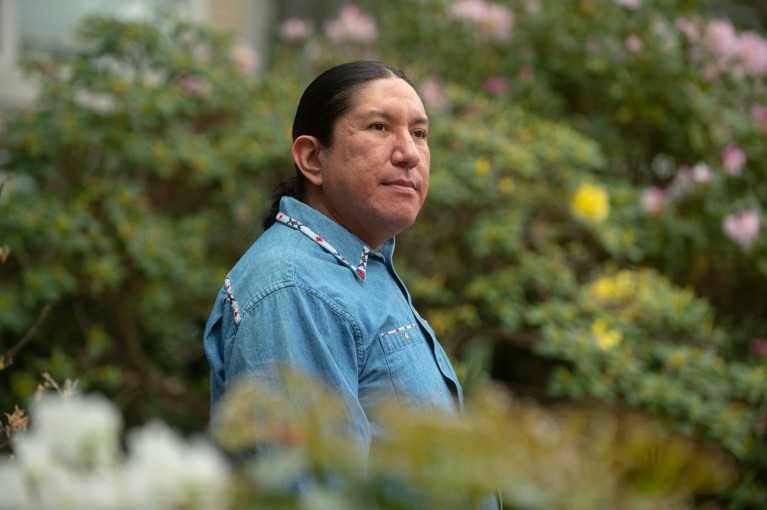
Portrait of Michael Running Wolf standing in a garden
AI researcher Michael Running Wolf grew up listening to his community speak Indigenous languages, an increasingly rare experience. Credit: Taehoon Kim/Northeastern University

Colleagues routinely describe Michael Running Wolf as someone who walks seamlessly between two worlds.

As an artificial intelligence (AI) researcher at the software-development company SynthBee in Fort Lauderdale, Florida, and as co-founder of the First Languages AI Reality (FLAIR) programme at the Mila–Quebec Artificial Intelligence Institute in Montreal, Canada, Running Wolf holds a deep understanding of both the technology underlying AI and the societal benefits it could unlock. And as the son of Lakota and Cheyenne parents, he also knows how technology and data have been weaponized to harm Indigenous communities. Running Wolf therefore approaches his work — in which he revitalizes disappearing languages using AI and virtual-reality tools — with patience, empathy and a healthy dose of scepticism.

“The work that Michael does is so sophisticated and complex because it’s bridging the sacred with the science,” says Estakio Beltran, a partnership adviser at the non-profit organization Native Americans in Philanthropy in Washington DC, who collaborates with Running Wolf and is of Tolteca-Mexica and Tlatoani origin. “We’re fortunate to have him overseeing efforts to reclaim Indigenous languages because his foremost thoughts are to protect and honour Indigenous sovereignty.”

Running Wolf grew up just outside the Northern Cheyenne Indian Reservation in southeastern Montana, in a remote town called Birney (2020 population: 97). The settlement often lacked running water and electricity, but it was nevertheless a comforting place where he was surrounded by family, literally — everyone in the town was an extended relative through his mother, and Running Wolf didn’t meet a stranger until he left for university age 18. He spent his childhood learning traditional Cheyenne and Lakota artistry and hearing Indigenous languages spoken around him, an experience that is now increasingly rare.

“For decades, the US government oversaw policies of forced assimilation, and as part of that, it was illegal to speak traditional languages or to practise our cultures openly,” he says. “Those policies were often enforced violently, and so we lost generations of fluent speakers that make it really difficult to come back from now.”

Running Wolf was a strong student from a young age, he says, and quickly developed an interest in technology, spurred by his mother’s career as a laser lithographer designing microchips for the computing firm Hewlett-Packard in Colorado. He learnt the basics of computer programming in primary school — including working out how to reprogram his graphing calculator to play games such as Snake. However, when it came to choosing a degree course at Montana State University in Bozeman in 1999, Running Wolf says he picked the then-nascent field of computer science on instinct. “No one in my family, or even my guidance counsellor, actually knew what it was.”

Even as he gravitated towards software development, Running Wolf retained an interest in Indigenous histories, noting that if he hadn’t become an AI researcher, he probably would have become an artist or a poet like his father, who holds a degree in fine arts. When he returned to Bozeman in 2007 after a three-year stint in industry to complete a master’s degree in computer science, Running Wolf’s future bridging the two fields began to take shape.

For his master’s thesis, Running Wolf drew inspiration from the work of researchers who had used oral histories to trace the origins of tales such as Little Red Riding Hood and to identify items eligible for repatriation under the Native American Graves Protection and Repatriation Act. He spent the summer of 2014 in Siberia, Russia, collecting stories from local Indigenous peoples and using a type of AI called natural language processing to look for similarities between their cultures and those closer to his home. “Ecologically, the area is very similar to the Yellowstone biome in Montana, and so I was interested in how those types of force shape language and culture,” he says. “It stopped being pure computer science and brought in aspects of anthropology.”

Around this time, Running Wolf also met his wife Caroline, a member of the Apsáalooke Nation who speaks 11 languages and was then earning her master’s degree in Native American studies. Together, the two became consumed by thoughts of how computational tools and big data could be used to improve understanding of Indigenous cultures and to reclaim lost languages. The United Nations estimates that roughly half of the world’s 6,700 languages — the majority of which are spoken by Indigenous peoples — are on track to disappear by 2100, yet Running Wolf says there are rarely rigorous plans in place to save them.

“We were both frustrated with the lack of good progress in what was being done at the time,” Running Wolf says. He adds that Caroline has since joined him in co-founding an Indigenous non-profit technology firm called Buffalo Tongue and in managing ongoing projects focused on the applications of AI and immersive technologies for reclaiming Indigenous languages and cultures. “What began as these late-night conversations eventually kicked off this whole new chapter of using technology for language reclamation, and we’ve just become enmeshed in that space.”

The challenges of AI

Indigenous languages differ from those with Latin roots in ways that make them a challenge to reconcile with existing machine-learning frameworks, Running Wolf says. Many Western languages follow a subject–verb–object sentence structure, for example, whereas Indigenous languages tend to be verb-based and polysynthetic, meaning that a single word can include multiple elements that, in English, would be written out as entire sentences. ‘Bird’, for instance, might translate to something like ‘the winged, flying animal that caws’.

Because generative AI models predict the next word in a sentence on the basis of the preceding words, these differences mean that algorithms often do a poor job of recognizing and translating Indigenous languages. However, models perform better when they include Indigenous languages, Running Wolf says, because training on a greater diversity of data ultimately makes the underlying algorithms more adaptive and flexible, just as people who know two languages typically have an easier time learning a third. “But that does create a risk for communities when our language data are suddenly valuable,” he adds.

A member of Te Hiku Media working at laptops with members of the Māori community
Staff members at the New Zealand firm Te Hiku Media sought the input of local communities to co-create an automatic speech-recognition system for the Māori language te reo.Credit: Te Hiku Media

Already, there has been a rush by companies such as OpenAI, Amazon and Google to gain access to Indigenous data on language and more; the firms use that information to develop services and products that are then offered back to users, often at a cost. Long-standing mistrust over how their information is likely to be misused has caused some Indigenous communities to disavow themselves of ever turning to AI-based technologies, a stance that Running Wolf respects.

“A lot of this kind of research is without consent, unfortunately, and it has soured people on even trying to engage,” he says. “There’s a lot of risk with AI, and so I think that’s a very healthy response.”

Creating tools for societal good

Running Wolf is working to overcome these hesitations through creating resources by and for Indigenous communities that help to educate them both about their cultures and the technology and, in turn, give them more control over how their data are used.

His early efforts began as employee network groups, including one for Indigenous researchers at Amazon when Running Wolf was there working on the company’s AI-powered assistant, Alexa. Later, he and Caroline were involved in launching two wider initiatives, Indigenous in AI and IndigiGenius. These partner with peer groups such as the information-technology consultancy firm Natives in Tech in Oklahoma City, Oklahoma, the Indigenous Protocol and Artificial Intelligence Working Group and the Abundant Intelligences research project to shape the future of Indigenous-led AI efforts. In 2019, the Running Wolfs participated in two workshops alongside dozens of other researchers to produce a paper outlining how best to ethically design and create AI tools (J. E. Lewis et alIndigenous Protocol and Artificial Intelligence Position Paper; CIFAR, 2020).

In many instances, one challenge these groups face is a lack of fluent speakers of Indigenous languages to both teach the next generation and to help train AI language models. Although children once learnt their ancestral languages at home, they now mostly engage with languages in the classroom. There’s an urgent need, Running Wolf says, for curricula and other resources — not to replace Indigenous speakers, but to train new teachers and standardize how Indigenous languages are taught. “Now, we have a lot of Native Americans trying to learn in classes using methodologies that don’t have good pedagogy or even good metrics for success,” he says.

Early on in his professional career, Running Wolf sought the advice of Peter-Lucas Jones, chief executive of Te Hiku Media in Kaitaia, New Zealand, who is of Te Aupōuri, Ngāi Takoto and Ngāti Kahu origin and co-created an automatic speech-recognition system for the Māori language te reo. By soliciting input from local communities, Jones was able to amass nearly 200,000 recordings from thousands of people — a data-set size largely unheard of in Indigenous language revitalization work. The resulting system can translate spoken te reo into English text with 92% accuracy, and translate bilingual speech that uses both languages with 82% accuracy. It has been used as the foundation for a platform called Papa Reo, which is intended to help other Indigenous communities to emulate its success. A key part of that equation, Jones says, is relinking language and culture.

“Language springs from the life and the landscape that it describes, and so when we think about language, it’s important to recognize that it is the ideal vehicle for the transmission of culture,” Jones says. “When language is separated from culture, we find that it’s much harder for people to achieve fluency, and so we treat them as the same thing, walking hand in hand.”

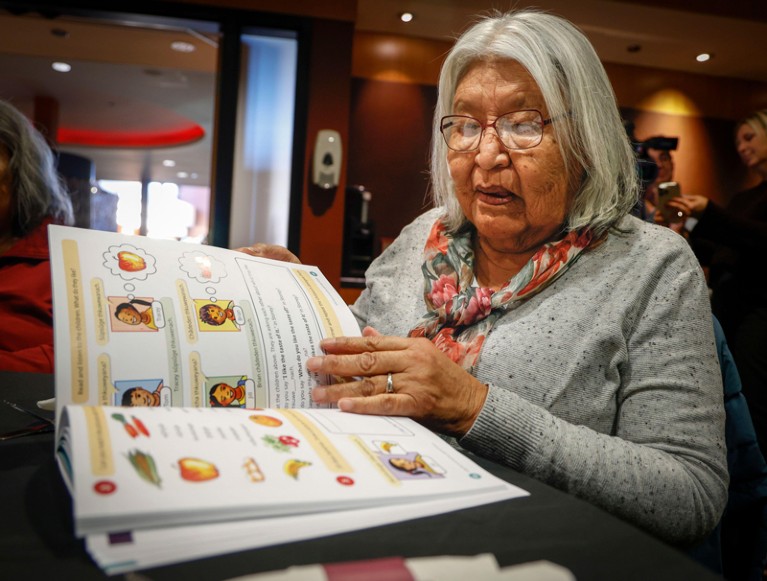
Stoney Nakoda elder Winnfred Beaver looks through a textbook for the Stoney Indigenous language
The knowledge of community elders is crucial to developing resources that preserve Indigenous languages, such as textbooks.Credit: The Canadian Press/Alamy

Running Wolf is now working with researchers including T’łaḵwama’og̱wa (Sara Child), an Indigenous language educator at North Island College in Courtenay, Canada, who is a member of the Kwakiutl Nation, on a programme centred on Kwak’wala, a language spoken by a few hundred people around Vancouver Island in Canada. The team is following a similar approach to that of Jones, collecting and curating a bank of words and phrases to create a speech-to-text program and an oral dictionary. With those tools in hand, the research group will use virtual reality to create a ‘cultural immersion experience’ in which users accompany virtual, interactive characters as they take a canoe journey to several sacred islands in the area.

“This project has the added bonus of not just teaching language, but in helping us get elders back to places of meaning, which helps them unlock memories from their past,” Child says, adding that bringing community elders into the work has helped the team to structure content in ways that honour history without oversharing.

The hope, Running Wolf says, is that because many Indigenous communities in the area share similar cultures and facets of language, once the resources are made, it will be easy to adapt them for others. The same is true among Indigenous communities such as the Cherokee, Chickasaw, Choctaw, Creek (Muscogee) and Seminole, and Running Wolf is working towards partnerships with those groups as well. “Languages within the same family have a high overlap of sounds and grammatical structures, and so we can amplify the data with some AI tricks to expand the reach that these tools can have,” he says.

A north star for trust

Even as Indigenous-led efforts take off, there’s an understanding that it will become necessary to work with other partners to fully integrate such efforts into the wider technological ecosystem. Running Wolf says this is especially true when introducing Indigenous languages into spaces such as the digital economy, in which he says Indigenous communities must have a place.

“AI is being rolled into so many aspects of everyday life, and if these new technologies only speak Western languages, Indigenous communities will end up excluded,” says Running Wolf. “Data is something of a new frontier and cutting off access a new form of colonized violence. If we have no place in the digital economy, it’s going to be really hard for us to thrive.”

When looking for collaborative partners, Running Wolf is guided by three principles that others can easily adopt. First, any project he’s part of must have strong and explicit buy-in from the communities involved and a sense of duty to language reclamation. A crucial part of this, he adds, is the second principle — that communities must retain ownership of their information such that they can withdraw access at any time. Third, giving credit to community partners in research publications, presentations and outreach material goes a long way towards creating trust, he says.

“We have very few speakers in many of these communities, and so if one of our partners pulls out because they distrust us, it hurts the overall research,” he says. “We’re always aiming to create an environment of high trust as our north star.”

Derek Eagle LaRance, a language revitalization specialist of Quechan and Morongo descent at Cherokee Film, the Cherokee Nation’s first film and media education centre, in Tulsa, Oklahoma, agrees that although Indigenous people need to lead these efforts, that doesn’t mean there’s no room for others to get involved. “The invitation is out there from Indian country to come to our communities and show up ready to listen,” he says. “The work has to be done by us because there’s a connection we have to the languages that gives us a deeper insight, but it doesn’t mean that an ally couldn’t be right there with us, supporting and protecting and creating a safe environment for this work to be done.”

Nature 641, 548-550 (2025)

doi: https://doi.org/10.1038/d41586-025-01354-y

More:

From exploitation to empowerment: how researchers can protect Indigenous peoples’ rights to own and control their data

How researchers can work fairly with Indigenous and local knowledge

Controversial geoengineering projects to test Earth-cooling tech funded by UK agency (Nature)

Original article

NEWS

07 May 2025

The Advanced Research and Invention Agency is investing £57 million to study climate-manipulating technologies, but says it is taking a cautious approach.

By Jonathan O’Callaghan

andscape view as the setting sun casts shafts of light along a valley in Mid-Wales.
Solar geoengineering research involves investigating ways to ‘dim’ the Sun’s rays in an effort to cool Earth’s temperatures. Credit: Mike Kemp/In Pictures via Getty

The United Kingdom’s high-risk research agency will fund £56.8 million (US$75 million) worth of projects in the controversial area of geoengineering — manipulating Earth’s environment to avert negative effects of climate change. The 21 projects include small-scale outdoor experiments that will attempt to thicken Arctic sea ice and to brighten clouds so that they reflect more sunlight. The hope is that successful technologies could one day contribute to efforts to prevent the planet from passing dangerous climate tipping points.The UK’s $1-billion bet to create technologies that change the world

Supported by the Advanced Research and Invention Agency (ARIA) as part of its five-year Exploring Climate Cooling programme, the projects are among the most significant geoengineering experiments funded by a government.

The research has the potential to be beneficial, but must be undertaken cautiously, says Peter Frumhoff, a science-policy adviser at the Woodwell Climate Research Center in Falmouth, Massachusetts. “I am strongly supportive of responsible research on solar geoengineering and other climate interventions,” he says.

The funding package is the latest from ARIA, which was established in 2023 by the UK government and is modelled on the US Defense Advanced Research Projects Agency. With an £800-million budget, it funds high-risk, high-reward research into technologies that could have major consequences for humanity, including artificial intelligence and neurotechnology.

Divisive research

Another such area identified by ARIA was geoengineering, says Mark Symes, an electrochemist at the University of Glasgow, UK, who leads the Exploring Climate Cooling programme.

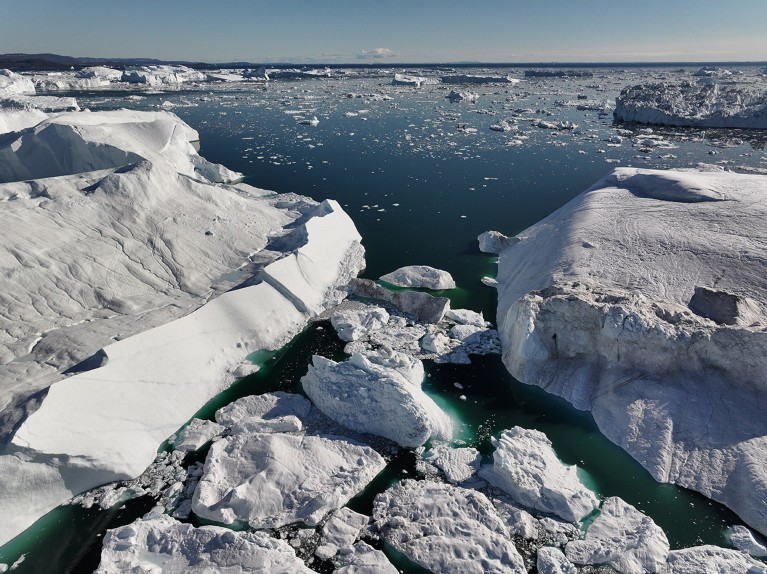
An aerial view of melting icebergs near Ilulissat, Greenland.
ARIA-funded experiments will investigate whether Earth’s diminishing ice sheets can be artificially thickened.Credit: Sean Gallup/Getty

Symes says the programme’s goal is not to find ways to replace more accepted approaches to tackling climate change, such as reducing carbon emissions. Instead, he says, geoengineering could be useful to prevent the world reaching certain tipping points that might occur before emissions reductions can have an effect. That could include “the collapse of circulations in the North Atlantic driven by the runaway melting of the Greenland ice sheet”, he says.

But even as climate change continues unabated, the concept is controversial: last year, researchers at Harvard University in Cambridge, Massachusetts, cancelled a project that would have introduced particles into the atmosphere in an effort to ‘dim’ the Sun after an outcry in Sweden, where the experiment was to take place.

Wary of such concerns, ARIA is taking a cautious approach. “We want to keep this research in the public domain,” says Piers Forster, a climate-change scientist at the University of Leeds, UK, who chairs a committee that will monitor ARIA’s climate-cooling projects. “We want it to be transparent for everyone.”

The 21 projects were selected through a competitive application process, which received about 120 proposals.

These fall into five research categories: studying ways to thicken ice sheets; assessing whether marine clouds could be brightened to offset damage to coral reefs; understanding how cirrus clouds warm the climate; looking at whether materials could be released into the stratosphere to reflect sunlight; and theoretical work on whether a sunshade deployed in space could cool portions of Earth’s surface.

Solar experiment

Five projects involve the most controversial area of geoengineering — outdoor experiments that interact with the environment. Frumhoff says that “building trust will be essential” in conducting such research. “I would be opposed to outdoor experiments being funded by any nation that isn’t aggressively and seriously reducing its own emissions,” he says.

A view of a marine cloud brightening trial on the Great Barrier Reef taken from a camera located under the wing of a research aircraft.
A cloud-brightening trial will spray seawater particles over the Great Barrier Reef to make the clouds above it whiter and more reflective.Credit: Associate Professor Daniel Harrison/Southern Cross University

The stratospheric experiment — which is among the first outdoor solar-geoengineering experiment to receive government funding — will involve using balloons to carry materials such as limestone and dolomite dust into the stratosphere, to a height of about 15–50 kilometres, to see how they respond to the conditions. No particles will be released into the stratosphere, says ARIA.

Shaun Fitzgerald at the Centre for Climate Repair in Cambridge, UK, leads one of the ice projects. His team will conduct small-scale experiments in the Norwegian Arctic archipelago of Svalbard and in Canada to pump water from beneath ice sheets and spread it on top, covering up to one square kilometre in area, to see whether such a method could thicken Earth’s diminishing ice sheets.

“We’re going to see whether we’ve actually been able to grow more sea ice in the Arctic winter,” says Fitzgerald. Early results from work that Fitzgerald’s team did last year, before receiving ARIA funding, showed ice growth of “about half a metre”, he says.

Julienne Stroeve, a sea-ice researcher at University College London, isn’t sure how effective this method would be in preventing widespread sea-ice loss. “I do not think this is feasible at any real scale needed,” she says, noting that the impact on local ecosystems is also unclear. ARIA says that Fitzgerald’s experiment will be scaled up only if it is deemed to be “ecologically sound”.

“Any small-scale outdoor experiments will be designed with safety and reversibility at their core, and will undergo environmental-impact assessment with public engagement,” says Ilan Gur, ARIA’s chief executive.

Brighter clouds

One of the cloud-brightening projects will take place off the coast of Australia, led by the Southern Cross University in New South Wales. It will use a large fan to spray seawater particles over the Great Barrier Reef, to make the clouds above it whiter and more reflective. The hope is that this could prevent global warming from damaging coral reefs. “Those particles drift upwards to the cloud base, where the tiny salt particles cause water droplets in the cloud to split into smaller droplets,” says Symes. “The smaller the droplets, the more white [the cloud] is.” The experiment will take place over 10 square kilometres.

Posed portrait of Mark Symes.
Electrochemist Mark Symes is leading ARIA’s Exploring Climate Cooling programme, which is funding £57 million worth of geoengineering projects.Credit: Matilda Hill Jenkins

The sole space-sunshade project, led by the Planetary Sunshade Foundation in Golden, Colorado, will model whether a physical reflector or a cloud of dust could be placed in space, between Earth and the Sun, to limit the amount of sunlight reaching Earth. “If you did wish to cool parts of Earth, space shades could be the most effective way,” says Symes. Nothing will be launched into space, however — the work is purely theoretical.

Responsible regulation

ARIA’s leaders hope that, by 2030, the outcomes of the programme could inform international regulations for geoengineering. One of the 21 projects will investigate how these approaches could be responsibly governed.

“The issue we are most concerned with is how to make sure activities, should they be pursued in the future, don’t lead to conflict between countries,” says project leader Matthias Honegger, a researcher at the Centre for Future Generations (CFG) in Brussels. For example, one worry is that interventions could cause side effects in neighbouring nations.

“Right now, there is no natural home for this issue within the United Nations,” says Cynthia Scharf, a senior fellow at the CFG in New York who is part of Honegger’s project. “We need to look at the substance of governance and the process of decision-making.”

Nature 641, 567-568 (2025)

doi: https://doi.org/10.1038/d41586-025-01389-1

More:

Three ways to cool Earth by pulling carbon from the sky

Divisive Sun-dimming study at Harvard cancelled: what’s next?

Economistas ainda pensam em crescimento eterno, diz José Eli da Veiga (Folha de S.Paulo)

Professor da USP defende noção de crescer decrescendo e afirma que COP30 pode ser a mais difícil de todas; leia trechos

‘Rio Comprido VIII’ (2019), monotipia de Luiz Zerbini – Pat Kilgore/Divulgação

10.mai.2025 às 7h00 – artigo original

Eduardo Sombini

Doutor em geografia pela Unicamp, é repórter da Ilustríssima

Nem abandonar a ideia de crescimento econômico nem confiar nela cegamente.

José Eli da Veiga, professor sênior do Instituto de Estudos Avançados da USP, recorre a essa dupla negativa para sintetizar sua análise em “O Antropoceno e o Pensamento Econômico” (Editora 34), terceiro volume de sua trilogia sobre as ciências e as humanidades em um período de crise climática e transformação acelerada do planeta pela sociedade.

No livro, o intelectual revisita escolas e pensadores à margem do mainstream da economia para sustentar que a disciplina não acompanhou o avanço da fronteira do conhecimento e ainda passa ao largo, por exemplo, da teoria da evolução e da física moderna.

Em razão disso, Veiga argumenta, o pensamento econômico ignora os fluxos de energia e matéria envolvidos no processo de produção, o que faz com que economistas concebam um crescimento eterno e não se preocupem com as condições de vida das gerações futuras.

José Eli da Veiga, autor de ‘O Antropoceno e o Pensamento Econômico’, durante o seminário USP Pensa Brasil – Cecília Bastos – 4.out.23/USP Imagens

Na entrevista, o pesquisador fala sobre as ideias de crescer decrescendo e decrescer crescendo, um caminho do meio entre manter o modelo atual e as propostas de decrescimento da economia.

Veiga também discute o impasse em fóruns multilaterais dedicados à crise ambiental, como as COPs. Para ele, negociações entre as corporações e os governos responsáveis pela maior parte das emissões de gases do efeito estufa teriam mais resultado que encontros anuais com a participação de mais de uma centena de países.

Leia abaixo os trechos principais da entrevista. A íntegra está disponível em áudio.

O pensamento econômico hoje

Existe uma corrente muito secundária, vista pelos economistas como uma coisa heterodoxa e estranha, a economia evolucionária. Tem uma muito forte, a economia institucional. Tem uma bem sólida, mas que não é muito reconhecida, a economia ecológica. Mas, se você perguntar como uma inteligência artificial classifica as várias correntes da economia, o risco é que nem apareçam essas que eu citei.

Porque as principais são aquelas que, no fundo, formam o currículo tradicional de um curso de economia: macro, micro, história do pensamento econômico, um pouco de história econômica. A formação de um economista é mais ou menos essa.

Será que uma humanidade —a economia não é uma ciência— precisa ser compatível com a física e com a biologia, para não falar de química e geociências? Minha tendência é dizer que é errado ser incompatível.

Tem ramos da economia que avançaram muito, principalmente aqueles afeitos à modelização matemática, mas a economia ainda hoje é absolutamente prisioneira da mecânica clássica e, principalmente, da ideia de equilíbrio. Ignora totalmente a termodinâmica, para começar. Você chega a conclusões muito diferentes a respeito de como pode ser o desenvolvimento se levar em conta ou não a termodinâmica.

O conceito de entropia

Uma das primeiras coisas com que um estudante de economia se defronta é um diagrama do fluxo circular, que explica como funciona o chamado sistema econômico. Não entra nada nem sai nada desse sistema. Ele ignora a entrada de energia —nós somos uma dádiva do Sol— e, principalmente, todos os resíduos, do outro lado, além da entropia.

O que interessa para um economista na questão da entropia? Quando se usa energia —e nós não fizemos outra coisa que procurar fontes de energia que nos dessem cada vez mais produtividade—, parte dessa energia se dissipa. Permanentemente, estamos perdendo uma boa parte da energia que mobilizamos.

A rigor, a longo prazo, você não pode pensar em crescimento econômico. Você tem que pensar que o futuro da humanidade ou o desenvolvimento vão ter que prescindir do crescimento. Essa é uma conclusão que choca um economista ortodoxo, tradicional. Para eles, é subentendido que o crescimento é uma coisa eterna.

A economia e a ética

A dicotomia entre a economia como ética e uma economia mais logística, que a gente normalmente chama de o lado engenheiro da economia, é bem antiga. Houve tentativas teóricas de dizer que a economia devia se limitar só a esse aspecto logístico e não entrar em nenhum tipo de consideração ética. Evidentemente, isso não é uma coisa que foi seguida pelos economistas, mesmo por economistas que eu classificaria como ortodoxos. Uma parte deles, ao contrário, é bem ligada em considerações éticas.

Para nós, isso é muito importante porque o aquecimento global —para não falar de todos os outros prejuízos ao meio ambiente que a gente vem causando pelo menos há uns 80 anos de forma muito intensa– coloca em questão as condições de vida das próximas gerações. Esse é um dilema ético para nós.

Resultados frustrantes das COPs

Uma das coisas chocantes é notar que a questão da camada de ozônio, que era complicadíssima, teve um arranjo de cooperação internacional que deu muito resultado. Por quê? Como foi o formato?

No início, só se juntaram os que mais eram responsáveis pelo assunto. Eram poucos países que tinham as empresas que faziam o estrago. A partir disso, paulatinamente, foram ganhando adesões à convenção. É difícil encontrar, pelo menos na área ambiental, outra convenção ou outro tratado que tenha tido tanto sucesso.

Quando, em 1988, se criou o IPCC, houve muita pressa, porque a Rio-92 estava marcada e ia ser uma coisa muito importante. Mais importante que mera pressa, havia a conjuntura internacional geopolítica desse período. Ainda se vivia muito daquele entusiasmo e otimismo que surgiu a partir da queda da União Soviética. Hoje, olhando com a facilidade de estar distante disso, parece uma coisa infantil imaginar que você poderia fazer uma assembleia anual de todos os países do mundo e chegar a algum tipo de decisão.

A Convenção do Clima criou uma arena para que houvesse disputas políticas das mais variadas. No início, era sempre o Sul querendo dizer que a culpa era do Norte e que eles tinham que pagar. Depois, foram encontrando algumas saídas e, no famoso Acordo de Paris de 2015, a ideia é que cada país vai determinar ele mesmo qual é a contribuição que pode dar. Isso foi um grande avanço.

Neutralidade de carbono

No meio disso, com um grupo de Oxford liderando, cientistas começaram a levantar a ideia de que existem emissões que podem ser, de certa forma, abatidas —quando, por exemplo, uma área desmatada é restaurada— e isso levou à ideia de compensação de carbono.

Foi um tremendo desserviço. Quer dizer, tinha um lado bom e um lado ruim. O lado bom é que muitas empresas que olhavam para a questão do aquecimento global e viam sempre como um sacrifício ter que reduzir emissões, de repente, falaram: “Bom, vamos também poder abater aquilo que a gente faz de positivo”. Isso deu um certo incentivo para que elas não simplesmente banissem a ideia do aquecimento global.

Por outro lado, as empresas que mais emitem acharam o máximo. “Comprar uns créditos de carbono do pessoal que restaura na Amazônia, se a gente for muito pressionado, senão vamos continuar emitindo”. O resultado? É só olhar o que aconteceu.

Do Acordo de Paris para cá, as emissões de CO2 equivalente não pararam de aumentar, em um ritmo que é difícil imaginar se seria diferente. O impacto dos créditos de carbono nem começou a fazer cócegas por enquanto. Conheço muitos colegas que acreditam que, por volta de 2050, haja neutralidade de carbono –quer dizer, que o aquecimento global vai continuar, mas que as emissões estariam sendo mais ou menos integralmente abatidas por esses descontos.

Quando olho os números, acho que o máximo que se pode dizer é que talvez seja um problema que tenha solução neste século, mas não vai ser desse jeito, com essa convenção.

Um novo modelo para as COPs

Do meu ponto de vista, o que pode melhor acontecer é que, em algum momento, esse mesmo sistema de COPs descubra que é preciso reconsiderar a própria convenção. Hoje, a gente sabe que 80% das emissões saem de 57 empresas que estão em 34 países.

Se você juntasse esses 34 países em vez de juntar mais de cem uma vez por ano, eles não demorariam para encontrar uma maneira de se comprometer com um esquema de redução. Por exemplo, o chamado “cap and trade”: você fixa uma meta de redução das emissões para o ano que vem e as empresas que tiverem conseguido atingir essa meta recebem créditos que poderão ser vendidos para aquelas que ainda não conseguiram. Um esquema desse tipo é o que funciona no mercado de carbono europeu.

Aos poucos, você teria muito mais resultados se o arranjo fosse só com esses 34 países ou essas 57 empresas —ou a parte deles que topasse. Se a convenção não fosse abolida, as COPs poderiam começar a ser reunidas de cinco em cinco anos. É um desperdício de tudo, de dinheiro, de energia. Essas COPs são uma coisa assustadora.

Expectativas para a COP30

Do ponto de vista das negociações diplomáticas, acho que vai ser praticamente mais do mesmo. Sempre aparece alguma coisa que você pode usar para dizer que foi um avanço, mas, no frigir dos ovos, não vai ter nada de significativo nesse plano.

Só que surgiu uma novidade muito importante. No discurso do Lula na Assembleia Geral da ONU, ele fez a sugestão de que nós fizéssemos um balanço ético global.

A ideia é que o balanço seja feito a partir do momento em que todos os países apresentem os seus compromissos nacionalmente determinados, os NDCs, e pouquíssimos países, por enquanto, apresentaram. Vai ficar muito em cima da COP, em novembro, que se terá esse conjunto e se poderá começar a fazer esse balanço.

Não vai ser exatamente na COP, mas, com isso, a COP poderá ter desencadeado na sociedade civil uma dinâmica que ainda não existe: a sociedade civil mundial se mobilizar em torno desse balanço ético global e isso gerar uma forma de maior responsabilização e pressão sobre o conjunto dos países. Se eu não estiver muito enganado, vai acontecer algo de muito positivo, mas meio que fora da COP em si, que virou uma espécie de feira anual de lobistas.

Não vai ser muito diferente desta vez —e com conflitos. Tem tanta gente na Amazônia e tantas tendências da sociedade civil muito mobilizadas em torno disso que é provável que seja, de todas as 30, a mais difícil de conduzir.

Crescer decrescendo

Considero essa ideia uma espécie de ovo de Colombo, porque fica um debate entre os decrescentistas e aqueles que dizem: “Olha a fórmula que funcionou até hoje. Você terá população em queda, educação e inovações institucionais e tecnológicas continuando. Os problemas ambientais meio que se resolvem pelos preços. Não tem que ficar discutindo se tem que ter ou não crescimento. Quanto mais crescer, melhor”.

No entanto, quando você para para pensar em termos práticos, tem coisas que não podem mais crescer e tem outras que são promissoras e que precisam ter espaço para crescer. Não se trata de dizer, para quem está com a responsabilidade da política econômica, que deva pisar no acelerador ou no freio do crescimento. Ao contrário.

Tudo o que emite e queima energia fóssil demais, o ideal é que decresça. As energias renováveis precisam crescer. Estou falando do terreno da energia, mas você pode encontrar exemplos em todos os terrenos. É permanente esse caminho do meio.

Tem uma ideia que eu procuro ressaltar no fim do livro: o fundamental é desacoplar. Este é o verbo-chave da mensagem que a gente pode tirar de uma análise sobre o Antropoceno. Desacoplar, fundamentalmente, significa que tenho que procurar ao máximo possível estimular as atividades que usem menos energias fósseis e que, portanto, emitam menos. Não é o único desacoplamento, mas é o principal.

A viabilidade política da ideia

Na conjuntura atual, diria que é uma inviabilidade. O principal sinal disso é o Trump, mas não está sendo assim na China e a União Europeia está na vanguarda. Para construir a ideia, não posso condicioná-lo ao fato de a agenda ser ou não ser realista.

Se não for, eu estiver errado e essa conjuntura extremamente negativa perdurar, pior para vocês que estarão vivos [risos].

With song and seed (Al Jazeera)

Two Maxakali Indigenous people — a man and a woman — stand in front of a verdant landscape
A Maxakali couple pose in front of their plot of land in Minas Gerais, Brazil [Sara Van Horn/Al Jazeera]

How Brazil’s Indigenous Maxakali confront climate change

By Sara Van Horn

Published On 30 Apr 2025 – original article

Bertopolis, Brazil – The hottest region in Brazil is blanketed with guinea grass: thick, invasive and highly flammable. Black swaths of burned earth checkerboard the rolling hills — evidence of the fires that have increased along with the temperature.

Yet enter the village of Pradinho, and a verdant patchwork emerges. Here, lush banana palms, cassava plants and guava trees sprout from the dry plains.

These flourishing lots are the product of Hāmhi Terra Viva, an Indigenous-led agroforestry project in the eastern state of Minas Gerais where ancestral songs and traditions are woven into the planting process.

Each oasis of trees, cultivated in backyard plots or large reforestation areas, signals a kind of rebirth for the local Maxakali people, also known as the Tikmũ’ũn.

The Atlantic Forest, a complex ecosystem of rainforests, coastal broadleaf trees and mangroves, used to cover the Maxakali territory. Its dense canopy trapped in moisture and fostered one of the most biodiverse regions in the world.

But the destruction of the Atlantic Forest has exacerbated the local effects of climate change — and with it, heightened the risks of wildfires.

In Brazil, the Jequitinhonha Valley, where the four Maxakali territories are located, has suffered a dramatic rise in temperatures in recent years.

Twenty Brazilian cities registered temperatures five degrees Celsius (nine degrees Fahrenheit) higher than the average daily maximum, according to 2023 government data analysed by the newspaper O Globo. Of those cities, 18 were in the Jequitinhonha Valley.

The city of Araçuaí even shattered the record for the hottest temperature in Brazil’s history in November of that year, with thermometers rising to 44.8 degrees Celsius — or 112.6 degrees Fahrenheit. It lies a mere 130km (81 miles) from Maxakali territory.

“We are in the epicentre of the climate crisis in Brazil,” said Rosângela Pereira de Tugny, coordinator of the Hāmhi project.

Grass smolders and burns in the rolling hills of Minas Gerais.
A fire in the Minas Gerais grassland smoulders, sending smoke drifting across the landscape [Sara Van Horn/Al Jazeera]

More than 85 percent of the Atlantic Forest has been destroyed, as agriculture, development and practices like logging encroach upon its land. In Minas Gerais, experts estimate, less than eight percent of the forest remains.

“When I was a kid, there was lots of forest,” said Lúcio Flávio Maxakali, a schoolteacher and a master’s degree student at the Federal University of Minas Gerais. “There were lots of animals and we planted food — corn, beans, sugarcane — in the middle of the woods.”

But over the centuries, colonial settlers used fire to clear vast tracts of the Atlantic Forest. Farmers often seeded the burned areas with guinea grass, brought from Africa, to feed their cattle.

A man in a burgundy shirt stands under a tree outdoors in Brazil.
Lúcio Flávio Maxakali remembers the landscape being radically different when he was a child [Sara Van Horn/Al Jazeera]

“The farmers changed the landscape,” said Manuel Damásio Maxakali, the 52-year-old leader of Pradinho village.

His wrinkled hands drawing makeshift maps in the dusty earth, Damásio was eager to communicate the destruction that the farmers wrought. “They burned everything. They added fences. They added cattle. They cut down everything. Each time, the farmers took more land.”

Brazil’s dictatorship, from 1964 to 1985, set the stage for even greater destruction of the region’s tropical forests.

Governed by the motto “integrate to not surrender”, the military leadership cut roadways through dense forest and pushed for development projects in remote regions to stimulate economic growth.

Deforestation ultimately hit a peak in the period between 1995 and 2004, when as much as 27,772 square kilometres (10,723 square miles) of forest in Brazil were destroyed per year.

Damasio Maxakali leans over and draws in the dirt to show how the environment has changed.
Manuel Damásio Maxakali draws maps in the dirt to illustrate how the landscape has changed [Sara Van Horn/Al Jazeera]

That, in turn, increased temperatures across the country. In the region of the Atlantic Forest in particular, one study found that the surface temperature of a hectare increased by one degree Celsius (1.8 degrees Fahrenheit) whenever a quarter of its tree cover was razed.

If the entire hectare of forest was demolished, the study said, temperatures could spike by four degrees Celsius (7.2 degrees Fahrenheit).

Without the moist tree cover, experts say the Maxakali territory has grown hotter and drier. That increases the likelihood of wildfires sparking.

Last year even broke a record for the number of wildfires in Minas Gerais. In less than nine months, 24,475 wildfires were tallied — far exceeding the previous record high in the whole of 2021.

Scarce rainfall also heightens the risk of fires, as does the seemingly endless guinea grass, which creates a thick carpet of flammable material across the landscape.

Grass fires can spread four times as quickly as forest fires, leading the Maxakali to nickname the invasive plant “kerosene”.

Men try to beat back flames that tear through tall grass in Minas Gerais, Brazil.
Men attempt to beat back flames spreading across the dry grassland [Sara Van Horn/Al Jazeera]

Some blazes are started accidentally within the Maxakali communities themselves.

Fire, after all, is a frequent part of Maxakali death rites, which often involve the burning of the deceased’s clothing, tools and house, and it is also used for cooking and to clear areas of snakes.

But wildfires are not the only consequence of the changing climate. The river in the village of Pradinho has shrunk so much that villagers are unable to bathe.

“There’s no water. The water has dried up,” Damásio explained. “We normally use water from the river, but there’s nothing now.”

A small hut stands against a dry and scorched hillside in Minas Gerais, Brazil.
The Atlantic Forest has been destroyed throughout much of the Maxakali territory [Sara Van Horn/Al Jazeera]

Maxakali territory once spanned at least three large valleys in the Atlantic Forest. Elders in the village remember how the forest supplied food, medicine and construction materials — in addition to serving as habitat for the yãmĩyxop, spiritual beings central to Maxakali beliefs.

“There were medicines in the forest for us,” explained Damásio. “When we had stomachaches, we would use the bark from the trees to feel better. But now, it’s just grass. The farmers burned everything.”

But the four remaining Maxakali reservations — reduced to 6,434 hectares (15,900 acres) of pasture — contain less than 17 percent of their original vegetation. Some experts consider the Atlantic Forest to be regionally extinct.

That absence has many Maxakali leaders turning to reforestation — and finding in their musical traditions an ecological blueprint of the past.

Damasio Maxakali holds up a stalk from a banana tree in the lush vegetiation of the Hamhi project.
Manuel Damásio Maxakali tends to banana trees in Minas Gerais, Brazil [Sara Van Horn/Al Jazeera]

Singing organises life in Maxakali villages: Music, for instance, is used to cure illness, teach history or transmit practical instructions, like how to make bags or weave fishing nets.

“Songs tie together the whole Tikmũ’ũn social structure,” said de Tugny, the Hāmhi project coordinator, who is also a musicologist at the Federal University of Minas Gerais. “People don’t compose songs. They have songs.”

To have a song, she added, means being capable of taking care of the spirit considered to be the song’s creator.

Ancestral songs also provide an extremely detailed register of local ecology. Twelve musical canons, distinct in grammar and lexicon, total about 360 hours of song. Contained in the lyrics are hundreds of species of flora and fauna now extinct in the territory.

“We sing about everything: the saplings, the bananas, ourselves,” explained Manuel Kelé, leader of the village of Água Boa. “Even dogs have a song within our religion.”

A Maxakali woman uses a hoe to tend to crops
Caretakers at the Hāmhi nursery tend to the growing trees and plants [Sara Van Horn/Al Jazeera]

One song, for example, lists 33 species of bees, some of which don’t have names in Brazil’s national language, Portuguese, and only two of which are currently present in the territory. The lyrics supply information about bee behaviour that many Maxakali have never witnessed first-hand.

“The songs are snapshots,” said de Tugny. “They are like photographs of every detail that exists in the Atlantic Forest: the names of insects, birds, plants, moments of relationship between an animal and a leaf. All these are registered.”

For the Maxakali, ritual songs also play a crucial role in helping the forest regenerate. Singing is a daily part of their work in Hāmhi’s tree nurseries.

Nursery caretakers not only sing to seeds as they are buried, but they also make music as part of the regular rhythms of harvesting and cultivation. Caretakers divide into groups, position themselves around the nursery, and sing in concert with each other. The song lyrics help participants remember the ecological knowledge of their ancestors.

And while some of the work at Hāmhi is dedicated to planting fruit trees and other crops, the project’s leaders see reforestation as key to reducing the region’s fire risks.

A woman leans on a wooden gardening implement outdoors in Minas Gerais
Song is an important part of the growing cycle in Maxakali culture [Sara Van Horn/Al Jazeera]

Since its inception in 2023, the Hāmhi project has planted over 60 hectares (148 acres) of fruit trees and 155 hectares (383 acres) of Atlantic Forest vegetation. The goal is a reforested area nearly twice that size.

Programme participants have also organised themselves into a provisional fire brigade and even created natural fire barriers, using traditional methods like planting species of fire-resistant vegetation.

“Songs help the forest grow,” said Damásio, the village leader. “We ask those who have died to help us. They walk here and assist us. We are calling on the forest to grow back.”