Arquivo da tag: Visualidade

Some issues with an anthropology of climate change (Imponderabilia)

By Heid Jerstad
Imponderabilia
Spring ’10 – Issue 2

Introduction: Climate change is something everyone comes across in their personal and day-to-day lives. This article explores some of the possible reasons why anthropology has been slow in taking up this issue and analogies are drawn with the postcolonial and feminist critiques of anthropology.

Some issues with an anthropology of climate change

Is there a stigma in anthropology about climate issues? Do you see this title and think ‘well, I switch off my lights, but this has no place in academia?’ I would like to reflect a little on why this might be so. As students we learn about the ‘personal as political’ in gender theory. I think the issue of climate change (and the related, but not identical, issue of peak oil) may be a fairly close parallel to the attention given to gender issues in anthropology during the 1980s. Both feminism and the climate change movement are political movements in society, wanting to change the way people live their lives. So why is climate change only present on the margins of anthropological research?

Several scholars have issued calls to action, arguing that this area needs further research (Rayner 1989, Battersbury 2008, Crate and Nuttall 2009). So far, however, it has been hard for anthropologists to directly engage with the issue of climate change. I propose in the following to discuss and examine several reasons for this.

Firstly, anthropology has in the past few decades focused on subjectivities of difference (Moore 2009). That is to say on minorities, colonial power imbalances and sexualities, to give a few examples. The theory developed to deal with these identity and power issues is then perhaps badly suited to address phenomena that are affecting the entire globe. All human societies seem to be experiencing some impact, regardless of which categories of difference they might fall into. In some cases, the social, economic and ecological impact of other, non-climatic changes – for instance the effect of mining and tubewells on the groundwater in Rajasthan (Jerstad 2009) – combines with climatic effects to ‘exacerbate . . . existing problems’ (Crate and Nuttall 2009:11). To comprehend this interaction, socially oriented analysis is required. The ethnographic focus of the anthropologist, sharpened as it has been by highlighting issues of difference, can contribute to more complete understandings of the complex agricultural, linguistic, ritual, local-global, differentiated forces and effects operating on various scales and infrastructures. Such research – on the societal effects of climate change – can benefit from the theory base of anthropology, and subjectivities of difference would certainly have their place in such an analysis.

Secondly, the issue of climate change forces contact between academic anthropology and the ‘hard’ sciences and ‘development.’ Each of these points of contact proves problematic in its own way.

‘Science’ has been set aside by mainstream anthropology to the degree that there is a set of ‘replacement’ parallels within the discipline – such as medical anthropology and ethnobiology. But it is within western science that the majority of the research on climate change has been done. Here scientists have become activists and found their scientific material to have ethical relevance. What they lack is an understanding of how climatic effects will impact human societies around the world existing under very different ecological and social conditions.

‘Development’ – though sometimes the site of fruitful collaboration with anthropology – operates under very different assumptions from anthropology (Mosse 2006). The tendency in development is to use climate change as an excuse to deal with existing problems such as drought or extreme weather events. Yet here there is a risk that climate change will be sidelined by governments and other internal social institutions as ‘just another issue’ for the development agencies to deal with.

Thirdly, a reluctance to engage politically, which is not new in the discipline, seems to contribute to anthropologists’ reluctance to tackle climate change as an issue. Could doing fieldwork today while ignoring ecological issues be seen as equivalent to doing fieldwork in the 1930s while ignoring the colonial presence? Both situations are political, placing anthropologists between the countries that fund them and those that provide the data for their work – countries that are themselves caught up in global power relationships. In the colonial instance, the anthropologist was often from the country colonising their area of study. Today issues of power relations are far more complex, but this is all the more reason not to ignore them. I am suggesting not only to place climate change in the ethics or methodology section of a monograph with reference to political relationships and logistical issues, but also to reflect on cultural relationships with the ‘weather,’ how it is changing and how these relationships in turn may be affected. In Crates’ work with the Sakha people of Siberia (2008), she introduces her call for anthropologists to become advocates with a story of the ‘bull of winter’ losing its horns and hence its strength, signalling spring. This meteorological model no longer meshes with experienced reality for the Sakha, highlighting the cultural implications of climatic change beyond ‘mere’ agricultural or economic effects (Vedwan and Rhoades 2001).

Another analogy, touched on in the introduction, is with gender. Problematising the gendered dimension of societies is a political act, but a necessary one in order to avoid the passive politics of unquestioningly reinforcing the status quo. An anthropological study of Indian weddings without mention of the hijras – cross-dressing dancers (Nanda 1990) – for instance, might leave the reader with the general impression that gender/sexuality in India is uniformly dualistic. In the same way, leaving energy relations to economists and political scientists is itself a political act. The impacts of climate change on humans, though mediated by wind and weather, are as social as gender relations, and are products of a particular set of power relations (Hornborg 2008). By ignoring them, anthropologists risk becoming passive supporters of this system.

An anthropology of climate change is emerging (Grodzins Gold 1998, Rudiak-Gould 2009), and anthropologists must reflect on and orient themselves in relation to this. Villagers and other informants are affected by drought, floods, storms and more subtle meteorological changes that are hard to pinpoint as climate-change caused but can be assumed to be climate-change exacerbated. Would anthropological work in these areas and on these issues primarily benefit aid organisations? I don’t think so. Giving academic credibility to problems people are facing can allow governments, corporations and other bodies to act and change policy in a world where the word of a villager tends to carry very little weight.

Bibliography

Battersbury, Simon. 2008. Anthropology and Global Warming: The Need for Environmental Engagement. Australian Journal of Anthropology 19 (1)

Crate, S. A. and Nuttall, 2009. Anthropology and Climate Change: From encounters to actions. Walnut Creek, CA: Left Coast Press.

Crate, S. A. 2008. “Gone the Bull of Winter? Grappling with the Cultural Implications of and Anthropology’s Role(s) in Global Climate Change.” Current Anthropology, 49 (4), 569.

Gold, Ann Grodzins. 1998. “Sin and Rain: Moral Ecology in Rural North India.” In Lance E. Nelson ed. Purifying the Earthly Body of God: Religion and Ecology in Hindu India. Albany: State University of New York Press, 165-195.

Hornberg, A. 2008. Machine fetishism and the consumer’s burden. Anthropology Today, 24 (5).

Jerstad, H. 2009. Climate Change in the Jaisamand Catchment Area: Vulnerability and Adaptation. Unpublished report for SPWD.

Mosse, D. 2006. Anti-social anthropology? Objectivity, objection and the ethnography of public policy and professional communities. Journal of the Royal Anthropological Institute (N.S.). 12 (4), 935-956.

Moore, Henrietta 20th Oct 2009 SOAS departmental seminar.

Nanda, S. 1990. Neither man nor woman: the hijras of India. Wadsworth: Open University Press.

Rayner, S. 1989. Fiddling While the Globe Warms? Anthropology Today 5 (6)

Rudiak-Gould, P. 2009. The Fallen Palm: Climate Change and Culture Change in the Marshall Islands. VDM Verlag.

Vedwan and Rhoades, 2001 Climate change in the western Himalayas of India: a study of local perception and response. Climate research, 19, 109-117.

Heid Jerstad is a Norwegian-English MA Res student at SOAS. After completing a BA in arch and anth at Oxford, she went to India and worked on the impacts of climate change in southern Rajasthan. She is now attempting to pursue related issues in her dissertation. In her spare time she volunteers in a Red Cross shop, hosts dinner parties and fights with her sword.

Cirurgias plásticas reforçam ideal do corpo como capital social (Fapesp)

Pesquisa FAPESP
Edição 187 – Setembro 2011

Humanidades > Antropologia
A economia das aparências

Carlos Haag

“A cirurgia plástica é um crime contra a religião e os bons costumes. Mudar a cara que Deus nos deu, cortar a pele, coser os peitos e quem sabe o que mais, vade retro.” É assim que Ponciana, personagem do romance Tereza Batista cansada de guerra, de Jorge Amado, reage ao ver a vizinha, dona Beatriz, “renovada”, com “rosto liso, sem rugas nem papo, seios altos aparentando não mais de trinta fogosas primaveras, num total descaramento, a glorificação ambulante da medicina moderna”. Imagine–se como ela reagiria hoje, ao saber da pesquisa recente do Ibope em conjunto com a Sociedade Brasileira de Cirurgia Plástica (SBCP): no Brasil a cada minuto é realizada uma operação plástica, 1.700 por dia, um total anual de 645 mil, que só nos deixa atrás dos Estados Unidos, com 1,5 milhão de cirurgias. Das intervenções nacionais, 65% são só cosméticas e as mulheres são as maiores clientes: 82%. A preferência nacional é pela lipo (30%), seguida pela prótese de silicone (21%). Nos últimos cinco anos aumentou em 30% a procura da plástica estética também pelos homens.

“O que fez a plástica virar quase obrigação, com uma demanda crescente em todas as regiões e segmentos sociais? O país é o único que oferece plásticas pelo sistema público de saúde (15% do total) e clínicas particulares têm até carnês de prestações”, diz o antropólogo americano Alexander Edmonds, da Universidade de Amsterdã e autor de Pretty modern: beauty, sex and plastic surgery in Brazil, recém-lançado nos EUA pela Duke University Press. “No Brasil não basta ser magra. A mulher tem que ser sarada, definida, sensual. Mais do que boa mãe, profissional competente e esposa cuidadosa, ela tem que enfrentar o ‘quarto turno’ da academia, correndo atrás de um corpo sempre inatingível. O maior algoz da mulher brasileira é ela mesma, que vive procurando aprovação de outras mulheres. Temos que pensar numa mulher que comporte falhas, não criminalize seu corpo por fugir aos padrões e que aproveite momentos como a maternidade sem querer voltar às pressas à forma anterior”, explica Joana de Vilhena Moraes, coordenadora do Núcleo de Doenças da Beleza da Pontifícia Universidade Católica do Rio (PUC-Rio) e autora de Com que corpo eu vou? Sociabilidade e usos do corpo nas mulheres das camadas altas e populares (Editora Pallas/PUC–Rio), livro que traz os resultados de uma pesquisa financiada pela Faperj sobre os padrões estéticos em diferentes camadas sociais. “Descobrimos que, se a procura do corpo perfeito é democrática, desejo de mulheres ricas ou pobres, há diferentes conceitos de beleza. Entre as ricas, qualquer sacrifício vale a pena para ganhar a magreza das modelos. Entre as mais pobres, o bonito mesmo é o corpo farto e curvilíneo das dançarinas de pagode. O que diverge entre os grupos é o sofrimento: as ricas se escondem sob roupas largas; as pobres exibem a gordura sem pudor em microshorts e tops justos.” Segundo ela, isso não impede que também malhem e fiquem nas filas dos hospitais públicos para fazer plástica estética. “A mídia, com apoio do discurso médico, estimula que as mulheres recorram a esses expedientes que evitam a constatação das mudanças da sua subjetividade, valendo-se, para isso, do estágio atual de evolução das ciências biotecnológicas, nas quais o país é respeitado globalmente.”

Curiosamente, segundo Edmonds, por muito tempo a cirurgia cosmética não foi vista como medicina legítima e para ganhar a aceitação precisou ser transformada em “cura”, aliando-se à psicologia: conceitos como “complexo de inferioridade” deram à operação um fundamento terapêutico. “O cirurgião Ivo Pitanguy foi o responsável por diluir os limites entre as cirurgias estética e reparadora, já que ambas curariam a psique. Para ele, o cirurgião plástico seria um ‘psicólogo com bisturi’ e o objeto terapêutico real da operação não seria o corpo, mas a mente”, nota o americano. Mas há consequências sobre a profissão. “A saúde é, agora, um guarda-chuva simbólico e não se restringe a permanecer na normalidade médica: é cuidar da forma, do peso, da aparência. A ‘saúde’ se estetizou”, analisa Francisco Romão Ferreira, professor do PGEBS (Programa de Pós-Graduação no Ensino de Biociências na Saúde do IOC/Fiocruz) e autor da pesquisa Os sentidos do corpo – Cirurgias estéticas, discurso médico e saúde pública. “Há uma pseudodemocratização da tecnologia que leva as pessoas a pensar que o processo é simples e com poucos riscos, e recém-formados em medicina migram para esse filão do mercado, que faz com que esses profissionais alertem para a banalização das cirurgias. É uma ruptura com a medicina tradicional que tem no corpo seu campo de ação. Essa medicina, ao contrário, se inscreve na superfície do corpo, com critérios subjetivos fora dele. A doença é criada artificialmente no âmbito da cultura, fora do corpo, mas que começa a fazer parte dele.”

“A beleza física ligou-se ao imaginário nacional e global do Brasil e é impossível conceber a identidade brasileira sem um componente estético, uma ‘cidadania cosmética’ que não significa direitos reais, mas forma de reproduzir desigualdades sociais e estruturais”, afirma o antropólogo Alvaro Jarrin, da Duke University, autor da pesquisa Cosmetic citizenship: beauty and social inequality in Brazil. É o que Edmonds chama de “saúde estética”, uma mistura de direito à saúde com consumismo. “Se o povo não realizou sua cidadania, ao menos pode se ‘refazer’ como ‘cidadão cosmético’. Os socialmente excluídos viram ‘sofredores estéticos’. A saúde sempre foi vista como bela; no Brasil, a beleza se transformou em saudável.” Para Jarrin, Pitanguy entendeu essa necessidade dos pobres por uma cidadania da beleza ao criar o primeiro serviço de cirurgia plástica popular num hospital-escola, ganhando apoio do Estado como um serviço filantrópico. “O governo é cúmplice e capitaliza indiretamente o sucesso do desenvolvimento das cirurgias de beleza”, nota. “O direito à cirurgia cosmética nunca foi diretamente autorizado pelo SUS, mas, por redefinições engenhosas do que é saúde, médicos fazem plásticas cosméticas em hospitais públicos, onde podem praticar com poucos riscos de processos por erros, desenvolvendo o ‘estilo brasileiro’, exportado para todo o mundo”, acredita Edmonds.

“Assim, as representações do corpo da mulher brasileira não são mais pela ‘verdadeira natureza perdida’, expressão da mistura das raças, mas produto da associação entre essa noção antiga e as técnicas mais modernas, uma intimidade perigosa entre prótese e carne. Num país cuja imagem é a ‘beleza natural’, a valorização das técnicas cirúrgicas dos médicos brasileiros é um paradoxo”, avalia a historiadora Denise Bernuzzi de Sant’Anna, coordenadora do grupo de pesquisa A Condição Corporal, da PUC-SP, e autora de Corpos de passagem: ensaios sobre a subjetividade contemporânea. “Mas a liberdade de construir o próprio corpo não escapa a exigências como ser jovem e a obsessão pela alegria sem escalas e em curtíssimo prazo, em que cada um é responsável pelo sucesso ou fracasso em função do culto ao corpo ou seu descuido”, avalia. “O problema não é o cuidado de si, mas fazer do corpo um território que dispensa o contato com quem é diferente de nós; não gostar de alguém pelo seu corpo.” Uma segregação com objetivos definidos. “Sofrer para ter um corpo ‘em forma’ é recompensado pela gratificação de pertencer a um grupo de ‘valor superior’. O corpo identifica a pessoa a um grupo e o distingue de outros. Este corpo ‘trabalhado’, ‘malhado’, ‘sarado’, é, hoje, um sinal indicativo de certa virtude. Sob a moral da boa forma, ‘trabalhar’ o corpo é um ato de significação como se vestir. Ele, como as roupas, é um símbolo que torna visível as diferenças entre grupos sociais”, observa a antropóloga Mirian Goldenberg, professora da Universidade Federal do Rio de Janeiro (UFRJ), autora de O corpo como capital e que analisou o fenômeno na pesquisa Mudanças nos papéis de gênero, sexualidade e conjugalidade, apoiada pelo CNPq.

“No Brasil, o corpo é um capital, um modelo de riqueza, a mais desejada pelos indivíduos das camadas médias e das mais pobres, que percebem o corpo como um importante veículo de ascensão social e como capital no mercado de trabalho, no mercado de casamento e no mercado sexual. A busca do corpo ‘sarado’ é, para os adeptos do culto à beleza, uma luta contra a morte simbólica imposta aos que não se disciplinam e se enquadram aos padrões.” Com direito a sutilezas geográficas. “Em São Paulo há a cultura do light, mas a roupa ainda é o adereço importante. No Rio há um desvelamento do corpo. Quando perguntaram a Adriane Galisteu como ela sabia a hora de fechar a boca ela disse: ‘Se me chamarem de gostosa na rua, sei que estou gorda’. Esse é o pensamento carioca”, diz Joana. Todos, porém, querem ser bem avaliados pelos pares. “Uma mulher gorda na classe média e alta é motivo de escárnio. Na favela, ela não precisa se livrar dos recheios para ser admirada. As mais pobres gastam mais energia em garantir direitos básicos de sobrevivência, coisas que para a mulher mais rica estão resolvidas. Pelo menos nessa relação com o corpo as moradoras de favela são mais felizes”, conta.

Em sua pesquisa, Joana descobriu que as mulheres das classes mais abastadas usam um discurso mais sofisticado, individualista, dizendo que fazem sacrifícios, como plásticas e malhação, para elas mesmas. Prova de uma relação tensa com o espelho: nunca se justifica o “trabalho” do corpo como querer ser um objeto de mais desejo. “Nas favelas, elas dizem claramente que fazem as intervenções para ‘ficar gostosas’, numa sexualidade vivida de maneira mais plena”, observa. O que não significa que as mulheres mais pobres não se percebam mais cheinhas e estejam satisfeitas com seus corpos, pois têm acesso à informação, leem revistas, veem a mesma novela que as mulheres mais ricas. “A diferença é que elas não estão aprisionadas nesse processo. Privação e disciplina são valores máximos das classes altas. Nas classes populares, a privação é associada à pobreza, e a gordura à prosperidade. Uma mulher da favela me disse que não ia ‘viver de alface’ porque iam achar que estava na miséria.”

Mas, para desgosto de Gilberto Freyre, que via a beleza brasileira na mulher de seios pequenos e glúteos grandes, Brasil e EUA, hoje, compartilham ideais corpóreos. Uma obsessão americana, o aumento das mamas está em alta aqui desde os anos 1980, a ponto de a capa da revista Time (julho de 2001) trazer a cantora Carla Perez com seios proeminentes, nos moldes das mulheres americanas, com a pergunta se o novo “busto tropical” não seria um “imperialismo cultural”. Mas há diferenças. Um estudo da Sociedade Internacional de Cirurgia Plástica Estética (Isaps, na sigla em inglês) afirma que as brasileiras querem seios maiores, mas também nádegas grandes com quadris esculpidos, em busca do corpo “brasileiro” curvilíneo. Para Bárbara Machado, chefe da equipe médica da clínica Pitanguy, a redução de seios era mais popular, mas, com o aumento da segurança das próteses e os ícones de beleza com seios maiores, a brasileira optou por mamas maiores, sem, no entanto, abrir mão das curvas.

Mera futilidade? Edmonds observa que a beleza é fundamental até no mercado de trabalho. “A aparência, cor e apelo sexual ‘adicionam valor’ ao serviço ou são critérios de seleção. Mulheres e homens atrativos têm maiores salários, pois o trabalhador vira parte do produto oferecido ao consumidor.” A cultura do corpo também é a cultura da produtividade. “A aparência fala sobre seu caráter. Se você souber gerenciar bem seu corpo, a leitura que é feita do seu caráter é que você sabe viver, é bom profissional, não é desleixado e administra sua vida de forma competente”, diz Joana. “As mulheres, porém, precisam pensar num outro modelo de pessoa bem-sucedida, porque o atual está levando as pessoas a um adoecimento extremo, já que há um acúmulo descomunal de tarefas, fruto do feminismo, que deu liberdade para a mulher trabalhar sem levar em conta que ela precisaria, também, ser linda e esbelta.” As conquistas feministas adquirem outro significado na modernidade plástica. “A tirania dos ideais de beleza foi explorado pelas feministas nos anos 1970. Mas agora a luta das mulheres para melhorar a aparência é legitimada como vitória do feminismo e já se aceita o egoísmo sadio do prazer de cuidar de si, um orgulho de exibir em público corpos desejáveis. É preciso evitar o otimismo imprudente. A plástica permite a aquisição de capacidades novas, mas o uso das tecnologias tem um efeito perverso nas mulheres: ocultar os efeitos da velhice é promover a reprodução das desigualdades”, analisa Guita Grin Debert, professora titular do Departamento de Antropologia da Universidade Estadual de Campinas (Unicamp), autora da pesquisa Velhice e tecnologias de rejuvenescimento (apoiada pela FAPESP).

Entre os efeitos está o “ataque” à maternidade. “A retórica da indústria é da liberdade do destino biológico, mas permanecem as tensões entre ser mãe e continuar um ser sexual. A cirurgia acirra o conflito, pois permitiria, teoricamente, à mulher ser mãe e continuar a ter apelo sexual, corrigindo os ‘defeitos’ provocados pela maternidade no corpo pós-parto e na anatomia vaginal”, observa Edmonds. Ou, nas palavras de Diana Zuckerman, do Centro Nacional de Pesquisa de Mulheres e Famílias, dos EUA: “O sonho dos homens de marketing é fazer as mulheres acreditarem que seus corpos ficam repugnantes após o nascimento de um filho”. “A medicalização do corpo pelas cirurgias não se legitima pelo discurso biológico do passado cuja beleza ideal do corpo da mulher proveria da maternidade, com o corpo arredondado, volumoso, ancas desenvolvidas e seios generosos. Agora tudo se baseia no discurso ‘psi’, que traz uma submissão à ordem médica ao afirmar o desejo de possuir um ‘corpo perfeito’ em função da autoestima. Nesse discurso, tudo se explica na ênfase da interioridade, o que leva as pessoas a justificar a necessidade de todos se adequarem a modelos estéticos por causa da autoestima”, analisa a antropóloga Liliane Brum Ribeiro, autora da pesquisa A medicalização da diferença. Essa preocupação antecipa-se cada vez mais e atinge os adolescentes, que se “preparam” para o futuro corrigindo “defeitos” de seus corpos jovens e, acima de tudo, aumentando o seu apelo sexual. Daí o crescimento no percentual de jovens operados, na faixa dos 19 anos (25% do total). “A cirurgia coloca as mulheres em competição por mais tempo e mesmo as diferenças geracionais desaparecem com mães e filhas ‘lutando’ entre si por homens, aumentando ainda mais o ‘valor de mercado’ da aparência de juventude”, nota o americano.

Se os adolescentes foram sexualizados, os mais velhos também sofrem com isso. “A cirurgia significa ‘continuar competitivo’ em qualquer idade. No passado, uma mulher de 40 anos se sentia velha e feia, pronta a ser trocada por uma mais jovem ou condenada à solidão. Agora essa mulher está no mercado competindo com a menina de 20 anos graças à plástica”, diz Edmonds. A plástica trouxe, assim, mudanças culturais intensas. “A partir dos anos 1960, a mulher feia era acusada de o ser por não se amar. Ser moderna virou cultivo da aparência bela e do bem-estar corporal. Recusar a beleza é sinal de negligência a ser combatido, um problema psíquico solucionado pela plástica”, observa Liliane. Os impactos são fortes sobre os idosos. “A cirurgia é uma forma de fugir das marcas do tempo, desnaturalizando processos normais e impedindo que a natureza siga seu destino. Transforma-se a velhice numa questão de negligência corporal, negando os constrangimentos dados pelos limites biológicos do corpo”, avalia Guita. “O envelhecimento é o monstro que a medicina tenta combater. Não é para banir cirurgias, mas não se deve restringir a velhice a um ‘desequilíbrio hormonal’, equipará-la a uma doença, uma questão estética, magicamente resolvida com operação, o que só repete a antiga forma de controle sobre a mulher”, analisa Joana.

Afinal, como observou Guita, há uma tendência a transformar a velhice numa questão de negligência corporal e os médicos se empenham em estimular os idosos a adotarem estratégias para combater as marcas do envelhecimento, negando os constrangimentos dados pelos limites biológicos do corpo. “As operações mostram a aversão ao diferente, e a cirurgia é uma tentativa de fugir das marcas do tempo, desnaturalizando processos naturais, e impedir que a natureza siga o seu destino”, avisa a antropóloga. “A aversão ao corpo envelhecido organiza as tecnologias de rejuvenescimento. Os ideais de perfeição corporal encantam a mídia, mas todos sabem que é uma imagem que jamais se pode atingir. É a materialidade do corpo envelhecido que se transforma em norma pela qual o corpo vivido é julgado e suas possibilidades restringidas.” Com o crescimento de pessoas velhas na população, o mercado se esmera em mostrar como devem os jovens de idade avançada se comportar para reparar as marcas do envelhecimento. “Essa projeção do corpo jovem na materialidade do envelhecido e a negação do curso natural impedem a criação de uma estética da velhice”, nota Guita. Mirian Goldenberg, numa pesquisa recente feita na Alemanha sobre a visão do envelhecimento, encontrou diferenças sintomáticas. “Observando a aparência de alemãs e brasileiras, as últimas parecem mais jovens e em melhor forma, mas se sentem subjetivamente mais velhas e desvalorizadas do que as primeiras. Essa avaliação equivocada me fez perceber que, aqui, a velhice é um problema grande, o que explica o enorme sacrifício que muitas fazem para parecer mais jovens”, avalia Mirian. “Elas constroem seus discursos enfatizando as faltas que sentem, não suas conquistas objetivas. A liberdade das brasileiras aparece como conquista tardia após terem cumprido seus papéis de mãe e esposa. Na nossa cultura, em que o corpo é um capital importante, envelhecer é vivenciado como um momento de grandes perdas (de capital), de falta de homem e de invisibilidade social, na contramão do que sentem as mulheres alemãs mais velhas, que valorizam menos a aparência do que as novas experiências, a realização profissional e a qualidade de vida”, conta a antropóloga.

Nem tudo, porém, são espinhos nas cirurgias estéticas. “Há um elemento democratizante nisso tudo. A plástica, ao enfatizar o corpo nu, em detrimento de roupas e ornamentos, naturaliza e ‘biologiza’ o corpo, já que, nesse estado, ele é menos legível como um ‘corpo social’”, analisa Edmonds. “Ela incita uma visão da beleza como igualitária, um capital social que não depende de nascimento, educação ou redes sociais para avançar. Quando o acesso à educação é limitado, o corpo, em relação à mente, se transforma numa base importante para a identidade, uma fonte de poder.” Para o antropólogo, é esse contexto cultural que faz o Brasil único no uso da cirurgia plástica. “É um país lembrado pela graça, pela sensualidade e dificilmente pela disciplina. Talvez, por isso, a cirurgia plástica no país não se ligue a uma alienação do corpo, um ódio das formas, mas a um ethos mais bem adaptado à indústria da beleza: o amor compulsório pelo corpo.”
Unshakeable stereotypes of science (New Scientist)

13 September 2011 by Roger Highfield
Magazine issue 2829.

Science has transformed our world, so why does the public have such an old-fashioned view of scientists, asks Quentin Cooper

What is the problem with the public’s image of scientists?
If you ask anyone, they will tell you that science has transformed their world with amazing discoveries. But then if you invite them to draw a scientist, what they depict is precisely what people would have described 50 years ago, back when the anthropologist Margaret Mead came up with what we now call the “draw a scientist” test.

How do people generally depict scientists?
It is uncanny: they draw someone with a hangdog look, frizzy hair and test tube in hand, all in a scene where things are going wrong. There are national variations. In Italy, scientists tend to be scarred and have bolts in their necks, like Frankenstein’s monster. In general, though, they are mostly white, male, bald and wearing a white coat. No wonder we have a problem recruiting scientists.

What do you think of attempts to make scientists cool, like the Studmuffins of Science calendar and GQ’s Rock Stars of Science?
They are doomed because for geek calendars and suchlike to work, they have to bounce off the stereotype. As a result, they reinforce it.

On TV there are plenty of science presenters who defy the stereotype, such as the physicist Brian Cox. Surely that helps?
It is true. They are not all white, male and old. Some have hair. Some, like Brian, arguably have too much! But while people know them and are familiar with their TV programmes, it is surprising what happens when you ask the public about their favourite science presenters. In the UK they usually nominate veterans, such as David Attenborough. In fact, in the last poll I saw, half the people could not name a TV science presenter. They don’t seem to recognise them as scientists because they don’t conform to the stereotype.

And this stereotype also applies to the best known scientist of all time, Einstein?
The image of the old Einstein with tongue out is the one everyone knows – the one taken on his 72nd birthday. But he was a dapper 26-year-old when he had his “annus mirabilis” and wrote the four papers that changed physics.

What do you think about the depiction of scientists in films?
What I find striking is you almost never see scientists on screen unless they are doing science. There are very few characters who happen to be scientists. And those scientists shown tend to be at best eccentric, at worst mad and/or evil.

How can we improve the image of scientists?
Even though the “draw a scientist” test started half a century ago, it was only in the 1980s that someone had the idea of introducing children to a real scientist after they had drawn one, and then asking them to have another go at drawing. One of my favourite examples is of the schoolgirl who initially drew a man with frizzy hair and a white coat, but afterwards depicted a smiling young woman holding a test tube. Above it is the word “me”. I still find myself choking up when I show it.

Profile
Quentin Cooper is a science journalist and presenter of the BBC radio programme Material World. He is hosting the Cabaret of the Elements at the British Science Festival in Bradford on 10 September.

A novela perdeu o bonde da história (Fapesp)

HUMANIDADES | COMUNICAÇÃO

Cai status do gênero como lugar privilegiado de discussão das questões nacionais
Carlos Haag
Edição Impressa – Agosto 2011
© FOTOGRAFIAS TADEU VILANI

Em 1981, durante uma crise política grave no governo Figueiredo, o todo-poderoso Golbery do Couto e Silva pediu demissão do governo. Aos jornalistas justificou-se: “Não me perguntem nada. Eu acabo de sair de Sucupira”. A referência à cidade fictícia da novela O bem-amado (1973) e à minissérie homônima (1980-1984), de Dias Gomes, num momento delicado como aquele, revela o poder, à época, das telenovelas como representação da realidade nacional e de como os brasileiros se reconheciam nessas representações. “A partir de conflitos de gênero, geração, classe e religião, a novela fez crônicas do cotidiano que a transformaram num palco privilegiado de interpretação do Brasil. O país, que se modernizava num contexto de modernização centrada no consumo, e não na afirmação da cidadania, se reconhecia na tela da TV em um universo branco e glamoroso”, explica Esther Hamburger, professora do Departamento de Cinema, Rádio e Televisão da Universidade de São Paulo (USP) e autora do estudo O Brasil antenado (Jorge Zahar Editor). Ela analisou os novos rumos do gênero na pesquisa Formação do campo intelectual e da indústria cultural no Brasil contemporâneo, apoiada pela FAPESP e coordenada pelo sociólogo da USP Sérgio Miceli. O projeto reúne, além de Esther, outros pesquisadores de várias áreas e temas.

“No Brasil que se democratizava, a novela tratou em primeira mão de assuntos que pautariam a cena política na década seguinte. Mas, hoje, ela perdeu o seu status privilegiado de problematização das questões nacionais. Não consegue mobilizar a opinião pública, não é mais totalmente nacional e tampouco a vitrine do país. É provável que não seja mais capaz de sintetizar o país”, avisa a pesquisadora. “Afinal, aquele país centralizado, passível de uma representação hegemônica, não existe mais. Novos meios como TV a cabo e a internet tiraram da novela o seu caráter de arena de problematização. A sociedade mudou e há muita diversificação. A alfabetização aumentou e a TV não é mais o único lugar para achar informações”, observa. Para Esther, no país atual não é mais possível uma novela falar para toda a nação. “Não há mais um Brasil na TV, mas vários”, avalia.

Queda – “A novela permanece estratégica na receita e na competição entre as emissoras de televisão, mas sua capacidade de polarizar audiências nacionais está em queda. O gênero abusa de mensagens de conteúdo social, enquanto perde seu diferencial estético e sua força polêmica. A nação já não é mais o tema central, porque os temas extrapolam fronteiras. Há cada vez me-nos referências a assuntos atuais e polêmicos. A opção é por campanhas politicamente corretas, muitas vezes em detrimento da dramaturgia, amarrando a criatividade dos autores”, diz Esther. Segundo a mas vários”, avaliapesquisadora, a estrutura de conflitos melodramáticos que sustenta a narrativa ainda se mantém, mas em histórias que voltam a se restringir a espaços imaginados como femininos, o público inicial dos primórdios da telenovela nacional, e de menor valor cultural. O gênero também não atrai mais tantos talentos criativos, com textos fracos e enredos repetitivos que insistem em velhos clichês e convenções que fizeram sucesso no passado. “Ainda assim, não se pode negar que a novela pode voltar a ter o impacto político e cultural de antes, influindo no comportamento e na moda. Ela ainda é um lugar onde se pode aprender algo, em especial o novo público predominante, abaixo das classes A e B”, fala.

Do apogeu à crise recente de queda de audiências foi um longo caminho. No início imperava o estilo “fantasia”, cheio de sentimentalismo, em produções dos anos 1960, como o exótico Sheik de Agadir, paradigma quebrado com o realismo de Beto Rockfeller, representação da contemporaneidade das classes médias emergentes. Nos anos 1970 romperam-se os limites do dramalhão, mas as novelas viraram vitrines do ser moderno: a moda e o comportamento. “A Globo, durante a ditadura, adotou o discurso oficial, mas entendeu que, nas novelas, ao invés de esconder os problemas, era melhor incorporá-los nas tramas, como fez em O bem-amado. Foi o início de uma crítica crescente ao processo de modernização”, lembra Mauro Porto, professor da Tulane University e autor da pesquisa Telenovelas and national identity in Brazil. O realismo tomou conta do gênero: uma pesquisa de 1988 revelou que 58% dos entrevistados queriam ver “a realidade” nas novelas e 60% desejavam que as tramas falassem da política. “Os autores, de uma geração de esquerda, se viam como responsáveis por um projeto nacional e de consciên-cia popular”, nota Porto. “As novelas registraram os dramas da urbanização, das diferenças sociais, da fragmentação da família, da liberalização das relações conjugais e dos padrões de consumo. Chegaram ao seu ápice quando falaram dos problemas da modernização como Vale tudo (1988) e Roque Santeiro (1985)”, diz Esther. Mas a TV Manchete trouxe uma leitura alternativa do país com Pantanal, pleno do exótico e do erótico, o que rompeu o ciclo político das novelas, inclusive na Globo, que se viu obrigada a emular o novo conceito. “O ‘efeito Pantanal’, porém, não deixou herdeiros e hoje foi esquecido.”

Intimidade – “Nesse percurso, a telenovela criou um repertório comum pelo qual pessoas de classes sociais, gerações, sexo, raça e regiões diferentes se reconheciam, uma ‘comunidade imaginada’ de problematização do Brasil, da intimidade com os problemas sociais, veículo ideal para se construir a cidadania, uma narrativa da nação”, analisa Maria Immacolata Lopes, professora da Escola de Comunicações e Artes (ECA-USP) e coordenadora do Núcleo de Pesquisa de Telenovelas. O modelo se desgastou e o país mudou. “Entre 1970 e 1980 houve uma mágica entre público e novela. Em Vale tudo, pela primeira vez se viu a corrupção num espaço público não político e as novelas estavam na vanguarda”, nota Esther. “Hoje a corrupção é banal, não é mais polêmica, só traz o tédio da repetição. Em 1988 era novidade; em 2011 é algo batido.” As novelas não estão mais antenadas com o país. “Mesmo a literatura contemporânea acadêmica estrangeira sobre televisão já não discute mais a telenovela brasileira e o ‘caso’ brasileiro perdeu espaço interna e externamente diante de uma renovação da ficção televisiva internacional, em especial os seriados americanos, que ganham espaço nos canais nacionais, um novo fluxo de importação de programação que as novelas haviam substituído nas décadas anteriores”, explica. Os sitcons de hoje, ao contrário do passado, quando eram “obras fechadas” e sem improviso, estão abertos aos indicadores de sucesso e podem mudar seu rumo enquanto estão no ar, trazendo alusões a elementos políticos e culturais da realidade americana e problematizando os EUA.

“Não temos a mesma audiência nacional com todas as classes e lugares. Tudo ficou mais popular e as novelas atendem esse público espectador com merchandising social, sexo, dinâmica de tramas que mudam toda hora, ação, assassinatos”, analisa. Para a pesquisadora, essa quebra na dramaturgia reduz ainda mais o escopo do público ao fazer cair o interesse de uma grande parte da au-diência. Esther cita novas alternativas como Cordel encantado, que remete às novelas fantasiosas. Há também a procura de novos autores e diretores ou o remake de antigos sucessos, como O astro, para recuperar fórmulas de sucesso do passado, mas, mesmo adaptadas, conservam sabor de “coisa velha”. “Não sabemos se os brasileiros ainda desejam o realismo, mas é certo que se cansaram das novelas urbanas no eixo Rio-São Paulo. Gostariam de conhecer novas rea-lidades e o aspecto regional antes desprezado ou caricaturado.” A renovação não é fácil, como mostra o fracasso de experimentações como Cidade de Deus ou Antonia. “Uma solução seria mostrar a violência das cidades, do tráfico, mas isso ainda é tabu nas novelas. O cinema se revelou mais ‘antenado’ ao mostrar os poderes paralelos das periferias, como em Tropa de elite. Ou, Dois filhos de Francisco, filme que traz um Brasil onde os humildes se realizam.” A novela, pela primeira vez, perdeu o bonde da história. Num escândalo recente, um colunista político não usou uma citação de novela, como Golbery, para falar do caso, mas o bordão do filme Tropa de elite: “Palocci, pede pra sair!”.

Climate Cycles Are Driving Wars: When El Nino Warmth Hits, Tropical Conflicts Double (Science Daily)

ScienceDaily (Aug. 24, 2011) — In the first study of its kind, researchers have linked a natural global climate cycle to periodic increases in warfare. The arrival of El Niño, which every three to seven years boosts temperatures and cuts rainfall, doubles the risk of civil wars across 90 affected tropical countries, and may help account for a fifth of worldwide conflicts during the past half-century, say the authors.

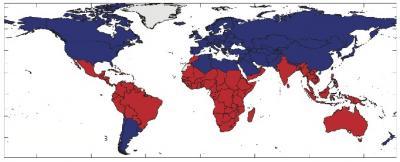
El Nino drought cycles heavily affecting some 90 countries (red) appear to be helping drive modern civil wars. (Credit: Courtesy Hsiang et al./Nature)

The paper, written by an interdisciplinary team at Columbia University’s Earth Institute, appears in the current issue of the leading scientific journal Nature.

In recent years, historians and climatologists have built evidence that past societies suffered and fell due in connection with heat or droughts that damaged agriculture and shook governments. This is the first study to make the case for such destabilization in the present day, using statistics to link global weather observations and well-documented outbreaks of violence. The study does not blame specific wars on El Niño, nor does it directly address the issue of long-term climate change. However, it raises potent questions, as many scientists think natural weather cycles will become more extreme with warming climate, and some suggest ongoing chaos in places like Somalia are already being stoked by warming climate.

“The most important thing is that this looks at modern times, and it’s done on a global scale,” said Solomon M. Hsiang, the study’s lead author, a graduate of the Earth Institute’s Ph.D. in sustainable development. “We can speculate that a long-ago Egyptian dynasty was overthrown during a drought. That’s a specific time and place, that may be very different from today, so people might say, ‘OK, we’re immune to that now.’ This study shows a systematic pattern of global climate affecting conflict, and shows it right now.”

The cycle known as the El Niño-Southern Oscillation, or ENSO, is a periodic warming and cooling of the tropical Pacific Ocean. This affects weather patterns across much of Africa, the Mideast, India, southeast Asia, Australia, and the Americas, where half the world’s people live. During the cool, or La Niña, phase, rain may be relatively plentiful in tropical areas; during the warmer El Niño, land temperatures rise, and rainfall declines in most affected places. Interacting with other factors including wind and temperature cycles over the other oceans, El Niño can vary dramatically in power and length. At its most intense, it brings scorching heat and multi-year droughts. (In higher latitudes, effects weaken, disappear or reverse; La Niña conditions earlier this year helped dry the U.S. Southwest and parts of east Africa.)

The scientists tracked ENSO from 1950 to 2004 and correlated it with onsets of civil conflicts that killed more than 25 people in a given year. The data included 175 countries and 234 conflicts, over half of which each caused more than 1,000 battle-related deaths. For nations whose weather is controlled by ENSO, they found that during La Niña, the chance of civil war breaking out was about 3 percent; during El Niño, the chance doubled, to 6 percent. Countries not affected by the cycle remained at 2 percent no matter what. Overall, the team calculated that El Niño may have played a role in 21 percent of civil wars worldwide — and nearly 30 percent in those countries affected by El Niño.

Coauthor Mark Cane, a climate scientist at Columbia’s Lamont-Doherty Earth Observatory, said that the study does not show that weather alone starts wars. “No one should take this to say that climate is our fate. Rather, this is compelling evidence that it has a measurable influence on how much people fight overall,” he said. “It is not the only factor–you have to consider politics, economics, all kinds of other things.” Cane, a climate modeler, was among the first to elucidate the mechanisms of El Niño, showing in the 1980s that its larger swings can be predicted — knowledge now used by organizations around the world to plan agriculture and relief services.

The authors say they do not know exactly why climate feeds conflict. “But if you have social inequality, people are poor, and there are underlying tensions, it seems possible that climate can deliver the knockout punch,” said Hsiang. When crops fail, people may take up a gun simply to make a living, he said. Kyle C. Meng, a sustainable-development Ph.D. candidate and the study’s other author, pointed out that social scientists have shown that individuals often become more aggressive when temperatures rise, but he said that whether that applies to whole societies is only speculative.

Bad weather does appear to tip poorer countries into chaos more easily; rich Australia, for instance, is controlled by ENSO, but has never seen a civil war. On the other side, Hsiang said at least two countries “jump out of the data.” In 1982, a powerful El Niño struck impoverished highland Peru, destroying crops; that year, simmering guerrilla attacks by the revolutionary Shining Path movement turned into a full-scale 20-year civil war that still sputters today. Separately, forces in southern Sudan were already facing off with the domineering north, when intense warfare broke out in the El Niño year of 1963. The insurrection abated, but flared again in 1976, another El Niño year. Then, 1983 saw a major El Niño–and the cataclysmic outbreak of more than 20 years of fighting that killed 2 million people, arguably the world’s bloodiest conflict since World War II. It culminated only this summer, when South Sudan became a separate nation; fighting continues in border areas. Hsiang said some other countries where festering conflicts have tended to blow up during El Niños include El Salvador, the Philippines and Uganda (1972); Angola, Haiti and Myanmar (1991); and Congo, Eritrea, Indonesia and Rwanda (1997).

The idea that environment fuels violence has gained currency in the past decade, with popular books by authors like Jared Diamond, Brian Fagan and Mike Davis. Academic studies have drawn links between droughts and social collapses, including the end of the Persian Gulf’s Akkadian empire (the world’s first superpower), 6,000 years ago; the AD 800-900 fall of Mexico’s Maya civilization; centuries-long cycles of warfare within Chinese dynasties; and recent insurgencies in sub-Saharan Africa. Last year, tree-ring specialists at Lamont-Doherty Earth Observatory published a 1,000-year atlas of El Niño-related droughts; data from this pinpoints droughts coinciding with the downfall of the Angkor civilization of Cambodia around AD 1400, and the later dissolution of kingdoms in China, Vietnam, Myanmar and Thailand.

Some scientists and historians remain unconvinced of connections between climate and violence. “The study fails to improve on our understanding of the causes of armed conflicts, as it makes no attempt to explain the reported association between ENSO cycles and conflict risk,” said Halvard Buhaug, a political scientist with the Peace Research Institute Oslo in Norway who studies the issue. “Correlation without explanation can only lead to speculation.” Another expert, economist Marshall Burke of the University of California, Berkeley, said the authors gave “very convincing evidence” of a connection. But, he said, the question of how overall climate change might play out remains. “People may respond differently to short-run shocks than they do to longer-run changes in average temperature and precipitation,” he said. He called the study “a useful and illuminating basis for future work.”

The above story is reprinted (with editorial adaptations by ScienceDaily staff) from materials provided by The Earth Institute at Columbia University.

Journal Reference:
Solomon M. Hsiang, Kyle C. Meng, Mark A. Cane. Civil conflicts are associated with the global climate. Nature, 2011; 476 (7361): 438 DOI: 10.1038/nature10311

A cultura dos geoglifos (Fapesp)

HUMANIDADES | ARQUEOLOGIA
Enormes círculos e quadrados foram escavados no chão da Amazônia há 2 mil anos
Marcos Pivetta
Edição Impressa – Agosto 2011
© EDISON CAETANO
Desenho geométrico em Plácido de Castro, no Acre: palco de cerimônias

Houve uma época em que os deuses parecem ter sido geométricos num canto da Amazônia, o leste do Acre, perto da divisa com a Bolívia. E essa época provavelmente começou bem antes do que se pensava. Doze datações por radiocarbono feitas em diferentes setores de três sítios arqueológicos dessa região sinalizam que a construção dos chamados geoglifos – grandes desenhos escavados no solo da floresta por uma cultura pré-colombiana ainda não determinada, admiradora das linhas retas de quadrados e retângulos e dos traços arredondados de círculos e elipses – teve início há no mínimo 2 mil anos. Coordenado pela arqueóloga Denise Schaan, da Universidade Federal do Pará (UFPA), o novo estudo, cujo artigo está sendo finalizado antes de ser submetido à publicação numa revista científica, amplia a cronologia da cultura amazônica dos geoglifos. Até agora existia apenas o dado de uma datação feita em 2003 no Acre por pesquisadores finlandeses num desses sítios arqueológicos, que situava os desenhos como tendo sido produzidos entre os séculos XIII e XIV.

Feita a partir de restos de carvão queimado encontrados numa camada geológica rica em pedaços de cerâmica, um indicativo de que houve ali alguma presença humana, a nova série de datações também sugere que os desconhecidos autores dos geoglifos podem ter desaparecido antes da chegada dos europeus nas Américas. Nenhum dos três sítios estudados (Fazenda Colorada, Jacó Sá e Severino Calazas), situados num raio de 20 quilômetros dentro de uma área de platô, de terra firme, não inundável, entre os vales dos rios Acre e Iquiri, forneceu, até agora, elementos de que foram habitados por tribos há mais de 500 anos. “O resultado das datações foi uma surpresa”, diz Denise, que comanda os trabalhos arqueológicos sobre os geoglifos desde 2005 com verbas do CNPq (Conselho Nacional de Desenvolvimento Científico e Tecnológico), da Academia de Ciências da Finlândia e do estado do Acre.

A idade dos desenhos geométricos, moldados no solo amazônico por meio da retirada de grandes quantidades de terra, não é o único ponto em revisão. A função primordial desses sítios, que podem apresentar mais de um tipo de geoglifo e vestígios de antigas estradas, também está em aberto. Desde os anos 1970, quando partes do Acre começaram a ser desmatadas por atividades agropecuárias e foram avistados os primeiros geoglifos em pontos até então cobertos pela floresta, os pesquisadores se indagam por que os antigos habitantes da região esculpiram círculos e quadrados em baixo-relevo no solo. A hipótese inicial de que as construções, cujos contornos são formados por valas contínuas abertas no terreno, poderiam ter tido funções defensivas, semelhantes à de um forte, parece fazer cada vez menos sentido. Escavações recentes feitas em quase uma dezena de sítios do Acre associados à ocorrência dos desenhos sinalizam que esses lugares não foram usados prioritariamente como moradia por povos antigos. Como uma espécie de praça tribal, a área interna dos geoglifos deve ter sido utilizada para cerimônias. “A evidência arqueológica sugere que esses sítios eram usados para encontros especiais, cultos religiosos e apenas ocasionalmente como aldeia”, diz Denise.

Quando iniciaram as incursões de campo, os pesquisadores trabalhavam com a ideia de que os sítios com geoglifos pudessem fornecer algum tipo de evidência de ocupação humana em larga escala e por um período prolongado em sua vizinhança. Afinal, é mais do que razoável supor que o povo responsável pela confecção dos grandes e precisos desenhos no solo era numeroso e apresentava uma estrutura social complexa. “Os construtores dos geoglifos não tinham pedras naquela região, mas fizeram enormes trabalhos na terra que demandavam poderio e habilidades de organização comparáveis à de outras civilizações antigas”, diz o arqueólogo Martti Pärssinen, do Instituto Ibero-americano da Finlândia, sediado em Madri, que colabora com a equipe brasileira e também um dos autores do trabalho com as novas datações dos geoglifos acreanos.

Em média, a área interna de um geoglifo varia de 1 a 3 hectares. As figuras menores apresentam geralmente linhas arredondadas, enquanto as maiores podem ser tanto círculos como quadrados. Nos sítios estudados, a profundidade dos buracos no solo que formam os traços dos desenhos variou de 35 centímetros a 5 metros (m) e a amplitude das valetas foi de 1,75 a 20 m. A terra retirada para abrir os fossos era usada pelos arquitetos dos geoglifos para fazer pequenas muretas, de até 1,5 m, que seguiam os contornos das figuras. Para dar conta de todo esse serviço, milhares de pessoas deveriam ter vivido em algum momento nos arredores dos geoglifos e trabalhado de forma coordenada para sua construção. Mas os achados arqueológicos nos sítios investigados em detalhe não ratificam, uma vez mais, o pressuposto inicial dos pesquisadores.

Ossadas humanas preservadas não foram encontradas em nenhum lugar. Não há também manchas da chamada terra preta, um tipo de solo negro muito comum em outras partes da Amazônia, que se forma a partir de restos orgânicos produzidos pelo estabelecimento de ocupações humanas prolongadas numa área. Os poucos artefatos associados a uma cultura material, em geral alguns pedaços de cerâmica, foram resgatados no topo ou no fundo das valas que formam as linhas geométricas ou em pequenos montículos de terra, provavelmente restos de habitações pré-históricas, que se situam bem ao lado dos contornos dos geoglifos. Dentro da área plana demarcada pelos misteriosos círculos e quadrados escavados no chão nada de realmente relevante foi resgatado. “Ainda precisamos achar os locais de moradia e cemitérios dos construtores dos geoglifos”, afirma o paleontólogo Alceu Ranzi, hoje professor aposentado na Universidade Federal do Acre (Ufac), a quem se deve a (re)descoberta dos desenhos no solo nas duas últimas décadas. “Eles devem ter vivido em algum lugar não muito longe dos sítios.”

© AGÊNCIA DE NOTÍCIAS DO ACRE E EDISON CAETANO / PROJETO GEOGLIFOS DA AMAZÔNIA OCIDENTAL
Diversidade de formas: geoglifos com linhas arredondadas e retas

A tecnologia aeroespacial tem sido uma aliada dos arqueólogos na tarefa de localizar e estudar os sítios amazônicos com geoglifos. Estar um pouco longe e acima dos desenhos, dentro de um avião ou tendo como olhos as lentes de um satélite, facilita o trabalho de procura das grandes figuras geométricas em meio a áreas desmatadas (se há floresta esse expediente não funciona). Inicialmente, os cientistas usaram as imagens gratuitas do serviço Google Earth para procurar novas ocorrências dos desenhos. A partir de 2007, com apoio do governo do Acre, obtiveram também as imagens do satélite taiwanês Formosat-2, que têm maior cobertura. Com o emprego dessas ferramentas de prospecção remota, a quantidade de sítios conhecidos com geoglifos deu um salto: saiu de 32 em 2005, chegou a 150 dois anos mais tarde e hoje está na casa dos 300. Esses são os números relativos ao Acre, que parece ter sido a região onde os desenhos se concentram e podem se espalhar por uma porção do estado com uma área de 25 mil quilômetros quadrados, 16 vezes o tamanho da cidade de São Paulo. Nos estados vizinhos do Amazonas e de Rondônia e também na Bolívia foram identificadas áreas com geoglifos por essa metodologia. “Não é mais tão fácil encontrar novos sítios, pois já fizemos várias varreduras sistemáticas”, explica a geógrafa Antonia Barbosa, da (Ufac), membro da equipe nacional que estudou os geoglifos. “Quando iniciamos o trabalho com imagens de satélite, encontrávamos em uma varredura uns 10 sítios. Hoje, com sorte, achamos um ou dois.”

Não há evidências concretas sobre quem foram os construtores dos geoglifos nem quanto tempo foi consumido nessa tarefa. A construção de valetas e muretas para cercar casas e aldeias já ocorria, por exemplo, na Europa há aproximadamente 10 mil anos, nos primórdios da agricultura. Mas na Amazônia esse tipo de construção é bem mais rara. Como até agora não há indícios de que a fronteira do Acre com a Bolívia foi a morada de uma única e grande civilização perdida, cujos restos das casas e grandes aldeias ninguém consegue encontrar, os arqueólogos passaram a trabalhar com um cenário intermediário. Não deve ter havido um enorme império perdido que cultuava deuses geométricos nesse canto da Amazônia, mas talvez dois ou três povos, ainda seminômades e espalhados por pequenas aldeias (hoje mais difíceis de serem encontradas), que partilhavam alguns traços culturais em comum, como a feitura dos geoglifos. “A sociedade dos geoglifos era de alguma forma complexa, mas estava num estágio formativo, de transição”, diz a arqueóloga Sanna Saunaluoma, da Universidade de Helsinque, que estuda os desenhos tanto na Bolívia como no Acre, aqui do lado dos brasileiros.

Membros das etnias Tacana e Aruaque, que hoje habitam respectivamente o lado boliviano e brasileiro dessa fronteira binacional, são apontados como os possíveis descendentes dos povos que tiveram a tradição de traçar enormes círculos e quadrados no solo. Mas, se um dia foram portadores dessa tradição comum, hoje não a professam mais. Para tornar o quadro mais incerto, não há provas de que as duas tribos estivessem realmente presentes nessa área na época em que os geoglifos foram feitos, tampouco se sabe qual era a divisa territorial que as separava. Uma pista, ainda tênue, de que ao menos uma dessas etnias, a Tacana, pode ter construído geoglifos vem de um texto do final do século XIX. O escrito relata o encontro de um coronel brasileiro, na divisa com a Bolívia, com 200 índios que moravam numa aldeia muito organizada e cultuavam deuses geométricos, talhados em madeira. A história não prova nada, mas pode ser um rastro a ser seguido.

VOCÊ SABE COM QUEM ESTÁ FALANDO? (TRIP)

Roberto da Matta reflete sobre como limites são as maiores conquistas e os maiores riscos

TRIP 196 – 14.02.2011 | Texto por Roberto da Matta
Fotos http://www.flickr.com/commons

Não deixa de ser curioso que o ser vivo mais consciente da própria morte, o animal mais certo de que sua única certeza é um limite final e definitivo — a morte —, seja o bicho que mais inventa e questiona limites. Os seus limites e os dos outros. Mais os dos outros que os seus.

A reflexão sobre os limites, sobre o que é suficiente ou bastante para cada um de nós (e consequentemente para os outros), é o resultado de mais igualdade, liberdade, oportunidade, poder de consumo e daquilo que se chama de “modernidade”: de mercado e competição eleitoral e de democracia. Da operação consistente de um sistema que tem no centro o indivíduo-cidadão livre e igual perante a lei. Todas as sociedades que passaram por uma aguda transformação no sentido de maior igualdade, acoplada a uma consciência mais aguda de liberdade, vivem um aparente paradoxo. Como usufruir a liberdade e a igualdade sem ofender os outros e, mais que isso, sem levar o sistema a uma anarquia e a um caos no qual alguns podem fazer tudo, o outro não existe e — como consequência — quem ocupa cargos importantes sobretudo no governo e do Estado acaba virando um mandão (ou mandona) de modo que, em vez de igualdade e limite, temos o justo oposto: uma hierarquia e o enriquecimento dos poderosos por meio daquilo que é o teste mais claro do limite e da igualdade: o sistema eleitoral que os elegeu.

— II —

http://www.flickr.com/commons

Neste momento em que o Brasil consolida sua democracia e torna-se um ator global, é crucial discutir esse equilíbrio entre o que aspiramos construir como coletividade mais justa e humana e as leis e normas que agindo sobre todos nós e governando por assim dizer esse jogo democrático que vem sendo jogado faz um tempo considerável, considerando nossa história republicana, limitam os nossos movimentos indicando o que é correto e ético realizar.

Não nos parece uma tarefa fácil conciliar desejos (que geralmente são ilimitados e odeiam controles) e a questão fundamental de cumprir regras, seguir leis e construir espaços públicos seguros e igualitários, válidos para todos, numa sociedade que também tem o seu lado claramente aristocrático e hierárquico. Um sistema que ama a democracia, mas também gosta de usar o “Você sabe com quem está falando?”, que é justamente a prova, conforme disse em Carnavais, malandros e heróis, um livro publicado, imagine, em 1979!

Ali, eu descobri o nosso amor simultâneo pela igualdade e, a seu lado, o nosso afeto pelo familismo e pelo partidarismo governados pela ética de condescendência tão nossa conhecida, que diz: nós somos diferentes e temos biografia; para os amigos tudo, aos inimigos (e estranhos, os que não conhecemos) a lei!

Não há nada mais claro da nossa aversão aos limites do que essa recusa de obedecer a lei, o cargo público para o qual fomos eleitos ou o sinal de trânsito. Uma pessoa, como digo no citado ensaio, que não foi criada para pensar em limites, porque todos somos (ou fomos) filhinhos de mamãe e criados em ambientes onde sabíamos perfeitamente bem quem era superior, quem era subordinado, quem mandava e quem obedecia, não pode funcionar igualitariamente na rua, onde ninguém é de ninguém ou sabe quem são os outros.

http://www.flickr.com/commons

A dificuldade em usar com tranquilidade o “Você sabe com quem está falando?” decorre da massificação da sociedade brasileira, que, com o aumento de renda e dos mecanismos destinados a melhorar o consumo das camadas mais pobres, torna todo mundo muito mais parecido e de certo modo obriga tanto o milionário filho de família tradicional quanto o pedreiro, o padeiro, o garçom, o estudante, o operário e o empregado doméstico a entrar numa fila. E, nela, a pensar que somos todos realmente iguais em certas situações públicas porque o limite do outro garante o meu limite.

O resultado dessa tomada de posição, básica numa democracia, é simples, mas muitas vezes ignorado entre nós: a minha liberdade teoricamente ilimitada tem que se ajustar à sua e as duas acabam promovendo uma conformidade voluntária com limites, com fronteiras cívicas que não podem ser ultrapassadas, como a de furar a fila ou a de dar uma carteirada.

Na sua simplicidade, a fila é um dos melhores, se não for o melhor, exemplos de como operam os limites numa democracia. Seus princípios são simples e reveladores: quem chega primeiro é atendido em primeiro lugar. Numa fila, portanto, não vale o oculto. Ou temos uma clara linha de pessoas, umas atrás das outras, ou a vaca vai para o brejo. Quando eu era menino, lembro-me bem como era impossível ter uma fila no Brasil. As velhas senhoras e as pessoas importantes (sobretudo os políticos) não se conformavam com suas regras e traziam como argumento para serem atendidos, passando na frente dos outros, ou a idade, ou o cargo, ou conhecimento com quem estava atendendo, ou algum laço de família. Afinal quem vai deixar a vovó esperando para depois tomar uma bronca em casa? Hoje, sabemos que idosos e deficientes não entram em fila. Mas estamos igualmente alertas para o fato de que um cargo ou um laço de amizade não faz de alguém um supercidadão com poderes ilimitados junto aos que estão penando numa fila por algumas horas. O princípio do quem primeiro chega é primeiro atendido revela uma outra dimensão da democracia e dos limites que deve ser igualmente discutida.

Refiro-me ao fato de que a fila anda (ou deve andar!). Ela é construída, como tudo que é governado por regras simples e conhecidas de todos, pelo princípio da rotatividade. Se “a fila anda”, ela faz com que o último acabe em primeiro e quem estava na frente seja obrigado a sair depois de ter sido atendido. Mais: se ele (ou ela) quiser voltar, vai para o “fim da fila”. Ora, isso não é um belo exemplo dos limites que tornam todos iguais, fazendo-os primeiros ou últimos e, consequentemente, tornando o primeiro e o último relativos? Numa hora e em dado lugar sou o primeiro, noutro sou um cara comum e apenas sigo as normas gerais da cidadania. Mas sei — e esse é um ponto capital — que, mesmo em primeiro lugar ou no último, tenho limites, tolerâncias, direitos sem dúvida, mas um monte de deveres. Uma vez atendido, cedo lugar a um outro que faz o mesmo com o seguinte e assim, meus amigos, a fila da democracia anda!

Tal como num jogo de futebol ou numa disputa política liberal e competitiva, a fila requer conformidade com as regras, com os limites impostos pela disputa, bem como um mínimo de honradez diante delas. Se entro na fila, espero que todos honrem o meu e os seus lugares. Isto é: o meu senso de limites é despertado pelo senso de limites dos outros. Se, numa disputa política, um partido não segue as regras e compra políticos e votos, então o sistema de disputa fica abalado ou deixa de existir. Todo jogador quer vencer, todo atacante quer o gol da vitória, mas ele não pode vencer quebrando as pernas dos seus adversários.

http://www.flickr.com/commons

Do mesmo modo e pela mesma lógica, ninguém pode ser sempre o primeiro da fila (e nem o último), como ninguém pode ser campeão para sempre. Se isso acontece, ou seja, se um time campeão mudar as regras para ser campeão para sempre, então o futebol vai pros quintos dos infernos. Ele simplesmente acaba com o jogo como uma disputa. Na disputa, o adversário não é um inimigo, do mesmo modo que, numa fila, quem está na frente não é um superior. O poder ilimitado e congelado ou fixo em pessoas ou partidos, como ocorre nas ditaduras, liquida a democracia justamente porque ele usurpa os limites nos quais se baseia a fila. Justamente porque ele acaba com a disputa e a esperança banal, mas básica, de que a fila anda e que amanhã podemos ser campeões! O fim do rodízio do poder que obriga o respeito aos limites de todos é a raiz dos autoritarismos que são hoje impensáveis no Brasil. Sem ele, a oposição e a esquerda não estariam no poder honrando e ajudando a provar que, onde há disputa, alguém vai perder ou ganhar.

— III —

Termino com uma história que é, de fato, uma parábola que fala tanto de democracia quanto de capitalismo, com seu poder de despertar inveja e aristocratizar pelo dinheiro.

Conta-se que, numa reunião na mansão de um milhardário americano, o escritor Kurt Vonnegut Jr. (autor, entre outros, do incrível Matadouro 5) perguntou ao seu colega Joseph Heller (autor do não menos perturbador Ardil 22): “Joe, você não fica chateado sabendo que esse cara ganha mais num dia do que você jamais ganhou com a venda de Ardil 22 no mundo todo?”. Heller respondeu: “Não, porque eu tenho alguma coisa que esse cara não tem”. Vonnegut olhou firme para ele e disse: “E o que é que você pode ter que esse sujeito já não tenha?”. Resposta do Heller: “Eu conheço o significado da palavra suficiente”.

Ora, é justamente esse suficiente que nos torna resistentes tanto ao poder do dinheiro como fim valor absoluto, capaz de suspender limites numa sociedade de iguais, quanto a uma dimensão muito importante da vida. É ele que permite valorizar o que somos e temos, o modo como vivemos, os nossos prazeres e escolhas. É essa reflexão sobre o que nos basta que nos faz ver a olho nu que ninguém pode ter (ou tem) tudo. E, se ninguém pode ter tudo, todos temos alguma coisa.

http://www.flickr.com/commons

A ideia de suficiência e de limite, portanto, traz de volta uma dimensão humana importante e não conformista. A dimensão que assegura por linhas tortas, é certo, que nenhum ser humano pode ser belo, bonito, rico, saudável e feliz ao mesmo tempo. Os reveses da vida, que nos fazem estar sempre no fim ou no início da fila, que nos dão a impressão de impotência ou onipotência, têm muito a ver com essa reflexão que pouco fazemos no Brasil. A saber: o que queremos do nosso país e deste mundo? O que precisamos e em que quantidade ou escala? Será que sendo quem sou eu não tenho mais do que o mais rico dos ricos ou o mais poderoso dos poderosos? Afinal de contas, a igualdade na diferença é uma alternativa para estilos de ser. Não se pode negar o valor do dinheiro, mas não se pode aceitar que o dinheiro seja tudo e que o amor, a compaixão, a honestidade, a honradez e a alegria de viver em harmonia consigo mesmo sejam inferiores à riqueza ou ao poder. Afinal de contas, o que seria da vida sem esses pequenos-grandes prazeres e gozos que são de fato o seu sal e a sua pimenta? Vale a pena ser infeliz com uma grande conta bancária, ou ser feliz com uma conta bancária? Ou, quem sabe, viver sem ir ao banco?

Porque, afinal de contas, o limite não está apenas nas coisas externas, ele está em todos nós — mortais complexos destinados ao gozo e ao sofrimento neste maravilhoso e único vale de lágrimas, nesta interminável fila que, andando, nos obriga a dialogar com os nossos limites e com o lado ilimitado de cada um de nós.

*Antropólogo, escritor e professor da PUC-RJ. Autor de vários ensaios sobre sociedades tribais e o Brasil, como Um Mundo Dividido; Carnavais, malandros e heróis; O que faz o Brasil, Brasil; Relativizando: uma introdução à antropologia social, todos editados pela Rocco. Seu último livro, Fé em Deus e pé na tábua, é um ensaio sobre o trânsito no Brasil. DaMatta tem uma coluna semanal nos jornais O Estado de São Paulo, no Globo e Diário de Fortaleza

Beyond space-time: Welcome to phase space (New Scientist)

08 August 2011 by Amanda Gefter
Magazine issue 2824

A theory of reality beyond Einstein’s universe is taking shape – and a mysterious cosmic signal could soon fill in the blanks

Does some deeper level of reality lurk beneath? (Image: Luke Brookes)

IT WASN’T so long ago we thought space and time were the absolute and unchanging scaffolding of the universe. Then along came Albert Einstein, who showed that different observers can disagree about the length of objects and the timing of events. His theory of relativity unified space and time into a single entity – space-time. It meant the way we thought about the fabric of reality would never be the same again. “Henceforth space by itself, and time by itself, are doomed to fade into mere shadows,” declared mathematician Hermann Minkowski. “Only a kind of union of the two will preserve an independent reality.”

But did Einstein’s revolution go far enough? Physicist Lee Smolin at the Perimeter Institute for Theoretical Physics in Waterloo, Ontario, Canada, doesn’t think so. He and a trio of colleagues are aiming to take relativity to a whole new level, and they have space-time in their sights. They say we need to forget about the home Einstein invented for us: we live instead in a place called phase space.

If this radical claim is true, it could solve a troubling paradox about black holes that has stumped physicists for decades. What’s more, it could set them on the path towards their heart’s desire: a “theory of everything” that will finally unite general relativity and quantum mechanics.

So what is phase space? It is a curious eight-dimensional world that merges our familiar four dimensions of space and time and a four-dimensional world called momentum space.

Momentum space isn’t as alien as it first sounds. When you look at the world around you, says Smolin, you don’t ever observe space or time – instead you see energy and momentum. When you look at your watch, for example, photons bounce off a surface and land on your retina. By detecting the energy and momentum of the photons, your brain reconstructs events in space and time.

The same is true of physics experiments. Inside particle smashers, physicists measure the energy and momentum of particles as they speed toward one another and collide, and the energy and momentum of the debris that comes flying out. Likewise, telescopes measure the energy and momentum of photons streaming in from the far reaches of the universe. “If you go by what we observe, we don’t live in space-time,” Smolin says. “We live in momentum space.”

And just as space-time can be pictured as a coordinate system with time on one axis and space – its three dimensions condensed to one – on the other axis, the same is true of momentum space. In this case energy is on one axis and momentum – which, like space, has three components – is on the other (see diagram).

Simple mathematical transformations exist to translate measurements in this momentum space into measurements in space-time, and the common wisdom is that momentum space is a mere mathematical tool. After all, Einstein showed that space-time is reality’s true arena, in which the dramas of the cosmos are played out.

Smolin and his colleagues aren’t the first to wonder whether that is the full story. As far back as 1938, the German physicist Max Born noticed that several pivotal equations in quantum mechanics remain the same whether expressed in space-time coordinates or in momentum space coordinates. He wondered whether it might be possible to use this connection to unite the seemingly incompatible theories of general relativity, which deals with space-time, and quantum mechanics, whose particles have momentum and energy. Maybe it could provide the key to the long-sought theory of quantum gravity.

Born’s idea that space-time and momentum space should be interchangeable – a theory now known as “Born reciprocity” – had a remarkable consequence: if space-time can be curved by the masses of stars and galaxies, as Einstein’s theory showed, then it should be possible to curve momentum space too.

At the time it was not clear what kind of physical entity might curve momentum space, and the mathematics necessary to make such an idea work hadn’t even been invented. So Born never fulfilled his dream of putting space-time and momentum space on an equal footing.

That is where Smolin and his colleagues enter the story. Together with Laurent Freidel, also at the Perimeter InstituteJerzy Kowalski-Glikman at the University of Wroclaw, Poland, and Giovanni Amelino-Camelia at Sapienza University of Rome in Italy, Smolin has been investigating the effects of a curvature of momentum space.

The quartet took the standard mathematical rules for translating between momentum space and space-time and applied them to a curved momentum space. What they discovered is shocking: observers living in a curved momentum space will no longer agree on measurements made in a unified space-time. That goes entirely against the grain of Einstein’s relativity. He had shown that while space and time were relative, space-time was the same for everyone. For observers in a curved momentum space, however, even space-time is relative (see diagram).

This mismatch between one observer’s space-time measurements and another’s grows with distance or over time, which means that while space-time in your immediate vicinity will always be sharply defined, objects and events in the far distance become fuzzier. “The further away you are and the more energy is involved, the larger the event seems to spread out in space-time,” says Smolin.

For instance, if you are 10 billion light years from a supernova and the energy of its light is about 10 gigaelectronvolts, then your measurement of its location in space-time would differ from a local observer’s by a light second. That may not sound like much, but it amounts to 300,000 kilometres. Neither of you would be wrong – it’s just that locations in space-time are relative, a phenomenon the researchers have dubbed “relative locality”.

Relative locality would deal a huge blow to our picture of reality. If space-time is no longer an invariant backdrop of the universe on which all observers can agree, in what sense can it be considered the true fabric of reality?

That is a question still to be wrestled with, but relative locality has its benefits, too. For one thing, it could shed light on a stubborn puzzle known as the black hole information-loss paradox. In the 1970s, Stephen Hawking discovered that black holes radiate away their mass, eventually evaporating and disappearing altogether. That posed an intriguing question: what happens to all the stuff that fell into the black hole in the first place?

Relativity prevents anything that falls into a black hole from escaping, because it would have to travel faster than light to do so – a cosmic speed limit that is strictly enforced. But quantum mechanics enforces its own strict law: things, or more precisely the information that they contain, cannot simply vanish from reality. Black hole evaporation put physicists between a rock and a hard place.

According to Smolin, relative locality saves the day. Let’s say you were patient enough to wait around while a black hole evaporated, a process that could take billions of years. Once it had vanished, you could ask what happened to, say, an elephant that once succumbed to its gravitational grip. But as you look back to the time at which you thought the elephant had fallen in, you would find that locations in space-time had grown so fuzzy and uncertain that there would be no way to tell whether the elephant actually fell into the black hole or narrowly missed it. The information-loss paradox dissolves.

Big questions still remain. For instance, how can we know if momentum space is really curved? To find the answer, the team has proposed several experiments.

One idea is to look at light arriving at the Earth from distant gamma-ray bursts. If momentum space is curved in a particular way that mathematicians refer to as “non-metric”, then a high-energy photon in the gamma-ray burst should arrive at our telescope a little later than a lower-energy photon from the same burst, despite the two being emitted at the same time.

Just that phenomenon has already been seen, starting with some unusual observations made by a telescope in the Canary Islands in 2005 (New Scientist, 15 August 2009, p 29). The effect has since been confirmed by NASA’s Fermi gamma-ray space telescope, which has been collecting light from cosmic explosions since it launched in 2008. “The Fermi data show that it is an undeniable experimental fact that there is a correlation between arrival time and energy – high-energy photons arrive later than low-energy photons,” says Amelino-Camelia.

Still, he is not popping the champagne just yet. It is not clear whether the observed delays are true signatures of curved momentum space, or whether they are down to “unknown properties of the explosions themselves”, as Amelino-Camelia puts it. Calculations of gamma-ray bursts idealise the explosions as instantaneous, but in reality they last for several seconds. While there is no obvious reason to think so, it is possible that the bursts occur in such a way that they emit lower-energy photons a second or two before higher-energy photons, which would account for the observed delays.

In order to disentangle the properties of the explosions from properties of relative locality, we need a large sample of gamma-ray bursts taking place at various known distances (arxiv.org/abs/1103.5626). If the delay is a property of the explosion, its length will not depend on how far away the burst is from our telescope; if it is a sign of relative locality, it will. Amelino-Camelia and the rest of Smolin’s team are now anxiously awaiting more data from Fermi.

The questions don’t end there, however. Even if Fermi’s observations confirm that momentum space is curved, they still won’t tell us what is doing the curving. In general relativity, it is momentum and energy in the form of mass that warp space-time. In a world in which momentum space is fundamental, could space and time somehow be responsible for curving momentum space?

Work by Shahn Majid, a mathematical physicist at Queen Mary University of London, might hold some clues. In the 1990s, he showed that curved momentum space is equivalent to what’s known as a noncommutative space-time. In familiar space-time, coordinates commute – that is, if we want to reach the point with coordinates (x,y), it doesn’t matter whether we take xsteps to the right and then y steps forward, or if we travel y steps forward followed by x steps to the right. But mathematicians can construct space-times in which this order no longer holds, leaving space-time with an inherent fuzziness.

In a sense, such fuzziness is exactly what you might expect once quantum effects take hold. What makes quantum mechanics different from ordinary mechanics is Heisenberg’s uncertainty principle: when you fix a particle’s momentum – by measuring it, for example – then its position becomes completely uncertain, and vice versa. The order in which you measure position and momentum determines their values; in other words, these properties do not commute. This, Majid says, implies that curved momentum space is just quantum space-time in another guise.

What’s more, Majid suspects that this relationship between curvature and quantum uncertainty works two ways: the curvature of space-time – a manifestation of gravity in Einstein’s relativity – implies that momentum space is also quantum. Smolin and colleagues’ model does not yet include gravity, but once it does, Majid says, observers will not agree on measurements in momentum space either. So if both space-time and momentum space are relative, where does objective reality lie? What is the true fabric of reality?

Smolin’s hunch is that we will find ourselves in a place where space-time and momentum space meet: an eight-dimensional phase space that represents all possible values of position, time, energy and momentum. In relativity, what one observer views as space, another views as time and vice versa, because ultimately they are two sides of a single coin – a unified space-time. Likewise, in Smolin’s picture of quantum gravity, what one observer sees as space-time another sees as momentum space, and the two are unified in a higher-dimensional phase space that is absolute and invariant to all observers. With relativity bumped up another level, it will be goodbye to both space-time and momentum space, and hello phase space.

“It has been obvious for a long time that the separation between space-time and energy-momentum is misleading when dealing with quantum gravity,” says physicist João Magueijo of Imperial College London. In ordinary physics, it is easy enough to treat space-time and momentum space as separate things, he explains, “but quantum gravity may require their complete entanglement”. Once we figure out how the puzzle pieces of space-time and momentum space fit together, Born’s dream will finally be realised and the true scaffolding of reality will be revealed.

Bibliography

  1. The principle of relative locality by Giovanni Amelino-Camelia and others (arxiv.org/abs/1101.0931)

Amanda Gefter is a consultant for New Scientist based in Boston

Devagar e sempre (FSP)

JC e-mail 4317, de 08 de Agosto de 2011.

Movimento ‘Slow Science’ defende o direito de cientistas fugirem da corrida pelo grande número de publicações e priorizarem qualidade da pesquisa.

Um movimento que começou na Alemanha está ganhando, aos poucos, os corredores acadêmicos. A causa é nobre: mais tempo para os cientistas fazerem pesquisa. Quem encabeça a ideia é a organização “Slow Science” (http://slow-science.org), criada por cientistas gabaritados da Alemanha.

Aderir ao movimento significa não se render à produção desenfreada de artigos em revistas especializadas, que conta muitos pontos nos sistemas de avaliação de produção científica. Hoje, quem publica em revistas científicas muito lidas e mencionadas por outros cientistas consegue mais recursos para pesquisa.

Por isso, os cientistas acabam centrando seu trabalho nos resultados (publicações). “Somos uma guerrilha de neurocientistas que luta para que o modelo midiático de produção científica seja revisto”, disse à Folha o neurocientista Jonas Obleser, do Instituto Max Planck, um dos criadores do “Slow Science”. O grupo chegou a criar um manifesto, no final do ano passado, em que proclama: “Somos cientistas, não blogamos, não tuitamos, temos nosso tempo”.

“A ciência lenta sempre existiu ao longo de séculos. Agora, precisa de proteção.” O documento está na porta da geladeira do laboratório do médico brasileiro Rachid Karam, que faz pós-doutorado na Universidade da Califórnia em San Diego.

“O manifesto faz sentido. Temos de verificar os dados antes de tirarmos conclusões precipitadas”, analisa. “A ‘Slow Science’ nos daria tempo para analisar uma hipótese em profundidade e tirar conclusões acertadas.”

De acordo com Obleser, o número de cientistas simpatizantes do movimento está crescendo, “especialmente na América Latina”. “Mas não é preciso se filiar formalmente. Basta imprimir o manifesto e montar guarda no seu departamento”, diz.

O Slow Science é um braço do já conhecido “Slow Food”, que defende uma alimentação mais lenta e saudável, tanto no preparo quanto no consumo dos alimentos. Na ciência, a ideia é pregar a pesquisa que não se paute só pelo resultado rápido.

Ceticismo – “É improvável que o ritmo de fazer pesquisa seja diminuído por meio de um acordo mundial em que cada cientista assume o compromisso de desacelerar seus trabalhos”, diz o especialista em cientometria (medição da produtividade científica) Rogério Meneghini. Ele é coordenador científico do Projeto SciELO, que reúne publicações da América Latina com acesso livre.

Para Meneghini, o “Slow Science” é um movimento “anêmico” num contexto em que a rapidez do fluxo de ideias e informações acelera as descobertas. “Parece uma reivindicação de um velho movimento com uma roupagem nova. É certamente a sensação de quem está perdendo as pernas para correr”, conclui.
(Folha de São Paulo)

Stuff white people like: denying climate change (Grist)

CLIMATE SKEPTICS

BY DAVID ROBERTS
2 AUG 2011 4:11 PM

There’s a study running soon in the journalGlobal Environmental Change called “Cool dudes: The denial of climate change among conservative white males in the United States.” It analyzes poll and survey data from the last 10 years and finds that … are you sitting down? … conservative white men are far more likely to deny the threat of climate change than other people.

OK, that’s no surprise to anyone who’s been awake over the last decade. But the paper goes beyond that to put forward some theories aboutwhy conservative white men (CWM) are so loathe to accept climate change. The explanation is some mix of the following, all of which overlap in various ways:

    • First there’s the “white male effect” — generally speaking, white males are less concerned with a variety of risks. This probably has to do with the fact that they are less exposed to risk than other demographics, what with running things and all.
    • Then, as Chris Mooney notes, there’s the “social dominance orientation” of conservatives, who see social life as following the law of the jungle. One’s choice is to dominate or be dominated; that is the natural order of things. Such folk are leery of climate change solutions premised on fairness or egalitarianism.
  • Then there are the well-understood “system-justifying tendencies” of conservatives. The authors explain that conservatives …

    … strongly display tendencies to justify and defend the current social and economic system. Conservatives dislike change and uncertainty and attempt to simplify complexity. Further, conservative white males have disproportionately occupied positions of power within our economic system. Given the expansive challenge that climate change poses to the industrial capitalist economic system, it should not be surprising that conservative white males’ strong system-justifying attitudes would be triggered to deny climate change.

  • Finally, there’s “identity-protective cognition,” a notion borrowed from Dan Kahan at Yale. (See this PDF.) Here’s how Kahan and colleagues sum it up:

    We propose that variance in risk perceptions — across persons generally, and across race and gender in particular — reflects a form of motivated cognition through which people seek to deflect threats to identities they hold, and roles they occupy, by virtue of contested cultural norms.

    “Motivated cognition” refers to reasoning done in service of justifying an already held belief or goal. It helps explain why the CWM who know the most about climate science are the most likely to reject it; they learn about it in order to reject it. See Chris Mooney’s great piece on that. Point being: when facts (or the implications of those facts) threaten people’s social identities, they tend to dismiss the facts rather than the identity.

To all these reasons, I’d add “epistemic closure,” the extraordinary way that the modern right has constructed a self-contained, hermetically sealed media environment in which conservatives can be protected from ever encountering a contrary view. It’s an accelerant to all the tendencies described above.

Anyway, as you can see, the rejection of climate science among CWM is basically overdetermined. Climate change threatens their values, their privileges, and their worldview. They are reacting as one would expect them to react.

I am, therefore I’m right (Christian Science Monitor)

By Jim Sollisch / July 29, 2011

If you’ve ever been on a jury, you might have noticed that a funny thing happens the minute you get behind closed doors. Everybody starts talking about themselves. They say what they would have done if they had been the plaintiff or the defendant. They bring up anecdote after anecdote. It can take hours to get back to the points of law that the judge has instructed you to consider.

Being on a jury (I recently served on my fourth) reminds me why I can’t stomach talk radio. We Americans seem to have lost the ability to talk about anything but our own experiences. We can’t seem to generalize without stereotyping or to consider evidence that goes against our own experience.

I heard a doctor on a radio show the other day talking about a study that found that exercise reduces the incidence of Alzheimer’s. And caller after caller couldn’t wait to make essentially the opposite point: “Well, my grandmother never exercised and she lived to 95, sharp as a tack.” We are in an age summed up by the aphorism: “I experience, therefore I’m right.”

This isn’t a new phenomenon, except by degree. Historically, the hallmarks of an uneducated person were the lack of ability to think critically, to use deductive reasoning, to distinguish the personal from the universal. Now that seems an apt description of many Americans. The culture of “I” is everywhere you look, from the iPod/iPhone/iPad to the fact that memoir is the fastest growing literary genre.

How’d we get here? The same way we seem to get everywhere today: the Internet. The Internet has allowed us to segregate ourselves based on our interests. All cat lovers over here. All people who believe President Obama wasn’t born in the United States over there. For many of us, what we believe has become the most important organizing element in our lives. Once we all had common media experiences: Walter Cronkite, Ed Sullivan, a large daily newspaper. Now each of us can create a personal media network – call it the iNetwork – fed by the RSS feeds of our choosing.

But the Internet doesn’t just cordon us off in our own little pods. It also makes us dumber, as Nicholas Carr points out in his excellent book, “The Shallows: What the Internet is Doing to our Brains.” He argues that the way we consume media changes our brains, not just our behaviors. The Internet rewards shallow thinking: One search leads to thousands of results that skim over the surface of a subject.

Of course, we could dive deeply into any one of the listings, but we don’t. Studies show that people skim on line, they don’t read. The experience has been designed to reward speed and variety, not depth. And there is tangible evidence, based on studies of brain scans, that the medium is changing our physical brains, strengthening the synapses and areas used for referential thinking while weakening the areas used for critical thinking.

And when we diminish our ability to think critically, we, in essence, become less educated. Less capable of reflection and meaningful conversation. Our experience, reinforced by a web of other gut instincts and experiences that match our own, becomes evidence. Case in point: the polarization of our politics. Exhibit A: the debt ceiling impasse.

Ironically, the same medium that helped mobilize people in the Arab world this spring is helping create a more rigid, dysfunctional democracy here: one that’s increasingly polarized, where each side is isolated and capable only of sound bites that skim the surface, a culture where deep reasoning and critical thinking aren’t rewarded.

The challenge for most of us isn’t to go backwards: We can’t disconnect from the Internet. Nor would we want to. But we can work harder to make “search” the metaphor it once was: to discover, not just to skim. The Internet lets us find facts in an instant. But it doesn’t stop us from finding insight, if we’re willing to really search.

Jim Sollisch is creative director at Marcus Thomas Advertising.

She’s Alive… Beautiful… Finite… Hurting… Worth Dying for.

This is a non-commercial attempt to highlight the fact that world leaders, irresponsible corporates and mindless ‘consumers’ are combining to destroy life on earth. It is dedicated to all who died fighting for the planet and those whose lives are on the line today. The cut was put together by Vivek Chauhan, a young film maker, together with naturalists working with the Sanctuary Asia network (www.sanctuaryasia.com).

80 Percent of World Climate Data Are Not Computerized and Readily Available (Science Daily)

Science News

ScienceDaily (July 20, 2011) — In order to gain a better knowledge of climate variations, such as those caused by global warming, and be able to tackle them, we need to understand what happened in the recent past. This is the conclusion of a research study led by the Rovira i Virgili University (URV), which shows that the scientific community today is only able to access and analyse 20% of the recorded climate information held. The remaining data are not accessible in digital format.

Some climate data in Europe go back to the 17th Century, but “not even 20% of the information recorded in the past is available to the scientific community,” Manola Brunet, lead author of the study and a researcher at the URV’s Centre for Climate Change, said.

This situation is even worse in continents such as Africa and South America, where weather observations did not begin until the middle of the 19th Century. These are the results of a study published in Climate Research, which highlights the need to urgently recover all the information recorded in perishable formats.

“Failure to decipher the messages in the climate records of the past will result in socioeconomic problems, because we will be unable to deal with the current and future impacts of climate change and a hotter world,” says Brunet.

Spain, along with the USA, Canada, Holland and Norway, is one of a small number of countries which allows partial access to its historic climate data. The rest of the world does not make these data available to the scientific community or the general public, despite recommendations to this effect by the World Meteorological Organization (WMO).

In order to overcome the political and legal hurdles posed by this currently poor access, “governments should adopt a resolution within the United Nations on opening up their historical climate data,” the researcher suggests.

Predicting heat waves

Weather services in all countries are faced with the overwhelming job of converting all their paper-based historical climate information, which is stored in archives, libraries and research centres, into digital format. The wide range of forms in which the information is held makes access harder, as do the purposes for which the meteorological service itself was actually created.

“The main objective is to provide a weather service to public, who want to know what the weather will be like the next day,” explains Brunet. This has led to climate science (which studies the range of atmospheric conditions characterising a region rather than focusing on weather forecasting) becoming the great ‘victim’, receiving fewer funds with which to digitise, develop and standardise data.

However, climate services do play a significant role in some European countries, the United States and Canada. It was these services that were able to explain last summer’s heat wave in Eastern Europe and put it into context, as well as the high temperatures recorded on the Old Continent in 2003.

“If we had access to all the historical data recorded, we would be able to evaluate the frequency with which these phenomena are likely to occur in the future with a higher degree of certainty,” the expert explains.

This kind of information is of scientific, social and economic interest, with insurance companies setting their premiums according to expected climate changes, for example. City councils and governments also “want to understand climate conditions and how these will change in future in order to improve land zoning and prevent urban development from taking place in areas likely to be affected by flooding,” concludes Brunet.

On Experts and Global Warming (N.Y. Times)

July 12, 2011, 4:01 PM
By GARY GUTTING

Experts have always posed a problem for democracies. Plato scorned democracy, rating it the worst form of government short of tyranny, largely because it gave power to the ignorant many rather than to knowledgeable experts (philosophers, as he saw it). But, if, as we insist, the people must ultimately decide, the question remains: How can we, nonexperts, take account of expert opinion when it is relevant to decisions about public policy?

Once we accept the expert authority of climate science, we have no basis for supporting the minority position.

To answer this question, we need to reflect on the logic of appeals to the authority of experts. First of all, such appeals require a decision about who the experts on a given topic are. Until there is agreement about this, expert opinion can have no persuasive role in our discussions. Another requirement is that there be a consensus among the experts about points relevant to our discussion. Precisely because we are not experts, we are in no position to adjudicate disputes among those who are. Finally, given a consensus on a claim among recognized experts, we nonexperts have no basis for rejecting the truth of the claim.

These requirements may seem trivially obvious, but they have serious consequences. Consider, for example, current discussions about climate change, specifically about whether there is long-term global warming caused primarily by human activities (anthropogenic global warming or A.G.W.). All creditable parties to this debate recognize a group of experts designated as “climate scientists,” whom they cite in either support or opposition to their claims about global warming. In contrast to enterprises such as astrology or homeopathy, there is no serious objection to the very project of climate science. The only questions are about the conclusions this project supports about global warming.

There is, moreover, no denying that there is a strong consensus among climate scientists on the existence of A.G.W. — in their view, human activities are warming the planet. There are climate scientists who doubt or deny this claim, but even they show a clear sense of opposing a view that is dominant in their discipline. Nonexpert opponents of A.G.W. usually base their case on various criticisms that a small minority of climate scientists have raised against the consensus view. But nonexperts are in no position to argue against the consensus of scientific experts. As long as they accept the expert authority of the discipline of climate science, they have no basis for supporting the minority position. Critics within the community of climate scientists may have a cogent case against A.G.W., but, given the overall consensus of that community, we nonexperts have no basis for concluding that this is so. It does no good to say that we find the consensus conclusions poorly supported. Since we are not experts on the subject, our judgment has no standing.

It follows that a nonexpert who wants to reject A.G.W. can do so only by arguing that climate science lacks the scientific status needed be taken seriously in our debates about public policy. There may well be areas of inquiry (e.g., various sub-disciplines of the social sciences) open to this sort of critique. But there does not seem to be a promising case against the scientific authority of climate science. As noted, opponents of the consensus on global warming themselves argue from results of the discipline, and there is no reason to think that they would have had any problem accepting a consensus of climate scientists against global warming, had this emerged.

Some nonexpert opponents of global warming have made much of a number of e-mails written and circulated among a handful of climate scientists that they see as evidence of bias toward global warming. But unless this group is willing to argue from this small (and questionable) sample to the general unreliability of climate science as a discipline, they have no alternative but to accept the consensus view of climate scientists that these e-mails do not undermine the core result of global warming.

I am not arguing the absolute authority of scientific conclusions in democratic debates. It is not a matter of replacing Plato’s philosopher-kings with scientist-kings in our polis. We the people still need to decide (perhaps through our elected representatives) which groups we accept as having cognitive authority in our policy deliberations. Nor am I denying that there may be a logical gap between established scientific results and specific policy decisions. The fact that there is significant global warming due to human activity does not of itself imply any particular response to this fact. There remain pressing questions, for example, about the likely long-term effects of various plans for limiting CO2 emissions, the more immediate economic effects of such plans, and, especially, the proper balance between actual present sacrifices and probable long-term gains. Here we still require the input of experts, but we must also make fundamental value judgments, a task that, pace Plato, we cannot turn over to experts.

The essential point, however, is that once we have accepted the authority of a particular scientific discipline, we cannot consistently reject its conclusions. To adapt Schopenhauer’s famous remark about causality, science is not a taxi-cab that we can get in and out of whenever we like. Once we board the train of climate science, there is no alternative to taking it wherever it may go.

Travestis e transexuais terão direito a usar nome social no estado (O Globo)

Publicada em 11/07/2011 às 13h24m
Ruben Berta

RIO – O governador Sérgio Cabral publica decreto no Diário Oficial desta segunda-feira determinando que os travestis e transexuais poderão utilizar seu nome social (como são identificados na sua comunidade e em seu meio social) em todos os procedimentos da Administração Direta e Indireta do Estado do Rio.

De acordo com o texto, todos os registros do sistema de informação, cadastros, fichas, requerimentos e formulários deverão conter um campo para a colocação do nome social, sendo a nomenclatura civil utilizada somente para procedimentos internos. A Secretaria da Casa Civil terá 120 dias para promover todas as adaptações.

Em maio deste ano, o prefeito Eduardo Paes já havia publicado um decreto semelhante , garantindo o mesmo direito para servidores e usuários de serviços do município.

Leia mais sobre esse assunto em http://oglobo.globo.com/rio/mat/2011/07/11/travestis-transexuais-terao-direito-usar-nome-social-no-estado-924875811.asp#ixzz1RofWEVUp
© 1996 – 2011. Todos os direitos reservados a Infoglobo Comunicação e Participações S.A.

Dilma Rousseff – a favela with a presidential name (The Guardian)

Renaming of Brazilian shantytown puts spotlight on problems facing country’s 16 million citizens living in extreme poverty

Tom Phillips in Rio de Janeiro ; guardian.co.uk, Monday 27 June 2011 16.58 BST

Three-month old Karen da Silva – the youngest resident of Dilma Rousseff – with her mother, 23-year-old Maria da Paixao Sequeira da Silva. Photograph: Tom Phillips

They call her Dilma Rousseff’s daughter: a dribbling three-month-old girl, coated in puppy fat and smothered by cooing relatives.

But Karen da Silva is no relation of Brazil’s first-ever female president. She is the first child to be born into one of the country’s newest favelas – the Comunidade Dilma Rousseff, a roadside shantytown on the western outskirts of Rio de Janeiro that was recently re-baptised with the name of the most powerful woman in the country

“She’s Dilma’s baby,” said Vagner Gonzaga dos Santos, a 33-year-old brick-layer-cum-evangelical preacher and the brains behind the decision to change the name of this hitherto unknown favela.

Last month, just as Rousseff was about to complete six months in power, Santos says he received a heaven-sent message suggesting the renaming.

“God lit up my heart,” he said. “The idea was to pay homage to the president and also to get the attention of the government, of our leaders, so they look to us and help the families here. The poor are God’s children too.”

Until recently, the 30-odd shacks that flank the Rio-Sao Paulo highway were known simply as “kilometre 31”. But its transition to Dilma Rousseff has not been entirely smooth.

At first, locals plastered A4 posters on the area’s walls and front doors, announcing the new name. But the posters referred to the Comunidade “Roussef” – one “f” short of the president’s Bulgarian surname. In May a sign was erected welcoming visitors to their shantytown, but again spelling proved an issue. This time the name given was “Dilma Rusself.”

That mistake has now been corrected, after an intervention from the preacher’s wife, who took a pot of red nail varnish to the sign. Locals say the name-change is starting to pay off.

“It’s been good having the president’s names,” said Marlene Silva de Souza, a 57-year-old mother of five and one of the area’s oldest residents. “Now we can say our community’s name with pride. Before we didn’t have a name at all.”

Dozens of Brazilian newspapers have flocked to the community – poking fun at its misspelt sign but also drawing attention to the poor living conditions inside the favela.

“It has brought us a lot of attention … The repercussion has been marvellous. Today things are starting to take shape, things are improving,” said Santos, who hopes local authorities will now formally recognise the favela, bringing public services such as electricity and rubbish collection.

Still, problems abound. Raw sewage trickles out from the houses, through a patchwork of wooden shacks, banana and mango trees and an allotment where onions sprout amid piles of rubbish. Rats and cockroaches proliferate in the wasteland that encircles the area.

Ownership is also an issue. Dilma Rousseff is built on private land – “The owners are Spanish, I think,” says Santos – and on paper the community does not officially exist. Without a fixed abode Karen “Rousseff” da Silva – the favela’s firstborn child – has yet to be legally registered.

Last month the Brazilian government launched a drive to eradicate extreme poverty unveiling programmes that will target 16 million of Brazil’s poorest citizens.

“My government’s most determined fight will be to eradicate extreme poverty and create opportunities for all,” Rousseff said in her inaugural address in January. “I will not rest while there are Brazilians who have no food on their tables, while there are desperate families on the streets [and] while there are poor children abandoned to their own fate.”

Residents of Rousseff’s namesake, who scratch a living selling biscuits and drinks to passing truck drivers, hope such benefits will soon reach them.

A visit from the president herself may also be on the cards, after Santos launched an appeal in the Brazilian media.

“We dream of her coming one day,” said the preacher, perched on a wooden bench outside his redbrick church, the House of Prayers. “It might be impossible for man to achieve, but for God everything is possible.”

Naming a community

Tear-jerking soap operas, political icons, stars of stage and screen – when it comes to baptising a Brazilian favela, all are fair game. The north-eastern city of Recife is home to favelas called Ayrton Senna, Planet of the Apes and Dancing Days, the title of a popular 1970stelenovela,

In the 1980s residents of a shantytown in Belo Horizonte named their community Rock in Rio – a tribute to the Brazilian rock festival that has played host to acts such as Neil Young, David Bowie and Queen.

Rio de Janeiro is home to the Boogie Woogie favela, the Kinder Egg favela and one community called Disneylandia. Vila Kennedy – a slum in west Rio – was named after the American president John F Kennedy and features a three-metre tall replica of the Statue of Liberty. Nearby, locals christened another hilltop slum Jorge Turco or Turkish George. Jorge was reputedly a benevolent gangster who ruled the community decades ago.