Arquivo da tag: Economia

Profits Before Environment (N.Y. Times)

August 30, 2011, 10:27 PM
By MARK BITTMAN

I wasn’t surprised when the administration of George W. Bush sacrificed the environment for corporate profits. But when the same thing happens under a Democratic administration, it’s depressing. With little or no public input, policies that benefit corporations regardless of the consequences continue to be enacted.

No wonder an April 2010 poll from the Pew Research Center found that about only 20 percent of Americans have faith in the government (it’s one thing upon which the left and right and maybe even the center agree). But maybe this is nothing new: as Glenda Farrell, as Genevieve “Gen” Larkin, put it in “Gold Diggers of 1937,” “It’s so hard to be good under the capitalistic system.”

But is anyone in power even trying? Last winter, the Department of Agriculture deregulated Monsanto’s genetically modified alfalfa, despite concerns about cross-pollination of non-genetically modified crops. It then defied a court order banning the planting of genetically modified sugar beets pending completion of an environmental impact study.

Monsanto engineers these plants and makes Roundup, the herbicide they resist. But Roundup-ready crops don’t increase long-term yields, a host of farmers are now dealing with “superweeds” and there is worry about superbugs, nearly all courtesy of Monsanto. In fact, this system doesn’t contribute to much of anything except Monsanto’s bottom line. Yet Agriculture Secretary Tom Vilsack gave Monsanto the nod, perhaps yielding to pressure from the White House.

The United States exerts that same kind of pressure abroad. WikiLeaks cables show that U.S. “biotechnology outreach programs” have promoted genetically modified crops in Africa, Asia and South America; they’ve also revealed that diplomats schemed to retaliate against any European Union countries that oppose those crops.

Sacrificing the environment for profits didn’t stop with Bush, and it doesn’t stop with genetically modified organisms. Take, for example, the Keystone XL pipeline extension. XL is right: the 36-inch-wide pipeline, which will stretch from the Alberta tar sands across the Great Plains to the Gulf Coast, will cost $7 billion and run for 1,711 miles — more than twice as long as the Alaska pipeline. It will cross nearly 2,000 rivers, the huge wetlands ecosystem called the Nebraska Sandhills and the Ogallala aquifer, the country’s biggest underground freshwater supply.

If Keystone is built, we’ll see rising greenhouse gas emissions right away (tar sands production creates three times as many greenhouse gases as does conventional oil), and our increased dependence on fossil fuels will further the likelihood of climate-change disaster. Then there is the disastrous potential of leaks of the non-Wiki-variety. (It’s happened before.)

Proponents say the pipeline will ease gas prices and oil “insecurity.” But domestic drilling has raised, not lowered, oil prices, and as for the insecurity — what we need is to develop wiser ways to use the oil we have.

They say, too, that the pipeline could create 100,000 new jobs. But even the Amalgamated Transit Union and the Transport Workers Union oppose the pipeline, saying, “We need jobs, but not ones based on increasing our reliance on Tar Sands oil.”

Sounds as if union officials have been reading the writer and activist Bill McKibben, who calls the pipeline “a fuse to the biggest carbon bomb on the continent,” and NASA scientist Jim Hansen, who says the oil Keystone will deliver “is essentially game over” for the planet.

Game over? No problem, says the State Department, which concluded that the project will have no significant impact on “most resources along the proposed pipeline corridor.” The Sierra Club quickly responded by calling the report “an insult to anyone who expects government to work for the interests of the American people.”

I do expect that, and I am insulted. President Obama can deny Keystone the permit. A truly environmentally friendly president (like the one candidate Obama appeared to be) would be looking for creative ways to leave fossil fuels underground, not extract them. Perhaps he doesn’t “believe in” global warming at this point, like many Republicans?

When government defends corporate interests, citizens must fight. McKibben has helped organize protests at the White House against Keystone, and he’s one of hundreds who’ve been arrested in the last couple of weeks. These people are showing that the role of government as corporate ally must be challenged.

As it will be in the fight against carte blanche for genetically modified organisms: From Oct. 1 to Oct. 16, there will be a march from New York City to Washington to demand that genetically modified foods be labeled, something a majority of Americans want. This small, perfectly reasonable request has run into joint opposition from the biotech industry and (here we go again) the Food and Drug Administration.

Why are most of us are filled with mistrust of the government? Maybe because we, like Gen Larkin, know it’s so hard to be good under the capitalistic system.

O partido anticiência (JC, O Globo)

JC e-mail 4333, de 30 de Agosto de 2011.

Artigo de Paul Krugman publicado no O Globo de hoje (30).

John Huntsman Jr., ex-governador de Utah e embaixador na China, não é um forte pré-candidato à indicação do Partido Republicano para concorrer à Presidência. E isto é muito ruim porque o desejo de Huntsman é dizer o indizível sobre o partido – especialmente que ele está se tornando o “partido anticiência”. Isto é algo enormemente importante. E deveria nos aterrorizar.

Para entender o que Huntsman defende, considere declarações recentes dos dois mais fortes pretendentes à indicação republicana: Rick Perry e Mitt Romney.

Perry, governador do Texas, fez manchetes recentemente ao fazer pouco da evolução humana como uma “simples teoria”, que tem “algumas lacunas” – uma observação que soaria como novidade para a vasta maioria dos biólogos. Mas o que mais chamou a atenção foi o que ele disse sobre mudança climática: “Penso que há um número substancial de cientistas que manipulou dados para obter dólares para seus projetos. E penso que estamos vendo, quase toda semana, ou todo dia, cientistas questionando a ideia original de que o aquecimento global provocado pelo homem é a causa da mudança climática.” É uma declaração extraordinária – ou talvez o adjetivo correto seja “vil”.

A segunda parte da declaração de Perry é falsa: o consenso científico sobre a interferência humana no aquecimento global – que inclui 97% a 98% dos pesquisadores de campo, segundo a Academia Nacional de Ciências – está se tornando mais forte à medida que aumentam as evidências sobre a mudança do clima.

De fato, se você acompanha a ciência climática sabe que o principal aspecto nos últimos anos tem sido a preocupação crescente de que as projeções sobre o futuro do clima estejam subestimando o provável aumento da temperatura. Advertências de que poderemos enfrentar mudanças cimáticas capazes de ameaçar a civilização no fim do século, antes consideradas estranhas, partem agora dos principais grupos de pesquisa.

Mas não se preocupe, sugere Perry; os cientistas estão apenas atrás de dinheiro, “manipulando dados” para criar uma falsa ameaça. Em seu livro “Fed Up”, ele despreza a ciência do clima como “uma bagunça falsa e artificial que está se desmanchando”.

Eu poderia dizer que Perry está tirando isso de uma teoria conspiratória verdadeiramente louca, que afirma que milhares de cientistas de todo o mundo estão levando dinheiro, sem que nenhum deseje quebrar o código de silêncio. Poderia apontar que múltiplas investigações em acusações de falsidade intelectual da parte dos cientistas climáticos acabaram com a absolvição dos pesquisadores de todas as acusações. Mas não se preocupe: Perry e os que pensam como ele sabem em que desejam acreditar e sua resposta a qualquer um que os contradiga é iniciar uma caça às bruxas.

Então de que modo Romney, o outro forte concorrente à indicação republicana, respondeu ao desafio de Perry? Correndo dele. No passado, Romney, ex-governador de Massachusetts, endossou fortemente a noção de que a mudança climática provocada pelo homem é uma real preocupação. Mas, na semana passada, ele suavizou isso e disse pensar que o mundo está realmente esquentando, mas “eu não conheço isto” e “não sei se isso é causado principalmente pelo homem”. Que coragem moral!

É claro, sabemos o que está motivando a súbita falta de convicção de Romney. Segundo o Public Policy Polling, somente 21% dos eleitores republicanos de Iowa acreditam no Aquecimento Global (e somente 35% creem na evolução). Dentro do Partido Republicano, ignorância deliberada tornou-se um teste decisivo para os candidatos, no qual Romney está determinado a passar a qualquer custo.

Então, é agora altamente provável que o candidato presidencial de um de nossos dois grandes partidos políticos será ou um homem que acredita no que quer acreditar, ou um homem que finge acreditar em qualquer coisa que ele ache que a base do partido quer que ele acredite.

E o caráter crescentemente anti-intelectual da direita, tanto dentro do Partido Republicano como fora dele, se estende além da questão da mudança climática.

Ultimamente, por exemplo, a seção editorial do “Wall Street Journal” passou da antiga preferência pelas ideias econômicas de “charlatães e maníacos” — pela definição famosa de um dos principais conselheiros econômicos do ex-presidente George W. Bush – para um descrédito geral do pensamento árduo sobre questões econômicas. Não prestem atenção a “teorias fantasiosas” que conflitam com o “senso comum”, diz-nos o “Journal”. Por que deveria alguém imaginar que se precisa mais do que estômago para analisar coisas como crises financeiras e recessões?

Agora, não se sabe quem ganhará a eleição presidencial do próximo ano. Mas há chances de que, mais dia menos dia, a maior nação do mundo será dirigida por um partido que é agressivamente anticiência, mesmo anticonhecimento. E, numa era de grandes desafios – ambiental, econômico e outros – é uma terrível perspectiva.

Paul Krugman é colunista do “New York Times”.

David Graeber on the History of Debt (PBS, Naked Capitalism)


FRIDAY, AUGUST 26, 2011 (nakedcapitalism.com)
What is Debt? – An Interview with Economic Anthropologist David Graeber

David Graeber currently holds the position of Reader in Social Anthropology at Goldsmiths University London. Prior to this he was an associate professor of anthropology at Yale University. He is the author of ‘Debt: The First 5,000 Years’ which is available from Amazon.

Interview conducted by Philip Pilkington, a journalist and writer based in Dublin, Ireland.

Philip Pilkington: Let’s begin. Most economists claim that money was invented to replace the barter system. But you’ve found something quite different, am I correct?

David Graeber: Yes there’s a standard story we’re all taught, a ‘once upon a time’ — it’s a fairy tale.

It really deserves no other introduction: according to this theory all transactions were by barter. “Tell you what, I’ll give you twenty chickens for that cow.” Or three arrow-heads for that beaver pelt or what-have-you. This created inconveniences, because maybe your neighbor doesn’t need chickens right now, so you have to invent money.

The story goes back at least to Adam Smith and in its own way it’s the founding myth of economics. Now, I’m an anthropologist and we anthropologists have long known this is a myth simply because if there were places where everyday transactions took the form of: “I’ll give you twenty chickens for that cow,” we’d have found one or two by now. After all people have been looking since 1776, when the Wealth of Nations first came out. But if you think about it for just a second, it’s hardly surprising that we haven’t found anything.

Think about what they’re saying here – basically: that a bunch of Neolithic farmers in a village somewhere, or Native Americans or whatever, will be engaging in transactions only through the spot trade. So, if your neighbor doesn’t have what you want right now, no big deal. Obviously what would really happen, and this is what anthropologists observe when neighbors do engage in something like exchange with each other, if you want your neighbor’s cow, you’d say, “wow, nice cow” and he’d say “you like it? Take it!” – and now you owe him one. Quite often people don’t even engage in exchange at all – if they were real Iroquois or other Native Americans, for example, all such things would probably be allocated by women’s councils.

So the real question is not how does barter generate some sort of medium of exchange, that then becomes money, but rather, how does that broad sense of ‘I owe you one’ turn into a precise system of measurement – that is: money as a unit of account?

By the time the curtain goes up on the historical record in ancient Mesopotamia, around 3200 BC, it’s already happened. There’s an elaborate system of money of account and complex credit systems. (Money as medium of exchange or as a standardized circulating units of gold, silver, bronze or whatever, only comes much later.)

So really, rather than the standard story – first there’s barter, then money, then finally credit comes out of that – if anything its precisely the other way around. Credit and debt comes first, then coinage emerges thousands of years later and then, when you do find “I’ll give you twenty chickens for that cow” type of barter systems, it’s usually when there used to be cash markets, but for some reason – as in Russia, for example, in 1998 – the currency collapses or disappears.

PP: You say that by the time historical records start to be written in the Mesopotamia around 3200 BC a complex financial architecture is already in place. At the same time is society divided into classes of debtors and creditors? If not then when does this occur? And do you see this as the most fundamental class division in human history?

DG: Well historically, there seem to have been two possibilities.

One is what you found in Egypt: a strong centralized state and administration extracting taxes from everyone else. For most of Egyptian history they never developed the habit of lending money at interest. Presumably, they didn’t have to.

Mesopotamia was different because the state emerged unevenly and incompletely. At first there were giant bureaucratic temples, then also palace complexes, but they weren’t exactly governments and they didn’t extract direct taxes – these were considered appropriate only for conquered populations. Rather they were huge industrial complexes with their own land, flocks and factories. This is where money begins as a unit of account; it’s used for allocating resources within these complexes.

Interest-bearing loans, in turn, probably originated in deals between the administrators and merchants who carried, say, the woollen goods produced in temple factories (which in the very earliest period were at least partly charitable enterprises, homes for orphans, refugees or disabled people for instance) and traded them to faraway lands for metal, timber, or lapis lazuli. The first markets form on the fringes of these complexes and appear to operate largely on credit, using the temples’ units of account. But this gave the merchants and temple administrators and other well-off types the opportunity to make consumer loans to farmers, and then, if say the harvest was bad, everybody would start falling into debt-traps.

This was the great social evil of antiquity – families would have to start pawning off their flocks, fields and before long, their wives and children would be taken off into debt peonage. Often people would start abandoning the cities entirely, joining semi-nomadic bands, threatening to come back in force and overturn the existing order entirely. Rulers would regularly conclude the only way to prevent complete social breakdown was to declare a clean slate or ‘washing of the tablets,’ they’d cancel all consumer debt and just start over. In fact, the first recorded word for ‘freedom’ in any human language is the Sumerian amargi, a word for debt-freedom, and by extension freedom more generally, which literally means ‘return to mother,’ since when they declared a clean slate, all the debt peons would get to go home.

PP: You have noted in the book that debt is a moral concept long before it becomes an economic concept. You’ve also noted that it is a very ambivalent moral concept insofar as it can be both positive and negative. Could you please talk about this a little? Which aspect is more prominent?

DG: Well it tends to pivot radically back and forth.

One could tell the history like this: eventually the Egyptian approach (taxes) and Mesopotamian approach (usury) fuse together, people have to borrow to pay their taxes and debt becomes institutionalized.

Taxes are also key to creating the first markets that operate on cash, since coinage seems to be invented or at least widely popularized to pay soldiers – more or less simultaneously in China, India, and the Mediterranean, where governments find the easiest way to provision the troops is to issue them standard-issue bits of gold or silver and then demand everyone else in the kingdom give them one of those coins back again. Thus we find that the language of debt and the language of morality start to merge.

In Sanskrit, Hebrew, Aramaic, ‘debt,’ ‘guilt,’ and ‘sin’ are actually the same word. Much of the language of the great religious movements – reckoning, redemption, karmic accounting and the like – are drawn from the language of ancient finance. But that language is always found wanting and inadequate and twisted around into something completely different. It’s as if the great prophets and religious teachers had no choice but to start with that kind of language because it’s the language that existed at the time, but they only adopted it so as to turn it into its opposite: as a way of saying debts are not sacred, but forgiveness of debt, or the ability to wipe out debt, or to realize that debts aren’t real – these are the acts that are truly sacred.

How did this happen? Well, remember I said that the big question in the origins of money is how a sense of obligation – an ‘I owe you one’ – turns into something that can be precisely quantified? Well, the answer seems to be: when there is a potential for violence. If you give someone a pig and they give you a few chickens back you might think they’re a cheapskate, and mock them, but you’re unlikely to come up with a mathematical formula for exactly how cheap you think they are. If someone pokes out your eye in a fight, or kills your brother, that’s when you start saying, “traditional compensation is exactly twenty-seven heifers of the finest quality and if they’re not of the finest quality, this means war!”

Money, in the sense of exact equivalents, seems to emerge from situations like that, but also, war and plunder, the disposal of loot, slavery. In early Medieval Ireland, for example, slave-girls were the highest denomination of currency. And you could specify the exact value of everything in a typical house even though very few of those items were available for sale anywhere because they were used to pay fines or damages if someone broke them.

But once you understand that taxes and money largely begin with war it becomes easier to see what really happened. After all, every Mafiosi understands this. If you want to take a relation of violent extortion, sheer power, and turn it into something moral, and most of all, make it seem like the victims are to blame, you turn it into a relation of debt. “You owe me, but I’ll cut you a break for now…” Most human beings in history have probably been told this by their debtors. And the crucial thing is: what possible reply can you make but, “wait a minute, who owes what to who here?” And of course for thousands of years, that’s what the victims have said, but the moment you do, you are using the rulers’ language, you’re admitting that debt and morality really are the same thing. That’s the situation the religious thinkers were stuck with, so they started with the language of debt, and then they tried to turn it around and make it into something else.

PP: You’d be forgiven for thinking this was all very Nietzschean. In his ‘On the Genealogy of Morals’ the German philosopher Friedrich Nietzsche famously argued that all morality was founded upon the extraction of debt under the threat of violence. The sense of obligation instilled in the debtor was, for Nietzsche, the origin of civilisation itself. You’ve been studying how morality and debt intertwine in great detail. How does Nietzsche’s argument look after over 100 years? And which do you see as primal: morality or debt?

DG: Well, to be honest, I’ve never been sure if Nietzsche was really serious in that passage or whether the whole argument is a way of annoying his bourgeois audience; a way of pointing out that if you start from existing bourgeois premises about human nature you logically end up in just the place that would make most of that audience most uncomfortable.
In fact, Nietzsche begins his argument from exactly the same place as Adam Smith: human beings are rational. But rational here means calculation, exchange and hence, trucking and bartering; buying and selling is then the first expression of human thought and is prior to any sort of social relations.

But then he reveals exactly why Adam Smith had to pretend that Neolithic villagers would be making transactions through the spot trade. Because if we have no prior moral relations with each other, and morality just emerges from exchange, then ongoing social relations between two people will only exist if the exchange is incomplete – if someone hasn’t paid up.

But in that case, one of the parties is a criminal, a deadbeat and justice would have to begin with the vindictive punishment of such deadbeats. Thus he says all those law codes where it says ‘twenty heifers for a gouged-out eye’ – really, originally, it was the other way around. If you owe someone twenty heifers and don’t pay they gouge out your eye. Morality begins with Shylock’s pound of flesh.
Needless to say there’s zero evidence for any of this – Nietzsche just completely made it up. The question is whether even he believed it. Maybe I’m an optimist, but I prefer to think he didn’t.

Anyway it only makes sense if you assume those premises; that all human interaction is exchange, and therefore, all ongoing relations are debts. This flies in the face of everything we actually know or experience of human life. But once you start thinking that the market is the model for all human behavior, that’s where you end up with.

If however you ditch the whole myth of barter, and start with a community where people do have prior moral relations, and then ask, how do those moral relations come to be framed as ‘debts’ – that is, as something precisely quantified, impersonal, and therefore, transferrable – well, that’s an entirely different question. In that case, yes, you do have to start with the role of violence.

PP: Interesting. Perhaps this is a good place to ask you about how you conceive your work on debt in relation to the great French anthropologist Marcel Mauss’ classic work on gift exchange.

DG: Oh, in my own way I think of myself as working very much in the Maussian tradition. Mauss was one of the first anthropologists to ask: well, all right, if not barter, then what? What do people who don’t use money actually do when things change hands? Anthropologists had documented an endless variety of such economic systems, but hadn’t really worked out common principles. What Mauss noticed was that in almost all of them, everyone pretended as if they were just giving one another gifts and then they fervently denied they expected anything back. But in actual fact everyone understood there were implicit rules and recipients would feel compelled to make some sort of return.

What fascinated Mauss was that this seemed to be universally true, even today. If I take a free-market economist out to dinner he’ll feel like he should return the favor and take me out to dinner later. He might even think that he is something of chump if he doesn’t and this even if his theory tells him he just got something for nothing and should be happy about it. Why is that? What is this force that compels me to want to return a gift?

This is an important argument, and it shows there is always a certain morality underlying what we call economic life. But it strikes me that if you focus too much on just that one aspect of Mauss’ argument you end up reducing everything to exchange again, with the proviso that some people are pretending they aren’t doing that.

Mauss didn’t really think of everything in terms of exchange; this becomes clear if you read his other writings besides ‘The Gift’. Mauss insisted there were lots of different principles at play besides reciprocity in any society – including our own.

For example, take hierarchy. Gifts given to inferiors or superiors don’t have to be repaid at all. If another professor takes our economist out to dinner, sure, he’ll feel that he should reciprocate; but if an eager grad student does, he’ll probably figure just accepting the invitation is favor enough; and if George Soros buys him dinner, then great, he did get something for nothing after all. In explicitly unequal relations, if you give somebody something, far from doing you a favor back, they’re more likely to expect you to do it again.

Or take communistic relations – and I define this, following Mauss actually, as any ones where people interact on the basis of ‘from each according to their abilities to each according to their needs’. In these relations people do not rely on reciprocity, for example, when trying to solve a problem, even inside a capitalist firm. (As I always say, if somebody working for Exxon says, “hand me the screwdriver,” the other guy doesn’t say, “yeah and what do I get for it?”) Communism is in a way the basis of all social relations – in that if the need is great enough (I’m drowning) or the cost small enough (can I have a light?) everyone will be expected to act that way.

Anyway that’s one thing I got from Mauss. There are always going to be lots of different sorts of principles at play simultaneously in any social or economic system – which is why we can never really boil these things down to a science. Economics tries to, but it does it by ignoring everything except exchange.

PP: Let’s move onto economic theory then. Economics has some pretty specific theories about what money is. There’s the mainstream approach that we discussed briefly above; this is the commodity theory of money in which specific commodities come to serve as a medium of exchange to replace crude barter economies. But there’s also alternative theories that are becoming increasingly popular at the moment. One is the Circuitist theory of money in which all money is seen as a debt incurred by some economic agent. The other – which actually integrates the Circuitist approach – is the Chartalist theory of money in which all money is seen as a medium of exchange issued by the Sovereign and backed by the enforcement of tax claims. Maybe you could say something about these theories?

DG: One of my inspirations for ‘Debt: The First 5,000 Years’ was Keith Hart’s essay ‘Two Sides of the Coin’. In that essay Hart points out that not only do different schools of economics have different theories on the nature of money, but there is also reason to believe that both are right. Money has, for most of its history, been a strange hybrid entity that takes on aspects of both commodity (object) and credit (social relation.) What I think I’ve managed to add to that is the historical realization that while money has always been both, it swings back and forth – there are periods where credit is primary, and everyone adopts more or less Chartalist theories of money and others where cash tends to predominate and commodity theories of money instead come to the fore. We tend to forget that in, say, the Middle Ages, from France to China, Chartalism was just common sense: money was just a social convention; in practice, it was whatever the king was willing to accept in taxes.

PP: You say that history swings between periods of commodity money and periods of virtual money. Do you not think that we’ve reached a point in history where due to technological and cultural evolution we may have seen the end of commodity money forever?

DG: Well, the cycles are getting a bit tighter as time goes by. But I think we’ll still have to wait at least 400 years to really find out. It is possible that this era is coming to an end but what I’m more concerned with now is the period of transition.

The last time we saw a broad shift from commodity money to credit money it wasn’t a very pretty sight. To name a few we had the fall of the Roman Empire, the Kali Age in India and the breakdown of the Han dynasty… There was a lot of death, catastrophe and mayhem. The final outcome was in many ways profoundly libratory for the bulk of those who lived through it – chattel slavery, for example, was largely eliminated from the great civilizations. This was a remarkable historical achievement. The decline of cities actually meant most people worked far less. But still, one does rather hope the dislocation won’t be quite so epic in its scale this time around. Especially since the actual means of destruction are so much greater this time around.

PP: Which do you see as playing a more important role in human history: money or debt?

DG: Well, it depends on your definitions. If you define money in the broadest sense, as any unit of account whereby you can say 10 of these are worth 7 of those, then you can’t have debt without money. Debt is just a promise that can be quantified by means of money (and therefore, becomes impersonal, and therefore, transferable.) But if you are asking which has been the more important form of money, credit or coin, then probably I would have to say credit.

PP: Let’s move on to some of the real world problems facing the world today. We know that in many Western countries over the past few years households have been running up enormous debts, from credit card debts to mortgages (the latter of which were one of the root causes of the recent financial crisis). Some economists are saying that economic growth since the Clinton era was essentially run on an unsustainable inflating of household debt. From an historical perspective what do you make of this phenomenon?

DG: From an historical perspective, it’s pretty ominous. One could go further than the Clinton era, actually – a case could be made that we are seeing now is the same crisis we were facing in the 70s; it’s just that we managed to fend it off for 30 or 35 years through all these elaborate credit arrangements (and of course, the super-exploitation of the global South, through the ‘Third World Debt Crisis’.)

As I said Eurasian history, taken in its broadest contours, shifts back and forth between periods dominated by virtual credit money and those dominated by actual coin and bullion. The credit systems of the ancient Near East give way to the great slave-holding empires of the Classical world in Europe, India, and China, which used coinage to pay their troops. In the Middle Ages the empires go and so does the coinage – the gold and silver is mostly locked up in temples and monasteries – and the world reverts to credit. Then after 1492 or so you have the return world empires again; and gold and silver currency together with slavery, for that matter.

What’s been happening since Nixon went off the gold standard in 1971 has just been another turn of the wheel – though of course it never happens the same way twice. However, in one sense, I think we’ve been going about things backwards. In the past, periods dominated by virtual credit money have also been periods where there have been social protections for debtors. Once you recognize that money is just a social construct, a credit, an IOU, then first of all what is to stop people from generating it endlessly? And how do you prevent the poor from falling into debt traps and becoming effectively enslaved to the rich? That’s why you had Mesopotamian clean slates, Biblical Jubilees, Medieval laws against usury in both Christianity and Islam and so on and so forth.

Since antiquity the worst-case scenario that everyone felt would lead to total social breakdown was a major debt crisis; ordinary people would become so indebted to the top one or two percent of the population that they would start selling family members into slavery, or eventually, even themselves.

Well, what happened this time around? Instead of creating some sort of overarching institution to protect debtors, they create these grandiose, world-scale institutions like the IMF or S&P to protect creditors. They essentially declare (in defiance of all traditional economic logic) that no debtor should ever be allowed to default. Needless to say the result is catastrophic. We are experiencing something that to me, at least, looks exactly like what the ancients were most afraid of: a population of debtors skating at the edge of disaster.

And, I might add, if Aristotle were around today, I very much doubt he would think that the distinction between renting yourself or members of your family out to work and selling yourself or members of your family to work was more than a legal nicety. He’d probably conclude that most Americans were, for all intents and purposes, slaves.

PP: You mention that the IMF and S&P are institutions that are mainly geared toward extracting debts for creditors. This seems to have become the case in the European monetary union too. What do you make of the situation in Europe at the moment?

DG: Well, I think this is a prime example of why existing arrangements are clearly untenable. Obviously the ‘whole debt’ cannot be paid. But even when some French banks offered voluntary write-downs for Greece, the others insisted they would treat it as if it were a default anyway. The UK takes the even weirder position that this is true even of debts the government owes to banks that have been nationalized – that is, technically, that they owe to themselves! If that means that disabled pensioners are no longer able to use public transit or youth centers have to be closed down, well that’s simply the ‘reality of the situation,’ as they put it.

These ‘realities’ are being increasingly revealed to simply be ones of power. Clearly any pretence that markets maintain themselves, that debts always have to be honored, went by the boards in 2008. That’s one of the reasons I think you see the beginnings of a reaction in a remarkably similar form to what we saw during the heyday of the ‘Third World debt crisis’ – what got called, rather weirdly, the ‘anti-globalization movement’. This movement called for genuine democracy and actually tried to practice forms of direct, horizontal democracy. In the face of this there was the insidious alliance between financial elites and global bureaucrats (whether the IMF, World Bank, WTO, now EU, or what-have-you).

When thousands of people begin assembling in squares in Greece and Spain calling for real democracy what they are effectively saying is: “Look, in 2008 you let the cat out of the bag. If money really is just a social construct now, a promise, a set of IOUs and even trillions of debts can be made to vanish if sufficiently powerful players demand it then, if democracy is to mean anything, it means that everyone gets to weigh in on the process of how these promises are made and renegotiated.” I find this extraordinarily hopeful.

PP: Broadly speaking how do you see the present debt/financial crisis unravelling? Without asking you to peer into the proverbial crystal-ball – because that’s a silly thing to ask of anyone – how do you see the future unfolding; in the sense of how do you take your bearings right now?

DG: For the long-term future, I’m pretty optimistic. We might have been doing things backwards for the last 40 years, but in terms of 500-year cycles, well, 40 years is nothing. Eventually there will have to be recognition that in a phase of virtual money, safeguards have to be put in place – and not just ones to protect creditors. How many disasters it will take to get there? I can’t say.

But in the meantime there is another question to be asked: once we do these reforms, will the results be something that could even be called ‘capitalism’?

Elite brasileira mostra sua cara (Brasil de Fato)

Essa burguesia nos mostra que as necessidades históricas do povo brasileiro somente serão conquistadas com luta, mobilização e unidade

27/07/2011 – Editorial da ed. 439 do Brasil de Fato

“Há casos folclóricos nos hangares do Campo de Marte. Como o da milionária que mandou o cão para o veterinário de helicóptero. Dona da aeronave, ela estava em Maresias (litoral norte) e viu o cãozinho comer a marmita de seu segurança. Ela mandou o piloto voltar imediatamente a São Paulo para fazer exames no pet”, relata um piloto, que pede para não ser identificado.

Acredite. O trecho acima foi extraída da coluna de Eliane Trindade, publicado na Folha de S. Paulo, sob o título: “Helicóptero é usado para ir à balada e ao pet shop”.

Esse fato mostra a absoluta falta de escrúpulos dos poucos privilegiados do nosso país e demonstra mais uma vez o caráter e a natureza da elite brasileira. “Pensei que a história da dona Vera Loyola, há uns quatro anos, ter enviado seu cãozinho para o cabeleireiro de helicóptero e, em seguida, explicado aos jornalistas que o fez “porque o Rio é uma cidade muito violenta” fosse o ‘top de linha’ do escárnio”, diz o jornalista Alipio Freire. No entanto, segundo ele, a cada dia, a elite brasileira – a burguesia no Brasil – mostra sua face de absoluto desprezo e de humilhação contra aqueles aos quais passou a se referir como PPPs (Pretos, Pobres e da Periferia).

Essa notícia só reforça uma característica de parte do Brasil e uma herança maldita: uma burguesia com a cabeça colonizada, saudosa dos tempos da nobreza, realeza. Nossa memória não precisa ser muito estimulada para recordarmos do cão com coleira de diamantes de uma tal socialite, seguido de afirmações de que tal animal era provido de tanta doçura que o feito era pouco. Essa elite, consumista, não se importa de passar o ridículo por algo desta natureza. É a reafirmação de que é uma elite ignorante, colonizada, subserviente, babona, que sonha com o dia em que o Brasil será uma mistura dos paraísos europeus e estadunidense. Dizem que essa mamãe do cão pediu ajuda gritando “help”. E uma coincidência: a opulência sempre combinada com segurança, mal pagos, mal tratados, a ponto de ter uma quentinha que poderia fazer mal para o pobre cão.

SOS burguesia

A segurança é o principal problema do pais, dirá essa “nobreza” deslocada no tempo e espaço. E claro, clamam por polícia, mais investimento em segurança, mais leis, mais rigor, repressão. Afinal, querem copiar o país que tem mais de 1% da sua população encarcerada (EUA). E claro, entre eles há quem bem explore esse clamor. A título de exemplo, a cidade de São Paulo é uma das três maiores consumidoras de carro blindado, a frente de países com guerra civil e conflitos abertos. Se somarmos o crescimento da frota de helicópteros, que na mesma comparação a capital paulista fica entre as cinco metrópoles do mundo em tamanho de frota e volume de voos diários, chegando ao absurdo de ter um bairro – Moema – com mais heliportos do que pontos de ônibus. Patrão por cima, empregados por baixo e filhos no cofre motorizado (blindados). Eis o Brasil desenhado por eles.

Outra imagem simbólica disso são as casas fortificadas, condomínios parecidos com fortalezas da idade média. E o resultado? Segue a insegurança. Propõem com seus meios de comunicação, parlamentares, prefeitos, etc. o aumento dos orçamentos para segurança. Querem o exército nas ruas, tropas, tropas! Recrutam milhares de jovens para trabalhar como seguranças privados, num trabalho de tamanho risco que um dos “benefícios” oferecidos por algumas empresas é auxilio funeral. Um atestado de crueldade. Trabalhadores mal remunerados, obrigados a ter outros bicos, com estímulos econômicos para o uso da “valentia” para evitar assaltos não raras vezes resultando em mortes ou ferimentos graves. Mas se sobrevive, ganha prêmio. Alguns bancos chegam a pagar extra para o segurança que reage e consegue conter um assalto.

Essa mesma elite, em pânico e bradando por mais segurança e mais rigor nas leis, é a mesma que luta contra qualquer mudança que garanta e amplie direitos sociais, mudanças que alterem a concentração de renda, que o povo tenha acesso a programas de combate à pobreza e à miséria, dentre outros. Sempre com um discurso pronto para qualquer intervenção do Estado (quando em benefício do povo): “dar o peixe não resolve”. Cínica, prefere a cadeia à moradia, o trabalho informal, e sempre usando o argumento de que chegou onde chegou por mérito, muito esforço e toda essa velha história do empreendedor. Só esquece de dizer que cresceu e se fez pagando injustamente, com mais da metade dos trabalhadores sem direitos e na informalidade, não aceitando sequer a igualdade de direitos dos trabalhadores domésticos com os demais trabalhadores.

Contradição ou coerência?

Nem mesmo os poucos avanços obtidos com a Constituição Federal depois de muita luta são respeitados, como demonstramos em edições anteriores do Brasil de Fato. As bandeiras do povo, tais como a redução da jornada de trabalho sem redução de salários, o fim do fator previdenciário, resgatar o direito de greve, são bandeiras que essa elite reage com veemência.

Portanto, conhecer melhor os inimigos do povo é um desafio para compreender que essa burguesia só se submete com luta, se forçada pela pressão das massas e do povo organizado. Nada virá de negociações ou concessão.

Essa postura das elites brasileiras, que gasta mais com a alimentação de um cão do que de um trabalhador, que usurpa os recursos públicos, que exige mais recursos do Estado para a (sua) segurança, é a mesma de sempre na defesa de seus privilégios. E, assim, age coerente na recusa dos direitos sociais, contrária à distribuição de renda, aos programas sociais, às políticas públicas e tudo o que pode democratizar o acesso à habitação para todos, como terra para quem trabalha, apoio aos pequenos (campo e cidade), o acesso à educação superior, dentre outros.

Essa é uma característica dessa burguesia. Que prefere integrar -se de forma subordinada à burguesia mundial a ter projeto próprio de nação. Por lucro, passam por cima de tudo, inclusive de qualquer democracia. Essa burguesia nos mostra que as necessidades históricas do povo brasileiro somente serão conquistadas com luta, mobilização e unidade. Assim, quiçá, avancemos rumo à construção de um projeto popular para o Brasil.

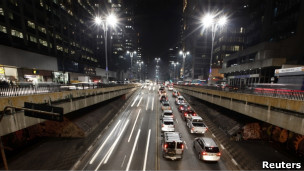
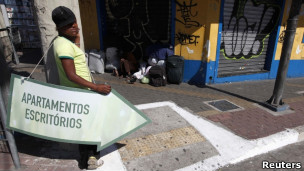
Boom brasileiro opõe classes médias tradicional e emergente, diz ‘FT’ (BBC)

Atualizado em 21 de julho, 2011 – 08:22 (Brasília) 11:22 GMT

Para jornal, classe média tradicional sofre com aumento de preços e infraestrutura congestionada

O sucesso das políticas do governo brasileiro para tirar milhões de pessoas da pobreza na última década vem provocando a criação de dois tipos opostos de classe média, afirma reportagem publicada nesta quinta-feira pelo diário econômico britânico Financial Times.

O jornal observa que os 33 milhões de brasileiros que deixaram a pobreza para integrar a nova classe média emergente foram os grandes beneficiados pelas políticas oficiais, enquanto a classe média tradicional considera que a situação no período ficou mais difícil.

“Os preços da carne e da gasolina dobraram, pedágios nas estradas subiram e comer fora ou comprar imóveis ficou proibitivamente caro”, lista a reportagem.

O jornal comenta que 105,5 milhões dos 190 milhões de brasileiros são considerados hoje de classe média, mas que os 20 milhões da classe média tradicional, com renda mensal maior que R$ 5.174, estão “no lado perdedor”.

“Diferentemente da Índia, onde a antiga classe média se beneficiou com a criação de novas indústrias, como o fornecimento de serviços terceirizados de tecnologia da informação, muitos na classe média brasileira reclamam de aumentos de preços, impostos, infraestrutura congestionada e mais competição por empregos”, diz a reportagem.

Perda de renda

O jornal cita o economista da Fundação Getúlio Vargas Marcelo Neri, que se dedica a estudar a classe média, segundo o qual a renda dos 50% mais pobres cresceu 68% em termos reais nos últimos dez anos, enquanto os 10% mais ricos viram sua renda crescer somente 10% no período.

Ele destaca ainda outro dado ainda mais revelador, que mostra que a renda média dos analfabetos brasileiros cresceu 37% entre 2003 e 2009, enquanto aqueles com estudo universitário tiveram uma perda de 17% na renda no mesmo período.

Na avaliação de Neri ao jornal, as mudanças representam um reordenamento da riqueza no país que estava pendente desde a abolição da escravatura, em 1888.

A reportagem afirma que “o processo tem sido em parte impulsionado pelo maior acesso à educação”, com o aumento da oferta de cursos universitários privados à nova classe média, que passou a competir com a classe média tradicional por empregos.

Efeito político

Dilma Rousseff lançou recentemente plano para tirar mais 16 milhões de pessoas da pobreza

O jornal observa que o efeito político da redução da pobreza levou a presidente Dilma Rousseff a lançar recentemente um programa para retirar outros 16 milhões de brasileiros da pobreza, mas afirma que isso não garantirá a ela os votos da classe média tradicional, concentrada nos Estados industrializados do sul do país, especialmente em São Paulo.

“Alguns reclamam que o governo ajuda os pobres por meio de benefícios e aumentos salariais e os ricos por meio de empréstimos subsidiados para suas empresas”, diz a reportagem.

“Isso inunda a economia com dinheiro, levando à inflação, a qual o Banco Central tenta então combater com aumentos de juros, penalizando a classe média”, continua o Financial Times.

A reportagem conclui afirmando que “enquanto muitos nas classes médias tradicionais do Brasil concordam com a distribuição de renda, eles estão temerosos sobre o quanto isso está lhes custando”

New York Times Publishes a Searing Drought Story, But Completely Misses the Climate Change Angle (Climate Central)

Published: July 12th, 2011, Last Updated: July 13th, 2011
By Andrew Freedman

In Monday’s New York Times, Kim Severson and Kirk Johnson wrote an eloquent story on the intense drought that is maintaining a tight grip on a broad swath of America’s southern tier, from Arizona to Florida. Reporting from Georgia, Severson and Johnson detailed the plight of farmers struggling to make ends meet as the parched soil makes it nearly impossible for them to grow crops and feed livestock.

Monday’s story from the New York Times on drought.

The piece is a great example of how emotionally moving storytelling from a local perspective can convey the consequences of broad issues and trends, in this case, a major drought that has enveloped 14 states. In that sense, it served Times readers extraordinarily well.

However, when it came to providing readers with a thorough understanding of the drought’s causes and aggravating factors, Severson and Johnson left out any mention of the elephant in the room — global climate change, and pinned the entire drought on one factor, La Niña. For this, it was overly simplistic, and even just downright inaccurate.

Here’s how the story framed the drought’s causes:

From a meteorological standpoint, the answer is fairly simple. “A strong La Niña shut off the southern pipeline of moisture,” said David Miskus, who monitors drought for the National Oceanic and Atmospheric Administration.

The La Niña “lone gunman” theory is problematic from a scientific standpoint. Just last week, Marty Hoerling, the federal government’s top researcher tasked with examining how climate change may be influencing extreme weather and climate events, told reporters that “we cannot reconcile it [the drought] with just the La Niña impact alone, at least not at this time.”

Instead, the causal factors are more nuanced than that, and they do include global warming, since it is changing the background conditions in which such extreme events occur.

During a press conference last week from a drought management meeting in the parched city of Austin, Texas, Hoerling made clear that climate change is already increasing average temperatures across the drought region, and is expected to lead to more frequent and intense droughts in the Southwest. Other research indicates the trend towards a drier Southwest is already taking place. “There are recent regional tendencies toward more severe droughts in the southwestern United States, parts of Canada and Alaska, and Mexico,” stated a 2008 report from the U.S. Global Change Research Program.

As is the case with any extreme weather or climate event now, one cannot truly separate climate change from the mix, considering that droughts, floods, and other extreme events now occur in an environment that has been profoundly altered by human emissions of greenhouse gases, such as carbon dioxide. This doesn’t mean that climate change is causing all of these extreme events, but it does mean that climate change may be increasing the likelihood that some types of events will occur, and may be changing the characteristics of some extreme events, such as by making heat waves more intense.

The fact that the Times story detailed both the drought and the record heat accompanying it, yet left out any mention of climate change, was a particularly puzzling error of omission. Hoerling, for one, pointed to the extreme heat seen during this drought as a possible sign of things to come, as climate change helps produce dangerous combinations of heat and drought.

“We haven’t necessarily dealt with drought and heat at the same time in such a persistent way, and that’s a new condition,” Hoerling said, noting that higher temperatures only hasten the drying of soils.

Many ponds in Texas, such as this one in Rusk County, were nearly dry by late June 2011. Credit: agrilifetoday/flickr.

Texas had its warmest June on record, for example, and on June 26th, Amarillo, Texas recorded its warmest temperature on record for any month, at 111°F. According to the Weather Channel, parts of Oklahoma and Texas have already exceeded their yearly average number of days at or above 100 degrees, including Oklahoma City, Dallas, and Austin. The heat is related to the drought, because when soil moisture is so low, more of the sun’s energy goes towards heating the air directly.

It’s unfortunate that the Times story, which was a searing portrayal of how a drought can impact communities that are already down on their luck due to economic troubles, did not include at least some discussion on climate change. As I’ve shown here, and climate blogger Joe Romm has also pointed out, there was sufficient evidence to justify raising the climate change topic in that story, and many others like it. After all, if the media doesn’t make an effort to evaluate the evidence on the links between extreme weather and climate change, then how can we expect the public to understand how global warming may affect their lives?

At Climate Central, our scientists are working to better understand whether and how climate change is increasing the likelihood of certain extreme weather events, such as heat waves, while at the same time, our journalists are covering the Southern drought and wildfire situation with the goal of making sure our readers understand what scientific studies show about global warming and extreme events.

This is not an easy task, but it need not be such a lonely one.

Update, July 13: The Times published an editorial on the drought today, which also blames the drought squarely on La Niña-related weather patterns, and makes no mention of climate change impacts or projections.

* * *

EDITORIAL (New York Times)
Suffering in the Parched South
Published: July 12, 2011

Right now, the official drought map of the United States looks as if it has been set on fire and scorched at the bottom edge. Scorched is how much of the Southeast and Southwest feel, in the midst of a drought that is the most extreme since the 1950s and possibly since the Dust Bowl of the 1930s. The government has classified much of this drought as D4, which means exceptional. The outlook through late September shows possible improvement in some places, but in most of Texas, Oklahoma, southern Arkansas, and northern Louisiana and Mississippi the drought is expected to worsen.

Dry conditions began last year and have only intensified as temperatures rose above 100 in many areas. Rain gauges have been empty for months, causing a region-wide search for new underground sources of water as streams and lakes dry up. The drought is produced by a pattern of cooling in the Pacific called La Niña. A cooler ocean means less moisture in the atmosphere, which shuts down the storms shuttling east across the region.

Droughts are measured in dollars as well as degrees. The prospects for cattle and wheat, corn and cotton crops across the South are dire. There is no way yet to estimate the ultimate cost of this drought because there is no realistic estimate of when it will end. Farmers have been using crop insurance payments, and federal relief is available in disaster areas, including much of Texas. But the only real relief will be the end of the dry, hot winds and the beginning of long, settled rains.

* * *

Drought Spreads Pain From Florida to Arizona

Grant Blankenship for The New York Times. Buster Haddock, an agricultural scientist at the University of Georgia, in a field where cotton never had the chance to grow.

By KIM SEVERSON and KIRK JOHNSON
Published: July 11, 2011

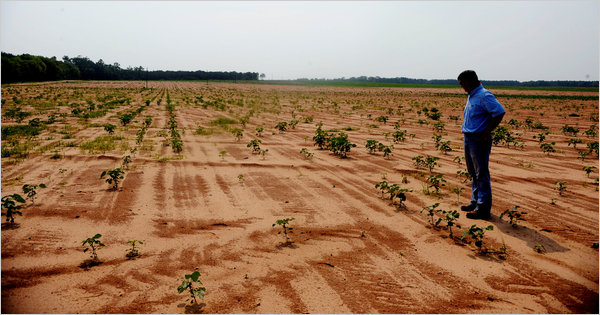
COLQUITT, Ga. — The heat and the drought are so bad in this southwest corner of Georgia that hogs can barely eat. Corn, a lucrative crop with a notorious thirst, is burning up in fields. Cotton plants are too weak to punch through soil so dry it might as well be pavement.

Waiting for Rain

Dangerously Dry – Nearly a fifth of the contiguous United States has been faced with the worst drought in recent years.

The Dry Season

OKLAHOMA A simple, if plaintive, message from the residents of Hough, in the panhandle, late last month. Shawn Yorks/The Guymon Daily Herald, via Associated Press

Farmers with the money and equipment to irrigate are running wells dry in the unseasonably early and particularly brutal national drought that some say could rival the Dust Bowl days.

“It’s horrible so far,” said Mike Newberry, a Georgia farmer who is trying grow cotton, corn and peanuts on a thousand acres. “There is no description for what we’ve been through since we started planting corn in March.”

The pain has spread across 14 states, from Florida, where severe water restrictions are in place, to Arizona, where ranchers could be forced to sell off entire herds of cattle because they simply cannot feed them.

In Texas, where the drought is the worst, virtually no part of the state has been untouched. City dwellers and ranchers have been tormented by excessive heat and high winds. In the Southwest, wildfires are chewing through millions of acres.

Last month, the United States Department of Agriculture designated all 254 counties in Texas natural disaster areas, qualifying them for varying levels of federal relief. More than 30 percent of the state’s wheat fields might be lost, adding pressure to a crop in short supply globally.

Even if weather patterns shift and relief-giving rain comes, losses will surely head past $3 billion in Texas alone, state agricultural officials said.

Most troubling is that the drought, which could go down as one of the nation’s worst, has come on extra hot and extra early. It has its roots in 2010 and continued through the winter. The five months from this February to June, for example, were so dry that they shattered a Texas record set in 1917, said Don Conlee, the acting state climatologist.

Oklahoma has had only 28 percent of its normal summer rainfall, and the heat has blasted past 90 degrees for a month.

“We’ve had a two- or three-week start on what is likely to be a disastrous summer,” said Kevin Kloesel, director of the Oklahoma Climatological Survey.

The question, of course, becomes why. In a spring and summer in which weather news has been dominated by epic floods and tornadoes, it is hard to imagine that more than a quarter of the country is facing an equally daunting but very different kind of natural disaster.

From a meteorological standpoint, the answer is fairly simple. “A strong La Niña shut off the southern pipeline of moisture,” said David Miskus, who monitors drought for the National Oceanic and Atmospheric Administration.

The weather pattern called La Niña is an abnormal cooling of Pacific waters. It usually follows El Niño, which is an abnormal warming of those same waters.

Although a new forecast from the National Weather Service’s Climate Prediction Center suggests that this dangerous weather pattern could revive in the fall, many in the parched regions find themselves in the unlikely position of hoping for a season of heavy tropical storms in the Southeast and drenching monsoons in the Southwest.

Climatologists say the great drought of 2011 is starting to look a lot like the one that hit the nation in the early to mid-1950s. That, too, dried a broad part of the southern tier of states into leather and remains a record breaker.

But this time, things are different in the drought belt. With states and towns short on cash and unemployment still high, the stress on the land and the people who rely on it for a living is being amplified by political and economic forces, state and local officials say. As a result, this drought is likely to have the cultural impact of the great 1930s drought, which hammered an already weakened nation.

“In the ’30s, you had the Depression and everything that happened with that, and drought on top,” said Donald A. Wilhite, director of the school of natural resources at the University of Nebraska in Lincoln and former director of the National Drought Mitigation Center. “The combination of those two things was devastating.”

Although today’s economy is not as bad, many Americans ground down by prolonged economic insecurity have little wiggle room to handle the effects of a prolonged drought. Government agencies are in the same boat.

“Because we overspent, the Legislature overspent, we’ve been cut back and then the drought comes along and we don’t have the resources and federal government doesn’t, and so we just tighten our belt and go on,” said Donald Butler, the director of the Arizona Department of Agriculture.

The drought is having some odd effects, economically and otherwise.

“One of the biggest impacts of the drought is going to be the shrinking of the cattle herd in the United States,” said Bruce A. Babcock, an agricultural economist at Iowa State University in Ames. And that will have a paradoxical but profound impact on the price of a steak.

Ranchers whose grass was killed by drought cannot afford to sustain cattle with hay or other feed, which is also climbing in price. Their response will most likely be to send animals to slaughter early. That glut of beef would lower prices temporarily.

But America’s cattle supply will ultimately be lower at a time when the global supply is already low, potentially resulting in much higher prices in the future.

There are other problems. Fishing tournaments have been canceled in Florida and Mississippi, just two of the states where low water levels have kept recreational users from lakes and rivers. In Texas, some cities are experiencing blackouts because airborne deposits of salt and chemicals are building up on power lines, triggering surges that shut down the system. In times of normal weather, rain usually washes away the environmental buildup. Instead, power company crews in cities like Houston are being dispatched to spray electrical lines.

In this corner of Georgia, where temperatures have been over 100 and rainfall has been off by more than half, fish and wildlife officials are worried over the health of the shinyrayed pocketbook and the oval pigtoe mussels, both freshwater species on the endangered species list.

The mussels live in Spring Creek, which is dangerously low and borders Terry Pickle’s 2,000-acre farm here. He pulls his irrigation from wells that tie into the water system of which Spring Creek is a part.

Whether nature or agriculture is to blame remains a debate in a state that for 20 years has been embroiled in a water war with Alabama and Florida. Meanwhile, Colquitt has allowed the state to drill a special well to pump water back into the creek to save the mussels from extinction.

Most farmers here are much more worried about the crops than the mussels. With cotton and corn prices high, they had high hopes for the season. But many have had to replant fields several times to get even one crop to survive. Others, like Mr. Pickle, have relied on irrigation so expensive that it threatens to eat into any profits.

The water is free, but the system used to get it from the ground runs on diesel fuel. His bill for May and June was an unheard of $88,442.

Thousands of small stories like that will all contribute to the ultimate financial impact of the drought, which will not be known until it is over. And no one knows when that will be.

The United States Department of Agriculture’s Farm Service Agency has already provided over $75 million in assistance to ranchers nationwide, with most of it going to Florida, New Mexico and Texas. An additional $62 million in crop insurance indemnities have already been provided to help other producers.

Economists say that adding up the effects of drought is far more complicated than, say, those of a hurricane or tornado, which destroy structures that have set values. With drought, a shattered wheat or corn crop is a loss to one farmer, and it has a specific price tag. But all those individual losses punch a hole in the food supply and drive prices up. That is good news for a farmer who manages to get a crop in. The final net costs down the line are thus dispersed, and mostly passed along.

That means grocery shoppers will feel the effects of the drought at the dinner table, where the cost of staples like meat and bread will most likely rise, said Michael J. Roberts, an associate professor of agricultural and resource economics at North Carolina State University in Raleigh, N.C. “The biggest losers are consumers,” he said.

Kim Severson reported from Colquitt, Ga., and Kirk Johnson from Denver. Dan Frosch contributed reporting from Denver.

Nordeste perde um quinto dos reservatórios de água em 2010 (FSP)

JC e-mail 4304, de 20 de Julho de 2011.

Relatório aponta bacias da região semiárida como as mais críticas.

A região Nordeste do País perdeu, entre outubro de 2009 e outubro de 2010, 20% dos reservatórios de água que possuía no período anterior, segundo a ANA (Agência Nacional de Águas). O dado está em um relatório sobre os recursos hídricos do País, publicado ontem e disponível em http://bit.ly/pnZBqo. Segundo a agência, a perda de reservatórios na região se deve à menor quantidade de chuvas.

Na região ficam as bacias do Semiárido, um dos pontos críticos quanto aos recursos hídricos, segundo o relatório. Também são classificadas assim as bacias do rio Meia Ponte, no Centro-Oeste, e a do Tietê, no Sudeste.

A definição leva em conta a disponibilidade e o uso de água, além da presença ou não de vegetação nativa e como é feito o tratamento dos resíduos sólidos no local. Segundo a ministra do Meio Ambiente, Izabella Teixeira, a ideia é, a partir dos dados do relatório, “focar os esforços nas áreas críticas”.

A ampliação dos serviços de saneamento foi apontada como prioridade pela ministra, principalmente nas cidades de até 50 mil habitantes. O pior índice de qualidade da água é o das áreas de grande densidade urbana.
(Folha de São Paulo)

Rios em péssimas condições (O Globo)

JC e-mail 4304, de 20 de Julho de 2011.

Brasil tem só 4% de recursos hídricos com qualidade ótima, segundo relatório.

Com 12% da oferta de água do planeta, o Brasil tem apenas 4% de seus recursos hídricos com qualidade considerada ótima, percentual que caiu seis pontos de 2008 para 2009. Segundo avaliação do “Informe 2011 da Conjuntura dos Recursos Hídricos do Brasil”, divulgado ontem pela Agência Nacional de Águas (ANA), cem rios estão em situação ruim ou péssima.

Para avaliar o índice de qualidade da água, a agência usa nove parâmetros, que levam em conta principalmente a contaminação dos rios pelo lançamento de esgoto. Essa centena de rios em situação precária não consegue depurar naturalmente a quantidade de resíduos que vêm recebendo. Embora o governo argumente que está fazendo investimentos em políticas públicas de saneamento, mais da metade das cidades do país – 2.926 municípios – não tem tratamento de esgoto. O relatório aponta que em 2009 foram investidos R$21,4 bilhões em saneamento e gestão da água, sendo R$13,2 bilhões em obras de tratamento de esgoto.

A água de pior qualidade se concentra perto das regiões metropolitanas de São Paulo, Curitiba, Belo Horizonte, Porto Alegre, Rio de Janeiro e Salvador e das cidades de médio porte, como Campinas (SP) e Juiz de Fora (MG). Entre os rios cuja água é de péssima ou má qualidade, estão o Tietê, que corta a capital paulista, o Iguaçu, que forma as famosas Cataratas do Iguaçu, e o Guandu-Mirim, no Rio – os dois últimos ficam dentro de unidades de conservação, o Parque Nacional do Iguaçu e a Área de Proteção Ambiental (APA) do Rio Guandu, respectivamente.

Entre 2008 e 2009, a água de qualidade péssima no país se manteve em 2%; a ruim aumentou de 6% para 7%; a regular passou de 12% para 16% e a boa subiu de 70% para 71%. Nesse período, o número de pontos monitorados caiu de 1.812 para 1.747. O superintendente de Planejamento de Recursos Hídricos da agência, Ney Maranhão, mostrou-se satisfeito com os resultados do estudo.

– Temos 90,6% dos rios num estado satisfatório de qualidade e de disponibilidade (quantidade de água). Apenas 2% não apresentam resultado satisfatório – avaliou Maranhão, que coordenou o trabalho.

Estresse hídrico e agricultura – Maranhão ressaltou que as políticas públicas têm sido direcionadas para as bacias que estão em situação crítica, seja por apresentarem baixa disponibilidade ou qualidade de água. A maior parte dos rios e bacias com problema de oferta de água se encontra no Nordeste.

A ministra do Meio Ambiente, Izabella Teixeira, disse que, no futuro, o estresse hídrico (falta de água em algumas regiões do país) vai impactar na agricultura. Ao todo, 69% dos recursos consumidos pela população são usados em irrigação. Izabella aproveitou a ocasião para mandar um recado ao Congresso, onde tramita a reforma do Código Florestal.

– Quando estamos discutindo Código Florestal, não falamos apenas do uso do solo. Estamos falando de recursos hídricos e qualidade de vida. O relatório traz com muita propriedade o estresse hídrico com perda de mata ciliar (vegetação nativa às margens dos rios). Onde se desmata mata ciliar, há comprometimento dos recursos hídricos – afirmou a ministra.

O levantamento da ANA também levou em conta o problema das mudanças climáticas, responsáveis por eventos naturais extremos em datas diferentes no ano passado: a estiagem na Amazônia; as enchentes em Alagoas, Pernambuco e em Minas Gerais; as cheias no Rio, em São Paulo e no Rio Grande do Sul. Um exemplo do agravamento dessa situação: em 2006, foram registradas 135 situações de emergência ou de calamidade pública por conta de fortes chuvas. Em 2010, esse número de ocorrências subiu para 601. No total, quase 10% das cidades brasileiras – 563 municípios – decretaram situação de emergência devido a enchentes, inundações, enxurradas e alagamentos.

No caso das secas, houve uma inversão: 2010 registrou menos casos de emergência (583) do que 2006 (914). Entre 2009 e 2010 houve diminuição de 20,8% no nível dos reservatórios de água construídos no Nordeste para combater estiagens.
(O Globo)

Estudo faz diagnóstico atualizado da situação da água e de sua gestão no Brasil (ANA)

JC e-mail 4303, de 19 de Julho de 2011.

Relatório da ANA aponta desafios para a qualidade das águas e evolução da gestão dos recursos hídricos.

A partir de hoje (19), o Brasil saberá qual é a real situação da água no País em vários aspectos, como: disponibilidade hídrica, qualidade e gestão de recursos hídricos. A Agência Nacional de Águas (ANA) divulga o Relatório de Conjuntura dos Recursos Hídricos no Brasil – Informe 2011. A publicação estará disponível também no site: http://conjuntura.ana.gov.br/conjuntura/.

Com dados consolidados até dezembro de 2010, o estudo da ANA, que atende a uma demanda do Conselho Nacional de Recursos Hídricos, é uma ferramenta de acompanhamento sistemático e anual da condição dos recursos hídricos e de sua gestão em escala nacional, por regiões hidrográficas, em temas fundamentais para o setor de recursos hídricos, como: volume de chuvas; ocorrência de eventos hidrológicos críticos (secas e cheias); disponibilidade hídrica nas diferentes regiões do Brasil; os usos múltiplos da água (irrigação, saneamento e hidroeletricidade, por exemplo); qualidade das águas; a evolução dos comitês de bacias; o planejamento, a regulação e a cobrança pelo uso dos recursos hídricos.

O trabalho registra melhorias na qualidade da água na última década em algumas bacias brasileiras, que receberam investimentos em tratamento de esgotos. Além disso, o estudo mostra que em 2010, 19% dos municípios brasileiros decretaram situação de emergência ou estado de calamidade pública devido à ocorrência de cheias ou problemas de estiagem ou seca, sendo que o número geral desses registros caiu de 1967, em 2009, para 1184 no ano passado. No aspecto da gestão de recursos hídricos, o Informe 2011 indica um aumento do número de comitês de bacias e da área de cobertura do território nacional por planos de recursos hídricos (51% do território nacional) – planos diretores que visam a fundamentar e orientar a implementação do gerenciamento e da Política Nacional de Recursos Hídricos.

O Informe 2011 contém uma análise considerando de forma integrada os aspectos de quantidade (relação entre demanda de água e oferta – balanço quantitativo) e qualidade da água nas bacias brasileiras. Os resultados dessa avaliação apontam para um conjunto de bacias críticas, onde há maior potencial para ocorrência de conflitos pelo uso da água, que deverão merecer atenção crescente por parte dos gestores de recursos hídricos.

Para a ministra do Meio Ambiente, Izabella Teixeira, o Relatório de Conjuntura dos Recursos Hídricos no Brasil – Informe 2011 é uma ferramenta importante para que o País conheça a realidade da condição de suas águas. “O acompanhamento e a avaliação da situação dos recursos hídricos em escala nacional pelo Relatório subsidiam a definição das ações e intervenções necessárias para a melhora da quantidade e da qualidade das águas”, afirma.

Segundo o diretor-presidente da ANA, Vicente Andreu, o Informe 2011 permite o acompanhamento dos desafios e da evolução do setor de recursos hídricos no Brasil. “Por meio do Relatório de Conjuntura, os gestores públicos têm um panorama da situação dos recursos hídricos do País, o que permite a evolução da gestão de nossas águas”, destaca.

Para a elaboração do Relatório de Conjuntura – Informe 2011, a ANA contou com a parceria da Secretaria de Recursos Hídricos e Ambiente Urbano do Ministério do Meio Ambiente (SRHU/MMA), Departamento Nacional de Obras contras as Secas (DNOCS), do Instituto Nacional de Meteorologia (Inmet) e de todos os órgãos gestores estaduais de recursos hídricos e meio ambiente.

A primeira edição do Relatório de Conjuntura foi lançada em 2009, em reunião do Conselho Nacional de Recursos Hídricos (CNRH). No ano seguinte, o trabalho serviu de base para a 1ª atualização do Plano Nacional de Recursos Hídricos. Entre 2010 e 2012, estão previstos Informes anuais que atualizam os dados do estudo.

Qualidade das águas – Em comparação ao Informe 2010, o diagnóstico dos mais de 1.700 pontos analisados quanto à qualidade das águas revela a manutenção do quadro geral do País com várias bacias comprometidas devido ao grande lançamento de esgotos urbanos domésticos sem tratamento adequado, especialmente nas regiões metropolitanas. No entanto, em algumas bacias foi possível associar melhorias na qualidade das águas a investimentos realizados em tratamento de esgotos na última década, como por exemplo nas seguintes bacias: do rio das Velhas, Paraíba do Sul, Grande e Tietê (Reservatório Billings – Braço do Taquacetuba).

Eventos críticos – Em 2010, exatos 563 municípios brasileiros decretaram situação de emergência ou estado de calamidade pública devido à ocorrência de cheias, causadas por chuvas acima da média histórica. São Paulo, Rio de Janeiro, Alagoas, Pernambuco, Bahia e os estados da região Sul foram os mais atingidos. Já o Semiárido e a região Amazônica concentraram a maior parte dos 521 municípios (aproximadamente 9% do total nacional) que tiveram que decretar situação de emergência ou estado de calamidade pública em decorrência de estiagem (evento mais duradouro) ou seca. Em comparação a 2009, o número de ocorrências de 2010 caiu de 1967 para 1184.

Irrigação – Responsável por 69% do consumo de água no Brasil, a irrigação atingia no final da última década 4,5 milhões de hectares irrigados dos 29,6 milhões irrigáveis.

Hidroeletricidade – Entre 2009 e 2010, ocorreu um aumento de 2.093 MW (acréscimo de 3%) na capacidade hidrelétrica instalada que alcançou, ao final de 2010, 80.703 MW, o que representa 71% da matriz elétrica nacional.

Gestão de recursos hídricos – Sobre o planejamento de recursos hídricos em bacias interestaduais, em 2010 foi concluído e aprovado o Plano de Recursos Hídricos da Bacia do Rio Doce. Os planos da Bacia Amazônica – Afluentes da Margem Direita e Verde Grande, concluídos em 2010, tiveram sua aprovação em 2011, respectivamente pelo CNRH e pelo comitê da bacia do Verde Grande. Com isso, a cobertura do território brasileiro por planos de recursos hídricos finalizados chegou a 51%. Com a conclusão de seus planos estaduais de recursos hídricos, Piauí e Minas Gerais fizeram com que 12 das 27 da unidades da Federação tivessem o instrumento. Estes planos diretores visam a fundamentar e orientar a implementação do gerenciamento e da Política Nacional de Recursos Hídricos.

No que diz respeito aos comitês de bacias, em 2007 havia 150 no País. Já em 2010, o número chegou a 173 desses colegiados (um tipo de parlamento das águas), sendo 164 estaduais e 9 interestaduais. Já a cobrança pelo uso dos recursos hídricos entrou em funcionamento na bacia do rio São Francisco, integrando com as bacias do Paraíba do Sul e dos rios Piracicaba, Capivari e Jundiaí (PCJ), o conjunto de bacias interestaduais com cobrança implementada.

Sobre a outorga de direito de uso de recursos hídricos, entre 2009 e 2010 houve um aumento de 8% na vazão total outorgada no País, que chegou a 5.825m³/s, em virtude do avanço da implementação do instrumento pelos estados, do aumento da demanda por água e também devido ao aumento da base de dados considerada neste Informe 2011, quando comparada com a dos relatórios passados.

Nota-se também uma tendência do fortalecimento das políticas estaduais e nacional de recursos hídricos em bacias onde há maior comprometimento quali-quantitativo.
(Ascom da ANA)

Climate of Denial: Can science and the truth withstand the merchants of poison? (Rolling Stone)

By AL GORE
JUNE 22, 2011 7:45 AM ET

Illustration by Matt Mahurin

The first time I remember hearing the question “is it real?” was when I went as a young boy to see a traveling show put on by “professional wrestlers” one summer evening in the gym of the Forks River Elementary School in Elmwood, Tennessee.

The evidence that it was real was palpable: “They’re really hurting each other! That’s real blood! Look a’there! They can’t fake that!” On the other hand, there was clearly a script (or in today’s language, a “narrative”), with good guys to cheer and bad guys to boo.

But the most unusual and in some ways most interesting character in these dramas was the referee: Whenever the bad guy committed a gross and obvious violation of the “rules” — such as they were — like using a metal folding chair to smack the good guy in the head, the referee always seemed to be preoccupied with one of the cornermen, or looking the other way. Yet whenever the good guy — after absorbing more abuse and unfairness than any reasonable person could tolerate — committed the slightest infraction, the referee was all over him. The answer to the question “Is it real?” seemed connected to the question of whether the referee was somehow confused about his role: Was he too an entertainer?

Scorched Earth: How Climate Change Is Spreading Drought Throughout the Globe

That is pretty much the role now being played by most of the news media in refereeing the current wrestling match over whether global warming is “real,” and whether it has any connection to the constant dumping of 90 million tons of heat-trapping emissions into the Earth’s thin shell of atmosphere every 24 hours.

Admittedly, the contest over global warming is a challenge for the referee because it’s a tag-team match, a real free-for-all. In one corner of the ring are Science and Reason. In the other corner: Poisonous Polluters and Right-wing Ideologues.

The referee — in this analogy, the news media — seems confused about whether he is in the news business or the entertainment business. Is he responsible for ensuring a fair match? Or is he part of the show, selling tickets and building the audience? The referee certainly seems distracted: by Donald Trump, Charlie Sheen, the latest reality show — the list of serial obsessions is too long to enumerate here.

But whatever the cause, the referee appears not to notice that the Polluters and Ideologues are trampling all over the “rules” of democratic discourse. They are financing pseudoscientists whose job is to manufacture doubt about what is true and what is false; buying elected officials wholesale with bribes that the politicians themselves have made “legal” and can now be made in secret; spending hundreds of millions of dollars each year on misleading advertisements in the mass media; hiring four anti-climate lobbyists for every member of the U.S. Senate and House of Representatives. (Question: Would Michael Jordan have been a star if he was covered by four defensive players every step he took on the basketball court?)

This script, of course, is not entirely new: A half-century ago, when Science and Reason established the linkage between cigarettes and lung diseases, the tobacco industry hired actors, dressed them up as doctors, and paid them to look into television cameras and tell people that the linkage revealed in the Surgeon General’s Report was not real at all. The show went on for decades, with more Americans killed each year by cigarettes than all of the U.S. soldiers killed in all of World War II.

This time, the scientific consensus is even stronger. It has been endorsed by every National Academy of science of every major country on the planet, every major professional scientific society related to the study of global warming and 98 percent of climate scientists throughout the world. In the latest and most authoritative study by 3,000 of the very best scientific experts in the world, the evidence was judged “unequivocal.”

But wait! The good guys transgressed the rules of decorum, as evidenced in their private e-mails that were stolen and put on the Internet. The referee is all over it: Penalty! Go to your corner! And in their 3,000-page report, the scientists made some mistakes! Another penalty!

And if more of the audience is left confused about whether the climate crisis is real? Well, the show must go on. After all, it’s entertainment. There are tickets to be sold, eyeballs to glue to the screen.

Part of the script for this show was leaked to The New York Times as early as 1991. In an internal document, a consortium of the largest global-warming polluters spelled out their principal strategy: “Reposition global warming as theory, rather than fact.” Ever since, they have been sowing doubt even more effectively than the tobacco companies before them.

To sell their false narrative, the Polluters and Ideologues have found it essential to undermine the public’s respect for Science and Reason by attacking the integrity of the climate scientists. That is why the scientists are regularly accused of falsifying evidence and exaggerating its implications in a greedy effort to win more research grants, or secretly pursuing a hidden political agenda to expand the power of government. Such slanderous insults are deeply ironic: extremist ideologues — many financed or employed by carbon polluters — accusing scientists of being greedy extremist ideologues.

After World War II, a philosopher studying the impact of organized propaganda on the quality of democratic debate wrote, “The conversion of all questions of truth into questions of power has attacked the very heart of the distinction between true and false.”


Is the climate crisis real? Yes, of course it is. Pause for a moment to consider these events of just the past 12 months:

• Heat. According to NASA, 2010 was tied with 2005 as the hottest year measured since instruments were first used systematically in the 1880s. Nineteen countries set all-time high temperature records. One city in Pakistan, Mohenjo-Daro, reached 128.3 degrees Fahrenheit, the hottest temperature ever measured in an Asian city. Nine of the 10 hottest years in history have occurred in the last 13 years. The past decade was the hottest ever measured, even though half of that decade represented a “solar minimum” — the low ebb in the natural cycle of solar energy emanating from the sun.

• Floods. Megafloods displaced 20 million people in Pakistan, further destabilizing a nuclear-armed country; inundated an area of Australia larger than Germany and France combined; flooded 28 of the 32 districts that make up Colombia, where it has rained almost continuously for the past year; caused a “thousand-year” flood in my home city of Nashville; and led to all-time record flood levels in the Mississippi River Valley. Many places around the world are now experiencing larger and more frequent extreme downpours and snowstorms; last year’s “Snowmaggedon” in the northeastern United States is part of the same pattern, notwithstanding the guffaws of deniers.

• Drought. Historic drought and fires in Russia killed an estimated 56,000 people and caused wheat and other food crops in Russia, Ukraine and Kazakhstan to be removed from the global market, contributing to a record spike in food prices. “Practically everything is burning,” Russian president Dmitry Medvedev declared. “What’s happening with the planet’s climate right now needs to be a wake-up call to all of us.” The drought level in much of Texas has been raised from “extreme” to “exceptional,” the highest category. This spring the majority of the counties in Texas were on fire, and Gov. Rick Perry requested a major disaster declaration for all but two of the state’s 254 counties. Arizona is now fighting the largest fire in its history. Since 1970, the fire season throughout the American West has increased by 78 days. Extreme droughts in central China and northern France are currently drying up reservoirs and killing crops.

• Melting Ice. An enormous mass of ice, four times larger than the island of Manhattan, broke off from northern Greenland last year and slipped into the sea. The acceleration of ice loss in both Greenland and Antarctica has caused another upward revision of global sea-level rise and the numbers of refugees expected from low-lying coastal areas. The Arctic ice cap, which reached a record low volume last year, has lost as much as 40 percent of its area during summer in just 30 years.

These extreme events are happening in real time. It is not uncommon for the nightly newscast to resemble a nature hike through the Book of Revelation. Yet most of the news media completely ignore how such events are connected to the climate crisis, or dismiss the connection as controversial; after all, there are scientists on one side of the debate and deniers on the other. A Fox News executive, in an internal e-mail to the network’s reporters and editors that later became public, questioned the “veracity of climate change data” and ordered the journalists to “refrain from asserting that the planet has warmed (or cooled) in any given period without IMMEDIATELY pointing out that such theories are based upon data that critics have called into question.”

But in the “real” world, the record droughts, fires, floods and mudslides continue to increase in severity and frequency. Leading climate scientists like Jim Hansen and Kevin Trenberth now say that events like these would almost certainly not be occurring without the influence of man-made global warming. And that’s a shift in the way they frame these impacts. Scientists used to caution that we were increasing the probability of such extreme events by “loading the dice” — pumping more carbon into the atmosphere. Now the scientists go much further, warning that we are “painting more dots on the dice.”  We are not only more likely to roll 12s; we are now rolling 13s and 14s. In other words, the biggest storms are not only becoming more frequent, they are getting bigger, stronger and more destructive.

“The only plausible explanation for the rise in weather-related catastrophes is climate change,” Munich Re, one of the two largest reinsurance companies in the world, recently stated. “The view that weather extremes are more frequent and intense due to global warming coincides with the current state of scientific knowledge.”

Many of the extreme and destructive events are the result of the rapid increase in the amount of heat energy from the sun that is trapped in the atmosphere, which is radically disrupting the planet’s water cycle. More heat energy evaporates more water into the air, and the warmer air holds a lot more moisture. This has huge consequences that we now see all around the world.

When a storm unleashes a downpour of rain or snow, the precipitation does not originate just in the part of the sky directly above where it falls. Storms reach out — sometimes as far as 2,000 miles — to suck in water vapor from large areas of the sky, including the skies above oceans, where water vapor has increased by four percent in just the last 30 years. (Scientists often compare this phenomenon to what happens in a bathtub when you open the drain; the water rushing out comes from the whole tub, not just from the part of the tub directly above the drain. And when the tub is filled with more water, more goes down the drain. In the same way, when the warmer sky is filled with a lot more water vapor, there are bigger downpours when a storm cell opens the “drain.”)

In many areas, these bigger downpours also mean longer periods between storms — at the same time that the extra heat in the air is also drying out the soil. That is part of the reason so many areas have been experiencing both record floods and deeper, longer-lasting droughts.

Moreover, the scientists have been warning us for quite some time — in increasingly urgent tones — that things will get much, much worse if we continue the reckless dumping of more and more heat-trapping pollution into the atmosphere. Drought is projected to spread across significant, highly populated areas of the globe throughout this century. Look at what the scientists say is in store for the Mediterranean nations. Should we care about the loss of Spain, France, Italy, the Balkans, Turkey, Tunisia? Look at what they say is in store for Mexico. Should we notice? Should we care?

Maybe it’s just easier, psychologically, to swallow the lie that these scientists who devote their lives to their work are actually greedy deceivers and left-wing extremists — and that we should instead put our faith in the pseudoscientists financed by large carbon polluters whose business plans depend on their continued use of the atmospheric commons as a place to dump their gaseous, heat-trapping waste without limit or constraint, free of charge.


The truth is this: What we are doing is functionally insane. If we do not change this pattern, we will condemn our children and all future generations to struggle with ecological curses for several millennia to come. Twenty percent of the global-warming pollution we spew into the sky each day will still be there 20,000 years from now!

We do have another choice. Renewable energy sources are coming into their own. Both solar and wind will soon produce power at costs that are competitive with fossil fuels; indications are that twice as many solar installations were erected worldwide last year as compared to 2009. The reductions in cost and the improvements in efficiency of photovoltaic cells over the past decade appear to be following an exponential curve that resembles a less dramatic but still startling version of what happened with computer chips over the past 50 years.

Enhanced geothermal energy is potentially a nearly limitless source of competitive electricity. Increased energy efficiency is already saving businesses money and reducing emissions significantly. New generations of biomass energy — ones that do not rely on food crops, unlike the mistaken strategy of making ethanol from corn — are extremely promising. Sustainable forestry and agriculture both make economic as well as environmental sense. And all of these options would spread even more rapidly if we stopped subsidizing Big Oil and Coal and put a price on carbon that reflected the true cost of fossil energy — either through the much-maligned cap-and-trade approach, or through a revenue-neutral tax swap.

All over the world, the grassroots movement in favor of changing public policies to confront the climate crisis and build a more prosperous, sustainable future is growing rapidly. But most governments remain paralyzed, unable to take action — even after years of volatile gasoline prices, repeated wars in the Persian Gulf, one energy-related disaster after another, and a seemingly endless stream of unprecedented and lethal weather disasters.

Continuing on our current course would be suicidal for global civilization. But the key question is: How do we drive home that fact in a democratic society when questions of truth have been converted into questions of power? When the distinction between what is true and what is false is being attacked relentlessly, and when the referee in the contest between truth and falsehood has become an entertainer selling tickets to a phony wrestling match?

The “wrestling ring” in this metaphor is the conversation of democracy. It used to be called the “public square.” In ancient Athens, it was the Agora. In the Roman Republic, it was the Forum. In the Egypt of the recent Arab Spring, “Tahrir Square” was both real and metaphorical — encompassing Facebook, Twitter, Al-Jazeera and texting.

In the America of the late-18th century, the conversation that led to our own “Spring” took place in printed words: pamphlets, newsprint, books, the “Republic of Letters.” It represented the fullest flower of the Enlightenment, during which the oligarchic power of the monarchies, the feudal lords and the Medieval Church was overthrown and replaced with a new sovereign: the Rule of Reason.

The public square that gave birth to the new consciousness of the Enlightenment emerged in the dozen generations following the invention of the printing press — “the Gutenberg Galaxy,” the scholar Marshall McLuhan called it — a space in which the conversation of democracy was almost equally accessible to every literate person. Individuals could both find the knowledge that had previously been restricted to elites and contribute their own ideas.

Ideas that found resonance with others rose in prominence much the way Google searches do today, finding an ever larger audience and becoming a source of political power for individuals with neither wealth nor force of arms. Thomas Paine, to take one example, emigrated from England to Philadelphia with no wealth, no family connections and no power other than that which came from his ability to think and write clearly — yet his Common Sense became the Harry Potter of Revolutionary America. The “public interest” mattered, was actively discussed and pursued.

But the “public square” that gave birth to America has been transformed beyond all recognition. The conversation that matters most to the shaping of the “public mind” now takes place on television. Newspapers and magazines are in decline. The Internet, still in its early days, will one day support business models that make true journalism profitable — but up until now, the only successful news websites aggregate content from struggling print publications. Web versions of the newspapers themselves are, with few exceptions, not yet making money. They bring to mind the classic image of Wile E. Coyote running furiously in midair just beyond the edge of the cliff, before plummeting to the desert floor far beneath him.


The average American, meanwhile, is watching television an astonishing five hours a day. In the average household, at least one television set is turned on more than eight hours a day. Moreover, approximately 75 percent of those using the Internet frequently watch television at the same time that they are online.

Unlike access to the “public square” of early America, access to television requires large amounts of money. Thomas Paine could walk out of his front door in Philadelphia and find a dozen competing, low-cost print shops within blocks of his home. Today, if he traveled to the nearest TV station, or to the headquarters of nearby Comcast — the dominant television provider in America — and tried to deliver his new ideas to the American people, he would be laughed off the premises. The public square that used to be a commons has been refeudalized, and the gatekeepers charge large rents for the privilege of communicating to the American people over the only medium that really affects their thinking. “Citizens” are now referred to more commonly as “consumers” or “the audience.”

That is why up to 80 percent of the campaign budgets for candidates in both major political parties is devoted to the purchase of 30-second TV ads. Since the rates charged for these commercials increase each year, the candidates are forced to raise more and more money in each two-year campaign cycle.

Of course, the only reliable sources from which such large sums can be raised continuously are business lobbies. Organized labor, a shadow of its former self, struggles to compete, and individuals are limited by law to making small contributions. During the 2008 campaign, there was a bubble of hope that Internet-based fundraising might even the scales, but in the end, Democrats as well as Republicans relied far more on traditional sources of large contributions. Moreover, the recent deregulation of unlimited — and secret — donations by wealthy corporations has made the imbalance even worse.

In the new ecology of political discourse, special-interest contributors of the large sums of money now required for the privilege of addressing voters on a wholesale basis are not squeamish about asking for the quo they expect in return for their quid. Politicians who don’t acquiesce don’t get the money they need to be elected and re-elected. And the impact is doubled when special interests make clear — usually bluntly — that the money they are withholding will go instead to opponents who are more than happy to pledge the desired quo. Politicians have been racing to the bottom for some time, and are presently tunneling to new depths. It is now commonplace for congressmen and senators first elected decades ago — as I was — to comment in private that the whole process has become unbelievably crass, degrading and horribly destructive to the core values of American democracy.

Largely as a result, the concerns of the wealthiest individuals and corporations routinely trump the concerns of average Americans and small businesses. There are a ridiculously large number of examples: eliminating the inheritance tax paid by the wealthiest one percent of families is considered a much higher priority than addressing the suffering of the millions of long-term unemployed; Wall Street’s interest in legalizing gambling in trillions of dollars of “derivatives” was considered way more important than protecting the integrity of the financial system and the interests of middle-income home buyers. It’s a long list.

Almost every group organized to promote and protect the “public interest” has been backpedaling and on the defensive. By sharp contrast, when a coalition of powerful special interests sets out to manipulate U.S. policy, their impact can be startling — and the damage to the true national interest can be devastating.

In 2002, for example, the feverish desire to invade Iraq required convincing the American people that Saddam Hussein was somehow responsible for attacking the United States on September 11th, 2001, and that he was preparing to attack us again, perhaps with nuclear weapons. When the evidence — the “facts” — stood in the way of that effort to shape the public mind, they were ridiculed, maligned and ignored. Behind the scenes, the intelligence was manipulated and the public was intentionally deceived. Allies were pressured to adopt the same approach with their publics. A recent inquiry in the U.K. confirmed this yet again. “We knew at the time that the purpose of the dossier was precisely to make a case for war, rather than setting out the available intelligence,” Maj. Gen. Michael Laurie testified. “To make the best out of sparse and inconclusive intelligence, the wording was developed with care.” Why? As British intelligence put it, the overthrow of Saddam was “a prize because it could give new security to oil supplies.”

That goal — the real goal — could have been debated on its own terms. But as Bush administration officials have acknowledged, a truly candid presentation would not have resulted in sufficient public support for the launching of a new war. They knew that because they had studied it and polled it. So they manipulated the debate, downplayed the real motive for the invasion, and made a different case to the public — one based on falsehoods.

And the “referee” — the news media — looked the other way. Some, like Fox News, were hyperactive cheerleaders. Others were intimidated into going along by the vitriol heaped on any who asked inconvenient questions. (They know it; many now acknowledge it, sheepishly and apologetically.)


Senators themselves fell, with a few honorable exceptions, into the same two camps. A few weeks before the United States invaded Iraq, the late Robert Byrd — God rest his soul — thundered on the Senate floor about the pitiful quality of the debate over the choice between war and peace: “Yet, this Chamber is, for the most part, silent — ominously, dreadfully silent. There is no debate, no discussion, no attempt to lay out for the nation the pros and cons of this particular war. There is nothing.”

The chamber was silent, in part, because many senators were somewhere else — attending cocktail parties and receptions, largely with special-interest donors, raising money to buy TV ads for their next campaigns. Nowadays, in fact, the scheduling of many special-interest fundraisers mirrors the schedule of votes pending in the House and Senate.

By the time we invaded Iraq, polls showed, nearly three-quarters of the American people were convinced that the person responsible for the planes flying into the World Trade Center Towers was indeed Saddam Hussein. The rest is history — though, as Faulkner wrote, “The past is never dead. It’s not even past.” Because of that distortion of the truth in the past, we are still in Iraq; and because the bulk of our troops and intelligence assets were abruptly diverted from Afghanistan to Iraq, we are also still in Afghanistan.

In the same way, because the banks had their way with Congress when it came to gambling on unregulated derivatives and recklessly endangering credit markets with subprime mortgages, we still have almost double-digit unemployment, historic deficits, Greece and possibly other European countries teetering on the edge of default, and the threat of a double-dip recession. Even the potential default of the United States of America is now being treated by many politicians and too many in the media as yet another phony wrestling match, a political game. Are the potential economic consequences of a U.S. default “real”? Of course they are! Have we gone completely nuts?

We haven’t gone nuts — but the “conversation of democracy” has become so deeply dysfunctional that our ability to make intelligent collective decisions has been seriously impaired. Throughout American history, we relied on the vibrancy of our public square — and the quality of our democratic discourse — to make better decisions than most nations in the history of the world. But we are now routinely making really bad decisions that completely ignore the best available evidence of what is true and what is false. When the distinction between truth and falsehood is systematically attacked without shame or consequence — when a great nation makes crucially important decisions on the basis of completely false information that is no longer adequately filtered through the fact-checking function of a healthy and honest public discussion — the public interest is severely damaged.

That is exactly what is happening with U.S. decisions regarding the climate crisis. The best available evidence demonstrates beyond any reasonable doubt that the reckless spewing of global-warming pollution in obscene quantities into the atmospheric commons is having exactly the consequences long predicted by scientists who have analyzed the known facts according to the laws of physics.

The emergence of the climate crisis seems sudden only because of a relatively recent discontinuity in the relationship between human civilization and the planet’s ecological system. In the past century, we have quadrupled global population while relying on the burning of carbon-based fuels — coal, oil and gas — for 85 percent of the world’s energy. We are also cutting and burning forests that would otherwise help remove some of the added CO2 from the atmosphere, and have converted agriculture to an industrial model that also runs on carbon-based fuels and strip-mines carbon-rich soils.

The cumulative result is a radically new reality — and since human nature makes us vulnerable to confusing the unprecedented with the improbable, it naturally seems difficult to accept. Moreover, since this new reality is painful to contemplate, and requires big changes in policy and behavior that are at the outer limit of our ability, it is all too easy to fall into the psychological state of denial. As with financial issues like subprime mortgages and credit default swaps, the climate crisis can seem too complex to worry about, especially when the shills for the polluters constantly claim it’s all a hoax anyway. And since the early impacts of climatic disruption are distributed globally, they masquerade as an abstraction that is safe to ignore.

These vulnerabilities, rooted in our human nature, are being manipulated by the tag-team of Polluters and Ideologues who are trying to deceive us. And the referee — the news media — is once again distracted. As with the invasion of Iraq, some are hyperactive cheerleaders for the deception, while others are intimidated into complicity, timidity and silence by the astonishing vitriol heaped upon those who dare to present the best evidence in a professional manner. Just as TV networks who beat the drums of war prior to the Iraq invasion were rewarded with higher ratings, networks now seem reluctant to present the truth about the link between carbon pollution and global warming out of fear that conservative viewers will change the channel — and fear that they will receive a torrent of flame e-mails from deniers.

Many politicians, unfortunately, also fall into the same two categories: those who cheerlead for the deniers and those who cower before them. The latter group now includes several candidates for the Republican presidential nomination who have felt it necessary to abandon their previous support for action on the climate crisis; at least one has been apologizing profusely to the deniers and begging for their forgiveness.

“Intimidation” and “timidity” are connected by more than a shared word root. The first is designed to produce the second. As Yeats wrote almost a century ago, “The best lack all conviction, while the worst are full of passionate intensity.”

Barack Obama’s approach to the climate crisis represents a special case that requires careful analysis. His election was accompanied by intense hope that many things in need of change would change. Some things have, but others have not. Climate policy, unfortunately, is in the second category. Why?

First of all, anyone who honestly examines the incredible challenges confronting President Obama when he took office has to feel enormous empathy for him: the Great Recession, with the high unemployment and the enormous public and private indebtedness it produced; two seemingly interminable wars; an intractable political opposition whose true leaders — entertainers masquerading as pundits — openly declared that their objective was to ensure that the new president failed; a badly broken Senate that is almost completely paralyzed by the threat of filibuster and is controlled lock, stock and barrel by the oil and coal industries; a contingent of nominal supporters in Congress who are indentured servants of the same special interests that control most of the Republican Party; and a ferocious, well-financed and dishonest campaign poised to vilify anyone who dares offer leadership for the reduction of global-warming pollution.

In spite of these obstacles, President Obama included significant climate-friendly initiatives in the economic stimulus package he presented to Congress during his first month in office. With the skillful leadership of House Speaker Nancy Pelosi and committee chairmen Henry Waxman and Ed Markey, he helped secure passage of a cap-and-trade measure in the House a few months later. He implemented historic improvements in fuel-efficiency standards for automobiles, and instructed the Environmental Protection Agency to move forward on the regulation of global-warming pollution under the Clean Air Act. He appointed many excellent men and women to key positions, and they, in turn, have made hundreds of changes in environmental and energy policy that have helped move the country forward slightly on the climate issue. During his first six months, he clearly articulated the link between environmental security, economic security and national security — making the case that a national commitment to renewable energy could simultaneously reduce unemployment, dependence on foreign oil and vulnerability to the disruption of oil markets dominated by the Persian Gulf reserves. And more recently, as the issue of long-term debt has forced discussion of new revenue, he proposed the elimination of unnecessary and expensive subsidies for oil and gas.


But in spite of these and other achievements, President Obama has thus far failed to use the bully pulpit to make the case for bold action on climate change. After successfully passing his green stimulus package, he did nothing to defend it when Congress decimated its funding. After the House passed cap and trade, he did little to make passage in the Senate a priority. Senate advocates — including one Republican — felt abandoned when the president made concessions to oil and coal companies without asking for anything in return. He has also called for a massive expansion of oil drilling in the United States, apparently in an effort to defuse criticism from those who argue speciously that “drill, baby, drill” is the answer to our growing dependence on foreign oil.

The failure to pass legislation to limit global-warming pollution ensured that the much-anticipated Copenhagen summit on a global treaty in 2009 would also end in failure. The president showed courage in attending the summit and securing a rhetorical agreement to prevent a complete collapse of the international process, but that’s all it was — a rhetorical agreement. During the final years of the Bush-Cheney administration, the rest of the world was waiting for a new president who would aggressively tackle the climate crisis — and when it became clear that there would be no real change from the Bush era, the agenda at Copenhagen changed from “How do we complete this historic breakthrough?” to “How can we paper over this embarrassing disappointment?”

Some concluded from the failure in Copenhagen that it was time to give up on the entire U.N.-sponsored process for seeking an international agreement to reduce both global-warming pollution and deforestation. Ultimately, however, the only way to address the climate crisis will be with a global agreement that in one way or another puts a price on carbon. And whatever approach is eventually chosen, the U.S. simply must provide leadership by changing our own policy.

Yet without presidential leadership that focuses intensely on making the public aware of the reality we face, nothing will change. The real power of any president, as Richard Neustadt wrote, is “the power to persuade.” Yet President Obama has never presented to the American people the magnitude of the climate crisis. He has simply not made the case for action. He has not defended the science against the ongoing, withering and dishonest attacks. Nor has he provided a presidential venue for the scientific community — including our own National Academy — to bring the reality of the science before the public.

Here is the core of it: we are destroying the climate balance that is essential to the survival of our civilization. This is not a distant or abstract threat; it is happening now. The United States is the only nation that can rally a global effort to save our future. And the president is the only person who can rally the United States.

Many political advisers assume that a president has to deal with the world of politics as he finds it, and that it is unwise to risk political capital on an effort to actually lead the country toward a new understanding of the real threats and real opportunities we face. Concentrate on the politics of re-election, they say. Don’t take chances.

All that might be completely understandable and make perfect sense in a world where the climate crisis wasn’t “real.” Those of us who support and admire President Obama understand how difficult the politics of this issue are in the context of the massive opposition to doing anything at all — or even to recognizing that there is a crisis. And assuming that the Republicans come to their senses and avoid nominating a clown, his re-election is likely to involve a hard-fought battle with high stakes for the country. All of his supporters understand that it would be self-defeating to weaken Obama and heighten the risk of another step backward. Even writing an article like this one carries risks; opponents of the president will excerpt the criticism and strip it of context.

But in this case, the President has reality on his side. The scientific consensus is far stronger today than at any time in the past. Here is the truth: The Earth is round; Saddam Hussein did not attack us on 9/11; Elvis is dead; Obama was born in the United States; and the climate crisis is real. It is time to act.

Those who profit from the unconstrained pollution that is the primary cause of climate change are determined to block our perception of this reality. They have help from many sides: from the private sector, which is now free to make unlimited and secret campaign contributions; from politicians who have conflated their tenures in office with the pursuit of the people’s best interests; and — tragically — from the press itself, which treats deception and falsehood on the same plane as scientific fact, and calls it objective reporting of alternative opinions.

All things are not equally true. It is time to face reality. We ignored reality in the marketplace and nearly destroyed the world economic system. We are likewise ignoring reality in the environment, and the consequences could be several orders of magnitude worse. Determining what is real can be a challenge in our culture, but in order to make wise choices in the presence of such grave risks, we must use common sense and the rule of reason in coming to an agreement on what is true.


So how can we make it happen? How can we as individuals make a difference? In five basic ways:

First, become a committed advocate for solving the crisis. You can start with something simple: Speak up whenever the subject of climate arises. When a friend or acquaintance expresses doubt that the crisis is real, or that it’s some sort of hoax, don’t let the opportunity pass to put down your personal marker. The civil rights revolution may have been driven by activists who put their lives on the line, but it was partly won by average Americans who began to challenge racist comments in everyday conversations.

Second, deepen your commitment by making consumer choices that reduce energy use and reduce your impact on the environment. The demand by individuals for change in the marketplace has already led many businesses to take truly significant steps to reduce their global-warming pollution. Some of the corporate changes are more symbolic than real — “green-washing,” as it’s called — but a surprising amount of real progress is taking place. Walmart, to pick one example, is moving aggressively to cut its carbon footprint by 20 million metric tons, in part by pressuring its suppliers to cut down on wasteful packaging and use lower-carbon transportation alternatives. Reward those companies that are providing leadership.

Third, join an organization committed to action on this issue. The Alliance for Climate Protection (climateprotect.org), which I chair, has grassroots action plans for the summer and fall that spell out lots of ways to fight effectively for the policy changes we need. We can also enable you to host a slide show in your community on solutions to the climate crisis — presented by one of the 4,000 volunteers we have trained. Invite your friends and neighbors to come and then enlist them to join the cause.

Fourth, contact your local newspapers and television stations when they put out claptrap on climate — and let them know you’re fed up with their stubborn and cowardly resistance to reporting the facts of this issue. One of the main reasons they are so wimpy and irresponsible about global warming is that they’re frightened of the reaction they get from the deniers when they report the science objectively. So let them know that deniers are not the only ones in town with game. Stay on them! Don’t let up! It’s true that some media outlets are getting instructions from their owners on this issue, and that others are influenced by big advertisers, but many of them are surprisingly responsive to a genuine outpouring of opinion from their viewers and readers. It is way past time for the ref to do his job.

Finally, and above all, don’t give up on the political system. Even though it is rigged by special interests, it is not so far gone that candidates and elected officials don’t have to pay attention to persistent, engaged and committed individuals. President Franklin Roosevelt once told civil rights leaders who were pressing him for change that he agreed with them about the need for greater equality for black Americans. Then, as the story goes, he added with a wry smile, “Now go out and make me do it.”

To make our elected leaders take action to solve the climate crisis, we must forcefully communicate the following message: “I care a lot about global warming; I am paying very careful attention to the way you vote and what you say about it; if you are on the wrong side, I am not only going to vote against you, I will work hard to defeat you — regardless of party. If you are on the right side, I will work hard to elect you.”

Why do you think President Obama and Congress changed their game on “don’t ask, don’t tell?” It happened because enough Americans delivered exactly that tough message to candidates who wanted their votes. When enough people care passionately enough to drive that message home on the climate crisis, politicians will look at their hole cards, and enough of them will change their game to make all the difference we need.

This is not naive; trust me on this. It may take more individual voters to beat the Polluters and Ideologues now than it once did — when special-interest money was less dominant. But when enough people speak this way to candidates, and convince them that they are dead serious about it, change will happen — both in Congress and in the White House. As the great abolitionist leader Frederick Douglass once observed, “Power concedes nothing without a demand. It never did, and it never will.”

What is now at risk in the climate debate is nothing less than our ability to communicate with one another according to a protocol that binds all participants to seek reason and evaluate facts honestly. The ability to perceive reality is a prerequisite for self-governance. Wishful thinking and denial lead to dead ends. When it works, the democratic process helps clear the way toward reality, by exposing false argumentation to the best available evidence. That is why the Constitution affords such unique protection to freedom of the press and of speech.

The climate crisis, in reality, is a struggle for the soul of America. It is about whether or not we are still capable — given the ill health of our democracy and the current dominance of wealth over reason — of perceiving important and complex realities clearly enough to promote and protect the sustainable well-being of the many. What hangs in the balance is the future of civilization as we know it.

This story is from Rolling Stone issue 1134/1135, available on newsstands and through Rolling Stone All Access on June 24, 2011.

Analysis: ‘Lulismo’ Appeals in Latin America but Hard to Copy (N.Y. Times)

By REUTERS
Published: June 22, 2011 at 12:12 PM ET

RIO DE JANEIRO/LIMA (Reuters) – It was a political pilgrimage that surprised no one.

Within days of winning Peru’s presidential election, Ollanta Humala flew to Brazil to learn more about its success over the past decade and meet former President Luiz Inacio Lula da Silva, who inspired Humala’s journey from the radical left toward the political center.

Humala’s election victory was the latest sign that Lula’s mix of market-friendly policies and social programs for the poor, credited with turning Brazil into an economic powerhouse, is going international. Call it the Brasilia Consensus, or “Lulismo.”

The former union boss established an enviable electoral formula by making deep inroads into poverty in his eight years in power while pleasing Wall St. bankers and elevating Brazil into the league of emerging market powers like China and India.

Leftist Mauricio Funes won El Salvador’s presidency in 2009 at the head of a party of former Marxist guerrillas after convincing enough middle-class voters that he was inspired by Lula rather than Venezuela’s socialist President Hugo Chavez.

One of Lula’s leading election marketers even helped him craft his campaign, and other former advisers to Lula’s party helped Humala craft his campaign message in Peru.

In South America, several leaders have opted to take the Lula path — most notably Jose “Pepe” Mujica, a former guerrilla who was elected president of Uruguay in 2009.

Paraguay’s President Fernando Lugo has also steered clear of copying the more radical leftist policies of the region since his election in 2008.

And pointing to the Lula model is now smart politics for any left-wing candidate in Latin America looking to ease voters’ concerns that he or she might be too radical.

“Brazil is the lodestar, the reference for a lot of governments as an example of success,” said Michael Shifter, president of the Inter-American Dialogue in Washington.

“There are vast differences between Brazil and other Latin American countries but there does seem to be a formula, a consensus that has produced real results.”

EASIER SAID THAN DONE

Still, copying the Lula formula is easier said than done, as Humala may discover in the coming months.

Lula’s two-term presidency — which ended on January 1 when his hand-picked successor Dilma Rousseff was sworn in as president — was built on a long journey to the political center by his Workers’ Party, a sustained boom in global commodities prices and his own magnetic charisma.

In contrast, Humala’s embrace of center-left policies came much later and his party lacks the institutional strength of the Workers’ Party in Brazil. Peru, whose previous government had center-right policies in line with countries such as Chile, Colombia and Mexico, has a tiny budget that limits its ability to help poor, rural areas.

“Any emulation is going to face serious limitations,” said Matias Spektor, an international relations professor at the Getulio Vargas Foundation, a think tank in Rio de Janeiro.

“That said, what Humala seems to be doing is realizing that there is a message for progressive parties in the region that you do need financial stability with some degree of redistribution. It’s not about people on the street fighting the old elite, it’s about minimal-level redistribution.”

Lula himself has hailed Humala’s win as a step forward in Latin America for the progressive left, in which he included Venezuela’s Hugo Chavez and his closest disciples, Bolivian President Evo Morales and Ecuador’s President Rafael Correa.

“While in the European continent, politics is moving to the right and conservatives are occupying space, in Latin America it is the progressive sectors that are advancing,” Lula was reported as saying in Sao Paulo with Humala on June 10.

LULA OR CHAVEZ?

But there has long been a clear divide between Chavez’s more radical brand of socialism opposed to U.S. influence and Lula’s more moderate version. Lately, it is Lulismo that is gaining ground while the socialist, anti-U.S. alliance spearheaded by Chavez has run into trouble.

The economies of the Chavez-led leftist bloc have mostly struggled. Venezuela has been unable to tame double-digit inflation and economic growth has been patchy. The private sector has shrunk, nationalized companies have performed poorly and there are frequent shortages of basic goods.

Chavez has also lost support among ordinary Latin Americans in recent years with strong-arm policies such as threatening media freedoms, said Yehude Simon, a former leftist who served as prime minister under Peruvian President Alan Garcia.

“The Chavez of 2006 is nothing compared with the Chavez of 2011. He made a series of errors,” he said. “Chavez can be very friendly and charming but sometimes he’s very authoritarian.”

In Peru, Humala repeatedly borrowed tactics from Lula, going as far as to hire two experienced aides from Brazil’s Workers’ Party to help run his campaign.

They had Humala — who narrowly lost the 2006 election running on an ultranationalist platform that spooked investors — codify his promises to fight inflation and run a balanced budget in a letter to the Peruvian people.

The tactic was borrowed directly from the playbook of Lula, who won the presidency in 2002 on his fourth try by casting himself as a moderate who had outgrown his hard-left roots.

Humala also wants to emulate another pillar of Lulismo — wealth distribution policies that in Brazil have helped lift millions of poor people into a thriving lower middle class.

Humala has proposed taxing the windfall profits of wealthy mining companies for a fund to help the one-third of Peruvians who are poor, but critics say that model will only work if commodity prices stay high.

“Humala is going to need a lot of skill to keep foreign and Peruvian businesses investing here while managing demands from the provinces for better social programs,” said Simon.

Peru and other countries in the region have much smaller federal budgets, limiting the ability of governments to copy Lula’s heavy spending on social programs.

Their economies are also far less diversified than Brazil, so they are more vulnerable to economic shocks caused by a slump in commodities, for example. A sharp downturn in prices could quickly undermine their ability to keep financial markets and their poorer citizens happy at the same time.

In the end, it may be communist China — now Brazil’s No. 1 trade partner and Peru’s second-biggest — that could be the most important factor determining the success of Lulismo inside and outside Brazil.

“If China’s economy suffers a slowdown, it will be a problem for Humala,” said Simon. “Much of Latin America is dependent on China.”

(Additional reporting by Andrew Cawthorne in Caracas; Editing by Todd Benson and Kieran Murray)

Witchy Town’s Worry: Do Too Many Psychics Spoil the Brew? (N.Y. Times)

Lorelei Stathopoulos is concerned Salem will lose its “quaint reputation.” Photo: Gretchen Ertl for The New York Times.
By KATIE ZEZIMA. Published: May 26, 2011
SALEM, Mass. — Like any good psychic, Barbara Szafranski claims she foresaw the problems coming.
Gretchen Ertl for The New York Times

Christian Day, who owns two shops, thinks competition is a good thing.

Gretchen Ertl for The New York Times

Debra Ann Freeman read a customer’s tarot cards in Salem, Mass.

Her prophecy came in 2007, as the City Council was easing its restrictions on the number of psychics allowed to practice in this seaside city, where self-proclaimed witches, angels, clairvoyants and healers still flock 319 years after the notorious Salem witch trials. Some hoped for added revenues from extra licenses and tourists. Others just wanted to bring underground psychics into the light.

Just as Ms. Szafranski predicted, the number of psychic licenses has drastically increased, to 75 today, up from a mere handful in 2007. And now Ms. Szafranski, some fellow psychics and city officials worry the city is on psychic overload.

“It’s like little ants running all over the place, trying to get a buck,” grumbled Ms. Szafranski, 75, who quit her job as an accountant in 1991 to open Angelica of the Angels, a store that sells angel figurines and crystals and provides psychic readings. She says she has lost business since the licensing change.

“Many of them are not trained,” she said of her rivals. “They don’t understand that when you do a reading you hold a person’s life in your hands.”

Christian Day, a warlock who calls himself the “Kathy Griffin of witchcraft,” thinks the competition is good for Salem.

“I want Salem to be the Las Vegas of psychics,” said Mr. Day, who used to work in advertising and helped draft the 2007 regulations. Since they went into effect, he has opened two stores, Hex and Omen.

But not everyone is sure that quantity can ensure quality. Lorelei Stathopoulos, formerly an exotic dancer known as Toppsey Curvey, has been doing psychic readings at her store, Crow Haven Corner, for 15 years. She thinks psychics should have years of experience to practice here.

“I want Salem to keep its wonderful quaint reputation,” said Ms. Stathopoulos, who was wearing a black tank top that read “Sexy witch.” “And with that you have to have wonderful people working.”

Under the 2007 regulations, psychics must have lived in the city for at least a year to obtain an individual license, and businesses must be open for at least a year to hire five psychics. License applicants are also subject to criminal background checks.

Ms. Stathopoulos says a garden-variety reader makes 40 percent of a $35 reading that lasts 15 minutes. She charges $90 and up for a half-hour of her services, and keeps all of that.

Now, talk has started about new regulations that would include a cap on the number of psychic businesses, but the grumbling has in no way reached the level of viciousness that occurred in 2007, when someone left the mutilated body of a raccoon outside Ms. Szafranski’s shop and Mr. Day and Ms. Stathopoulos got into a fight.

Ms. Szafranski says she plans to send the council an official complaint in June.

This time, she has no prediction how it will turn out.

Could Carbon Labeling Combat Climate Change? (Scientific American)

Experts argue that carbon labeling might promote energy efficiency and other efforts to reduce greenhouse gas emissions
By Joey Peters and ClimateWire | May 9, 2011

Some experts argue that revealing the carbon content of appliances and other items might help combat climate change. Image: Federal Trade Commission.

While large-scale efforts to curb greenhouse gases aren’t likely to happen in the near future, advocates are thinking of smaller ways to reduce emissions in the meantime.

Recently, Vanderbilt University professor Michael Vandenbergh and two others proposed the idea of voluntarily labeling carbon footprints on products in the journal Nature Climate Change.

“We know from other areas of labeling that labels do have some effect on behavior,” said Vandenbergh, an environmental law professor and director of the Climate Change Research Network. “They don’t drive all behavior but are certainly effective.”

He’s quick to point out that private measures like this can’t solve climate change alone but says they still help. Vandenbergh estimates it could take years before any type of international cap-and-trade system fully develops. Any emissions between now and whenever, or if ever, that happens will likely stick around for a long time. “The emissions we don’t reduce now will be in the atmosphere for a long time. This is a measure that would help fill the gap,” Vanderbergh said.

The paper, written with Thomas Dietz at Michigan State University and Paul Stern at the National Research Council, doesn’t precisely identify a label. It does, however, cite one by the London-based Carbon Trust, which certifies items in the United Kingdom like potato chips and hand dryers by adding up their amount of greenhouse gas emissions in kilograms.

But what’s lacking is an internationally recognized certification encompassing a broad range of products.

Developing a label
Vandenbergh envisions a nonprofit or non-governmental organization developing a label of this type, similar to what the Marine Stewardship Council does for fish. MSC has certifications for fish caught wild and fisheries that are sustainable. Although not mandatory, the labels have caught on in grocery stores. Walmart Canada recently pledged to sell only MSC-certified fish by 2013.

Another example he points to is the dolphin-safe label on tuna, explaining that it was very hard to sell without the label once controversies over tuna fisheries harming and sometimes killing dolphins became known. Other labels, like nutrition ones, for example, have had mixed results. Green labels also sometimes leave out things. Recent carbon footprint calculations of Brazilian beef left out the amount of deforestation caused by raising the cattle, according to a study in Environmental Science and Technology.

Vandenberg admits labeling isn’t perfect. “It’s likely there are weaknesses in this system,” he said. “The question is whether it’s viable as an alternative. And if government can’t act and we are getting some sustainability as result of that step, then it’s important.”

Apart from the Carbon Trust label, organizations like Toronto-based CarbonCounted and Bethesda, Md.-based CarbonFund.org have also developed carbon certifications.

In Madison, Wis., one organization is attempting to develop a smartphone application that scans food products to reveal their carbon footprints. The technology is there for it. The information is not.

Not enough information to work with
To develop the app, SnowShoeFood CEO Claus Moberg worked with three University of Wisconsin graduate students to find all the carbon footprint information they could on two brands of locally made ice cream.

“It’s taken us four months and a lot of legwork to assemble our best bet of a carbon footprint for the two types of ice cream,” Moberg said. And he still doesn’t think what they ended up with is enough to be acceptable in an academic evaluation of a food item’s carbon footprint. “It’s almost impossible to do this as an outsider,” he added.

If food companies made all carbon footprint data of their items available, the SnowShoe app would be able to rank them from smallest carbon footprints to largest. But until they come forward, it can’t.

Food manufacturers need to be shown that releasing such information would bring more benefits than costs, Moberg said. He’s optimistic that such a thing will happen, pointing to carbon labeling trends in Europe as a positive sign.

In the meantime, SnowShoe is promoting its “True Local” application, which can scan items to tell if they originated in Wisconsin or not. For now, it works at Fresh Madison Market, but he’s in talks with other groceries around the area.

The “True Local” app is a small start, but it may lead the way for this kind of labeling. With it, manufacturers will be able to tell which items are scanned and which are bought. Such consumer actions are hard to correlate with a simple label on a can.

But Vandenberg contends that buying locally is not enough, and the type of labels he envisions would have a wide range of factors considered. In the case of local vs. imported food, it’s important to look into the energy used to raise or grow it on top of the energy used to import it, he said. Another example he brings up is buying fresh vegetables in season versus buying vegetables raised in a hothouse.

Vandenburg adds that some items might be better for labeling than others. He’s currently developing a shortlist of promising products. Food, cars and household supplies come to mind as potential candidates, Vandenberg said, but he hasn’t listed any just yet.

Reprinted from Climatewire with permission from Environment & Energy Publishing, LLC. http://www.eenews.net, 202-628-6500

Estatais inovam mais do que as companhias privadas, mostra pesquisa (Agência Brasil)

JC e-mail 4244, de 26 de Abril de 2011.

Entre 2006 e 2008, as empresas estatais federais promoveram mais inovações do que as companhias privadas.

Praticamente sete em cada 10 empresas públicas criaram algum produto ou processo nesse período, segundo a Pesquisa de Inovação nas Empresas Estatais Federais 2008, divulgada quarta-feira (20) pelo Instituto Brasileiro de Geografia e Estatística (IBGE). Entre as empresas privadas, de acordo com a última Pesquisa de Inovação Tecnológica (Pintec) do IBGE, a relação cai para quatro em cada dezena.

O estudo sobre inovação nas estatais foi feito em parceria com os ministérios da Ciência e Tecnologia e do Planejamento e analisou, pela primeira vez, as empresas federais isoladamente. Ao todo, foram investigadas 72 companhias públicas, de um total de 118 acompanhadas pelo Departamento de Coordenação e Controle das Empresas Estatais (Dest).

De acordo com a gerente responsável pela pesquisa, Fernanda Vilhena, esse resultado reflete o padrão de inovação observado nas estatais federais, mais voltado para pesquisa e desenvolvimento (P&D), geralmente em parceria com universidades. “O grande diferencial é que as empresas, sobretudo as industriais, promovem a inovação muito baseada na compra de máquinas e equipamentos. Já nas estatais federais, o padrão de inovação é voltado para pesquisa e desenvolvimento dentro da própria empresa e, também, com arranjos cooperativos com universidades. Isso é muito interessante e acabou determinando o resultado positivo de inovação nessas companhias”, disse ele.

A pesquisa também revelou que, entre as estatais inovadoras, 27,8% lançaram algum produto novo no mercado nacional e 29,2% implementaram processo inédito, também direcionado ao mercado interno. Nas empresas privadas, esses percentuais são 4,4% e 2,4%, respectivamente.

Vilhena ressaltou que essa diferença pode ser explicada, além do volume maior de investimentos em pesquisa e desenvolvimento, pelo monopólio que algumas estatais exercem em determinados setores, como o de energia. “Essas empresas são muito intensivas em pesquisa e desenvolvimento, o que gera muito processo inovador. No caso dos produtos, as estatais, muitas vezes, são as únicas ofertantes de um produto.
Então, ao lançar um produto novo, ele é automaticamente novo para o mercado”.

A pesquisa também destacou que o apoio do governo, por meio de bolsas de fundações de amparo à pesquisa e dos incentivos do Plano de Aceleração do Crescimento (PAC), impulsionou as inovações nas empresas estatais. Já em relação aos entraves para implementar processos inovadores, o estudo revela que as dificuldades são mais evidentes nas companhias públicas. Mais da metade (57,1%) enfrentaram pelo menos um obstáculo de importância alta ou média para inovar, especialmente relacionado à burocracia da administração pública. A dificuldade para se adequar a padrões, normas e regulamentações e a rigidez organizacional foram citados por 64,2% delas. Já para o conjunto de empresas privadas ouvidas pela Pintec, os maiores obstáculos foram os elevados custos da inovação (57,1%), os riscos econômicos excessivos (65,6%) e a escassez de financiamento (51,4%).
(Agência Brasil)

Que democracia racial é essa? (Carta Capital)

Por Rodrigo Martins

20 de abril de 2011

Apesar da redução das disparidades propiciadas por programas de segurança alimentar, como o Bolsa Família, o abismo que separa brancos e negros no Brasil continua gigantesco. Essa é uma das conclusões do 2º Relatório Anual de Desigualdades Raciais, divulgado na terça-feira 19, pelo Instituto de Economia da Universidade Federal do Rio de Janeiro (UFRJ).

Os indicadores foram compilados a partir de diferentes bases de dados do IBGE, dos ministérios da Saúde e Educação, entre outras instituições públicas. O estudo revela que os afrodescendentes têm menor acesso ao sistema de saúde (uma taxa de não cobertura de 27%, frente aos 14% verificados entre a população branca), a exames ginecológicos preventivos, ao pré-natal e sofrem com uma taxa maior de mortalidade materna.

Por dia, morrem cerca de 2,6 mulheres pretas ou pardas por complicações na gestação, enquanto este mesmo problema acomete 1,5 mulheres brancas. Entre 1986 e 2008, a taxa de fecundidade das afrodescendentes caiu de forma mais acelerada (48,8%) que a das brancas (36,7%). No entanto, as mulheres pretas ou pardas se sujeitam com mais intensidade a procedimentos radicais de contracepção, como as laqueaduras. Quase 30% dessa população em idade fértil estavam esterilizada em 2006, frente a uma taxa de 21,7% das mulheres brancas.

“Ninguém é contra o planejamento familiar. A queda na taxa de natalidade representa uma melhora na qualidade de vida das pessoas. Mas as afrodescendentes poderiam ter acesso a formas menos agressivas de intervenção”, avalia o economista Marcelo Paixão, coordenador do relatório. “A esterilização é uma solução radical demais. É como arrancar um dente para não tratar uma cárie. Por isso, causa preocupação o fato de parte dessa redução da fecundidade estar associada às laqueaduras.”

Nos últimos 20 anos, a média do tempo de estudos dos afrodescendentes acima de 15 anos passou de 3,6 anos para 6,5. Mesmo assim, está muito aquém da população branca, hoje com uma média de 8,3 anos de estudo. Além disso, 45,4% das crianças pretas ou pardas entre 6 e 10 anos estudava na série inadequada em 2008, frente ao percentual do 40,4% dos brancos. Entre as crianças de 11 e 14 anos, o problema é ainda mais grave, pois 62,3% dos afrodescendentes não estudavam na série correta. Entre os jovens brancos, a inadequação atingia 45,7%.

Por outro lado, as famílias pretas ou pardas beneficiadas pelo Bolsa Família conseguiram aumentar a quantidade de alimentos consumidos em proporção superior (75,7%) a das famílias brancas (70,1%). A elevação no consumo de arroz entre os afrodescendentes foi de 68,5%. Brancos: 31,5%. No caso do feijão, o consumo dos pretos e pardos cresceu 68%. Brancos: 32%.

“Apesar de melhorar a segurança alimentar dos afrodescendentes, o que é importantíssimo, em todos os outros setores percebe que a discrepância entre brancos e negros prevalece”, comenta Paixão. “Devido às elevadas taxas de desemprego, rotatividade no mercado de trabalho e informalidade, os pretos e partos tem um acesso bem menor à cobertura da Previdência Social. A diferença chega a dez pontos percentuais na população masculina e 20% entre as mulheres”, completa.

Outro dado que chama a atenção é o baixo índice de condenação por crimes de racismo no Brasil. Entre 2007 e 2008, 66,9% dos casos julgados nos Tribunais de Justiça de todo o País foram vencidas pelos réus e apenas 29,7% das supostas vítimas saíram vitoriosas. Na primeira instância, as vítimas tiveram sua demanda judicial contemplada em 40,5% dos acórdãos.

“Talvez os magistrados ainda acreditem no mito da democracia racial brasileira e, por isso, sejam mais brandos nas condenações e na aplicação das penas”, especula o professor da UFRJ. “Pela lei, o racismo é um crime inafiançável e imprescritível, mas não tenho notícia de um único racista condenado à prisão no Brasil. Vejo apenas punições pecuniárias, sobretudo indenizações, e pedidos de desculpas formais.”

Literatura da fome: projeto promove encontro inusitado (Faperj)

Danielle Kiffer

Para Ana Paula, Glauber Rocha tem estilo similar ao de Artaud, por vincular a escrita ao traço pictórico e reinventar a gramática.

Você tem fome de quê?”. A música Comida, da banda Titãs, já colocava há algum tempo o questionamento sobre as inúmeras fomes que sentimos, que vão desde o desejo de consumir arte à necessidade da própria comida. Porém, é a abordagem do sentido literal da palavra que dá forma a um encontro que parecia improvável: entre os escritores brasileiros Josué de Castro e Graciliano Ramos, o cineasta Glauber Rocha e o poeta, ator e diretor teatral francês Antonin Artaud. O projeto “O corpo extremo: da escrita limite ao limite da escrita”, desenvolvido pela professora Ana Paula Veiga Kiffer, da Pontifícia Universidade Católica (PUC-Rio), analisa a questão da fome e da loucura de Antonin Artaud, usando como referência a fundamentação crítica e teórica dos três autores brasileiros.

Para a professora, que é Jovem Cientista do Nosso Estado, da FAPERJ, poucas semelhanças unem os quatro escritores, além do foco no tema que os reúne. “Todos retrataram a fome, mas de maneiras diversas. Em termos de estilo, acredito que Glauber Rocha é o que mais se aproxima de Artaud, pois ambos extrapolam a escrita e a vinculam ao traço pictórico, reinventando a gramática em suas obras, o que mostra a necessidade de criar um modo de dizer o que sentiam que ia além das palavras”, detalha. Dos quatro pensadores, por exemplo, o único que realmente vivenciou a fome foi o poeta francês, como explica Ana Paula: “Apesar de vir de uma família com boas condições financeiras, Artaud experimentou a pobreza e a fome em diferentes fases da vida. Ele viveu a decadência e a carência material do período entre a primeira e a segunda guerras mundiais na Europa e durante sua internação em instituições psiquiátricas, onde a alimentação era escassa. Durante a Segunda Guerra, época de sua internação, a fome foi utilizada como forma de extermínio nessas instituições.”

Com o romance Homens e Caranguejos, Josué de Castro foi inspiração para o
movimento conhecido como mangue beat.

Uma das primeiras teorias de Artaud que tem relação com a fome é o manifesto Teatro da Crueldade, de 1934. Nele, o autor clama por um teatro e uma cultura cujas forças vivas fossem idênticas às da fome. Ainda nos anos 1930, ele escreveu o poema intitulado A fome não espera, em que denuncia a decadência político-econômica da Europa da época. No poema, Artaud incita o leitor a transformar sua fome em seu próprio tesouro. Como destaca Ana Paula, há, no texto, uma grande semelhança com a Estétyka da Fome, de Glauber Rocha, na qual ele também nos desafia a fazer da nossa precariedade a nossa força. “Artaud é um autor radical como Glauber também é radical. O discurso de ambos não tem nada de vitimização, muito pelo contrário. É, sim, transformador, um estímulo à potência, à afirmação de uma diferença e às características que o povo brasileiro possui. Muitas vezes, de onde muito pouco se espera, há grandes movimentos de superação. Um exemplo que podemos citar, aqui mesmo no Rio de Janeiro, é o caso da Coopa-Roca, uma cooperativa de mulheres da favela da Rocinha, que fez do fuxico sua arte, sua forma de sobrevivência. E tudo com muito sucesso.”

Apesar de não ser mais um assunto discutido na intelectualidade, a literatura sobre a fome, no Brasil, gerou frutos que rendem até hoje. Um grande exemplo vem do escritor e médico Josué de Castro. Uma de suas principais obras e seu único romance, Homens e Caranguejos, publicado em 1967, influenciou, quase trinta anos mais tarde, a formulação do movimento musical mangue beat, liderado por Chico Science e Fred Zero Quatro, na década de 1990,  em Recife. Se Josué de Castro compara os homens, catadores de caranguejo, aos próprios crustáceos, ambos famintos e mergulhados na lama, Chico Science fala do mangue e sua sociedade marginal de homens-caranguejo, juntando na mesma panela musical, funk, hip hop e influências regionais.

Durante suas pesquisas em obras literárias, Ana Paula observou que a relação entre a loucura e a fome é estreita. Em Vidas Secas, de Graciliano Ramos, por exemplo, os personagens centrais da trama que se passa no sertão nordestino brasileiro, sentem tanta fome que passam a delirar. “Pode-se dizer que a fome leva à loucura e a loucura pode levar a um tal estado de abandono e indigência, em que a fome certamente estará presente. Estas duas características estão muito próximas.”

Também a experiência do francês Artaud, durante o período em que ficou internado, tanto no asilo de Rodez quanto em Ivry-Sur-Seine, na França, foi registrada, de forma original e única, em cadernos escolares. “Nestes cadernos, podemos perceber a materialização da fome vivida, que transforma essa experiência em um discurso que traz um novo modo de dizer, que parece tratar a linguagem como algo concreto e material.” Para Ana Paula, a discussão sobre a fome deve ser retomada sob outro ângulo, encarando-a e a outros problemas da nossa sociedade, mas substituindo a vitimização pela superação.

Anthropology and Climate Science Controversies

Brad Walters (Mount Allison U.)
Anthropology News (American Association of Anthropology), vol. 51(5):36-37 (May 2010)

Enormous research effort has been invested in the study of climate change. Many scientists reveled in the acclaim that followed last-year’s awarding of the Nobel Peace Prize to the Inter-governmental Panel on Climate Change (IPCC). This year, some of these same scientists have faced an onslaught of criticism as a result of a few mistakes found in published reports of the IPCC and leaked emails from an eminent, UK-based science group that revealed an all-too-human side of the scientific endeavor (so-called “climate-gate”).

The editors of the pre-eminent science journal Nature commented that these supposedly explosive revelations would be laughable were it not for their policy consequences. Like many, they recognize that the real scandal has little to do with climate change science, but everything to do with its political ramifications.

The scientific consensus on climate change is rock solid on the most critical issues: greenhouse gas emissions from human activity are now warming the earth’s climate at a rate that is extremely rapid by historical and recent geological standards and this poses increasingly serious risks our well being (Union of Concerned Scientists, March 2010, “U.S. scientists and economists’ call for swift and deep cuts in greenhouse gas emissions,” http://www.ucsusa.org). The evidence for this general conclusion is so broad, diverse and compelling that virtually no reputable scientist doubts it.

Yet, large swaths of the American public and many opinion leaders continue to doubt the reality of climate change. A major reason for this is that the controversies over the credibility of climate science are to a large degree intentionally contrived by people and organizations with vested interests in the economic status-quo and fear of government regulation, particularly members of the oil, gas and coal industries. What we are witnessing today, according to authors James Hoggan and Richard Littlemore (Climate Cover-Up: The Crusade to Deny Global Warming) and George Monbiot (Heat), is a similar but much more ambitious replay of the tobacco industries’ campaign in the 1980s and 1990s to sew doubt about the scientific consensus on the health risks of smoking. These climate deniers understand what many social scientists do: where there is uncertainty in the minds of the electorate, the political cost of inaction falls while the cost of decisive action rises.

These climate controversies raise intriguing questions for anthropologists who may have interests in issues of public knowledge formation, risk perception, and the application of expert and non-expert knowledge in policy making. But, what motivated me to write this column is a different question: do many anthropologists also not trust the credibility of the scientific “experts” on the matter of climate change?

I came to this question as a result of recent exchanges on the Environmental Anthropology (E-Anth) List-serve that revealed a far less solid consensus on the matter than is found within the mainstream climate science community, which is dominated by natural scientists. Specifically, postings by some list members revealed a surprising lack of trust in the credibility of scientific bodies like the IPCC and the National Academy of Sciences. Even more troubling was their referencing of scientifically un-credible sources—climate skeptics’ blogs, for example—as the basis for their opinions on the status of climate science.

Anthropologists are not alone in having within their ranks credentialed scientists who espouse views on climate change that are totally unsupportable in any reasonable scientific sense. But is it possible that anthropologists are particularly vulnerable to this kind of anti-scientific way of thinking about the issue? Has the disciplines’ deep emersion in subjects like the social construction of knowledge produced social scientists with so little trust and respect for the work of natural scientists that they won’t (or can’t!) distinguish between peer-reviewed research and politically-motivated blog postings?

There is a point reached—and we are now well passed it in climate science—where theoretical arguments and empirical evidence are so overwhelmingly compelling that positions contrary to the scientific consensus are simply untenable. Perhaps it is time for the AAA to step-up as a body and officially state their position on this most critical of issues.