Arquivo da tag: Itália

‘Accelerator’ Artissima marks its 30th anniversary (The Arts Newspaper)

Italy’s leading contemporary art fair embraces its ‘start-up’ ethos

Franco Fanelli

1 November 2023

Original article

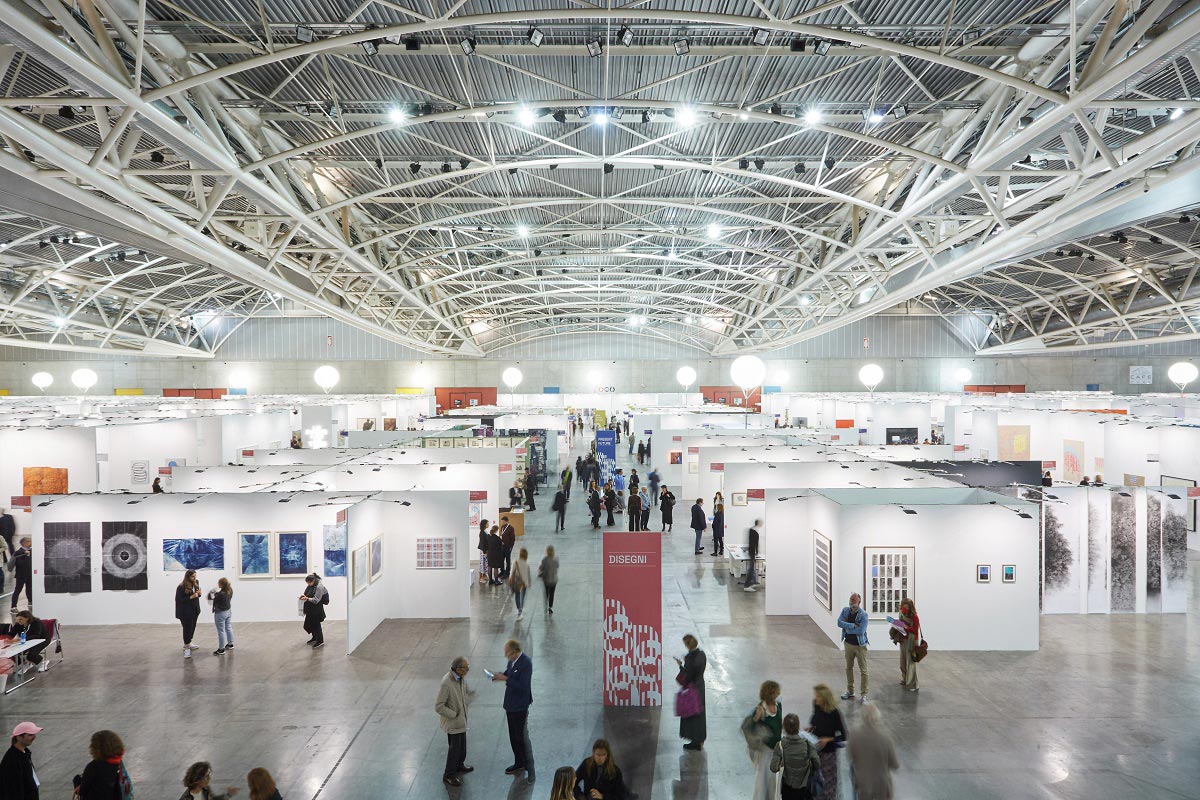
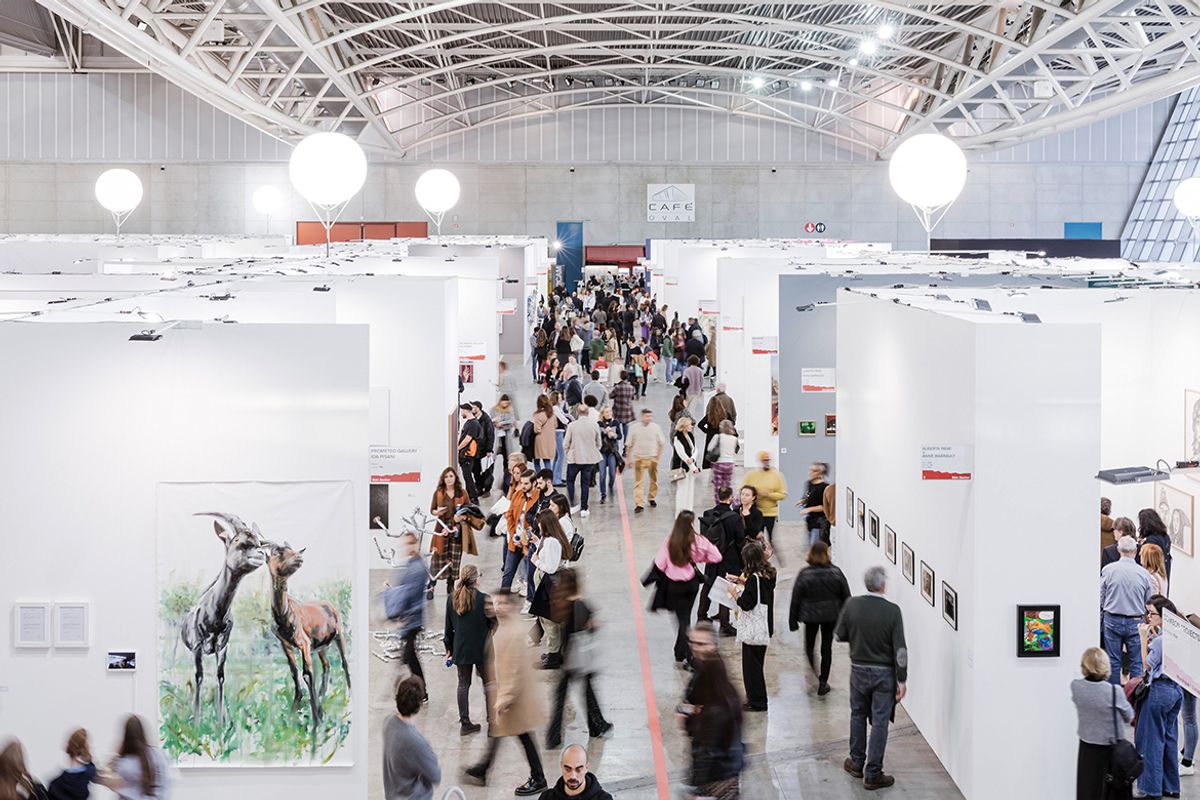
The Artissima fair, at the Oval Lingotto in Turin, features 181 galleries from 33 countries this year, including 39 newcomers mostly from outside Italy
Edoardo Piva
The Artissima fair, at the Oval Lingotto in Turin, features 181 galleries from 33 countries this year, including 39 newcomers mostly from outside Italy
Edoardo Piva

Artissima, Italy’s leading contemporary art fair, has often looked to the future and sometimes even anticipated it, both by identifying emerging trends, artists and galleries, and by foreshadowing developments of the art fair model. In 2007, when Andrea Bellini succeeded the fair’s founder, Roberto Casiraghi, Artissima became the first contemporary art fair to employ a director from the curatorial world—a now increasingly common practice. The fair’s current director, Luigi Fassi, who was appointed in 2022, heads up Artissima’s landmark 30th edition this month, which will see 181 galleries (58% foreign) from 33 countries exhibit at the Oval Lingotto arena on the outskirts of Turin. Longstanding participants include Jocelyn Wolff, from Paris, and Lia Rumma, from Milan. They will join 39 newcomers, including Good Weather (Little Rock, Chicago), Cristina Guerra (Lisbon), Meyer*Kainer (Vienna), Raster (Warsaw), The Sunday Painter (London) and Unit 17 (Vancouver).

The Art Newspaper: Each edition of Artissima typically has a theme. But why give a theme to an event whose primary objective is commercial?

Luigi Fassi:This year’s theme is “Relations of Care” and comes from a 2022 text by Renzo Taddei—one of the most authoritative contemporary anthropologists in Latin America and beyond. Establishing “relations of care” is what Artissima has done for almost 30 years, within several art professional communities in Turin: the gallery owners, artists of course, curators, journalists, museum directors and also the collectors and aficionados who have now, through several generations from 1994 to 2023, developed their passions into vocations. All of them have made the city’s interest in art evolve in an increasingly sophisticated way.

The theme of this year’s Artissima, which is directed by Luigi Fassi, is “Relations of Care”
Alessandro Peirone

This year, the historic section, Back to the Future, looks to the 1950s but focuses only on female artists.

Back to the Future is jointly curated by Francesco Manacorda (the newly appointed director of the Castello di Rivoli contemporary art museum in Turin)—who was the director of Artissima in2010 and 2011, and who founded the this section—and Defne Ayas, a curator of Turkish origin, based in Berlin. They are focusing their attention on geographical areas that are, above all, far removed from traditional Modernism or Western Modernisms, such as the Middle East and North Africa. Manacorda and Ayas are identifying female artists who developed extremely innovative work, which has directly influenced future generations of artists in those countries. It is a section that this year, as it has been in the past, strongly demonstrates the ability of the fair to engage institutions and exhibition curators—it is a section that we could imagine being able to catapult straight into a museum.

Why do you often call Artissima an “accelerator”?

Artissima is first and foremost a market fair that has nevertheless become an institution due to its ability to create content, i.e. ideas and projectsbuilt directly with the artists. This term “accelerator” comes from the fair’s ability to respond to many needs, those of the collector who wishes to discover unknown galleries and artists, the curators and museum directors who need stimuli to compose the exhibition calendar of their institution. For this reason we have 39 galleries taking part in Artissima for the first time, most of them non-Italian. Last year there were 40. This produces novelty and continued attraction. I like to think of Artissima as an art world start-up for these types of galleries.

Artissima’s satellite shows outside the Oval Lingotto often cause concern among gallerists, who fear their customers will be distracted by the amount of things to see away from their stands.

It is essential for the fair to expand itself inside the Oval as well as outside the Oval, through thinking with the artists and the galleries. The exhibition The Human Condition by the Italo-Brazilian curator Jacopo Crivelli Visconti, at the Gallerie d’Italia, is dedicated to works by artists represented by the Artissima galleries, providing an extra opportunity for the artists and the dealers themselves.

We could give other examples in this sense. But everything is designed not to create distraction, but rather to deepen what is seen at the Oval.

Artissima, Oval Lingotto, Turin, 3-5 November

Artissima 2023, all set for the 30th edition of the fair (Finestre sull’Arte)

by Redazione , published on 16/09/2023
Original article

The 30th edition of Artissima will be held from November 3-5, 2023. The theme will be ‘Relations of care. Here are facts and news from the contemporary art fair in Turin.

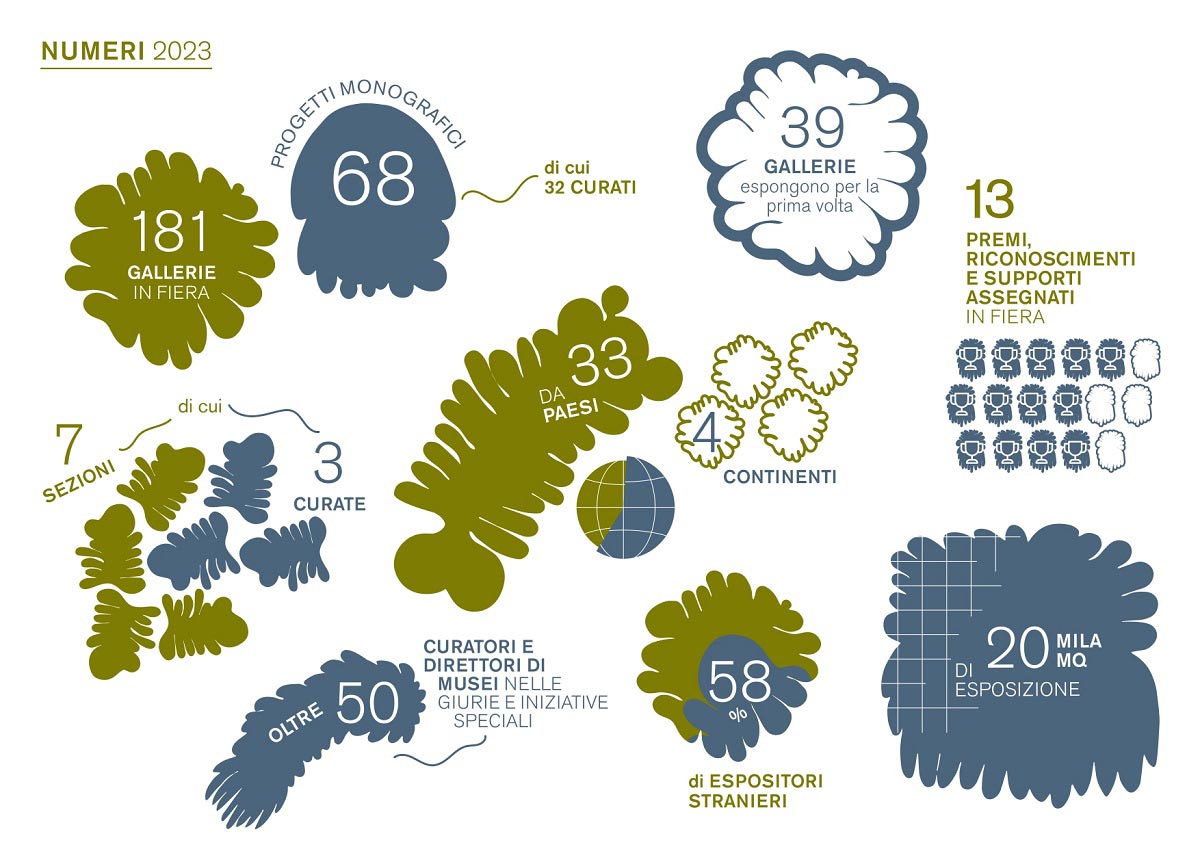
Everything is ready for the 2023 edition of Artissima, Torino’s contemporary art fair celebrating its 30th edition. Directed for the second year by Luigi Fassi and realized with the support of Main Partner Intesa Sanpaolo, the 30th edition of Artissima will be held from Friday, November 3 to Sunday, November 5, 2023, as always at theOval spaces in Turin, which will host the fair’s four established sections – Main Section, New Entries, Monologue/Dialogue and Art Spaces & Editions – and the three curated sections – Drawings, Present Future and Back to the Future – that are also hosted on the digital platform Artissima Voice Over. The 2023 edition of Artissima features a total of 181 Italian and international galleries, 68 of which are proposing monographic and curated projects to better present their artists’ work to the public.

“The 30th edition of Artissima in Turin,” explains director Fassi, “recounts the fair’s ability to draw a design vision from its three decades of activity to continue projecting into the future, deploying the strength of its Italian and international network. All of this has been made possible through intensive global research and scouting to continue to offer collectors and museum operators the excitement of meeting galleries and artists of the highest caliber from Europe, the Americas, Africa and Asia. The nearly forty galleries participating in Artissima for the first time in 2023, along with countless confirmations and returns, testify to the fair’s attractiveness and its ability to be a catalyst for experimentation, research, and market investment in the arts. As made manifest by an archive of three decades of activity, again this year those who bet on Artissima – gallerists, collectors, curators and visitors – will be rewarded by the discovery that they have been able to intercept in Turin the works and artists who are the protagonists of the near future.”

Welcoming the public to Artissima will be the installation LaCittaDinAmica: a labyrinth of transparent alvelular polycarbonate panels, illuminated with polychromatic reflections born from the encounter between natural light and the colors of the panels, which will be placed at the main entrance of the pavilion thanks to the dialogue between Jacopo Foggini and the company Dott.Gallina. After being presented in Milan on the occasion of Fuorisalone 2023, the intervention conceived by Foggini lands in Turin as well, seeing its elements cut and tilted, in an allegory of plasticity toward change, with a new labyrinthine pattern rearrangement.

The theme of Artissima 2023 is Relations of Care, a concept developed in a recent essay by Brazilian anthropologist Renzo Taddei, professor at the Universidade Federal de São Paulo in Brazil, dedicated to formulating a hypothesis for overcoming the crises of our time by taking inspiration from indigenous Amazonian thought. Relations of Care identifies and proposes care as the premise and ultimate goal of the advancement of knowledge, which must be, first and foremost, aimed at preserving the diversity and value of every form of life in the world we inhabit.

In the essay Intervention of Another Nature: Resources for thinking in (and out of) the Anthropocene, published in the collected volume Everyday Matters (Ruby Press, Berlin, 2022), Renzo Taddei reflects on the need to validate all forms of knowledge and production of new knowledge only from a radical dimension of care that opens to an unprecedented sense of responsibility toward the natural world and all the species that inhabit it. By adopting such a reversal of perspective, Western-minded thought nurtures the possibility of opening up to a new imaginary, inspired by the model of the indigenous communities of the Amazon, which have always placed at the center of their existence the care of the environment and surrounding nature as fundamental elements for survival. Taddei thus invites us to follow this model of thought, abandoning any ideology of Western man’s otherness and superiority to nature, in order to reconnect with other forms of knowledge and coexistence and thus generate new possible relationships of care. Care imagined through the insights generated by the artists’ art and thought nourishes social and individual sensibilities and becomes a matrix of all the relationships that form the fabric of our lives.

Artissima also promotes numerous awards for artists and galleries in collaboration with art institutions, partner companies and foundations, which are confirmed and renewed for the 30th edition. In fact, the 2023 edition will be enriched by two important novelties: the Diana Bracco Prize – Women Entrepreneurs in Art promoted by Fondazione Bracco in collaboration with the Roberto De Silva and Diana Bracco Foundation of Milan, and the Pista 500 Prize promoted by Pinacoteca Agnelli. In addition, the historic Fondo Acquisizioni promoted by Fondazione per l’Arte Moderna e Contemporanea CRT is increased to 200,000 euros on the occasion of the fair’s 30th anniversary. Adding to these novelties is the IDENTITY Fund for New Entries, which supports the participation of three galleries in the section, selected by an exceptional jury composed of the fair’s four previous artistic directors. Also confirming their support are the promoters of the historic and younger awards: illycaffè with the illy Present Future Award; VANNI occhiali with the VANNI occhiali #artistroom Award; Tosetti Value – The Family office with the Tosetti Value Award for photography; Collezione La Gaia with the Matteo Viglietta Award; Fondazione Sardi per l’Arte with the Carol Rama Award; Fondazione per l’Arte Moderna e Contemporanea CRT with the OGR Award; Fondazione Merz with the “ad occhi chiusi….”; Fondazione Oelle with the ISOLA SICILIA Award; MEF Museo Ettore Fico in Turin with the Ettore and Ines Fico Award.

The organization of Artissima is handled by Artissima srl, a company of Fondazione Torino Musei, established in 2008 to manage the artistic and commercial relations of the fair. The Artissima brand belongs to the City of Turin, the Piedmont Region, and the Metropolitan City of Turin. The 30th edition of Artissima is realized through the support of the three brand-owning entities, jointly with Fondazione CRT through Fondazione per l’Arte Moderna e Contemporanea CRT, Fondazione Compagnia di San Paolo, and the Turin Chamber of Commerce.

2022 edition of Artissima
2022 Edition of Artissima

The Sections

The sections of Artissima 2023, as anticipated, are seven in number. Four are selected by the fair’s gallery committee: Main Section brings together a selection of the most representative galleries on the world art scene (this year 98 have been chosen, of which 46 are foreign); New Entries, a section reserved for emerging galleries on the international scene participating in the fair for the first time, will have 17 galleries this year, of which 13 are foreign; Monologue/Dialogue is reserved for emerging galleries and/or those with an experimental approach who intend to present a monographic stand or a dialogue between the works of two artists, with 38 galleries of which 24 are foreign; Art Spaces & Ed itions hosts galleries specializing in artists’ editions and multiples, bookstores, project spaces and nonprofit spaces, with 9 exhibitors.

There are three sections curated by international boards of curators: Drawings, Present Future, Back to the Future. The three curated sections of the fair will be present at the fair with monographic booths and will live on the digital platform Artissima Voice Over with dedicated insights.

The Main Section, New Entries, Monologue/Dialogue, Art Spaces & Editions Committee is formao tda Paola Capata, Monitor gallery, Rome, Lisbon, Pereto; Raffaella Cortese, Raffaella Cortese gallery, Milan; Philippe Charpentier, mor charpentier gallery, Paris, Bogota; Nikolaus Oberhuber, KOW gallery, Berlin; Antoine Levi, Ciaccia Levi gallery, Paris and Milan; Elsa Ravazzolo Botner, A Gentil Carioca gallery, Rio de Janeiro, São Paulo; Guido Costa, Guido Costa Projects gallery, Turin. Curatorial advisors are: Krist Gruijthuijsen, director, KW Institute for Contemporary Art, Berlin; Jacopo Crivelli Visconti, independent curator, São Paulo.

The galleries at Artissima 2023 come from four continents and 33 countries: Austria, Brazil, Canada, China, Colombia, South Korea, Cuba, United Arab Emirates, France, Germany, Greece, Hong Kong, Israel, Italy, Lithuania, Mexico, Netherlands, Poland, Portugal, Czech Republic, United Kingdom, Romania, Slovenia, Spain, United States, South Africa, Switzerland, Thailand, Tunisia, Turkey, Hungary, Uruguay and Zimbabwe. Exhibiting for the first time at the fair are 39 galleries. These include Good Weather (North Little Rock, Little Rock, Chicago), Cristina Guerra (Lisbon), Meyer*Kainer (Vienna), Raster (Warsaw), The Sunday Painter (London), Unit 17 (Vancouver).

The Identity track.

Artissima celebrates its thirtieth anniversary by launching, with the support of the Compagnia di San Paolo Foundation, IDENTITY: a three-year path to enhance the fair’s identity traits that at each edition will offer in-depth project focuses to highlight the strategic lines that in its thirty-year history have contributed to Artissima’s current positioning in the art world.

IDENTITY 2023 is dedicated to the New Entries section that welcomes interesting emerging national and international galleries participating in the fair for the first time. IDENTITY takes concrete form in the activation of IDENTITY Fund for New Entries, an economic fund to support three galleries to participate in the section, and in the realization of New Entries BAR, a special project at the fair curated by Cripta747, aimed at offering the galleries in the section an additional showcase and opportunity to deepen their research.

Artissima 2023 in numbers

Special projects

There are several special projects also for the 30th edition of Artissima. They start with the New Entries Bar for Identity, a place, a project and a story created with the intention of enhancing the research of the galleries of the New Entries section and their artists within the conceptual platform IDENTITY, supported by the Compagnia di San Paolo Foundation. The New Entries BAR is curated by Cripta747 and will welcome the fair audience in a dedicated area of the pavilion.

Again, Artissima and Juventus continue the dialogue by renewing Artissima Junior, the project that involves young visitors to the fair, between the ages of 6 and 11, in the creation of a choral work of art under the guidance of an artist tutor, who this year will be Eugenio Tibaldi, represented by Umberto Di Marino Gallery in Naples.

Artissima and Fondazione per l’Arte Moderna e Contemporanea CRT, will then present the third episode of the Beyond Production project platform, created in 2021 to reflect on the relationship between new technologies and art. In 2023, Beyond Production Symposium will be presented, a conference with outstanding international speakers, hosted at OGR Turin and open to the public of enthusiasts.

The digital front is also active: thanks to Fondazione Compagnia di San Paolo, which has supported Artissima Digital since 2017, the commitment to amplify the fair experience through the production of digital thematic content and insights on the artissima.art and Artissima Voice Over platforms, dedicated to the three curated sections, continues. In addition to the reconfirmation of the AudioGuides to accompany the public’s visit to the fair, the 2023 edition will be enriched with two new pieces of unreleased content in collaboration with important authors from the cultural world. The in-depth multimedia cultural magazine Lucy. On Culture in dialogue with Brazilian anthropologist Renzo Taddei will explore the many nuances of the Relations of Care edition’s theme, while personalities from the world of art, theater and literature will take turns at the microphones of the new podcast Lo stereoscopio dei solitari, produced in collaboration with Il Giornale dell’Arte, which will be launched during the days of the fair.

Coming to its second edition is the AudioGuide project: Lauretana, a longtime partner of Artissima, is promoting for the second year the podcast project designed to accompany visitors on an autonomous and personal tour of the fair’s stands. The project is part of Artissima Digital powered by Fondazione Compagnia di San Paolo.

Then there will be The Planetary Curator: starting from a reflection on the theme of the edition of Artissima 2023, Relations of Care, CURA. magazine has conceived and curated The Planetary Curator, a series of talks conceived as a single stream of thought and discussion on the theme of care, bringing into dialogue outstanding personalities in the contemporary art scene. The talk series will animate the Meeting Point on Saturday, Nov. 4.

Finally, the Made In project: an academy for young artists that allows them to live in the company and assimilate and incorporate, within their own research, the technological and operational knowledge with which they will come into contact. Born in 2022 thanks to the support of the Turin Chamber of Commerce, Made In announces its second edition and new partner companies-Dr.Gallina, Guido Gobino Cioccolato, Kristina Ti, Pinifarina Architecture-inviting them to discover the works produced during the first edition at the fair.

Coronavírus anuncia revolução no modo de vida que conhecemos (Folha de S.Paulo)

www1.folha.uol.com.br

Domenico De Masi – 22.3.2020


[RESUMO] Sociólogo italiano narra situação dramática em seu país e argumenta que as imposições em decorrência da pandemia, como o trabalho em casa, a solidariedade e o papel da esfera pública, demonstram que é possível e desejável mudar a lógica mercadista da economia e criar modos de viver mais racionais e proveitosos para o mundo contemporâneo.

A Itália de onde escrevo, um dos países mais vivazes e alegres do mundo, é hoje apenas um deserto. Cada um dos seus 60 milhões de habitantes acha que é imortal, que o vírus não o tocará, que irá matar não ele mas alguma outra pessoa. Porém, no silêncio do seu coração, cada um sabe que essa ilusão é pueril e que essa pandemia misteriosa, abstrata e tangível ao mesmo tempo, escolhe suas vítimas ao acaso, como numa roleta russa.

Em algum tempo vamos saber se o vírus pode ser debelado ou se nos matará em massa, assim como fez no século passado a famosa gripe espanhola, que matou 1 milhão de pessoas por semana durante 25 semanas seguidas.

Moro há 50 anos no centro de Roma, na rua mais movimentada da cidade, que leva da praça Veneza à Basílica de São Pedro.

Normalmente, essa rua está 24 horas por dia entupida de trânsito, de turistas e peregrinos. Há duas semanas, está muda e deserta. Só de vez em quando ouve-se o grito de uma sirene de ambulância e algum sem-teto passa. A cidade inteira está fantasmagórica como a Los Angeles de “Blade Runner”. Aqui, porém, desapareceram até os replicantes extraterrestres.

Fechados os lugares públicos, as escolas, as fábricas, as lojas, as estações, os portos e os aeroportos, a Itália é agora um país separado do resto da Europa e do mundo. Cada cidade está parada, cada família trancafiada em casa. Quem sai à revelia dos pouquíssimos motivos permitidos é interceptado imediatamente pelas rondas policiais que aplicam penas bastante severas.

Os gregos antigos consideravam que, quando algo é indispensável e todavia impossível, a situação é trágica. Foram necessários 50 dias, milhares de doentes e mortos para que os italianos entendessem que a situação é, enfim, irremediavelmente trágica.

O que significa uma pandemia como essa para Roma, para a Itália, para a humanidade como um todo? Como ela age nas mentes e nos corações de todos nós que, armados com tecnologias poderosas e inteligência artificial, até poucas semanas atrás nos sentíamos os senhores do céu e da terra?

Subitamente nos descobrimos frágeis pigmeus diante da onipotência imaterial de um vírus que, por vias misteriosas, escapou de um morcego chinês para vir matar homens e mulheres em nossas cidades.

A sujeição a um vírus desconhecido, para o qual não há nem cura nem vacina, transformou a Itália numa enorme caserna blindada e os 60 milhões de italianos noutros tantos dóceis soldadinhos empenhados num gigantesco exercício militar no qual estão obrigados a aprender a verdade que antes ignoravam obstinadamente. O que não quer dizer que irão apreendê-la.

Numa Europa onde, até ontem, era permitida a livre circulação de pessoas, mercadorias e dinheiro, agora cada país, em vez de abraçar uma colaboração ainda mais solidária com os demais, tranca suas próprias fronteiras, iludindo-se de forma cínica e infantil que seja possível deter o vírus com barreiras aduaneiras.

Contudo, hoje, mais do que nunca, os soberanismos parecem tentativas fantasiosas contra a globalização. Hoje, mais do que nunca, a difusão da pandemia e sua rápida volta ao mundo demonstraram que deter a globalização é como se opor à força de gravidade. Nosso planeta já é aquela “aldeia global” da qual falava McLuhan, unida por infortúnios e pela vontade de viver, precisando de uma direção unitária, capaz de coordenar a ação sinérgica de todos os povos que desejam se salvar. Nessa aldeia global, nenhum homem, nenhum país é uma ilha.

Talvez tenhamos aprendido que o caso agora é de vida ou morte e que ninguém pode enfrentar sozinho um vírus tão ardiloso e potente. Por isso, são necessários recursos, inteligências, competências, ações e instituições coletivas. Coordenação e coesão geral. É necessária uma cabine de comando, um governo competente que tenha autoridade, uma equipe formada por um vértice político de grande inteligência e apoiada pelos máximos representantes das ciências médicas, da economia, da sociologia, da psicologia social e da comunicação.

Talvez tenhamos aprendido que os fatos e os dados devem prevalecer sobre as opiniões, a competência reconhecida deva prevalecer sobre o simples bom senso, a prudência e a gradualidade das intervenções devem prevalecer às tomadas de decisões arrogantes e à improvisação imprudente. Por outro lado, é necessário tolerar os erros de quem possui a responsabilidade terrível de tomar decisões, líder que deve ser generosamente amparado para que sejam melhoradas.

Talvez tenhamos aprendido que, perante um vírus desconhecido, assim como diante de um problema complexo, as decisões sobre a pandemia não apenas devem ser tomadas pelas pessoas competentes mas também ser comunicadas de forma unívoca, com autoridade, prontamente, de forma abrangente e clara. Todo o alarmismo, todo o exagero, toda a subestimação é terrível porque confunde as ideias e nos faz perder um tempo precioso. Carência e excesso de informações são parâmetros nocivos. Talk shows superficiais e fake news delirantes levam ao cinismo e à desumanização.

Talvez tenhamos aprendido que, nos países civilizados, o bem-estar é uma conquista irrenunciável. Por sorte e pela sabedoria dos nossos pais, a Constituição italiana de 1948 considera a saúde como um direito fundamental de cada ser humano. Já a reforma sanitária de 1978 instituiu um serviço nacional universal que considera a saúde não como meramente a ausência de doença, mas como o bem-estar físico, psíquico e social completo.

Graças a esse regime de saúde, todos os residentes (e também os turistas) fruem dos cuidados médicos sem qualquer custo. Isso nos possibilitou descobrir e curar prontamente os contágios e reduzir o número de mortes.

No país mais rico e mais poderoso do mundo, os EUA, onde o bem-estar é estupidamente mortificado, os suspeitos de Covid-19 precisam desembolsar o equivalente a 1.200 euros pelo teste. O vírus corona, ao se difundir, causaria uma verdadeira hecatombe entre 90 milhões de estadunidenses que, desprovidos de seguro-saúde, seriam cinicamente rejeitados pelos hospitais.

A propaganda neoliberal, que se alastrou sob a bandeira insana de Reagan e Thatcher, desacreditou tudo o que é público em favor do setor privado. Porém, pelo contrário, nessas semanas trágicas, a reação eficiente dos hospitais e dos funcionários públicos diante do surgimento da pandemia nos ensinou que a nossa saúde pública, da mesma forma que outras funções públicas, dispõe, muito mais do que o setor privado, de pessoas preparadas profissionalmente, motivadas e generosas até o heroísmo.

Toda noite, às 18h, todas as janelas da Itália se escancaram e cada um canta ou toca o hino nacional para agradecer aos médicos e a todos os profissionais da saúde.

A pandemia está nos ensinando que o pensamento de Keynes permanece precioso. Em 1980, o prêmio Nobel Robert Lucas Jr. observou: “Não é possível encontrar nenhum bom economista com menos de 40 anos que se diga ‘keynesiano’. Nas universidades, as teorias keynesianas não são levadas a sério e provocam sorrisinhos de superioridade”.

Hoje, essa crise histórica, com seus mortos e com suas tragédias, se porum lado nos leva à recessão, por outro nos lembra que, para evitar uma crise irreparável, em vez de políticas de austeridade, é preferível dar lugar aos investimentos públicos maciços e “open-ended”, ainda que isso leve ao déficit público.

Talvez tenhamos aprendido tudo isso e várias outras coisas com aquilo que ocorreu fora do recinto doméstico, isto é, entre o governo e todo o povo do país. Entretanto, hoje, a nossa vida está segregada entre as paredes domésticas. Todos estão restritos entre as quatro paredes da própria casa: não só as famílias que vivem em harmonia e acordo, mas também os solitários, os casais em crise e os núcleos familiares em que o diálogo entre pais e filhos há muito tempo andava claudicante.

A sociedade industrial nos habituara a separar o local de trabalho do local de vida, nos fazendo passar a maior parte do nosso tempo com chefes e colegas nas empresas: os que a sociologia chama de grupos “secundários”, frios, formais, nos quais as relações são quase exclusivamente profissionais. Uma parte mínima do nosso tempo nos via reunidos em família ou com os amigos, ou seja, com grupos “primários”, calorosos, informais, envolventes.

De repente, o descanso compulsório em casa nos obrigou de forma inédita ao isolamento total, a uma convivência forçada que para alguns parece agradável e tranquilizadora, mas que para outros é invasiva e até opressora. Os mais sortudos conseguem transformar o ócio depressivo em ócio criativo, conjugando a leitura, o estudo, o lúdico com a parcela de trabalho que é possível desempenhar em regime de “smart working”.

Sabíamos teoricamente que essa modalidade de trabalho à distância permite aos trabalhadores uma preciosa economia de tempo, dinheiro, stress e alienação; e às empresas, evita os microconflitos, despesas na manutenção do local de trabalho e promove incremento da eficiência, recuperando de 15 a 20% da produtividade; à coletividade, evita a poluição, o entupimento de trânsito e despesas de manutenção das estradas.

Agora que 10 milhões de italianos, forçados pelo vírus, rapidamente adotaram o teletrabalho, minimizando seu sentimento de inutilidade e os danos à economia nacional, nos perguntamos por que as empresas não haviam adotado antes uma forma de organização tão eficaz e enxuta. A resposta está naquilo que os antropólogos definem como “cultural gap” —lacuna cultural— das empresas, dos sindicatos, dos chefes.

O tempo livre que, até um mês atrás, nos parecia um luxo raro, hoje abunda. O espaço, que nas cidades vazias se dilatou, por sua vez falta nas casas. Por isso, estamos apreciando a ajuda que nos chega da internet, graças à qual, mesmo permanecendo forçosamente distantes, é possível nos reunirmos virtualmente, nos informarmos, nos confrontarmos, nos encorajarmos.

Nessa reclusão, os jovens têm a maior vantagem, graças à sua facilidade com os computadores, enquanto os velhos têm mais vantagem por serem mais independentes, mais acostumados a estar em casa, fazendo pequenos trabalhos e jogos sedentários, contentando-se com a televisão.

Em todos se insinua o medo de que, mais cedo ou mais tarde, possa terminar o abastecimento dos mantimentos. O colapso da economia torna-se cada vez mais inevitável, já que tanto a produção como o consumo encontram-se bloqueados.

Há alguns anos, Kennet Building, um dos pais da teoria geral dos sistemas, comentando a sociedade opulenta, afirmou: “Quem acredita na possibilidade do crescimento infinito num mundo finito ou é louco ou é economista”. E Serge Latouche acrescentou: “O drama é que agora somos todos mais ou menos economistas. Aonde estamos nos encaminhando? Diretamente contra um muro. Estamos a bordo de um bólido sem piloto, sem marcha a ré e sem freios que irá se chocar contra os limites do planeta”. Latouche propõe abandonar a sociedade de consumo com um decrescimento planificado, progressivo e sereno.

A marcha a ré e os freios que a cultura neoliberal se recusou obstinadamente a usar agora foram desencadeados: não graças a uma revolução violenta, mas sim a um vírus invisível que um morcego soprou sobre a sociedade opulenta, obrigando-a a se repensar.

“A Peste” (1947), obra-prima profética de Albert Camus, talvez possa nos ajudar nesse repensar. Naquele romance, a ciência era protagonista, ou seja, o médico Bernardo Rieux, ocupado até o fim, como médico e como homem, de socorrer os contagiados, enquanto “o cheiro de morte emburrecia todos os que não matava”.

Hoje, nós também, como o nosso tão humano irmão Rieux, estamos presos num limbo entre o pesar e a esperança, no qual temos que aprender que “a peste pode vir e ir embora sem que o coração do homem seja modificado”; que “o bacilo da peste não morre nem desaparece nunca, que pode permanecer adormecido por décadas nos móveis e nas roupas, que espera pacientemente nos quartos, nas adegas, nas malas, nos lenços e nos papéis, que talvez chegue o dia em que, infortúnio ou lição aos homens, a peste acordará seus ratos para mandá-los morrer numa cidade feliz”.


Domenico De Masi, sociólogo italiano, é autor dos livros “Ócio Criativo” e “O Futuro do Trabalho”.

Tradução de Francesca Cricelli.

Texto original
Does Italy Have More COVID19 Deaths Than South Korea Because They’re Not Prescribing Chloroquine? (Medium)

Adrian Bye – Mar 16 2020

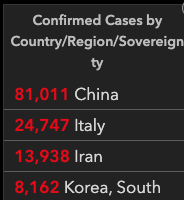
As of March 15¹, Korea has 8162 infections, but only 75 deaths, a death rate of 0.91%. By comparison, Italy has 24,747 infections and 1809 deaths, a death rate of 7.3%.

The WHO is distributing inadequate Coronavirus treatment guidelines for worldwide use, which Italy is following.

The Italian government health website (archive) updated on March 4 states:

There is no specific treatment for the disease caused by a new coronavirus.. Treatment is based on the patient’s symptoms and supportive care can be very effective. Specific therapies and vaccines are being studied.

However, both Korea and China have been treating infections with drugs known as Chloroquine (long known to treat malaria) or Kaletra (used for the treatment of HIV/AIDS, contains lopinavir/ritonavir ).

The Korean guidelines were published on February 12, 2020. The Chinese have repeatedly told us they are using both these drugs. At this point, Chinese sources have made it clear they believe this situation is under control. Informally 5 of my Chinese friends have confirmed this is true, only that non Chinese are still restricted from moving around in China.

Xi Jinping visits Wuhan as China declares success in fight against coronavirus. China’s Communist Party signaled confidence in its fight against the coronavirus on Tuesday when the party’s general…www.latimes.com

The New York Times ran a major story of two 29 year old female Wuhan medical professionals, one who died, and one who lived. The one who lived was treated with Kaletra. The one who died was not treated with either chloroquine or Kaletra.

Two Women Fell Sick From the Coronavirus. One Survived. The young mothers didn’t tell their children they had the coronavirus. Mama was working hard, they said, to save sick…www.nytimes.com

The New York Post has a similar story of a New Jersey healthcare worker who was on the verge of dying. He was only saved because Chinese family members reached out to doctors in Wuhan who told them to begin immediate treatment with either chloroquine or Kaletra.

He said “Fortunately I have the resources and knowledge about it. I would be dead and gone already. Most medical providers here don’t know about it. Medical providers need to communicate with Chinese medical teams.”

New Jersey patient James Cai recovering from coronavirus. The New Jersey health care worker who was the state’s first coronavirus case says he’s on the mend – adding that he…nypost.com

In the (now removed / archive) WHO public guidelines for coronavirus treatment published 13 March 2020, there is no mention of either chloroquine or Kaletra.

Instead the WHO guidelines state:

“There is no current evidence to recommend any specific anti-COVID-19 treatment for patients with confirmed COVID-19”

We find the same from the CDC in the USA. In the official CDC clinical guidance (archive) published on March 7, 2020 Chloroquine is only mentioned in an unrelated footnote and Kaletra is not mentioned at all. The CDC states:

“There are currently no antiviral drugs licensed by the U.S. Food and Drug Administration (FDA) to treat patients with COVID-19.”

The Australian government has 95 documents about coronavirus on its website, however there is no information about hospital treatment (archive). A link inside one of its PDF guidelines (archive) is supposed to take us to advice on hospital care of patients but redirects to a PDF containing recommendations for protective equipment for hospital workers (archive). It includes no treatment information.

Since three major countries (Italy, USA, Australia) appear to be following incorrect WHO treatment guidelines, it likely means that this is a problem in most other countries as well.

Why aren’t our usual medical channels getting this information themselves?

This is a problem from the top down. Western healthcare has already become very complex and government employees are risk averse. They are not used to situations where critical drug treatments need to be made available within a few weeks. China made it a national priority to solve the problem, so normal drug market approvals were waived. WHO was also very delayed² in declaring a pandemic. WHO also didn’t do a good job on the ebola outbreak.

WHO Acknowledges Failings of Ebola Response. Leadership at the World Health Organization has admitted to being “ill prepared” to handle the Ebola outbreak in a…time.com

In addition, WHO has been reported to spend³ more than $200M/year on travel expenses, more than it spends on fighting many major problems.

If Italy had the same treatment success rate as Korea, with only 0.91% of people dying instead of 7.3%, then there would be 227 deaths in Italy instead of 1809. 1582 more people would be alive now.

How many people will be dead when the next exponential waves of the virus hit worldwide?

In fact all these deaths aren’t the real problem

The real problem from this pandemic is that because the virus is so infectious, even though it is fairly mild for most people, a large number become severely ill and require hospitalization. This large number of severely ill people overwhelms the entire hospital system. The population is then forced into quarantine to slow down the rate of infections, which can lead to a total breakdown of society.

Using these treatment options, the majority of people will be kept out of hospital entirely. Both the Koreans and Chinese guidelines make it clear that people should be treated very early if the infection progresses beyond a mild case.

This is likely the reason the medical system in Italy is currently overwhelmed.

The most important thing you can do is make your local healthcare system and government aware of this problem. If you’re successful, you’ll save lives.

What if you get sick?

Korea is one of the countries with the most experience with the virus and their treatment has proven results.

If you get sick I suggest you closely study the official Korean medical guidelines (archive) and find a doctor that will treat you according to those guidelines. Don’t self-treat, as these are powerful drugs that have side effects and interactions with other drugs. You could easily overdose and die. Many people died of aspirin overdose during the 1918 Spanish Flu pandemic⁴. Only in an emergency would I use this information to treat myself (and I certainly would if I had no other choice).

In addition, it appears we now have 3 additional treatment options, giving us a total of 5 treatment choices depending on individual tolerances and availability.

These come from a set of guidelines published by a Spanish healthcare association. A medical researcher on twitter made an english translated version. Show this to your doctor along with the official Korean treatment guidelines.

You don’t need to get these drugs yourself. Chloroquine is readily available to your doctor and it is an inexpensive, off patent drug that has been used clinically since 1947. It can be easily produced in massive quantities even if there are temporary shortages⁵.

About me

I used to work in Silicon Valley tech. I’m now interested in using Chinese philosophy to find truth in complex situations. I lived at Wudang Mountain, Hubei Province, China from 2014 to 2016. I did this research because my mother is in a high risk category in Australia.

Follow me on twitter: http://twitter.com/adrianbye

Telegram group chat: http://t.me/virusscience

Thanks to Frodi, Matt, Aaron, Doug, J, Athena and Majko for reading drafts of this.

Sources

[1]https://gisanddata.maps.arcgis.com/apps/opsdashboard/index.html#/bda7594740fd40299423467b48e9ecf6

[2] https://www.bloomberg.com/news/articles/2020-03-11/who-s-pandemic-declaration-came-too-late-brazil-says

[3]https://apnews.com/1cf4791dc5c14b9299e0f532c75f63b2/AP-Exclusive:-Health-agency-spends-more-on-travel-than-AIDS

[4]https://www.sciencedaily.com/releases/2009/10/091002132346.htm

[5]https://www.ashp.org/drug-shortages/current-shortages/drug-shortage-detail.aspx?id=640

Italians over 80 ‘will be left to die’ as country overwhelmed by coronavirus (The Telegraph)

Hardest-hit region drafts new proposals saying who will live and who will die

By Erica Di Blasi Turin 14 March 2020 • 4:38pm

Coronavirus victims in Italy will be denied access to intensive care if they are aged 80 or more or in poor health should pressure on beds increase, a document prepared by a crisis management unit in Turin proposes.

Some patients denied intensive care will in effect be left to die, doctors fear.

The unit has drawn up a protocol, seen by The Telegraph, that will determine which patients receive treatment in intensive care and which do not if there are insufficient spaces. Intensive care capacity is running short in Italy as the coronavirus continues to spread.

The document, produced by the civil protection deparment of the Piedmont region, one of those hardest hit, says: “The criteria for access to intensive therapy in cases of emergency must include age of less than 80 or a score on the Charlson comorbidity Index [which indicates how many other medical conditions the patient has] of less than 5.”

The ability of the patient to recover from resuscitation will also be considered.

One doctor said: “[Who lives and who dies] is decided by age and by the [patient’s] health conditions. This is how it is in a war.”

The document says: “The growth of the current epidemic makes it likely that a point of imbalance between the clinical needs of patients with COVID-19 and the effective availability of intensive resources will be reached.

“Should it become impossible to provide all patients with intensive care services, it will be necessary to apply criteria for access to intensive treatment, which depends on the limited resources available.”

It adds: “The criteria set out guidelines if the situation becomes of such an exceptional nature as to make the therapeutic choices on the individual case dependent on the availability of resources, forcing [hospitals] to focus on those cases in which the cost/benefit ratio is more favorable for clinical treatment.”

Luigi Icardi, a councilor for health in Piedmont, said: “I never wanted to see such a moment. It [the document] will be binding and will establish in the event of saturation of the wards a precedence code for access to intensive care, based on certain parameters such as potential survival.”

The document is already complete and only approval from a technical-scientific committee is needed before it is sent to hospitals. The criteria are expected to apply throughout Italy, government sources said.

More than 1,000 people in Italy have now died from the virus and the number is growing every day. More than 15,000 are infected.

Italy has 5,090 intensive care beds, which for the moment exceeds the number of patients who need them. It is also working to create new bed capacity in private clinics, nursing homes and even in tents. However, the country also needs also doctors and nurses – the government wants to hire them – and equipment.

Lombardy remains the most critical region. However, the situation is also serious in neighboring Piedmont. Here, in just one day, 180 new cases were recorded, while deaths numbered 27. The trend suggests that the situation is not about to improve.

Roberto Testi, president of the coranavirus technical-scientific committee for Piedmont, told The Telegraph: “Here in Piedmont we aim to delay as long as possible the use of these criteria. At the moment there are still intensive care places available and we are working to create more.

“We want to arrive as late as possible at the point where we have to decide who lives and who dies. The criteria relate only to access to intensive care – those who do not get access to intensive care will still receive all the treatment possible. In medicine we sometimes have to make difficult choices but it’s important to have a system about how to make them.”

Stop Italy’s Soccer Hooligans (New York Times)

I love soccer in general, and the Nerazzurri of Inter Milan in particular. Our bright blue and black jersey mirrors the heavens, while our crosstown rivals, Silvio Berlusconi’s A.C. Milan, wear a more infernal red and black.

Inter Milan is often overshadowed by Mr. Berlusconi’s team, but we don’t care. In 2010 we won the “triplete” — the Italian League, the Italian Cup and the European Champions League — and this year they trail us in Serie A, Italy’s top league.

On April 26, minutes before an Inter Milan-Napoli game kicked off at Milan’s San Siro stadium, Inter supporters unfurled a large banner. “Reading opens your mind,” it said. Then came another, even bigger banner in the shape of an antique book. “Television ignores us,” it said. “But without our passion, there is no soccer.”

As I was mentally congratulating them, the local fans started chanting hate slogans at the visitors from Naples. The kindest of these was, “Do your stuff, Vesuvius!” I wrote in a Twitter post from San Siro: How can the same people be so imaginative yet so stupid?

I received plenty of replies, but the most convincing one arrived a week later, at the Stadio Olimpico in Rome. The crowd was waiting for the Coppa Italia final between Napoli and Fiorentina to get underway. The game was delayed, inexplicably. A powerless prime minister, a passive leader of the Senate and an embarrassed president of the International Olympic Committee looked on as a delegation of police officers walked over to a flabby, tattooed hulk perched on a security fence. It was up to him, apparently, whether the match would start.

The hulk’s name is Gennaro de Tommaso, alias “Genny a’ carogna,” or Genny the Swine. He’s the boss of the hard-core Napoli supporters and is suspected of ties with the Camorra organized crime ring. Apparently, if the game began without his permission, violence would follow.

In fact, even as the stadium waited for his nod, the scene was turning bloody. Fans were throwing flares onto the field. A firefighter was injured by a smoke bomb. The crowd booed during the national anthem. Outside the stadium, a man was being treated for gunshot wounds to his spinal cord.

Can we call this sport? Obviously not. It’s madness, and it’s been going on for 30 years. In 1985, just before the beginning of the European Cup final between Italy’s Juventus and Britain’s Liverpool at the Heysel stadium in Belgium, 39 fans were crushed to death during a stampede. In 1989, 93 fans were killed at Hillsborough stadium in Sheffield, England. The British government decided it was time to step in with seating-only stadiums and zero tolerance for hooligans. It worked, and the Premier League is now a major money-spinning machine watched all over the world.

Regretfully, Italy has yet to learn this lesson. Over here, hard-core fans are known as “ultras,” which means “beyond” in Latin. And beyond is where they go. Beyond decency. Beyond common sense. Beyond criminal law. At every match, in every Italian stadium, even if nobody gets hurt, the ultras fill the air with insults, racist chants and smoke bombs. They spit and swear at their police escort as they swagger from stadium to train station, where they proceed to smash up the trains, or get into their buses and fight one another at gas stations along the autostrada.

New regulations were introduced during the 2009-10 season to put an end to the violence, including “tessera del tifoso,” a card that identifies fans as supporters of a specific team and that authorities can use to separate trouble makers. Legislation hasn’t stopped the thugs: 5,000 people have been specifically barred from stadiums, but they cause havoc nearby instead (last year, hooligan attacks on the police increased by 85 percent).

The violence has persuaded many people to stay away from stadiums, which are often painfully empty. Italian soccer is losing a million attendees a year, down to 12.3 million tickets sold in 2012-13 from 13.2 million in 2011-12. Serie B and lower leagues suffer more than Serie A, the main national league. With declining audiences, there is no way soccer teams can sort out their financial mess. The collective debt of Serie A’s 30 clubs is close to 3 billion euros.

Filmmakers, writers and journalists have given hooliganism in Italy and elsewhere a lot of attention. Soccer violence is, after all, spectacular. But it’s also a burden. The Azzurri, as the Italian national team is known, have won four World Cups, most recently in 2006, by playing elegant soccer. Their country has a reputation for flair and style. Mindless aggression is un-Italian.

How do we prevent the hooligans from destroying Italian soccer? Simple. Scrap all military-style paraphernalia, including riot police officers, barbed wire, cage-like stands. Then call a crime a crime wherever one is committed. Offensive language. Threatening behavior. Assault. Zero tolerance worked in Britain; it can work here.

Italy’s penal code covers all that, so there is no need for any more legislation. It is simply a matter of enforcement. Soccer stadiums are not on some planet of their own. They are on Italian soil. They belong to the people who love the sport.

If Matteo Renzi, our 39-year-old prime minister, wants to leave a cost-free mark quickly, this is his chance. He’ll then be able to take his three children to see their beloved Fiorentina play Inter Milan. As usual, the Nerazzurri will win. But that won’t matter.

Beppe Severgnini is a columnist at Corriere della Sera and the author of “La Bella Figura: A Field Guide to the Italian Mind.”

Scientific Illiteracy: Why The Italian Earthquake Verdict is Even Worse Than it Seems (Time)

By Jeffrey Kluger – Oct. 24, 2012

image: An aerial view of the destruction in the city of L'Aquila, central Italy, April 6, 2009. GUARDIA FORESTALE HANDOUT / AP. An aerial view of the destruction in the city of L’Aquila, central Italy, April 6, 2009.

Yesterday was a very good day for stupid — better than any it’s had in a while. Stupid gets fewer good days in the 21st century than it used to get, but it enjoyed a great ride for a long time — back in the day when there were witches to burn and demons to exorcise and astronomers to put on trial for saying that the Earth orbits around the sun.

But yesterday was a reminder of stupid’s golden era, when an Italian court sentenced six scientists and a government official to six years in prison on manslaughter charges, for failing to predict a 2009 earthquake that killed 300 people in the town of l’Aquila. The defendants are also required to pay €7.8 million ($10 million) in damages. “I’m dejected, despairing,” said one of the scientists, Enzo Boschi, in a statement to Italian media. “I still don’t understand what I’m accused of.”

As well he shouldn’t. The official charge brought against the researchers, who were members of the National Institute of Geophysics and Volcanology (INGV), was based on a meeting they had in the week leading up to the quake, at which they discussed the possible significance of recent seismic rumblings that had been detected  in the vicinity of l’Aquila. They concluded that it was “unlikely,” though not impossible, that a serious quake would occur there and thus did not order the evacuation of the town. This was both sound science and smart policy.

The earthquake division of the U.S. Geological Survey (USGS) estimates that the world is shaken by several million earthquakes each year, most of which escape notice either because they are too small or are in remote areas that are poorly monitored. An average of 50 earthquakes do manage to register on global seismographs every day, or about 18,000 annually. The overwhelming majority do not lead to major quakes and the technology does not exist to determine which ones will. The best earthquake forecasters can do is apply their knowledge and experience to each case, knowing that you can’t evacuate 50 towns or cities every day — and knowing too that sometimes you will unavoidably, even tragically, be wrong.

“If scientists can be held personally and legally responsible for situations where predictions don’t pan out, then it will be very hard to find scientists to stick their necks out in the future,” said David Oglesby, an associate professor on the earth sciences faculty of the University of California, Riverside, according to CNN.com.

The Italian seismologists are appealing their sentences and the global outcry over the wrong-headedness of the ruling will likely weigh in their favor. But whatever the outcome of their case, they’re really just the most recent victims of  the larger, ongoing problem of scientific illiteracy.

Just the day after the ruling came down, University of Michigan researchers released the latest results from the Generation X Report, a longitudinal study funded by the National Science Foundation that has been tracking the Gen X cohort since 1986. One of the smaller but more troubling data points in the new release was the finding that only 43% of Gen Xers (53% of males and 32% of females) can correctly identify a picture of a spiral galaxy — or know that we live in one.

Certainly, it’s possible to move successfully through life without that kind of knowledge. “Knowing your cosmic address is not a necessary job skill,” concedes study author Jon D. Miller of the University of Michigan, in a release accompanying the report. But not knowing it does suggest a certain lack of familiarity with the larger themes of the physical universe — and that has implications. It’s of a piece with the people who believe humans and dinosaurs co-existed, or the 50% of Americans who do not believe that human beings evolved from apes, or the 1 on 5 who, like Galileo’s inquisitors, don’t believe the Earth revolves around the sun.

More troubling than these types of individual illiteracy are the larger, population-wide ones that have a direct impact on public policy. As my colleague Bryan Walsh observed, the issue of climate change received not a single mention in all three of this year’s presidential debates, and has barely been flicked at on the campaign trail. Part of that might simply be combat fatigue; we’ve been having the climate argument for 25 years. But the fact is there shouldn’t be any argument at all. Serious scientists who doubt that climate change is a real threat are down to just a handful of wild breeding pairs. But sowing doubt about the matter has been a thriving industry of conservatives for decades — most recently in the form of a faux scientific study published by the Cato Institute, that purports to debunk climate science as fatally flawed at best or a hoax at worst. Speaking of a federally funded and Congressionally mandated report by the U.S. Global Change Research Program that responsibly reviewed the state of climate science, the Cato publication argues:

It is immediately obvious that the intent of the report is not to provide a accurate [sic] scientific assessment of the current and future impacts of climate change in the United States, but to confuse the reader with a loose handling of normal climate[italics theirs]…presented as climate change events.

Well, no, but never mind. Our willingness to believe in junk science like this exacts a very real price — in an electorate that won’t demand action from its leaders on a matter of global significance; in parents who leave their babies unvaccinated because someone sent them a blog post fraudulently linking vaccines to autism; in young gays and lesbians forced to submit to “conversion therapy” to change the unchangeable; in a team of good Italian scientists who may spend six years in jail for failing to predict the unpredictable. No one can make us get smart about things we don’t want to get smart about. But every day we fail to do so is another good day for stupid — and another very bad one for all of us.