Arquivo da tag: Economia

Acre: In defence of life and the integrity of the peoples and their territories against REDD and the commodification of nature

Letter from the State of Acre

In defence of life and the integrity of the peoples and their territories against REDD and the commodification of nature

We gathered in Rio Branco, in the State of Acre, on 3-7 October 2011 for the workshop “Serviços Ambientais, REDD e Fundos Verdes do BNDES: Salvação da Amazônia ou Armadilha do Capitalismo Verde?” (Environmental Services, REDD and BNDES Green Funds: The Amazon’s Salvation or a Green Capitalism Trap?)

The participants included socio-environmental organizations, family agriculture associations, Extractive Reserve (RESEX) and Extractive Settlement organizations, human rights organizations (national and international), social pastoral organizations, professors, students, and members of civil society committed to the struggle of “the underdogs”.

We saw the emergence of a consensus around the belief that, since 1999 and the election of the Popular Front of Acre (FPA) government, initiatives have been adopted to establish a “new model” of development in the state. Since then, this model has been praised as a prime example of harmony between economic development and the preservation of forests, their natural resources and the way of life of their inhabitants. With strong support from the media, trade unions, NGOs that promote green capitalism in the Amazon region, multilateral banks, local oligarchies and international organizations, it is presented as a “successful model” to be emulated by other regions of Brazil and the world.

Over these past few days we have had the opportunity to learn first hand, in the field, about some of the initiatives in Acre that are considered as exemplary. We saw for ourselves the social and environmental impacts of the “sustainable development” underway in the state. We visited the Chico Mendes Agro-Extractive Settlement Project, the NATEX condom factory, and the Fazendas Ranchão I and II Sustainable Forest Management Project in Seringal São Bernardo (the São Bernardo rubber plantation). These field visits presented us with a reality that is rather far removed from the image portrayed nationally and internationally.

In Seringal São Bernardo, we were able to observe the priority placed on the interests of timber companies, to the detriment of the interests of local communities and nature conservation. Even the questionable rules of the forest management plans are not respected, and according to the local inhabitants, these violations are committed in collusion with the responsible state authorities. In the case of the Chico Mendes Agro-Extractive Settlement Project in Xapuri, we saw that the local population remains subjugated to monopoly control: they currently sell their timber to the company Laminados Triunfo at a rate of R$90 per cubic metre, when this same amount of wood can be sold for as much as R$1200 in the city. This is why we support the demands of various communities for the suspension of these famous forest management projects. We call for the investigation of all of the irregularities revealed, and we demand punishment for those guilty of the criminal destruction of natural resources.

During the course of the workshop we also analyzed the issues of environmental services, REDD and the BNDES (Brazilian Development Bank) Green Funds. We gained a greater understanding of the role of banks (World Bank, IMF, IDB and BNDES), of NGOs that promote green capitalism (e.g. WWF, TNC and CI) and other institutions such as the ITTO, FSC and USAID, and also sectors of civil society and the state and federal governments who have allied with international capital for the commodification of the natural heritage of the Amazon region.

It was stressed that, in addition to being anti-constitutional, Law Nº 2.308 of 22 October 2010, which regulates the State System of Incentives for Environmental Services, was created without the due debate with sectors of society directly impacted by the law, that is, the men and women of the countryside and forests. Slavishly repeating the arguments of the powerful countries, local state authorities present it as an effective means of contributing to climate equilibrium, protecting the forests and improving the quality of life of those who live in the forests. It should be noted, however, that this legislation generates “environmental assets” in order to negotiate natural resources on the “environmental services” market, such as the carbon market. It represents a reinforcement of the current phase of capitalism, whose defenders, in order to ensure its widespread expansion, utilize an environmental discourse to commodify life, privatize nature and plunder the inhabitants of the countryside and the cities. Under this law, the beauty of nature, pollination by insects, regulation of rainfall, culture, spiritual values, traditional knowledge, water, plants and even popular imagery are converted into merchandise. The current proposal to reform the Forest Code complements this new strategy of capital accumulation by authorizing the negotiation of forests on the financial market, through the issuing of “green bonds”, or so-called “Environmental Reserve Quota Certificates” (CCRAs). In this way, everything is placed in the sphere of the market, to be administered by banks and private corporations.

Although it is presented as a solution for global warming and climate change, the REDD proposal allows the powerful capitalist countries to maintain their current levels of production, consumption and, therefore, pollution. They will continue to consume energy generated by sources that produce more and more carbon emissions. Historically responsible for the creation of the problem, they now propose a “solution” that primarily serves their own interests. While making it possible to purchase the “right to pollute”, mechanisms like REDD strip “traditional” communities (riverine, indigenous and Afro-Brazilian communities, rubber tappers, women coconut gatherers, etc.) of their autonomy in the management of their territories.

As a result, roles are turned upside down. Capitalism, the most predatory civilization in the history of humankind, would not pose a danger; on the contrary, it would be the “solution”. The “destroyers” would now be those who fight to defend nature. And so those who have historically ensured the preservation of nature are now viewed as predators, and are therefore criminalized. It comes as no surprise then that the state has recently become more open in its repression, persecution and even the expulsion of local populations from their territories – all to ensure the free expansion of the natural resources market.

With undisguised state support, through this and other projects, capital is now promoting and combining two forms of re-territorialization in the Amazon region. On one hand, it is evicting peoples and communities from their territories (as in the case of mega projects like hydroelectric dams), stripping them of their means of survival. On the other hand, it is stripping those who remain on their territories of their relative autonomy, as in the case of environmental conservation areas. These populations may be allowed to remain on their land, but they are no longer able to use it in accordance with their ways of life. Their survival will no longer be guaranteed by subsistence farming – which has been transformed into a “threat” to the earth’s climate stability – but rather by a “bolsa verde” or “green allowance”, which in addition to being insufficient is paid in order to maintain the oil civilization.

Because we are fully aware of the risks posed by projects like these, we oppose the REDD agreement between California, Chiapas and Acre, which has already caused serious problems for indigenous and traditional communities such as those in the Amador Hernández region of Chiapas, Mexico. This is why we share our solidarity with the poor communities of California and Chiapas, who have already suffered from its consequences. We also share our solidarity with the indigenous peoples of the Isiboro Sécure National Park and Indigenous Territory (TIPNIS) in Bolivia, who are facing the threat of the violation of their territory by a highway linking Cochabamba and Beni, financed by the BNDES.

We are in a state which, in the 1970s and 1980s, was the stage for historical struggles against the predatory expansion of capital and in defence of territories inhabited by indigenous peoples and peasant communities of the forests. These struggles inspired many others in Brazil and around the world. In the late 1990s, however, Acre was converted into a laboratory for the IDB’s and World Bank’s experiments in the commodification and privatization of nature, and is now a state “intoxicated” by environmental discourse and victimized by the practice of “green capitalism”. Among the mechanisms used to legitimize this state of affairs, one of the most striking is the manipulation of the figure of Chico Mendes. To judge by what they present us with, we would have to consider him the patron saint of green capitalism. The name of this rubber tapper and environmental activist is used to defend oil exploitation, monoculture sugar cane plantations, large-scale logging activity and the sale of the air we breathe.

In view of this situation, we would have to ask if there is anything that could not be made to fit within this “sustainable development” model. Perhaps at no other time have cattle ranchers and logging companies met with a more favourable scenario. This is why we believe it is necessary and urgent to fight it, because under the guise of something new and virtuous, it merely reproduces the old and perverse strategies of the domination and exploitation of humans and nature.

Finally, we want to express here our support for the following demands: agrarian reform, official demarcation of indigenous lands, investments in agroecology and the solidarity economy, autonomous territorial management, health and education for all, and democratization of the media. In defence of the Amazon, of life, of the integrity of the peoples and their territories, and against REDD and the commodification of nature. Our struggle continues.

Rio Branco, Acre, 7 October 2011

Signed:

Assentamento de Produção Agro-Extrativista Limoeiro-Floresta Pública do Antimary (APAEPL)

Amazonlink

Cáritas – Manaus

Centro de Defesa dos Direitos Humanos e Educação Popular do Acre (CDDHEP/AC)

Centro de Estudos e Pesquisas para o Desenvolvimento do Extremo Sul da Bahia (CEPEDES)

Comissão Pastoral da Terra – CPT Acre

Conselho Indigenista Missionário – CIMI Regional Amazônia Ocidental

Conselho de Missão entre Índios – COMIN Assessoria Acre e Sul do Amazonas

Coordenação da União dos Povos Indígenas de Rondônia, Sul do Amazonas e Noroeste do Mato Grosso – CUNPIR

FERN

Fórum da Amazônia Ocidental (FAOC)

Global Justice Ecology Project

Grupo de Estudo sobre Fronteira e Identidade – Universidade Federal do Acre

Instituto Madeira Vivo (IMV-Rondônia)

Instituto Mais Democracia

Movimento Anticapitalista Amazônico – MACA

Movimento de Mulheres Camponesas (MMC – Roraima)

Nós Existimos – Roraima

Núcleo Amigos da Terra Brasil

Núcleo de Pesquisa Estado, Sociedade e Desenvolvimento na Amazônia Ocidental -Universidade Federal do Acre.

Oposição Sindical do STTR de Brasiléia

Rede Alerta Contra o Deserto Verde

Rede Brasil sobre Instituições Financeiras Multilaterais

Sindicato dos Trabalhadores Rurais de Bujarí (STTR – Bujarí)

Sindicato dos Trabalhadores Rurais de Xapuri (STTR- Xapuri)

Terra de Direitos

União de Mulheres Indígenas da Amazonia Brasileira

World Rainforest Movement (WRM)

Carta del Estado de Acre

En defensa de la vida, de la integridad de los pueblos y de sus territorios contra el REDD y la mercantilización de la naturaleza

Estuvimos reunidos en Rio Branco – Estado de Acre, entre los días 3 y 7 de octubre de 2011 en el Taller: “Serviços Ambientais, REDD e Fundos Verdes do BNDES: Salvação da Amazônia ou Armadilha do Capitalismo Verde?” (Servicios Ambientales, REDD y Fondos Verdes del BNDES: ¿Salvación de la Amazonia o Trampa del Capitalismo Verde? )

Estábamos presentes organizaciones socioambientales, de trabajadoras y trabajadores de la agricultura familiar, organizaciones de Resex (Reservas Extractivistas) y Asentamientos Extractivistas, de derechos humanos (nacionales e internacionales), organizaciones indígenas, organizaciones de mujeres, pastorales sociales, profesores, estudiantes y personas de la sociedad civil comprometidas con la lucha “de los de abajo”.

Percibimos la formación de un consenso en torno a la idea de que, desde 1999, con la elección del gobierno del Frente Popular de Acre (FPA), se tomaron iniciativas para la implantación de un “nuevo modelo” de desarrollo. Desde entonces, dicho modelo es celebrado como primor de armonía entre desarrollo económico y conservación del bosque, de sus bienes naturales y del modo de vida de sus habitantes. Con fuerte apoyo de los medios de comunicación, de sindicatos, de ONGs promotoras del capitalismo verde en la región amazónica, de bancos multilaterales, de oligarquías locales, de organizaciones internacionales, éste es presentado como “modelo exitoso” a ser seguido por otras regiones del Brasil y del mundo.

En estos días tuvimos la oportunidad de conocer, en el campo, algunas iniciativas consideradas como referencia en Acre. Vimos de cerca los impactos sociales y ambientales del “desarrollo sustentable” en curso en el estado. Visitamos el “Projeto de Assentamento Agroextrativista Chico Mendes”, “Fábrica de Preservativos NATEX” y el “Seringal São Bernardo” (“Projeto de Manejo Florestal Sustentável das Fazendas Ranchão I e II”). Las visitas nos colocaron frente a un escenario bastante distinto a aquello que es publicitado a nivel nacional e internacional.

En “Seringal São Bernardo” pudimos constatar que la atención de los intereses de las madereras se hace en detrimento de los intereses de las poblaciones locales y de la conservación de la naturaleza. Incluso las cuestionables reglas de los planes de manejo no son respetadas y, según dicen los pobladores, con connivencia de gestores estatales. En el caso del “Projeto de Assentamento Agroextrativista Chico Mendes Cachoeira” (en Xapuri), constatamos que los pobladores continúan subyugados al dominio monopolista, actualmente venden la madera a la empresa “Laminados Triunfo” a R$90,00 el m3, cuando la misma cantidad de madera llega a valer hasta R$1200 en la ciudad. Por ello, apoyamos la reivindicación de diversas comunidades por la suspensión de los célebres proyectos de manejo. Solicitamos la determinación de todas las irregularidades y exigimos la penalización de los culpables por la destrucción delictiva de los bienes naturales.

Los días en que estuvimos reunidos fueron dedicados asimismo al estudio sobre Servicios Ambientales, REDD y Fondos Verdes del BNDES. Comprendimos el papel de los Bancos (Banco Mundial, FMI, BID y BNDES), ONGs comprometidas con el capitalismo verde, tales como WWF, TNC y CI; así como el papel de otras instituciones como ITTO, FSC y USAID, sectores de la sociedad civil y Gobiernos de los Estados y Federal que se han aliado al capital internacional con la intención de mercantilizar el patrimonio natural de la Amazonia.

Destacamos que, además de desprovista de amparo constitucional, la Ley Nº 2.308 de fecha 22 de octubre de 2010, que reglamenta el Sistema del Estado de Incentivo a Servicios Ambientales, se creó sin el debido debate con los sectores de la sociedad directamente impactados por ella, esto es, los hombres y mujeres del campos y del bosque. Reproduciendo servilmente los argumentos de los países centrales, los gestores estatales locales la presentan como una forma eficaz de contribuir con el equilibrio del clima, proteger el bosque y mejorar la calidad de vida de aquellos que habitan en él. Debe decirse, sin embargo, que la referida ley genera “activos ambientales” para negociar los bienes naturales en el mercado de “servicios ambientales” como el mercado de carbono. Se trata de un desdoblamiento de la actual fase del capitalismo cuyos defensores, con el fin de asegurar su reproducción ampliada, recurren al discurso ambiental para mercantilizar la vida, privatizar la naturaleza y despojar a los pobladores del campo y de la ciudad. Por la ley, la belleza natural, la polinización de insectos, la regulación de lluvias, la cultura, los valores espirituales, los saberes tradicionales, el agua, las plantas y hasta el propio imaginario popular, todo pasa a ser mercadería. La actual propuesta de modificación del Código Forestal complementa esta nueva estrategia de acumulación del capital, al autorizar la negociación de los bosques en el mercado financiero, con la emisión de “papeles verdes”, el llamado “Certificado de Cuotas de Reserva Ambiental” (CCRA). De este modo, todo se coloca en el ámbito del mercado para ser administrado por bancos y empresas privadas.

Aunque sea presentada como solución para el calentamiento global y para los cambios climáticos, la propuesta REDD permite a los países centrales del capitalismo mantener sus estándares de producción, consumo y, por lo tanto, también de contaminación. Continuarán consumiendo energía de fuentes que producen más y más emisiones de carbono. Históricamente responsables de la creación del problema, ahora proponen una “solución” que atiende más a sus intereses. Posibilitando la compra del “derecho de contaminar”, mecanismos como REDD fuerzan a las “poblaciones tradicionales” (ribereños, indígenas, afrobrasileños, trabajadoras del coco, caucheros, etc.) a renunciar a la autonomía en la gestión de sus territorios.

Con esto, se confunden los papeles. El capitalismo, la civilización más predadora de la historia de la humanidad, no representaría ningún problema. Por lo contrario, sería la solución. Los destructores serían ahora los grandes defensores de la naturaleza. Y aquellos que históricamente garantizaron la conservación natural son, ahora, encarados como predadores y por eso mismo son criminalizados. No sorprende, por lo tanto, que recientemente el Estado haya vuelto más ostensiva la represión, la persecución y hasta la expulsión de las poblaciones locales de sus territorios. Todo para asegurar la libre expansión del mercado de los bienes naturales.

Con el indisfrazable apoyo estatal, por ese y otros proyectos, el capital hoy promueve y conjuga dos formas de reterritorialización en la región amazónica. Por una parte, expulsa pueblos y comunidades del territorio (como es el caso de los grandes proyectos como las hidroeléctricas), privándolos de las condiciones de supervivencia. Por otra parte, quita la relativa autonomía de aquellos que permanecen en sus territorios, como es el caso de las áreas de conservación ambiental. Tales poblaciones pueden incluso permanecer en la tierra, pero ya no pueden utilizarla según su modo de vida. Su supervivencia ya no sería más garantizada por el cultivo de subsistencia –convertido en amenaza al buen funcionamiento del clima del planeta-, sino por “bolsas verdes”, que, además de insuficientes, son pagadas para el mantenimiento de la civilización del petróleo.

Conscientes de los riesgos que dichos proyectos traen, rechazamos el acuerdo de REDD entre California, Chiapas, y Acre que ya ha causado serios problemas a comunidades indígenas y tradicionales, como en la región de Amador Hernández, en Chiapas, México. Por ello nos solidarizamos con las poblaciones pobres de California y Chiapas, que ya han sufrido con las consecuencias. También nos solidarizamos con los pueblos indígenas del TIPNIS, en Bolivia, bajo amenaza de que su territorio sea violado por la carretera que liga Cochabamba a Beni, financiada por el BNDES.

Estamos en un estado que, en los años 1970-80, fue escenario de luchas históricas contra la expansión predatoria del capital y por la defensa de los territorios ocupados por pueblos indígenas y poblaciones campesinas del bosque. Luchas que inspiraron muchas otras en el Brasil y en el mundo. Convertido, sin embargo, a partir de fines de los años 90 en laboratorio del BID y del Banco Mundial para experimentos de mercantilización y privatización de la naturaleza, Acre es hoy un estado “intoxicado” por el discurso verde y victimizado por la práctica del “capitalismo verde”. Entre los mecanismos utilizados con el fin de legitimar ese orden de cosas, adquiere relevancia la manipulación de la figura de Chico Mendes. A juzgar por lo que nos presentan, deberíamos considerarlo el patrono del capitalismo verde. En nombre del cauchero se defiende la explotación de petróleo, el monocultivo de la caña de azúcar, la explotación maderera en gran escala y la venta del aire que se respira.

Ante tal cuadro, cabe preguntar qué es lo que no cabría en este modelo de “desarrollo sustentable”. Tal vez en ningún otro momento los ganaderos y madereros hayan encontrado un escenario más favorable. Es por esa razón que creemos necesario y urgente combatirlo, puesto que, bajo la apariencia de algo nuevo y virtuoso, reproduce las viejas y perversas estrategias de dominación y explotación del hombre y de la naturaleza.

Finalmente dejamos aquí nuestra reivindicación por la atención de las siguientes demandas: reforma agraria, homologación de tierras indígenas, inversiones en agroecología y economía solidaria, autonomía de gestión de los territorios, salud y educación para todos, democratización de los medios de comunicación. En defensa de la Amazonia, de la vida, de la integridad de los pueblos y de sus territorios y contra el REDD y la mercantilización de la naturaleza. Estamos en lucha.

Rio Branco, Acre, 07 de octubre de 2011.

Firman esta carta:

Assentamento de Produção Agro-Extrativista Limoeiro-Floresta

Pública do Antimary (APAEPL)

Amazonlink

Cáritas – Manaus

Centro de Defesa dos Direitos Humanos e Educação Popular do Acre (CDDHEP/AC)

Centro de Estudos e Pesquisas para o Desenvolvimento do Extremo Sul da Bahia (CEPEDES)

Comissão Pastoral da Terra – CPT Acre

Conselho Indigenista Missionário – CIMI Regional Amazônia Ocidental

Conselho de Missão entre Índios – COMIN Assessoria Acre e Sul do Amazonas

Coordenação da União dos Povos Indígenas de Rondônia, Sul do Amazonas e Noroeste do Mato Grosso – CUNPIR

FERN

Fórum da Amazônia Ocidental (FAOC)

Global Justice Ecology Project

Grupo de Estudo sobre Fronteira e Identidade – Universidade Federal do Acre

Instituto Madeira Vivo (IMV-Rondônia)

Instituto Mais Democracia

Movimento Anticapitalista Amazônico – MACA

Movimento de Mulheres Camponesas (MMC – Roraima)

Nós Existimos – Roraima

Núcleo Amigos da Terra Brasil

Núcleo de Pesquisa Estado, Sociedade e Desenvolvimento na Amazônia Ocidental -Universidade Federal do Acre.

Oposição Sindical do STTR de Brasiléia

Rede Alerta Contra o Deserto Verde

Rede Brasil sobre Instituições Financeiras Multilaterais

Sindicato dos Trabalhadores Rurais de Bujarí (STTR – Bujarí)

Sindicato dos Trabalhadores Rurais de Xapuri (STTR- Xapuri)

Terra de Direitos

União de Mulheres Indígenas da Amazonia Brasileira

World Rainforest Movement (WRM)

More anthropologists on Wall Street please (The Economist)

Education policy

Oct 24th 2011, 20:58 by M.S.

APPARENTLY Rick Scott, the governor of Florida, called two weeks ago for reducing funding for liberal-arts disciplines at state universities and shifting the money to science, technology, engineering and math, which he abbreviates to STEM. (Amusingly, if you Google “Rick Scott STEM” you end up getting multiple references to Mr Scott’s apparently non-operative campaign pledge to ban stem-cell research in Florida. Between the two issues, you’ve got a sort of operatic treatment of the modern Republican love-hate relationship with science.) Mr Scott seems to have repeatedly singled out the discipline of anthropology for derision. On one occasion, he apparently told a right-wing radio host: “You know, we don’t need a lot more anthropologists in the state. It’s a great degree if people want to get it, but we don’t need them here. I want to spend our dollars giving people science, technology, engineering, math degrees…so when they get out of school, they can get a job.” On another occasion, he’s quoted as telling a business group in Tallahassee: “Do you want to use your tax dollars to educate more people who can’t get jobs in anthropology? I don’t.”

Few would defend deliberately educating more people who can’t get jobs in anthropology, as such. (Of course, giving people math degrees rather than anthropology degrees will render them even less able to get jobs in anthropology.) Many, however, would defend educating more people in anthropology, regardless of what they wind up getting jobs in. In Slate on Friday, Michael Crow, president of Arizona State University, gave the traditional and entirely accurate pitch:

[R]esolving the complex challenges that confront our nation and the world requires more than expertise in science and technology. We must also educate individuals capable of meaningful civic participation, creative expression, and communicating insights across borders. The potential for graduates in any field to achieve professional success and to contribute significantly to our economy depends on an education that entails more than calculus.

Curricula expressly tailored in response to the demands of the workforce must be balanced with opportunities for students to develop their capacity for critical thinking, analytical reasoning, creativity, and leadership—all of which we learn from the full spectrum of disciplines associated with a liberal arts education. Taken together with the rigorous training provided in the STEM fields, the opportunities for exploration and learning that Gov. Scott is intent on marginalizing are those that have defined our national approach to higher education.

This is a solid response. What it lacks are rhetorical oomph and concrete examples. So here’s a concrete example with a little oomph. Some of the best analysis of the 2007-2008 financial crisis, and of the ongoing follies on Wall Street these days, has been produced by the Financial Times‘ Gillian Tett. Ms Tett began warning that collateralised debt obligations and credit-default swaps were likely to lead to a major financial implosion in 2005 or so. The people who devise such complex derivatives are generally trained in physics or math. Ms Tett has a PhD in anthropology. Here’s a 2008 profile of Ms Tett by the Guardian’s Laurie Barton.

Tett began looking at the subject of credit five years ago. “Everyone was looking at the City and talking about M&A [mergers and acquisitions] and equity markets, and all the traditional high-glamour, high-status parts of the City. I got into this corner of the market because I passionately believed there was a revolution happening that had been almost entirely ignored. And I got really excited about trying to actually illustrate what was happening.”

Not that anyone particularly wanted to listen. “You could see everyone’s eyes glazing over … But my team, not just me, we very much warned of the dangers. Though I don’t think we expected the full scale of the disaster that’s unfolded.”

There is something exceedingly calm and thorough about Tett. She talks with the patient enthusiasm of a Tomorrow’s World presenter—a throwback, perhaps, to her days studying social anthropology, in which she has a PhD from Cambridge. “I happen to think anthropology is a brilliant background for looking at finance,” she reasons. “Firstly, you’re trained to look at how societies or cultures operate holistically, so you look at how all the bits move together. And most people in the City don’t do that. They are so specialised, so busy, that they just look at their own little silos. And one of the reasons we got into the mess we are in is because they were all so busy looking at their own little bit that they totally failed to understand how it interacted with the rest of society.

“But the other thing is, if you come from an anthropology background, you also try and put finance in a cultural context. Bankers like to imagine that money and the profit motive is as universal as gravity. They think it’s basically a given and they think it’s completely apersonal. And it’s not. What they do in finance is all about culture and interaction.”

Another person with an anthropology degree who’s been doing terrific work in recent years in a somewhat-related field is the Dutch journalist Joris Luyendijk, who produced a fantastic short book last year analysing the tribal culture of the Dutch parliament and the media circles that cover it. He’s currently working on a study of the City as well. Anyway, the general point is that while studying human behaviour through complex derivatives has its uses, there’s something to be said for the more rigorous and less egocentric analytical tools that anthropology brings to play, and it might be worth Mr Scott’s time to take a course or two. It’s never too late to learn.

20 mil escravos no País (Correio Braziliense)

JC e-mail 4372, de 26 de Outubro de 2011.

A Organização Internacional do Trabalho (OIT) divulgou ontem (25) um perfil do trabalho escravo rural no Brasil, indicando que 81% das pessoas que vivem em condições análogas à escravidão são negras, jovens e com baixa escolaridade.

O estudo foi feito a partir de entrevistas com pessoas libertadas, aliciadores e empregadores em fazendas do Pará, Mato Grosso, Bahia e Goiás entre 2006 e 2007.

Além da predominância da raça negra, o documento aponta que cerca de 93% dessas pessoas iniciaram a vida profissional antes dos 16 anos, o que configura trabalho infantil, e que quase 75% delas são analfabetas. O estudo identificou que a maioria dos empregadores e dos aliciadores, os chamados “gatos”, é branca.

Para o coordenador da área de combate ao trabalho escravo da OIT, Luiz Machado, o dado reflete a condição de vulnerabilidade da população mais pobre ao trabalho escravo, composta maioritariamente por negros. “Isso é um resquício da exploração colonial”, atestou. O fato de não terem frequentado escolas na infância também é destacado pelo coordenador como um indutor do problema. “O trabalho infantil tira as possibilidades futuras e facilita o caminho ao trabalho escravo. Pessoas sem escolaridade não têm oportunidades.”

O Ministério Público do Trabalho (MPT) estima que cerca de 20 mil pessoas estejam submetidas ao trabalho forçado ou degradante no Brasil hoje. Desde 1995, mais de 40 mil trabalhadores foram libertados no país, que assumiu um compromisso internacional para erradicar a prática até 2015. A coordenadora nacional de Combate ao Trabalho Escravo do MPT, Débora Tito, relata que as políticas sobre o tema têm se concentrado no que ela chama “pedagogia do bolso”.

A ideia é enfrentar o problema por meio de multas altas e da inserção de nomes de empregadores em cadastros negativos para que deixem de conseguir financiamentos de bancos. “Temos que tornar essa prática economicamente inviável, para que os fazendeiros parem de economizar à custa da dignidade do trabalhador”, disse a procuradora. Segundo ela, a pena para punir o empregador de trabalho análogo ao escravo é de dois a oito anos de prisão, mas existem poucas condenações no país.

Convenção – As centrais sindicais que representam os servidores públicos das três esferas do governo estão se debatendo para definir o projeto de lei que tratará de temas como direito de greve, negociação coletiva e liberação de dirigentes sindicais de bater o ponto para se dedicar aos assuntos das categorias, itens da Convenção 151 da Organização Internacional do Trabalho (OIT), que deverá ser regulamentada até o fim do ano. Em audiência pública na Câmara ontem, a queda de braço girou em torno da cobrança do imposto sindical, um desconto no contracheque de um dia de salário ao ano, a exemplo do que ocorre com os trabalhadores da iniciativa privada.

Brasil é país-modelo em PSA, mas precisa intensificar atuação (Valor Econômico)

JC e-mail 4370, de 24 de Outubro de 2011.

Ainda sem regulamentação nacional, o Pagamento por Serviços Ambientais (PSA) se expande no Brasil, mas a passos lentos.

O estudo Pagamento por Serviços Ambientais na Mata Atlântica, feito pela Agência de Cooperação Internacional Alemã (GIZ), levantou quase 80 programas de PSA na região. São 40 projetos de PSA de água, 33 de carbono e 5 em biodiversidade. “As iniciativas aqui estão se proliferando rapidamente. Mas ainda são projetos isolados, que precisam ganhar escala”, afirma Susan Seehusen, assessora técnica em Economia de Meio Ambiente da GIZ. Com 22% de sua área original, a Mata Atlântica fornece serviços ambientais para comunidades tradicionais e rurais de seu entorno e a comunidade global.

De maior abrangência, os projetos de água contam com fontes de recursos de orçamentos públicos e verba do Comitê de Bacias Hidrográficas lideradas por prefeituras municipais e empresas do setor. O programa Produtor de Água, da Agência Nacional de Água (ANA), remunera produtores rurais e impulsiona o desenvolvimento do setor. Com o pagamento desses recursos humanos mais ações de restauração e conservação florestal, o custo anual dos projetos vai de R$ 200 mil a R$ 2,5 milhões por ano. Hoje, programas em fase inicial envolvem cerca de 350 produtores e beneficiam 22,2 milhões de pessoas.

Ligados a projetos de neutralização de CO2, os PSA de carbono se concentram na região do Pontal de Paranapanema, na tríplice fronteira São Paulo, Paraná e Minas Gerais, em terras de 10 hectares e 50 hectares. Já proprietários de áreas de mais de 100 hectares aderem aos programas a fim de atrair investidores.

Já atividades de proteção à biodiversidade são as menos apoiadas. “Nessa área, há baixa disposição para pagar. As pessoas se aproveitam do serviço mas não pagam por eles, são os chamados caronistas”, ressalta Susan.

A ampliação dos programas de PSA esbarra em problemas de governança, nos altos investimentos e na falta de regulamentação – tramita no Congresso o projeto de lei nº 792/2007, que visa instituir uma política nacional e criar um programa nacional e um fundo de PSA. Restaurar 1 hectare de terra custa de R$ 10 mil a R$ 20 mil. Então, ganham pontos ações que visam diminuir a pobreza e melhorar a distribuição de renda, como o ICMS-Ecológico, em regiões do Paraná.

Ainda assim, o Brasil é um dos países mais avançados em PSA e serve como modelo para outros países, de acordo com Peter May, professor de pós-graduação em Desenvolvimento, Agricultura e Sociedade da Universidade Federal Rural do Rio de Janeiro. Membro da International Society for Ecological Economics (ISEE), May faz estudo comparativo global sobre Redução das Emissões do Desmatamento e Degradação Florestal (Redd) e divulga dados estratégicos para formuladores de políticas públicas. “Em relação a outros países, temos um mercado agropecuário maduro sem ilegalidades e donos de terras mais instruídos. Estados como Espírito Santo, São Paulo, Amazonas e Acre criaram leis próprias”, diz. Segundo ele, a Costa Rica é modelo clássico com legislação e PSA desenvolvidos. Já Colômbia, Peru, México e Equador têm políticas próprias, mas se espelham nos nossos moldes.

Para May, além de quadro regulatório, a política de PSA deve ser incorporada pelo Código Florestal. Ele alerta ainda que o Brasil carece de experiências mais concretas e resultados práticos. O que, no entanto, exige pesquisa e monitoramento que podem sair mais caros que o projeto.

Revealed – the capitalist network that runs the world (New Scientist)

19 October 2011 by Andy Coghlan and Debora MacKenzie

The 1318 transnational corporations that form the core of the economy. Superconnected companies are red, very connected companies are yellow. The size of the dot represents revenue (Image: PLoS One)

AS PROTESTS against financial power sweep the world this week, science may have confirmed the protesters’ worst fears. An analysis of the relationships between 43,000 transnational corporations has identified a relatively small group of companies, mainly banks, with disproportionate power over the global economy.

The study’s assumptions have attracted some criticism, but complex systems analysts contacted by New Scientist say it is a unique effort to untangle control in the global economy. Pushing the analysis further, they say, could help to identify ways of making global capitalism more stable.

The idea that a few bankers control a large chunk of the global economy might not seem like news to New York’s Occupy Wall Street movement and protesters elsewhere (see photo). But the study, by a trio of complex systems theorists at the Swiss Federal Institute of Technology in Zurich, is the first to go beyond ideology to empirically identify such a network of power. It combines the mathematics long used to model natural systems with comprehensive corporate data to map ownership among the world’s transnational corporations (TNCs).

“Reality is so complex, we must move away from dogma, whether it’s conspiracy theories or free-market,” says James Glattfelder. “Our analysis is reality-based.”

Previous studies have found that a few TNCs own large chunks of the world’s economy, but they included only a limited number of companies and omitted indirect ownerships, so could not say how this affected the global economy – whether it made it more or less stable, for instance.

The Zurich team can. From Orbis 2007, a database listing 37 million companies and investors worldwide, they pulled out all 43,060 TNCs and the share ownerships linking them. Then they constructed a model of which companies controlled others through shareholding networks, coupled with each company’s operating revenues, to map the structure of economic power.

The work, to be published in PloS One, revealed a core of 1318 companies with interlocking ownerships (see image). Each of the 1318 had ties to two or more other companies, and on average they were connected to 20. What’s more, although they represented 20 per cent of global operating revenues, the 1318 appeared to collectively own through their shares the majority of the world’s large blue chip and manufacturing firms – the “real” economy – representing a further 60 per cent of global revenues.

When the team further untangled the web of ownership, it found much of it tracked back to a “super-entity” of 147 even more tightly knit companies – all of their ownership was held by other members of the super-entity – that controlled 40 per cent of the total wealth in the network. “In effect, less than 1 per cent of the companies were able to control 40 per cent of the entire network,” says Glattfelder. Most were financial institutions. The top 20 included Barclays Bank, JPMorgan Chase & Co, and The Goldman Sachs Group.

John Driffill of the University of London, a macroeconomics expert, says the value of the analysis is not just to see if a small number of people controls the global economy, but rather its insights into economic stability.

Concentration of power is not good or bad in itself, says the Zurich team, but the core’s tight interconnections could be. As the world learned in 2008, such networks are unstable. “If one [company] suffers distress,” says Glattfelder, “this propagates.”

“It’s disconcerting to see how connected things really are,” agrees George Sugihara of the Scripps Institution of Oceanography in La Jolla, California, a complex systems expert who has advised Deutsche Bank.

Yaneer Bar-Yam, head of the New England Complex Systems Institute (NECSI), warns that the analysis assumes ownership equates to control, which is not always true. Most company shares are held by fund managers who may or may not control what the companies they part-own actually do. The impact of this on the system’s behaviour, he says, requires more analysis.

Crucially, by identifying the architecture of global economic power, the analysis could help make it more stable. By finding the vulnerable aspects of the system, economists can suggest measures to prevent future collapses spreading through the entire economy. Glattfelder says we may need global anti-trust rules, which now exist only at national level, to limit over-connection among TNCs. Bar-Yam says the analysis suggests one possible solution: firms should be taxed for excess interconnectivity to discourage this risk.

One thing won’t chime with some of the protesters’ claims: the super-entity is unlikely to be the intentional result of a conspiracy to rule the world. “Such structures are common in nature,” says Sugihara.

Newcomers to any network connect preferentially to highly connected members. TNCs buy shares in each other for business reasons, not for world domination. If connectedness clusters, so does wealth, says Dan Braha of NECSI: in similar models, money flows towards the most highly connected members. The Zurich study, says Sugihara, “is strong evidence that simple rules governing TNCs give rise spontaneously to highly connected groups”. Or as Braha puts it: “The Occupy Wall Street claim that 1 per cent of people have most of the wealth reflects a logical phase of the self-organising economy.”

So, the super-entity may not result from conspiracy. The real question, says the Zurich team, is whether it can exert concerted political power. Driffill feels 147 is too many to sustain collusion. Braha suspects they will compete in the market but act together on common interests. Resisting changes to the network structure may be one such common interest.

The top 50 of the 147 superconnected companies

1. Barclays plc
2. Capital Group Companies Inc
3. FMR Corporation
4. AXA
5. State Street Corporation
6. JP Morgan Chase & Co
7. Legal & General Group plc
8. Vanguard Group Inc
9. UBS AG
10. Merrill Lynch & Co Inc
11. Wellington Management Co LLP
12. Deutsche Bank AG
13. Franklin Resources Inc
14. Credit Suisse Group
15. Walton Enterprises LLC
16. Bank of New York Mellon Corp
17. Natixis
18. Goldman Sachs Group Inc
19. T Rowe Price Group Inc
20. Legg Mason Inc
21. Morgan Stanley
22. Mitsubishi UFJ Financial Group Inc
23. Northern Trust Corporation
24. Société Générale
25. Bank of America Corporation
26. Lloyds TSB Group plc
27. Invesco plc
28. Allianz SE 29. TIAA
30. Old Mutual Public Limited Company
31. Aviva plc
32. Schroders plc
33. Dodge & Cox
34. Lehman Brothers Holdings Inc*
35. Sun Life Financial Inc
36. Standard Life plc
37. CNCE
38. Nomura Holdings Inc
39. The Depository Trust Company
40. Massachusetts Mutual Life Insurance
41. ING Groep NV
42. Brandes Investment Partners LP
43. Unicredito Italiano SPA
44. Deposit Insurance Corporation of Japan
45. Vereniging Aegon
46. BNP Paribas
47. Affiliated Managers Group Inc
48. Resona Holdings Inc
49. Capital Group International Inc
50. China Petrochemical Group Company

* Lehman still existed in the 2007 dataset used

Graphic: The 1318 transnational corporations that form the core of the economy

(Data: PLoS One)  

Economics has met the enemy, and it is economics (Globe and Mail)

Adam Smith is considered the founding father of modern economics. - Adam Smith is considered the founding father of modern economics.

Adam Smith is considered the founding father of modern economics.

ira basen

From Saturday’s Globe and Mail
Published Saturday, Oct. 15, 2011 6:00AM EDT
Last updated Tuesday, Oct. 18, 2011 8:41AM EDT

After Thomas Sargent learned on Monday morning that he and colleague Christopher Sims had been awarded the Nobel Prize in Economics for 2011, the 68-year-old New York University professor struck an aw-shucks tone with an interviewer from the official Nobel website: “We’re just bookish types that look at numbers and try to figure out what’s going on.”

But no one who’d followed Prof. Sargent’s long, distinguished career would have been fooled by his attempt at modesty. He’d won for his part in developing one of economists’ main models of cause and effect: How can we expect people to respond to changes in prices, for example, or interest rates? According to the laureates’ theories, they’ll do whatever’s most beneficial to them, and they’ll do it every time. They don’t need governments to instruct them; they figure it out for themselves. Economists call this the “rational expectations” model. And it’s not just an abstraction: Bankers and policy-makers apply these formulae in the real world, so bad models lead to bad policy.

Which is perhaps why, by the end of that interview on Monday, Prof. Sargent was adopting a more realistic tone: “We experiment with our models,” he explained, “before we wreck the world.”

Rational-expectations theory and its corollary, the efficient-market hypothesis, have been central to mainstream economics for more than 40 years. And while they may not have “wrecked the world,” some critics argue these models have blinded economists to reality: Certain the universe was unfolding as it should, they failed both to anticipate the financial crisis of 2008 and to chart an effective path to recovery.

The economic crisis has produced a crisis in the study of economics – a growing realization that if the field is going to offer meaningful solutions, greater attention must be paid to what is happening in university lecture halls and seminar rooms.

While the protesters occupying Wall Street are not carrying signs denouncing rational-expectations and efficient-market modelling, perhaps they should be.

They wouldn’t be the first young dissenters to call economics to account. In June of 2000, a small group of elite graduate students at some of France’s most prestigious universities declared war on the economic establishment. This was an unlikely group of student radicals, whose degrees could be expected to lead them to lucrative careers in finance, business or government if they didn’t rock the boat. Instead, they protested – not about tuition or workloads, but that too much of what they studied bore no relation to what was happening outside the classroom walls.

They launched an online petition demanding greater realism in economics teaching, less reliance on mathematics “as an end in itself” and more space for approaches beyond the dominant neoclassical model, including input from other disciplines, such as psychology, history and sociology. Their conclusion was that economics had become an “autistic science,” lost in “imaginary worlds.” They called their movement Autisme-economie.

The students’ timing is notable: It was the spring of 2000, when the world was still basking in the glow of “the Great Moderation,” when for most of a decade Western economies had been enjoying a prolonged period of moderate but fairly steady growth.

Some economists were daring to think the unthinkable – that their understanding of how advanced capitalist economies worked had become so sophisticated that they might finally have succeeded in smoothing out the destructive gyrations of capitalism’s boom-and-bust cycle. (“The central problem of depression prevention has been solved,” declared another Nobel laureate, Robert Lucas of the University of Chicago, in 2003 – five years before the greatest economic collapse in more than half a century.)

The students’ petition sparked a lively debate. The French minister of education established a committee on economic education. Economics students across Europe and North America began meeting and circulating petitions of their own, even as defenders of the status quo denounced the movement as a Trotskyite conspiracy. By September, the first issue of the Post-Autistic Economic Newsletter was published in Britain.

As The Independent summarized the students’ message: “If there is a daily prayer for the global economy, it should be, ‘Deliver us from abstraction.’”

It seems that entreaty went unheard through most of the discipline before the economic crisis, not to mention in the offices of hedge funds and the Stockholm Nobel selection committee. But is it ringing louder now? And how did economics become so abstract in the first place?

The great classical economists of the late 18th and early 19th centuries had no problem connecting to the real world – the Industrial Revolution had unleashed profound social and economic changes, and they were trying to make sense of what they were seeing. Yet Adam Smith, who is considered the founding father of modern economics, would have had trouble understanding the meaning of the word “economist.”

What is today known as economics arose out of two larger intellectual traditions that have since been largely abandoned. One is political economy, which is based on the simple idea that economic outcomes are often determined largely by political factors (as well as vice versa). But when political-economy courses first started appearing in Canadian universities in the 1870s, it was still viewed as a small offshoot of a far more important topic: moral philosophy.

In The Wealth of Nations (1776), Adam Smith famously argued that the pursuit of enlightened self-interest by individuals and companies could benefit society as a whole. His notion of the market’s “invisible hand” laid the groundwork for much of modern neoclassical and neo-liberal, laissez-faire economics. But unlike today’s free marketers, Smith didn’t believe that the morality of the market was appropriate for society at large. Honesty, discipline, thrift and co-operation, not consumption and unbridled self-interest, were the keys to happiness and social cohesion. Smith’s vision was a capitalist economy in a society governed by non-capitalist morality.

But by the end of the 19th century, the new field of economics no longer concerned itself with moral philosophy, and less and less with political economy. What was coming to dominate was a conviction that markets could be trusted to produce the most efficient allocation of scarce resources, that individuals would always seek to maximize their utility in an economically rational way, and that all of this would ultimately lead to some kind of overall equilibrium of prices, wages, supply and demand.

Political economy was less vital because government intervention disrupted the path to equilibrium and should therefore be avoided except in exceptional circumstances. And as for morality, economics would concern itself with the behaviour of rational, self-interested, utility-maximizing Homo economicus. What he did outside the confines of the marketplace would be someone else’s field of study.

As those notions took hold, a new idea emerged that would have surprised and probably horrified Adam Smith – that economics, divorced from the study of morality and politics, could be considered a science. By the beginning of the 20th century, economists were looking for theorems and models that could help to explain the universe. One historian described them as suffering from “physics envy.” Although they were dealing with the behaviour of humans, not atoms and particles, they came to believe they could accurately predict the trajectory of human decision-making in the marketplace.

In their desire to have their field be recognized as a science, economists increasingly decided to speak the language of science. From Smith’s innovations through John Maynard Keynes’s work in the 1930s, economics was argued in words. Now, it would go by the numbers.

The turning point came in 1947, when Paul Samuelson’s classic book Foundations of Economic Analysis for the first time presented economics as a branch of applied mathematics. Without “the invigorating kiss of mathematical method,” Samuelson maintained, economists had been practising “mental gymnastics of a particularly depraved type,” like “highly trained athletes who never run a race.” After Samuelson, no economist could ever afford to make that mistake.

And that may have been the greatest mistake of all: In a post-crisis, 2009 essay in The New York Times Magazine, Princeton economist and Nobel laureate Paul Krugman wrote, “The central cause of the profession’s failure was the desire for an all-encompassing, intellectually elegant approach that gave economists a chance to show off their mathematical prowess.”

Of course, nothing says science like a Nobel Prize. Prizes in chemistry, physics and medicine were first awarded in 1901, long before anyone would have thought that economics could or should be included. But by the late 1960s, the central bank of Sweden was determined to change that, and when the Nobel family objected, the bank agreed to put up the money itself, making it the only one of the prizes to be funded by taxpayers.

Officially, then, it is known as the Sveriges Riksbank Prize in Economic Sciences in Memory of Alfred Nobel – but that title is rarely used. On Monday morning, Prof. Sargent and Princeton University Prof. Sims were widely reported to have won the Nobel Prize in Economics.

The confusion is understandable, and deliberate, according to Philip Mirowski, an economic historian at the University of Notre Dame. “It’s part of the PR trick,” Prof. Mirowski argues. Awarding the economics prize immediately after the prizes for physics, chemistry and medicine helps to place economics on the same level as those other natural sciences.

The prize also has helped to transform one particular ideology into economic orthodoxy. Prof. Mirowski, who is co-writing a book on the history of the economics prize, notes that throughout the 1970s and 1980s, economists whose work supported neoclassical, pro-market, laissez-faire ideas won a disproportionate number of those honours, as well as support from the increasing numbers of well-funded think tanks and foundations that cleaved to the same lines. People who rejected those ideas, or were skeptical of the natural sciences model, were quickly marginalized, and their road to academic advancement often blocked.

The result was a homogenization of economic thought that Prof. Mirowski believes “has been pretty deleterious for economics on the whole.”

The road to hell is paved with good intentions,

rational expectations and efficient markets

Many critics of neo-classical economics argue that it has a powerful pro-market bias that’s provided an intellectual justification for politicians ideologically disposed to reduce government involvement in the economy.

The rational-expectations model, for example, assumes that consumers and producers all inform themselves with all available data, understand how the world around them operates and will therefore respond to the same stimulus in essentially the same way. That allows economists to mathematically forecast how these “representative” consumers and producers would behave.

During a recession, say, a well-meaning government might want to enhance benefits for the unemployed. Prof. Sargent, for one, would caution against that, because a “rational” unemployed worker might then calculate that it’s better to reject a lower-paying job. He’s blamed much of the chronically high unemployment in some European countries on the presence of an army of voluntarily unemployed workers, and spoken out against the Obama administration’s recent efforts to extend unemployment benefits.

Indeed, under the rational-expectations model, most market interventions by governments and central banks wind up looking counterproductive.

Meanwhile, the efficient-markets hypothesis, developed by University of Chicago economist Eugene Fama in the 1970s, has dominated thinking about financial markets. It posits that the prices of stocks and other financial assets are always “efficient” because they accurately reflect all the available information about economic fundamentals.

By this reasoning, there can be no speculative price bubbles or busts in the stock or housing markets, and speculators with evil intentions cannot successfully manipulate markets. Conveniently, since markets are self-stabilizing, there’s no need for government regulation of them.

Critics point out that both these theories tend to ignore what John Maynard Keynes called the “animal spirits” – playing down human irrationality, inefficiency, venality and ignorance. Those are qualities that are hard to plug into a mathematical equation that purports to model human behaviour.

These models also have failed to take into account the profound changes wrought by globalization, and the growing importance of banks, hedge funds and other financial institutions. Yet they have successfully provided a “scientific” cover for an anti-regulatory political agenda that is popular on Wall Street and in some Washington political circles.

Inside jobs: Pay no attention to that banker behind the curtain

The Great Depression of the 1930s led many economists of the day to question some of their discipline’s most fundamental assumptions and produced a decades-long heyday for Keynesian economics. So far, the Great Recession has led to less of a fundamental shift.

Notre Dame’s Prof. Mirowski believes that more rethinking is necessary. “Everyone thought the banks would have to change their behaviour, but they got bailed out and nothing changed. The economics profession has also been bailed out because it is so highly interlinked with the financial profession, so of course they don’t change. Why would they change?”

Indeed, economics may be the dismal science, but there is nothing dismal about the payoffs for those at the top of the heap serving as advisers and consultants and sitting on various boards. Unlike some disciplines, economics has no guidelines governing conflict of interest and disclosure.

In 2010, the Academy Award-winning documentary Inside Job exposed several disturbing examples of academic economists calling for deregulation while working for financial-services companies. And in a study of 19 prominent financial economists, published last year by the Political Economy Research Institute at the University of Massachusetts Amherst, 13 were found to own stock or sit on the boards of private financial institutions, but in only four cases were those affiliations revealed when they testified or wrote op-eds concerning financial regulation.

This year, the American Economics Association agreed to set up a committee to investigate whether economists should develop ethical guidelines similar to those already in place for sociologists, psychologists, statisticians and anthropologists.

But there appears to be little enthusiasm for the idea among mainstream economists. Prof. Lucas of the University of Chicago, in an interview with The New York Times, objected: “What disciplines economics, like any science, is whether your work can be replicated. It either stands up or it doesn’t. Your motivations and whatnot are secondary.”

Several billion pennies for their thoughts

The critics, however, are more numerous and considerably better financed than the French students a decade ago. In October, 2009, billionaire financier George Soros said that “the current paradigm has failed.” He resolved to help save economics from itself. He pledged $50-million toward the establishment of the New York-based Institute for New Economic Thinking (INET), with a mandate to promote changes in economic theory and practice through conferences, grants and campaigns for graduate and undergraduate education reforms.

Perry Mehrling, a professor of economics at New York’s Columbia University, is the chair of the curriculum task force at INET. He says his graduate students at Columbia are growing increasingly frustrated by at the tendency to define the discipline by its tools instead of its subject matter – like the students in Paris a decade ago, they find little relationship between the mathematical models in class and the world outside the door.

Prof. Mehrling believes that economics education has become far too insular. Never mind cross-disciplinary study – even courses in economic history and the history of economic thought have all but disappeared, so students spend almost no time reading Smith, Keynes or other past masters.

“It’s not just that we’re not listening to sociologists,” Prof. Mehrling laments. “We’re not even listening to economists.”

He says he has no problem with teaching efficient-markets and rational-expectations theories, but as hypothesis, not catechism. “I object to the idea that these are articles of faith and if you don’t accept them, you are not a member of the tribe. These things need to be questioned and we need a broader conversation.”

The challenge, as Columbia University economist Joseph Stiglitz said at the opening conference of INET, is that “we need better theories of persistent deviations from rationality.”

Some of those theories are coming from the rapidly growing field of behavioural economics, which borrows insights about human motivation from cognitive psychology: A paper titled The Hubris Hypothesis of Corporate Takeovers, for example, examines how the egos of ambitious chief executive officers can lead them to pursue takeovers, even when all available evidence suggests that the move could be a disaster.

It is not yet clear how such new approaches can evolve into workable models, but they hint at what a post-autistic economics might look like.

Prof. Mehrling is cautiously optimistic. “There’s a recognition that things we thought were true aren’t necessarily true,” he argues, “and the world is more complicated and interesting than we thought – so all bets are off, and that’s exciting intellectually.”

Change comes slowly in academia. The few jobs that are available don’t generally go to people who challenge orthodoxy. But over the next decade, as the post-crash crop of economics students make their impact felt in government, business and schools, the lessons learned may well seep into the mainstream.

Theories based on assumptions of rationality, efficiency and equilibrium in the marketplace are likely to be treated with a great deal more skepticism. Homo economicus is a lot more anxious, irrational, unpredictable and complex than most economists believed. And, as Adam Smith recognized, he has a moral and ethical dimension that should not be ignored.

Today, the Post-Autistic Economic Network continues to publish its newsletter, now known as the Real-World Economic Review. It remains a thorn in the side of mainstream economics. In an editorial in January, 2010, the editors called for major economics organizations to censure those economists who “through their teachings, pronouncements and policy recommendations facilitated the global financial collapse” and pointed to the “continuing moral crisis within the economics profession.”

It is unlikely that Prof. Sargent will acknowledge any of this when he travels to Stockholm to accept his (sort of) Nobel Prize in December. Nor is he likely to speak about what role, if any, his models really might have played in “wrecking the world.”

But he did make one concession in his interview with the Nobel website this week: “Many of the practical problems are ahead of where the models are,” he admitted. “That’s life.”

Ira Basen is a radio producer, journalist and educator based in Toronto.

Archaeologists Find Sophisticated Blade Production Much Earlier Than Originally Thought (Tel Aviv University)

Monday, October 17, 2011
American Friends of Tel Aviv University

Blade manufacturing “production lines” existed as much as 400,000 years ago, say TAU researchers

Archaeology has long associated advanced blade production with the Upper Palaeolithic period, about 30,000-40,000 years ago, linked with the emergence of Homo Sapiens and cultural features such as cave art. Now researchers at Tel Aviv University have uncovered evidence which shows that “modern” blade production was also an element of Amudian industry during the late Lower Paleolithic period, 200,000-400,000 years ago as part of the Acheulo-Yabrudian cultural complex, a geographically limited group of hominins who lived in modern-day Israel, Lebanon, Syria and Jordan.

Prof. Avi Gopher, Dr. Ran Barkai and Dr. Ron Shimelmitz of TAU’s Department of Archaeology and Ancient Near Eastern Civilizations say that large numbers of long, slender cutting tools were discovered at Qesem Cave, located outside of Tel Aviv, Israel. This discovery challenges the notion that blade production is exclusively linked with recent modern humans.

The blades, which were described recently in the Journal of Human Evolution, are the product of a well planned “production line,” says Dr. Barkai. Every element of the blades, from the choice of raw material to the production method itself, points to a sophisticated tool production system to rival the blade technology used hundreds of thousands of years later.

An innovative product

Though blades have been found in earlier archaeological sites in Africa, Dr. Barkai and Prof. Gopher say that the blades found in Qesem Cave distinguish themselves through the sophistication of the technology used for manufacturing and mass production.

Evidence suggests that the process began with the careful selection of raw materials. The hominins collected raw material from the surface or quarried it from underground, seeking specific pieces of flint that would best fit their blade making technology, explains Dr. Barkai. With the right blocks of material, they were able to use a systematic and efficient method to produce the desired blades, which involved powerful and controlled blows that took into account the mechanics of stone fracture. Most of the blades of were made to have one sharp cutting edge and one naturally dull edge so it could be easily gripped in a human hand.

This is perhaps the first time that such technology was standardized, notes Prof. Gopher, who points out that the blades were produced with relatively small amounts of waste materials. This systematic industry enabled the inhabitants of the cave to produce tools, normally considered costly in raw material and time, with relative ease.

Thousands of these blades have been discovered at the site. “Because they could be produced so efficiently, they were almost used as expendable items,” he says.

Prof. Cristina Lemorini from Sapienza University of Rome conducted a closer analysis of markings on the blades under a microscope and conducted a series of experiments determining that the tools were primarily used for butchering.

Modern tools a part of modern behaviors

According to the researchers, this innovative industry and technology is one of a score of new behaviors exhibited by the inhabitants of Qesem Cave. “There is clear evidence of daily and habitual use of fire, which is news to archaeologists,” says Dr. Barkai. Previously, it was unknown if the Amudian culture made use of fire, and to what extent. There is also evidence of a division of space within the cave, he notes. The cave inhabitants used each space in a regular manner, conducting specific tasks in predetermined places. Hunted prey, for instance, was taken to an appointed area to be butchered, barbequed and later shared within the group, while the animal hide was processed elsewhere.

Occupy Wall Street’s ‘Political Disobedience’ (N.Y. Times)

October 13, 2011, 4:15 PM

By BERNARD E. HARCOURT

Our language has not yet caught up with the political phenomenon that is emerging in Zuccotti Park and spreading across the nation, though it is clear that a political paradigm shift is taking place before our very eyes. It’s time to begin to name and in naming, to better understand this moment. So let me propose some words: “political disobedience.”

Occupy Wall Street is best understood, I would suggest, as a new form of what could be called “political disobedience,” as opposed to civil disobedience, that fundamentally rejects the political and ideological landscape that we inherited from the Cold War.

Civil disobedience accepted the legitimacy of political institutions, but resisted the moral authority of resulting laws. Political disobedience, by contrast, resists the very way in which we are governed: it resists the structure of partisan politics, the demand for policy reforms, the call for party identification, and the very ideologies that dominated the post-War period.

Occupy Wall Street, which identifies itself as a “leaderless resistance movement with people of many … political persuasions,” is politically disobedient precisely in refusing to articulate policy demands or to embrace old ideologies. Those who incessantly want to impose demands on the movement may show good will and generosity, but fail to understand that the resistance movement is precisely about disobeying that kind of political maneuver. Similarly, those who want to push an ideology onto these new forms of political disobedience, like Slavoj Zizek or Raymond Lotta, are missing the point of the resistance.

When Zizek complained last August, writing about the European protesters in the London Review of Books, that we’ve entered a “post-ideological era” where “opposition to the system can no longer articulate itself in the form of a realistic alternative, or even as a utopian project, but can only take the shape of a meaningless outburst,” he failed to understand that these movements are precisely about resisting the old ideologies. It’s not that they couldn’t articulate them; it’s that they are actively resisting them — they are being politically disobedient.

And when Zizek now declares at Zuccotti Park “that our basic message is ‘We are allowed to think about alternatives’ . . . What social organization can replace capitalism?” ― again, he is missing a central axis of this new form of political resistance.

One way to understand the emerging disobedience is to see it as a refusal to engage these sorts of  worn-out ideologies rooted in the Cold War. The key point here is that the Cold War’s ideological divide — with the Chicago Boys at one end and the Maoists at the other — merely served as a weapon in this country for the financial and political elite: the ploy, in the United States, was to demonize the chimera of a controlled economy (that of the former Soviet Union or China, for example) in order to prop up the illusion of a free market and to legitimize the fantasy of less regulation — of what was euphemistically called “deregulation.” By reinvigorating the myth of free markets, the financial and political architects of our economy over the past three plus decades — both Republicans and Democrats — were able to disguise massive redistribution toward the richest by claiming they were simply “deregulating” when all along they were actually reregulating to the benefit of their largest campaign donors.

This ideological fog blinded the American people to the pervasive regulatory mechanisms that are necessary to organize a colossal late-modern economy and that necessarily distribute wealth throughout society — and in this country, that quietly redistributed massive amounts of wealth to the richest 1 percent. Many of the voices at Occupy Wall Street accuse political ideology on both sides, on the side of free markets but also on the side of big government, for serving the few at the expense of the other 99 percent — for paving the way to an entrenched permissive regulatory system that “privatizes gains and socializes losses.”

A protest march through the financial district of New York on October 12.Lucas Jackson/ReutersA protest march through the financial district of New York on October 12.

The central point, of course, is that it takes both a big government and the illusion of free markets to achieve such massive redistribution. If you take a look at the tattered posters at Zuccotti Park, you’ll see that many are intensely anti-government and just as many stridently oppose big government.

Occupy Wall Street is surely right in holding the old ideologies to account. The truth is, as I’ve argued in a book, “The Illusion of Free Markets,” and recently in Harper’s magazine, there never have been and never will be free markets. All markets are man-made, constructed, regulated and administered by often-complex mechanisms that necessarily distribute wealth — that inevitablydistribute wealth — in large and small ways. Tax incentives for domestic oil production and lower capital gains rates are obvious illustrations. But there are all kinds of more minute rules and regulations surrounding our wheat pits, stock markets and economic exchanges that have significant wealth effects: limits on retail buyers flipping shares after an I.P.O., rulings allowing exchanges to cut communication to non-member dealers, fixed prices in extended after-hour trading, even the advent of options markets. The mere existence of a privately chartered organization like the Chicago Board of Trade, which required the state of Illinois to criminalize and forcibly shut down competing bucket shops, has huge redistributional wealth effects on farmers and consumers — and, of course, bankers, brokers and dealers.

The semantic games — the talk of deregulation rather than reregulation — would have been entertaining had it not been for their devastating effects. As the sociologist Douglas Massey minutely documents in “Categorically Unequal,” after decades of improvement, the income gap between the richest and poorest in this country has dramatically widened since the 1970s, resulting in what social scientists now refer to as U-curve of increasing inequality. Recent reports from the Census Bureau confirm this, with new evidence last month that “the number of Americans living below the official poverty line, 46.2 million people, was the highest number in the 52 years the bureau has been publishing figures on it.” Today, 27 percent of African-Americans and 26 percent of Hispanics in this country — more than 1 in 4 — live in poverty; and 1 in 9 African-American men between the ages of 20 and 34 are incarcerated.

It’s these outcomes that have pushed so many in New York City and across the nation to this new form of political disobedience. It’s a new type of resistance to politics tout court — to making policy demands, to playing the political games, to partisan politics, to old-fashioned ideology. It bears a similarity to what Michel Foucault referred to as “critique:” resistance to being governed “in this manner,” or what he dubbed “voluntary insubordination” or, better yet, as a word play on the famous expression of Etienne de la Boétie, “voluntary unservitude.”

If this concept of “political disobedience” is accurate and resonates, then Occupy Wall Street will continue to resist making a handful of policy demands because it would have little effect on the constant regulations that redistribute wealth to the top. The movement will also continue to resist Cold War ideologies from Friedrich Hayek to Maoism — as well as their pale imitations and sequels, from the Chicago School 2.0 to Alain Badiou and Zizek’s attempt to shoehorn all political resistance into a “communist hypothesis.”

On this account, the fundamental choice is no longer the ideological one we were indoctrinated to believe — between free markets and controlled economies — but rather a continuous choice between kinds of regulation and how they distribute wealth in society. There is, in the end, no “realistic alternative,” nor any “utopian project” that can avoid the pervasive regulatory mechanisms that are necessary to organize a complex late-modern economy — and that’s the point. The vast and distributive regulatory framework will neither disappear with deregulation, nor with the withering of a socialist state. What is required is constant vigilance of all the micro and macro rules that permeate our markets, our contracts, our tax codes, our banking regulations, our property laws — in sum, all the ordinary, often mundane, but frequently invisible forms of laws and regulations that are required to organize and maintain a colossal economy in the 21st-century and that constantly distribute wealth and resources.

In the end, if the concept of “political disobedience” accurately captures this new political paradigm, then the resistance movement needs to occupy Zuccotti Park because levels of social inequality and the number of children in poverty are intolerable. Or, to put it another way, the movement needs to resist partisan politics and worn-out ideologies because the outcomes have become simply unacceptable. The Volcker rule, debt relief for working Americans, a tax on the wealthy — those might help, but they represent no more than a few drops in the bucket of regulations that distribute and redistribute wealth and resources in this country every minute of every day. Ultimately, what matters to the politically disobedient is the kind of society we live in, not a handful of policy demands.

Trading Knowledge As A Public Good: A Proposal For The WTO (Intellectual Property Watch)

Published on 14 October 2011 @ 2:23 pm

By Rachel Marusak Hermann for Intellectual Property Watch

Years of deadlock in the Doha Round of trade negotiations at the World Trade Organization (WTO) has prompted some to question the institution’s effectiveness, and even, its relevance. But for others, the stalemate seems to be favourable for new ideas and new ways to think about global trade.

During the 19-21 September WTO Public Forum 2011, Knowledge Ecology International (KEI) and IQsensato, both not-for-profit organisations, held a joint panel session on a proposal to the WTO entitled, “An Agreement on the Supply of Knowledge as a Global Public Good.” The 21 September session provided a space to debate the feasibility of adding the supply of public goods involving knowledge as a new category in negotiated binding commitments in international trade.

James Love, director of KEI, presented the idea. “The agreement,” he explained, “combines voluntary offers with binding commitments by governments to increase the supply of heterogeneous public goods. It would be analogous to existing WTO commitments to reducing tariffs, subsidies, or liberalising services.”

Limited access

The idea of “public goods” has been around for a while. A KEI 2008 paper on the proposal, John Kenneth Galbraith’s 1958 book, The Affluent Society, which created a stir about society’s over-supply of private goods versus a growing under-supply of public goods. The KEI paper also cites the contribution to the debate made by Joseph Stiglitz, who identified five global public good categories: international economic stability, international security (political stability), the international environment, international humanitarian assistance, and knowledge.

It’s this last category that KEI would like to see put up for negotiation. According to its 2008 paper, “In recent decades, an influential and controversial enclosure movement has vastly expanded the boundaries of what knowledge can be ‘owned,’ lengthened the legal terms of protection and enhanced the legal rights granted to owners of the collection of legal rights referred to as “intellectual property.”

Proposal advocates argue that in the wake of such knowledge protection, the global community faces an under-supply of public goods, including knowledge. Shandana Gulzar Khan, of the permanent mission of Pakistan to the WTO, seconds this sentiment. “I feel that an acute restriction of access to public goods and services is indeed a reality for the majority of the world’s population.”

Love argued that the WTO is the right international institutional to contribute to the solution. He cited a description of the WTO found on its website: “Above all, it’s a negotiating forum…Essentially, the WTO is a place where member governments go, to try to sort out the trade problems they face with each other…. Although negotiated and signed by governments, the goal is to help producers of goods and services, exporters, and importers conduct their business, while allowing governments to meet social and environmental objectives.”

Defining Good

When it comes to defining what qualifies as a global public good, Love mentioned how the International Task Force on Global Public Goods describes them as goods that “address issues that are deemed to be important to the international community; and that cannot, or will not, be adequately addressed by individual countries acting alone.” The list of such priorities is long and far-reaching.

Examples of potential ask/offers includes collaborative funding of inducement prizes to reward open source innovation in areas of climate change, sustainable agriculture and medicine; agreement to fund biomedical research in areas of great importance, such as new antibiotics, avian influenza, and the development of an AIDS vaccine; funding of projects to improve functionality and usability of free software; and new open public domain tools for distance education.

Some experts cautioned that deriving a universal definition of what constitutes global public goods is a tall task. Panel speaker Antony Taubman, director of the Intellectual Property Division at the WTO, cautioned that public goods do not bring with them an idea of prioritization. “One of the underlying challenges, of course, is how to multi-lateralise the concept of public goods…. What might be considered a high priority public good from one country’s perspective would possibly be even rejected by another country.”

Taubman mentioned hormones for beef or genetically modified crops as current examples of controversial public goods. “Would one country’s contribution of a new drought resistant genetically modified crop really be considered a valuable public good by countries that regarded that as an inappropriate technology?”

Another panellist, José Estanislau do Amaral from the permanent mission of Brazil to the WTO and other economic organisations in Geneva, suggested ways to take the proposal forward.

“There seems to be a double objective in the proposal,” he said. “One is to support the creation of certain public goods and the other one is to increase access to those goods. Both of course are interlinked and they are mutually reinforcing. But they are objectives in themselves…. I am inclined, at this stage, to suggest that there might be benefits in those two objectives being pursued separately. Access to existing knowledge must not be required to wait for the supply of new knowledge.”

The Brazilian official suggested that KEI construct a structured draft treaty of the proposal so there could be a more advanced debate on the idea. Love said that a draft agreement should be ready by the end of February 2012.

Rachel Marusak Hermann may be reached at rachel@rachels-ink.com.

Saber tradicional e lógica científica beneficiam a pesca (Agência USP)

Por Sandra O. Monteiro
Publicado em 13/outubro/2011

Cotidiano e tradições são relevantes para pesca e políticas regionais

Na Lagoa dos Patos, no Rio Grande do Sul, um desacordo entre a forma de exploração de uma comunidade de pescadores e a maneira de pensar a exploração de alguns pesquisadores das ciências naturais impede que políticas públicas para a região sejam efetivas. Isso estimula movimentos socias de desobediência civil contrários a normas estatais firmadas apenas em conceitos “científicos”.

A comunidade em questão está localizada na Ilha dos Marinheiros, segundo distrito da cidade de Rio Grande (RS), na Lagoa dos Patos. O local foi base de um estudo etnográfico desenvolvido pelo oceanógrafo Gustavo Moura, desenvolvido durante seu mestrado no Programa de Pós-graduação em Ciência Ambiental (Procam) da USP. Segundo o pesquisador, as comunidades locais denominam “nosso mar” o pedaço da Lagoa dos Patos em que cada grupo vive e desenvolve sua pesca. “Tal desentendimento impede que políticas públicas para a região sejam efetivas e atuem realmente na conservação dos recursos naturais ou na expansão das liberdades de quem vive da pesca na região”, observa Moura.

A pesquisa foi realizada por meio da vivência (observação de fenômenos naturais e sociais) e de entrevistas com os moradores locais. Para o pesquisador, a ciência por meio de suas metodologias e cálculos não consegue respostas para todos os fatos ou para dar a efetiva precisão a dados sobre fenômenos naturais. E as respostas que a ciência oferece é apenas uma das formas culturais de ver o mundo. A oceanografia clássica, por exemplo, preocupa-se em preservar o ambiente dentro de uma perspectiva exclusiva de análise técnica de um suposto comportamento matemático da natureza. Esquece, no entanto, que nem tudo é exato e exclui, da sua busca por respostas, o diálogo com as ciências humanas e as culturas tradicionais por considerá-las imprecisas. À respeito disto, Moura diz que a ciência oceanográfica não deve ser desconsiderada, mas experiências e valores humanos também são relevantes no estudo de fenômenos naturais e na formulação de políticas públicas.

Oceanografia Humana e Políticas Públicas

A etnoocenagrafia, uma das linhas de pesquisa da Oceanografia Humana, considera as tradições e observações sobre a natureza, que passam de pai para filho, que levam em conta o tempo cíclico da natureza (o vento, a lua e as chuvas, por exemplo). Além disso também observam a forma como cada comunidade interage com o “seu próprio mar” a partir de situações de comércio e em datas religiosas como a Páscoa “em que muitos pescadores não trabalham”, relata o pesquisador.

Oceanografia e antropologia favorecem conservação de recursos pesqueiros

Uma das questões polêmicas relaciona-se à melhor época para se pescar uma determinada espécie. Tem a ver com o tamanho do camarão-rosa, por exemplo. Nem sempre a melhor época para se pescar é de 01 de fevereiro a 31 de maio, como determina a lei de defesa do Instituto Brasileiro do Meio Ambiente e dos Recursos Naturais (Ibama). “Pois a natureza vista pelos pescadores tem uma lógica diferente da lógica científica. Uma espécie atinge o tamanho considerado bom pelos pescadores, frequentemente, numa data diversa da prevista em lei em quase todos os anos, antes ou depois de primeiro de fevereiro”, reflete o Moura.

A troca de informações diárias entre os próprios pescadores é outra situação que alguns pesquisadores e agentes de fiscalização locais não entendem e discriminam pela fato de ocorrerem em festas e bares. Estas trocas de informação tem relação, por exemplo, com a construção das decisões de quando, como e onde pescar dentro do território tradicional de pesca e com um conjunto de relações sociais instituídas pela posse informal de “pedaços de mar”.

Segundo Moura, quando regras tradicionais de uso dos recursos naturais são incorporadas nas políticas públicas, elas podem trazer menores prejuízos ambientais do que se baseadas em pura lógica científica. “Além disso, pode trazer mais liberdade para os pescadores trabalharem, em vez da castração de liberdades como ocorre com a política atual.”

A dissertação Águas da Coréia: pescadores, espaço e tempo na construção de um território de pesca na Lagoa dos Patos (RS) numa perspectiva etnooceanográfica foi orientada pelo professor Antonio Carlos Sant’Ana Diegues. O estudo será publicado na forma de livro pela editora NUPEEA, em 2012. “Águas da Coréia…” será o primeiro livro de etnooceanografia já publicado dentro e fora do Brasil, e uma das poucas publicações disponíveis na área de Oceanografia Humana.

Com informações da Agência Universitária de Notícias (AUN)
Fotos cedidas pelo pesquisador

The Folly of Prediction: Full Transcript (Freakonomics.com)

FREAKONOMICS

06/30/2011 | 4:58 pm

Stephen J. DUBNER: What does it mean to be a witch exactly in Romania? Are these people that we know here as psychics or fortunetellers, or are they different somehow?

Vlad MIXICH: I don’t know how is the fortuneteller in the United States. But here generally they are a woman of different ages. They can–they say they can cure some diseases. They can bring back your husband or your wife. Or they can predict your future.

DUBNER: Who is a typical client for a witch?

MIXICH: There are quite a lot of politicians who are going to witches. You know the French president, Nicolas Sarkozy, he went to witches last year. And our president in Romania, and very important politicians from different parties, they are going to witches. Some of them they were obliged to recognize they went to witches. Some of them it’s an off-the-record information. But me being a journalist, I know that information.

DUBNER: Vlad Mixich is a reporter in Bucharest, the capital of Romania. He knows a good bit about the witches there.

MIXICH: Quite a lot of them they are quite rich. They have very big houses with golden rooftops. A lot of the Romanians, they are living in small apartments in blocks. So, just going in such a building will give you a sense of majesty and respect.

DUBNER: But the Romanian witch industry has been under attack. First came a proposed law to regulate and tax the witches. It passed in one chamber of Parliament before stalling out. But then came another proposal arguing that witches should be penalized if the predictions they make don’t turn out to be true.

MIXICH: So if you are one of my clients, and if I’m a fortune teller, if I fail to predict your future, I pay a quite substantial fine to the state, or if this happens many times, I will even go to jail. The punishment is between six months and three years in jail.

DUBNER: What’s being proposed in Romania is revolutionary. It strikes me because we typically don’t hold anybody accountable for bad predictions. So, I’m wondering in Romania, let’s say, if a politician makes a bad prediction, do they get fined or penalized in any way?

MIXICH: No, not at all. In fact this is one of the hobbies of our president. He’s doing a lot of predictions, which are not coming true, of course. And after that he is reelected! Or his popularity is rising, like the sun in the morning, you know? No, anyone can do publicly a lot of predictions here in eastern Europe and not a single hair will move from his or her head.

DUBNER: C’mon people, that doesn’t seem fair, does it? I don’t care if you’re anti-witch or pro-witch or witch-agnostic. Why should witches be the only people held accountable for bad predictions? What about politicians and money managers and sports pundits? And what about you?

[THEME]

ANNOUNCER: From WNYC and APM, American Public Media, this is Freakonomics Radio. Today: The Folly of Prediction. Here’s your host, Stephen Dubner.

DUBNER: All of us are constantly predicting the future, whether we think about it or not. Right now, some small part of your brain is trying to predict what this show is going to be about. How do you do that? You factor in what you’ve heard so far. What you know about Freakonomics. Maybe you know a lot, maybe you’ve never heard of it, you might think it’s some kind of communicable disease! When you predict the future, you look for cognitive cues, for data, for guidance. Here’s where I go for guidance.

Steven LEVITT: I think to an economist, the best explanation for why there are so many predictions is that the incentives are set up in order to encourage predictions.

DUBNER: That’s Steve Levitt. He’s my Freakonomics friend and co-author, an economist at the University of Chicago.

LEVITT: So, most predictions we remember are ones which were fabulously, wildly unexpected and then came true. Now, the person who makes that prediction has a strong incentive to remind everyone that they made that crazy prediction which came true. If you look at all the people, the economists, who talked about the financial crisis ahead of time, those guys harp on it constantly. “I was right, I was right, I was right.” But if you’re wrong, there’s no person on the other side of the transaction who draws any real benefit from embarrassing you by bring up the bad prediction over and over. So there’s nobody who has a strong incentive, usually, to go back and say, Here’s the list of the 118 predictions that were false. I remember growing up, my mother, who is somewhat of a psychic–

DUBNER: Wait, somewhat of a psychic?

LEVITT: She’s a self-proclaimed psychic. And she would predict a stock market crash every single year.

DUBNER: And she’s been right a couple times.

LEVITT: And she has been. She’s been right twice in the last 15 years, and she would talk a lot about the times she was right. I would have to remind her about the 13 times that she was wrong. And without any sort of market mechanism or incentive for keeping the prediction makers honest, there’s lots of incentive to go out and to make these wild predictions. And those are the ones that are remembered and talked about. Think of about one of the predictions that you hear echoed more often than just about any one is Joe Namath’s famous pronouncement about how the Jets were going to win the Super Bowl. And it was unexpected. And it happened. And if the Jets had lost the Super Bowl, nobody would remember that Joe Namath made that pronouncement.

DUBNER: And conversely, you can probably find at least one player on every team that’s lost the Super Bowl in the last forty years that did predict that his team would win.

LEVITT: That’s probably right. That’s exactly right. Now, the flip side, which is perhaps surprising, is that in many cases the goal of prediction is to be completely within the pack. And so I see this a lot with pension fund managers, or endowment managers, which is if something goes wrong then as long as everybody else made the same prediction, you can’t be faulted very much.

DUBNER: Pension managers. Football players. Psychic moms. Romanian witches. Who doesn’t try to predict the future these days?

[SOUND MONTAGE OF PREDICTIONS]

DUBNER: And you know the worst thing? There’s almost nobody keeping track of all those predictions! Nobody … except for this guy …

Philip TETLOCK: Well, I’m a research psychologist, who …

DUBNER: Don’t forget your name, though.

TETLOCK: I’m Phil Tetlock and I’m a research psychologist. I spent most of career at the University of California, Berkeley, and I recently moved to the University of Pennsylvania where I’m cross- appointed in the Wharton School and the psychology department.

DUBNER: Philip Tetlock has done a lot of research on cognition and decision-making and bias, pretty standard stuff for an Ivy League psych PhD. But what really fascinates him is prediction.

TETLOCK: There are a lot of psychologists who believe that there is a hard-wired human need to believe that we live in a fundamentally predictable and controllable universe. There’s also a widespread belief among psychologists that people try hard to impose causal order on the world around them, even when those phenomena are random.

DUBNER: This hardwired human need, as Tetlock puts it, has created what he calls a prediction industry. Now, don’t sneer. You’re part of it, too.

TETLOCK: I think there are many players in what you might count the prediction industry. In some sense we’re all players in it. Whenever we go to a cocktail party, or a colloquium, or whatever where opinions are being shared, we frequently make likelihood judgments about possible futures. And the truth or falsity of particular claims about futures. The prediction business is a big business on Wall Street, and we have futures markets and so forth designed to regulate speculation in those areas. Obviously, government has great interest in prediction. They create large intelligence agency bureaucracies and systems to help them achieve some degree of predictability in a seemingly chaotic world.

DUBNER: Let me read something that you have said or written in the past. “This determination to ferret out order from chaos has served our species well. We’re all beneficiaries of our great collective successes in pursuit of deterministic regularities in messy phenomena — agriculture, antibiotics, and countless other inventions.” So talk to me for a moment about the value of prediction. Obviously there’s much has been gained, much to be gained. Do we overvalue prediction though, perhaps?

TETLOCK: I think there’s an asymmetry of supply and demand. I think there is an enormous demand for accurate predictions in many spheres of life in which we don’t have the requisite expertise to deliver. And when you have that kind of gap between demand and real supply you get the infusion of fake supply.

DUBNER: “Fake supply.” I like this guy, this Philip Tetlock. He’s not an economist, but he knows the laws of supply and demand can’t just be revoked. So if there’s big demand for prediction in all realms of life, and not enough real supply to satisfy it, what does this “fake supply” sound like?

[SOUND MONTAGE OF COULDS]

DUBNER: There’s a punditocracy out there, a class of people who predict ad nauseam, often on television. They can be pretty good at making their predictions tough to audit.

TETLOCK: It’s the art of appearing to go out on a limb without actually going out on a limb. For example, the word “could,” something “could” happen, the room you happen to be sitting in could be struck by a meteor in the next 23 seconds. That makes perfect sense, but the probability of course is point zero, zero, zero, zero, et cetera, one. It’s not zero, but it’s extremely low. In fact, the word “could,” the possible meanings people attach to it range from a 0.01 to a .6, which covers more than half the probability scale right there.

DUBNER: Look, nobody likes a weasel. So more than 20 years ago, Tetlock set out to conduct one of the largest empirical studies, ever, of predictions. He chose to focus on predictions about political developments around the world. He enlisted some of the world’s foremost experts — the kind of very smart people who have written definitive books, who show up on CNN or on the Times’s op-ed page.

TETLOCK: In the end we had close to three hundred participants. And they were very sophisticated political observers. Virtually all of them had some post-graduate education. Roughly two-thirds of them had PhDs. They were largely political scientists, but there were some economists and a variety of other professionals as well.

DUBNER: And they all participated in your study anonymously, correct?

TETLOCK: That was a very important condition for obtaining cooperation.

DUBNER: Now, if they were not anonymous then presumably we would recognize some of their names, these are prominent people at political science departments, economics departments at I’m guessing some of the better universities around the world, is that right?

TETLOCK: Well, I don’t want to say too much more, but I think you would recognize some of them, yes. I think some of them had substantial Google counts.

SJD NARR: The study became the basis of a book Tetlock published a few years ago, called “Expert Political Judgment.” There were two major rounds of data collection, the first beginning in 1988, the other in 1992. These nearly 300 experts were asked to make predictions about dozens of countries around the world. The questions were multiple choice. For instance: In Democracy X — let’s says it’s England — should we expect that after the next election, the current majority party will retain, lose, or strengthen its status? Or, for Undemocratic Country Y — Egypt, maybe — should we expect the basic character of the political regime to change in the next five years? In the next 10 years? and if so, in what direction? And to what effect? The experts made predictions within their areas of expertise, and outside; and they were asked to rate their confidence for their predictions. So after tracking the accuracy of about 80,000 predictions by some 300 experts over the course of 20 years, Philip Tetlock found:

TETLOCK: That experts thought they knew more than they knew.That there was a systematic gap between subjective probabilities that experts were assigning to possible futures and the objective likelihoods of those futures materializing.

DUBNER: Let me translate that for you. The experts were pretty awful. And you think: awful compared to what? Did they beat a monkey with a dartboard?

TETLOCK: Oh, the monkey with a dartboard comparison, that comes back to haunt me all the time. But with respect to how they did relative to, say, a baseline group of Berkeley undergraduates making predictions, they did somewhat better than that. Did they do better than an extrapolation algorithm? No, they did not. They did for the most part a little bit worse than that. How did they do relative to purely random guessing strategy? Well, they did a little bit better than that, but not as much as you might hope.

DUBNER: That “extrapolation algorithm” that Tetlock mentioned? That’s simply a computer programmed to predict “no change in current situation.” So it turned out these smart, experienced, confident experts predicted the political future about as well, if not slightly worse, than the average daily reader of The New York Times.

TETLOCK: I think the most important takeaway would be that the experts are, they think they know more than they do. They were systematically overconfident. Some experts were really massively overconfident. And we are able to identify those experts based on some of their characteristics of their belief system and their cognitive style, their thinking style.

DUBNER: OK. So now we’re getting into the nitty-gritty of what makes people predict well or predict poorly. What are the characteristics then of a poor predictor?

TETLOCK: Dogmatism.

DUBNER: It can be summed up that easily?

TETLOCK: I think so. I think an unwillingness to change one’s mind in a reasonably timely way in response to new evidence. A tendency, when asked to explain one’s predictions, to generate only reasons that favor your preferred prediction and not to generate reasons opposed to it.

DUBNER: And I guess what’s striking to me and I’d love to hear what you had to say about this is that it’s easy to provide one word, prediction, to many, many, many different realms in life. But those realms all operate very differently — so politics is different from economics, and predicting a sports outcome is different than predicting, you know, an agricultural outcome. It seems that we don’t distinguish so much necessarily and that there’s this modern sense almost that anything can be and should be able to be predicted. Am I kind of right on that, or no?

TETLOCK: I think there’s a great deal of truth to that. I think it is very useful in talking about the predictability of the modern world to distinguish those aspects of the world that show a great deal of linear regularity and those parts of the world that seems to be driven by complex systems that are decidedly nonlinear and decidedly difficult if not impossible to predict.

DUBNER: Talk to me about a few realms that generally are very, very hard to predict, and a few realms that generally are much easier.

TETLOCK: Predicting Scandinavian politics is a lot easier than predicting Middle Eastern politics.

DUBNER: Yes, that was the first one that came to my mind too! All right, but keep going.

TETLOCK: The thing about the radically unpredictable environments is that they often appear for long periods of time to be predictable. So, for example, if you had been a political forecaster predicting regime longevity in the Middle East, you would have done extremely well predicting in Egypt that Mubarak would continue to be the president of Egypt year after year after year in much the same way that if you had been a Sovietologist you would have done very well in the Brezhnev era predicting continuity. There’s an aphorism I quote in the “Expert Political Judgment” book from Karl Marx. I’m obviously not a Marxist but it’s a beautiful aphorism that he had which was that, “When the train of history hits a curve, the intellectuals fall off.”

DUBNER: Coming up: Who do you predict we’ll hear from next — a bunch of people who are awesomely good at predicting the future? Yeah, right. Maybe later. First, we’ll hear some more duds — from Wall Street, the NFL, and … the cornfield.

[UNDERWRITING]

ANNOUNCER: From American Public Media and WNYC, this is Freakonomics Radio. Here’s your host, Stephen Dubner.

DUBNER: So Phillip Tetlock has sized up the people who predict the future–geopolitical change, for instance–and determined that they’re not very good at predicting the future. He also tells us that their greatest flaw is dogmatism–sticking to their ideologies even when presented with evidence that they’re wrong. You buy that? I buy it. Politics is full of ideology; why shouldn’t the people who study politics be a least a little bit ideological? So let’s try a different set of people, people who make predictions that, theoretically at least, have nothing to do with ideology. Let’s go to Wall Street.

[SOUND EFFECT: WALL STREET MONTAGE]

Christina FANG: I’m Christina Fang, a Professor of Management at New York University’s business school.

DUBNER: Christina Fang, like Philip Tetlock, is fascinated with prediction:

FANG: Well, I guess generally forecasting about anything, about technology, about a product, whether it will be successful, about whether an idea, a venture idea could take off, a lot of things, not just economic but also business in general.

DUBNER: Fang wasn’t interested in just your street-level predictions, though. She wanted to know about the Big Dogs, the people who make bold economic predictions that carry price tags in the many millions or even billions of dollars. Along with a fellow researcher, Jerker Denrell, Fang gathered data from the Wall Street Journal’s Survey of Economic Forecasts. Every six months, the paper asked about 50 top economists to predict a set of macroeconomic numbers — unemployment, inflation, gross national product, things like that. Fang audited seven consecutive surveys, with an eye toward a particular question: when someone correctly predicts an extreme event — a market crash, maybe, or a sudden spike in inflation — what does that say about his overall forecasting ability?

FANG: In the Wall Street Journal survey if you look at the extreme outcomes, either extremely bad outcomes and extremely good outcomes, you see that those people who correctly predicted either extremely good or extremely bad outcomes, they’re likely to have overall lower level of accuracy. In other words, they’re doing poorer in general.

SJD NARR: Uh-oh. You catching this?

FANG: Those people who happen to predict accurately the extreme events, we also look at their–they happen to also have a lower overall level of accuracy.

DUBNER: So I can be right on the big one but if I’m right on the big one I generally will tend to be more often wrong than the average person.

FANG: On average–

DUBNER: On average.

FANG: Across everyday predictions as well. And our research suggests that for someone who has successfully predicted those events, we are going to predict that they are not likely to repeat their success very often. In other words, their overall capability is likely to be not as impressive as their apparent success seems to be.

DUBNER: So the people who make big, bold, correct predictions are in general worse than average at predicting the economic future. Now, why is this a problem? Maybe they’re just like home-run hitters — y’know, a lot of strikeouts but a lot of power too. All right, I’ll tell you why it’s a problem. Actually, I’ll have Steve Levitt tell you.

LEVITT: The incentives for prediction makers are to make either cataclysmic or utopian predictions, right? Because you don’t get attention if I say that what’s going to happen tomorrow is exactly as what’s going to happen today…

DUBNER: You don’t get on TV.

LEVITT: I don’t get on TV. If it happens to come true, who cares? I don’t get any credit for it coming true either.

DUBNER: There’s a strong incentive to make extreme predictions; because, seriously, who tunes in to hear some guy say that “Next year will be pretty much like last year”? And once you have been right on an extreme forecast — let’s say you predicted the 2008 market crash and the Great Recession — even if you were predicting it every year, like Steve Levitt’s mother — you’ll still be known as The Guy Who Called the Big One. And even if all your followup predictions are wrong, you still got the Big One right. Like Joe Namath.

All right, look. Predicting the economy? Predicting the political future? Those are hard. Those are big, complex systems with lots of moving parts. So how about football? If you’re an NFL expert, how hard can it be to forecast, say, who the best football teams will be in a given year? We asked Freakonomics researcher Hayes Davenport to run the numbers for us:

Hayes DAVENPORT: Well, I looked at the past three years of expert picking from the major NFL prediction outlets, which are USA Today, SportsIllustrated.com and ESPN.com. We looked at a hundred and five sets of picks total. They’re picking division winners for each year, as well as the wild card for that year. So they’re basically picking the whole playoff picture for that year.

DUBNER: So talk about just kind of generally the degree of difficulty of making this kind of a pick.

DAVENPORT: Well, if you’re sort of an untrained animal, making NFL picks, you’re going to have about a twenty-five percent chance of picking each division correctly because there are only four teams.

DUBNER: All right so Hayes, you’re saying that an untrained animal would be about twenty five percent accurate if you pick one out of four. But what about a trained animal, like a me, a casual fan? How do I do compared to the experts?

DAVENPORT: Right. So if you’re cutting off the worst team in each division, if you’re not picking among those you’ll be right, thirty-three percent of the time, one in three, and the experts are right about thirty-six percent of the time, so just a little better than that.

DUBNER: OK, so if you’re saying they’re picking about thirty-six percent accuracy, and I or someone by chance would pick at about thirty three-percent accuracy. So that’s a three percentage point improvement, or about a ten percent better, maybe we should say, you know, that’s not bad. If you beat the stock market by ten percent every year you’d be doing great. So are these NFL pundits being thirty-six percent right being really wonderful or–

DAVENPORT: I wouldn’t say that because there’s a specific fallacy these guys are operating from, which is they tend to rely much too heavily on the previous year’s standings in making their picks for the following year. They play it very conservatively. But there’s a very high level of parity in the NFL right now, so that’s not exactly how it works.

DUBNER: Tell me some of the pundits who whether by luck or brilliance and hard work turn out to be really, really good.

DAVENPORT: Sure. There are two guys from ESPN who are sort of far ahead of the field. One is Pat Yasinskas, and the other is John Clayton, who is pretty well known; he makes a lot of appearances on SportsCenter and he’s kind of a, nebbish-y professorial type. And they perform much better than everyone else because they’re excellent wild-card pickers. They’re the only people who have correctly predicted both wild card teams in a conference in a season. But they’re especially good because they actually play it much safer than everyone else.

DUBNER: Now you say that they are very good. Persuade me that they’re good and not lucky.

DAVENPORT: I can’t do that. There’s a luck factor involved in all of these predictions. For example, if you pick the Patriots in 2008 and Tom Brady gets injured, and they drop out of the playoffs, there’s very little you can do to predict that. So injuries will mess with prediction all the time. And other turnover rates in football that are sort of unpredictable. So there’s a luck factor to all of this.

DUBNER: So whether it’s football experts calling Sunday’s game or economists forecasting the economy, or political pundits looking for the next revolution, we’re talking about accuracy rates that barely beat a coin toss. But maybe all these guys deserve a break. Maybe it’s just inherently hard to predict the future of other human beings. They’re so malleable; so unpredictable! So how about a prediction where human beings are incidental to the main action?

Joe PRUSACKI: I’m Joe Prusacki and I am the Director of Statistics Division with USDA’s National Agricultural Statistics Service, or NASS for short.

DUBNER: You grew up on a farm, yeah?

PRUSACKI: Uh-huh: Yep, I grew up in–I always call it “deep southern” Illinois. I’m sitting here in Washington DC and where I grew up in Illinois is further south than where I’m sitting today. We raised…we had corn, soybeans and raised hogs.

DUBNER: You’ve heard of Anna Wintour, right? The fabled editor of Vogue magazine? Joe Prusacki is kinda like Anna Wintour for farmers. He puts out publications that are read by everyone who’s anyone in the industry — titles like “Acreage” and “Prospective Plantings” and “Crop Production.” Prusacki’s reports carry running forecasts of crop yields for cotton, soybeans, wheat and corn.

PRUSACKI: Most of the time our monthly forecasts are probably within I can guarantee you within five percent and most of the time I can say within two to three percent of the final. And someone would say that’s seems very good. But in the agricultural world, the users expect us to be much more precise in our forecasts.

DUBNER: So how does this work? How does the USDA forecast something as vast as the agricultural output of American farmers?

PRUSACKI: Like at the beginning of March, we will conduct a large survey of farmers and ranchers across the United States and sample size this time, this year was about 85,000.

DUBNER: The farmers are asked how many acres they plan to devote to each crop. Corn, let’s say. Then, in late July, the USDA sends out a small army of “enumerators” into roughly 1,900 cornfields in 10 states. These guys mark off plots of corn, 20 feet long by two rows across.

PRUSACKI: They’re randomly placed. We have randomly selected fields, in random location within field. So you may get a sample that’s maybe 20 paces into the field and 40 rows over and you may get one that’s 250 paces into the field and 100 rows over.

DUBNER: The enumerators look at every plant in that plot.

PRUSACKI: And then they’ll count what they see or anticipate to be ears based on looking at the plant.

DUBNER: A month later, they go back out again and check the cornstalks, check the ears.

PRUSACKI: Well, you could have animal loss, animal might chew the plant off, the plant may die. So all along we’re updating the number of plants, all along we’re updating the number of ears. The other thing we need, you need an estimate of ear weight or fruit weight.

DUBNER: So they go out again, cut off a bunch of ears and weigh them. But wait: still not done. After the harvest, there’s one more round of measurement.

PRUSACKI: Once the field is harvested, and the machine has gone through the field, the enumerator will go back out to the field, they’ll lay out another plot–just beyond the harvest area where we were–and they will go through and pick up off the ground any kernels that are left on the ground, pieces of ears of corn and such on the ground so we get a measure of harvest loss.

DUBNER: So this sounds pretty straightforward, right? Compared to predicting something like the political or economic future, estimating corn yield based on constant physical measurements of corn plants is pretty simple. Except for one thing. It’s called the weather. Weather remains so hard to predict in the long term that the USDA doesn’t even use forecasts; it uses historic averages instead.

DUBNER: So Joe, talk to me about what happened last year with the USDA corn forecast. You must have known this was coming from me. So the Wall Street Journal’s headline was: “USDA Flubs in Predicting Corn Crops.” Explain what happened.

PRUSACKI: Well, this is the weather factor that came into play. It turned out pretty hot and pretty dry in most of the growing region. And I had asked a few folks that are out and about in Iowa what happened. They said this is just a really strange year. We just don’t know. Now, when if someone says did we flub it? I don’t know. It was the forecast based on the information I had as for August 1. Now, September 1, I had a different set of information. October 1, I had a different set of information. Could we have did a better job?

DUBNER: A lot of people thought they could have. Last June, the USDA lowered its estimate of corn stockpiles; and in October, it cut its estimate of corn yield. After the first report, the price of corn spiked 9 percent. The second report? Another 6 percent. Joe Prusacki got quite a few e-mails:

PRUSACKI: OK, the first one is, this was: “Thanks a lot for collapsing the grain market today with your stupid…and the word is three letters, begins with an “a” and then it has two dollar signs … USDA report.

“As bad as the stench of dead bodies in Haiti must be, it can’t even compare to the foul stench of corruption emanating from our federal government in Washington DC.”

DUBNER: It strikes me that there’s room for trouble here in that your forecasts are used by a lot of different people who engage in a lot of different markets, and your research can move markets. I’m wondering what kind of bribes maybe come your way?

PRUSACKI: It’s interesting, I have people that call, we call them ‘fishersThey call maybe a day or two days before when we’re finishing our work and it’s like I tell them, I say, “Why do you do this? We’ve had this discussion before.” There’s a couple things, one I sign a confidentiality statement every year that says I shall not release any information before it’s due time or bad things happen. It’s a $100,000 fine or time in prison. It’s like the dollar fine, OK. It’s the prison part that bothers me!

DUBNER: But there’s got to be a certain price at which–so let’s say I offered you, I came to you and I said–Joe, $10 million for a 24-hour head start on the corn forecast.

PRUSACKI: I’m not going to do it. Trust me, somebody would track me down.

DUBNER: I hear you.

PRUSACKI: Again, the prison time, it bothers me.

DUBNER: All right, so Joe Prusacki probably can’t be bought. And the USDA is generally considered to do a pretty good job with crop forecasts. But: look how hard the agency has to work, measuring corn fields row by row, going back to look for animal loss and harvest loss. And still, its projection, which is looking only a few months into the future, can get thrown totally out of whack by a little stretch of hot, dry weather. That dry spell was essentially a random event, kind of like Tom Brady’s knee getting smashed. I hate to tell you this but the future is full of random events. That’s why it’s so hard to predict. That’s why it can be scary. Do we know this? Of course we know it. Do we believe it? Mmmmm.

Some scholars say that our need for prediction is getting worse — or, more accurately, that we get more upset now when the future surprises us. After all, as the world becomes more rational and routinized, we often know what to expect. I can get a Big Mac not only in New York but in Beijing, too — and they’ll taste pretty much the same. So when you’re used to that, and when things don’t go as expected — watch out.

Our species has been trying to foretell the future forever. Oracles and goat entrails and roosters pecking the dirt. The oldest religious texts are filled with prediction. I mean, look at the afterlife! What is that if not a prediction of the future? A prediction that, as far as I can tell, can never be categorically refuted or confirmed. A prediction so compelling that it remains all these years later a concept around which billions of people organize their lives. So what do you see when you gaze into the future? A yawning chasm of random events — or do you look for a neat pattern, even if no such pattern exists?

Nassim TALEB: It’s much more costly for someone to not detect a pattern.

DUBNER: That’s Nassim Taleb, the author of “Fooled By Randomness” and “The Black Swan.”

TALEB: It’s much costlier for us — as a race, to make the mistake of not seeing a leopard than having the illusion of pattern and imagining a leopard where there is none. And that error, in other words, mistaking the non-random for the random, which is what I call the “one-way bias.” Now that bias works extremely well, because what’s the big deal of getting out of trouble? It’s not costing you anything. But in the modern world, it is not quite harmless. Illusions of certainty makes you think that things that haven’t exhibited risk, for example the stock market, are riskless. We have the turkey problem — the butcher feeds the turkey for a certain number of days, and then the turkey imagines this is permanent.

DUBNER: “The butcher feeds the turkey and the turkey imagines this is permanent.” So you’ve got to ask yourself: who am I? The butcher? Or the turkey? Coming up: hedgehogs and foxes — and a prediction that does work. Here’s a hint: if you like this song, [MUSIC], you’ll probably like this one too: [MUSIC].

[UNDERWRITING]

ANNOUNCER: From American Public Media and WNYC, this is Freakonomics Radio.

DUBNER: Hey, guess what, Sunshine? Al Gore didn’t win Florida. Didn’t become president either. Try walking that one back. So we are congenital predictors, but our predictions are often wrong. What then? How do you defend your bad predictions? I asked Philip Tetlock what all those political experts said when he showed them their results. He had already stashed their excuses in a neat taxonomy:

TETLOCK: So, if you thought that Gorbachev for example, was a fluke, you might argue, well my understanding of the Soviet political system is fundamentally right, and the Soviet Politburo, but for some quirky statistical aberration of the Soviet Politburo would have gone for a more conservative candidate. Another argument might be, well I predicted that Canada would disintegrate, that Quebec would secede from Canada, and it didn’t secede, but the secession almost did succeed because there was a fifty point one percentage vote against secession, and that’s well within the margin of sampling error.

DUBNER: Are there others you want to name?

TETLOCK: Well another popular prediction is “off on timing.” That comes up quite frequently in the financial world as well. Many very sophisticated students of finance have commented on how hard it is, saying the market can stay irrational longer than you can stay liquid, I think is George Soros’s expression. So, “off on timing” is a fairly popular belief-system defense as well. And I predicted that Canada would be gone. And you know what? It’s not gone yet. But just hold on.

DUBNER: You answered very economically when I asked you what are the characteristics of a bad predictor; you used one word, dogmatismm. What are the characteristics, then, of a good one?

TETLOCK: Capacity for constructive self-criticism.

DUBNER: How does that self-criticism come into play and actually change the course of the prediction?

TETLOCK: Well, one sign that you’re capable of constructive self-criticism is that you’re not dumbfounded by the question: What would it take to convince you you’re wrong? If you can’t answer that question you can take that as a warning sign.

DUBNER: In his study, Tetlock found that one factor was more important than any other in someone’s predictive ability: cognitive style. You know the story about the fox and the hedgehog?

TETLOCK: Isaiah Berlin tells us that the quotation comes from the Greek warrior poet Archilichus 2,500 years ago. And the rough translation was the fox knows many things but the hedgehog knows one big thing.

DUBNER: So, talk to me about what the foxes do as predictors and what the hedgehogs do as predictors.

TETLOCK: Sure. The foxes tend to have a rather eclectic, opportunistic approach to forecasting. They’re very pragmatic. A famous aphorism by Deng Xiaoping was he “didn’t care if the cat was white or black as long as it caught mice.” And I think the attitude of many foxes is they really didn’t care whether ideas came from the left or the right, they tended to deploy them rather flexibly in deriving predictions. So they often borrowed ideas across schools of thought that hedgehogs viewed as more sacrosanct. There are many subspecies of hedgehog. But what they have in common is a tendency to approach forecasting as a deductive, top-down exercise. They start off with some abstract principles, and they apply those abstract principles to messy, real-world situations, and the fit is often decidedly imperfect.

DUBNER: So foxes tend to be less dogmatic than hedgehogs, which makes them better predictors. But, if you had to guess, who do you think more likely to show up TV or in an op-ed column, the pragmatic, nuanced fox or the know-it-all hedgehog?

[SOUND MONTAGE]

DUBNER: You got it!

TETLOCK: Hedgehogs, I think, are more likely to offer quotable sound bites, whereas foxes are more likely to offer rather complex, caveat-laden sound bites. They’re not sound bites anymore if they’re complex and caveat-laden.

DUBNER: So, if you were to gain control of let’s say a really big media outlet, New York Times, or NBC TV, and you said, you know, I want to dispense a different kind of news and analysis to the public, what would you do? How would you suggest building a mechanism to do a better job of keeping all this kind of poor expert prediction out of the, off the airwaves.

TETLOCK: I’m so glad you asked that question. I have some specific ideas about that. And I don’t think they would be all that difficult to implement. I think they should try to keep score more. I think there’s remarkably little effort in tracking accuracy. If you happen to be someone like Tom Friedman or Paul Krugman, or someone who’s at the top of the pundit pecking order, there’s very little incentive for you to want to have your accuracy tested because your followers are quite convinced that you’re extremely accurate, and it’s pretty much a game you can only lose.

DUBNER: Can you imagine? Every time a pundit appeared on TV, the network would list his batting average, right after his name and affiliation. You think that might cut down on blowhard predictions just a little bit? Looking back at what we’ve learned so far, it makes me wonder: maybe the first step toward predicting the future should be to acknowledge our limitations. Or–at the very least–let’s start small. For instance: if I could tell you what kind of music I like, and then you could predict for me some other music I’d want to hear. That actually already exists. It’s called Pandora Radio. Here’s co-founder Tim Westergren.

Tim WESTERGREN: So, what we’ve done is, we’ve broken down recordings into their basic components for every dimension of melody, harmony, and rhythm, and form, and instrumentation, down into kind of the musical equivalent of primary colors.

DUBNER: The Pandora database includes more than a million songs, across every genre that you or I could name. Each song is broken down into as many as 480 musical attributes, almost like genetic code. Pandora’s organizing system is in fact called the “Music Genome Project.” You tell the Pandora website a song you like, and it rummages through that massive genetic database to make an educated guess about what you want to hear next. If you like that song, you press the thumbs-up button, and Pandora takes note.

WESTERGREN: I wouldn’t make the claim that Pandora can map your emotional persona. And I also don’t think frankly that Pandora can predict a hit because I think it is very hard, it’s a bit of a magic, that’s what makes music so fantastic. So, I think that we know our limitations, but within those limitations I think that we make it much, much more likely that you’re going to find that song that just really touches you.

DUBNER: So Tim, you were good enough to set up a station for me here. It’s called “Train in Vain Radio.” So the song we gave you was “Train in Vain.” So let me open up my radio station here and I’ll hit play and see what you got for me.

[MUSIC PLAYS]

DUBNER: Oh yeah. Yeah I like them, that’s The Jam, so I’m going to give it a thumbs up I like “Town Called Malice.” .on my little window here. I think there are a couple more songs in my station here.

[MUSIC PLAYS]

“Television” by Tom Verlaine, he was always too cool for me. I can see why you would think that I would like them, and I appreciate your effort, Mr. Pandora. How about you, were you a “Television” fan?

WESTERGREN: Yeah, yeah. And you know, one thing of course is that the songs are all rooted in guitar riffs.

DUBNER: Yep.

WESTERGREN: There’s a repetitive motif played on the guitar. And a similar sound and they’ve got a little twang– and they’re played kind of rambly, a little bit rough, there’s a sort of punk element in there. The vocals have over twenty attributes just for the voice. In this case these are pretty unpolished vocal deliveries.

DUBNER: I got to tell you that even though when this song came up, and I’ve heard this song a few times, and I told you I didn’t like Television very much, this song, I’m kind of digging it now.

WESTERGREN: See, there you go, that’s exactly what we’re trying to do.

DUBNER: So, it’s a really great thing to do, but it’s not really predicting the future the way most people think of it as predicting the future, is it?

WESTERGREN: Well, I certainly wouldn’t have put our mission in the same category as predicting the economy, or, you know, geopolitical futures. But you know, the average American listens to 17 hours of music a week. So, they spend a lot of time doing it, and I think that if we can make that a more enjoyable experience and more personalized, I think maybe we’ll make some kind of meaningful contribution to culture.

DUBNER: So Pandora does a pretty good job of predicting the music you might want to hear, based on what you already know you like. But again, look how much effort that takes — 480 musical attributes! And it’s not really predicting the future, is it? All Pandora does is breaks down the confirmed musical preferences of one person today and comes up with some more music that’ll fulfill that same person’s preferences tomorrow. If we really want to know the future, we probably need to get much more ambitious. We probably need a whole new model. Like, how about prediction markets?

Robin HANSON: A prediction market is basically like a betting market or a speculative market, like orange juice futures or stock markets, things like that. The mechanics is that there’s a — an asset of some sort that pays off if something’s true, like whether a, a person wins the presidency or a team wins a sporting contest. And people trade that asset and the price of that asset becomes then a forecast of whether that claim is likely to be true.

DUBNER: That’s Robin Hanson, an economics professor at George Mason University and an admitted advocate of prediction markets. As Hanson sees it, a prediction market is far more reliable than other forecasting methods because it addresses the pesky incentive problems of the old-time prediction industry.

HANSON: So a prediction market gives people an incentive, a clear personal incentive to be right and not wrong. Equally important, it gives people an incentive to shut up when they don’t know, which is often a problem with many of our other institutions. So if you as a reporter call up almost any academic and and ask them vaguely related questions, they’ll typically try to answer them, just because they want to be heard. But in a prediction market most people don’t speak up. Every one of your listeners today had the right to go speak up on orange juice futures yesterday. Every one of you could have gone and said, orange juice futures forecasts are too low or too high, and almost no one did. Why? Because most of you don’t think you know. And that’s just the way we want it.So in most of these prediction markets what we want is the few people who know the best to speak up and everybody else to shut up.

DUBNER: Prediction markets are flourishing. Some of them are private — a multinational firm might set up an internal market to try to forecast when a big project will be done. And there are for-profit prediction markets like InTrade, based in Dublin, where you can place a bet on, say, whether any country that currently uses the Euro will drop the Euro by the end of the year. (As I speak, that bet has a 15% chance on InTrade.) Here’s another InTrade bet: whether there’ll be a successful WMD terrorist attack anywhere in the world by the end of 2013. (That’s got a 28% chance.) Now that’s starting to sound a little edgy, no? Betting on terrorism? Robin Hanson himself has a little experience in this area, on a U.S. government project he worked on.

HANSON: All right, so — back in 2000, DARPA, the Defense Advanced Research Projects Agency, had heard about prediction markets, and they decided to fund a research project. And they basically said, listen, we’ve heard this is useful for other things, we’d like you to show us that this can be useful for the kind of topics we are interested in. Our project was going to be forecasting geopolitical trends in the Middle East. We were going to show that prediction markets could tell you about economic growth, about riots, about perhaps wars, about whether the changes of heads of state… and how these things would interact with each other.

DUBNER: In 2003, just as the project was about to go live, the press heard about it.

HANSON: On Monday morning two senators had a press conference where they declared that the — DARPA, the — and the military were going to have a betting market on terrorism.

HANSON: And so, there was a sudden burst of media coverage and by the very next morning the head of the military basically declared before the Senate that this project was dead, and there was nothing more to worry about.

DUBNER: What do you think you — we collectively, you, in particular — would know now about that part of the world, let’s say, if this market had been allowed to take root?

HANSON: Well, I think we would have gotten much earlier warning about the revolutions we just had. And if we would have had participants from the Middle East forecasting those markets. Not only we would get advanced warning about which things might happen, but then how our actions could affect those. So, for example, the United States just came in on the side of the Libyan rebels, to support the Libya rebels against the Qaddafi regime. What’s the chances that will actually help the situation, as opposed to make it worse?

DUBNER: But give me an example of what you consider among the hardest problems that a prediction market could potentially help solve?

HANSON: Who should — not only who should we elect for president but whether we should go to war here or whether we should begin this initiative? Or should we approve this reform bill for medicine, etc.

DUBNER: So that sounds very logical, very appealing. How realistic is it?

HANSON: Well, it depends on there being a set of customers who want this product. So, you know, if prediction markets have an Achilles heel, it’s certainly the possibility that people don’t really want accurate forecasts.

DUBNER: Prediction markets put a price on accountability. If you’re wrong, you pay, simple as that. Just like the proposed law against the witches in Romania. Maybe that’s what we need more of. Here’s Steve Levitt again:

LEVITT: When there are big rewards to people who make predictions and get them right, and there are zero punishments for people who make bad predictions because they’re immediately forgotten, then economists would predict that’s a recipe for getting people to make predictions all the time.

DUBNER: Because the incentives are all encouraging you to make predictions.

LEVITT: Absolutely.

DUBNER: If you get it right there’s an upside, and if you get it wrong there’s almost no downside.

LEVITT: Right, if the flipside were that if I make a false prediction I’m immediately sent to prison for a one-year term, there would be almost no prediction.

DUBNER: And all those football pundits and political pundits and financial pundits wouldn’t be able to wriggle out of their bad calls — saying “My idea was right, but my timing was wrong.” Maybe that’s how everybody does it. That big storm the weatherman called but never showed up? “Oh, it happened all right,” he says, “but two states over.” Or how about those predictions for the End of the World — the Apocalypse, the Rapture, all that? “Well,” they say, “we prayed so hard that God decided to spare us.”

Remember back in May, when an 89-year-old preacher named Harold Camping declared that the Earth would be destroyed at 5:59 p.m. on a Saturday, and only the true believers would survive? I remember it very well because my 10-year-old son was petrified. I tried telling him that Camping was a kook — that anybody can say pretty much anything they want about the future. It didn’t help; he couldn’t get to sleep at night.

And then the 21st came and went and he was psyched. “I knew it all along, Dad,” he said.

Then I asked him what he thought should happen to Harold Camping, the false Doomsday prophet. “Oh, that’s easy,” he said. “Off with his head!”

My son is not a bloodthirsty type. But he’s not a turkey either.
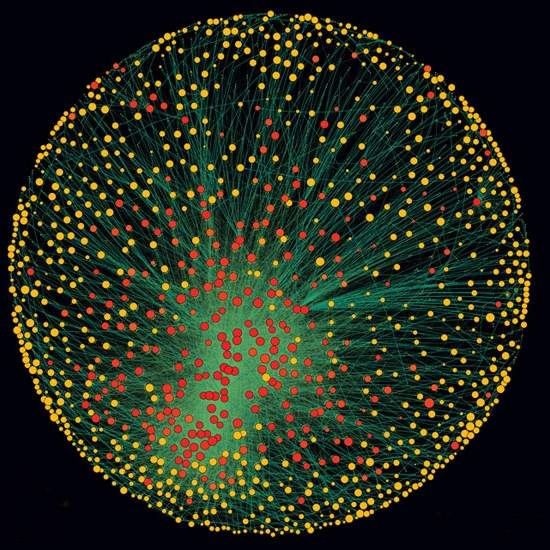
Should Bad Predictions Be Punished? (Freakonomics.com)

SUZIE LECHTENBERG

08/09/2011 | 8:33 pm

Government corn predictions are based on the work of people like Phil Friedrichs, gathering data in a corn field in Hiawatha, Kansas. (Photo: Stephen Koranda)
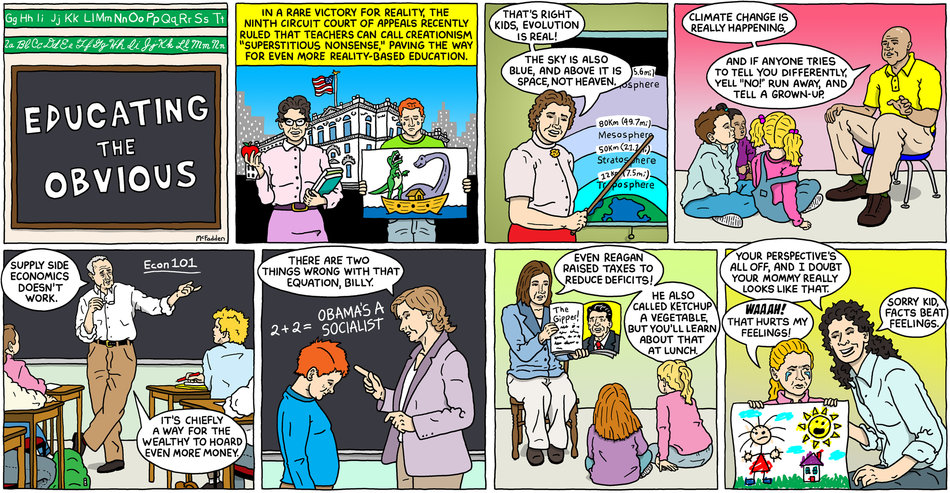
What do Wall Street forecasters and Romanian witches have in common? They usually get away, scot-free, with making bad predictions. Our world is awash in poor prediction — but for some reason, we can’t stop, even though accuracy rates often barely beat a coin toss.

But then there’s the U.S. Department of Agriculture’s crop forecasting. Predictions covering a big crop like corn (U.S. farmers have planted the second largest crop since WWII this year) usually fall within five percent of the actual yield. So how do they do it? Every year, the U.S.D.A. sends thousands of enumerators into cornfields across the country where they inspect the plants, the conditions, and even “animal loss.”

This week on Marketplace, Stephen J. Dubner and Kai Ryssdal talk about the supply and demand of predictions. You’ll hear from Joseph Prusacki, the head of U.S.D.A’s Statistics Division, who’s gearing up for his first major crop report of 2011 (the street is already “sweating” it); Phil Friedrichs, who collects cornfield data for the USDA; and our trusted economist and Freakonomics co-author Steven Levitt.

We’ll also hear from journalist Vlad Mixich in Bucharest, who tells us why those Romanian witchesmight not be getting away with bad fortune telling for much longer.

Freakonomics Poll: When It Comes to Predictions, Whom Do You Trust? (Freakonomics.com)

FREAKONOMICS

09/16/2011 | 11:27 am

Our latest Freakonomics Radio podcast, “The Folly of Prediction,” is built around the premise that humans love to predict the future, but are generally terrible at it. (You can download/subscribe at iTunes, get the RSS feed, listen live via the media player above, or read the transcript here.)

There are a host of professions built around predicting some future outcome: from predicting the score of a sports match, to forecasting the weather for the weekend, to being able to tell what the stock market is going to do tomorrow. But is anyone actually good at it?

From your experience, which experts do you trust for predictions?

  • None of the Above (39%, 447 Votes)
  • Meteorologists (37%, 414 Votes)
  • Economists (14%, 158 Votes)
  • Sports Experts (9%, 98 Votes)
  • Political Pundits (1%, 16 Votes)
  • Stock Market Analysts (1%, 10 Votes)

Total Voters: 1,132

The Revolution Begins at Home: An Open Letter to Join the Wall Street Occupation (The Independent)

Arun Gupta
September 28, 2011

(Photo courtesy of Flickr.com/pweiskel08). 

What is occurring on Wall Street right now is truly remarkable. For over 10 days, in the sanctum of the great cathedral of global capitalism, the dispossessed have liberated territory from the financial overlords and their police army.

They have created a unique opportunity to shift the tides of history in the tradition of other great peaceful occupations from the sit-down strikes of the 1930s to the lunch-counter sit-ins of the 1960s to the democratic uprisings across the Arab world and Europe today.

While the Wall Street occupation is growing, it needs an all-out commitment from everyone who cheered the Egyptians in Tahrir Square, said “We are all Wisconsin,” and stood in solidarity with the Greeks and Spaniards. This is a movement for anyone who lacks a job, housing or healthcare, or thinks they have no future.

Our system is broken at every level. More than 25 million Americans are unemployed. More than 50 million live without health insurance. And perhaps 100 million Americans are mired in poverty, using realistic measures. Yet the fat cats continue to get tax breaks and reap billions while politicians compete to turn the austerity screws on all of us.

At some point the number of people occupying Wall Street – whether that’s five thousand, ten thousand or fifty thousand – will force the powers that be to offer concessions. No one can say how many people it will take or even how things will change exactly, but there is a real potential for bypassing a corrupt political process and to begin realizing a society based on human needs not hedge fund profits.

After all, who would have imagined a year ago that Tunisians and Egyptians would oust their dictators?

At Liberty Park, the nerve center of the occupation, more than a thousand people gather every day to debate, discuss and organize what to do about our failed system that has allowed the 400 richest Americans at the top to amass more wealth than the 180 million Americans at the bottom.

It’s astonishing that this self-organized festival of democracy has sprouted on the turf of the masters of the universe, the men who play the tune that both political parties and the media dance to. The New York Police Department, which has deployed hundreds of officers at a time to surround and intimidate protesters, is capable of arresting everyone and clearing Liberty Plaza in minutes. But they haven’t, which is also astonishing.

That’s because assaulting peaceful crowds in a public square demanding real democracy – economic and not just political – would remind the world of the brittle autocrats who brutalized their people demanding justice before they were swept away by the Arab Spring. And the state violence has already backfired. After police attacked a Saturday afternoon march that started from Liberty Park the crowds only got bigger and media interest grew.

The Wall Street occupation has already succeeded in revealing the bankruptcy of the dominant powers – the economic, the political, media and security forces. They have nothing positive to offer humanity, not that they ever did for the Global South, but now their quest for endless profits means deepening the misery with a thousand austerity cuts.

Even their solutions are cruel jokes. They tell us that the “Buffett Rule” would spread the pain by asking the penthouse set to sacrifice a tin of caviar, which is what the proposed tax increase would amount to. Meanwhile, the rest of us will have to sacrifice healthcare, food, education, housing, jobs and perhaps our lives to sate the ferocious appetite of capital.

That’s why more and more people are joining the Wall Street occupation. They can tell you about their homes being foreclosed upon, months of grinding unemployment or minimum-wage dead-end jobs, staggering student debt loads, or trying to live without decent healthcare. It’s a whole generation of Americans with no prospects, but who are told to believe in a system that can only offer them Dancing With The Stars and pepper spray to the face.

Yet against every description of a generation derided as narcissistic, apathetic and hopeless they are staking a claim to a better future for all of us.

That’s why we all need to join in. Not just by liking it on Facebook, signing a petition at change.org or retweeting protest photos, but by going down to the occupation itself.

There is great potential here. Sure, it’s a far cry from Tahrir Square or even Wisconsin. But there is the nucleus of a revolt that could shake America’s power structure as much as the Arab world has been upended.

Instead of one to two thousand people a day joining in the occupation there needs to be tens of thousands of people protesting the fat cats driving Bentleys and drinking thousand-dollar bottles of champagne with money they looted from the financial crisis and then from the bailouts while Americans literally die on the streets.

To be fair, the scene in Liberty Plaza seems messy and chaotic. But it’s also a laboratory of possibility, and that’s the beauty of democracy. As opposed to our monoculture world, where political life is flipping a lever every four years, social life is being a consumer and economic life is being a timid cog, the Wall Street occupation is creating a polyculture of ideas, expression and art.

Yet while many people support the occupation, they hesitate to fully join in and are quick to offer criticism. It’s clear that the biggest obstacles to building a powerful movement are not the police or capital – it’s our own cynicism and despair.

Perhaps their views were colored by the New York Times article deriding protestors for wishing to “pantomime progressivism” and “Gunning for Wall Street with faulty aim.” Many of the criticisms boil down to “a lack of clear messaging.”

But what’s wrong with that? A fully formed movement is not going to spring from the ground. It has to be created. And who can say what exactly needs to be done? We are not talking about ousting a dictator; though some say we want to oust the dictatorship of capital.

There are plenty of sophisticated ideas out there: end corporate personhood; institute a “Tobin Tax” on stock purchases and currency trading; nationalize banks; socialize medicine; fully fund government jobs and genuine Keynesian stimulus; lift restrictions on labor organizing; allow cities to turn foreclosed homes into public housing; build a green energy infrastructure.

But how can we get broad agreement on any of these? If the protesters came into the square with a pre-determined set of demands it would have only limited their potential. They would have either been dismissed as pie in the sky – such as socialized medicine or nationalize banks – or if they went for weak demands such as the Buffett Rule their efforts would immediately be absorbed by a failed political system, thus undermining the movement.

That’s why the building of the movement has to go hand in hand with common struggle, debate and radical democracy. It’s how we will create genuine solutions that have legitimacy. And that is what is occurring down at Wall Street.

Now, there are endless objections one can make. But if we focus on the possibilities, and shed our despair, our hesitancy and our cynicism, and collectively come to Wall Street with critical thinking, ideas and solidarity we can change the world.

How many times in your life do you get a chance to watch history unfold, to actively participate in building a better society, to come together with thousands of people where genuine democracy is the reality and not a fantasy?

For too long our minds have been chained by fear, by division, by impotence. The one thing the elite fear most is a great awakening. That day is here. Together we can seize it.

Few insurers planning for climate change (Reuters)

By Ben Berkowitz

NEW YORK, Sept 1 (Reuters) – Only one in eight insurers has a formal policy in place to manage climate risk, despite rising evidence that environmental changes are exacerbating insurers’ disaster losses, according to a coalition of public interest groups.

The coalition, Ceres, looked at 88 filings from six states by insurance companies, using a form developed by the National Association of Insurance Commissioners. Ceres said it was the first-ever effort to quantify how U.S. insurers manage climate risk in their day-to-day operations.

Despite the broad lack of a formal policy, Ceres said insurers generally acknowledge the problem of climate change and the effect it can have on their business.

“Even those insurers with no formal climate policy, no climate risk management structure and a stated belief that the company is not vulnerable to the effects of climate change still name perils that may be affected by climate change 20 percent of the time,” Ceres said in its report.

Of the 11 companies with formal climate policies, two — Prudential Financial (PRU.N) and Genworth Financial (GNW.N) — are life insurers. The rest are mostly multi-line insurers or reinsurers. Among them are ACE Ltd (ACE.N), AIG’s (AIG.N) Chartis unit.

(For an Insider interview with the author of the Ceres report, click here: link.reuters.com/myk53s)

The Ceres report comes as insurers start paying claims for last week’s Hurricane Irene, which broke flood records across the U.S. Northeast, and as they look to the Atlantic for the approach of what may become Hurricane Katia.

Because of the potential for hurricanes to cause sudden and huge losses in the United States, Ceres said the insurance industry is especially focused on how climate change will affect hurricane exposure, potentially at the expense of studying the impact on other common perils.

Some insurance companies have taken a public stand on climate issues, particularly home and auto insurer Allstate (ALL.N), which has warned that recent severe weather is part of a permanent change in the environment, and German reinsurance heavyweight Munich Re (MUVGn.DE).

Ceres recommended that all states make the National Association of Insurance Commissioners disclosure form mandatory and public, and that they adopt the model of California insurance regulators, who put together detailed guidelines on how to fill out the form.

Ceres describes itself is a national coalition of investors, environmental organizations and public interest groups. (Reporting by Ben Berkowitz; editing by John Wallace)

Shooting the messenger (The Miami Herald)

Environment
Posted on Monday, 08.29.11
BY ANDREW DESSLER

Texas Gov. Rick Perry stirred up controversy on the campaign trail recently when he dismissed the problem of climate change and accused scientists of basically making up the problem.

As a born-and-bred Texan, it’s especially disturbing to hear this now, when our state is getting absolutely hammered by heat and drought. I’ve got to wonder how any resident of Texas – and particularly the governor who not so long ago was asking us to pray for rain – can be so cavalier about climate change.

As a climate scientist at Texas A&M University, I can also tell you from the data that the current heat wave and drought in Texas is so bad that calling it “extreme weather” does not do it justice. July was the single hottest month in the observational record, and the 12 months that ended in July were drier than any corresponding period in the record. I know that climate change does not cause any specific weather event. But I also know that humans have warmed the climate over the last century, and that this warming has almost certainly made the heat wave and drought more extreme than it would have otherwise been.

I am not alone in these views. There are dozens of atmospheric scientists at Texas institutions like Rice, the University of Texas, and Texas A&M, and none of them dispute the mainstream scientific view of climate change. This is not surprising, since there are only a handful of atmospheric scientists in the entire world who dispute the essential facts – and their ranks are not increasing, as Gov. Perry claimed.

And I can assure Gov. Perry that scientists are not just another special interest looking to line their own pockets. I left a job as an investment banker on Wall Street in 1988 to go to graduate school in chemistry. I certainly didn’t make that choice to get rich, and I didn’t do it to exert influence in the international arena either.

I went into science because I wanted to devote my life to the search for scientific knowledge. and to make the world a better place. That’s the same noble goal that motivates most scientists. The ultimate dream is to make a discovery so profound and revolutionary that it catapults one into the pantheon of the greatest scientific minds of history: Newton, Einstein, Maxwell, Planck, etc.

This is just one of the many reasons it is inconceivable for an entire scientific community to conspire en masse to mislead the public. In fact, if climate scientists truly wanted to maximize funding, we would be claiming that we had no idea why the climate is changing – a position that would certainly attract bipartisan support for increased research.

The economic costs of the Texas heat wave and drought are enormous. The cost to Texas alone will be many billion dollars (hundreds of dollars for every resident), and these costs will ripple through the economy so that everyone will eventually pay for it. Gov. Perry needs to squarely face the choice confronting us; either we pay to reduce emissions of greenhouse gases, or we pay for the impacts of a changing climate. There is no free lunch.

Economists have looked at this problem repeatedly over the last two decades, and virtually every mainstream economist has concluded that the costs of reducing emissions are less than the costs of unchecked climate change. The only disagreement is on the optimal level of emissions reductions.

I suppose it should not be surprising when politicians like Gov. Perry choose to shoot the messenger rather than face this hard choice. He may view this as a legitimate policy on climate change, but it’s not one that the facts support.

Read more here.

In the Land of Denial (N.Y. Times)

NY Times editorial
September 6, 2011

The Republican presidential contenders regard global warming as a hoax or, at best, underplay its importance. The most vocal denier is Rick Perry, the Texas governor and longtime friend of the oil industry, who insists that climate change is an unproven theory created by “a substantial number of scientists who have manipulated data so that they will have dollars rolling into their projects.”

Never mind that nearly all the world’s scientists regard global warming as a serious threat to the planet, with human activities like the burning of fossil fuels a major cause. Never mind that multiple investigations have found no evidence of scientific manipulation. Never mind that America needs a national policy. Mr. Perry has a big soapbox, and what he says, however fallacious, reaches a bigger audience than any scientist can command.

With one exception — make that one-and-one-half — the rest of the Republican presidential field also rejects the scientific consensus. The exception is Jon Huntsman Jr., a former ambassador to China and former governor of Utah, who recently wrote on Twitter: “I believe in evolution and trust scientists on global warming. Call me crazy.” The one-half exception is Mitt Romney, who accepted the science when he was governor of Massachusetts and argued for reducing emissions. Lately, he’s retreated into mush: “Do I think the world’s getting hotter? Yeah, I don’t know that, but I think that it is.” As for the human contribution: “It could be a little. It could be a lot.”

The others flatly repudiate the science. Ron Paul of Texas calls global warming “the greatest hoax I think that has been around for many, many years.” Michele Bachmann of Minnesota once said that carbon dioxide was nothing to fear because it is a “natural byproduct of nature” and has complained of “manufactured science.” Rick Santorum, a former senator from Pennsylvania, has called climate change “a beautifully concocted scheme” that is “just an excuse for more government control of your life.”

Newt Gingrich’s full record on climate change has been a series of epic flip-flops. In 2008, he appeared on television with Nancy Pelosi, the former House speaker, to say that “our country must take action to address climate change.” He now says the appearance was a mistake.

None of the candidates endorse a mandatory limit on emissions or, for that matter, a truly robust clean energy program. This includes Mr. Huntsman. In 2007, as Utah governor, he joined with Arnold Schwarzenegger, then the governor of California, in creating the Western Climate Initiative, a market-based cap-and-trade program aimed at reducing emissions in Western states. Cap-and-trade has since acquired a toxic political reputation, especially among Republicans, and Mr. Huntsman has backed away.

The economic downturn has made addressing climate change less urgent for voters. But the issue is not going away. The nation badly needs a candidate with a coherent, disciplined national strategy. So far, there is no Republican who fits that description.

Primeira cidade planejada do Ceará, Jaguaribara tem energia cortada por falta de pagamento (O Globo)

Publicada em 07/09/2011 às 08h24m
Globo.com/Portal Verdes Mares

SÃO PAULO – Primeira cidade totalmente planejada do Ceará, Jaguaribara está parcialmente no escuro há um mês. Falta luz em praças, ruas e até no cemitério. Por falta de pagamento, a Coelce, empresa de energia, ganhou na Justiça o direito de cortar o fornecimento de energia para o município. Nas casas e em locais de interesse público, como hospitais, a energia chega normalmente. A prefeitura da cidade admite que não pagou a energia há cinco ano. O prefeito diz que houve corte no repasse de verbas do governo do estado.

De acordo com o prefeito Edvaldo Silveira, o governo do estado deixou de repassar cerca de R$ 96 mil mensais, fruto de um convênio firmado em 2000, quando foi inaugurada a Nova Jaguaribara, a cidade planejada. A velha Jaguaribara foi inundada pelas águas do Açude Castanhão. Esse dinheiro, segundo o prefeito, era destinado ao pagamento da iluminação pública.

Segundo o prefeito, a nova cidade também foi projetada para ter 70 mil habitantes. Isso significa que a infraestrutura da cidade, que antes abrigava 9 mil pessoas, foi ampliada. O município ganhou uma vila olímpica em lugar da antiga quadra de esportes. Também foram construídas 14 praças públicas. Só o cemitério, recebeu 25 postes. Na prática, a conta de luz aumentou para a prefeitura. A cidade que era rural, hoje tem quase 70% dos moradores vivendo em áreas urbanas.

– A despesa com a ailuminação pública aumentou – afirma o prefeito.

Ele diz que a conta da iluminação pública não é repassada à população.

Depois de ficar às escuras, nesta semana a prefeitura também teve cortadas suas linhas telefônicas. O motivo é o mesmo: falta de pagamento.

O prefeito diz que aguarda verba do Governo do Estado para pagar a conta e regularizar a situação do município. Ele acredita que o problema e da energia e do telefone devem ser solucionados ainda esta semana.

Leia mais sobre esse assunto aqui.
© 1996 – 2011. Todos os direitos reservados a Infoglobo Comunicação e Participações S.A.

Climate Cycles Are Driving Wars: When El Nino Warmth Hits, Tropical Conflicts Double (Science Daily)

ScienceDaily (Aug. 24, 2011) — In the first study of its kind, researchers have linked a natural global climate cycle to periodic increases in warfare. The arrival of El Niño, which every three to seven years boosts temperatures and cuts rainfall, doubles the risk of civil wars across 90 affected tropical countries, and may help account for a fifth of worldwide conflicts during the past half-century, say the authors.

El Nino drought cycles heavily affecting some 90 countries (red) appear to be helping drive modern civil wars. (Credit: Courtesy Hsiang et al./Nature)

The paper, written by an interdisciplinary team at Columbia University’s Earth Institute, appears in the current issue of the leading scientific journal Nature.

In recent years, historians and climatologists have built evidence that past societies suffered and fell due in connection with heat or droughts that damaged agriculture and shook governments. This is the first study to make the case for such destabilization in the present day, using statistics to link global weather observations and well-documented outbreaks of violence. The study does not blame specific wars on El Niño, nor does it directly address the issue of long-term climate change. However, it raises potent questions, as many scientists think natural weather cycles will become more extreme with warming climate, and some suggest ongoing chaos in places like Somalia are already being stoked by warming climate.

“The most important thing is that this looks at modern times, and it’s done on a global scale,” said Solomon M. Hsiang, the study’s lead author, a graduate of the Earth Institute’s Ph.D. in sustainable development. “We can speculate that a long-ago Egyptian dynasty was overthrown during a drought. That’s a specific time and place, that may be very different from today, so people might say, ‘OK, we’re immune to that now.’ This study shows a systematic pattern of global climate affecting conflict, and shows it right now.”

The cycle known as the El Niño-Southern Oscillation, or ENSO, is a periodic warming and cooling of the tropical Pacific Ocean. This affects weather patterns across much of Africa, the Mideast, India, southeast Asia, Australia, and the Americas, where half the world’s people live. During the cool, or La Niña, phase, rain may be relatively plentiful in tropical areas; during the warmer El Niño, land temperatures rise, and rainfall declines in most affected places. Interacting with other factors including wind and temperature cycles over the other oceans, El Niño can vary dramatically in power and length. At its most intense, it brings scorching heat and multi-year droughts. (In higher latitudes, effects weaken, disappear or reverse; La Niña conditions earlier this year helped dry the U.S. Southwest and parts of east Africa.)

The scientists tracked ENSO from 1950 to 2004 and correlated it with onsets of civil conflicts that killed more than 25 people in a given year. The data included 175 countries and 234 conflicts, over half of which each caused more than 1,000 battle-related deaths. For nations whose weather is controlled by ENSO, they found that during La Niña, the chance of civil war breaking out was about 3 percent; during El Niño, the chance doubled, to 6 percent. Countries not affected by the cycle remained at 2 percent no matter what. Overall, the team calculated that El Niño may have played a role in 21 percent of civil wars worldwide — and nearly 30 percent in those countries affected by El Niño.

Coauthor Mark Cane, a climate scientist at Columbia’s Lamont-Doherty Earth Observatory, said that the study does not show that weather alone starts wars. “No one should take this to say that climate is our fate. Rather, this is compelling evidence that it has a measurable influence on how much people fight overall,” he said. “It is not the only factor–you have to consider politics, economics, all kinds of other things.” Cane, a climate modeler, was among the first to elucidate the mechanisms of El Niño, showing in the 1980s that its larger swings can be predicted — knowledge now used by organizations around the world to plan agriculture and relief services.

The authors say they do not know exactly why climate feeds conflict. “But if you have social inequality, people are poor, and there are underlying tensions, it seems possible that climate can deliver the knockout punch,” said Hsiang. When crops fail, people may take up a gun simply to make a living, he said. Kyle C. Meng, a sustainable-development Ph.D. candidate and the study’s other author, pointed out that social scientists have shown that individuals often become more aggressive when temperatures rise, but he said that whether that applies to whole societies is only speculative.

Bad weather does appear to tip poorer countries into chaos more easily; rich Australia, for instance, is controlled by ENSO, but has never seen a civil war. On the other side, Hsiang said at least two countries “jump out of the data.” In 1982, a powerful El Niño struck impoverished highland Peru, destroying crops; that year, simmering guerrilla attacks by the revolutionary Shining Path movement turned into a full-scale 20-year civil war that still sputters today. Separately, forces in southern Sudan were already facing off with the domineering north, when intense warfare broke out in the El Niño year of 1963. The insurrection abated, but flared again in 1976, another El Niño year. Then, 1983 saw a major El Niño–and the cataclysmic outbreak of more than 20 years of fighting that killed 2 million people, arguably the world’s bloodiest conflict since World War II. It culminated only this summer, when South Sudan became a separate nation; fighting continues in border areas. Hsiang said some other countries where festering conflicts have tended to blow up during El Niños include El Salvador, the Philippines and Uganda (1972); Angola, Haiti and Myanmar (1991); and Congo, Eritrea, Indonesia and Rwanda (1997).

The idea that environment fuels violence has gained currency in the past decade, with popular books by authors like Jared Diamond, Brian Fagan and Mike Davis. Academic studies have drawn links between droughts and social collapses, including the end of the Persian Gulf’s Akkadian empire (the world’s first superpower), 6,000 years ago; the AD 800-900 fall of Mexico’s Maya civilization; centuries-long cycles of warfare within Chinese dynasties; and recent insurgencies in sub-Saharan Africa. Last year, tree-ring specialists at Lamont-Doherty Earth Observatory published a 1,000-year atlas of El Niño-related droughts; data from this pinpoints droughts coinciding with the downfall of the Angkor civilization of Cambodia around AD 1400, and the later dissolution of kingdoms in China, Vietnam, Myanmar and Thailand.

Some scientists and historians remain unconvinced of connections between climate and violence. “The study fails to improve on our understanding of the causes of armed conflicts, as it makes no attempt to explain the reported association between ENSO cycles and conflict risk,” said Halvard Buhaug, a political scientist with the Peace Research Institute Oslo in Norway who studies the issue. “Correlation without explanation can only lead to speculation.” Another expert, economist Marshall Burke of the University of California, Berkeley, said the authors gave “very convincing evidence” of a connection. But, he said, the question of how overall climate change might play out remains. “People may respond differently to short-run shocks than they do to longer-run changes in average temperature and precipitation,” he said. He called the study “a useful and illuminating basis for future work.”

The above story is reprinted (with editorial adaptations by ScienceDaily staff) from materials provided by The Earth Institute at Columbia University.

Journal Reference:
Solomon M. Hsiang, Kyle C. Meng, Mark A. Cane. Civil conflicts are associated with the global climate. Nature, 2011; 476 (7361): 438 DOI: 10.1038/nature10311

As Prosperity Rises in Brazil’s Northeast, So Does Drug Violence (N.Y. Times)

A house in Nova Constituinte, in Salvador, is protected by a makeshift fence. The arrival of crack cocaine has been particularly devastating there, and the number of murders in Bahia increased 430 percent between 1999 and 2008. Lalo de Almeida for The New York Times.

By ALEXEI BARRIONUEVO
Published: August 29, 2011

SALVADOR, Brazil — Jenilson Dos Santos Conceição, 20, lay face down on the rough concrete, his body twisted, sandals still on his feet, as the blood from his 14 bullet wounds stained the sloped alleyway.

A small crowd of residents watched dispassionately as a dozen police officers hovered around the young man’s lifeless body.

“He was followed until he was executed right here,” said Bruno Ferreira de Oliveira, a senior investigator. “They wanted to make sure he was dead.”

Mr. Conceição was the third person found murdered in the state of Bahia on that July day. By day’s end, 6 would die violently, and by month’s end 354 had been killed, the police said.

The geography of violence in Brazil has been turned on its head the past few years. In the southeast, home to Rio de Janeiro, São Paulo and many of the country’s most enduring stereotypes of shootouts and kidnappings, the murder rate actually dropped by 47 percent between 1999 and 2009, according to a study by José Maria Nóbrega, a political science professor at the Federal University of Campina Grande.

But here in the northeast, a poor region that benefited most from the wealth-transfer programs that former President Luiz Inácio Lula da Silva championed during his eight years in office, the murder rate nearly doubled in the same 10-year period, turning this area into the nation’s most violent, Dr. Nóbrega found.

Salvador, the region’s largest city, is one of Brazil’s biggest tourist draws, the gateway to some of the country’s most spectacular beaches. And like Rio, it is preparing to co-host the 2014 World Cup. So the authorities here are taking a page from Rio’s playbook, trying to grapple with the surge in violent crime by establishing permanent police units in violent areas frequented by drug traffickers.

The community police forces being installed here are similar to the “police pacification units” the Rio government has been using — to both great fanfare and controversy — since 2008 to stem drug violence there.

The northeast has long been plagued by crime, but the increase illustrates how Brazil’s economic boom is causing drug-related violence — the main cause for the homicide scourge — to migrate to other parts of the country as traffickers seek new markets, straining local police forces, according to both Dr. Nóbrega and local officials.

The same economic wave that put more money in millions of poor Brazilians’ pockets, especially here in the north, has also stimulated more drug trafficking and the deadly crime associated with it, officials here contended. Drug traffickers, realizing the potential of a stronger market, have focused more heavily on the northeast, resulting in drug wars and addiction-fueled violence, they said.

“If the consumer market is booming, the drug trafficker will come here as well,” said Jaques Wagner, the governor of Bahia. “The social progress in Brazil is visible. But at the same time we still have trouble with drug trafficking and with a lack of respect for human life.”

In the states of Bahia and Alagoas, especially, there has been an explosion of violence in the past decade. The number of murders in Bahia grew by 430 percent, to 4,709, between 1999 and 2008, Dr. Nóbrega said, and last year the state’s murder rate of 34.2 per 100,000 residents was higher than Rio’s, which fell to 29.8. (Bahia officials said that after leveling off in 2010, homicides were down 13 percent through July 2011 compared with the first seven months of 2010.)

Travel agencies say they are concerned about the rise in violent crime in Bahia’s slums — as well as the drug-fueled petty assaults in Pelourinho, Salvador’s colorful historic center.

“Salvador, right now, is not ready for the World Cup by any stretch, and they are starting to realize that,” said Paul Irvine, the director of Dehouche, a travel agency in Rio de Janeiro that organizes trips to both cities.

Governor Wagner shrugged off such assertions, noting that Bahia holds a Carnaval celebration every year where more than one million people take to the streets, with 22,000 police officers providing security.

“We have gone four years without a homicide on the parade route,” he said. “For me, police readiness for the World Cup won’t be any problem at all.”

Rio’s violent slums have been characterized by battles between the police and heavily armed drug gangs that have controlled large areas. But in the northeast, security officials contend, people have historically settled disputes on their own — neighbor to neighbor, with deadly impunity.

“The northeast is used to seeking justice with its own hands,” said Mauricio Teles Barbosa, the secretary of security in Bahia. “They do not believe in the police because they were the police. They were the colonels, the outlaws that sought justice without the participation of the state.”

Mr. Wagner argued that these attitudes toward violence, along with an indifference shown by the state in providing police protection and social services, allowed murders to go largely unchecked. But more rampant drug trafficking, fueled in part by criminal gangs operating out of São Paulo, has greatly worsened the situation, Mr. Barbosa said.

The arrival of crack cocaine has been particularly devastating. In Nova Constituinte, a community on the outskirts of Salvador that sprouted on a former banana plantation, a series of drug-related killings has stalked the area for the past five years, including the massacre of six teenagers caught in the crossfire of rival gangs, said Arnaldo Anselmo, 42, a community leader.

Gildasio Oliveira Silva said that drug traffickers twice tried to kill his teenage son, who had fallen prey to crack and owed his dealers money. Last December, he said, they gunned down his wife, Ana Maria Passos ou Assis, 39, as she was cleaning the bathroom of Mr. Silva’s small convenience store along Nova Constituinte’s main avenue.

“The violence has gotten worse here,” said Mr. Silva, 68, a former police officer. “And it’s all related to drugs.”

After becoming governor in 2007, Mr. Wagner vowed to build up the police and try to stem the surging violence. He has added 7,000 new police officers in the past four years and authorized 3,500 more this year.

Bahia inaugurated its first community police unit in Calabar, a poor enclave surrounded by more expensive high-rises. Since opening in April with 120 officers, no homicides have been reported, said Capt. Maria de Oliveira Silva, who heads the unit.

“In the last three years, you didn’t go a month without someone getting killed here,” said Lindalva Reis, 58, who has lived in Calabar for 38 years.

Three more community police units are scheduled to open over the next year near Nova Constituinte.

Like the units in Rio, the officers being selected are mostly rookies, to try to cut down on corruption and the more aggressive habits of some older officers.

Unlike in Rio, the installation of the new units here has not required first clearing out entrenched drug gangs with bloody police and military operations that can last weeks.

To counter criticism that its police have struggled to solve crimes, the Bahia State government established a dedicated homicide department earlier this year, with 150 officers focused on murder investigations.

Among the challenges of the new unit is rooting out “extermination groups,” militias composed of police officers who have practiced vigilante justice and been suspected in dozens of murders, said Arthur Gallas, the homicide unit’s director.

Then there is the mountain of unresolved cases. In the new department’s offices, investigators recently pored over stacks of files containing 1,500 unsolved homicides dating from before 2007.

But the new push is still a work in progress.

At the crime scene of Mr. Conceição, the police did not set up security tape to prevent evidence contamination. “Preserving evidence is very difficult here,” said Helder Cunha, a crime scene investigator, noting that a proposal to require crime scene tape in Bahia had yet to be put into practice.

Myrna Domit contributed reporting from São Paulo.