Arquivo da tag: Controvérsias científicas

This Doctor Says He Knows How the Brain Creates Consciousness. New Evidence Suggests He’s On to Something (Popular Mechanics)

brain radiates swirling particles

Getty Images

Original article

Stuart Hameroff has faced three decades of criticism for his quantum consciousness theory, but new studies show the idea may not be as fringe as once believed.

By Darren Orf – Published: Dec 18, 2024 5:13 PM ESTbookmarks

For nearly his entire life, Dr. Stuart Hameroff has been fascinated with the bedeviling question of consciousness. But instead of studying neurology or another field commonly associated with the inner workings of the brain, it was Hameroff’s familiarity with anesthetics, a family of drugs that famously induces the opposite of consciousness, that fueled his curiosity.

“I thought about neurology, psychology, and neurosurgery, but none of those . . . seemed to be dealing with the problem of consciousness,” says Hameroff, a now-retired professor of anesthesiology from the University of Arizona. Hameroff recalls a particularly eye-opening moment when he first arrived at the university and met the chairman of the anesthesia department. “He says ‘hey, if you want to understand consciousness, figure out how anesthesia works because we don’t have a clue.’”

Hameroff’s work in anesthesia showed that unconsciousness occurred due to some effect on microtubules and wondered if perhaps these structures somehow played a role in forming consciousness. So instead of using the neuron, or the brain’s nerve cells, as the “base unit” of consciousness, Hameroff’s ideas delved deeper and looked at the billions of individual tubulins inside microtubules themselves. He quickly became obsessed.

Found in a cell’s cytoskeleton—the structure that helps a cell keep its shape and undergo mitosis—microtubules are made up of tubulin proteins and can be found in cells throughout the body. Hameroff describes the overall shape of microtubules as a “hollow ear of corn” where the kernels represent the alpha- and beta-tubulin proteins. Hameroff first found out about these structures in medical school in the 1970s, learning how microtubules duplicate chromosomes during cell division. If the spindles of the microtubules don’t pull this dance off perfectly (a process known as missegregation), you get cancerous cells or other forms of maldevelopment.

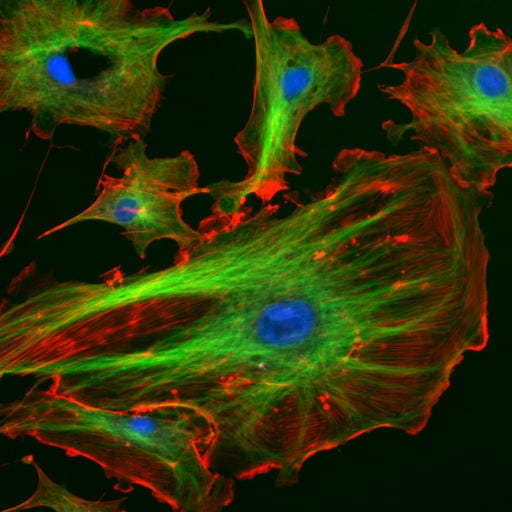
fluorescent microscopy image showing human cells with distinct nuclei and cytoskeletal filaments

Wikimedia/National Institutes of Health. In a eukaryotic cell, the cytoskeleton provides structure and support. In this image, microtubules, which are part of the cytoskeleton, are shown in green. These narrow, tube-like structures help support the shape of the cell. Scientists like Stuart Hameroff also believe these polymers could hold the secrets to consciousness.

While Hameroff knew that anesthetics impacted these structures, he couldn’t explain how microtubules might produce consciousness. “How would all that information processing explain consciousness? How could it explain envy, greed, pain, love, joy, emotion, the color green,” Hameroff says. “I had no idea.”

That is, until he had a chance encounter with an influential book by Nobel Prize laureate Sir Roger Penrose, Ph.D.

Within the pages of 1989’s The Emperor’s New Mind, Penrose argued that consciousness is actually quantum in nature—not computational as many theories of the mind had so far put forth. However, the famous physicist didn’t have any biological mechanism for the possible collapse of the quantum wave function—when a multi-state quantum superposition collapses to a definitive classical state—that induces conscious experiences.

“Damn straight, Roger. It’s freaking microtubules,” Hameroff remembers saying. Soon after, Hameroff struck up a partnership with Penrose, and together they set off to create one of the most fascinating—and controversial—ideas in the field of consciousness study. This idea became known as Orchestrated Objective Reduction theory, or Orch OR, and it states that microtubules in neurons cause the quantum wave function to collapse, a process known as objective reduction, which gives rise to consciousness.

Hameroff readily admits that since its inception in the mid-90s, it’s became a popular pastime in the field to bash his idea. But in recent years, a growing body of research has reported some evidence of quantum processes being possible in the brain. And while this in itself isn’t confirmation of the Orch OR theory Hameroff and Penrose came up with, it’s leading some scientists to reconsider the possibility that consciousness could be quantum in nature. Not only would this be a huge breakthrough in the understanding of human consciousness, it would mean that purely algorithmic—or computer-based—artificial intellligence could never truly be conscious.

● ● ●

In 1989, Roger Penrose was already a superstar in the world of mathematics and physics. By this time, he was already years removed from his groundbreaking work describing black hole formations (which eventually earned him the Nobel Prize in Physics in 2020), as well as his discovery of mathematical tilings, known as Penrose tilings, that are crucial to the study of quasicrystals—structures that are ordered but not periodic. With the publication of The Emperor’s New Mind, Penrose dove headfirst into the theoretical realm of human consciousness.

In the book, Penrose leveraged Kurt Gödel’s incompleteness theorem, which (in very simplified terms) argued that because the human mind can exceed existing systems to make new discoveries, then consciousness must be non-algorithmic. Instead, Penrose argues that human consciousness is fundamentally quantum in nature, and in The Emperor’s New Mind, he lays out his case over hundreds of pages, detailing how the collapse of the wave function creates a moment of consciousness. However, similar to Hameroff’s dilemma, Penrose admits in the closing pages that profound pieces of this quantum consciousness puzzle were still unknown:

I hold also to the hope that it is through science and mathematics that some profound advances in the understanding of mind must eventually come to light. There is an apparent dilemma here, but I have tried to show that there is a genuine way out.

When Hammeroff first read the book in 1991, he believed he knew what Penrose was missing.

Hameroff dashed off a letter that included some of his research and offered to visit Penrose at Oxford during one of his conferences in England. Penrose agreed, and the two soon began probing the non-algorithmic problem of human consciousness. While the duo developed their quantum consciousness theory, Hameroff also brought together minds from across disciplines—including philosophy, neuroscience, cognitive science, math, and physics—to explore ideas surrounding consciousness in the form of a biannual Science of Consciousness Conference.

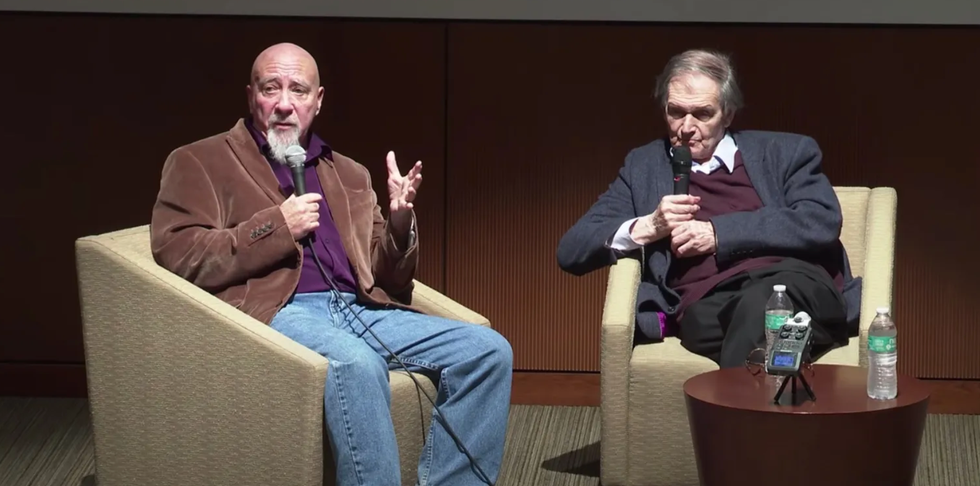
stuart hameroff and roger penrose seated on an auditorium stage

The University of Arizona Center for Consciousness Studies. Dr. Stuart Hameroff (left) and Sir Roger Penrose (right) giving a lecture on consciousness and the physics of the brain at the Sanford Consortium for Regenerative Medicine in La Jolla, California, January 2020.

And from its very inception, the conference broke new ground. In 1994, philosopher David Chalmers described how neuroscience was well-suited for figuring out how the brain controlled physical processes, but the “hard problem” was figuring out why humans (and all other living things) had subjective experiences.

Roughly two years after Chalmers gave this famous talk in a hospital auditorium in Tucson, Penrose and Hameroff revealed their own possible answer to this famous hard problem.

It wasn’t well-received.

● ● ●

Penrose and Hameroff revealed their Orchestrated Objective Reduction theory in the April 1996 issue of Mathematics and Computers in Simulation. It detailed how microtubules orchestrate consciousness from “objective reduction,” which describes (with complicated physics) Penrose’s thoughts on quantum gravity interaction and how the collapse of the wave function produces consciousness.

The idea has since faced nearly 30 years of criticism.

Famous theoretical physicist Stephen Hawking once wrote that Penrose fell for a kind of Holmsian fallacy, stating that “his argument seemed to be that consciousness is a mystery and quantum gravity is another mystery so they must be related.” Another main criticism is that the brain’s warm and noisy environment is ill-suited for the existence of any kind of quantum interaction. Read any scientific literature about quantum computers, and lab conditions are always extra pristine and approaching-absolute-zero cold (−273.15 degrees Celsius).

“You know how long I’ve been hearing the brain is warm and noisy?” Hameroff says, dismissing the criticism of the brain as too warm and wet for quantum processes to flourish. “I think our theory is sound from the physics, biology, and anesthesia standpoint.”

In a 2022 interview with New Scientist, Penrose admitted that the original Orch OR theory was “rough around the edges,” but maintains all these decades later that consciousness lies beyond computation and perhaps even beyond our current understanding of quantum mechanics. “People used to say it is completely crazy,” Penrose told New Scientist, “but I think people take it seriously now.”

“I think our theory is sound from the physics, biology, and anesthesia standpoint.”

A lot of that slow acceptance comes from a steady tide of research showing that biological systems contain evidence of quantum interactions. Since the publication of Orch OR, scientists have found evidence of quantum mechanics at work during photosynthesis, for example, and just this year, a study from researchers at Howard University detailed quantum effects involving microtubules. This research doesn’t prove Orch OR directly; that’d be like discovering water on an exoplanet and declaring it’s home to intelligent life—not an impossibility, but very far from a certainty. The findings at least have some critics reconsidering the role quantum mechanics plays, if not in consciousness, then at least the inner workings of the brain more broadly.

However, the rise of quantum biology in the past few decades also coincided with the explosion of AI and large language models (LLMs), which has brought new urgency to the question of consciousness—both human and artificial. Hameroff believes that an influx of money for consciousness research involving AI has only biased the field further into the “consciousness is a computation” camp.

“People have thrown in the towel on the ‘hard problem’ in my view and sold out to AI,” Hameroff says. “These LLMs . . . haven’t reached their limit yet but that doesn’t mean they’ll be conscious.”

● ● ●

As the years—and eventually decades—passed, Hameroff relentlessly defended Orch OR in scientific papers, at consciousness conferences, and perhaps most energetically on his X (formerly Twitter) feed, where he regularly participates in microtubule-related debates. But when asked if he likes the arguments, he answers pretty bluntly.

“Apparently I do because I keep doing it,” Hameroff says. “I’ve always been the contrarian but it’s not on purpose—I just follow my nose.”

And that scientific sense has led Hameroff to explore potentially profound implications when you consider that consciousness doesn’t necessarily rely on the brain or even neurons. Earlier this year, Hameroff, along with colleagues at the University of Arizona and Japan’s National Institute for Materials Science, co-authored an non-peer-reviewed article asking the question of whether consciousness could possibly predate life itself.

“It never made sense to me that life started and evolved for millions of years without genes—why would organisms develop cognitive machinery? What’s their motivation?” Hameroff says, admitting that theory traipses beyond the typical confines of science. “It’s kind of spiritual—my spiritual friends like this alot.”

Hameroff admits that some of his ideas are “out there,” and even stops himself short when describing some ideas involving UFOs, saying “I’m already out on enough limbs.” While most of his ideas may have taken up residence in the fringes of mainstream science, it’s a place where he seems comfortable—at least for now. “I don’t think everybody’s going to agree . . . but I think [Orch OR] is going to be considered seriously,” Hameroff says.

Hameroff retired from his decades-long career as an anesthesiologist at the University of Arizona, and now he has even more time to dedicate to his lifelong fascination.

“I had a great career, and now I have another great career,” he says. “Plus I don’t have to get up so damn early.”

By Darren Orf – Contributing Editor. Darren lives in Portland, has a cat, and writes/edits about sci-fi and how our world works. You can find his previous stuff at Gizmodo and Paste if you look hard enough. 

Dive Deeper ⬇️

Scientists Are Trying to ‘See’ Your Consciousness

This Study Backs a Quantum Theory of Consciousness

Aliens May Have Formed an AI-Based Consciousness

Ditching ‘Anthropocene’: why ecologists say the term still matters (Nature)

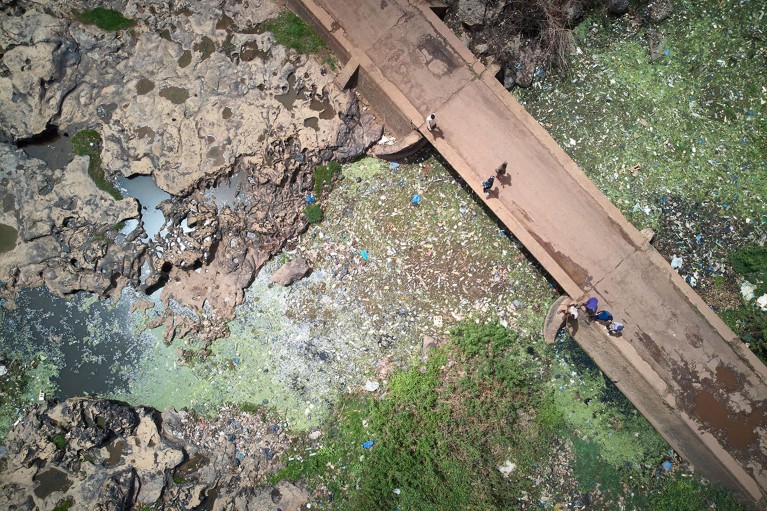
A aerial view of a section of the Niger river in Bamako clogged with plastic waste and other polluting materials.
Plastic waste is clogging the Niger River in Bamako, Mali. After it sediments, plastic will become part of the geological record of human impacts on the planet. Credit: Michele Cattani/AFP via Getty

Original article

Beyond stratigraphic definitions, the name has broader significance for understanding humans’ place on Earth.

David Adam

14 March 2024

After 15 years of discussion, geologists last week decided that the Anthropocene — generally understood to be the age of irreversible human impacts on the planet — will not become an official epoch in Earth’s geological timeline.

The rejected proposal would have codified the end of the current Holocene epoch, which has been in place since the end of the last ice age 11,700 years ago. It suggested that the Anthropocene started in 1952, when plutonium from hydrogen-bomb tests showed up in the sediment of Crawford Lake near Toronto, Canada.

The vote has drawn controversy over procedural details, and debate about its legitimacy continues. But whether or not it’s formally approved as a stratigraphic term, the idea of the Anthropocene is now firmly rooted in research. So, how are scientists using the term, and what does it mean to them and their fields?

‘It’s a term that belongs to everyone’

As head of the Leverhulme Centre for Anthropocene Biodiversity at the University of York, UK, Chris Thomas has perhaps more riding on the term than most. “When the news of this — what sounds like a slightly dodgy vote — happened, I sort of wondered, is it the end of us? But I think not,” he says.

For Thomas, the word Anthropocene neatly summarizes the sense that humans are part of Earth’s system and integral to its processes — what he calls indivisible connectedness. “That helps move us away from the notion that somehow humanity is apart from the rest of nature and natural systems,” he says. “It’s undoable — the change is everywhere.”

The concept of an era of human-driven change also provides convenient common ground for him to collaborate with researchers from other disciplines. “This is something that people in the arts and humanities and the social sciences have picked up as well,” he says. “It is a means of enabling communication about the extent to which we are living in a truly unprecedented and human-altered world.”

Seen through that lens, the fact that the Anthropocene has been formally rejected because scientists can’t agree on when it began seems immaterial. “Many people in the humanities who are using the phrase find the concept of the articulation of a particular year, based on a deposit in a particular lake, a ridiculous way of framing the concept of a human-altered planet.”

Jacquelyn Gill, a palaeoecologist at the University of Maine in Orono, agrees. “It’s a term that belongs to everyone. To people working in philosophy and literary criticism, in the arts, in the humanities, the sciences,” she says. “I think it’s far more meaningful in the way that it is currently being used, than in any attempts that stratigraphers could have made to restrict or define it in some narrow sense.”

She adds: “It serves humanity best as a loose concept that we can use to define something that we all widely understand, which is that we live in an era where humans are the dominant force on ecological and geological processes.”

Capturing human influences

The idea of the Anthropocene is especially helpful to make clear that humans have been shaping the planet for thousands of years, and that not all of those changes have been bad, Gill says. “We could do a better job of thinking about human–environment relationships in ways that are not inherently negative all the time,” she says. “People are not a monolith, and neither are our attitudes or relationships to nature.”

Some 80% of biodiversity is currently stewarded on Indigenous lands, Gill points out. “Which should tell you something, right? That it’s not the presence of people that’s the problem,” she says. “The solution to those problems is changing the way that many dominant cultures relate to the natural world.”

The concept of the Anthropocene is owned by many fields, Gill says. “This reiterates the importance of understanding that the role of people on our planet requires many different ways of knowing and many different disciplines.”

In a world in which the threat of climate change dominates environmental debates, the term Anthropocene can help to broaden the discussion, says Yadvinder Malhi, a biodiversity researcher at the University of Oxford, UK.

“I use it all the time. For me, it captures the time where human influence has a global planetary effect, and it’s multidimensional. It’s much more than just climate change,” he says. “It’s what we’re doing. The oceans, the resources we are extracting, habitats changing.”

He adds: “I need that term when I’m trying to capture this idea of humans affecting the planet in multiple ways because of the size of our activity.”

The looseness of the term is popular, but would a formal definition help in any way? Malhi thinks it would. “There’s no other term available that captures the global multidimensional impacts on the planet,” he says. “But there is a problem in not having a formal definition if people are using it in different terms, in different ways.”

Although the word ‘Anthropocene’ makes some researchers think of processes that began 10,000 years ago, others consider it to mean those of the past century. “I think a formal adoption, like a definition, would actually help to clarify that.”

doi: https://doi.org/10.1038/d41586-024-00786-2

The Anthropocene is dead. Long live the Anthropocene (Science)

Panel rejects a proposed geologic time division reflecting human influence, but the concept is here to stay

Original article

5 MAR 20244:00 PM ET

BY PAUL VOOSEN

A mushroom cloud rises in the night sky
A 1953 nuclear weapons test in Nevada was among the human activities that could have marked the Anthropocene. NNSA/NEVADA FIELD OFFICE/SCIENCE SOURCE

For now, we’re still in the Holocene.

Science has confirmed that a panel of two dozen geologists has voted down a proposal to end the Holocene—our current span of geologic time, which began 11,700 years ago at the end of the last ice age—and inaugurate a new epoch, the Anthropocene. Starting in the 1950s, it would have marked a time when humanity’s influence on the planet became overwhelming. The vote, first reported by The New York Times, is a stunning—though not unexpected—rebuke for the proposal, which has been working its way through a formal approval process for more than a decade.

“The decision is definitive,” says Philip Gibbard, a geologist at the University of Cambridge who is on the panel and serves as secretary-general of the International Commission on Stratigraphy (ICS), the body that governs the geologic timescale. “There are no outstanding issues to be resolved. Case closed.”

The leaders of the Anthropocene Working Group (AWG), which developed the proposal for consideration by ICS’s Subcommission on Quaternary Stratigraphy, are not yet ready to admit defeat. They note that the online tally, in which 12 out of 18 subcommission members voted against the proposal, was leaked to the press without approval of the panel’s chair. “There remain several issues that need to be resolved about the validity of the vote and the circumstances surrounding it,” says Colin Waters, a geologist at the University of Leicester who chaired AWG.

Few opponents of the Anthropocene proposal doubted the enormous impact that human influence, including climate change, is having on the planet. But some felt the proposed marker of the epoch—some 10 centimeters of mud from Canada’s Crawford Lake that captures the global surge in fossil fuel burning, fertilizer use, and atomic bomb fallout that began in the 1950s—isn’t definitive enough.

Others questioned whether it’s even possible to affix one date to the start of humanity’s broad planetary influence: Why not the rise of agriculture? Why not the vast changes that followed European encroachment on the New World? “The Anthropocene epoch was never deep enough to understand human transformation of this planet,” says Erle Ellis, a geographer at the University of Maryland, Baltimore County who resigned last year in protest from AWG.

Opponents also felt AWG made too many announcements to the press over the years while being slow to submit a proposal to the subcommission. “The Anthropocene epoch was pushed through the media from the beginning—a publicity drive,” says Stanley Finney, a stratigrapher at California State University Long Beach and head of the International Union of Geological Sciences, which would have had final approval of the proposal.

Finney also complains that from the start, AWG was determined to secure an “epoch” categorization, and ignored or countered proposals for a less formal Anthropocene designation. If they had only made their formal proposal sooner, they could have avoided much lost time, Finney adds. “It would have been rejected 10 years earlier if they had not avoided presenting it to the stratigraphic community for careful consideration.”

The Anthropocene backers will now have to wait for a decade before their proposal can be considered again. ICS has long instituted this mandatory cooling-off period, given how furious debates can turn, for example, over the boundary between the Pliocene and Pleistocene, and whether the Quaternary—our current geologic period, a category above epochs—should exist at all.

Even if it is not formally recognized by geologists, the Anthropocene is here to stay. It is used in art exhibits, journal titles, and endless books. And Gibbard, Ellis, and others have advanced the view that it can remain an informal geologic term, calling it the “Anthropocene event.” Like the Great Oxygenation Event, in which cyanobacteria flushed the atmosphere with oxygen billions of years ago, the Anthropocene marks a huge transition, but one without an exact date. “Let us work together to ensure the creation of a far deeper and more inclusive Anthropocene event,” Ellis says.

Waters and his colleagues will continue to press that the Anthropocene is worthy of recognition in the geologic timescale, even if that advocacy has to continue in an informal capacity, he says. Although small in size, Anthropocene strata such as the 10 centimeters of lake mud are distinct and can be traced using more than 100 durable geochemical signals, he says. And there is no going back to where the planet was 100 years ago, he says. “The Earth system changes that mark the Anthropocene are collectively irreversible.”


doi: 10.1126/science.z3wcw7b

Are We in the ‘Anthropocene,’ the Human Age? Nope, Scientists Say. (New York Times)

A panel of experts voted down a proposal to officially declare the start of a new interval of geologic time, one defined by humanity’s changes to the planet.

Four people standing on the deck of a ship face a large, white mushroom cloud in the distance.
In weighing their decision, scientists considered the effect on the world of nuclear activity. A 1946 test blast over Bikini atoll. Credit: Jack Rice/Associated Press

Original article

By Raymond Zhong

March 5, 2024

The Triassic was the dawn of the dinosaurs. The Paleogene saw the rise of mammals. The Pleistocene included the last ice ages.

Is it time to mark humankind’s transformation of the planet with its own chapter in Earth history, the “Anthropocene,” or the human age?

Not yet, scientists have decided, after a debate that has spanned nearly 15 years. Or the blink of an eye, depending on how you look at it.

A committee of roughly two dozen scholars has, by a large majority, voted down a proposal to declare the start of the Anthropocene, a newly created epoch of geologic time, according to an internal announcement of the voting results seen by The New York Times.

By geologists’ current timeline of Earth’s 4.6-billion-year history, our world right now is in the Holocene, which began 11,700 years ago with the most recent retreat of the great glaciers. Amending the chronology to say we had moved on to the Anthropocene would represent an acknowledgment that recent, human-induced changes to geological conditions had been profound enough to bring the Holocene to a close.

The declaration would shape terminology in textbooks, research articles and museums worldwide. It would guide scientists in their understanding of our still-unfolding present for generations, perhaps even millenniums, to come.

In the end, though, the members of the committee that voted on the Anthropocene over the past month were not only weighing how consequential this period had been for the planet. They also had to consider when, precisely, it began.

By the definition that an earlier panel of experts spent nearly a decade and a half debating and crafting, the Anthropocene started in the mid-20th century, when nuclear bomb tests scattered radioactive fallout across our world. To several members of the scientific committee that considered the panel’s proposal in recent weeks, this definition was too limited, too awkwardly recent, to be a fitting signpost of Homo sapiens’s reshaping of planet Earth.

“It constrains, it confines, it narrows down the whole importance of the Anthropocene,” said Jan A. Piotrowski, a committee member and geologist at Aarhus University in Denmark. “What was going on during the onset of agriculture? How about the Industrial Revolution? How about the colonizing of the Americas, of Australia?”

“Human impact goes much deeper into geological time,” said another committee member, Mike Walker, an earth scientist and professor emeritus at the University of Wales Trinity Saint David. “If we ignore that, we are ignoring the true impact, the real impact, that humans have on our planet.”

Hours after the voting results were circulated within the committee early Tuesday, some members said they were surprised at the margin of votes against the Anthropocene proposal compared with those in favor: 12 to four, with two abstentions. (Another three committee members neither voted nor formally abstained.)

Even so, it was unclear on Tuesday whether the results stood as a conclusive rejection or whether they might still be challenged or appealed. In an email to The Times, the committee’s chair, Jan A. Zalasiewicz, said there were “some procedural issues to consider” but declined to discuss them further. Dr. Zalasiewicz, a geologist at the University of Leicester, has expressed support for canonizing the Anthropocene.

This question of how to situate our time in the narrative arc of Earth history has thrust the rarefied world of geological timekeepers into an unfamiliar limelight.

The grandly named chapters of our planet’s history are governed by a body of scientists, the International Union of Geological Sciences. The organization uses rigorous criteria to decide when each chapter started and which characteristics defined it. The aim is to uphold common global standards for expressing the planet’s history.

A man stands next to a machine with tubing and lines of plastic that end up in a shallow pool of water.
Polyethylene being extruded and fed into a cooling bath during plastics manufacture, circa 1950. Credit: Hulton Archive, via Getty Images

Geoscientists don’t deny our era stands out within that long history. Radionuclides from nuclear tests. Plastics and industrial ash. Concrete and metal pollutants. Rapid greenhouse warming. Sharply increased species extinctions. These and other products of modern civilization are leaving unmistakable remnants in the mineral record, particularly since the mid-20th century.

Still, to qualify for its own entry on the geologic time scale, the Anthropocene would have to be defined in a very particular way, one that would meet the needs of geologists and not necessarily those of the anthropologists, artists and others who are already using the term.

That’s why several experts who have voiced skepticism about enshrining the Anthropocene emphasized that the vote against it shouldn’t be read as a referendum among scientists on the broad state of the Earth. “This was a narrow, technical matter for geologists, for the most part,” said one of those skeptics, Erle C. Ellis, an environmental scientist at the University of Maryland, Baltimore County. “This has nothing to do with the evidence that people are changing the planet,” Dr. Ellis said. “The evidence just keeps growing.”

Francine M.G. McCarthy, a micropaleontologist at Brock University in St. Catharines, Ontario, is the opposite of a skeptic: She helped lead some of the research to support ratifying the new epoch.

“We are in the Anthropocene, irrespective of a line on the time scale,” Dr. McCarthy said. “And behaving accordingly is our only path forward.”

The Anthropocene proposal got its start in 2009, when a working group was convened to investigate whether recent planetary changes merited a place on the geologic timeline. After years of deliberation, the group, which came to include Dr. McCarthy, Dr. Ellis and some three dozen others, decided that they did. The group also decided that the best start date for the new period was around 1950.

The group then had to choose a physical site that would most clearly show a definitive break between the Holocene and the Anthropocene. They settled on Crawford Lake, in Ontario, where the deep waters have preserved detailed records of geochemical change within the sediments at the bottom.

Last fall, the working group submitted its Anthropocene proposal to the first of three governing committees under the International Union of Geological Sciences. Sixty percent of each committee has to approve the proposal for it to advance to the next.

The members of the first one, the Subcommission on Quaternary Stratigraphy, submitted their votes starting in early February. (Stratigraphy is the branch of geology concerned with rock layers and how they relate in time. The Quaternary is the ongoing geologic period that began 2.6 million years ago.)

Under the rules of stratigraphy, each interval of Earth time needs a clear, objective starting point, one that applies worldwide. The Anthropocene working group proposed the mid-20th century because it bracketed the postwar explosion of economic growth, globalization, urbanization and energy use. But several members of the subcommission said humankind’s upending of Earth was a far more sprawling story, one that might not even have a single start date across every part of the planet.

Two cooling towers, a square building and a larger building behind it with smokestacks and industrial staircases on the outside.
The world’s first full-scale atomic power station in Britain in 1956. Credit: Hulton Archive, via Getty Images

This is why Dr. Walker, Dr. Piotrowski and others prefer to describe the Anthropocene as an “event,” not an “epoch.” In the language of geology, events are a looser term. They don’t appear on the official timeline, and no committees need to approve their start dates.

Yet many of the planet’s most significant happenings are called events, including mass extinctions, rapid expansions of biodiversity and the filling of Earth’s skies with oxygen 2.1 to 2.4 billion years ago.

Even if the subcommission’s vote is upheld and the Anthropocene proposal is rebuffed, the new epoch could still be added to the timeline at some later point. It would, however, have to go through the whole process of discussion and voting all over again.

Time will march on. Evidence of our civilization’s effects on Earth will continue accumulating in the rocks. The task of interpreting what it all means, and how it fits into the grand sweep of history, might fall to the future inheritors of our world.

“Our impact is here to stay and to be recognizable in the future in the geological record — there is absolutely no question about this,” Dr. Piotrowski said. “It will be up to the people that will be coming after us to decide how to rank it.”

Raymond Zhong reports on climate and environmental issues for The Times.

Latest News on Climate Change and the Environment

Protecting groundwater. After years of decline in the nation’s groundwater, a series of developments indicate that U.S. state and federal officials may begin tightening protections for the dwindling resource. In Nevada, Idaho and Montana, court decisions have strengthened states’ ability to restrict overpumping. California is considering penalizing officials for draining aquifers. And the White House has asked scientists to advise how the federal government can help.

Weather-related disasters. An estimated 2.5 million people were forced from their homes in the United States by weather-related disasters in 2023, according to new data from the Census Bureau. The numbers paint a more complete picture than ever before of the lives of people affected by such events as climate change supercharges extreme weather.

Amazon rainforest. Up to half of the Amazon rainforest could transform into grasslands or weakened ecosystems in the coming decades, a new study found, as climate change, deforestation and severe droughts damage huge areas beyond their ability to recover. Those stresses in the most vulnerable parts of the rainforest could eventually drive the entire forest ecosystem past a tipping point that would trigger a forest-wide collapse, researchers said.

A significant threshold. Over the past 12 months, the average temperature worldwide was more than 1.5 degrees Celsius, or 2.7 degrees Fahrenheit, higher than it was at the dawn of the industrial age. That number carries special significance, as nations agreed under the 2015 Paris Agreement to try to keep the difference between average temperatures today and in preindustrial times to 1.5 degrees Celsius, or at least below 2 degrees Celsius.

New highs. The exceptional warmth that first enveloped the planet last summer is continuing strong into 2024: Last month clocked in as the hottest January ever measured, and the hottest January on record for the oceans, too. Sea surface temperatures were just slightly lower than in August 2023, the oceans’ warmest month on the books.

Polémica con el Antropoceno: la humanidad todavía no sabe en qué época geológica vive (El País)

elpais.com

Un comité de expertos ha tumbado la propuesta de declarar un nuevo momento geológico, pero el propio presidente denuncia irregularidades en la votación

Manuel Ansede

Madrid –

Extracción de un testigo de sedimentos del fondo del lago Crawford, a las afueras de Toronto (Canadá). TIM PATTERSON / UNIVERSIDAD DE CARLETON

La idea del Antropoceno —que la humanidad vive desde 1950 en una nueva época geológica caracterizada por la contaminación humana— se ha hecho tan popular en los últimos años que hasta la Real Academia Española adoptó el término en el Diccionario de la Lengua en 2021. Los académicos se dieron esta vez demasiada prisa. El concepto sigue en el aire, en medio de una vehemente polémica entre especialistas. Miembros del comité de expertos que debe tomar la decisión en la Unión Internacional de Ciencias Geológicas (UICG) —la Subcomisión de Estratigrafía del Cuaternario— han filtrado este martes al diario The New York Times que han votado mayoritariamente en contra de reconocer la existencia del Antropoceno. Sin embargo, el presidente de la Subcomisión, el geólogo Jan Zalasiewicz, explica a EL PAÍS que el resultado preliminar de la votación se ha anunciado sin su autorización y que todavía quedan “algunos asuntos pendientes con los votos que hay que resolver”. La humanidad todavía no sabe en qué época geológica vive.

El químico holandés Paul Crutzen, ganador del Nobel de Química por iluminar el agujero de la capa de ozono, planteó en el año 2000 que el planeta había entrado en una nueva época, provocada por el impacto brutal de los seres humanos. Un equipo internacional de especialistas, el Grupo de Trabajo del Antropoceno, ha analizado los hechos científicos desde 2009 y el año pasado presentó una propuesta para proclamar oficialmente esta nueva época geológica, marcada por la radiactividad de las bombas atómicas y los contaminantes procedentes de la quema de carbón y petróleo. El diminuto lago Crawford, a las afueras de Toronto (Canadá), era el lugar indicado para ejemplificar el inicio del Antropoceno, gracias a los sedimentos de su fondo, imperturbados desde hace siglos.

La mayoría de los miembros de la Subcomisión de Estratigrafía del Cuaternario de la UICG ha votado en contra de la propuesta, según el periódico estadounidense. El geólogo británico Colin Waters, líder del Grupo de Trabajo del Antropoceno, explica a EL PAÍS que se ha enterado por la prensa. “Todavía no hemos recibido una confirmación oficial directamente del secretario de la Subcomisión de Estratigrafía del Cuaternario. Parece que The New York Times recibe los resultados antes que nosotros, es muy decepcionante”, lamenta Waters.

El geólogo reconoce que el dictamen, si se confirma, sería el fin de su propuesta actual, pero no se rinde. “Tenemos muchos investigadores eminentes que desean continuar como grupo, de manera informal, defendiendo las evidencias de que el Antropoceno debería ser formalizado como una época”, afirma. A su juicio, los estratos geológicos actuales —contaminados por isótopos radiactivos, microplásticos, cenizas y pesticidas— han cambiado de manera irreversible respecto a los del Holoceno, la época geológica iniciada hace más de 10.000 años, tras la última glaciación. “Dadas las pruebas existentes, que siguen aumentando, no me sorprendería un futuro llamamiento a reconsiderar nuestra propuesta”, opina Waters, de la Universidad de Leicester.

El jefe del Grupo de Trabajo del Antropoceno sostiene que hay “algunas cuestiones de procedimiento” que ponen en duda la validez de la votación. La geóloga italiana Silvia Peppoloni, jefa de la Comisión de Geoética de la UICG, confirma que su equipo ha realizado un informe sobre esta pelea entre la Subcomisión de Estratigrafía del Cuaternario y el Grupo de Trabajo del Antropoceno. El documento está sobre la mesa del presidente de la UICG, el británico John Ludden.

La geóloga canadiense Francine McCarthy estaba convencida de que el lago Crawford convencería a los escépticos. Desde fuera parece pequeño, con apenas 250 metros de largo, pero su profundidad roza los 25 metros. Sus aguas superficiales no se mezclan con las de su lecho, por lo que el suelo del fondo se puede analizar como una lasaña, en la que cada capa acumula sedimentos procedentes de la atmósfera. Ese calendario subacuático del lago Crawford revela la denominada Gran Aceleración, el momento alrededor de 1950 en el que la humanidad empezó a dejar una huella cada vez más evidente, con el lanzamiento de bombas atómicas, la quema masiva de petróleo y carbón y la extinción de especies.

“Ignorar el enorme impacto de los humanos en nuestro planeta desde mediados del siglo XX tiene potencialmente consecuencias dañinas, al minimizar la importancia de los datos científicos para hacer frente al evidente cambio en el sistema de la Tierra, como ya señaló Paul Crutzen hace casi 25 años”, advierte McCarthy.

Em votação, cientistas negam que estejamos no Antropoceno, a época geológica dos humanos (Folha de S.Paulo)

www1.folha.uol.com.br

Grupo rejeitou que mudanças sejam profundas o bastante para encerrar o Holoceno

Raymond Zhong

5 de março de 2024


O Triássico foi o amanhecer dos dinossauros. O Paleogeno viu a ascensão dos mamíferos. O Pleistoceno incluiu as últimas eras glaciais.

Está na hora de marcar a transformação da humanidade no planeta com seu próprio capítulo na história da Terra, o “Antropoceno”, ou a época humana?

Ainda não, decidiram os cientistas, após um debate que durou quase 15 anos. Ou um piscar de olhos, dependendo do ângulo pelo qual você olha.

Um comitê de cerca de duas dezenas de estudiosos votou, em grande maioria, contra uma proposta de declarar o início do Antropoceno, uma época recém-criada do tempo geológico, de acordo com um anúncio interno dos resultados da votação visto pelo The New York Times.

Pela linha do tempo atual dos geólogos da história de 4,6 bilhões de anos da Terra, nosso mundo agora está no Holoceno, que começou há 11,7 mil anos com o recuo mais recente dos grandes glaciares.

Alterar a cronologia para dizer que avançamos para o Antropoceno representaria um reconhecimento de que as mudanças recentes induzidas pelo homem nas condições geológicas foram profundas o suficiente para encerrar o Holoceno.

A declaração moldaria a terminologia em livros didáticos, artigos de pesquisa e museus em todo o mundo. Orientaria os cientistas em sua compreensão do nosso presente ainda em desenvolvimento por gerações, talvez até por milênios.

No fim das contas, porém, os membros do comitê que votaram sobre o Antropoceno nas últimas semanas não estavam apenas considerando o quão determinante esse período havia sido para o planeta. Eles também tiveram que considerar quando, precisamente, ele começou.

Pela definição que um painel anterior de especialistas passou quase uma década e meia debatendo e elaborando, o Antropoceno começou na metade do século 20, quando testes de bombas nucleares espalharam material radioativo por todo o nosso mundo.

Para vários membros do comitê científico que avaliaram a proposta do painel nas últimas semanas, essa definição era muito limitada, muito recente e inadequada para ser um marco adequado da remodelação do Homo sapiens no planeta Terra.

“Isso restringe, confina, estreita toda a importância do Antropoceno”, disse Jan A. Piotrowski, membro do comitê e geólogo da Universidade de Aarhus, na Dinamarca. “O que estava acontecendo durante o início da agricultura? E a Revolução Industrial? E a colonização das Américas, da Austrália?”

“O impacto humano vai muito mais fundo no tempo geológico”, disse outro membro do comitê, Mike Walker, cientista da Terra e professor emérito da Universidade de Gales Trinity Saint David. “Se ignorarmos isso, estamos ignorando o verdadeiro impacto que os humanos têm em nosso planeta.”

Horas após a circulação dos resultados da votação dentro do comitê nesta terça-feira (5) de manhã, alguns membros disseram que ficaram surpresos com a margem de votos contra a proposta do Antropoceno em comparação com os a favor: 12 a 4, com 2 abstenções.

Mesmo assim, nesta terça de manhã não ficou claro se os resultados representavam uma rejeição conclusiva ou se ainda poderiam ser contestados ou apelados. Em um e-mail para o Times, o presidente do comitê, Jan A. Zalasiewicz, disse que havia “algumas questões procedimentais a considerar”, mas se recusou a discuti-las mais a fundo.

Zalasiewicz, geólogo da Universidade de Leicester, expressou apoio à canonização do Antropoceno.

Essa questão de como situar nosso tempo na narrativa da história da Terra colocou o mundo dos guardiões do tempo geológico sob uma luz desconhecida.

Os capítulos grandiosamente nomeados da história de nosso planeta são governados por um grupo de cientistas, a União Internacional de Ciências Geológicas. A organização usa critérios rigorosos para decidir quando cada capítulo começou e quais características o definiram. O objetivo é manter padrões globais comuns para expressar a história do planeta.

Os geocientistas não negam que nossa era se destaca dentro dessa longa história. Radionuclídeos de testes nucleares. Plásticos e cinzas industriais. Poluentes de concreto e metal. Aquecimento global rápido. Aumento acentuado de extinções de espécies. Esses e outros produtos da civilização moderna estão deixando vestígios inconfundíveis no registro mineral, especialmente desde meados do século 20.

Ainda assim, para se qualificar para a entrada na escala de tempo geológico, o Antropoceno teria que ser definido de uma maneira muito específica, que atendesse às necessidades dos geólogos e não necessariamente dos antropólogos, artistas e outros que já estão usando o termo.

Por isso, vários especialistas que expressaram ceticismo quanto à consagração do Antropoceno enfatizaram que o voto contra não deve ser interpretado como um referendo entre cientistas sobre o amplo estado da Terra.

“Este é um assunto específico e técnico para os geólogos, em sua maioria”, disse um desses céticos, Erle C. Ellis, um cientista ambiental da Universidade de Maryland. “Isso não tem nada a ver com a evidência de que as pessoas estão mudando o planeta”, afirmou Ellis. “A evidência continua crescendo.”

Francine M.G. McCarthy, micropaleontóloga da Universidade Brock em St. Catharines, Ontário (Canadá), é tem visão oposta: ela ajudou a liderar algumas das pesquisas para apoiar a ratificação da nova época.

“Estamos no Antropoceno, independentemente de uma linha na escala de tempo”, disse McCarthy. “E agir de acordo é o nosso único caminho a seguir.”

A proposta do Antropoceno teve início em 2009, quando um grupo de trabalho foi convocado para investigar se as recentes mudanças planetárias mereciam um lugar na linha do tempo geológica.

Após anos de deliberação, o grupo, que passou a incluir McCarthy, Ellis e cerca de três dezenas de outros, decidiu que sim. O grupo também decidiu que a melhor data de início para o novo período era por volta de 1950.

O grupo então teve que escolher um local físico que mostrasse de forma mais clara uma quebra definitiva entre o Holoceno e o Antropoceno. Eles escolheram o Lago Crawford, em Ontário, no Canadá, onde as águas profundas preservaram registros detalhados de mudanças geoquímicas nos sedimentos do fundo.

No outono passado, o grupo de trabalho enviou sua proposta do Antropoceno para o primeiro dos três comitês governantes da União Internacional de Ciências Geológicas —60% de cada comitê precisam aprovar a proposta para que ela avance para o próximo.

Os membros do primeiro comitê, a Subcomissão de Estratigrafia do Quaternário, enviaram seus votos a partir do início de fevereiro. (Estratigrafia é o ramo da geologia que se dedica ao estudo das camadas de rocha e como elas se relacionam no tempo. O Quaternário é o período geológico em curso que começou há 2,6 milhões de anos.)

De acordo com as regras da estratigrafia, cada intervalo de tempo da Terra precisa de um ponto de partida claro e objetivo, que se aplique em todo o mundo. O grupo de trabalho do Antropoceno propôs meados do século 20 porque isso abrangia a explosão do crescimento econômico pós-guerra, a globalização, a urbanização e o uso de energia.

Mas vários membros da subcomissão disseram que a transformação da humanidade na Terra era uma história muito mais abrangente, que talvez nem tenha uma única data de início em todas as partes do planeta.

Por isso, Walker, Piotrowski e outros preferem descrever o Antropoceno como um “evento”, não como uma “época”. Na linguagem da geologia, eventos são um termo mais amplo. Eles não aparecem na linha do tempo oficial, e nenhum comitê precisa aprovar suas datas de início.

No entanto, muitos dos acontecimentos mais significativos do planeta são chamados de eventos, incluindo extinções em massa, expansões rápidas da biodiversidade e o preenchimento dos céus da Terra com oxigênio há 2,1 bilhões a 2,4 bilhões de anos.

Mesmo que o voto da subcomissão seja mantido e a proposta do Antropoceno seja rejeitada, a nova época ainda poderá ser adicionada à linha do tempo em algum momento posterior. No entanto, terá que passar por todo o processo de discussão e votação novamente.

When Did the Anthropocene Start? Scientists Closer to Saying When. (N.Y. Times)

nytimes.com


Image credits: Alamy; David Guttenfelder for The New York Times; Getty Images; Ashley Gilbertson for The New York Times; Michael Probst/Associated Press; Getty Images; NASA

A panel of experts has spent more than a decade deliberating on how, and whether, to mark a momentous new epoch in geologic time: our own.

Raymond Zhong

Dec. 17, 2022

The official timeline of Earth’s history — from the oldest rocks to the‌ dinosaurs to the rise of primates, from the Paleozoic to the Jurassic and all points before and since — could soon include the age of nuclear weapons, human-caused climate change and the proliferation of plastics, garbage and concrete across the planet.

In short, the present.

Ten thousand years after our species began forming primitive agrarian societies, a panel of scientists on Saturday took a big step toward declaring a new interval of geologic time: the Anthropocene, the age of humans.

Our current geologic epoch, the Holocene, began 11,700 years ago with the end of the last big ice age. The panel’s roughly three dozen scholars appear close to recommending that, actually, we have spent the past few decades in a brand-new time unit, one characterized by human-induced, planetary-scale changes that are unfinished but very much underway.

“If you were around in 1920, your attitude would have been, ‘Nature’s too big for humans to influence,’” said Colin N. Waters, a geologist and chair of the Anthropocene Working Group, the panel that has been deliberating on the issue since 2009. The past century has upended that thinking, Dr. Waters said. “It’s been a shock event, a bit like an asteroid hitting the planet.”

The working group’s members on Saturday completed the first in a series of internal votes on details including when exactly they believe the Anthropocene began. Once these votes are finished, which could be by spring, the panel will submit its final proposal to three other committees of geologists whose votes will either make the Anthropocene official or reject it.

Sixty percent of each committee will need to approve the group’s proposal for it to advance to the next. If it fails in any of them, the Anthropocene might not have another chance to be ratified for years.

If it makes it all the way, though, geology’s amended timeline would officially recognize that humankind’s effects on the planet had been so consequential as to bring the previous chapter of Earth’s history to a close. It would acknowledge that these effects will be discernible in the rocks for millenniums.

Source: Syvitski, et al. (2020)
By Mira Rojanasakul/The New York Times

“I teach the history of science — you know, Copernicus, Kepler, Galileo,” said Francine McCarthy, an earth scientist at Brock University in Canada and member of the working group. “We’re actually doing it,” she said. “We’re living the history of science.”

Still, the knives are out for the Anthropocene, even though, or maybe because, we all have such firsthand familiarity with it.

Stanley C. Finney, the secretary general of the International Union of Geological Sciences, fears the Anthropocene has become a way for geologists to make a “political statement.”

Within the vast expanse of geologic time, he notes, the Anthropocene would be a blip of a blip of a blip. Other geologic time units are useful because they orient scientists in stretches of deep time that left no written records and sparse scientific observations. The Anthropocene, by contrast, would be a time in Earth’s history that humans have already been documenting extensively.

“For the human transformation, we don’t need those terminologies — we have exact years,” said Dr. Finney, whose committee would be the last to vote on the working group’s proposal if it gets that far.

Martin J. Head, a working group member and earth scientist at Brock University, argues declining to recognize the Anthropocene would have political reverberations, too.

“People would say, ‘Well, does that then mean the geological community is denying that we have changed the planet drastically?’” he said. “We would have to justify our decision either way.”

Philip L. Gibbard, a geologist at the University of Cambridge, is secretary general of another of the committees that will vote on the working group’s proposal. He has serious concerns about how the proposal is shaping up, concerns he believes the wider geological community shares.

“It won’t get an easy ride,” he said.

A 19th century black-and-white print of five men in what appears to be a cave. One stands about knee-deep in a hole. The other four are examining a dinosaur skull.
Nineteenth-century fossil hunters. The rock record is full of gaps, “a jigsaw puzzle with many of the parts missing,” one geologist said. Credit: Oxford Science Archive/Print Collector, via Getty Images

Like the zoologists who regulate the names of animal species or the astronomers who decide what counts as a planet, geology’s timekeepers work conservatively, by design. They set classifications that will be reflected in academic studies, museums and textbooks for generations to come.

“Everybody picks on the Anthropocene Working Group because they’ve taken so long,” said Lucy E. Edwards, a retired scientist with the United States Geological Survey. “In geologic time, this isn’t long.”

The geologic time scale divides Earth’s 4.6 billion-year story into grandly named chapters. Like nesting dolls, the chapters contain sub-chapters, which themselves contain sub-sub-chapters. From largest to smallest, the chapters are called eons, eras, periods, epochs and ages.

Right now, according to the current timeline, we are in — deep breath — the Meghalayan Age of the Holocene Epoch of the Quaternary Period of the Cenozoic Era of the Phanerozoic Eon, and have been for 4,200 years.

Drawing lines in Earth time has never been easy. The rock record is full of gaps, “a jigsaw puzzle with many of the parts missing,” as Dr. Gibbard puts it. And most global-scale changes happen gradually, making it tricky to pinpoint when one chapter ended and the next one began. There haven’t been many moments when the entire planet changed at once.

“If a meteor hits the Yucatán Peninsula, that’s a pretty good marker,” Dr. Edwards said. “But other than that, there’s practically nothing out there in the geologic world that’s the best line.”

The early Cambrian Period, around 540 million years ago, saw Earth explode with an astonishing diversity of animal life, but its precise starting point has been contested for decades. A long controversy led to the redrawing of our current geologic period, the Quaternary, in 2009.

“It’s a messy and disputatious business,” said Jan A. Zalasiewicz, a geologist at the University of Leicester. “And of course, the Anthropocene brings a whole new range of dimensions to the messiness and disputatiousness.”

A nuclear test near the Marshall Islands in 1958. A working group proposed the mid-20th century as the beginning of the Anthropocene, in part because of the plutonium isotopes left by bombs. Credit: Corbis, via Getty Images

It took a decade of debate — in emails, academic articles and meetings in London, Berlin, Oslo and beyond — for the Anthropocene Working Group to nail down a key aspect of its proposal.

In a 29-to-4 vote in 2019, the group agreed to recommend that the Anthropocene began in the mid-20th century. That’s when human populations, economic activity and greenhouse gas emissions began skyrocketing worldwide, leaving indelible traces: plutonium isotopes from nuclear explosions, nitrogen from fertilizers, ash from power plants.

The Anthropocene, like nearly all other geologic time intervals, needs to be defined by a specific physical site, known as a “golden spike,” where the rock record clearly sets it off from the interval before it.

After a yearslong hunt, the working group on Saturday finished voting on nine candidate sites for the Anthropocene. They represent the range of environments into which human effects are etched: a peat bog in Poland, the ice of the Antarctic Peninsula, a bay in Japan, a coral reef off the Louisiana coast.

One site — Crawford Lake in Ontario, Canada — is small enough to walk around in 10 minutes. But it is so deep that the bottom layer of water rarely mixes with the upper layers. Whatever sinks to the floor remains undisturbed, gradually accumulating into a tree-ring-like record of geochemical change.

The working group’s members also voted this month on what rank the Anthropocene should have in the timeline: an epoch, an age of the Holocene, or something else.

The group isn’t disclosing the results of these or the other votes to be held in the coming months until they are all complete and it has finalized its proposal for the next level of timekeepers to ponder. It is then that a far more contentious debate about the Anthropocene could begin.

Many scholars still aren’t sure the mid-20th century cutoff makes sense. It is awkwardly recent, especially for archaeologists and anthropologists who would have to start referring to World War II artifacts as “pre-Anthropocene.”

Crawford Lake, near Milton, Ontario. Its depth makes it a prime site for scientific research. Credit: Conservation Halton

And using nuclear bombs to mark a geologic interval strikes some scientists as abhorrent, or at least beside the point. Radionuclides are a convenient global marker, but they say nothing about climate change or other human effects, said Erle C. Ellis, an ecologist at the University of Maryland, Baltimore County.

Using the Industrial Revolution might help. But that definition would still leave out millenniums of planet-warping changes from farming and deforestation.

Canonizing the Anthropocene is a call to attention, said Naomi Oreskes, a member of the working group. For geology, but also the wider world.

“I was raised in a generation where we were taught that geology ended when people showed up,” said Dr. Oreskes, a historian of science at Harvard. The Anthropocene announces that “actually, the human impact is part of geology as a science,” she said. It demands we recognize that our influence on the planet is more than surface level.

But Dr. Gibbard of Cambridge fears that, by trying to add the Anthropocene to the geologic time scale, the working group might actually be diminishing the concept’s significance. The timeline’s strict rules force the group to impose a single starting point on a sprawling story, one that has unspooled over different times in different places.

He and others argue the Anthropocene deserves a looser geologic label: an event. Events don’t appear on the timeline; no bureaucracy of scientists regulates them. But they have been transformative for the planet.

Late-Holocene human footprints, at least 2,000 years old, in volcanic ash and mud in Nicaragua. The Anthropocene could mark an official end to the 11,700-year-old Holocene Epoch. Credit: Carl Frank/Science Source

The filling of Earth’s skies with oxygen, roughly 2.1 to 2.4 billion years ago — geologists call that the Great Oxidation Event. Mass extinctions are events, as is the burst of diversity in marine life 460 to 485 million years ago.

The term Anthropocene is already in such wide use by researchers across scientific disciplines that geologists shouldn’t force it into too narrow a definition, said Emlyn Koster, a geologist and former director of the North Carolina Museum of Natural Sciences.

“I always saw it not as an internal geological undertaking,” he said of the Anthropocene panel’s work, “but rather one that could be greatly beneficial to the world at large.”

Raymond Zhong is a climate reporter. He joined The Times in 2017 and was part of the team that won the 2021 Pulitzer Prize in public service for coverage of the coronavirus pandemic. @zhonggg

A version of this article appears in print on Dec. 18, 2022, Section A, Page 1 of the New York edition with the headline: The Next Epoch Of Planet Earth Might Be Today. Order Reprints | Today’s Paper | Subscribe

Are we in the Anthropocene? Geologists could define new epoch for Earth (Nature)

Original article

Researchers have zeroed in on nine sites that could describe a new geological time, marked by pollution and other signs of human activity.

McKenzie Prillaman

13 December 2022


Geologists could soon decide which spot on Earth marks the first clear evidence of the Anthropocene — which many of them think is a new geological epoch that began when humans started altering the planet with various forms of industrial and radioactive materials in the 1950s. They have so far whittled their choices down to nine candidate sites worldwide (see ‘Defining the Anthropocene’), each being considered for how reliably its layers of mud, ice or other matter tell the story of people’s influence on a timeline that extends billions of years into the past.

If the nearly two dozen voting members of the Anthropocene Working Group (AWG), a committee of scientists formed by the International Commission on Stratigraphy (ICS), agree on a site, the decision could usher in the end of the roughly 12,000-year-old Holocene epoch. And it would officially acknowledge that humans have had a profound influence on Earth.

Geologists could soon decide which spot on Earth marks the first clear evidence of the Anthropocene — which many of them think is a new geological epoch that began when humans started altering the planet with various forms of industrial and radioactive materials in the 1950s. They have so far whittled their choices down to nine candidate sites worldwide (see ‘Defining the Anthropocene’), each being considered for how reliably its layers of mud, ice or other matter tell the story of people’s influence on a timeline that extends billions of years into the past.Humans versus Earth: the quest to define the Anthropocene

“We’re pointing to something in the rock record that shows we’ve changed the planet,” says Kristine DeLong, a palaeoclimatologist at Louisiana State University in Baton Rouge who studies the West Flower Garden Bank, a candidate site in the Gulf of Mexico.

The Anthropocene site will join 79 others that physically define stages of Earth’s geological timescale — that is, if it’s approved. Even if the AWG agrees on a final candidate, several other committees of geologists must vote on the selection before it is made official. And not all scientists agree that it should be.

Here, Nature examines what it will take to formally define the Anthropocene epoch.

Why do some geologists want an Anthropocene marker?

Scientists coined the term Anthropocene in 2000, and researchers from several fields now use it informally to refer to the current geological time interval, in which human activity is driving Earth’s conditions and processes. Formalizing the Anthropocene would unite efforts to study people’s influence on Earth’s systems, in fields including climatology and geology, researchers say. Transitioning to a new epoch might also coax policymakers to take into account the impact of humans on the environment during decision-making.

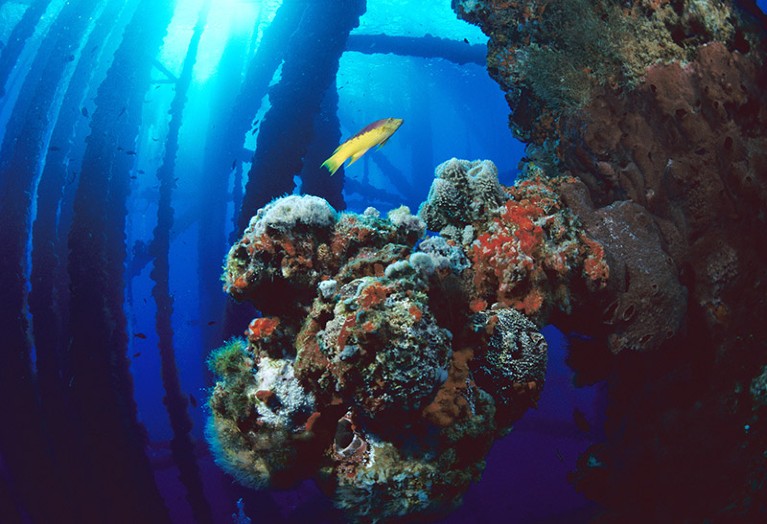
Coral growing on oil rig, Flower Garden Banks National Marine Sanctuary, Texas
Coral grows on an oil rig in Flower Garden Banks National Marine Sanctuary, in the Gulf of Mexico.Credit: Flip Nicklin/Minden Pictures/Alamy

“It’s a label,” says Colin Waters, who chairs the AWG and is a geologist at the University of Leicester, UK. “It’s a great way of summarizing a lot of concepts into one word.”

Mentioning the Jurassic period, for instance, helps scientists to picture plants and animals that were alive during that time, he says. “The Anthropocene represents an umbrella for all of these different changes that humans have made to the planet,” he adds.

How do scientists usually choose sites that define the geological timeline?

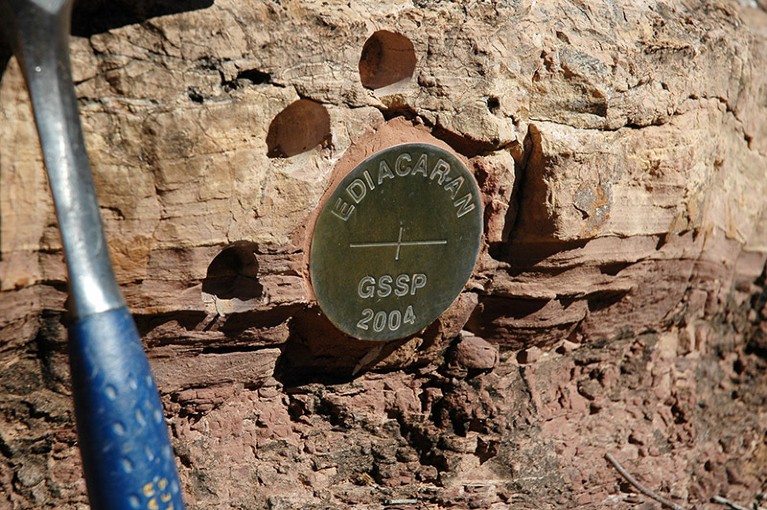
Typically, researchers will agree that a specific change in Earth’s geology must be captured in the official timeline. The ICS will then determine which set of rock layers, called strata, best illustrates that change, and it will choose which layer marks its lower boundary. This is called the Global Stratotype Section and Point (GSSP), and it is defined by a signal, such as the first appearance of a fossil species, trapped in the rock, mud or other material. One location is chosen to represent the boundary, and researchers mark this site physically with a golden spike, to commemorate it.

But the Anthropocene has posed problems. Geologists want to capture it in the timeline, but its beginning isn’t obvious in Earth’s strata, and signs of human activity have never before been part of the defining process. The AWG was established in 2009 to explore whether the Anthropocene should enter the geological timescale and, if so, how to define its start.

“We were starting from scratch,” says Jan Zalasiewicz, a geologist at the University of Leicester who formerly chaired the AWG and remains a voting member. “We had a vague idea about what it might be, [but] we didn’t know what kind of hard evidence would go into it.”

Years of debate among the group’s multidisciplinary members led them to identify a host of signals — radioactive isotopes from nuclear-bomb tests, ash from fossil-fuel combustion, microplastics, pesticides — that would be trapped in the strata of an Anthropocene-defining site. These began to appear in the early 1950s, when a booming human population started consuming materials and creating new ones faster than ever.

Cryogenian-Ediacaran geological boundary in rock strata marked by a brass plate, Flinders Ranges, South Australia
This golden spike in the Flinders Ranges of South Australia was approved by geologists in 2004, to mark strata exemplifying the Ediacaran period.Credit: James St. John (CC BY 2.0)

During a review that took place a few months ago, the AWG narrowed its list from 12 to 9 candidate sites, tossing out certain locations because their layers weren’t ideal. Among the sites remaining is Crawford Lake in Ontario, Canada, which is described as a sinkhole by Francine McCarthy, a geologist at Brock University in St Catharines, Canada, who studies the location. “The lake itself isn’t very big in area, but it’s very, very deep,” she says. Particles that fall into the lake settle at the bottom and accumulate into undisturbed layers.

Another site on the shortlist is West Flower Garden Bank. Corals here could become a living golden spike because they constantly build new exoskeletons that capture chemicals and particles from the water, DeLong says. “The skeleton has layers in it, kind of like tree rings,” she adds.

Why do some geologists oppose the Anthropocene as a new epoch?

“It misrepresents what we do” in the ICS, says Stanley Finney, a stratigrapher at California State University, Long Beach, and secretary-general for the International Union of Geological Sciences (IUGS). The AWG is working backwards, Finney says: normally, geologists identify strata that should enter the geological timescale before considering a golden spike; in this case, they’re seeking out the lower boundary of an undefined set of geological layers.Involve social scientists in defining the Anthropocene

Lucy Edwards, a palaeontologist who retired in 2008 from the Florence Bascom Geoscience Center in Reston, Virginia, agrees. For her, the strata that might define the Anthropocene do not yet exist because the proposed epoch is so young. “There is no geologic record of tomorrow,” she says.

Edwards, Finney and other researchers have instead proposed calling the Anthropocene a geological ‘event’, a flexible term that can stretch in time, depending on human impact. “It’s all-encompassing,” Edwards says.

Zalasiewicz disagrees. “The word ‘event’ has been used and stretched to mean all kinds of things,” he says. “So simply calling something an event doesn’t give it any wider meaning.”

What happens next?

In a recent Perspective article in Science, Waters and AWG secretary Simon Turner at University College London wrote that the committee would vote to choose a single site by the end of this year1. But 60% of the group’s voting members must agree on a final candidate — and, with several sites under consideration, Waters isn’t sure that a consensus can be reached anytime soon. If no clear winner emerges this month, more voting will be needed to narrow the candidate list, delaying a decision possibly until May 2023.Anthropocene now: influential panel votes to recognize Earth’s new epoch

And that’s not the end of the process. After selecting a finalist, the AWG will present its findings to the ICS’s Subcommission on Quaternary Stratigraphy. Favourable votes from this group would move the proposal to another ICS committee, and subsequent approval would push it to the final stage: ratification by the IUGS.

But the motion could fail at any of those points. And if it does, the AWG will have to revamp its proposal before it can try again — and possibly nominate a new golden-spike site.

Regardless of the outcome, Zalasiewicz thinks that the AWG’s work to define the Anthropocene has been useful. What everybody wants to know is how humans are changing the planet’s geology, he says. “That is the underlying reality that we’re trying to describe.”

The controversy about the relationship between GM mosquitoes and the Zika virus outbreak in Brazil


Pandora’s box: how GM mosquitos could have caused Brazil’s microcephaly disaster (The Ecologist)

Oliver Tickell

1st February 2016

Aedes Aegypti mosquito feeding on human blood. Photo: James Gathany via jentavery on Flickr (CC BY).

Aedes Aegypti mosquito feeding on human blood. This is the species that transmits Zika, and that was genetically engineered by Oxitec using the piggyBac transposon. Photo: James Gathany via jentavery on Flickr (CC BY).

In Brazil’s microcephaly epidemic, one vital question remains unanswered: how did the Zika virus suddenly learn how to disrupt the development of human embryos? The answer may lie in a sequence of ‘jumping DNA’ used to engineer the virus’s mosquito vector – and released into the wild four years ago in the precise area of Brazil where the microcephaly crisis is most acute.

These ‘promiscuous’ transposons have found special favour with genetic engineers, whose goal is to create ‘universal’ systems for transferring genes into any and every species on earth. Almost none of the geneticists has considered the hazards involved.

Since August 2015, a large number of babies in Northeast Brazil have been born with very small heads, a condition known as microcephaly, and with other serious malformations. 4,180 suspected cases have been reported.

Epidemiologists have found a convincing correlation between the incidence of the natal deformities and maternal infections with the Zika virus, first discovered in Uganda’s Zika Valley in 1947, which normally produces non-serious illness.

The correlation has been evidenced through the geographical distrubution of Zika infections and the wave of deformities. Zika virus has also been detected in the amniotic fluids and other tissues of the affected babies and their mothers.

This latter finding was recently reported by AS Oliveira Melo et al in a scientific paperpublished in the journal Ultrasound in Obstetrics & Gynecology, which noted evidence of intra-uterine infection. They also warn:

“As with other intrauterine infections, it is possible that the reported cases of microcephaly represent only the more severely affected children and that newborns with less severe disease, affecting not only the brain but also other organs, have not yet been diagnosed.”

The Brazilian Health Minister, Marcelo Castro, says he has “100% certainty” that there is a link between Zika and microcephaly. His view is supported by the medical community worldwide, including by the US Center for Disease Control.

Oliveira Melo et al draw attention to a mystery that lies at the heart of the affair: “It is difficult to explain why there have been no fetal cases of Zika virus infection reported until now but this may be due to the underreporting of cases, possible early acquisition of immunity in endemic areas or due to the rarity of the disease until now.

“As genomic changes in the virus have been reported, the possibility of a new, more virulent, strain needs to be considered. Until more cases are diagnosed and histopathological proof is obtained, the possibility of other etiologies cannot be ruled out.”

And this is the key question: how – if indeed Zika really is the problem, as appears likely – did this relatively innocuous virus acquire the ability to produce these terrible malformations in unborn human babies?

Oxitec’s GM mosquitoes

An excellent article by Claire Bernish published last week on AntiMedia draws attention to an interesting aspect of the matter which has escaped mainstream media attention: the correlation between the incidence of Zika and the area of release of genetically modified Aedes aegypti mosquitos engineered for male insterility (see maps, above right).

The purpose of the release was to see if it controlled population of the mosquitos, which are the vector of Dengue fever, a potentially lethal disease. The same species also transmits the Zika virus.

The releases took in 2011 and 2012 in the Itaberaba suburb of the city of Juazeiro, Bahia, Northeast Brazil, about 500 km west of ther coastal city of Recife. The experiment was written up in July 2015 in the journal PLOS Neglected Tropical Diseases in a paper titled ‘Suppression of a Field Population of Aedes aegypti in Brazil by Sustained Release of Transgenic Male Mosquitoes’ by Danilo O. Carvalho et al.

An initial ‘rangefinder of 30,000 GM mosquitos per week took place between 19th May and 29th June 2011, followed by a much larger release of 540,000 per week in early 2012, ending on 11th February.

At the end of it the scientists claimed “effective control of a wild population of Ae. aegypti by sustained releases of OX513A male Ae. aegypti. We diminished Ae. aegypti population by 95% (95% CI: 92.2%-97.5%) based on adult trap data and 78% (95% CI: 70.5%-84.8%) based on ovitrap indices compared to the adjacent no-release control area.”

So what’s to worry about?

    The idea of the Oxitec mosquitoes is simple enough: the males produce non-viable offspring which all die. So the GM mosqitoes are ‘self-extinguishing’ and the altered genes cannot survive in the wild population. All very clever, and nothing to worry about!

    But in fact, it’s not so simple. In 2010 geneticist Ricarda Steinbrecher wrote to the biosafety regulator in Malaysia – also considering a release of the Oxitec mosquitoes – with a number of safety concerns, pointing out the 2007 finding by Phuc et al that 3-4% of the first generation mosquitos actually survive.

    The genetic engineerig method employed by Oxitec allows the popular antibiotic tetracycline to be used to repress the lethality during breeding. But as a side-effect, the lethality is also reduced by the presence of tetracycline in the environment; and as Bernish points out, Brazil is among the world’s biggest users of anti-microbials including tetracycline in its commercial farming sector:

    “As a study by the American Society of Agronomy, et. al., explained, ‘It is estimated that approximately 75% of antibiotics are not absorbed by animals and are excreted in waste.’ One of the antibiotics (or antimicrobials) specifically named in that report for its environmental persistence is tetracycline.

    In fact, as a confidential internal Oxitec document divulged in 2012, that survival rate could be as high as 15% – even with low levels of tetracycline present. ‘Even small amounts of tetracycline can repress’ the engineered lethality. Indeed, that 15% survival rate was described by Oxitec.”

    She then quotes the leaked Oxitec paper: “After a lot of testing and comparing experimental design, it was found that [researchers] had used a cat food to feed the [OX513A] larvae and this cat food contained chicken. It is known that tetracycline is routinely used to prevent infections in chickens, especially in the cheap, mass produced, chicken used for animal food. The chicken is heat-treated before being used, but this does not remove all the tetracycline. This meant that a small amount of tetracycline was being added from the food to the larvae and repressing the [designed] lethal system.”

    So in other words, there is every possibility for Oxitec’s modified genes to persist in wild populations of Aedes aegypti mosquitos, especially in the environmental presence of tetracycline which is widely present in sewage, septic tanks, contaminated water sources and farm runoff.

    ‘Promiscuous’ jumping genes

    On the face of it, there is no obvious way in which the spread of Oxitec’s GM mosquitos into the wild could have anything to do with Brazil’s wave of micrcophaly. Is there?

    Actually, yes. The problem may arise from the use of the ‘transposon’ (‘jumping’ sequence of DNA used in the genetic engineering process to introduce the new genes into the target organism). There are several such DNA sequences in use, and one of the most popular is known as known as piggyBac.

    As a 2001 review article by Dr Mae Wan Ho shows, piggyBac is notoriously active, inserting itself into genes way beyond its intended target: “These ‘promiscuous’ transposons have found special favour with genetic engineers, whose goal is to create ‘universal’ systems for transferring genes into any and every species on earth. Almost none of the geneticists has considered the hazards involved …

    “It would seem obvious that integrated transposon vectors may easily jump out again, to another site in the same genome, or to the genome of unrelated species. There are already signs of that in the transposon, piggyBac, used in the GM bollworms to be released by the USDA this summer.

    The piggyBac transposon was discovered in cell cultures of the moth Trichopulsia, the cabbage looper, where it caused high rates of mutations in the baculovirus infecting the cells by jumping into its genes … This transposon was later found to be active in a wide range of species, including the fruitfly Drosophila, the mosquito transmitting yellow fever, Aedes aegypti, the medfly, Ceratitis capitata, and the original host, the cabbage looper.

    “The piggyBac vector gave high frequencies of transpositions, 37 times higher than mariner and nearly four times higher than Hirmar.”

    In a later 2014 report Dr Mae Wan Ho returned to the theme with additional detail and fresh scientific evidence (please refer to her original article for references): “The piggyBac transposon was discovered in cell cultures of the moth Trichopulsia, the cabbage looper, where it caused high rates of mutations in the baculovirus infecting the cells by jumping into its genes …

    “There is also evidence that the disabled piggyBac vector carrying the transgene, even when stripped down to the bare minimum of the border repeats, was nevertheless able to replicate and spread, because the transposase enzyme enabling the piggyBac inserts to move can be provided by transposons present in all genomes.

    “The main reason initially for using transposons as vectors in insect control was precisely because they can spread the transgenes rapidly by ‘non-Mendelian’ means within a population, i.e., by replicating copies and jumping into genomes, thereby ‘driving’ the trait through the insect population. However, the scientists involved neglected the fact that the transposons could also jump into the genomes of the mammalian hosts including human beings …

    “In spite of instability and resulting genotoxicity, the piggyBac transposon has been used extensively also in human gene therapy. Several human cell lines have been transformed, even primary human T cells using piggyBac. These findings leave us little doubt that the transposon-borne transgenes in the transgenic mosquito can transfer horizontally to human cells. The piggyBac transposon was found to induce genome wide insertionmutations disrupting many gene functions.” 

    Has the GM nightmare finally come true?

    So down to the key question: was the Oxitec’s GM Aedes aegypti male-sterile mosquito released in Juazeiro engineered with the piggyBac transposon? Yes, it was. And that creates a highly significant possibility: that Oxitec’s release of its GM mosquitos led directly to the development of Brazil’s microcephaly epidemic through the following mechanism:

    1. Many of the millions of Oxitec GM mosquitos released in Juazeiro in 2011/2012 survive, assisted, but not dependent on, the presence of tetracycline in the environment.

    2. These mosquitos interbreed with with the wild population and their novel genes become widespread.

    3. The promiscuous piggyBac transposon now present in the local Aedes aegyptipopulation takes the opportunity to jump into the Zika virus, probably on numerous occasions.

    4. In the process certain mutated strains of Zika acquire a selective advantage, making them more virulent and giving them an enhanced ability to enter and disrupt human DNA.

    5. One way in which this manifests is by disrupting a key stage in the development of human embryos in the womb, causing microcephaly and the other reported deformations. Note that as Melo Oliveira et al warn, there are almost certainly other manifestations that have not yet been detected.

    6. It may be that the piggyBac transposon has itself entered the DNA of babies exposed in utero to the modified Zika virus. Indeed, this may form part of the mechanism by which embryonic development is disrupted.

    In the latter case, one implication is that the action of the gene could be blocked by giving pregnant women tetracycline in order to block its activity. The chances of success are probably low, but it has to be worth trying.

    No further releases of GM insects!

    While I am certainly not claiming that this is what actually took place, it is at least a credible hypothesis, and moreover a highly testable one. Nothing would be easier for genetic engineers than to test amniotic fluids, babies’ blood, wild Aedes mosquitos and the Zika virus itself for the presence of the piggyBac transposon, using well established and highly sensitive PCR (polymerase chain reaction) techniques.

    If this proves to be the case, those urging caution on the release of GMOs generally, and transgenic insects bearing promiscuous transposons in particular, will have been proved right on all counts.

    But most important, such experiments, and any deployment of similar GM insects, must be immediately halted until the possibilities outlined above can be safely ruled out. There are plans, for example, to release similarly modified Anopheles mosquitos as an anti-malarial measure.

    There are also calls for even more of the Oxitec Aedes aegypti mosquitos to be released in order to halt the transmission of the Zika virus. If that were to take place, it could give rise to numerous new mutations of the virus with the potential to cause even more damage to the human genome, that we can, at this stage, only guess at.

    Oliver Tickell edits The Ecologist.


    No, GM Mosquitoes Didn’t Start The Zika Outbreak (Discovery)

    By Christie Wilcox | January 31, 2016 9:56 pm

    ZIka_conspiracy_theory_cat

    A new ridiculous rumor is spreading around the internets. According to conspiracy theorists, the recent outbreak of Zika can be blamed on the British biotech company Oxitec, which some are saying even intentionally caused the disease as a form of ethnic cleansing or population control. The articles all cite a lone Redditor who proposed the connection on January 25th to the Conspiracy subreddit. “There are no biological free lunches,” says one commenter on the idea. “Releasing genetically altered species into the environment could have disastrous consequences” another added. “Maybe that’s what some entities want to happen…?”

    For some reason, it’s been one of those months where random nonsense suddenly hits mainstream. Here are the facts: there’s no evidence whatsoever to support this conspiracy theory, or any of the other bizarre, anti-science claims that have popped up in the past few weeks. So let’s stop all of this right here, right now: The Earth is round, not flat (and it’s definitely not hollow). Last year was the hottest year on record, and climate change is really happening (so please just stop, Mr. Cruz). And FFS, genetically modified mosquitoes didn’t start the Zika outbreak. 

    Background on Zika

    The Zika virus is a flavivirus closely related to notorious pathogens including dengue, yellow fever, Japanese encephalitis, and West Nile virus. The virus is transmitted by mosquitoes in the genus Aedes, especially A. aegypti, which is a known vector for many of Zika’s relatives. Symptoms of the infection appear three to twelve days post bite. Most people are asymptomatic, which means they show no signs of infection. The vast majority of those who do show signs of infection report fever, rash, joint pain, and conjunctivitis (red eyes), according to the U.S. Centers for Disease Control. After a week or less, the symptoms tend to go away on their own. Serious complications have occurred, but they have been extremely rare.

    The Zika virus isn’t new. It was first isolated in 1947 from a Rhesus monkey in the Zika Forest in Uganda, hence the pathogen’s name. The first human cases were confirmed in Uganda and Tanzania in 1952, and by 1968, the virus had spread to Nigeria. But since then, the virus has found its way out of Africa. The first major outbreak occurred on the island of Yap in Micronesia for 13 weeks 2007, during which 185 Zika cases were suspected (49 of those were confirmed, with another 59 considered probable). Then, in October 2013, an outbreak began in French Polynesia; around 10,000 cases were reported, less than 100 of which presented with severe neurological or autoimmune complications. One confirmed case of autochthonous transmission occurred in Chile in 2014, which means a person was infected while they were in Chile rather than somewhere else. Cases were also reported that year from several Pacific Islands. The virus was detected in Chile until June 2014, but then it seemed to disappear.

    Fast forward to May 2015, when the Pan American Health Organization (PAHO) issued an alert regarding the first confirmed Zika virus infection in Brazil. Since then, several thousand suspected cases of the disease and a previously unknown complication—a kind of birth defect known as microcephaly where the baby’s brain is abnormally small—have been reported from Brazil. (It’s important to note that while the connection between the virus and microcephaly is strongly suspected, the link has yet to be conclusively demonstrated.)

    Currently, there is no vaccine for Zika, though the recent rise in cases has spurred research efforts. Thus, preventing mosquito bites is the only prophylactic measure available.

    The recent spread of the virus has been described as “explosive”; Zika has now been detected in 25 countries and territories. The rising concern over both the number of cases and reports of serious complications has led the most affected areas in Brazil to declare a state of emergency, and on Monday, The World Health Organization’s Director-General will convene an International Health Regulations Emergency Committee on Zika virus and the observed increase in neurological disorders and neonatal malformations. At this emergency meeting, the committee will discuss mitigation strategies and decide whether the organization will officially declare the virus a “Public Health Emergency of International Concern.”

    GM to the Rescue

    aedes_aegypti

    The mosquito to blame for the outbreak—Aedes aegypti—doesn’t belong in the Americas. It’s native to Africa, and was only introduced in the new world when Europeans began to explore the globe. In the 20th century, mosquito control programs nearly eradicated the unwelcome menace from the Americas (largely thanks to the use of the controversial pesticide DDT); as late as the mid 1970s, Brazil and 15 other nations were Aedes aegypti-free. But despite the successes, eradication efforts were halted, allowing the mosquito to regain its lost territory.

    The distribution of Aedes aegypti in the Americas in 1970 and 2002.

    Effective control measures are expensive and difficult to maintain, so at the tail end of the 20th century and into the 21st, scientists began to explore creative means of controlling mosquito populations, including the use of genetic modification. Oxitec’s mosquitoes are one of the most exciting technologies to have emerged from this period. Here’s how they work, as I described in a post almost exactly a year ago:

    While these mosquitoes are genetically modified, they aren’t “cross-bred with the herpes simplex virus and E. colibacteria” (that would be an interkingdom ménage à trois!)—and no, they cannot be “used to bite people and essentially make them immune to dengue fever and chikungunya” (they aren’t carrying a vaccine!). The mosquitoes that Oxitec have designed are what scientists call “autocidal” or possess a “dominant lethal genetic system,” which is mostly fancy wording for “they die all by themselves”. The males carry inserted DNA which causes the mosquitoes to depend upon a dietary supplement that is easy to provide in the lab, but not available in nature. When the so-called mutants breed with normal females, all of the offspring require the missing dietary supplement because the suicide genes passed on from the males are genetically dominantThus, the offspring die before they can become adults. The idea is, if you release enough such males in an area, then the females won’t have a choice but to mate with them. That will mean there will be few to no successful offspring in the next generation, and the population is effectively controlled.

    Male mosquitoes don’t bite people, so they cannot serve as transmission vectors for Zika or any other disease. As for fears that GM females will take over: less than 5% of all offspring survive in the laboratory, and as Glen Slade, director of Oxitec’s Brazilian branch notes, those are the best possible conditions for survival. “It is considered unlikely that the survival rate is anywhere near that high in the harsher field conditions since offspring reaching adulthood will have been weakened by the self-limiting gene,” he told me. And contrary to what the conspiracy theorists claim, scientists have shown that tetracycline in the environment doesn’t increase that survival rate.

    Brazil, a hotspot for dengue and other such diseases, is one of the countries where Oxitec is testing their mozzies—so far, everywhere that Oxitec’s mosquitoes have been released, the local populations have been suppressed by about 90%.

    Wrong Place, Wrong Time

    Now that we’ve covered the background on the situation, let’s dig into the conspiracy theory. We’ll start with the main argument laid out as evidence: that the Zika outbreak began in the same location at the same time as the first Oxitec release:

    Though it’s often said, it’s worth repeating: correlation doesn’t equal causation. If it did, then Nicholas Cage is to blame for people drowning (Why, Nick? WHY?). But even beyond that, there are bigger problems with this supposed correlation: even by those maps, the site of release is on the fringe of the Zika hotspot, not the center of it. Just look at the two overlaid:

    The epicenter of the outbreak and the release clearly don’t line up—the epicenter is on the coast rather than inland where the map points. Furthermore, the first confirmed cases weren’t reported in that area, but in the town of Camaçari, Bahia, which is—unsurprisingly—on the coast and several hundred kilometers from the release site indicated.

    But perhaps more importantly, the location on the map isn’t where the mosquitoes were released. That map points to Juazeiro de Norte, Ceará, which is a solid 300 km away from Juazeiro, Bahia—the actual site of the mosquito trial. That location is even more on the edge of the Zika-affected area:

    1: Juaziero de Norte, the identified location in by conspiracy theorists. 2: Juaziero, the actual location of Oxitec's release trial, about 300 km away.

    The mistake was made initially by the Redditor who proposed the conspiracy theory and has been propagated through lazy journalistic practices by every proponent since. Here’s a quick tip: if you’re basing your conspiracy theory on location coincidence, it’s probably a good idea to actually get the location right.

    They’re also wrong about the date. According to the D.C. Clothesline:

    By July 2015, shortly after the GM mosquitoes were first released into the wild in Juazeiro, Brazil, Oxitec proudly announced they had “successfully controlled the Aedes aegypti mosquito that spreads dengue fever, chikungunya and zika virus, by reducing the target population by more than 90%.”

    However, GM mosquitoes weren’t first released in Juazeiro, Bahia (let alone Juazeiro de Norte, Ceará) in 2015. Instead, the announcement by Oxitec was of the published results of a trial that occurred in Juaziero between May 2011 and Sept 2012—a fact which is clearly stated in the methods and results of the paper that Oxitec was so excited to share.

    A new control effort employing Oxitec mosquitoes did begin in April 2015, but not in Juaziero, or any of the northeastern states of Brazil where the disease outbreak is occurring. As another press release from Oxitec states, the 2015 releases of their GM mosquitoes were in Piracicaba, São Paulo, Brazil:

    Following approval by Brazil’s National Biosafety Committee (CTNBio) for releases throughout the country, Piracicaba’s CECAP/Eldorado district became the world’s first municipality to partner directly with Oxitec and in April 2015 started releasing its self-limiting mosquitoes whose offspring do not survive. By the end of the calendar year, results had already indicated a reduction in wild mosquito larvae by 82%. Oxitec’s efficacy trials across Brazil, Panama and the Cayman Islands all resulted in a greater than 90% suppression of the wild Ae. aegypti mosquito population–an unprecedented level of control.

    Based on the positive results achieved to date, the ‘Friendly Aedes aegypti Project’ in CECAP/Eldorado district covering 5,000 people has been extended for another year. Additionally, Oxitec and Piracicaba have signed a letter of intent to expand the project to an area of 35,000-60,000 residents. This geographic region includes the city’s center and was chosen due to the large flow of people commuting between it and surrounding neighborhoods which may contribute to the spread of infestations and infections.

    Piracicaba mosquito control results


    Piracicaba, for the record, is more than 1300 miles away from the Zika epicenter:

    TKTK

    So not only did the conspiracy theorists get the location of the first Brazil release wrong, they either got the date wrong, too, or got the location of the 2015 releases really, really off. Either way, the central argument that the release of GM mosquitoes by Oxitec coincides with the first cases of Zika virus simply doesn’t hold up.

    Scientists Speak Out

    As this ludicrous conspiracy theory has spread, so, too, has the scientific opposition to it. “Frankly, I’m a little sick of this kind of anti-science platform,” said vector ecologist Tanjim Hossain from the University of Miami, when I asked him what he thought. “This kind of fear mongering is not only irresponsible, but may very well be downright harmful to vulnerable populations from a global health perspective.”

    Despite the specious allusions made by proponents of the conspiracy, this is still not Jurassic Park, says Hossain.

    “We have a problem where ZIKV is spreading rapidly and is widely suspected of causing serious health issues,” he continued. “How do we solve this problem? An Integrated Vector Management (IVM) approach is key. We need to use all available tools, old and new, to combat the problem. GM mosquitoes are a fairly new tool in our arsenal. The way I see it, they have the potential to quickly reduce a local population of vector mosquitoes to near zero, and thereby can also reduce the risk of disease transmission. This kind of strategy could be particularly useful in a disease outbreak ‘hotspot’ because you could hypothetically stop the disease in its tracks so to speak.”

    Other scientists have shared similar sentiments. Alex Perkins, a biological science professor at Notre Dame, told Business Insider that rather than causing the outbreak, GM mosquitoes might be our best chance to fight it. “It could very well be the case that genetically modified mosquitos could end up being one of the most important tools that we have to combat Zika,” Perkins said. “If anything, we should potentially be looking into using these more.”

    Brazilian authorities couldn’t be happier with the results so far, and are eager to continue to fight these deadly mosquitoes by any means they can. “The initial project in CECAP/Eldorado district clearly showed that the ‘friendly Aedes aegypti solution’ made a big difference for the inhabitants of the area, helping to protect them from the mosquito that transmits dengue, Zika and chikungunya,” said Pedro Mello, secretary of health in Piracicaba. He notes that during the 2014/2015 dengue season, before the trial there began, there were 133 cases of dengue. “In 2015/2016, after the beginning of the Friendly Aedes aegypti Project, we had only one case.”

    It’s long past time to stop villainizing Oxitec’s mosquitoes for crimes they didn’t commit. Claire BernishThe Daily MFailMirror and everyone else who has spread these baseless accusations: I’m talking to you. The original post was in the Conspiracy subreddit—what more of a red flag for “this is wildly inaccurate bullsh*t” do you need? (After all, if this is a legit source, where are your reports on the new hidden messages in the $100 bill? or why the Illuminati wants people to believe in aliens?). It’s well known that large-scale conspiracy theories are mathematically challenged. Don’t just post whatever crap is spewed on the internet because you know it’ll get you a few clicks. It’s dishonest, dangerous, and, frankly, deplorable to treat nonsense as possible truth just to prey upon your audience’s very real fears of an emerging disease. You, with your complete lack of integrity, are maggots feeding on the decay of modern journalism, and I mean that with no disrespect to maggots.