Arquivo da categoria: clima

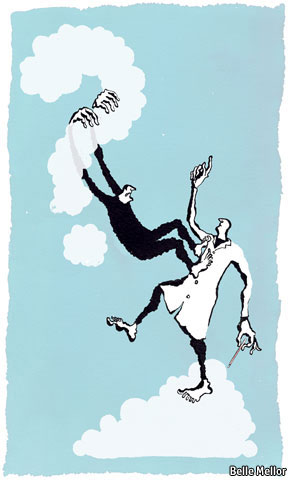
>The clouds of unknowing (The Economist)

>
The science of climate change

There are lots of uncertainties in climate science. But that does not mean it is fundamentally wrong

Mar 18th 2010 | From The Economist print edition
FOR anyone who thinks that climate science must be unimpeachable to be useful, the past few months have been a depressing time. A large stash of e-mails from and to investigators at the Climatic Research Unit of the University of East Anglia provided more than enough evidence for concern about the way some climate science is done. That the picture they painted, when seen in the round—or as much of the round as the incomplete selection available allows—was not as alarming as the most damning quotes taken out of context is little comfort. They offered plenty of grounds for both shame and blame.

At about the same time, glaciologists pointed out that a statement concerning Himalayan glaciers in the most recent report of the Intergovernmental Panel on Climate Change (IPCC) was wrong. This led to the discovery of other poorly worded or poorly sourced claims made by the IPCC, which seeks to create a scientific consensus for the world’s politicians, and to more general worries about the panel’s partiality, transparency and leadership. Taken together, and buttressed by previous criticisms, these two revelations have raised levels of scepticism about the consensus on climate change to new heights.

Increased antsiness about action on climate change can also be traced to the recession, the unedifying spectacle of last December’s climate-change summit in Copenhagen, the political realities of the American Senate and an abnormally cold winter in much of the northern hemisphere. The new doubts about the science, though, are clearly also a part of that story. Should they be?

In any complex scientific picture of the world there will be gaps, misperceptions and mistakes. Whether your impression is dominated by the whole or the holes will depend on your attitude to the project at hand. You might say that some see a jigsaw where others see a house of cards. Jigsaw types have in mind an overall picture and are open to bits being taken out, moved around or abandoned should they not fit. Those who see houses of cards think that if any piece is removed, the whole lot falls down. When it comes to climate, academic scientists are jigsaw types, dissenters from their view house-of-cards-ists.

The defenders of the consensus tend to stress the general consilience of their efforts—the way that data, theory and modelling back each other up. Doubters see this as a thoroughgoing version of “confirmation bias”, the tendency people have to select the evidence that agrees with their original outlook. But although there is undoubtedly some degree of that (the errors in the IPCC, such as they are, all make the problem look worse, not better) there is still genuine power to the way different arguments and datasets in climate science tend to reinforce each other.

The doubters tend to focus on specific bits of empirical evidence, not on the whole picture. This is worthwhile—facts do need to be well grounded—but it can make the doubts seem more fundamental than they are. People often assume that data are simple, graspable and trustworthy, whereas theory is complex, recondite and slippery, and so give the former priority. In the case of climate change, as in much of science, the reverse is at least as fair a picture. Data are vexatious; theory is quite straightforward. Constructing a set of data that tells you about the temperature of the Earth over time is much harder than putting together the basic theoretical story of how the temperature should be changing, given what else is known about the universe in general.

Absorb and reflect

The most relevant part of that universal what-else is the requirement laid down by thermodynamics that, for a planet at a constant temperature, the amount of energy absorbed as sunlight and the amount emitted back to space in the longer wavelengths of the infra-red must be the same. In the case of the Earth, the amount of sunlight absorbed is 239 watts per square metre. According to the laws of thermodynamics, a simple body emitting energy at that rate should have a temperature of about –18ºC. You do not need a comprehensive set of surface-temperature data to notice that this is not the average temperature at which humanity goes about its business. The discrepancy is due to greenhouse gases in the atmosphere, which absorb and re-emit infra-red radiation, and thus keep the lower atmosphere, and the surface, warm (see the diagram below). The radiation that gets out to the cosmos comes mostly from above the bulk of the greenhouse gases, where the air temperature is indeed around –18ºC.

Adding to those greenhouse gases in the atmosphere makes it harder still for the energy to get out. As a result, the surface and the lower atmosphere warm up. This changes the average temperature, the way energy moves from the planet’s surface to the atmosphere above it and the way that energy flows from equator to poles, thus changing the patterns of the weather.

No one doubts that carbon dioxide is a greenhouse gas, good at absorbing infra-red radiation. It is also well established that human activity is putting more of it into the atmosphere than natural processes can currently remove. Measurements made since the 1950s show the level of carbon dioxide rising year on year, from 316 parts per million (ppm) in 1959 to 387ppm in 2009. Less direct records show that the rise began about 1750, and that the level was stable at around 280ppm for about 10,000 years before that. This fits with human history: in the middle of the 18th century people started to burn fossil fuels in order to power industrial machinery. Analysis of carbon isotopes, among other things, shows that the carbon dioxide from industry accounts for most of the build-up in the atmosphere.

The serious disagreements start when discussion turns to the level of warming associated with that rise in carbon dioxide. For various reasons, scientists would not expect temperatures simply to rise in step with the carbon dioxide (and other greenhouse gases). The climate is a noisy thing, with ups and downs of its own that can make trends hard to detect. What’s more, the oceans can absorb a great deal of heat—and there is evidence that they have done so—and in storing heat away, they add inertia to the system. This means that the atmosphere will warm more slowly than a given level of greenhouse gas would lead you to expect.

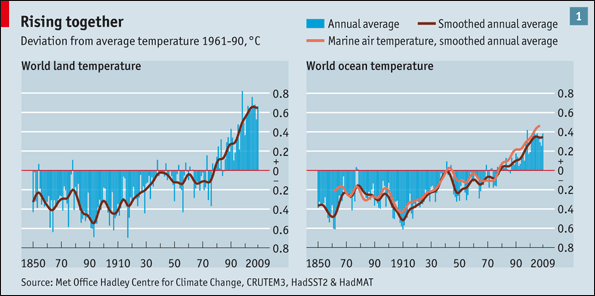
There are three records of land-surface temperature put together from thermometer readings in common use by climatologists, one of which is compiled at the Climatic Research Unit of e-mail infamy. They all show warming, and, within academia, their reliability is widely accepted. Various industrious bloggers are not so convinced. They think that adjustments made to the raw data introduce a warming bias. They also think the effects of urbanisation have confused the data because towns, which are sources of heat, have grown up near weather stations. Anthony Watts, a retired weather forecaster who blogs on climate, has set up a site, surfacestations.org, where volunteers can help record the actual sites of weather instruments used to provide climate data, showing whether they are situated close to asphalt or affected by sources of bias.

Those who compile the data are aware of this urban heat-island effect, and try in various ways to compensate for it. Their efforts may be insufficient, but various lines of evidence suggest that any errors it is inserting are not too bad. The heat-island effect is likely to be strongest on still nights, for example, yet trends from data recorded on still nights are not that different from those from windy ones. And the temperature of waters at the surface of the seas shows similar trends to that on land over the past century, as does the record of air temperature over the oceans as measured at night (see chart 1).
A recent analysis by Matthew Menne and his colleagues at America’s National Oceanic and Atmospheric Administration, published in the Journal of Geophysical Research, argued that trends calculated from climate stations that surfacestation.org found to be poorly sited and from those it found well sited were more or less indistinguishable. Mr Watts has problems with that analysis, and promises a thorough study of the project’s findings later.

There is undoubtedly room for improvement in the surface-temperature record—not least because, at the moment, it provides only monthly mean temperatures, and there are other things people would like to know about. (When worrying about future heatwaves, for example, hot days and nights, not hot months, are the figures of most interest.) In February Britain’s Met (ie, meteorological) Office called for the creation of a new set of temperature databases compiled in rigorously transparent ways and open to analysis and interpretation by all and sundry. Such an initiative would serve science well, help restore the credibility of land-surface records, and demonstrate an openness on the part of climate science which has not always been evident in the past.

Simplify and amplify

For many, the facts that an increase in carbon dioxide should produce warming, and that warming is observed in a number of different indicators and measurements, add up to a primafacie case for accepting that greenhouse gases are warming the Earth and that the higher levels of greenhouse gases that business as usual would bring over the course of this century would warm it a lot further.

The warming caused by a given increase in carbon dioxide can be calculated on the basis of laboratory measurements which show how much infra-red radiation at which specific wavelengths carbon dioxide molecules absorb. This sort of work shows that if you double the carbon dioxide level you get about 1ºC of warming. So the shift from the pre-industrial 280ppm to 560ppm, a level which on current trends might be reached around 2070, makes the world a degree warmer. If the level were to double again, to 1,100ppm, which seems unlikely, you would get another degree.

The amount of warming expected for a doubling of carbon dioxide has become known as the “climate sensitivity”—and a climate sensitivity of one degree would be small enough to end most climate-related worries. But carbon dioxide’s direct effect is not the only thing to worry about. Several types of feedback can amplify its effect. The most important involve water vapour, which is now quite well understood, and clouds, which are not. It is on these areas that academic doubters tend to focus.

As carbon dioxide warms the air it also moistens it, and because water vapour is a powerful greenhouse gas, that will provide further warming. Other things people do—such as clearing land for farms, and irrigating them—also change water vapour levels, and these can be significant on a regional level. But the effects are not as large.

Climate doubters raise various questions about water vapour, some trivial, some serious. A trivial one is to argue that because water vapour is such a powerful greenhouse gas, carbon dioxide is unimportant. But this ignores the fact that the level of water vapour depends on temperature. A higher level of carbon dioxide, by contrast, governs temperature, and can endure for centuries.

A more serious doubting point has to do with the manner of the moistening. In the 1990s Richard Lindzen, a professor of meteorology at the Massachusetts Institute of Technology, pointed out that there were ways in which moistening might not greatly enhance warming. The subsequent two decades have seen much observational and theoretical work aimed at this problem. New satellites can now track water vapour in the atmosphere far better than before (see chart 2). As a result preliminary estimates based on simplifications have been shown to be reasonably robust, with water-vapour feedbacks increasing the warming to be expected from a doubling of carbon dioxide from 1ºC without water vapour to about 1.7ºC. Dr Lindzen agrees that for parts of the atmosphere without clouds this is probably about right.

This moistening offers a helpful way to see what sort of climate change is going on. When water vapour condenses into cloud droplets it gives up energy and warms the surrounding air. This means that in a world where greenhouse warming is wetting the atmosphere, the lower parts of the atmosphere should warm at a greater rate than the surface, most notably in the tropics. At the same time, in an effect that does not depend on water vapour, an increase in carbon dioxide will cause the upper stratosphere to cool. This pattern of warming down below and cooling up on top is expected from greenhouse warming, but would not be expected if something other than the greenhouse effect was warming the world: a hotter sun would heat the stratosphere more, not less.

During the 1990s this was a point on which doubters laid considerable weight, because satellite measurements did not show the warming in the lower atmosphere that theory would predict. Over the past ten years, though, this picture has changed. To begin with, only one team was turning data from the relevant instruments that have flown on weather satellites since the 1970s into a temperature record resolved by altitude. Now others have joined them, and identified errors in the way that the calculations (which are complex and depend on a number of finicky details) were carried out. Though different teams still get different amounts and rates of warming in the lower atmosphere, there is no longer any denying that warming is seen. Stratospheric cooling is complicated by the effects of ozone depletion, but those do not seem large enough to account for the degree of cooling that has been seen there, further strengthening the case for warming by the greenhouse effect and not some other form of climate perturbation.

On top of the effect of water vapour, though, the clouds that form from it provide a further and greater source of uncertainty. On the one hand, the droplets of water of which these are made also have a strong greenhouse effect. On the other, water vapour is transparent, whereas clouds reflect light. In particular, they reflect sunlight back into space, stopping it from being absorbed by the Earth. Clouds can thus have a marked cooling effect and also a marked warming effect. Which will grow more in a greenhouse world?

Model maze

It is at this point that detailed computer models of the climate need to be called into play. These models slice the atmosphere and oceans into stacks of three-dimensional cells. The state of the air (temperature, pressure, etc) within each cell is continuously updated on the basis of what its state used to be, what is going on in adjacent cells and the greenhousing and other properties of its contents.

These models are phenomenally complex. They are also gross oversimplifications. The size of the cells stops them from explicitly capturing processes that take place at scales smaller than a hundred kilometres or so, which includes the processes that create clouds.

Despite their limitations, climate models do capture various aspects of the real world’s climate: seasons, trade winds, monsoons and the like. They also put clouds in the places where they are seen. When used to explore the effect of an increase in atmospheric greenhouse gases on the climate these models, which have been developed by different teams, all predict more warming than greenhouse gases and water-vapour feedback can supply unaided. The models assessed for the IPCC’s fourth report had sensitivities ranging from 2.1ºC to 4.4ºC. The IPCC estimated that if clouds were not included, the range would be more like 1.7ºC to 2.1ºC. So in all the models clouds amplify warming, and in some the amplification is large.

However, there are so far no compelling data on how clouds are affecting warming in fact, as opposed to in models. Ray Pierrehumbert, a climate scientist at the University of Chicago who generally has a strong way with sceptics, is happy to agree that there might be processes by which clouds rein in, rather than exaggerate, greenhouse-warming effects, but adds that, so far, few have been suggested in any way that makes sense.

Dr Lindzen and a colleague suggested a plausible mechanism in 2001. They proposed that tropical clouds in an atmosphere with more greenhouse gas might dry out neighbouring parts of the sky, making them more transparent to outgoing infra-red. The evidence Dr Lindzen brought to bear in support of this was criticised in ways convincing enough to discourage other scientists from taking the idea further. A subsequent paper by Dr Lindzen on observations that would be compatible with his ideas about low sensitivity has also suffered significant criticisms, and he accepts many of them. But having taken them on board has not, he thinks, invalidated his line of research.

Arguments based on past climates also suggest that sensitivity is unlikely to be low. Much of the cooling during the ice ages was maintained by the presence of a large northern hemisphere ice cap reflecting away a lot of sunlight, but carbon dioxide levels were lower, too. To account for all of the cooling, especially in the southern hemisphere, is most easily done with a sensitivity of temperature to carbon dioxide higher than Dr Lindzen would have it.

Before the ice age, the Earth had a little more carbon dioxide and was a good bit warmer than today—which suggests a fairly high sensitivity. More recently, the dip in global temperatures after the eruption of Mt Pinatubo in the Philippines in 1991, which inserted a layer of sunlight-diffusing sulphur particles into the stratosphere, also bolsters the case for a sensitivity near the centre of the model range—although sensitivity to a transient event and the warming that follows a slow doubling of carbon dioxide are not exactly the same sort of thing.

Logs and blogs

Moving into data from the past, though, brings the argument to one of the areas that blog-based doubters have chosen as a preferred battleground: the temperature record of the past millennium, as construed from natural records that are both sensitive to temperature and capable of precise dating. Tree rings are the obvious, and most controversial, example. Their best known use has been in a reconstruction of temperatures over the past millennium published in Nature in 1998 and widely known as the hockey stick, because it was mostly flat but had a blade sticking up at the 20th-century end. Stephen McIntyre, a retired Canadian mining consultant, was struck by the very clear message of this graph and delved into the science behind it, a process that left him and followers of his blog, Climate Audit, intensely sceptical about its value.

In 2006 a review by America’s National Research Council endorsed points Mr McIntyre and his colleagues made on some methods used to make the hockey stick, and on doubts over a specific set of tree rings. Despite this it sided with the hockey stick’s overall conclusion, which did little to stem the criticism. The fact that tree-ring records do not capture recent warming adds to the scepticism about the value of such records.

For many of Mr McIntyre’s fans (though it is not, he says, his central concern) the important thing about this work is that the hockey stick seemed to abolish the “medieval warm period”. This is a time when temperatures are held to have been as high as or higher than today’s—a warmth associated with the Norse settlement of Greenland and vineyards in England. Many climate scientists suspect this phenomenon was given undue prominence by climatologists of earlier generations with an unduly Eurocentric view of the world. There is evidence for cooling at the time in parts of the Pacific.

Doubters for the most part are big fans of the medieval warm period, and see in the climate scientists’ arguments an attempt to rewrite history so as to maximise the drama of today’s warming and minimise the possibility that natural variation might explain the 20th-century record. The possibility of more climatic variability, though, does not, in itself, mean that greenhouse warming is not happening too. And if the medieval warmth were due to some external factor, such as a slightly brighter sun, that would suggest that the climate was indeed quite sensitive.

Looking at the more recent record, logged as it has been by thermometers, you might hope it could shed light on which of the climate models is closest to being right, and thus what the sensitivity actually is. Unfortunately, other confounding factors make this difficult. Greenhouse gases are not the only climatically active ingredients that industry, farming and land clearance add to the atmosphere. There are also aerosols—particles of pollution floating in the wind. Some aerosols cool the atmosphere. Other, sootier, ones warm it. The aggregate effect, globally, is thought to be a cooling, possibly a quite strong one. But the overall history of aerosols, which are mostly short-lived, is nothing like as well known as that of greenhouse gases, and it is unlikely that any of the models are properly capturing their chemistry or their effects on clouds.

Taking aerosols into account, climate models do a pretty good job of emulating the climate trends of the 20th century. This seems odd, since the models have different sensitivities. In practice, it appears that the way the aerosols are dealt with in the models and the sensitivity of those models tend to go hand in hand; sensitive models also have strong cooling aerosol effects.
Reto Knutti of ETH Zurich, an expert on climate sensitivity, sees this as evidence that, consciously or unconsciously, aerosols are used as counterweights to sensitivity to ensure that the trends look right. This is not evidence of dishonesty, and it is not necessarily a bad thing. Since the models need to be able to capture the 20th century, putting them together in such a way that they end up doing so makes sense. But it does mean that looking at how well various models match the 20th century does not give a good indication of the climate’s actual sensitivity to greenhouse gas.

Adding the uncertainties about sensitivity to uncertainties about how much greenhouse gas will be emitted, the IPCC expects the temperature to have increased by 1.1ºC to 6.4ºC over the course of the 21st century. That low figure would sit fairly well with the sort of picture that doubters think science is ignoring or covering up. In this account, the climate has natural fluctuations larger in scale and longer in duration (such as that of the medieval warm period) than climate science normally allows, and the Earth’s recent warming is caused mostly by such a fluctuation, the effects of which have been exaggerated by a contaminated surface-temperature record. Greenhouse warming has been comparatively minor, this argument would continue, because the Earth’s sensitivity to increased levels of carbon dioxide is lower than that seen in models, which have an inbuilt bias towards high sensitivities. As a result subsequent warming, even if emissions continue full bore, will be muted too.

It seems unlikely that the errors, misprisions and sloppiness in a number of different types of climate science might all favour such a minimised effect. That said, the doubters tend to assume that climate scientists are not acting in good faith, and so are happy to believe exactly that. Climategate and the IPCC’s problems have reinforced this position.

Using the IPCC’s assessment of probabilities, the sensitivity to a doubling of carbon dioxide of less than 1.5ºC in such a scenario has perhaps one chance in ten of being correct. But if the IPCC were underestimating things by a factor of five or so, that would still leave only a 50:50 chance of such a desirable outcome. The fact that the uncertainties allow you to construct a relatively benign future does not allow you to ignore futures in which climate change is large, and in some of which it is very dangerous indeed. The doubters are right that uncertainties are rife in climate science. They are wrong when they present that as a reason for inaction.

Comments to this article here.

>What is the best way to provide people with information about climate change?

>
Nov 7th, 2009
Climate Central

There are many ways that people can benefit from having information about climate change, including being able to make informed policy and management decisions. This is one reason why people are talking about creating a national climate service. So, what functions would a national climate service provide?

A good place to start is with an organization that has a similar name and purpose—the National Weather Service, a government agency that was established in the late 1800s. The importance of the Weather Service is almost too obvious to mention. Without accurate reports about the current weather and predictions of future weather, planes would fly into thunderstorms unawares, ships would plow directly into hurricanes and typhoons, and people wouldn’t know about blizzards barreling down on them. Also, planning for pretty much any outdoor activity would become a lot more difficult. Without good weather forecasts, the losses in economic terms and in human lives would be huge.

Climate change unfolds on a slower scale—over decades rather than in hours. But now that we know it is happening, the need for forecasting how climate change will impact us has become clear as well. Knowing how much sea level is likely to rise, and how quickly, is crucial to knowing how to protect coastal areas from increased damage. Knowing how hurricane frequency and strength might change could affect building codes and evacuation strategies. Knowing how the intensity and frequency of droughts and heat waves might change would help city and regional planners manage water resources and mitigate threats to local economies.

The knowledge that these changes will come mostly from an increase in atmospheric levels of greenhouse gases could inform decisions about how to produce and use energy, and whether to develop alternative energy and other green technologies. If the world decides that limiting climate change is a priority, then this green technology could be an economic boon to the countries that perfect it.

Realizing that businesses, local governments, and individuals need the most reliable forecasts possible of how, when, and where the climate is likely to change, and what the impacts might be, universities, government agencies, and private companies have come together over the past year or so to figure out how such an entity might operate—how it would organize information and how it would deliver that information in the most useful way.

>U.S. Scientists Urge Action on Climate Change

>
On March 11, 2000 U.S. scientists and economists signed on to a statement imploring the Senate to move swiftly and comprehensively on the issue of climate change. The signatories are all experts in relevant fields of study on climate change. The statement is the first time leading U.S. scientists and economists have come together to issue a joint message of concern on climate change. The list of signatories included eight Nobel laureates, 32 members of the National Academy of Sciences, 10 members from the National Academy of Engineering, and more than 100 members of the Intergovernmental Panel on Climate Change, who shared a 2007 Nobel Peace Prize.

“If anything, the climate problem is actually worse than reported earlier,” wrote Leon Lederman, Director Emeritus of the Fermi National Accelerator Laboratory in Batavia, Illinois, and a Nobel Prize-winning physicist, in an individual statement in the letter to the Senate. “Physicists tend to be super critical of strong conclusions, but the data on global warming now indicate the conclusions are not nearly strong enough.”

Read the statement here.

>Marcelo Gleiser: Criação imperfeita (Folha Mais!)

>
A noção de que a natureza pode ser decifrada pelo reducionismo precisa ser abolida.

14 março 2010

Desde tempos imemoriais, ao se deparar com a imensa complexidade da natureza, o homem buscou nela padrões repetitivos, algum tipo de ordem. Isso faz muito sentido. Afinal, ao olharmos para os céus, vemos que existem padrões organizados, movimentos periódicos que se repetem, definindo ciclos naturais aos quais estamos profundamente ligados: o nascer e o pôr do Sol, as fases da Lua, as estações do ano, as órbitas planetárias.

Com Pitágoras, 2.500 anos atrás, a busca por uma ordem natural das coisas foi transformada numa busca por uma ordem matemática: os padrões que vemos na natureza refletem a matemática da criação. Cabe ao filósofo desvendar esses padrões, revelando assim os segredos do mundo.

Ademais, como o mundo é obra de um arquiteto universal (não exatamente o Deus judaico-cristão, mas uma divindade criadora mesmo assim), desvendar os segredos do mundo equivale a desvendar a “mente de Deus”. Escrevi recentemente sobre como essa metáfora permanece viva ainda hoje e é usada por físicos como Stephen Hawking e muitos outros.

Essa busca por uma ordem matemática da natureza rendeu -e continua a render- muitos frutos. Nada mais justo do que buscar uma ordem oculta que explica a complexidade do mundo. Essa abordagem é o cerne do reducionismo, um método de estudo baseado na ideia de que a compreensão do todo pode ser alcançada através do estudo das suas várias partes.

Os resultados dessa ordem são expressos através de leis, que chamamos de leis da natureza. As leis são a expressão máxima da ordem natural. Na realidade, as coisas não são tão simples. Apesar da sua óbvia utilidade, o reducionismo tem suas limitações. Existem certas questões, ou melhor, certos sistemas, que não podem ser compreendidos a partir de suas partes. O clima é um deles; o funcionamento da mente humana é outro.

Os processos bioquímicos que definem os seres vivos não podem ser compreendidos a partir de leis simples, ou usando que moléculas são formadas de átomos. Essencialmente, em sistemas complexos, o todo não pode ser reduzido às suas partes.

Comportamentos imprevisíveis emergem das inúmeras interações entre os elementos do sistema. Por exemplo, a função de moléculas com muitos átomos, como as proteínas, depende de como elas se “dobram”, isto é, de sua configuração espacial. O funcionamento do cérebro não pode ser deduzido a partir do funcionamento de 100 bilhões de neurônios.

Sistemas complexos precisam de leis diferentes, que descrevem comportamentos resultantes da cooperação de muitas partes. A noção de que a natureza é perfeita e pode ser decifrada pela aplicação sistemática do método reducionista precisa ser abolida. Muito mais de acordo com as descobertas da ciência moderna é que devemos adotar uma abordagem múltipla, e que junto ao reducionismo precisamos utilizar outros métodos para lidar com sistemas mais complexos. Claro, tudo ainda dentro dos parâmetros das ciências naturais, mas aceitando que a natureza é imperfeita e que a ordem que tanto procuramos é, na verdade, uma expressão da ordem que buscamos em nós mesmos.

É bom lembrar que a ciência cria modelos que descrevem a realidade; esses modelos não são a realidade, só nossas representações dela. As “verdades” que tanto admiramos são aproximações do que de fato ocorre.

As simetrias jamais são exatas. O surpreendente na natureza não é a sua perfeição, mas o fato de a matéria, após bilhões de anos, ter evoluído a ponto de criar entidades capazes de se questionarem sobre a sua existência.

MARCELO GLEISER é professor de física teórica no Dartmouth College, em Hanover (EUA) e autor do livro “A Criação Imperfeita”

>Living on Earth: Climate Confusion and the "Climategate"

>
Air Date: March 5, 2010
http://www.loe.org

Link to the audio file.

“Climategate” has damaged the credentials of the Intergovernmental Panel on Climate Change, and decades of science on global warming. But as scientists push back against efforts to dismiss the threat of global warming, some media watchers say journalists aren’t balancing their coverage of climate change with the scientifically-sound other side of the story – that the impacts of a warming world could be worse than the IPCC predicts. Host Jeff Young talks with media experts and scientists about the fallout of the hacked email scandal, and how to repair damage. (12:00)

>Climate scientists to fight back at skeptics (The Washington Times)

>
By Stephen Dinan
The Washington Times – Friday, March 5, 2010

Undaunted by a rash of scandals over the science underpinning climate change, top climate researchers are plotting to respond with what one scientist involved said needs to be “an outlandishly aggressively partisan approach” to gut the credibility of skeptics.

In private e-mails obtained by The Washington Times, climate scientists at the National Academy of Sciences say they are tired of “being treated like political pawns” and need to fight back in kind. Their strategy includes forming a nonprofit group to organize researchers and use their donations to challenge critics by running a back-page ad in the New York Times.

“Most of our colleagues don’t seem to grasp that we’re not in a gentlepersons’ debate, we’re in a street fight against well-funded, merciless enemies who play by entirely different rules,” Paul R. Ehrlich, a Stanford University researcher, said in one of the e-mails.

Some scientists question the tactic and say they should focus instead on perfecting their science, but the researchers who are organizing the effort say the political battle is eroding confidence in their work.

“This was an outpouring of angry frustration on the part of normally very staid scientists who said, ‘God, can’t we have a civil dialogue here and discuss the truth without spinning everything,'” said Stephen H. Schneider, a Stanford professor and senior fellow at the Woods Institute for the Environment who was part of the e-mail discussion but wants the scientists to take a slightly different approach.

The scientists have been under siege since late last year when e-mails leaked from a British climate research institute seemed to show top researchers talking about skewing data to push predetermined outcomes. Meanwhile, the Intergovernmental Panel on Climate Change, the authoritative body on the matter, has suffered defections of members after it had to retract claims that Himalayan glaciers will melt over the next 25 years.

Last month, President Obama announced that he would create a U.S. agency to arbitrate research on climate change.

Sen. James M. Inhofe, Oklahoma Republican and a chief skeptic of global-warming claims, is considering asking the Justice Department to investigate whether climate scientists who receive taxpayer-funded grants falsified data. He lists 17 people he said have been key players in the controversy.

That news has enraged scientists. Mr. Schneider said Mr. Inhofe is showing “McCarthyesque” behavior in the mold of the Cold War-era senator who was accused of stifling political debate through accusations of communism.

In a phone interview, Mr. Schneider, who is one of the key players Mr. Inhofe cites, said he disagrees with trying to engage in an ad battle. He said the scientists will never be able to compete with energy companies.

“They’re not going to win short-term battles playing the game against big-monied interests because they can’t beat them,” he said.

He said the “social contract” between scientists and policymakers is broken and must be reforged, and he urged colleagues to try to recruit members of Congress to take up their case. He also said the press and nongovernmental organizations must be prodded.

“What I am trying to do is head off something that will be truly ugly,” he said. “I don’t want to see a repeat of McCarthyesque behavior and I’m already personally very dismayed by the horrible state of this topic, in which the political debate has almost no resemblance to the scientific debate.”

Not all climate scientists agree with forcing a political fight.

“Sounds like this group wants to step up the warfare, continue to circle the wagons, continue to appeal to their own authority, etc.,” said Judith A. Curry, a climate scientist at the Georgia Institute of Technology. “Surprising, since these strategies haven’t worked well for them at all so far.”

She said scientists should downplay their catastrophic predictions, which she said are premature, and instead shore up and defend their research. She said scientists and institutions that have been pushing for policy changes “need to push the disconnect button for now,” because it will be difficult to take action until public confidence in the science is restored.

“Hinging all of these policies on global climate change with its substantial element of uncertainty is unnecessary and is bad politics, not to mention having created a toxic environment for climate research,” she said.

Ms. Curry also said that more engagement between scientists and the public would help – something that the NAS researchers also proposed.

Paul G. Falkowski, a professor at Rutgers University who started the effort, said in the e-mails that he is seeking a $1,000 donation from as many as 50 scientists to pay for an ad to run in the New York Times. He said in one e-mail that commitments were already arriving.

The e-mail discussion began late last week and continued into this week.

Mr. Falkowski didn’t respond to an e-mail seeking comment, and an effort to reach Mr. Ehrlich was unsuccessful.

But one of those scientists forwarded The Times’ request to the National Academy of Sciences, whose e-mail system the scientists used as their forum to plan their effort.

An NAS spokesman sought to make clear that the organization itself is not involved in the effort.

“These scientists are elected members of the National Academy of Sciences, but the discussants themselves realized their efforts would require private support since the National Academy of Sciences never considered placing such an ad or creating a nonprofit group concerning these issues,” said William Kearney, chief spokesman for NAS.

The e-mails emerged months after another set of e-mails from a leading British climate research group seemed to show scientists shading data to try to bolster their claims, and are likely to feed the impression among skeptics that researchers are pursuing political goals as much as they are disseminating science.

George Woodwell, founder of the Woods Hole Research Center, said in one e-mail that researchers have been ceding too much ground. He blasted Pennsylvania State University for pursuing an academic investigation against professor Michael E. Mann, who wrote many of the e-mails leaked from the British climate research facility.

An initial investigation cleared Mr. Mann of falsifying data but referred one charge, that he “deviated from accepted practices within the academic community,” to a committee for a more complete review.

In his e-mail, Mr. Woodwell acknowledged that he is advocating taking “an outlandishly aggressively partisan approach” but said scientists have had their “classical reasonableness” turned against them.

“We are dealing with an opposition that is not going to yield to facts or appeals from people who hold themselves in high regard and think their assertions and data are obvious truths,” he wrote.

>Scientists Taking Steps to Defend Work on Climate (N. Y. Times)

>
By JOHN M. BRODER
New York Times, March 2, 2010

WASHINGTON — For months, climate scientists have taken a vicious beating in the media and on the Internet, accused of hiding data, covering up errors and suppressing alternate views. Their response until now has been largely to assert the legitimacy of the vast body of climate science and to mock their critics as cranks and know-nothings.

Photo: Brendan Smialowski for The New York Times.
Ralph J. Cicerone of the National Academy of Sciences says scientists must try to be heard.

But the volume of criticism and the depth of doubt have only grown, and many scientists now realize they are facing a crisis of public confidence and have to fight back. Tentatively and grudgingly, they are beginning to engage their critics, admit mistakes, open up their data and reshape the way they conduct their work.

The unauthorized release last fall of hundreds of e-mail messages from a major climate research center in England, and more recent revelations of a handful of errors in a supposedly authoritative United Nations report on climate change, have created what a number of top scientists say is a major breach of faith in their research. They say the uproar threatens to undermine decades of work and has badly damaged public trust in the scientific enterprise.

The e-mail episode, dubbed “climategate” by critics, revealed arrogance and what one top climate researcher called “tribalism” among some scientists. The correspondence appears to show efforts to limit publication of contrary opinion and to evade Freedom of Information Act requests. The content of the messages opened some well-known scientists to charges of concealing temperature data from rival researchers and manipulating results to conform to precooked conclusions.

“I have obviously written some very awful e-mails,” Phil Jones, the British climate scientist at the center of the controversy, confessed to a special committee of Parliament on Monday. But he sharply disputed charges that he had hidden data or faked results.

Some of the most serious allegations against Dr. Jones, director of the climate research unit at the University of East Anglia, and other researchers have been debunked, while several investigations are still under way to determine whether others hold up.

But serious damage has already been done. A survey conducted in late December by Yale University and George Mason University found that the number of Americans who believed that climate change was a hoax or scientific conspiracy had more than doubled since 2008, to 16 percent of the population from 7 percent. An additional 13 percent of Americans said they thought that even if the planet was warming, it was a result solely of natural factors and was not a significant concern.

Climate scientists have been shaken by the criticism and are beginning to look for ways to recover their reputation. They are learning a little humility and trying to make sure they avoid crossing a line into policy advocacy.

“It’s clear that the climate science community was just not prepared for the scale and ferocity of the attacks and they simply have not responded swiftly and appropriately,” said Peter C. Frumhoff, an ecologist and chief scientist at the Union of Concerned Scientists. “We need to acknowledge the errors and help turn attention from what’s happening in the blogosphere to what’s happening in the atmosphere.”

A number of institutions are beginning efforts to improve the quality of their science and to make their work more transparent. The official British climate agency is undertaking a complete review of its temperature data and will make its records and analysis fully public for the first time, allowing outside scrutiny of methods and conclusions. The United Nations panel on climate change will accept external oversight of its research practices, also for the first time.

Two universities are investigating the work of top climate scientists to determine whether they have violated academic standards and undermined faith in science. The National Academy of Sciences is preparing to publish a nontechnical paper outlining what is known — and not known — about changes to the global climate. And a vigorous debate is under way among climate scientists on how to make their work more transparent and regain public confidence.

Some critics think these are merely cosmetic efforts that do not address the real problem, however.

“I’ll let you in on a very dark, ugly secret — I don’t want trust in climate science to be restored,” Willis Eschenbach, an engineer and climate contrarian who posts frequently on climate skeptic blogs, wrote in response to one climate scientist’s proposal to share more research. “I don’t want you learning better ways to propagandize for shoddy science. I don’t want you to figure out how to inspire trust by camouflaging your unethical practices in new and innovative ways.”

“The solution,” he concluded, “is for you to stop trying to pass off garbage as science.”

Ralph J. Cicerone, president of the National Academy of Sciences, the most prestigious scientific body in the United States, said that there was a danger that the distrust of climate science could mushroom into doubts about scientific inquiry more broadly. He said that scientists must do a better job of policing themselves and trying to be heard over the loudest voices on cable news, talk radio and the Internet.

“This is a pursuit that scientists have not had much experience in,” said Dr. Cicerone, a specialist in atmospheric chemistry.

The battle is asymmetric, in the sense that scientists feel compelled to support their findings with careful observation and replicable analysis, while their critics are free to make sweeping statements condemning their work as fraudulent.

“We have to do a better job of explaining that there is always more to learn, always uncertainties to be addressed,” said John P. Holdren, an environmental scientist and the White House science adviser. “But we also need to remind people that the occasions where a large consensus is overturned by a scientific heretic are very, very rare.”

No scientific body is under more hostile scrutiny than the United Nations Intergovernmental Panel on Climate Change, which compiles the climate research of hundreds of scientists around the globe into periodic reports intended to be the definitive statement of the science and a guide for policy makers. Critics, citing several relatively minor errors in its most recent report and charges of conflict of interest against its leader, Rajendra K. Pachauri, are calling for the I.P.C.C. to be disbanded or radically reformed.

On Saturday, after weeks of refusing to engage critics, the I.P.C.C. announced that it was asking for the creation of an independent panel to review its research procedures to try to eliminate bias and errors from future reports. But even while allowing for some external oversight, Dr. Pachauri insisted that panel stood behind its previous work.

“Scientists must continually earn the public’s trust or we risk descending into a new Dark Age where ideology trumps reason,” Dr. Pachauri said in an e-mail message.

But some scientists said that responding to climate change skeptics was a fool’s errand.

“Climate scientists are paid to do climate science,” said Gavin A. Schmidt, a senior climatologist with the National Aeronautics and Space Administration’s Goddard Institute of Space Studies. “Their job is not persuading the public.”

He said that the recent flurry of hostility to climate science had been driven as much by the cold winter as by any real or perceived scientific sins.

“There have always been people accusing us of being fraudulent criminals, of the I.P.C.C. being corrupt,” Dr. Schmidt said. “What is new is this paranoia combined with a spell of cold weather in the United States and the ‘climategate’ release. It’s a perfect storm that has allowed the nutters to control the agenda.”

The answer is simple, he said.

“Good science,” he said, “is the best revenge.”

>Darwin Foes Add Warming to Targets (N. Y. Times)

>
By LESLIE KAUFMAN
New York Times, March 3, 2010

Critics of the teaching of evolution in the nation’s classrooms are gaining ground in some states by linking the issue to global warming, arguing that dissenting views on both scientific subjects should be taught in public schools.

Photo: Bud Craft/Legislative Research Commission, via Associated Press. “Our kids are being presented theories as though they are facts,” said State Representative Tim Moore of Kentucky.

In Kentucky, a bill recently introduced in the Legislature would encourage teachers to discuss “the advantages and disadvantages of scientific theories,” including “evolution, the origins of life, global warming and human cloning.”

The bill, which has yet to be voted on, is patterned on even more aggressive efforts in other states to fuse such issues. In Louisiana, a law passed in 2008 says the state board of education may assist teachers in promoting “critical thinking” on all of those subjects.

Last year, the Texas Board of Education adopted language requiring that teachers present all sides of the evidence on evolution and global warming.

Oklahoma introduced a bill with similar goals in 2009, although it was not enacted.

The linkage of evolution and global warming is partly a legal strategy: courts have found that singling out evolution for criticism in public schools is a violation of the separation of church and state. By insisting that global warming also be debated, deniers of evolution can argue that they are simply championing academic freedom in general.

Yet they are also capitalizing on rising public resistance in some quarters to accepting the science of global warming, particularly among political conservatives who oppose efforts to rein in emissions of greenhouse gases.

In South Dakota, a resolution calling for the “balanced teaching of global warming in public schools” passed the Legislature this week.

“Carbon dioxide is not a pollutant,” the resolution said, “but rather a highly beneficial ingredient for all plant life.”

The measure made no mention of evolution, but opponents of efforts to dilute the teaching of evolution noted that the language was similar to that of bills in other states that had included both. The vote split almost entirely along partisan lines in both houses, with Republican voting for it and Democrats voting against.

For mainstream scientists, there is no credible challenge to evolutionary theory. They oppose the teaching of alternative views like intelligent design, the proposition that life is so complex that it must be the design of an intelligent being. And there is wide agreement among scientists that global warming is occurring and that human activities are probably driving it. Yet many conservative evangelical Christians assert that both are examples of scientists’ overstepping their bounds.

John G. West, a senior fellow with the Discovery Institute in Seattle, a group that advocates intelligent design and has led the campaign for teaching critiques of evolution in the schools, said that the institute was not specifically promoting opposition to accepted science on climate change. Still, Mr. West said, he is sympathetic to that cause.

“There is a lot of similar dogmatism on this issue,” he said, “with scientists being persecuted for findings that are not in keeping with the orthodoxy. We think analyzing and evaluating scientific evidence is a good thing, whether that is about global warming or evolution.”

Lawrence M. Krauss, a physicist who directs the Origins Initiative at Arizona State University and has spoken against efforts to water down the teaching of evolution to school boards in Texas and Ohio, described the move toward climate-change skepticism as a predictable offshoot of creationism.

“Wherever there is a battle over evolution now,” he said, “there is a secondary battle to diminish other hot-button issues like Big Bang and, increasingly, climate change. It is all about casting doubt on the veracity of science — to say it is just one view of the world, just another story, no better or more valid than fundamentalism.”

Not all evangelical Christians reject the notion of climate change, of course. There is a budding green evangelical movement in the country driven partly by a belief that because God created the earth, humans are obligated to care for it.

Yet there is little doubt that the skepticism about global warming resonates more strongly among conservatives, and Christian conservatives in particular. A survey published in October by the Pew Research Center for the People and the Press found that white evangelical Protestants were among those least likely to believe that there was “solid evidence” that the Earth was warming because of human activity.

Only 23 percent of those surveyed accepted that idea, compared with 36 percent of the American population as a whole.

The Rev. Jim Ball, senior director for climate programs at the Evangelical Environmental Network, a group with members who accept the science of global warming, said that many of the deniers feel that “it is hubris to think that human beings could disrupt something that God created.”

“This group already feels like scientists are attacking their faith and calling them idiots,” he said, “so they are likely to be skeptical” about global warming.

State Representative Tim Moore, a Republican who introduced the bill in the Kentucky Legislature, said he was motivated not by religion but by what he saw as a distortion of scientific knowledge.

“Our kids are being presented theories as though they are facts,” he said. “And with global warming especially, there has become a politically correct viewpoint among educational elites that is very different from sound science.”

The evolution curriculum has developed far more than instruction on climate change. It is almost universally required in biology classes, while the science of global warming, a newer topic, is taught more sporadically, depending on the interest of teachers and school planners.

But interest in making climate change a standard part of school curriculum is growing. Under President Obama, for example, the Climate Education Interagency Working Group, which represents more than a dozen federal agencies, is making a strong push toward “climate literacy” for teachers and students.

State Representative Don Kopp, a Republican who was the main sponsor of the South Dakota resolution, said he acted in part because “An Inconvenient Truth,” a documentary film on global warming starring Al Gore, was being shown in some public schools without a counterweight.

The legal incentive to pair global warming with evolution in curriculum battles stems in part from a 2005 ruling by a United States District Court judge in Atlanta that the Cobb County Board of Education, which had placed stickers on certain textbooks encouraging students to view evolution as only a theory, had violated First Amendment strictures on the separation of church and state.

Although the sticker was not overtly religious, the judge said, its use was unconstitutional because evolution alone was the target, which indicated that it was a religious issue.

After that, said Joshua Rosenau, a project director for the National Center for Science Education, he began noticing that attacks on climate change science were being packaged with criticism of evolution in curriculum initiatives.

He fears that even a few state-level victories could have an effect on what gets taught across the nation.

James D. Marston, director of the Texas regional office of the Environmental Defense Fund, said he worried that, given Texas’ size and centralized approval process, its decision on textbooks could have an outsize influence on how publishers prepare science content for the national market.

“If a textbook does not give enough deference to critics of climate change — or does not say that there is real scientific debate, when in fact there is little to none — they will have a basis for turning it down,” Mr. Marston said of the Texas board. “And that is scary for what our children will learn everywhere.”

>Climate scepticism ‘on the rise’, BBC poll shows

>
The number of British people who are sceptical about climate change is rising, a poll for BBC News suggests.

BBC News, Sunday, 7 February 2010

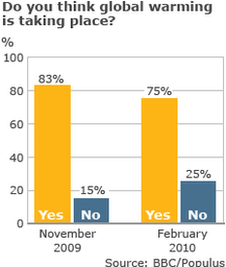
The Populus poll of 1,001 adults found 25% did not think global warming was happening, an increase of 10% since a similar poll was conducted in November.

The percentage of respondents who said climate change was a reality had fallen from 83% in November to 75% this month.

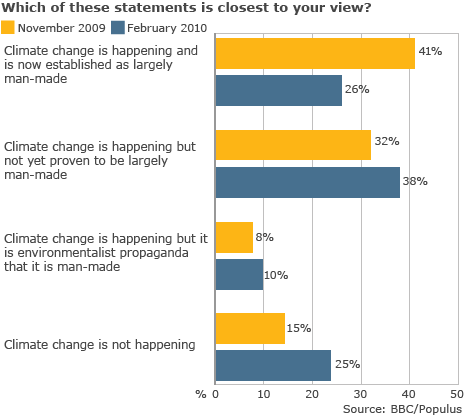
And only 26% of those asked believed climate change was happening and “now established as largely man-made”.

The findings are based on interviews carried out on 3-4 February.

In November 2009, a similar poll by Populus – commissioned by the Times newspaper – showed that 41% agreed that climate change was happening and it was largely the result of human activities.

“It is very unusual indeed to see such a dramatic shift in opinion in such a short period,” Populus managing director Michael Simmonds told BBC News.

“The British public are sceptical about man’s contribution to climate change – and becoming more so,” he added.

“More people are now doubters than firm believers.”

The Department for Environment, Food and Rural Affairs’ (Defra) chief scientific adviser, Professor Bob Watson, called the findings “very disappointing”.

“The fact that there has been a very significant drop in the number of people that believe that we humans are changing the Earth’s climate is serious,” he told BBC News.

“Action is urgently needed,” Professor Watson warned.

“We need the public to understand that climate change is serious so they will change their habits and help us move towards a low carbon economy.”

‘Exaggerated risks’

Of the 75% of respondents who agreed that climate change was happening, one-in-three people felt that the potential consequences of living in a warming world had been exaggerated, up from one-in-five people in November.

The number of people who felt the risks of climate change had been understated dropped from 38% in November to 25% in the latest poll.

During the intervening period between the two polls, there was a series of high profile climate-related stories, some of which made grim reading for climate scientists and policymakers.

In November, the contents of emails stolen from a leading climate science unit led to accusations that a number of researchers had manipulated data.

And in January, the Intergovernmental Panel on Climate Change (IPCC) admitted that it had made a mistake in asserting that Himalayan glaciers could disappear by 2035.

All of this happened against the backdrop of many parts of the northern hemisphere being gripped by a prolonged period of sub-zero temperatures.

However, 73% of the people who said that they were aware of the “science flaws” stories stated that the media coverage had not changed their views about the risks of climate change.

“People tend to make judgements over time based on a whole range of different sources,” Mr Simmonds explained.

He added that it was very unusual for single events to have a dramatic impact on public opinion.

“Normally, people make their minds up over a longer period and are influenced by all the voices they hear, what they read and what people they know are talking about.”

>Climate change scientists losing ‘PR war’ (BBC)

>
A Nobel peace prize-winning Welsh physicist says climate change scientists are losing “a PR war” against sceptics with vested interests.

BBC News, Thursday, 11 February 2010

Sir John Houghton said there were millions of internet references to a comment he never made which appears to to show him “hyping up” global warming.

A poll for BBC news suggests the number of British people who are sceptical about climate change is rising.

Sir John believes recent news stories may have contributed to scepticism.

He told BBC Wales’ Dragon’s Eye programme: “If you Google my name on the web and look for a quote, the quote you will find is one that goes like this.

“It says ‘unless we announce disasters, no-one will listen’.

“I have never said that. The origin of the quote according to some of the people who write about it… [they] say it comes from the first edition of my global warming book, published in 1994.

“It does not appear in that book in any shape or form.”

Sir John, who co-chaired the UN Intergovernmental Panel on Climate Change’s (IPCC) scientific assessment group for 14 years, received the Nobel peace prize in 2007 as part of an IPCC delegation.

He said most scientists were not very good at public relations and just wanted to get on with their work.

Asked if he believed climate change scientists were now in a “PR war” with sceptics, he said: “We are in a way and we’re losing that war because we’re not good at PR.

“Your average scientist is not a good PR person because he wants to get on with his science.

Stolen e-mails

“So we need to look, I suppose, for some good PR people to help us get our messages across in an honest and open and sensible way, without causing the sort of furore, the sort of polarisation that has occurred because of the people who are trying to deny it, and trying to deny it so vehemently that the media is taking so much notice of them.”

The number of British people who are sceptical about climate change is rising, according to a new poll.

The Populus poll of 1,001 adults found 25% did not think global warming was happening, an increase of 10% since a similar poll in November.

Stolen e-mails from the University of East Anglia led to accusations, since denied, that climate change data was being manipulated.

Last month, the IPCC had to admit it had been mistaken in claiming Himalayan glaciers could disappear by 2035.

Sir John said some reporting of these stories had given mistakes undue significance and deliberately misrepresented other information.

‘Vested interests’

He believes some sceptics are influenced by concerns other than scientific truth, comparing them to now discredited lobbyists who argued smoking did not cause cancer.

He said: “A lot of it comes from the United States, from vested interests, coal and oil interests in the United States which are very strong and which employ thousands of lobbyists in Washington to try and influence members of Congress that climate change is not happening.

“So it’s a major problem in the United States and it does spill over to this country too.”

>Signs of Damage to Public Trust in Climate Findings (N. Y. Times/Dot Earth blog)

>
By ANDREW C. REVKIN
February 5, 2010, 4:27 pm

CBS News has run a report summarizing fallout from the illegal distribution of climate scientists’ email messages and files and problems with the 2007 report from the Intergovernmental Panel on Climate Change. The conclusion is that missteps and mistakes are creating broader credibility problems for climate science.

Senator James M. Inhofe was quick to add the report to the YouTube channel of the minority on the Environment and Public Works committee:

Ralph J. Cicerone, the president of the National Academy of Sciences, has an editorial in this week’s edition of the journal Science (subscription only) noting the same issue. Over all, he wrote, “My reading of the vast scientific literature on climate change is that our understanding is undiminished by this incident; but it has raised concern about the standards of science and has damaged public trust in what scientists do.”

Dr. Cicerone, an atmospheric scientist, added that polls and input he has received from various sources indicate that “public opinion has moved toward the view that scientists often try to suppress alternative hypotheses and ideas and that scientists will withhold data and try to manipulate some aspects of peer review to prevent dissent. This view reflects the fragile nature of trust between science and society, demonstrating that the perceived misbehavior of even a few scientists can diminish the credibility of science as a whole.” (A BBC report on its latest survey on climate views supports Dr. Cicerone’s impression.)

What should scientists do? Dr. Cicerone acknowledged both the importance of improving transparency and the challenges in doing so:

“It is essential that the scientific community work urgently to make standards for analyzing, reporting, providing access to, and stewardship of research data operational, while also establishing when requests for data amount to harassment or are otherwise unreasonable. A major challenge is that acceptable and optimal standards will vary among scientific disciplines because of proprietary, privacy, national security and cost limitations. Failure to make research data and related information accessible not only impedes science, it also breeds conflicts.”

As recently as last week, senior members of the intergovernmental climate panel had told me that some colleagues did not see the need for changes in practices and were convinced that the recent flareup over errors in the 2007 report was a fleeting inconvenience. I wonder if they still feel that way.

UPDATE: Here’s some additional reading on the I.P.C.C’s travails and possible next steps for the climate panel:

IPCC Flooded by Criticism, by Quirin Schiermeier in Nature News.

Anatomy of I.P.C.C.’s Mistake on Himalayan Glaciers and Year 2035, by Bidisha Banerjee and George Collins in the Yale Forum on Climate Change and the Media.

* * *

After Emergence of Climate Files, an Uncertain Forecast

By ANDREW C. REVKIN
December 1, 2009, 10:56 am

Roger A. Pielke Jr. is a political scientist at the University of Colorado who has long focused on climate and disasters and the interface of climate science and policy. He has been among those seeking some clarity on temperature data compiled by the Climatic Research Unit of the University of East Anglia, which is now at the center of a storm over thousands of e-mail messages and documents either liberated or stolen from its servers (depending on who is describing the episode). [UPDATED 11:45 a.m. with a couple more useful voices “below the fold.”]

On Monday, I asked him, in essence, if the shape of the 20th-century temperature curve were to shift much as a result of some of the issues that have come up in the disclosed e-mail messages and files, would that erode confidence in the keystone climate question (the high confidence expressed by the Intergovernmental Panel on Climate Change in 2007 that most warming since 1950 is driven by human activities)?

This is Dr. Pielke’s answer. (I added boldface to the take-home points.):

Here is my take, in a logical ordering, from the perspective of an informed observer:

The circumstances:

1. There are many adjustments made to the raw data to account for biases and other factors.
2. Some part of the overall warming trend is as a result of these adjustments.
3. There are legitimately different ways to do the adjusting. Consider that in the e-mails, [Phil] Jones writes that he thinks [James] Hansen’s approach to urban effects is no good. There are also debates over how to handle ocean temperatures from buckets versus intake valves on ships and so on. And some of the procedures for adjusting are currently contested in the scientific literature.
4. Presumably once the data is readily available how these legitimate scientific choices are made about the adjusting would be open to scrutiny and debate.
5. People will then be much more able to cherry pick adjustment procedures to maximize or minimize the historical trends, but also to clearly see how others make decisions about adjustments.
6. Mostly this matters for pre-1979, as the R.S.S. and U.A.H. satellite records provide some degree of independent checking.

Now the implications:

A. If it turns out that the choices made by CRU, GISS, NOAA fall on the “maximize historical trends” end of the scale, that will not help their perceived credibility for obvious reasons. On the other hand, if their choices lead to the middle of the range or even low end, then this will enhance their credibility.
B. The surface temps matter because they are a key basis for estimates of climate sensitivity in the models used to make projections. So people will fight over small differences, even if everyone accepts a significant warming trend. (This is a key point for understanding why people will fight over small differences.)
C. When there are legitimate debates over procedures in science (i.e., competing certainties from different scientists), then this will help the rest of us to understand that there are irreducible uncertainties across climate science.
D. In the end, I would hypothesize that the result of the freeing of data and code will necessarily lead to a more robust understanding of scientific uncertainties, which may have the perverse effect of making the future less clear, i.e., because it will result in larger error bars around observed temperature trends which will carry through into the projections.
E. This would have the greatest implications for those who have staked a position on knowing the climate future with certainty — so on both sides, those arguing doom and those arguing, “Don’t worry be happy.”

So, in the end, Dr. Pielke appears to say, closer scrutiny of the surface-temperature data could undermine definitive statements of all kinds — that human-driven warming is an unfolding catastrophe or something concocted. More uncertainty wouldn’t produce a climate comfort zone, given that poorly understood phenomena can sometimes cause big problems. But it would surely make humanity’s energy and climate choices that much tougher.

[UPDATE, 11:45 a.m.] Andrew Freedman at the Capital Weather Gang blog has interviewed Gerald North, the climate scientist who headed the National Academies panel that examined the tree-ring data and “hockey stick” graphs. Some excerpts:

On whether the emails and files undermine Dr. North’s confidence in human-driven climate change:

This hypothesis (Anthropogenic GW) fits in the climate science paradigm that 1) Data can be collected and assembled in ways that are sensible. 2) These data can be used to test and or recalibrate climate simulation models. 3) These same models can be used to predict future and past climates. It is understood that this is a complicated goal to reach with any precision. The models are not yet perfect, but there is no reason to think the approach is wrong.

On Stephen McIntyre of Climateaudit.org:

I do think he has had an overall positive effect. He has made us re-examine the basis for our assertions. In my opinion this sorts itself out in the due course of the scientific process, but perhaps he has made a community of science not used to scrutiny take a second look from time to time. But I am not sure he has ever uncovered anything that has turned out to be significant.

Also, please note below that Michael Schlesinger at the University of Illinois sent in a response to sharp criticisms of his Dot Earth contribution from Roger Pielke, Sr., at the University of Colorado, Boulder. (Apologies for Colorado State affiliation earlier; he’s moved.)

>AP: Bin Laden blasts US for climate change

>
By SALAH NASRAWI
The Associated Press
Friday, January 29, 2010; 7:46 AM

CAIRO — Al-Qaida leader Osama bin Laden has called for the world to boycott American goods and the U.S. dollar, blaming the United States and other industrialized countries for global warming, according to a new audiotape released Friday.

In the tape, broadcast in part on Al-Jazeera television, bin Laden warned of the dangers of climate change and says that the way to stop it is to bring “the wheels of the American economy” to a halt.

He blamed Western industrialized nations for hunger, desertification and floods across the globe, and called for “drastic solutions” to global warming, and “not solutions that partially reduce the effect of climate change.”

Bin Laden has mentioned climate change and global warning in past messages, but the latest tape was his first dedicated to the topic. The speech, which included almost no religious rhetoric, could be an attempt by the terror leader to give his message an appeal beyond Islamic militants.

The al-Qaida leader also targeted the U.S. economy in the recording, calling for a boycott of American products and an end to the dollar’s domination as a world currency.

“We should stop dealings with the dollar and get rid of it as soon as possible,” he said. “I know that this has great consequences and grave ramifications, but it is the only means to liberate humanity from slavery and dependence on America.”

He argued that such steps would also hamper Washington’s war efforts in Afghanistan and Iraq.

The new message, whose authenticity could not immediately be confirmed, comes after a bin Laden tape released last week in which he endorsed a failed attempt to blow up an American airliner on Christmas Day.

>Profetas das chuvas preveem inverno rigoroso

>
Os três profetas populares que mais acertam em previsões de chuvas, prenunciam forte quadra invernosa

Diário do Nordeste, Caderno Regional – 08/01/2010

Quixadá. Cientistas populares de todo o Estado se reúnem neste município do Sertão Central, amanhã, para divulgar seus prognósticos sobre a quadra invernosa deste ano. O XIV Encontro dos Profetas da Chuva ocorre neste sábado no antigo Clube dos Agrônomos, no entorno do Açude do Cedro. Segundo o presidente do Instituto de Pesquisa de Violas e Poesia Cultural Popular do Sertão Central, João Soares, são esperados, no mínimo, 30 profetas e dezenas de convidados. Ontem, alguns deles anteciparam, com exclusividade, para o Diário do Nordeste, as suas previsões.

Responsáveis pelo maior número de acertos na última década, Chico Leiteiro, Paulo Costa e Antônio Lima tem praticamente as mesmas previsões para o inverno deste ano. Deve chover muito. No levantamento efetuado pela reportagem, o trio tem percentual de acerto, avaliado o quadro geral no Ceará, superior a 80%. No segundo sábado de janeiro de 2009, Francisco Quintino dos Santos, o Chico Leito, previu diante do público inundações no Estado. Fato que se confirmou em muitos municípios cearense no Interior.

Leiteiro observa as “carregações” do tempo, as plantas, abelhas para fazer seu prognóstico. Diz que, quando os inchuís ou colmeias de marimbondos, também conhecidos como capuxus ou vespas do papel, estão novinhos, no início do ano, é sinal de bom inverno. Associando essas observações ao movimento de outros isentos, do vento, das nuvens e dos astros, tira suas conclusões para o período invernoso a seguir. Ele começou a se familiarizar com esses sinais aos 11 anos de idade e, desde então, foi aumentando sua sensibilidade para os sinais da natureza.

Cantoria dos pássaros

Tendo no cupim seu principal parceiro na hora de prever a próxima estação chuvosa, Antônio Tavares da Silva – o Lima vem dos avós – também encontra na cantoria do sabiá, da cuã e da mãe-de-lua, motivo para animação. Para ele, as árvores também falam ou carregam suas ramagens de esperança para o lavrador. Afirma, categórico: “Se os homens são atingidos por inundações é porque não respeitam a natureza. Os pássaros tem como se proteger, ganharam asas para voar”.

Um pouco mais alto observa Paulo Costa, o único com formação acadêmica no grupo de profetas populares e um dos participantes dos encontros da categoria desde a primeira edição, em 1997. Associando o movimento dos astros a numerologia, complementando seus estudos com um ritual místico herdado do avô, denominado por ele “Arca de Noé”, em matéria de diagnóstico invernoso só perde para Chico Leiteiro. São apenas 3% a menos de percentual de acerto entre um e outro.

Aposentado, poeta popular por amor a arte dos versos, o profeta Erasmo Barreira tem como certa a chegada de inverno observando a árvore do juazeiro carregada e na casa do João-de-barro. Curiosamente, a natureza deu a esse pássaro o dom de construir seu ninho em forma de forno com a porta virada para o poente quando vem chuva, no nascente. No ano passado, ele expôs um ninho de João-de-barro ao público. Dessa vez pretende levar um bagaço de formigueiro, outra prova de chuvarada por vir. Aprendeu tudo com o pai, José Pergentino Barreira, que hoje completa 102 anos. No início, o poeta levava as previsões do pai para o Encontro. Chegou a receber o título de “Profeta de Procuração”. Para ele a cerimônia que reúne os sábios populares é um dos momentos mais importantes já experimentados em sua vida.

Homenagens especiais

Na cerimônia de apresentação dos “mestres da chuva” um deles, João Ferreira de Lima, receberá uma homenagem especial, póstuma. Ele morreu no início do ano. Completaria 81 anos em abril próximo. Nas suas experiências o profeta popular, conhecido por sua seriedade, se baseava principalmente na barra de Natal. João Ferreira nasceu em Choró, quando o município ainda pertencia a Quixadá.

Além dele, o presidente da Assembleia Legislativa, Domingos Filho, o diretor regional do Sebrae, Alci Porto, o secretário de Cultura do Estado, Auto Filho, o secretário de Desenvolvimento Econômico de Quixadá, Nascimento Marques, a presidenta da Fundação Cultural Rachel de Queiroz, Sandra Venâncio, o radialista Jonas Sousa e o cantor Raimundo Fagner serão homenageados.

Fagner não poderá comparecer ao Encontro. Ele faz show no Rio. A comenda será entregue a um representante. João Soares e Helder Cortez, idealizadores e organizadores do evento, explicam: Ele tem uma identificação peculiar com a simplicidade sertaneja, procura na natureza os sinais da esperança.

MAIS INFORMAÇÕES
XIV Encontro de Profetas da Chuva
Amanhã, às 9h – Clube do Agrônomo / Aç. do Cedro / Quixadá, V Encanta Quixadá, hoje, às 19h, (88) 9635.0828

O QUE ELES PENSAM

Sinais da natureza orientam prognóstico no CE

Com certeza teremos inverno grosso este ano novamente. Eu não queria prever coisa assim, mas será meio perigoso. Se a quadra da Lua Cheia não me enganar, vai acontecer isso mesmo. Até o mar cresce quando ela aparece. Esses estudiosos falam desse tal de “Ninho”, mas pelo jeito até os pássaros vão ter de procurar lugar mais seguro pra ficar, principalmente se construíram casa dentro de rio. O inverno deve ser grande a partir do fim de março.
Chico Leiteiro
Leiteiro

O nosso povo pode esperar muita chuva este ano. Nas minhas observações, o inverno se configura mesmo a partir de março, com chuvas pesadas. A tendência é ser, inclusive, superior ao do ano passado. Os ciclos se completam de fevereiro para março e de abril para julho, onde a expectativa é de aguaceiro. Os números dos meses provam isso. Os dias das semanas de fevereiro são os mesmos de março e os de abril são iguais aos de julho. As chuvas devem continuar até o mês de outubro.
Paulo Costa
Odontólogo

O inverno começa firme ainda no fim do mês de fevereiro para o início de março e se segura firme até maio. A chuvarada deve ser na mesma proporção do ano passado, mas em áreas isoladas do Interior do Estado. Além dos sinais dos bichos e dos insetos, os ventos do Aracati anunciam isso. Vem muita chuva por ai, com ventos fortes e muita trovoada. Formiga não é satélite, mas tem antena, e as delas tão alvoroçadas, indicando que vem muita água por ai no Estado.
Antônio Lima
Agricultor

V ENCANTA QUIXADÁ

Cantadores de viola abrem encontro

Noitada cultural ao som de violas e repentes marca a abertura, hoje, do encontro dos profetas das chuvas

Quixadá. Quem também rende tributo à tradição nordestina e aos observadores do tempo são os cantadores de viola. Seis duplas se apresentam na véspera do Encontro, na noitada cultural do V Encanta Quixadá, no Centro Cultural Rachel de Queiroz, hoje à noite. Geraldo Amâncio comanda a peleja de repente. Além dos repentistas, está programada a apresentação do espetáculo teatral “Profetas da Chuva”. Chico Mariano e Paroara contam para o público suas experiências. O curioso da encenação são os intérpretes. Os dois profetas de Quixadá são vividos por duas atrizes: Clara Colin e Paula Cavalcanti. Elas já apresentam a peça desde 2007 no Sul do País. Simples e narrativo o prólogo, intercalado com cantos de modas sertanejos, envolve o público à linguagem peculiar e observações dos protagonistas sobre a quadra invernosa no sertão. “Acontece muita prosa enquanto o céu se prepara para ficar bonito de chover”.

As duas atrações, o Encontro dos Profetas da Chuva e o Encanta Quixadá são abertas ao público. A entrada é franca. Parcerias com o Sebrae, Banco do Brasil e Caixa Econômica e mais de uma dezena de patrocinadores garantem o acesso gratuito e a realização dos dois eventos.

Quando o comerciário João Soares de Freitas e o agrônomo Hélder dos Santos Cortez resolveram reunir um grupo de observadores da natureza, a buscarem nela os sinais de probabilidade invernosa no Interior do Ceará, não imaginavam quão importante papel científico e cultural protagonizavam a partir de 1997. No pequeno auditório da Câmara de Dirigentes Lojistas (CDL) de Quixadá, reuniram Antão Mendes, Antônio Lima, Antônio Alexandre dos Santos, Antônio Anastácio da Silva (Paroara), Expedito Epifânio da Silva, Francisco Mariano e Joaquim Ferreira Santiago, o Joaquim Muqueca, Paulo Costa, Raimundo Mota Silva e Ribamar Lima.

João Soares recorda do I Encontro. O inverno daquele ano foi considerado bom. Observado o registro efetuado por ele e o parceiro idealizador, então gerente regional da Cagece, Hélder Cortez, houve divergências entre os prognósticos dos profetas da chuva.

Cinco deles estimaram inverno fraco. Outros cinco avaliaram como regular. Apenas as observações de Antônio Alexandre dos Santos se enquadram nas perspectivas. Ele foi curto e objetivo: bom inverno. Este ano não será diferente. Quem souber melhor interpretar a natureza, acerta mais.

ORIGEM

1997 foi o ano de início da promoção do Encontro de Profetas das Chuvas, evento idealizado pelo comerciário João Soares de Freitas e o engenheiro agrônomo Hélder dos Santos Cortez

ALEX PIMENTEL
Colaborador

>Manipular la lluvia no es la solución [El Pais, Espanha]

>
Más de 40 países usan técnicas para generar precipitaciones – Dominar la atmósfera de todos en beneficio propio genera dudas

JOSEP GARRIGA 10/12/2009

El 30 de septiembre los cielos de Pekín pesaban oscuros y la niebla ahogaba la ciudad con una nube densa, que amenazaba con aguar el gigantesco desfile militar previsto el día siguiente en la plaza Tiananmen para conmemorar el 60 aniversario de la fundación de la República Popular China. Hubo lluvia. Pero cayó toda esa noche, y el 1 de octubre amaneció radiante y de un azul que parecía imposible. No fue casualidad. Un total de 18 aviones del Ejército Popular de Liberación volaron sobre la ciudad disparando yoduro de plata contra las nubes para forzar las precipitaciones antes de la parada militar.

* * *
En Lleida se usó yoduro de plata contra el granizo durante 20 años
En España sólo se utilizan técnicas de modificación en Teruel y Zaragoza
El 1 de noviembre se provocó una gran nevada en Pekín que colapsó la ciudad
Israel ha logrado aumentar la lluvia en algunas zonas alrededor del 10%
* * *

Desde que, en 1947, Bernard Vonnegut descubriera que el yoduro de plata puede romper los equilibrios internos de las nubes y modificar las precipitaciones, cerca de 40 países siguen utilizando la misma tecnología para tratar de modificar el tiempo. Aunque hubo intentos más audaces durante el siglo pasado -Estados Unidos se atrevió a apaciguar la fuerza de los huracanes-, en la actualidad esta técnica sólo se ha demostrado eficaz para incrementar o detener la lluvia, provocar nevadas y minimizar los daños del granizo. Pero como la imaginación carece de límites, algunos científicos ya piensan en cambiar el rumbo de tornados, calmar los vientos o alterar la dirección de los relámpagos.

A la modificación del clima se le denomina geoingeniería, pero este término se utiliza generalmente para designar las prácticas que tienen como objetivo paliar los efectos negativos del calentamiento global. Sin embargo, existe otra acepción: la destinada en concreto a manipular las condiciones atmosféricas de forma artificial para provocar lluvia o nieve en periodos prolongados de sequía o impedir precipitaciones cuando los nubarrones amenazan con aguar la fiesta, como sucedió durante los Juegos Olímpicos de Pekín.

“Estas prácticas me producen un cierto temor porque justamente lo que estamos intentando es no modificar la química de la atmósfera para frenar el cambio climático. Tengo un espíritu contrario a modificar las pautas atmosféricas y creo que la Organización Meteorológica Mundial debería adoptar una actitud más expeditiva”, advierte Jorge Olcina, investigador del clima en la Facultad de Geografía de Alicante.

Pero ni el tiempo se ha demostrado tan sencillo de manipular ni tampoco existen evidencias -comentan sus valedores- de que estas prácticas sean tan perniciosas para el medio ambiente, aunque sobre todas ellas pesa un componente ético que, como siempre, tiene partidarios y detractores.

Primero, se necesita la materia prima: como no haya nubes -y, por tanto, vapor de agua- es imposible obtener lluvia. En física, nadie posee una varita mágica. Y si lo que se pretende es atenuar las precipitaciones, los resultados pueden defraudar porque en el interior de una nube se producen unos procesos termodinámicos que se desconocen en toda su amplitud. “No podemos hacer que desaparezcan las nubes. Una muy normalita, por ejemplo, tiene unos 20 kilómetros de largo, 10 de ancho y 10 de altura. Es decir, unos 2.000 kilómetros cúbicos. Eso no se puede hacer desaparecer, pero podemos reducir su energía y minimizar los daños. Y respecto a las supercélulas, ni acercarse”. Quien así habla es José Luis Sánchez, catedrático de Meteorología de la Universidad de León, y el mayor experto español en esta materia. Sánchez ha dirigido los programas de lucha contra el granizo que se llevaron a cabo desde 1986 a 2005 en Lleida y ahora mismo asesora a los agricultores de la zona de Alcañiz (Teruel) y Cariñena (Zaragoza).

En Lleida, durante casi 20 años se utilizaron calentadores para sembrar las nubes con un compuesto de yoduro de plata y acetona y conseguir, de esta forma, frenar la energía cinética (masa y velocidad) de las piedras de granizo y minimizar sus efectos negativos sobre las cosechas. En 2005 se anuló la campaña, no por problemas técnicos, sino por los movimientos ciudadanos en contra que atribuían a estas técnicas la prolongada sequía en la zona. Los agricultores tenían que pagar unos ocho euros al año para proteger cerca de 200.000 hectáreas. Maite Torà, de la Asociación de Defensa Vegetal de Lleida, sostiene que los daños se redujeron entre el 30% y el 40%. Un porcentaje bastante significativo para unas personas que podían perder buena parte de su cosecha en unos minutos por culpa de una devastadora tempestad.

Para impregnar las nubes con sales de yoduro de plata se utilizaban en Lleida cerca de 50 calentadores en tierra, pues las avionetas se dejaron de usar en 1984 a pesar de la multitud de leyendas rurales que aseguran haberlas escuchado minutos antes de la evaporación de alguna tormenta. Los calentadores son más efectivos que los aviones porque éstos dependen de la celeridad con que asaltan la tormenta. Si las corrientes internas de aire son desfavorables, la nube no absorbe el yoduro de plata. Por este motivo, China echa mano de los aviones militares con mucha más estabilidad y maniobrabilidad.

El Ejército chino lleva estudiando los métodos de modificación del tiempo desde la década de 1950, pero ha sido en los últimos años cuando se han llevado a cabo las mayores experiencias forzadas de lluvia. El principal objetivo es aliviar, dentro de lo posible, la persistente sequía que sufren muchas zonas del país y, cuando el Gobierno lo considera conveniente, evitar la caída del agua en grandes ceremonias.
El pasado 1 de noviembre recurrieron de nuevo al yoduro de plata y contribuyeron a la primera nevada artificial hecha pública que ha vivido la capital. Fue la más temprana desde hace 22 años. Nueve días después, la nieve inducida volvió a caer sobre Pekín durante la noche, entre truenos y relámpagos, con tal intensidad que en algunas calles el manto blanco llegó a los 20 centímetros. Al amanecer, la ciudad fue un caos.

En ambas ocasiones, se produjeron numerosos accidentes de tráfico y cortes de electricidad, y cientos de vuelos sufrieron retrasos o fueron cancelados. Los efectos de la nieve provocaron críticas de muchos ciudadanos e incluso de algunos periódicos oficiales, que se preguntaban por qué no se había avisado antes.
Los meteorólogos chinos aseguran que sólo es posible modificar el tiempo hasta cierto punto, y algunos, como Xiao Gang, del Instituto de Física Atmosférica de la Academia de Ciencias China, han recomendado no abusar de esta práctica por su posible efecto a largo plazo. “Nadie puede decir de qué forma la manipulación del tiempo cambiará el cielo. Experimentos pasados han mostrado que puede aportar entre el 10% y el 20% adicional de lluvia o nieve. No deberíamos depender demasiado de medidas artificiales para la lluvia y la nieve, porque hay demasiadas incertidumbres en el cielo”, ha dicho.

José Miguel Viñas, físico experto en Meteorología y creador de la página web Divulgameteo, también expresa sus dudas sobre estos métodos inducidos porque pueden ser utilizados por algún Gobierno como medida de coacción o guerra larvada contra otros países. “Si se provoca lluvia en zonas fronterizas se le está privando al país vecino de un bien como puede ser el vapor de agua. A mí también me plantea problemas éticos”, sostiene. Viñas pone un ejemplo más ilustrativo. “El vapor de agua viene a ser como un río. ¿Qué derecho tiene un país a cortar o reducir el caudal de un río que circula después por otro país o el de manejar a su antojo el vapor de agua de la atmósfera?”, se pregunta. Sin embargo, ante posibles conflictos, los convenios internacionales prohíben el uso de estas técnicas en enfrentamientos bélico.

Jeroni Lorente, del departamento de Astronomía y Meteorología de la Universidad de Barcelona, apunta: “Hay que tener mucho cuidado con este tipo de actuaciones a causa de los posibles perjuicios y conflictos socio-políticos entre comunidades y Estados que pueden producir, dejando para la ciencia ficción las denominadas guerras meteorológicas”. Y subraya que la modificación del tiempo atmosférico todavía es una realidad poco discutida.

El debate es escaso, no sólo por los efectos sobre el medio ambiente sino también por el rendimiento y eficacia de estas técnicas. “Tenemos estadísticas que demuestran un aumento de las lluvias del 10% al 12%. Pero es muy difícil demostrarlo fehacientemente porque es complicado controlar los experimentos. Nunca podrá demostrarse que la lluvia ha sido provocada y jamás podremos comparar entre dos nubes iguales”, asegura Daniel Rosenfeld, profesor de Ciencias de la Tierra en la Universidad Hebrea de Jerusalén, y uno de los expertos mundiales en esta materia. “Mediante la siembra de las nubes el precio del agua que se genera no llega a los cinco céntimos de dólar (3,4 céntimos de euro) por metro cúbico, 10 veces más barato que la desalinización”, defiende Rosenfeld.

En 2006, la Comunidad de Madrid intentó importar esta tecnología para abastecer la ciudad y el Canal de Isabel II pero, finalmente, desechó la idea. Israel destina entre 1,5 y 2 millones de dólares al año (entre 1 y 1,35 millones de euros) a la investigación en este campo.

Estados Unidos, por su parte, congeló en 1973 un programa destinado a apaciguar la fuerza de los huracanes que cada año asolan el país. El proyecto se inició en los años sesenta, pero se suspendió 13 años después por falta de presupuesto y eso que la experiencia demostró que en cuatro huracanes los vientos decrecieron entre el 10% y el 30%.

El programa quedó bautizado como Project Stormfury (Proyecto furia de la tormenta) y el avión que dispersaba el yoduro de plata recibió el nombre de Hurricane Hunter (Cazador de huracanes). Pero el proyecto no volvió a ofrecer resultados y en los libros de ciencia ha quedado en duda si la reducción de la velocidad de los vientos de Debbie fue algo causado por el hombre o, en realidad, una deceleración natural provocada por el avance del propio huracán.

Con información de David Alandete (Washington), Juan Miguel Muñoz (Jerusalén) y José Reinoso (Pekín).

Algunas experiencias

– España. Desde 1986 a 2005 se llevaron a cabo campañas de lucha antigranizo en Lleida que redujeron el daño entre el 30% y el 40%. En la actualidad estas técnicas sólo se aplican en la zona de Alcañiz (Teruel) y Cariñena (Zaragoza). En 2006 la Comunidad de Madrid intentó importar tecnología israelí para incrementar las precipitaciones y abastecer el Canal de Isabel II, pero ha descartado el proyecto.

– Rusia. En 1986, tras el accidente de Chernóbil, las autoridades rusas estimularon la lluvia de bandas nubosas, cargadas con partículas radiactivas, antes de que llegaran a Moscú.

– ‘Operación Popeye’. Durante la guerra del Vietnam, Estados Unidos tenía previsto prolongar la época de los monzones para inundar las zonas del Vietcong. La operación fracasó.

– Provocar nevadas. Algunos estados como California, Nevada, Wisconsin o Utah tienen programas para incentivar las nevadas, al igual que en Australia en la zona de las Snowy Mountain.

– China. Las autoridades chinas provocaron lluvia días antes de los Juegos Olímpicos de Pekín para limpiar la atmósfera. Durante la celebración no hubo ningún día lluvioso. El pasado 1 de noviembre cayó una gran nevada en la capital provocada artificialmente.

– Israel. Junto a China, es el país con la tecnología más avanzada para provocar lluvia en algunas zonas desérticas o con escasas precipitaciones. Sin embargo, en otras zonas del país han obtenido resultados negativos.

>Natureza conflitante

>
Especiais

AGÊNCIA FAPESP – 9/11/2009

Por Alex Sander Alcântara

Agência FAPESP – “Civilizar” o país e inseri-lo em um projeto de modernidade significava, em grande parte, abandonar a ideia do ambiente rural, da natureza selvagem e dos territórios inóspitos e atrasados. Paraíso terrestre, guerra contra a natureza, sentimento de nostalgia, ideia de progresso e transformação da natureza são alguns dos aspectos analisados no livro Natureza e Cultura no Brasil (1870-1922), que acaba de ser lançado.

A obra investiga como grande parte da intelectualidade brasileira – do fim do século 19 até a Semana de Arte Moderna, em 1922 – percebia e concebia as múltiplas relações entre natureza e sociedade, aliado a um projeto de modernidade nacional.

O livro analisa um conjunto de escritos desse período tanto na ficção como em textos não literários (ensaios, relatos de viagem e memórias) de autores consagrados, como Euclides da Cunha, Graça Aranha e Visconde de Taunay, e outros menos conhecidos, como Alberto Rangel, Hugo de Carvalho Ramos e Domicílio da Gama.

De acordo com a autora Luciana Murari, o conjunto de textos é multifacetado, com muitas contradições, dividido de um lado pela tentativa de “racionalizar tudo”, de encaixar a realidade em modelos cognitivos que a explicassem e que possibilitassem que o homem adquirisse controle sobre a natureza e, de outro, pela percepção da natureza como um espaço sagrado e inatingível.

“Essas duas inclinações não se mostravam mutuamente excludentes no contexto das obras, nem mesmo no conjunto da obra de um mesmo autor. Na melhor das hipóteses, em momentos otimistas, grande parte dos intelectuais brasileiros acreditava que o progresso resolveria tudo, anularia as diferenças e criaria a própria nacionalidade”, disse Luciana, professora do Centro de Ciências Humanas e do Programa de Pós-graduação em Letras, Cultura e Regionalidade da Universidade de Caxias do Sul, à Agência FAPESP

O livro é resultado de sua tese de doutorado, defendida na Universidade de São Paulo (USP) sob a orientação de Elias Thomé Saliba, professor titular em Teoria da História da USP, e recebeu apoio da FAPESP na modalidade Auxílio à Pesquisa – Publicações.

“O livro mostra que essa geração de pensadores e ensaístas, mais do que presa às explicações deterministas, biológicas e racistas, viveu uma consciência dividida, característica da cultura do fim de século”, disse Saliba.

“A obra revela ainda como esses pensadores, cada um a sua maneira, denunciam a modernidade postiça, construída a partir da devastação brutal da natureza e da destruição dos laços que mantinham a coesão da sociedade tradicional. Alguns de seus argumentos e descrições, com difusa e surpreendente consciência ecológica, mostram-se ainda estranhamente atuais”, disse.

De acordo com Luciana, em relação ao recorte histórico pouco convencional, a ideia foi investigar o período anterior à Semana de Arte Moderna, “porque esse período precisa ser revisto como um todo e não apenas nos momentos que pareceriam, na melhor das hipóteses, antecipar a chamada revolução modernista”.

“A delimitação é uma referência para se pensar o início do processo de modernização produtiva no Brasil, que também viveu uma espécie de modernização intelectual nesse período, dedicado a transformar os padrões cognitivos em vigor no debate sobre a nacionalidade e a construir uma nova imagem e uma nova postura frente ao país, baseada na ciência”, disse.

Embora não analise os textos dos chamados modernistas de 1922, a pesquisadora conta ter percebido que não houve uma ruptura radical em relação ao debate modernista e algumas questões que circulavam há tempos entre os intelectuais brasileiros do período anterior.

“Os modernistas transformaram muitas coisas e estabeleceram novos padrões estéticos, mas talvez essa noção de ruptura associada ao movimento reproduza o próprio discurso deles, ou de alguns deles, e nos impeça de ver continuidades importantes”, disse.

Ao elencar os escritores interessados na questão da natureza brasileira, Luciana destaca três nomes: o cearense Rodolfo Teófilo, Alberto Rangel, um seguidor de Euclides da Cunha cuja linha ficcional apresenta características de não ficcionais, e Coelho Neto, um dos intelectuais mais prestigiados do seu tempo, mas muito pouco estudado.

Coelho Neto era uma referência para seus contemporâneos, sempre chamado para palpitar nos assuntos mais importantes da vida nacional. Mas acabou, segundo a pesquisadora, ganhando fama de intelectual alienado da realidade nacional.

“Essa acusação, a meu ver, não tem fundamento, mesmo porque ele foi uma referência para o nativismo de sua época, como pioneiro da literatura regionalista. A visão de Coelho Neto sobre a natureza resume muito do que seus contemporâneos discutiam, mas ao mesmo tempo é bastante original porque tem um aspecto místico muito forte e uma emotividade arrebatadora”, disse Luciana.

Sonho da modernidade

Natureza e Cultura no Brasil (1870-1922) está dividido em quatro capítulos, mais um pós-escrito. Um paraíso terrestre mostra as concepções teóricas sobre a relação entre homem e natureza no país e como a relação da sociedade brasileira com sua base natural adquiriu um sentido negativo, “exprimindo um conflito inexorável entre os empreendimentos humanos e as condições do meio natural”.

Guerra contra a natureza, segundo capítulo, aprofunda o diagnóstico “negativo” de uma relação baseada na violência recíproca: tanto a ação destrutiva da natureza em relação aos desígnios humanos como a ação destruídora do homem em relação a ela.

Nos dois últimos capítulos, a autora aborda, respectivamente, o Sentimento do sertão na alma brasileira e o Progresso e transformação da natureza.

“Nesse quarto capítulo, discuto a modernidade propriamente dita, compreendida como uma relação de domínio do homem sobre a natureza. Os autores tentavam demonstrar a viabilidade de uma sociedade moderna no ambiente brasileiro, pacificando a luta do homem contra a natureza e superando a melancolia por meio da ação. É um capítulo sobre as utopias da modernidade brasileira”, explicou.

Segundo Luciana, a construção da natureza no imaginário nacional permite observar o dilema brasileiro a partir da perspectiva de homens conscientes e temerosos do peso da formação colonial e escravocrata do Brasil.

“Trata-se de um fardo que concorria com seus projetos de alinhamento à modernidade e que perturbava a formação de um sentimento coletivo em um país em que as divisões sociais eram muito profundas e irredutíveis”, apontou.

“A modernidade era um sonho que parecia fadado a nunca se realizar, porque aquele peso sempre se fazia sentir e se expressava de forma muito intensa na relação do país com seu meio físico”, disse a autora.

Título: Natureza e Cultura no Brasil (1870-1922)
Autora: Luciana Murari
Ano: 2009
Páginas: 474
Preço: R$ 50
Mais informações: http://www.alamedaeditorial.com.br

>Aspectos psicológicos na comunicação social das mudanças climáticas

>

The Psychology of Climate Change Communication: A Guide for Scientists, Journalists, Educators, Political Aides, and the Interested Public
Download the guide and learn more at: cred.columbia.edu/guide/home.html
Press release:
HOW DOES THE MIND GRASP CLIMATE CHANGE? A research-based guide tries to narrow the gap between information and action
NEW YORK, Nov. 4, 2009 — A recent poll shows that the number of Americans who accept that human activity is changing Earth’s climate is declining—down from 47 percent to 36 percent—even though the scientific data is overwhelming, and continues to build rapidly. A concise new publication delves into what goes on in the human mind that causes this disconnect, and what communicators of climate science can do about it.
The new 43-page guide, The Psychology of Climate Change Communication, released today by Columbia University’s Center for Research on Environmental Decisions, looks at how people process information and decide to take action, or not. Using research into the reactions of groups as disparate as African farmers and conservative U.S. voters, it offers insights on how scientists, educators, journalists and others can effectively connect with the wider world.
For the nonscientist, climate can seem alternately confusing, overwhelming and politically loaded, say lead authors Debika Shome and Sabine Marx. The guide shows how evolving scientific knowledge can be conveyed without running into predictable roadblocks. Using eight basic principles, it identifies tactics that scientists and other can use to increase the chances that people will understand what they are saying and, when appropriate, take action. These include framing complex issues in ways that people can relate to personally. (New Yorkers may respond more to the idea that sea-level rise threatens to flood their subways, than to the idea that it also threatens much of Bangladesh.) They say scientists and journalists also need to do a better job of sorting the larger picture from smaller uncertainties—for instance, concentrating on the strong consensus that sea levels will rise in the 21st century, versus confusing readers with disagreements over exactly how much levels will rise.
Scientists generally acknowledge that nothing can be known with absolute certainty; their trade involves reducing the amount of uncertainty. But, as with the numbers they give out, the words they habitually use can be misinterpreted by the public to mean they do not really know what they are talking about. For instance, a recent report from the Intergovernmental Panel on Climate Change states that global temperature increases that have taken place in the last 50 years have been “very likely due to the observed increase in anthropogenic GHG concentrations.” Panel scientists have agreed that “very likely” means 90 percent certain or more–but when researchers asked ordinary people to assign a percentage to that specific phrase, most came up with a much lower number. The guide also attacks fancy words like anthropogenic (translation: manmade) and acronyms such as GHG, (shorthand for greenhouse gases). These may alienate even educated people, say the authors. Even many graphs that in the minds of scientists show alarming trends elicit only yawns or incomprehension from almost everyone else.
One chart in the guide lists words with columns showing their meaning as perceived by scientists, and by nonscientists. To scientists, a “theory” is the “physical understanding of how [something] works.” Hence, the theory of evolution, the theory that the earth formed over billions of years—and now, the theory of manmade climate change. But to the public, a theory may be just “a hunch, conjecture or speculation.” (Politicians long ago learned the lesson that language is important: one recent study by the authors and their colleagues finds that conservative Americans find “carbon offsets” more acceptable than a “carbon tax”—even though it might be argued the two are essentially the same. Climate legislation now before Congress has excluded anything labeled a “tax.”)
The public has its own chronic problems. For one thing, there is a phenomenon that social scientists call the “finite pool of worry”; people can deal with only so much bad news at a time before they tune out. For another, when individuals respond to threats like climate change, they are likely to alleviate their worries by taking only one action, even if it is in their interest to take more than one—an effect called the “single actions bias.” For Americans, recycling often serves as a catchall “green” measure, and people will neglect to take others, such as switching to more efficient light sources. One study showed that farmers in Argentina who had capacity to store grain were less likely to use irrigation or crop insurance, even though the added measures would have made their operations more resilient to changing weather.
“Gaining public support for climate change policies and encouraging environmentally responsible behavior depends on a clear understanding of how people process information and make decisions,” say Shome and Marx. “Social science provides an essential part of the puzzle.”
Free printed copies and an interactive online version of the guide are available on CRED’s website . The  project received funding from the Charles Evans Hughes Memorial Foundation and the U.S. National Science Foundation.

>Do folclore à cidadania ambiental

>
Ensaio

Do folclore à cidadania

Em tempos de discussão acirrada sobre os efeitos do aquecimento global, o pesquisador Renzo Taddei avalia que as populações tradicionalmente vitimadas pelas secas têm contribuição decisiva para consolidação do que chama de cidadania ambiental

Renzo Taddei
especial para O POVO
Fortaleza – 24 Out 2009 – 12h48min
Foto: TALITA ROCHA

A ideia de que as variações do clima vão afetar de forma decisiva o futuro das pessoas é uma novidade com a qual habitantes de muitos centros urbanos do planeta – e do Brasil – agora têm que se acostumar. Para a população do nordeste semiárido, não há nenhuma novidade aí. Foi assim desde sempre. Por isso, poderíamos dizer que, pelo menos nesse sentido, há uma certa cearencização da população urbana mundial.

Brincadeiras a parte, o fato é que há lições a serem aprendidas com as sociedades que convivem com ameaças climáticas há muito tempo. Se ficarem confirmadas previsões a respeito da expansão do semiárido brasileiro e da desertificação de partes do cerrado, como resultado do aquecimento global, o Ceará e estados vizinhos irão, certamente, exportar conhecimento a respeito da convivência com o semiárido.

Os esforços de convivência com o semiárido deram-se, no Ceará, por exemplo, em duas frentes. Uma, mais antiga, está pautada nos conhecimentos da cultura popular, que desde muito cedo na história da região – antes mesmo da chegada dos europeus – já buscava decifrar os enigmas colocados pelo clima, fator fundamental para a garantia da sobrevivência. A outra, mas recente, é o uso da técnica e da ciência na criação de condições materiais para que a vulnerabilidade das populações à seca seja reduzida.

No primeiro grupo, encontramos um sem-número de métodos tradicionais de previsão do tempo e do clima, componentes da base de conhecimentos comuns e compartilhados da população sertaneja, ainda que feitos mais visíveis nas figuras dos profetas da chuva do sertão. Além da atividade de prever as chuvas, as estratégias populares combinam ainda formas específicas de organizar sua produção local, como a escolha de sementes e a criação de animais resistentes à pouca chuva. E tudo isso emoldurado dentro de um marco de referência religioso, em que todas as coisas, inclusive o clima, são parte de uma ordem cósmica regida pelo criador, a quem cabe aos sertanejos pedir proteção e amparo.

No segundo, têm papel de destaque o envio de engenheiros ao estado, por Pedro II, ainda no período imperial, de modo a iniciar um longo processo de institucionalização dos esforços de combate aos efeitos das secas. O momento mais decisivo deste processo foi, certamente, a criação do que viria mais tarde a ser conhecido pela sigla Dnocs.

O Dnocs faz um século de vida. É interessante, e inspirador, ver como, depois de tanto tempo trilhando caminhos separados, paralelos, atuando com os mesmos objetivos, a técnica e a cultura popular têm finalmente a oportunidade de se encontrar. Há dois eventos que ocorrem regularmente no Ceará que sinalizam nessa direção. O primeiro é a reunião anual de profetas da chuva do município de Quixadá. Nessa reunião, que acontece no segundo sábado do mês de janeiro, profetas da região anunciam publicamente os seus prognósticos para a estação de chuvas.

O que têm chamado a minha atenção, desde que comecei a observar estes encontros, é o fato de que muitos dos profetas apresentam-se como “pesquisadores“, uma vez que, dizem eles, suas previsões são baseadas em observação sistemática da natureza, e não em inspirações metafísicas. Por essa razão, muitos destes indivíduos não se sentem confortáveis com o rótulo de profetas. Além disso, é comum que suas previsões incluam algum grau de incerteza associada ao clima, da mesma forma como ocorre em previsões meteorológicas.

A diferença, obviamente, está na linguagem: entre os profetas, a incerteza frequentemente é comunicada através da mensagem “só Deus sabe tudo“. Ou seja, fica claro, nas palavras e previsões dos profetas da chuva, que já não há uma rejeição do conhecimento técnico e das formas “urbanas“ de pensamento, como encontramos, por exemplo, nos poemas Cante lá que eu canto cá ou Ao dotô do avião, de Patativa do Assaré.

O segundo evento, que ocorre com mais frequência, são as reuniões dos comitês de bacias hidrográficas, que ocorrem em todo o Ceará, e, graças à atuação do Dnocs, em várias outras regiões do Nordeste. Nos comitês, técnicos e membros das lideranças populares locais discutem as formas de uso e administração das águas dos açudes do Estado. Como não há água sem chuva, não há conhecimento hídrico sem conhecimento meteorológico. É nos comitês, desta forma, que o conhecimento popular e o conhecimento técnico interagem, criando a possibilidade da criação da verdadeira participação democrática.

Esse panorama está inserido dentro de um contexto mundial em que a expressão cidadania ambiental ganha significados novos e importantes. Todos os habitantes desse planeta se entendem, agora, de alguma forma vinculados à questão ambiental global, seja como consumidores, seja como afetados. E exigem informação a respeito do meio ambiente, e voz no que tange a como sociedade e meio ambiente interagem.

Está aí colocado um desafio real, para o mundo e para o Ceará. Infelizmente, é preciso que se diga, no Ceará e nos demais estados do Nordeste, ainda que a participação popular seja fundamental nos comitês de bacias, há certa resistência com relação ao conhecimento popular. A visão técnica a respeito da natureza é preponderante, e muitas vezes outras formas de conhecimento não tem vez nem voz. Na democratização das águas no Brasil, há um passo faltando, o passo da inclusão da diversidade cultural. Para que se crie uma verdadeira democracia ambiental, aqui e em outros países, todas as vozes têm que ter sua vez.

RENZO TADDEI é antropólogo e professor da Universidade Federal do Rio de Janeiro (UFRJ)

>Testemunhas do Clima

>
Por Redação do WWF-Brasil

O projeto Testemunhas do Clima da Rede WWF visa registrar a forma como as mudanças climáticas vêm modificando a vida de algumas populações ao redor do planeta. No Brasil, oficina realizada na comunidade Igarapé do Costa, no Pará, nos dias 12 e 13 de março de 2008 marcou o início dos trabalhos.

A oficina, coordenada pelo WWF-Brasil em parceria com o Instituto de Pesquisa Ambiental da Amazônia (IPAM), buscou mapear e discutir a realidade socioeconômica e ambiental do lugar e perceber como é feita esta adaptação às regras da natureza, através da troca de experiências, para que as lições e os modelos possam ser seguidos em outras partes do mundo.

Igarapé do Costa, onde vivem 80 famílias, também foi o cenário do documentário Testemunhas do Clima. O filme conta a história de Marlene Rêgo Rocha, moradora do Igarapé do Costa, Pará, comunidade localizada na várzea amazônica que já tem sentido alterações climáticas causadas pelo aquecimento global.

Marlene conta quais as mudanças que já ocorreram no local, como tem feito para se adaptar às transformações da natureza e especialistas sobre o assunto explicam o porquê das mudanças e o que pode ser feito.

Testemunhas do Clima – parte 1 – http://www.youtube.com/watch?v=9bBQZ2OzUik

Testemunhas do Clima – parte 2 – http://www.youtube.com/watch?v=v2U5HCvn-40

Conheça o projeto: http://www.wwf.org.br/natureza_brasileira/meio_ambiente_brasil/clima/mudancas_especiais/testemunhasdoclima/

(Envolverde/WWF-Brasil)


>Dead Ahead: Similar Early Warning Signals of Change in Climate, Ecosystems, Financial Markets, Human Health

>
Scientists identify ‘tipping points’ at which sudden shifts to new conditions occur

National Science Foundation (Press Release 09-161), September 2, 2009

What do abrupt changes in ocean circulation and Earth’s climate, shifts in wildlife populations and ecosystems, the global finance market and its system-wide crashes, and asthma attacks and epileptic seizures have in common?

According to a paper published this week in the journal Nature, all share generic early-warning signals that indicate a critical threshold of change dead ahead.

In the paper, Martin Scheffer of Wageningen University in The Netherlands and co-authors, including William Brock and Stephen Carpenter of the University of Wisconsin at Madison and George Sugihara of the Scripps Institution of Oceanography in La Jolla, Calif., found that similar symptoms occur in many systems as they approach a critical state of transition.

“It’s increasingly clear that many complex systems have critical thresholds–‘tipping points’–at which these systems shift abruptly from one state to another,” write the scientists in their paper.

Especially relevant, they discovered, is that “catastrophic bifurcations,” a diverging of the ways, propel a system toward a new state once a certain threshold is exceeded.

Like Robert Frost’s well-known poem about two paths diverging in a wood, a system follows a trail for so long, then often comes to a switchpoint at which it will strike out in a completely new direction.

That system may be as tiny as the alveoli in human lungs or as large as global climate.

“These are compelling insights into the transitions in human and natural systems,” says Henry Gholz, program director in the National Science Foundation (NSF)’s Division of Environmental Biology, which supported the research along with NSF’s Division of Ocean Sciences.

“The information comes at a critical time–a time when Earth’s and, our fragility, have been highlighted by global financial collapses, debates over health care reform, and concern about rapid change in climate and ecological systems.”

It all comes down to what scientists call “squealing,” or “variance amplification near critical points,” when a system moves back and forth between two states.

“A system may shift permanently to an altered state if an underlying slow change in conditions persists, moving it to a new situation,” says Carpenter.

Eutrophication in lakes, shifts in climate, and epileptic seizures all are preceded by squealing.

Squealing, for example, announced the impending abrupt end of Earth’s Younger Dryas cold period some 12,000 years ago, the scientists believe. The later part of this episode alternated between a cold mode and a warm mode. The Younger Dryas eventually ended in a sharp shift to the relatively warm and stable conditions of the Holocene epoch.

The increasing climate variability of recent times, state the paper’s authors, may be interpreted as a signal that the near-term future could bring a transition from glacial and interglacial oscillations to a new state–one with permanent Northern Hemisphere glaciation in Earth’s mid-latitudes.

In ecology, stable states separated by critical thresholds of change occur in ecosystems from rangelands to oceans, says Carpenter.

The way in which plants stop growing during a drought is an example. At a certain point, fields become deserts, and no amount of rain will bring vegetation back to life. Before this transition, plant life peters out, disappearing in patches until nothing but dry-as-bones land is left.

Early-warning signals are also found in exploited fish stocks. Harvesting leads to increased fluctuations in fish populations. Fish are eventually driven toward a transition to a cyclic or chaotic state.

Humans aren’t exempt from abrupt transitions. Epileptic seizures and asthma attacks are cases in point. Our lungs can show a pattern of bronchoconstriction that may be the prelude to dangerous respiratory failure, and which resembles the pattern of collapsing land vegetation during a drought.

Epileptic seizures happen when neighboring neural cells all start firing in synchrony. Minutes before a seizure, a certain variance occurs in the electrical signals recorded in an EEG.

Shifts in financial markets also have early warnings. Stock market events are heralded by increased trading volatility. Correlation among returns to stocks in a falling market and patterns in options prices may serve as early-warning indicators.

“In systems in which we can observe transitions repeatedly,” write the scientists, “such as lakes, ranges or fields, and such as human physiology, we may discover where the thresholds are.

“If we have reason to suspect the possibility of a critical transition, early-warning signals may be a significant step forward in judging whether the probability of an event is increasing.”

Other co-authors of the paper are Jordi Bascompte and Egbert van Nes of the Consejo Superior de Investigaciones Scientificas, Sevilla, Spain; Victor Brovkin of the Max Planck Institute for Meteorology in Hamburg, Germany; Vasilis Dakos of the Potsdam Institute for Climate Research in Potsdam, Germany; and Max Rietkerk of Utrecht University in The Netherlands.

The research also was funded by the Institute Para Limes and the South American Institute for Resilience and Sustainability Studies, as well as the Netherlands Organization of Scientific Research and the European Science Foundation, among others.

>Clima: Sociedade civil questiona o Banco Mundial

>
16/09/2009 – 10h09 – Envolverde/IPS
Por Mary Tharin, da IPS

Washington, 16/09/2009 – O Banco Mundial exortou ontem os paises ricos a liderarem os esforços para reduzir as emissões de carbono, mas organizações da sociedade civil questionam o papel da instituição na luta contra a mudança climática. O “Informe sobre o desenvolvimento mundial 2010: Desenvolvimento e mudança climática”, apresentado nesta terça-feira pelo Banco, tem potencial para afetar as negociações da 15ª Conferência das Partes da Convenção Marco das Nações Unidas sobre Mudança Climática, que acontecerá em dezembro em Copenhague.

“Os paises em desenvolvimento se veem afetados pela mudança climática de forma desproporcional; trata-se de uma crise pela qual não são responsáveis e para a qual são os menos preparados. Nesse sentido, é de vital importância conseguir um acordo eqüitativo em Copenhague”, disse o presidente do Banco Mundial, Robert Zoellick, no comunicado de imprensa que acompanha o informe. Por sua vez, o conselheiro sobre mudança climática da Oxfam Internacional, Antonio Hill, reiterou a necessidade de vincular o desenvolvimento a uma política efetiva sobre a mudança climática. Hill elogiou o documento do Banco por abordar “como a resposta mundial à mudança climática pode fortalecer, em lugar de enfraquecer, o desenvolvimento nos paises mais pobres”.

Karen Orenstein, coordenadora de campanhas financeiras internacionais na organização Amigos da Terra, concordou que os países industrializados devem se comprometer mais com a redução das emissões contaminantes. “O que as nações industrializadas colocam atualmente sobre a mesa é completamente inadequado para fazer frente à mudança climática”, disse à IPS. As negociações prévias à reunião de Copenhague estão caracterizadas pelo conflito entre paises ricos e pobres, cada parte reclamando que a outra assuma maiores objetivos de redução das emissões.

As nações em desenvolvimento afirmam que as industrializadas têm a obrigação histórica de assumir a responsabilidade, por serem as que mais contribuíram com o aquecimento do planeta. Por sua vez, os paises ricos dizem que a mitigação é mais rentável nas nações menos adiantadas, e que, portanto, os esforços para reverter a tendência deveriam começar por ali.

Em seu informe o Banco Mundial recomenda um pacto que permita aos paises do Sul realizar mudanças na política nacional em lugar de se comprometerem com objetivos rígidos de redução de emissões. Segundo Elliot Diringer, vice-presidente de estratégias internacionais no Centro Pew sobre Mudança Climática Global, este enfoque mais flexível permitiria aos paises do Sul “apresentar compromissos que se ajustem melhor às suas agendas de desenvolvimento”. Tais opções podem incluir objetivos em matéria de energias renováveis ou redução de desmatamento.

Atualmente, o Banco opera como agente de boa par te das finanças climáticas do mundo, e continua expandindo esta capacidade. Porem, organizações ambientalistas criticam o papel que desempenha na mitigação dos efeitos do aquecimento global. “O Banco Mundial é a instituição equivocada para manejar as finanças climáticas”, afirmou Orenstein. Muitos líderes do mundo em desenvolvimento exigem a criação de uma nova instituição. Administrada pela Convenção Marco das Nações Unidas sobre Mudança Climática, para financiar iniciativas neste campo.

“Os paises em desenvolvimento têm boas razoes para desconfiar de instituições financeiras internacionais como o Banco Mundial, e não querem que sejam intermediárias deste acordo climático”, acrescentou Orenstein. O informe do Banco promove o fortalecimento dos mecanismos financeiros existentes em relação ao clima que atualmente são manejados pela instituição, entre eles o muito controverso Mecanismo de Desenvolvimento Limpo (MDL).

Previsto no Protocolo de Kyoto, o MDL é um instrumento pelo qual as nações ricas podem superar suas cotas de emissões de gás estufa se financiarem projetos para reduzi-las nos paises em desenvolvimento. Mas, cerca de dois terços dos projetos que recebem financiamento no contexto do MDL não contribuem realmente para a redução das emissões mundiais desses gases, segundo a cientista climática Payal Parekh, da organização não-governamental International Rivers.

Estes projetos carecem de “adicionalidade”, ou provas de que o investimento pelo MDL é um requisito para a redução de emissões. As evidências mostram que muitos projetos financiados por esse instrumento, como as grandes hidrelétricas na china, teriam sido construídos do mesmo jeito, inclusive sem o aporte do Mecanismo. O Banco Mundial pressiona para que o MDL seja reformado e ampliado, mas Parekh discorda. “Se o conceito fundamental de um programa é defeituoso, a reforma é impossível”, disse à IPS. Segundo Parekh, o MDL não conseguir reduzir as emissões mundiais, proporcionando em troca “subsídios extras para projetos que de qualquer maneira seriam realizados”.

O informe do Banco também destaca a importância de um adequado manejo de recursos, já que a mudança climática torna mais escassas a água, a terra e a energia. O estudo recomenda implementar métodos de agricultura sustentável, incluída a “eco-agricultura”, ou reservar terras para promover a biodiversidade. Alem disso, propõe três estratégias políticas principais para promover a conservação energética: aumentos no preço da energia, incentivos para que as empresas públicas aumentem sua eficiência e transferência de tecnologias limpas para o mundo em desenvolvimento.

Talvez, o aspecto mais controverso do debate sobre os recursos seja a posição do Banco sobre a conservação da água. O informe defende dois projetos de represas como maneira de fornecer energia hidrelétrica e proteger contra secas e inundações. Porém, os impactos sociais e ambientais negativos dos projetos hidrelétricos em grande escala ficam expostos caso após caso, segundo Orenstein. Alem disso, as grandes represas em zonas tropicais produzem quantidades significativas de metano, um dos gases causadores do efeito estufa.

Um estudo feito no Brasil concluiu que 52 mil grandes represas do mundo contribuem com cerca de 4% do aquecimento da Terra induzido pelo ser humano. Isto converte as represas em “uma fonte importante de contaminação (que contribui) para a mudança climática”, disse o diretor-executivo da International Rivers, Patrick McCully. O informe tem um importante papel na busca de uma solução global para a mudança climática, afirmou Diringer. “O documento é um reflexo do que agora se compreende amplamente: que o clima e o desenvolvimento estão intrinsecamente ligados e que devemos abordar os dois temas juntos, em lugar de optar entre ambos”, disse Diringer as IPS.

Entretanto, persiste a dúvida quanto ao Banco Mundial ser a instituição adequada para tratar destes temas vitais. É necessário que a instituição financeira analise como ela própria “está contribuindo com a mudança climática, antes de poder ser parte da solução”, disse Orenstein. IPS/Envolverde