We are living in a world controlled by forces incapable of giving freedom and dignity to the world’s population (if, indeed, they ever were). A world where we are told ‘there is no alternative’ to the loss of rights achieved through the long, hard struggles of our ancestors.
We find ourselves in a world where success is defined in seeming opposition to the most fundamental values of humanity, such as solidarity and mutual support. Moreover, anything that does not promote competitiveness, selfishness and greed is seen as dysfunctional. This immoral ideology is reinforced by the monopoly of the mainstream media, the instrument that manufactures false consensus around this unfair and unsustainable system.
But we have not remained silent! Our consciousness has awakened, and we have joined the wave of collective consciousness now spreading light and hope to every corner of the world. From Tunisia to Tahrir Square, Madrid to Rejkavik, New York to Brussels, people are rising up. In the Arab Spring, in the dignity of Iceland, in the dignified rage of 15M and Occupy Wall Street. Together we have denounced the status quo. Our effort states clearly ‘enough!’, and has even begun to push changes forward, worldwide.
This is why we, women and men, inhabitants of this planet, are uniting once again to make our voices heard this May 12th. All over the world. We denounce the current condition of our planet, and urge the application of different policies, designed to encourage and promote the common good.
We condemn the current distribution of economic resources whereby only a tiny minority escape poverty and insecurity. Whereby future generations are condemned to a poisoned legacy thanks to the environmental crimes of the rich and powerful. ‘Democratic’ political systems, where they exist, have been emptied of meaning, put to the service of those few interested in increasing the power of corporations and financial institutions, regardless of the fate of the planet and its inhabitants.
We declare the current crisis is not a natural accident. It was caused by the greed of those who would bring the world down, with the help of an economics that has lost its true sense. No longer about management of the common good, but simply an ideology at the service of financial power, seeking to impose measures that stifle billions of people, without asking their opinion. They say there is no alternative. They say we must leave our future in the hands of the same experts who destroy it.
Here and now, we’re back. We have awakened, and not just to complain! Here and now, we aim at the true causes of the crisis: their policies and lies hidden in empty rhetoric. Here and now we propose alternatives, because we want to fix the problem while also moving towards a more democratic world. Simply put, we want a world ruled by the values of liberty, equality, and fraternity – the old dream of our ancestors when they rose against oppression in previous generations, throughout the planet! Simply put we want a world where every woman, man and child is guaranteed the right to the free pursuit of personal and collective happiness.
The statement below does not speak, or claim to speak, on behalf of everyone in the global spring/Occupy/Take the Square movements. This is an attempt by some inside the movements to reconcile statements written and endorsed in the different assemblies around the world. The process of writing the statement was consensus based, open to all, and regularly announced on our international communications platforms, that are also open to all (like the ‘squares’ mailing list, the weekly global roundtables and the ‘international’ facebook group). It was a hard and long process, full of compromises. This statement is offered to people’s assemblies around the world for discussions, revisions and endorsements.
There will be a process of a global dialogue, and this statement is part of it, a work-in-progress. We do not make demands from governments, corporations or parliament members, which some of us see as illegitimate, unaccountable or corrupt. We speak to the people of the world, both inside and outside our movements. We want another world, and such a world is possible:
1. The economy must be put to the service of people’s welfare, and to support and serve the environment, not private profit. We want a system where labour is appreciated by its social utility, not its financial or commercial profit. Therefore, we demand:
Free and universal access to health, education from primary school through higher education and housing for all human beings, through appropriate policies to get this. We reject outright the privatization of public services management, and the use of these essential services for private profit.
Full respect for children’s rights, including free child care for everyone.
Retirement/pension so we may have dignity at all ages. Mandatory universal sick leave and holiday pay.
Every human being should have access to an adequate income for their livelihood, so we ask for work or, alternatively, universal basic income guarantee.
Corporations should be held accountable to their actions. For example, corporate subsidies and tax cuts should be done away with if said company outsources jobs to decrease salaries, violates the environment or the rights of workers.
Apart from bread, we want roses. Everyone has the right to enjoy culture, participate in a creative and enriching leisure at the service of the progress of humankind . Therefore, we demand the progressive reduction of working hours, without reducing income.
Food sovereignty through sustainable farming should be promoted as an instrument of food security for the benefit of all. This should include an indefinite moratorium on the production and marketing of GMOs and immediate reduction of agrochemicals use.
We demand policies that function under the understanding that our changing patterns of life should be organic/ecologic or should never be. These policies should be based on a simple rule: one should not spoil the balance of ecosystems for simple profit. Violations of this policy should be prosecuted around the world as an environmental crime, with severe sanctions for convicted.
Policies to promote the change from fossil fuels to renewable energy, through massive investment which should help to change the production model.
We demand the creation of international environmental standards, mandatory for countries, companies, corporations, and individuals. Ecocide (wilful damage to the environment, ecosystems, biodiversity) should be internationally recognised as a crime of the greatest magnitude.
2. To achieve these objectives, we believe that the economy should be run democratically at all levels, from local to global. People must get democratic control over financial institutions, transnational corporations and their lobbies. To this end, we demand:
Control and regulation of financial speculation by abolishing tax havens, and establishing a Financial Transaction Tax (FTT). As long as they exist, the IMF, World Bank and the Basel Committee on Banking Regulation must be radically democratised. Their duty from now on should be fostering economic development based on democratic decision making. Rich governments cannot have more votes because they are rich. International Institutions must be controlled by the principle that each human is equal to all other humans – African, Argentinian or American; Greek or German.
As long as they exist, radical reform and democratisation of the global trading system and the World Trade Organization must take place. Commercialization of life and resources, as well as wage and trade dumping between countries must stop.
We want democratic control of the global commons, defined as the natural resources and economic institutions essential for a proper economic management. These commons are: water, energy, air, telecommunications and a fair and stable economic system. In all these cases, decisions must be accountable to citizens and ensure their interests, not the interests of a small minority of financial elite.
As long as social inequalities exist, taxation at all levels should maintain the principle of solidarity. Those who have more should contribute to maintain services for the collective welfare. Maximum income should be limited, and minimum income set to reduce the outrageous social divisions in our societies and its social political and economic effects.
No more money to rescue banks. As long as debt exists, following the examples of Ecuador and Iceland, we demand a social audit of the debts owed by countries. Illegitimate debt owed to financial institutions should not be paid.
Absolute end of fiscal austerity policies that only benefit a minority, and cause great suffering to the majority.
As long as banks exist, separation of commercial and financial banks, avoiding banks “too big to fail”.
End of the legal personhood of corporations. Companies cannot be elevated to the same level of rights as people. The public’s right to protect workers, citizens and the environment should prevail over the protections of private property or investment.
3. We believe that political systems must be fully democratic. We therefore demand full democratization of international institutions, and the elimination of the veto power of a few governments. We want a political system which really represent the variety and diversity of our societies:
All decisions affecting all mankind should be taken in democratic forums like a participatory and direct UN Parliamentary Assembly or a UN people’s assembly, not rich clubs such as G20 or G8.
At all levels we ask for the development of a democracy that is as participatory as possible, including non representative direct democracy.
As long as they are practiced, electoral systems should be as fair and representative as possible, avoiding biases that distort the principle of proportionality.
We call for the democratization of access and management of media (MSM). These should serve to educate the public, as opposed to the creation of an artificial consensus about unjust policies.
We ask for democracy in companies and corporations. Workers, despite wage level or gender, should have real decision power in the companies and corporations they work in. We want to promote cooperative companies and corporations, as real democratic economic institutions.
Zero tolerance to corruption in economic policy. We must stop the excessive influence of big business in politics, which is today a major threat to true democracy.
We demand complete freedom of expression, assembly and demonstration, as well as the cessation of attempts to censor the Internet.
We demand respecting privacy rights on and off the internet. Companies and the government should not engaged in data mining.
We believe that military spending is politically counterproductive to a society’s advance, so we demand its reduction to a minimum.
Ethnic, cultural and sexual minorities should have their civil, cultural, political and economic rights fully recognized.
Some of us believe a new Universal Declaration of Human Rights, fit for the 21st century, written in a participatory, direct and democratic way, needs to be written. As long as the current Declaration of Human Rights defines our rights, it must be enforced in relation to all – in both rich and poor countries. Implementing institutions that force compliance and penalize violators need to be established, such as a Global Court to prosecute social, economic and environmental crimes perpetrated by governments, corporations and individuals. At all levels, local, national, regional and global, new constitutions for political institutions need to be considered, like in Iceland or in some Latin American countries. Justice and law must work for all, otherwise justice is not justice, and law is not law.
This is a worldwide Global Spring. We will be there on May 2012; we will fight until we win. We will not stop being people. We are not numbers. We are free women and men.
As principais lideranças responsáveis pela organização da Cúpula dos Povos, reunião de movimentos populares paralela à Conferência das Nações Unidas sobre o Desenvolvimento Sustentável (Rio+20), divulgaram ontem (13) um documento condenando o conceito de economia verde, defendido por integrantes de governos que participarão da Rio+20, que ocorrerá em junho no Rio.
O documento critica, em três páginas, o foco das discussões em torno da Rio+20, que não estaria tocando nas questões fundamentais da crise global, que na visão dos participantes da Cúpula dos Povos, “é o capitalismo, com suas formas clássicas e renovadas de dominação, que concentra a riqueza e produz desigualdades sociais”.
Os organizadores elaboraram o documento durante encontro internacional no Rio e divulgaram o conteúdo em coletiva de imprensa. A mexicana Silvia Ribeiro, diretora da organização ETC, dedicada a temas agroalimentares, disse que a economia verde é um nome enganoso.
“Muitos creem que é algo positivo, mas é um disfarce para mais negócios e mais exploração dos ecossistemas. O outro aspecto é que eles querem se apropriar da natureza usando tecnologias perigosas. É uma solução falsa dizer que vai se resolver tudo com tecnologia, em vez de se ir às causas para baixar as emissões do efeito estufa, os padrões de produção e o consumo”, criticou Silvia.
A canadense Nettie Wiebe, produtora de alimentos orgânicos e ligada à Via Campesina, alertou para o perigo de se liberar as sementes de tecnologia terminator, que geram plantas modificadas geneticamente para serem inférteis, forçando agricultores a comprarem novas sementes a cada safra. Segundo ela, apesar de haver embargo internacional contra esse tipo de semente, grupos internacionais do agronegócio estão interessados em patrocinar sua liberação.
A norte-americana Cindy Wiesner, dirigente da organização Grassroots Global Justice Alliance, criticou a provável ausência do presidente Barack Obama na Rio+20. “Historicamente somos o país que mais destrói o planeta e temos uma responsabilidade muito grande de oferecer outras práticas. Mas o que vemos, com a ausência do presidente Obama, é que ele não se importa com isso. É uma pena que não venha, pois seria uma oportunidade para ouvir milhões de pessoas que querem uma alternativa”, disse a americana.
Outro ponto destacado no documento da Cúpula dos Povos é a luta contra a sanção do projeto original do Código Florestal, conforme aprovado pelo Congresso e que agora depende da decisão da presidente Dilma Rousseff em modificar ou não a matéria através de veto. “Conclamamos todos os povos do mundo a apoiarem a luta do povo brasileiro contra a destruição de um dos mais importantes quadros legais de proteção às florestas [Código Florestal], o que abre caminhos para mais desmatamentos em favor dos interesses do agronegócio e da ampliação da monocultura”, assinala trecho do documento.
Mais informações sobre o encontro da Cúpula dos Povos, que vai acontecer de 15 a 23 de junho, podem ser acessadas na página http://www.cupuladospovos.org.br.
GLOBAL warming isn’t a prediction. It is happening. That is why I was so troubled to read a recent interview with President Obama in Rolling Stone in which he said that Canada would exploit the oil in its vast tar sands reserves “regardless of what we do.”
If Canada proceeds, and we do nothing, it will be game over for the climate.
Canada’s tar sands, deposits of sand saturated with bitumen, contain twice the amount of carbon dioxide emitted by global oil use in our entire history. If we were to fully exploit this new oil source, and continue to burn our conventional oil, gas and coal supplies, concentrations of carbon dioxide in the atmosphere eventually would reach levels higher than in the Pliocene era, more than 2.5 million years ago, when sea level was at least 50 feet higher than it is now. That level of heat-trapping gases would assure that the disintegration of the ice sheets would accelerate out of control. Sea levels would rise and destroy coastal cities. Global temperatures would become intolerable. Twenty to 50 percent of the planet’s species would be driven to extinction. Civilization would be at risk.
That is the long-term outlook. But near-term, things will be bad enough. Over the next several decades, the Western United States and the semi-arid region from North Dakota to Texas will develop semi-permanent drought, with rain, when it does come, occurring in extreme events with heavy flooding. Economic losses would be incalculable. More and more of the Midwest would be a dust bowl. California’s Central Valley could no longer be irrigated. Food prices would rise to unprecedented levels.
If this sounds apocalyptic, it is. This is why we need to reduce emissions dramatically. President Obama has the power not only to deny tar sands oil additional access to Gulf Coast refining, which Canada desires in part for export markets, but also to encourage economic incentives to leave tar sands and other dirty fuels in the ground.
The global warming signal is now louder than the noise of random weather, as I predicted would happen by now in the journal Science in 1981. Extremely hot summers have increased noticeably. We can say with high confidence that the recent heat waves in Texas and Russia, and the one in Europe in 2003, which killed tens of thousands, were not natural events — they were caused by human-induced climate change.
We have known since the 1800s that carbon dioxide traps heat in the atmosphere. The right amount keeps the climate conducive to human life. But add too much, as we are doing now, and temperatures will inevitably rise too high. This is not the result of natural variability, as some argue. The earth is currently in the part of its long-term orbit cycle where temperatures would normally be cooling. But they are rising — and it’s because we are forcing them higher with fossil fuel emissions.
The concentration of carbon dioxide in the atmosphere has risen from 280 parts per million to 393 p.p.m. over the last 150 years. The tar sands contain enough carbon — 240 gigatons — to add 120 p.p.m. Tar shale, a close cousin of tar sands found mainly in the United States, contains at least an additional 300 gigatons of carbon. If we turn to these dirtiest of fuels, instead of finding ways to phase out our addiction to fossil fuels, there is no hope of keeping carbon concentrations below 500 p.p.m. — a level that would, as earth’s history shows, leave our children a climate system that is out of their control.
We need to start reducing emissions significantly, not create new ways to increase them. We should impose a gradually rising carbon fee, collected from fossil fuel companies, then distribute 100 percent of the collections to all Americans on a per-capita basis every month. The government would not get a penny. This market-based approach would stimulate innovation, jobs and economic growth, avoid enlarging government or having it pick winners or losers. Most Americans, except the heaviest energy users, would get more back than they paid in increased prices. Not only that, the reduction in oil use resulting from the carbon price would be nearly six times as great as the oil supply from the proposed pipeline from Canada, rendering the pipeline superfluous, according to economic models driven by a slowly rising carbon price.
But instead of placing a rising fee on carbon emissions to make fossil fuels pay their true costs, leveling the energy playing field, the world’s governments are forcing the public to subsidize fossil fuels with hundreds of billions of dollars per year. This encourages a frantic stampede to extract every fossil fuel through mountaintop removal, longwall mining, hydraulic fracturing, tar sands and tar shale extraction, and deep ocean and Arctic drilling.
President Obama speaks of a “planet in peril,” but he does not provide the leadership needed to change the world’s course. Our leaders must speak candidly to the public — which yearns for open, honest discussion — explaining that our continued technological leadership and economic well-being demand a reasoned change of our energy course. History has shown that the American public can rise to the challenge, but leadership is essential.
The science of the situation is clear — it’s time for the politics to follow. This is a plan that can unify conservatives and liberals, environmentalists and business. Every major national science academy in the world has reported that global warming is real, caused mostly by humans, and requires urgent action. The cost of acting goes far higher the longer we wait — we can’t wait any longer to avoid the worst and be judged immoral by coming generations.
James Hansen directs the NASA Goddard Institute for Space Studies and is the author of “Storms of My Grandchildren.”
ScienceDaily (Feb. 22, 2011) — A new paper by George Mason University researchers shows that ‘Climategate’ — the unauthorized release in late 2009 of stolen e-mails between climate scientists in the U.S. and United Kingdom — undermined belief in global warming and possibly also trust in climate scientists among TV meteorologists in the United States, at least temporarily.
In the largest and most representative survey of television weathercasters to date, George Mason University’s Center for Climate Change Communication and Center for Social Science Research asked these meteorologists early in 2010, when news stories about the climate e-mails were breaking, several questions about their awareness of the issue, attention to the story and impact of the story on their beliefs about climate change. A large majority (82 percent) of the respondents indicated they had heard of Climategate, and nearly all followed the story at least “a little.”
Among the respondents who indicated that they had followed the story, 42 percent indicated the story made them somewhat or much more skeptical that global warming is occurring.These results stand in stark contrast to the findings of several independent investigations of the emails, conducted later, that concluded no scientific misconduct had occurred and nothing in the emails should cause doubts about the fact which show that global warming is occurring.
The results, which were published in the journal Bulletin of the American Meteorology Society, also showed that the doubts were most pronounced among politically conservative weathercasters and those who either do not believe in global warming or do not yet know. The study showed that age was not a factor nor was professional credentials, but men — independent of political ideology and belief in global warming — were more likely than their female counterparts to say that Climategate made them doubt that global warming was happening.
“Our study shows that TV weathercasters — like most people — are motivated consumers of information in that their beliefs influence what information they choose to see, how they evaluate information, and the conclusions they draw from it,” says Ed Maibach, one of the researchers. “Although subsequent investigations showed that the climate scientists had done nothing wrong, the allegation of wrongdoing undermined many weathercasters’ confidence in the conclusions of climate science, at least temporarily.”
The poll of weathercasters was conducted as part of a larger study funded by the National Science Foundation on American television meteorologists. Maibach and others are now working with a team of TV meteorologists to test what audience members learn when weathercasters make efforts to educate their viewers about the relationship between the changing global climate and local weather conditions.
Ultimately, the team hopes to answer key research questions about how to help television meteorologists nationwide become an effective source of informal science education about climate change.
“Most members of the public consider television weather reporters to be a trusted source of information about global warming — only scientists are viewed as more trustworthy,” says Maibach. “Our research here is based on the premise that weathercasters, if given the opportunity and resources, can become an important source of climate change education for a broad cross section of Americans.”
ScienceDaily (Mar. 29, 2010) — In a time when only a handful of TV news stations employ a dedicated science reporter, TV weathercasters may seem like the logical people to fill that role, and in many cases they do.
In the largest and most representative survey of television weathercasters to date, George Mason University’s Center for Climate Change Communication shows that two-thirds of weathercasters are interested in reporting on climate change, and many say they are already filling a role as an informal science educator.
“Our surveys of the public have shown that many Americans are looking to their local TV weathercaster for information about global warming,” says Edward Maibach, director of the Center for Climate Change Communication. “The findings of this latest survey show that TV weathercasters play — or can play — an important role as informal climate change educators.”
According to the survey, climate change is already one of the most common science topics TV weathercasters discuss — most commonly at speaking events, but also at the beginning or end of their on-air segments, on blogs and web sites, on the radio and in newspaper columns.
Weathercasters also indicated that they are interested in personalizing the story for their local viewers — reporting on local stories such as potential flooding/drought, extreme heat events, air quality and crops. About one-quarter of respondents said they have already seen evidence of climate change in their local weather patterns.
“Only about 10 percent of TV stations have a dedicated specialist to cover these topics,” says University of Texas journalism professor Kristopher Wilson, a collaborator on the survey. “By default, and in many cases by choice, science stories become the domain of the only scientifically trained person in the newsroom — weathercasters.”
Many of the weathercasters said that having access to resources such as climate scientists to interview and high-quality graphics and animations to use on-air would increase their ability to educate the public about climate change.
However, despite their interest in reporting more on this issue, the majority of weathercasters (61 percent) feel there is a lot of disagreement among scientists about the issue of global warming. Though 54 percent indicated that global warming is happening, 25 percent indicated it isn’t, and 21 percent say they don’t know yet.
“A recent survey showed that more than 96 percent of leading climate scientists are convinced that global warming is real and that human activity is a significant cause of the warming,” says Maibach. “Climate scientists may need to make their case directly to America’s weathercasters, because these two groups appear to have a very different understanding about the scientific consensus on climate change.”
This survey is one part of a National Science Foundation-funded research project on meteorologists. Using this data, Maibach and his research team will next conduct a field test of 30-second, broadcast-quality educational segments that TV weathercasters can use in their daily broadcasts to educate viewers about the link between predicted (or current) extreme weather events in that media market and the changing global climate.
Ultimately, the team hopes to answer key research questions supporting efforts to activate TV meteorologists nationwide as an important source of informal science education about climate change.
Comentário de Alexandre A. Costa, um dos mais respeitados meteorologistas do Brasil, sobre a entrevista:
A Negação da Mudança Climática e a Direita Organizada (10 de maio de 2012 – postado no Facebook)
Vocês devem ter assistido ou ouvido falar da entrevista recentemente veiculada no programa do Jô, com o Sr. Ricardo Felício que, mesmo sendo professor da Geografia da USP, atacou a comunidade de cientistas do clima, esboçou uma série de teorias conspiratórias e cometeu absurdos que não fazem sentido científico algum como as afirmações de que “não há elevação do nível do mar”, “o efeito estufa não existe”, “a camada de ozônio não existe”, “a Floresta Amazônica se reconstituiria em 20 anos após ser desmatada” e chegou ao auge ao apresentar uma explicação desprovida de sentido para a alta
temperatura de Vênus, apresentando uma interpretação totalmente absurda da lei dos gases.
Enfim, o que levaria uma pessoa que, a princípio é ligada à comunidade acadêmica, a postura tão absurda? Primeiro, achei tratar-se de alpinismo midiático. Como o currículo da figura não mostra nenhuma produção minimamente relevante, achei apenas que bater no “mainstream” fosse uma maneira de chamar atenção, atrair publicidade, ganhar fama, etc. Ingenuidade minha.
Entrevistador: “Você conhece alguma instituição que apóie o seu pensamento? Como ela funciona? E o que ela faz?” Ridardo Felício: “Recomendo que procurem, aqui no Brasil, a MSIa – Movimento de Solidariedade Ibero-Americana.”
Mas quem é essa MSIa? Um grupo de extrema-direita especialista em teorias conspiratórias e em ataques ao Greenpeace (“um instrumento político das oligarquias internacionais”), ao Movimento de Trabalhadores Sem Terra — MST (“um instrumento de guerra contra o Estado Brasileiro), o Foro de São Paulo (“reúne grupos revolucionários que objetivam desestabilizar as Forças Armadas”), a Pastoral da Terra, etc. Eu mesmo fui no site dessa organização e a última desse pessoal é uma campanha contra a Comissão da Verdade, a favor dos militares (“A quem interessa uma crise militar”)! Para quem quiser conhecer os posicionamentos desse pessoal, basta checar em http://www.msia.org.br/
Eis que um pouco mais de busca e achei o Ricardo Felicio sendo citado (‘”A ONU achou um jeito de implementar seu governo global, e o mundo será gerido por painéis pseudocientíficos””) onde? No site http://www.midiasemmascara.org/ do ultra-direitista Olavo de Carvalho…
Parece ser sintomático que às vésperas do final do prazo para veto do Código ruralista, alguém com esse tipo de vínculo (a MSIa se associa à UDR) venha dizer que se pode desmatar a Amazônia que a mesma se regenera em vinte anos… É interessante que a acusação de uma agenda “ambientalista”, “comunista”, de “governança internacional” ou qualquer que seja o delírio que os negadores da mudança climática colocam ao tentarem politizar-ideologizar a questão apenas mostram de onde vem essa politização-ideologização e com que matiz.
Como costumo dizer, moléculas de CO2 não têm ideologia e absorvem radiação infravermelho, independente da existência não só de posições políticas, mas até dos humanos que as expressam. O aumento de suas concentrações na atmosfera terrestre não poderiam ter outro efeito que não o de aquecimento do sistema climático global. Negar uma verdade científica óbvia então só faz sentido para aqueles que têm interesses atingidos. E fica claro. Esse senhor, que academicamente é um farsante é, na verdade, um militante de direita. Parafraseando aqueles que tanto o admiram, precisa aparecer na mídia sem a máscara de “professor da USP”, “climatologista”, etc., mas sim com sua verdadeira face.
Alexandre A. Costa, Ph.D.
Professor Titular
Mestrado em Ciências Físicas Aplicadas
Universidade Estadual do Ceará
A Negação das Mudanças Climáticas e a Direita Organizada – Parte II: Mais Revelações (13 de maio de 2012 – postado no Facebook)
Não é difícil continuar a ligar os pontos, após a aparição do Sr. Ricardo Felício no programa do Jô Soares. Por que alguém se disporia a se expor ao ridículo daquela forma? Como alguém seria capaz de, na posição de doutor em Geografia, professor da USP e “climatologista”, assassinar não apenas o conhecimento científico recente, mas leis básicas da Física, conhecimentos fundamentais de Química, Ecologia, etc.? O que levaria alguém a insultar de forma tão grosseira a comunidade acadêmica brasileira e internacional, principalmente a nós, Cientistas do Clima?
O que pretendo mostrar é que para chegar a esse ponto, é preciso ter motivações. E estas, meus caros, não são de mera vaidade, desejo pelo estrelato, etc. É uma agenda.
Para os que quiserem continuar comigo a rastrear a motivação por trás dessa tal entrevista, peço que visitem, mesmo que isso dê a eles alguma audiência, o repositório dos vídeos do pop-star tupiniquim da negação das mudanças climáticas em http://www.youtube.com/user/TvFakeClimate. Lá, os links são para o conhecido site http://www.msia.org.br/ do “Movimento de Solidariedade Íbero-Americana”, cujo nome pomposo esconde o neo-fascismo LeRouchista, especializado em teorias conspiratórias e manipulação e inimigo visceral, como se pode ver em seu site, do MST, do movimento feminista, do movimento de direitos humanos, da Comissão da Verdade, etc; para o não menos direitoso http://www.midiaamais.com.br/, cujos artigos não consegui ler até o fim, mas que são de ataques de direita a Obama, de ridicularização do movimento dos moradores do Pinheirinho, em SJC, de combate à decisão do STF em considerar as cotas constitucionais e, claro, negação da mudança climática e ataques ao IPCC, etc,; um site anti-movimento ambientalista de nome http://ecotretas.blogspot.com/, que por sua vez contém links neo-fascistas como “vermelho não” (http://vermelhosnao.blogspot.com.br/search/label/verdismo), que por sinal está fazendo a campanha “Não Veta, Dilma”, ou especializados em teorias conspiratórias como http://paraummundolivre.blogspot.com.br/ e até diretistas exóticos, defensores da restauração da monarquia em Portugal (http://quartarepublica.wordpress.com/) ou neo-salazaristas (http://nacionalismo-de-futuro.blogspot.com.br/).
Como coloquei em diversos momentos, não é a escolha política-ideológica que faz com que alguém tenha ou não razão em torno da questão climática. Tenho colegas em minha comunidade de pesquisa que simpatizam com os mais variados matizes político-ideológicos (o que por si só já dificultaria que nos juntássemos numa “conspiração”… como é mesmo… ah!… para “conquistar uma governança mundial da ONU via painéis de clima”, tipo de histeria típico da direita mais tresloucada dos EUA). A questão do clima é objetiva. Os mecanismos de controle do clima são conhecidos, incluindo o papel dos gases de efeito estufa. As medições, os resultados de modelos (atacados de maneira desonesta pelo entrevistado), os testemunhos paleoclimáticos, todos convergem. E dentre todas as possíveis hipóteses para o fenômeno do aquecimento do sistema climático, a contribuição antrópica via emissão de gases de efeito estufa foi a única a permanecer de pé após todos os testes. Constatar isso independe de ideologia. Basta abrir os olhos. O tipo de política pública a ser aplicada para lidar com os impactos, a adaptação às mudanças e a mitigação das mesmas, aí sim… é um terreno em que as escolhas políticas adquirem grau de liberdade.
O problema é que, para uma determinada franja político-ideológica, no caso a extrema-direita, há realmente incompatibilidade com qualquer agenda ambiental que possa significar controle público sobre o capital privado. Há também uma necessidade de ganhar respaldos afagando desejos escondidos da opinião pública (como o de que nada precisa ser feito a respeito das mudanças climáticas) e fazendo apelos ao nacionalismo (típico dos Mussolinis, dos Hitlers, dos Francos, dos Salazares e de tantas ditaduras de direita na América Latina) – ainda que eventualmente isso signifique adotar um discurso falsamente antiimperialista. Com esses objetivos “maiores”, que incluem sabotar a campanha pelo veto presidencial sobre o monstro que é o Código Florestal aprovado pelos deputados, para que compromisso com a verdade científica? Para que ética e tratamento respeitoso em relação aos demais colegas de mundo acadêmico?
É impressionante como aqueles que nos acusam de “fraude”, “conspiração”, etc., na verdade são exatamente os que as praticam. Como coloquei em outros textos que escrevi sobre o assunto, é preciso desmistificar cientificamente os pseudo-argumentos apresentados pelos negadores (e isso tenho feito em outros textos), mas como bem lembra o colega Michael Mann, eles são como a hidra. Sempre têm mais mentiras na manga para lançarem por aí e não têm preocupação nenhuma em apresentarem um todo coerente em oposição aos pontos de vista da comunidade científica. Interessa a eles semearem confusão, ganharem espaço político, atrasarem ações de proteção da estabilidade climática, darem tempo para os que os financiam na base (ainda que possa haver negadores não ligados diretamente à indústria de petróleo e outras, mas já ficou evidente a ligação desta com a campanha articulada anti-ciência do clima em escala mundial). A pseudo-ciência e a impostura intelectual são as cabeças da hidra. O coração do monstro é a agenda político-ideológica. Mas a espada da verdade é longa o suficiente para ferir-lhe de morte!
Alexandre A. Costa, Ph.D.
Professor Titular
Mestrado em Ciências Físicas Aplicadas
Universidade Estadual do Ceará
Em Defesa da Ciência do Clima (10 de maio de 2012 – postado no Facebook)
Tenho me preocupado muito com os ataques feitos recentemente à Ciência do Clima, dentre outros motivos, porque estes tem se constituído num amálgama estranho que reúne o Tea Party, a indústria petroquímica e pessoas que parecem acreditar numa grande conspiração imperialista para, ao impedir que queimem suas reservas de combustíveis fósseis, a periferia do capitalismo se “desenvolva”, o que, com o perdão da palavra, já é per si uma visão absolutamente tacanha de “desenvolvimento”.
Mas essa não é uma questão ideológica, mesmo porque se o fosse estaria eu distante de Al Gore. É uma questão científica, pois moléculas de CO2 não têm ideologia. O que elas são dotadas, assim como outras moléculas (caso do CH4 e do próprio vapor d’água), é de uma propriedade da qual não gozam os gases majoritários em nossa atmosfera, que é a de um modo de oscilação cuja frequência coincide com a de uma região do espectro eletromagnético conhecida como infravermelho. A retenção do calor é uma consequência da presença desses gases (mesmo tão minoritários) na atmosfera terrestre. Não fosse por eles, a Terra teria temperatura média de -18 graus, em contraste com os moderados 15, para não falar do papel dos mesmos em mantê-la entre limites amenos. A Terra não é Mercúrio que, por não ter atmosfera, devolve livremente a energia absorvida do Sol na porção em que é dia, levando-o a contrastes de temperatura de 430 graus durante o dia e -160 graus à noite. Felizmente, tampouco é Vênus, cuja cobertura de nuvens faz com que chegue à sua superfície menos energia solar do que na Terra, mas cujo efeito estufa, causado por sua atmosfera composta quase que exclusivamente por CO2, eleva sua temperatura a praticamente constantes 480 graus.
Desconhecer essas idéias científicas simples, de que o CO2 é um gás de efeito estufa (conhecido e medido por Tyndall, Arrhenius e outros, desde o século XIX), com mecanismo bem explicado pela Física de sua estrutura molecular; ignorar o conhecido efeito global que o CO2 tem sobre um planeta vizinho, o que é bem estabelecido pela astronomia desde o saudoso Sagan, não faz sentido, especialmente no meio acadêmico, onde encontram-se alguns dos negadores mais falantes. A esses eu gostaria de lembrar de algo básico no método científico. De um lado, a ciência não tem dogma, nem verdades definitivas. Suas verdades são sempre, por construção, parciais e provisórias (que bom, senão viraria algo chato e tedioso como, digamos, uma religião). No entanto, por outro lado, o conhecimento científico é cumulativo e, nesse sentido, não se pode andar para trás! Só quando uma teoria falha, se justifica uma nova e esta não pode ser apenas a negação da anterior, pois precisa ser capaz de reproduzir todos os seus méritos (caso da Mecânica Clássica e da Relatividade, que se reduz à primeira para baixas velocidades).
Não é uma questão de crença. “Monotonia” à parte, é ciência bem estabelecida, bem conhecida. Tanto quanto a Gravitação Universal (que também é “apenas” uma teoria) ou a Evolução das Espécies.
INJUSTIÇA, DESRESPEITO E SUBESTIMAÇÃO
Os Cientistas do Clima tem sofrido ataques, com base em factóides que em nenhum momento se assemelham à realidade de nossa área. Nenhuma Ciência é hoje tão pública e aberta. Quem quiser, pode obter facilmente, na maioria dos casos diretamente pela internet, dados observados do clima, que demonstram claramente o aquecimento global (www.cru.uea.ac.uk/cru/data/ dentre outros), dados de modelagem que estão sendo gerados agora e que certamente subsidiarão o 5o relatório do IPCC (http://cmip-pcmdi.llnl.gov/cmip5/data_portal.html) ou dados de testemunhos paleoclimáticos, que servem para analisar o clima do passado (www.ncdc.noaa.gov). Pode obter os relatórios do IPCC, emwww.ipcc.ch e seguir as referências, revisadas e publicadas em sua esmagadora maioria, principalmente no caso do Grupo de Trabalho que lida com as Bases Físicas do Sistema Climático, em revistas de grande impacto, sejam gerais (Science, Nature), sejam da área. Duvido que, em nossas universidades, cheias de laboratórios com convênios privados, sejam na engenharia de materiais ou na bioquímica, haja um segmento tão aberto, que tenha o desprendimento de sentar à mesa, compartilhar dados, levantar o estado-da-arte em sua ciência e elaborar coletivamente um relatório de síntese. Duvido! Desafio!
Os cientistas que participamos desses painéis não somos “representantes de governos”. Nada é criado ou inventado nesses painéis, além de uma síntese da Ciência que é produzida de maneira independente e publicada na literatura revisada por pares. Os que participam da comunidade acadêmica podem, inclusive, se informar melhor com facilidade, junto a colegas da comunidade científica brasileira que participaram e participam das iniciativas do IPCC e do PBMC sobre o funcionamento desses painéis, antes de emitir opinião, para que não terminem, na prática, difamando o que desconhece. Algumas pessoas, sem a menor conduta crítica em relação aos detratores do IPCC, repete-lhes a verborragia, quando poderiam ser céticos em relação aos “céticos”.
Mas não o são. Em nenhum momento, questionam as reais motivações de dois ou três (felizmente, são tão raros) que assumem a conduta lamentável da negação anti-ciência, ou por serem abertamente corruptos e serviçais da indústria petroquímica ou, simplesmente, por terem uma vaidade que não cabe no papel secundário que cumpririam caso estivessem, como nós, desprendendo, em geral quase anonimamente, enorme energia para colocar tijolo por tijolo no edifício da Ciência do Clima. É preciso saber distinguir entre o ceticismo honesto, genuíno, que é saudável em ciência, consonante com a dúvida sincera e a conduta crítica, da negação religiosa, baseada em fé e na necessidade cega de defender determinado ponto de vista, independente se o mesmo tem base real ou não e, principalmente, da canalhice pura e simples, que é o que é promovido por alguns dos negadores. O possível “sucesso” dessas idéias junto ao público, para mim, são terreno da psicologia social, mas a melhor analogia que tenho é a da popularidade de idéias religiosas, em geral mentiras reconfortantes que são preferidas em detrimento de verdades desagradáveis.
O verdadeiro ceticismo levou até onde os físicos de Berkeley foram (http://www.berkeleyearth.org/index.php). Inicialmente questionando os resultados obtidos por nossa comunidade, se municiaram de um enorme banco de dados de temperatura em escala mundial, mais amplo do que os que o Hadley Centre inglês e a NASA dispunham. Testaram outras metodologias, chegaram até a excluir as estações meteorológicas usadas por nossos centros de pesquisa. A postura inicial de Richard Muller, idealizador dessa iniciativa, era de tamanho questionamento em relação a nossos resultados que ele chegou a alavancar recursos da famigerada Fundação Koch, abertamente anti-Ciência do Clima. Mas o que Muller e seus parceiros encontraram? O mesmo resultado que já nos era conhecido. A Terra está aquecendo e este aquecimento se acelerou bastante nas últimas décadas do século XX. Este aquecimento se aproxima de um grau e portanto está muito acima de todas as flutuações naturais registradas desde que se tem registro instrumental. Aliás, confirmou o que também sabíamos: que os dados da Universidade de East Anglia (aqueles mesmos da farsa montada sob o nome altissonante de “climategate”, aqueles que foram perseguidos e cuja reputação foi ignominiosamente atacada, com repercussões em suas carreiras profissionais e vidas pessoais) contém um erro… para menos! O aquecimento sugerido pelos dados da CRU/UEA é um décimo de grau inferior aos das outras fontes de dados e, claro, entre nós, ninguém os acusa de desonestos por isso.
Outra impostura – e infelizmente, apesar da dureza do termo, acho que é neste caso em que ele se aplica – é a subestimação da inteligência de nossa comunidade, aliada ao desconhecimento dos materiais por ela produzidos. O 4o relatório do IPCC já contém um capítulo exclusivamente sobre Paleoclimatologia, isto é, sobre o clima do passado. Eu pessoalmente tenho dedicado grandes esforços na análise de testemunhos do clima passado e na modelagem das condições climáticas passadas. Existe uma preocupação permanente em discernir o sinal natural e separar, dele, o sinal antrópico, desde o primeiro relatório do IPCC. Para isso, avalia-se o papel das variações de atividade solar, as emissões dos vulcões, etc. Já avaliamos as possíveis influências naturais e as descartamos como possível causa para o aquecimento observado.
Nesse sentido, não há lugar para sofismas e tergiversações. Sobre os registros paleoclimáticos, que são capazes de recontar o histórico de temperatura e de concentração de gases de efeito estufa de 800 mil anos atrás até o presente, todos sabemos que, no passado, um pequeno aquecimento do planeta precedeu o aumento da concentração dos gases de efeito estufa. Isso se deu antes do encerramento de todas as eras glaciais. Mas é um raciocínio obtuso deduzir daí que o CO2 não exerce nenhum papel ou, nas palavras dos negadores “é consequência e não causa”. Existem diversos processos de retroalimentação no sistema climático e este é um dos melhores exemplos. As sutis variações da insolação e da distribuição desta sobre a superfície da Terra associadas aos ciclos orbitais são – e isto é do conhecimento de todos – muito pequenas para explicar as grandes diferenças de temperatura entre os períodos glaciais (“eras do gelo”) e os interglaciais (períodos quentes, mais breves, que as intercalaram). Mas um aquecimento sutil, após alguns séculos, mostrou-se suficiente para elevar a emissões naturais de CO2 e metano, que causam efeito estufa e amplificam o processo. Essa retroalimentação só era refreada, em condições livres da ação do homem, quando as condições orbitais mudavam novamente, levando a um resfriamento sutil, que induzia a captura de CO2 no sistema terrestre, que por sua vez amplificava o resfriamento e assim por diante.
Mas não é porque pessoas morrem de câncer e infarto que não se possa atribuir responsabilidades a um assassino! Porque pessoas morrem naturalmente de derrame, alguém acha possível dizer que “é impossível que um tiro mate alguém”? Ou que não se deva julgar mais ninguém por assassinato? Antes, era preciso um pequeno aquecimento para deflagrar emissões naturais e aumento de concentração de CO2, para daí o aquecimento se acelerar. Hoje, há uma fonte independente de CO2, estranha aos ciclos naturais e esta é a queima de combustíveis fósseis! Devo, aliás, frisar que até a análise isotópica (a composição é diferente entre combustíveis fósseis e outras fontes) é clara: a origem do CO2 excedente na atmosfera terrestre é sim, em sua maioria, petróleo, carvão, gás natural! Um mínimo de verdadeiro aprofundamento científico deixa claro que, hoje, o aumento das concentrações de CO2 na atmosfera é eminentemente antrópico e que é isso que vem acarretando as mudanças climáticas observadas. Não é possível mais tapar o sol, ou melhor, tapar os gases de efeito estufa com uma peneira! Os registros paleoclimáticos mostram que o aquecimento atual é inédito nos últimos 2500 anos. Mostram que a concentração atual de CO2 está 110 ppm acima do observado antes da era industrial e quase 100 ppm acima do que se viu nos últimos 800 mil anos. Mostram que esse número é maior do que a diferença entre a concentração de CO2 existente nos interglaciais e nas “eras do gelo” e que isso faz, sim, grande diferença sobre o clima.
QUAIS OS VERDADEIROS ERROS
Algumas pessoas se dizem céticas, críticas e desconfiadas em relação à maioria de nossa comunidade de cientistas do clima, mas não percebem o erro fundamental que cometem: a absoluta falta de ceticismo, criticidade e desconfiança em relação aos que nos detratam. A postura dos que combatem a Ciência do Clima sob financiamento da indústria petroquímica, ou em associação com setores partidários e da mídia mais reacionários é auto-explicativa. Interessa o acobertamento da realidade. Mas não só. Há desde essas pessoas que recebem diretamente recursos da indústria do petróleo a falastrões que há muito não têm atuação científica de verdade na área e, sem serem capazes de permanecer em evidência trabalhando seriamente para contribuir com o avançar de nossa ciência, debruçando-se sobre as verdadeiras incertezas, contribuindo para coletar dados, melhorar métodos e modelos, etc., apenas para manterem holofotes sobre si, têm atacado o restante da comunidade. Estranho e espalhafatoso como as penas de pavão. Prosaico como os mecanismos evolutivos que levaram tais penas a surgirem. Daí é preciso também combater o ponto de vista daqueles que dão a esse ataque um falso verniz “de esquerda”, pois lançam mão de teorias de conspiração, uma deturpação patológica do raciocínio crítico. Lutar com o alvo errado, com a arma errada, é pior do que desarmar para a luta.
O IPCC é perfeito? Não, é claro. Cometeu erros. Mas querem saber, de fato, quais são? Uma coisa precisa ficar claro a todos. As avaliações do IPCC tendem a ser conservadoras. As projeções de temperatura realizadas para após o ano 2000 estão essencialmente acertadas, mas sabe o que acontece com as projeções de elevação do nível dos oceanos e de degelo no Ártico? Estão subestimadas. Isso mesmo. O cenário verdadeiro é mais grave do que o 4o relatório do IPCC aponta. Mas de novo não é por uma questão política, mas pela limitação, na época, dos modelos de criosfera, incapazes de levar em conta processos importantes que levam ao degelo. Provavelmente, baseando-se em artigos que vêm sendo publicados nesse meio tempo, o 5o relatório será capaz de corrigir essas limitações e mostrar um quadro mais próximo da real gravidade do problema em 2013-2014 quando de sua publicação.
QUAL A VERDADEIRA QUESTÃO IDEOLÓGICA?
Não faz sentido “acreditar” ou não na gravidade, na evolução ou no efeito estufa. Não se trata de uma “opção ideológica” (apesar de haver, nos EUA, uma forte correlação entre ideologia e ciência junto ao eleitorado republicano mais reacionário, que dá ouvidos aos detratores da ciência do clima e que também querem ver Darwin fora das escolas).
A verdadeira questão ideológica, é que as mudanças climáticas são um processo de extrema desigualdade, da raiz, aos seus impactos. Quem mais se beneficiou das emissões dos gases de efeito estufa foram e continuam sendo as classes dominantes dos países capitalistas centrais. Juntamente com os mega-aglomerados do capital financeiro, a indústria petroquímica, o setor de mineração (que inclui mineração de carvão), o setor energético, etc. concentraram riquezas usando a atmosfera como sua grande lata de lixo. Mais do que a “pegada” de carbono atual (que é ainda extremamente desigual se compararmos americanos, europeus e australianos, de um lado, com africanos do outro), é mais díspar ainda a “pegada histórica” (isto é, o já emitido, o acumulado a partir das emissões de cada país), que faz da Europa e, em seguida, dos EUA, grandes emissores históricos.
Cruelmente, em contrapartida, os impactos das mudanças no clima recairão sobre os países mais pobres, sobre as pequenas nações, principalmente sobre os pobres dos países pobres, sobre os mais vulneráveis. Perda de territórios em países insulares, questões de segurança hídrica e alimentar em regiões semi-áridas (tão vastas no berço de nossa espécie, que é o continente africano), efeitos de eventos severos (que, com base física muito clara, devem se tornar mais frequentes num planeta aquecido), comprometimento de ecossistemas marinhos costeiros e florestas, atingindo pesca e atividades de coleta; inviabilização de culturas agrícolas tradicionais… tudo isso recai onde? Sobre o andar de baixo! O de cima fala em “adaptação” e tem muito mais instrumentos para se adaptar às mudanças. A nós, neste caso, interessa sermos conservadores quanto ao clima e frear esse “experimento” desastrado, desordenado, de alteração da composição química da atmosfera terrestre e do balanço energético planetário! Para a maioria dos 7 bilhões de habitantes dessa esfera, a estabilidade climática é importante!
Alguns dos mais ricos, na verdade, veem o aquecimento global como “oportunidade”… Claro, “oportunidade” de expandir o agronegócio para as futuras terras agricultáveis do norte do Canadá e da Sibéria e para explorar petróleo no oceano que se abrirá com o crescente degelo do Ártico.
Assim, é preciso perceber que há uma verdadeira impostura vagando por aí e a Ciência precisa ser defendida. Uma rocha é uma rocha; uma árvore é uma árvore; uma molécula de CO2 é uma molécula de CO2, independente de ideologia. Mas os de baixo só serão/seremos capazes de se/nos armarem/armarmos para transformar a sociedade se estiverem/estivermos bem informados e aí, é preciso combater os absurdos proferidos pelos detratores da Ciência do Clima.
Alexandre Costa é bacharel em Física e mestre em Física pela Universidade Federal do Ceará, Ph.D. em Ciências Atmosféricas pela Colorado State University, com pós-doutorado pela Universidade de Yale, com publicações em diversos periódicos científicos, incluindo Science, Journal of the Amospheric Sciences e Atmospheric Research. É bolsista de produtividade do CNPq e membro do Painel Brasileiro de Mudanças Climáticas.
ScienceDaily (Oct. 16, 2009) — Worried about climate change and want to learn more? You probably aren’t watching television then. A new study by George Mason University Communication Professor Xiaoquan Zhao suggests that watching television has no significant impact on viewers’ knowledge about the issue of climate change. Reading newspapers and using the web, however, seem to contribute to people’s knowledge about this issue.
The study, “Media Use and Global Warming Perceptions: A Snapshot of the Reinforcing Spirals,” looked at the relationship between media use and people’s perceptions of global warming. The study asked participants how often they watch TV, surf the Web, and read newspapers. They were also asked about their concern and knowledge of global warming and specifically its impact on the polar regions.
“Unlike many other social issues with which the public may have first-hand experience, global warming is an issue that many come to learn about through the media,” says Zhao. “The primary source of mediated information about global warming is the news.”
The results showed that people who read newspapers and use the Internet more often are more likely to be concerned about global warming and believe they are better educated about the subject. Watching more television, however, did not seem to help.
He also found that individuals concerned about global warming are more likely to seek out information on this issue from a variety of media and nonmedia sources. Other forms of media, such as the Oscar-winning documentary “The Inconvenient Truth” and the blockbuster thriller “The Day After Tomorrow,” have played important roles in advancing the public’s interest in this domain.
Politics also seemed to have an influence on people’s perceptions about the science of global warming. Republicans are more likely to believe that scientists are still debating the existence and human causes of global warming, whereas Democrats are more likely to believe that a scientific consensus has already been achieved on these matters.
“Some media forms have clear influence on people’s perceived knowledge of global warming, and most of it seems positive,” says Zhao. “Future research should focus on how to harness this powerful educational function.”
ScienceDaily (Nov. 21, 2011) — People who believe there is a lot of disagreement among scientists about global warming tend to be less certain that global warming is happening and less supportive of climate policy, researchers at George Mason, San Diego State, and Yale Universities report in a new study published in the journal Nature Climate Change.
A recent survey of climate scientists conducted by researchers at the University of Illinois found near unanimous agreement among climate scientists that human-caused global warming is happening.
This new George Mason University study, however, using results from a national survey of the American public, finds that many Americans believe that most climate scientists actually disagree about the subject.
In the national survey conducted in June 2010, two-thirds of respondents said they either believed there is a lot of disagreement among scientists about whether or not global warming is happening (45 percent), that most scientists think it is not happening (5 percent), or that they did not know enough to say (16 percent.) These respondents were less likely to support climate change policies and to view climate change as a lower priority.
By contrast, survey respondents who correctly understood that there is widespread agreement about global warming among scientists were themselves more certain that it is happening, and were more supportive of climate policies.
“Misunderstanding the extent of scientific agreement about climate change is important because it undermines people’s certainty that climate change is happening, which in turn reduces their conviction that America should find ways to deal with the problem,” says Edward Maibach, director of the Center for Climate Change Communication at George Mason University.
Maibach argues that a campaign should be mounted to correct this misperception. “It is no accident that so many Americans misunderstand the widespread scientific agreement about human-caused climate change. A well-financed disinformation campaign deliberately created a myth about there being lack of agreement. The climate science community should take all reasonable measures to put this myth to rest.”
ScienceDaily (Oct. 14, 2010) — Sixty-three percent of Americans believe that global warming is happening, but many do not understand why, according to a national study conducted by researchers at Yale University.
The report titled “Americans’ Knowledge of Climate Change” found that only 57 percent know what the greenhouse effect is, only 45 percent of Americans understand that carbon dioxide traps heat from the Earth’s surface, and just 50 percent understand that global warming is caused mostly by human activities. Large majorities incorrectly think that the hole in the ozone layer and aerosol spray cans cause global warming. Meanwhile, 75 percent of Americans have never heard of the related problems of ocean acidification or coral bleaching.
However, many Americans do understand that emissions from cars and trucks and the burning of fossil fuels contribute to global warming and that a transition to renewable energy sources is an important solution.
Americans also recognize their own limited understanding. Only 1 in 10 say that they are “very well-informed” about climate change, and 75 percent say they would like to know more about the issue. Likewise, 75 percent say that schools should teach children about climate change and 68 percent would welcome a national program to teach Americans more about the issue.
“This study demonstrates that Americans need to learn more about the causes, impacts and potential solutions to global warming,” said study director Anthony Leiserowitz of Yale University. “But it also shows that Americans want to learn more about climate change in order to make up their minds and take action.”
The online survey was conducted by Knowledge Networks from June 24 to July 22, 2010, with 2,030 American adults 18 and older. The margin of sampling error is plus- or minus-2 percent, with 95 percent confidence.
ScienceDaily (Mar. 26, 2008) — British Prime Minister Gordon Brown recently declared climate change a top international threat, and Al Gore urged politicians to get involved to fight global warming. Results from a recent survey conducted by a University of Missouri professor reveal that the U.S. public, while aware of the deteriorating global environment, is concerned predominantly with local and national environmental issues.
Potomac River near Washington DC. The top three issues that the US public wants the government to address are protecting community drinking water, reducing pollution of U.S. rivers and lakes, and improving urban air pollution issues like smog. (Credit: Michele Hogan)
“The survey’s core result is that people care about their communities and express the desire to see government action taken toward local and national issues,” said David Konisky, a policy research scholar with the Institute of Public Policy. “People are hesitant to support efforts concerning global issues even though they believe that environmental quality is poorer at the global level than at the local and national level. This is surprising given the media attention that global warming has recently received and reflects the division of opinion about the severity of climate change.”
Konisky, an assistant professor in the Truman School of Public Affairs at MU, recently surveyed 1,000 adults concerning their attitudes about the environment. The survey polled respondents about their levels of concern for the environment and preferences for government action to address a wide set of environmental issues.
A strong majority of the public expressed general concern about the environment. According to the survey, the top three issues that the public wants the government to address are protecting community drinking water, reducing pollution of U.S. rivers and lakes, and improving urban air pollution issues like smog. In the survey, global warming ranks eighth in importance.
“Americans are clearly most concerned about pollution issues that might affect their personal health, or the health of their families,” Konisky said.
Additionally, Konisky and his colleagues found that the best predictor of individuals’ environmental preferences is their political attributes. They examined the relationship between party identification and political ideology and support for action to address environmental problems.
“The survey reinforced the stark differences in people’s environmental attitudes, depending on their political leanings,” Konisky said. “Democrats and political liberals clearly express more desire for governmental action to address environmental problems. Republicans and ideological conservatives are much less enthusiastic about further government intervention.”
Results from the survey were recently presented at the annual meeting of the Western Political Science Association in San Diego.
ScienceDaily (May 8, 2012) — Americans’ support for government action on global warming remains high but has dropped during the past two years, according to a new survey by Stanford researchers in collaboration with Ipsos Public Affairs. Political rhetoric and cooler-than-average weather appear to have influenced the shift, but economics doesn’t appear to have played a role.
The survey directed by Jon Krosnick, a senior fellow at the Stanford Woods Institute for the Environment, shows that support for a range of policies intended to reduce future climate change dropped by an average of 5 percentage points per year between 2010 and 2012.
In a 2010 Stanford survey, more than three-quarters of respondents expressed support for mandating more efficient and less polluting cars, appliances, homes, offices and power plants. Nearly 90 percent of respondents favored federal tax breaks to spur companies to produce more electricity from water, wind and solar energy. On average, 72 percent of respondents supported government action on climate change in 2010. By 2012, that support had dropped to 62 percent.
The drop was concentrated among Americans who distrust climate scientists, even more so among such people who identify themselves as Republicans. Americans who do not trust climate science were especially aware of and influenced by recent shifts in world temperature, and 2011 was tied for the coolest of the last 11 years.
Krosnick pointed out that during the recent campaign, all but one Republican presidential candidate expressed doubt about global warming, and some urged no government action to address the issue. Rick Santorum described belief in climate change as a “pseudo-religion,” while Ron Paul called it a “hoax.” Mitt Romney, the apparent Republican nominee, has said, “I can tell you the right course for America with regard to energy policy is to focus on job creation and not global warming.”
The Stanford-Ipsos study found no evidence that the decline in public support for government action was concentrated among respondents who lived in states struggling the most economically.
The study found that, overall, the majority of Americans continue to support many specific government actions to mitigate global warming’s effect. However, most Americans remain opposed to consumer taxes intended to decrease public use of electricity and gasoline.
In the summer of 1816, a young British woman by the name of Mary Godwin and her boyfriend Percy Shelley went to visit Lord Byron in Lake Geneva, Switzerland. They had planned to spend much of the summer outdoors, but the eruption of Mount Tambora in Indonesia the previous year had changed the climate of Europe. The weather was so bad that they spent most of their time indoors, discussing the latest popular writings on science and the supernatural.
After reading a book of German ghost stories, somebody suggested they each write their own. Byron’s physician, John Polidori, came up with the idea for The Vampyre, published in 1819,1 which was the first of the “vampire-as-seducer” novels. Godwin’s story came to her in a dream, during which she saw “the pale student of unhallowed arts kneeling beside the thing he had put together.”2 Soon after that fateful summer, Godwin and Shelley married, and in 1818, Mary Shelley’s horror story was published under the title, Frankenstein, Or, the Modern Prometheus.3
Frankenstein lives on in the popular imagination as a cautionary tale against technology. We use the monster as an all-purpose modifier to denote technological crimes against nature. When we fear genetically modified foods we call them “frankenfoods” and “frankenfish.” It is telling that even as we warn against such hybrids, we confuse the monster with its creator. We now mostly refer to Dr. Frankenstein’s monster as Frankenstein. And just as we have forgotten that Frankenstein was the man, not the monster, we have also forgotten Frankenstein’s real sin.
Dr. Frankenstein’s crime was not that he invented a creature through some combination of hubris and high technology, but rather that heabandoned the creature to itself. When Dr. Frankenstein meets his creation on a glacier in the Alps, the monster claims that it was notborn a monster, but that it became a criminal only after being left alone by his horrified creator, who fled the laboratory once the horrible thing twitched to life. “Remember, I am thy creature,” the monster protests, “I ought to be thy Adam; but I am rather the fallen angel, whom thou drivest from joy for no misdeed… I was benevolent and good; misery made me a fiend. Make me happy, and I shall again be virtuous.”
Written at the dawn of the great technological revolutions that would define the 19th and 20th centuries, Frankenstein foresees that the gigantic sins that were to be committed would hide a much greater sin. It is not the case that we have failed to care for Creation, but that we have failed to care for our technological creations. We confuse the monster for its creator and blame our sins against Nature upon our creations. But our sin is not that we created technologies but that we failed to love and care for them. It is as if we decided that we were unable to follow through with the education of our children.4
Let Dr. Frankenstein’s sin serve as a parable for political ecology. At a time when science, technology, and demography make clear that we can never separate ourselves from the nonhuman world — that we, our technologies, and nature can no more be disentangled than we can remember the distinction between Dr. Frankenstein and his monster — this is the moment chosen by millions of well-meaning souls to flagellate themselves for their earlier aspiration to dominion, to repent for their past hubris, to look for ways of diminishing the numbers of their fellow humans, and to swear to make their footprints invisible?
The goal of political ecology must not be to stop innovating, inventing, creating, and intervening. The real goal must be to have the same type of patience and commitment to our creations as God the Creator, Himself. And the comparison is not blasphemous: we have taken the whole of Creation on our shoulders and have become coextensive with the Earth.
What, then, should be the work of political ecology? It is, I believe, tomodernize modernization, to borrow an expression proposed by Ulrich Beck.5 This challenge demands more of us than simply embracing technology and innovation. It requires exchanging the modernist notion of modernity for what I have called a “compositionist” one that sees the process of human development as neither liberation from Nature nor as a fall from it, but rather as a process of becoming ever-more attached to, and intimate with, a panoply of nonhuman natures.
1.
At the time of the plough we could only scratch the surface of the soil. Three centuries back, we could only dream, like Cyrano de Bergerac, of traveling to the moon. In the past, my Gallic ancestors were afraid of nothing except that the “sky will fall on their heads.”
Today we can fold ourselves into the molecular machinery of soil bacteria through our sciences and technologies. We run robots on Mars. We photograph and dream of further galaxies. And yet we fear that the climate could destroy us.
Everyday in our newspapers we read about more entanglements of all those things that were once imagined to be separable — science, morality, religion, law, technology, finance, and politics. But these things are tangled up together everywhere: in the Intergovernmental Panel on Climate Change, in the space shuttle, and in the Fukushima nuclear power plant.
If you envision a future in which there will be less and less of these entanglements thanks to Science, capital S, you are a modernist. But if you brace yourself for a future in which there will always be more of these imbroglios, mixing many more heterogeneous actors, at a greater and greater scale and at an ever-tinier level of intimacy requiring even more detailed care, then you are… what? A compositionist!
The dominant, peculiar story of modernity is of humankind’semancipation from Nature. Modernity is the thrusting-forward arrow of time — Progress — characterized by its juvenile enthusiasm, risk taking, frontier spirit, optimism, and indifference to the past. The spirit can be summarized in a single sentence: “Tomorrow, we will be able to separate more accurately what the world is really like from the subjective illusions we used to entertain about it.”
The very forward movement of the arrow of time and the frontier spirit associated with it (the modernizing front) is due to a certain conception of knowledge: “Tomorrow, we will be able to differentiate clearly what in the past was still mixed up, namely facts and values, thanks to Science.”
Science is the shibboleth that defines the right direction of the arrow of time because it, and only it, is able to cut into two well-separated parts what had, in the past, remained hopelessly confused: a morass of ideology, emotions, and values on the one hand, and, on the other, stark and naked matters of fact.
The notion of the past as an archaic and dangerous confusion arises directly from giving Science this role. A modernist, in this great narrative, is the one who expects from Science the revelation that Nature will finally be visible through the veils of subjectivity — and subjection — that hid it from our ancestors.
And here has been the great failure of political ecology. Just when all of the human and nonhuman associations are finally coming to the center of our consciousness, when science and nature and technology and politics become so confused and mixed up as to be impossible to untangle, just as these associations are beginning to be shaped in our political arenas and are triggering our most personal and deepest emotions, this is when a new apartheid is declared: leave Nature alone and let the humans retreat — as the English did on the beaches of Dunkirk in the 1940s.
Just at the moment when this fabulous dissonance inherent in the modernist project between what modernists say (emancipation from all attachments!) and what they do (create ever-more attachments!) is becoming apparent to all, along come those alleging to speak for Nature to say the problem lies in the violations and imbroglios — the attachments!
Instead of deciding that the great narrative of modernism (Emancipation) has always resulted in another history altogether (Attachments), the spirit of the age has interpreted the dissonance in quasi-apocalyptic terms: “We were wrong all along, let’s turn our back to progress, limit ourselves, and return to our narrow human confines, leaving the nonhumans alone in as pristine a Nature as possible, mea culpa, mea maxima culpa…”
Nature, this great shortcut of due political process, is now used to forbid humans to encroach. Instead of realizing at last that the emancipation narrative is bunk, and that modernism was always about attachments, modernist greens have suddenly shifted gears and have begun to oppose the promises of modernization.
Why do we feel so frightened at the moment that our dreams of modernization finally come true? Why do we suddenly turn pale and wish to fall back on the other side of Hercules’s columns, thinking we are being punished for having transgressed the sign: “Thou shall not transgress?” Was not our slogan until now, as Nordhaus and Shellenberger note in Break Through, “We shall overcome!”?6
In the name of indisputable facts portraying a bleak future for the human race, green politics has succeeded in leaving citizens nothing but a gloomy asceticism, a terror of trespassing Nature, and a diffidence toward industry, innovation, technology, and science. No wonder that, while political ecology claims to embody the political power of the future, it is reduced everywhere to a tiny portion of electoral strap-hangers. Even in countries where political ecology is a little more powerful, it contributes only a supporting force.
Political ecology has remained marginal because it has not grasped either its own politics or its own ecology. It thinks it is speaking of Nature, System, a hierarchical totality, a world without man, an assured Science, but it is precisely these overly ordered pronouncements that marginalize it.
Set in contrast to the modernist narrative, this idea of political ecology could not possibly succeed. There is beauty and strength in the modernist story of emancipation. Its picture of the future is so attractive, especially when put against such a repellent past, that it makes one wish to run forward to break all the shackles of ancient existence.
To succeed, an ecological politics must manage to be at least as powerful as the modernizing story of emancipation without imagining that we are emancipating ourselves from Nature. What the emancipation narrative points to as proof of increasing human mastery over and freedom from Nature — agriculture, fossil energy, technology — can be redescribed as the increasing attachmentsbetween things and people at an ever-expanding scale. If the older narratives imagined humans either fell from Nature or freed themselves from it, the compositionist narrative describes our ever-increasing degree of intimacy with the new natures we are constantly creating. Only “out of Nature” may ecological politics start again and anew.
2.
The paradox of “the environment” is that it emerged in public parlance just when it was starting to disappear. During the heyday of modernism, no one seemed to care about “the environment” because there existed a huge unknown reserve on which to discharge all bad consequences of collective modernizing actions. The environment is what appeared when unwanted consequences came back to haunt the originators of such actions.
But if the originators are true modernists, they will see the return of “the environment” as incomprehensible since they believed they were finally free of it. The return of consequences, like global warming, is taken as a contradiction, or even as a monstrosity, which it is, of course, but only according to the modernist’s narrative of emancipation. In the compositionist’s narrative of attachments, unintended consequences are quite normal — indeed, the most expected things on earth!
Environmentalists, in the American sense of the word, never managed to extract themselves from the contradiction that the environment is precisely not “what lies beyond and should be left alone” — this was the contrary, the view of their worst enemies! The environment is exactly what should be even more managed, taken up, cared for, stewarded, in brief, integrated and internalized in the very fabric of the polity.
France, for its part, has never believed in the notion of a pristine Nature that has so confused the “defense of the environment” in other countries. What we call a “national park” is a rural ecosystem complete with post offices, well-tended roads, highly subsidized cows, and handsome villages.
Those who wish to protect natural ecosystems learn, to their stupefaction, that they have to work harder and harder — that is, to intervene even more, at always greater levels of detail, with ever more subtle care — to keep them “natural enough” for Nature-intoxicated tourists to remain happy.
Like France’s parks, all of Nature needs our constant care, our undivided attention, our costly instruments, our hundreds of thousands of scientists, our huge institutions, our careful funding. But though we have Nature, and we have nurture, we don’t know what it would mean for Nature itself to be nurtured.7
The word “environmentalism” thus designates this turning point in history when the unwanted consequences are suddenly considered to be such a monstrosity that the only logical step appears to be to abstain and repent: “We should not have committed so many crimes; now we should be good and limit ourselves.” Or at least this is what people felt and thought before the breakthrough, at the time when there was still an “environment.”
But what is the breakthrough itself then? If I am right, the breakthrough involves no longer seeing a contradiction between the spirit of emancipation and its catastrophic outcomes, but accepting it as the normal duty of continuing to care for unwanted consequences, even if this means going further and further down into the imbroglios. Environmentalists say: “From now on we should limit ourselves.” Postenvironmentalists exclaim: “From now on, we should stop flagellating ourselves and take up explicitly and seriously what we have been doing all along at an ever-increasing scale, namely, intervening, acting, wanting, caring.” For environmentalists, the return of unexpected consequences appears as a scandal (which it is for the modernist myth of mastery). For postenvironmentalists, the other, unintended consequences are part and parcel of any action.
3.
One way to seize upon the breakthrough from environmentalism to postenvironmentalism is to reshape the very definition of the “precautionary principle.” This strange moral, legal, epistemological monster has appeared in European and especially French politics after many scandals due to the misplaced belief by state authority in the certainties provided by Science.8
When action is supposed to be nothing but the logical consequence of reason and facts (which the French, of all people, still believe), it is quite normal to wait for the certainty of science before administrators and politicians spring to action. The problem begins when experts fail to agree on the reasons and facts that have been taken as the necessary premises of any action. Then the machinery of decision is stuck until experts come to an agreement. It was in such a situation that the great tainted blood catastrophe of the 1980s ensued: before agreement was produced, hundreds of patients were transfused with blood contaminated by the AIDS virus.9
The precautionary principle was introduced to break this odd connection between scientific certainty and political action, stating that even in the absence of certainty, decisions could be made. But of course, as soon as it was introduced, fierce debates began on its meaning. Is it an environmentalist notion that precludes action or a postenvironmentalist notion that finally follows action through to its consequences?
Not surprisingly, the enemies of the precautionary principle — which President Chirac enshrined in the French Constitution as if the French, having indulged so much in rationalism, had to be protected against it by the highest legal pronouncements — took it as proof that no action was possible any more. As good modernists, they claimed that if you had to take so many precautions in advance, to anticipate so many risks, to include the unexpected consequences even before they arrived, and worse, to be responsible for them, then it was a plea for impotence, despondency, and despair. The only way to innovate, they claimed, is to bounce forward, blissfully ignorant of the consequences or at least unconcerned by what lies outside your range of action. Their opponents largely agreed. Modernist environmentalists argued that the principle of precaution dictated no action, no new technology, no intervention unless it could be proven with certainty that no harm would result. Modernists we were, modernists we shall be!
But for its postenvironmental supporters (of which I am one) the principle of precaution, properly understood, is exactly the change ofzeitgeist needed: not a principle of abstention — as many have come to see it — but a change in the way any action is considered, a deep tidal change in the linkage modernism established between science and politics. From now on, thanks to this principle, unexpected consequences are attached to their initiators and have to be followed through all the way.
4.
The link between technology and theology hinges on the notion of mastery. Descartes exclaimed that we should be “maîtres et possesseurs de la nature.”10
But what does it mean to be a master? In the modernist narrative, mastery was supposed to require such total dominance by the master that he was emancipated entirely from any care and worry. This is the myth about mastery that was used to describe the technical, scientific, and economic dominion of Man over Nature.
But if you think about it according to the compositionist narrative, this myth is quite odd: where have we ever seen a master freed from any dependence on his dependents? The Christian God, at least, is not a master who is freed from dependents, but who, on the contrary, gets folded into, involved with, implicated with, and incarnated into His Creation. God is so attached and dependent upon His Creation that he is continually forced (convinced? willing?) to save it. Once again, the sin is not to wish to have dominion over Nature, but to believe that this dominion means emancipation and not attachment.
If God has not abandoned His Creation and has sent His Son to redeem it, why do you, a human, a creature, believe that you can invent, innovate, and proliferate — and then flee away in horror from what you have committed? Oh, you the hypocrite who confesses of one sin to hide a much graver, mortal one! Has God fled in horror after what humans made of His Creation? Then have at least the same forbearance that He has.
The dream of emancipation has not turned into a nightmare. It was simply too limited: it excluded nonhumans. It did not care about unexpected consequences; it was unable to follow through with its responsibilities; it entertained a wholly unrealistic notion of what science and technology had to offer; it relied on a rather impious definition of God, and a totally absurd notion of what creation, innovation, and mastery could provide.
Which God and which Creation should we be for, knowing that, contrary to Dr. Frankenstein, we cannot suddenly stop being involved and “go home?” Incarnated we are, incarnated we will be. In spite of a centuries-old misdirected metaphor, we should, without any blasphemy, reverse the Scripture and exclaim: “What good is it for a man to gain his soul yet forfeit the whole world?” /
1. Polidori, John, et al. 1819. The Vampyre: A Tale. Printed for Sherwood, Neely, and Jones.
2. Shelley, Mary W., 1823. Frankenstein: Or, The Modern Prometheus. Printed for G. and W.B. Whittaker.
3. Ibid.
4. This is also the theme of: Latour, Bruno. 1996. Aramis or the Love of Technology. Translated by Catherine Porter. Cambridge, Mass: Harvard University Press.
5. Beck, Ulrich. 1992. Risk Society: Towards a New Modernity. London: Sage.
6. Nordhaus, Ted, and Michael Shellenberger. 2007. Break Through: From the Death of Environmentalism to the Politics of Possibility. Boston: Houghton Mifflin Harcourt.
7. Descola, Philippe. 2005. Par dela nature et culture. Paris: Gallimard.
8. Sadeleer, Nicolas de, 2006. Implementing the Precautionary Principle: Approaches from Nordic Countries and the EU. Earthscan Publ. Ltd.
9. Hermitte, Marie-Angele. 1996. Le Sang Et Le Droit. Essai Sur La Transfusion Sanguine. Paris: Le Seuil.
10. Descartes, Rene. 1637. Discourse on Method in Discourse on Method and Related Writings. Translated by Desmond M. Clark. 1999. Part 6, 44. New York: Penguin.
For Zygmunt Bauman the world is marked by a division between power and politics. While politics is defined by nations, power no longer recognises national boundaries
It’s a national embarrassment. It has resulted in large unnecessary costs for the U.S. economy and needless endangerment of our citizens. And it shouldn’t be occurring.
What am I talking about? The third rate status of numerical weather prediction in the U.S. It is a huge story, an important story, but one the media has not touched, probably from lack of familiarity with a highly technical subject. And the truth has been buried or unavailable to those not intimately involved in the U.S. weather prediction enterprise. This is an issue I have mentioned briefly in previous blogs, and one many of you have asked to learn more about. It’s time to discuss it.
Weather forecasting today is dependent on numerical weather prediction, the numerical solution of the equations that describe the atmosphere. The technology of weather prediction has improved dramatically during the past decades as faster computers, better models, and much more data (mainly satellites) have become available.
Supercomputers are used for numerical weather prediciton.
U.S. numerical weather prediction has fallen to third or fourth place worldwide, with the clear leader in global numerical weather prediction (NWP) being the European Center for Medium Range Weather Forecasting (ECMWF). And we have also fallen behind in ensembles (using many models to give probabilistic prediction) and high-resolution operational forecasting. We used to be the world leader decades ago in numerical weather prediction: NWP began and was perfected here in the U.S. Ironically, we have the largest weather research community in the world and the largest collection of universities doing cutting-edge NWP research (like the University of Washington!). Something is very, very wrong and I will talk about some of the issues here. And our nation needs to fix it.
But to understand the problem, you have to understand the competition and the players. And let me apologize upfront for the acronyms.
In the U.S., numerical weather prediction mainly takes place at the National Weather Service’s Environmental Modeling Center (EMC), a part of NCEP (National Centers for Environmental Prediction). They run a global model (GFS) and regional models (e.g., NAM).
The Europeans banded together decades ago to form the European Center for Medium-Range Forecasting (ECMWF), which runs a very good global model. Several European countries run regional models as well.
The United Kingdom Met Office (UKMET) runs an excellent global model and regional models. So does the Canadian Meteorological Center (CMC).
There are other major global NWP centers such as the Japanese Meteorological Agency (JMA), the U.S. Navy (FNMOC), the Australian center, one in Beijing, among others. All of these centers collect worldwide data and do global NWP.
The problem is that both objective and subjective comparisons indicate that the U.S. global model is number 3 or number 4 in quality, resulting in our forecasts being noticeably inferior to the competition. Let me show you a rather technical graph (produced by the NWS) that illustrates this. This figure shows the quality of the 500hPa forecast (about halfway up in the troposphere–approximately 18,000 ft) for the day 5 forecast. The top graph is a measure of forecast skill (closer to 1 is better) from 1996 to 2012 for several models (U.S.–black, GFS; ECMWF-red, Canadian: CMC-blue, UKMET: green, Navy: FNG, orange). The bottom graph shows the difference between the U.S. and other nation’s model skill.
You first notice that forecasts are all getting better. That’s good. But you will notice that the most skillful forecast (closest to one) is clearly the red one…the European Center. The second best is the UKMET office. The U.S. (GFS model) is third…roughly tied with the Canadians.
Here is a global model comparison done by the Canadian Meteorological Center, for various global models from 2009-2012 for the 120 h forecast. This is a plot of error (RMSE, root mean square error) again for 500 hPa, and only for North America. Guess who is best again (lowest error)?–the European Center (green circle). UKMET is next best, and the U.S. (NCEP, blue triangle) is back in the pack.
Lets looks at short-term errors. Here is a plot from a paper by Garrett Wedam, Lynn McMurdie and myself comparing various models at 24, 48, and 72 hr for sea level pressure along the West Coast. Bigger bar means more error. Guess who has the lowest errors by far? You guessed it, ECMWF.
I could show you a hundred of these plots, but the answers are very consistent. ECMWF is the worldwide gold standard in global prediction, with the British (UKMET) second. We are third or fourth (with the Canadians). One way to describe this, is that the ECWMF model is not only better at the short range, but has about one day of additional predictability: their 8 day forecast is about as skillful as our 7 day forecast. Another way to look at it is that with the current upward trend in skill they are 5-7 years ahead of the U.S.
Most forecasters understand the frequent superiority of the ECMWF model. If you read the NWS forecast discussion, which is available online, you will frequently read how they often depend not on the U.S. model, but the ECMWF. And during the January western WA snowstorm, it was the ECMWF model that first indicated the correct solution. Recently, I talked to the CEO of a weather/climate related firm that was moving up to Seattle. I asked them what model they were using: the U.S. GFS? He laughed, of course not…they were using the ECMWF.
A lot of U.S. firms are using the ECMWF and this is very costly, because the Europeans charge a lot to gain access to their gridded forecasts (hundreds of thousands of dollars per year). Can you imagine how many millions of dollars are being spent by U.S. companies to secure ECMWF predictions? But the cost of the inferior NWS forecasts are far greater than that, because many users cannot afford the ECMWF grids and the NWS uses their global predictions to drive the higher-resolution regional models–which are NOT duplicated by the Europeans. All of U.S. NWP is dragged down by these second-rate forecasts and the costs for the nation has to be huge, since so much of our economy is weather sensitive. Inferior NWP must be costing billions of dollars, perhaps many billions.
The question all of you must be wondering is why this bad situation exists. How did the most technologically advanced country in the world, with the largest atmospheric sciences community, end up with third-rate global weather forecasts? I believe I can tell you…in fact, I have been working on this issue for several decades (with little to show for it). Some reasons:
1. The U.S. has inadequate computer power available for numerical weather prediction. The ECMWF is running models with substantially higher resolution than ours because they have more resources available for NWP. This is simply ridiculous–the U.S. can afford the processors and disk space it would take. We are talking about millions or tens of millions of dollars at most to have the hardware we need. A part of the problem has been NWS procurement, that is not forward-leaning, using heavy metal IBM machines at very high costs.
2. The U.S. has used inferior data assimilation. A key aspect of NWP is to assimilate the observations to create a good description of the atmosphere. The European Center, the UKMET Office, and the Canadians using 4DVAR, an advanced approach that requires lots of computer power. We used an older, inferior approach (3DVAR). The Europeans have been using 4DVAR for 20 years! Right now, the U.S. is working on another advanced approach (ensemble-based data assimilation), but it is not operational yet.
3. The NWS numerical weather prediction effort has been isolated and has not taken advantage of the research community. NCEP’s Environmental Modeling Center (EMC) is well known for its isolation and “not invented here” attitude. While the European Center has lots of visitors and workshops, such things are a rarity at EMC. Interactions with the university community have been limited and EMC has been reluctant to use the models and approaches developed by the U.S. research community. (True story: some of the advances in probabilistic weather prediction at the UW has been adopted by the Canadians, while the NWS had little interest). The National Weather Service has invested very little in extramural research and when their budget is under pressure, university research is the first thing they reduce. And the U.S. NWP center has been housed in a decaying building outside of D.C.,one too small for their needs as well. (Good news… a new building should be available soon).
4. The NWS approach to weather related research has been ineffective and divided. The governmnent weather research is NOT in the NWS, but rather in NOAA. Thus, the head of the NWS and his leadership team do not have authority over folks doing research in support of his mission. This has been an extraordinarily ineffective and wasteful system, with the NOAA research teams doing work that often has a marginal benefit for the NWS.
5. Lack of leadership. This is the key issue. The folks in NCEP, NWS, and NOAA leadership have been willing to accept third-class status, providing lots of excuses, but not making the fundamental changes in organization and priority that could deal with the problem. Lack of resources for NWP is another issue…but that is a decision made by NOAA/NWS/Dept of Commerce leadership.
This note is getting long, so I will wait to talk about the other problems in the NWS weather modeling efforts, such as our very poor ensemble (probabilistic) prediction systems. One could write a paper on this…and I may.
I should stress that I am not alone in saying these things. A blue-ribbon panel did a review of NCEP in 2009 and came to similar conclusions (found here). And these issues are frequently noted at conferences, workshops, and meetings.
Let me note that the above is about the modeling aspects of the NWS, NOT the many people in the local forecast offices. This part of the NWS is first-rate. They suffer from inferior U.S. guidance and fortunately have access to the ECMWF global forecasts. And there are some very good people at NCEP that have lacked the resources required and suitable organization necessary to push forward effectively.
This problem at the National Weather Service is not a weather prediction problem alone, but an example of a deeper national malaise. It is related to other U.S. issues, like our inferior K-12 education system. Our nation, gaining world leadership in almost all areas, became smug, self-satisfied, and a bit lazy. We lost the impetus to be the best. We were satisfied to coast. And this attitude must end…in weather prediction, education, and everything else… or we will see our nation sink into mediocrity.
The U.S. can reclaim leadership in weather prediction, but I am not hopeful that things will change quickly without pressure from outside of the NWS. The various weather user communities and our congressional representatives must deliver a strong message to the NWS that enough is enough, that the time for accepting mediocrity is over. And the Weather Service requires the resources to be first rate, something it does not have at this point.
* * *
Saturday, April 7, 2012
Lack of Computer Power Undermines U.S. Numerical Weather Prediction (Revised)
In my last blog on this subject, I provided objective evidence of how U.S. numerical weather prediction (NWP), and particularly our global prediction skill, lags between major international centers, such as the European Centre for Medium Range Weather Forecasting (ECMWF), the UKMET office, and the Canadian Meteorological Center (CMC). I mentioned briefly how the problem extends to high-resolution weather prediction over the U.S. and the use of ensemble (many model runs) weather prediction, both globally and over the U.S. Our nation is clearly number one in meteorological research and we certainly have the knowledge base to lead the world in numerical weather prediction, but for a number of reasons we are not. The cost of inferior weather prediction is huge: in lives lost, injuries sustained, and economic impacts unmitigated. Truly, a national embarrassment. And one we must change.
In this blog, I will describe in some detail one major roadblock in giving the U.S. state-of-the-art weather prediction: inadequate computer resources. This situation should clearly have been addressed years ago by leadership in the National Weather Service, NOAA, and the Dept of Commerce, but has not, and I am convinced will not without outside pressure. It is time for the user community and our congressional representatives to intervene. To quote Samuel L. Jackson, enough is enough. (…)
In the U.S. we are trying to use less computer resources to do more tasks than the global leaders in numerical weather prediction. (Note: U.S. NWP is done by National Centers for Environmental Prediction’s (NCEP) Environmental Modeling Center (EMC)). This chart tells the story:
Courtesy of Bill Lapenta, EMC.
ECMWF does global high resolution and ensemble forecasts, and seasonal climate forecasts. UKMET office also does regional NWP (England is not a big country!) and regional air quality. NCEP does all of this plus much, much more (high resolution rapid update modeling, hurricane modeling, etc.). And NCEP has to deal with prediction over a continental-size country.
If you would expect the U.S. has a lot more computer power to balance all these responsibilities and tasks, you would be very wrong. Right now the U.S. NWS has two IBM supercomputers, each with 4992 processors (IBM Power6 processors). One computer does the operational work, the other is for back up (research and testing runs are done on the back-up). About 70 teraflops (trillion floating points operations per second) for each machine.
NCEP (U.S.) Computer
The European Centre has a newer IBM machine with 8192, much faster, processors that gets 182 terraflops (yes, over twice as fast and with far fewer tasks to do).
The UKMET office, serving a far, far smaller country, has two newer IBM machines, each with 7680 processors for 175 teraflops per machine.
Here is a figure, produced at NCEP that compares the relative computer power of NCEP’s machine with the European Centre’s. The shading indicates computational activity and the x-axis for each represents a 24-h period. The relative heights allows you to compare computer resources. Not only does the ECMWF have much more computer power, but they are more efficient in using it…packing useful computations into every available minute.
Courtesy of Bill Lapenta, EMC
Recently, NCEP had a request for proposals for a replacement computer system. You may not believe this, but the specifications were ONLY for a system at least equal to the one that have. A report in acomputer magazine suggests that perhaps this new system (IBM got the contract) might be slightly less powerful (around 150 terraflops) than one of the UKMET office systems…but that is not known at this point.
The Canadians? They have TWO machines like the European Centre’s!
So what kind of system does NCEP require to serve the nation in a reasonable way?
To start, we need to double the resolution of our global model to bring it into line with ECMWF (they are now 15 km global). Such resolution allows the global model to model regional features (such as our mountains). Doubling horizontal resolution requires 8 times more computer power. We need to use better physics (description of things like cloud processes and radiation). Double again. And we need better data assimilation (better use of observations to provide an improved starting point for the model). Double once more. So we need 32 times more computer power for the high-resolution global runs to allow us to catch up with ECMWF. Furthermore, we must do the same thing for the ensembles (running many lower resolution global simulations to get probabilistic information). 32 times more computer resources for that (we can use some of the gaps in the schedule of the high resolution runs to fit some of this in…that is what ECMWF does). There are some potential ways NCEP can work more efficiently as well. Right now NCEP runs our global model out to 384 hours four times a day (every six hours). To many of us this seems excessive, perhaps the longest periods (180hr plus) could be done twice a day. So lets begin with a computer 32 times faster that the current one.
Many workshops and meteorological meetings (such as one on improvements in model physics that was held at NCEP last summer—I was the chair) have made a very strong case that the U.S. requires an ensemble prediction system that runs at 4-km horizontal resolution. The current national ensemble system has a horizontal resolution about 32 km…and NWS plans to get to about 20 km in a few years…both are inadequate. Here is an example of the ensemble output (mean of the ensemble members) for the NWS and UW (4km) ensemble systems: the difference is huge–the NWS system does not even get close to modeling the impacts of the mountains. It is similarly unable to simulate large convective systems.
Current NWS( NCEP) “high resolution” ensembles (32 km)
4 km ensemble mean from UW system
Let me make one thing clear. Probabilistic prediction based on ensemble forecasts and reforecasting (running models back for years to get statistics of performance) is the future of weather prediction. The days of giving a single number for say temperature at day 5 are over. We need to let people know about uncertainty and probabilities. The NWS needs a massive increase of computer power to do this. It lacks this computer power now and does not seem destined to get it soon.
A real champion within NOAA of the need for more computer power is Tom Hamill, an expert on data assimilation and model post-processing. He and colleagues have put together a compelling case for more NWS computer resources for NWP. Read it here.
Back-of-the-envelope calculations indicates that a good first step– 4km national ensembles–would require about 20,000 processors to do so in a timely manner–but it would revolutionize weather prediction in the U.S., including forecasting convection and in mountainous areas. This high-resolution ensemble effort would meld with data assimilation over the long-term.
And then there is running super-high resolution numerical weather prediction to get fine-scale details right. Here in the NW my group runs a 1.3 km horizontal resolution forecast out twice a day for 48h. Such capability is needed for the entire country. It does not exist now due to inadequate computer resources.
The bottom line is that the NWS numerical modeling effort needs a huge increase of computer power to serve the needs of the country–and the potential impacts would be transformative. We could go from having a third-place effort, which is slipping back into the pack, to a world leader. Furthermore, the added computer power will finally allow NOAA to complete Observing System Simulation Experiments (OSSEs) and Observing System Experiments (OSEs) to make rational decisions about acquisitions of very expensive satellite systems. The fact that this is barely done today is really amazing and a potential waste of hundreds of millions of dollars on unnecessary satellite systems.
But do to so will require a major jump in computational power, a jump our nation can easily afford. I would suggest that NWS’s EMC should begin by securing at least a 100,000 processor machine, and down the road something considerably larger. Keep in mind my department has about 1000 processors in our computational clusters, so this is not as large as you think.
For a country with several billion-dollar weather disasters a year, investment in reasonable computer resrouces for NWP is obvious.
The cost? Well, I asked Art Mann of Silicon Mechanics (a really wonderful local vendor of computer clusters) to give me rough quote: using fast AMD chips, you could have such a 100K core machine for 11 million dollars. (this is without any discount!) OK, this is the U.S. government and they like expensive, heavy metal machines….lets go for 25 million dollars. The National Center for Atmospheric Research (NCAR) is getting a new machine with around 75,000 processors and the cost will be around 25-35 million dollars. NCEP will want two machines, so lets budget 60 million dollars. We spend this much money on a single jet fighter, but we can’t invest this amount to greatly improve forecasts and public safety in the U.S.? We have machines far larger than this for breaking codes, doing simulations of thermonuclear explosions, and simulating climate change.
Yes, a lot of money, but I suspect the cost of the machine would be paid back in a few months from improved forecasts. Last year we had quite a few (over ten) billion-dollar storms….imagine the benefits of forecasting even a few of them better. Or the benefits to the wind energy and utility industries, or U.S. aviation, of even modestly improved forecasts. And there is no doubt such computer resources would improve weather prediction. The list of benefits is nearly endless. Recent estimates suggest that normal weather events cost the U.S. economy nearly 1/2 trillion dollars a year. Add to that hurricanes, tornadoes, floods, and other extreme weather. The business case is there.
As someone with an insider’s view of the process, it is clear to me that the current players are not going to move effectively without some external pressure. In fact, the budgetary pressure on the NWS is very intense right now and they are cutting away muscle and bone at this point (like reducing IT staff in the forecast offices by over 120 people and cutting back on extramural research). I believe it is time for weather sensitive industries and local government, together with t he general public, to let NOAA management and our congressional representatives know that this acute problem needs to be addressed and addressed soon. We are acquiring huge computer resources for climate simulations, but only a small fraction of that for weather prediction…which can clearly save lives and help the economy. Enough is enough.
Money from the Department for International Development has helped pay for a controversial programme that has led to miscarriages and even deaths after botched operations
Gethin Chamberlain
The Observer, Sunday 15 April 2012
Sterilisation remains the most common method of family planning in India’s bid to curb its burgeoning population of 1.2 billion. Photograph: Mustafa Quraishi/AP
Tens of millions of pounds of UK aid money have been spent on a programme that has forcibly sterilised Indian women and men, theObserver has learned. Many have died as a result of botched operations, while others have been left bleeding and in agony. A number of pregnant women selected for sterilisation suffered miscarriages and lost their babies.
The UK agreed to give India £166m to fund the programme, despite allegations that the money would be used to sterilise the poor in an attempt to curb the country’s burgeoning population of 1.2 billion people.
Sterilisation has been mired in controversy for years. With officials and doctors paid a bonus for every operation, poor and little-educated men and women in rural areas are routinely rounded up and sterilised without having a chance to object. Activists say some are told they are going to health camps for operations that will improve their general wellbeing and only discover the truth after going under the knife.
Court documents filed in India earlier this month claim that many victims have been left in pain, with little or no aftercare. Across the country, there have been numerous reports of deaths and of pregnant women suffering miscarriages after being selected for sterilisation without being warned that they would lose their unborn babies.
Yet a working paper published by the UK’s Department for International Development in 2010 cited the need to fight climate change as one of the key reasons for pressing ahead with such programmes. The document argued that reducing population numbers would cut greenhouse gases, although it warned that there were “complex human rights and ethical issues” involved in forced population control.
The latest allegations centre on the states of Madhya Pradesh and Bihar, both targeted by the UK government for aid after a review of funding last year. In February, the chief minister of Madhya Pradesh had to publicly warn off his officials after widespread reports of forced sterilisation. A few days later, 35-year-old Rekha Wasnik bled to death in the state after doctors sterilised her. The wife of a poor labourer, she was pregnant with twins at the time. She began bleeding on the operating table and a postmortem cited the operation as the cause of death.
Earlier this month, India’s supreme court heard how a surgeon operating in a school building in the Araria district of Bihar in January carried out 53 operations in two hours, assisted by unqualified staff, with no access to running water or equipment to clean the operating equipment. A video shot by activists shows filthy conditions and women lying on the straw-covered ground.
Human rights campaigner Devika Biswas told the court that “inhuman sterilisations, particularly in rural areas, continue with reckless disregard for the lives of poor women”. Biswas said 53 poor and low-caste women were rounded up and sterilised in operations carried out by torchlight that left three bleeding profusely and led to one woman who was three months pregnant miscarrying. “After the surgeries, all 53 women were crying out in pain. Though they were in desperate need of medical care, no one came to assist them,” she said.
The court gave the national and state governments two months to respond to the allegations.
Activists say that it is India’s poor – and particularly tribal people – who are most frequently targeted and who are most vulnerable to pressure to be sterilised. They claim that people have been threatened with losing their ration cards if they do not undergo operations, or bribed with as little as 600 rupees (£7.34) and a sari. Some states run lotteries in which people can win cars and fridges if they agree to be sterilised.
Despite the controversy, an Indian government report shows that sterilisation remains the most common method of family planning used in its Reproductive and Child Health Programme Phase II, launched in 2005 with £166m of UK funding. According to the DfID, the UK is committed to the project until next year and has spent £34m in 2011-12. Most of the money – £162m – has been paid out, but no special conditions have been placed on the funding.
Funding varies from state to state, but in Bihar private clinics receive 1,500 rupees for every sterilisation, with a bonus of 500 rupees a patient if they carry out more than 30 operations on a particular day. NGO workers who convince people to have the operations receive 150 rupees a person, while doctors get 75 rupees for each patient.
A 2009 Indian government report said that nearly half a million sterilisations had been carried out the previous year but warned of problems with quality control and financial management.
In 2006, India’s ministry of health and family welfare published a report into sterilisation, which warned of growing concerns, and the following year an Indian government audit of the programme warned of continuing problems with sterilisation camps. “Quality of sterilisation services in the camps is a matter of concern,” it said. It also said the quality of services was affected because much of the work was crammed into the final part of the financial year.
When it announced changes to aid for India last year, the DfID promised to improve the lives of more than 10 million poor women and girls. It said: “We condemn forced sterilisation and have taken steps to ensure that not a penny of UK aid could support it. The UK does not fund sterilisation centres anywhere.
“The coalition government has completely changed the way that aid is spent in India to focus on three of the poorest states, and our support for this programme is about to end as part of that change. Giving women access to family planning, no matter where they live or how poor they are, is a fundamental tenet of the coalition’s international development policy.”
By Rob Garnett [r.garnett@tcu.edu]
World Economics Association Newsletter 2(2), April.2012, page 4
In “Why Pluralism?” (2011), Stuart Birks calls for “greater discussion, deliberation, and cross-fertilization of ideas” among schools of economic thought as an antidote to each school’s autarkic tendency to “see itself as owning the ‘truth’ for its area.” As a philosophical postscript, I want to underscore the catholic reach of Birks’s remarks — his genial reminder, properly addressed to all economists, of the minimal requirements for academic inquiry.
The case for academic pluralism in economics is motivated by the ubiquity of “myside bias” (Klein 2011). Whether methodological, ideological, paradigmatic, or all of the above, such groupthink fuels intellectual segregation and bigotry. It turns schools into echo chambers, sealed off from the critical feedback loops that check hubris and propel scholarly progress.
Pluralists know that “The causes of faction cannot be removed . . . Relief is only to be sought in the means of containing its effects” (Hamilton, Madison, and Jay [1788] 2001, 45). So even as they celebrate paradigmatic diversity, they insist that scholars observe two liberal precepts:
1. academic discourse is a commons, no ‘area’ of which can be owned by any school; and
2. within these spaces of inquiry, scholars bear certain ethical duties as academic citizens.
Academic pluralism is the duty to practice “methodological awareness and toleration” (Backhouse 2001, 163) and “to constantly [seek] to learn from those who [do] not share [one’s] ideological or methodological perspective” (Boettke 2004, 379). It is “academic” because it coincides with the epistemological and ethical norms of modern academic freedom (American Association of University Professors 1940). It is “pluralist” because it entails a commitment to conduct one’s scholarly business in a non-sectarian manner.
Could a critical mass of economists ever be persuaded to enact these scholarly virtues? Yes! But admirers of these virtues must be prepared to teach by example. When Warren Samuels passed away in last August, he was eulogized as a first-rate scholar who advanced pluralism by enacting it consistently over his long career. As the Austrian economist Peter Boettke recalls:
Prior to meeting Warren, I think it would be accurate to say that I divided the world neatly into those who are stupid, those who are evil, and those who are smart and good enough to agree with me. . . . Warren destroyed that simple intellectual picture of the world. . . . He didn’t overturn my intellectual commitments . . . but he made [me] more selfcritical and less self-satisfied, and hopefully a better scholar [and] teacher (Boettke 2011).
The pluralism Warren Samuels personified can be achieved by most economic scholars, teachers, and students to a reasonable degree. If we want economics to regain its standing as a serious and humane social science, we must find more ways to activate these dormant capabilities.
References
American Association of University Professors (1940) Statement of Principles on Academic Freedom and Tenure. Washington, DC.
Backhouse, R. E. (2001) On the Credentials of Methodological Pluralism. In J. E. Biddle, J. B. Davis, and S. G. Medema (Eds.), Economics Broadly Considered: Essays in Honor of Warren J. Samuels, 161-181. London: Routledge.
Boettke, P. J. (2004) Obituary: Don Lavoie (1950-2001). Journal of Economic Methodology 11 (3): 377-379.
Birks, S. (2011) “Why Pluralism?” World Economics Association Newsletter, vol. 1, no. 1.
Hamilton, A., Madison, J., and Jay, J. (2001) [1788] The Federalist. Gideon edition. G. W. Carey and J. McClellan (eds.) Indianapolis, IN: Liberty Fund.
Klein, D. B. (2011) “I Was Wrong, and So Are You.” The Atlantic, December.
[Editor’s note: Readers may also be interested in Garnett, R. F. (Ed.). (1999). What do economists know? London: Routledge]
O advogado Marcel Leonardi foi um dos principais colaboradores na discussão pública que elaborou o Marco Civil da Internet, projeto de lei proposto pelo Ministério da Justiça para traçar princípios como neutralidade e privacidade na internet brasileira. Tempos depois, Leonardi foi chamado para assumir o posto de diretor de políticas públicas do Google no Brasil.
Em outras palavras, ele é o responsável por conversar com o governo, articular a defesa dos usuários em casos como o da cobrança do Escritório Central de Arrecadação e Distribuição (Ecad) sobre vídeos do YouTube embedados em blogs e levar à esfera pública princípios básicos da internet.
Tanto é que ele vive entre idas e vindas de Brasília e participa de audiências públicas para expor a opinião do Google – e a sua – sobre projetos de leis em discussão que afetam a maneira como as pessoas usam a internet, como o Código de Defesa do Consumidor, a Lei de Direitos Autorais e o próprio Marco Civil da Internet.
O advogado também responde questionamentos em nome do Google. Recentemente, o Ministério da Justiça exigiu explicações sobre as mudanças das regras de privacidade. A empresa, afinal, é custeada por publicidade – e neste modelo, os dados pessoais dos usuários têm muito valor. E é neste ponto em que os interesses da empresa e os dos usuários se distanciam. Leonardi diz que é uma questão de conscientização dos usuários sobre as novas regras.
Vestindo camiseta e calça jeans, sem o terno habitual, o articulador do Google deixa claro: hoje as empresas também fazem política. Cada vez mais.
O Ministério da Justiça questionou as mudanças na política de privacidade do Google. O que vocês responderam?
A gente está disposto a trabalhar com as autoridades. Há muita apreensão do que a gente faz em relação à privacidade, mas há pouca compreensão. Antes o Google tinha políticas separadas por produtos. Mas todas elas, com exceção de duas, já diziam que dados de um serviço poderiam ser utilizados em outros serviços. Então a unificação não alterou nada. Os dados que a gente coleta são os mesmos. As exceções eram o YouTube, que tinha uma política própria, e o histórico de buscas, que hoje expressamente pode ser usado em outros produtos do Google.
O que é preocupante.
A gente não considera assustador porque damos ao usuário as ferramentas para ele controlar isso. O usuário acessa o painel de controle e diz se quer ou não manter o histórico da busca. A pessoa pode desativar completamente. Seria assustador se acontecesse sem o usuário saber o que está acontecendo. Todas as empresas do setor adotam esse modelo.
Os dados pessoais são valiosos, e as pessoas não têm ideia do que é feito com as informações.
A mudança passou pelo maior esforço de notificação da história do Google. Anunciamos no dia 24 de janeiro, e elas só entraram em vigor no dia 1º de março. Durante todo esse período, tinha um aviso em todas as páginas. A lógica era reduzir o “legalês”, porque a indústria de internet sempre ouviu que as políticas e termos de uso tinham de ser mais claros. Enxugamos radicalmente, só que cai nesse problema: em que momento você consegue forçar alguém a ler? As pessoas sempre dizem que estão preocupadas com a privacidade, mas agem diferente.
O Google foi condenado recentemente por causa de uma postagem no Orkut. A responsabilização de empresas por conteúdo de usuários é recorrente?
É um debate antigo. Mundialmente existe o conceito de que a plataforma não é responsável. Nos EUA e na Europa a lei diz isso expressamente. O Brasil ainda não tem uma lei específica. Uma das propostas é o Marco Civil da Internet, que diz que a responsabilidade só será derivada do descumprimento de uma ordem judicial. Na ausência de leis, os tribunais analisam caso a caso. O Google sempre recorre para mostrar que, pela lógica e pelo bom senso, não existe responsabilidade da plataforma.
Como funciona o processo de remoção de conteúdo, por exemplo, um post de um blog?
Em casos de direito autoral, o Google recebe a notificação de alguém que demonstra que é titular daquele direito e que aquilo não foi autorizado, e existe a verificação se isso viola ou não. Mas existem alguns requisitos. Na lei americana, há os requisitos do DMCA (Digital Millenium Copyright Act, lei de direitos autorais sancionada em 1998). No Brasil, da lei autoral.
O próprio Google verifica?
Existem os times internos que avaliam. Se há infração, a remoção acontece sem intervenção judicial, porque está de acordo com a nossa política de não permitir violação de direito autoral.
Concorda com a proposta do Ministério da Cultura, na nova Lei de Direitos Autorais, de institucionalizar um mecanismo de notificação?
Ainda é controverso. Eles pretendiam incluir o mecanismo que transforma em lei uma prática que muitas empresas adotam. O problema desse modelo é que dá margem para muito abuso. A gente vê muito isso nos EUA. Todo mundo tenta enquadrar própria situação em uma violação para justificar uma remoção.
Por que vocês se posicionaram contra a cobrança do Ecad sobre vídeos do YouTube?
Percebemos uma distorção na postura do Ecad. Achamos importantíssimo deixar pública a nossa posição de que não compactuávamos com aquilo, de que a interpretação da lei estava errada. O grande problema é que os novos modelos de negócio querem florescer, mas eles vêem uma interpretação antiga da lei autoral e isso impede que eles cresçam. O Spotify é um exemplo. O sujeito paga 10 euros e tem acesso a milhões de músicas. Muitas vezes a pirataria nada mais é que uma demanda reprimida que o mercado não está cumprindo.
A reforma da lei de direitos autorais é um avanço?
É uma incógnita. Tenho a impressão de que a versão intermediária é um pouco mais aberta e amigável para esses modelos. Tinha a licença compulsória, que era interessante, e uma linguagem que permitiria um uso mais flexível.
Vocês opinaram nesse texto?
A gente participa dos debates, mas depois da consulta pública a coisa fica fechada. No Congresso dá para conversar. É importante. Inclusive, se não fossem os ativistas, muita coisa de regulação de internet no Brasil teria sido diferente. Toda a oposição à lei Azeredo, toda a pressão para o Marco Civil, é fruto do engajamento. Nos EUA, a o caso Sopa foi interessante. O fato da Wikipedia ter saído do ar apavorou muita gente. Foi só aí que houve conscientização sobre os riscos da lei.
Essa lei nos EUA provocou um movimento em defesa dos princípios da internet. As empresas estão assumindo uma postura política?
Não tem como a gente não pensar politicamente hoje. Não dá para olhar para o próprio umbigo e pensar que enquanto o negócio vai bem não é preciso conversar. Porque existem questões acima. Quando a gente pensa politicamente é isso, todas as empresas do setor tendem a conversar e entender melhor como isso funciona.
Há necessidade de uma lei atualizada de cibercrimes?
Existe a necessidade do juiz ou de quem trabalha com direito criminal entender melhor a internet. Porque a maior parte do que está na lei já funciona. Não podemos correr o risco de adotar um texto tão genérico ao ponto de você estar lá fuçando no celular, sem querer você invade um sistema e vão dizer que você cometeu um crime.
O Brasil ainda é líder nos pedidos de remoção de conteúdo?
Sim. No nosso relatório de transparência constam todas as requisições do governo ou da Justiça de remoção de conteúdo. O Brasil é líder em remoções porque aqui é fácil. Você pode ir sem custo e sem advogado a um tribunal de pequenas causas e pedir uma liminar para tirar um blog do ar. Além disso, muita gente está acostumada com a cultura de “na dúvida, vamos pedir para remover”.
O que pode instituir a censura.
É. A gente já se deparou com casos assustadores. Está crescendo o número de empresas criticadas por consumidores que entram com uma ação para remover qualquer referência negativa.
This week federal agencies are supposed to update Congress on progress made in implementing the Plain Writing Act, passed in 2010, which mandates that government documents be written in clear, plain language, not impenetrable legalese. The Washington Post reports federal agencies are a long way off from compliance.
Why? From the Post:
[W]ith no penalty for inaction on the agencies’ part, advocates worry that plain writing has fallen to the bottom of the to-do list, like many another unfunded mandate imposed by Congress. They say many agencies have heeded the 2010 law merely by appointing officials, creating working groups and setting up Web sites.
In Plain English, that means the law lacks the substance to prevent federal agencies from simply creating new bureaucracies to say they’re in compliance with it, kind of like the “Paperwork Reduction Act” notice at the end of government forms.
* * *
Advocates of the Plain Writing Act prod federal agencies to keep it simple (Washington Post)
By Lisa Rein, Published: April 8
Federal agencies must report their progress this week in complying with the Plain Writing Act, a new decree that government officials communicate more conversationally with the public.Speaking plainly, they ain’t there yet.
Which leaves, in the eyes of some, a basic and critical flaw in how the country runs. “Government is all about telling people what to do,” said Annetta Cheek, a retired federal worker from Falls Church and longtime evangelist for plain writing. “If you don’t write clearly, they’re not going to do it.”
But advocates such as Cheek estimate that federal officials have translated just 10 percent of their forms, letters, directives and other documents into “clear Government communication that the public can understand and use,” as the law requires.Official communications must now employ the active voice, avoid double negatives and use personal pronouns. “Addressees” must now become, simply, “you.” Clunky coinages like “incentivizing” (first known usage 1970) are a no-no. The Code of Federal Regulations no longer goes by the abbreviation CFR.
But with no penalty for inaction on the agencies’ part, advocates worry that plain writing has fallen to the bottom of the to-do list, like many another unfunded mandate imposed by Congress. They say many agencies have heeded the 2010 law merely by appointing officials, creating working groups and setting up Web sites.
What’s more, the law’s demand for clearer language seems like make-work to skeptics who say there is no money to pay for the promotion of clarity and that the status quo is the best path to accuracy.
“It’s definitely an ongoing battle,” said Glenn Ellmers, plain-writing coordinator for the Nuclear Regulatory Commission. “We’re trying pretty hard. But when you’re talking about something as complex as a nuclear power plant, you can’t get around specialized language. The really technical people take a little pride in using it.”
As a concession to them, the commission is simplifying only the cover letters of plant inspection reports, while leaving intact the highly technical and all-but-impenetrable text of the actual documents.
“Part of this is we have a change in culture,” said Ed Burbol, the Defense Department’s plain-language coordinator, who oversees two full-time staff members assigned to promoting clearer communication. “We’re going to encounter resistance.”
A retired lieutenant colonel in the Air Force, Burbol acknowledged that “some people here can write very well and some people can’t write at all,” a problem he attributes to the large number of service members who return to work as civilians.
Consider the next sentence: “This subpart identifies those products in which the Administrator has found an unsafe condition as described in Sec. 39.1 and, as appropriate, prescribes inspections and the conditions and limitations, if any, under which those products may continue to be operated.”
And here’s the revision of the sentence, a Federal Aviation Administration guideline, by the nonprofit Center for Plain Language: “Airworthiness directives specify inspections you must carry out, conditions and limitations you must comply with, and any actions you must take to resolve an unsafe condition.”
Cheek, the retired federal worker, still devotes at least 20 hours a week to the tiny nonprofit plain-language center she founded for federal employees. To inspire healthy competition when the law passed two years ago, the group started giving out annual awards for the best and worst of government-speak, including a Turn-Around prize for most improved agency. The annual ClearMark awards banquet, scheduled this year for May 22, is held at the National Press Club.In this era of shrinking government, advocates of plain writing say their causecan actually save money.
They cite Washington state’s “Plain Talk” program: A revamped letter tripled the number of businesses paying a commonly ignored use tax, bringing $2 million in new revenue in a year, according to law professor Joseph Kimble, author of a forthcoming book on the benefits of plain language.
And after the Department of Veterans Affairs revised one of its letters, calls to a regional call center dropped from about 1,100 a year to about 200, Kimble said.“People complain about government red tape and getting government out of your hair,” said Rep. Bruce Braley (D-Iowa), House sponsor of the Plain Writing Act. “If every one of these forms was written in plain language, the number of contacts to federal agencies would plummet.” He’s started a “Stop B.S.” (for “Bureaucrat Speak”) campaign soliciting examples of badly written public documents.
The law exempts regulations from its mandate for clearer communication, although last fall the Obama administration ordered agencies to write a summary of their technical proposed or final regulations, and post it at the top of the text.
But Braley says that’s not enough. He’s introduced a bill to extend the law to the full text of regulations so ordinary people can understand them.
Americans have always loved plain talkers. But at some point, scholars point out, inscrutable language became associated with high status.
“A lot of people in government wield their jargon to make themselves seem very impressive,” said Karen Schriver, a plain-language expert at Carnegie Mellon University.
There have been many attempts to turn this trend around, including at the presidential level. Richard Nixon required that the Federal Register be written in “layman’s terms.” Jimmy Carter issued executive orders to make government regulations “cost-effective” and easy to understand. (Ronald Reagan rescinded the orders.)
The Clinton White House revived plain language as a major initiative, and Vice President Al Gore presented monthly “No Gobbledygook” awards to federal workers who translated jargon into readable language.
None of these efforts stuck, although some agencies — including Veterans Affairs and the Internal Revenue Service — took the mission seriously. The IRS won the Center for Plain Language’s top prize last year for “intelligible writing in public life.”
And then there is the difficulty of promoting revision while preserving precision. At a January meeting of the Plain Language Information & Action Network, a group of federal employees devoted to the cause, members from 20 federal agencies listened as Meredith Weberg, an editor at the Veterans Affairs inspector general’s office, described how she butted up against an “obstinate” boss.
In attempting to simplify a handbook for auditors, Weberg changed “concur” and “not concur” to “agree” and “disagree.” The manager changed it back.
One of her allies in the cause of plain writing had to, well, concur with the boss’s decision. “A concurring opinion says Justice so-and-so agrees with the conclusion of the court,” said Ken Meardan, who writes regulations for the Agriculture Department. “He may not agree” with the reasoning.
Weberg said she let this one go.
The new law is hitting larger obstacles.
“They didn’t really make it plain as to what my responsibilities are,” said the newly appointed plain-language coordinator at the Department of Transportation, describing her assignment from management. She looked bewildered.
Camps pide una entrevista urgente a Zapatero para exigir respeto al valenciano (Terra Notícias)
12/11/2004
Tras constatar que el Gobierno hacía explícita su cesión ante el ultimátum lanzado por ERC, Camps advirtió ayer de que la denominación del valenciano ‘es innegociable’ y que la Generalitat ‘no va a permitir que en ninguna instancia o ámbito’ desaparezca esta denominación para referirse a la lengua que se habla en la Autonomía que gobierna.
Camps recordó que la Constitución y el Estatuto de Autonomía reconocen el valenciano como una de las cuatro lenguas cooficiales del Estado, por cuanto ‘recurrirá cualquier documento, memorándum o ponencia’ que contravenga la ley ‘en menosprecio de unas señas de indentidad que no serán moneda de cambio de nadie’.
El aviso de Camps llegó después de un día entero a la espera de una aclaración oficial sobre el contenido de la reunión de urgencia celebrada el martes entre Zapatero, Carod-Rovira y Josep Bargalló, en la que, según los republicanos, el presidente del Gobierno dio marcha atrás en su decisión de reconocer el valenciano en la UE, pese a haber elevado ya un ejemplar de la Constitución Europea traducido a esa lengua.
La Generalitat valenciana dio su respuesta después de que el secretario de Estado de Asuntos Europeos, Alberto Navarro, confirmara que el Gobierno decidirá el próximo día 22 una ‘denominación única’ para referirse al valenciano y al catalán en el memorándum sobre diversidad lingüística que presentará a la UE.
Camps consideró que esa decisión es un golpe en la línea de flotación del modelo territorial vigente, ya que ‘pone en riesgo el modelo autonómico porque cuestiona la competencia de exclusividad que la Generalitat tiene sobre la lengua valenciana’. En esta línea, Camps señaló que la polémica ‘afecta muy mal’ al clima de entendimiento y cordialidad sobre el que ha de debatirse la reforma de los Estatutos y de la Constitución promovida por el Ejecutivo.
‘Zapatero ha vuelto a ceder ante los radicales, ya lo hizo con la derogación del trasvase del Ebro, y demuestra que está dispuesto a cometer una ilegalidad para lograr el respaldo de ERC a los Presupuestos’, proclamó Camps. Y por ello pidió ‘lealtad y apoyo’ del resto de Autonomías, y exigió una reunión urgente con el presidente del Gobierno.
Camps pide una entrevista urgente a Zapatero para exigir respeto al valenciano (ABC Madrid, 12/11/2004): link
A new study suggests a growing partisan divide as science plays an increasing role in policy debates.By Ankita Rao | Posted Thursday, March 29, 2012, at 1:29 PM ET
A new report suggests the number of conservatives who trust science is at an all-time low. Photo by Aude Guerrucci-Pool/Getty Images.
This may explain some of the rhetoric we’ve been hearing in GOP stump speeches of late: The number of conservatives who say they have a “great deal” of trust in science has fallen to 35 percent, down 28 points from the mid-1970s, according to a new academic paper.
The study, which was published Thursday in the American Sociological Review, found that liberal and moderate attitudes toward the topic have remained mostly unchanged since national pollsters first began posing the question in 1974, back when roughly half of all liberals and conservatives expressed significant trust in science.
The peer-reviewed research paper explains: “These results are quite profound because they imply that conservative discontent with science was not attributable to the uneducated but to rising distrust among educated conservatives.”
The man behind the study, UNC Chapel Hill’s Gordon Gauchat, says the change comes as conservatives have rebelled against the so-called “elite.”
“It kind of began with the loss of Barry Goldwater and the construction of Fox News and all these [conservative] think tanks. The perception among conservatives is that they’re at a disadvantage, a minority,” Gauchat explained in an interview with U.S. News. “It’s not surprising that the conservative subculture would challenge what’s viewed as the dominant knowledge production groups in society—science and the media.”
The sociologist suggested that the shift is also likely tied to science’s changing role in the national dialogue. In the middle of the 20th century, science was tied closely with NASA and the Department of Defense, but now it more frequently comes up when the conversation shifts to the environment and government regulations.
“Science has become autonomous from the government—it develops knowledge that helps regulate policy, and in the case of the EPA, it develops policy,” he said. “Science is charged with what religion used to be charged with—answering questions about who we are and what we came from, what the world is about. We’re using it in American society to weigh in on political debates, and people are coming down on a specific side.”
You can read a more of the interview at U.S. News, a more detailed recap of the the study over theLos Angeles Times, or check out the full paper here.
Conservatives’ trust in science has declined sharply
Since 1974, when conservatives had the highest trust in science, their confidence has dropped precipitously, an American Sociological Review study concludes.
By John Hoeffel – Los Angeles TimesMarch 29, 2012
As the Republican presidential race has shown, the conservatives who dominate the primaries are deeply skeptical of science — making Newt Gingrich, for one, regret he ever settled onto a couch with Nancy Pelosi to chat about global warming.A study released Thursday in the American Sociological Review concludes that trust in science among conservatives and frequent churchgoers has declined precipitously since 1974, when a national survey first asked people how much confidence they had in the scientific community. At that time, conservatives had the highest level of trust in scientists.
Confidence in scientists has declined the most among the most educated conservatives, the peer-reviewed research paper found, concluding: “These results are quite profound because they imply that conservative discontent with science was not attributable to the uneducated but to rising distrust among educated conservatives.”
“That’s a surprising finding,” said the report’s author, Gordon Gauchat, in an interview. He has a doctorate in sociology and is a postdoctoral fellow at the University of North Carolina at Chapel Hill.
To highlight the dramatic impact conservative views of science have had on public opinion, Gauchat pointed to results from Gallup, which found in 2012 that just 30% of conservatives believed the Earth was warming as a result of greenhouse gases versus 50% two years earlier. In contrast, the poll showed almost no change in the opinion of liberals, with 74% believing in global warming in 2010 versus 72% in 2008.
Gauchat suggested that the most educated conservatives are most acquainted with views that question the credibility of scientists and their conclusions. “I think those people are most fluent with the conservative ideology,” he said. “They have stronger ideological dispositions than people who are less educated.”
Chris Mooney, who wrote “The Republican War on Science,” which Gauchat cites, agreed. “If you think of the reasons behind this as nature versus nurture, all this would be nurture, that it was the product of the conservative movement,” he said. “I think being educated is a proxy for people paying attention to politics, and when they do, they tune in to Fox News and blogs.”
Gauchat also noted the conservative movement had expanded substantially in power and influence, particularly during the presidencies of Ronald Reagan and George W. Bush, creating an extensive apparatus of think tanks and media outlets. “There’s a whole enterprise,” he said.
Science has also increasingly come under fire, Gauchat said, because its cultural authority and its impact on government have grown. For years, he said, the role science played was mostly behind the scenes, creating better military equipment and sending rockets into space.
But with the emergence of the Environmental Protection Agency, for example, scientists began to play a crucial and visible role in developing regulations.
Jim DiPeso, policy director of Republicans for Environmental Protection, has been trying to move his party to the center on issues such as climate change, but he said many Republicans were wary of science because they believed it was “serving the agenda of the regulatory state.”
“There has been more and more resistance to accepting scientific conclusions,” he said. “There is concern about what those conclusions could lead to in terms of bigger government and more onerous regulation.”
The study also found that Americans with moderate political views have long been the most distrustful of scientists, but that conservatives now are likely to outstrip them.
Moderates are typically less educated than either liberals or conservatives, Gauchat said. “These folks are just generally alienated from science,” he said, describing them as the “least engaged and least knowledgeable about basic scientific facts.”
The study was based on results from the General Social Survey, administered between 1974 and 2010 by the National Opinion Research Center at the University of Chicago.
Gauchat, who has been studying public attitudes toward science for about eight years, has applied for a National Science Foundation grant to investigate why trust in science has waned. He plans to ask a battery of questions, including some focused on scientific controversies, such as those overvaccines and genetically modified foods, to try to understand what makes conservatives and moderates so distrustful.
US public opinion about climate change has been riding a roller coaster over the past decade. After signs of growing acceptance and emphasis around 2006 and 2007, a precipitous decline brought us back to where we started, with fully a quarter of the public not even thinking that the planet has warmed up. It’s not shocking that concerns about climate change would take a back seat to the economic recession, but that doesn’t explain why some are skeptical that global warming is even real.
Since economic turmoil does not extend to past temperature measurements, it seems clear that public acceptance of the data depends at least partly on something other than the data itself. So the natural question is — what’s driving public opinion? Why the big shifts? The answer to that question may hold the key to the US’ response to the changing climate.A recent study published in Climatic Change evaluates the impact of several potential opinion drivers: extreme weather events, public access to scientific information, media coverage, advocacy efforts, and the influence of political leaders. These are compared to a compilation of 74 surveys performed by six different organizations. The polls took place between 2002 and 2010, and provide a total of 84,000 responses. The researchers used all the questions that asked respondents to rate their concern about climate change to calculate a “climate change threat index” that could be tracked through time.
For extreme weather events, the researchers used NOAA’s Climate Extremes Index, which includes things like unusually high temperatures and precipitation events, as well as severe droughts. To evaluate public access to scientific information, they tracked the number of climate change papers published in Science, major assessments like the 2007 IPCC report, and climate change articles published in popular science magazines.
Similarly, media coverage was tracked with a simple count of stories appearing on broadcast evening news shows and in several leading periodicals. Advocacy was measured using a number of “major environmental” and “conservative magazines.” In addition, they captured the influence of Al Gore’s An Inconvenient Truth (a favorite target of climate contrarians) using the number of times it was mentioned in the New York Times.
Finally, they counted up congressional press releases, hearings, and votes on bills related to climate change. For comparison, they also looked at the influence of unemployment, GDP, oil prices, and the number of deaths associated with the wars in Iraq and Afghanistan.
The researchers compared each time series to their climate change threat index. They found no statistically significant correlation with extreme weather events, papers in Science(hardly shocking—when was the last time you found Science in the waiting room at the dentist’s?), or oil prices. There was a minor correlation with major scientific assessments.
While articles in popular science magazines and advocacy efforts (especially An Inconvenient Truth) appeared to have an effect, the impact of news media coverage came about because it is transmitting statements from political leaders, what the researchers refer to as “elite cues.” That’s where the meat of this story lies. Those elite cues were the most significant driver of public opinion, followed by economic factors.
The researchers note that around the time when public acceptance of climate change reached its peak, political bipartisanship on the subject also hit a high point. Republican Senator and (then) presidential candidate John McCain was pushing for climate legislation, and current presidential candidate Newt Gingrich filmed a commercial together with an unlikely partner — Democratic Congresswoman Nancy Pelosi — urging action.
And then things changed. The economy went pear-shaped and Republican rhetoric shifted into attack mode on climate science. Gingrich’s commercial with Pelosi offers one example — opposing candidates in the presidential race have used its mere existence as a weapon against him, and Gingrich has tried to distance himself, calling it “the dumbest thing I’ve done in the last four years.”
Flipping this around, it suggests that serious action on climate change depends on a healthy economy and bipartisan agreement among politicians. If that leaves you pondering a future connection between global warming legislation and icy conditions in hell, the cooperation in 2007 indicates it isn’t totally unthinkable.
In addition, recent polling has shown that acceptance of climate change is, once again, climbing among those who identify as moderate Republicans. It’s unclear how to interpret that in terms of this study’s conclusions. Is economic optimism having an impact, have Republican presidential candidates alienated moderates in the party, or is something totally different responsible?
While it’s certainly not surprising, it’s discouraging to see how little effect scientific outreach efforts and reports have had on public opinion. Even on simple questions like “Is there solid evidence that the Earth has warmed?” — it’s politicians that are driving public opinion, not scientists or the data they produce.
By Suzanne Goldenberg, The Guardian
February 17, 2012 |
It is almost possible to dismiss Michael Mann’s account of a vast conspiracy by the fossil fuel industry to harass scientists and befuddle the public. His story of that campaign, and his own journey from naive computer geek to battle-hardened climate ninja, seems overwrought, maybe even paranoid.
But now comes the unauthorized release of documents showing how a libertarian thinktank, the Heartland Institute, which has in the past been supported by Exxon, spent millions on lavish conferences attacking scientists and concocting projects to counter science teaching for kindergarteners.
Mann’s story of what he calls the climate wars, the fight by powerful entrenched interests to undermine and twist the science meant to guide government policy, starts to seem pretty much on the money. He’s telling it in a book out on March 6, The Hockey Stick and the Climate Wars: Dispatches From the Front Lines.
“They see scientists like me who are trying to communicate the potential dangers of continued fossil fuel burning to the public as a threat. That means we are subject to attacks, some of them quite personal, some of them dishonest.” Mann said in an interview conducted in and around State College, home of Pennsylvania State University, where he is a professor.
It’s a brilliantly sunny day, and the light snowfall of the evening before is rapidly melting.
Mann, who seems fairly relaxed, has just spoken to a full-capacity, and uniformly respectful and supportive crowd at the university.
It’s hard to square the surroundings with the description in the book of how an entire academic discipline has been made to feel under siege, but Mann insists that it is a given.
“It is now part of the job description if you are going to be a scientist working in a socially relevant area like human-caused climate change,” he said.
He should know. For most of his professional life has been at the center of those wars, thanks to a paper he published with colleagues in the late 1990s showing a sharp upward movement in global temperatures in the last half of the 20th century. The graph became known as the “hockey stick”.
If the graph was the stick, then its publication made Mann the puck. Though other prominent scientists, such as Nasa’s James Hansen and more recently Texas Tech University’s Katharine Hayhoe, have also been targeted by contrarian bloggers and thinktanks demanding their institutions turn over their email record, it’s Mann who’s been the favorite target.
He has been regularly vilified on Fox news and contrarian blogs, and by Republican members of Congress. The attorney general of Virginia, who has been fighting in the courts to get access to Mann’s email from his earlier work at the University of Virginia. And then there is the high volume of hate mail, the threats to him and his family.
“A day doesn’t go by when I don’t have to fend off some attack, some specious criticism or personal attack,” he said. “Literally a day doesn’t go by where I don’t have to deal with some of the nastiness that comes out of a campaign that tries to discredit me, and thereby in the view of our detractors to discredit the entire science of climate change.”
By now he and other climate scientists have been in the trenches longer than the U.S. army has been in Afghanistan.
And Mann has proved a willing combatant. He has not gone so far as Hansen, who has been arrested at the White House protesting against tar sands oil and in West Virginia protesting against coal mining. But he spends a significant part of his working life now blogging and tweeting in his efforts to engage with the public – and fending off attacks.
On the eve of his talk at Penn State, a coal industry lobby group calling itself the Common Sense Movement/Secure Energy for America put up a Facebook page demanding the university disinvite their own professor from speaking, and denouncing Mann as a “disgraced academic” pursuing a radical environmental agenda. The university refused. Common Sense appeared to have dismantled the Facebook page.
But Mann’s attackers were merely regrouping. A hostile blogger published a link to Mann’s Amazon page, and his opponents swung into action, denouncing the book as a “fairy tale” and climate change as “the greatest scam in human history.”
It was not the life Mann envisaged when he began work on his post-graduate degree at Yale. All Mann knew then was that he wanted to work on big problems, that resonated outside academia. At heart, he said, he was like one of the amiable nerds on the television show Big Bang Theory.
“At that time I wanted nothing more than just to bury my head in my computer and study data and write papers and write programs,” he said. “That is the way I was raised. That is the culture I came from.”
What happened instead was that the “hockey stick” graph, because it so clearly represented what had happened to the climate over the course of hundreds of years, itself became a proxy in the climate wars. (Mann’s reconstruction of temperatures over the last millennium itself used proxy records from tree rings and coral).
“I think because the hockey stick became an icon, it’s been subject to the fiercest of attacks really in the whole science of climate change,” he said.
The U.N.’s Intergovernmental Panel on Climate Change produced a poster-sized graph for the launch of its climate change report in 2001.
Those opposed to climate change began accusing Mann of overlooking important data or even manipulating the records. None of the allegations were ever found to have substance. The hockey stick would eventually be confirmed by more than 10 other studies.
Mann, like other scientists, was just not equipped to deal with the media barrage. “It took the scientific community some time I think to realize that the scientific community is in a street fight with climate change deniers and they are not playing by the rules of engagement of science. The scientific community needed some time to wake up to that.”
By 2005, when Hurricane Katrina drew Americans’ attention to the connection between climate change and coastal flooding, scientists were getting better at making their case to the public. George Bush, whose White House in 2003 deleted Mann’s hockey stick graph from an environmental report, began talking about the need for biofuels. Then Barack Obama was elected on a promise to save a planet in peril.
But as Mann lays out in the book, the campaign to discredit climate change continued to operate, largely below the radar until November 2009 when a huge cache of email from the University of East Anglia’s Climatic Research Unit was released online without authorization.
Right-wing media and bloggers used the emails to discredit an entire body of climate science. They got an extra boost when an embarrassing error about melting of Himalayan glaciers appeared in the U.N.’s IPCC report.
Mann now admits the climate community took far too long to realize the extent of the public relations debacle. Aside from the glacier error, the science remained sound. But Mann said now: “There may have been an overdue amount of complacency among many in the scientific community.”
Mann, who had been at the center of so many debates in America, was at the heart of the East Anglia emails battle too.
Though he has been cleared of any wrongdoing, Mann does not always come off well in those highly selective exchanges of email released by the hackers. In some of the correspondence with fellow scientists, he is abrupt, dismissive of some critics. In our time at State College, he mentions more than once how climate scientists are a “cantankerous” bunch. He has zero patience, for example, for the polite label “climate skeptic” for the network of bloggers and talking heads who try to discredit climate change.
“When it comes to climate change, true skepticism is two-sided. One-sided skepticism is no skepticism at all,” he said. “I will call people who deny the science deniers … I guess I won’t be deterred by the fact that they don’t like the use of that term and no doubt that just endears me to them further.”
“It’s frustrating of course because a lot of us would like to get past this nonsensical debate and on to the real debate to be had about what to do,” he said.
But he said there are compensations in the support he gets from the public. He moves over to his computer to show off a web page: I ❤ climate scientists. He’s one of three featured scientists. “It only takes one thoughtful email of support to offset a thousand thoughtless attacks,” Mann said.
And although there are bad days, he still seems to believe he is on the winning side.
Across America, this is the third successive year of weird weather. The U.S. department of agriculture has just revised its plant hardiness map, reflecting warming trends. That is going to reinforce scientists’ efforts to cut through the disinformation campaign, Mann said.
“I think increasingly the campaign to deny the reality of climate change is going to come up against that brick wall of the evidence being so plain to people whether they are hunters, fishermen, gardeners,” he said.
And if that doesn’t work then Mann is going to fight to convince them.
“Whether I like it or not I am out there on the battlefield,” he said. But he believes the experiences of the last decade have made him, and other scientists, far better fighters.
“Those of us who have had to go through this are battle-hardened and hopefully the better for it,” he said. “I think you are now going to see the scientific community almost uniformly fighting back against this assault on science. I don’t know what’s going to happen in the future, but I do know that my fellow scientists and I are very ready to engage in this battle.”


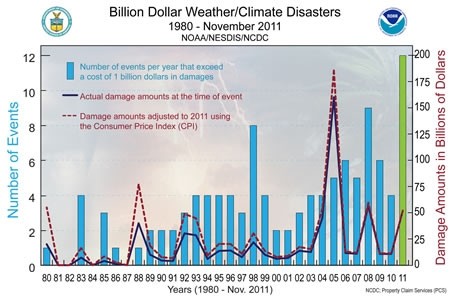

 This week federal agencies are supposed to update Congress on progress made in implementing the

 Uma (in)certa antropologia
Você precisa fazer login para comentar.