Arquivo da tag: Mídia

“Cientistas podem contar uma história sem perder a acurácia” (Fapesp)

Dan Fay, diretor da Microsoft Research Connections, afirma que a tecnologia pode ajudar os pesquisadores a expor artigos e atrair mais leitores, sejam eles seus pares, formuladores de políticas ou agências de fomento (foto:Edu Cesar/FAPESP)

Entrevistas

21/05/2013

Por Frances Jones

Agência FAPESP – Com mais de 20 anos de Microsoft, o engenheiro Dan Fay faz parte de um seleto grupo de profissionais que vasculha o mundo científico em busca de parcerias entre a gigante de informática e autores de projetos relacionados às ciências da Terra, energia e meio ambiente.

São projetos como o software World Wide Telescope, desenvolvido em parceria com pesquisadores da Universidade Johns Hopkins, que permite que cientistas de diversas regiões do mundo acessem imagens de objetos celestes coletadas por telescópios espaciais, observatórios e instituições de pesquisa, manipulem e compartilhem esses dados.

“Nosso desafio é encontrar pesquisadores a cuja pesquisa podemos agregar valor e não apenas fornecer mais máquinas”, disse Fay, que, além de ser diretor da divisão de Terra, Energia e Ambiente da Microsoft Research Connections, o braço de pesquisas da Microsoft, integra o conselho consultivo industrial para Computação e Tecnologia da Informação da Purdue University, no estado norte-americano de Indiana.

Fay esteve em São Paulo para participar do Latin American eScience Workshop 2013, promovido pela FAPESP e pela Microsoft Research de 13 a 15 de maio, quando proferiu duas palestras a pesquisadores e estudantes de diversos países sobre avanços em diversas áreas do conhecimento proporcionados pela melhoria na capacidade de análise de grandes volumes de informações. Em uma delas, falou sobre como a ciência pode utilizar a computação em nuvem; na outra, sobre “como divulgar sua pesquisa internacionalmente”. Em seguida, conversou com a Agência FAPESP. Leia abaixo, trechos da entrevista.

Agência FAPESP – O que o senhor espera para o futuro com relação à eScience, a utilização no fazer ciência de tecnologias e ferramentas de computação?
Fay – O interessante sobre a eScience é combinar dados computacionais e novas técnicas nas mais diversas áreas. O que vemos agora é um uso maior da computação, mas o passo seguinte será o cruzamento dos diferentes domínios e o uso combinado dessas informações, como, por exemplo, da biologia e do meio ambiente juntos, fazendo uma análise transversal. Os dois domínios falam línguas diferentes. A passagem entre as áreas será um dos próximos desafios. Não se pode assumir que um dado significa algo. É preciso ter certeza.

Agência FAPESP – Como os pesquisadores podem utilizar a computação em nuvem para seus estudos?
Fay – A computação em nuvem fornece um novo paradigma para enfrentar os desafios da computação e da análise de dados nas mais diversas áreas do conhecimento científico. Diferentemente dos supercomputadores tradicionais, isolados e centralizados, a nuvem está em todos os lugares e pode oferecer suporte a diferente estilos de computação que são adequados para a análise de dados e para colaboração. Nos últimos três anos temos trabalhado com pesquisadores acadêmicos para explorar o potencial desta nova plataforma. Temos mais de 90 projetos de pesquisa que usam o Windows Azure [plataforma em nuvem da Microsoft] e temos aprendido muito. Como em qualquer tecnologia nova, há sempre pessoas que começam antes e outras depois. Há vários pesquisadores que começaram a usá-la para compreender como isso pode mudar a forma com que fazem pesquisa.

Agência FAPESP – O senhor acha que no futuro haverá uma mudança na forma de se divulgar ciência?
Dan Fay – Comentei com os alunos no workshop que sempre haverá os artigos tradicionais, de revistas científicas, que são revisados pelos pares. Com a quantidade de informações que temos hoje, no entanto, para tornar isso mais visível para outras pessoas e para o público em geral, os dados também podem ser apresentados de outra forma. Um artigo que se aprofunda nos detalhes também pode ser acessível a pessoas de diferentes domínios. Produzir fotos e vídeos, entre outros recursos, também pode ajudar.

Agência FAPESP – Esse é um papel dos cientistas?
Fay – Você pode usar os mesmos dados científicos acurados e contar histórias sobre eles. E permitir que as pessoas escutem diretamente de você essa história de forma visual. Essa interação é muito poderosa. É a mesma coisa que ir ao museu e ver várias obras de arte: as pessoas se conectam a elas. Os cientistas querem que seus colegas e as pessoas em geral se conectem dessa forma com suas informações, dados ou artigos. Acho bom encontrar outros mecanismos que possam explicar os dados. Estamos em uma época fascinante na qual há uma preocupação em divulgar a informação de um jeito interessante. Isso é verdade não apenas quando se quer falar para os seus pares, mas especialmente se você quer que os formuladores de políticas, o governo ou as agências de fomento entendam o que é o seu trabalho. Às vezes ele tem de ser apresentado de forma que possa ser consumido com mais facilidade.

Agência FAPESP – A tecnologia ajuda nesse ponto?
Fay – Sim. Parte disso porque essas formas fazem com que as pessoas leiam com mais profundidade os artigos. Há uma pesquisadora em Harvard, uma astrônoma, que criou um desses tours virtuais que temos sobre as galáxias. Ela calcula que mais pessoas assistiram a seus tours do que leram seus artigos científicos. Esse tipo de entendimento está aumentando. Se posso ajudar alguém a ler um artigo ao ver isso em outro lugar, isso é um avanço.

Agência FAPESP – O senhor acha que os cientistas devem entrar em redes sociais digitais, como o Facebook, para expor seus trabalhos?
Fay – Sim. Eles devem sempre se apoiar no rigor científico, mas ajuda empregar técnicas de design ou de marketing. Mesmo em seus pôsteres. É uma forma de divulgar melhor as informações.

Agência FAPESP – E as novas tecnologias promoverão a abertura dos dados científicos?
Fay – Para além da abertura de dados, há um problema social, no qual as pessoas se sentem donas de suas ideias ou informações. Encontrar formas de compartilhar os dados e dar o devido reconhecimento às pessoas que os coletaram, processaram e os tornaram disponíveis é importante. É aí, acredito, que estão vários desafios. Também há a questão dos dados médicos ou de outros dados que você não quer que fiquem soltos por aí.

Anthropologists should do a better job of promoting their field (Orlando Sentinel)

By Ty Matejowsky and Beatriz M. Reyes-Foster | Guest columnists

April 24, 2013

Anthropology has been in the news quite a bit lately.

The New York Times recently profiled Napoleon Chagnon on the eve of the publication of his memoir, “Noble Savages: My Life Among Two Dangerous Tribes — The Yanomamo and the Anthropologists.”

Last August, Kiplinger named anthropology “the worst major for your career.”

Two months later, Forbes ranked “anthropology and archaeology,” as No. 1 on its list of “worst college majors.”

This newfound public shaming of anthropology only adds insult to injury in light of Florida Gov. Rick Scott‘s dismissive 2011 statements about anthropologists. More than once Scott, whose daughter famously earned an anthropology degree, quipped that Florida does “not need any more anthropologists.”

Overall, 2012 was anthropology’s annus horribilis, as Science magazine recently stated.

Of anthropology’s major subfields, cultural anthropology has probably fared the worst in recent public discussions. Although archaeology and physical anthropology get their fair share of positive media portrayals — think Emily Deschanel’s portrayal of sexy forensic anthropologist Temperance Brennan on CBS’s Bones — it seems that journalists only acknowledge cultural anthropology when it is gripped by controversy.

Cultural anthropology suffers a public-image problem as our “brand” is now largely defined by others. Politicians, studies by business media with profit-driven measures of success, and pseudo-anthropological authorities like Jared Diamond have done much to define cultural anthropology in the popular consciousness.

In many ways, cultural anthropology lacks archaeology’s and physical anthropology’s “cool” cachet. While their practices and methodologies easily translate to National Geographic or History Channel programs, they necessarily involve some degree of commodification.

Bones, ruins, and artifacts all become objects for public consumption. Cultural anthropology is much more difficult to “sell” because it resists similarly commodifying living people. The 2013 Sports Illustrated swimsuit issue with photos of tribal peoples alongside bikini-clad models serves as a prime example of this commodification.

Many cultural anthropologists have remained aloof amid this tumult. This remoteness is surely compounded by today’s academic environment. Public engagement counts little toward promotion and tenure and may even be viewed dismissively by fellow academics.

Many anthropologists, already burdened with increased class sizes, decreased institutional support, and ever-growing pressures to publish and secure research grants simply do not have the time, resources or motivation to publicly voice their opinions.

Cultural anthropology’s branding problem is largely superficial. Anthropologists possess unique knowledge and skill sets that have real-world value. Anthropology helps us understand the world in a way that cannot be reduced to numbers or captured in surveys.

The marketing industry is increasingly recognizing the value of anthropological methodologies. A recent Atlantic article highlights the way in which ethnography and participant-observation are used in market research. Moreover, the World Bank recently elected an anthropologist, Jim Yong Kim, as president.

Anthropologists need to take better ownership of our brand. The complexity of anthropological concepts such as “culture,” “power” and the “global” should not dissuade anthropologists from engaging in meaningful public discourse.

Evidence of such newfound public engagement is emerging within the Web and blogosphere. Jason Antrosio’s Living Anthropologically blog and the “This is Anthropology” initiative, a “jargon-free” website with the purpose of informing the public about anthropology, are well ahead of the curve in this way, providing anthropological perspectives on relevant social issues that are both accessible and engaging.

Revisiting anthropology’s history may be the best way to revitalize the cultural anthropology brand. Franz Boas, considered the father of American anthropology, argued that race is not biologically determined and that no race is genetically superior. His numerous speeches and public writings underscore his commitment to public engagement.

Margaret Mead and Ruth Benedict continued Boas’ tradition by writing books read by millions. Mead’s “Coming of Age in Samoa” pushed gender and sex boundaries in the 1920s. Benedict’s book “The Chrysanthemum and the Sword” transformed many people’s’ understandings of post-war Japan.

The much-loved fictional writing of Zora Neale Hurston was greatly informed by her anthropological training. These anthropologists, perhaps imperfectly, challenged prevailing assumptions by the general public in their times.

Challenging preconceived notions and assumptions is still central to our brand. Anthropology is critically engaged, proactive, holistic and progressive. More than anything, the anthropology brand is concerned with culture, an ever-changing process that both defines our reality and is defined by our individual and societal choices.

Ty Matejowsky and Beatriz M. Reyes-Foster are professors in the department of anthropology at the University of Central Florida.

Conservative Koch Brothers Turning Focus to Newspapers (N.Y.Times)

Tannen Maury/European Pressphoto Agency. Tribune’s newspapers, including The Chicago Tribune, have caught the interest of a number of suitors.

By AMY CHOZICK

Published: April 20, 2013

Three years ago, Charles and David Koch, the billionaire industrialists and supporters of libertarian causes, held a seminar of like-minded, wealthy political donors at the St. Regis Resort in Aspen, Colo. They laid out a three-pronged, 10-year strategy to shift the country toward a smaller government with less regulation and taxes.

Kevork Djansezian/Getty Images. The Los Angeles Times is the fourth-largest paper in the country.

The first two pieces of the strategy — educating grass-roots activists and influencing politics — were not surprising, given the money they have given to policy institutes and political action groups. But the third one was: media.

Other than financing a few fringe libertarian publications, the Kochs have mostly avoided media investments. Now, Koch Industries, the sprawling private company of whichCharles G. Koch serves as chairman and chief executive, is exploring a bid to buy the Tribune Company’s eight regional newspapers, including The Los Angeles Times, The Chicago Tribune, The Baltimore Sun, The Orlando Sentinel and The Hartford Courant.

By early May, the Tribune Company is expected to send financial data to serious suitors in what will be among the largest sales of newspapers by circulation in the country. Koch Industries is among those interested, said several people with direct knowledge of the sale who spoke on the condition they not be named. Tribune emerged from bankruptcy on Dec. 31 and has hired JPMorgan Chase and Evercore Partners to sell its print properties.

The papers, valued at roughly $623 million, would be a financially diminutive deal for Koch Industries, the energy and manufacturing conglomerate based in Wichita, Kan., with annual revenue of about $115 billion.

Politically, however, the papers could serve as a broader platform for the Kochs’ laissez-faire ideas. The Los Angeles Times is the fourth-largest paper in the country, and The Tribune is No. 9, and others are in several battleground states, including two of the largest newspapers in Florida, The Orlando Sentinel and The Sun Sentinel in Fort Lauderdale. A deal could include Hoy, the second-largest Spanish-language daily newspaper, which speaks to the pivotal Hispanic demographic.

One person who attended the Aspen seminar who spoke on the condition of anonymity described the strategy as follows: “It was never ‘How do we destroy the other side?’ ”

“It was ‘How do we make sure our voice is being heard?’ ”

Guests at the Aspen seminar included Philip F. Anschutz, the Republican oil mogul who owns the companies that publish The Washington Examiner, The Oklahoman and The Weekly Standard, and the hedge fund executive Paul E. Singer, who sits on the board of the political magazine Commentary. Attendees were asked not to discuss details about the seminar with the press.

A person who has attended other Koch Industries seminars, which have taken place since 2003, says Charles and David Koch have never said they want to take over newspapers or other large media outlets, but they often say “they see the conservative voice as not being well represented.” The Kochs plan to host another conference at the end of the month, in Palm Springs, Calif.

At this early stage, the thinking inside the Tribune Company, the people close to the deal said, is that Koch Industries could prove the most appealing buyer. Others interested, including a group of wealthy Los Angeles residents led by the billionaire Eli Broad and Ronald W. Burkle, both prominent Democratic donors, and Rupert Murdoch’s News Corporation, would prefer to buy only The Los Angeles Times.

The Tribune Company has signaled it prefers to sell all eight papers and their back-office operations as a bundle. (Tribune, a $7 billion media company that also owns 23 television stations, could also decide to keep the papers if they do not attract a high enough offer.)

Koch Industries is one of the largest sponsors of libertarian causes — including the financing of policy groups like the Cato Institute in Washington and the formation of Americans for Prosperity, the political action group that helped galvanize Tea Party organizations and their causes. The company has said it has no direct link to the Tea Party.

This month a Koch representative contacted Eddy W. Hartenstein, publisher and chief executive of The Los Angeles Times, to discuss a bid, according to a person briefed on the conversation who spoke on the condition of anonymity because the conversation was private. Mr. Hartenstein declined to comment.

Koch Industries recently brought on Angela Redding, a consultant based in Salt Lake City, to analyze the media environment and assess opportunities. Ms. Redding, who previously worked at the Charles G. Koch Charitable Foundation, did not respond to requests for comment.

“As an entrepreneurial company with 60,000 employees around the world, we are constantly exploring profitable opportunities in many industries and sectors. So, it is natural that our name would come up in connection with this rumor,” Melissa Cohlmia, a spokeswoman for Koch Companies Public Sector, said in a statement last month.

“We respect the independence of the journalistic institutions referenced in the news stories,” Ms. Cohlmia continued. “But it is our longstanding policy not to comment on deals or rumors of deals we may or may not be exploring.”

One person who has previously advised Koch Industries said the Tribune Company papers were considered an investment opportunity, and were viewed as entirely separate from Charles and David Kochs’ lifelong mission to shrink the size of government.

At least in politically liberal Los Angeles, a conservative paper could be tricky. David H. Koch, who lives in New York and serves as executive vice president of Koch Industries, has said he supports gay marriage and could align with many residents on some social issues, Reed Galen, a Republican consultant in Orange County, Calif., said.

Koch Industries’ main competitor for The Los Angeles Times is a group of mostly Democratic local residents. In the 2012 political cycle, Mr. Broad gave $477,800, either directly or through his foundation, to Democratic candidates and causes, according to the Center for Responsive Politics. Mr. Burkle has long championed labor unions. President Bill Clinton served as an adviser to Mr. Burkle’s money management firm, Yucaipa Companies, which in 2012 gave $107,500 to Democrats and related causes. The group also includes Austin Beutner, a Democratic candidate for mayor of Los Angeles, and an investment banker who co-founded Evercore Partners.

“This will be a bipartisan group,” Mr. Beutner said. “It’s not about ideology, it’s about a civic interest.” (The Los Angeles consortium is expected to also include Andrew Cherng, founder of the Panda Express Chinese restaurant chain and a Republican.)

“It’s a frightening scenario when a free press is actually a bought and paid-for press and it can happen on both sides,” said Ellen Miller, executive director of the Sunlight Foundation, a nonpartisan watchdog group.

Last month, shortly after L.A. Weekly first reported on Koch Industries’ interest in the Tribune papers, the liberal Web site Daily Kos and Courage Campaign, a Los Angeles-based liberal advocacy group, collected thousands of signatures protesting such a deal. Conservatives, meanwhile, welcomed the idea of a handful of prominent papers spreading the ideas of economic “freedom” from taxes and regulation that the Kochs have championed.

Seton Motley, president of Less Government, an organization devoted to shrinking the role of the government, said the 2012 presidential election reinforced the view that conservatives needed a broader media presence.

“A running joke among conservatives as we watched the G.O.P. establishment spend $500 million on ineffectual TV ads is ‘Why don’t you just buy NBC?’ ” Mr. Motley said. “It’s good the Kochs are talking about fighting fire with a little fire.”

Koch Industries has for years felt the mainstream media unfairly covered the company and its founding family because of its political beliefs. KochFacts.com, a Web site run by the company, disputes perceived press inaccuracies. The site, which asserts liberal bias in the news media, has published private e-mail conversations between company press officers and journalists, including the Politico reporter Kenneth P. Vogel and editors at The New Yorker in response to an article about the Kochs by Jane Mayer.

“So far, they haven’t seemed to be particularly enthusiastic about the role of the free press,” Ms. Mayer said in an e-mail, “but hopefully, if they become newspaper publishers, they’ll embrace it with a bit more enthusiasm.”

A Democratic political operative who spoke on the condition of anonymity, said he admired how over decades the brothers have assembled a complex political infrastructure that supports their agenda. A media company seems like a logical next step.

This person said, “If they get some bad press that Darth Vader is buying Tribune, they don’t care.”

Black and White and Red All Over (Foreign Policy)

How the hyperkinetic media is breeding a new generation of terrorists.

BY SCOTT ATRAN | APRIL 22, 2013

“Americans refuse to be terrorized,” declared President Barack Obama in the aftermath of the Boston Marathon bombings. “Ultimately, that’s what we’ll remember from this week.” Believe that, and I’ve got a bridge to sell you in Brooklyn.

The Boston bombings have provoked the most intense display of law enforcement and media coverage since the 9/11 attacks. Greater Boston was in full lockdown: “a ghost town,” “a city in terror,” “a war zone,” screamed the headlines. Public transit was stopped, a no-fly zone proclaimed, people told to stay indoors, schools and universities closed, and hundreds of FBI agents pulled from other pressing investigations to focus exclusively on the case — along with thousands upon thousands of other federal, state, and city agents equipped with heavy weapons and armored vehicles. It all came close to martial law, with all the tools of the security state mobilized to track down a pair of young immigrants with low-tech explosives and small arms who failed to reconcile their problems of identity and became suspected amateur terrorists.

Not that the events weren’t shocking and brutal. But this law enforcement and media response, of course, is part of the overall U.S. reaction to terrorism since 9/11, when perhaps never in history have so few, armed with so few means, caused so much fear in so many. Indeed, as with the anarchists a century ago, last week’s response is precisely the outsized reaction that sponsors of terrorism have always counted on in order to terrorize.

Nothing compares to the grief of parents whose child has been murdered like 8-year-old Martin Richard, except perhaps the collective grief of many parents, as for the 20 children killed in last December’s school massacre in Newtown, Conn. Yet, despite the fact that the probability of a child, or anyone else in the United States, being killed by a terrorist bomb is vastly smaller than being killed by an unregistered handgun — or even by an unregulated fertilizer plant — U.S. politicians and the public seem likely to continue to support uncritically the extravagant measures associated with an irrational policy of “zero tolerance” for terrorism, as opposed to much-more-than-zero tolerance for nearly all other threats of violence. Given the millions of dollars already spent on the Boston bombing investigation and the trillions that the national response to terrorism has cost in little more than a decade, the public deserves a more reasoned response. We can never, ever be absolutely safe, no matter how much treasure we spend or how many civil liberties we sacrifice.

While there is always the chance that investigators will find foreign connections and broader plots beyond the doings of the two men suspected in the Boston bombing, our knowledge about terrorism suggests that what we already know about the April 15 bombing does not justify the disproportionate and overwrought response, including the “global security alert” U.S. authorities issued through Interpol for 190 countries. Even if the suspected Boston bombers prove to be part of a larger network of jihadi wannabes, as were the 2005 London subway suicide bombers, or had planned more operations before dying in a blaze of glory, as did the 2004 Madrid train bombers, these would-be knights under the prophet’s banner could never alone wreak the havoc that our reaction to them does.

The brothers Tsarnaev, the suspected Boston bombers, have been described by neighbors, friends, and relatives as fairly normal young men — regular Cambridge kinds. They left the Chechen conflict years ago and immigrated to the United States as asylum seekers under the U.S. government’s refugee resettlement program. Tamerlan, the oldest, was married with a 3-year-old daughter. A former Golden Gloves heavyweight boxer who once thought of competing for the United States, he had been increasingly drawn to radical Islam in the last few years. In a photo essay about his fondness for boxing, he worried, “I don’t have a single American friend; I don’t understand them.” He complained, “There are no values anymore,” forswearing drinking because “God said no alcohol.” Tamerlan’s YouTube page posts videos of radical Islamic clerics from Chechnya and elsewhere haranguing the West as bombs explode in the background. In 2011, the FBI interviewed Tamerlan at Russia’s request about connections to Chechen extremists, but the investigation found “no derogatory information.” Although Russian forces withdrew from Chechnya in 2009, violence has persisted in neighboring Dagestan, where Tamerlan visited his father last year and perhaps linked up with jihadi instigators who motivated him to act. Like the father of 9/11 pilot bomber Mohamed Atta, Tamerlan’s father claims his boy was framed and murdered. In his last reported phone communication, on Thursday, just hours before the police shootout began, he called his mother.

The younger brother, Dzhokhar, a sophomore at the University of Massachusetts in Dartmouth, played intramural soccer. On the day after the bombing he went to the dorms, worked out at the gym, and that night went to a party attended by some of his soccer buddies. Known to his friends as Jahar, he entered the university on a scholarship but lately had been failing his classes. He hung out with other students, had an easy relationship with the other young men and women, hardly ever talked politics, and was never pegged as an Islamist activist or sympathizer or even as particularly religious. Whereas relatives, friends, and teachers consistently describe Jahar as “always smiling,” “with a heart of gold,” acquaintances say Tamerlan never smiled and was aggressive. One cousin said he warned Jahar about being susceptible to the negative influence of the older brother he loved. In the last few months, Jahar’s tweets began turning darker: “i won’t run i’ll just gun you all out #thugliving,” “Do I look like that much of a softy … little do these dogs know they’re barking at a lion,” “I killed Abe Lincoln during my two hour nap #intensedream.” But declaring this wayward killer — and a naturalized citizen, at that — an “enemy combatant” borders on Orwellian.

Under sponsorship by the Defense Department, my multidisciplinary, multinational research team has been conducting field studies and analyses of the mental and social processes involved in radicalization at home and abroad. Our findings indicate that terrorist plotters against Western civilian populations tend not to be parts of sophisticated, foreign-based command-and-control organizations. Rather, they belong to loose, homegrown networks of family and friends who die not just for a cause, but for each other. Jihadists pretty much span the population’s normal distribution: There are very few psychopaths and sociopaths, few brilliant thinkers and strategists. Jihadi wannabes today are mostly emerging adults in transitional stages of their lives — students, immigrants, in search of jobs or companions — who are especially prone to movements that promise a meaningful cause, camaraderie, adventure, and glory. Most have a secular education, becoming “born again” into the jihadi cause in their late teens or 20s. The path to radicalization can take years, months, or just days, depending on personal vulnerabilities and the influence of others. Occasionally there is a hookup with a relative, or a friend of a friend, who has some overseas connection to someone who can get them a bit of training and motivation to pack a bag of explosives or pull a trigger, but the Internet and social media are usually sufficient for radicalization and even operational preparation.

The result is not a hierarchic, centrally commanded terrorist movement but a decentralized, self-organizing, and constantly evolving complex of social networks based on contingent adaptations to changing events. These are no real “cells,” but only clusters of mostly young men who motivate one another within “brotherhoods” of real and fictive kin. Often, in fact, there is an older brother figure, a dominant personality who mobilizes others in the group. But rarely is there an overriding authority or father figure. (Notably, for these transitional youth, there’s often an absence of a real father).

Some of the most successful plots, such as the Madrid and London bombings, are so anarchic, fluid, and improbable that they succeeded in evading detection despite the fact that intelligence and law enforcement agencies had been following some of the actors for some time. Three key elements characterize the “organized anarchy” that typifies modern violent Islamic activism: Ultimate goals are vague and superficial (often no deeper than revenge against perceived injustice against Muslims around the world); modes of action are decided pragmatically on the basis of trial and error or based on the residue of learning from accidents of past experience; and those who join are not recruited but are locally linked self-seekers — often from the same family, neighborhood, or Internet chat room — whose connection to global jihad is more virtual than material. Al Qaeda and associates do not so much recruit as attract disaffected individuals who have already decided to embark on the path to violent extremism with the help of family, friends, or a few fellow travelers.

Like the young men who carried out the Madrid and London attacks, most homegrown jihadi plotters first hook up with the broad protest sentiment against “the global attack on Islam” before moving into a narrower parallel universe. They cut ties with former companions who they believe are too timid to act and cement bonds with those who are willing to strike. They emerge from their cocoon with strong commitment to strike and die if necessary, but without any clear contingency planning for what might happen after the initial attack.

For the first time in history, a massive, media-driven political awakening has been occurring — spurred by the advent of the Internet, social media, and cable television — that can, on the one hand, motivate universal respect for human rights while, on the other, enable, say, Muslims from Borneo to sacrifice themselves for Palestine, Afghanistan, or Chechnya (despite almost no contact or shared history for the last 50,000 years or so). When perceived global injustice resonates with frustrated personal aspirations, moral outrage gives universal meaning and provides the push to radicalization and violent action.

But the popular notion of a “clash of civilizations” between Islam and the West is woefully misleading. Violent extremism represents not the resurgence of traditional cultures, but their collapse, as young people unmoored from millennial traditions flail about in search of a social identity that gives personal significance. This is the dark side of globalization.

Take Faisal Shahzad, the would-be bomber of Times Square in 2010, or Maj. Nidal Hasan, who killed 13 fellow soldiers at Fort Hood in 2009. Both were apparently inspired by the online rhetoric of Anwar al-Awlaki, a former preacher at a Northern Virginia mosque who was killed by a U.S. drone in Yemen in 2011. Although many commentators leapt to the conclusion that Awlaki and his ilk deviously brainwashed and recruited Shahzad and Hassan, in fact they sought out the popular Internet preacher because they were already radicalized to the point of wanting further guidance to act. As Defense Department terrorism consultant Marc Sageman notes: “Just like you saw Major Hasan send 21 emails to al-Awlaki, who sends him two back, you have people seeking these guys and asking them for advice.” More than 80 percent of plots in both Europe and the United States were concocted from the bottom up by mostly young people just hooking up with one another.

Especially for young men, mortal combat with a “band of brothers” in the service of a great cause is both the ultimate adventure and a road to esteem in the hearts of their peers. For many disaffected souls today, jihad is a heroic cause — a promise that anyone from anywhere can make a mark against the most powerful country in the history of the world. But because would-be jihadists best thrive and act in small groups and among networks of family and friends — not in large movements or armies — their threat can only match their ambitions if fueled way beyond actual strength. And publicity is the oxygen that fires modern terrorism.

It is not by arraying “every element of our national power” against would-be jihadists and those who inspire them that violent extremism will be stopped, as Obama once declared. Although wide-ranging intelligence, good police work, and security preparedness (including by the military and law enforcement) is required to track and thwart the expansion of al Qaeda affiliates into the Arabian Peninsula, Syria (and perhaps Jordan), North Africa, and East Africa, this is insufficient. As 2012 U.S. presidential candidate Mitt Romney quipped, “We can’t kill our way out of this mess.” In the United States, there are many pockets of displaced immigrant and refugee young people with even more than the usual struggles of personal development. Young Somalis seem to be having particular difficulty, and a small few are moving to the path of violent jihad. This is a good time to think about how we relate to them, though there are probably more easy mistakes than easy solutions. But political attempts to relate these problems to the very different issue of illegal immigration only adds to the scaremongering.

We need to pay attention to what makes these young men want to die to kill, by listening to their families and friends, trying to engage them on the Internet, and seeing whom they idolize, how they organize, what bonds them, and what drives them. U.S. power won’t stop the self-seeking, and preaching “moderate” Islam (or moderate anything) is hardly likely to sway young men in search of significance and glory. And even if every airplane passenger were to be scanned naked or every American city locked down, it would not stop young men from joining the jihad or concocting new ways of killing civilians.

Terrorists are directly responsible for violent acts, but only indirectly for the reaction that follows. Objectively, terrorist acts on even a 9/11 scale could never seriously harm American society; only our reaction can. By amplifying and connecting relatively sporadic terrorist acts into a generalized “war” or “assault on freedom,” the somewhat marginal phenomenon of terrorism has become a primary preoccupation of the U.S. government and American people. In this sense, Osama bin Laden has been victorious beyond his wildest dreams — not because of anything he has done, but because of how we have reacted to the episodic successes he inspires.

There are several ways to react to the political hype and media amplification of terrorism. Doing nothing and allowing this frenzied media environment to continue will only encourage future attacks; meanwhile, reporting that rushes to judgment and complements law enforcement’s denial of Miranda rights will only erode confidence in the integrity and fairness of the American press and U.S. government institutions. Legal regulation of media, as in many other countries, may not be compatible with a free society and if tried would certainly provoke persistent opposition and deep outrage. For example, previous attempts by the British government to ban interviews with terrorists and their supporters backfired. As the 6th U.S. Circuit Court of Appeals noted in 2002, “Democracies die behind closed doors.” Even noncoercive guidelines are likely to incite widespread resistance. As former New York Times Executive Editor A.M. Rosenthal put it: “The last thing in the world I want is guidelines. I don’t want guidelines from the government … or anyone else.”

But voluntary self-restraint by the media, which is less intrusive and supported by many, is not only possible but manageable. (Venerable journalist Edward R. Murrow, informed by President Franklin D. Roosevelt on the specifics of the Pearl Harbor attack, declined the scoop and didn’t file his report until the administration could formulate a reasoned response.) Of course, “gentle censorship,” like the initially successful attempts by George W. Bush’s administration to prevent airing of bin Laden messages or talks with terrorists, can seriously hamper the flow of knowledge necessary for understanding what makes terrorists tick and how to thwart them.

The First Amendment enables the news media to watchdog the republic and help prevent government excesses and abuses so that a well-informed public can monitor and decide where government policy should go. Yet the media is increasingly less a public service devoted to this task than a competitive business that believes it best succeeds through sensation, which violence privileges. For example, the typical television news story has declined from an average of several minutes in the 1950s and 1960s to today’s repeated sound bites — often no more than a few seconds — that sensationalize the spectacular. And despite the fact that one of the suspected Boston bombers is now dead and the other in custody, it can be argued that their terrorism succeeded through the spectacular theater of last week’s events, capturing our attention and stoking our deepest fears.

We can break this real, if unplanned, alliance between terrorism and the media through better reporting for the social good, which may prove to be the best business strategy of all. When we practice restraint and show the resilience of people carrying on with their lives even in the face of atrocities like that in Boston, then terrorism fails.

Scott Atran, an anthropologist at John Jay College, the University of Michigan, and Oxford University, is co-founder of ARTIS Research and author of Talking to the Enemy.

Carbon bubble will plunge the world into another financial crisis – report (The Guardian)

Trillions of dollars at risk as stock markets inflate value of fossil fuels that may have to remain buried forever, experts warn

Damian Carrington – The Guardian, Friday 19 April 2013

Carbon bubble : carbon dioxide polluting power plant : coal-fired Bruce Mansfield Power Plant

Global stock markets are betting on countries failing to adhere to legally binding carbon emission targets. Photograph: Robert Nickelsberg/Getty Images

The world could be heading for a major economic crisis as stock marketsinflate an investment bubble in fossil fuels to the tune of trillions of dollars, according to leading economists.

“The financial crisis has shown what happens when risks accumulate unnoticed,” said Lord (Nicholas) Stern, a professor at the London School of Economics. He said the risk was “very big indeed” and that almost all investors and regulators were failing to address it.

The so-called “carbon bubble” is the result of an over-valuation of oil,coal and gas reserves held by fossil fuel companies. According to a report published on Friday, at least two-thirds of these reserves will have to remain underground if the world is to meet existing internationally agreed targets to avoid the threshold for “dangerous” climate changeIf the agreements hold, these reserves will be in effect unburnable and so worthless – leading to massive market losses. But the stock markets are betting on countries’ inaction on climate change.

The stark report is by Stern and the thinktank Carbon Tracker. Their warning is supported by organisations including HSBC, Citi, Standard and Poor’s and the International Energy Agency. The Bank of England has also recognised that a collapse in the value of oil, gas and coal assets as nations tackle global warming is a potential systemic risk to the economy, with London being particularly at risk owing to its huge listings of coal.

Stern said that far from reducing efforts to develop fossil fuels, the top 200 companies spent $674bn (£441bn) in 2012 to find and exploit even more new resources, a sum equivalent to 1% of global GDP, which could end up as “stranded” or valueless assets. Stern’s landmark 2006 reporton the economic impact of climate change – commissioned by the then chancellor, Gordon Brown – concluded that spending 1% of GDP would pay for a transition to a clean and sustainable economy.

The world’s governments have agreed to restrict the global temperature rise to 2C, beyond which the impacts become severe and unpredictable. But Stern said the investors clearly did not believe action to curb climate change was going to be taken. “They can’t believe that and also believe that the markets are sensibly valued now.”

“They only believe environmental regulation when they see it,” said James Leaton, from Carbon Tracker and a former PwC consultant. He said short-termism in financial markets was the other major reason for the carbon bubble. “Analysts say you should ride the train until just before it goes off the cliff. Each thinks they are smart enough to get off in time, but not everyone can get out of the door at the same time. That is why you get bubbles and crashes.”

Paul Spedding, an oil and gas analyst at HSBC, said: “The scale of ‘listed’ unburnable carbon revealed in this report is astonishing. This report makes it clear that ‘business as usual’ is not a viable option for the fossil fuel industry in the long term. [The market] is assuming it will get early warning, but my worry is that things often happen suddenly in the oil and gas sector.”

HSBC warned that 40-60% of the market capitalisation of oil and gas companies was at risk from the carbon bubble, with the top 200 fossil fuel companies alone having a current value of $4tn, along with $1.5tn debt.

Lord McFall, who chaired the Commons Treasury select committee for a decade, said: “Despite its devastating scale, the banking crisis was at its heart an avoidable crisis: the threat of significant carbon writedown has the unmistakable characteristics of the same endemic problems.”

The report calculates that the world’s currently indicated fossil fuel reserves equate to 2,860bn tonnes of carbon dioxide, but that just 31% could be burned for an 80% chance of keeping below a 2C temperature rise. For a 50% chance of 2C or less, just 38% could be burned.

Carbon capture and storage technology, which buries emissions underground, can play a role in the future, but even an optimistic scenario which sees 3,800 commercial projects worldwide would allow only an extra 4% of fossil fuel reserves to be burned. There are currently no commercial projects up and running. The normally conservativeInternational Energy Agency has also concluded that a major part of fossil fuel reserves is unburnable.

Citi bank warned investors in Australia’s vast coal industry that little could be done to avoid the future loss of value in the face of action on climate change. “If the unburnable carbon scenario does occur, it is difficult to see how the value of fossil fuel reserves can be maintained, so we see few options for risk mitigation.”

Ratings agencies have expressed concerns, with Standard and Poor’s concluding that the risk could lead to the downgrading of the credit ratings of oil companies within a few years.

Steven Oman, senior vice-president at Moody’s, said: “It behoves us as investors and as a society to know the true cost of something so that intelligent and constructive policy and investment decisions can be made. Too often the true costs are treated as unquantifiable or even ignored.”

Jens Peers, who manages €4bn (£3bn) for Mirova, part of €300bn asset managers Natixis, said: “It is shocking to see the report’s numbers, as they are worse than people realise. The risk is massive, but a lot of asset managers think they have a lot of time. I think they are wrong.” He said a key moment will come in 2015, the date when the world’s governments have pledged to strike a global deal to limit carbon emissions. But he said that fund managers need to move now. If they wait till 2015, “it will be too late for them to take action.”

Pension funds are also concerned. “Every pension fund manager needs to ask themselves have we incorporated climate change and carbon risk into our investment strategy? If the answer is no, they need to start to now,” said Howard Pearce, head of pension fund management at the Environment Agency, which holds £2bn in assets.

Stern and Leaton both point to China as evidence that carbon cuts are likely to be delivered. China’s leaders have said its coal use will peak in the next five years, said Leaton, but this has not been priced in. “I don’t know why the market does not believe China,” he said. “When it says it is going to do something, it usually does.” He said the US and Australia were banking on selling coal to China but that this “doesn’t add up”.

Jeremy Grantham, a billionaire fund manager who oversees $106bn of assets, said his company was on the verge of pulling out of all coal and unconventional fossil fuels, such as oil from tar sands. “The probability of them running into trouble is too high for me to take that risk as an investor.” He said: “If we mean to burn all the coal and any appreciable percentage of the tar sands, or other unconventional oil and gas then we’re cooked. [There are] terrible consequences that we will lay at the door of our grandchildren.”

Futuristic predictions from 1988 LA Times Magazine come true… mostly (Singularity Hub)

Written By: 

Posted: 03/28/13 8:52 AM

los-angeles-banner

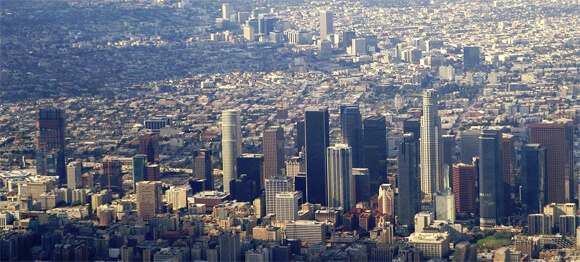
In 2013, a day in the life of a Los Angeles family of four is an amazing testament to technological progress and the idealistic society that can be achieved…or at least that’s what the Los Angeles Times Magazine was hoping for 25 years ago. Back in April 1988, the magazine ran a special cover story called “L.A. 2013″ and presented what a typical day would be like for a family living in the city.

The author of the story, Nicole Yorkin, spoke with over 30 experts and futurists to forecast daily life in 2013 and then wove these into a story akin to those “World of Tomorrow” MGM cartoons from the mid-20th century. But unlike the cartoons which often included far fetched technologies for humor, what’s most remarkable about the 1988 article is just how many of the predictions have actually come to pass, giving some leeway in how accurately the future can be imagined.

For anyone considering what will happen in the next 25 years, the article is worth a read as it serves as an amazing window into how well the future can be predicted in addition to what technology is able to achieve in a short period of time.

LA-2013-banner

Just consider the section on ‘smart cars’ speculated to be “smaller, more efficient, more automated and more personalized” than cars 25 years ago. While experts envisioned that cars would have more Transformer-like abilities to change from a sports car to a beach buggy, the key development in automobile technology will be “a central computer in the car that will control a number of devices.” Furthermore, cars were expected to be equipped with “electronic navigation or map systems,” or GPS systems. Although modern cars don’t have a ‘sonar shield’ that would cause a car to slow down when it came closer to another, parking sensors are becoming common and rearview cameras may soon be required by law.

Though the article doesn’t explicitly predict the Internet and all its consequences per se, computers were implicit to some of the predictions, such as telecommuting, virtual shopping, smart cards for health monitoring, a personalized ‘home newspaper,’ and video chatting. Integrated computers were also expected in the form of smart appliances, wall-to-ceiling computer displays in classrooms, and 3D video conferencing. These technologies exist today thanks to the networked computer revolution that was amazingly only in its infancy in 1988.

LA-2013-robot

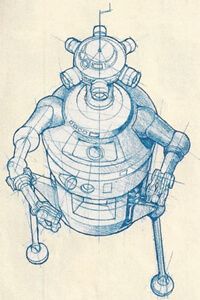
‘The Ultimate Appliance’ is the mobile robot expected to be a ‘fixture’ in today’s homes.

But of all the technologies expected to be part of daily life in 2013, the biggest miss by the article comes with robots.

In fact, the mobile robot “Billy Rae” is depicted as an integral component to the household, much like Rosie The Robot was in The Jetsons. In the story, the family communicates with Billy Rae naturally as the mother reads a list of chores for cleaning the house and preparing meals. There’s even a pet canine robot named Max that helps the son learn to read and do math. The robots aren’t necessarily depicted as being super intelligent, but they were still expected to be vital, even being referred to as the “ultimate appliance.”

In recent years, great strides have been made with robots and artificial intelligence, but we are years away from having a maid-like robot that was hoped for in the article. We’re all familiar withcleaning robots like the Roomba and hospitals are starting to utilize healthcare robots.Personal assistants like Siri show that we’re getting closer to the day when people and computers can communicate verbally. But bringing all these technologies together is one of the most challenging problems to be solved, even with the high amounts of expectation and huge market potential that these bots will experience.

In light of this, it’s interesting to compare the predictions in this article to those in French illustrations drawn around 1900, which also include a fair share of robotic automation.

The piece is peppered with utopian speculation, but already on the radar were concerns about the shifting job market, increasing pollution, and the need for quality schooling, public transportation, and affordable housing, issues that have reached or are nearing crisis levels. It’s comforting to know that many of the problems that modern cities face were understood fairly well a quarter of a century ago, but it is sobering to recognize how technologies have been slow in some cases at handling these problems.

Perhaps the greatest lesson from reading the article is that few of the predictions are completely wrong, but the timescale was ambitious. Almost all of the technologies described will get here sooner or later. The real issue then is, what is preventing rapid innovation or broad-scale adoption of technologies?

Not surprisingly, the answers today are the same as they were 25 years ago: time and money.

LA-metro-rail

[images: kla4067/Flickr, LA Times]

Violent Video Games Are a Risk Factor for Criminal Behavior and Aggression, New Evidence Shows (Science Daily)

Mar. 26, 2013 — People are quick to point the finger or dismiss the effect of violent video games as a factor in criminal behavior. New evidence from Iowa State researchers demonstrates a link between video games and youth violence and delinquency.

Iowa State researchers say there is a strong connection between violent video games and youth violence and delinquency. (Credit: Photo by Bob Elbert)

Matt DeLisi, a professor of sociology, said the research shows a strong connection even when controlling for a history of violence and psychopathic traits among juvenile offenders.

“When critics say, ‘Well, it’s probably not video games, it’s probably how antisocial they are,’ we can address that directly because we controlled for a lot of things that we know matter,” DeLisi said. “Even if you account for the child’s sex, age, race, the age they were first referred to juvenile court — which is a very powerful effect — and a bunch of other media effects, like screen time and exposure. Even with all of that, the video game measure still mattered.”

The results were not unexpected, but somewhat surprising for Douglas Gentile, an associate professor of psychology, who has studied the effects of video game violence exposure and minor aggression, like hitting, teasing and name-calling.

“I didn’t expect to see much of an effect when we got to serious delinquent and criminal level aggression because youth who commit that level of aggression have a lot of things going wrong for them. They often have a lot of risk factors and very few protective factors in their lives,” Gentile said.

The study published in the April issue of Youth Violence and Juvenile Justice examined the level of video game exposure for 227 juvenile offenders in Pennsylvania. The average offender had committed nearly nine serious acts of violence, such as gang fighting, hitting a parent or attacking another person in the prior year.

The results show that both the frequency of play and affinity for violent games were strongly associated with delinquent and violent behavior. Craig Anderson, Distinguished Professor of psychology and director of the Center for the Study of Violence at Iowa State, said violent video game exposure is not the sole cause of violence, but this study shows it is a risk factor.

“Can we say from this study that Adam Lanza, or any of the others, went off and killed people because of media violence? You can’t take the stand of the NRA that it’s strictly video games and not guns,” Anderson said. “You also can’t take the stand of the entertainment industry that it has nothing to do with media violence that it’s all about guns and not about media violence. They’re both wrong and they’re both right, both are causal risk factors.”

Researchers point out that juvenile offenders have several risk factors that influence their behavior. The next step is to build on this research to determine what combination of factors is the most volatile and if there is a saturation point.

“When studying serious aggression, looking at multiple risk factors matters more than looking at any one,” Gentile said. “The cutting edge of research is trying to understand in what combination do the individual risk factors start influencing each other in ways to either enhance or mitigate the odds of aggression?”

What does this mean for parents?

There is a lot of misinformation about video game exposure, Anderson said, that makes it difficult for parents to understand the harmful effects. Although it is one variable that parents can control, he understands that with mixed messages about the risks some parents may feel it’s not worth the effort.

“What parent would go through the pain and all the effort it takes to really control their child’s media diet, if they don’t really think it makes any difference? That is why it is so important to get out the simple and clear message that media violence does matter,” Anderson said.

Just because a child plays a violent video game does not mean he or she is going to act violently. Researchers say if there is a take away for parents, it is an awareness of what their children are playing and how that may influence their behavior.

“I think parents need to be truthful and honest about who their children are in terms of their psychiatric functioning,” DeLisi said. “If you have a kid who is antisocial, who is a little bit vulnerable to influence, giving them something that allows them to escape into themselves for a long period of time isn’t a healthy thing.”

Journal Reference:

  1. M. DeLisi, M. G. Vaughn, D. A. Gentile, C. A. Anderson, J. J. Shook. Violent Video Games, Delinquency, and Youth Violence: New EvidenceYouth Violence and Juvenile Justice, 2012; 11 (2): 132 DOI:10.1177/1541204012460874

‘Networked Minds’ Require Fundamentally New Kind of Economics (Science Daily)

Mar. 20, 2013 — In their computer simulations of human evolution, scientists at ETH Zurich find the emergence of the “homo socialis” with “other-regarding” preferences. The results explain some intriguing findings in experimental economics and call for a new economic theory of “networked minds”.

In their computer simulations of human evolution, scientists at ETH Zurich find the emergence of the “homo socialis” with “other-regarding” preferences. The results explain some intriguing findings in experimental economics and call for a new economic theory of “networked minds”. (Credit: © violetkaipa / Fotolia)

Economics has a beautiful body of theory. But does it describe real markets? Doubts have come up not only in the wake of the financial crisis, since financial crashes should not occur according to the then established theories. Since ages, economic theory is based on concepts such as efficient markets and the “homo economicus”, i.e. the assumption of competitively optimizing individuals and firms. It was believed that any behavior deviating from this would create disadvantages and, hence, be eliminated by natural selection. But experimental evidence from behavioral economics show that, on average, people behave more fairness-oriented and other-regarding than expected. A new theory by scientists from ETH Zurich now explains why.

“We have simulated interactions of individuals facing social dilemma situations, where it would be favorable for everyone to cooperate, but non-cooperative behavior is tempting,” explains Dr. Thomas Grund, one of the authors of the study. “Hence, cooperation tends to erode, which is bad for everyone.” This may create tragedies of the commons such as over-fishing, environmental pollution, or tax evasion.

Evolution of “friendliness”

Prof. Dirk Helbing of ETH Zurich, who coordinated the study, adds: “Compared to conventional models for the evolution of social cooperation, we have distinguished between the actual behavior – cooperation or not – and an inherited character trait, describing the degree of other-regarding preferences, which we call the friendliness.” The actual behavior considers not only the own advantage (“payoff”), but also gives a weight to the payoff of the interaction partners depending on the individual friendliness. For the “homo economicus”, the weight is zero. The friendliness spreads from one generation to the next according to natural selection. This is merely based on the own payoff, but mutations happen.

For most parameter combinations, the model predicts the evolution of a payoff-maximizing “homo economicus” with selfish preferences, as assumed by a great share of the economic literature. Very surprisingly, however, biological selection may create a “homo socialis” with other-regarding preferences, namely if offsprings tend to stay close to their parents. In such a case, clusters of friendly people, who are “conditionally cooperative”, may evolve over time.

If an unconditionally cooperative individual is born by chance, it may be exploited by everyone and not leave any offspring. However, if born in a favorable, conditionally cooperative environment, it may trigger cascade-like transitions to cooperative behavior, such that other-regarding behavior pays off. Consequently, a “homo socialis” spreads.

Networked minds create a cooperative human species

“This has fundamental implications for the way, economic theories should look like,” underlines Professor Helbing. Most of today’s economic knowledge is for the “homo economicus”, but people wonder whether that theory really applies. A comparable body of work for the “homo socialis” still needs to be written.

While the “homo economicus” optimizes its utility independently, the “homo socialis” puts himself or herself into the shoes of others to consider their interests as well,” explains Grund, and Helbing adds: “This establishes something like “networked minds”. Everyone’s decisions depend on the preferences of others.” This becomes even more important in our networked world.

A participatory kind of economy

How will this change our economy? Today, many customers doubt that they get the best service by people who are driven by their own profits and bonuses. “Our theory predicts that the level of other-regarding preferences is distributed broadly, from selfish to altruistic. Academic education in economics has largely promoted the selfish type. Perhaps, our economic thinking needs to fundamentally change, and our economy should be run by different kinds of people,” suggests Grund. “The true capitalist has other-regarding preferences,” adds Helbing, “as the “homo socialis” earns much more payoff.” This is, because the “homo socialis” manages to overcome the downwards spiral that tends to drive the “homo economicus” towards tragedies of the commons. The breakdown of trust and cooperation in the financial markets back in 2008 might be seen as good example.

“Social media will promote a new kind of participatory economy, in which competition goes hand in hand with cooperation,” believes Helbing. Indeed, the digital economy’s paradigm of the “prosumer” states that the Internet, social platforms, 3D printers and other developments will enable the co-producing consumer. “It will be hard to tell who is consumer and who is producer”, says Christian Waloszek. “You might be both at the same time, and this creates a much more cooperative perspective.”

Journal Reference:

  1. Thomas Grund, Christian Waloszek, Dirk Helbing. How Natural Selection Can Create Both Self- and Other-Regarding Preferences, and Networked Minds.Scientific Reports, 2013; 3 DOI: 10.1038/srep01480

Aggressive Advertising Makes for Aggressive Men (Science Daily)

Feb. 28, 2013 — Does advertising influence society, or is it merely a reflection of society’s pre-existing norms? Where male attitudes are concerned, a new study implicates magazine advertisements specifically aimed at men as helping to reinforce a certain set of views on masculinity termed “hyper-masculinity.” The article by Megan Vokey, a Ph.D. candidate from the University of Manitoba, and colleagues is published in Springer’s journal Sex Roles.

Hyper-masculinity is an extreme form of masculine gender ideology comprising four main components: toughness, violence, dangerousness and calloused attitudes toward women and sex. The authors found that hyper-masculine depictions of men, centered on this cluster of beliefs, appear to be common place in U.S. magazine advertisements.

Using a range of eight, high-circulation magazines marketed to men of different ages, levels of education and income (e.g. Golf Digest to Game Informer), Vokey and her colleagues analyzed the ads in each magazine where a photograph, picture or symbol of a man was shown. The researchers then categorized these advertisements using the four components that constitute hyper-masculinity. They found that at least one of these hyper-masculine attitudes was depicted in 56 percent of the total sample of 527 advertisements. In some magazines, this percentage was as high as 90 percent.

Vokey’s results are consistent with considerable prior research showing a positive association between hyper-masculine beliefs and a host of social and health problems, such as dangerous driving, drug use and violence towards women. Further analysis of the data showed that magazines with the highest proportion of hyper-masculine advertisements were those aimed at younger, less-affluent and less-educated men. The authors argue that this is an area of real concern as young men are still learning appropriate gender behaviors, and their beliefs and attitudes can be subtly shaped by images that the mass media repeatedly represent. In addition, men with lower social and economic power are already more likely to use a facade of toughness and physical violence as methods of gaining power and respect. These advertisements are thought to help reinforce the belief that this is desirable behavior..

The authors conclude, “The widespread depiction of hyper-masculinity in men’s magazine advertising may be detrimental to both men and society at large.. Although theoretically, men as a group can resist the harmful aspects of hyper-masculine images, the effects of such images cannot be escaped completely.” They add that educating advertisers about the potential negative consequences of their advertising may help reduce the use of these stereotypes.

Journal Reference:

  1. Megan Vokey, Bruce Tefft, Chris Tysiaczny. An Analysis of Hyper-Masculinity in Magazine AdvertisementsSex Roles, 2013; DOI: 10.1007/s11199-013-0268-1

Faltam cinco dias para um alerta global pela consciência ambiental (WWF/Envolverde)

18/3/2013 – 10h50

por Redação do WWF Brasil

n12 300x183 Faltam cinco dias para um alerta global pela consciência ambientalNo próximo sábado, 23 de março, às 20h30 (hora local), milhares, talvez bilhões de pessoas apagarão as luzes de suas casas, comércios, repartições, monumentos e outros logradouros importantes num ato simbólico de alerta contra as mudanças no clima.

É a nona edição da Hora do Planeta, um movimento que começou tímido na Austrália e hoje envolve milhares de cidades em mais de 152 países. Aqui o País a Hora do Planeta é promovida pelo WWF-Brasil e o objetivo é superar os números do ano passado, atraindo para a Hora do Planeta todas as capitais estaduais e o Distrito Federal, e ultrapassando a marca de 131 cidades participantes em 2012.

Sua cidade pode seguir o exemplo das muitas que já o fizeram e se inscrever enviando um email para cidades@wwf.org.br e assinando o Termo de Adesão. Escolas e instituições também não podem ficar de fora.

Sua participação pessoal é fundamental para o sucesso da Hora do Planeta. Não podemos mais consumir o equivalente a um planeta e meio de recursos para nossa subsistência na Terra. Adote práticas sustentáveis desde já e depois do 23 de março. Recicle. Reduza. Reutilize. É possível adotar mudanças simples no seu estilo de vida, que terão um grande impacto global. Evite desperdício de água e energia. Recorra a fontes alternativas, como solar e eólica, se possível. Use menos o carro e prefira o transporte público, a bicicleta e andar a pé. Coma menos carne vermelha. Consuma produtos locais, sempre que possível orgânicos. Informe-se mais sobre o tema. Nosso futuro comum está em perigo e as mudanças climáticas em curso ameaçam toda a vida na Terra. Sua consciência é a maior arma para combatê-las.

Acompanhe a Hora do Planeta no Brasil através dos nossos canais no Facebook, Twitter e YouTube. Divulgue a nossa mensagem. E veja aqui os desafios do “Eu vou se você for” — pessoas propondo alternativas para que todos adotem um estilo de vida mais correto ecologicamente (e de quebra mais saudável!).

Junte-se a nós. A Hora do Planeta já começou e não pode terminar quando as luzes se acenderem no sábado.

* Publicado originalmente no site WWF Brasil.

Não faltam avisos: cuidado com o clima (Envolverde)

Ambiente

18/3/2013 – 11h05

por Washington Novaes*

clima 300x225 Não faltam avisos: cuidado com o clima

Foto: Divulgação/ Internet

É preciso insistir e insistir: as grandes cidades brasileiras – mas não apenas elas – precisam criar com urgência políticas do clima que as habilitem a enfrentar com eficiência os “desastres naturais”, cada vez mais frequentes e intensos e que provocam um número cada vez maior de mortos e outras vítimas; precisam arrancar do fundo das gavetas projetos que permitam evitar inundações em áreas urbanas; criar planos diretores que incorporem as novas informações nessa área; rever os padrões de construção, já obsoletos, concebidos em outras épocas, para condições climáticas muito mais amenas – e que se mostram cada vez mais vulneráveis a desabamentos; incorporar as universidades nessa busca de formatos científicos e tecnológicos.

Segundo este jornal (21/2), de 12 locais alagados em uma semana no mês passado na cidade de São Paulo, 11 já sofriam com inundações há 20 anos – entre eles, alguns dos pontos com mais veículos e pessoas, como o Vale do Anhangabaú, a Avenida 23 de Maio, a Rua Turiaçu. E a Prefeitura de São Paulo promete desengavetar 79 obras antienchentes, algumas delas abafadas há 15 anos. Inacreditável. O governo do Estado assegura que vai trabalhar em 14 piscinões (outros 30 caberão a parcerias público-privadas), além de aplicar mais R$ 317 milhões em desassoreamento do Rio Tietê, onde já foi gasto R$ 1,7 bilhão (terá de gastar muito mais enquanto não decidir atuar nas dezenas de afluentes do rio sob o asfalto, que carregam sedimentos, lixo, esgotos, etc.). A população paulistana ficará muito grata – ela e 1 milhão de pessoas que entram e saem diariamente da cidade (Estado, 27/2).

Enquanto não houver uma ação enérgica na área do clima e na revisão dos padrões de construção em toda parte, continuaremos assim, como nas últimas semanas: obra irregular provoca desabamento de prédio na Liberdade e mata pedestre (1.ª/3); edifício de 20 andares desaba no Rio e arrasta mais dois, com 22 mortos (25/1); desabamento de lajes em construção de 13 pavimentos em São Bernardo do Campo mata duas pessoas (6/2); enchente em fábrica mata quatro em Sorocaba; inundação no Rio mata cinco pessoas (8/3); homem salva três pessoas e morre junto com um estudante, levados pela enxurrada durante temporal de cinco horas no Ipiranga, quando caiu um terço da chuva prevista para o mês e fez transbordar o Tamanduateí (11/3); deslizamento na moderna Rodovia dos Imigrantes mata uma pessoa e interrompe o tráfego (22/2), numa chuva de 183,4 milímetros, algumas vezes mais do que o índice médio de chuvas em um mês na região. Até o Arquivo Nacional, no Rio de Janeiro, perdeu mais de 130 caixas de documentos históricos num temporal no centro da cidade (10/3).

Não pode haver ilusões. O Brasil já está em quinto lugar entre os países que mais têm sofrido com desastres climáticos. O Semiárido, em outubro último, teve o mês mais seco em 83 anos, segundo o Operador Nacional do Sistema Elétrico (Estado, 31/10); 10 milhões de pessoas foram atingidas em mais de 1300 municípios. O Painel Intergovernamental sobre Mudanças Climáticas, órgão da Convenção do Clima, este ano só divulgará parte de seu novo relatório, mas seu secretário-geral, Rajendra Pachauri, já adverte que é preciso “espalhar a preocupação”, de vez que, com o aumento da temperatura, até 2050, entre 2 e 2,4 graus Celsius, o nível dos oceanos se elevará entre 0,4 e 1,4 metro – mas poderá ser mais, com o avanço do degelo no Ártico (Guardian, 28/2).

Não é por acaso, assim, que o sistema escolar público dos Estados Unidos já tenha, este ano, incorporado as questões do clima a seu currículo para os alunos. E que o Conselho da União Europeia tenha aprovado 20% do seu orçamento – ou 960 bilhões – para políticas e ações nessa área. Porque as informações são altamente preocupantes. Como as da Organização das Nações Unidas para a Alimentação e a Agricultura (9/3) de que duplicou, de 1970 para cá, a superfície de terras afetadas pela seca no mundo; ou a de que as emissões de dióxido de carbono CO2 por desmatamento, atividades agrícolas e outros formatos, entre 1990 e 2010, cresceram muito – e o Brasil responde por 25,8 bilhões de toneladas equivalentes de CO2, seguido pela Indonésia (13,1 bilhões de toneladas) e pela Nigéria (3,8 bilhões).

Os problemas com o clima, diz a Universidade de Reading (1.º/3), indicam que será preciso aumentar a produtividade na agricultura em 12% a partir de 2016, para compensar as perdas e as mudanças nos ambientes. A vegetação nas latitudes mais ao norte da América está mudando, começa a assemelhar-se à das áreas mais ao sul, segundo a Nasa (UPI, 12/3), que analisou o período 1982-2011; e lembra que as atividades no campo terão de adaptar-se. Também há alterações muito fortes em outras regiões, como nos Rios Tigre e Eufrates, que em sete anos (2003-2010) perderam 144 quilômetros cúbicos de água, equivalentes ao volume do Mar Morto (O Globo, 14/2).

Em toda parte as informações inquietam. Universidades da Flórida, por exemplo (Huffpost Miami, 12/3), alertam que será preciso transplantar três grandes estações de tratamento de esgotos no sul do Estado para evitar que elas fiquem “confinadas em ilhas” em menos de 50 anos, por causa da elevação do nível do mar. O almirante Samuel J. Locklear III, comandante da frota norte-americana no Pacífico, diz que essa elevação do nível dos oceanos “é a maior ameaça à segurança”. E que China e Índia precisam preparar-se para socorrer e evacuar centenas de milhares ou milhões de pessoas.

Retornando ao início deste artigo: as cidades brasileiras não podem adiar o enfrentamento das mudanças do clima, principalmente quanto a inundações e deslizamentos de terras (o Brasil tem mais de 5 milhões de pessoas em áreas de risco). Segundo a revista New Scientist (20/10/2012), 32 mil pessoas morreram no mundo, entre 2004 e 2010, em eventos dessa natureza (em terremotos, 80 mil). Não faltam avisos.

Washington Novaes é jornalista.

** Publicado originalmente no site O Estado de S. Paulo.

Pobre previsão do tempo (Folha de S.Paulo)

15/03/2013 – 03h01

Michel Laub

Num artigo publicado na Folha em 2010 (http://goo.gl/fLVDJ), João Moreira Salles discutiu a hipervalorização das humanidades no Brasil, em detrimento de disciplinas como matemática, física e engenharia. Um dos efeitos da distorção, acrescento, é a pouca familiaridade –do público, dos intelectuais, da imprensa– com o discurso técnico e científico. E, por consequência, a docilidade com que são aceitas falácias nessas áreas.

Exemplos: propaganda de governo (números para todos os gostos), dietas da moda (pesquisas com todo tipo de metodologia e patrocínio), tratamentos de saúde (custo-benefício muitas vezes discutível) e até planilhas de futebol (nas quais um volante que só dá passes curtos terá índice de acerto maior que um lançador vertical).

De minha parte, resolvi testar um discurso científico bastante presente no cotidiano: o da meteorologia. Durante 28 dias de janeiro último, anotei erros e acertos do “Jornal do Tempo” (http://jornaldotempo.uol.com.br).

Um trabalho leigo, por certo, e consciente de que o serviço em questão não é representativo do setor no país ou no mundo. A home page do “Jornal do Tempo” apresenta dados que são uma média, um resumo –como na previsão da TV– de registros mais detalhados, inclusive em algumas de suas páginas internas.

Ocorre que médias são a face pública da meteorologia, o tal discurso –em tom seguro e cordial– que nos orienta a escolher a roupa de manhã, a levar ou não o guarda-chuva. E aí, assim como alguma lógica basta para perceber furos em trabalhos estatísticos, não é preciso ser expert para afirmar que há muita imprecisão no ramo.

As temperaturas do meu caderninho quase sempre estiveram dentro dos intervalos previstos na véspera (23 em 28 ocorrências). Comparadas à previsão da semana anterior, o índice cai para 17 em 28. Se botarmos lado a lado o intervalo previsto sete dias antes e o previsto no próprio dia, há diferença em 28 de 28.

Já nas condições atmosféricas, cuja conferência é mais difícil –da minha casa em Pinheiros, não tenho como saber se fui traído por uma garoa enquanto dormia ou algo assim–, houve 15 erros em 28.

São coisas aparentemente sem importância: um ou dois graus a mais, sol durante algumas horas num dia “fechado e chuvoso, com poucas trovoadas”. Mas há reparos objetivos senão aos métodos de medição, ao menos à forma como o resultado é exposto.

Assim, cravar uma temperatura única numa cidade como São Paulo, com seus morros e depressões, paraísos verdes e infernos de concreto em 1,5 milhão de quilômetros quadrados, é inexato por princípio. Igualmente a previsão do tempo numa só frase, que contempla tanto o pé d’água rápido e inofensivo quanto o dilúvio e o caos, dependendo da estrutura do bairro onde se está (“sol, alternando com chuva em forma de pancadas isoladas”).

A questão fica mais complexa quando transcende o território do erro, que é humano e aceitável. E da própria meteorologia, aqui citada apenas como sintoma. A autoridade que emana do discurso científico não se limita a influenciar debates acadêmicos sobre química ou astronomia.

Trata-se, também, de um fenômeno das ciências humanas. Seus desdobramentos políticos, econômicos e morais na sociedade como um todo não são desprezíveis. Foram teorias racialistas que justificaram a escravidão. Foi uma doutrina de incentivo à competição tecnológica que criou as armas nucleares.

No caso do aquecimento global, a grande bandeira científica de hoje, antes de tudo há um imperativo de bom senso: é mais inteligente viver de forma harmônica com a natureza, com menos emissão de carbono, desmatamento e desperdício consumista. Também imagino que previsões de climatologia sejam mais precisas do que, digamos, as da moça que descreve as condições do Sudeste inteiro em dez segundos no “Jornal Nacional”. Mas é fato que a revista “Time” alertou sobre a “nova era glacial” em 1974. E deu uma capa célebre, dez anos depois, sobre a hoje contestada ligação entre infarto e gema de ovo.

Os dois textos reproduziam uma conjectura científica influente à época. É recomendável seguir as que o são hoje –afinal, é o que mais próximo temos de certezas fora do fanatismo religioso ou ideológico. Apenas é bom, como dúvida saudável, em qualquer área de conhecimento vendido como infalível, lembrar da pobre previsão do tempo.

Online Records Could Expose Intimate Details and Personality Traits of Millions (Science Daily)

Mar. 11, 2013 — Research shows that intimate personal attributes can be predicted with high levels of accuracy from ‘traces’ left by seemingly innocuous digital behaviour, in this case Facebook Likes. Study raises important questions about personalised marketing and online privacy.

Research shows that intimate personal attributes can be predicted with high levels of accuracy from ‘traces’ left by seemingly innocuous digital behaviour, in this case Facebook Likes. Study raises important questions about personalised marketing and online privacy. (Credit: Graphic from mypersonality app, Cambridge Psychometrics Centre)

New research, published in the journal Proceedings of the National Academy of Sciences, shows that surprisingly accurate estimates of Facebook users’ race, age, IQ, sexuality, personality, substance use and political views can be inferred from automated analysis of only their Facebook Likes — information currently publicly available by default.

In the study, researchers describe Facebook Likes as a “generic class” of digital record — similar to web search queries and browsing histories — and suggest that such techniques could be used to extract sensitive information for almost anyone regularly online.

Researchers at Cambridge’s Psychometrics Centre, in collaboration with Microsoft Research Cambridge, analysed a dataset of over 58,000 US Facebook users, who volunteered their Likes, demographic profiles and psychometric testing results through the myPersonality application. Users opted in to provide data and gave consent to have profile information recorded for analysis.

Facebook Likes were fed into algorithms and corroborated with information from profiles and personality tests. Researchers created statistical models able to predict personal details using Facebook Likes alone.

Models proved 88% accurate for determining male sexuality, 95% accurate distinguishing African-American from Caucasian American and 85% accurate differentiating Republican from Democrat. Christians and Muslims were correctly classified in 82% of cases, and good prediction accuracy was achieved for relationship status and substance abuse — between 65 and 73%.

But few users clicked Likes explicitly revealing these attributes. For example, less that 5% of gay users clicked obvious Likes such as Gay Marriage. Accurate predictions relied on ‘inference’ — aggregating huge amounts of less informative but more popular Likes such as music and TV shows to produce incisive personal profiles.

Even seemingly opaque personal details such as whether users’ parents separated before the user reached the age of 21 were accurate to 60%, enough to make the information “worthwhile for advertisers,” suggest the researchers.

While they highlight the potential for personalised marketing to improve online services using predictive models, the researchers also warn of the threats posed to users’ privacy.

They argue that many online consumers might feel such levels of digital exposure exceed acceptable limits — as corporations, governments, and even individuals could use predictive software to accurately infer highly sensitive information from Facebook Likes and other digital ‘traces’.

The researchers also tested for personality traits including intelligence, emotional stability, openness and extraversion.

While such latent traits are far more difficult to gauge, the accuracy of the analysis was striking. Study of the openness trait — the spectrum of those who dislike change to those who welcome it — revealed that observation of Likes alone is roughly as informative as using an individual’s actual personality test score.

Some Likes had a strong but seemingly incongruous or random link with a personal attribute, such as Curly Fries with high IQ, or That Spider is More Scared Than U Are with non-smokers.

When taken as a whole, researchers believe that the varying estimations of personal attributes and personality traits gleaned from Facebook Like analysis alone can form surprisingly accurate personal portraits of potentially millions of users worldwide.

They say the results suggest a possible revolution in psychological assessment which — based on this research — could be carried out at an unprecedented scale without costly assessment centres and questionnaires.

“We believe that our results, while based on Facebook Likes, apply to a wider range of online behaviours.” said Michal Kosinski, Operations Director at the Psychometric Centre, who conducted the research with his Cambridge colleague David Stillwell and Thore Graepel from Microsoft Research.

“Similar predictions could be made from all manner of digital data, with this kind of secondary ‘inference’ made with remarkable accuracy — statistically predicting sensitive information people might not want revealed. Given the variety of digital traces people leave behind, it’s becoming increasingly difficult for individuals to control.

“I am a great fan and active user of new amazing technologies, including Facebook. I appreciate automated book recommendations, or Facebook selecting the most relevant stories for my newsfeed,” said Kosinski. “However, I can imagine situations in which the same data and technology is used to predict political views or sexual orientation, posing threats to freedom or even life.”

“Just the possibility of this happening could deter people from using digital technologies and diminish trust between individuals and institutions — hampering technological and economic progress. Users need to be provided with transparency and control over their information.”

Thore Graepel from Microsoft Research said he hoped the research would contribute to the on-going discussions about user privacy:

“Consumers rightly expect strong privacy protection to be built into the products and services they use and this research may well serve as a reminder for consumers to take a careful approach to sharing information online, utilising privacy controls and never sharing content with unfamiliar parties.”

David Stillwell from Cambridge University added: “I have used Facebook since 2005, and I will continue to do so. But I might be more careful to use the privacy settings that Facebook provides.”

Journal Reference:

  1. M. Kosinski, D. Stillwell, T. Graepel. Private traits and attributes are predictable from digital records of human behaviorProceedings of the National Academy of Sciences, 2013; DOI: 10.1073/pnas.1218772110

A Scientist’s Misguided Crusade (N.Y.Times)

OP-ED COLUMNIST

By JOE NOCERA

Published: March 4, 2013 

Last Friday, at 3:40 p.m., the State Department released its “Draft Supplemental Environmental Impact Statement” for the highly contentious Keystone XL pipeline, which Canada hopes to build to move its tar sands oil to refineries in the United States. In effect, the statement said there were no environmental impediments that would prevent President Obama from approving the pipeline.

Two hours and 20 minutes later, I received a blast e-mail containing a statement by James Hansen, the head of the Goddard Institute for Space Studies at NASA — i.e., NASA’s chief climate scientist. “Keystone XL, if the public were to allow our well-oiled government to shepherd it into existence, would be the first step down the wrong road, perpetuating our addiction to dirty fossil fuels, moving to ever dirtier ones,” it began. After claiming that the carbon in the tar sands “exceeds that in all oil burned in human history,” Hansen’s statement concluded: “The public must demand that the government begin serving the public’s interest, not the fossil fuel industry’s interest.”

As a private citizen, Hansen, 71, has the same First Amendment rights as everyone else. He can publicly oppose the Keystone XL pipeline if he so chooses, just as he can be as politically active as he wants to be in the anti-Keystone movement, and even be arrested during protests, something he managed to do recently in front of the White House.

But the blast e-mail didn’t come from James Hansen, private citizen. It specifically identified Hansen as the head of the Goddard Institute, and went on to describe him as someone who “has drawn attention to the danger of passing climate tipping points, producing irreversible climate impacts that would yield a different planet from the one on which civilization developed.” All of which made me wonder whether such apocalyptic pronouncements were the sort of statements a government scientist should be making — and whether they were really helping the cause of reversing climate change.

Let’s acknowledge right here that the morphing of scientists into activists is nothing new. Linus Pauling, the great chemist, was a peace activist who pushed hard for a nuclear test ban treaty. Albert Einstein also became a public opponent of nuclear weapons.

It is also important to acknowledge that Hansen has been a crucial figure in developing modern climate science. In 2009, Eileen Claussen, now the president of the Center for Climate and Energy Solutions, told The New Yorker that Hansen was a “heroic” scientist who “faced all kinds of pressures politically.” Today, his body of work is one of the foundations upon which much climate science is built.

Yet what people hear from Hansen today is not so much his science but his broad, unscientific views on, say, the evils of oil companies. In 2008, he wrote a paper, the thesis of which was that runaway climate change would occur when carbon in the atmosphere reached 350 parts per million — a point it had already exceeded — unless it were quickly reduced. There are many climate change experts who disagree with this judgment — who believe that the 350 number is arbitrary and even meaningless. Yet an entire movement,350.org, has been built around Hansen’s line in the sand.

Meanwhile, he has a department to run. For a midlevel scientist at the Goddard Institute, what signal is Hansen sending when he takes the day off to get arrested at the White House? Do his colleagues feel unfettered in their own work? There is, in fact, enormous resentment toward Hansen inside NASA, where many officials feel that their solid, analytical work on climate science is being lost in what many of them describe as “the Hansen sideshow.” His activism is not really doing any favors for the science his own subordinates are producing.

Finally, and most important, Hansen has placed all his credibility on one battle: the fight to persuade President Obama to block the Keystone XL pipeline. It is the wrong place for him to make a stand. Even in the unlikely event the pipeline is stopped, the tar sands oil will still be extracted and shipped. It might be harder to do without a pipeline, but it is already happening. And in the grand scheme, as I’ve written before, the tar sands oil is not a game changer. The oil we import from Venezuela today is dirtier than that from the tar sands. Not that the anti-pipeline activists seem to care.

What is particularly depressing is that Hansen has some genuinely important ideas, starting with placing a graduated carbon tax on fossil fuels. Such a tax would undoubtedly do far more to reduce carbon emissions and save the planet than stopping the Keystone XL pipeline.

A carbon tax might be worth getting arrested over. But by allowing himself to be distracted by Keystone, Hansen is hurting the very cause he claims to care so much about.

The Crisis in Climate-Change Coverage (Truth Out)

Sunday, 03 March 2013 07:23

By Josh StearnsFree Press

Climate activist Bill McKibben speaking at the San Francisco Bay Area's Moving Planet rally. (Photo: <a href="http://www.flickr.com/photos/350org/6186391697/sizes/m/in/photostream/" target="_blank"> 350.org / flickr</a>)Climate activist Bill McKibben speaking at the San Francisco Bay Area’s Moving Planet rally. (Photo: 350.org / flickr)

Fifty-thousand people recently marched in Washington, D.C., calling on President Obama to fulfill his recent promises to take immediate and meaningful action to address the looming climate crisis.

And just days before, a group of environmental journalists, scientists and activists came together in a Web chat to discuss the state of climate-change coverage in America.

The event, organized by Free Press andOrion Magazine, featured Kate Sheppard of Mother Jones; Bill McKibben, author and 350.org founder; Wen Stephenson, writer and climate activist; M. Sanjayan, CBS News contributor and Nature Conservancy scientist; Thomas Lovejoy, chief biologist at the Heinz Center and creator of the PBS show Nature; and reporter Susie Cagle of Grist.org.

Here’s what they had to say. (You can listen to the entire discussion here.)

Structure Versus Culture

A complex mix of structural and cultural factors has affected climate-change coverage in the U.S. The forces that shape U.S. media have not been kind to environmental reporting. Years of media consolidation have led to dramatic layoffs in commercial newsrooms, and environment and science desks are often the first to go. In addition, M. Sanjayan noted that media consolidation has had an echo-chamber effect: All climate stories sound the same and they lack depth, specificity and connection to place.

The U.S. also under-funds noncommercial alternatives, like public media, where climate-change reporting should thrive. The best environmental writing is happening at the margins of our media at longtime nonprofit magazines and new online startups. In contrast, mainstream outlets have tended to legitimize climate-change deniers in the face of widespread scientific consensus about the effects of global warming.

Wen Stephenson argued that journalists have been reticent to raise the alarm about climate change. “The mainstream media has failed to cover the climate crisis as a crisis,” he said.

Empathy Versus Objectivity

A repeated theme of the conversation was the line between advocacy and journalism. There was disagreement about where the line should fall. Kate Sheppard said she was disappointed that coverage of the BP oil spill didn’t inspire more sustained activism on climate change, but noted that it wasn’t her job to organize, only to inform.

Stephenson, on the other hand, argued that when it comes to climate change, journalists need to find their moral bearings. Acknowledging the limits of objectivity, Stephenson discussed the value of empathy and the need to understand the true human and natural stakes of this debate.

Telling a More Human Story

The panelists agreed that climate-change reporting needs to get personal. Journalists need to better connect climate change to people’s lives, their homes, their families and their everyday concerns. Susie Cagle said that when she reports on climate change she does so through the lens of cities, rivers and food.

Bill McKibben pointed to the way 350.org activists have shifted the narrative — literally putting their bodies on the line by holding protests and other events around the globe. McKibben also noted the importance of people making their own media — with photos, videos and blogs —especially when there are fewer and fewer local media outlets willing to take on the work.

Sanjayan said we need a better way to frame climate-change reporting. The Keystone XL Pipeline story has gained so much traction in part because there is a clear bad guy, a clear target and clear actions people can take. Those elements aren’t always present, so journalists need to find different ways to reach their audiences. We need to be aware of who is telling the story. Sanjayan noted that all too often, climate-change reporting is too U.S.-centric and doesn’t tell the full global story.

Quality and Quantity Versus Reach and Impact

Thirty-two years ago television offered nothing of substance about the natural world or the threats it faced. This was the inspiration for Thomas Lovejoy, the scientist who coined the term “biodiversity,” to pitch a new kind of show to New York public TV station WNET.

Since PBS’ Nature first aired, a lot has changed. Now, Sheppard said, there is a ton of great environmental reporting, but it’s not always easy to find and it’s not always seen by the people who need to see it. One way to foster better coverage, Sheppard said, is to support what’s already out there by sharing it, funding it and subscribing to those doing it.

Panelists acknowledged that many publications — like this Web chat itself — end up speaking to the choir when we desperately need to get beyond it. For Sheppard, one way of doing that is through journalism collaborations that help get content out to new audiences and on different platforms.

For Cagle, the platform piece is key. She talked about the need to get beyond the “wall of text” and tell more immersive stories about climate. For her, the use of audio and illustrations helps bring readers into the story. “Art can make stories more accessible and personal,” said Cagle.

Sanjayan discussed the potential for cable TV to be a powerful messenger. For example, he is working on an in-depth series for Showtime on climate change.

Next Steps

The discussion offered few cut-and-dry prescriptions for concrete changes that need to happen to embolden and expand climate coverage. Panelists agreed that we need a journalism of solutions, not just a journalism of problems. For newsrooms and journalists, the first step is to begin to understand the scope and scale of this crisis, and write as if your life depended on it.

The Politics of Disimagination and the Pathologies of Power (Truth Out)

Wednesday, 27 February 2013 00:00

By Henry A GirouxTruthout | News Analysis

Eye reflecitng TV(Photo: tryingmyhardest). You write in order to change the world knowing perfectly well that you probably can’t, but also knowing that [writing] is indispensable to the world. The world changes according to the way people see it, and if you alter even by a millimeter the way people look at reality, then you can change it.” – James Baldwin

The Violence of Neoliberalism

We live in a time of deep foreboding, one that haunts any discourse about justice, democracy and the future. Not only have the points of reference that provided a sense of certainty and collective hope in the past largely evaporated, but the only referents available are increasingly supplied by a hyper-market-driven society, megacorporations and a corrupt financial service industry. The commanding economic and cultural institutions of American society have taken on what David Theo Goldberg calls a “militarizing social logic.”[1] Market discipline now regulates all aspects of social life, and the regressive economic rationality that drives it sacrifices the public good, public values and social responsibility to a tawdry consumerist dream while simultaneously creating a throwaway society of goods, resources and individuals now considered disposable.[2] This militarizing logic is also creeping into public schools and colleges with the former increasingly resembling the culture of prison and the latter opening their classrooms to the national intelligence agencies.[3] In one glaring instance of universities endorsing the basic institutions of the punishing state, Florida Atlantic University in Boca Raton, concluded a deal to rename its football stadium after the GEO Group, a private prison corporation “whose record is marred by human rights abuses, by lawsuits, by unnecessary deaths of people in their custody and a whole series of incidents.” [3A] Armed guards are now joined by armed knowledge.  Corruption, commodification and repressive state apparatuses have become the central features of a predatory society in which it is presumed irrationally “that market should dominate and determine all choices and outcomes to the occlusion of any other considerations.”[4]

The political, economic, and social consequences have done more than destroy any viable vision of a good society. They undermine the modern public’s capacity to think critically, celebrate a narcissistic hyperindividualism that borders on the pathological, destroy social protections and promote a massive shift towards a punitive state that criminalizes the behavior of those bearing the hardships imposed by a survival-of-the-fittest society that takes delight in the suffering of others. How else to account for a criminal justice stacked overwhelmingly against poor minorities, a prison system in which “prisoners can be held in solitary confinement for years in small, windowless cells in which they are kept for twenty-three hours of every day,”[5] or a police state that puts handcuffs on a 5-year old and puts him in jail because he violated a dress code by wearing sneakers that were the wrong color.[6] Why does the American public put up with a society in which “the top 1 percent of households owned 35.6 percent of net wealth (net worth) and a whopping 42.4 percent of net financial assets” in 2009, while many young people today represent the “new face of a national homeless population?”[7] American society is awash in a culture of civic illiteracy, cruelty and corruption. For example, major banks such as Barclays and HSBC swindle billions from clients and increase their profit margins by laundering money for terrorist organizations, and no one goes to jail. At the same time, we have the return of debtor prisons for the poor who cannot pay something as trivial as a parking fine. President Obama arbitrarily decides that he can ignore due process and kill American citizens through drone strikes and the American public barely blinks. Civic life collapses into a war zone and yet the dominant media is upset only because it was not invited to witness the golf match between Obama and Tiger Woods.

The celebration of violence in both virtual culture and real life now feed each other. The spectacle of carnage celebrated in movies such as A Good Day to Die Hard is now matched by the deadly violence now playing out in cities such as Chicago and New Orleans. Young people are particularly vulnerable to such violence, with 561 children age 12 and under killed by firearms between 2006 and 2010.[8] Corporate power, along with its shameless lobbyists and intellectual pundits, unabashedly argue for more guns in order to feed the bottom line, even as the senseless carnage continues tragically in places like Newtown, Connecticut, Tustin, California, and other American cities. In the meantime, the mainstream media treats the insane rambling of National Rifle Association’s (NRA) Executive Vice President Wayne LaPierre as a legitimate point of view among many voices. This is the same guy who, after the killing of 20 young children and six adults at Sandy Hook Elementary School, claimed the only way to stop more tragedies was to flood the market with more guns and provide schools with more armed guards. The American public was largely silent on the issue in spite of the fact that an increase of police in schools does nothing to prevent such massacres but does increase the number of children, particularly poor black youth, who are pulled out of class, booked and arrested for trivial behavioral infractions.

At the same time, America’s obsession with violence is reinforced by a market society that is Darwinian in its pursuit of profit and personal gain at almost any cost. Within this scenario, a social and economic order has emerged that combines the attributes and values of films such as the classics Mad Max and American Psycho. Material deprivation, galloping inequality, the weakening of public supports, the elimination of viable jobs, the mindless embrace of rabid competition and consumption, and the willful destruction of the environment speak to a society in which militarized violence finds its counterpart, if not legitimating credo, in a set of atomizing and selfish values that disdain shared social bonds and any notion of the public good. In this case, American society now mimics a market-driven culture that celebrates a narcissistic hyperindividualism that radiates with a new sociopathic lack of interest in others and a strong tendency towards violence and criminal behavior. As John le Carré once stated, “America has entered into one of its periods of historical madness.”[9] While le Carré wrote this acerbic attack on American politics in 2003, I think it is fair to say that things have gotten worse, and that the United States is further plunging into madness because of a deadening form of historical and social amnesia that has taken over the country, further reproducing a mass flight from memory and social responsibility. The politics of disimagination includes, in this instance, what Mumia Abu-Jamal labeled “mentacide,” a form of historical amnesia “inflicted on Black youth by the system’s systematic campaign to eradicate and deny them their people’s revolutionary history.”[10]

America’s Plunge Into Militarized Madness

How does one account for the lack of public outcry over millions of Americans losing their homes because of corrupt banking practices and millions more becoming unemployed because of the lack of an adequate jobs program in the United States, while at the same time stories abound of colossal greed and corruption on Wall Street? [11] For example, in 2009 alone, hedge fund manager David Tepper made approximately 4 billion dollars.[12] As Michael Yates points out: “This income, spent at a rate of $10,000 a day and exclusive of any interest, would last him and his heirs 1,096 years! If we were to suppose that Mr. Tepper worked 2,000 hours in 2009 (fifty weeks at forty hours per week), he took in $2,000,000 per hour and $30,000 a minute.”[13] This juxtaposition of robber-baron power and greed is rarely mentioned in the mainstream media in conjunction with the deep suffering and misery now experienced by millions of families, workers, children, jobless public servants and young people. This is especially true of a generation of youth who have become the new precariat[14] – a zero generation relegated to zones of social and economic abandonment and marked by zero jobs, zero future, zero hope and what Zygmunt Bauman has defined as a societal condition which is more “liquid,”less defined, punitive, and, in the end, more death dealing.[15]

Narcissism and unchecked greed have morphed into more than a psychological category that points to a character flaw among a marginal few. Such registers are now symptomatic of a market-driven society in which extremes of violence, militarization, cruelty and inequality are hardly noticed and have become normalized. Avarice and narcissism are not new. What is new is the unprecedented social sanction of the ethos of greed that has emerged since the 1980s.[16] What is also new is that military force and values have become a source of pride rather than alarm in American society. Not only has the war on terror violated a host of civil liberties, it has further sanctioned a military that has assumed a central role in American society, influencing everything from markets and education to popular culture and fashion. President Dwight D. Eisenhower left office warning about the rise of the military-industrial complex, with its pernicious alignment of the defense industry, the military and political power.[17] What he underestimated was the transition from a militarized economy to a militarized society in which the culture itself was shaped by military power, values and interests. What has become clear in contemporary America is that the organization of civil society for the production of violence is about more than producing militarized technologies and weapons; it is also about producing militarized subjects and a permanent war economy. As Aaron B. O’Connell points outs:

Our culture has militarized considerably since Eisenhower’s era, and civilians, not the armed services, have been the principal cause. From lawmakers’ constant use of “support our troops” to justify defense spending, to TV programs and video games like “NCIS,” “Homeland”and “Call of Duty,” to NBC’s shameful and unreal reality show “Stars Earn Stripes,” Americans are subjected to a daily diet of stories that valorize the military while the storytellers pursue their own opportunistic political and commercial agendas.[18]

The imaginary of war and violence informs every aspect of American society and extends from the celebration of a warrior culture in mainstream media to the use of universities to educate students in the logic of the national security state. Military deployments now protect “free trade” arrangements, provide job programs and drain revenue from public coffers. For instance, Lockheed Martin stands to gain billions of dollars in profits as Washington prepares to buy 2,443 F-35 fighter planes at a cost of $90 million each from the company. The overall cost of the project for a plane that has been called a “one trillion dollar boondoggle” is expected to cost more “than Australia’s entire GDP ($924 billion).”[19] Yet, the American government has no qualms about cutting food programs for the poor, early childhood programs for low-income students and food stamps for those who exist below the poverty line. Such misplaced priorities represent more than a military-industrial complex that is out of control. They also suggest the plunge of American society into the dark abyss of a state that is increasingly punitive, organized around the production of violence and unethical in its policies, priorities and values.

John Hinkson argues that such institutionalized violence is far from a short-lived and aberrant historical moment. In fact, he rightfully asserts that: “we have a new world economy, one crucially that lacks all substantial points of reference and is by implication nihilistic. The point is that this is not a temporary situation because of the imperatives, say, of war: it is a structural break with the past.”[20] Evidence of such a shift is obvious in the massive transfer upward in wealth and income that have not only resulted in the concentration of power in relatively few hands, but have promoted both unprecedented degrees of human suffering and hardship along with what can be called a politics of disimagination.

The Rise of the “Disimagination Machine”

Borrowing from Georges Didi-Huberman’s use of the term, “disimagination machine,” I argue that the politics of disimagination refers to images, and I would argue institutions, discourses, and other modes of representation, that undermine the capacity of individuals to bear witness to a different and critical sense of remembering, agency, ethics and collective resistance.[21] The “disimagination machine” is both a set of cultural apparatuses extending from schools and mainstream media to the new sites of screen culture, and a public pedagogy that functions primarily to undermine the ability of individuals to think critically, imagine the unimaginable, and engage in thoughtful and critical dialogue: put simply, to become critically informed citizens of the world.

Examples of the “disimagination machine” abound. A few will suffice. For instance, the Texas State Board of Education and other conservative boards of education throughout the United States are rewriting American textbooks to promote and impose on America’s public school students what Katherine Stewart calls “a Christian nationalist version of US history” in which Jesus is implored to “invade” public schools.[22] In this version of history, the term “slavery” is removed from textbooks and replaced with “Atlantic triangular trade,” the earth is 6,000 years old, and the Enlightenment is the enemy of education. Historical figures such as Jefferson, Thomas Paine and Benjamin Franklin, considered to have suspect religious views, “are ruthlessly demoted or purged altogether from the study program.”[23] Currently, 46 percent of the American population believes in the creationist view of evolution and increasingly rejects scientific evidence, research and rationality as either ‘academic’ or irreligious.[24]

The rise of the Tea Party and the renewal of the culture wars have resulted in a Republican Party which is now considered the party of anti-science. Similarly, right-wing politicians, media, talk show hosts and other conservative pundits loudly and widely spread the message that a culture of questioning is antithetical to the American way of life. Moreover, this message is also promoted by conservative groups such as The American Legislative Exchange Council, (ALEC) which has “hit the ground running in 2013, pushing ‘model bills’ mandating the teaching of climate change denial in public school systems.”[25] The climate-change-denial machine is also promoted by powerful conservative groups such as the Heartland Institute. Ignorance is never too far from repression, as was recently demonstrated in Arizona, where State Rep. Bob Thorpe, a Republican freshman Tea Party member, introduced a new bill requiring students to take a loyalty oath in order to receive a graduation diploma.[26]

The “disimagination machine” is more powerful than ever as conservative think tanks provide ample funds for training and promoting anti-public pseudo-intellectuals and religious fundamentalists while simultaneously offering policy statements and talking points to conservative media such as FOX News, Christian news networks, right-wing talk radio, and partisan social media and blogs. This ever growing information/illiteracy bubble has become a powerful force of public pedagogy in the larger culture and is responsible for not only the war on science, reason and critical thought, but also the war on women’s reproductive rights, poor minority youth, immigrants, public schooling, and any other marginalized group or institution that challenges the anti-intellectual, anti-democratic worldviews of the new extremists and the narrative supporting Christian nationalism. Liberal Democrats, of course, contribute to this “disimagination machine” through educational policies that substitute critical thinking and critical pedagogy for paralyzing pedagogies of memorization and rote learning tied to high-stakes testing in the service of creating a neoliberal, dumbed-down workforce.

As John Atcheson has pointed out, we are “witnessing an epochal shift in our socio-political world. We are de-evolving, hurtling headlong into a past that was defined by serfs and lords; by necromancy and superstition; by policies based on fiat, not facts.”[27] We are also plunging into a dark world of anti-intellectualism, civic illiteracy and a formative culture supportive of an authoritarian state. The embrace of ignorance is at the center of political life today, and a reactionary form of public pedagogy has become the most powerful element of the politics of authoritarianism. Civic illiteracy is the modus operandi for creating depoliticized subjects who believe that consumerism is the only obligation of citizenship, who privilege opinions over reasoned arguments, and who are led to believe that ignorance is a virtue rather than a political and civic liability. In any educated democracy, much of the debate that occupies political life today, extending from creationism and climate change denial to “birther” arguments, would be speedily dismissed as magical thinking, superstition and an obvious form of ignorance. Mark Slouka is right in arguing that, “Ignorance gives us a sense of community; it confers citizenship; our representatives either share it or bow down to it or risk our wrath…. Communicate intelligently in America and you’re immediately suspect.”[28] The politics and machinery of disimagination and its production of ever-deepening ignorance dominates American society because it produces, to a large degree, uninformed customers, hapless clients, depoliticized subjects and illiterate citizens incapable of holding corporate and political power accountable. At stake here is more than the dangerous concentration of economic, political and cultural power in the hands of the ultrarich, megacorporations and elite financial services industries. Also at issue is the widespread perversion of the social, critical education, the public good, and democracy itself.

Toward a Radical Imagination

Against the politics of disimagination, progressives, workers, educators, young people and others need to develop a a new language of radical reform and create new public spheres that provide the pedagogical conditions for critical thought, dialogue and thoughtful deliberation. At stake here is a notion of pedagogy that both informs the mind and creates the conditions for modes of agency that are critical, informed, engaged and socially responsible. The radical imagination can be nurtured around the merging of critique and hope, the capacity to connect private troubles with broader social considerations, and the production of alternative formative cultures that provide the precondition for political engagement and for energizing democratic movements for social change – movements willing to think beyond isolated struggles and the limits of a savage global capitalism. Stanley Aronowitz and Peter Bratsis point to such a project in their manifesto on the radical imagination. They write:

This Manifesto looks forward to the creation of a new political Left formation that can overcome fragmentation, and provide a solid basis for many-side interventions in the current economic, political and social crises that afflict people in all walks of life. The Left must once again offer to young people, people of color, women, workers, activists, intellectuals and newly-arrived immigrants places to learn how the capitalist system works in all of its forms of exploitation whether personal, political, or economic. We need to reconstruct a platform to oppose Capital. It must ask in this moment of US global hegemony what are the alternatives to its cruel power over our lives, and those of large portions of the world’s peoples. And the Left formation is needed to offer proposals on how to rebuild a militant, democratic labor movement, strengthen and transform the social movements; and, more generally, provide the opportunity to obtain a broad education that is denied to them by official institutions. We need a political formation dedicated to the proposition that radical theory and practice are inextricably linked, that knowledge without action is impotent, but action without knowledge is blind.[29]

Matters of justice, equality, and political participation are foundational to any functioning democracy, but it is important to recognize that they have to be rooted in a vibrant formative culture in which democracy is understood not just as a political and economic structure but also as a civic force enabling justice, equality and freedom to flourish. While the institutions and practices of a civil society and an aspiring democracy are essential in this project, what must also be present are the principles and modes of civic education and critical engagement that support the very foundations of democratic culture. Central to such a project is the development of a new radical imagination both through the pedagogies and projects of public intellectuals in the academy and through work that can be done in other educational sites, such as the new media. Utilizing the Internet, social media, and other elements of the digital and screen culture, public intellectuals, cultural workers, young people and others can address larger audiences and present the task of challenging diverse forms of oppression, exploitation and exclusion as part of a broader effort to create a radical democracy.

There is a need to invent modes of pedagogy that release the imagination, connect learning to social change and create social relations in which people assume responsibility for each other. Such a pedagogy is not about methods or prepping students to learn how to take tests. Nor is such an education about imposing harsh disciplinary behaviors in the service of a pedagogy of oppression. On the contrary, it is about a moral and political practice capable of enabling students and others to become more knowledgeable while creating the conditions for generating a new vision of the future in which people can recognize themselves, a vision that connects with and speaks to the desires, dreams and hopes of those who are willing to fight for a radical democracy. Americans need to develop a new understanding of civic literacy, education and engagement, one capable of developing a new conversation and a new political project about democracy, inequality, and the redistribution of wealth and power, and how such a discourse can offer the conditions for democratically inspired visions, modes of governance and policymaking. Americans need to embrace and develop modes of civic literacy, critical education and democratic social movements that view the public good as a utopian imaginary, one that harbors a trace and vision of what it means to defend old and new public spheres that offer spaces where dissent can be produced, public values asserted, dialogue made meaningful and critical thought embraced as a noble ideal.

Elements of such a utopian imaginary can be found in James Baldwin’s “Open Letter to My Sister, Angela Davis,” in which he points out that “we live in an age in which silence is not only criminal but suicidal.”[30] The utopian imaginary is also on full display in Martin Luther King Jr.’s “Letter from Birmingham City Jail,” where King states under the weight and harshness of incarceration that an “injustice anywhere is a threat to justice everywhere … [and asks whether we will] be extremists for the preservation of injustice – or will we be extremists for the cause of justice?”[31] According to King, “we must use time creatively, and forever realize that the time is always ripe to do right. Now is the time to make real the promise of democracy.”[32] We hear it in the words of former Harvard University President James B. Conant, who makes an impassioned call for “the need for the American radical – the missing political link between the past and future of this great democratic land.” [33] We hear it in the voices of young people all across the United States – the new American radicals – who are fighting for a society in which justice matters, social protections are guaranteed, equality is insured, and education becomes a right and not an entitlement. The radical imagination waits to be unleashed through social movements in which injustice is put on the run and civic literacy, economic justice, and collective struggle once again become the precondition for agency, hope and the struggle over democracy.

Endnotes

1.
David Theo Goldberg, “Mission Accomplished: Militarizing Social Logic,”in Enrique Jezik: Obstruct, destroy, conceal, ed. Cuauhtémoc Medina (Mexico: Universidad Nacional Autónoma de México, 2011), 183-198.

2.
See, for example, Colin Leys, Market Driven Politics (London: Verso, 2001); Randy Martin, Financialization of Daily Life (Philadelphia: Temple University Press, 2002); Pierre Bourdieu, Firing Back: Against the Tyranny of the Market 2. Trans. Loic Wacquant (New York: The New Press, 2003); Alfredo Saad-Filho and Deborah Johnston, Neoliberalism: A Critical Reader (London: Pluto Press, 2005); Henry A. Giroux, Against the Terror of Neoliberalism (Boulder: Paradigm, 2008); David Harvey, A Brief History of Neoliberalism (New York: Oxford University Press, 2007); Manfred B. Steger and Ravi K. Roy, Neoliberalism: A Very Short Introduction (New York: Oxford University Press, 2010); Gerad Dumenil and Dominique Levy, The Crisis of Neoliberalism (Cambridge: Harvard University Press, 2011). Henry A. Giroux, Twilight of the Social (Boulder: Paradigm, 2013); Stuart Hall, “The March of the Neoliberals,” The Guardian, (September 12, 2011). online at:http://www.guardian.co.uk/politics/2011/sep/12/march-of-the-neoliberals

3.
See most recently  Kelly V. Vlahos, “Boots on Campus,” Anti War.com (February 26, 2013). On line: http://original.antiwar.com/vlahos/2013/02/25/boots-on-campus/ and David H. Price, Weaponizing Anthropology (Oakland, CA: AK Press, 2011).

3A. Greg Bishop, “A Company that Runs Prisons Will Have its Name on a Stadium,”New York Times (February 19, 2013). Online:http://www.nytimes.com/2013/02/20/sports/ncaafootball/a-company-that-runs-prisons-will-have-its-name-on-a-stadium.html?_r=0

4.
Ibid. Goldberg, pp. 197-198.

5.
Jonathan Schell, “Cruel America”, The Nation, (September 28, 2011) online:http://www.thenation.com/article/163690/cruel-america

6.
Suzi Parker, “Cops Nab 5-Year-Old for Wearing Wrong Color Shoes to School,” Take Part, (January 18, 2013). Online:http://www.takepart.com/article/2013/01/18/cops-nab-five-year-old-wearing-wrong-color-shoes-school

7.
Susan Saulny, “After Recession, More Young Adults Are Living on Street,” The New York Times, (December 18, 2012). Online: http://www.nytimes.com/2012/12/19/us/since-recession-more-young-americans-are-homeless.html?pagewanted=all&_r=0

8.
Suzanne Gamboa and Monika Mathur, “Guns Kill Young Children Daily In The U.S.,” Huffington Post (December 24, 2012). Online:http://www.huffingtonpost.com/2012/12/24/guns-children_n_2359661.html

9.
John le Carre, “The United States of America Has Gone Mad,” CommonDreams (January 15, 2003). Online: http://www.commondreams.org/views03/0115-01.htm

10.
Eric Mann Interviews Mumbia Abu Jamal, “Mumia Abu Jamal: On his biggest political influences and the political ‘mentacide’ of today’s youth.” Voices from the Frontlines Radio (April 9, 2012).

11.
See, for example, Charles Ferguson, Predator Nation: Corporate Criminals, Political Corruption, and the Hijacking of America (New York: Random House, 2012).

12.
Michael Yates, “The Great Inequality,” Monthly Review, (March 1, 2012).

13.
Ibid.

14.
Guy Standing, The New Precariat: The New Dangerous Class (New York: Bloomsbury, 2011).

15.
Zygmunt Bauman, Liquid Times: Living in an Age of Uncertainty, (Cambridge: Polity Press, 2007).

16.
This issue is taken up brilliantly in Irving Howe, “Reaganism: The Spirit of the Times,” Selected Writings 1950-1990 (New York: Harcourt Brace Jovanovich, 1990), pp. 410-423.

17.
I take up this issue in detail in Henry A. Giroux, The University in Chains: Challenging the Military-Industrial-Academic Complex (Boulder: Paradigm, 2007).

18.
Aaron B. O’Connell, “The Permanent Militarization of America,” The New York Times, (November 4, 2012). Online:http://www.nytimes.com/2012/11/05/opinion/the-permanent-militarization-of-america.html?pagewanted=all&_r=0

19.
Dominic Tierney, “The F-35: A Weapon that Costs More Than Australia,” The Atlantic (February 13, 2013). Online:http://www.theatlantic.com/national/archive/2011/03/the-f-35-a-weapon-that-costs-more-than-australia/72454/

20.
John Hinkson, “The GFC Has Just Begun,”Arena Magazine 122 (March 2013), p. 51.

21.
Georges Didi-Huberman, Images in Spite of All: Four Photographs from Auschwitz, trans. Shane B. Lillis (Chicago: University of Chicago Press, 2008), pp. 1-2.

22.
Katherine Stewart, “Is Texas Waging War on History?”AlterNet (May 21, 2012). Online: http://www.alternet.org/story/155515/is_texas_waging_war_on_history

23.
Ibid.

24.
See, for instance, Chris Mooney, The Republican Brain: The Science of Why They Deny Science – and Reality (New York: Wiley, 2012).

25.
Steve Horn, “Three States Pushing ALEC Bill to Require Teachng Climate Change Denial in Schools,”Desmogblog.com (January 31, 2013). Online:www.desmogblog.com/2013/01/31/three-states-pushing-alec-bill-climate-change-denial-schools

26.
Igor Volsky, “Arizona Bill to Force Students to Take a Loyalty Oath,” AlterNet (January 26, 2013).

27.
John Atcheson, “Dark ages Redux: American Politics and the End of the Enlightenment,” CommonDreams (June 18, 2012). Online:https://www.commondreams.org/view/2012/06/18-2

28.
Mark Slouka, “A Quibble,” Harper’s Magazine (February 2009).

29.
Manifesto, Left Turn: An Open Letter to U.S. Radicals, (N.Y.: The Fifteenth Street Manifesto Group, March 2008), pp. 4-5.

30.
James Baldwin, “An Open Letter to My Sister, Miss Angela Davis,” The New York Review of Books, (January 7, 1971). Online: http://www.nybooks.com/articles/archives/1971/jan/07/an-open-letter-to-my-sister-miss-angela-davis/?pagination=false

31.
Martin Luther King, Jr., “Letter from Birmingham City Jail” (1963), in James M. Washington, The Essential Writings and Speeches of Martin Luther King, Jr. (New York: Harper Collins, 1991), pp.290, 298.

32.
Ibid, 296.

33.
James B. Conant, “Wanted: American Radicals”, The Atlantic, May 1943.

Copyright, Truthout. May not be reprinted without permission of the author.

Jungle Fever: Marshall Sahlins on Napoleon Chagnon and the Darkness in El Dorado controversy (The Washington Post)

Internet Source: The Washington Post, BOOK WORLD; Pg. X01, December 10, 2000

Jungle Fever

Marshall Sahlins

DARKNESS IN EL DORADO
How Scientists and Journalists
Devastated the Amazon
By Patrick Tierney
Norton. 417 pp. $ 27.95

Guilty not as charged.

Well before it reached the bookstores, Patrick Tierney’s Darkness in El Dorado set off a flurry of publicity and electronic debate over its allegations that, at about the same time American soldiers were carrying out search-and-destroy missions in the jungles of Vietnam, American scientists were doing something like research-and-destroy by knowingly spreading disease in the jungles of Amazonia. On closer examination, the alleged scientific horror turned out to be something less than that, even as it was always the lesser part of Tierney’s book. By far the greater part is the story, sufficiently notorious in its own right, of the well-known anthropologist Napoleon Chagnon: of his work among the Yanomami people of Venezuela and his fame among the science tribe of America.

The pre-publication sound and fury, however, concerned the decorated geneticist and physician the late James Neel–for whose researches in the upper Orinoco during the late 1960s and early 1970s Chagnon had served as a jungle advance man and blood collector. Sponsored by the U.S. Atomic Energy Commission (AEC), Neel’s investigations were designed to establish mutation rates in a population uncontaminated by nuclear radiation for comparison with the survivors of Hiroshima and Nagasaki. But according to Tierney, Neel also had another agenda: He wanted to test an original theory of immunity-formation in a “virgin soil” population, exposed for the first time to a devastating foreign disease. Hence the sensational chapter on “The Outbreak,” where Tierney alleges that Neel abetted, if not created, a deadly measles epidemic by inoculating Yanomami Indians with an outmoded type of vaccine known to cause severe reactions. Or so it says in the original review galleys of the book.

But by the time Darkness in El Dorado was published, it was already in a second, revised edition, one that qualified some of Tierney’s more sensational claims in the galley proofs of “The Outbreak.” Tierney is an investigative journalist, and critical aspects of his original indictment of Neel took the form of well-documented speculation, leaving plenty of space for the heated exchanges by e-mail and Internet that ensued among respectable scholars who for the most part hadn’t read the book. These hasty incriminations and recriminations created their own versions of what Neel had done–and, accordingly, criticisms of Tierney that had nothing to do with what he had said. Still, it became clear enough that Neel could not have originated or spread genuine measles by the vaccine he administered. Tierney then revised the conclusion of the relevant chapter in the published version, making the vaccine issue more problematic–and to that extent, the chapter self-contradictory. Other issues, such as whether Neel was doing some kind of experiment that got out of hand, remain unresolved as of this writing.

The brouhaha in cyberspace seemed to help Chagnon’s reputation as much as Neel’s, for in the fallout from the latter’s defense many academics also took the opportunity to make tendentious arguments on Chagnon’s behalf. Against Tierney’s brief that Chagnon acted as an anthro-provocateur of certain conflicts among the Yanomami, one anthropologist solemnly demonstrated that warfare was endemic and prehistoric in the Amazon. Such feckless debate is the more remarkable because most of the criticisms of Chagnon rehearsed by Tierney have been circulating among anthropologists for years, and the best evidence for them can be found in Chagnon’s writings going back to the 1960s.

The ’60s were the longest decade of the 20th century, and Vietnam was the longest war. In the West, the war prolonged itself in arrogant perceptions of the weaker peoples as instrumental means of the global projects of the stronger. In the human sciences, the war persists in an obsessive search for power in every nook and cranny of our society and history, and an equally strong postmodern urge to “deconstruct” it. For his part, Chagnon writes popular textbooks that describe his ethnography among the Yanomami in the 1960s in terms of gaining control over people.

Demonstrating his own power has been not only a necessary condition of Chagnon’s fieldwork, but a main technique of investigation. In a scientific reprise of a losing military tactic, he also attempted to win the hearts and minds of the people by a calculated redistribution of material wealth, and in so doing, managed to further destabilize the countryside and escalate the violence. Tierney quotes a prominent Yanomami leader: “Chagnon is fierce. Chagnon is very dangerous. He has his own personal war.” Meanwhile, back in California a defender of Chagnon in the e-mail battles has lauded him as “perhaps the world’s most famous living social anthropologist.” The Kurtzian narrative of how Chagnon achieved the political status of a monster in Amazonia and a hero in academia is truly the heart of Darkness in El Dorado. While some of Tierney’s reporting has come under fire, this is nonetheless a revealing book, with a cautionary message that extends well beyond the field of anthropology. It reads like an allegory of American power and culture since Vietnam.

“I soon learned that I had to become very much like the Yanomami to be able to get along with them on their terms: sly, aggressive, and intimidating,” Chagnon writes in his famous study Yanomamo: The Fierce People. This was not the usual stance toward fieldwork in the 1960s, when the anthropologist already enjoyed the protection of the colonial masters. Chagnon was working in the Amazonian Wild West, populated by small, independent and mobile communities in uneasy relations of alliance and hostility that could readily escalate to death by poisoned arrow. Moreover, when Chagnon began to collaborate with biological scientists, his fieldwork became highly peripatetic itself, and highly demanding of the Yanomami’s compliance. By 1974, he had visited 40 to 50 villages in less than as many months, collecting blood, urine and genealogies–a tour punctuated by stints of filmmaking with the noted cineaste Timothy Asch. Hitting-and-running, Chagnon did fieldwork in the mode of a military campaign.

This helps explain why many other anthropologists who have done longer and more sedentary work in particular Yanomami villages, including former students and colleagues of Chagnon, have disavowed his one-sided depiction of the Yanomami as “a fierce people.” “The biggest misnomer in the history of anthropology,” said anthropologist Kenneth Good of Chagnon’s use of that phrase in the title of his popular textbook.

Good and other Yanomami specialists make it clear that the supreme accolade of Yanomami personhood–the term waiteri that Chagnon translates as “fierce people”–involves a subtle combination of valor, humor and generosity. All of these, moreover, are reciprocal relations. One should return blow for blow, and Chagnon is hardly the only male anthropologist to get into dust-ups with Yanomami warriors. But according to his own account, while Chagnon readily joined the negative game of holding one’s ground, he knowingly brought contempt on himself by refusing to be generous with food. Continuous food-sharing is a basic criterion of humanity for Yanomami, the material foundation of their sociality.

Needing blood and information quickly, Chagnon would announce his visits to a village in the guise of a Yanomami warrior: dressed only in loincloth, body painted red, feathered–and carrying a shotgun. His field kits have been known to contain chemical mace and an electric stun gun. He tried to cultivate a reputation for dangerous magical power by engaging in narcotic shamanistic seances. When someone stole from him, he got children to inform on the thief; then he returned the favor by carrying off the latter’s hammock until he got his stuff back. But when it came to the reciprocity of food sharing, he protested that he could not feed the whole village. On the contrary, he disgusted curious Yanomami by telling them the canned frankfurters he was eating were animal penises, and peanut butter likewise was just what it looked like. Unselfconsciously, he acknowledges that his unwillingness to share food generously or widely made him “despicable in their eyes.”

“The next morning,” he writes, “I began the delicate task of identifying everyone by name and numbering them with indelible ink to make sure that everyone had only one name and identity.” Chagnon inscribed these indelible identification numbers on people’s arms–barely 20 years after World War II.

But he indeed had a delicate problem. He badly needed to know the people’s names and their genealogies. This information was indispensable to the AEC biological studies. He was also engaged in an absurdist anthropological project, which he took seriously, of finding ancestor-based lineage institutions among a people who by taboo could not know, could not trace and could not name their ancestors–or for that matter, could not bear to hear their own names. To utter people’s names in their presence is the gravest offense, a horror: “In battle they shout out the name because they are enemies.” As for the dead, they are completely excluded from Yanomami society, ritually as well as verbally, as a necessary condition of the continued existence of the living. But for the sake of science, Chagnon had to know–and so set in motion an opposition between their humanity and his epistemology that developed progressively through his professorial career.

Chagnon invented draconian devices for getting around the name taboos. He exploited animosities within the village to induce some people to tell on others. He “bribed” (his quotation marks) children to disclose names when their elders were not around. Most productive of all, he went to enemy villages to get people’s genealogies, and then confirmed the information by seeing if they got angry when he recited the names to their faces. By the early 1970s Chagnon had collected some 10,000 Yanomami names, including 7,000 names of the dead. It must have caused a lot of pain and hate.

Collecting names and blood was destabilizing not only for the insults it required, but because Chagnon was buying these with large payments of machetes, axes, utensils and other steel trade goods. These were prize objects of Yanomami desire, but not simply because of their economic advantages. The history of native Americans is too often written as if there had to be a white man behind every red man. Incorporating the foreign technology in their own cultural order, the Yanomami became the authors of its distinctive historical effects. They placed imported steel in the highest category of their own hierarchy of values, together with their most precious things, a position to which the foreign objects were entitled because of their analogous associations with marvelous powers–in this case, European powers. Surely steel was useful, but its utility was transcendent, beyond the ways Yanomami knew of making or controlling things. And as signs and means of power, the foreign goods were engaged in the fundamental transactions of a native Yanomami system of alliance and competition. They were materials of feasting, marriage payments, trading, making alliances, attracting followers, sorcerizing and much more. More than producing food, trade goods produced and reproduced Yanomami culture, hence every kind of satisfaction the Yanomami know. Accordingly, the foreign goods themselves became objects of native competition–as did their human sources, notably Napoleon Chagnon.

Chagnon was not the only outsider whose distribution of steel goods plunged him in a maelstrom of Yanomami violence, although it’s doubtful that any other anthropologist became so involved in participant-instigation. “The distribution of trade goods,” as Chagnon observed early on, “would always anger people who did not receive something they wanted, and it was useless to try and work any longer in the village.” Yet moving could only generate further contention, now among the villages so favored and disfavored by Chagnon’s presence. Hostilities thus tracked the always-changing geopolitics of Chagnon-wealth, including even pre-emptive attacks to deny others access to him. As one Yanomami man recently related to Tierney: “Shaki [Chagnon] promised us many things, and that’s why other communities were jealous and began to fight against us.”

Movie-making was an additional mode of provocation, especially when Chagnon and Timothy Asch used wealth to broker alliances among previously hostile groups for that purpose. The allies were then disposed to cement their newfound amity by combining in magical or actual raids on Yanomami third parties. Deaths from disease were also known to follow filming, prompting Tierney to observe that Chagnon and Asch were being awarded prizes for “the greatest snuff films of all time.”

Over time, the demands on Chagnon’s person and goods became more importuning and aggressive, to which he would respond with an equal and opposite display of machismo. (“He glared at me with naked hatred in his eyes, and I glared back at him in the same fashion.”) Soon enough he had good reason to fear for his life, by magical as well as physical attack–including the time when some erstwhile Yanomami friends shot arrows into an effigy of him. Yet Chagnon also knew how to mobilize his own camp. Early on, he fostered what was to become a life-long sociology of conflicts whose “basic logic,” as Tierney put it, saw “Yanomami villages opposed to Chagnon attacking those villages that received him.”

By 1976, however, Chagnon’s ethnography had cost him official anthropological support in Caracas, and for nearly a decade he was unable to secure a permit to resume fieldwork. In 1985, when he did return, in the company of one of his students, the latter reported they were greeted by a crowd of Indians shouting the Yanomami version of “Chagnon go home!” In 1989 Chagnon was again kept out because the law required that foreign researchers collaborate with Venezuelan scientists, and, as he complained to a missionary whose help he sought, “the local anthropologists do not like me.” Bereft of legitimate support, Chagnon returned in 1990 under the dubious aegis of Cecelia Matos, the mistress of then-president of Venezuela, and one Charles Brewer Carias, a self-proclaimed naturalist, known opponent of Indian land rights and entrepreneur with a reputation for illegal gold mining. The trio had concocted a scheme to create a Yanomami reserve and scientific biosphere in 6,000 square miles of the remote Siapa Highlands, to be directed by Brewer and Chagnon and subsidized by a foundation set up by Matos. According to Tierney, Brewer had his eye on rich tin resources in Yanomami territory. In an intensified repetition of a now-established pattern, the huge amount of goods that military aircraft ferried in for the project helped set off the bloodiest war in Yanomami history, with Chagnon’s people pitted against a coalition of Yanomami opponents, directed by a charismatic leader of their own.

In three years, the scheme collapsed. Matos was eventually indicted for corruption, in part for her role in commandeering military support for the reserve caper, and she remains a fugitive from Venezuelan justice. In September 1993, in the wake of huge protests that followed from their appointment as administrators of the reserve, Chagnon and Brewer were expelled from Yanomami territory by judicial decree. (Among the protesters were the 300 Indians representing 19 tribes at the first Amazon Indian Congress, who took to the streets against Chagnon and Brewer in the town of Porto Ayachuco.) An army colonel escorted Chagnon to Caracas and advised him to leave the country, which he did forthwith.

In America anyhow, he suffered no such indignities. On the contrary, the more unwanted Chagnon became in the Venezuelan jungle, the more celebrated he was in American science. The day before his last expulsion from Yanomami land, the New York Academy of Sciences held a special meeting devoted to his work.

In the course of Chagnon’s career, the further away he got from any sort of anthropological humanism, the more he became a natural scientist. (This could be a lesson for us all.) Whatever the accusations of ferocity and inhumanity made against his ethnography, he increasingly justified it by claims of empirical-scientific value. So he was able to answer his growing chorus of critics by the scientific assertion that they were “left-wing anthropologists,” “anti-Darwinian romantics” and other such practitioners of the “politically correct.” One might say that Chagnon made a scientific value of the belligerence in which he was entangled, elevating it to the status of the sociobiological theory that human social evolution positively selects for homicidal violence. Whatever the other consolations of this theory, it brought Chagnon the massive support of prominent sociobiologists. The support remained constant right through the fiasco that attended his attempt in 1988 to prove the reproductive (hence genetic) advantages of killing in the pages of Science.

The truth claims of the argument presented by Chagnon in Science may have had the shortest half-life of any study ever published in that august journal. Chagnon set out to demonstrate statistically that known killers among the Yanomami had more than twice as many wives and three times as many children as non-killers. This would prove that humans (i.e., men) do indeed compete for reproductive advantages, as sociobiologists claimed, and homicidal violence is a main means of the competition. Allowing the further (and fatuous) assumption that the Yanomami represent a primitive stage of human evolution, Chagnon’s findings would support the theory that violence has been progressively inscribed in our genes.

But Chagnon’s statistics were hardly out before Yanomami specialists dismembered them by showing, among other things, that designated killers among this people have not necessarily killed, nor have designated fathers necessarily fathered. Many more Yanomami are known as killers than there are people killed because the Yanomami accord the ritual status of man-slayer to sorcerers who do death magic and warriors who shoot arrows into already wounded or dead enemies. Anyhow, it is a wise father who knows his own child (or vice versa) in a society that practices wife-sharing and adultery as much as the Yanomami do. Archkillers, besides, are likely to father fewer children inasmuch as they are prime targets for vengeance, a possibility Chagnon conveniently omitted from his statistics by not including dead fathers of living children. Nor did his calculations allow for the effects of age, shamanistic attainments, headship, hunting ability or trading skill–all of which are known on ethnographic grounds to confer marital advantages for Yanomami men.

Supporters of Chagnon, and lately Chagnon himself, have defended his sociobiology by referring to several other studies showing that men who incarnate the values of their society, whatever these values may be, have the most sex and children. Even granting this to be true–except for our society, where the rich get richer but the poor get children–this claim only demonstrates that the genetic impulses of a people are under the control of their culture rather than the other way around. For dominant cultural values vary from society to society, even as they may change rapidly in any given society. There is no universal selective pressure for violence or any other genetic disposition, nor could genes track the behavioral values varying rapidly and independently of them. It follows that what is strongly selected for in human beings is the ability to realize innate biological dispositions in a variety of meaningful ways, by a great number of cultural means. Violence may be inherently satisfying, but we humans can make war on the playing fields of Eton, by sorcery, by desecrating the flag or a thousand other ways of “kicking butt,” including writing book reviews. What evolution has allowed us is the symbolic capacity to sublimate our impulses in all the kinds of cultural forms that human history has known.

In time, Chagnon became a legend of ferocity in the Amazon. Representations of him grew more monstrous in proportion to the scale of the struggles he provoked, and even his trade goods were poisoned with the memories of death. Tierney reports that shamans now portray his cameras, guns, helicopters and blood-collecting equipment as machinery of black magic, the products of a factory of xawara wakeshi, the deadly smoke of disease.

Yet in America, the scientific doctors accord the sociobiological gases emanating from this same technology the highest esteem, worthy of hours and hours of inhalation in the rooms of the New York Academy of Sciences. On college campuses across the country, Chagnon’s name is a dormitory word. His textbooks have sold in the millions. In the huge undergraduate courses that pass for education in major universities, his prize-winning films are able to hold late adolescents spellbound by primitivizing, hence, eternalizing, their own fascination with drugs, sex and violence. America.

Marshall Sahlins is the Charles F. Grey Distinguished Service Professor of Anthropology emeritus at the University of Chicago. He is the author of the just- published essay collection “Culture in Practice.

Forecasting Climate With A Chance Of Backlash (NPR)

by JENNIFER LUDDEN

February 19, 2013 3:14 AM

When it comes to climate change, Americans place great trust in their local TV weathercaster, which has led climate experts to see huge potential for public education.

The only problem? Polls show most weather presenters don’t know much about climate science, and many who do are fearful of talking about something so polarizing.

In fact, if you have heard a weathercaster speak on climate change, it’s likely been to deny it. John Coleman in San Diego and Anthony Watts of Watts Up With That? are among a group of vocal die-hards, cranking out blog posts and videos countering climate science. But even many meteorologists who don’t think it’s all a hoax still profoundly distrust climate models.

“They get reminded each and every day anytime their models don’t prove to be correct,” says Ed Maibach, who directs the Center for Climate Change Communication at George Mason University, and has carried out several surveys of TV weathercasters. “For them, the whole notion of projecting what the climate will be 30, 50, a hundred years from now, they’ve got a fairly high degree of skepticism.”

And yet, Maibach has found that many meteorologists would like to learn more and would like to educate their viewers. A few years back, he hatched a plan and found a willing partner in an unlikely place.

Prepared For Backlash

“I loved it. That’s exactly what I wanted to do,” says Jim Gandy, chief meteorologist at WLTX in Columbia, S.C.

Gandy had actually begun reading up on climate change several years earlier, when — to his surprise — a couple of geology professors at a party asked whether he thought global warming was real. Gandy was disturbed by what he learned and was game to go on air with it, even in what he calls a “dark red” state with a lot of “resistance” to the idea of climate change.

“We talked about it at length,” he says, “and we were prepared for a backlash.”

Researchers at George Mason University, with the help of Climate Central, tracked down information specific to Columbia, something many local meteorologists, with multiple weather reports a day, simply have no time to do. They also created graphics for Gandy to use whenever the local weather gave him a peg. And Gandy’s local TV station gave him something precious: 90 seconds of air time in the evening newscast.

The segment was called “Climate Matters,” and Gandy kicked it off in late July 2010. He dove in deep, packing his limited time with tidbits usually buried in scientific papers. One segment looked at what Columbia’s summer temperatures are projected to be in 40 years. Another explained how scientists can track man-made global warming, since carbon dioxide from fossil fuels has a specific chemical footprint.

Gandy also made the issue personal for viewers, reporting on how climate change will make pollen and poison ivy grow faster and more potent. He says people stopped him on the street about that.

And the backlash? There were a few cranky comments. “To my knowledge,” Gandy says, “there was at least one phone call from someone saying they needed to fire me.” But generally, the series went over well.

Better Informed Viewers

Meanwhile, researcher Ed Maibach polled people before Climate Matters began, then again a year into it. He says compared with viewers of other local stations, those who watched Jim Gandy gained a more scientifically grounded understanding of climate change, from understanding that it’s largely caused by humans, that it’s happening here and now and that it’s harmful.

“All of this is the kind of information that will help people, and help communities, make better decisions about how to adapt to a changing climate,” Maibach says.

Maibach hopes to expand the experiment, eventually making localized climate research and graphs available to meteorologists across the country. And there are other efforts to help weather forecasters become climate educators.

Last March, longtime Minnesota meteorologist Paul Douglas, founder of WeatherNationTV, posted an impassioned letter online urging his fellow Republicans to acknowledge that climate change is real.

“Other meteorologists actually emailed me and said, ‘Thanks for giving voice to something I’ve been thinking but was too afraid to say publicly,’ ” he says.

Douglas is part of a group pushing to tighten certification standards for meteorologists.

“If you’re going to talk about climate science on the air,” he says, you would “need to learn about the real science, and not get it off a talk show radio program or a website.”

After all, both he and Gandy say it’s becoming harder to separate weather from climate. That means TV weathercasters will be busier, and more closely followed, than ever.

Partido del futuro (LaVanguardia.com)

Su proyecto es cambiar la forma de hacer política mediante democracia directa instrumentada a través de internet

12/01/2013 – 00:00h

Por Manuel Castells

El 8 de enero se anunció en internet la creación del “partido del futuro”, un método experimental para construir una democracia sin intermediarios que sustituya a las actuales instituciones deslegitimadas en la mente de los ciudadanos. La repercusión ciudadana y mediática ha sido considerable. En tan sólo el primer día del lanzamiento, y a pesar de que se colapsó el servidor tras recibir 600 peticiones por segundo, hubo 13.000 seguidores en Twitter, 7.000 en Facebook y 100.000 visitas en YouTube. Medios extranjeros y españoles, incluyendo este diario, se han hecho eco de una conferencia de prensa desde el futuro que anuncia el triunfo electoral de su programa: democracia y punto (http://partidodelfuturo.net).

Señal de que ya no se puede ignorar lo que surge del 15-M. Porque este partido emerge del caldo de cultivo creado por el movimiento aunque en ningún caso pueda asimilarse al mismo. Porque no hay “el movimiento” con estructura organizativa ni representantes, sino personas en movimiento que comparten una denuncia básica de las formas de representación política que han dejado inermes a la gente ante los efectos de una crisis que no han causado pero que sufren cada día. El 15-M es una práctica colectiva e individual cambiante y diversificada, que vive en la red y en las calles, y cuyos componentes toman iniciativas de todo tipo, desde la defensa contra el escándalo de las hipotecas a la propuesta de ley electoral que democratice la política.

Pero hasta ahora, muchas de estas iniciativas parecen abocadas a un callejón sin salida. Por un lado, las encuestas reflejan que una gran mayoría de ciudadanos (en torno a un 70%) están de acuerdo con las críticas del 15-M y con muchas de sus propuestas. Por otro lado, toda esta movilización no se traduce en medidas concretas que alivien a las personas porque hay un bloqueo institucional a la adopción de dichas propuestas. Los dos grandes partidos españoles son corresponsables de la sumisión de la política a los poderes financieros en el tratamiento de la crisis, compartiendo, por ejemplo, la gestión irresponsable de los directivos del Banco de España, con un gobernador socialista, en el caso de Bankia y del sistema de cajas, que ha conducido a la ruina a miles de familias. De ahí que el 15-M se expresó en el espacio público, en acampadas, en manifestaciones, en asambleas de barrio y en acciones puntuales de denuncia. Pero aunque esta intervención es esencial para crear conciencia, se agota en si misma cuando se confronta a una represión policial cada vez más violenta.

Afortunadamente, el 15-M ha frenado cualquier impulso de protesta violenta, jugando de hecho un papel de canalizador pacífico de la rabia popular. El dilema es cómo superar las barreras actuales sin dejar de ser movimiento espontáneo, autoorganizado, con múltiples iniciativas que no son programa y por eso pueden congregar potencialmente al 99% que saben lo que no quieren, es decir lo que hay, y que se acuerdan en buscar en conjunto nuevas vías políticas de gestión de la vida.

Para avanzar en ese sentido, ha surgido una iniciativa espontánea de ir ocupando el único espacio en el que el movimiento apenas esta presente: las instituciones. Pero no en lo inmediato, porque su proyecto no es el de ser una minoría parlamentaria, sino de cambiar la forma de hacer política, mediante democracia directa instrumentada mediante internet, proponiendo referéndums sobre temas clave, coelaborando propuestas legislativas mediante consultas y debates en el espacio público, urbano y cibernético, planteando medidas concretas a debatir entre la ciudadanía y sirviendo a la vez de plataforma para propuestas que salgan de la gente.

En realidad, no es un partido, aunque esté inscrito en el registro de partidos, sino un experimento político, que se va reinventando conforme avanza. En el horizonte sí se vislumbra un momento en que el apoyo de la ciudadanía a votar contra todos los políticos a la vez y en favor de una plataforma electoral que tenga ese solo punto en el programa permita una ocupación legal del Parlamento y el desmantelamiento del sistema tradicional de representación desde dentro del mismo. No es tan descabellado. Es en gran medida lo sucedido en Islandia, referente explícito del partido que nos habla desde el futuro.

Pero ¿cómo evitar reproducir el esquema de partido en el proceso de conquistar la mayoría electoral? Aquí es donde se plantea la decisión, criticada desde la clase política y algunos medios, de las personas que han tomado esta iniciativa de mantenerse en el anonimato. Porque si no hay nombres, no hay líderes, ni cargos, ni comités federales, ni portavoces que dicen hablar por los demás pero que acaban representándose a si mismos. Si no hay rostros, lo que queda son ideas, son prácticas, son iniciativas. De hecho, es la práctica de la máscara como forma de creación de un sujeto colectivo compuesto de miles de individuos enmascarados, como hicieron los zapatistas en su momento, o como hace Anonymous con su famosa máscara reconocible en todo el mundo pero con múltiples portadores. Incluso el anonimato de la protesta se encuentra en nuestros clásicos: “Fuenteovejuna, todos a una”. Tal vez llegue un momento en que las listas electorales requieran nombres, pero incluso entonces no necesariamente serían líderes, porque se pueden sortear los nombres entre miles de personas que estén de acuerdo con una plataforma de ideas. En el fondo, se trata de poner en primer plano la política de las ideas con la que se llenan la boca los políticos mientras se hacen su carrera a codazos entre ellos. La personalización de la política es la mayor lacra del liderazgo a lo largo de la historia, la base de la demagogia, de la dictadura del jefe y de la política del escándalo basada en destruir a personas representativas. La X del partido del futuro no es para esconderse, sino para que su contenido lo vayan rellenando las personas que proyecten en este experimento su sueño personal de un sueño colectivo: democracia y punto. A codefinir.

Leer más: http://www.lavanguardia.com/opinion/articulos/20130112/54361811362/manuel-castells-partido-del-futuro.html#ixzz2Hmhz1wZo

Your weatherman probably denies global warming (Salon)

FRIDAY, JAN 11, 2013 08:00 AM -0200

The good news: People can be persuaded climate change is real. The bad news: TV experts can’t

BY 

Your weatherman probably denies global warming

There’s a big reason climate change differs from so many public policy challenges: unlike other crises, addressing the planet’s major environmental crisis truly requires mass consensus. Indeed, because fixing the problem involves so many different societal changes — reducing carbon emissions, conserving energy, retrofitting infrastructure, altering a meat-centric diet, to name a few — we all need to at least agree on the basic fact that we are facing an emergency. This is especially the case in a nation where, thanks to the U.S. Senate filibuster, lawmakers representing just 11 percent of the population can kill almost any national legislation.

That’s why, as encouraging as it is to see a new Associated Press-GfK poll showing that 4 in 5 Americans now see climate change as a serious problem, it is also not so encouraging to see that after the hottest year on record, 1 in 5 still somehow do not acknowledge the crisis. Unfortunately, that 1 in 5 may be enough to prevent us from forging the all-hands-on-deck attitude necessary to halt a planetary disaster.

What, if anything, can be done? Short of eliminating the filibuster so that lawmakers representing this 20 percent don’t retain veto power over climate change legislation, America desperately needs a serious public education campaign.

The good news is that with such education, many of those who don’t yet believe climate change is a serious problem can, in fact, be reached — and convinced to accept obvious reality.

This is the conclusion of a new study by researchers at George Mason University and Yale University. It found that those with a “low engagement on the issue of global warming … are more likely to be influenced by their perceived personal experience of global warming than by their prior beliefs.” Summarizing the findings, Grist.org reporter David Roberts writes that “people who have made up their mind have made up their mind,” but for those in the “mushy middle,” personally facing severe weather — and being exposed to facts about what that weather really represents — “can make a real difference.”

The bad news is that this “mushy” group probably cannot be reached by the real experts, as 1 in 3 of those surveyed in the AP poll say they simply do not trust scientists. That leaves local television weather forecasters (many of whom are not actual scientists), national news outlets and Washington political leaders to the task — and up to this point, many of them have played the opposite of a constructive role in climate education.

For instance, when it comes to weather forecasters, a recent Rolling Stone magazine assessment of the local news scene found that “there’s a shockingly high chance that your friendly TV weatherman is a full-blown climate denier.” The report cited a 2010 survey finding that in the vast wasteland of Ron Burgundys, only half of all local weather forecasters believe climate change is even happening, and fewer than a third acknowledge the scientific evidence proving that it is “caused mostly by human activities.” Not surprisingly, their forecasts often omit any discussion of climate change’s effect on the weather systems, thus forfeiting a chance to properly contextualize severe weather events.

Similarly, an analysis in 2012 from the watchdog group Media Matters found that “the amount of climate coverage on both the Sunday shows and the nightly news has declined tremendously.” Meanwhile, the Columbia Journalism Review points out that the “presidential campaign was silent on the issue.”

In a nation that comprises just 5 percent of the world’s population but a whopping 18 percent of its carbon emissions, this situation is unacceptable.

If the first step toward solving a problem is getting past the denial stage, then it is long past time for news organizations and political leaders to end their climate denialism. Only then can we hope to reach the consensus on which our survival depends.

David Sirota is a nationally syndicated newspaper columnist, magazine journalist and the best-selling author of the books “Hostile Takeover,” “The Uprising” and “Back to Our Future.” E-mail him at ds@davidsirota.com, follow him on Twitter @davidsirota or visit his website at www.davidsirota.com.

Somos todos eles: o poema onomatotêmico de André Vallias (Folha de S.Paulo)

06/01/2013 – 03h00

EDUARDO VIVEIROS DE CASTRO – 

ESPECIAL PARA A FOLHA

Tudo começou quando uma porção de gente de outros lugares do Brasil incluiu “Guarani Kaiowá” em seu identificador pessoal nas redes sociais, afirmando assim sua solidariedade política e espiritual com este povo indígena do Mato Grosso do Sul.

Os Kaiowá são um dos três subgrupos em que se divide a grande nação Guarani, espalhada entre o Paraguai, o Brasil, a Argentina e a Bolívia. A situação dos Kaiowá, que habitam um estado arrasado pela monocultura de exportação, é uma das mais terríveis por que passam as minorias étnicas do planeta, implacavelmente ignoradas, quando não deliberadamente exterminadas, pelos entes soberanos nacionais e pelos interesses econômicos internacionais.

Os Kaiowá ganharam notoriedade com a divulgação de uma carta indignada, dirigida às autoridades pelos membros de um de seus “acampamentos” de beira de estrada ou fundo de pasto (a isto estão reduzidos).

Cansados de serem perseguidos, escorraçados e assassinados por fazendeiros, políticos e outros próceres de nossa brava nação brasileira, pediam que os matassem todos de uma vez antes que aos pouquinhos. Essa carta furou o muro de silêncio hipócrita que costuma impedir que as vozes indígenas sejam ouvidas pelos demais cidadãos do país, e, graças ao circuito informal das redes sociais da internet, acabou tendo que ser divulgada pela mídia convencional.

Quando todos -todos, isto é, todos aqueles que dizemos “todos” como um grito de raiva e de guerra- passaram a se assinar “Fulano Guarani Kaiowá”, era como se o Brasil tivesse descoberto outro Brasil. Um Brasil que sempre esteve lá, que estava e que continua lá. Ou melhor, que está aqui, que é daqui. Os Munduruku são daqui. Os Xavantes são nosso parentes. Os Kaiowá somos nós.

Os índios não são “nossos índios”. Eles não são “nossos”. Eles são nós. Nós somos eles. Todos nós somos todos eles. Somos outros, como todos. Somos deste outro país, esta terra vasta que se vai devastando, onde ainda ecoam centenas, milhares de gentílicos, etnônimos, nomes de povos, palavras estranhas, gramáticas misteriosas, sons inauditos, sílabas pedregosas mas também ditongos doces, palavras que escondem gentes e línguas de que sequer suspeitávamos os nomes.

Nomes que mal sabemos, nomes que nunca ouvimos, mas vamos descobrindo.

Totemismo

O narrador da “História do Cerco de Lisboa”, de José Saramago, observava: “Os homens só conseguem dizer o que são se puderem alegar que são outra coisa”. Definição perfeita do que a antropologia chamava de “totemismo”, forma de organização dos povos ditos primitivos caracterizada pela associação onomástica entre um subgrupo humano e uma espécie natural, frequentemente considerada como o antepassado mítico do grupo.

Os diferentes coletivos de parentesco ou de residência em que se divide a sociedade são assim distinguidos por nomes, emblemas e práticas ligadas a uma ou mais espécies animais ou vegetais, a astros, elementos da paisagem etc. Sem essas “outras coisas”, os homens não conseguiriam dizer “o que são”, isto é, como são diferentes uns dos outros, e por isso se ligam uns aos outros.

No fim das contas, todo nome é sempre isso, uma alegação que pede uma ligação, o apelo a uma outra coisa (do) que se é. Nomear é repetir o ser com uma diferença. Este é o método do totem. Não saia ao mato sem um.

Os índios do noroeste da América do Norte, artistas refinadíssimos, esculpiam mastros monumentais de madeira nobre, onde dispunham verticalmente as figuras de seus animais e espíritos totêmicos. Na linguagem corrente, costuma-se usar a palavra “totem” para designar estes mastros, que eram verdadeiras listas icônicas dos nomes do grupo.

O poema de Andre Vallias é isso -um totem. Um poema que diz o que somos, quem somos, nosso nomes, os nomes de nossos “antepassados” míticos que nos distinguem no desconcerto das nações. Uma lista sempre inacabada, nomes que surgem e nomes que desaparecem, nomes inventados, nomes sonhados, nomes equivocados, nomes dados por outrem, nomes de um na língua de outro, às vezes meros garranchos nos livros-registros do Estado, ganchos onde os brancos penduram sua ignorância e sua arrogância. Meros nomes.

Entretanto, como dizem os Daribi da Nova Guiné (apud Roy Wagner): “Um homem é uma coisa de nada. Mas quando se ouve seu nome, ele se torna algo grande”.

Nomes dos povos, nomes dos índios, nomes de nosso tios. Somos todos como Antônio de Jesus, aliás Tonho Tigreiro, aliás Macuncôzo, aliás Bacuriquepa, o onceiro de “Meu Tio, o Iauaretê”, o conto espantoso de Guimarães Rosa. O mestiço de branco com índia que, depois de passar a vida perseguindo o animal totêmico de seu povo, o Jaguar, volta para os seus, renega o pai branco, desvira branco e vira onça, isto é, revira índio. Assume assim o nome da mãe, o nome do tio materno.

Estamos no matriarcado antropofágico profetizado por Oswald de Andrade; mas aqui sob a forma de tragédia. A lição do conto de Rosa é sombria: mestiço que volta a ser índio, branco mata. E nem lembra o nome.

Todo povo é um nome. Todo nome é um meme. Uma memória sonora que não vai-se embora. Que este totem de Andre Vallias em forma de onomatopoema possa dar um sentido mais puro às palavras da tribo.

Nota do editor
Este texto foi escrito como apresentação do poema “Totem”, de André Vallias, para a exposição realizada no Espaço Oi Futuro Ipanema, no Rio de Janeiro

06/01/2013 – 03h00

Totem

ANDRÉ VALLIAS

sou guarani kaiowá
munduruku, kadiwéu
arapium, pankará
xokó, tapuio, xeréu

yanomami, asurini
cinta larga, kayapó
waimiri atroari
tariana, pataxó

kalapalo, nambikwara
jenipapo-kanindé
amondawa, potiguara
kalabaça, araweté

migueleno, karajá
tabajara, bakairi
gavião, tupinambá
anacé, kanamari

deni, xavante, zoró
aranã, pankararé
palikur, ingarikó
makurap, apinayé

matsés, uru eu wau wau
pira-tapuya, akuntsu
kisêdjê, kinikinau
ashaninka, matipu

sou wari’, nadöb, terena
puyanawa, paumari,
wassu-cocal, warekena
puroborá, krikati
ka’apor, nahukuá
jiahui, baniwa, tembé
kuikuro, kaxinawá
naruvotu, tremembé

kuntanawa, aikanã
juma, torá, kaxixó
siriano, pipipã
rikbaktsá, karapotó

krepumkateyê, aruá
kaxuyana, arikapu
witoto, pankaiuká
tapeba, karuazu

desana, parakanã
jarawara, kaiabi
fulni-ô, apurinã
charrua, issé, nukini

aweti, nawa, korubo
miranha, kantaruré
karitiana, marubo
yawalapiti, zo’é

parintintin, katukina
wayana, xakriabá
yaminawá, umutina
avá-canoeiro, kwazá

sou enawenê-nawê
chiquitano, apiaká
manchineri, kanoê
pirahã, kamaiurá

jamamadi, guajajara
anambé, tingui-botó,
yudjá, kambeba, arara
aparai, jiripancó

krenak, xerente, ticuna
krahô, tukano, trumai
patamona, karipuna
hixkaryana, waiwai

katuenayana, baré
menky manoki, truká
kapinawá, javaé
karapanã, panará

sakurabiat, kaingang
kotiria, makuxi
maxakali, taurepang
aripuaná, paresi

iranxe, kamba, tuxá
tapirapé, wajuru
mehinako, kambiwá
ariken, pankararu

sou guajá, djeoromitxi
koiupanká, tunayana
ikolen, dow, wajãpi
amawáka, barasana

kubeo, kulina, ikpeng
ofaié, hupda, xipaya
suruí paiter, xokleng
tupiniquim, kuruaya

zuruahã, galibi
tsohom-dyapa, waujá
xukuru, kaxarari
tuyuka, tumbalalá

borari, amanayé
hi-merimã, aikewara
kujubim, arikosé
arapaço, turiwara

kalankó, pitaguary
shanenawa, tapayuna
coripaco, kiriri
kaimbé, kokama, makuna

matis, karo, banawá
chamacoco, tenharim
tupari, krenyê, bará
wapixana, oro win

sateré mawé, guató
xetá, bororo, atikum
ye’kuana, tiriyó
canela, mura, borum


Sobre o texto
“Totem” foi concebido pelo poeta André Vallias para ser reproduzido em 13 metros de comprimento, no chão do centro cultural Oi Futuro Ipanema, no Rio de Janeiro (rua Visconde de Pirajá, 54, de sábado, 12, a 31/3, de terça a domingo, das 13h às 21h. Grátis). Vallias criou uma tipologia especial para apresentar o poema na mostra, além de um totem multimídia e uma vitrine com informações sobre as 223 etnias citadas.

Quando o controle remoto não resolve (Carta Maior)

Durante muito tempo a crítica da mídia esteve restrita às universidades e a alguns sindicatos de jornalistas ou radialistas. Hoje a internet tem um papel importante na ampliação desse debate. Mas na academia houve um retrocesso.

Laurindo Lalo Leal Filho  – 14/12/2012

(*) Artigo publicado originalmente na Revista do Brasil, edição de dezembro de 2012.

Jornais, revistas, o rádio e a televisão tratam de inúmeros assuntos, quase sem restrição. Apenas um assunto é tabu: eles mesmos.

Durante muito tempo a crítica da mídia esteve restrita às universidades e a alguns sindicatos de jornalistas ou radialistas. Hoje a internet tem um papel importante na ampliação desse debate.

Mas na academia houve um retrocesso. O programa “Globo Universidade”, das Organizações Globo, tem parcela importante de responsabilidade nessa mudança. Surgiu com o objetivo de neutralizar aquela que era uma das poucas áreas onde se realizava uma análise crítica sistemática dos meios de comunicação.

Passou a financiar laboratórios de pesquisa e eventos científicos e, com isso, o objeto de investigação, no caso a própria Globo, tornou-se patrocinador do investigador, retirando da pesquisa a necessária isenção.

Fez na comunicação o que a indústria farmacêutica faz com a medicina há muito tempo, bancando viagens e congressos médicos para propagandear remédios.

O resultado prático pode ser visto no número crescente de trabalhos acadêmicos sobre o uso de novas tecnologias associadas à TV e as formas de aplicação dos seus resultados pelo mercado.

Enfatizam cada vez mais o papel do receptor como elemento capaz de selecionar, a seu critério, os conteúdos que lhe interessam.

Fazem, dessa forma, o jogo dos controladores dos meios, retirando deles a responsabilidade por aquilo que é veiculado. Fica tudo nas costas do pobre receptor, como se ele fosse dono de um livre-arbítrio midiático.

Esquecem o fenômeno da concentração dos meios que reduz o mundo a uma pauta única, com pouca diferenciação entre os veículos.

Dizem em linguagem empolada o que empresários de TV costumam expressar de modo simples: “o melhor controle é o controle remoto”. Como se ao mudar de canal fosse possível ver algo muito diferente.
Cresce também o número de empresas de comunicação oferecendo cursos até em universidades públicas retirando dessas instituições o espaço do debate e da critica.

Saem dos cursos de comunicação jovens adestrados para o mercado, capazes de se tornarem bons profissionais. No entanto, a débil formação geral recebida os impedirá de colocar os conhecimentos obtidos a serviço da cidadania e da transformação social.

O papel político desempenhado pelos meios de comunicação e a análise criteriosa dos conteúdos emitidos ficam em segundo plano, tanto na pesquisa como no ensino.

Foi-se o tempo em que, logo dos primeiros anos do curso, praticava-se a comunicação comparada com exercícios capazes de identificar as linhas político-editoriais adotadas pelos diferentes veículos.

Caso fosse aplicada hoje mostraria, com certeza, a uniformidade das pautas com jornais e telejornais reduzindo os acontecimentos a meia dúzia de fatos capazes de “render matéria”, no jargão das redações.

Mas poderia, em alguns momentos excepcionais, realçar diferenças significativas, imperceptíveis aos olhos do receptor comum.

Como no caso ocorrido logo após a condenação de José Dirceu pelo STF. Ao sair de uma reunião, o líder do PT na Câmara dos Deputados, Jilmar Tatto foi abordado por vários repórteres.

Queriam saber sua opinião sobre o veredicto do Supremo. Claro que ele deu apenas uma resposta mas para quem viu os telejornais da Rede TV e da Globo foram respostas diferentes.

Na primeira Tatto dizia: “a Corte tem autonomia soberana e pagamos alto preço por isso. E só espero que esta jurisprudência usada pelo STF continue e que tenha o mesmo tratamento com os acusados do PSDB”. Na Globo a frase sobre o “mensalão tucano” desapareceu.

Em casa o telespectador, mesmo vendo os dois jornais, dificilmente perceberia a diferença entre ambos, dada a seqüência rápida das imagens.

Mas para a universidade seria um excelente mote de pesquisa cujos resultados teriam uma importância sócio-política muito maior do que longos discursos sobre transmídias e receptores.

Laurindo Lalo Leal Filho, sociólogo e jornalista, é professor de Jornalismo da ECA-USP. É autor, entre outros, de “A TV sob controle – A resposta da sociedade ao poder da televisão” (Summus Editorial). Twitter: @lalolealfilho.

Renee Lertzman: the difficulty of knowledge

By Renee Lertzman / December 16, 2012

The notion that one can feel deeply, passionately about a particular issue – and not do anything in practically about it – seems to have flummoxed the broader environmental community.

Why else would we continue to design surveys and polls gauging public opinions about climate change (or other serious ecological threats)? Such surveys – even high profile, well funded mass surveys – continue to reproduce pernicious myths regarding both human subjectivity and the so-called gaps between values and actions.

It is no surprise that data surfacing in a survey or poll will stand in stark contrast to the ‘down and dirty’ world of actions. We all know that surveys invoke all sorts of complicated things like wanting to sound smart/good/moral, one’s own self-concept vs. actual feelings or thoughts, and being corralled into highly simplistic renderings of what are hugely complex topics or issues (“do you worry about climate change/support carbon tax/drive to work each day etc?”). So there is the obvious limitation right now. However, more important is this idea that the thoughts or ideas people hold will translate into their daily life. Reflect for a moment on an issue you care very deeply about. Now consider how much in alignment your practices are, in relation with this issue. It takes seconds to see that in fact, we can have multiple and competing desires and commitments, quite easily.

So why is it so hard for us to carry this over into how we research environmental values, perceptions or beliefs?

If we accept from the get-go that we are complicated beings living in hugely complicated contexts, woven into networks extending far beyond our immediate grasp, it makes a lot of sense that I can care deeply for my children’s future quality of life (and climatic conditions), and still carry on business as usual. I may experience deep conflict, guilt, shame and pain, which I can shove to the edges of consciousness. I may manage to not even think about these issues, or create nifty rationalizations for my consumptive behaviors.

However, this does not mean I don’t care, have deep concern, and even profound anxieties.

Until we realize this basic fact – that we are multiple selves in social contexts, and dynamic and fluid – our communications work will be limited. Why? Because we continue to speak with audiences, design messaging, and carry out research with the mythical unitary self in mind. We try to trick, cajole, seduce people into caring about our ecological treasures. This is simply the wrong track. Rather than trick, why not invite? Rather than overcome ‘barriers,’ why not presume dilemmas, and set out to understand them?

There is also the fact that some knowledge is just too difficult to bear.

The concept of “difficult knowledge” relates to the fact that when we learn, we also let go of cherished beliefs or concepts, and this can be often quite painful. How we handle knowledge, in other words, can and should be done with this recognition. How can we best support one another to bear difficult knowledge?

One of the tricks of the trade for gifted psychotherapists is the ability to listen and converse. The therapist listens; not only for the meaning, but where there may be resistance. The places that make us squirm or laugh nervously or change the topic. This is regarded as where the riches lie – where we may find ourselves stuck despite our best intentions. If we were to practice a bit of this in our own work in environmental communications, my guess is we’d see less rah-rah cheerleading engagement styles, and more ‘let’s be real and get down to business’ sort of work.

And this is what we need, desperately.

Current scientific knowledge does not substantiate Ban Ki-Moon assertions on weather and climate, say 125-plus scientists (Financial Post) + EANTH list reactions

OPEN CLIMATE LETTER TO UN SECRETARY-GENERAL: Current scientific knowledge does not substantiate Ban Ki-Moon assertions on weather and climate, say 125-plus scientists.

Special to Financial Post | Nov 29, 2012 8:36 PM ET | Last Updated:Nov 30, 2012 12:11 PM ET

Getty – UN Secretary-General Ban Ki-Moon

Policy actions that aim to reduce CO2 emissions are unlikely to influence future climate. Policies need to focus on preparation for, and adaptation to, all dangerous climatic events, however caused


Open Letter to the Secretary-General of the United Nations

H.E. Ban Ki-Moon, Secretary-General, United Nations. First Avenue and East 44th Street, New York, New York, U.S.A.

November 29, 2012

Mr. Secretary-General:

On November 9 this year you told the General Assembly: “Extreme weather due to climate change is the new normal … Our challenge remains, clear and urgent: to reduce greenhouse gas emissions, to strengthen adaptation to … even larger climate shocks … and to reach a legally binding climate agreement by 2015 … This should be one of the main lessons of Hurricane Sandy.”

On November 13 you said at Yale: “The science is clear; we should waste no more time on that debate.”

The following day, in Al Gore’s “Dirty Weather” Webcast, you spoke of “more severe storms, harsher droughts, greater floods”, concluding: “Two weeks ago, Hurricane Sandy struck the eastern seaboard of the United States. A nation saw the reality of climate change. The recovery will cost tens of billions of dollars. The cost of inaction will be even higher. We must reduce our dependence on carbon emissions.”

We the undersigned, qualified in climate-related matters, wish to state that current scientific knowledge does not substantiate your assertions.

The U.K. Met Office recently released data showing that there has been no statistically significant global warming for almost 16 years. During this period, according to the U.S. National Oceanic and Atmospheric Administration (NOAA), carbon dioxide (CO2) concentrations rose by nearly 9% to now constitute 0.039% of the atmosphere. Global warming that has not occurred cannot have caused the extreme weather of the past few years. Whether, when and how atmospheric warming will resume is unknown. The science is unclear. Some scientists point out that near-term natural cooling, linked to variations in solar output, is also a distinct possibility.

The “even larger climate shocks” you have mentioned would be worse if the world cooled than if it warmed. Climate changes naturally all the time, sometimes dramatically. The hypothesis that our emissions of CO2 have caused, or will cause, dangerous warming is not supported by the evidence.

The incidence and severity of extreme weather has not increased. There is little evidence that dangerous weather-related events will occur more often in the future. The U.N.’s own Intergovernmental Panel on Climate Change says in its Special Report on Extreme Weather (2012) that there is “an absence of an attributable climate change signal” in trends in extreme weather losses to date. The funds currently dedicated to trying to stop extreme weather should therefore be diverted to strengthening our infrastructure so as to be able to withstand these inevitable, natural events, and to helping communities rebuild after natural catastrophes such as tropical storm Sandy.

There is no sound reason for the costly, restrictive public policy decisions proposed at the U.N. climate conference in Qatar. Rigorous analysis of unbiased observational data does not support the projections of future global warming predicted by computer models now proven to exaggerate warming and its effects.

The NOAA “State of the Climate in 2008” report asserted that 15 years or more without any statistically-significant warming would indicate a discrepancy between observation and prediction. Sixteen years without warming have therefore now proven that the models are wrong by their creators’ own criterion.

Based upon these considerations, we ask that you desist from exploiting the misery of the families of those who lost their lives or properties in tropical storm Sandy by making unsupportable claims that human influences caused that storm. They did not. We also ask that you acknowledge that policy actions by the U.N., or by the signatory nations to the UNFCCC, that aim to reduce CO2 emissions are unlikely to exercise any significant influence on future climate. Climate policies therefore need to focus on preparation for, and adaptation to, all dangerous climatic events however caused.

Signed by:

  1. Habibullo I. Abdussamatov, Dr. Sci., mathematician and astrophysicist, Head of the Selenometria project on the Russian segment of the ISS, Head of Space Research of the Sun Sector at the Pulkovo Observatory of the Russian Academy of Sciences, St. Petersburg, Russia
  2. Syun-Ichi Akasofu, PhD, Professor of Physics, Emeritus and Founding Director, International Arctic Research Center of the University of Alaska, Fairbanks, Alaska, U.S.A.
  3. Bjarne Andresen, Dr. Scient., physicist, published and presents on the impossibility of a “global temperature”, Professor, Niels Bohr Institute (physics (thermodynamics) and chemistry), University of Copenhagen, Copenhagen, Denmark
  4. J. Scott Armstrong, PhD, Professor of Marketing, The Wharton School, University of Pennsylvania, Founder of the International Journal of Forecasting, focus on analyzing climate forecasts, Philadelphia, Pennsylvania, U.S.A.
  5. Timothy F. Ball, PhD, environmental consultant and former climatology professor, University of Winnipeg, Winnipeg, Manitoba, Canada
  6. James R. Barrante, Ph.D. (chemistry, Harvard University), Emeritus Professor of Physical Chemistry, Southern Connecticut State University, focus on studying the greenhouse gas behavior of CO2, Cheshire, Connecticut, U.S.A.
  7. Colin Barton, B.Sc., PhD (Earth Science, Birmingham, U.K.), FInstEng Aus Principal research scientist (ret.), Commonwealth Scientific and Industrial Research Organisation (CSIRO), Melbourne, Victoria, Australia
  8. Joe Bastardi, BSc, (Meteorology, Pennsylvania State), meteorologist, State College, Pennsylvania, U.S.A.
  9. Franco Battaglia, PhD (Chemical Physics), Professor of Physics and Environmental Chemistry, University of Modena, Italy
  10. Richard Becherer, BS (Physics, Boston College), MS (Physics, University of Illinois), PhD (Optics, University of Rochester), former Member of the Technical Staff – MIT Lincoln Laboratory, former Adjunct Professor – University of Connecticut, Areas of Specialization: optical radiation physics, coauthor – standard reference book Optical Radiation Measurements: Radiometry, Millis, MA, U.S.A.
  11. Edwin X. Berry, PhD (Atmospheric Physics, Nevada), MA (Physics, Dartmouth), BS (Engineering, Caltech), Certified Consulting Meteorologist, President, Climate Physics LLC, Bigfork, MT, U.S.A.
  12. Ian Bock, BSc, PhD, DSc, Biological sciences (retired), Ringkobing, Denmark
  13. Ahmed Boucenna, PhD, Professor of Physics (strong climate focus), Physics Department, Faculty of Science, Ferhat Abbas University, Setif, Algéria
  14. Antonio Brambati, PhD, Emeritus Professor (sedimentology), Department of Geological, Environmental and Marine Sciences (DiSGAM), University of Trieste (specialization: climate change as determined by Antarctic marine sediments), Trieste, Italy
  15. Stephen C. Brown, PhD (Environmental Science, State University of New York), District Agriculture Agent, Assistant Professor, University of Alaska Fairbanks, Ground Penetrating Radar Glacier research, Palmer, Alaska, U.S.A.
  16. Mark Lawrence Campbell, PhD (chemical physics; gas-phase kinetic research involving greenhouse gases (nitrous oxide, carbon dioxide)), Professor, United States Naval Academy, Annapolis, Maryland, U.S.A.
  17. Rudy Candler, PhD (Soil Chemistry, University of Alaska Fairbanks (UAF)), former agricultural laboratory manager, School of Agriculture and Land Resources Management, UAF, co-authored papers regarding humic substances and potential CO2 production in the Arctic due to decomposition, Union, Oregon, U.S.A.
  18. Alan Carlin, B.S. (California Institute of Technology), PhD (economics, Massachusetts Institute of Technology), retired senior analyst and manager, U.S. Environmental Protection Agency, Washington, DC, former Chairman of the Angeles Chapter of the Sierra Club (recipient of the Chapter’s Weldon Heald award for conservation work), U.S.A.
  19. Dan Carruthers, M.Sc., Arctic Animal Behavioural Ecologist, wildlife biology consultant specializing in animal ecology in Arctic and Subarctic regions, Turner Valley, Alberta, Canada
  20. Robert M. Carter, PhD, Professor, Marine Geophysical Laboratory, James Cook University, Townsville, Australia
  21. Uberto Crescenti, PhD, Full Professor of Applied Geology, Università G. d’Annunzio, Past President Società Geologica taliana, Chieti, Italy
  22. Arthur Chadwick, PhD (Molecular Biology), Research Professor of Geology, Department of Biology and Geology, Southwestern Adventist University, Climate Specialties: dendrochronology (determination of past climate states by tree ring analysis), palynology (same but using pollen as a climate proxy), paleobotany and botany; Keene, Texas, U.S.A.
  23. George V. Chilingar, PhD, Professor, Department of Civil and Environmental Engineering of Engineering (CO2/temp. focused research), University of Southern California, Los Angeles, California, U.S.A.
  24. Ian D. Clark, PhD, Professor (isotope hydrogeology and paleoclimatology), Dept. of Earth Sciences, University of Ottawa, Ottawa, Ontario, Canada
  25. Cornelia Codreanova, Diploma in Geography, Researcher (Areas of Specialization: formation of glacial lakes) at Liberec University, Czech Republic, Zwenkau, Germany
  26. Michael Coffman, PhD (Ecosystems Analysis and Climate Influences, University of Idaho), CEO of Sovereignty International, President of Environmental Perspectives, Inc., Bangor, Maine, U.S.A.
  27. Piers Corbyn, ARCS, MSc (Physics, Imperial College London)), FRAS, FRMetS, astrophysicist (Queen Mary College, London), consultant, founder WeatherAction long range weather and climate forecasters, American Thinker Climate Forecaster of The Year 2010, London, United Kingdom
  28. Richard S. Courtney, PhD, energy and environmental consultant, IPCC expert reviewer, Falmouth, Cornwall, United Kingdom
  29. Roger W. Cohen, B.S., M.S., PhD Physics, MIT and Rutgers University, Fellow, American Physical Society, initiated and managed for more than twenty years the only industrial basic research program in climate, Washington Crossing, Pennsylvania, U.S.A.
  30. Susan Crockford, PhD (Zoology/Evolutionary Biology/Archaeozoology), Adjunct Professor (Anthropology/Faculty of Graduate Studies), University of Victoria, Victoria, British Colombia, Canada
  31. Walter Cunningham, B.S., M.S. (Physics – Institute of Geophysics And Planetary Sciences,  UCLA), AMP – Harvard Graduate School of Business, Colonel (retired) U.S. Marine Corps, Apollo 7 Astronaut., Fellow – AAS, AIAA; Member AGU, Houston, Texas, U.S.A.
  32. Joseph D’Aleo, BS, MS (Meteorology, University of Wisconsin),  Doctoral Studies (NYU), CMM, AMS Fellow, Executive Director – ICECAP (International Climate and Environmental Change Assessment Project), College Professor Climatology/Meteorology, First Director of Meteorology The Weather Channel, Hudson, New Hampshire, U.S.A.
  33. David Deming, PhD (Geophysics), Professor of Arts and Sciences, University of Oklahoma, Norman, Oklahoma, U.S.A.
  34. James E. Dent; B.Sc., FCIWEM, C.Met, FRMetS, C.Env., Independent Consultant (hydrology & meteorology), Member of WMO OPACHE Group on Flood Warning, Hadleigh, Suffolk, England, United Kingdom
  35. Willem de Lange, MSc (Hons), DPhil (Computer and Earth Sciences), Senior Lecturer in Earth and Ocean Sciences, The University of Waikato, Hamilton, New Zealand
  36. Silvia Duhau, Ph.D. (physics), Solar Terrestrial Physics, Buenos Aires University, Buenos Aires, Argentina
  37. Geoff Duffy, DEng (Dr of Engineering), PhD (Chemical Engineering), BSc, ASTCDip. (first chemical engineer to be a Fellow of the Royal Society in NZ), FIChemE, wide experience in radiant heat transfer and drying, chemical equilibria, etc. Has reviewed, analysed, and written brief reports and papers on climate change, Auckland, New Zealand
  38. Don J. Easterbrook, PhD, Emeritus Professor of Geology, Western Washington, University, Bellingham, Washington, U.S.A.
  39. Ole Henrik Ellestad, former Research Director, applied chemistry SINTEF, Professor in physical chemistry, University of Oslo, Managing director Norsk Regnesentral and Director for Science and Technology, Norwegian Research Council, widely published in infrared spectroscopy, Oslo, Norway
  40. Per Engene, MSc, Biologist, Co-author – The Climate, Science and Politics (2009), Bø i Telemark, Norway
  41. Gordon Fulks, B.S., M.S., PhD (Physics, University of Chicago), cosmic radiation, solar wind, electromagnetic and geophysical phenomena, Portland, Oregon, U.S.A.
  42. Katya Georgieva, MSc (meteorology), PhD (solar-terrestrial climate physics), Professor, Space Research and Technologies Institute, Bulgarian Academy of Sciences, Sofia, Bulgaria
  43. Lee C. Gerhard, PhD, Senior Scientist Emeritus, University of Kansas, past director and state geologist, Kansas Geological Survey, U.S.A.
  44. Ivar Giaever PhD, Nobel Laureate in Physics 1973, professor emeritus at the Rensselaer Polytechnic Institute, a professor-at-large at the University of Oslo, Applied BioPhysics, Troy, New York, U.S.A.
  45. Albrecht Glatzle, PhD, ScAgr, Agro-Biologist and Gerente ejecutivo, Tropical pasture research and land use management, Director científico de INTTAS, Loma Plata, Paraguay
  46. Fred Goldberg, PhD, Adj Professor, Royal Institute of Technology (Mech, Eng.), Secretary General KTH International Climate Seminar 2006 and Climate analyst (NIPCC), Lidingö, Sweden
  47. Laurence I. Gould, PhD, Professor of Physics, University of Hartford, Past Chair (2004), New England Section of the American Physical Society, West Hartford, Connecticut, U.S.A.
  48. Vincent Gray, PhD, New Zealand Climate Coalition, expert reviewer for the IPCC, author of The Greenhouse Delusion: A Critique of Climate Change 2001, Wellington, New Zealand
  49. William M. Gray, PhD, Professor Emeritus, Dept. of Atmospheric Science, Colorado State University, Head of the Tropical Meteorology Project, Fort Collins, Colorado, U.S.A.
  50. Charles B. Hammons, PhD (Applied Mathematics), climate-related specialties: applied mathematics, modeling & simulation, software & systems engineering, Associate Professor, Graduate School of Management, University of Dallas; Assistant Professor, North Texas State University (Dr. Hammons found many serious flaws during a detailed study of the software, associated control files plus related email traffic of the Climate Research Unit temperature and other records and “adjustments” carried out in support of IPCC conclusions), Coyle, OK, U.S.A.
  51. William Happer, PhD, Professor, Department of Physics, Princeton University, Princeton, NJ, U.S.A.
  52. Hermann Harde, PhD, Professur f. Lasertechnik & Werkstoffkunde (specialized in molecular spectroscopy, development of gas sensors and CO2-climate sensitivity), Helmut-Schmidt-Universität, Universität der Bundeswehr Fakultät für Elektrotechnik, Hamburg, Germany
  53. Howard Hayden, PhD, Emeritus Professor (Physics), University of Connecticut, The Energy Advocate, Pueblo West, Colorado, U.S.A.
  54. Ross Hays, Meteorologist, atmospheric scientist, NASA Columbia Scientific Balloon Facility (currently working at McMurdo Station, Antarctica), Palestine, Texas, U.S.A.
  55. Martin Hovland, M.Sc. (meteorology, University of Bergen), PhD (Dr Philos, University of Tromsø), FGS, Emeritus Professor, Geophysics, Centre for Geobiology, University of Bergen, member of the expert panel: Environmental Protection and Safety Panel (EPSP) for the Ocean Drilling Program (ODP) and the Integrated ODP, Stavanger, Norway
  56. Ole Humlum, PhD, Professor of Physical Geography, Department of Physical Geography, Institute of Geosciences, University of Oslo, Oslo, Norway
  57. Craig D. Idso, PhD, Chairman of the Board of Directors of the Center for the Study of Carbon Dioxide and Global Change, Tempe, Arizona, U.S.A.
  58. Sherwood B. Idso, PhD, President, Center for the Study of Carbon Dioxide and Global Change, Tempe, Arizona, U.S.A.
  59. Larry Irons, BS (Geology), MS (Geology), Sr. Geophysicist at Fairfield Nodal (specialization: paleoclimate), Lakewood, Colorado, U.S.A.
  60. Terri Jackson, MSc (plasma physics), MPhil (energy economics), Director, Independent Climate Research Group, Northern Ireland and London (Founder of the energy/climate group at the Institute of Physics, London), United Kingdom
  61. Albert F. Jacobs, Geol.Drs., P. Geol., Calgary, Alberta, Canada
  62. Hans Jelbring, PhD Climatology, Stockholm University, MSc Electronic engineering, Royal Institute of Technology, BSc  Meteorology, Stockholm University, Sweden
  63. Bill Kappel, B.S. (Physical Science-Geology), B.S. (Meteorology), Storm Analysis, Climatology, Operation Forecasting, Vice President/Senior Meteorologist, Applied Weather Associates, LLC, University of Colorado, Colorado Springs, U.S.A.
  64. Olavi Kärner, Ph.D., Extraordinary Research Associate; Dept. of Atmospheric Physics, Tartu Observatory, Toravere, Estonia
  65. Leonid F. Khilyuk, PhD, Science Secretary, Russian Academy of Natural Sciences, Professor of Engineering (CO2/temp. focused research), University of Southern California, Los Angeles, California, U.S.A.
  66. William Kininmonth MSc, MAdmin, former head of Australia’s National Climate Centre and a consultant to the World Meteorological organization’s Commission for Climatology, Kew, Victoria, Australia
  67. Gerhard Kramm, Dr. rer. nat. (Theoretical Meteorology), Research Associate Professor, Geophysical Institute, Associate Faculty, College of Natural Science and Mathematics, University of Alaska Fairbanks, (climate specialties: Atmospheric energetics, physics of the atmospheric boundary layer, physical climatology – seeinteresting paper by Kramm et al), Fairbanks, Alaska, U.S.A.
  68. Leif Kullman, PhD (Physical geography, plant ecology, landscape ecology), Professor, Physical geography, Department of Ecology and Environmental science, Umeå University, Areas of Specialization: Paleoclimate (Holocene to the present), glaciology, vegetation history, impact of modern climate on the living landscape, Umeå, Sweden
  69. Hans H.J. Labohm, PhD, Independent economist, author specialised in climate issues, IPCC expert reviewer, author of Man-Made Global Warming: Unravelling a Dogma and climate science-related Blog, The Netherlands
  70. Rune Berg-Edland Larsen, PhD (Geology, Geochemistry), Professor, Dep. Geology and Geoengineering, Norwegian University of Science and Technology (NTNU), Trondheim, Norway
  71. C. (Kees) le Pair, PhD (Physics Leiden, Low Temperature Physics), former director of the Netherlands Research Organization FOM (fundamental physics) and subsequently founder and director of The Netherlands Technology Foundation STW.  Served the Dutch Government many years as member of its General Energy Council and of the National Defense Research Council. Royal Academy of Arts and Sciences Honorary Medal and honorary doctorate in all technical sciences of the Delft University of technology, Nieuwegein, The Netherlands
  72. Douglas Leahey, PhD, meteorologist and air-quality consultant, past President – Friends of Science, Calgary, Alberta, Canada
  73. Jay Lehr, B.Eng. (Princeton), PhD (environmental science and ground water hydrology), Science Director, The Heartland Institute, Chicago, Illinois, U.S.A.
  74. Bryan Leyland, M.Sc., FIEE, FIMechE, FIPENZ, MRSNZ, consulting engineer (power), Energy Issues Advisor – International Climate Science Coalition, Auckland, New Zealand
  75. Edward Liebsch, B.A. (Earth Science, St. Cloud State University); M.S. (Meteorology, The Pennsylvania State University), former Associate Scientist, Oak Ridge National Laboratory; former Adjunct Professor of Meteorology, St. Cloud State University, Environmental Consultant/Air Quality Scientist (Areas of Specialization: micrometeorology, greenhouse gas emissions), Maple Grove, Minnesota, U.S.A.
  76. William Lindqvist, PhD (Applied Geology), Independent Geologic Consultant, Areas of Specialization: Climate Variation in the recent geologic past, Tiburon, California, U.S.A.
  77. Horst-Joachim Lüdecke, Prof. Dr. , PhD (Physics), retired from university of appl. sciences HTW, Saarbrücken (Germany), atmospheric temperature research, speaker of the European Institute for Climate and Energy (EIKE), Heidelberg, Germany
  78. Anthony R. Lupo, Ph.D., Professor of Atmospheric Science, Department of Soil, Environmental, and Atmospheric Science, University of Missouri, Columbia, Missouri, U.S.A.
  79. Oliver Manuel, BS, MS, PhD, Post-Doc (Space Physics), Associate – Climate & Solar Science Institute, Emeritus Professor, College of Arts & Sciences University of Missouri-Rolla, previously Research Scientist (US Geological Survey) and NASA Principal Investigator for Apollo, Cape Girardeau, Missouri, U.S.A.
  80. Francis Massen, professeur-docteur en physique (PhD equivalent, Universities of Nancy (France) and Liège (Belgium), Manager of the Meteorological Station of the Lycée Classique de Diekirch, specialising in the measurement of solar radiation and atmospheric gases. Collaborator to the WOUDC (World Ozone and UV Radiation Data Center), Diekirch, Luxembourg
  81. Henri Masson, Prof. dr. ir., Emeritus Professor University of Antwerp (Energy & Environment Technology Management), Visiting professor Maastricht School of Management, specialist in dynamical (chaotic) complex system analysis, Antwerp, Belgium.
  82. Ferenc Mark Miskolczi, PhD, atmospheric physicist, formerly of NASA’s Langley Research Center, Hampton, Virginia, U.S.A.
  83. Viscount Monckton of Brenchley, Expert reviewer, IPCC Fifth Assessment Report, Quantification of Climate Sensitivity, Carie, Rannoch, Scotland
  84. Nils-Axel Mörner, PhD (Sea Level Changes and Climate), Emeritus Professor of Paleogeophysics & Geodynamics, Stockholm University, Stockholm, Sweden
  85. John Nicol, PhD (Physics, James Cook University), Chairman – Australian climate Science Coalition, Brisbane, Australia
  86. Ingemar Nordin, PhD, professor in philosophy of science (including a focus on “Climate research, philosophical and sociological aspects of a politicised research area”), Linköpings University, Sweden.
  87. David Nowell, M.Sc., Fellow of the Royal Meteorological Society, former chairman of the NATO Meteorological Group, Ottawa, Ontario, Canada
  88. Cliff Ollier, D.Sc., Professor Emeritus (School of Earth and Environment – see hisCopenhagen Climate Challenge sea level article here), Research Fellow, University of Western Australia, Nedlands, W.A., Australia
  89. Oleg M. Pokrovsky, BS, MS, PhD (mathematics and atmospheric physics – St. Petersburg State University, 1970), Dr. in Phys. and Math Sciences (1985), Professor in Geophysics (1995), principal scientist, Main Geophysical Observatory (RosHydroMet), Note: Dr. Pokrovsky analyzed long climates and concludes that anthropogenic CO2 impact is not the main contributor in climate change,St. Petersburg, Russia.
  90. Daniel Joseph Pounder, BS (Meteorology, University of Oklahoma), MS (Atmospheric Sciences, University of Illinois, Urbana-Champaign); Meteorological/Oceanographic Data Analyst for the National Data Buoy Center, formerly Meteorologist, WILL AM/FM/TV, Urbana, U.S.A.
  91. Brian Pratt, PhD, Professor of Geology (Sedimentology), University of Saskatchewan (see Professor Pratt’s article for a summary of his views), Saskatoon, Saskatchewan, Canada
  92. Harry N.A. Priem, PhD, Professore-emeritus isotope-geophysics and planetary geology, Utrecht University, past director ZWO/NOW Institute of Isotope Geophysical Research, Past-President Royal Netherlands Society of Geology and Mining, Amsterdam, The Netherlands
  93. Oleg Raspopov, Doctor of Science and Honored Scientist of the Russian Federation, Professor – Geophysics, Senior Scientist, St. Petersburg Filial (Branch) of N.V.Pushkov Institute of Terrestrial Magnetism, Ionosphere and Radiowaves Propagation of RAS (climate specialty: climate in the past, particularly the influence of solar variability), Editor-in-Chief of journal “Geomagnetism and Aeronomy” (published by Russian Academy of Sciences), St. Petersburg, Russia
  94. Curt G. Rose, BA, MA (University of Western Ontario), MA, PhD (Clark University), Professor Emeritus, Department of Environmental Studies and Geography, Bishop’s University, Sherbrooke, Quebec, Canada
  95. S. Jeevananda Reddy, M.Sc. (Geophysics), Post Graduate Diploma (Applied Statistics, Andhra University), PhD (Agricultural Meteorology, Australian University, Canberra), Formerly Chief Technical Advisor—United Nations World Meteorological Organization (WMO) & Expert-Food and Agriculture Organization (UN), Convener – Forum for a Sustainable Environment, author of 500 scientific articles and several books – here is one: “Climate Change – Myths & Realities“, Hyderabad, India
  96. Arthur Rorsch, PhD, Emeritus Professor, Molecular Genetics, Leiden University, former member of the board of management of the Netherlands Organization Applied Research TNO, Leiden, The Netherlands
  97. Rob Scagel, MSc (forest microclimate specialist), Principal Consultant – Pacific Phytometric Consultants, Surrey, British Columbia, Canada
  98. Chris Schoneveld, MSc (Structural Geology), PhD (Geology), retired exploration geologist and geophysicist, Australia and France
  99. Tom V. Segalstad, PhD (Geology/Geochemistry), Associate Professor of Resource and Environmental Geology, University of Oslo, former IPCC expert reviewer, former Head of the Geological Museum, and former head of the Natural History Museum and Botanical Garden (UO), Oslo, Norway
  100. John Shade, BS (Physics), MS (Atmospheric Physics), MS (Applied Statistics), Industrial Statistics Consultant, GDP, Dunfermline, Scotland, United Kingdom
  101. Thomas P. Sheahen, B.S., PhD (Physics, Massachusetts Institute of Technology), specialist in renewable energy, research and publication (applied optics) in modeling and measurement of absorption of infrared radiation by atmospheric CO2,  National Renewable Energy Laboratory (2005-2009); Argonne National Laboratory (1988-1992); Bell Telephone labs (1966-73), National Bureau of Standards (1975-83), Oakland, Maryland, U.S.A.
  102. S. Fred Singer, PhD, Professor Emeritus (Environmental Sciences), University of Virginia, former director, U.S. Weather Satellite Service, Science and Environmental Policy Project, Charlottesville, Virginia, U.S.A.
  103. Frans W. Sluijter, Prof. dr ir, Emeritus Professor of theoretical physics, Technical University Eindhoven, Chairman—Skepsis Foundation, former vice-president of the International Union of Pure and Applied Physics, former President of the Division on Plasma Physics of the European Physical Society and former bureau member of the Scientific Committee on Sun-Terrestrial Physics, Euvelwegen, the Netherlands
  104. Jan-Erik Solheim, MSc (Astrophysics), Professor, Institute of Physics, University of Tromsø, Norway (1971-2002), Professor (emeritus), Institute of Theoretical Astrophysics, University of Oslo, Norway (1965-1970, 2002- present), climate specialties: sun and periodic climate variations, scientific paper by Professor Solheim “Solen varsler et kaldere tiår“, Baerum, Norway
  105. H. Leighton Steward, Master of Science (Geology), Areas of Specialization: paleoclimates and empirical evidence that indicates CO2 is not a significant driver of climate change, Chairman, PlantsNeedCO2.org and CO2IsGreen.org, Chairman of the Institute for the Study of Earth and Man (geology, archeology & anthropology) at SMU in Dallas, Texas, Boerne, TX, U.S.A.
  106. Arlin B. Super, PhD (Meteorology – University of Wisconsin at Madison), former Professor of Meteorology at Montana State University, retired Research Meteorologist, U.S. Bureau of Reclamation, Saint Cloud, Minnesota, U.S.A.
  107. Edward (Ted) R. Swart, D.Sc. (physical chemistry, University of Pretoria), M.Sc. and Ph.D. (math/computer science, University of Witwatersrand). Formerly Director of the Gulbenkian Centre, Dean of the Faculty of Science, Professor and Head of the Department of Computer Science, University of Rhodesia and past President of the Rhodesia Scientific Association. Set up the first radiocarbon dating laboratory in Africa. Most recently, Professor in the Department of Combinatorics and Optimization at the University of Waterloo and Chair of Computing and Information Science and Acting Dean at the University of Guelph, Ontario, Canada, now retired in Kelowna British Columbia, Canada
  108. George H. Taylor, B.A. (Mathematics, U.C. Santa Barbara), M.S. (Meteorology, University of Utah), Certified Consulting Meteorologist, Applied Climate Services, LLC, Former State Climatologist (Oregon), President, American Association of State Climatologists (1998-2000), Corvallis, Oregon, U.S.A.
  109. J. E. Tilsley, P.Eng., BA Geol, Acadia University, 53 years of climate and paleoclimate studies related to development of economic mineral deposits, Aurora, Ontario, Canada
  110. Göran Tullberg, Civilingenjör i Kemi (equivalent to Masters of Chemical Engineering), Co-author – The Climate, Science and Politics (2009) (see here for a review), formerly instructor of Organic Chemistry (specialization in “Climate chemistry”), Environmental Control and Environmental Protection Engineering at University in Växjö; Falsterbo, Sweden
  111. Brian Gregory Valentine, PhD, Adjunct professor of engineering (aero and fluid dynamics specialization) at the University of Maryland, Technical manager at US Department of Energy, for large-scale modeling of atmospheric pollution, Technical referee for the US Department of Energy’s Office of Science programs in climate and atmospheric modeling conducted at American Universities and National Labs, Washington, DC, U.S.A.
  112. Bas van Geel, PhD, paleo-climatologist, Institute for Biodiversity and Ecosystem Dynamics, Research Group Paleoecology and Landscape Ecology, Faculty of Science, Universiteit van Amsterdam, Amsterdam, The Netherlands
  113. Gerrit J. van der Lingen, PhD (Utrecht University), geologist and paleoclimatologist, climate change consultant, Geoscience Research and Investigations, Nelson, New Zealand
  114. A.J. (Tom) van Loon, PhD, Professor of Geology (Quaternary Geologyspecialism: Glacial Geology), Adam Mickiewicz University, former President of the European Association of Science Editors Poznan, Poland
  115. Fritz Vahrenholt, B.S. (chemistry), PhD (chemistry), Prof. Dr., Professor of Chemistry, University of Hamburg, Former Senator for environmental affairs of the State of Hamburg, former CEO of REpower Systems AG (wind turbines), Author of the book Die kalte Sonne: warum die Klimakatastrophe nicht stattfindet (The Cold Sun: Why the Climate Crisis Isn’t Happening”, Hamburg, Germany
  116. Michael G. Vershovsky, Ph.D. in meteorology (macrometeorology, long-term forecasts, climatology), Senior Researcher, Russian State Hydrometeorological University, works with, as he writes, “Atmospheric Centers of Action (cyclones and anticyclones, such as Icelandic depression, the South Pacific subtropical anticyclone, etc.). Changes in key parameters of these centers strongly indicate that the global temperature is influenced by these natural factors (not exclusively but nevertheless)”, St. Petersburg, Russia
  117. Gösta Walin, PhD and Docent (theoretical Physics, University of Stockholm), Professor Emeritus in oceanografi, Earth Science Center, Göteborg University, Göteborg,  Sweden
  118. Anthony Watts, ItWorks/IntelliWeather, Founder, surfacestations.orgWatts Up With That, Chico, California, U.S.A.
  119. Carl Otto Weiss, Direktor und Professor at Physikalisch-Technische Bundesanstalt,  Visiting Professor at University of Copenhagen, Tokyo Institute of Technology, Coauthor of ”Multiperiodic Climate Dynamics: Spectral Analysis of…“, Braunschweig, Germany
  120. Forese-Carlo Wezel, PhD, Emeritus Professor of Stratigraphy (global and Mediterranean geology, mass biotic extinctions and paleoclimatology), University of Urbino, Urbino, Italy
  121. Boris Winterhalter, PhD, senior marine researcher (retired), Geological Survey of Finland, former professor in marine geology, University of Helsinki, Helsinki, Finland
  122. David E. Wojick, PhD,  PE, energy and environmental consultant, Technical Advisory Board member – Climate Science Coalition of America, Star Tannery, Virginia, U.S.A.
  123. George T. Wolff, Ph.D., Principal Atmospheric Scientist, Air Improvement Resource, Inc., Novi, Michigan, U.S.A.
  124. Thomas (Tom) Wysmuller –NASA (Ret) ARC, GSFC, Hdq. – Meteorologist, Ogunquit, ME, U.S.A.
  125. Bob Zybach, PhD (Environmental Sciences, Oregon State University), climate-related carbon sequestration research, MAIS, B.S., Director, Environmental Sciences Institute Peer review Institute, Cottage Grove, Oregon, U.S.A.
  126. Milap Chand Sharma, PhD, Associate Professor of Glacial Geomorphology, Centre fort the Study of Regional Development, Jawaharlal Nehru University, New Delhi, India
  127. Valentin A. Dergachev, PhD, Professor and Head of the Cosmic Ray Laboratory at Ioffe Physical-Technical Institute of Russian Academy of Sciences, St. Petersburg, Russia
  128. Vijay Kumar Raina, Ex-Deputy Director General, Geological Survey of India, Ex-Chairman Project Advisory and Monitoring Committee on Himalayan glacier, DST, Govt. of India and currently Member Expert Committee on Climate Change Programme, Dept. of Science & Technology, Govt. of India, author of 2010 MoEF Discussion Paper, “Himalayan Glaciers – State-of-Art Review of Glacial Studies, Glacial Retreat and Climate Change”, the first comprehensive study on the region.  Winner of the Indian Antarctica Award, Chandigarh, India
  129. Scott Chesner, B.S. (Meteorology, Penn State University), KETK Chief Meteorologist, KETK TV, previously Meteorologist with Accu Weather, Tyler, Texas, U.S.A

*   *   *

Reactions (I will not mention names here; all are from emails in the EANTH list)

1) “Hmm, I clicked on a few links, googled a few names. Found that when one is listed as “author of x book”, said book doesn’t appear on Amazon, etc.

Many non-PhDs.

Many “consultants”. Losts of “adjuncts”, lots of professor emeriti. someone listed as an “Extraordinary Research Associate”.

Little actual data. Few peer-reviewed research reports.

Didn’t recognize most of the names. Did recognize some “suspicious” ones (e.g., Tim Ball, a lovely [sic] Canadian).

Misrepresentation of the SREX report (quotation is a minor comment on a single point of many – page 280 of 594).

Link is to a letter published in the Financial Post, the business section of the National Post, the more rightward leaning of Canada’s 2 national papers. To give an indication, on the day in 2007 when the Nobel was awarded to IPCC and Gore, the headline on front page was “A Coup for Junk Science: Gaffe riddled work undeserving”.

Conclusion: don’t bother to click the link.”


2) “A few of the names on the list are also contained in table 3 of the 2012 Heartland Institute Proposed Budget (pages 7-8). Namely:

Craig D. Idso

Anthony Lupo

Susan Crockford

Joseph D’Aleo

Fred Singer

Robert Carter

Link:

http://www.desmogblog.com/sites/beta.desmogblog.com/files/(1-15-2012)%202012%20Heartland%20Budget.pdf


3) “Is it that bad guys without phd and associations with the wrong institutions nullify the legitimacy of the good guys with proper credentials? Suppose you could not look them up. Would you be unable to judge the contents (with links to data) of the letter? You seem to require a certain kind of authority (defined by political means especially) to allow you to decide whether ideas are valuable. How sad. If every scientist were that intellectually timid there would be no learning. Thank goodness for the Feynmans of the world.”


4) “Short of being able to read, review and test all the science, a person has to make judgements based on additional criteria. My criteria include, but are not limited to, some things such as peer-review, credentials, reputation, availability of cited sources/affiliation/expertise, guilt-by-association, and so on. They are only part of the judgement of credibility. I looked up a book listed in the credentials of one “expert” and could not find it; I followed links, and so on.

The endpoint was when I looked for the quotation in the cited source (SREX) and evaluated it as misrepresentation. Since the IPCC was called on as an expert source by the so-called experts, yet it claimed other than what they claimed it claimed, the credibility of the letters and listed experts is to be disparaged.

That’s the character of science, and process of knowledge. Yup, that is how one really, really does judge which ideas are valuable.”


5) “Thank you for drawing attention to this open letter. I suspect quite a number of the people named in this letter are members of naysayer groups. From an Australian perspective Prof Bob Carter is a member of the secretive  Lavoissier group. I have inside knowledge of this group as I was approached with my husband to write a film script about climate change many years ago and we pulled out eventually after being told what they wanted to say about the science of climate change, which required a distortion of the facts. We had the impression that the money for the film was coming from America and I wouldn’t mind betting that it was oil and mining interest finance ($6 million). The person who set out to recruit us was a glaciologist who was also a member of the Lavoissier group. For more information see the following:

Pearse, Guy , “High and Dry”, Viking/Penguin,Camberwell, Victoria, 2007.
Hamilton, Clive, “Scorcher: The Dirty Politics of Climate Change, Black Inc. Agenda, Melbourne, Victoria, 2007.”


6) “I read a short and entertaining book that laid out a good process for deciding what to believe about climate change (or any other complex issue with lots of scientific research swirling around). It’s by Greg Craven and it’s called What’s the Worst That Could Happen?

Besides providing a way to cut through all the chatter, the book offers sound fundamentals for people interested in how scientific information comes to be accepted. I think it’s a great book for students, especially because the author (a physics teacher) tackles tough subjects with humor.

Here’s a link to it: http://www.amazon.com/Whats-Worst-That-Could-Happen/dp/0399535012/