Arquivo da tag: Enquadramento
In the Land of Denial (N.Y. Times)
NY Times editorial
September 6, 2011
The Republican presidential contenders regard global warming as a hoax or, at best, underplay its importance. The most vocal denier is Rick Perry, the Texas governor and longtime friend of the oil industry, who insists that climate change is an unproven theory created by “a substantial number of scientists who have manipulated data so that they will have dollars rolling into their projects.”
Never mind that nearly all the world’s scientists regard global warming as a serious threat to the planet, with human activities like the burning of fossil fuels a major cause. Never mind that multiple investigations have found no evidence of scientific manipulation. Never mind that America needs a national policy. Mr. Perry has a big soapbox, and what he says, however fallacious, reaches a bigger audience than any scientist can command.
With one exception — make that one-and-one-half — the rest of the Republican presidential field also rejects the scientific consensus. The exception is Jon Huntsman Jr., a former ambassador to China and former governor of Utah, who recently wrote on Twitter: “I believe in evolution and trust scientists on global warming. Call me crazy.” The one-half exception is Mitt Romney, who accepted the science when he was governor of Massachusetts and argued for reducing emissions. Lately, he’s retreated into mush: “Do I think the world’s getting hotter? Yeah, I don’t know that, but I think that it is.” As for the human contribution: “It could be a little. It could be a lot.”
The others flatly repudiate the science. Ron Paul of Texas calls global warming “the greatest hoax I think that has been around for many, many years.” Michele Bachmann of Minnesota once said that carbon dioxide was nothing to fear because it is a “natural byproduct of nature” and has complained of “manufactured science.” Rick Santorum, a former senator from Pennsylvania, has called climate change “a beautifully concocted scheme” that is “just an excuse for more government control of your life.”
Newt Gingrich’s full record on climate change has been a series of epic flip-flops. In 2008, he appeared on television with Nancy Pelosi, the former House speaker, to say that “our country must take action to address climate change.” He now says the appearance was a mistake.
None of the candidates endorse a mandatory limit on emissions or, for that matter, a truly robust clean energy program. This includes Mr. Huntsman. In 2007, as Utah governor, he joined with Arnold Schwarzenegger, then the governor of California, in creating the Western Climate Initiative, a market-based cap-and-trade program aimed at reducing emissions in Western states. Cap-and-trade has since acquired a toxic political reputation, especially among Republicans, and Mr. Huntsman has backed away.
The economic downturn has made addressing climate change less urgent for voters. But the issue is not going away. The nation badly needs a candidate with a coherent, disciplined national strategy. So far, there is no Republican who fits that description.
Educating the Obvious (N.Y.Times)
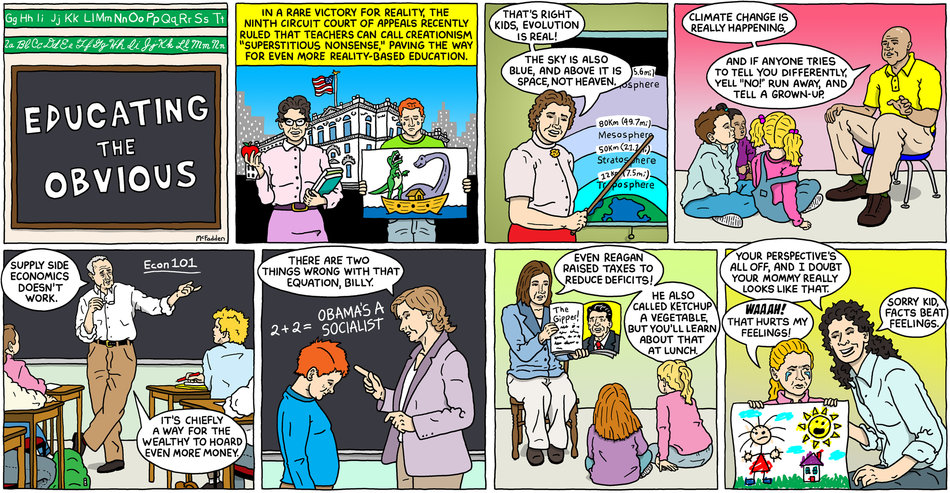 By BRIAN McFADDEN. Published: August 27, 2011
O MITO DO TORCEDOR VIOLENTO (Fazendo Media/Le Monde Diplomatique Brasil)
Por Irlan Simões, 02.08.2011
Fazendo Media
 Em maio de 2010, após intensas discussões entre o poder público, a Polícia Militar e presidentes de clubes, o estado de Sergipe tornou-se pioneiro em um processo que avança sobre o futebol brasileiro: a criminalização das torcidas organizadas (ou T.O.s). Uma mestranda do núcleo de Pós-Graduação em Psicologia Social da Universidade Federal de Sergipe, Klecia Renata de Oliveira Batista, animou-se a avaliar tal fenômeno.
Durante dois anos, a mestranda sergipana acompanhou o funcionamento interno da torcida Trovão Azul, adepta do Confiança, interessada em estudar a violência no meio. Intitulado “Entre torcer e ser banido, vamos nos (re)organizar: um estudo psicanalítico da torcida Trovão Azul”, a tese tornou-se um documento inédito sobre a criminalização das torcidas organizadas a partir da realidade sergipana. “Foi um processo fundamental para o meu trabalho, justamente quando eu estava tentando mapear a pressão que a torcida vinha enfrentando no momento”, afirma Klecia.
Defendido em 27 de maio último, o trabalho de Klecia aponta: a “modernização” do futebol brasileiro visa na verdade adequar o jogo aos interesses do mercado; ela está sendo imposta mesmo que as transformações custem a perda dos valores culturais embutidos no futebol. “O que se vê hoje é a torcida organizada enquadrando-se ao que alguns historiadores chamam de torcidas-empresa, rendendo-se a uma lógica organizada pelo capital”, afirma a pesquisadora.
O Estado como protagonista
Visando explicar o fenômeno, a mestranda recorreu ao referencial psicanalítico de Sigmund Freud. Ela sugere que, na busca de uma adequação dos estádios e do jogo ao que se entende pelo “ideal da ordem, limpeza e beleza da Modernidade”. Justifica assim as medidas punitivas que têm sido tomadas contra as torcidas organizadas.
Segundo a pesquisadora, estes coletivos cumpriam papel de resistência a esse processo. “Hoje, não há mais margem de sobreviver no futebol fora desse padrão de “modernidade”. Dessa realidade, a única coisa que tinha sobrado eram as torcidas, que agora também estão sendo ameaçadas”, afirma. Para ela, a violência no futebol não se restringe às torcidas organizadas. Na realidade, a violência é própria da vida do homem em sociedade e as torcidas constituem, no âmbito futebolístico, um microespaço no qual essa violência se torna presente.
“O novo Estatuto do Torcedor é o carro-chefe desse processo de modernização”, afirma Klecia Renata, questionando o papel que o projeto aplicado pelo ministério dos Esportes vem cumprindo. Para ela, a lei sancionada em 2010 é responsável pelas ameaças de banimento, proibição da entrada nos estádios, venda de materiais padronizados e criminalização dos torcedores organizados. Ainda segundo a pesquisadora, a reorganização das T.Os tem gerado elitização de seu corpo de integrantes, uma vez que a concepção de que o torcedor mais pobre é o causador da violência é o que tem imperado no senso comum.
Panorama nacional
Além da orientação do professor Eduardo Leal Cunha e da presença de Daniel Menezes Coelho, ambos da UFS, a defesa da dissertação teve como convidado o historiador Bernardo Borges Buarque de Hollanda, doutor em História Social pela Pontifícia Universidade Católica do Rio de Janeiro e pesquisador do Centro de Pesquisa e Documentação de História Contemporânea da Faculdade Getúlio Vargas (CPDOC-FGV). Estudioso do assunto há mais de dez anos, Bernardo reforçou, no seu comentário como integrante da banca da defesa da dissertação, a ligação entre o “ideal da ordem e limpeza da Modernidade” e o processo de elitização do público torcedor do futebol, traçando paralelos com os processos ocorridos em outros países, como a Inglaterra.
O pesquisador, que também estudou o histórico das torcidas organizadas no Brasil, lembra que criminalizar os torcedores uniformizados é parte do mesmo projeto que busca excluir o torcedor mais pobre dos estádios. “Isso é uma forma de elitizar o espectador, e essa vai ser a tendência. O “telespectador” vai ser o lugar das classes populares”, afirma. Bernardo justifica sua hipótese mostrando como os estádios têm diminuído, após sucessivas reformas, a sua capacidade de público e aumentado o valor dos ingressos buscando atingir apenas um público consumidor de classe média-alta.
Um aspecto também ressaltado pelo estudioso é a movimentação das torcidas organizadas buscando frear tal processo. No Rio de Janeiro, foi fundada a Federação das Torcidas Organizadas, a Ftorj, enquanto no âmbito nacional a Confederação das Torcidas Organizadas (Conatorg) dá os primeiros passos. “É sempre muito difícil uma representação das torcidas organizadas porque existem muitos conflitos internos e entre elas. Mas já é um sinal de que há um avanço, uma possibilidade de declamar direitos. Não apenas deveres, como querem os dirigentes”, afirma.
Quando questionado sobre como o senso comum brasileiro tem apoiado tal processo de modernização, Bernardo é enfático: “É muito desigual essa transmissão de mensagens”. Para ele há grande dificuldade em explicar como esse processo vai excluir os próprios torcedores que aprovam tais medidas.
O avanço do processo de criminalização
Em 13 de junho de 2011, o Ministério Público do Estado do Rio de Janeiro acionou as torcidas organizadas para uma audiência pública. Estavam presentes representantes de 36 torcidas, do ministério do Esporte, da Polícia Militar, da secretaria de Estado de Esporte e Lazer, da superintendência de Desportos do Estado do Rio de Janeiro (Suderj) e da Federação das Torcidas Organizadas do Rio de Janeiro (Ftorj).
Todos os convidados tiveram de assinar um Termo de Ajustamento de Conduta (TAC) que operacionaliza o Estatuto do Torcedor. Entre as exigências, estão a proibição de diversos artigos, como bandeiras, faixas, e materiais que possivelmente ocasionariam o ferimento dos presentes no estádio e a penalização da Torcida Organizada em caso de descumprimento de algumas normas por parte de algum dos seus integrantes.
Ao fim da Audiência, Flávio Martins, presidente da Ftorj, lamentou que apenas as torcidas organizadas fossem responsabilizadas pelo esvaziamento dos estádios. “Muito se fala da violência promovida pelas torcidas, mas nunca se questiona a condição do transporte público que tem sido disponibilizado, nem o valor dos ingressos e nem o horário dos jogos”, afirmou.
(*) Matéria publicada originalmente no Outras Palavras, do Le Monde Diplomatique Brasil.
Psychologist James Pennebaker reveals the hidden meaning of pronouns (Scientific American)
The Secret Language Code
By Gareth Cook | Tuesday, August 16, 2011
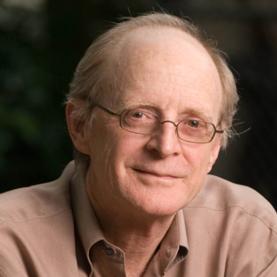 Psychologist James Pennebaker. Image: Marsha Miller
Are there hidden messages in your emails? Yes, and in everything you write or say, according to James Pennebaker, chair of the department of psychology at the University of Texas at Austin. Pennebaker has been a leader in the computer analysis of texts for their psychological content. And in his new book, “The Secret Life of Pronouns,” he argues that how we use words like “I,” “she,” and “who” reveal secrets of our psychology. He spoke recently with Mind Matters editor Gareth Cook.
COOK: How did you become interested in pronouns?
PENNEBAKER: A complete and total accident. Until recently, I never thought about parts of speech. However, about ten years ago I stumbled on some findings that caught my attention. In the 1980s, my students and I discovered that if people were asked to write about emotional upheavals, their physical health improved. Apparently, putting emotional experiences into language changed the ways people thought about their upheavals. In an attempt to better understand the power of writing, we developed a computerized text analysis program to determine how language use might predict later health improvements. In other words, I wanted to find if there was a healthy way to write.
Much to my surprise, I soon discovered that the ways people used pronouns in their essays predicted whose health would improve the most. Specifically, those people who benefited the most from writing changed in their pronoun use from one essay to another. Pronouns were reflecting people’’s abilities to change perspective.
As I pondered these findings, I started looking at how people used pronouns in other texts — blogs, emails, speeches, class writing assignments, and natural conversation. Remarkably, how people used pronouns was correlated with almost everything I studied. For example, use of first-person singular pronouns (I, me, my) was consistently related to gender, age, social class, honesty, status, personality, and much more. Although the findings were often robust, people in daily life were unable to pick them up when reading or listening to others. It was almost as if there was a secret world of pronouns that existed outside our awareness.
COOK: What would make you think that the use of pronouns would be meaningful?
PENNEBAKER: Never in a million years would I have thought that pronouns would be a worthwhile research topic. I ran study after study and initially found large and unexpected differences between people in their pronoun use. In hindsight, I think I ignored the findings because they didn’’t make sense. One day, I lined up about 5 experiments that I had conducted and every one revealed the same effects. It was that day that I finally admitted to myself that pronouns must be meaningful.
COOK: What differences have you found between men and women?
PENNEBAKER: Almost everything you think you know is probably wrong. Take this little test. Who uses the following words more, women or men?
> 1st person singular (I, me, my)
> 1st person plural (we, us our)
> articles (a, an, the)
> emotion words (e.g., happy, sad, love, hate)
> cognitive words (e.g., because, reason, think, believe)
> social words (e.g., he, she, friend, cousin)
Most people assume that men use I-words and cognitive words more than women and that women use we-words, emotions, and social words more than men. Bad news. You were right if you guessed that women use social words more. However, women use I-words and cognitive words at far higher rates than men. There are no reliable differences between men and women for use of we-words or emotion words (OK, those were trick questions). And men use articles more than women, when you might guess there’d be no difference.
These differences hold up across written and spoken language and most other languages that we have studied. You can’t help but marvel at the fact that we are all bombarded by words from women and men every day of our lives and most of us have never “heard” these sex differences in language. Part of the problem is that our brains aren’t wired to listen to pronouns, articles, prepositions, and other “junk” words. When we listen to another person, we typically focus on what they are saying rather than how they are saying it.
Men and women use language differently because they negotiate their worlds differently. Across dozens and dozens of studies, women tend to talk more about other human beings. Men, on the other hand, are more interested in concrete objects and things. To talk about human relationships requires social and cognitive words. To talk about concrete objects, you need concrete nouns which typically demand the use of articles.
No matter what your sex, if you have to explain that Sally is leaving her husband because of her new lover, you have to make references to all the actors and you have to do some fairly complex cognitive analyses. If you have to explain why your carburetor in your car is broken, your causal analysis will likely be relatively pallid and will involve referring to concrete nouns.
COOK: You write about using this to analyze historical documents. Do you think this tool might be of any use to historians or biographers?
PENNEBAKER: Historians and biographers should jump on this new technology. The recent release of the Google Books Project should be required reading for everyone in the humanities. For the first time in the history of the world, there are methods by which to analyze tremendously large and complex written works by authors from all over the world going back centuries. We can begin to see how thinking, emotional expression, and social relations evolve as a function of world-wide events. The possibilities are breathtaking.
In my own work, we have analyzed the collected works of poets, playwrights, and novelists going back to the 1500s to see how their writing changed as they got older. We’ve compared the pronoun use of suicidal versus non-suicidal poets. Basically, poets who eventually commit suicide use I-words more than non-suicidal poets.
The analysis of language style can also serve as a psychological window into authors and their relationships. We have analyzed the poetry of Elizabeth Barrett and Robert Browning and compared it with the history of their marriage. Same thing with Ted Hughes and Sylvia Plath. Using a method we call Language Style Matching, we can isolate changes in the couples’ relationships.
COOK: What are some of the more unusual “texts” you have applied this technique to?
PENNEBAKER: Some of the more unusual texts have been my own. There is something almost creepy about analyzing your own emails, letters of recommendation, web pages, and natural conversations.
COOK: And what have you found?
PENNEBAKER: One of the most interesting results was part of a study my students and I conducted dealing with status in email correspondence. Basically, we discovered that in any interaction, the person with the higher status uses I-words less (yes, less) than people who are low in status. The effects were quite robust and, naturally, I wanted to test this on myself. I always assumed that I was a warm, egalitarian kind of guy who treated people pretty much the same.
I was the same as everyone else. When undergraduates wrote me, their emails were littered with I, me, and my. My response, although quite friendly, was remarkably detached — hardly an I-word graced the page. And then I analyzed my emails to the dean of my college. My emails looked like an I-word salad; his emails back to me were practically I-word free.
COOK: Does your work have any application in lie detection?
PENNEBAKER: It does. Several labs, including ours, have now conducted studies to evaluate the prospect of building a linguistic lie detector. The preliminary findings are promising. In controlled studies, we can catch lying about 67% of the time where 50% is chance. Humans, reading the same transcripts, only catch lying 53% of the time. This is actually quite impressive unless you are a person in the judicial system. If you are waiting for a language-based system to catch real world lying at rates of 90 or 95 percent of the time, it won’t happen in your lifetime. It’s simply too complicated.
COOK: What are you looking into now? Where do you see the field going in the future?
PENNEBAKER: One of the most fascinating effects I’ve seen in quite awhile is that we can predict people’s college performance reasonably well by simply analyzing their college admissions essays. Across four years, we analyzed the admissions essays of 25,000 students and then tracked their grade point averages (GPAs). Higher GPAs were associated with admission essays that used high rates of nouns and low rates of verbs and pronouns. The effects were surprisingly strong and lasted across all years of college, no matter what the students’ major.
To me, the use of nouns — especially concrete nouns — reflects people’s attempts to categorize and name objects, events, and ideas in their worlds. The use of verbs and pronouns typically occur when people tell stories. Universities clearly reward categorizers rather than story tellers. If true, can we train young students to categorize more? Alternatively, are we relying too much on categorization strategies in American education?
I think one advantage I have had in my career is that I’ve got a short attention span. If something new and exciting bubbles up in our data, I will likely drop what I’m doing and try to understand it. It’s a wonderful time to be alive.
Stuff white people like: denying climate change (Grist)
CLIMATE SKEPTICS
BY DAVID ROBERTS
2 AUG 2011 4:11 PM
There’s a study running soon in the journalGlobal Environmental Change called “Cool dudes: The denial of climate change among conservative white males in the United States.” It analyzes poll and survey data from the last 10 years and finds that … are you sitting down? … conservative white men are far more likely to deny the threat of climate change than other people.
OK, that’s no surprise to anyone who’s been awake over the last decade. But the paper goes beyond that to put forward some theories aboutwhy conservative white men (CWM) are so loathe to accept climate change. The explanation is some mix of the following, all of which overlap in various ways:
- First there’s the “white male effect” — generally speaking, white males are less concerned with a variety of risks. This probably has to do with the fact that they are less exposed to risk than other demographics, what with running things and all.
- Then, as Chris Mooney notes, there’s the “social dominance orientation” of conservatives, who see social life as following the law of the jungle. One’s choice is to dominate or be dominated; that is the natural order of things. Such folk are leery of climate change solutions premised on fairness or egalitarianism.
- Then there are the well-understood “system-justifying tendencies” of conservatives. The authors explain that conservatives …
… strongly display tendencies to justify and defend the current social and economic system. Conservatives dislike change and uncertainty and attempt to simplify complexity. Further, conservative white males have disproportionately occupied positions of power within our economic system. Given the expansive challenge that climate change poses to the industrial capitalist economic system, it should not be surprising that conservative white males’ strong system-justifying attitudes would be triggered to deny climate change.
- Finally, there’s “identity-protective cognition,” a notion borrowed from Dan Kahan at Yale. (See this PDF.) Here’s how Kahan and colleagues sum it up:
We propose that variance in risk perceptions — across persons generally, and across race and gender in particular — reflects a form of motivated cognition through which people seek to deflect threats to identities they hold, and roles they occupy, by virtue of contested cultural norms.
“Motivated cognition” refers to reasoning done in service of justifying an already held belief or goal. It helps explain why the CWM who know the most about climate science are the most likely to reject it; they learn about it in order to reject it. See Chris Mooney’s great piece on that. Point being: when facts (or the implications of those facts) threaten people’s social identities, they tend to dismiss the facts rather than the identity.
To all these reasons, I’d add “epistemic closure,” the extraordinary way that the modern right has constructed a self-contained, hermetically sealed media environment in which conservatives can be protected from ever encountering a contrary view. It’s an accelerant to all the tendencies described above.
Anyway, as you can see, the rejection of climate science among CWM is basically overdetermined. Climate change threatens their values, their privileges, and their worldview. They are reacting as one would expect them to react.
Biased but Brilliant (N.Y. Times)
GRAY MATTER
Biased but Brilliant
By CORDELIA FINE
Published: July 30, 2011
Cordelia Fine, a senior research associate at the Melbourne Business School, is the author of “A Mind of Its Own: How Your Brain Distorts and Deceives.”
HOW’S this for a cynical view of science? “A new scientific truth does not triumph by convincing its opponents and making them see the light, but rather because its opponents eventually die, and a new generation grows up that is familiar with it.”
Scientific truth, according to this view, is established less by the noble use of reason than by the stubborn exertion of will. One hopes that the Nobel Prize-winning physicist Max Planck, the author of the quotation above, was writing in an unusually dark moment.
And yet a large body of psychological data supports Planck’s view: we humans quickly develop an irrational loyalty to our beliefs, and work hard to find evidence that supports those opinions and to discredit, discount or avoid information that does not. In a classic psychology experiment, people for and against the death penalty were asked to evaluate the different research designs of two studies of its deterrent effect on crime. One study showed that the death penalty was an effective deterrent; the other showed that it was not. Which of the two research designs the participants deemed the most scientifically valid depended mostly on whether the study supported their views on the death penalty.
In the laboratory, this is labeled confirmation bias; observed in the real world, it’s known as pigheadedness.
Scientists are not immune. In another experiment, psychologists were asked to review a paper submitted for journal publication in their field. They rated the paper’s methodology, data presentation and scientific contribution significantly more favorably when the paper happened to offer results consistent with their own theoretical stance. Identical research methods prompted a very different response in those whose scientific opinion was challenged.
This is a worry. Doesn’t the ideal of scientific reasoning call for pure, dispassionate curiosity? Doesn’t it positively shun the ego-driven desire to prevail over our critics and the prejudicial urge to support our social values (like opposition to the death penalty)?
Perhaps not. Some academics have recently suggested that a scientist’s pigheadedness and social prejudices can peacefully coexist with — and may even facilitate — the pursuit of scientific knowledge.
Let’s take pigheadedness first. In a much discussed article this year in Behavioral and Brain Sciences, the cognitive scientists Hugo Mercier and Dan Sperber argue that our reasoning skills are really not as dismal as they seem. They don’t deny that irrationalities like the confirmation bias are common. Instead, they suggest that we stop thinking of the primary function of reasoning as being to improve knowledge and make better decisions. Reasoning, they claim, is for winning arguments. And an irrational tendency like pigheadedness can be quite an asset in an argumentative context. A engages with B and proposes X. B disagrees and counters with Y. Reverse roles, repeat as desired — and what in the old days we might have mistaken for an exercise in stubbornness turns out instead to be a highly efficient “division of cognitive labor” with A specializing in the pros, B in the cons.
It’s salvation of a kind: our apparently irrational quirks start to make sense when we think of reasoning as serving the purpose of persuading others to accept our point of view. And by way of positive side effect, these heated social interactions, when they occur within a scientific community, can lead to the discovery of the truth.
And what about scientists’ prejudices? Clearly, social values should never count as evidence for or against a particular hypothesis — abhorrence of the death penalty does not count as data against its crime-deterrent effects. However, the philosopher of science Heather Douglas has argued that social values can safely play an indirect role in scientific reasoning. Consider: The greater we judge the social costs of a potential scientific error, the higher the standard of evidence we will demand. Professor A, for example, may be troubled by the thought of an incorrect discovery that current levels of a carcinogen in the water are safe, fearing the “discovery” will cost lives. But Professor B may be more anxious about the possibility of an erroneous conclusion that levels are unsafe, which would lead to public panic and expensive and unnecessary regulation.
Both professors may scrutinize a research paper with these different costs of error implicitly in mind. If the paper looked at cancer rates in rats, did the criteria it used to identify the presence of cancer favor over- or under-diagnosis? Did the paper assume a threshold of exposure below which there is no cause for concern, or did it assume that any level of exposure increases risk? Deciding which are the “better” criteria or the “better” background assumptions is not, Ms. Douglas argues, solely a scientific issue. It also depends on the social values you bring to bear on the research. So when Professor A concludes that a research study is excellent, while Professor B declares it seriously mistaken, it may be that neither is irrationally inflating or discounting the strength of the evidence; rather, each is tending to a different social concern.
Science often makes important contributions to debates that involve clashes of social values, like the protection of public health versus the protection of private industry from overregulation. Yet Ms. Douglas suggests that, with social values denied any legitimate role in scientific reasoning, “debates often dance around these issues, attempting to hide them behind debates about the interpretation of data.” Professors A and B are left with no other option but to conclude that the other is a stubborn, pigheaded excuse for a scientist.
For all its imperfections, science continues to be a stunning success. Yet maybe progress would be even faster and smoother if scientists would admit, and even embrace, their humanity.
A version of this op-ed appeared in print on July 31, 2011, on page SR12 of the New York edition with the headline: Biased But Brilliant.
She’s Alive… Beautiful… Finite… Hurting… Worth Dying for.
This is a non-commercial attempt to highlight the fact that world leaders, irresponsible corporates and mindless ‘consumers’ are combining to destroy life on earth. It is dedicated to all who died fighting for the planet and those whose lives are on the line today. The cut was put together by Vivek Chauhan, a young film maker, together with naturalists working with the Sanctuary Asia network (www.sanctuaryasia.com).
Science and truth have been cast aside by our desire for controversy (Guardian)
Last week’s report into media science coverage highlighted an over-reliance on pointless dispute
Robin McKie
The Observer, Sunday 24 July 2011
Thomas Huxley, the British biologist who so vociferously, and effectively, defended Darwin’s theory of natural selection in the 19th century, had a basic view of science. “It is simply common sense at its best – rigidly accurate in observation and merciless to fallacy in logic.”
It is as neat a description as you can get and well worth remembering when considering how science is treated by the UK media and by the BBC in particular. Last week, a study, written by geneticist Steve Jones, warned that far too often the corporation had failed to appreciate the nature of science and to make a distinction “between well-established fact and opinion”. In doing so, the corporation had given free publicity to marginal belief, he said.
Jones was referring to climate change deniers, anti-MMR activists, GM crop opponents and other fringe groups who have benefited from wide coverage despite the paucity of evidence that supports their beliefs. By contrast, scientists, as purveyors of common sense, have found themselves sidelined because producers wanted to create controversy and so skewed discussions to hide researchers’ near unanimity of views in these fields. In this way, the British public has been misled into thinking there is a basic division among scientists over global warming or MMR.
It is a problem that can be blamed on the media that believe, with some justification, that adversarial dispute is the best way to cover democracy in action. It serves us well with politics and legal affairs, but falls down badly when it comes to science because its basic processes, which rely heavily on internal criticism and disproof, are so widely misunderstood.
Yet there is nothing complicated about the business, says Robert May, the former UK government science adviser. “In the early stages of research, ideas are like hillocks on a landscape. So you design experiments to discriminate among them. Most hillocks shrink and disappear until, in the end, you are left with a single towering pinnacle of virtual certitude.”
The case of manmade climate change is a good example, adds May. “A hundred years ago, scientists realised carbon dioxide emissions could affect climate. Twenty years ago, we thought they were now having an impact. Today, after taking more and more measurements, we can see there is no other explanation for the behaviour of the climate. Humans are changing it. Of course, deniers disagree, but that’s because they hold fixed positions that have nothing to do with science.”
It is the scientist, not the denier, who is the real sceptic, adds Paul Nurse, president of the Royal Society. “When you carry out research, you cannot afford to cherry-pick data or ignore inconvenient facts. You have to be brutal. You also have to be sceptical about your own ideas and attack them. If you don’t, others will.”
When an idea reaches the stage where it’s almost ready to become a paper, it has therefore been subjected to savage scrutiny by its own authors and by their colleagues – and that is before writing has started. Afterwards, the paper goes to peer review where there is a further round of critical appraisal by a separate group of researchers. What emerges is a piece of work that has already been robustly tested – a point that is again lost in the media.
Over the centuries, this process has been honed to near perfection. By proposing and then attacking ideas and by making observations to test them, humanity has built up a remarkable understanding of the universe. The accuracy of Einstein’s theories of relativity, Crick and Watson’s double helix structure of DNA and plate tectonics were all revealed this way, though no scientist would admit these discoveries are the last word, as the palaeontologist Stephen Jay Gould once pointed out: “In science, ‘fact’ can only mean ‘confirmed to such a degree that it would be perverse to withhold provisional assent’,” he admitted.
Certainly, things can go wrong, as Huxley acknowledged. Science may be organised common sense but all too often a beautiful theory created this way has been skewered by “a single ugly fact”, as he put it. Think of Fred Hoyle’s elegant concept of a steady state universe that is gently expanding and eternal. The idea was at one time considered to be philosophically superior to its rival, the big bang theory that proposed the cosmos erupted into existence billions of years ago. The latter idea explained the expansion of the universe by recourse to a vast explosion. The former accounted for this expansion in more delicate, intriguing terms.
The steady state theory continued to hold its own until, in 1964, radio-astronomers Arno Penzias and Robert Woodrow Wilson noted interference on their radio telescope at the Bell Labs in New Jersey and tried to eliminate it. The pair went as far as shovelling out the pigeon droppings in the telescope and had the guilty pigeons shot (each blamed the other for giving the order). Yet the noise persisted. Only later did the two scientists realise what they were observing. The static hiss they were picking up was caused by a microwave radiation echo that had been set off when the universe erupted into existence after its big bang birth.
That very ugly fact certainly ruined Hoyle’s beautiful theory and, no doubt, his breakfast when he read about it in his newspaper. But then the pursuit of truth has always been a tricky and cruel business. “It is true that some things come along like that to throw scientists into a tizz but it doesn’t happen very often,” adds Jones. “The trouble is, the BBC thinks it happens every day.”
And this takes us to the nub of the issue: how should science be reported and recorded? How can you take a topic such as climate change, about which there is virtual unanimity of views among scientists, and keep it in the public’s eye. The dangers of rising greenhouse gas emissions have dramatic implications after all. But simply reporting every tiny shrinkage in polar ice sheets or rise in sea levels will only alienate readers or viewers, a point acknowledged by May. “Newspapers, radio and TV have a duty to engage and there is no point in doing a lot of excellent reporting on a scientific issue if it is boring or trivial. The alternative is to trivialise or distort, thus subordinating substance in the name of attraction. It is a paradox for which I can see no answer.”
Jones agrees. “What we don’t want to do is go back to the days when fawning reporters asked great figures to declaim on scientific issues – or political ones, for that matter. On the other hand, we cannot continue to distort views in the name balance,” It is a tricky business, but as former Times editor Charlie Wilson once told a member of staff upset at a task’s complexity: “Of course, it’s hard. If it was easy we would get an orang-utan to do it.”
Jones, in highlighting a specific problem for the BBC, has opened up a far wider, far more important issue – the need to find ways to understand how science works and to appreciate its insights and complexities. It certainly won’t be easy.
On Experts and Global Warming (N.Y. Times)
July 12, 2011, 4:01 PM
By GARY GUTTING
Experts have always posed a problem for democracies. Plato scorned democracy, rating it the worst form of government short of tyranny, largely because it gave power to the ignorant many rather than to knowledgeable experts (philosophers, as he saw it). But, if, as we insist, the people must ultimately decide, the question remains: How can we, nonexperts, take account of expert opinion when it is relevant to decisions about public policy?
Once we accept the expert authority of climate science, we have no basis for supporting the minority position.
To answer this question, we need to reflect on the logic of appeals to the authority of experts. First of all, such appeals require a decision about who the experts on a given topic are. Until there is agreement about this, expert opinion can have no persuasive role in our discussions. Another requirement is that there be a consensus among the experts about points relevant to our discussion. Precisely because we are not experts, we are in no position to adjudicate disputes among those who are. Finally, given a consensus on a claim among recognized experts, we nonexperts have no basis for rejecting the truth of the claim.
These requirements may seem trivially obvious, but they have serious consequences. Consider, for example, current discussions about climate change, specifically about whether there is long-term global warming caused primarily by human activities (anthropogenic global warming or A.G.W.). All creditable parties to this debate recognize a group of experts designated as “climate scientists,” whom they cite in either support or opposition to their claims about global warming. In contrast to enterprises such as astrology or homeopathy, there is no serious objection to the very project of climate science. The only questions are about the conclusions this project supports about global warming.
There is, moreover, no denying that there is a strong consensus among climate scientists on the existence of A.G.W. — in their view, human activities are warming the planet. There are climate scientists who doubt or deny this claim, but even they show a clear sense of opposing a view that is dominant in their discipline. Nonexpert opponents of A.G.W. usually base their case on various criticisms that a small minority of climate scientists have raised against the consensus view. But nonexperts are in no position to argue against the consensus of scientific experts. As long as they accept the expert authority of the discipline of climate science, they have no basis for supporting the minority position. Critics within the community of climate scientists may have a cogent case against A.G.W., but, given the overall consensus of that community, we nonexperts have no basis for concluding that this is so. It does no good to say that we find the consensus conclusions poorly supported. Since we are not experts on the subject, our judgment has no standing.
It follows that a nonexpert who wants to reject A.G.W. can do so only by arguing that climate science lacks the scientific status needed be taken seriously in our debates about public policy. There may well be areas of inquiry (e.g., various sub-disciplines of the social sciences) open to this sort of critique. But there does not seem to be a promising case against the scientific authority of climate science. As noted, opponents of the consensus on global warming themselves argue from results of the discipline, and there is no reason to think that they would have had any problem accepting a consensus of climate scientists against global warming, had this emerged.
Some nonexpert opponents of global warming have made much of a number of e-mails written and circulated among a handful of climate scientists that they see as evidence of bias toward global warming. But unless this group is willing to argue from this small (and questionable) sample to the general unreliability of climate science as a discipline, they have no alternative but to accept the consensus view of climate scientists that these e-mails do not undermine the core result of global warming.
I am not arguing the absolute authority of scientific conclusions in democratic debates. It is not a matter of replacing Plato’s philosopher-kings with scientist-kings in our polis. We the people still need to decide (perhaps through our elected representatives) which groups we accept as having cognitive authority in our policy deliberations. Nor am I denying that there may be a logical gap between established scientific results and specific policy decisions. The fact that there is significant global warming due to human activity does not of itself imply any particular response to this fact. There remain pressing questions, for example, about the likely long-term effects of various plans for limiting CO2 emissions, the more immediate economic effects of such plans, and, especially, the proper balance between actual present sacrifices and probable long-term gains. Here we still require the input of experts, but we must also make fundamental value judgments, a task that, pace Plato, we cannot turn over to experts.
The essential point, however, is that once we have accepted the authority of a particular scientific discipline, we cannot consistently reject its conclusions. To adapt Schopenhauer’s famous remark about causality, science is not a taxi-cab that we can get in and out of whenever we like. Once we board the train of climate science, there is no alternative to taking it wherever it may go.
Our Extreme Future: Predicting and Coping with the Effects of a Changing Climate (Scientific American)
Adapting to extreme weather calls for a combination of restoring wetland and building drains and sewers that can handle the water. But leaders and the public are slow to catch on. Final part of a three-part series
By John Carey | Thursday, June 30, 2011 | 97
 Image: Fikret Onal/Flickr
Editor’s note: This article is the last of a three-part series by John Carey. Part 1, “Storm Warning: Extreme Weather Is a Product of Climate Change,” was posted on June 28. Part 2, “Global Warming and the Science of Extreme Weather,” was posted on June 29.
Extreme weather events have become both more common and more intense. And increasingly, scientists have been able to pin at least part of the blame on humankind’s alteration of the climate. What’s more, the growing success of this nascent science of climate attribution (finding the telltale fingerprints of climate change in extreme events) means that researchers have more confidence in their climate models—which predict that the future will be even more extreme.
Are we prepared for this future? Not yet. Indeed, the trend is in the other direction, especially in Washington, D.C., where a number of members of Congress even argue that climate change itself is a hoax.
Scientists hope that rigorously identifying climate change’s contribution to individual extreme events can indeed wake people up to the threat. As the research advances, it should be possible to say that two extra inches (five centimeters) of rain poured down in a Midwestern storm because of greenhouse gases, or that a California heat wave was 10 times more likely to occur thanks to humans’ impacts on climate. So researchers have set up rapid response teams to assess climate change’s contribution to extreme events while the events are still fresh in people’s minds. In addition, the Intergovernmental Panel on Climate Change (IPCC) is preparing a special report on extreme events and disasters, due out by the end of 2011. “It is important for us emphasize that climate change and its impacts are not off in the future, but are here and now,” explained Rajendra Pachauri, chair of the IPCC, during a briefing at United Nations climate talks in Cancún last December.
The message is beginning to sink in. The Russian government, for instance, used to doubt the existence of climate change, or argue that it might be beneficial for Russia. But now, government officials have realized that global warming will not bring a gradual and benign increase in temperatures. Instead, they’re likely to see more crippling heat waves. As Russian President Dmitry Medvedev told the Security Council of the Russian Federation last summer: “Everyone is talking about climate change now. Unfortunately, what is happening now in our central regions is evidence of this global climate change, because we have never in our history faced such weather conditions.”
Doubts persist despite evidence
Among the U.S. public, the feeling is different. Opinion pollsand anecdotal reports show that most Americans do not perceive a threat from climate change. And a sizable number of Americans, including many newly elected members of Congress, do not even believe that climate change exists. Extreme weather? Just part of nature, they say. After all, disastrous floods and droughts go back to the days of Noah and Moses. Why should today’s disasters be any different? Was the July 23, 2010, storm that spawned Les Scott’s record hailstone evidence of a changing climate, for instance? “Not really,” Scott says. “It was just another thunderstorm. We get awful bad blizzards that are a lot worse.”
And yes, 22 of Maryland’s 23 counties were declared natural disaster areas after record-setting heat and drought in 2010. “It was the worst corn crop I ever had,” says fourth-generation farmer Earl “Buddy” Hance. But was it a harbinger of a more worrisome future? Probably not, says Hance, the state’s secretary of agriculture. “As farmers we are skeptical, and we need to see a little more. And if it does turn out to be climate change, farmers would adapt.” By then, adaptation could be really difficult, frets Minnesota organic farmer Jack Hedin, whose efforts to raise the alarm are “falling on deaf ears,” he laments.
Many scientists share Hedin’s worry. “The real honest message is that while there is debate about how much extreme weather climate change is inducing now, there is very little debate about its effect in the future,” says Michael Wehner, staff scientist at Lawrence Berkeley National Laboratory and member of the lead author teams of the interagency U.S. Climate Change Science Program’s Synthesis and Assessment reports on climate extremes. For instance, climate models predict that by 2050 Russia will have warmed up so much that every summer will be as warm as the disastrous heat wave it just experienced, says Richard Seager of Columbia University’s Lamont–Doherty Earth Observatory. In other words, many of today’s extremes will become tomorrow’s everyday reality. “Climate change will throw some significant hardballs at us,” says Martin Hoerling, a research meteorologist at the National Oceanic and Atmospheric Administration’s Earth System Research Laboratory in Boulder, Colo. “There will be a lot of surprises that we are not adapted to.”
A dusty future
One of the clearest pictures of this future is emerging for the U.S. Southwest and a similar meteorological zone that stretches across Italy, Greece and Turkey. Work by Tim Barnett of the Scripps Institution of Oceanography, Seager and others predicts that these regions will get hotter and drier—and, perhaps more important, shows that the change has already begun. “The signal of a human influence on climate pops up in 1985, then marches on getting strong and stronger,” Barnett says. By the middle of the 21st century, the models predict, the climate will be as dry as the seven-year long Dust Bowl drought of the 1930s or the damaging 1950s drought centered in California and Mexico, Seager says: “In the future the drought won’t last just seven years. It will be the new norm.”
That spells trouble. In the Southwest the main worry is water—water that makes cities like Los Angeles and Las Vegas possible and that irrigates the enormously productive farms of California’s Central Valley. Supplies are already tight. During the current 11-year dry spell, the demand for water from the vast Colorado River system, which provides water to 30 million people and irrigates four million acres (1.6 million hectares) of cropland, has exceeded the supply. The result: water levels in the giant Lake Mead reservoir dropped to a record low in October (before climbing one foot, or 30 centimeters, after torrential winter rains in California reduced the demand for Colorado River water). Climate change will just make the problem worse. “The challenge will be great,” says Terry Fulp, deputy regional director of the U.S. Department of the Interior’s Bureau of Reclamation’s Lower Colorado Region. “I rank climate change as probably my largest concern. When I’m out on my boat on Lake Mead, it’s on my mind all the time.”
The Southwest is just a snapshot of the challenges ahead. Imagine the potential peril to regions around the world, scientists say. “Our civilization is based on a stable base climate—it doesn’t take very much change to raise hell,” Scripps’s Barnett says. And given the lag in the planet’s response to the greenhouse gases already in the atmosphere, many of these changes are coming whether we like them or not. “It’s sort of like that Kung Fu guy who said, ‘I’m going to kick your head off now, and there’s not a damn thing you can do about it,'” Barnett says.
Grassroots action
Although efforts to fight climate change are now stalled in Washington, many regions do see the threat and are taking action both to adapt to the future changes and to try to limit the amount of global warming itself. The Bureau of Reclamation’s Lower Colorado Region office, for instance, has developed a plan to make “manageable” cuts in the amounts of water that the river system supplies, which Fulp hopes will be enough to get the region through the next 15 years. In Canada, after experiencing eight extreme storms (of more than one-in-25-year intensity) between 1986 and 2006, Toronto has spent hundreds of millions of dollars to upgrade its sewer and storm water system for handling deluges. “Improved storm drains are the cornerstone of our climate adaptation policy,” explains Michael D’Andrea, Toronto’s director of water infrastructure management.
In Iowa, even without admitting that climate change is real, farmers are acting as if it is, spending millions of dollars to alter their practices. They are adding tile drainage to their fields to cope with increased floods, buying bigger machinery to move more quickly because their planting window has become shorter, planting a month earlier than they did 50 years ago, and sowing twice as many corn plants per acre to exploit the additional moisture, says Gene Takle, professor of meteorology at Iowa State University in Ames. “Iowa’s floods are in your face—and in your basement—evidence that the climate has changed, and the farmers are adapting,” he says.
Local officials have seen the connection, too. After the huge floods of 2008, the Iowa town of Cedar Falls passed an ordinance requiring that anyone who lives in the 500-year flood plain must have flood insurance—up from the previous 200-year flood requirement. State Sen. Robert Hogg wants to make the policy statewide. He also is pushing to restore wetlands that can help soak up floodwaters before they devastate cities. “Wetland restoration costs money, but it’s cheaper than rebuilding Cedar Rapids,” he says. “I like to say that dealing with climate change is not going to require the greatest sacrifices, but it is going to require the greatest foresight Americans have ever had.”
Right now, that foresight is more myopia, many scientists worry. So when and how will people finally understand that far more is needed? It may require more flooded basements, more searing heat waves, more water shortages or crop failures, more devastating hurricanes or other examples of the increases in extreme weather that climate change will bring. “I don’t want to root for bad things to happen, but that’s what it will take,” says one government scientist who asked not to be identified. Or as Nashville resident Rich Hays says about his own experience with the May 2010 deluge: “The flood was definitely a wake-up call. The question is: How many wake-up calls do we need?”
Reporting for this story was funded by the Pew Center on Global Climate Change.
Reviewing the Nisbet ‘Climate Shift’ Report and Controversial Claims of Media Progress (Yale Forum on Climate Change & The Media)
by John Wihbey | July 11, 2011
Matt Nisbet’s ‘Climate Shift’ research report raised headline-grabbing points on fundraising successes by those advocating action on climate change. But it’s what lies behind those headlines — and relating specifically to media coverage — that also warrants further review and analysis.
Few pieces of recent academic research on climate change have stirred up as much controversy as American University professor Matthew Nisbet’s April 2011 report “Climate Shift: Clear Vision for the Next Decade of Public Debate.”
The report’s biggest headline-grabbing finding — that the environmental lobby is now holding its own in the money race with industry groups opposing carbon regulations — doubtless will generate further analysis, and one can imagine more such annual scorecards assessing this power struggle. And the questions “Climate Shift” raises about the relative political wisdom — or lack of same — in pushing the failed cap-and-trade bill in Congress may well be debated by historians for years to come.
Perhaps the most underappreciated facet of the scholarship that Nisbet put forth, however, involves his analysis of media coverage in the years 2009-2010, contained in his provocatively titled chapter 3, “The Death of a Norm: Evaluating False Balance in News Coverage.”
According to Nisbet’s story-by-story analysis that covers the vertiginous period involving Copenhagen, the so-called “climategate” hacked e-mails, and federal cap-and-trade, the mainstream media — represented in his analysis by The New York Times, CNN.com, The Wall Street Journal, Politico, and The Washington Post — basically moved past the oft-criticized journalistic mode of “he said, she said,” or “false balance.” In its place, those media generally reflected the “consensus science” as backed by organizations such as the U.N.’s IPCC and the National Academy of Sciences and most of its international counterparts. (The opinion pages of the Journal are bracketed as an exception, and Nisbet’s analysis shows that its editorials do indeed continue to cast doubt on climate science.)
Nisbet’s assertion is a profound one, with significant implications. His stated goal with “Climate Shift” is to help reorient the priorities of groups trying to combat global change through the promotion of science and smart messaging to the public. (See companion posting based on author’s extensive e-mail interview with Nisbet.)
“[I]f trend-setting national media have overwhelmingly portrayed the consensus views on the fundamentals of climate science (as the report’s findings indicate),” Nisbet wrote in a recent e-mail interview with The Yale Forum, “then we should be turning to other types of media organizations in our engagement efforts and focusing on other dimensions of coverage, including … subsidizing the ability of local and regional media to cover climate change and energy insecurity as these challenges relate to their region and communities.” These are ideas Nisbet has raised also in previous reports.
Lines of Criticism
Bloggers at Media Matters do criticize how Nisbet interprets his data around the “climategate” period — one of the few on-the-numbers critiques. Nisbet responds that changes in coverage since then are either not “statistically significant” or “not meaningful.”
Other than that, few have questioned the particulars of Nisbet’s labor-intensive analysis of how those five outlets performed. Their selection — and the exclusion of others — though, is the subject of debate.
Nisbet says he chose those specific news outlets because they set the news agenda and have high-volume traffic, as reflected in Nielsen-tabulated figures. CNN.com, the Post and the Times ranked numbers 4, 5 and 9, respectively, in terms of web traffic in 2009. But given that news aggregators such as Yahoo, AOL, and Google ranked 1, 3, and 6, respectively, one might think that Nisbet’s universe of analysis did not capture the true flow of public news information.
The combined traffic of the aggregators is nearly twice that of the news sites Nisbet focused on. Admittedly, though, these aggregators would be a moving target — and an empirical analysis of the quality of news linked to would be difficult — but that’s where some huge portion of the public gets its news and information, and therefore its impressions and opinions.
(One other quibble, about the selection of Politico: Nisbet calls it “the paper ‘the White House wakes up to,’ as memorably headlined in a profile at The New York Times.” In fact, the article he cites is really just a profile of Politico reporter Mike Allen and his important day calendar “Playbook” blog. Though Politico is powerful and prolific, what constitutes “the paper of record for members of Congress,” as Nisbet puts it, may be an issue of reasonable disagreement among media watchers.)
Climate communications expert and University of Colorado-Boulder professor Max Boykoff was one of the formal reviewers for the “Climate Shift” report. He told The Yale Forum in an e-mail interview, “Overall, I found [Nisbet’s] work in Chapter 3 to be good. As he assembled it I spoke with Matt multiple times. (Chapter 3 was the part of the report I most focused on). We discussed how to replicate the methods and approaches that I undertook in my work on empirically testing the accuracy of coverage about human contributions to climate change (aka, the ‘balance as bias’ thesis). His methods and findings (re: WSJ op-ed divergence etc.) appeared valid and reliable.”
Still, Boykoff stated a potentially striking limitation of this type of analysis in his reviewer comments submitted back to Nisbet: Such analysis “still isn’t equipped to gauge how one particular carefully/prominently/well- or ill-timed article or commentary could have a much greater influence on public perceptions and views than consistently inaccurate treatment. In other words, the sometimes haphazard nature of media consumption — from skimming articles to just hearing/watching portions of a segment — isn’t accounted for through this approach. At the end of the day, these studies … struggle to account for ‘selective listening’ or ‘selective reading’ that we actually engage in during our daily lives.”
Boykoff also said he told Nisbet that his (Nisbet’s) research had not provided sufficient support for the “Climate Shift” report’s contention that “even in a world of blogs and fragmented audiences, the coverage appearing at these outlets strongly shapes the news decisions made at the broadcast and cable networks and informs the decisions of policymakers.”
The Fox News Question
Other notable criticisms of Nisbet’s approach in Chapter 3 of his report have focused on his exclusion of television sources, particularly Fox News. Prolific blogger and energy/climate expert Joseph Romm, who leveled ferocious criticism of Nisbet on his “Climate Progress” blog, makes much of this point. This dispute is a tricky one, resting on a difficult-to-resolve social science debate about how “persuade-able” the Fox News audience is, and just how best to measure the impacts of its huge ratings and online readership as part of American political consciousness.
In his comments to The Yale Forum, Nisbet replied, “As I discuss in the report, the audience for Fox News and political talk radio tend to be strongly self-selecting with consumption of these media tending to reinforce the views of those already doubtful or dismissive of climate change (approximately 25 percent of Americans).” Moreover, he says it “is not clear how these unsurprising findings would help us to move forward since any level of engagement with Fox News producers or talk radio hosts is unlikely to lead to changes in their coverage patterns. We can complain about and criticize these outlets, but much of the criticism and anger, I would argue, often ends up distracting us from initiatives where we can make a difference with journalists, editors, and with different publics.”
This latter point, of course, highlights an important facet of Nisbet’s project, namely that it has a particular goal, an “agenda” even, that puts an emphasis on both utility, or making a “difference,” and on truth as criteria for inquiry. (It’s possible this is where he opens the door for controversy, as it leaves him open to criticisms that he is downplaying conservative media and thereby painting an unduly positive picture of the U.S. media as a whole on climate issues.)
Columbia Journalism Review science editor Curtis Brainard told The Yale Forum recently that he thinks the spirit of Nisbet’s report is basically right in Chapter 3, at least as it relates to “news reporters and news articles.” For Nisbet and Brainard both, broad accusations that public ignorance is the media’s “fault” are no longer well-founded.
“There is this conventional wisdom floating around out there that journalists are inept, rarely able to get their facts straight or explain or deliver an accurate account of events,” Brainard wrote in an e-mail. “They’re not. But it’s much easier for activists and other policy or program stakeholders to blame the media when things don’t go their way than to analyze the much more complicated interplay of multiple factors.”
(As an aside, Brainard notes that he wrote about precisely this dynamic in his recent article, “Tornadoes and Climate Change,” which pushes back against such charges leveled by environmental writer and activist Bill McKibben. Brainard says McKibben is too quick to condemn the media as a whole for not making connections between various extreme weather events.)
We’re past those earlier days, Brainard told The Yale Forum, when the basic questions about climate science are portrayed in most mainstream news media as being unsettled: “The coverage has become so much more sophisticated since then, delving into the specific consequences of climate change, from sea level rise, to changing precipitation and drought patterns, to consequences for flora and fauna. Many reporters struggle to accurately explain the highly uncertain and nuanced science underlying these phenomena, but the flaws in the coverage are quite different from the false balance that was on exhibit before, say, 2006. First of all, there is nowhere near as much scientific consensus about these finer points of climate science as there is about the fundamentals (i.e., the Earth is warming, and humans are most likely to blame), so today’s stories are really apples compared with yesterday’s oranges.”
Work Ahead for Media, Scholars
If Nisbet’s report has an underlying flaw, perhaps, it may be in its packaging, particularly in its “Move On”-style message and ambition to deliver a definitive verdict. Its real virtue is that it has just very effectively — whether or not one buys it all — started a different kind of conversation. And given that just five outlets were analyzed in the report, there is certainly much more conversation to be had.
As mentioned, Nisbet has said he is already carrying out new research and further study on local and regional media. (See his latest thoughts on this issue as they relate to Chicago.) It’s a cause on which all academics and media professionals and critics might agree, as the business model for such outlets continues to erode. Local information ecosystems are changing, shifting, and in many cases decaying. But many observers point out how essential they remain.
“It would also be good to look at the practically countless number of local TV network affiliates across the country since, collectively, they are where most Americans still get their news,” Brainard also noted.
“Local newspapers, as Pew has documented, remain at the center of the local media ecosystem, with the overwhelming number of regional/local issues covered by local TV news and at local blogs originating from local newspaper coverage,” Nisbet said. “In this sense, on climate change and energy, we should think about local and regional newspapers as being part of the central communication infrastructure that regions and communities need to learn, connect, plan and make collective choices on the issue.”
Perhaps, through further studies by Nisbet and others, this important work on local and regional media — their shortcomings and needs — can shed additional light.
John Wihbey is a regular contributor to the Yale Forum. He is a journalist and researcher, and he can be reached at jpwihb@yahoo.com.
Dilma Rousseff – a favela with a presidential name (The Guardian)
Renaming of Brazilian shantytown puts spotlight on problems facing country’s 16 million citizens living in extreme poverty
Tom Phillips in Rio de Janeiro ; guardian.co.uk, Monday 27 June 2011 16.58 BST
 Three-month old Karen da Silva – the youngest resident of Dilma Rousseff – with her mother, 23-year-old Maria da Paixao Sequeira da Silva. Photograph: Tom Phillips
They call her Dilma Rousseff’s daughter: a dribbling three-month-old girl, coated in puppy fat and smothered by cooing relatives.
But Karen da Silva is no relation of Brazil’s first-ever female president. She is the first child to be born into one of the country’s newest favelas – the Comunidade Dilma Rousseff, a roadside shantytown on the western outskirts of Rio de Janeiro that was recently re-baptised with the name of the most powerful woman in the country
“She’s Dilma’s baby,” said Vagner Gonzaga dos Santos, a 33-year-old brick-layer-cum-evangelical preacher and the brains behind the decision to change the name of this hitherto unknown favela.
Last month, just as Rousseff was about to complete six months in power, Santos says he received a heaven-sent message suggesting the renaming.
“God lit up my heart,” he said. “The idea was to pay homage to the president and also to get the attention of the government, of our leaders, so they look to us and help the families here. The poor are God’s children too.”
Until recently, the 30-odd shacks that flank the Rio-Sao Paulo highway were known simply as “kilometre 31”. But its transition to Dilma Rousseff has not been entirely smooth.
At first, locals plastered A4 posters on the area’s walls and front doors, announcing the new name. But the posters referred to the Comunidade “Roussef” – one “f” short of the president’s Bulgarian surname. In May a sign was erected welcoming visitors to their shantytown, but again spelling proved an issue. This time the name given was “Dilma Rusself.”
That mistake has now been corrected, after an intervention from the preacher’s wife, who took a pot of red nail varnish to the sign. Locals say the name-change is starting to pay off.
“It’s been good having the president’s names,” said Marlene Silva de Souza, a 57-year-old mother of five and one of the area’s oldest residents. “Now we can say our community’s name with pride. Before we didn’t have a name at all.”
Dozens of Brazilian newspapers have flocked to the community – poking fun at its misspelt sign but also drawing attention to the poor living conditions inside the favela.
“It has brought us a lot of attention … The repercussion has been marvellous. Today things are starting to take shape, things are improving,” said Santos, who hopes local authorities will now formally recognise the favela, bringing public services such as electricity and rubbish collection.
Still, problems abound. Raw sewage trickles out from the houses, through a patchwork of wooden shacks, banana and mango trees and an allotment where onions sprout amid piles of rubbish. Rats and cockroaches proliferate in the wasteland that encircles the area.
Ownership is also an issue. Dilma Rousseff is built on private land – “The owners are Spanish, I think,” says Santos – and on paper the community does not officially exist. Without a fixed abode Karen “Rousseff” da Silva – the favela’s firstborn child – has yet to be legally registered.
Last month the Brazilian government launched a drive to eradicate extreme poverty unveiling programmes that will target 16 million of Brazil’s poorest citizens.
“My government’s most determined fight will be to eradicate extreme poverty and create opportunities for all,” Rousseff said in her inaugural address in January. “I will not rest while there are Brazilians who have no food on their tables, while there are desperate families on the streets [and] while there are poor children abandoned to their own fate.”
Residents of Rousseff’s namesake, who scratch a living selling biscuits and drinks to passing truck drivers, hope such benefits will soon reach them.
A visit from the president herself may also be on the cards, after Santos launched an appeal in the Brazilian media.
“We dream of her coming one day,” said the preacher, perched on a wooden bench outside his redbrick church, the House of Prayers. “It might be impossible for man to achieve, but for God everything is possible.”
Naming a community
Tear-jerking soap operas, political icons, stars of stage and screen – when it comes to baptising a Brazilian favela, all are fair game. The north-eastern city of Recife is home to favelas called Ayrton Senna, Planet of the Apes and Dancing Days, the title of a popular 1970stelenovela,
In the 1980s residents of a shantytown in Belo Horizonte named their community Rock in Rio – a tribute to the Brazilian rock festival that has played host to acts such as Neil Young, David Bowie and Queen.
Rio de Janeiro is home to the Boogie Woogie favela, the Kinder Egg favela and one community called Disneylandia. Vila Kennedy – a slum in west Rio – was named after the American president John F Kennedy and features a three-metre tall replica of the Statue of Liberty. Nearby, locals christened another hilltop slum Jorge Turco or Turkish George. Jorge was reputedly a benevolent gangster who ruled the community decades ago.
A Amazônia da grande mídia (Mercado Ético)
16/06/2011 19:04:42 – http://mercadoetico.terra.com.br/arquivo/a-amazonia-da-grande-midia/
André Alves*
O programa Observatório da Imprensa da última terça-feira (14/06) transmitido pela TV Brasil e conduzido pelo jornalista Alberto Dines fez uma discussão sobre o estranhamento da grande mídia sobre a Amazônia. Participaram como convidados o cientista político Sérgio Abranches, o antropólogo Alfredo Wagner Almeida e a repórter de meio ambiente Afra Balazina, do Estado de S.Paulo. A tese do programa era a de mostrar as limitações da grande mídia (leia-se os veículos do sudeste) em cobrir o país em sua totalidade, sobretudo a Amazônia.
Os convidados deram uma grande contribuição à discussão mostrando que os problemas da região são muito mais complexos do que a mídia pressupõe. Wagner, coordenador do importantíssimo Projeto Nova Cartografia Social da Amazônia fez um paralelo sobre o aumento da violência no campo e a revisão no Congresso Nacional do Código Florestal. Abranches falou do enfraquecimento do interesse da mídia pelo tema e a jornalista do Estadão mostrou a dificuldade de se cobrir à distância assuntos delicados e urgentes.
No entanto, algumas abordagens sobre a Amazônia não foram consideradas como se deveria. Apesar do esforço do antropólogo em mostrar esses debates, Alberto Dines sempre voltava a questão da necessidade de mais profissionais dos maiores jornais distribuídos pelo país e em vários momentos criticou a cobertura dos veículos locais. Ainda que grande parte dos veículos pequenos mereça críticas e que o jornalista é um grande pensador brasileiro, seu enviesamento no programa deixou muitas abordagens interessantes sem serem discutidas.
Uma questão muito importante se refere ao fato de que a imprensa brasileira não conhece a Amazônia. Trata a região que abriga nove estados e mais de 60% do território brasileiro como se fosse uma coisa só, desconsiderando suas diferenças geográficas, econômicas, de biodiversidade, cultural, potencialidades e problemas. Essa limitação é ancorada num outro fator muito preponderante: o mito sobre a Amazônia. É do senso comum conceber a Amazônia como sendo uma grande floresta em que mesmo em capitais como Manaus, Belém ou Cuiabá é possível ver índios andando semi-nus nas ruas e não raro se deparar com uma onça pintada na esquina ou um jacaré saindo da beira do rio.
Mais do que isso, cria-se um imaginário quase onírico ou saído das páginas de José de Alencar sobre os povos que habitam a região. Já faz alguns anos que parei de contar as vezes que algum amigo, familiar ou jornalista fez considerações etnocêntricas sobre comunidades indígenas quando constatam, por exemplo, que em muitas (talvez a maioria das aldeias em Mato Grosso) existem escolas, telefone, televisão e seus moradores andem vestidos. “Nossa, eles deixaram de serem índios”, é o que mais escuto. Não necessariamente por maldade e sim por ignorância, mesmo. No sentido literal do termo.
É claro que a Amazônia tem que sair na mídia por conta do desmatamento que voltou a aumentar e a violência no campo que explodiu na mídia, embora aconteça sistematicamente desde antes da morte de Chico Mendes e Irmã Dorothy, em várias regiões. Mas também tem uma riqueza social, cultural, econômica e ambiental que tem que ser valorizada e discutida na mídia com intensidade parecida.
É muito fácil os jornalistas do sudeste criticarem as mídias do norte por não repercutirem tanto os descasos de sua região, embora sofram muito mais de carência de pessoal e infra-estrutura. E sim, e é claro que quase a totalidade das mídias locais pertence ou sofre severas influências de políticos locais que impedem a divulgação de determinados temas. Mas essa censura (às vezes velada, às vezes às claras) não é privilégio dos pequenos grupos.
As grandes corporações de comunicação também evitam assuntos ao máximo ou deturpam de tal maneira temas como Terras Indígenas, comunidades tradicionais e grandes obras de infra-estrutura que reforçam estereótipos e preconceitos de tal maneira que dificulta ainda mais que as vozes dos que precisam gritar sejam ouvidas. A grande mídia precisa descer do pedestal e de suas torres de marfins e ir mais a campo, contar com jornalistas locais e ouvir fontes mais diversas. Existe um mundo de organizações não-governamentais, associações de assentados, comunidades tradicionais e indígenas que sistematicamente divulgam suas lutas por sites, blogs e emails, que ajudam a diminuir a distância entre os fatos da Amazônia e os jornalistas do sudeste.
A mídia quando quer faz boa cobertura sobre qualquer assunto. E talvez seja esse o verbo que falte às redações!
* André Alves é jornalista em Mato Grosso e especialista em Antropologia
Scientists Cry Foul Over Report Criticizing National Science Foundation (msnbc.com)
By Stephanie Pappas, LiveScience Senior Writer
A report released by the office of Sen. Tom Coburn (R-Okla.) distorts the goals and purposes of National Science Foundation-funded (NSF) research in an effort to paint the agency as wasteful, scientists say.
Coburn released “The National Science Foundation: Under the Microscope” May 26, raising “serious questions regarding the agency’s management and priorities,” according to Coburn’s office. But scientists whose research is targeted in the report say Coburn has oversimplified or otherwise misrepresented their work. [Infographic: Science Spending in the Federal Budget ]
“Good Lord!” Texas A&M psychologist Gerianne Alexander, whose work on hormones and infant development appears in the report, wrote in an email to LiveScience. “The summary of the funded research is very inaccurate.”
This isn’t the first time politicians have taken aim at the NSF in the name of deficit reduction. In December 2010, Rep. Adrian Smith (R-Neb.) called for citizens to review NSF grants and highlighted a few projects he viewed as wasteful, including research meant to evaluate productivity.
NSF’s entire budget of approximately $7 billion represents about one-half of 1 percent of the projected 2011 federal deficit.
Funding and review
The new report acknowledges that NSF has funded research leading to innovations ranging from the Internet to bar codes. NSF also runs a rigorous evaluation process when choosing to fund grants. Each year, the agency receives more than 45,000 competitive proposals, NSF spokesperson Maria Zacharias told LiveScience in December. NSF funds about 11,500 of those, Zacharias said.
However, according to a review by Coburn’s staff, the senator is unconvinced that NSF is making the right decisions.
“It is not the intent of this report to suggest that there is no utility associated with these research efforts,” the report reads. “The overarching question to ask, however, is simple. Are these projects the best possible use of our tax dollars, particularly in our current fiscal crisis?”
Science out of context
Scientists say Coburn’s office fails to put their research into context, often choosing silly-sounding projects to characterize entire research programs.
Alexander’s work, for example, is characterized as a $480,000 experiment meant to discover “if boys like trucks and girls like dolls.” According to the report, scientists could have saved their time by “talking to any new parent.”
In fact, Alexander said, the research project is more complicated.
“The grant supports research asking whether the postnatal surge in testosterone levels in early infancy contributes to the development of human behavior,” she said. “This is not a trivial issue.” [Read: The Truth About Genderless Babies ]
That’s because some preliminary evidence suggests that disruptions in hormones like testosterone can alter behavior, Alexander said, potentially contributing to the development of disorders such as attention deficit hyperactivity disorder (ADHD) and autism.
Toy choice is a way to measure sex differences in behavior, because babies tend to choose stereotyped boy-girl toys early on, Alexander said. She and her team measure infant hormone levels and look for effects on behavior, activity levels, temperament and verbal development.
Likewise, a much-ballyhooed project that put shrimp on a treadmill was part of research intended to find out how marine animals will cope with increased environmental stress.
Robot laundry?
Coburn focused much of the report on social science research. But the report also questions several robotics projects, including a robot that can fold laundry. The report mocks the research, noting that it takes the robot 25 minutes to fold a single towel.
In fact, the $1.5 million NSF grant went not to teach robots how to do slow-motion laundry, but to learn how to make robots that can interact with complex objects, said lead researcher Pieter Abbeel of UC Berkeley. The towel-folding, which came six months into a four-year project, was an ideal challenge, Abbeel said, because folding a soft, deformable towel is very different from the pick-up-this-bolt, screw-in-this-screw tasks that current robots can perform.
“Towel-folding is just a first, small step toward a new generation of robotic devices that could, for example, significantly increase the independence of elderly and sick people, protect our soldiers in combat, improve the delivery of government services and a host of other applications that would revolutionize our day-to-day lives,” Abbeel wrote in an email to LiveScience.
Overseeing basic science
“It’s legitimate to ask what kind of scientific research is important and what isn’t,” said John Hibbing, a professor of political science whose research on the genetics of political leaningsappeared in Coburn’s report. However, Hibbing expressed doubt that Coburn’s nonscientific review process could meet that goal.
“I sympathize with the desire to identify things that are silly and not useful,” Hibbing told LiveScience. “But I’m not sure he’s identified a really practical strategy to distinguish between the two.”
Material cartográfico revela imaginário colonial português (FAPESP)
HUMANIDADES
| BIBLIOTECA DIGITAL
A mina dos mapas
Márcio Ferrari
Edição Impressa 183 – Maio de 2011
Visão do Brasil que revela a exploração. © DIVULGAÇÃO |
Um precioso material cartográfico vem ganhando visibilidade irrestrita graças ao trabalho do grupo de pesquisadores da Universidade de São Paulo (USP) responsável pela construção da Biblioteca Digital de Cartografia Histórica. O acesso on-line é livre. Fruto de um conceito desenvolvido pelo Laboratório de Estudos de Cartografia Histórica (Lech), o site não só oferece a apreciação de um acervo de mapas raros impressos entre os séculos XVI e XIX, mas também torna possível uma série de referências cruzadas, comparações e chaves interpretativas com a pluralidade e a rapidez da internet. Afinal, “um mapa sozinho não faz verão”, como diz uma das coordenadoras do projeto, Iris Kantor, professora do Departamento de História da USP. O conjunto revela muito mais do que informações geográficas. Permite também perceber a elaboração de um imaginário ao longo do tempo, revelado por visões do Brasil concebidas fora do país. O trabalho se inseriu num grande projeto temático, denominadoDimensões do Império português e coordenado pela professora Laura de Mello e Souza, que teve apoio da Fapesp.
Até agora o acervo teve duas fontes principais. A primeira foi o conjunto de anotações realizadas ao longo de 60 anos pelo almirante Max Justo Lopes, um dos principais especialistas em cartografia do Brasil. A segunda foi a coleção particular do Banco Santos, recolhida à guarda do Estado durante o processo de intervenção no patrimônio do banqueiro Edemar Cid Ferreira, em 2005. Uma decisão judicial transferiu a custódia dos mapas ao Instituto de Estudos Brasileiros (IEB) da USP – iniciativa louvável, uma vez que esse acervo, segundo Iris Kantor, “estava guardado em condições muito precárias num galpão, sem nenhuma preocupação de acondicionamento adequado”. Foram recolhidos cerca de 300 mapas. Sabe-se que o número total da coleção original era muito maior, mas ignora-se onde se encontram os demais.
O primeiro passo foi recuperar e restaurar os itens recolhidos. Eles chegaram à USP “totalmente nus”, sendo necessário todo o trabalho de identificação, datação, atribuição de autoria etc. Durante os anos de 2007 e 2008, o Laboratório de Reprodução Digital do IEB pesquisou, adquiriu e utilizou a tecnologia adequada para reproduzir em alta resolução o acervo de mapas. Foram necessárias várias tentativas até se atingir a precisão de traços e cores desejada. Em seguida, o Centro de Informática do campus da USP em São Carlos (Cisc/USP) desenvolveu um software específico, tornando possível construir uma base de dados capaz de interagir com o catálogo geral da biblioteca da USP (Dedalus), assim como colher e transferir dados de outras bases disponíveis na internet. Uma das fontes inspiradoras dos pesquisadores foi o site do colecionador e artista gráfico inglês David Rumsey, que abriga 17 mil mapas. Outra foi a pioneira Biblioteca Virtual da Cartografia Histórica, da Biblioteca Nacional, que reúne 22 mil documentos digitalizados. Futuramente, o acervo cartográfico da USP deverá integrar a Biblioteca Digital de Cartografia Histórica. Foi dada prioridade aos mapas do Banco Santos porque eles não pertencem à universidade, podendo a qualquer momento ser requisitados judicialmente para quitar dívidas.
Hoje estão disponíveis na Biblioteca Digital “informações cartobibliográficas, biográficas, dados de natureza técnica e editorial, assim como verbetes explicativos que procuram contextualizar o processo de produção, circulação e apropriação das imagens cartográficas”. “Não existe mapa ingênuo”, diz Iris Kantor, indicando a necessidade dessa reunião de informações para o entendimento do que está oculto sob a superfície dos contornos geográficos e da toponímia. “O pressuposto do historiador é que todos os mapas mentem; a manipulação é um dado importante a qualquer peça cartográfica.”
Fizeram parte dessa manipulação os interesses geopolíticos e comerciais da época determinada e daqueles que produziram ou encomendaram o mapa. O historiador Paulo Miceli, da Universidade Estadual de Campinas (Unicamp), que no início da década passada havia sido chamado pelo Banco Santos para dar consultoria sobre a organização do acervo, lembra que o primeiro registro cartográfico daquilo que hoje se chama Brasil foi um mapa do navegador espanhol Juan de la Cosa (1460-1510), datado de 1506, que mostra “a linha demarcatória do Tratado de Tordesilhas, a África muito bem desenhada e, à sua esquerda, um triângulo bem pequeno para indicar a América do Sul”. “O Brasil foi surgindo de uma espécie de nevoeiro de documentos, condicionado, entre outras coisas, pelo rigor da coroa portuguesa sobre o trabalho dos cartógrafos, que estavam sujeitos até a pena de morte.” Essa “aparição” gradual do Brasil no esquema geopolítico imperial é o tema da tese de livre-docência de Miceli, intitulada, apropriadamente, de O desenho do Brasil no mapa do mundo, que sairá em livro ainda este ano pela editora da Unicamp. O título se refere aoTheatrum orbis terrarum (Teatro do mundo), do geógrafo flamengo Abraham Ortelius (1527-1598), considerado o primeiro atlas moderno.
Navegadores – Ao contrário do que se pode imaginar, os mapas antigos não tinham a função principal, e prática, de orientar exploradores e navegadores. Estes, até o século XIX, se valiam de roteiros escritos, as “cartas de marear”, registrados em “pergaminhos sem beleza nem ambiguidade, perfurados por compassos e outros instrumentos, e que viraram invólucros de pastas de documentos em acervos cartográficos”, segundo Miceli. “Os mapas eram objetos de ostentação e prestígio, com valor de fruição e ornamentação, para nobres e eruditos”, diz Iris Kantor. “Um dos tesouros do Vaticano era sua coleção cartográfica.” Já os roteiros de navegação eram apenas manuscritos e não impressos, processo que dava aos mapas status de documentos privilegiados. As chapas originais de metal, com as alterações ao longo do tempo, duravam até 200 anos, sempre nas mãos de “famílias” de cartógrafos, editores e livreiros. Às vezes essas famílias eram mesmo grupos consanguíneos com funções hereditárias, outras vezes eram ateliês altamente especializados. Os artistas, com experiência acumulada ao longo de décadas, não viajavam e recolhiam suas informações de “navegadores muitas vezes analfabetos”, segundo Miceli. Para dar uma ideia do prestígio atribuído à cartografia, ele lembra que o Atlas maior, do holandês Willem Blaue (1571-1638), pintado com tinta de ouro, foi considerado o livro mais caro do Renascimento.
Um dos critérios de busca da Biblioteca Digital de Cartografia Histórica é justamente por “escolas” de cartógrafos, entre elas a flamenga, a francesa e a veneziana – sempre lembrando que o saber fundamental veio dos navegadores e cosmógrafos portugueses. Iris Kantor considera que elas se interpenetram e planeja, futuramente, substituir a palavra “escola” por “estilo”. Também está nos planos da equipe reconstituir a genealogia da produção de mapas ao longo do período coberto. No estudo desses documentos se inclui a identificação daqueles que contêm erros voluntários como parte de um esforço de contrainformação, chamado por Miceli de “adulteração patriótica”. Como os mapas que falsificam a localização de recursos naturais, como rios, para favorecer portugueses ou espanhóis na divisão do Tratado de Tordesilhas.
Uma evidência da função quase propagandística da cartografia está no mapa Brasil, de 1565, produzido pela escola veneziana, que ilustra a abertura desta reportagem. Nele não se destaca exatamente a precisão geográfica. “A toponímia não é muito intensa, embora toda a costa já estivesse nomeada nessa época”, diz Iris Kantor. “É uma obra voltada para o público leigo, talvez mais para os comerciantes, como indicam os barquinhos com os brasões das coroas da França e de Portugal. Vemos o comércio do pau-brasil, ainda sem identificação da soberania política. Parece uma região de franco acesso. A representação dos indígenas e seu contato com o estrangeiro transmite cordialidade e reciprocidade.”
“No fundo, os mapas servem como representação de nós mesmos”, prossegue a professora da USP. “Pelo estudo da cartografia brasileira pós-independência, por exemplo, chama a atenção nossa visão de identidade nacional baseada numa cultura geográfica romântica, liberal e naturalista, que representa o país como um contínuo geográfico entre a Amazônia e o Prata. No mesmo período, a ideia do povo não era tão homogênea. Não é por acaso que os homens que fizeram a independência e constituíram o arcabouço legal do país fossem ligados às ciências naturais, à cartografia etc. A questão geográfica foi imperativa na criação da identidade nacional.”
Um exemplo bem diferente de utilização de recursos digitais na pesquisa com mapas está em andamento na Unicamp, derivado do projeto Trabalhadores no Brasil: identidades, direitos e política, coordenado pela professora Silvia Hunold Lara e apoiado pela Fapesp. Trata-se do estudo Mapas temáticos de Santana e Bexiga, sobre o cotidiano dos trabalhadores urbanos entre 1870 e 1930. Segundo a professora, pode-se reconstituir o cotidiano dos moradores dos bairros, “não dissociados de seu modo de trabalho e de suas reivindicações por direitos”.
Kari Norgaard on climate change denial
Understanding the climate ostrich
BBC News, 15 November 07
By Kari Marie Norgaard
Whitman College, US
Why do people find it hard to accept the increasingly firm messages that climate change is a real and significant threat to livelihoods? Here, a sociologist unravels some of the issues that may lie behind climate scepticism.
“I spent a year doing interviews and ethnographic fieldwork in a rural Norwegian community recently.
In winter, the signs of climate change were everywhere – glaringly apparent in an unfrozen lake, the first ever use of artificial snow at the ski area, and thousands of dollars in lost tourist revenues.
Yet as a political issue, global warming was invisible.
The people I spoke with expressed feelings of deep concern and caring, and a significant degree of ambivalence about the issue of global warming.
This was a paradox. How could the possibility of climate change be both deeply disturbing and almost completely invisible – simultaneously unimaginable and common knowledge?
Self-protection
People told me many reasons why it was difficult to think about this issue. In the words of one man, who held his hands in front of his eyes as he spoke, “people want to protect themselves a bit.”
Community members described fears about the severity of the situation, of not knowing what to do, fears that their way of life was in question, and concern that the government would not adequately handle the problem.
They described feelings of guilt for their own actions, and the difficulty of discussing the issue of climate change with their children.
In some sense, not wanting to know was connected to not knowing how to know. Talking about global warming went against conversation norms.
It wasn’t a topic that people were able to speak about with ease – rather, overall it was an area of confusion and uncertainty. Yet feeling this confusion and uncertainty went against emotional norms of toughness and maintaining control.
Other community members described this sense of knowing and not knowing, of having information but not thinking about it in their everyday lives.
As one young woman told me: “In the everyday I don’t think so much about it, but I know that environmental protection is very important.”
Security risk
The majority of us are now familiar with the basics of climate change.
Worst case scenarios threaten the very basics of our social, political and economic infrastructure.
Yet there has been less response to this environmental problem than any other. Here in the US it seems that only now are we beginning to take it seriously.
How can this be? Why have so few of us engaged in any of the range of possible actions from reducing our airline travel, pressurising our governments and industries to cut emissions, or even talking about it with our family and friends in more than a passing manner?
Indeed, why would we want to know this information?
Why would we want to believe that scenarios of melting Arctic ice and spreading diseases that appear to spell ecological and social demise are in store for us; or even worse, that we see such effects already?
Information about climate change is deeply disturbing. It threatens our sense of individual identity and our trust in our government’s ability to respond.
At the deepest level, large scale environmental problems such as global warming threaten people’s sense of the continuity of life – what sociologist Anthony Giddens calls ontological security.
Thinking about global warming is also difficult for those of us in the developed world because it raises feelings of guilt. We are now aware of how driving automobiles and flying to exotic warm vacations contributes to the problem, and we feel guilty about it.
Tactful denial
If being aware of climate change is an uncomfortable condition which people are motivated to avoid, what happens next?
After all, ignoring the obvious can take a lot of work.
In the Norwegian community where I worked, collectively holding information about global warming at arm’s length took place by participating in cultural norms of attention, emotion, and conversation, and by using a series of cultural narratives to deflect disturbing information and normalise a particular version of reality in which “everything is fine.”
When what a person feels is different from what they want to feel, or are supposed to feel, they usually engage in what sociologists call emotional management.
We have a whole repertoire of techniques or “tools” for ignoring this and other disturbing problems.
As sociologist Evitiar Zerubavel makes clear in his work on the social organisation of denial and secrecy, the means by which we manage to ignore the disturbing realities in front of us are also collectively shaped.
How we cope, how we respond, or how we fail to respond are social as well.
Social rules of focusing our attention include rules of etiquette that involve tact-related ethical obligations to “look the other way” and ignore things we most likely would have noticed about others around us.
Indeed, in many cases, merely following our cultural norms of acceptable conversation and emotional expression serves to keep our attention safely away from that pesky topic of climate change.
Emotions of fear and helplessness can be managed through the use of selective attention; controlling one’s exposure to information, not thinking too far into the future and focusing on something that could be done.
Selective attention can be used to decide what to think about or not to think about, for example screening out painful information about problems for which one does not have solutions: “I don’t really know what to do, so I just don’t think about that”.
The most effective way of managing unpleasant emotions such as fear about your children seems to be by turning our attention to something else, or by focusing attention onto something positive.
Hoodwinking ourselves?
Until recently, the dominant explanation within my field of environmental sociology for why people failed to confront climate change was that they were too poorly informed.
Others pose that Americans are simply too greedy or too individualistic, or suffer from incorrect mental models.
Psychologists have described “faulty” decision-making powers such as “confirmation bias”, and argue that with more appropriate analogies we will be able to manage the information and respond.
Political economists, on the other hand, tell us that we’ve been hoodwinked by increased corporate control of media that limits and moulds available information about global warming.
These are clearly important answers.
Yet the fact that nobody wants information about climate change to be true is a critical piece of the puzzle that also happens to fit perfectly with the agenda of those who have tried to generate climate scepticism.”
Dr Kari Marie Norgaard is a sociologist at Whitman College in Walla Walla, Washington state, US.
Remember Climate Change? (Huffington Post)
Posted: 05/09/11
By Peter Neill – The Huffington Post
Remember climate change? Remember Copenhagen, the climate summit, and half a million people in the streets? Remember the scientific reports? Remember the predictions? Remember the headlines? The campaign promises? The strategies to offset and mitigate the impact of CO2 emissions on human health, the atmosphere, and the ocean? How long ago was it? Six months? A year? More? It might never have been.
How can we meet challenges if we can’t remember what they are? As far as the news media is concerned, the story is archived behind any new urgency no matter what the data. The subject of climate is no more. The deniers have prevailed through shrill contradictions, corporate funded public relations, personal attacks on scientists, and indifference to reports and continuing data that still and again raise critical questions to fall on deaf ears.
In the US Congress, any bill or suggested appropriation that contains the keyword climate is eliminated, most probably without being read. There is no global warming; therefore there is no need for the pitiful American financial support of $2.3 million for the International Panel on Climate Change. There is no problem with greenhouse gases, so there is no need for legislation that enables the Environmental Protection Agency to measure further such impact on animal habitat or human health. There is no need for support for the research and development of alternative renewable energy technologies. There is no need to protect the marine environment from oil spill disaster. There is no need to protect watersheds and drinking water from industrial and mining pollution. There is no need to fund tsunami-warning systems off the American coast. There is no need to support any part of a World Bank program to prevent deforestation in the developing world. There is no need to maintain NOAA’s study of climate change implication for extreme weather. There is no need to fund further climate research sponsored by the National Science Foundation. There is no need to maintain EPA regulation of clean water; oh, and by the way, there is no need for the Environmental Protection Agency. Put it to vote today in the US House of Representatives, and they would blandly and blindly legislate that there is no need for the environment at all.
What do we need? Jobs, jobs, jobs, it is said. To that end, we can start by eliminating jobs that don’t advance our political agenda, by ignoring scientific demonstrations and measurable conditions that foreshadow future job destruction, by promoting and further subsidizing old technologies that make us sick and unable to work successfully in our present jobs, by building the unemployment roles so that the ranks of the jobless will reach levels unheard of since the Great Depression, and by compromising the educational system that is the only hope for those seeking training or re-training for whatever few new jobs may actually exist.
What does this have to do with the ocean?
The health of the ocean is a direct reflection of the health of the land. A nuclear accident in Japan allows radioactive material to seep into the sea. A collapse of shoreside fishery regulation enables the final depletion of species for everyone everywhere. Indifference to watershed protection, industrial pollution, waste control, and agricultural run-off poisons the streams and rivers and coasts and deep ocean and corrupts the food chain all along the way. Lack of understanding of changing weather compromises our response to storms and droughts that inundate our coastal communities and destroy our sustenance.
There is a reason for knowledge. It informs constructive behavior; it promotes employment and economic development; it makes for wise governance; it improves our lives. Are we drowning in debt? Or are we drowning in ignorance? I can’t remember.
Is a Human “Here and Now” Bias Clouding Climate Reasoning? (N.Y. Times)
By ANDREW C. REVKIN
N.Y. Times, Dot Earth – May 8, 2011, 7:36 AM
Here’s a “Your Dot” contribution from Jacob Tanenbaum, a computer technology teacher from Tappan, N.Y., who sent the following thoughts after reading “On Birth Certificates, Climate Risk and an Inconvenient Mind“:
Our lack of ability to perceive and react to climate is not just simply a problem rooted in social norms. It goes far deeper into the evolutionary structure of the human mind. We are an animal that evolved over time somewhere in southern Africa. Our minds are set up to quickly and effectively assess an environment and perceive danger in it. This is what Macolm Gladwell calls “thin slicing” and it is very effective in many situations. What we consider higher thought processes appeared far later in our evolutionary path. When we are facing danger, it makes sense that we rely on those higher processes far less than we rely on our “gut instinct” –- those older processes that kept us safe for so much longer in our species’ history. So how does this help us understand our reactions to something like climate?
Consider this:
1. Once we are accustomed to something, change is very difficult. An animal that understands its environment can pick out subtle changes that indicate danger more effectively. An animal in new environment perceives difference, and so danger, everywhere it looks. Our reaction to climate must involve significant change in how we live our lives. This is difficult for any animal. Even us.
2. Our understanding of danger is event driven. The presence of a predator, or a fire or a storm or flood are all events. Climate is not an event, it is a trend. Weather is an event. To understand climate, you must suspend the belief that what you see outside your window is all that can be a threat to you. To understand climate you must look at the numbers over a long time and a large geographical space. That is how you can “see” a trend. This, unfortunately, may be antithetical to the way that the human animal understands danger since the threat is not immediately in front of us in a way that causes our lower thought processes to perceive a threat, pump us full of adrenalin, and push us to react.
3. Since our understanding of danger is event driven, it makes sense that our understanding of danger is also temporally driven. We are best wired to react to events that are immediate in nature and short in duration. We are wired to react to an event quickly and to make whatever adjustments are needed so that things return to what we perceive as normal. We want a short burst of adrenalin to help us get away from the threat and back to our “comfort zone.” Climate, again, asks us to suspend this part of our understanding of danger and may, again, be antithetical to the way in which we are wired to think about danger. We must react now to avoid a threat that may be several decades away. We must suspend our belief that what we perceive as normal may not be OK. We do, after all, live in an environment that has already undergone change, and our normal way of life is causing that change.
If you couple those facts with a media campaign that encourages denial as well as a media and political structure that largely reflects the way that we are wired and you have a perfect storm. So what we are really being asked to do as a species is evolve. We must evolve the ability to rely on more recent brain constructs, rather than our more primitive ones, to assess and react to danger This means we must evolve in our understanding of danger, of risk, of time, and in our ability control what we have created. But, of course, about half the U.S. does not believe in evolution, so asking us to continue the process may be beyond us. These are the things that keep me up at night.
Tanenbaum’s commentary on climate risk and response, or lack thereof, leads back to the recent Edge.org question: Do we need to bolster our cognitive toolkit?
What’s Missing From Our ‘Cognitive Toolkit’?
By ANDREW C. REVKIN
N.Y. Times, Dot Earth – January 17, 2011, 1:18 PM
This is your brain on words:
It’s clearly a pretty hard-wired system. But can we find ways to use what’s locked in our skulls to better effect? I’ll be writing more soon on that broad question, with a hint of my thoughts provided in a recent Tweet. Some variant on noosphere is clearly nigh.
In the meantime, there’s a rich discussion of aspects of this question on Edge.org, a forum for all manner of minds, curated by the agent and intellectual impressario John Brockman. Once or twice a year since 1998, Edge has tossed provocative questions to variegated batches of scientists, writers, artists and innovators.
Some examples: How is the Internet changing the way you think? What have you changed your mind about? Why? What do you believe is true even though you cannot prove it?
This year’s question, proposed by Steven Pinker and shaped with input from Daniel Kahneman, has been addressed by more than 150 people so far:
What scientific concept would improve everybody’s cognitive toolkit? (The phrase “scientific concept” has a very broad meaning, explained at the link.)
You can read my Edge contribution, centering on a concept I call anthropophilia, below, with links to relevant context added (the Edge format is straight text).
I’m in the early stages of reading the other contributions. There’s much to chew on and enjoy. Here are a few highlights:
Gerd Gigrenzer, a psychologist and director of the Center for Adaptive Behavior and Cognition at the Max Planck Institute for Human Development, is one of several contributors who focus on the need for broader, and better, appreciation of risk:
[M]any parents are unaware that one million U.S. children have unnecessary CT scans annually and that a full body scan can deliver one thousand times the radiation dose of a mammogram, resulting in an estimated 29,000 cancers per year.
I believe that the answer to modern crises is not simply more laws, more bureaucracy, or more money, but, first and foremost, more citizens who are risk literate. This can be achieved by cultivating statistical thinking. [Read on.]
He seems to be endorsing a notion explored on Dot Earth not long ago — that we find a way to go to “risk school.”
Gary Marcus, an associate professor of psychology at New York University, chooses “cognitive humility,” noting, among other things:
[H]uman beings tend almost invariably to be better at remembering evidence that is consistent with their beliefs than evidence that might disconfirm them. [Read on.]
Helen Fisher, an author and anthropologist at Rutgers University, focuses on the opportunities that would arise from a deeper awareness of the four dimensions that shape a human personality — particularly the “temperament dimension.”
We are capable of acting “out of character,” but doing so is tiring. People are biologically inclined to think and act in specific patterns — temperament dimensions. But why would this concept of temperament dimensions be useful in our human cognitive tool kit? Because we are social creatures, and a deeper understanding of who we (and others) are can provide a valuable tool for understanding, pleasing, cajoling, reprimanding, rewarding and loving others — from friends and relatives to world leaders…. [Read on.]
Maybe there’s a research opportunity in Dot Earth’s comment string — a comparative psychological deconstruction of blog commenters’ character?
Haim Harari, a physicist and former president of the Weizmann Institute of Science, writes of the “edge of the circle” in referring to today’s polarized, and largely nonproductive, policy fights:
Societies, preaching for absolute equality among their citizens, always end up with the largest economic gaps. Fanatic extremist proponents of developing only renewable energy sources, with no nuclear power, delay or prevent acceptable interim solutions to global energy issues, just as much as the oil producers. Misuse of animals in biology research is as damaging as the objections of fanatic animal right groups. One can go on and on with illustrations, which are more visible now than they were a decade or two ago. We live on the verge of an age of extremism… [Read on.]
Jay Rosen, an associate professor of journalism at New York University, provides a nice take on normalizing society’s approach to “wicked” problems. (The climate challenge, as as been discussed here before is “beyond super wicked.) Here’s an excerpt:
If we could designate some problems as wicked we might realize that “normal” approaches to problem-solving don’t work. We can’t define the problem, evaluate possible solutions, pick the best one, hire the experts and implement. No matter how much we may want to follow a routine like that, it won’t succeed. Institutions may require it, habit may favor it, the boss may order it, but wicked problems don’t care.
Presidential debates that divided wicked from tame problems would be very different debates. Better, I think. Journalists who covered wicked problems differently than they covered normal problems would be smarter journalists. Institutions that knew when how to distinguish wicked problems from the other kind would eventually learn the limits of command and control.
Wicked problems demand people who are creative, pragmatic, flexible and collaborative. They never invest too much in their ideas because they know they are going to have to alter them. They know there’s no right place to start so they simply start somewhere and see what happens. They accept the fact that they’re more likely to understand the problem after its “solved” than before. They don’t expect to get a good solution; they keep working until they’ve found something that’s good enough. They’re never convinced that they know enough to solve the problem, so they are constantly testing their ideas on different stakeholders. [Read on.]
Hmm. That last section kind of sounds like Dot Earth, or at least some variant on this process. There’s much, much more to read and discuss.
Edge doesn’t have a comment string, so I encourage you to weigh in here with your own answer to the question and evaluation of others.
As promised, here’s what I wrote for Edge (filed on deadline Friday night):
Anthropophilia
To sustain progress on a finite planet that is increasingly under human sway, but also full of surprises, what is needed is a strong dose of anthropophilia. I propose this word as shorthand for a rigorous and dispassionate kind of self regard, even self appreciation, to be employed when individuals or communities face consequential decisions attended by substantial uncertainty and polarizing disagreement.
The term is an intentional echo of Ed Wilson’s valuable effort to nurture biophilia, the part of humanness that values and cares for the facets of the non-human world we call nature. What’s been missing too long is an effort to fully consider, even embrace, the human role within nature and — perhaps more important still — to consider our own inner nature, as well.
Historically, many efforts to propel a durable human approach to advancement were shaped around two organizing ideas: “woe is me” and “shame on us,” with a good dose of “shame on you” thrown in.
The problem?
Woe is paralytic, while blame is both divisive and often misses the real target. (Who’s the bad guy, BP or those of us who drive and heat with oil?)
Discourse framed around those concepts too often produces policy debates that someone once described to me, in the context of climate, as “blah, blah, blah bang.” The same phenomenon can as easily be seen in the unheeded warnings leading to the most recent financial implosion and the attack on the World Trade Center.
More fully considering our nature — both the “divine and felonious” sides, as Bill Bryson has summed us up — could help identify certain kinds of challenges that we know we’ll tend to get wrong.
The simple act of recognizing such tendencies could help refine how choices are made — at least giving slightly better odds of getting things a little less wrong the next time. At the personal level, I know when I cruise into the kitchen tonight I’ll tend to prefer to reach for a cookie instead of an apple. By pre-considering that trait, I might have a slightly better chance of avoiding a couple of hundred unnecessary calories.
Here are a few instances where this concept is relevant on larger scales.
There’s a persistent human pattern of not taking broad lessons from localized disasters. When China’s Sichuan province was rocked by a severe earthquake, tens of thousands of students (and their teachers) died in collapsed schools. Yet the American state of Oregon, where more than a thousand schools are already known to be similarly vulnerable when the great Cascadia fault off the Northwest Coast next heaves, still lags terribly in speeding investments in retrofitting.
Sociologists understand with quite a bit of empirical backing why this disconnect exists even though the example was horrifying and the risk in Oregon is about as clear as any scientific assessment can be. But does that knowledge of human biases toward the “near and now” get taken seriously in the realms where policies are shaped and the money to carry them out is authorized? Rarely, it seems.
Social scientists also know, with decent rigor, that the fight over human-driven global warming — both over the science and policy choices — is largely cultural. As in many other disputes (consider health care) the battle is between two quite fundamental subsets of human communities — communitarians (aka, liberals) and individualists (aka, libertarians). In such situations, a compelling body of research has emerged showing how information is fairly meaningless. Each group selects information to reinforce a position and there are scant instances where information ends up shifting a position.
That’s why no one should expect the next review of climate science from the Intergovernmental Panel on Climate Change to suddenly create a harmonious path forward.
The more such realities are recognized, the more likely it is that innovative approaches to negotiation can build from the middle, instead of arguing endlessly from the edge. The same body of research on climate attitudes, for example, shows far less disagreement on the need for advancing the world’s limited menu of affordable energy choices.
Murray Gell-Mann has spoken often of the need, when faced with multi-dimensional problems, to take a “crude look at the whole” — a process he has even given an acronym, CLAW. It’s imperative, where possible, for that look to include an honest analysis of the species doing the looking, as well.
There will never be a way to invent a replacement for, say, the United Nations or the House of Representatives. But there is a ripe opportunity to try new approaches to constructive discourse and problem solving, with the first step being an acceptance of our humanness, for better and worse.
That’s anthropophilia.
Jesse Ausubel of Rockefeller University has long been fond of saying, “Because the human brain does not change, technology must.”
But many analysts now see the need to consciously intensify efforts to foster innovation — technological, social, and otherwise — to limit regrets in the next few generations.
So far, it’s not clear to me that our existing “cognitive toolkit” has allowed societies to absorb this reality. (A case in point is our “shock to trance” energy policies.)
Whether you embrace Ausubel’s technology imperative or seek ways to shift human values and norms to fit infinite aspirations on a finite planet (or both, as I do), a thorough look in the mirror appears worthwhile.
This leads back the value of the question posed on Edge, and a sustained exploration of the answers.
[Original post here.]
Astonishing Photos of One of Earth's Last Uncontacted Tribes (Fox News)
February 01, 2011 | FoxNews.com

Gleison Miranda/FUNAI/Survival International
Tribe members painted with red and black vegetable dye watch a Brazilian government plane overhead.
Stunning new photos taken over a jungle in Brazil reveal new images of one of the last uncontacted tribal groups on the planet.
The photos reveal a thriving, healthy community living in Brazil near the Peruvian border, with baskets full of manioc and papaya fresh from their gardens, said Survival International, a rights organization working to preserve tribal communities and organizations worldwide.
Survival International created a stir in 2008, when it released similar images of the same tribal groups — images that sparked widespread allegations that the pictures were a hoax. Peru’s President Garcia has publicly suggested uncontacted tribes have been ‘invented’ by ‘environmentalists’ opposed to oil exploration in the Amazon, while another spokesperson compared them to the Loch Ness monster, the group explains on its site.
Survival International strongly disputes those allegations, however. A spokeswoman for the group told FoxNews.com that the Brazilian government has an entire division dedicated to helping out uncontacted tribes.
“In fact, there are more than one hundred uncontacted tribes around the world,” the group explains.
Peru has yet to make a statement about the newly released pictures, which were taken by Brazil’s Indian Affairs Department, the group said. Survival International is using them as part of its campaign to protect the tribe’s survival — they are in serious jeopardy, the organization argues, due to an influx of illegal loggers invading the Peru side of the border.
Brazilian authorities believe the influx of loggers is pushing isolated Indians from Peru into Brazil, and the two groups are likely to come into conflict. Marcos Apurina, coordinator of Brazil’s Amazon Indian organization COIAB said in a statement that releasing the images was necessary to prove the logging was going on — and to protect the native groups.
“It is necessary to reaffirm that these peoples exist, so we support the use of images that prove these facts. These peoples have had their most fundamental rights, particularly their right to life, ignored … it is therefore crucial that we protect them,” he said.
“The illegal loggers will destroy this tribe,” agreed Survival International’s director Stephen Corry. “It’s vital that the Peruvian government stop them before time runs out. The people in these photos are self-evidently healthy and thriving. What they need from us is their territory protected, so that they can make their own choices about their future.”
Rio contra o crime: o jornalismo veste a camisa (Observatório de Imprensa)
Por Sylvia Moretzsohn em 30/11/2010
Quando recebeu, no início de novembro, um prêmio de telejornalismo pelas entrevistas com os generais Leônidas Pires Gonçalves e Newton Cruz sobre os bastidores da ditadura no Brasil, Geneton Moraes Neto escreveu uma “pequena carta aos que gastam sola de sapato fazendo jornalismo” em que afirmava: “Fazer jornalismo é produzir memória”. E concluía com a seguinte definição:
“Fazer jornalismo é desconfiar, sempre, sempre e sempre. A lição de um editor inglês vale para todos: toda vez que estiver ouvindo um personagem – seja ele um delegado de polícia, um praticante de ioga ou um astro da música – pergunte sempre a si mesmo, intimamente: por que será que estes bastardos estão mentindo para mim?”
À parte a pequena derrapagem na tradução – seguramente, “bastardos” não seria uma palavra apropriada nesse contexto –, a definição é precisa. E, se assim é – ou deveria ser –, a cobertura da ocupação militar no Complexo do Alemão, sobretudo a cobertura televisiva, é tudo menos jornalismo. Seja porque desconhece a memória, seja porque adere desavergonhadamente à versão oficial.
Como apontou Alberto Dines em artigo neste Observatório da Imprensa (ver “Mídia teve medo de falar em intervenção“), o que houve no mais recente episódio no Alemão foi uma intervenção branca do governo federal, com a participação das Forças Armadas. Antes mesmo da invasão do morro, o Exército estava nas ruas, em resposta ao clima de terror espalhado pelos incêndios a carros em variados pontos da cidade. Não custava lembrar da Operação Rio, que em 1994 também resultou de uma intervenção branca – não fosse o Rio governado por Brizola, recém-licenciado para concorrer à presidência da República – e provocou as previsíveis cenas espetaculares de tanques circulando pelo asfalto, em direção às principais favelas da cidade, eternos “lugares do mal”, apontando seus canhões para as comunidades, soldados revistando moradores e avançando com seus uniformes camuflados e seus fuzis morro acima, ou patrulhando as ruas da Zona Sul.
Alemão, três anos antes
A lembrança seria importante, no mínimo, para negar o caráter inédito da ocupação de agora e, no máximo, para questionar o sucesso de intervenções militares em conflitos sociais de enorme gravidade como os que ocorrem no cotidiano das favelas. Na época, prometia-se a “asfixia” do tráfico. Não é preciso comentar o resultado.
Mais recentemente, entre maio e julho de 2007, uma aparatosa operação reuniu 1.350 homens das polícias militar e civil e soldados da Força Nacional de Segurança para nova asfixia, desta vez restrita ao Complexo do Alemão. O pretexto foi o assassinato de dois soldados do Batalhão de Rocha Miranda, mas é claro que se tratava de “limpar” pontos explosivos da cidade para os Jogos Pan-Americanos daquele ano. Na ocasião, a operação foi apresentada como “um ataque inovador”, um “marco no combate ao crime no Brasil” (revista Época, 28/6/2007), “um marco na luta contra a criminalidade”, apesar de sangrenta e de “todos os senões e suspeitas que deixou” (O Globo, editorial, 30/7/2007). O personagem-símbolo foi um policial que tem o hábito de fumar charuto após a missão cumprida: o inspetor Leonardo da Silva Torres, conhecido como “Trovão”, com cursos na Swat americana e no Centro de Inteligência da Marinha (antigo Cenimar, de trágica lembrança dos tempos da ditadura), cujo sonho – segundo declarou aos jornais – era atuar na Faixa de Gaza ou no Iraque.
Costuma-se falar em 19 mortos durante aquela ocupação. Não é verdade: este seria o número produzido no dia mais sangrento, 27 de junho. Pela sua magnitude, acabou associado ao total de mortes, que, entretanto, foram bem mais expressivas: segundo o relatório da Comissão de Direitos Humanos da OAB, teriam sido 44 mortos e 84 feridos, muitos deles sem armas nem antecedentes criminais.
Então, como hoje, as forças policiais-militares cantavam vitória sobre o tráfico. Se fosse verdade, não teria sido necessário retornar agora.
Inexplicável reviravolta
Em fins de 2009, o governo estadual inaugurava uma nova estratégia de ação policial: as Unidades de Polícia Pacificadora, começando no Dona Marta, uma pequena favela em Botafogo que em várias ocasiões frequentou os jornais com notícias sobre guerra entre traficantes. Ali, como em quase todas as demais comunidades eleitas para receber esse aparato, a polícia entrou sem disparar um tiro.
Este detalhe surpreendente foi ressaltado – melhor diria, exaltado – no espaço noticioso de jornais que, três anos antes, afirmavam não haver alternativa para o combate ao crime a não ser o enfrentamento: “Há bandidos […] que têm de ser tratados pela mão pesada do Estado. Não há assistencialismo e ação social que os recuperem” (O Globo, 26/10/2007).
O que teria provocado a mudança de discurso é algo que apenas os editores poderiam explicar. Sobretudo porque o governo é o mesmo e o secretário de Segurança, também. Se há até dois anos antes não havia alternativas, como é que de repente se descobriu uma via tão eficaz, a ponto de o megaempresário Eike Batista – este que, aos poucos, vai abocanhando os pedaços mais lucrativos da cidade – declarar que, se soubesse que era tão fácil “acabar” com a violência, já teria investido nisso há mais tempo?
Uma socióloga sempre consultada nessa matéria argumentou que “os traficantes varejistas entenderam que há um projeto de política pública de segurança e não adianta mais resistir”. Simples assim.
A causa da “vitória definitiva”
De repente, começam os atentados: um carro incendiado aqui, outro ali, junto com arrastões (ou assaltos, assim relatados pela imprensa) em determinadas ruas de áreas nobres da cidade. Então, em fins de novembro, detona-se a operação no Alemão, mais uma vez apontado como o local de concentração dos responsáveis pela desordem. Uma operação espetacular, com blindados da polícia e da Marinha, destinada a acabar de vez – mais uma vez – com o tráfico na região.
A série de incêndios a carros e vans seria uma reação do tráfico ao sucesso das UPPs, diz o governo. Entretanto, os jornais não indagam: a quem interessa esses atentados? Traficantes tão bem armados, esses que em dezembro de 2006 metralharam cabines policiais, delegacias e atacaram ônibus interestaduais, matando pelo menos 18 pessoas, fariam agora pequenas ações na base de coquetéis molotov? Sabendo que atrairiam a atenção e o ódio da polícia? Por quê?
Às vésperas da invasão americana ao Iraque, numa reunião na ONU, o secretário de Estado Colin Powell tentou convencer os presentes da existência de armas de destruição em massa produzidas naquele país, apenas mostrando, ampliadas num telão, imagens dos galpões fechados em que, com absoluta certeza – simplesmente porque ele afirmava –, as tais armas eram fabricadas. As contestações feitas à época, os movimentos de repúdio à guerra, os esforços diplomáticos, nada foi capaz de deter a ofensiva. Hoje se sabe, como alguns sempre souberam, que o Iraque não tinha as tais armas. Mas alguns dos principais jornais americanos, notadamente o New York Times, amparou a versão oficial, empenhado que estava, como tantos outros, no esforço patriótico de resposta contundente aos atentados de 11 de setembro de 2001.
Da mesma forma, nesta operação no Alemão – como em outras vezes –, a nossa imprensa assumiu a causa da “retomada de território” e da “vitória definitiva”.
“Vencemos. Devolvemos a paz para a comunidade”, declarou o comandante do Bope. Ao mesmo tempo, outra autoridade policial afirma que a operação continuará durante o tempo que for necessário. Que vitória, então?
A “casa de luxo” do chefe do tráfico
O recurso à memória é importante como antídoto ao triunfalismo que costuma prevalecer nesse momento. “É um dia histórico para o Rio de Janeiro”, diz o apresentador da TV. “Os policiais estão vibrando”, afirma o comandante do Bope antes do início da invasão. Um correspondente estrangeiro quis saber, com seu portunhol claudicante, se aquilo era um guerra ou um operação policial. O comandante não teve dúvidas: “Em alguns locais, o combate a traficantes com armamento de guerra se assemelha a uma guerra de baixa intensidade. Mas não estou preocupado com rótulos, isso é coisa para quem vai estudar depois. Estou preocupado com a ação”.
Nada surpreende: homens de ação são adestrados para agir, pensar é coisa de intelectuais… ou de quem define as estratégias de ação. E, para isso, definir se vivemos ou não uma guerra é fundamental.
Mas questionar, quem há de? Pelo contrário, os jornalistas se congratulam com os policiais, desejam-lhes sorte, dão-lhes os parabéns. Excitam-se com a exibição de traficantes e suspeitos presos, demonstram indignação ao mostrar a “casa de luxo” onde vivia um dos chefes do tráfico no local, com banheira redonda de hidromassagem e uma cama-box (?!) na suíte, mais um pequeno terraço com piscina, piso imitando o desenho ondulado das pedras portuguesas de Copacabana (disponível em qualquer loja de material de construção) e ampla vista da… favela.
A diferença da “guerra” na área nobre
Um dos símbolos de “retomada do território”, cena destacada na cobertura ao vivo dos telejornais, foi o hasteamento da bandeira brasileira ao lado da bandeira do estado do Rio de Janeiro no alto do teleférico. Na Globonews, a apresentadora comemorou: a região “voltou a ser território do povo brasileiro”.
Esqueceu de lembrar que o hasteamento de bandeiras também foi feito na Operação Rio, imitando o gesto dos pracinhas na tomada de Monte Castelo, nos estertores da Segunda Guerra Mundial. Esqueceu, principalmente, de lembrar que o teleférico, prestes a ser inaugurado, é obra do PAC, Programa de Aceleração do Crescimento, iniciado em fins de 2008 no Alemão. Seria o PAC obra de traficantes? Como, então, falar em retomada de território, se nesse mesmo território se realizava um projeto do governo federal?
“O Alemão era o coração do mal”, diz o secretário de segurança, José Mariano Beltrame, quem sabe a sugerir uma ilação com o “coração das trevas” do clássico da literatura de Joseph Conrad. Talvez não, não importa. Importa é o verbo no passado e a perspectiva de futuro: afinal, se traficantes podem ter fugido, ainda por cima armados, a Rocinha que se cuide. “Se chegamos no Alemão, vamos chegar na Rocinha e no Vidigal.”
Chegar à Rocinha pode ser um problema. Há exatamente três anos, quando a polícia desencadeou uma operação sangrenta na favela da Coreia, em Senador Camará (Zona Oeste do Rio), deixando 12 mortos, o mesmo secretário comentou que “um tiro em Copacabana é uma coisa, na Coreia é outra”. Algum jornalista lembrará disto? Ou estarão todos imbuídos do espírito patriótico que substitui perguntas incômodas ou “inadequadas” pela pura e simples propaganda?
Sylvia Moretzsohn: Jornalista, professora da Universidade Federal Fluminense, autora de Pensando contra os fatos. Jornalismo e cotidiano: do senso comum ao senso crítico(Editora Revan, 2007).
FDA Wants Cigarette Packs to Include Images of Corpses, Diseased Lungs (ABC News)
Graphic Warnings on U.S. Cigarette Packs May Curb Smoking, Advocates Say
By LARA SALAHI, ABC News Medical Unit
Nov. 10, 2010
The modest one-liners of the dangers of smoking, now featured on cigarette packs, may soon turn into gory images and messages that will cover nearly half the pack.
The U.S. Food and Drug Administration unveiled 36 jarring labels Wednesday aimed at escalating efforts to warn smokers of the fatal consequences of cigarette smoking. These labels represent the agency’s exercise of its new authority over tobacco products and the most significant change in cigarette warnings since companies were forced to add the mandatory Surgeon General’s warning in 1965.
Some of the proposed images include a man smoking from a tracheotomy hole, a cadaver labeled to show it died from lung disease, and a pained infant exposed to smoke.
For decades federal regulators and health experts have warned that cigarettes are deadly. But Matthew L. Myers, president of the Campaign for Tobacco-Free Kids, called the ramped-up measures “a timely and much-needed shot in the arm.”
“The current warnings are more than 25 years old, go unnoticed on the side of cigarette packs and fail to effectively communicate the serious health risks of smoking,” said Myers.
Although smoking rates have declined overall since the 1960s, health officials noted that rates have leveled off in the last decade. About 21 percent of U.S. adults, and nearly 20 percent of high school students smoke cigarettes, according to the Centers for Disease Control and Prevention.
The agency’s goal is to reduce the 443,000 deaths associated with tobacco use each year.
Previous studies suggest that graphic health warnings displayed in other countries worked better than text warnings to motivate smokers to quit, and nonsmokers not to start.
Images used on cigarette packs in countries like Canada are so disturbing that some smokers buy covers for their cigarette packs to block out the images.
“Having a coordinated policy, having these warnings, making them so visible, making them real is, in my opinion and in the opinion of the American Cancer Society, going to be a very positive step forward,” said Dr. Len Lichtenfeld, deputy chief medical officer for the American Cancer Society.
Experts Say Fear Messages May Not Work for Long
But some experts wonder how long the proposed fear messages will work.
“The point of putting these pictures is the shock value, and research tells us shock value on its own rarely works,” said Timothy Edgar, associate professor and graduate program director of health communication at Emerson College in Boston, Mass.
Most Americans already know that smoking is dangerous — the message that the FDA is trying to convey, said Edgar. And while the campaign may dissuade some smokers at the start of the campaign, the communication tactic may not spur many to kick the habit for good, if at all.
“I think people are still going to have a hard time saying, yes that’s me on that label,” said Edgar. “There’s a physical addiction involved in this as well. It’s not an absolute choice for many who smoke.”
According to Joy Schmitz, professor of psychiatry and behavioral sciences at the University of Texas medical school in Houston, the intended message will more likely reach younger adults, or those who may have just picked up the habit.
“It might give them pause for concern or contemplation as to their choice of smoking when they see the pretty dramatic scene on the packages,” said Schmitz.
But evidence suggests effective messages not only communicate the danger but also offer ways to help change behavior, said Edgar.
“There’s none of that here,” said Edgar, who suggested the campaign should also offer direct actions for people to take to quit smoking.
“Simply showing someone that there is a severe outcome or they’re personally responsible is not enough. They need to know there’s something they can do about it,” he said.
Schmitz agreed.
“It needs to be combined with the anti-smoking policies, restricting smoking in the environment, as well as promoting effective evidence-based smoking cessation treatments that are available,” she said.
The FDA will accept public comment on the proposed labels through January 2011, and will select nine to use by June 2011. The agency will then require all manufacturers to use the labels on all U.S. sold cigarettes by October 22, 2012.


Marketing em favor da saúde
Elena Mandarim – Boletim Faperj, 23 set 2010
| Divulgação/UFRJ |
 |
| Billy Nascimento: neurociência contribuiu para campanha antitabagista |
A lei estadual, conhecida como “Rio Sem Fumo”, que proíbe fumar em locais fechados, completou um ano de vigência no último mês de agosto. Um balanço coordenado pela Secretaria de Saúde e Defesa Civil do Estado do Rio de Janeiro atesta seu impacto na vida do carioca: a concentração de monóxido de carbono em ambientes, como bares, restaurantes e casas noturnas, teve queda de 50%. Para Billy Edving Muniz Nascimento, doutorando do programa de Fisiologia do Instituto de Biofísica Carlos Chagas Filho (IBCCF), da Universidade Federal do Rio de Janeiro (UFRJ), tão importante quanto implementar medidas coercitivas é criar mecanismos eficientes de prevenção ao tabagismo. O principal resultado de sua tese, a ser defendida em outubro, foi fornecer dados neurocientíficos para a elaboração das advertências que vêm sendo veiculadas nos maços de cigarro desde 2008. Considerando que as imagens estampadas nas embalagens de cigarro são uma das formas mais efetivas de se informar sobre as consequências do tabagismo e desconstruir o apelo ao prazer, ainda enraizado na sociedade, ele afirma: “As novas imagens são mais aversivas, para aumentar a probabilidade de não fumantes se manterem afastados do vício do cigarro.”
O estudo foi desenvolvido no Laboratório de Neurobiologia II, coordenado pela professora Eliane Volchan, Cientista do Nosso Estado da FAPERJ e orientadora da pesquisa de Billy. “Estudos em neurobiologia da emoção demonstram que estímulos visuais afetam atitudes e comportamentos”, declara o doutorando. Ele explica que enquanto estímulos agradáveis ativam o sistema motivacional apetitivo, predispondo à aproximação, estímulos aversivos ativam o sistema motivacional defensivo, promovendo o afastamento.
A primeira parte da pesquisa foi estimar o impacto emocional causado pelas 19 advertências, ilustradas nos maços de cigarro entre 2002 e 2008. Nessa etapa, 212 voluntários universitários, dos quais 18% eram fumantes, classificaram as imagens segundo o grau de intensidade e a escala de agrado. “O grupo das antigas advertências foi classificado como desagradável e moderadamente ativador, o que significa que não eram eficientes para afastar os consumidores”, resume Billy.
Ele conta que os resultados da análise chamaram atenção do Instituto Nacional do Câncer (Inca), que propôs uma parceria para a construção de um novo conjunto de advertências. Para criar as imagens que estampam as embalagens atualmente, buscou-se adequar as informações de advertência do Ministério da Saúde a um alto grau de dramaticidade, para maximizar a ativação do sistema motivacional defensivo. “A informação de que o tabagismo pode causar derrames,por exemplo, está vinculada à imagem de um cérebro sangrando”, diz. Nesse estágio, o trabalho foi desenvolvido em conjunto com o Laboratório de Neurofisiologia do Comportamento, coordenado pelas professoras Letícia de Oliveira e Mirtes Garcia, da Universidade Federal Fluminense (UFF) e com um grupo de pesquisadores do Departamento de Artes e Design, da Pontifícia Universidade Católica (PUC), entre eles Rejane Spitz e Nilton Gamba Junior.
Billy esclarece que, antes de serem veiculados nos maços de cigarro, os exemplares produzidos também foram avaliados, seguindo a mesma metodologia usada na fase inicial. As classificações foram feitas por 338 jovens, divididos em grupos de fumantes e não fumantes, homens e mulheres, de três graus de escolaridade – ensino fundamental incompleto; ensino médio completo; e universitários.
Segundo o pesquisador, os resultados mostraram que o maior grau de aversão foi entre pessoas de baixa escolaridade e mulheres. “O grupo de menor escolaridade considerou os protótipos mais negativos do que o grupo de maior escolaridade. Já em relação ao sexo, as mulheres consideraram os protótipos mais negativos que os homens”, conta Billy. “Considerando somente o grupo dos universitários, e comparando com as avaliações da primeira etapa da pesquisa, as imagens das novas advertências foram consideradas mais desagradáveis e mais intensas – com maior ativação do sistema motivacional defensivo”, acrescenta.
Desconstruindo o apelo de prazer
| Divulgação |
  |
| Maior dramaticidade das atuais advertências, veiculadas nas embalagens, para cair índice de novos adeptos do tabagismo |
Billy explica que, tanto no mestrado, quando foi bolsista Nota 10 da FAPERJ, quanto no atual projeto de doutorado, sua linha de pesquisa é estudar o comportamento do consumidor, segundo os conceitos do neuromarketing – união do marketing com a ciência, que busca entender a lógica de consumo, regida pelos desejos, impulsos e motivações, ou seja, as reações neurobiológicas a determinados estímulos externos. “No projeto de mestrado, buscamos entender como as emoções influenciam a tomada de decisão econômica. E no doutorado, buscamos aplicar o conceito de neuromarketing em favor da saúde”, diz.
O pesquisador ressalta que a indústria de tabaco tem consciência que o primeiro contato dos adolescentes com o cigarro é uma experiência ruim, devido ao efeito tóxico da nicotina e ao sabor forte do produto. Por isso, sempre se beneficiou do marketing, a exemplo da maciça propaganda de antigamente, que associava o cigarro principalmente ao esporte e ao erotismo. “São duas ideias que ativam o sistema motivacional apetitivo, predispondo à aproximação”, lembra Billy.
A legislação vigente obriga que as advertências ao tabagismo ocupem 100% de uma das faces da embalagem. Billy acredita que o próximo passo seja a determinação de se veicular advertências na frente e no verso dos maços. “Apesar de ser o único meio de propaganda, o design da embalagem traz fortes apelos de prazer, como as cores fortes e os temas associados, como Fórmula 1 e futebol”, explica.
No início de 2010, em conjunto com Ana Carolina Mendonça de Souza, doutora em neurofisiologia pelo IBCCF, Billy montou uma empresa para oferecer serviços de neurociência aplicada. A Forebrain Neurotecnologia está localizada na Incubadora de Empresas da Coppe-UFRJ e trabalha em parceria com diversos laboratórios de estudo em neurociência comportamental. “A Forebrain Neurotecnologia é brasileira e pioneira nesse ramo. Nosso objetivo é oferecer ao mercado interno as mais avançadas técnicas de estudo neurocientífico, aplicadas à compreensão do consumidor”, explica Billy. “Traçamos algumas parcerias, que garantem o constante desenvolvimento de serviços de alta qualidade e excelência científica”, acrescenta.
No Brasil, estima-se que 200 mil pessoas morrem anualmente em decorrência da exposição a produtos derivados do tabaco. “O tabagismo é considerado a principal causa de morte evitável no mundo, além de fator de risco para outras doenças, como infarto agudo do miocárdio e acidente vascular cerebral”, destaca o pesquisador.
De acordo com Billy, o conceito de neuromarketing e a aplicação da neurociência para entender o comportamento do consumidor têm fornecido suporte às ações de combate à propaganda de produtos tóxicos e letais, como o cigarro. “Este trabalho mostra que a utilização de pressupostos teóricos e metodologia experimental neurocientífica podem auxiliar na elaboração de políticas públicas de proteção à saúde da população”, conclui.
© FAPERJ – Todas as matérias poderão ser reproduzidas, desde que citada a fonte.
Why trust a reporter? (The Scientist)
What science writers are looking for and why it behooves you to answer their calls.
By Edyta Zielinska
There was a time when the public saw newspaper reporters as heroic figures. In those days, “Men wore hats and pounded away on the typewriter with two fingers,” says neuroscientist Richard Ransohoff, whose father was a beat reporter at the Cincinnati Enquirer and Post and Times-Star through the early 1960s. His father “knew every cop in town,” recalls Ransohoff, who works today at the Cleveland Clinic’s Mellen Center for Multiple Sclerosis. “I was enamored with that persona.”
Even with his fond memories of journalism’s glory days, as a clinical neurologist, Ransohoff understands the frustration common to many scientists when their work is covered by the media. The effect of news coverage is immediate. His patients will visit his office with clips in hand, full of hopes and questions. “I’ve had thousands of conversations with patients,” he says. “You have a disease for which the cause is unknown and the course is variable,” and you have to explain that even the most promising research is years away from being tested, much less proven as a treatment, he says.
The public understands that if they “go to their niece’s third grade recital and the kid plays chopsticks, and plays the hell out of it,” he says, “no one in the audience is fooled into thinking that the next stop is Carnegie Hall.” That same appreciation is missing in the public’s understanding of the scientific enterprise, he says. That there is a slim chance for big findings in basic research, trumpeted by news stories, to make it through the long vetting process of drug development and clinical trials is a concept that the public rarely grasps.
And basic researchers can get burned by media coverage, as well, such as when years of bench work are cast incorrectly by a reporter who makes a factual mistake or misinterprets complex findings.
But there are many reasons why scientists should speak to reporters, and why doing so can help their careers. “I don’t think scientists are hesitant to speak to the press. I just don’t think they’re good at it,” Ransohoff says. “But in fairness it is difficult to talk about cellular processes to people who [sometimes] don’t know their bodies are made out of cells.” Of course, most journalists who write primarily about science these days are well versed in basic biology, physics, or whatever field they cover—many are even former scientists themselves.
Here are tips from leading science reporters, producers and other communications experts on how researchers can get the most out of interactions with the press, and why taking a call from a reporter is worth your time.
Why you should make time for reporters
It’s your duty
“I don’t think it’s important [to talk to reporters], I think it’s essential,” says Brandeis University’s Gregory Petsko, who served as past president of the American Society for Biochemistry and Molecular Biology. “The public puts us in the lab. They spend their money to allow us to do what we love to do.” Since taxpayers fund the majority of research, it’s scientists’ responsibility to communicate the science on which the money is spent, says Petsko.
It raises your profile with journal editors and funders
Editors of high-impact journals don’t just look for the best research, they also look for research they think will catch the eyes of editors at the New York Times. If they see that your lab publishes the kinds of studies that appear on the radar screens of science journalists, they may be more prone to look favorably on your next submission. The same is true of some granting agencies.
Your bosses will love it
“Our institutions love publicity,” says Ransohoff. “We get local credibility and a type of celebrity within our institution.” Having your research covered by media outlets can translate to recognition and validation within your department that may ultimately help you win departmental resources.
You may pick up grant-writing tips
Journalists have an eye for distilling the details—a skill that increasingly shorter grant applications place at a premium. “We’re in a completely new era of grant preparation and review,” says Ransohoff. With applications for National Institutes of Health grants recently trimmed from 25 pages to 12, researchers and reviewers must briefly emphasize a project’s significance and innovation—concepts that science writers routinely think about. Scientists will benefit from seeing how a seasoned journalist distills years of work and a long manuscript into a readable, 500-word article.
It gets the public excited about science
Robert Langer, Massachusetts Institute of Technology biomedical engineer, has more than 760 patents pending or awarded, and runs the largest academic biomedical engineering lab in the world. He is also something of a press darling for being approachable, despite the demands on his time. (He called this reporter within 20 minutes of receiving an email request.) “The future of our country and science depends on getting outstanding young people interested in science,” says Langer, and helping reporters publish stories that describe the achievements and possibilities of science is one way to do that.
It’s better you than someone else
If you care about how the science in your field will be described, the best thing to do is to respond to reporters’ calls, especially with hot-button topics like stem cells or climate change. “If no [expert scientists] talked, [reporters will] end up going to people who are less and less expert,” which can result in stories that are less accurate, says Ed Sykes, a press officer at the Science Media Centre, an organization that provides press support for the UK national media.
The Medium Matters
TV is different from print
When Vincent Liota, a senior series producer at NOVA scienceNOW, was working as a news cameraman for a local television station in Norfolk, Va. in 1985, he covered the hostage takeover of Flight 847. When the hostages were released, both TV and newspaper reporters swarmed around one hostage who was willing to speak. The man said that he had gotten off the plane, sat down and lit a cigarette. “He was telling this story and getting really emotional,” says Liota. At that moment, a newspaper reporter interrupted and asked “what brand of cigarettes were you smoking?” to the frustration of all of the television reporters who wanted the uninterrupted, first-hand account. Print reporters will often grill you for specific details and numbers that will help the reader visualize the story.
If it’s live, do pre-interview mental pushups
Most people who are interviewed on radio or TV usually experience a pre-interview, in which someone—either the on-air reporter or a producer—asks questions similar to those they’ll hear on-air, says Christopher Intagliata, one of the producers of Science Friday, a live public radio talk show hosted by Ira Flatow. Mooney, who’s been interviewed on radio about his work, says he usually spends 5 minutes before going on the air, thinking about what the audience is interested in, and how to explain those ideas in the clearest way. “If it’s live radio, you’ve only got one shot,” Mooney says.
For the news— no personality, no problem
Not everyone can be dynamic, funny, witty, engaging, dramatic,” says Petsko. But you do have to be clear, he adds. “Nothing is more important than that.” Personality is not as crucial to a news story as it is in a feature article or live interview. When Tom Clarke—who covers breaking science stories for Channel 4 News in the United Kingdom—hits the road for a story, he isn’t looking to find the perfect source. News reporters like Angier and Clarke will digest the science for their audience, using quotes or sound bites from scientists to give a story context. “It doesn’t matter what the scientist is like,” says Clarke. “We’ll find a way to get something we can use.”
Getting the most out of a press call
Understand what the journalist/outlet is looking for
You should always get a sense of the kind of story the reporter aims to write. It’s perfectly acceptable to ask a reporter about his or her intentions for an article. But keep in mind that the reporter may not always know, says Faye Flam, a science journalist at the Philadelphia Inquirer. “Sometimes I’m just fishing,” for an idea, she says. But asking the journalist for more information, or for a list of sample questions, can help you decide if you’d like to participate, and provide clues for how to prepare and “be more helpful,” says Flam. Another way to decide whether to participate is to try to imagine the headline that will appear with the story that you’re interviewing for, says Brad Phillips, president of Phillips Media Relations, and author of the blog mrmediatraining.com.
K.I.S.S.—Keep It Simple, Scientist
Sometimes, the simplest answer is the best one. “When you’re learning to drive a car, you want someone who’s going to answer your questions in a way that’s going to be fruitful to you,” says Liota. “When someone asks ‘how do you make the car go, you don’t want someone to say, ‘Well, there’s this thing called the carburetor… and that supplies gasoline into the manifold, where it is combusted. The valves adjust the fuel injected into the cylinder, and pistons compress it, and then they fire.’” While the information is all correct, viewers want a scientist who can simply say “you step on the gas and it goes.”
It’s okay to give personal details
While personal questions may seem like dangerous territory or off topic, they can be crucial to conveying the human face of science. “I want the audience to know that scientists aren’t bronzed figures that, with very little homework, come up with great pronouncements,” says Krulwich. If you’re uncomfortable with giving a particular personal detail, feel free to ask why the reporter thinks it’s important.
Be a go-to source
“My job is to get good people,” says Science Friday’s Intagliata. Come Friday’s deadline, “I want to know I have a failsafe solution,” he adds. If reporters can’t get the clarity they’re looking for, they simply search for another source. “One wonders why we turn to the same sources again and again,” says Angier. Some sources are simply good at drawing a caricature that captures the essence of an idea. “People who master that will get called again and again,” says Angier.
It’s all about significance
Reporters will want to know, “Is this something the rest of the public should care about?” adds Sykes. He says that scientists should come to the interviews “armed” with “the bottom line” and numbers that demonstrate the impact the science could have on humanity or on the field. “Journalists love the numbers, but they have to be in context.”
Prepare a plate of metaphors
Scientists should come to the interviews “armed” with “the bottom line” and numbers that demonstrate the impact the science could have on humanity or on the field.
—Ed Sykes
The goal of the science writer, says Angier, is to “bring the senses to bear—what it would look like, what it would feel like, smell like.” The shortest path to achieving this goal is the use of metaphors, and you can aid reporters in crafting these turns of phrase. For example, to describe RNA interference to a lay audience, Liota once constructed several layers of metaphor: Using animation, his team drew RNA as a recipe that a “monkish scribe” copies from the grand cookbook of DNA, which was kept locked in a tower (the nucleus). Those recipes were then chucked out of the nuclear “window” (a pore) and caught by a chef (a ribosome) floating in the cytoplasm, who would whip up proteins based on the instructions. While such extensive metaphors may seem excessive and loose, they give uninitiated readers a fighting chance to understand complex biological concepts.
Want coverage? Be available
Make yourself accessible to the press, and be sure not to book travel plans during the week before your new research is published. If a reporter can’t reach you or someone in your lab, they may choose not to cover the story.
Common press pitfalls, and how to avoid them
To avoid oversimplification, connect the dots
Good science reporters do their best not to tell an overly simplified story. That isn’t satisfying to anyone, says Angier. When using metaphors, make sure to think about and convey the limits of the metaphor. A journalist will try to convey the full complexity, but in the end, a story is “just a taste,” he notes. “It’s not the master class.” If you’re worried that a reporter won’t get all the most important parts of your science, prepare three main points you want to get across, making sure to convey how you came to those statements, and field-test them on a layperson to ensure that the message is clear.
To avoid errors, avoid jargon
When science writer Carl Zimmer teaches a course on science communication to budding researchers at Yale University, he often returns the assignment with loads of jargon words circled in red. “A scientist has spent years learning how to talk like a scientist,” he says, and often have a hard time distinguishing jargon from genuinely descriptive language. But every time a scientist uses a word that is meaningful only to that particular field, it increases the likelihood that the reporter will misunderstand the intended message when he sits down to write and translate that term for a general scientific or lay audience.
To avoid misquotes, take a pause
“The big issue is pausing properly,” says Petsko. When talking to a reporter, he always takes breaks to let the reporter “digest and see what kinds of questions come back at me.” Some reporters try to take down all of the words you say—especially unfamiliar scientific terms (so they can look them up later). The faster you talk, the more likely it is that they’ll miss something.
To avoid sensational stories, research the reporter
The majority of science reporters are quite conscientious about getting their stories right. “Most of us are trying to make an honest effort to get at the truth, and we’re genuinely interested in what [scientists] do,” says Flam. But general assignment reporters, who don’t usually cover science, may not be as adept at capturing scientific stories. It’s always a good idea to research reporters or outlets before you agree to speak with them to see whether you trust how—and if—they cover science. If a reporter calls first (without sending an email request), feel free to say that you’ll call back, and do a few Internet searches.
if it’s wrong, ask for a correction
Even the best science reporters do get it wrong sometimes. Don’t hesitate to get in touch with reporters or their editors to set the record straight. Most will be happy to oblige. But remember that many outlets have a policy only to correct factual errors, not omissions or changes in tone.
Definitions
Disclaimer: While the following represent widely held definitions in the field, not every reporter will interpret the rules in the same way. Your best bet is to either not say anything you don’t want to see in print or have an explicit conversation with the reporter about how your words will be used before the interview begins.
Off the record:
This is an agreement you make with a journalist before you say things that you do not want published. Here, nothing you say will be published or attributed to you. If you only want parts of the conversation to be “off the record,” make sure to tell the reporter when you’d like those parts to begin and end.
Not for attribution:
You can agree to speak to a reporter about a sensitive topic under the condition that your name will not be used. This information will be published, but attributed to an unnamed source. The reporter will then negotiate an attribution for your comments that demonstrates your expertise without revealing your identity.
Background:
When a reporter asks to speak “on background,” this indicates that your guidance and opinion are needed. Talk to the reporter ahead of time if you don’t want what you say used in the story.
Outside comment:
This is the journalist’s method for peer review. Reporters invite researchers who were not involved in the issue or study at hand to weigh in on the science and its potential impact on the field.
Take home message:
This is the most important point about the science or issue at hand, stripped of the details. A succinct sentence in summary usually suffices.
News story:
More timely, more focused, and written on a tighter deadline than features, news stories generally highlight one finding or event. In general, reporters have much less time to grasp the content of the science and fact check—so you may have only one chance to be understood.
Feature article:
These longer pieces posit a particular concept—a thesis—and support that concept with quotes and anecdotes from a much larger number of sources than a news story.
Profile:
These stories tell the science of a single person (and more rarely a place) through the recollections of people who have worked with, mentored, or inspired that scientist.
Fact checking:
Reporters will ask to read back (or email) the facts stated in the article to make sure they are accurately portrayed. This is not, however, an opportunity to change quotes, or the focus of a story.
The rules of engagement
You’re always on the record
“It is the responsibility of the scientists to know what the rules are.” —Natalie Angier, New York Times science columnist
If scientists choose to speak to a reporter, everything they say can be published, and it’s the journalist’s prerogative to choose which portions of the interview to include in a story. The law of free speech gives reporters the right to publish what they hear. This concept could be unfamiliar to many scientists, says David Mooney, a bioengineer at Harvard University. “Scientists routinely talk to each other off the record to kind of exchange ideas in a very informal way, where there’s no sense that these ideas will ever become public,” he says. “It’s an integral part of the scientific process.” Printable information can even include data divulged in conference presentations, but each meeting typically has a unique confidentiality policy, if members of the press will be present. This can vary widely, so it’s best to know the ground rules for the conference at which you’re presenting.
No, seriously—you’re on the record
It’s possible to ensure that some portion of an interview is off the record (see definitions), but scientists have to go about this a specific way. Simply saying, “it’s off the record,” isn’t enough, says Carolyn Foley, a lawyer who specializes in media and communications law at Davis Wright Tremaine LLP in New York. “You need to get the reporter’s agreement,” preferably in writing, but verbal agreements are okay. You must first say you want to speak off the record and obtain the reporter’s agreement, before sharing sensitive information. “It is the responsibility of the scientists to know what the rules are,” says New York Times science columnist Natalie Angier. You can’t talk to a reporter and then “suddenly negate the whole conversation,” by saying that it was off the record. The reporter is still allowed to use that information. Don’t “talk to a reporter like you’re talking to a friend,” says Foley. “Even if you have a good rapport with them, the journalist is free to use the information.”
Don’t hype or overstate
Every journalist’s primary objective is to entice the reader to care and to continue reading. Part of that equation with science stories is spelling out the major finding and implication of the research—either for the general public or for a general scientific audience. Take extra care when talking about the relevance of a finding. Be aware that, to the reporter, these may be the most important two sentences you say, so take care to include all of the relevant caveats. According to MIT’s Langer, “it’s natural to get excited about your science,” but it’s important to be conservative about your predictions for the human implications. “You don’t want to give false hope,” he says.
It’s your science, but it’s their story
You can try to guide reporters to the parts of your science that are most important, you can emphasize your main points, but in the end, “once I walk away with these notes, that’s my work product and it’s my job to come up with an account of this conversation,” says Robert Krulwich, cohost of Radiolab, a public radio show about science and philosophy. Some outlets allow scientists to read a draft of the piece to check for errors, while others have strict policies that prevent a reporter from showing any part of the draft. Except in the most extenuating circumstances, these policies are typically non-negotiable.
Have a comment? E-mail us at mail@the-scientist.com
Read more: Why Trust A Reporter? – The Scientist
 Uma (in)certa antropologia
Você precisa fazer login para comentar.