Arquivo da tag: Minas Gerais

With song and seed (Al Jazeera)

Two Maxakali Indigenous people — a man and a woman — stand in front of a verdant landscape
A Maxakali couple pose in front of their plot of land in Minas Gerais, Brazil [Sara Van Horn/Al Jazeera]

How Brazil’s Indigenous Maxakali confront climate change

By Sara Van Horn

Published On 30 Apr 2025 – original article

Bertopolis, Brazil – The hottest region in Brazil is blanketed with guinea grass: thick, invasive and highly flammable. Black swaths of burned earth checkerboard the rolling hills — evidence of the fires that have increased along with the temperature.

Yet enter the village of Pradinho, and a verdant patchwork emerges. Here, lush banana palms, cassava plants and guava trees sprout from the dry plains.

These flourishing lots are the product of Hāmhi Terra Viva, an Indigenous-led agroforestry project in the eastern state of Minas Gerais where ancestral songs and traditions are woven into the planting process.

Each oasis of trees, cultivated in backyard plots or large reforestation areas, signals a kind of rebirth for the local Maxakali people, also known as the Tikmũ’ũn.

The Atlantic Forest, a complex ecosystem of rainforests, coastal broadleaf trees and mangroves, used to cover the Maxakali territory. Its dense canopy trapped in moisture and fostered one of the most biodiverse regions in the world.

But the destruction of the Atlantic Forest has exacerbated the local effects of climate change — and with it, heightened the risks of wildfires.

In Brazil, the Jequitinhonha Valley, where the four Maxakali territories are located, has suffered a dramatic rise in temperatures in recent years.

Twenty Brazilian cities registered temperatures five degrees Celsius (nine degrees Fahrenheit) higher than the average daily maximum, according to 2023 government data analysed by the newspaper O Globo. Of those cities, 18 were in the Jequitinhonha Valley.

The city of Araçuaí even shattered the record for the hottest temperature in Brazil’s history in November of that year, with thermometers rising to 44.8 degrees Celsius — or 112.6 degrees Fahrenheit. It lies a mere 130km (81 miles) from Maxakali territory.

“We are in the epicentre of the climate crisis in Brazil,” said Rosângela Pereira de Tugny, coordinator of the Hāmhi project.

Grass smolders and burns in the rolling hills of Minas Gerais.
A fire in the Minas Gerais grassland smoulders, sending smoke drifting across the landscape [Sara Van Horn/Al Jazeera]

More than 85 percent of the Atlantic Forest has been destroyed, as agriculture, development and practices like logging encroach upon its land. In Minas Gerais, experts estimate, less than eight percent of the forest remains.

“When I was a kid, there was lots of forest,” said Lúcio Flávio Maxakali, a schoolteacher and a master’s degree student at the Federal University of Minas Gerais. “There were lots of animals and we planted food — corn, beans, sugarcane — in the middle of the woods.”

But over the centuries, colonial settlers used fire to clear vast tracts of the Atlantic Forest. Farmers often seeded the burned areas with guinea grass, brought from Africa, to feed their cattle.

A man in a burgundy shirt stands under a tree outdoors in Brazil.
Lúcio Flávio Maxakali remembers the landscape being radically different when he was a child [Sara Van Horn/Al Jazeera]

“The farmers changed the landscape,” said Manuel Damásio Maxakali, the 52-year-old leader of Pradinho village.

His wrinkled hands drawing makeshift maps in the dusty earth, Damásio was eager to communicate the destruction that the farmers wrought. “They burned everything. They added fences. They added cattle. They cut down everything. Each time, the farmers took more land.”

Brazil’s dictatorship, from 1964 to 1985, set the stage for even greater destruction of the region’s tropical forests.

Governed by the motto “integrate to not surrender”, the military leadership cut roadways through dense forest and pushed for development projects in remote regions to stimulate economic growth.

Deforestation ultimately hit a peak in the period between 1995 and 2004, when as much as 27,772 square kilometres (10,723 square miles) of forest in Brazil were destroyed per year.

Damasio Maxakali leans over and draws in the dirt to show how the environment has changed.
Manuel Damásio Maxakali draws maps in the dirt to illustrate how the landscape has changed [Sara Van Horn/Al Jazeera]

That, in turn, increased temperatures across the country. In the region of the Atlantic Forest in particular, one study found that the surface temperature of a hectare increased by one degree Celsius (1.8 degrees Fahrenheit) whenever a quarter of its tree cover was razed.

If the entire hectare of forest was demolished, the study said, temperatures could spike by four degrees Celsius (7.2 degrees Fahrenheit).

Without the moist tree cover, experts say the Maxakali territory has grown hotter and drier. That increases the likelihood of wildfires sparking.

Last year even broke a record for the number of wildfires in Minas Gerais. In less than nine months, 24,475 wildfires were tallied — far exceeding the previous record high in the whole of 2021.

Scarce rainfall also heightens the risk of fires, as does the seemingly endless guinea grass, which creates a thick carpet of flammable material across the landscape.

Grass fires can spread four times as quickly as forest fires, leading the Maxakali to nickname the invasive plant “kerosene”.

Men try to beat back flames that tear through tall grass in Minas Gerais, Brazil.
Men attempt to beat back flames spreading across the dry grassland [Sara Van Horn/Al Jazeera]

Some blazes are started accidentally within the Maxakali communities themselves.

Fire, after all, is a frequent part of Maxakali death rites, which often involve the burning of the deceased’s clothing, tools and house, and it is also used for cooking and to clear areas of snakes.

But wildfires are not the only consequence of the changing climate. The river in the village of Pradinho has shrunk so much that villagers are unable to bathe.

“There’s no water. The water has dried up,” Damásio explained. “We normally use water from the river, but there’s nothing now.”

A small hut stands against a dry and scorched hillside in Minas Gerais, Brazil.
The Atlantic Forest has been destroyed throughout much of the Maxakali territory [Sara Van Horn/Al Jazeera]

Maxakali territory once spanned at least three large valleys in the Atlantic Forest. Elders in the village remember how the forest supplied food, medicine and construction materials — in addition to serving as habitat for the yãmĩyxop, spiritual beings central to Maxakali beliefs.

“There were medicines in the forest for us,” explained Damásio. “When we had stomachaches, we would use the bark from the trees to feel better. But now, it’s just grass. The farmers burned everything.”

But the four remaining Maxakali reservations — reduced to 6,434 hectares (15,900 acres) of pasture — contain less than 17 percent of their original vegetation. Some experts consider the Atlantic Forest to be regionally extinct.

That absence has many Maxakali leaders turning to reforestation — and finding in their musical traditions an ecological blueprint of the past.

Damasio Maxakali holds up a stalk from a banana tree in the lush vegetiation of the Hamhi project.
Manuel Damásio Maxakali tends to banana trees in Minas Gerais, Brazil [Sara Van Horn/Al Jazeera]

Singing organises life in Maxakali villages: Music, for instance, is used to cure illness, teach history or transmit practical instructions, like how to make bags or weave fishing nets.

“Songs tie together the whole Tikmũ’ũn social structure,” said de Tugny, the Hāmhi project coordinator, who is also a musicologist at the Federal University of Minas Gerais. “People don’t compose songs. They have songs.”

To have a song, she added, means being capable of taking care of the spirit considered to be the song’s creator.

Ancestral songs also provide an extremely detailed register of local ecology. Twelve musical canons, distinct in grammar and lexicon, total about 360 hours of song. Contained in the lyrics are hundreds of species of flora and fauna now extinct in the territory.

“We sing about everything: the saplings, the bananas, ourselves,” explained Manuel Kelé, leader of the village of Água Boa. “Even dogs have a song within our religion.”

A Maxakali woman uses a hoe to tend to crops
Caretakers at the Hāmhi nursery tend to the growing trees and plants [Sara Van Horn/Al Jazeera]

One song, for example, lists 33 species of bees, some of which don’t have names in Brazil’s national language, Portuguese, and only two of which are currently present in the territory. The lyrics supply information about bee behaviour that many Maxakali have never witnessed first-hand.

“The songs are snapshots,” said de Tugny. “They are like photographs of every detail that exists in the Atlantic Forest: the names of insects, birds, plants, moments of relationship between an animal and a leaf. All these are registered.”

For the Maxakali, ritual songs also play a crucial role in helping the forest regenerate. Singing is a daily part of their work in Hāmhi’s tree nurseries.

Nursery caretakers not only sing to seeds as they are buried, but they also make music as part of the regular rhythms of harvesting and cultivation. Caretakers divide into groups, position themselves around the nursery, and sing in concert with each other. The song lyrics help participants remember the ecological knowledge of their ancestors.

And while some of the work at Hāmhi is dedicated to planting fruit trees and other crops, the project’s leaders see reforestation as key to reducing the region’s fire risks.

A woman leans on a wooden gardening implement outdoors in Minas Gerais
Song is an important part of the growing cycle in Maxakali culture [Sara Van Horn/Al Jazeera]

Since its inception in 2023, the Hāmhi project has planted over 60 hectares (148 acres) of fruit trees and 155 hectares (383 acres) of Atlantic Forest vegetation. The goal is a reforested area nearly twice that size.

Programme participants have also organised themselves into a provisional fire brigade and even created natural fire barriers, using traditional methods like planting species of fire-resistant vegetation.

“Songs help the forest grow,” said Damásio, the village leader. “We ask those who have died to help us. They walk here and assist us. We are calling on the forest to grow back.”
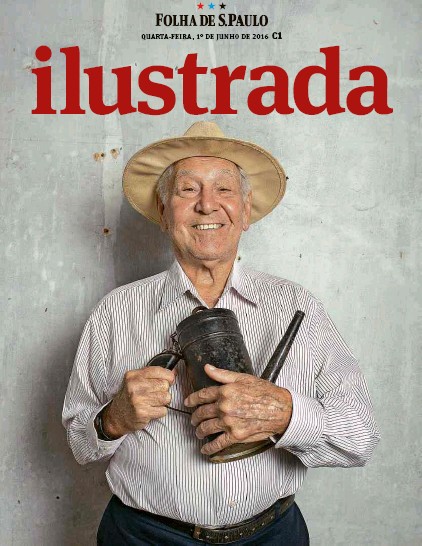
1952: Uma Odisséia no Sertão (Folha de S.Paulo)

1 Jun 2016

QUARTA-FEIRA, 1° DE JUNHO DE 2016

getimage.aspx

Francisco Guimarães Moreira Filho, 81, que viajou com Guimarães Rosa em 1952

Último vaqueiro relembra expedição que inspirou ‘Grande Sertão: Veredas’

Na viagem que fez pelo sertão de Minas Gerais em 1952, João Guimarães Rosa era conhecido pelos vaqueiros apenas como Joãozito. Hoje, ainda é assim que o último remanescente da expedição se refere ao diplomata e escritor.

“Joãozito era meio caladão, mas engraçado. Contava casos e gostava também de ouvir a gente contar para ele. Sempre [estava] com uma cadernetinha pendurada no pescoço. E nela, escrevia as coisas de qualquer jeito”, relembra Francisco Guimarães Moreira Filho, 81, mais conhecido como Criolo.

A viagem é histórica porque serviu de subsídio para parte da obra de Guimarães Rosa: o conjunto de sete novelas “Corpo de Baile” e para o romance e obra-prima “Grande Sertão: Veredas” –que seria inicialmente uma das histórias de “Corpo de Baile”. Ambos os livros foram lançados em 1956, há 60 anos.

Alexandre Rezende – 24.mai.2016/Folhapress
SETE LAGOAS, MG, BRASIL, 24-05-2016, 12:30h. Francisco Guimarães Moreira Filho, o "Criolo", na empresa de sua familia em Sete Lagoas. No mês em que "Grande Sertão: Veredas" completa 60 anos, apenas um remanescente da expedição que levou Guimarães Rosa ao sertão de Minas Gerais ainda vive. Francisco Guimarães Moreira Filho, o "Criolo" (apelido irônico por ele ser branco demais), acompanhou Guimarães Rosa na viagem feita em 1952 que inspirou o autor a escrever o romance e ainda guarda imagens e lembranças da época, aos 81 anos.(Alexandre Rezende/Folhapress ILUSTRADA) *** EXCLUSIVO FOLHA *** ORG XMIT: Alexandre Rezende
Francisco Guimarães Moreira Filho, o “Criolo”, na empresa de sua familia em Sete Lagoas

Criolo tinha 17 anos quando participou da travessia de dez dias do escritor pelo interior de Minas Gerais. A comitiva foi organizada pelo pai de Criolo, Chico Moreira, e saiu da fazenda Sirga, onde hoje é o município de Três Marias, para levar 180 cabeças de gado até a fazenda São Francisco, em Araçaí, a 240 km de distância.

Guimarães Rosa (1908-1967) era primo de Chico e foi junto para conhecer o dia a dia do sertanejo. Aprendeu a andar de cavalo, a tocar boiada e, quando voltou para casa, no Rio de Janeiro, levou um papagaio.

Quatro anos depois, publicou os dois livros. Em “Corpo de Baile” (1956), um personagem inspirado no capataz Manuelzão (Manuel Nardi, morto em 1997) está no título de uma das novelas.

“O sucesso dele como escritor foi ‘Grande Sertão’, e saiu dessa viagem da boiada”, diz à Folha Criolo, que ganhou o apelido ainda na infância –uma ironia por ser branco demais.

Numa sala de sua pequena empresa em Sete Lagoas (MG), onde aluga guinchos, Criolo espalhou fotos da expedição nas paredes, que foram registradas pela revista “O Cruzeiro”. Uma placa diz: “A origem do Grande Sertão: Veredas”.

Mas, do livro mesmo, Criolo conhece apenas o título. “Não consegui ler, nem papai. Apesar de ser pessoa estudada, ele não conseguiu entender o palavreado.”

Em 2007, para iniciar a comemoração do centenário do nascimento do escritor, Criolo refez a viagem, que também durou dez dias, acompanhado de mais 40 pessoas.

‘SAUDADES DAÍ’

“Chico, saudades daí tenho sempre”, diz a carta de Guimarães Rosa emoldurada na parede onde fica o acervo de Criolo. Assinada em 6 de outubro de 1952, ela foi enviada para seu pai.

“O papagaio está gordo e alegre, magnífico. Aprendeu muita conversa carioca, mas não se esqueceu do repertório sertanejo: (…) sabe chamar as vacas, com notável entusiasmo”, escreveu Guimarães Rosa.

Da comitiva de nove vaqueiros que acompanhou o escritor, Manuelzão se tornou o mais conhecido e morreu como uma figura mítica do sertão de Minas Gerais.

Já Chico Moreira, que era o dono da fazenda e foi quem viabilizou a expedição, é pouco lembrado. De acordo com o filho, ele tentou ajudar ao máximo Guimarães Rosa a se adaptar à viagem.

Mandou, inclusive, um funcionário ir antecipadamente de uma fazenda a outra com uma mula mansa para o diplomata cavalgar. Mas foi Manuelzão quem ensinou Guimarães Rosa a montar.

Criolo reclama que as fotos da expedição foram retiradas de exposição no museu Casa de Guimarães Rosa, que fica em Cordisburgo (MG), onde o escritor nasceu. Para ele, só querem que o escritor apareça em fotos usando smoking.

“Não querem que fale que ele foi peão, que andou a cavalo, que tocou boiada. Querem que ele só seja alta sociedade”, queixa-se.

Procurada, a coordenação do museu informou que as exposições são temporárias e trocadas constantemente. Também informa que as fotos da expedição continuam, sim, a fazer parte do acervo do museu.

As veredas de Guimarães já são escassas, e antenas se impõem

Paulo Peixoto, 01/06/2016

É difícil lidar com a obra de João Guimarães Rosa e não se sentir provocado a ir esmiuçar o “sertão roseano”, conhecer a gente daquele lugar, o bioma de buritis e veredas, as cidades, as roças, as mínimas coisas tão caprichosamente eternizadas nas histórias e contos desse clássico escritor parido naquele cerrado brasileiro.

Nada melhor do que um período sabático para ler e reler toda a obra de Rosa e pôr os pés naquele pedaço de Minas Gerais que ele muito bem nos apresentou. Foi isso o que eu pude fazer durante cinco meses em 2011.

As duas únicas imposições que fiz a mim mesmo foram: não deixar nunca faltar gasolina no carro e agir sempre de acordo com o tempo do sertão, que passa sem pressa e com prosa. Isso não é lenda!

ORG XMIT: 390901_0.tif O escritor João Guimarães Rosa (de óculos) e sertanejos em maio de 1952. Guimarães Rosa viaja entre Cordisburgo e Três Marias, no sertão mineiro, colhendo material para o livro "Grande Sertão: Veredas", acompanhado por Álvares da Silva e Eugênio Silva, repórter e fotógrafo, respectivamente, da revista "O Cruzeiro" que publicou, na edição de 21 de junho de 1952, a reportagem sobre a viagem. (Minas Gerais, maio de 1952. Foto de Eugênio Silva/O Cruzeiro) O escritor João Guimarães Rosa (de óculos) e sertanejos em maio de 1952. Eugênio Silva – 1º.mai.1952/O Cruzeiro. 

O silêncio é uma marca no sertão. Viajar por ele deu sentido a uma frase de Rosa em “Grande Sertão: Veredas”. “O senhor sabe o que o silêncio é? É a gente mesmo, demais”. Era preciso, então, ouvir esse silêncio.

Velhos vaqueiros e tropeiros cruzaram o meu caminho, caso do vivaz, lúcido e já quase cego homem de Beltrão, um lugarejo de Corinto, Feliciano Tavares de Souza, então com 94 anos. Personagem marcante.

Já velho, ele virou benzedor, um homem da “fé curativa”. Ao longo da vida, teve 15 filhos com duas mulheres e uma companhia inseparável: uma arma calibre 38. ”

“[Naquele tempo] Se não estivesse armado, eu não tinha vida [hoje]. Respeitava[-se] era a arma, não a pessoa. O governo deveria ter uma lei de desarmar todo mundo”, dizia ele.

Novos personagens se apresentaram. Foram benzedeiros e benzedeiras vocacionados “”é, eles dizem que é preciso ter vocação para herdar os ensinamentos, a religiosidade e a bondade dos seus parentes mais velhos.

As doceiras do sertão e seus inseparáveis tachos de cobre, os produtores e vendedores de minhocuçu foram outros que conheci.

E não poderiam ter faltado os companheiros de botequim que contavam causos do vaqueiro Manuel Nardi (1904-1997), o Manuelzão, em Andrequicé.

MUDANÇAS

Muita coisa mudou no sertão. A paisagem mudou bastante. As veredas já são escassas.

Para ver de perto o “porto” do rio de Janeiro, onde Riobaldo e Diadorim se encontraram, foi preciso atravessar quilômetros de estrada de terra batida em meio a plantações de eucalipto, que viram carvão para siderúrgicas. Uma tragédia ambiental.

Muito da vida rural se tornou urbana no sertão mineiro. O desenvolvimento a partir da segunda metade do século passado levou a isso.

O “brega” anima as festas nas cidades. O marketing americanizado no comércio urbano chamou bastante minha atenção: “Lan House New Emotions”, “Look da Moda”, “Marly Free Modas”.

Outros nomes também me pareceram um tanto estranhos: “Moda Nua Confecções” e “Zeus – A Arte de Vestir Bem”. Haja criatividade!

Mas nas pequenas cidades do sertão prevalece a tranquilidade, a vida pacata. Chegar em Morro da Garça (2.630 habitantes) e ver de perto a colina solitária em forma de pirâmide que inspirou Rosa no conto “O Recado do Morro” foi mais um mergulho no universo do escritor.

Uma antena de telefonia na crista do local agora se impõe. Mas eu a saudei quando precisei usar o celular para enviar um S.O.S. para a retirada do carro atolado.

Nessa viagem dos livros para a realidade do sertão de hoje, foram muitas descobertas. Somos apresentados a um mundo em que as pessoas, embora simples, nos contam histórias cheias de valor, vindas de um tempo em extinção.

Retornar a Cordisburgo e rever o Museu Casa de Guimarães Rosa, conhecer o Memorial Manuelzão, em Andrequicé, descobrir o Memorial Carlos Chagas, em Lassance, me proporcionaram experiências memoráveis. Revi grutas e os tantos rios que demarcam o “sertão roseano”. Nadei em vários deles.

É uma viagem que vale a pena. “Aprender a viver é que é o viver mesmo”, ensinou Rosa.