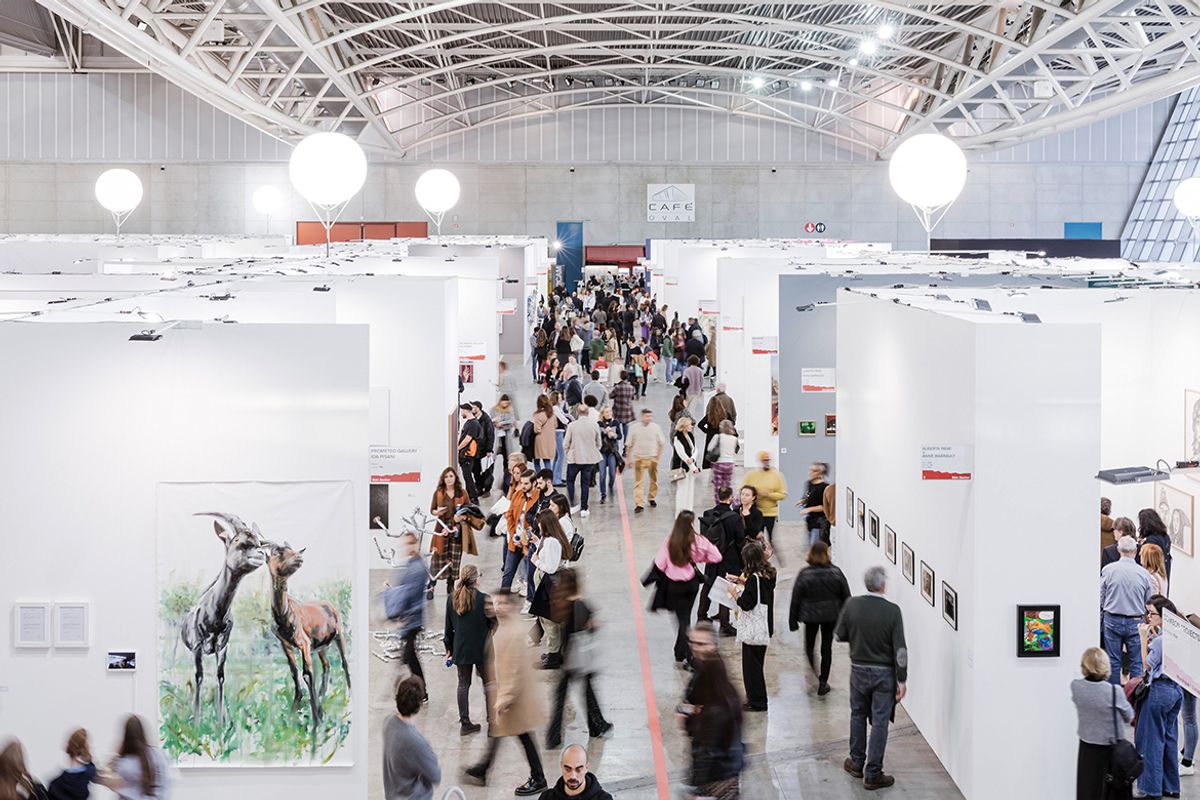
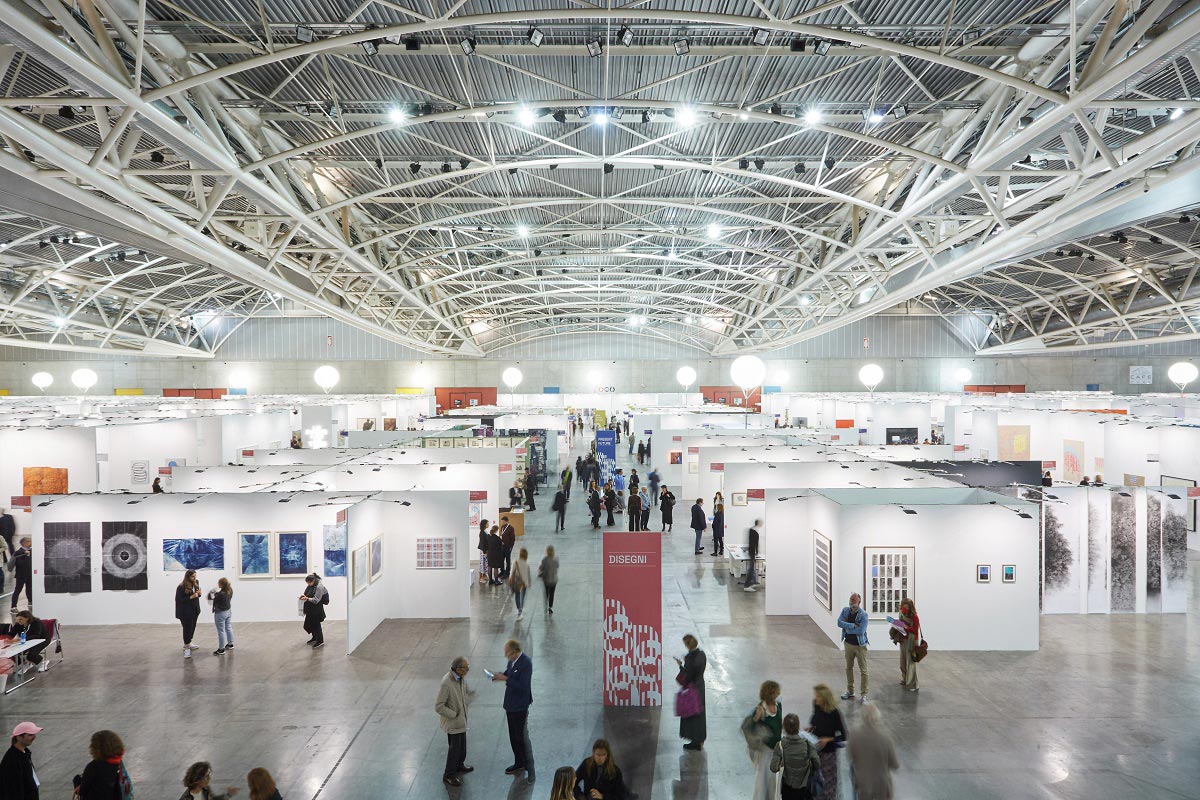
The Artissima fair, at the Oval Lingotto in Turin, features 181 galleries from 33 countries this year, including 39 newcomers mostly from outside Italy Edoardo Piva
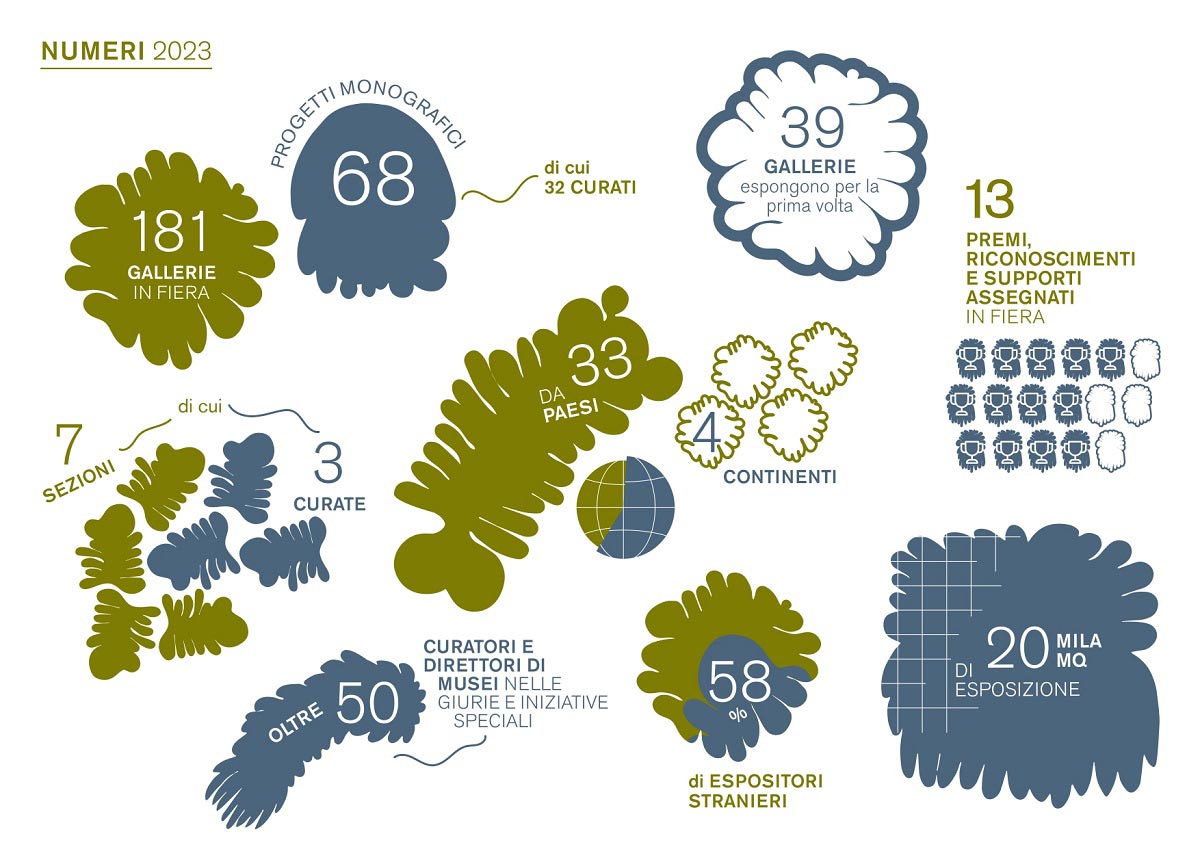
Artissima, Italy’s leading contemporary art fair, has often looked to the future and sometimes even anticipated it, both by identifying emerging trends, artists and galleries, and by foreshadowing developments of the art fair model. In 2007, when Andrea Bellini succeeded the fair’s founder, Roberto Casiraghi, Artissima became the first contemporary art fair to employ a director from the curatorial world—a now increasingly common practice. The fair’s current director, Luigi Fassi, who was appointed in 2022, heads up Artissima’s landmark 30th edition this month, which will see 181 galleries (58% foreign) from 33 countries exhibit at the Oval Lingotto arena on the outskirts of Turin. Longstanding participants include Jocelyn Wolff, from Paris, and Lia Rumma, from Milan. They will join 39 newcomers, including Good Weather (Little Rock, Chicago), Cristina Guerra (Lisbon), Meyer*Kainer (Vienna), Raster (Warsaw), The Sunday Painter (London) and Unit 17 (Vancouver).
The Art Newspaper: Each edition of Artissima typically has a theme. But why give a theme to an event whose primary objective is commercial?
Luigi Fassi:This year’s theme is “Relations of Care” and comes from a 2022 text by Renzo Taddei—one of the most authoritative contemporary anthropologists in Latin America and beyond. Establishing “relations of care” is what Artissima has done for almost 30 years, within several art professional communities in Turin: the gallery owners, artists of course, curators, journalists, museum directors and also the collectors and aficionados who have now, through several generations from 1994 to 2023, developed their passions into vocations. All of them have made the city’s interest in art evolve in an increasingly sophisticated way.
The theme of this year’s Artissima, which is directed by Luigi Fassi, is “Relations of Care” Alessandro Peirone
This year, the historic section, Back to the Future, looks to the 1950s but focuses only on female artists.
Back to the Future is jointly curated by Francesco Manacorda (the newly appointed director of the Castello di Rivoli contemporary art museum in Turin)—who was the director of Artissima in2010 and 2011, and who founded the this section—and Defne Ayas, a curator of Turkish origin, based in Berlin. They are focusing their attention on geographical areas that are, above all, far removed from traditional Modernism or Western Modernisms, such as the Middle East and North Africa. Manacorda and Ayas are identifying female artists who developed extremely innovative work, which has directly influenced future generations of artists in those countries. It is a section that this year, as it has been in the past, strongly demonstrates the ability of the fair to engage institutions and exhibition curators—it is a section that we could imagine being able to catapult straight into a museum.
Why do you often call Artissima an “accelerator”?
Artissima is first and foremost a market fair that has nevertheless become an institution due to its ability to create content, i.e. ideas and projectsbuilt directly with the artists. This term “accelerator” comes from the fair’s ability to respond to many needs, those of the collector who wishes to discover unknown galleries and artists, the curators and museum directors who need stimuli to compose the exhibition calendar of their institution. For this reason we have 39 galleries taking part in Artissima for the first time, most of them non-Italian. Last year there were 40. This produces novelty and continued attraction. I like to think of Artissima as an art world start-up for these types of galleries.
Artissima’s satellite shows outside the Oval Lingotto often cause concern among gallerists, who fear their customers will be distracted by the amount of things to see away from their stands.
It is essential for the fair to expand itself inside the Oval as well as outside the Oval, through thinking with the artists and the galleries. The exhibition The Human Condition by the Italo-Brazilian curator Jacopo Crivelli Visconti, at the Gallerie d’Italia, is dedicated to works by artists represented by the Artissima galleries, providing an extra opportunity for the artists and the dealers themselves.
We could give other examples in this sense. But everything is designed not to create distraction, but rather to deepen what is seen at the Oval.
The 30th edition of Artissima will be held from November 3-5, 2023. The theme will be ‘Relations of care. Here are facts and news from the contemporary art fair in Turin.
Everything is ready for the 2023 edition of Artissima, Torino’s contemporary art fair celebrating its 30th edition. Directed for the second year by Luigi Fassi and realized with the support of Main Partner Intesa Sanpaolo, the 30th edition of Artissima will be held from Friday, November 3 to Sunday, November 5, 2023, as always at theOval spaces in Turin, which will host the fair’s four established sections – Main Section, New Entries, Monologue/Dialogue and Art Spaces & Editions – and the three curated sections – Drawings, Present Future and Back to the Future – that are also hosted on the digital platform Artissima Voice Over. The 2023 edition of Artissima features a total of 181 Italian and international galleries, 68 of which are proposing monographic and curated projects to better present their artists’ work to the public.
“The 30th edition of Artissima in Turin,” explains director Fassi, “recounts the fair’s ability to draw a design vision from its three decades of activity to continue projecting into the future, deploying the strength of its Italian and international network. All of this has been made possible through intensive global research and scouting to continue to offer collectors and museum operators the excitement of meeting galleries and artists of the highest caliber from Europe, the Americas, Africa and Asia. The nearly forty galleries participating in Artissima for the first time in 2023, along with countless confirmations and returns, testify to the fair’s attractiveness and its ability to be a catalyst for experimentation, research, and market investment in the arts. As made manifest by an archive of three decades of activity, again this year those who bet on Artissima – gallerists, collectors, curators and visitors – will be rewarded by the discovery that they have been able to intercept in Turin the works and artists who are the protagonists of the near future.”
Welcoming the public to Artissima will be the installation LaCittaDinAmica: a labyrinth of transparent alvelular polycarbonate panels, illuminated with polychromatic reflections born from the encounter between natural light and the colors of the panels, which will be placed at the main entrance of the pavilion thanks to the dialogue between Jacopo Foggini and the company Dott.Gallina. After being presented in Milan on the occasion of Fuorisalone 2023, the intervention conceived by Foggini lands in Turin as well, seeing its elements cut and tilted, in an allegory of plasticity toward change, with a new labyrinthine pattern rearrangement.
The theme of Artissima 2023 is Relations of Care, a concept developed in a recent essay by Brazilian anthropologist Renzo Taddei, professor at the Universidade Federal de São Paulo in Brazil, dedicated to formulating a hypothesis for overcoming the crises of our time by taking inspiration from indigenous Amazonian thought. Relations ofCare identifies and proposes care as the premise and ultimate goal of the advancement of knowledge, which must be, first and foremost, aimed at preserving the diversity and value of every form of life in the world we inhabit.
In the essay Intervention of Another Nature: Resources for thinking in (and out of) the Anthropocene, published in the collected volume Everyday Matters (Ruby Press, Berlin, 2022), Renzo Taddei reflects on the need to validate all forms of knowledge and production of new knowledge only from a radical dimension of care that opens to an unprecedented sense of responsibility toward the natural world and all the species that inhabit it. By adopting such a reversal of perspective, Western-minded thought nurtures the possibility of opening up to a new imaginary, inspired by the model of the indigenous communities of the Amazon, which have always placed at the center of their existence the care of the environment and surrounding nature as fundamental elements for survival. Taddei thus invites us to follow this model of thought, abandoning any ideology of Western man’s otherness and superiority to nature, in order to reconnect with other forms of knowledge and coexistence and thus generate new possible relationships of care. Care imagined through the insights generated by the artists’ art and thought nourishes social and individual sensibilities and becomes a matrix of all the relationships that form the fabric of our lives.
Artissima also promotes numerous awards for artists and galleries in collaboration with art institutions, partner companies and foundations, which are confirmed and renewed for the 30th edition. In fact, the 2023 edition will be enriched by two important novelties: the Diana Bracco Prize – Women Entrepreneurs in Art promoted by Fondazione Bracco in collaboration with the Roberto De Silva and Diana Bracco Foundation of Milan, and the Pista 500 Prize promoted by Pinacoteca Agnelli. In addition, the historic Fondo Acquisizioni promoted by Fondazione per l’Arte Moderna e Contemporanea CRT is increased to 200,000 euros on the occasion of the fair’s 30th anniversary. Adding to these novelties is the IDENTITY Fund for New Entries, which supports the participation of three galleries in the section, selected by an exceptional jury composed of the fair’s four previous artistic directors. Also confirming their support are the promoters of the historic and younger awards: illycaffè with the illy Present Future Award; VANNI occhiali with the VANNI occhiali #artistroom Award; Tosetti Value – The Family office with the Tosetti Value Award for photography; Collezione La Gaia with the Matteo Viglietta Award; Fondazione Sardi per l’Arte with the Carol Rama Award; Fondazione per l’Arte Moderna e Contemporanea CRT with the OGR Award; Fondazione Merz with the “ad occhi chiusi….”; Fondazione Oelle with the ISOLA SICILIA Award; MEF Museo Ettore Fico in Turin with the Ettore and Ines Fico Award.
The organization of Artissima is handled by Artissima srl, a company of Fondazione Torino Musei, established in 2008 to manage the artistic and commercial relations of the fair. The Artissima brand belongs to the City of Turin, the Piedmont Region, and the Metropolitan City of Turin. The 30th edition of Artissima is realized through the support of the three brand-owning entities, jointly with Fondazione CRT through Fondazione per l’Arte Moderna e Contemporanea CRT, Fondazione Compagnia di San Paolo, and the Turin Chamber of Commerce.
2022 Edition of Artissima
The Sections
The sections of Artissima 2023, as anticipated, are seven in number. Four are selected by the fair’s gallery committee: Main Section brings together a selection of the most representative galleries on the world art scene (this year 98 have been chosen, of which 46 are foreign); New Entries, a section reserved for emerging galleries on the international scene participating in the fair for the first time, will have 17 galleries this year, of which 13 are foreign; Monologue/Dialogue is reserved for emerging galleries and/or those with an experimental approach who intend to present a monographic stand or a dialogue between the works of two artists, with 38 galleries of which 24 are foreign; Art Spaces & Ed itions hosts galleries specializing in artists’ editions and multiples, bookstores, project spaces and nonprofit spaces, with 9 exhibitors.
There are three sections curated by international boards of curators: Drawings, Present Future, Back to the Future. The three curated sections of the fair will be present at the fair with monographic booths and will live on the digital platform Artissima Voice Over with dedicated insights.
The Main Section, New Entries, Monologue/Dialogue, Art Spaces & Editions Committee is formao tda Paola Capata, Monitor gallery, Rome, Lisbon, Pereto; Raffaella Cortese, Raffaella Cortese gallery, Milan; Philippe Charpentier, mor charpentier gallery, Paris, Bogota; Nikolaus Oberhuber, KOW gallery, Berlin; Antoine Levi, Ciaccia Levi gallery, Paris and Milan; Elsa Ravazzolo Botner, A Gentil Carioca gallery, Rio de Janeiro, São Paulo; Guido Costa, Guido Costa Projects gallery, Turin. Curatorial advisors are: Krist Gruijthuijsen, director, KW Institute for Contemporary Art, Berlin; Jacopo Crivelli Visconti, independent curator, São Paulo.
The galleries at Artissima 2023 come from four continents and 33 countries: Austria, Brazil, Canada, China, Colombia, South Korea, Cuba, United Arab Emirates, France, Germany, Greece, Hong Kong, Israel, Italy, Lithuania, Mexico, Netherlands, Poland, Portugal, Czech Republic, United Kingdom, Romania, Slovenia, Spain, United States, South Africa, Switzerland, Thailand, Tunisia, Turkey, Hungary, Uruguay and Zimbabwe. Exhibiting for the first time at the fair are 39 galleries. These include Good Weather (North Little Rock, Little Rock, Chicago), Cristina Guerra (Lisbon), Meyer*Kainer (Vienna), Raster (Warsaw), The Sunday Painter (London), Unit 17 (Vancouver).
The Identity track.
Artissima celebrates its thirtieth anniversary by launching, with the support of the Compagnia di San Paolo Foundation, IDENTITY: a three-year path to enhance the fair’s identity traits that at each edition will offer in-depth project focuses to highlight the strategic lines that in its thirty-year history have contributed to Artissima’s current positioning in the art world.
IDENTITY 2023 is dedicated to the New Entries section that welcomes interesting emerging national and international galleries participating in the fair for the first time. IDENTITY takes concrete form in the activation of IDENTITY Fund for New Entries, an economic fund to support three galleries to participate in the section, and in the realization of New Entries BAR, a special project at the fair curated by Cripta747, aimed at offering the galleries in the section an additional showcase and opportunity to deepen their research.
Artissima 2023 in numbers
Special projects
There are several special projects also for the 30th edition of Artissima. They start with the New Entries Bar for Identity, a place, a project and a story created with the intention of enhancing the research of the galleries of the New Entries section and their artists within the conceptual platform IDENTITY, supported by the Compagnia di San Paolo Foundation. The New Entries BAR is curated by Cripta747 and will welcome the fair audience in a dedicated area of the pavilion.
Again, Artissima and Juventus continue the dialogue by renewing Artissima Junior, the project that involves young visitors to the fair, between the ages of 6 and 11, in the creation of a choral work of art under the guidance of an artist tutor, who this year will be Eugenio Tibaldi, represented by Umberto Di Marino Gallery in Naples.
Artissima and Fondazione per l’Arte Moderna e Contemporanea CRT, will then present the third episode of the Beyond Production project platform, created in 2021 to reflect on the relationship between new technologies and art. In 2023, Beyond Production Symposium will be presented, a conference with outstanding international speakers, hosted at OGR Turin and open to the public of enthusiasts.
The digital front is also active: thanks to Fondazione Compagnia di San Paolo, which has supported Artissima Digital since 2017, the commitment to amplify the fair experience through the production of digital thematic content and insights on the artissima.art and Artissima Voice Over platforms, dedicated to the three curated sections, continues. In addition to the reconfirmation of the AudioGuides to accompany the public’s visit to the fair, the 2023 edition will be enriched with two new pieces of unreleased content in collaboration with important authors from the cultural world. The in-depth multimedia cultural magazine Lucy. On Culture in dialogue with Brazilian anthropologist Renzo Taddei will explore the many nuances of the Relations of Care edition’s theme, while personalities from the world of art, theater and literature will take turns at the microphones of the new podcast Lo stereoscopio dei solitari, produced in collaboration with Il Giornale dell’Arte, which will be launched during the days of the fair.
Coming to its second edition is the AudioGuide project: Lauretana, a longtime partner of Artissima, is promoting for the second year the podcast project designed to accompany visitors on an autonomous and personal tour of the fair’s stands. The project is part of Artissima Digital powered by Fondazione Compagnia di San Paolo.
Then there will be The Planetary Curator: starting from a reflection on the theme of the edition of Artissima 2023, Relations of Care, CURA. magazine has conceived and curated The Planetary Curator, a series of talks conceived as a single stream of thought and discussion on the theme of care, bringing into dialogue outstanding personalities in the contemporary art scene. The talk series will animate the Meeting Point on Saturday, Nov. 4.
Finally, the Made In project: an academy for young artists that allows them to live in the company and assimilate and incorporate, within their own research, the technological and operational knowledge with which they will come into contact. Born in 2022 thanks to the support of the Turin Chamber of Commerce, Made In announces its second edition and new partner companies-Dr.Gallina, Guido Gobino Cioccolato, Kristina Ti, Pinifarina Architecture-inviting them to discover the works produced during the first edition at the fair.
When Kyle Cornforth first walked into IDEO’s San Francisco offices in 2011, she felt she had entered a whole new world. At the time, Cornforth was a director at the Edible Schoolyard Project, a nonprofit that uses gardening and cooking in schools to teach and to provide nutritious food. She was there to meet with IDEO.org, a new social-impact spinoff of the design consulting firm, which was exploring how to reimagine school lunch, a mission that the Edible Schoolyard Project has been working toward since 2004. But Cornforth was new to IDEO’s way of working: a six-step methodology for innovation called design thinking, which had emerged in the 1990s but had started reaching the height of its popularity in the tech, business, and social-impact sectors.
Key to design thinking’s spread was its replicable aesthetic, represented by the Post-it note: a humble square that anyone can use in infinite ways. Not too precious, not too permanent, the ubiquitous Post-it promises a fast-moving, cooperative, egalitarian process for getting things done. When Cornforth arrived at IDEO for a workshop, “it was Post-its everywhere, prototypes everywhere,” she says. “What I really liked was that they offered a framework for collaboration and creation.”
But when she looked at the ideas themselves, Cornforth had questions: “I was like, ‘You didn’t talk to anyone who works in a school, did you?’ They were not contextualized in the problem at all.” The deep expertise in the communities of educators and administrators she worked with, Cornforth saw, was in tension with the disruptive, startup-flavored creativity of the design thinking process at consultancies like IDEO.org. “I felt like a stick in the mud to them,” she recalls. “And I felt they were out of touch with reality.”
That tension would resurface a couple of years later, in 2013, when IDEO was hired by the San Francisco Unified School District to redesign the school cafeteria, with funding from Twitter cofounder Ev Williams’s family foundation. Ten years on, the SFUSD program has had a big impact—but that may have as much to do with the slow and integrated work inside the district as with that first push of design-focused energy from outside.
Founded in the 1990s, IDEO was instrumental in evangelizing the design thinking process throughout the ’00s and ’10s, alongside Stanford’s Hasso Plattner Institute of Design or “d.school” (which IDEO’s founder David Kelley also cofounded). While the methodology’s focus on collaboration and research can be traced back to human-factors engineering, a movement popular decades earlier, design thinking took hold of the collective imagination during the Obama years, a time when American culture was riding high on the potential of a bunch of smart people in a hope-filled room to bend history’s arc toward progress. Its influence stretched across health-care giants in the American heartland, government agencies in DC, big tech companies in Silicon Valley, and beyond. City governments brought in design thinking agencies to solve their economic woes and take on challenges ranging from transportation to housing. Institutions like MIT and Harvard and boot camps like General Assembly stood up courses and degree programs, suggesting that teaching design thinking could be as lucrative as selling it to corporations and foundations.
Design thinking also broadened the very idea of “design,” elevating the designer to a kind of spiritual medium who didn’t just construct spaces, physical products, or experiences on screen but was uniquely able to reinvent systems to better meet the desires of the people within them. It gave designers permission to take on any big, knotty problem by applying their own empathy to users’ pain points—the first step in that six-step innovation process filled with Post-its.
We are all creatives, design thinking promised, and we can solve any problem if we empathize hard enough.
The next steps were to reframe the problem (“How might we …?”), brainstorm potential solutions, prototype options, test those options with end users, and—finally—implement. Design thinking agencies usually didn’t take on this last step themselves; consultants often delivered a set of “recommendations” to the organizations that hired them.
At the same time, consultancies like IDEO, Frog, Smart Design, and others were also promoting the idea that anyone (including the executives paying their fees) could be a designer by just following the process. Perhaps design had become “too important to leave to designers,” as IDEO’s then CEO, Tim Brown, wrote in his 2009 book Change by Design: How Design Thinking Transforms Organizations and Inspires Innovation. Brown even touted as a selling point his firm’s utter absence of expertise in any particular industry: “We come with what we call a beginner’s mind,” he told the Yale School of Management.
This was a savvy strategy for selling design thinking to the business world: instead of hiring their own team of design professionals, companies could bring on an agency temporarily to learn the methodology themselves. The approach also felt empowering to many who spent time with it. We are all creatives, design thinking promised, and we can solve any problem if we empathize hard enough.
But in recent years, for a number of reasons, the shine of design thinking has been wearing off. Critics have argued that its short-term focus on novel and naive ideas has resulted in unrealistic and ungrounded recommendations. And they have maintained that by centering designers—mainly practitioners of corporate design within agencies—it has reinforced existing inequities rather than challenging them. Years in, “innovation theater”— checking a series of boxes without implementing meaningful shifts—had become endemic in corporate settings, while a number of social-impact initiatives highlighted in case studies struggled to get beyond pilot projects. Meanwhile, the #MeToo and BLM movements, along with the political turmoil of the Trump administration, have demonstrated that many big problems are rooted in centuries of dark history, too deeply entrenched to be obliterated with a touch of design thinking’s magic wand.
Today, innovation agencies and educational institutions still continue to sell design thinking to individuals, corporations, and organizations. In 2015, IDEO even created its own “online school,” IDEO U, with a bank of design thinking courses. But some groups—including the d.school and IDEO itself—are working to reform both its principles and its methodologies. These new efforts seek a set of design tools capable of equitably serving diverse communities and solving diverse problems well into the future. It’s a much more daunting—and crucial—task than design thinking’s original remit.
The magical promise of design thinking
When design thinking emerged in the ’90s and ’00s, workplaces were made up of cubicles and closed doors, and the term “user experience” had only just been coined at Apple. Despite convincing research on collaboration tracing back to the 1960s, work was still mainly a solo endeavor in many industries, including design. Design thinking injected new and collaborative energy into both design and the corporate world more broadly; it suggested that work could look and feel more hopeful and be more fun, and that design could take the lead in making it that way.
When author and startup advisor Jake Knapp was working as a designer at Microsoft in the 2000s, he visited IDEO’s offices in Palo Alto for a potential project. He was struck by how inspiring the space was: “Everything is white, and there’s sunlight coming in the windows. There’s an open floor plan. I had never seen [work] done like that.” When he started at Google a few years later, he learned how to run design thinking workshops from a colleague who had worked at IDEO, and then he began running his own workshops on the approach within Google.
Knapp’s attraction was due in part to the “radical collaboration” that design thinking espoused. In what was a first for many, colleagues came together across disciplines at the very start of a project to discuss how to solve problems. “Facilitating the exchange of information, ideas, and research with product, engineering, and design teams more fluidly is really the unlock,” says Enrique Allen, cofounder of Designer Fund, which supports startups seeking to harness the unique business value of design in industries from health care to construction. Design thinking offered a structure for those cross-disciplinary conversations and a way to articulate design’s value within them. “It gave [your ideas] so much more weight for people who didn’t have the language to understand creative work,” says Erica Eden, who worked as a designer at the innovation firm Smart Design.
It makes a good story to say there’s a foolproof process that will lead to results no matter who runs it.
For Angela McKee Brown, who was hired by SFUSD to help bring the work IDEO had done on improving the school cafeteria to reality, the design thinking process was a language that bureaucracy could understand. In a district that had suffered from an overall lack of infrastructure investment since the 1970s, she watched as IDEO’s recommendations ignited a new will to improvement that continues today. “The biggest role that process played for us was it told a story that showed people the value of the work,” McKee Brown says. “That allowed me to have a much easier job, because people believed.”
The enthusiasm that surrounded design thinking did have much to offer the public sector, says Cyd Harrell, San Francisco’s chief digital services officer, who has worked as a design leader in civic technology for over a decade. Decades of budget cuts and a lack of civic investment have made it difficult for public servants to feel that change is possible. “For a lot of those often really wonderful people who’ve chosen service as a career, and who have had to go through times where things seem really bleak,” she says, “the infusion of optimism—whether it comes in the guise of some of these techniques that are a little bit shady or not—is really valuable.” And it makes a good story to say there’s a foolproof process that will lead to results no matter who runs it.
Ideas over implementation
Execution has always been the sticky wicket for design thinking. Some versions of the codified six-step process even omit that crucial final step of implementation. Its roots in the agency world, where a firm steps in on a set timeline with an established budget and leaves before or shortly after the pilot stage, dictated that the tools of design thinking would be aimed at the start of the product development process but not its conclusion—or, even more to the point, its aftermath.
When Jake Knapp was running those design thinking workshops at Google, he saw that for all the excitement and Post-its they generated, the brainstorming sessions didn’t usually lead to built products or, really, solutions of any kind. When he followed up with teams to learn which workshop ideas had made it to production, he heard decisions happening “in the old way,” with a few lone geniuses working separately and then selling their almost fully realized ideas to top stakeholders.
Execution has always been the sticky wicket for design thinking.
In the government and social-impact sectors, though, design thinking’s focus on ideas over implementation had bigger ramifications than a lack of efficiency.
The “biggest piece of the design problem” in civic tech, says Harrell, is not generating new ideas but figuring out how to implement and pay for them. What’s more, success sometimes can’t be evaluated until years later, so the time-constrained workshops typical of the design thinking approach may not be appropriate. “There’s a mismatch between the short-cycle evaluations [in commercial design] and the long-cycle evaluations for policy,” she says. For longtime public servants, seeing a project through—past implementation and into iteration—is crucial for learning and improving how infrastructure functions.
In a 2021 piece on the evolution of their practices, Brown, along with Shauna Carey and Jocelyn Wyatt of IDEO.org, cited the Diva Centres project in Lusaka, Zambia, where they worked to help teens access contraception and learn about reproductive health. Through the design thinking methodology, the team came up with the idea of creating nail salons where the teens could get guidance in a low-pressure environment. The team built three model sites, declaring the work a success; the Diva Centres project won a Core77 Service Design Award in 2016, and the case study is still posted on IDEO.org’s website. But while the process focused on generating the most exciting user experience within the nail salons, it neglected to consider the world outside their walls—a complex network of public health funding and service channels that made scaling the pilot “prohibitively expensive and complicated,” as the IDEO.org leaders later wrote. Though IDEO intended to build 10 centers by 2017, neither IDEO nor the partner organization ever reported reaching that milestone. The article does not say how much money or time went into realizing the Diva Centres pilot before it ended, so it’s not clear if the lessons learned were worth the failure. (IDEO.org declined to be interviewed for this story.)
IDEO’s 2013 work for SFUSD—the project that McKee Brown later worked on from the school system’s side—has a more complicated legacy. After five months, IDEO delivered 10 recommendations, including communal dining tables, vending machines with meals to grab on the go, community food partnerships for fresher produce, and an app and interactive web portal to give students and families more opportunities to participate in lunch choices. (The food itself was a different issue that the district was working on with its vendors.) On IDEO’s website today, the story concludes with SFUSD’s “unanimous enthusiasm” for the recommendations—a consultancy happy ending. Indeed, the project was met with a flurry of fawning press coverage. But with hindsight, it’s clear that only after IDEO left the project did the real work begin.
At SFUSD, McKee Brown saw instances in which IDEO’s recommendations did not take into account the complexities of the district’s operations and the effort it could take to even drill a hole in a wall in accordance with asbestos abatement rules. The vending machines the team proposed, for instance, would need a stable internet connection, which many target locations didn’t have. And the app never came to fruition, McKee Brown says, as it would have required a whole new department to continually update the software and content.
An analysis a few years after IDEO’s 2013 engagement showed that about the same number of kids or even fewer were choosing to eat school lunch, despite a continuous increase in enrollment. This may have had several reasons, including that the quality of the food itself did not significantly improve. The original goal of getting more kids to eat at school would eventually be met by an entirely different effort: California’s universal school meal program, implemented in 2022.
Nevertheless, IDEO’s SFUSD project has had a lasting impact, thanks to the work the district itself put into transforming blue-sky ideas into real change. While few of the recommendations ended up being widely implemented in schools exactly as IDEO envisioned them, the district has been redesigning its cafeterias to make the spaces more welcoming and social for students—after sometimes decades of disrepair. Today more than 70 school cafeterias out of 114 sites in the city have been renovated. The design thinking process helped sell the value of improving school cafeterias to the decision makers. But the in-house team at SFUSD charted the way forward after many of IDEO’s initial ideas couldn’t make it past the drawing board.
Empathy over expertise
The first step of the design thinking process is for the designer to empathize with the end user through close observation of the problem. While this step involves asking questions of the individuals and communities affected, the designer’s eye frames any insights that emerge. This puts the designer’s honed sense of empathy at the center of both the problem and the solution.
In 2018, researcher Lilly Irani, an associate professor at the University of California, San Diego, wrote a piece titled “Design Thinking: Defending Silicon Valley at the Apex of Global Labor Hierarchies” for the peer-reviewed journal Catalyst. She criticized the new framing of the designer as an empathetic “divining rod leading to new markets or domains of life ripe for intervention,” maintaining that it reinforced traditional hierarchies of labor.
Irani argued that as an outgrowth of Silicon Valley business interests and culture, design thinking situated Western—and often white—designers at a higher level of labor, treating them as mystics who could translate the efforts and experiences of lower-level workers into capitalistic opportunity.
Former IDEO designer George Aye has seen Irani’s concerns play out firsthand, particularly in settings with entrenched systemic problems. He and his colleagues would use the language of a “beginner’s mindset” with the clients, he says, but what he saw in practice was more an attitude that “we’re going to fumble our way through and by the time we’re done, we’re on to the next project.” In Aye’s view, these consulting engagements made tourists of commercial designers, who—however sincerely they wanted to help—made sure to “get some good pictures standing next to typically dark-skinned people with brightly colored clothes” so they could produce evidence for the consultancy.
Today in his own studio, which works only with nonprofit organizations, Aye tries to elevate what’s already being created by a local community, advocate for its members to get the resources they need, and then “get out of the way.” If designers are not centering the people on the ground, then “it’s profit-centered design,” he says. “There’s no other way of putting it.”
McKee Brown considers one of the greatest successes of the San Francisco cafeteria redesign project to be the School Food Advisory (SFA), a district-wide program in which high schoolers continually inform and direct changes to meal programs and cafeteria updates. But the group wasn’t a result of IDEO’s recommendations; the SFA was formed to ensure that SFUSD students would continue to have a voice in the district and a chance to collaborate often on how to redesign their spaces. Nearly a decade after IDEO completed its work, the best results have been due to the expertise of the district’s own team and its generations of students, not the empathy that went into the initial short-term consulting project.
As she’s continued to work on food and education, McKee Brown has adapted the process of design thinking to her experiences and team leadership needs. At SFUSD and later at Edible Schoolyard, where she became executive director, she developed three questions she and her team should always make sure to ask: “Who have you talked to? Have you tried it out before we spend all this money? And then how are you telling the story of the work?”
What’s next for design thinking?
Almost two decades after design thinking rose to prominence, the world still has no shortage of problems that need addressing. Design leadership and design processes themselves need to evolve beyond design thinking, and that’s an arena where designers may actually be uniquely skilled. Stanford’s d.school, which was instrumental in the growth of design thinking in the first place, is one institution pushing the conversation forward by reshaping its influential design programs. Within the physical walls of the school, the design thinking aesthetic—whiteboards, cardboard furniture, Post-its—is still evident on most surfaces, but the ideas stirring inside sound new.
In fact, the phrase “design thinking” does not appear in any materials for the d.school’s revamped undergraduate or graduate programs—although it still shows up in electives in which any Stanford student can enroll (and a representative from the d.school claims the terms “design” and “design thinking” are used interchangeably). Instead of “empathy,” “make” and “care” are the concepts that program leaders hope will shape the design education across all offerings.
In contrast with empathy, care demands a shift in who is centered in these processes—sometimes meaning people in generations other than our own. “How are we thinking about our ancestors? What is the legacy that this is going to leave? What are all the intended and unintended consequences?” says academic director Carissa Carter. “There are implications no matter where you work—second-, third-order consequences of what we put out. This is where we are pulling in elements of equity and inclusion. Not just in a single course, but how we approach the design of this curriculum.”
The d.school’s creative director, Scott Doorley, who has been with the school for over 15 years, has begun to hear the students themselves ask for fundamental shifts like these. They’re entering the programs saying, “I want to make something that not only changes things, but changes things without screwing everything else up,” Doorley says: “It’s this really great combination of excitement and humility at the same time.” The d.school has also made specific changes in curriculum and tools; an ethics course that was previously required at the end of the undergraduate degree program now appears toward the beginning, and the school is providing new frameworks to help students plan for the next-generation effects of their work beyond a project’s completion.
For the Design Justice Network, a collective of design practitioners and educators that emerged out of the 2014 Allied Media Conference in Detroit, slowing down and embracing complexity are the keys to moving practices like design thinking toward justice. “If we truly want to think about stakeholders, if we want to have more levels of affordances when we design things, then we can’t work at the speed of industry,” says Wes Taylor, an associate professor at Virginia Commonwealth University and a DJN leader.
IDEO’s practices have been evolving to better address that complexity. Tim Brown says that toward the beginning of the company’s life, its unique power was in bringing together different design disciplines to deliver new ideas. “We weren’t looking particularly to help our clients build their own capabilities back then. We were simply looking to do certain kinds of design projects,” he says.
Now, when the questions being asked of designers are deeper and more complicated—how to make Ford a more human-centered company rather than how to build a better digital dashboard, he gives as an example—IDEO leaders have recognized that “it’s the combination of doing design and building the capabilities [of IDEO’s clients and their communities] to design at the same time where the real impact can happen.” What this means in practice is much more time on the ground, more partnerships, and sometimes more money. “It’s about recognizing that the expertise is much more in the hands of the user of the system than the designer of the system. And being a little bit less arrogant about knowing everything,” says Brown.
IDEO has also been building new design capabilities within its own team, hiring writers and filmmakers to tell stories for their clients, which Brown has come to see as “the key activity, not a key activity” for influencing change in societal systems. “If you had asked me 10 to 15 years ago,” he says, “I would never have guessed that we would have as many folks who come from a storytelling background within a design firm as we do today.”
Indeed, design thinking’s greatest positive impact may always have been in the stories it’s helped tell: spreading the word about the value of collaboration in business, elevating the public profile of design as a discipline, and coaxing funding from private and public channels for expensive long-term projects. But its legacy must also account for years of letting down many of the people and places the methodology claimed it would benefit. And as long as it remains in the halls of consultancies and ivory-tower institutions, its practitioners may continue to struggle to decenter the already powerful and privileged.
As Taylor sees it, design thinking’s core problems can be traced back to its origins in the corporate world, which inextricably intertwined the methodology with capitalistic values. He believes that a justice lens can help foster collaboration and creativity in a much broader way that goes beyond our current power structures. “Let’s try to imagine and acknowledge that capitalism is not inevitable, not necessarily a foundational principle of nature,” he urges.
That kind of radical innovation goes far beyond the original methodology of design thinking. But it may contain the seeds for the lasting change that the design industry—and the world—need now.
Rebecca Ackermann is a writer, designer, and artist based in San Francisco.
He talks and talks, you are on the verge of falling asleep, until suddenly, out of the blue, a word or a concept slaps you in the face. You listen again. He adds another violent metaphor to his argument and there you are, disarmed by a truth he just unveiled. I presume part of Cameroonian historian and philosopher Achille Mbembe’s brilliance stems from his ability to coin ideas that were as yet framed. Not that they didn’t exist before, but they were lacking the proper notes to be heard. For instance, his book De la Postcolonie, published in 2000, contributed to a massive rise of interest in post-colonial studies by revealing how colonial forms of domination continue to operate on and within the African continent. His Critique de la raison nègre, published in 2013, shed light on the function of the “Black” figure in the construction of Western identity. He later developed the concept of necropolitics, widely used today in academia, to illustrate the production of superfluous and unwanted populations. More recently, he introduced the notion of brutalism, which describes capitalism’s constant process of extraction and waste production. A process that generates growth: walls, clean streets, prescribed drugs, cars, banks – and trash. A trash made of human and non-human residues that we bury, send abroad, or incarcerate. Combustion, islands of plastic, or “migrants” who have no value in our economic system are examples of this exponential “trashisation” of the world. This side effect of brutalism is also defined by Mbembe as the tendential universalization of the Black condition: “The way we used to treat exclusively black people, is now extended to people with a different skin color,” he told me recently. ” The black person is by definition the one who can be humiliated, whose dignity is not recognized, whose rights can be violated with impunity, including his right to breath. He or she therefore represents the accomplished figure of the superfluous person. And nowadays, the number of superfluous people is constantly growing.” What annoys me with Achille Mbembe is the way he managed to pollute the innocence of my Western privileges. I was so much better off before, flying for no reason around the world, while popping stimulants and tranquilizers to cope with my jet-lag. I’d see bankers as virtuous men I’d be desperate to marry and was secretly irritated by all these foreigners trying to flood our trash-free countries and schools. I’d worry for the future of my children and how all this precarity and danger might contaminate the clean side-walks of their own adulthood. I knew without “knowing” that racism and destruction of the environment are the two sides of the same coin, that we cannot fight one without fighting the other; that if we hadn’t and weren’t continuously destroying the African soil, it’s inhabitants for sure wouldn’t try to flee, that my privileges are not merely a question of luck, but the result of a continuous exploitation in which I am, whether I like it or not, complicit. All this I knew without being too disturbed by it. I hat found a comfortable way to exclude my responsibility from these tragedies that occur most of the time in remote parts of the world, far away from my home view in Switzerland. I guess no one enjoys to be reminded that under their innocence lies a pile of shit which has been produced not by “the other” but by one’s own self. Long story short: I sometimes wish I hadn’t come across Achille Mbembe’s slaps of truth. For, as he remarks in his last book, Brutalism, “Ignorance too, is a form of power.”
We met end of the summer 2020. I was in Bretagne, France; he waiting for winter to end in his house in Johannesburg.
***
You refuse to be defined as a post-colonial thinker, how come?
I have nothing against postcolonial or decolonial theory, but I am neither a postcolonial, nor a decolonial theorist. My story has been one of constant motion. I was born in Cameroun, I spent my twenties in Paris, my early and mid-thirties in New York, Philadelphia and Washington. I later moved to Dakar, Senegal and I’m now in Johannesburg, South Africa. Likewise, I was trained as an historian, then I studied political science. At the same time, I read a lot of philosophy and anthropology, immersed myself in literature, in psychoanalysis. As we speak, I am familiarizing myself with life sciences, climate and earth sciences, astrobiology. This perpetual crossing of borders is what characterizes my life and my work.
So how should one define you?
I’d rather define myself as a penseur de la traversée. One for whom critique is a form of care, healing and reparation. The idea of a common world, how to bring it into being, how to compose it, how to repair it and how to share it – this has ultimately been my main concern.
In your last book, Brutalism (Editions La Decouverte, 2020) you plead for a politics of the en-commun (in-common) as a means to re-enchant the world and re-infuse solidarity among the elements which constitute and belong to this one world we all share together. Does your concept of the en-commun have any affinities with communist ideas?
No, it has nothing to do with communism as a political ideology. It is related to my preoccupation with life futures, and as I have just said, with theories of care, healing and reparation, the reality of historical harms and debates on planetary habitability. Ultimately Eurocentrism has fostered colonialism, racism and white supremacy. Postcolonialism has been preoccupied with difference, identity and otherness. As a result of my deep interest in ancient African systems of thought, I am intrigued by the motifs of commonality and multiplicity, by the entanglement of all human and non-human forms of life and the community of substance they form. This commonality, I should add, must be constantly composed and recomposed. It must be pieced together, through endless struggles, and very often, defeats and new beginnings.
Isn’t difference the basis of identity?
During the 19th and 20th centuries, we have not stopped talking about difference and identity. About self and the Other. About who is like us and who is not. About who belongs and who doesn’t. As the seas keep rising, as the Earth keeps burning and radiation levels keep increasing and we are less and less shielded against the plasma flow from the sun and surrounded by viruses, this is a discourse we can now ill afford.
Does this imply hierarchies should be more horizontal?
By definition, all hierarchies should be exposed to contestation. I am in favor of radical equality. Formal equality is meaningless as long as certain bodies, almost always the same, remain trapped in the jaws of premature death. Once equality is secured, we need to work on the best mechanisms of representation. But those who represent us can never be taken to be hierarchically superior to us. Instead they are called upon to perform a service for the care of all. Representation can only be the result of consent and for such consent to be granted, those who represent us must be accountable. Nobody should make decisions on behalf of those who haven’t mandated him or her. The great difficulty these days and for the years to come is that decisions are increasingly made by technological devices. They are determined by algorithmic artefacts which have not been mandated, except possibly by their manufactures.
Do you have a mission?
I wouldn’t want to make things uglier than they already are. I’m here on earth like everyone else for a limited timeframe. A tiny particle in a universe governed by ungraspable forces. My goal is therefore to remain as open as possible to what is still to come. To welcome and embrace the manifold resonances of the forces of the universe. On my last day, at the dusk of my life, I want to be able to say that I have smelled the infinite flesh of the world and that I have fully breathed its breath.
Writing is your medium. How did this practice come to you?
I used to be shy. It was easier for me to write than to speak in public or even in a group. When I was 12, I was part of a poetry club at my boarding school. In parallel I kept a personal diary in which I would relate my daily experiences. But it was only when I turned 18 or 19 that I started writing, that is, speaking in public.
What does writing mean to you?
It enables me to find my own center. One could almost say “I write therefore I am.” It’s a space of inner peace, though it can also at times be one of self-division. Whatever the case, what I write is mine and can never be taken away from me.
Do you have any writing routines?
In order to write, I need silence. I need to be left alone for long hours, if not days. Silence for me is a prelude to a state of psychic condensation. When I was younger, I’d mostly write in the pitch dark, after midnight. Writing after midnight, I could reconnect with Africa’s deepest pulsations, its tragedies as well as its metamorphic potential, the promise it represents for the world. That is how I wrote On the Postcolony, in the midst of Congolese sounds and rhythms.
How do you reach this bubble of isolation and silence while living with your spouse, children and dog?
My wife is a writer of her own account. The dog is a very unobtrusive companion. It also happens that I can be talking to you now without really being present. Being physically present doesn’t prevent my mind from being totally elsewhere.
Where does your writing start?
Most of the time in my head. Sometimes from what I see, what I hear, what I read. It can start in the shower, when I am cooking or while I lie on the bed waiting to fall asleep. I can spend long months without writing anything. Things first need to boil. I need to find myself in a position where I can no longer bracket the interpellation addressed to me by reality, an event or an encounter.
Do you take notes?
Not really, or not all the time. I may have notebooks, but I keep misplacing them and hardly ever return to them in any structured way. My writing generally begins with a word, a concept, a sound, a landscape or an event which suddenly resonates in me. I do have a very lively mental scape. As a result, writing is like translating an image into words. In fact my books are full of images of the mind, non-visual images. But I never know in advance where these images will lead me to or whether at the end of the process I will be able to adequately translate them into words without losing their allure. It’s a rather intuitive process. That’s also why I write my introductions at the end, as I’ll only be able to tell you what the book is about once it’s written, when all the images have been curated.
Do you spend lots of time rewriting your sentences?
I’m extremely attentive to each word, each phrase, the way it’s formulated, its rhythm and musicality, the punctuation. For a text to be powerful, that is to heal, it must viscerally speak to both the reader’s reason and senses. It must therefore be methodically composed, arranged, and curated. Once it’s done with the appropriate amount of care, I no longer go back to it. I actually never reread my books.
Why ? Because I’m always afraid to realize that the translation of images into words could have been done differently, and that now it’s too late. It’s already published and now belongs somewhat to the public. I have a rather strange understanding of writing. Writing is like a trial with too many judges If one doesn’t wish to be condemned, one shouldn’t write. Because once you’ve written and published something, that’s it.. The door is locked and the key is taken away. Writing is like pronouncing a sentence on oneself.
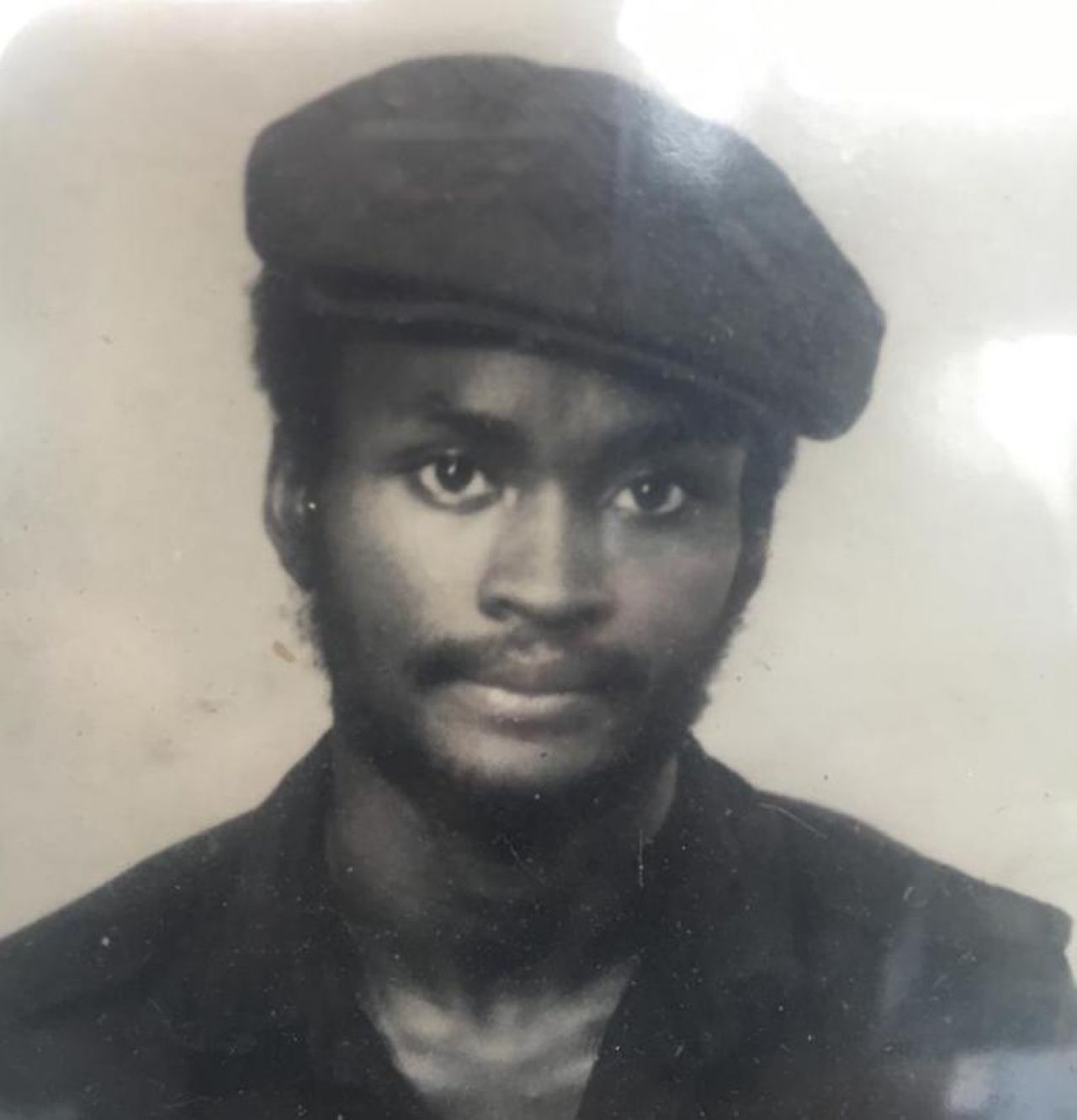
Student in Paris in the 1980
You spend a significant amount of your time playing and watching soccer. What is it that you enjoy so much in this sport?
It’s all about contingency and creation, creating in the midst of contingency. It’s about a certain relationship between a body in motion and a mind in a state of alert. That’s what fascinates me the most about football, the way in which 22 people attempt to inhabit a space they keep configuring and reconfiguring, erecting and erasing, and the explosions of primal joy when one’s team scores, or the primal screams when one’s team loses. And indeed, if I could go back in time, I would unquestionably pursue a professional soccer career. I’d retire in my early thirties and then do something else.
If you were a philanthropic billionaire, in which cause would you invest?
I’ve always considered money as a means to hinder one’s freedom.
Why?
I don’t want to be the slave of anything or of anybody. Not even the slave of my own passions.
Doesn’t money enable a certain freedom too?
If I had billions, I’d go back to Cameroun and revive my father’s farm. That’s where I spent part of my youth. I’d go back and turn this farm into a cooperative, into a laboratory for new ways of producing and living. The farm would become a living alternative of how to use local resources to live a clean life, starting with air, water, plants, food and so on. The farm would also be a vibrant place for artistic innovation. It would offer writing residencies for authors eager to commune with the vast expanses of our universe.
If you could reincarnate, choose an era, country, profession, legend, what or whom would you choose?
I’d come back as Ibn Khaldun, an Arab intellectual who is often presented as one of the very first sociologists. He visited the empire of Mali in the 14th century. I would be curious to discover this era. To be a sort of intellectual who travels the world, discovering Africa before the Triangular trade and sounding out what we could have become.
Tradição intelectual da Modernidade dá valor e poder à Crítica, mas esquece uma forma de compreensão do mundo tão potente quanto ela. É mundana, feminina e transformadora. Inventa complexidades. Resiste a ser mercantilizada
O coronavírus tem nos ensinado muitas coisas — algumas delas, vamos demorar para esquecer. Porém, poucas foram tão inesperadas como a aproximação entre a cultura crítica e a cultura dos cuidados. Pareciam pertencer a planetas diferentes: uma, ligada à busca de certeza, metodologias conflitantes e gestos públicos; a outra, vizinha da dor, inclinada pelo tácito e reclusa no âmbito privado. Ambas, muito seguras de sua importância, mas muito diferentes em seus reconhecimentos. Para o espírito crítico, sempre existiu um posto de honra entre os inteligentes, os poderosos, os administradores. Os críticos possuem a chave que abre as portas do mundo, desde a empresa e a academia, até o conselho ou comitê. Ser crítico é uma qualidade característica dos que conseguem enxergar além das aparências, dos que sabem ler as entrelinhas e dos que não se deixam levar pelo refrão. Quem não é crítico está sujeito a ser doutrinado, manipulado e menosprezado.
Nosso mundo sempre reservou lugares especiais para a crítica. O espírito crítico nos protege dos farsantes, dos malandros e dos vigaristas. E, como nunca faltam aqueles que querem tirar proveito de nossa ingenuidade, desconhecimento ou incapacidade, fazemos bem em confiar na nobreza daqueles que se dispõem por nós a depurar as ideias, comparar informações e destrinchar propostas. Os debates públicos nos são apresentados muitas vezes como um duelo de espadachins, como um exercício de virtuosismo retórico, como uma amostra do dandismo entre “filhos de alguém”, tão inúteis quando desprezíveis. Isso não tem nada a ver com a crítica, está mais para um produto da vaidade pretensiosa: um embuste entre bobos. Já a crítica, é necessária e urgente. Uma das ferramentas mais valiosasas de que dispomos para navegar entre as tormentas ou para nos guiar entre as brumas. Sem ela, não existiria a civilização.
Os cuidados transitam em outro tipo de abundâncias invisíveis. Eles têm a ver com todas as práticas que levam à reparação ou à manutenção da vida. Possuem relação com o que há de mais simples e comum: dar comida, fornecer aconchego, produzir bem-estar, manter a conversa, ouvir o incabível ou inusitado, oferecer esmero, sentir o futuro, experimentar com os outros, fazer coisas juntos, desfrutar as nuances, acompanhar processos e criar espaços seguros. No mundo, não há nada mais abundante do que a dor, o desconsolo, o desabamento. Nada é mais necessário do que oferecer confiança, paz ou tempo. Seja para descobrir suas (novas) vulnerabilidades, seja ao se encontrar (novamente) estagnado, o que você vai querer por perto não é um cérebro privilegiado capaz de performar uma capacidade de análise impecável. Nesses momentos, precisamos de outro tipo de talento: o de alguém que saiba se colocar em sua situação, em seu lugar, conter a ansiedade de aconselhar, ficar em silêncio, saber ouvir, deixar fluir e acompanhar, enquanto, aos poucos, você se reencontra com a vida que merece ou a resposta que procura.
Não quero dizer que os que pensam não cuidam, nem que os que cuidam não pensam. Isso seria uma simplificação inaceitável e ofensiva. Todos nós podemos passear pelos dois mundos. Podemos utilizar a crítica para reparar aquilo que ouvimos e fazê-lo crescer. Podemos renunciar a usar nossas habilidades para ganhar vantagem e competir melhor. Nada nos obriga a querer sempre ganhar. Não é necessário demonstrar que estamos por cima dos outros, nem temos que tratar nossos adversários como inimigos, traidores ou estúpidos. Na crítica, pode existir um quê de sadismo. É normal que exista, e que toda vez que numa conversa alguém cite um especialista, um fato ou uma prova, para nos dar um soco e calar a boca. Esses críticos são pessoas perigosas das quais é bom se proteger, porque costumam ser implacáveis.
A ciência é um dos terrenos da crítica. Não é o único, nem o mais visível. Os que se gabam de ser críticos são aquelas pessoas da literatura, das artes, das ciências humanas e também, portanto, das ciências sociais. O que eles chamam de “espírito crítico” é muitas vezes percebido como arrogância banal. E é por isso que nós desconfiamos dessa forma de nos desenganarem, que, do outro lado do espelho, é percebida como uma maneira de nos deixar nus. Justamente o oposto daquilo que esperávamos: alguém que nos ajudasse a encontrar as roupas para não nos deixar na intempérie. Abandonados ao acaso, novamente, sem redenção.
A cultura do cuidado não é só compaixão. Precisamos dela, também, para criar outros mundos possíveis e dar espaço às diferentes práticas cognitivas de que precisamos aprender a apreciar. Se o crítico é quem vê mais e melhor, quem cuida possui como ferramenta fundamental de trabalho o tato. Se a simbologia reservou para os inteligentes a figura da coruja, do livro e dos óculos de armação grossa, aqueles que cuidam são representados como pessoas que acariciam com os olhos, com os gestos e com as mãos. As mãos alcançam lugares que os olhos nem conseguem imaginar. O tato é a chave que abre a porta que nos permite imaginar outros mundos possíveis, baseados em cumplicidade, empatia e vulnerabilidade. Nos cuidados, explora-se sem propósitos e sem condicionantes, se avança entre suspeitas e desconfianças, até chegarmos ao lugar onde experimentaremos a companhia como uma bênção. Ou uma epifania.
Se a visão gera a distância entre o sujeito e o objeto, o tato mistura esses dois mundos. A visão cria outros espaços, enquanto o tato inventa a complexidade. Tudo fica interligado e se torna próximo, entrelaçado. A visão quer fazer do mundo um objeto, enquanto o tato torna mundano o objeto. Mundano quer dizer comum, cotidiano, semelhante. Quiçá, também, barato, jovial e compartilhado.
A crise do coronavírus aproximou esses dois mundos para nos ajudar a entendê-los melhor, para descobrirmos que ambos são imprescindíveis e que os dois são deste planeta. Que ambos pertencem ao âmbito público e são duas potências cognitivas que deveriam parar de brigar e se unir num longo abraço. Sim, isso mesmo: um abraço em tempos de coronavírus pode parecer uma transgressão, mas não é, não, não se trata de uma pegadinha: esperamos muito desse atrito, pois não nos conformamos com apenas sobreviver — que é o que nos prometem os cientistas e seus porta-vozes. Não nos conformamos com apenas continuar vivos, pois queremos imaginar mundos mais ousados. A pandemia demonstrou que, em termos cognitivos, é imprescindível que se estruturem adequadamente três epistemes que se destacam: o mundo dos dados, dos modelos de previsão e da inteligência artificial; o mundo da virologia, da epidemiologia, das vacinas e do laboratório; e, por último, mas não menos importante, os territórios da clínica, dos profissionais da saúde e das práticas de cuidados.
Curar corpos nos forçou a cuidar de mundos. De repente, descobrimos que inconsistências estatísticas, causadas por uma coleta de dados ruim, poderiam levar a medidas que nos ameaçariam a todos. Dados não são números, mas coisas que precisam ser produzidas do mesmo jeito que são produzidas as bolas de sinuca: se elas não possuírem as características necessárias, não funcionam, não servem pra nada, não deslizam corretamente e não transmitem os efeitos esperados. Os dados precisam ser interoperáveis. Você precisa projetá-los com precisão, coletá-los com cuidado e transmiti-los a tempo. Podemos ter os melhores matemáticos, construindo os modelos mais sofisticados, porém, fazendo propostas mal-sucedidas porque os coletores de dados se desentenderam ou ficaram desmotivados ou deprimidos. Porque eles pararam de se projetar em seu trabalho com amor e orgulho. Não estavam atentos o suficiente para detectar algo suspeito, uma variação imprópria, um viés inesperado ou, finalmente, uma prática inconsistente. Talvez ninguém os fez acreditar na importância do que estavam fazendo. Talvez eles tenham se cansado de ser invisíveis, ou talvez se convenceram de que eram seres descartáveis, secundários ou irrelevantes.
Fazer vacinas ou, em termos mais gerais, projetar e realizar experimentos não é uma tarefa mecânica. Quem faz experimentos precisa improvisar o tempo todo — ou seja, precisa enfrentar um montão de imprevistos que exigem habilidades que não são ensinadas nos livros, mas que, entretanto, foram aprendidas com os colegas. Experimentar é uma atividade que possui muitas semelhanças com o trabalho dos artesãos. Todos os cientistas experimentais são uma espécie de faz-tudo, pessoas que sabem consertar coisas, que encontram soluções: são próprios bricoleurs. Ou, em outras palavras, pessoas que conseguem trabalhar sem um manual de instruções, e que, principalmente, tornaram-se muito tolerantes à incerteza. Sabem andar às cegas, guiando-se pelas paredes para não bater e mantendo-se conectados a tudo o que acontece para poder ser sensíveis às pequenas diferenças, às nuances esquecidas ou aos tons imperceptíveis.
Não é ficar observando o seu objeto, mas sim estar abertos a se deixar afetar por qualquer sinal que vier de seu universo ou do ambiente que os cerca para decidir, em tempo real, se essa coisa, ainda não identificada, possui algum significado ou contém alguma mensagem. A relação que os cientistas mantêm com seus objetos, aquilo que não deixa de interpelá-los e que não conseguem parar de olhar, é muito menos objetiva, distante ou abstrata do que nos contaram. É uma relação muito menos crítica do que afetiva, e tem muito mais a ver com as virtudes de quem cuida de alguém ou de algo, do que com os estereótipos de quem observa, aponta e dispara — quero dizer, com as qualidades de um bom crítico.
Ao falarmos da clínica tudo parece mais fácil, porque pouquíssimas pessoas já visitaram um laboratório na vida e a maioria nunca ouviu falar da nova profissão de curador de dados. Mas todos ou já cuidamos, ou já fomos cuidados. Entretanto, reside nessa simplicidade a maior dificuldade — porque corremos o risco de psicologizar os cuidados e de transformá-los em habilidades mentais livres de materialidade. Não será preciso insistir, agora, na importância das máscaras, dos testes, dos termômetros, dos sabonetes, da história clínica e dos aplausos. A maior parte do trabalho possui maior relação com gerir espaços, decidir dosagens, administrar alimentos, conhecer lamentos, identificar sinais, comparar respostas, contrastar experiências, aprender de erros, retificar protocolos, pular algumas normas, enfim: improvisar, corrigir, deixar-se afetar, escutar — tudo isso sem um manual.
Cada quarto de hospital carrega um universo: todos os dias são percorridos todos os climas: o dos bacanas, o dos espertos, o dos exigentes, o dos egoístas, o dos intrigantes, o dos desconfiados, o dos pessimistas, o dos amorosos… todos os universos cabem num só dia. Não é preciso viajar, basta mudar de quarto. Existe um forte desgaste emocional, cuja origem varia. A televisão, sempre apressada e sempre resumindo e generalizando, fala do impacto que a dor do ambiente causa aos profissionais da saúde. É verdade, mas não se resume a isso: essa é só a parte mais midiática. Há muito mais. Existe a vontade de aprender, o desejo de entender, a necessidade de corrigir e a obrigação de curar; tudo isso, ao mesmo tempo e de forma rápida, representa um esforço de intelecção cansativo e infinito, porque os corpos são todos diferentes e o que vale para um pode ser contraproducente para outro.
Assim funciona o saber experiencial: está nos corpos e não nos livros. Pode-se aprender, mas não numa aula. É um saber contrastado, eficiente, tácito e imprescindível. A clínica é a interface entre esses dois mundos, que com tanta frequência negam-se a chegar a um entendimento: o mundo da crítica e o mundo dos cuidados. É tanto uma interface como uma fronteira que precisamos aprender a contrabandear todo dia. Nessa fronteira, somos todos iguais, não há regras claras, não há normas específicas — e nem podem existir. Esse é o interesse das fronteiras que servem para experimentarmos outros mundos possíveis e necessários. Nas fronteiras, há sempre conflitos que, quando são de curto prazo, resolvemos com astúcia, dando um jeito; mas, se pensarmos em formas de convivência relativamente estáveis, precisaremos das ferramentas da diplomacia.
Às vezes, não precisamos de uma demonstração, e sim de uma conversa. Os diplomatas sabem disso melhor do que ninguém, como costumam saber aqueles que fazem parte do mundo dos cuidados. O diplomata compreende que não pode convencer seu interlocutor. E, portanto, precisa renunciar às ferramentas da crítica e admitir que a solução não vai ser imposta por um exercício de depuração de dados, de citação de fontes ou de ampliação dos fatos comprobatórios. Entre os diplomatas, a conversa tem a finalidade de encontrar um relato, um acordo, um espaço de convivência mais complexo que o anterior, onde caibam igualmente os dois pontos de vista, mesmo quando enfrentados. A questão é evitar a guerra, e reiniciar a convivência. E é disso que precisamos agora: uma negociação que torne possível não só a convivência de epistemes. Os mundos dos dados, dos fatos e das experiências precisam um do outro e têm de aprender a conviver sem se censurarem. Nenhum deles é mais coerente ou necessário do que os outros.
Atualmente, fala-se muito em abrir a ciência. Mas não ficou claro o que queremos dizer com isso. Evidentemente, abrir a ciência significa abrir os conteúdos e os dados: dar acesso ao conhecimento disponível, mais ainda quando a maior parte dele é produzida com dinheiro público. Também parece lógico que as infraestruturas que suportam e fazem com que esses dados se tornem operacionais deveriam estar nas mãos dos próprios cientistas, o que equivale a reivindicar soberania para os hardwares e softwares que suportam todo o acervo da ciência aberta. Se a prática da ciência depende de decisões políticas arquitetadas em comitês que definem prioridades, destinam recursos, validam méritos e constroem reputações, parece imprescindível que, também, todas essas operações tenham muita transparência e disponibilização. Tudo isso já foi dito e está na agenda de muitas organizações nacionais e internacionais, não é novidade. Tomara que o coronavírus acelere esses processos em curso.
Além disso, porém, abrir a ciência requer abrir suas ontologias. Não tem a ver apenas com transformar as práticas para que sejam mais operativas, ou, em outras palavras, os “como”, as epistemes. Temos de aprender a escutar aqueles que falam desde outras formas de se aproximar da realidade. É evidente que o respeito às metodologias acreditadas continua de pé. Ninguém aqui falou em fazer tábula rasa. Pelo contrário: os tempos de coronavírus exigem que nenhum conhecimento seja desperdiçado e que demos a todos eles a visibilidade e o mérito que merecem e que precisamos. Cuidar é uma forma de conhecer, envolve outra maneira de se aproximar dos problemas e de encontrar respostas adaptadas para eles. Envolve mobilizar saberes tácitos e afetivos: saberes que, consequentemente, não podem ser codificados. Saberes que não podem ser desvinculados e que são estreitamente ligados às circunstâncias concretas nas quais foram gerados. São saberes dos quais a Modernidade nos ensinou (e até forçou) a desconfiar. Saberes que desde Descartes consideramos contaminados pelas emoções, pelos preconceitos, pelos contextos, ideologias e fragilidades dos corpos envolvidos, já que nem sempre eles enxergam bem, estão atentos ou com as faculdades plenas.
O conhecimento experiencial era desprezado pela sua alta contaminação por todo tipo de aderência local, corporal e cultural. Não foi sequer considerado um ativo a valorizar. Temos museus de etnografia, onde as realidades locais são mostradas como parte de um exotismo turistificável — e, agora, identitário. Justamente o oposto do que consideramos necessário por aqui. Nos interessa o comum e interdisciplinar, como forma de conhecimentos opositores — e não como curiosidades excêntricas e arbitrárias. Não são fruto do capricho, são consequência de uma adaptação secular. O fato de terem sido desvalorizadas fala muito sobre a nossa insensibilidade e, assim, da nossa facilidade em desprezar aquilo que ignoramos. O fato de serem não-codificáveis, tácitos, quer dizer que estamos frente a um saberes que não podem ser coisificados, alienados e mercantilizados. Mas isso não significa que sejam inúteis. Talvez por isso a imensa maioria das pessoas que trabalham com enfermagem e serviços sociais são mulheres. Nada a ver com falta de talento, mas sim com utilizá-lo em outras coisas. As quais, como sabemos, às vezes são as mais importantes. Mas nossa intenção não era fazer uma competição entre a cultura crítica e a cultura dos cuidados, e sim tentar suscitar uma conversa, mais ontológica do que epistêmica, que abrisse o mundo do conhecimento a novas perguntas, diversas soluções e novas formas de convivência. Não é que a gente precise de menos ciência, mas de mais atores: abrir a ciência a conversas difíceis, porém, urgentes. O coronavírus nos pede também uma cura de humildade.

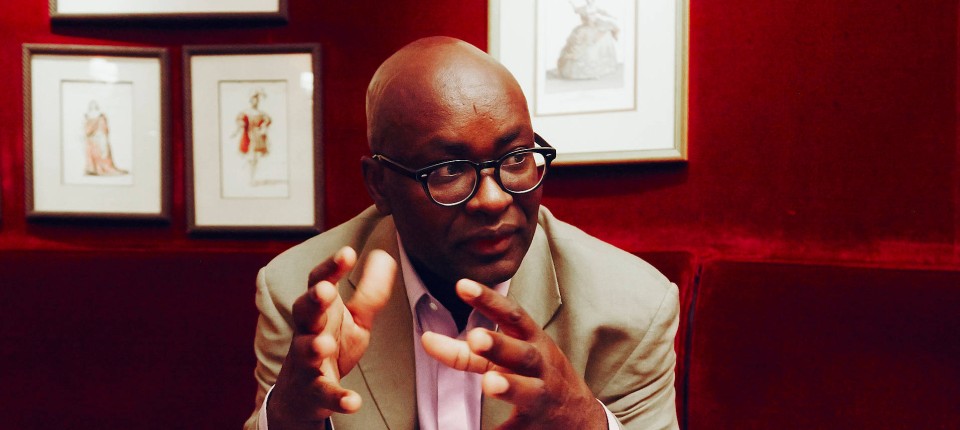 © Stephanie Fuessenich/laif für die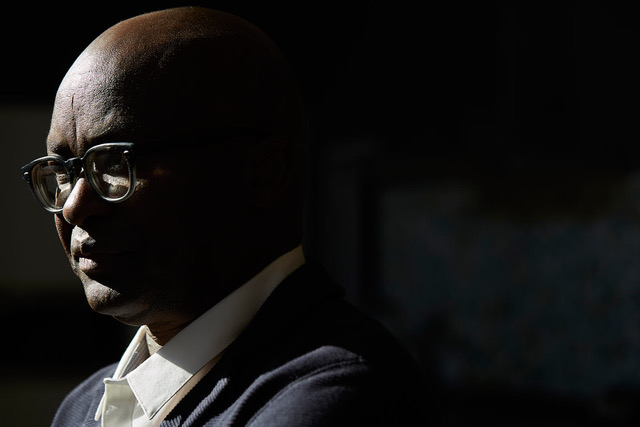
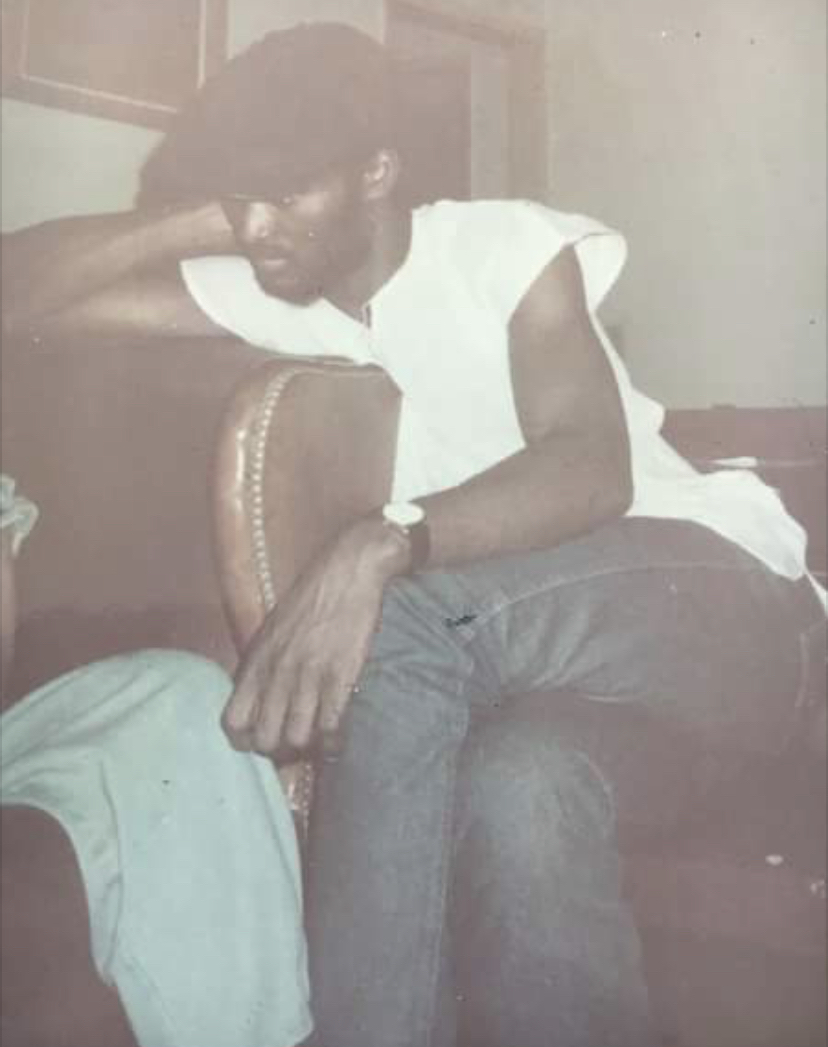 Student in Paris in the 1980
 Uma (in)certa antropologia
Você precisa fazer login para comentar.