Arquivo da tag: Racismo institucional

Ijeoma Oluo: Confrontar o racismo não é focar nas necessidades e sentimentos dos brancos (Guardian)

Artigo original: amp.theguardian.com

Ijeoma Oluo, @IjeomaOluo

Qui, 28 de março de 2019, 06h00 GMT (Traduzido por Google Tradutor. A expressão “de cor” foi substituída por “racializado”).

Escolha do editor: o melhor de 2019

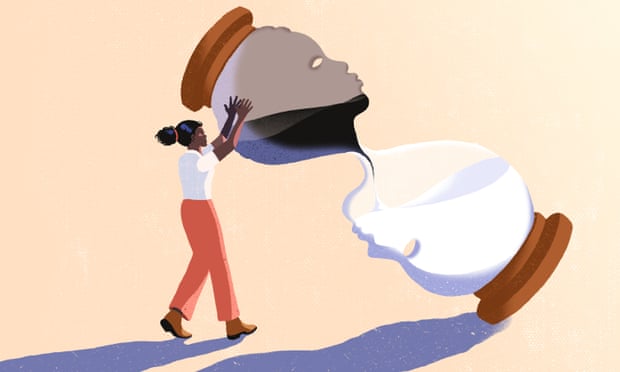
‘Se o seu trabalho antirracismo prioriza o ‘crescimento’ e ‘iluminação’ da América branca sobre a dignidade e a humanidade das pessoas racializadas – não é um trabalho antirracismo. É supremacia branca.’ Ilustração: Mikyung Lee para Guardian US

Frequentemente, pessoas brancas em discussões sobre raça decidem por si mesmos o que será discutido, o que ouvirão, o que aprenderão. E é o espaço deles. Todos os espaços são.

Eu estava saindo de um prédio corporativo depois de um dia inteiro conduzindo workshops sobre como falar sobre raça de maneira ponderada e deliberada. A audiência de cada sessão foi semelhante às dezenas que eu havia enfrentado antes. Houve uma super-representação de funcionários racializados, uma sub-representação de funcionários brancos. Os participantes racializados tendiam a fazer contato visual comigo e acenar com a cabeça – até ouvi alguns “Améns” – mas nunca foram os primeiros a levantar a mão com perguntas ou comentários. Enquanto isso, sempre havia um homem branco ansioso para compartilhar seus pensamentos sobre raça. Nessas sessões, normalmente confio no feedback silencioso dos participantes racializados para ter certeza de que estou no caminho certo, enquanto tento moderar o forte centramento da branquitude.

No corredor, uma mulher asiático-americana me encarou e murmurou: “Obrigada”. Um negro apertou meu ombro e murmurou: “Menina, se você soubesse”. Uma mulher negra me parou, olhou em volta com cuidado para se certificar de que ninguém estava ao alcance da voz e disse: “Você falou a verdade. Eu gostaria de ter compartilhado minha história para que você soubesse como é verdade. Mas este não era o lugar.”

Este não era o lugar. Apesar do cuidado que tenho nessas sessões para centralizar as pessoas racializadas, para mantê-las seguras, esse ainda não era o lugar. Mais uma vez, o que poderia ter sido uma discussão sobre o dano real e quantificável causado a pessoas racializadas foi subsumido por uma discussão sobre os sentimentos dos brancos, as expectativas dos brancos, as necessidades dos brancos.

Enquanto eu estava lá, olhando para a memória de centenas de conversas abafadas sobre raça, fui chamado à atenção por uma mulher branca. Ela não estava olhando nervosamente ao redor para ver quem poderia estar ouvindo. Ela não perguntou se eu tinha tempo para conversar, embora eu estivesse parada na porta.

“Sua sessão foi muito legal,” ela começou. “Você disse muitas coisas boas que serão úteis para muitas pessoas.”

Ela fez uma breve pausa: “Mas o fato é que nada do que você falou hoje vai me ajudar a fazer mais amigos negros”.

Lembrei-me de um dos primeiros painéis sobre raça em que participei. Um homem negro em Seattle havia sido pulverizado com pimenta por um guarda de segurança por não fazer nada além de caminhar por um shopping center. Tinha sido capturado na câmera. Um grupo de escritores e ativistas negros, inclusive eu, estava no palco diante de um público de maioria branca em Seattle, falando sobre o incidente. O colega palestrante Charles Mudede, um escritor brilhante, cineasta e teórico econômico, abordou os mecanismos econômicos no trabalho: esse segurança foi informado de que seu trabalho era proteger a capacidade de lucro de seus empregadores. Disseram-lhe que seu trabalho era manter os clientes que tinham dinheiro para gastar felizes e seguros. E todos os dias ele recebia mensagens culturais sobre quem tinha dinheiro e quem não tinha. Quem era violento e quem não era. Charles argumentou que o segurança estava fazendo seu trabalho. Em um sistema capitalista de supremacia branca, é assim que você faz o seu trabalho.

Bem, pelo menos ele estava tentando argumentar sobre esse ponto. Porque no meio do caminho uma mulher branca se levantou e o interrompeu.

“Olha, tenho certeza que você sabe muito sobre tudo isso”, disse ela, com as mãos nos quadris. “Mas eu não vim aqui para uma aula de economia. Eu vim aqui porque me sinto mal com o que aconteceu com esse homem e quero saber o que fazer.”

Aquela sala, aparentemente, também não era o lugar. Segundo essa mulher, essa conversa não era, ou não deveria ter sido, sobre os sentimentos do homem que levou spray de pimenta, ou os da comunidade negra em geral, que acabavam de receber mais evidências de como somos inseguros em nossa própria cidade. Ela se sentiu mal e queria parar de se sentir mal. E ela esperava que fornecêssemos isso a ela.

Em uma universidade no mês passado, onde eu estava discutindo o branqueamento no mundo editorial e a necessidade de mais narrativas não filtradas, elaboradas por pessoas racializadas, um homem branco insistiu que não havia como sermos compreendidos pelos brancos se não pudéssemos fazer nós mesmos mais acessíveis. Quando perguntei a ele se todos os elementos da cultura branca com os quais as pessoas racializadas precisam se familiarizar apenas para seguir adiante no seu dia serão um dia modificados para se adequar a nós, ele deu de ombros e olhou para o seu computador. Em um workshop que conduzi na semana passada, uma mulher branca se perguntou se talvez as pessoas racializadas na América fossem muito sensíveis em relação à raça. Como ela seria capaz de aprender se sempre ficávamos tão chateados com suas perguntas?

Eu experimentei interrupções e dispensas semelhantes mais vezes do que eu posso contar. Mesmo quando meu nome está no pôster, nenhum desses lugares parece o lugar certo para falar sobre o que eu e tantas pessoas racializadas precisamos falar. Frequentemente, os participantes brancos decidem por si mesmos o que será discutido, o que ouvirão, o que aprenderão. E é o espaço deles. Todos os espaços são.

Um dia, frustrada, postei este status de mídia social:

“Se o seu trabalho antirracismo prioriza o ‘crescimento’ e ‘iluminação’ da América branca sobre a segurança, dignidade e humanidade das pessoas racializadas – não é um trabalho antirracismo. É a supremacia branca.”

Uma das primeiras respostas que recebi de um comentarista branco foi: “OK, mas não é melhor do que nada?”

É isso? Um pouco de apagamento é melhor do que muito apagamento? Um pouco de supremacia branca vazada em nosso trabalho antirracismo é melhor do que nenhum trabalho antirracismo? Toda vez que estou diante de uma plateia para falar sobre a opressão racial na América, sei que estou enfrentando muitos brancos que estão na sala para se sentir menos mal com a discriminação racial e a violência nas notícias, para marcar pontos, para que todos saibam que não são como os outros, para fazer amigos negros. Sei que estou falando com muitos brancos que têm certeza de que não são o problema porque estão lá.

Apenas uma vez, quero falar para uma sala de brancos que sabem que estão lá porque são o problema. Que sabem que estão lá para começar o trabalho de ver onde foram cúmplices e prejudiciais para que possam começar a fazer melhor. Porque a supremacia branca é sua construção, uma construção da qual eles se beneficiaram, e desconstruir a supremacia branca é seu dever.

Eu e muitos dos participantes negros muitas vezes deixamos essas palestras cansados e desanimados, mas eu ainda apareço e falo. Eu apareço na esperança de que talvez, possivelmente, esta palestra seja a que finalmente rompe a barreira, ou me aproxime um passo daquela que irá. Eu apareço e falo por pessoas racializadas que não podem falar livremente, para que se sintam vistas e ouvidas. Falo porque há pessoas racializadas na sala que precisam ouvir que não deveriam carregar o fardo da opressão racial, enquanto aqueles que se beneficiam dessa mesma opressão esperam que os esforços antirracismo atendam às suas necessidades primeiro. Após minha palestra mais recente, uma mulher negra me passou um bilhete no qual havia escrito que nunca seria capaz de falar abertamente sobre as formas como o racismo estava impactando sua vida; não sem arriscar represálias de colegas brancos. “Vou me curar em casa em silêncio”, concluiu.

É melhor do que nada? Ou é o fato que em 2019 ainda tenho que me fazer essa pergunta todos os dias o mais prejudicial de todos?
Ijeoma Oluo: Confronting racism is not about the needs and feelings of white people (Guardian)

amp.theguardian.com

Ijeoma Oluo, @IjeomaOluo

Thu 28 Mar 2019 06.00 GMT

Editor’s pick: best of 2019


‘If your anti-racism work prioritizes the ‘growth’ and ‘enlightenment’ of white America over the dignity and humanity of people of color – it’s not anti-racism work. It’s white supremacy.’
‘If your anti-racism work prioritizes the ‘growth’ and ‘enlightenment’ of white America over the dignity and humanity of people of color – it’s not anti-racism work. It’s white supremacy.’ Illustration: Mikyung Lee for Guardian US

Too often whites at discussions on race decide for themselves what will be discussed, what they will hear, what they will learn. And it is their space. All spaces are.

I was leaving a corporate office building after a full day of leading workshops on how to talk about race thoughtfully and deliberately. The audience for each session had been similar to the dozens I had faced before. There was an overrepresentation of employees of color, an underrepresentation of white employees. The participants of color tended to make eye contact with me and nod – I even heard a few “Amens” – but were never the first to raise their hands with questions or comments. Meanwhile, there was always a white man eager to share his thoughts on race. In these sessions I typically rely on silent feedback from participants of color to make sure I am on the right track, while trying to moderate the loud centering of whiteness.

In the hallway an Asian American woman locked eyes with me and mouthed: “Thank you.” A black man squeezed my shoulder and muttered: “Girl, if you only knew.” A black woman stopped me, looked around cautiously to make sure no one was within earshot, and then said: “You spoke the truth. I wish I could have shared my story so you’d know how true. But this was not the place.”

This was not the place. Despite the care I take in these sessions to center people of color, to keep them safe, this still was not the place. Once again, what might have been a discussion about the real, quantifiable harm being done to people of color had been subsumed by a discussion about the feelings of white people, the expectations of white people, the needs of white people.

As I stood there, gazing off into the memory of hundreds of stifled conversations about race, I was brought to attention by a white woman. She was not nervously looking around to see who might be listening. She didn’t ask if I had time to talk, though I was standing at the door.

“Your session was really nice,” she started. “You said a lot of good things that will be useful to a lot of people.”

She paused briefly: “But the thing is, nothing you talked about today is going to help me make more black friends.”

I was reminded of one of the very first panels on race I had participated in. A black man in Seattle had been pepper-sprayed by a security guard for doing nothing more than walking through a shopping center. It had been caught on camera. A group of black writers and activists, myself included, were onstage in front of a majority-white Seattle audience, talking about the incident. Fellow panelist Charles Mudede, a brilliant writer, film-maker and economic theorist, addressed the economic mechanisms at work: this security guard had been told that his job was to protect his employers’ ability to make a profit. He had been told that his job was to keep customers who had money to spend happy and safe. And every day he was fed cultural messages about who had money and who didn’t. Who was violent and who wasn’t. Charles argued that the security guard had been doing his job. In a white supremacist capitalist system, this is what doing your job looked like.

Well, at least he was trying to argue that point. Because halfway through, a white woman stood up and interrupted him.

“Look, I’m sure you know a lot about all this stuff,” she said, hands on hips. “But I didn’t come here for an economics lesson. I came here because I feel bad about what happened to this man and I want to know what to do.”

That room, apparently, wasn’t the place either. According to this woman, this talk was not, or should not have been, about the feelings of the man who was pepper-sprayed, or those of the broader black community, which had just been delivered even more evidence of how unsafe we are in our own city. She felt bad and wanted to stop feeling bad. And she expected us to provide that to her.

At a university last month, where I was discussing the whitewashing of publishing and the need for more unfiltered narratives by people of color, a white man insisted that there was no way we were going to be understood by white people if we couldn’t make ourselves more accessible. When I asked him if all of the elements of white culture that people of color have to familiarize themselves with just to get through the day are ever modified to suit us, he shrugged and looked down at his notebook. At a workshop I led last week a white woman wondered if perhaps people of color in America are too sensitive about race. How was she going to be able to learn if we were always getting so upset at her questions?

I’ve experienced similar interruptions and dismissals more times than I can count. Even when my name is on the poster, none of these places seem like the right places in which to talk about what I and so many people of color need to talk about. So often the white attendees have decided for themselves what will be discussed, what they will hear, what they will learn. And it is their space. All spaces are.

One day, in frustration, I posted this social media status:

“If your anti-racism work prioritizes the ‘growth’ and ‘enlightenment’ of white America over the safety, dignity and humanity of people of color – it’s not anti-racism work. It’s white supremacy.”

One of the very first responses I received from a white commenter was: “OK, but isn’t it better than nothing?”

Is it? Is a little erasure better than a lot of erasure? Is a little white supremacy leaked into our anti-racism work better than no anti-racism work at all? Every time I stand in front of an audience to address racial oppression in America, I know that I am facing a lot of white people who are in the room to feel less bad about racial discrimination and violence in the news, to score points, to let everyone know that they are not like the others, to make black friends. I know that I am speaking to a lot of white people who are certain they are not the problem because they are there.

Just once I want to speak to a room of white people who know they are there because they are the problem. Who know they are there to begin the work of seeing where they have been complicit and harmful so that they can start doing better. Because white supremacy is their construct, a construct they have benefited from, and deconstructing white supremacy is their duty.

Myself and many of the attendees of color often leave these talks feeling tired and disheartened, but I still show up and speak. I show up in the hopes that maybe, possibly, this talk will be the one that finally breaks through, or will bring me a step closer to the one that will. I show up and speak for people of color who can’t speak freely, so that they might feel seen and heard. I speak because there are people of color in the room who need to hear that they shouldn’t have to carry the burden of racial oppression, while those who benefit from that same oppression expect anti-racism efforts to meet their needs first. After my most recent talk, a black woman slipped me a note in which she had written that she would never be able to speak openly about the ways that racism was impacting her life, not without risking reprisals from white peers. “I will heal at home in silence,” she concluded.

Is it better than nothing? Or is the fact that in 2019 I still have to ask myself that question every day most harmful of all?