Arquivo da tag: Navegação

6 Facts About Ancient Navigation (History Facts)

Original article

Thousands of years ago, the oceans seemed a lot wider, even unnavigable. Before mariners developed tried-and-true navigation techniques, sailing the seas involved a lot of guesswork — or, if you want it to sound cooler, “dead reckoning.”

Slowly, our ancestors moved beyond their initial stabs in the dark. Some looked to the sky, using their new knowledge about the cosmos to help them better understand life on Earth. Others took a keen interest in the seas, learning to intuitively navigate the vast expanses based on their currents and swells.

Nowadays, we have a relatively easy time getting around — thanks, GPS! — but it took a long time to get here. How were Polynesians able to cross thousands of miles of open ocean more than 3,000 years ago? Which seafaring society might have successfully used crystals to find their way? What persistent navigation myth just won’t die? Read on and get your sea legs with these six facts.
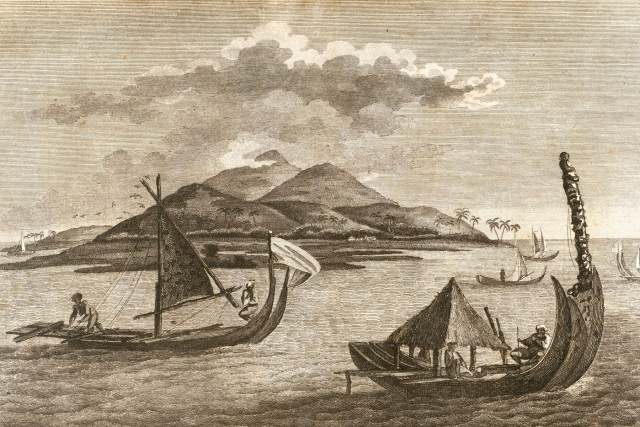
Photo credit: Science & Society Picture Library via Getty Images

Polynesians Were Pioneers of the Open Ocean

In the early days of ocean navigation, explorers stayed pretty close to the shoreline and used visible landmarks to mark their position. However, Polynesians, the first developers of open ocean exploration, set off from New Guinea and moved eastward in about 1500 BCE. After first traveling to the adjacent Solomon Islands, they gradually journeyed farther and farther east. Their vessel of choice was a double canoe with two hulls connected by crossbeams, kind of like a catamaran.

Venturing out into the open ocean, these explorers eventually reached Fiji, Tonga, Samoa, and Tahiti. They then traveled more than 2,600 miles north to Hawaii — longer than the distance across the U.S. from Portland, Maine, to Seattle, Washington. By roughly 1,000 or possibly 1,200 CE, the descendants of those early explorers populated the entire Polynesian Triangle, the three corners of which are Hawaii, Rapa Nui (aka Easter Island), and New Zealand.

The Polynesians didn’t have any navigational instruments that we know of, so how did they do it? Although their navigation techniques were passed down orally, historians think they navigated using stars, ocean swells, the sun, the moon, and migratory birds. Some Pacific Islanders navigated simply by using the waves themselves. In 1976, a group of Polynesian canoeing enthusiasts made the Tahiti-Hawaii trip using no navigational instruments and a traditional voyaging canoe — a feat that’s since been repeated several times.
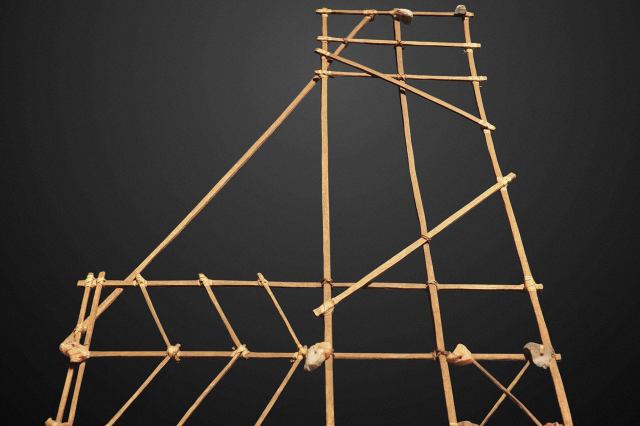
Photo credit: Pictures from History/ Universal Images Group via Getty Images

Some Early Nautical Charts Were Made From Shells and Sticks

A nautical chart provides not only topographical information, but also details about the behavior of the sea, such as how tidal patterns interact. Today, we can easily read this data on screens and paper, but ancient Micronesian navigators called ri-metos recorded their knowledge using elaborate “stick charts” made from palm strips, coconut strips, and cowrie shells. 

As you might imagine, these charts weren’t especially portable, so they were designed to be memorized before a voyage. The charts didn’t follow any kind of uniform style, and some of them were only designed to be read by the person who created them, so they can be hard for modern viewers to interpret. We do know, though, that some charts depicted general ocean patterns, while others contained precise piloting instructions.
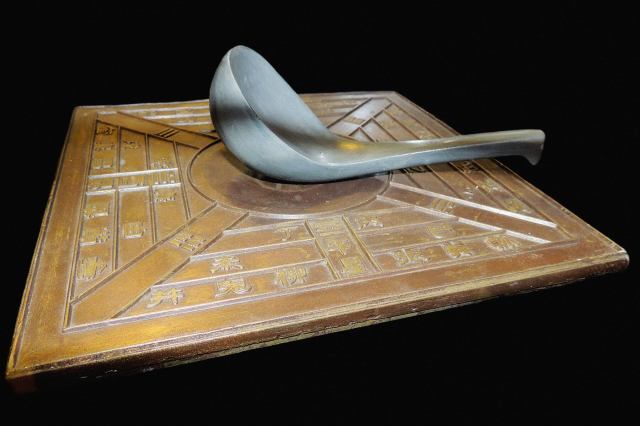
Photo credit: Universal History Archive/ Universal Images Group via Getty Images

Early Magnetic Compasses Bore Little Resemblance to Their Modern Counterparts

Today, magnetic compasses are so ubiquitous that we just call them “compasses.” They contain a magnetized needle that naturally lines up with the Earth’s magnetic field, so the ends point to magnetic north and magnetic south (moving targets that are  fairly close to true north and true south, but that can lead to errors when traveling very far north or very far south).

Scientists don’t know for sure who made the first compass, but they believe the first compasses to be used for navigation came from 11th- or 12th-century China. The first European usage of a compass was recorded at the end of the 12th century. These early prototypes used lodestones (pieces of naturally-occurring magnetic ore) or needles magnetized with lodestones that were then attached to sticks or corks so they could float in water. 

At first, magnetic compasses were used primarily as backup navigation aids, but as engineers got more savvy, compasses became more reliable. By the 13th century, the compass’s design had graduated to a magnetized needle mounted on a pin at the bottom of a bowl. In time, a directional card with the 32 principal points of direction began to be mounted beneath the needle. The design of the card itself evolved, too: The north point was first marked by a spearhead and a “T” for the Latin word Tramontana, meaning “the north wind.” Around 1490, these symbols were replaced with a fleur-de-lis, which is still commonly seen on compasses today.
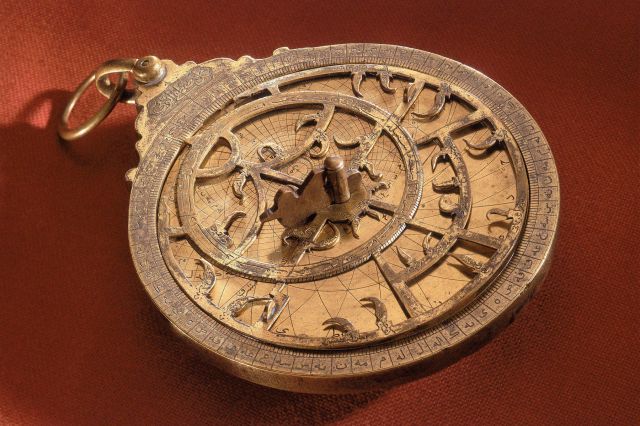
Photo credit: Science & Society Picture Library via Getty Images

Astrolabes Weren’t Just Used for Navigation

The concept of an astrolabe, a device used to measure the positions of celestial bodies, dates back to ancient Greece in the third or second century BCE — although its exact origin is unclear. By the ninth century CE, astrolabes were highly developed and utilized in Arabic cultures. The devices made their way back to Europe in the 12th century, and the mariner’s astrolabe was a standard piece of navigational equipment by the end of the 15th century, just in time for the Age of Exploration.

Astrolabes are used to determine the locations of celestial bodies relative to the user. A disk called a “mater” holds a series of smaller rotating and sliding disks — one with Earth’s latitude lines and another with well-known constellations and stars. A straight “rule,” or bar, spins around that, and a sight helps determine the altitude of the sun or another star that can then be used as an anchor point. Astrolabes often came with specific plates that corresponded to the different latitudes of certain large cities, because the sky’s geography is affected by one’s latitude.

While these devices were very useful for navigation, it wasn’t their only claim to fame:  In the Islamic world, they helped determine prayer times and the direction of Mecca. During the Middle Ages in Europe, they were consulted to help with decision-making, much like modern horoscopes. And more mundanely, they could also be used for making topographical surveys.
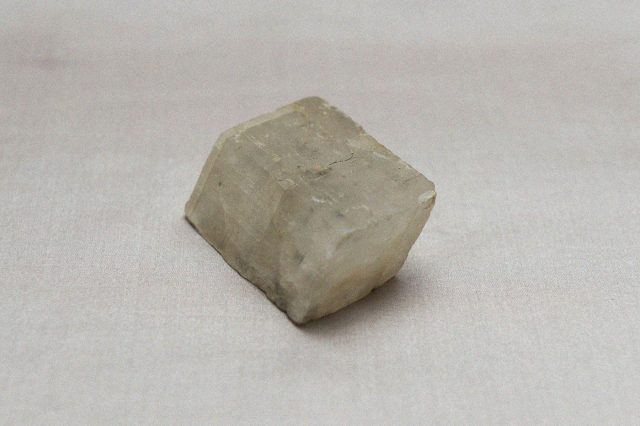
Photo credit: Astrid Harrisson/ Alamy Stock Photo

Vikings May Have Used Crystals to Navigate

The Vikings, a group of seafaring Scandinavian warriors, were also skilled ocean navigators. They began to populate Iceland — around 500 miles from their native Norway — in about 900 CE, even eventually reaching North America. The specifics of their navigation techniques are somewhat mysterious, but recent research indicates they may have used crystals.

Because they sailed their longships in the far North Atlantic, Viking travelers benefitted from up to 24 hours of continuous daylight, but they encountered a lot of fog, too. Ancient Norse literature mentions “sunstones,” stones that helped their holders find the sun — and scientists now think these may have really existed. In 2011, researchers used calcite crystals to pinpoint the location of the sun within 1 degree. It’s not magic, although it sounds like it: Through polarization, crystals can show sunlight patterns that can’t be seen with the naked eye.

Another study from 2014 suggests these crystals may have been used in conjunction with a sun compass. Researchers simulated 3,600 trips between Norway and Greenland at the spring equinox and summer solstice, two dates marked on a disc believed to be a component of a sun compass. They found that by checking the crystals every few hours, the computer-generated voyages successfully reached Greenland 92% of the time.

That study hasn’t been replicated in the real world yet, but it offers some clues to how Viking navigators were able to navigate without the use of magnetic compasses or astrolabes.
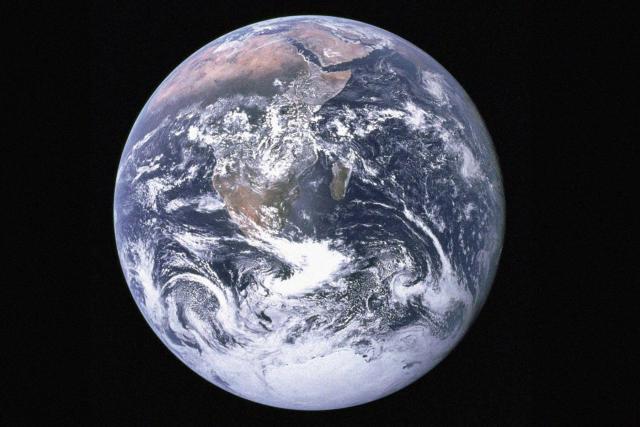
Photo credit: Heritage Images/ Hulton Archive via Getty Images

Navigators Knew the Earth Was Round Earlier Than You Might Think

There’s a persistent myth that Christopher Columbus “proved” the Earth was round in the 15th century during his voyage from Europe to the Americas, but he was many centuries too late. In fact, formally educated people knew the world wasn’t flat starting way back in the third century BCE, while scientists and mathematicians may have known as early as the sixth century BCE. Columbus’ surprise landing in the Americas had nothing to do with thinking the Earth was flat — he just thought the global circumference to be smaller than it is and believed he’d end up in Asia. This tenacious myth comes from a highly embellished 1828 biography of Columbus written by Washington Irving, better known for fictional works such as “The Legend of Sleepy Hollow” and “Rip Van Winkle.”

Like the aforementioned scientists and scholars, mariners were aware of the world’s roundness very early on. Sailors observed that when viewing distant ships, the tops of sails and masts were visible before the decks and hulls of the vessels to which they were attached. And as they traveled to different points of the Earth, they also noted being able to see different constellations. Celestial navigation would have been pretty difficult otherwise.
Genomes Show the History and Travels of Indigenous Peoples (Scientific American)

Scientific American

A new study demonstrates “I ka wā mamua, ka wā ma hope,” or “the future is in the past”

October 13, 2021 – DNASocial Justice

Keolu Fox is an assistant professor at the University of California, San Diego, where he is affiliated with the department of anthropology, the Global Health Program, the Halıcıoğlu Data Science Institute, the Climate Action Lab, the Design Lab and the Indigenous Futures Institute. His work focuses on designing and engineering genome sequencing and editing technologies to advance precision medicine for Indigenous communities.

Genomes Show the History and Travels of Indigenous Peoples
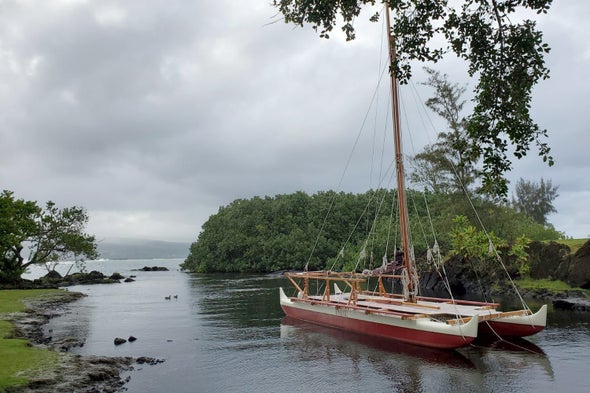
Wa’a Kiakahi in Keaukaha, Hawaii. Credit: Keolu Fox

I am the proud descendant of people who, at least 1,000 years ago, made one of the riskiest decisions in human history: to leave behind their homeland and set sail into the world’s largest ocean. As the first Native Hawaiian to be awarded a Ph.D. in genome sciences, I realized in graduate school that there is another possible line of evidence that can give insights into my ancestors’ voyaging history: our moʻokuʻauhau, our genome. Our ancestors’ genomes were shaped by evolutionary and cultural factors, including our migration and the ebb and flow of the Pacific Ocean. They were also shaped by the devastating history of colonialism.

Through analyzing genomes from present-day peoples, we can do incredible things like determine the approximate number of wa‘a (voyaging canoes) that arrived when my ancestors landed on the island of Hawaii or even reconstruct the genomes of some of the legendary chiefs and navigators that discovered the islands of the Pacific. And beyond these scientific and historical discoveries, genomics research can also help us understand and rectify the injustices of the past. For instance, genomics might clarify how colonialism affected things like genetic susceptibility to illness—information crucial for developing population-specific medical interventions. It can also help us reconstruct the history of land use, which might offer new evidence in court cases over disputed territories and land repatriation.

First, let’s examine what we already know from oral tradition and experimental archeology about our incredible voyaging history in the Pacific. Using complex observational science and nature as their guide, my ancestors drew on bird migration patterns, wind and weather systems, ocean currents, the turquoise glint on the bottom of a cloud reflecting a lagoon, and a complex understanding of stars, constellations and physics to find the most remote places in the world. These intrepid voyagers were the first people to launch what Kanaka Maoli (Hawaiian) master navigator Nainoa Thompson refers to as the original “moonshot.”

This unbelievably risky adventure paid off: In less than 50 generations (1,000 years), my ancestors mastered the art of sailing in both hemispheres. Traveling back and forth along an oceanic superhighway the space of Eurasia in double-hulled catamarans filled to the brim with taro, sweet potatoes, pigs and chickens, using the stars at night to navigate and other advanced techniques and technologies, iteratively perfected over time. This would be humankind’s most impressive migratory feat—no other culture in human history has covered so much distance in such a short amount of time.

The history of my voyaging ancestors and their legacy has been passed to us traditionally through our ʻōlelo (language), mo‘olelo (oral history) and hula. As a Kanaka Maoli, I have grown up knowing them: of how Maui pulled the Hawaiian Islands from the sea and how Herb Kāne, Ben Finney, Tommy Holmes, Mau Piailug and many other members of the Polynesian Voyaging Society enabled the first noninstrumental voyage from Tahiti to Hawaii in over 600 years onboard the wa‘a Hōkūle‘a.

Genomes from modern Pacific Islanders have enabled us to reconstruct precise timings, paths and branching patterns, or bifurcations, of these ancient voyages, giving a refined understanding of the order in which many archipelagoes in the Pacific were settled. By working collaboratively with communities, our approach has directly challenged colonial science’s legacy of taking artifacts and genetic materials without consent. Similar tools to the new genomics have no doubt been misused in the past to justify racist and social Darwinist ends. Yet by using genetic data graciously provided by multiple communities across the Pacific, and by allowing them to shape research priorities, my colleagues and I have been able to “I ka wā mamua, ka ma hope,” or “walk backward into the future.”

So how can our knowledge of the genomic past allow us to walk toward this better future? Genome sequence data are not just helpful in providing refined historical information, they also help us understand and treat important contemporary matters such as population-specific disease. The time frame of these ancestors’ arrival in the Pacific, and the order in which the most remote islands in the world were settled, matters for understanding the incidence and severity among Islander populations of many complex diseases today.

Think of our genetic history as a tree, with present-day populations at the tips of branches and older ones closer to the trunk. Moving backward in time—or from the tips to the trunk—you encounter places where two branches, or populations, were descended from the same ancestor. The places where the branches split represent events in settlement histories in which two populations split, often because of a migration to a new place.

These events provide key insights into what geneticists call “founder effects” and “population bottlenecks,” which are extremely important for understanding disease susceptibility. For example, if there is a specific condition in a population at the trunk of a branching event, then populations on islands that are settled later will have a higher chance of presenting that same health condition as well. Founder populations have provided key insights into rare population-specific diseases. Some examples include Ashkenazi Jews and susceptibility to Tay-Sachs disease and Mennonite communities and susceptibility to maple syrup urine disease (MSUD).

This research also sheds important light on colonialism. As European settlers arrived in the Pacific in places such as Hawaii, Tahiti, and Aotearoa (New Zealand), they didn’t just bring the printing press, the Bible and gunpowder, they brought deadly pathogens. In the case of many Indigenous peoples, historical contact with Europeans resulted in a population collapse (a loss of approximately 80 percent of an Indigenous population’s size), mostly as a result of virgin-soilepidemics of diseases such as smallpox. From Hernán Cortés to James Cook, these bottlenecks have shaped the contemporary genetics of Indigenous peoples in ways that directly impact our susceptibility to disease.

By integrating digital sequence information (DSI) from both modern and ancient Indigenous genomes in genetic regions such as the human leukocyte antigen (HLA) system, we can observe a reduction in human genetic variation in contemporary populations, as compared with ancient ones. In this way, we can observe empirically how colonialism has shaped the genomes of modern Indigenous populations.

Today fewer than 1 percent of genome-wide association studies, which identify associations between diseases and genetic variants, and less than 5 percent of clinical trials include Indigenous peoples. We have just begun to develop mRNA vaccine-based therapies that have already shown their ability to “save the world.” Given their success and potential, why not design treatments, such as gene therapies, that are population specific and reflect the local complexity that speaks to Indigenous peoples’ unique migratory histories and experiences with colonialism?

Finally, genomics also has the potential to impact the politics of Indigenous rights and specifically how we think about the history of land stewardship and belonging. For instance, emerging genomics evidence can empirically verify who first lived on contested territories—e.g., indigenous groups could prove how many generations they arrived before colonists—which could be used in a court of law to settle land and resource repatriation claims.

Genetics gives us insights into the impact of both our peoples’ proud history of migration and the shameful legacy of colonialism. We need to encourage the use of these data to design treatments for the least, the last, the looked over and the left out, and to generate policies and legal decisions that can rectify the history of injustice. In this way, genomics can connect where we come from to where we will go. Once used to make claims about Indigenous peoples’ inferiority, today the science of the genome can be part of an Indigenous future we can all believe in.