Published 23 FEBRUARY 2013
Janet Chernela Interview with Davi Kopenawa
Recorded in Demini, Parima Mountain Range, Brazil
June 7, 2001
This interview was conducted June 7, 2001, in the Yanomami village of Demini, Parima Highlands, Brazil. I had known Davi, who is a recognized spokesperson on indigenous affairs, through prior meetings in New York and in Brazil. Arrangements for the interview were made through CCPY, a Brazilian non-governmental organization working on behalf of the Yanomami. In this I relied on long-term contacts with CCPY and their abilities to reach Davi by radio. (Individuals who provided assistance included Marcos Wesley de Oliveira, Bruce Albert, Gale Gomez, and Ari Weidenshadt.) Although Davi now lives in Demini, he is from Totoobi, where, as a child of 9 he was vaccinated by the Neel team. Davi’s comments about the period of the Neel collections must be understood as childhood recollections. In the measles epidemic of 1968 Davi lost his mother and siblings. He and his older sister are the only remaining members of his immediate family. Both recall having supplied blood to the researchers. As you will see in the interview, they are not concerned with the whereabouts of their own blood as they are the whereabouts of the blood of their deceased relatives.
I invited Davi to participate in what I call “reciprocal interviewing” — that is, he could interview me as I could interview him. You will see that he exercises his privilege toward the end of the interview. He understood that he was invited to speak to the American Anthropological Assocation in this interview, and refers to the Association in the course of his talk.
Davi and I spoke in Portuguese. The interview was recorded on audio and video-tape, and later translated from tapes into English. Paragraphs, titles, and bracketed comments were added. Since Portuguese is not first language to either of us, it is not clear that the word choices were ideal. In some cases I included Davi’s choice of Portuguese term.
The publication of Patrick Tierney’s Darkness in El Dorado is dated Jan. 17, 2002; an English-language copy was circulating on the internet about six months prior to its publication. At the time of the interview no Spanish or Portuguese version yet existed. A number of anthropologists had discussed the Tierney book with Davi before my arrival. Among these were Bruce Albert, Leda Martins, and an anthropologist whose name Davi could not recall. That anthropologist may have been Javier Carrera Rubio, a Venezuelan anthropologist who worked briefly for CCPY. I was accompanied in this interview by Ari Weidenshadt of CCPY, who participated actively in the discussion. For an understanding of events in 1968 the interview should be evaluated in light of documents that have been released since it was conducted. The words of Davi Yanomami, however, continue to have resonance beyond the past to include the enterprise of anthropological research, in general. The implications for globalization, cultural rights, and morality, are far-reaching.
“RECIPRICAL INTERVIEWS”
While walking to the shabono, a circular, thatch-roofed communal dwelling, I can overhear Ari speaking to Davi in the distance. Through my tape-recorder, I first hear Davi:
Davi: “hunt, tapir, monkey…bringing relatives together…call together people to kill the guy who killed own member…remembering, crying, everyone is angry..ai…Everyone goes there, they paint themselves. Prepare arrows. Get together alot of people — 50 Yanomami. They go to another shabono. Bring food, arrows, sleep in the forest. Next day get closer, and sleep close to the shabono. So they know..they will be avenged. At dawn, the enemy approaches. While people are sleeping inside, they wait…then when people go out to urinate — tchong! They strike with arrows. Arrows. Everyone wakes up, grabs his bow and arrows [and flees]. Everyone is running. They run out another exit, shootong as they go. There are three types of fighting. This is the third. THIS is war.
Janet: Does this actually happen?
Davi: Yes.
Janet: Did it happen in your lifetime?
Davi: Yes. I know about it because when I was small my uncle carried out alot of wars like this.
Janet: So it no longer occurs?
Davi: No, no one does this anymore. The warriors died. We are their children and we don’t make war. You can’t fight any more.
Janet: Is that group in Surucucú fighting?
Davi: Yes, they are fighting there. Because there they killed alot of people — they killed the headman of Surucucú so they [group from Surucucú] went over to Moxavi and killed the headman over there. The headman of Surucucú was a valiant warrior and a hard worker. He was an honest person. So his children avenged his death and killed the headman of Moxavi. Now it’s calm.
Janet: Where are the children today?
Davi: They are over there in Surucucú — Xerimú, Vinice, Hakoma, Tarimú Davi’s comments about the period of the Neel collections must be understood as the recollections of a child at the time., they are in Surucucú — enemies of Moxavi. Three groups are friends: Piris, Surucucú, Arawapu.
Janet: How many people live in Surucucú Davi’s comments about the period of the Neel collections must be understood as the recollections of a child at the time?
Davi: Thirty-something people, divided. The group that is making war is four hours walk away. They stopped fighting — they had to go back to work in their gardens. Food began to run out — there were no more bananas because they were afraid to leave the house to work in the gardens. They were afraid that people from Moxavi would attack. They are using fire arms over there at Surucucú [army post in Brazil near Venezuelan border].
Janet: How did they get these fire arms?
Davi: They got them from the goldminers who invaded our land.
Janet: Are there Yanomami in the army base at Surucucú Davi’s comments about the period of the Neel collections must be understood as the recollections of a child at the time?
Davi: No. In the beginning they [government] wanted that. They called Yanomami to serve in the army base. But no. Life in the armed forces isn’t a good thing. It’s very bad. It’s another kind of work — another fight. So they went back. They continue to be Yanomami. You must be who you are, the way you are. If not, you will suffer alot. It will be wrong. You will do many things wrong.
Janet: In Homoxi do they have war?
Davi: I don’t know. The Escurimuteri were allies of the Wahakuwu and they are enemies of people of Thirei and Homoxi [villages I visited in 2000].
Janet: Do people of Thirei use shotguns?
Davi: Yes.
Janet: From where did they get them?
Davi: From the miners.
Formal Interview: Davi on the book Darkness in El Dorado by Patrick Tierney
Davi: An anthropologist entered Yanomami lands in Venezuela. Many people know about this. …This book told stories about the Yanomami and it spread everywhere. So I remembered it when our friend [unnamed anthropologist] mentioned his name. When that young man spoke the name I remembered. We called him Waru. He was over there in Hasabuiteri… Shamatari…A few people — Brazilian anthropologists — are asking me what I think about this.
Anthropologists who enter the Yanomami area — whether Brazil or Venezuela — should speak with the people first to establish friendships; speak to the headman to ask for permissions; arrange money for flights. Because nabu (the white) doesn’t travel without money. Nabu doesn’t travel by land. Only by plane. It’s very far. So he’s very far away, this anthropologist who worked among the Shamatari. Those people are different.
He arrived, like you, making conversation, taking photos, asking about what he saw. He arrived as a friend, without any fighting. But he had a secret. You can sleep in the shabono, take photos, I’m not saying no. It’s part of getting to know us.
But, later what happened was this. After one or two months he started to learn our language. Then he started to ask questions, “Where did we come from, who brought us here?” And the Yanomami answered, we are from right here! This is our land! This is where Omam placed us. This is our land. Then the anthropologist wanted to learn our language. I know a little Shamatari, but not much. So, he stayed there in the shabono, and he thought it was beautiful. He thanked the headman and he took some things with him. He brought pans, knives, machetes, axes. And so he arrived ready, ready to trick the Yanomami. This is how the story goes. I was small at the time…[pointing to a boy] like this..about nine. I remember. I remember when people from there came to our shabono. They said, “A white man is living over there. He speaks our language, he brings presents, hammocks.” They said that he was good, he was generous. He paid people in trade when he took photos, when he made interviews, [or] wrote in Portuguese [likely Spanish], English, and Yanomami, and taperecording too. But he didn’t say anything to me. [tape changes here]
An anthropologist should really help, as a friend. He shouldn’t deceive. He should defend…defend him when he is sick, and defend the land as well…saying “You should not come here — the Yanomami are sick.” If a Yanomami gets a cold, he can die. But he didn’t help with this. The first thing that interested him was our language. So today, we are hearing — other Yanomami are talking about it — people from Papiu, Piri, and here. People of Tootobi — my brothers-in-law — they also are talking about the American anthropologist who worked in Hasabuiteri. He wrote a book. When people made a feast and afterward a fight happened, the anthropologist took alot of photos and he also taped it. This is how it began. The anthropologist began to lose his fear — he became fearless. When he first arrived he was afraid. Then he developed courage. He wanted to show that he was brave. If the Yanomami could beat him, he could beat them. This is what the people in Tootobi told us. I am here in Watorei, but I am from Tootobi. I am here to help these people. So I knew him. He arrived speaking Yanomami. People thought he was Yanomami. There was also a missionary. He didn’t help either. They were friends. That’s how it was. He accompanied the Yanomami in their feasts…taking [the hallucinogen] ebena, and after, at the end of the feast, the Yanomami fought. They beat on one anothers’ chests with a stone, breaking the skin. This anthropologist took photos. And so he saved it, he “kept” the fight. So, after, when the fight was over, and the Yanomami lay down in their hammocks, in pain, the anthropologist recorded it all on paper. He noted it all on paper. He wrote what he saw, he wrote that the Yanomami fought. He thought it was war. This isn’t war, no! But he wrote without asking the people in the community. You have to ask first. He should have asked, “Yanomami, why are you fighting? You are fighting, hitting your very brother.” He should have helped us to stop fighting. But he didn’t. He’s no good.
I will explain.
The nabu [whites] think that every type of fighting is war. But there are three kinds of fighting [as follows].
Ha’ati kayu [titles were added later]: the chest fight to relieve anger. Let’s say your relatives take a woman. So you get angry. The Yanomami talk and form a group to fight against the other group that took the woman. So they make a feast. They call him [the relative that took the woman.] They hold him and use this club [gesturing to indicate a length about a foot long] to hit him on the chest. This club-striking is not war. It’s fighting. So, let’s say this guy took my woman. I become his enemy. So I hit him here [pointing to chest]. I want to cause him pain. He can hit me too. This club is not war. It’s to get rid of a mess in the community. Then there’s the headman. What does the headman do? He says, “OK, you have already fought. Now stop this.” So they stop. This fight doesn’t kill anyone.
Xeyu. There’s another kind of fight, Xeyu. Let’s say I have a friend who speaks badly of me. He might say I’m a coward, or he might say I’m no good. So he has to fight my relatives, my family. I have ten brothers. So I can decide whether he’s a man, whether he has courage. So we call friends from other shabonos and set a date. We go into the forest and make a small clearing for the fight, so people can see that we are angry. We take this weapon — it’s a long stick — about 10 ms long. So everyone is there. I’m here, and the enemy is there. Everyone is ready to hit. When I hit the enemy he hits me as well. My brother hits his brother and his brother hits mine back. This is how we fight [two lines with people fighting in pairs].
Janet: How does it end?
Davi: When everyone is covered with blood — heads bloodied, everyone beaten. So the headman says, ‘OK, enough. We’ve already shed blood. So, it’s over. This isn’t war either, no.
Janet: It’s not war. But it includes one group lined up on one side, and another on the other — yes?
Davi: Yes. One group of brothers or the members of a shabono in one line and the other brothers in another line.
Davi: Then there is another kind of fight with a club that’s about a meter long — Genei has one. Everyone gathers and stands in the center of the shabono. The enemy comes over. But again the headman is there. He says, ‘you can’t hit here, you can’t hit here [gesturing] — you can only hit here — in the middle of the head. It doesn’t kill anyone.
Yaimu, Noataiyu, Nakayu, Wainakayu, Bulayu. But if you hit in the wrong place, he can die. So, if this happens, a brother will grab an arrow and go after the one who killed his brother. They will both die — the first with club, the second with arrow. So, what happens? The relatives of the man killed with the club carry the body to the shabono. They take it there. They put it in the fire, burn it, gather the ashes and remaining bones and pound them into powder. They put the ash in a calabash bowl. His father, his mother, his brothers, all of his relatives sit there at the edge of the fire, crying. So the warrior thinks. If they have ten warriors, all angry, they are going to avenge the death. So the father may say, “Look, they killed my son with a club, not with arrow.” He can stop the fighting right there and then. Or, he can say, “Now we will kill them with arrows.” Then they would get all their relatives and friends from the shabono and nearby communities. They make a large feast, bringing everyone together. We call this Yaimu, Noataiyu, Nakayu, Wainakayu, Bulayu. Then they get manioc bread [beiju] and offer food to everyone. Everyone is friends — the enemies are way over there. Then they leave together. The women stay in the house, and the warriors leave to make war. They cover themselves in black paint. This is war. This is war: Waihu, Ni’aiyu. Waihu, Ni’aiyu, Niaplayu, Niyu aiyu. Then, at about nine or ten o’clock at night they start walking. These warriors are going to sleep at about 5 AM. In the forest they make a small lean-to of saplings. The next day they leave again. They are nearing the enemy. After tomorrow they are there. They don’t arrive in the open — they sneak up on the shabono. They move in closer about 3 or 4 in the morning. The enemies are sleeping in the shabono. The warriors arrive just as the sun is coming up. This is ‘fighting with arrows’ — Waihu, Ni’aiyu, Niaplayu, Niyu aiyu. These are war — war with arrows, to kill. He [the enemy] can be brother, cousin, uncle.
Janet: Is it vengeance?
Davi: It is vengeance.
Davi: So this Chagnon, he was there; he accompanied it. He took photographs, he recorded on tape, and he wrote on paper. He wrote down the day, the time, the name of the shabono, the name of the local descent group. He put down these names. But he didn’t ask us. So we are angry. He worked. He said that the Yanomami are no good, that the Yanomami are ferocious. So this story, he made this story. He took it to the United States. He had a friend who published it. It was liked. His students thought that he was a courageous man, an honest man, with important experience.
Janet: What is the word for courageous?
Davi: Waiteri. He is waiteri because he was there. He is waiteri because he was giving orders. He ordered the Yanomami to fight among themselves. He paid with pans, machetes, knives, fishooks.
Janet: Is this the truth or this is what is being said?
Davi: It’s the truth.
Janet: He paid directly or indirectly?
Davi: No, he didn’t pay directly. Only a small part. The life of the indian that dies is very expensive. But he paid little. He made them fight more to improve his work. The Yanomami didn’t know his secret.
Janet: But why did he want to make the Yanomami fight?
Davi: To make his book. To make a story about fighting among the Yanomami. He shouldn’t show the fights of the others. The Yanomami did not authorize this. He did it in the United States. He thought it would be important for him. He became famous. He is speaking badly about us. He is saying that the Yanomami are fierce, that they fight alot, that they are no good. That the Yanomami fight over women.
Janet: It is not because of women.
Davi: It’s not over women that we go to war.
Janet: It’s not over women that one goes to war with arrows?
Davi: It’s not over women that we go to war with arrows. It is because of male warriors that kill other male warriors.
Janet: to avenge the death?
Davi: [Yes,] to avenge. I no longer think that the Yanomami should authorize every anthropologist who appears. Because these books come out in public.
I ask if he has message.
Davi: I don’t know the anthropologists of the United States. If they want to help, if …you whites use the judicial process ..
Janet: Would you like to send a message to the American Anthropological Association?
DAVI’S MESSAGE TO THE AMERICAN ANTHROPOLOGICAL ASSOCIATION
Davi: I would like to speak to the young generation of anthropologists. Not to the old ones who have already studied and think in the old ways. I want to speak to the anthropologists who love nature, who like indigenous people — who favor the planet earth and indigenous peoples. This I would like. This is new, clean, thinking. To write a new book that anyone would like, instead of speaking badly about indigenous peoples. There must be born a new anthropologist who is in favor of a new future. And the message I have for him is to work with great care. If a young anthropologist enters here in Brazil or Venezuela, he should work like a friend. Arrive here in the shabono. He should say, “I am an anthropologist; I would like to learn your language. After, I would like to teach you.” Tell us something of the world of the whites. The world of the whites is not good. It is good, but it is not all good. There are good people and bad people. So, “I am an anthropologist here in the shabono, defending your rights and your land, your culture, your language, don’t fight among yourselves, don’t kill your own relatives.”
We already have an enemy among us — it is disease. This enemy kills indeed. It is disease that kills. We are all enemies of disease. So the anthropologist can bring good messages to the Indian. They can understand what we are doing, we can understand what they are doing. We can throw out ideas to defend the Yanomami, even by helping the Yanomami understand the ways of the whites to protect ourselves. They cannot speak bad of the Yanomami. They can say, “The Yanomami are there in the forest. Let’s defend them. Let’s not allow invasions. Let’s not let them die of disease.” But not to use the name of the indian to gain money. The name of the Indian is more valuable than paper. The soul of the Indian that you capture in your image is more expensive than the camera with which you shoot it. You have to work calmly. You have to work the way nature works. You see how nature works. It rains a little. The rain stops. The world clears. This is how you have to work, you anthropologists of the United States.
I never studied anything. But I am a shaman, hekura. So I have a capacity to speak in Yanomami and to speak in Portuguese. But I can’t remember all the Portuguese words.
Ari: You have to be clear, this is important.
Davi: To repeat, Chagnon is not a good friend of our relatives. He lived there, but he acted against other relatives. He had alot of pans. I remember the pans. Our relatives brought them from there. They were big and they were shallow. He bought them in Venezuela. When he arrived [at the village], and called everyone together, he said, [Yanomami]…”That shabono, three or four shabonos,” as if it were a ball game. “Whoever is the most courageous will earn more pans. If you kill ten more people I will pay more. If you kill only two, I will pay less.” Because the pans came from there. They arrived at Wayupteri, Wayukupteri, and Tootobi. Our relatives came from Wayupteri and said, “This Chagnon is very good. He gives us alot of utensils. He is giving us pans because we fight alot.”
Janet: They killed them and they died?
Davi: Yes. Because they used poison on the point of the arrow. This isn’t good. This kills. Children cried; fathers, mothers, cried. Only Chagnon was happy. Because in his book he says we are fierce. We are garbage. The book says this; I saw it. I have the book. He earned a name there, Watupari. It means king vulture — that eats decaying meat. We use this name for people who give alot of orders. He smells the indians and decides where he will land on the earth. He ordered the Yanomami to fight. He never spoke about what he was doing.
Davi: And, the blood. If he had been our friend he would not have helped the doctor of the United States. He would have said, you can go to the Yanomami. The Yanomami don’t kill anyone — only when you order them to. Chagnon brought the doctors there, he interpreted because the Yanomami don’t speak English. When the doctor requested something he translated it. So when the doctor wanted to take blood, Chagnon translated it. But he didn’t explain the secret. We didn’t know either — no one understood the purpose of giving blood; no one knew what the blood had inside it. …
After, the missionaries who lived in Totoobi spoke to my uncle, my father-in-law. He said, “Look, this doctor would like to take your blood; will you permit it?” And the Yanomami said, “Yes.” He agreed because he would receive pans — pans, machetes.
Janet: But he didn’t explain why?
Davi: The Yanomami was just supposed to give blood and stand around looking. He didn’t talk about malaria, flu, tuberculosis, or dysentery. He said nothing about these things. But he took alot of blood. He even took my blood. With a big bottle like this. He put the needle here [pressing the veins of his inner arm]; put it here, the rubber tube over here. He took alot! I was about nine or ten. He arrived there in Totoobi with the doctor. Chagnon translated. The missionaries, Protestants, lived there in Totoobi. They camped there. They slept there. And they ordered us to call other relatives: there were three shabonos. They called everyone together. Husband, wife, and children, altogether. They always took the blood of one family together. They took my mother’s blood. They took my uncle’s blood. My father had already died. And me. And my sister. She remembers it too. It was a bottle — a big one — like this. He put a needle in your arm and the blood came out. He paid with matihitu– machete, fishhooks, knives. The doctor asked him to speak for him. He translated. He would say, “Look, this doctor wants you to allow him to take your blood.” And the Yanomami understood and allowed it. The missionaries who lived there hardly helped. They were mimahodi, innocents.
Janet: The law controls this now.
Davi: Nobody can do this anymore. So now we are asking about this blood that was taken from us without explanation, without saying anything, without the results. We want to know the findings. What did they find in the blood — information regarding disease? What was good? Our relatives whose blood was taken are now dead. My mother is dead; our uncles, our relatives have died. But their blood is in the United States. But some relatives are still alive. Those survivors are wondering — “What have the doctors that are studying our blood found? What do they think? Will they send us a message? Will they ask authorization to study and look at our blood?” I think that Yanomami blood is O positive. Is it useful in their bodies? If that’s the case, and our blood is good for their bodies — then they’ll have to pay. If it helped cure a disease over there, then they should compensate us. If they don’t want to pay, then they should consider returning our blood. To return our blood for our terahonomi. If he doesn’t want to return anything, then lawyers will have to resolve the issue. I am trying to think of a word that whites do…sue. If he doesn’t want to pay, then we should sue. If he doesn’t want a suit, then he should pay. Whoever wants to use it, can use it. But they’ll have to pay. It’s not their blood. We’re asking for our blood back. If they are going to use our blood then they have to pay us.
Janet: I don’t know where it is. It may be in a university.
Davi: The blood of the Yanomami can’t stay in the United States. It can’t. It’s not their blood.
Janet: So this is a request for those who have stored the blood?
Davi: I am speaking to them. You take this recording to them. You should explain this to them. You should ask them, “What do you Nabu think?” In those days no one knew anything. Even I didn’t know anything. But now I am wanting to return to the issue. My mother gave blood. Now my mother is dead. Her blood is over there. Whatever is of the dead must be destroyed. Our customs is that when the Yanomami die, we destroy everything. To keep it, in a freezer, is not a good thing. He will get sick. He should return the Yanomami blood; if he doesn’t, he [the doctor] and his children will become ill; they will suffer.
Janet: Were there repercussions in the area of medical services after this book came out?
Davi: No. FUNAI used to bring in vaccines. When they stopped the government health agency, FUNASA, took over. Now it’s [the NGO] URIHI. They have ten posts in the region and bring vaccines to all the villages. Each post has an employee.
Janet: Are these services only on the Brazilian side of the border?
Davi: Only in Brazil.
Janet: Is that why Yanomami from Venezuela frequent the URIHI posts?
Davi: Yes. Here we have a chief. The president of Brazil. He is bad, but he is also good. He provides a little money for us to get medicines. He provides airplanes and nurses to bring vaccinations and treatments from Boa Vista all the way here. The Brazilian government is now helping — somewhat. It’s not very much, but it is something. We in Brazil are very concerned about our Venezuelan relatives. Because over there people are dying — many people — from malaria, flu.
Ari: I am talking about the epidemic of measles in 1968. I am asking Davi if this began before or after the arrival of Neel and Chagnon.
Davi: I think it began before their arrival. Many were dying. After they took blood, many died. So this missionary, Kitt, went to Manaus. He went to Manaus and there his daughter became ill with measles. She picked up measles in Manaus. At first they didn’t know it was measles. They took a plane from Manaus to Boa Vista and from there to Totoobi. She arrived sick there, all three — father, mother and child. Then they realized that it was measles. So they asked us to please stay away from them. He said, “If you get measles you will all die. Please stay far away.” They had no vaccine in those days. A Yanomami entered to greet her and he ordered the Yanomami to leave. But he had already caught it. So then the missionary spoke to us all, saying, “Look, you can’t come to our house because my daughter is ill with measles. Stay in your house.” It didn’t accomplish anything. The disease spread. It went to the shabono. Everyone began to get sick, and to die. Three nearby shabonos — each of them with people ill and dying. My uncle was the first to die. Then my mother died. Another sister, uncle, cousin, nephew. Many died. I was very sick but I didn’t die. I think Omam protected me to give this testimony. My sister and I remained.
Janet: Your uncle died, your nephew, your mother…
Davi: uncle, nephew, mother, relatives…So, later [when the road opened], we died also. This place was part of Catrimani. When the road [BR 210, Perimetral Norte] was open, there were MANY people here. Most died then of measles. Only a few survived [he recalls the names of the survivors] — only ten men survived. I was here [working with FUNAI at the time], we brought vaccines for the measles epidemic then. These things happened in our land…FUNAI didn’t take care of us before the road opened.
Janet: What years are we discussing?
Davi: 1976, no 1975.
Ari: The road went from the Wai Wai to the mission at Catrimani.
Davi: They had roads BR 210-215.
Ari: After it was closed the forest reclaimed the road.
Janet: When was it closed?
Davi: After the invasion of the garimpeiros.
Janet: Did the garimpeiros come in this far by road?
Davi: Yes. We would try to stop them. I once got everyone together to go to the road with bows and arrows to block the entrance. I said, this isn’t a place for miners. We won’t allow it. I said if you want to mine, it had better be far from here, because if you stay here you will die here. Our warriors are angry. So they left. I invented all that so they would leave and they did. So they passed by. There were more than 150 — more people than we had.
Janet: Is there a word for “warrior” in Yanomami?
Davi: Yes, waiteri.
Janet: Waiteri means warrior.
Davi: Yes; waiteri is courageous, brave. Those that aren’t are horebu.
Janet: And that means..?
Davi: Scared, fearful, weak.
Janet: Do these concepts have power still today?
Davi: No. This fight isn’t going on any more. But we are still waiteri. No one controls us. Here, we control ourselves. And there are some warriors. There’s one over there in Ananebu. A waiteri is over there in Ananebu, in the forest. Here at home, in THIS shabono, we are all cowards [chuckles].
Davi Interviews Janet
Davi: I want to ask you about these American anthropologists. Why are they fighting among themselves? Is it because of this book? Is this book bad? Did one anthropologist like it and another one say it’s wrong?
Janet: First, in the culture of anthropologists there is a type of fighting. This fight comes out in the form of publications. One anthropologist says, ‘things are like this,’ the other one says, ‘no, things are like this.’ So, after Chagnon’s book came out he received many criticisms from other anthropologists. Some said, this should not be called war. Just as you said. But Chagnon provided a definition of war and continued to use that word. This was one of the criticisms made by anthropologists. After this there were others, and these debates went on in the publications and in conferences. In the year 1994 there was a conference in which anthropologists debated the anthropology of Chagnon and others among the Yanomami. In 1988-89, when there was a struggle over demarcation of Yanomami lands and the Brazilian government favored demarcation in island fragments, the anthropologists of Brazil criticized Chagnon’s image of the Yanomami as “fierce,” saying it served the interests of the military in limiting Yanomami land rights. At that time the American Anthropological Association did not have explicit ethical guidelines. At that point they formed a committee to develop guidelines for ethical fieldwork and a committee of human rights. Now, with the book by Tierney and the support of anthropologists who have had criticisms of Chagnon, the issue was brought before the Association. This raises questions about the ethical conduct of anthropologists.
Davi: But will the anthropologists resolve this problem?
Janet: They will demand that anthropologists conform to the norms of the newly revised ethics. They will explicitly clarify the obligations of the anthropologists.
Ari: In 1968 when Chagnon worked, there was no code of ethics of the Association.
Davi: What about the taking of blood?
Janet: Performing any experimentation has been controlled by the medical profession since 1971. It is now prohibited to involve people in experiments without their explicit authorization. They must be made completely aware of the advantages and disadvantages, and all purposes. They must decide whether they will agree or disagree to participate. Nowadays, this consent has to be in writing or taped.
Davi: This Yanomami blood is going to stay there? Or will they return the blood?
Janet: I don’t know. It must be in a blood bank, perhaps at the University of Michigan.
Ari: Chagnon [once] proposed an exchange between the Universidade Federal of Roraima and the University of California at Santa Barbara. He was proposing a collaboration in human genetics with a graduate student in biology. She worked with DNA. He invited her there. Her name is Sylvana Fortes. She is now doing a doctorate at FIUCRUZ in Rio de Janeiro. Another issue in this dispute is Darwinian evolutionism. Is this the idea of the impact of the environment on man?
Davi: I don’t like this, no. I don’t like these anthropologists who use the name of the Yanomami on paper, in books. One doesn’t like it. Another says its wrong. For us Yanomami, this isn’t good. They are using our name as if we were children. The name Yanomami has to be respected. It’s not like a ball to throw around, to play with, hitting from one side to another. The name Yanomami refers to the indigenous peoples of Brazil and Venezuela. It must be respected. This name is authority. It is an old name. It is an ancient name. These anthropologists are treating us like animals — as they would fish or birds. Omam created us first. We call him Omam. He created earth, forest, trees, birds, river, this earth. We call him Omam. After him, he called us Yanomami [Yan-Omam-i]. So it must be respected. No one uses it on paper to fight — they have to respect it. It is our name and the name of our land. They should speak well of us. They should say, “These Yanomami were here first in Brazil and Venezuela.” They should respect us! They should also say that we preserve our land. Yanomami know how to conserve, to care for their lands. Yanomami never destroyed the earth. I would like to read this. Speaking well of Omam, and of the Yanomami. This would be good. But if they are going to go on fighting like this–I think that the head of the anthropologists has money …
Ari: But Tierney’s book, even as it criticizes Chagnon, has become a major seller. He is earning money selling his book because of the theme. …
Davi: Bruce Albert, Alcida Ramos are not Yanomami. You have to call the very Yanomami, to hear them speak. Look, Alcida speaks Sanuma. Chagnon speaks Shamatari. And Bruce speaks our language. So there are three anthropologists who can call three Yanomami to speak at this meeting. The anthropologists should ask us directly. The Yanomami can speak his own language. These anthropologists can translate. They have to hear our language. They have to hear us in our own language. What does the Yanomami think? What does the Yanomami think is beautiful? You have to ask the Yanomami themselves. These people are making money from the Yanomami name. Our name has value. They are playing with the name of an ancient people. I don’t know alot about politics. But I see and hear that an anthropologist is becoming famous. Famous — why? Some think its good. So he became famous, like a chief. So among them nothing will be resolved. One becomes famous, the other one [his critic] becomes famous, and they go on fighting among themselves and making money…
Janet: Did you know Tierney?
Davi: I met him in Boa Vista. I went to his house. He didn’t say anything to me about what he was doing. So, Chagnon made money using the name of the Yanomami. He sold his book. Lizot too. I want to know how much they are making each month. How much does any anthropologist earn? And how much is Patrick making? Patrick must be happy. This is alot of money. They may be fighting but they are happy. They fight and this makes them happy. They make money and fight.
Janet: Yes; the anthropologists are fighting. Patrick is a journalist.
Davi: Patrick left the fight to the others! He can let the anthropologists fight with Chagnon, and he, Patrick, he’s outside, he’s free. He’s just bringing in the money — he must be laughing at the rest. Its like starting a fight among dogs. Then they fight, they bark and he’s outside. He spoke bad of the anthropologist — others start fighting, and he’s gaining money! The name Yanomami is famous [and valuable] — more famous than the name of any anthropologist. So he’s earning money without sweating, without hurting his hands, without the heat of the sun. He’s not suffering. He just sits and writes, this is great for him. He succeeded in writing a book that is bringing in money. Now he should share some of this money with the Yanomami. We Yanomami are here, suffering from malaria, flu, sick all the time. But he’s there in good health — just spending the money that he gained in the name of the Yanomami Indians.
Ari: One American had patented the name Yanomami on the internet.
Davi: She was using our name for an internet site or to write a book and earn US$20,000. A Canadian working for CCPY discovered this. My friend explained that they are using the name of the Yanomami without requesting authorization. I said I didn’t like it. So I sent her a letter. She was an American journalist. So she stopped. So I was able to salvage the name of the Yanomami. … They have alot of names. They don’t know the trunk and the roots of the Yanomami. They only know the name. But the trunk and the roots of the Yanomami, they don’t know. They don’t know where we were born, how we were born, who brought us here. Without knowing these things, no one can use the name.
I am speaking to the American Anthropology Association. They are trying to clean up this problem. They should bring three Yanomami to their meeting. There are three anthropologists who understand our three languages: Chagnon, Alcida, and Bruce. These anthropologists could translate. We could speak, and people could ask questions of us. I could go myself, but it would be best to have three from Venezuela, or four, perhaps one from Brazil. They need to see our faces. Alcida doesn’t look like a Yanomami. Nor do Bruce or Chagnon. They don’t have Yanomami faces. The Americans will believe us if they see us. I went to the United States during the fight against the goldminers. They believed me. For this reason, I say, it’s important to go there and speak to them. … This is a fight between men who make money.
I ask what the appropriate form of compensation for an anthropology interview, and he says money. “That way he can buy what he wants — pan, machete, axe, line, fishing hooks. It is good to speak to Yanomami. If you give money to the whites, they put it in their pocket. Nabu loves money. It’s for this reason that the nabu are fighting. Its not for him, for friends, its for money.”

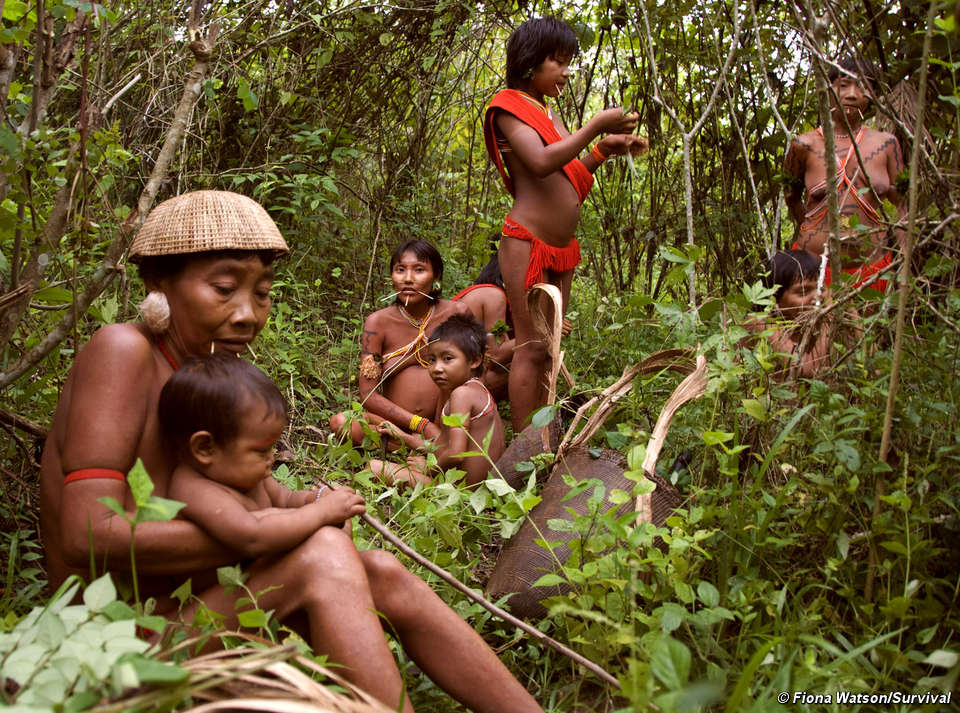 Napoleon Chagnon’s view that the Yanomami are ‘sly, aggressive and intimidating’ and that they ‘live in a state of chronic warfare’ has been widely discredited. © Fiona Watson/Survival
 Uma (in)certa antropologia