The Advanced Research and Invention Agency is investing £57 million to study climate-manipulating technologies, but says it is taking a cautious approach.
Solar geoengineering research involves investigating ways to ‘dim’ the Sun’s rays in an effort to cool Earth’s temperatures. Credit: Mike Kemp/In Pictures via Getty
The United Kingdom’s high-risk research agency will fund £56.8 million (US$75 million) worth of projects in the controversial area of geoengineering — manipulating Earth’s environment to avert negative effects of climate change. The 21 projects include small-scale outdoor experiments that will attempt to thicken Arctic sea ice and to brighten clouds so that they reflect more sunlight. The hope is that successful technologies could one day contribute to efforts to prevent the planet from passing dangerous climate tipping points.The UK’s $1-billion bet to create technologies that change the world
Supported by the Advanced Research and Invention Agency (ARIA) as part of its five-year Exploring Climate Cooling programme, the projects are among the most significant geoengineering experiments funded by a government.
The research has the potential to be beneficial, but must be undertaken cautiously, says Peter Frumhoff, a science-policy adviser at the Woodwell Climate Research Center in Falmouth, Massachusetts. “I am strongly supportive of responsible research on solar geoengineering and other climate interventions,” he says.
The funding package is the latest from ARIA, which was established in 2023 by the UK government and is modelled on the US Defense Advanced Research Projects Agency. With an £800-million budget, it funds high-risk, high-reward research into technologies that could have major consequences for humanity, including artificial intelligence and neurotechnology.
Divisive research
Another such area identified by ARIA was geoengineering, says Mark Symes, an electrochemist at the University of Glasgow, UK, who leads the Exploring Climate Cooling programme.
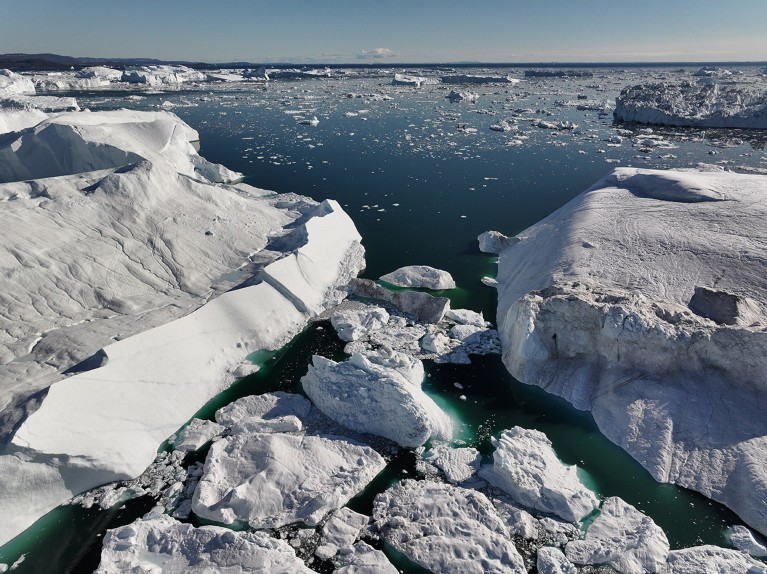
ARIA-funded experiments will investigate whether Earth’s diminishing ice sheets can be artificially thickened.Credit: Sean Gallup/Getty
Symes says the programme’s goal is not to find ways to replace more accepted approaches to tackling climate change, such as reducing carbon emissions. Instead, he says, geoengineering could be useful to prevent the world reaching certain tipping points that might occur before emissions reductions can have an effect. That could include “the collapse of circulations in the North Atlantic driven by the runaway melting of the Greenland ice sheet”, he says.
But even as climate change continues unabated, the concept is controversial: last year, researchers at Harvard University in Cambridge, Massachusetts, cancelled a project that would have introduced particles into the atmosphere in an effort to ‘dim’ the Sun after an outcry in Sweden, where the experiment was to take place.
Wary of such concerns, ARIA is taking a cautious approach. “We want to keep this research in the public domain,” says Piers Forster, a climate-change scientist at the University of Leeds, UK, who chairs a committee that will monitor ARIA’s climate-cooling projects. “We want it to be transparent for everyone.”
The 21 projects were selected through a competitive application process, which received about 120 proposals.
These fall into five research categories: studying ways to thicken ice sheets; assessing whether marine clouds could be brightened to offset damage to coral reefs; understanding how cirrus clouds warm the climate; looking at whether materials could be released into the stratosphere to reflect sunlight; and theoretical work on whether a sunshade deployed in space could cool portions of Earth’s surface.
Solar experiment
Five projects involve the most controversial area of geoengineering — outdoor experiments that interact with the environment. Frumhoff says that “building trust will be essential” in conducting such research. “I would be opposed to outdoor experiments being funded by any nation that isn’t aggressively and seriously reducing its own emissions,” he says.
A cloud-brightening trial will spray seawater particles over the Great Barrier Reef to make the clouds above it whiter and more reflective.Credit: Associate Professor Daniel Harrison/Southern Cross University
The stratospheric experiment — which is among the first outdoor solar-geoengineering experiment to receive government funding — will involve using balloons to carry materials such as limestone and dolomite dust into the stratosphere, to a height of about 15–50 kilometres, to see how they respond to the conditions. No particles will be released into the stratosphere, says ARIA.
Shaun Fitzgerald at the Centre for Climate Repair in Cambridge, UK, leads one of the ice projects. His team will conduct small-scale experiments in the Norwegian Arctic archipelago of Svalbard and in Canada to pump water from beneath ice sheets and spread it on top, covering up to one square kilometre in area, to see whether such a method could thicken Earth’s diminishing ice sheets.
“We’re going to see whether we’ve actually been able to grow more sea ice in the Arctic winter,” says Fitzgerald. Early results from work that Fitzgerald’s team did last year, before receiving ARIA funding, showed ice growth of “about half a metre”, he says.
Julienne Stroeve, a sea-ice researcher at University College London, isn’t sure how effective this method would be in preventing widespread sea-ice loss. “I do not think this is feasible at any real scale needed,” she says, noting that the impact on local ecosystems is also unclear. ARIA says that Fitzgerald’s experiment will be scaled up only if it is deemed to be “ecologically sound”.
“Any small-scale outdoor experiments will be designed with safety and reversibility at their core, and will undergo environmental-impact assessment with public engagement,” says Ilan Gur, ARIA’s chief executive.
Brighter clouds
One of the cloud-brightening projects will take place off the coast of Australia, led by the Southern Cross University in New South Wales. It will use a large fan to spray seawater particles over the Great Barrier Reef, to make the clouds above it whiter and more reflective. The hope is that this could prevent global warming from damaging coral reefs. “Those particles drift upwards to the cloud base, where the tiny salt particles cause water droplets in the cloud to split into smaller droplets,” says Symes. “The smaller the droplets, the more white [the cloud] is.” The experiment will take place over 10 square kilometres.
Electrochemist Mark Symes is leading ARIA’s Exploring Climate Cooling programme, which is funding £57 million worth of geoengineering projects.Credit: Matilda Hill Jenkins
The sole space-sunshade project, led by the Planetary Sunshade Foundation in Golden, Colorado, will model whether a physical reflector or a cloud of dust could be placed in space, between Earth and the Sun, to limit the amount of sunlight reaching Earth. “If you did wish to cool parts of Earth, space shades could be the most effective way,” says Symes. Nothing will be launched into space, however — the work is purely theoretical.
Responsible regulation
ARIA’s leaders hope that, by 2030, the outcomes of the programme could inform international regulations for geoengineering. One of the 21 projects will investigate how these approaches could be responsibly governed.
“The issue we are most concerned with is how to make sure activities, should they be pursued in the future, don’t lead to conflict between countries,” says project leader Matthias Honegger, a researcher at the Centre for Future Generations (CFG) in Brussels. For example, one worry is that interventions could cause side effects in neighbouring nations.
“Right now, there is no natural home for this issue within the United Nations,” says Cynthia Scharf, a senior fellow at the CFG in New York who is part of Honegger’s project. “We need to look at the substance of governance and the process of decision-making.”
Polêmica, a liberação de aerossóis diminuiria a quantidade de luz solar que chega à Terra, mas seus efeitos colaterais negativos poderiam ser maiores que os positivos
Aumentar a quantidade de aerossóis na atmosfera poderia barrar a chegada à Terra de uma pequena fração da luz solar e resfriar provisoriamente o planeta. Cadan Cummings / Jacobs / JETS / NASA-JSC
Depois de ter permanecido em silêncio por 600 anos, o monte Pinatubo, nas Filipinas, acordou em 1991. Uma série de pequenas explosões ao longo de dois meses culminou em uma grande erupção em meados de junho daquele ano, considerada a segunda maior do século passado. Cerca de 200 mil pessoas tiveram de deixar suas casas e mais de 700 morreram no arquipélago filipino como consequência da eclosão. A explosão produziu uma coluna de fumaça e cinzas vulcânicas que se elevou até 40 quilômetros (km) acima da superfície e invadiu a estratosfera, a segunda das cinco camadas da atmosfera que envolve a Terra. Esse manto de partículas em suspensão, geralmente com tamanhos micrométricos, atrapalhou o tráfego aéreo, queimou plantas e cultivos e produziu outros danos locais.
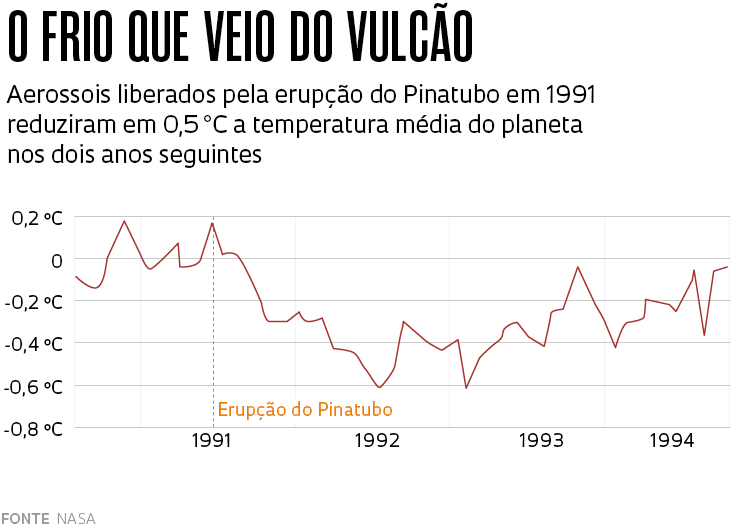
Apesar de ter causado grandes prejuízos materiais e a perda de vidas humanas nas Filipinas, a erupção do Pinatubo é lembrada hoje no meio científico por ter tido uma consequência surpreendente no clima global: a temperatura média da Terra reduziu-se cerca de 0,5 grau Celsius (°C) nos dois anos seguintes à sua atividade vulcânica. A enorme quantidade de partículas em suspensão, os chamados aerossóis, lançada pelo vulcão entrou no sistema de circulação de ar da estratosfera, espalhou-se pelo planeta e atuou por meses como uma espécie de filtro solar: parte dos raios do Sol que chegariam normalmente à superfície terrestre foi refletida ao incidir sobre essa quantidade extra de partículas de aerossóis injetados no sistema. Essa ação produziu um resfriamento temporário do planeta.
Os aerossóis também resfriam a Terra quando estão na troposfera, a camada mais baixa da atmosfera, mas sua ação é mais intensa na estratosfera. O efeito Pinatubo serve de inspiração para uma linha de pesquisa polêmica, cercada de incertezas científicas e riscos ambientais e geopolíticos: a geoengenharia solar ou modificação da radiação solar (SRM, na sigla derivada do inglês). Ela começou a tomar corpo lentamente nos últimos 20 anos em algumas universidades dos Estados Unidos e da Europa à medida que o aquecimento global se tornou mais pronunciado. A ideia central dessa abordagem é aumentar deliberadamente o albedo da Terra, sobretudo na estratosfera, para que ela passe a refletir mais radiação de volta ao espaço e, assim, torne-se um pouco menos quente.
Glauco Lara
O albedo é a fração da luz refletida em relação à absorvida por um corpo ou superfície. Quanto maior o albedo, como em superfícies claras ou brancas, menor a quantidade de calor absorvida. Injetar aerossóis na atmosfera é uma das formas de tentar aumentar o albedo terrestre. Alguns cálculos indicam que uma redução de 1% a 2% da quantidade de radiação solar que normalmente chega à Terra seria suficiente para diminuir sua temperatura média em um 1 °C.
A possibilidade de reduzir a quantidade de radiação solar sobre a Terra começou a ser aventada ainda na década de 1960. Mas sempre foi vista como uma excentricidade perigosa, quase um devaneio. A ideia só ganhou alguma relevância científica depois da erupção do Pinatubo e, mais recentemente, com a emergência da crise climática, causada pelo aumento significativo da temperatua global decorrente da emissão de gases de efeito estufa. Ainda assim, a pesquisa experimental – que envolveria a soltura de alguns quilos de aerossóis na estratosfera para observar seus eventuais efeitos em âmbito local (não global, como ocorreu na gigantesca erupção do vulcão nas Filipinas) – pouco progrediu até hoje em razão da oposição de parte da comunidade científica e de grupos ambientalistas.
“Até agora, existem poucos trabalhos de modelagem climática envolvendo as técnicas de geoengenharia solar”, comenta o físico Paulo Artaxo, do Instituto de Física da Universidade de São Paulo (IF-USP), especialista no estudo de aerossóis atmosféricos. “Nenhum experimento mais significativo foi feito em campo.” Duas abordagens que visam à modificação da radiação solar dominam as discussões. A principal delas é a injeção de aerossóis na estratosfera, a 15 ou 20 km de altitude, conhecida pela sigla SAI, que tenta reproduzir de forma artificial o que as grandes erupções fazem de maneira natural.
Glauco Lara
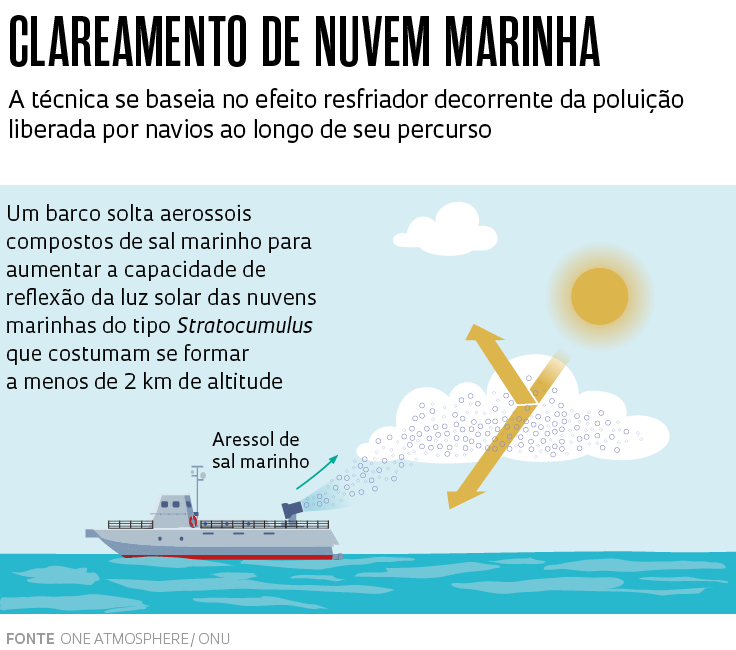
A outra, vista como de impacto mais localizado, é o clareamento de nuvens marítimas (marine cloud brightening ou MCB). Ela também envolve a liberação de aerossóis (nesse caso, partículas de sal marinho), que funcionam como núcleos de condensação das nuvens. Mas a soltura dessas partículas ocorre em altitudes bem mais baixas, de no máximo 2 km, ainda na troposfera. Com mais aerossóis, as gotas de nuvens ficam menores, refletem mais radiação solar de volta ao espaço e resfriam a superfície. Há outras técnicas cogitadas, como aumentar o albedo em grandes superfícies brancas do planeta, como o Ártico, mas as duas primeiras propostas dominam o debate.
Artaxo colabora com um grupo da Universidade Harvard, dos Estados Unidos, em estudos de modelagem computacional para tentar entender se o comportamento dos aerossóis na estratosfera é realmente similar à sua ação na troposfera. “Precisamos de mais pesquisas sobre esse tema antes de sequer pensarmos em implementar alguma intervenção desse tipo”, comenta o físico da USP, um dos coordenadores do Programa FAPESP de Pesquisa sobre Mudanças Climáticas Globais. “Não temos condições de garantir que a injeção de mais aerossóis não vá, por exemplo, diminuir as chuvas de monções no Sudeste Asiático e colocar em risco uma população de bilhões de pessoas. Se isso ocorrer, quem decide se essa injeção de aerossóis para ou continua? Esse tipo de decisão não pode ficar na mão de um pequeno grupo de países ou de um bilionário que financie um experimento desse tipo.”
Também há indícios de que uma dose extra de aerossóis na estratosfera poderia afetar a camada de ozônio, que protege a vida terrestre da ação nociva da radiação ultravioleta vinda do Sol. Isso sem falar que essas partículas em suspensão são uma forma de poluição do ar. Elas naturalmente se depositam, descem da estratosfera para a troposfera, onde podem causar ou agravar problemas de saúde, sobretudo os respiratórios. Por ora, essas e outras questões não têm respostas satisfatórias.
A posição do físico da USP é partilhada por muitos colegas. “A modificação da radiação solar é um tema sensível e o IPCC [Painel Intergovernamental sobre Mudanças Climáticas, da ONU]reconhece que ainda há muitas incertezas sobre seus potenciais efeitos”, comenta a matemática Thelma Krug, que foi vice-presidente do painel entre 2015 e 2023 e representou o Brasil em negociações internacionais sobre o clima por uma década. “Pessoalmente, sou a favor da pesquisa na área. Mas é preciso ir passo a passo com os experimentos, ter transparência e estabelecer uma governança para esse processo.”
Erupção do vulcão Pinatubo, em 1991, é considerada a segunda maior do século passadoArlan Naeg / AFP via Getty Images
O tema é tão controverso que alguns pesquisadores são contra até que se faça pesquisa sobre as técnicas de geoengenharia solar. Isso porque elas não têm impacto na redução das emissões de gases de efeito estufa, que causam o aumento da temperatura da Terra. Ainda que se mostrem relativamente seguras e eficientes em esfriar temporariamente a Terra, objetivo que hoje é apenas uma hipótese, técnicas como a SAI seriam, no máximo, paliativas. No fundo, dizem os críticos dessa abordagem, os trabalhos nessa área desviariam recursos e tomariam um tempo que poderia ser mais bem empregado na busca por ações que reduzissem a emissão de gases como dióxido de carbono (CO2) e metano (CH4). “Os estudos sobre geoengenharia solar também poderiam ser usados como a desculpa perfeita para que os grandes produtores de gases de efeito estufa não reduzissem suas emissões”, pondera o climatologista Carlos Nobre, do Instituto de Estudos Avançados (IEA) da USP.
Além de ser encarada como um diversionismo em relação à meta central de zerar as emissões de gases de efeito estufa nas próximas décadas, a adoção das técnicas de SRM poderia tornar o planeta refém desse tipo de intervenção climática por um prazo muito longo e indefinido, de décadas ou séculos. Isso criaria um problema extra: o risco de promover o chamado termination shock. Quando o planeta abandonasse o emprego das técnicas de SRM, a temperatura subiria novamente – só que dessa vez de forma muito mais rápida do que no cenário atual de aquecimento global. Isso tornaria quase impossível a adaptação a essa brusca elevação de temperatura. Qualquer oscilação significativa da temperatura, para cima ou para baixo, em um curto período, representa um desafio adaptativo.
Alguns estudos de modelagem climática têm sugerido cenários preocupantes em simulações de possíveis impactos do emprego de técnicas de geoengenharia solar. Esses trabalhos costumam averiguar que outros efeitos (colaterais) essas técnicas de intervenção no clima poderiam induzir, além da redução temporária da temperatura terrestre. Um dos problemas é que a maioria desses estudos se concentra em possíveis consequências no hemisfério Norte, onde ficam os países mais ricos e vive e trabalha a maior parte dos pesquisadores do clima.
Começam, no entanto, a surgir pesquisas com foco em outras partes do planeta. Trabalho publicado em junho deste ano na revista Environmental Research Climate sugere que a adoção da SAI ao longo deste século alteraria os prováveis impactos do aquecimento global sobre a formação de ciclones extratropicais no hemisfério Sul, como aqueles que se formam com certa regularidade na região Sul do Brasil. A previsão é de que, até o fim deste século, o aumento da temperatura global reduza o número de ciclones gerados nessa parte do globo terrestre, mas aumente a intensidade dos fenômenos produzidos. Ou seja, menos ciclones, mas mais fortes.
Glauco Lara
Quando diferentes regimes de injeção de aerossóis na estratosfera são simulados em três modelos climáticos internacionais até 2100, os resultados sinalizam um aumento na frequência de ciclones, mas uma redução em sua força em relação aos prognósticos obtidos em cenários de aquecimento global sem a adoção de qualquer protocolo da SAI. “Não somos contra nem a favor da geoengenharia solar”, diz a pesquisadora Michelle Reboita, da Universidade Federal de Itajubá (Unifei), de Minas Gerais, coordenadora do estudo. “Precisamos é estudá-la. Ela pode produzir resultados positivos em uma parte do mundo e negativos em outra.”
Há também estudos de simulação que tentam prever os possíveis impactos da SAI sobre a biodiversidade. “Nosso objetivo é entender como a SAI pode afetar as espécies de vertebrados terrestres no cenário das mudanças climáticas”, conta o biólogo brasileiro Andreas Schwarz Meyer, que faz estágio de pós-doutorado na Universidade da Cidade do Cabo, na África do Sul, e coordena um projeto de pesquisa sobre o tema. “Em outras palavras, queremos saber quais seriam as espécies ‘vencedoras’ e ‘perdedoras’ no globo caso o emprego dessas técnicas para diminuir a temperatura do planeta venha a se tornar uma realidade.”
No projeto, que ainda está em andamento, Meyer adota uma abordagem chamada perfis horizontais de biodiversidade, que usa dados climáticos históricos para estimar o intervalo térmico (a temperatura máxima e a mínima) e o grau de umidade em que as espécies ocorrem. A técnica é normalmente usada para estimar o impacto sobre as espécies de diferentes cenários de aquecimento global previstos pelo IPCC ao longo deste século.
“Assim, temos uma ideia de quantas espécies serão expostas a essas mudanças, quando e o quão rapidamente isso poderá ocorrer”, comenta o biólogo. Em 2022, o brasileiro publicou um artigo no periódico científico Philosophical Transactions of the Royal Society B em que simulou os efeitos sobre mais de 30 mil espécies de vertebrados marinhos e terrestres de um cenário particular ao longo deste século: primeiro haveria um aquecimento global superior a 2 °C e, em seguida, ocorreria uma redução de temperatura da Terra de forma artificial, por meio da remoção direta de dióxido de carbono da atmosfera. A retirada do principal gás de efeito estufa é hoje ensaiada por um conjunto de técnicas que, por ora, são muito caras e ineficientes em perseguir esse objetivo.
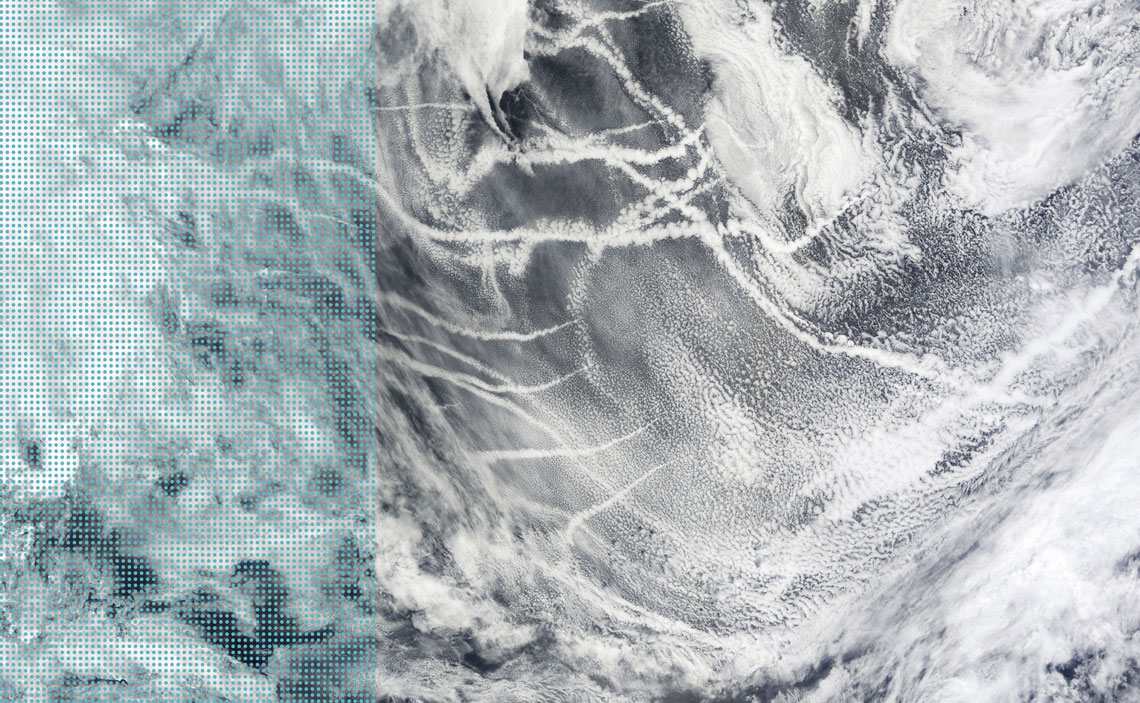
Trilhas de nuvens criadas no mar pela emissão de partículas de poeira por navios
A conclusão geral do estudo é que a subida e a posterior queda artificial da temperatura terrestre poderiam inviabilizar a sobrevivência de muitas espécies e produziriam danos a essas comunidades décadas após se ter atingido uma hipotética estabilização da temperatura do planeta. Meyer está fazendo um estudo semelhante agora, mas com o emprego da SAI no lugar da remoção direta de carbono.
Os trabalhos de Reboita e Meyer se dão no âmbito de uma iniciativa internacional, a Developing country governance research and evaluation for SRM, ou simplesmente Degrees. Seu objetivo é estimular estudos e formar recursos humanos especializados nas técnicas de modificação da radiação solar em países da África, América Latina e sul da Ásia. A Degrees nasceu na década passada dentro da Academia Mundial de Ciências (TWAS) e posteriormente foi assumida por uma organização não governamental britânica, a homônima Degrees. Ela financia quase 40 projetos. No Brasil, além das pesquisas da meteorologista da Unifei, duas linhas de estudo de professores da Universidade Federal de Santa Catarina (UFSC) passaram a ser apoiadas em julho passado.
Com parceiros no exterior, a equipe do engenheiro Mauricio Uriona, do Departamento de Engenharia de Produção e Sistemas da UFSC, pretende estudar como é a percepção do setor produtivo, do governo e da comunidade científica de três países (Brasil, Índia e África do Sul) sobre os potenciais riscos das técnicas de SRM. “Trabalhamos no passado com o tema da transição energética com uma abordagem de cunho socioeconômico e vimos agora uma boa oportunidade de fazer um estudo semelhante sobre geoengenharia solar”, afirma Uriona.
A socióloga ambiental Julia S. Guivant, do Instituto de Pesquisa em Riscos e Sustentabilidade (Iris), da UFSC, vai estudar como diversos atores-chave do país, como a comunidade científica, reguladores políticos, agricultores e representantes de organizações não governamentais, posicionam-se diante dos desafios de governança da geoengenharia solar. “Não temos uma posição sobre se a SRM deve ser usada ou como seu eventual emprego deve ser governado. Somos a favor das pesquisas e do debate democrático sobre o tema, diante dos problemas para atingir as metas de mitigação e adaptação às mudanças climáticas”, diz a socióloga. Colegas da USP e da Universidade Federal de São Paulo (Unifesp) vão colaborar na pesquisa coordenada por Guivant.
Há preocupação de que a geoengenharia solar possa afetar o regime das chuvas de monções na ÍndiaAmarjeet Kumar Singh / Anadolu Agency via Getty Images
As técnicas de SRM são tão polêmicas e sem qualquer tipo de regulação em acordos internacionais que mesmo grupos de pesquisas de instituições renomadas enfrentam dificuldades extremas de realizar pequenos experimentos de campo. Esses trabalhos não têm o potencial de influenciar o clima global, no máximo produzir ciência para se entender os processos envolvidos, com alguma alteração localmente. Ainda assim, os obstáculos práticos à sua realização são quase intransponíveis.
Em março deste ano, foi abandonado o Stratospheric Controlled Perturbation Experiment (SCoPEx), experimento concebido na década passada pelo grupo do físico-químico Frank Keutsch, da Universidade Harvard. A ideia da iniciativa era usar um balão de alta altitude para injetar 2 quilos de aerossóis (no caso, carbonato de cálcio) cerca de 20 km acima da superfície. “Essa quantidade de partículas é ínfima. Equivale à poluição expelida por um jato comercial durante apenas 1 minuto de voo”, disse Keutsch em entrevista dada em 2021 (ver Pesquisa FAPESP nº 303). O balão do SCoPEx era para ter ganho inicialmente os ares dos Estados Unidos em 2018. Mas isso não ocorreu. Em seguida, sua soltura foi prevista para a Suécia, também sem sucesso. Devido a protestos de ambientalistas e de grupos indígenas, o projeto nunca decolou de fato.
Alguns testes de campo com a técnica de clareamento de nuvens marinhas, uma abordagem menos ambiciosa do que a SAI, têm sido feitos, quase sempre a duras penas e diante de críticas de vários setores da sociedade. Em abril deste ano, um grupo da Universidade de Washington, dos Estados Unidos, usou um tipo de ventilador para espalhar partículas de sal marinho na pista de um navio porta-aviões aposentado que estava estacionado no litoral da cidade de Alameda, na Califórnia. A ideia da iniciativa era apenas ver se as partículas poderiam causar algum mal à saúde. Dois meses mais tarde, o município californiano proibiu esse tipo de experimento em seu território.
Na Austrália, pesquisadores da Southern Cross University e organizações locais tocam desde 2020 um projeto-piloto em que tentam aferir se a técnica de MCB pode ser útil para diminuir o branqueamento de corais na região de Townsville. O objetivo do experimento é averiguar se o método diminuiria localmente a temperatura do oceano no centro da Grande Barreira de Corais. O aquecimento das águas marinhas é a principal causa do branqueamento.
Alterar a capacidade de o Ártico refletir a luz do Sol poderia, em tese, minorar o aquecimento globalsodar99 via Getty Images
A desconfiança dos experimentos de campo deriva, em parte, do surgimento periódico de iniciativas pouco transparentes, geridas às vezes por empresas privadas obscuras. Em 2022, a Make Sunsets, uma startup norte-americana, soltou sem autorização no norte do México dois balões com aerossóis destinados à estratosfera. Pouco depois, o governo mexicano proibiu esse tipo de iniciativa em seu território. Agora, a empresa anunciou que está fazendo esse tipo de experimento nos Estados Unidos, mas os resultados dessas iniciativas são desconhecidos.
Para o físico norte-americano David Keith, da Universidade de Chicago, nos Estados Unidos, o interesse em estimular as pesquisas sobre geoengenharia solar tem aumentado, a despeito das incertezas científicas que cercam o emprego dessas técnicas. “Isso é visível nos principais relatórios internacionais, como os do Programa das Nações Unidas para o Meio Ambiente, do Programa Mundial de Pesquisa do Clima, também da ONU, e de grandes grupos ambientalistas, como Environmental Defense”, comenta Keith, em entrevista por e-mail a Pesquisa FAPESP. “Não há dúvida de que a oposição à investigação enfraqueceu, mas é difícil dizer por quê. Talvez seja por causa do aumento das temperaturas ou porque [acredito que] o mundo esteja fazendo agora esforços substanciais para reduzir as emissões de gases de efeito estufa.”
Keith foi membro do programa de geoengenharia solar de Harvard por 12 anos. Hoje ele é a favor da adoção de uma moratória internacional em experimentos de campo até que a ciência sobre o tema esteja mais bem estabelecida e haja alguma forma de governança internacional. Se esse cenário se materializar algum dia, ele diz que a humanidade deveria considerar a realização de um teste no qual se injetaria por uma década na estratosfera cerca de 10% da quantidade necessária de aerossóis para baixar em 1 °C a temperatura global. Dessa forma, seria possível conferir claramente os efeitos dessa abordagem sem correr muitos riscos.
A operação envolveria transportar cerca de 100 mil toneladas de enxofre por ano para a estratosfera – equivalente a 0,3% da quantidade de poluição por enxofre que chega anualmente à atmosfera – por uma frota de 15 jatinhos capazes de voar em altas altitudes. A operação custaria aproximadamente US$ 500 milhões ao ano. É mais uma ideia polêmica. Para alguns, é possível que a única parte boa da sugestão seja a adoção de uma moratória para esse tipo de experimento.
A reportagem acima foi publicada com o título “Controlando o sol” na edição impressa nº 343, de setembro de 2024.
Hundreds of looming projects will force communities to weight the climate claims and environmental risks of capturing, moving, and storing carbon dioxide.
James Temple
June 12, 2024
Pump jacks and pipelines clutter the Elk Hills oil field of California, a scrubby stretch of land in the southern Central Valley that rests above one of the nation’s richest deposits of fossil fuels.
Oil production has been steadily declining in the state for decades, as tech jobs have boomed and legislators have enacted rigorous environmental and climate rules. Companies, towns, and residents across Kern County, where the poverty rate hovers around 18%, have grown increasingly desperate for new economic opportunities.
Late last year, California Resources Corporation (CRC), one of the state’s largest oil and gas producers, secured draft permits from the US Environmental Protection Agency to develop a new type of well in the oil field, which it asserts would provide just that. If the company gets final approval from regulators, it intends to drill a series of boreholes down to a sprawling sedimentary formation roughly 6,000 feet below the surface, where it will inject tens of millions of metric tons of carbon dioxide to store it away forever.
They’re likely to become California’s first set of what are known as Class VI wells, designed specifically for sequestering the planet-warming greenhouse gas. But many, many similar carbon storage projects are on the way across the state, the US, and the world—a trend driven by growing government subsidies, looming national climate targets, and declining revenue and growth in traditional oil and gas activities.
Since the start of 2022, companies like CRC have submitted nearly 200 applications in the US alone to develop wells of this new type. That offers one of the clearest signs yet that capturing the carbon dioxide pollution from industrial and energy operations instead of releasing it into the atmosphere is about to become a much bigger business.
Proponents hope it’s the start of a sort of oil boom in reverse, kick-starting a process through which the world will eventually bury more greenhouse gas than it adds to the atmosphere. They argue that embracing carbon capture and storage (CCS) is essential to any plan to rapidly slash emissions. This is, in part, because retrofitting the world’s massive existing infrastructure with carbon dioxide–scrubbing equipment could be faster and easier than rebuilding every power plant and factory. CCS can be a particularly helpful way to cut emissions in certain heavy industries, like cement, fertilizer, and paper and pulp production, where we don’t have scalable, affordable ways of producing crucial goods without releasing carbon dioxide.
“In the right context, CCS saves time, it saves money, and it lowers risks,” says Julio Friedmann, chief scientist at Carbon Direct and previously the principal deputy assistant secretary for the Department of Energy’s Office of Fossil Energy.
But opponents insist these efforts will prolong the life of fossil-fuel plants, allow air and water pollution to continue, and create new health and environmental risks that could disproportionately harm disadvantaged communities surrounding the projects, including those near the Elk Hills oil field.
“It’s the oil majors that are proposing and funding a lot of these projects,” says Catherine Garoupa, executive director of the Central Valley Air Quality Coalition, which has tracked a surge of applications for carbon storage projects throughout the district. “They see it as a way of extending business as usual and allowing them to be carbon neutral on paper while still doing the same old dirty practices.”
A slow start
The US federal government began overseeing injection wells in the 1970s. A growing number of companies had begun injecting waste underground, sparking a torrent of water pollution lawsuits and the passage of several major laws designed to ensure clean drinking water. The EPA developed standards and rules for a variety of wells and waste types, including deep Class I wells for hazardous or even radioactive refuse and shallower Class V wells for non-hazardous fluids.
In 2010, amid federal efforts to create incentives for industries to capture more carbon dioxide, the agency added Class VI wells for CO2 sequestration. To qualify, a proposed well site must have the appropriate geology, with a deep reservoir of porous rock that can accommodate carbon dioxide molecules sitting below a layer of nonporous “cap rock” like shale. The reservoir also needs to sit well below any groundwater aquifers, so that it won’t contaminate drinking water supplies, and it must be far enough from fault lines to reduce the chances that earthquakes might crack open pathways for the greenhouse gas to escape.
But there’s been a flurry of proposals since—both to the EPA and to the three states that have secured permission to authorize such wells themselves, which include North Dakota, Wyoming, and Louisiana. The Clean Air Task Force, a Boston-based energy policy think tank keeping track of such projects, says there are now more than 200 pending applications.
What changed is the federal incentives. The Inflation Reduction Act of 2022 dramatically boosted the tax credits available for permanently storing carbon dioxide in geological formations, bumping it up from $50 a ton to $85 when it’s captured from industrial and power plants. The credit rose from $50 to $180 a ton when the greenhouse gas is sourced from direct-air-capture facilities, a different technology that sucks greenhouse gas out of the air. Tax credits allow companies to directly reduce their federal tax obligations, which can cover the added expense of CCS across a growing number of sectors.
CRC became an independent company in 2014, when Occidental Petroleum, one of the world’s largest oil and gas producers, spun it off along with many of its California assets. But the new company quickly ran into financial difficulties, filing for bankruptcy protection in 2020 amid plummeting energy demand during the early stages of the covid-19 pandemic. It emerged several months later, after restructuring its debt, converting loans into equity, and raising new lines of credit.
The following year, CRC created a carbon management subsidiary, Carbon TerraVault, seizing an emerging opportunity to develop a new business around putting carbon dioxide back underground, whether for itself or for customers. The company says it was also motivated by the chance to “help advance the energy transition and curb rising global temperatures at 1.5 °C.”
CRC didn’t respond to inquiries from MIT Technology Review.
In its EPA application the company, based in Long Beach, California, says that hundreds of thousands of tons of carbon dioxide would initially be captured each year from a gas treatment facility in the Elk Hills area as well as a planned plant designed to produce hydrogen from natural gas. The gas is purified and compressed before it’s pumped underground.
The company says the four wells for which it has secured draft permits could store nearly 1.5 million tons of carbon dioxide per year from those and other facilities, with a total capacity of 38 million tons over 26 years. CRC says the projects will create local jobs and help the state meet its pressing climate targets.
“We are committed to supporting the state in reaching carbon neutrality and developing a more sustainable future for all Californians,” Francisco Leon, chief executive of CRC, said of the draft EPA decision in a statement.
Those wells, however, are just the start of the company’s carbon management plans: Carbon TerraVault has applied to develop 27 additional wells for carbon storage across the state, including two more at Elk Hills, according to the EPA’s permit tracker. If those are all approved and developed, it would transform the subsidiary into a major player in the emerging business of carbon storage—and set it up for a windfall in federal tax credits.
Carbon sequestration projects can qualify for 12 years of US subsidies. If Carbon TerraVault injects half a million tons of carbon dioxide into each of the 31 wells it has applied for over that time period, the projects could secure tax credits worth more than $15.8 billion.
That figure doesn’t take inflation into account and assumes the company meets the most stringent requirements of the law and sources all the carbon dioxide from industrial facilities and power plants. The number could rise significantly if the company injects more than that amount into wells, or if a significant share of the carbon dioxide is sourced through direct air capture.
Chevron, BP, ExxonMobil, and Archer Daniels Midland, a major producer of ethanol, have also submitted Class VI well applications to the EPA and could be poised to secure significant IRA subsidies as well.
To be sure, it takes years to secure regulatory permits, and not every proposed project will move forward in the end. The companies involved will still need to raise financing, add carbon capture equipment to polluting facilities, and in many cases build out carbon dioxide pipelines that require separate approvals. But the increased IRA tax credits could drive as much as 250 million metric tons of additional annual storage or use of carbon dioxide in the US by 2035, according to the latest figures from the Princeton-led REPEAT Project.
“It’s a gold rush,” Garoupa says. “It’s being shoved down our throats as ‘Oh, it’s for climate goals.’” But if we’re “not doing it judiciously and really trying to achieve real emissions reductions first,” she adds, it’s merely a distraction from the other types of climate action needed to prevent dangerous levels of warming.
Carbon accounting
Even if CCS can help drive down emissions in the aggregate, the net climate benefits from any given project will depend on a variety of factors, including how well it’s developed and run—and what other changes it brings about throughout complex, interconnected energy systems over time.
Notably, adding carbon capture equipment to a plant doesn’t trap all the climate pollution. Project developers are generally aiming for around 90%. So if you build a new project with CCS, you’ve increased emissions, not cut them, relative to the status quo.
In addition, the carbon capture process requires a lot of power to run, which may significantly increase emissions of greenhouse gas and other pollutants elsewhere by, for example, drawing on additional generation from natural-gas plants on the grid. Plus, the added tax incentives may make it profitable for a company to continue operating a fossil-fuel plant that it would otherwise have shut down or to run the facilities more hours of the day to generate more carbon dioxide to bury.
All the uncaptured emissions associated with those changes can reduce, if not wipe out, any carbon benefits from incorporating CCS, says Danny Cullenward, a senior fellow with the Kleinman Center for Energy Policy at the University of Pennsylvania.
But none of that matters as far as the carbon storage subsidies are concerned. Businesses could even use the savings to expand their traditional oil and gas operations, he says.
“It’s not about the net climate impact—it’s about the gross tons you stick under ground,” Cullenward says of the tax credits.
A study last year raised a warning about how that could play out in the years to come, noting that the IRA may require the US to provide hundreds of billions to trillions of dollars in tax credits for power plants that add CCS. Under the scenarios explored, those projects could collectively deliver emissions reductions of as much as 24% or increases as high as 82%. The difference depends largely on how much the incentives alter energy production and the degree to which they extend the life of coal and natural-gas plants.
Coauthor Emily Grubert, an associate professor at Notre Dame and a former deputy assistant secretary at the Department of Energy, stressed that regulators must carefully consider these complex, cascading emissions impacts when weighing whether to approve such proposals.
“Not taking this seriously risks potentially trillions of dollars and billions of tonnes of [greenhouse-gas] emissions, not to mention the trust and goodwill of the American public, which is reasonably skeptical of these potentially critically important technologies,” she wrote in an op-ed in the industry outlet Utility Dive.
Global goals
Other nations and regions are also accelerating efforts to capture and store carbon as part of their broader efforts to lower emissions and combat climate change. The EU, which has dedicated tens of billions of euros to accelerating the development of CCS, is working to develop the capacity to store 50 million tons of carbon dioxide per year by 2030, according to the Global CCS Institute’s 2023 industry report.
Likewise, Japan hopes to sequester 240 million tons annually by 2050, while Saudi Arabia is aiming for 44 million tons by 2035. The industry trade group said there were 41 CCS projects in operation around the world at the time, with another 351 under development.
A handful of US facilities have been capturing carbon dioxide for decades for a variety of uses, including processing or producing natural gas, ammonia, and soda ash, which is used in soaps, cosmetics, baking soda, and other goods.
But Ben Grove, carbon storage manager at the Clean Air Task Force, says the increased subsidies in the IRA made CCS economical for many industry segments in the US, including: chemicals, petrochemicals, hydrogen, cement, oil, gas and ethanol refineries, and steel, at least on the low end of the estimated cost ranges.
In many cases, the available subsidies still won’t fully cover the added cost of CCS in power plants and certain other industrial facilities. But the broader hope is that these federal programs will help companies scale up and optimize these processes over time, driving down the cost of CCS and making it feasible for more sectors, Grove says.
Still other sources could include renewable fuels plants, which may mean biofuel facilities, steam generators, and a proposed direct-air-capture plant that would be developed by the carbon-removal startup Avnos, according to the EPA filing. Carbon TerraVault is part of a consortium, which includes Avnos, Climeworks, Southern California Gas Company, and others, that has proposed developing a direct-air-capture hub in Kern County, where the Elk Hills field is located. Last year, the Department of Energy awarded the so-called California DAC Hub nearly $12 million to conduct engineering design studies for direct-air-capture facilities.
CCS may be a helpful tool for heavy industries that are really hard to clean up, but that’s largely not what CRC has proposed, says Natalia Ospina, legal director at the Center on Race, Poverty & the Environment, an environmental-justice advocacy organization in Delano, California.
“The initial source will be the Elk Hills oil field itself and the plant that refines gas in the first place,” she says. “That is just going to allow them to extend the life of the oil and gas industry in Kern County, which goes against all the evidence in front of us in terms of how we should be addressing the climate crisis.”
Natalia Ospina, legal director at the Center on Race, Poverty & the Environment.
Critics of the project also fear that some of these facilities will continue producing other types of pollution, like volatile organic compounds and fine particulate matter, in a region that’s already heavily polluted. Some analyses show that adding a carbon capture process reduces those other pollutants in certain cases. But Ospina argues that oil and gas companies can’t be trusted to operate such projects in ways that reduce pollution to the levels necessary to protect neighboring communities.
‘You need it’
Still, a variety of studies, from the state level to the global, conclude that CCS may play an essential role in cutting greenhouse-gas emissions fast enough to moderate the global dangers of climate change.
California is banking heavily on capturing carbon from plants or removing it from the air through various means to meet its 2045 climate neutrality goal, aiming for 20 million metric tons by 2030 and 100 million by midcentury. The Air Resources Board, the state’s main climate regulator, declared that “there is no path to carbon neutrality without carbon removal and sequestration.”
Recentreports from the UN’s climate panel have also stressed that carbon capture could be a “critical mitigation option” for cutting emissions from cement and chemical production. The body’s modeling study scenarios that limit global warming to 1.5 °C over preindustrial levels rely on significant levels of CCS, including tens to hundreds of billions of tons of carbon dioxide captured this century from plants that use biomatter to produce heat and electricity—a process known as BECCS.
Meeting global climate targets without carbon capture would require shutting down about a quarter of the world’s fossil-fuel plants before they’ve reached the typical 50-year life span, the International Energy Agency notes. That’s an expensive proposition, and one that owners, investors, industry trade groups, and even nations will fiercely resist.
“Everyone keeps coming to the same conclusion, which is that you need it,” Friedmann says.
Lorelei Oviatt, director of the Kern County Planning and Natural Resources Department, declined to express an opinion about CRC’s Elk Hills project while local regulators are reviewing it. But she strongly supports the development of CCS projects in general, describing it as a way to help her region restore lost tax revenue and jobs as “the state puts the area’s oil companies out of business” through tighter regulations.
County officials have proposed the development of a more than 4,000-acre carbon management park, which could include hydrogen, steel, and biomass facilities with carbon-capture components. An economic analysis last year found that the campus and related activities could create more than 22,000 jobs, and generate more than $88 million in sales and property taxes for the economically challenged county and cities, under a high-end scenario.
Oviatt adds that embracing carbon capture may also allow the region to avoid the “stranded asset” problem, in which major employers are forced to shut down expensive power plants, refineries, and extraction wells that could otherwise continue operating for years to decades.
“We’re the largest producer of oil in California and seventh in the country; we have trillions and trillions of dollars in infrastructure,” she says. “The idea that all of that should just be abandoned does not seem like a thoughtful way to design an economy.”
In a 2022 letter to the EPA, the Center for Biological Diversity raised the possibility that the sequestered carbon dioxide could leak out of wells or pipelines, contributing to climate change and harming local residents.
These concerns are not without foundation.
In February 2020, Denbury Enterprises’ Delta pipeline, which stretches more than 100 miles between Mississippi and Louisiana, ruptured and released more than 30,000 barrels’ worth of compressed, liquid CO2 gas near the town of Satartia, Mississippi.
The leak forced hundreds of people to evacuate their homes and sent dozens to local hospitals, some struggling to breathe and others unconscious and foaming at the mouth, as the Huffington Postdetailed in an investigative piece. Some vehicles stopped running as well: the carbon dioxide in air displaced oxygen, which is essential to the combustion in combustion engines.
There have also been repeated carbon dioxide releases over the last two decades at an enhanced oil recovery project at the Salt Creek oil field in Wyoming. Starting in the late 1800s, a variety of operators have drilled, abandoned, sealed, and resealed thousands of wells at the site, with varying degrees of quality, reliability, and documentation, according to the Natural Resources Defense Council. A sustained leak in 2004 emitted 12,000 cubic feet of the gas per day, on average, while a 2016 release of carbon dioxide and methane forced a school near the field to relocate its classes for the remainder of the year.
Some fear that similar issues could arise at Elk Hills, which could become the nation’s first carbon sequestration project developed in a depleted oil field. Companies have drilled and operated thousands of wells over decades at the site, many of which have sat idle and unplugged for years, according to a 2020 investigation by the Los Angeles Times and the Center for Public Integrity.
Ospina argues that CRC and county officials are asking the residents of Kern County to act as test subjects for unproven and possibly dangerous CCS use cases, compounding the health risks facing a region that is already exposed to too many.
Whether the Elk Hills project moves forward or not, the looming carbon storage boom will soon force many other areas to wrestle with similar issues. What remains to be seen is whether companies and regulators can adequately address community fears and demonstrate that the climate benefits promised in modeling studies will be delivered in reality.
Update: This story was updated to remove a photo that was not of the Elk Hills oil field and had been improperly captioned.








 Uma (in)certa antropologia