Arquivo da tag: Captura de carbono

Controversial geoengineering projects to test Earth-cooling tech funded by UK agency (Nature)

Original article

NEWS

07 May 2025

The Advanced Research and Invention Agency is investing £57 million to study climate-manipulating technologies, but says it is taking a cautious approach.

By Jonathan O’Callaghan

andscape view as the setting sun casts shafts of light along a valley in Mid-Wales.
Solar geoengineering research involves investigating ways to ‘dim’ the Sun’s rays in an effort to cool Earth’s temperatures. Credit: Mike Kemp/In Pictures via Getty

The United Kingdom’s high-risk research agency will fund £56.8 million (US$75 million) worth of projects in the controversial area of geoengineering — manipulating Earth’s environment to avert negative effects of climate change. The 21 projects include small-scale outdoor experiments that will attempt to thicken Arctic sea ice and to brighten clouds so that they reflect more sunlight. The hope is that successful technologies could one day contribute to efforts to prevent the planet from passing dangerous climate tipping points.The UK’s $1-billion bet to create technologies that change the world

Supported by the Advanced Research and Invention Agency (ARIA) as part of its five-year Exploring Climate Cooling programme, the projects are among the most significant geoengineering experiments funded by a government.

The research has the potential to be beneficial, but must be undertaken cautiously, says Peter Frumhoff, a science-policy adviser at the Woodwell Climate Research Center in Falmouth, Massachusetts. “I am strongly supportive of responsible research on solar geoengineering and other climate interventions,” he says.

The funding package is the latest from ARIA, which was established in 2023 by the UK government and is modelled on the US Defense Advanced Research Projects Agency. With an £800-million budget, it funds high-risk, high-reward research into technologies that could have major consequences for humanity, including artificial intelligence and neurotechnology.

Divisive research

Another such area identified by ARIA was geoengineering, says Mark Symes, an electrochemist at the University of Glasgow, UK, who leads the Exploring Climate Cooling programme.
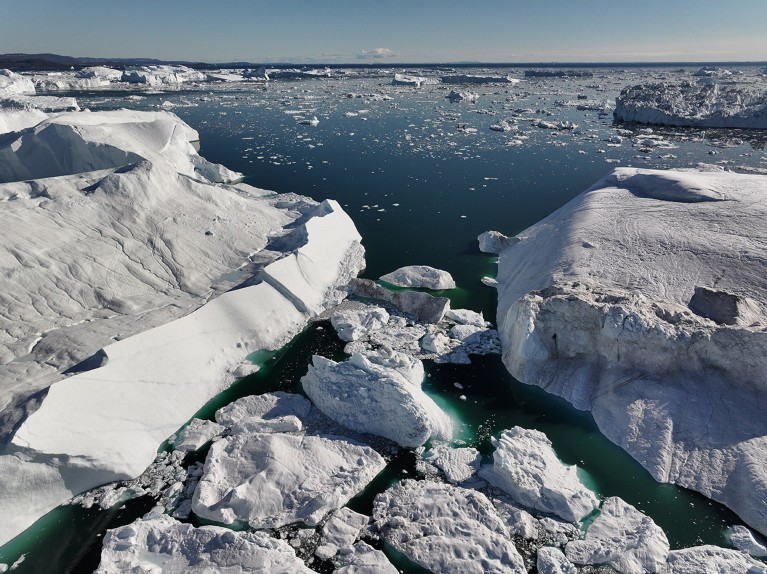
An aerial view of melting icebergs near Ilulissat, Greenland.
ARIA-funded experiments will investigate whether Earth’s diminishing ice sheets can be artificially thickened.Credit: Sean Gallup/Getty

Symes says the programme’s goal is not to find ways to replace more accepted approaches to tackling climate change, such as reducing carbon emissions. Instead, he says, geoengineering could be useful to prevent the world reaching certain tipping points that might occur before emissions reductions can have an effect. That could include “the collapse of circulations in the North Atlantic driven by the runaway melting of the Greenland ice sheet”, he says.

But even as climate change continues unabated, the concept is controversial: last year, researchers at Harvard University in Cambridge, Massachusetts, cancelled a project that would have introduced particles into the atmosphere in an effort to ‘dim’ the Sun after an outcry in Sweden, where the experiment was to take place.

Wary of such concerns, ARIA is taking a cautious approach. “We want to keep this research in the public domain,” says Piers Forster, a climate-change scientist at the University of Leeds, UK, who chairs a committee that will monitor ARIA’s climate-cooling projects. “We want it to be transparent for everyone.”

The 21 projects were selected through a competitive application process, which received about 120 proposals.

These fall into five research categories: studying ways to thicken ice sheets; assessing whether marine clouds could be brightened to offset damage to coral reefs; understanding how cirrus clouds warm the climate; looking at whether materials could be released into the stratosphere to reflect sunlight; and theoretical work on whether a sunshade deployed in space could cool portions of Earth’s surface.

Solar experiment

Five projects involve the most controversial area of geoengineering — outdoor experiments that interact with the environment. Frumhoff says that “building trust will be essential” in conducting such research. “I would be opposed to outdoor experiments being funded by any nation that isn’t aggressively and seriously reducing its own emissions,” he says.
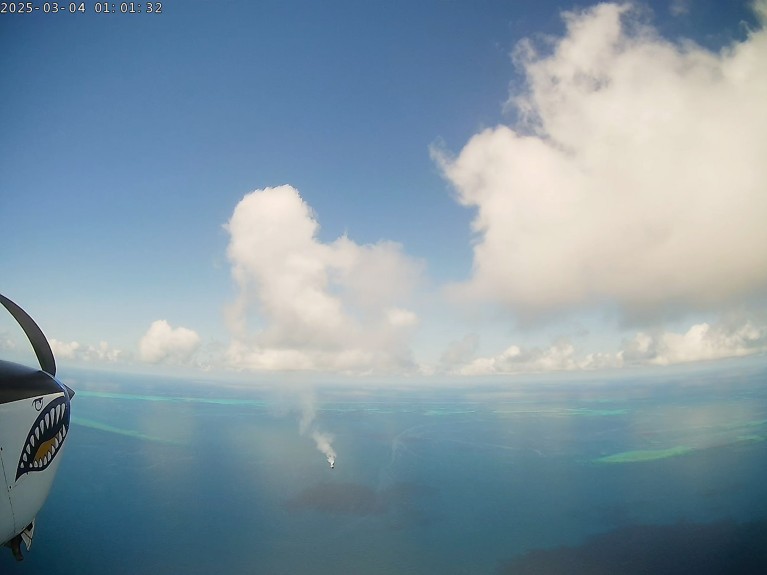
A view of a marine cloud brightening trial on the Great Barrier Reef taken from a camera located under the wing of a research aircraft.
A cloud-brightening trial will spray seawater particles over the Great Barrier Reef to make the clouds above it whiter and more reflective.Credit: Associate Professor Daniel Harrison/Southern Cross University

The stratospheric experiment — which is among the first outdoor solar-geoengineering experiment to receive government funding — will involve using balloons to carry materials such as limestone and dolomite dust into the stratosphere, to a height of about 15–50 kilometres, to see how they respond to the conditions. No particles will be released into the stratosphere, says ARIA.

Shaun Fitzgerald at the Centre for Climate Repair in Cambridge, UK, leads one of the ice projects. His team will conduct small-scale experiments in the Norwegian Arctic archipelago of Svalbard and in Canada to pump water from beneath ice sheets and spread it on top, covering up to one square kilometre in area, to see whether such a method could thicken Earth’s diminishing ice sheets.

“We’re going to see whether we’ve actually been able to grow more sea ice in the Arctic winter,” says Fitzgerald. Early results from work that Fitzgerald’s team did last year, before receiving ARIA funding, showed ice growth of “about half a metre”, he says.

Julienne Stroeve, a sea-ice researcher at University College London, isn’t sure how effective this method would be in preventing widespread sea-ice loss. “I do not think this is feasible at any real scale needed,” she says, noting that the impact on local ecosystems is also unclear. ARIA says that Fitzgerald’s experiment will be scaled up only if it is deemed to be “ecologically sound”.

“Any small-scale outdoor experiments will be designed with safety and reversibility at their core, and will undergo environmental-impact assessment with public engagement,” says Ilan Gur, ARIA’s chief executive.

Brighter clouds

One of the cloud-brightening projects will take place off the coast of Australia, led by the Southern Cross University in New South Wales. It will use a large fan to spray seawater particles over the Great Barrier Reef, to make the clouds above it whiter and more reflective. The hope is that this could prevent global warming from damaging coral reefs. “Those particles drift upwards to the cloud base, where the tiny salt particles cause water droplets in the cloud to split into smaller droplets,” says Symes. “The smaller the droplets, the more white [the cloud] is.” The experiment will take place over 10 square kilometres.

Posed portrait of Mark Symes.
Electrochemist Mark Symes is leading ARIA’s Exploring Climate Cooling programme, which is funding £57 million worth of geoengineering projects.Credit: Matilda Hill Jenkins

The sole space-sunshade project, led by the Planetary Sunshade Foundation in Golden, Colorado, will model whether a physical reflector or a cloud of dust could be placed in space, between Earth and the Sun, to limit the amount of sunlight reaching Earth. “If you did wish to cool parts of Earth, space shades could be the most effective way,” says Symes. Nothing will be launched into space, however — the work is purely theoretical.

Responsible regulation

ARIA’s leaders hope that, by 2030, the outcomes of the programme could inform international regulations for geoengineering. One of the 21 projects will investigate how these approaches could be responsibly governed.

“The issue we are most concerned with is how to make sure activities, should they be pursued in the future, don’t lead to conflict between countries,” says project leader Matthias Honegger, a researcher at the Centre for Future Generations (CFG) in Brussels. For example, one worry is that interventions could cause side effects in neighbouring nations.

“Right now, there is no natural home for this issue within the United Nations,” says Cynthia Scharf, a senior fellow at the CFG in New York who is part of Honegger’s project. “We need to look at the substance of governance and the process of decision-making.”

Nature 641, 567-568 (2025)

doi: https://doi.org/10.1038/d41586-025-01389-1

More:

Three ways to cool Earth by pulling carbon from the sky

Divisive Sun-dimming study at Harvard cancelled: what’s next?

The nation’s first commercial carbon sequestration plant is in Illinois. It leaks. (Grist)

grist.org

Juanpablo Ramirez-Franco

Oct 21, 2024


This coverage is made possible through a partnership between Grist and WBEZ, a public radio station serving the Chicago metropolitan region.

A row of executives from grain-processing behemoth Archer Daniels Midland watched as Verlyn Rosenberger, 88, took the podium at a Decatur City Council meeting last week. It was the first meeting since she and the rest of her central Illinois community learned of a second leak at ADM’s carbon dioxide sequestration well beneath Lake Decatur, their primary source of drinking water. 

“Just because CO2 sequestration can be done doesn’t mean it should be done,” the retired elementary school teacher told the city council. “Pipes eventually leak.” 

ADM’s facility in central Illinois was the first permitted commercial carbon sequestration operation in the country, and it’s on the forefront of a booming, multibillion-dollar carbon capture and storage, or CCS, industry that promises to permanently sequester planet-warming carbon dioxide deep underground. 

The emerging technology has become a cornerstone of government strategies to slash fossil fuel emissions and meet climate goals. Meanwhile, the Biden administration’s signature climate legislation, the Inflation Reduction Act, has supercharged industry subsidies and tax credits and set off a CCS gold rush. 

There are now only four carbon sequestration wells operating in the United States — two each in Illinois and Indiana — but many more are on the way. Three proposed pipelines and 22 wells are up for review by state and federal regulators in Illinois, where the geography makes the landscape especially well suited for CCS. Nationwide, the U.S. Environmental Protection Agency is reviewing 150 different applications. 

But if CCS operations leak, they can pose significant risks to water resources. That’s because pressurized CO2 stored underground can escape or propel brine trapped in the saline reservoirs typically used for permanent storage. The leaks can lead to heavy metal contamination and potentially lower pH levels, all of which can make drinking water undrinkable. This is what bothers critics of carbon capture, who worry that it’s solving one problem by creating another.

A woman holds a folder of papers seated next to an elderly man
Verlyn Rosenberger sits by her husband, Paul Rosenberger, at a city council meeting in Decatur, Illinois, earlier this month. They are both concerned about leaks from the commercial carbon sequestration plant in their town.
Juanpablo Ramirez-Franco / Grist

In September, the public learned of a leak at ADM’s Decatur site after it was reported by E&E News, which covers energy and environmental issues. Additional testing mandated by the EPA turned up a second leak later that month. The EPA has confirmed these leaks posed no threat to water sources. Still, they raise concern about whether more leaks are likely, whether the public has any right to know when leaks occur, and if CCS technology is really a viable climate solution.

Officials with Chicago-based ADM spoke at the Decatur City Council meeting immediately after Rosenberger. They tried to assuage her concerns. “We simply wouldn’t do this if we didn’t believe that it was safe,” said Greg Webb, ADM’s vice president of state-government relations. 

But ADM kept local and state officials in the dark for months about the first leak. They detected it back in March, five months after discovering corrosion in the tubing in the sequestration well. However, neither leak was disclosed as the company this spring petitioned the city of Decatur for an easement to expand its operations. The company also remained tight-lipped about the leak as it took part in major negotiations over the state’s first CCS regulations, the SAFE CCS Act, between April and May, according to several parties involved. 

As a result, when Illinois Governor J.B. Pritzker signed those CCS regulations into law at ADM’s Decatur facility in July, he was unaware of the leak that had occurred more than 5,000 feet below his seat, his office confirmed.

“I thought we were negotiating in good faith with ADM,” bill sponsor and state Senator Laura Fine, a Democrat, said in a statement. “When negotiating complex legislation, we expect all parties to be forthcoming and transparent in order to ensure we enact effective legislation.”

It’s unclear whether ADM was required by law to report the leaks any sooner than it did. According to the company’s permits, it only has to notify state and local officials if there are “major” or “serious” emergencies. The EPA wouldn’t comment on whether ADM was required to disclose, and neither the EPA nor ADM would confirm if the two leaks in Decatur qualified as “minor” emergencies. 

In a statement, an ADM spokesperson said “the developments occurred at a depth of approximately 5,000 feet. They posed no threat to the surface or groundwater, nor to public health. It is for those reasons that additional notifications were not made.”  

That’s little comfort to Jenny Cassel, a senior attorney with Earthjustice, a nonprofit environmental law firm. 

“It’s a little terrifying,” Cassel said. “Because if the operator, in fact, made the wrong decision, and there is in fact a major problem, then not only will local officials not know about it, EPA is not going to know about it, which is indeed what appears to have happened here.”

The Illinois Clean Jobs Coalition, which applauded the signing of the regulatory bill earlier this summer, called ADM’s decision to keep the March 2024 leak from the public “unacceptable and dangerous.” 

David Horn, a city councilman and professor of biology at Decatur’s Millikin University, said the city was blindsided. “This information was substantive, relevant information that could have influenced the terms of the easement that was ultimately signed in May of 2024,” he said, adding that the delay in disclosure calls into question the long-term safety of CCS and the ability of the EPA to protect water in the face of future CCS mishaps.

ADM waited until July 31 to notify the EPA of the leak, more than three months after it was discovered. The EPA alerted a small number of local and state officials and ordered the company to conduct further tests. They also issued a notice for alleged violations, citing the movement of CO2 and other fluids beyond “authorized zones” and the failure of the company to comply with its own monitoring, emergency response, and remediation plans.

But the infractions weren’t made public until September 13, when E&E News first reported the leak.  

Two weeks later, ADM notified the EPA that it had discovered a second suspected leak. Only then did they temporarily pause CO2 injections into the well. 

Councilman Horn says that isn’t good enough. 

“The ADM company was aware of the leak in March, and we were not aware of it until September,” Horn said. “So really the city of Decatur, its residents, the decision-makers have been on the back foot for months.”

Meanwhile, the city of Decatur has contracted with an environmental attorney. They have yet to pursue any legal action. 

Central Illinois is becoming a hotspot nationwide for the nascent CCS industry because of the Mt. Simon Sandstone, a deep saline formation of porous rock especially suitable for CO2 storage. It underlies the majority of Illinois and spills into parts of Indiana and Kentucky. It has an estimated storage capacity of up to 150 billion tons of CO2, making it the largest reservoir of its kind anywhere in the Midwest. 

However, there is concern that pumping CO2 into saline reservoirs near subsurface water risks pushing pressurized CO2 and brine toward those resources, which would pose additional contamination risks. “Brine is pretty nasty stuff,” said Dominic Diguilio, a retired geoscientist from the EPA Office of Research and Development. “It has a very high concentration of salts, heavy metals, sometimes volatile organic compounds and radionuclides like radium.” 

Horn says with so many more wells planned for Illinois, the Decatur leaks should be a wakeup call not just to the city, but to the region. He is particularly concerned about any future wells near east central Illinois’ primary drinking water source, the Mahomet aquifer, which lies above the Mt. Simon Sandstone formation. 

Close to a million people rely on the Mahomet aquifer for drinking water, according to the Prairie Research Institute. In 2015, the EPA designated the underground reservoir a “sole source,” meaning there are no other feasible drinking water alternatives should the groundwater be contaminated. When it comes to the Mahomet aquifer, “there is no room for error if there is a mistake,” said Horn. 

In light of the CCS boom headed their way, rural Illinois counties are stepping up to protect themselves from future carbon leaks, said Andrew Renh, the director of climate policy at Prairie Rivers Network, a Champaign-based environmental protection organization. 

DeWitt County, half an hour north of Decatur, passed a carbon sequestration ban last year. To Decatur’s west, Sangamon County previously expanded an existing moratorium on transporting or storing CO2 underground. And just last week, Champaign County, directly east of Decatur, advanced an ordinance to consider a 12-month moratorium on CCS. 

Rehn said his organization would like to see all 14 counties that overlap the Mahomet aquifer impose such bans.

In the meantime, his hope is that state legislators finish what the Illinois counties have started. Two companion bills introduced earlier this year would patch up the regulatory gaps left by the CCS bill Pritzker signed into law this summer. The bills would outright prohibit carbon sequestration immediately in and around the Mahomet Aquifer.  

“My community, as well as many surrounding areas, depend on the Mahomet Aquifer to provide clean drinking water, support our agriculture, and sustain industrial operations,” bill sponsor and state Senator Paul Faraci, a Democrat, said in a statement. “Protecting the health and livelihood of our residents and industries that rely on the aquifer must remain our top priority. 

As the Decatur City Council meeting adjourned last week, Rosenberger helped her husband, Paul Rosenberger, put on his coat. The row of ADM officials behind her walked past and then lingered in the council chamber. “I’m not afraid of them,” Rosenberger said as she wheeled her husband out.  

“We haven’t changed anything yet,” Rosenberger said. “But I think maybe we can.”