Gewin, Virginia
July 24, 2023
Most scientific-journal articles come from wealthy countries in the global north. Often, well-funded researchers initiate short-term projects in southern countries — which are typically poorer and often have a history of colonial occupation — frequently without seeking substantive local input or expertise. Dubbed parachute or helicopter research, this is a long-standing tradition steeped in colonialism, say those campaigning for change.
In 2018, global-north countries produced an average of more than 35,000 scientific and technical journal articles each, whereas global-south countries, excluding India and China, produced 4,000 articles each. Less than 2% of the articles from the global south made it into the top 1% of most-cited articles globally. A host of reasons — notably, lower rates of English proficiency, less investment and institutional biases against global-south researchers — are to blame. But another important factor is that there are fewer researchers in the global south: 713 per million people compared with 4,351 per million in the global north in 2017 (B. Albanna et al. Scientometrics 126, 8375–8431; 2021).
The geosciences offer an extreme example of how parachute research is alive and well, particularly in Africa. Around 3,500 high-impact geoscience articles are published each year, with roughly 3.9% of them relating to an area in Africa. Yet only 30% of those articles had an African researcher as an author.
Nature spoke to four global-south researchers who say that it’s time for their global-north colleagues to pack up the parachute and have frank discussions about how to conduct equitable collaborations.
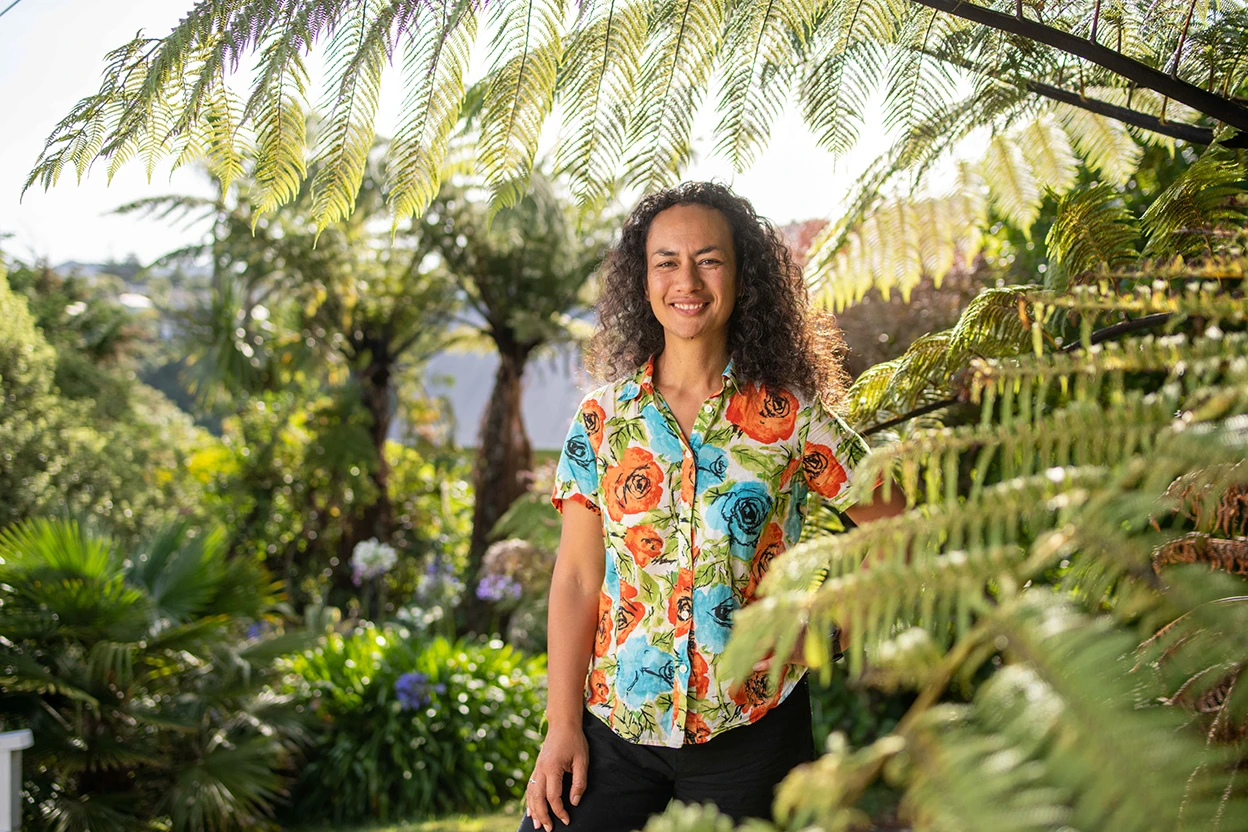
OCEAN MERCIER: Put Indigenous people, not their knowledge, first
Marine and freshwater researcher at Victoria University of Wellington.
Indigenous researchers such as myself often receive floods of invitations to be the Indigenous or Māori voice on grant applications, despite there being few of us. Earlier this year, several Indigenous scholars met a US National Science Foundation delegation that came to Aotearoa (the Māori name for New Zealand) seeking feedback on their plans to have a co-funded Indigenous grant. I liked that they were not rushing the conversation. We sent the message — and it’s not a new one — that Indigenous scholars don’t really want further amplification. We get enough requests from our non-Indigenous compatriots to collaborate.
Related: Decolonizing science toolkit
I typically get a couple of cold calls per week. It ranges from people wanting advice on some school curriculum, to invitations to speak at a conference or to get involved in a research project. The time it takes to respond adds up.
I can share insights into what gets a request rejected. First, Indigenous researchers can tell the difference between spam and an actual request. Sometimes it’s quite a fine line. If the request is not right up my alley, and there’s no kind of recognition of the time that I’m putting in, then that usually gets a spike. There are also trigger words or sentences that get an automatic spike. For example, if it looks extractive in any way, as in simply wanting Māori knowledge, it’s spiked. Also, if the request states that they are required to reach out to Māori people, or policy dictates they need to incorporate knowledge from our community, it’s spiked.
Although I prefer to be included from a project’s conception, I will join a collaboration that has already been planned as long as I am certain that my knowledge will not be discounted. There’s a bit of a tension there, however, because I don’t necessarily have the time to be involved in two years of lead-up conversations for every project.
In Aotearoa/New Zealand, the government’s Vision Mātauranga policy focuses on unlocking “the science and innovation potential of Māori knowledge, resources and people”. Unfortunately, this wording puts Māori people last. The approach is a bit grabby, as if to say, ‘what we really need is your knowledge’. It feels like another kind of colonial grip on information. I think we need to put people first, rather than digging into treasure boxes for our knowledge.
I have really liked working with people from the global north, such as those from Canada and the United States. But our happy place as Indigenous peoples is working with our communities and diving into the deep end to solve issues, rather than advance conventional science.
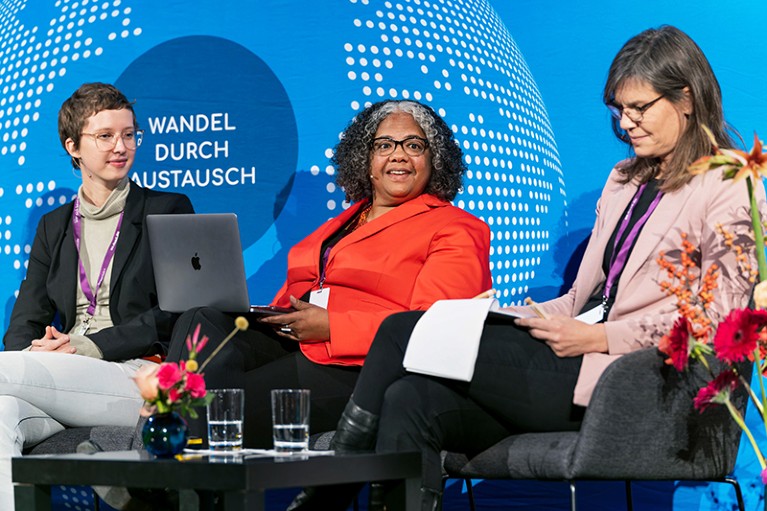
SAMIA CHASI: Shift lingering colonial power dynamics
Internationalization practioner-scholar at the International Education Association of South Africa in Johannesburg.
About ten years ago, I worked in the international office at the University of the Witwatersrand in Johannesburg, South Africa. Several times a week, we would receive a request from a researcher looking for a collaborator at the university. But the project was often already fully conceived and funded. I saw a number of academics turn down these offers, which surprised the global-north researchers. Some Witwatersrand researchers were not interested in collaborations that they knew did not expect any meaningful intellectual input from them. The offers were even described as academic tourism. I should highlight that this was at one of the top institutions in the country, where there was a certain confidence and assertiveness to say ‘we are leaders in our own right’. But it’s nuanced. Many institutions, or individuals, in the global south need the funding and prestige that comes with international partnerships and will take whatever comes along.
Since 2018, I have worked with several funding organizations in northern Europe to discuss how to move away from the typical funding logic or methodology, which is rooted in the belief that global-north institutions have all the knowledge and technologies, and are looking to transfer them to partners in the global south. We need instead to form reciprocal, mutually beneficial engagements.
Related: Institutions must acknowledge the racist roots in science
Sometimes, I make a deliberate effort to say south–north partnerships, because I want to highlight that I’m looking from a southern perspective. We need new language, new terms. But we haven’t found them yet. During my PhD on decolonization and internationalization, I came across the idea that one way to forgo binary thinking was to create a third space. By leaving terms such as north and south behind, we could create a space that allows participants to begin to shift power dynamics that have been entrenched by colonial or imperial legacies.
An equitable collaboration begins when everyone is at the table when the research question is first identified — not when some members are picked up later on. North–south collaborators will typically have different ideas on how to approach the core research question. A lot of qualitative research and methods have been shaped by global-north perspectives and traditions. But how can we formulate these questions together? Do we come up with something that actually serves everyone’s needs, and not just those of one person, institution or country? Which literature are we citing? Whose knowledge matters? And once a research project comes to an end, what knowledge have you generated and how are you going to share it? More-critical engagement is one of the biggest challenges.
These dynamics are not just between north and south; they also happen between privileged and historically disadvantaged universities. The African Research Universities Alliance was formed in 2015 to identify Africa’s own problems and work on solutions — from the driver’s seat. We are determining the research agenda. We now have two African Centres for the Study of the United States; one at Witswatersrand and the other at the University of Pretoria. It is a way to create our own knowledge and critical reflection about the United States — rather than just believing what the country is telling us.
ALINE GHILARDI: Demand repatriation of extracted fossils
Palaeontologist at the Federal University of Rio Grande do Norte in Natal, Brazil.
In palaeontology, there is a lingering aspect of colonialism: global-north academics who extract fossils from countries in the global south.
Since 2010, I have advocated for the repatriation of fossils. In 2019, once I got tenure, I became more vocal in the fight. On 4 June, after three years of effort, the State Museum of Natural History Karlsruhe in Germany returned a fossil that it had kept for 25 years. The fossil was that of the first known non-avian dinosaur with spear-like feathers on its shoulders (Ubirajara jubatus). It was found in the state of Ceará, Brazil. Scientists learnt about the fossil in 2020, but it had been sitting in a drawer in the German museum until then. That fossil could have changed the path of palaeontology in this country. I was angry and decided to do something.
Related: Decolonizing the biosciences: Turning lip service into action
I first wrote to the Brazilian national agencies responsible for fossil permits, but decided to go public, too. With more than 30,000 followers on Twitter, I have considerable reach and used it to explain to the public why this was problematic. Many Brazilian people agreed that the fossil was outstanding and couldn’t understand why it was in Germany. We started a social-media campaign around the hashtag #UbirajaraBelongsToBrazil, tweeting about the legal framework, explaining what parachute research is and why this fossil could benefit the Brazilian people.
I’m willing to use my voice to get more fossils back to Brazil. We expect more than 1,000 fossils to be returned later this year from France. And we have had 39 spider fossils returned from researchers in Texas who asked how to repatriate them. Who knows how many more fossils are out there that we don’t know about?
This is not a new phenomenon. Often, fossils get illegally trafficked, even though we have laws that say that fossils are cultural objects in Brazil and cannot be sold. We also have strict laws governing how foreign researchers should proceed when studying local fossils. Also, some local Indigenous people believe that these fossils are from another dimension, so when researchers parachute in and remove them, it’s not just the scientific but also the social and cultural context that gets harmed.
The Ceará region is extremely socio-economically vulnerable but also an exceptional place for palaeontology. Sometimes, global-north researchers buy fossils from the area with good intentions, thinking that they are helping the community. But not only is it illegal, it is robbing Brazilian researchers of collaborations and encouraging a trade that can destroy crucial original fossil features and details about the environment that the specimen lived in.
Related: Weaving Indigenous knowledge into the scientific method
Discussing the problematic legacy of colonialism is new in this field. The typical view of palaeontologists is one of white men from aristocratic backgrounds who travel to ‘savage’ lands in search of fossils. But palaeontology has changed a lot in the past 20 years, and now includes more voices of people who understand what it is like to be oppressed. I have worked with wonderfully respectful global-north colleagues, but also with some who actively dismissed my knowledge. It is very frustrating.
In 2022, I became vocal about how, over the past 30 years, in roughly 90% of research published about fossils from this area, the fossils were housed in foreign institutions. My colleagues and I published a paper that found that almost 60% of the 71 publications between 1990–2020 on Cretaceous macrofossils from the Araripe Basin in northeastern Brazil were led by foreign researchers, and more than half of foreign-led publications did not collaborate with local researchers (J. C. Cisneros et al. R. Soc. Open Sci. 9, 210898; 2022).
Some global-north colleagues say that I am being unnecessarily aggressive by pointing out this problem. But researchers from both the global north and the global south need to talk about these colonial legacies — from legal, moral and ethical perspectives — to solve them. I’m optimistic that the conversation is heading in a constructive direction. But I would like to see journals require researchers to add a statement in publications about how the fossils were acquired and the legal background on their acquisition. This would be an interesting step to stop many of the currently harmful actions by global-north researchers.
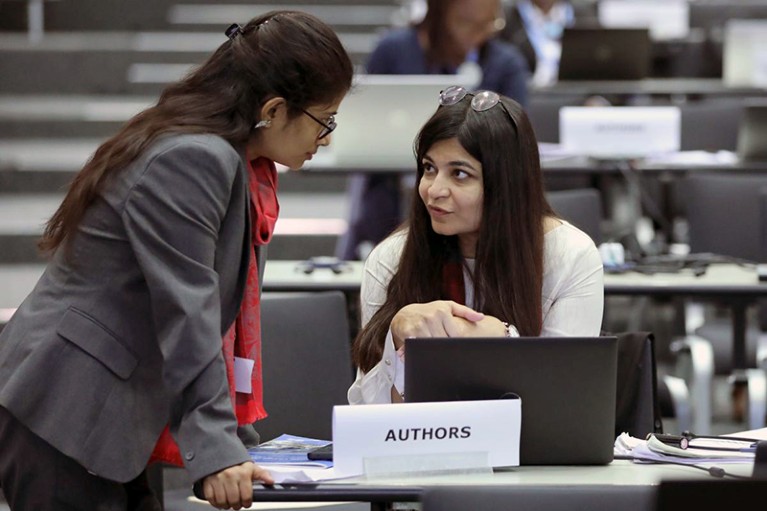
MINAL PATHAK: Abandon tokenism and gatekeeping
Climate-change scientist at Ahmedabad University in Ahmedabad, India.
In 2021, the news agency Reuters released its list of 1,000 top climate scientists. It included only one woman in the top 20 and only 7 in the top 100. Authors from lower-income countries were barely represented. It was ridiculous. But, along with several other editors at the journal Climate and Development, we published an editorial response around three weeks later, highlighting steps that scholars, editors and publishers could take to close the inequality gap between the global north and global south (E. L. F. Schipper et al. Clim. Dev. 13, 853–856; 2021).
Related: Decolonization should extend to collaborations, authorship and co-creation of knowledge
I have noticed both positive and negative changes around equity in publishing. One positive shift is that now, when I submit a paper, often the journal wants to know about my background, including geographical location and gender. They want to know who is submitting papers. It’s a small step forward. By contrast, tokenism has increased. I feel like I get invited only to add colour to an author list. Recently, I joined a policy brief being written mostly by men from the global north. I was one of two brown women. But before I added my input, I received an e-mail saying that the paper had been submitted. I wrote back saying I should have been consulted. I didn’t want to be an author if I hadn’t contributed. Inviting someone just because they are from the global south is worse than not inviting them at all. If there is no intellectual exchange or idea development, it’s not a real collaboration. It’s insulting.
I don’t think academia can solve structural inequalities in the world, but academics should avoid perpetuating them. Small, lesser-known institutions such as mine in India get left behind. Because just one top-tier journal subscription can cost roughly £2,000–3,000 per year (US$2,600–4,000), it can be difficult for an institution to access all of the literature, which would be something that could help to advance science globally.
A number of global reports, such those by the Intergovernmental Panel on Climate Change, mandate contributions from global-south authors. Without those types of requirement, however, our inclusion isn’t a given. Take climate models and scenarios: their computer codes are effectively owned by select institutions in the global north. As a result, the few that can access them will always have the dominant position. These extreme examples have to go. It’s just not fair.
These interviews edited for length and clarity.
 Uma (in)certa antropologia