Arquivo da tag: Previsão

Organisms Cope With Environmental Uncertainty by Guessing the Future (Science Daily)

ScienceDaily (Aug. 16, 2012) — In uncertain environments, organisms not only react to signals, but also use molecular processes to make guesses about the future, according to a study by Markus Arnoldini et al. from ETH Zurich and Eawag, the Swiss Federal Institute of Aquatic Science and Technology. The authors report in PLoS Computational Biology that if environmental signals are unreliable, organisms are expected to evolve the ability to take random decisions about adapting to cope with adverse situations.

Most organisms live in ever-changing environments, and are at times exposed to adverse conditions that are not preceded by any signal. Examples for such conditions include exposure to chemicals or UV light, sudden weather changes or infections by pathogens. Organisms can adapt to withstand the harmful effects of these stresses. Previous experimental work with microorganisms has reported variability in stress responses between genetically identical individuals. The results of the present study suggest that this variation emerges because individual organisms take random decisions, and such variation is beneficial because it helps organisms to reduce the metabolic costs of protection without compromising the overall benefits.

The theoretical results of this study can help to understand why genetically identical organisms often express different traits, an observation that is not explained by the conventional notion of nature and nurture. Future experiments will reveal whether the predictions made by the mathematical model are met in natural systems.

Nelson Rodrigues e o “Sobrenatural de Almeida” (Portal Entretextos)

11.07.2012

Miguel Carqueija

Um mestre do “mainstream” também entrou em terreno fantástico.

Nelson Rodrigues, de quem se comemora o centenário em 2012, não foi apenas um dramaturgo e contista, mas também produziu crônica esportiva. Por muito tempo manteve uma coluna no jornal carioca “O Globo” — e naquele tempo este diário, hoje decadente, possuia bons colunistas — que mudava de nome, mas o seu titulo principal era “À sombra das chuteiras imortais” (outros títulos usados foram “A batalha” e “Os bandeirinhas também são anjos”).
Nelson tinha um estilo sui-generis e, a rigor, reconhecível facilmente, mesmo se ele não assinasse. Fluminense doente, era descaradamente parcial nas suas crônicas. E eu, que torcia pelo Fluminense, as lia comprazer.
Detalhe interessante é que Nelson, na maior cara-de-pau, gostava de “profetizar” a vitória do Flu no então campeonato carioca. O futebol, naquele tempo, era muito regional. E, claro, a profecia dava certo quando o clube ganhava o campeonato.
Certo ano, durante o que parecia ser uma maré de azar, Nelson escreveu que o sobrenatural estava perseguindo o Fluminense. Dias depois o cronista publicou uma “carta” que teria recebido, e que diria mais ou menos assim: “No dia tal o senhor disse que o sobrenatural está perseguindo o Fluminense. Ora, o Sobrenatural sou eu, e garanto que isso não é verdade etc.” O “personagem” encerrava a missiva garantindo que no próximo jogo o tricolor ganharia, e assinava: “Sobrenatural de Almeida”.
Veio o domingo e o Fluminense perdeu. Revoltado, Nelson acusou o Sobrenatural de Almeida de haver mentido descaradamente. Aí começava a guerra da torcida do Fluminense, chefiada por Nelson Rodrigues, contra o sinistro Sobrenatural de Almeida.
Pode parecer estranho hoje em dia, para quem não conheceu o carisma do cronista e dramaturgo falecido em 1980, mas o caso é que o Sobrenatural de Almeida foi, durante algum tempo, verdadeira coqueluche na cidade. Os repórteres esportivos falavam nele. Certo jogo foi acompanhado de forte ventania, que chegou a desviar a bola que ia para o gol. “É o Sobrenatural de Almeida!”, gritou o locutor da rádio.
Veio um novo jogo e o Fluminense venceu. Nelson comemorou a vitória contra o inimigo, que teria se retirado melancolicamente do Maracanã. Depois, porém, por motivos que hoje me escapam, o campeonato foi suspenso por algum tempo. Nelson Rodrigues então “recebeu” um telefonema do Sobrenatural de Almeida, assumindo ser o responsável pela interrupção do campeonato.
Com o tempo o colunista foi dando maiores informações sobre a misteriosa figura, que nas caricaturas aparecia com uma roupa preta, tão “assustador” como o Zé do Caixão. Segundo Nelson, o Sobrenatural tivera os seus tempos de glória mas agora, coitado, morava em Irajá e viajava nos trens da Central. Por isso até chegava atrasado ao Maracanã, e só então começava a interferir.
Essa febre do Sobrenatural de Almeida durou semanas, meses, mas acabou saturando e o Nelson terminou parando de falar nele. Mas, de certa forma, foi uma contribuição do jornalista para a nossa literatura fantástica.

Calgary hail storm: Cloud seeding credited for sparing city from worse disaster (The Calgary Herald)

‘The storm was a monster,’ says weather modification company

BY THANDI FLETCHER, CALGARY HERALD AUGUST 14, 2012

Paul Newell captured dramatic images in the Bearspaw area of northwest Calgary just before the start of the hailstorm on Sunday, Aug. 12, 2012.

Paul Newell captured dramatic images in the Bearspaw area of northwest Calgary just before the start of the hailstorm on Sunday, Aug. 12, 2012. Photograph by: Reader photo , Paul Newell

A ferocious storm that hammered parts of Calgary with hail stones larger than golf balls late Sunday, causing millions of dollars worth of damage, could have been much worse if cloud-seeding planes hadn’t attempted to calm it down.

“The storm was a monster,” said Terry Krauss, project director of the Alberta Severe Weather Management Society, which contracts American-based company Weather Modification Inc. to seed severe weather clouds in Alberta’s skies. The society is funded by a group of insurance companies with a goal of reducing hail damage claims.

Before the storm hit, Krauss said, the company sent all four of its cloud-seeding aircraft into the thick and swirling black clouds. The planes flew for more than 12 hours, shooting silver iodide, a chemical agent that helps limit the size of hail stones, at the top and base of the clouds, until midnight.

But despite the heavy seeding, golf-ball-sized hail stones pelted parts of Calgary late Sunday night, causing widespread damage to cars and homes.

“This one was a beast. It took everything we threw at it and still was able to wreak some havoc,” said Krauss. “I believe if we hadn’t seeded, it would have even been worse.”

Northeast Calgary was worst hit by the storm, where the hail was between five and six centimetres, said Environment Canada meteorologist John Paul Craig. Other parts of the city saw toonie-sized hail from a second storm system, said Craig.

Craig said Sunday’s storm was worse than Calgary’s last major hailstorm, which saw four-centimetre hail stones, in July 2010.

“These hail stones were just a little bit bigger,” he said.

At Royal Oak Audi in the city’s northwest, broken glass from smashed windows littered the lot Monday morning. Of the 85 new and used cars on the lot, general manager Murray Dorren said not a single car was spared from the storm.

“It’s devastating — that’s probably the best word I can come up with,” he said. “It’s unbelievable that Mother Nature can do this much damage in a very short time. I think it probably took a matter of 10 minutes and there’s millions of dollars worth of damage.

Dorren estimated the damage at about $2 million. Across the lot, the dinged-up vehicles looked like dimpled golf balls from the repetitive pounding of the sizable stones. Some windows and sunroofs were shattered, while others were pierced by the heavy hail.

“They look like bullet holes right through the windscreen,” salesman Nick Berkland said of the damage.

Insurance companies and brokers were inundated with calls all day as customers tried to file claims on their wrecked cars and homes.

Ron Biggs, claims director for Intact Insurance, said it’s too early to tell how many claims the hail event will spurn, although he said they received about two to three times their normal call volume on Monday.

Biggs said the level of damage so far appears to be similar to the July 2010 hailstorm, when Intact received about 12,000 hail damage claims.

Chief operating officer Bruce Rabik of Rogers Insurance, which insures several car dealerships in Calgary, said the damage is extensive.

“It’s certainly a bad one,” he said. “We’ve had one dealership, which they estimate 600 damaged cars. A couple other dealerships with 200 damaged cars each.”

Rabik said claims adjusters are overwhelmed with the volume of claims. He urged customers to be patient as it may take a day or two as insurance workers make their way to each home.

Shredded leaves, twigs and broken branches blanketed pathways along the Bow and Elbow rivers as city crews worked to clear them, said Calgary parks pathway lead Duane Sutherland.

“This was the worst that I’ve seen,” said Sutherland.

Once daylight broke Monday, Royal Oak resident Satya Mudlair inspected the exterior of his home, which was riddled with damage. “Lots of holes in the siding, window damage to the two bedroom windows, and the roof a little bit,” he said.

The apple tree in his backyard has also lost about half its apples, he said. Fortunately, his car was parked inside the garage and was spared any dents.

Mudlair said his insurance company told him it would take two or three weeks before the damage would be repaired. “There’s a big pile of names ahead of me,” he said.

Mudlair’s wife, Nirmalla, had just fallen asleep when she was awoken by the sound of hail stones hitting the roof.

“It was very bad. It was like, thump, thump,” she described the pelting sound. “We got scared and I kept running from room to room.”

Cloud-seeding expert Krauss said Calgary has experienced more severe weather than usual this year, although Sunday’s storm was by far the worst.

“It has been a very stormy year,” he said.

© Copyright (c) The Calgary Herald

Post Normal Science: Deadlines (Climate Etc.)

Posted on August 3, 2012

by Steven Mosher

Science has changed. More precisely, in post normal conditions the behavior of people doing science has changed.

Ravetz describes a post normal situation by the following criteria:

  1. Facts are uncertain
  2. Values are in conflict
  3. Stakes are high
  4. Immediate action is required

The difference between Kuhnian normal science, or the behavior of those doing science under normal conditions, and post normal science is best illustrated by example. We can use the recent discovery of the Higgs Boson as an example. Facts were uncertain–they always are to a degree; no values were in conflict; the stakes were not high; and, immediate action was not required. What we see in that situation is those doing science acting as we expect them to, according to our vague ideal of science. Because facts are uncertain, they listen to various conflicting theories. They try to put those theories to a test. They face a shared uncertainity and in good faith accept the questions and doubts of others interested in the same field. Their participation in politics is limited to asking for money. Because values are not in conflict no theorist takes the time to investigate his opponent’s views on evolution or smoking or taxation. Because the field of personal values is never in play, personal attacks are minimized. Personal pride may be at stake, but values rarely are. The stakes for humanity in the discovery of the Higgs are low: at least no one argues that our future depends upon the outcome. No scientist straps himself to the collider and demands that it be shut down. And finally, immediate action is not required; under no theory is the settling of the uncertainty so important as to rush the result. In normal science, according to Kuhn,  we can view the behavior of those doing science as puzzle solving. The details of a paradigm are filled out slowly and deliberately.

The situation in climate science are close to the polar opposite of this. That does not mean and should not be construed as a criticism of climate science or its claims. The simple point is this: in a PNS situation, the behavior of those doing science changes. To be sure much of their behavior remains the same. They formulate theories; they collect data, and they test their theories against the data. They don’t stop doing what we notional  describe as science. But, as foreshadowed above in the description of how high energy particle physicists behave, one can see how that behavior changes in a PNS situation. There is uncertainty, but the good faith that exists in normal science, the faith that other people are asking questions because they actually want the answer is gone. Asking questions, raising doubts, asking to see proof becomes suspect in and of itself. And those doing science are faced with a question that science cannot answer: Does this person really want the answer or are they amerchant of doubt? Such a question never gets asked in normal science. Normal science doesn’t ask this question because science cannot answer it.

Because values are in conflict the behavior of those doing science changes. In normal science no one would care if Higgs was a Christian or an atheist. No one would care if he voted liberal or conservative; but because two different value systems are in conflict in climate science, the behavior of those doing science changes. They investigate each other. They question motives. They form tribes.  And because the stakes are high the behavior of those doing science changes as well. They protest; they take money from lobby groups on both sides and worse of all they perform horrendous raps on youTube. In short, they become human; while those around them canonize them or demonize them and their findings become iconized or branded as hoaxes.

This brings us to the last aspect of a PNS situation: immediate action is required. This perhaps is the most contentious aspect of PNS, in fact I would argue it is thedefining characteristic. In all PNS situations it is almost always the case the one side sees the need for action, given the truth of their theory, while the doubtersmust of necessity see no need for immediate action. They must see no need for immediate action because their values are at risk and because the stakes are high. Another way to put this is as follows. When you are in a PNS situation, all sides must deny it. Those demanding immediate action, deny it by claiming more certainty*than is present; those refusing immediate action, do so by increasing demands for certainty. This leads to a centralization and valorization of the topic of uncertainty, and epistemology becomes a topic of discussion for those doing science. That is decidedly not normal science.

The demand for immediate action, however, is broader than simply a demand that society changes. In a PNS situation the behavior of those doing science changes. One of the clearest signs that you are in PNS is the change in behavior around deadlines. Normal science has no deadline. In normal science, the puzzle is solved when it is solved. In normal science there may be a deadline to shut down the collider for maintenance. Nobody rushes the report to keep the collider running longer than it should. And if a good result is found, the schedules can be changed to accommodate the scienceBroadly speaking, science drives the schedule; the schedule doesn’t drive the science.

The climategate mails are instructive here. As one reads through the mails it’s clear that the behavior of those doing science is not what one would call disinterested patient puzzle solving. Human beings acting in a situation where values are in conflict and stakes are high will engage in behavior that they might not otherwise. Those changes are most evident in situations surrounding deadlines. The point here is not to rehash The Crutape Lettersbut rather to relook at one incident ( there are others, notably around congressional hearings ) where deadlines came into play. The deadline in question was the deadline for submitting papers for consideration. As covered in The Crutape Letters and in The Hockeystick Illusion, the actions taken by those doing science around the“Jesus Paper” is instructive. In fact, were I to rewrite the Crutape letters I would do it from the perspective of PNS, focusing on how the behavior of those doing science deviated from the ideals of openness, transparency and letting truth come on its own good time.

Climategate is about FOIA. There were two critical paths for FOIA: one sought data, the other sought the emails of scientists. Not quite normal. Not normal in that data is usually shared; not normal in that we normally respect the privacy of those doing science. But this is PNS, and all bets are off. Values and practices from other fields, such as business and government,  are imported into the culture of science: Data hoarding is defended using IP and confidentiality agreements. Demanding private mail is defended using values imported from performing business for the public. In short, one sign that a science is post normal, is the attempt to import values and procedures from related disciplines. Put another way, PNS poses the question of governance. Who runs science and how should they run it.

The “Jesus paper” in a nutshell can be explained as follows. McIntyre and McKittrick had a paper published in the beginning of 2005. That paper needed to be rebutted in order to make Briffa’s job of writing chapter 6 easier. However, there was a deadline in play. Papers had to be accepted by a date certain. At one point Steven Schneider suggested the creation of a new category, a novelty–  provisionally accepted — so that the “jesus paper” could make the deadline. McIntyre covers the issue here. One need not re-adjudicate whether or not the IPCC rules were broken. And further these rules have nothing whatsoever ever to do with the truth of the claims in that paper. This is not about the truth of the science. What is important is the importation of the concept of a deadline into the search for truth. What is important is that the behavior of those doing science changes. Truth suddenly cares about a date. Immediate action is required. In this case immediate action is taken to see to it that the paper makes it into the chapter. Normal science takes no notice of deadlines. In PNS, deadlines matter.

Last week we saw another example of deadlines and high stakes changing the behavior of those doing science. The backstory here explains .   It appears to me that the behavior of those involved changed from what I have known it to be. It changed because they perceived that immediate action was required. A deadline had to be met. Again, as with the Jesus paper, the facts surrounding the releasedo not go to the truth of the claims. In normal science, a rushed claimed might very well get the same treatment as an unrushed claim: It will be evaluated on its merits. In PNS, either the rush to meet an IPCC deadline– as in the case of the Jesus paper, or the rush to be ready for congress –as in the Watts case, is enoughfor some doubt the science.  What has been testified to in Congress by Christy, a co author, may very well be true. But in this high stakes arena, where facts are uncertain and values are in conflict, the behavior of those doing science can and does change. Not all their behavior changes. They still observe and test and report. But the manner in which they do that changes. Results are rushed and data is held in secret. Deadlines change everything. Normal science doesn’t operate this way; if it does, quality can suffer. And yet, the demand for more certainty than is needed, the bad faith game of delaying action by asking questions, precludes a naïve return to science without deadlines.

The solution that Ravetz suggests is extended peer review and a recognition of the importance of quality. In truth, the way out of a PNS situation is not that simple. The first step out of a PNS situation is the recognition that one is in the situation to begin with. Today, few people embroiled in this debate would admit that the situation has changed how they would normally behave. An admission that this isn’t working is a cultural crisis for science. No one has the standing to describe how one should conduct science in a PNS situation. No one has the standing to chart the path out of a PNS situation. The best we can do is describe what we see. Today, I observe that deadlines change the behavior of those doing science. We see that in climategate; we see that in the events of the past week. That’s doesn’t entail anything about the truth of science performed under pressure. But it should make us pause and consider if truth will be found any faster by rushing the results and hiding the data.

*I circulated a copy of this to Michael Tobis to get his reaction. MT took issue with this characterization. MT, I believe, originated the argument that our uncertainty is a reason for action. It is true that while the certainty about the science  has been a the dominant piece of the rhetoric, there has been a second thread of rhetoric that bases action in the uncertainty about sensitivity. I would call this certainty shifting. While the uncertainty about facts of sensitivity are accepted in this path of argument the certainty is shifted to certainty about values and certainty about impacts. In short, the argument becomes that while we are uncertain about sensitivity the certainty we have about large impacts and trans-generational obligations necessitates action.

Scientists struggle with limits – and risks – of advocacy (eenews.net)

Monday, July 9, 2012

Paul Voosen, E&E reporter

Jon Krosnick has seen the frustration etched into the faces of climate scientists.

For 15 years, Krosnick has charted the rising public belief in global warming. Yet, as the field’s implications became clearer, action has remained elusive. Science seemed to hit the limits of its influence. It is a result that has prompted some researchers to cross their world’s no man’s land — from advice to activism.

As Krosnick has watched climate scientists call for government action, he began pondering a recent small dip in the public’s belief. And he wondered: Could researchers’ move into the political world be undermining their scientific message?

Jon Krosnick
Stanford’s Jon Krosnick has been studying the public’s belief in climate change for 15 years, but only recently did he decide to probe their reaction to scientists’ advocacy. Photo courtesy of Jon Krosnick.

“What if a message involves two different topics, one trustworthy and one not trustworthy?” said Krosnick, a communication and psychology professor at Stanford University. “Can the general public detect crossing that line?”

His results, not yet published, would seem to say they can.

Using a national survey, Krosnick has found that, among low-income and low-education respondents, climate scientists suffered damage to their trustworthiness and credibility when they veered from describing science into calling viewers to ask the government to halt global warming. And not only did trust in the messenger fall — even the viewers’ belief in the reality of human-caused warming dropped steeply.

It is a warning that, even as the frustration of inaction mounts and the politicization of climate science deepens, researchers must be careful in getting off the political sidelines.

“The advice that comes out of this work is that all of us, when we claim to have expertise and offer opinions on matters [in the world], need to be guarded about how far we’re willing to go,” Krosnick said. Speculation, he added, “could compromise everything.”

Krosnick’s survey is just the latest social science revelation that has reordered how natural scientists understand their role in the world. Many of these lessons have stemmed from the public’s and politicians’ reactions to climate change, which has provided a case study of how science communication works and doesn’t work. Complexity, these researchers have found, does not stop at their discipline’s verge.

For decades, most members of the natural sciences held a simple belief that the public stood lost, holding out empty mental buckets for researchers to fill with knowledge, if they could only get through to them. But, it turns out, not only are those buckets already full with a mix of ideology and cultural belief, but it is incredibly fraught, and perhaps ineffective, for scientists to suggest where those contents should be tossed.

It’s been a difficult lesson for researchers.

“Many of us have been saddened that the world has done so little about it,” said Richard Somerville, a meteorologist at the Scripps Institution of Oceanography and former author of the United Nations’ authoritative report on climate change.

“A lot of physical climate scientists, myself included, have in the past not been knowledgeable about what the social sciences have been saying,” he added. “People who know a lot about the science of communication … [are] on board now. But we just don’t see that reflected in the policy process.”

While not as outspoken as NASA’s James Hansen, who has taken a high-profile moral stand alongside groups like 350.org and Greenpeace, Somerville has been a leader in bringing scientists together to call for greenhouse gas reductions. He helped organize the 2007 Bali declaration, a pointed letter from more than 200 scientists urging negotiators to limit global CO2 levels well below 450 parts per million.

Such declarations, in the end, have done little, Somerville said.

“If you look at the effect this has had on the policy process, it is very, very small,” he said.

This failed influence has spurred scientists like Somerville to partner closely with social scientists, seeking to understand why their message has failed. It is an effort that received a seal of approval this spring, when the National Academy of Sciences, the nation’s premier research body, hosted a two-day meeting on the science of science communication. Many of those sessions pivoted on public views of climate change.

It’s a discussion that’s been long overdue. When it comes to how the public learns about expert opinions, assumptions mostly rule in the sciences, said Dan Kahan, a professor of law and psychology at Yale Law School.

“Scientists are filled with conjectures that are plausible about how people make sense about information,” Kahan said, “only some fraction of which [are] correct.”

Shifting dynamic

Krosnick’s work began with a simple, hypothetical scene: NASA’s Hansen, whose scientific work on climate change is widely respected, walks into the Oval Office.

As he has since the 1980s, Hansen rattles off the inconvertible, ever-increasing evidence of human-caused climate change. It’s a stunning litany, authoritative in scope, and one the fictional president — be it a Bush or an Obama — must judge against Hansen’s scientific credentials, backed by publications and institutions of the highest order. If Hansen stops there, one might think, the case is made.

But he doesn’t stop. Hansen continues, arguing, as a citizen, for an immediate carbon tax.

“Whoa, there!” Krosnick’s president might think. “He’s crossed into my domain, and he’s out of touch with how policy works.” And if Hansen is willing to offer opinions where he lacks expertise, the president starts to wonder: “Can I trust any of his work?”

Richard Somerville
Part of Scripps’ legendary climate team — Charles David Keeling was an early mentor — Richard Somerville helped organize the 2007 Bali declaration by climate scientists, calling for government action on CO2 emissions. Photo by Sylvia Bal Somerville.

Researchers have studied the process of persuasion for 50 years, Krosnick said. Over that time, a few vital truths have emerged, including that trust in a source matters. But looking back over past work, Krosnick found no answer to this question. The treatment was simplistic. Messengers were either trustworthy or not. No one had considered the case of two messages, one trusted and one shaky, from the same person.

The advocacy of climate scientists provided an excellent path into this shifting dynamic.

Krosnick’s team hunted down video of climate scientists first discussing the science of climate change and then, in the same interview, calling for viewers to pressure the government to act on global warming. (Out of fears of bruised feelings, Krosnick won’t disclose the specific scientists cited.) They cut the video in two edits: one showing only the science, and one showing the science and then the call to arms.

Krosnick then showed a nationally representative sample of 793 Americans one of three videos: the science-only cut, the science and political cut, and a control video about baking meatloaf (The latter being closer to politics than Krosnick might admit). The viewers were then asked a series of questions both about their opinion of the scientist’s credibility and their overall beliefs on global warming.

For a cohort of 548 respondents who either had a household income under $50,000 or no more than a high school diploma, the results were stunning and statistically significant. Across the board, the move into politics undermined the science.

The viewers’ trust in the scientist dropped 16 percentage points, from 48 to 32 percent. Their belief in the scientist’s accuracy fell from 47 to 36 percent. Their overall trust in all scientists went from 60 to 52 percent. Their belief that government should “do a lot” to stop warming fell from 62 to 49 percent. And their belief that humans have caused climate change fell 14 percentage points, from 81 to 67 percent.

Krosnick is quick to note the study’s caveats. First, educated or wealthy viewers had no significant reaction to the political call and seemed able to parse the difference between science and a personal political view. The underlying reasons for the drop are far from clear, as well — it could simply be a function of climate change’s politicization. And far more testing needs to be done to see whether this applies in other contexts.

With further evidence, though, the implications could be widespread, Krosnick said.

“Is it the case that the principle might apply broadly?” he asked. “Absolutely.”

‘Fraught with misadventure’

Krosnick’s study is likely rigorous and useful — he is known for his careful methods — but it still carries with it a simple, possibly misleading frame, several scientists said.

Most of all, it remains hooked to a premise that words float straight from the scientist’s lips to the public’s ears. The idea that people learn from scientists at all or that they are simply misunderstanding scientific conclusions is not how reality works, Yale’s Kahan said.

“The thing that goes into the ear is fraught with misadventure,” he said.

Kahan has been at the forefront of charting how the empty-bucket theory of science communication — called the deficit model — fails. People interpret new information within the context of their own cultural beliefs, peers and politics. They use their reasoning to pick the evidence that supports their views, rather than the other way around. Indeed, recent work by Kahan found that higher-educated respondents were more likely to be polarized than their less-educated peers.

Krosnick’s study will surely spur new investigations, Kahan said, though he resisted definite remarks until he could see the final work. If the study’s conditions aren’t realistic, even a simple model can have “plenty of implications for all kinds of ways of which people become exposed to science,” he said.

The survey sits well with other research in the field and carries an implication about what role scientists should play in scientific debates, added Matthew Nisbet, a communication professor at American University.

“As soon as you start talking about a policy option, you’re presenting information that is potentially threatening to people’s values or identity,” he said. The public, he added, doesn’t “view scientists and scientific information in a vacuum.”

The deficit model has remained an enduring frame for scientists, many of whom are just becoming aware of social science work on the problem. Kahan compares it to the stages of grief. The first stage was that the truth just needs to be broadcast to change minds. The second, and one still influential in the scientific world, is that if the message is just simplified, the right images used, than the deficit will be filled.

“That too, I think, is a stage of misperception about how this works,” Kahan said.

Take the hand-wringing about science education that accompanied a recent poll finding that 46 percent of the United States believed in a creationist origin for humans. It’s a result that speaks to belief, not an understanding of evolution. Many surveyed who believed in evolution would still fail to explain natural selection, mutation or genetic variance, Kahan said, just as they don’t have to understand relativity to use their GPS.

Much of science doesn’t run up against the public’s belief systems and is accepted with little fuss. It’s not as if Louis Pasteur had to sell pasteurization by using slick images of children getting sick; for nearly all of society, it was simply a useful tool. People want to defer to the experts, as long as they don’t have to concede their beliefs on the way.

“People know what’s known without having a comprehension of why that’s the truth,” Kahan said.

There remains a danger in the emerging consensus that all scientific knowledge is filtered by the motivated reasoning of political and cultural ideology, Nisbet added. Not all people can be sorted by two, or even four, variables.

“In the new ideological deficit model, we tend to assume that failures in communication are caused by conservative media and conservative psychology,” he said. “The danger in this model is that we define the public in exclusively binary terms, as liberals versus conservatives, deniers versus believers.”

‘Crossing that line’

So why do climate scientists, more than most fields, cross the line into advocacy?

Most of all, it’s because their scientific work tells them the problem is so pressing, and time dependent, given the centuries-long life span of CO2 emissions, Somerville said.

“You get to the point where the emissions are large enough that you’ve run out of options,” he said. “You can no longer limit [it]. … We may be at that point already.”

There may also be less friction for scientists to suggest communal solutions to warming because, as Nisbet’s work has found, scientists tend to skew more liberal than the general population with more than 50 percent of one U.S. science society self-identifying as “liberal.” Given this outlook, they are more likely to accept efforts like cap and trade, a bill that, in implying a “cap” on activity, rubbed conservatives wrong.

Dan Kahan
A prolific law professor and psychologist at Yale, Dan Kahan has been charting how the public comes to, and understands, science. Photo courtesy of Dan Kahan.

“Not a lot of scientists would question if this is an effective policy,” Nisbet said.

It is not that scientists are unaware that they are moving into policy prescription, either. Most would intuitively know the line between their work and its political implications.

“I think many are aware when they’re crossing that line,” said Roger Pielke Jr., an environmental studies professor at the University of Colorado, Boulder, “but they’re not aware of the consequences [of] doing so.”

This willingness to cross into advocacy could also stem from the fact that it is the next logical skirmish. The battle for public opinion on the reality of human-driven climate change is already over, Pielke said, “and it’s been won … by the people calling for action.”

While there are slight fluctuations in public belief, in general a large majority of Americans side with what scientists say about the existence and causes of climate change. It’s not unanimous, he said, but it’s larger than the numbers who supported actions like the Montreal Protocol, the bank bailout or the Iraq War.

What has shifted has been its politicization: As more Republicans have begun to disbelieve global warming, Democrats have rallied to reinforce the science. And none of it is about the actual science, of course. It’s a fact Scripps’ Somerville now understands. It’s a code, speaking for fear of the policies that could happen if the science is accepted.

Doubters of warming don’t just hear the science. A policy is attached to it in their minds.

“Here’s a fact,” Pielke said. “And you have to change your entire lifestyle.”

For all the focus on how scientists talk to the public — whether Hansen has helped or hurt his cause — Yale’s Kahan ultimately thinks the discussion will mean very little. Ask most of the public who Hansen is, and they’ll mention something about the Muppets. It can be hard to accept, for scientists and journalists, but their efforts at communication are often of little consequence, he said.

“They’re not the primary source of information,” Kahan said.

‘A credible voice’

Like many of his peers, Somerville has suffered for his acts of advocacy.

“We all get hate email,” he said. “I’ve given congressional testimony and been denounced as an arrogant elitist hiding behind a discredited organization. Every time I’m on national news, I get a spike in ugly email. … I’ve received death threats.”

There are also pressures within the scientific community. As an elder statesman, Somerville does not have to worry about his career. But he tells young scientists to keep their heads down, working on technical papers. There is peer pressure to stay out of politics, a tension felt even by Somerville’s friend, the late Stephen Schneider, also at Stanford, who was long one of the country’s premier speakers on climate science.

He was publicly lauded, but many in the climate science community grumbled, Somerville said, that Schneider should “stop being a motormouth and start publishing technical papers.”

But there is a reason tradition has sustained the distinction between advising policymakers and picking solutions, one Krosnick’s work seems to ratify, said Michael Mann, a climatologist at Pennsylvania State University and a longtime target of climate contrarians.

“It is thoroughly appropriate, as a scientist, to discuss how our scientific understanding informs matters of policy, but … we should stop short of trying to prescribe policy,” Mann said. “This distinction is, in my view, absolutely critical.”

Somerville still supports the right of scientists to speak out as concerned citizens, as he has done, and as his friend, NASA’s Hansen, has done more stridently, protesting projects like the Keystone XL pipeline. As long as great care is taken to separate the facts from the political opinion, scientists should speak their minds.

“I don’t think being a scientist deprives you of the right to have a viewpoint,” he said.

Somerville often returns to a quote from the late Sherwood Rowland, a Nobel laureate from the University of California, Irvine, who discovered the threat chlorofluorocarbons posed to ozone: “What’s the use of having developed a science well enough to make predictions if, in the end, all we’re willing to do is stand around and wait for them to come true?”

Somerville asked Rowland several times whether the same held for global warming.

“Yes, absolutely,” he replied.

It’s an argument that Krosnick has heard from his own friends in climate science. But often this fine distinction gets lost in translation, as advocacy groups present the scientist’s personal message as the message of “science.” It’s luring to offer advice — Krosnick feels it himself when reporters call — but restraint may need to rule.

“In order to preserve a credible voice in public dialogue,” Krosnick said, “it might be that scientists such as myself need to restrain ourselves as speaking as public citizens.”

Broader efforts of communication, beyond scientists, could still mobilize the public, Nisbet said. Leave aside the third of the population who are in denial or alarmed about climate change, he said, and figure out how to make it relevant to the ambivalent middle.

“We have yet to really do that on climate change,” he said.

Somerville is continuing his efforts to improve communication from scientists. Another Bali declaration is unlikely, though. What he’d really like to do is get trusted messengers from different moral realms beyond science — leaders like the Dalai Lama — to speak repeatedly on climate change.

It’s all Somerville can do. It would be too painful to accept the other option, that climate change is like racism, war or poverty — problems the world has never abolished.

“[It] may well be that it is a problem that is too difficult for humanity to solve,” he said.

Mapping the Future of Climate Change in Africa (Science Daily)

ScienceDaily (Aug. 2, 2012) — Our planet’s changing climate is devastating communities in Africa through droughts, floods and myriad other disasters.

Children in the foothills of Drakensberg mountains in South Africa who still live in traditional rondavels on family homesteads. (Credit: Todd G. Smith, CCAPS Program)

Using detailed regional climate models and geographic information systems, researchers with the Climate Change and African Political Stability (CCAPS) program developed an online mapping tool that analyzes how climate and other forces interact to threaten the security of African communities.

The program was piloted by the Robert S. Strauss Center for International Security and Law at The University of Texas at Austin in 2009 after receiving a $7.6 million five-year grant from the Minerva Initiative with the Department of Defense, according to Francis J. Gavin, professor of international affairs and director of the Strauss Center.

“The first goal was to look at whether we could more effectively identify what were the causes and locations of vulnerability in Africa, not just climate, but other kinds of vulnerability,” Gavin said.

CCAPS comprises nine research teams focusing on various aspects of climate change, their relationship to different types of conflict, the government structures that exist to mitigate them, and the effectiveness of international aid in intervening. Although most CCAPS researchers are based at The University of Texas at Austin, the Strauss Center also works closely with Trinity College Dublin, the College of William and Mary, and the University of North Texas.

“In the beginning these all began as related, but not intimately connected, topics” Gavin said, “and one of the really impressive things about the project is how all these different streams have come together.”

Africa is particularly vulnerable to the effects of climate change due to its reliance on rain-fed agriculture and the inability of many of its governments to help communities in times of need.

The region is of increasing importance for U.S. national security, according to Gavin, because of the growth of its population, economic strength and resource importance, and also due to concerns about non-state actors, weakening governments and humanitarian disasters.

Although these issues are too complex to yield a direct causal link between climate change and security concerns, he said, understanding the levels of vulnerability that exist is crucial in comprehending the full effect of this changing paradigm.

The vulnerability mapping program within CCAPS is led by Joshua Busby, assistant professor at the Lyndon B. Johnson School of Public Affairs.

To determine the vulnerability of a given location based on changing climate conditions, Busby and his team looked at four different sources: 1) the degree of physical exposure to climate hazards, 2) population size, 3) household or community resilience, and 4) the quality of governance or presence of political violence.

The first source records the different types of climate hazards which could occur in the area, including droughts, floods, wildfires, storms and coastal inundation. However, their presence alone is not enough to qualify a region as vulnerable.

The second source — population size — determines the number of people who will be impacted by these climate hazards. More people create more demand for resources, potentially making the entire population more vulnerable.

The third source looks at how resilient a community is to adverse effects, analyzing the quality of their education and health, as well as whether they have easy access to food, water and health care.

“If exposure is really bad, it may exceed the capacity of local communities to protect themselves,” Busby said, “and then it comes down to whether or not the governments are going to be willing or able to help them.”

The final source accounts for the effectiveness of a given government, the amount of accountability present, how integrated it is with the international community, how politically stable it is, and whether there is any political violence present.

Busby and his team combined the four sources of vulnerability and gave them each equal weight, adding them together to form a composite map. Their scores were then divided into a ranking of five equal parts, or quintiles, going from the 20 percent of regions with the lowest vulnerability to the 20 percent with the highest.

The researchers gathered information for the tool from a variety of sources, including historic models of physical exposure from the United Nations Environment Programme (UNEP), population estimates from LandScan, as well as household surveys and governance assessments from the World Bank’s World Development and Worldwide Governance Indicators.

This data reflects past and present vulnerability, but to understand which places in Africa would be most vulnerable to future climate change, Busby and his team relied on the regional climate model simulations designed by Edward Vizy and Kerry Cook, both members of the CCAPS team from the Jackson School of Geosciences.

Vizy and Cook ran three, 20-year nested simulations of the African continent’s climate at the regional scales of 90 and 30 kilometers, using a derivation of the Weather Research and Forecasting Model of the National Center for Atmospheric Research. One was a control simulation representative of the years 1989-2008, and the others represented the climate as it may exist in 2041-2060 and 2081-2100.

“We’re adjusting the control simulation’s CO2 concentration, model boundary conditions, and sea surface temperatures to increased greenhouse gas forcing scenario conditions derived from atmosphere-ocean global climate models. We re-run the simulation to understand how the climate will operate under a different, warmer state at spatial resolutions needed for regional impact analyses,” Vizy said.

Each simulation took two months to complete on the Rangersupercomputer at the Texas Advanced Computing Center (TACC).

“We couldn’t run these simulations without the high-performance computing resources at TACC, it would just take too long. If it takes two months running with 200 processors, I can’t fathom doing it with one processor,” Vizy said.

Researchers input data from these vulnerability maps into an online mapping tool developed by the CCAPS program to integrate its various lines of climate, conflict and aid research. CCAPS’s current mapping tool is based on a prototype developed by the team to assess conflict patterns in Africa with the help of researchers at the TACC/ACES Visualization Laboratory (Vislab), according to Ashley Moran, program manager of CCAPS.

“The mapping tool is a key part of our effort to produce new research that could support policy making and the work of practitioners and governments in Africa,” Moran said. “We want to communicate this research in ways that are of maximum use to policymakers and researchers.”

The initial prototype of the mapping tool used the ArcGIS platform to project data onto maps. Working with its partner Development Gateway, CCAPS expanded the system to incorporate conflict, vulnerability, governance and aid research data.

After completing the first version of their model, Busby and his team carried out the process of ground truthing their maps by visiting local officials and experts in several African countries, such as Kenya and South Africa.

“The experience of talking with local experts was tremendously gratifying,” Busby said. “They gave us confidence that the things we’re doing in a computer lab setting in Austin do pick up on some of the ground-level expert opinions.”

Busby and his team complemented their maps with local perspectives on the kind of impact climate was already having, leading to new insights that could help perfect the model. For example, local experts felt the model did not address areas with chronic water scarcity, an issue the researchers then corrected upon returning home.

According to Busby, the vulnerability maps serve as focal points which can give way to further analysis about the issues they illustrate.

Some of the countries most vulnerable to climate change include Somalia, Sierra Leone, Guinea, Sudan and parts of the Democratic Republic of Congo. Knowing this allows local policymakers to develop security strategies for the future, including early warning systems against floods, investments in drought-resistant agriculture, and alternative livelihoods that might facilitate resource sharing and help prevent future conflicts. The next iteration of the online mapping tool to be released later this year will also incorporate the future projections of climate exposure from the models developed by Vizy and Cook.

The CCAPS team publishes their research in journals likeClimate Dynamics and The International Studies Review, carries out regular consultations with the U.S. government and governments in Africa, and participates in conferences sponsored by concerned organizations, such as the United Nations and the United States Africa Command.

“What this project has showed us is that many of the real challenges of the 21st century aren’t always in traditional state-to-state interactions, but are transnational in nature and require new ways of dealing with,” Gavin said.

Teen Survival Expectations Predict Later Risk-Taking Behavior (Science Daily)

ScienceDaily (Aug. 1, 2012) — Some young people’s expectations that they will not live long, healthy lives may actually foreshadow such outcomes.

New research published August 1 in the open access journal PLOS ONEreports that, for American teens, the expectation of death before the age of 35 predicted increased risk behaviors including substance abuse and suicide attempts later in life and a doubling to tripling of mortality rates in young adulthood.

The researchers, led by Quynh Nguyen of Northeastern University in Boston, found that one in seven participants in grades 7 to 12 reported perceiving a 50-50 chance or less of surviving to age 35. Upon follow-up interviews over a decade later, the researchers found that low expectations of longevity at young ages predicted increased suicide attempts and suicidal thoughts as well as heavy drinking, smoking, and use of illicit substances later in life relative to their peers who were almost certain they would live to age 35.

“The association between early survival expectations and detrimental outcomes suggests that monitoring survival expectations may be useful for identifying at-risk youth,” the authors state.

The study compared data collected from 19,000 adolescents in 1994-1995 to follow-up data collected from the same respondents 13-14 years later. The cohort was part of the National Longitudinal Study of Adolescent Health (Add Health), conducted by the Carolina Population Center and funded by the National Institutes of Health and 23 other federal agencies and foundations.

Journal Reference:

Quynh C. Nguyen, Andres Villaveces, Stephen W. Marshall, Jon M. Hussey, Carolyn T. Halpern, Charles Poole. Adolescent Expectations of Early Death Predict Adult Risk BehaviorsPLoS ONE, 2012; 7 (8): e41905 DOI: 10.1371/journal.pone.0041905

Brain Imaging Can Predict How Intelligent You Are: ‘Global Brain Connectivity’ Explains 10 Percent of Variance in Individual Intelligence (Science Daily)

ScienceDaily (Aug. 1, 2012) — When it comes to intelligence, what factors distinguish the brains of exceptionally smart humans from those of average humans?

New research suggests as much as 10 percent of individual variances in human intelligence can be predicted based on the strength of neural connections between the lateral prefrontal cortex and other regions of the brain. (Credit: WUSTL Image / Michael Cole)

As science has long suspected, overall brain size matters somewhat, accounting for about 6.7 percent of individual variation in intelligence. More recent research has pinpointed the brain’s lateral prefrontal cortex, a region just behind the temple, as a critical hub for high-level mental processing, with activity levels there predicting another 5 percent of variation in individual intelligence.

Now, new research from Washington University in St. Louis suggests that another 10 percent of individual differences in intelligence can be explained by the strength of neural pathways connecting the left lateral prefrontal cortex to the rest of the brain.

Published in the Journal of Neuroscience, the findings establish “global brain connectivity” as a new approach for understanding human intelligence.

“Our research shows that connectivity with a particular part of the prefrontal cortex can predict how intelligent someone is,” suggests lead author Michael W. Cole, PhD, a postdoctoral research fellow in cognitive neuroscience at Washington University.

The study is the first to provide compelling evidence that neural connections between the lateral prefrontal cortex and the rest of the brain make a unique and powerful contribution to the cognitive processing underlying human intelligence, says Cole, whose research focuses on discovering the cognitive and neural mechanisms that make human behavior uniquely flexible and intelligent.

“This study suggests that part of what it means to be intelligent is having a lateral prefrontal cortex that does its job well; and part of what that means is that it can effectively communicate with the rest of the brain,” says study co-author Todd Braver, PhD, professor of psychology in Arts & Sciences and of neuroscience and radiology in the School of Medicine. Braver is a co-director of the Cognitive Control and Psychopathology Lab at Washington University, in which the research was conducted.

One possible explanation of the findings, the research team suggests, is that the lateral prefrontal region is a “flexible hub” that uses its extensive brain-wide connectivity to monitor and influence other brain regions in a goal-directed manner.

“There is evidence that the lateral prefrontal cortex is the brain region that ‘remembers’ (maintains) the goals and instructions that help you keep doing what is needed when you’re working on a task,” Cole says. “So it makes sense that having this region communicating effectively with other regions (the ‘perceivers’ and ‘doers’ of the brain) would help you to accomplish tasks intelligently.”

While other regions of the brain make their own special contribution to cognitive processing, it is the lateral prefrontal cortex that helps coordinate these processes and maintain focus on the task at hand, in much the same way that the conductor of a symphony monitors and tweaks the real-time performance of an orchestra.

“We’re suggesting that the lateral prefrontal cortex functions like a feedback control system that is used often in engineering, that it helps implement cognitive control (which supports fluid intelligence), and that it doesn’t do this alone,” Cole says.

The findings are based on an analysis of functional magnetic resonance brain images captured as study participants rested passively and also when they were engaged in a series of mentally challenging tasks associated with fluid intelligence, such as indicating whether a currently displayed image was the same as one displayed three images ago.

Previous findings relating lateral prefrontal cortex activity to challenging task performance were supported. Connectivity was then assessed while participants rested, and their performance on additional tests of fluid intelligence and cognitive control collected outside the brain scanner was associated with the estimated connectivity.

Results indicate that levels of global brain connectivity with a part of the left lateral prefrontal cortex serve as a strong predictor of both fluid intelligence and cognitive control abilities.

Although much remains to be learned about how these neural connections contribute to fluid intelligence, new models of brain function suggested by this research could have important implications for the future understanding — and perhaps augmentation — of human intelligence.

The findings also may offer new avenues for understanding how breakdowns in global brain connectivity contribute to the profound cognitive control deficits seen in schizophrenia and other mental illnesses, Cole suggests.

Other co-authors include Tal Yarkoni, PhD, a postdoctoral fellow in the Department of Psychology and Neuroscience at the University of Colorado at Boulder; Grega Repovs, PhD, professor of psychology at the University of Ljubljana, Slovenia; and Alan Anticevic, an associate research scientist in psychiatry at Yale University School of Medicine.

Funding from the National Institute of Mental Health supported the study (National Institutes of Health grants MH66088, NR012081, MH66078, MH66078-06A1W1, and 1K99MH096801).

The Conversion of a Climate-Change Skeptic (N.Y.Times)

OP-ED CONTRIBUTOR

By RICHARD A. MULLER

Published: July 28, 2012

Berkeley, Calif.

CALL me a converted skeptic. Three years ago I identified problems in previous climate studies that, in my mind, threw doubt on the very existence of global warming. Last year, following an intensive research effort involving a dozen scientists, I concluded that global warming was real and that the prior estimates of the rate of warming were correct. I’m now going a step further: Humans are almost entirely the cause.

My total turnaround, in such a short time, is the result of careful and objective analysis by the Berkeley Earth Surface Temperature project, which I founded with my daughter Elizabeth. Our results show that the average temperature of the earth’s land has risen by two and a half degrees Fahrenheit over the past 250 years, including an increase of one and a half degrees over the most recent 50 years. Moreover, it appears likely that essentially all of this increase results from the human emission of greenhouse gases.

These findings are stronger than those of the Intergovernmental Panel on Climate Change, the United Nations group that defines the scientific and diplomatic consensus on global warming. In its 2007 report, the I.P.C.C. concluded only that most of the warming of the prior 50 years could be attributed to humans. It was possible, according to the I.P.C.C. consensus statement, that the warming before 1956 could be because of changes in solar activity, and that even a substantial part of the more recent warming could be natural.

Our Berkeley Earth approach used sophisticated statistical methods developed largely by our lead scientist, Robert Rohde, which allowed us to determine earth land temperature much further back in time. We carefully studied issues raised by skeptics: biases from urban heating (we duplicated our results using rural data alone), from data selection (prior groups selected fewer than 20 percent of the available temperature stations; we used virtually 100 percent), from poor station quality (we separately analyzed good stations and poor ones) and from human intervention and data adjustment (our work is completely automated and hands-off). In our papers we demonstrate that none of these potentially troublesome effects unduly biased our conclusions.

The historic temperature pattern we observed has abrupt dips that match the emissions of known explosive volcanic eruptions; the particulates from such events reflect sunlight, make for beautiful sunsets and cool the earth’s surface for a few years. There are small, rapid variations attributable to El Niño and other ocean currents such as the Gulf Stream; because of such oscillations, the “flattening” of the recent temperature rise that some people claim is not, in our view, statistically significant. What has caused the gradual but systematic rise of two and a half degrees? We tried fitting the shape to simple math functions (exponentials, polynomials), to solar activity and even to rising functions like world population. By far the best match was to the record of atmospheric carbon dioxide, measured from atmospheric samples and air trapped in polar ice.

Just as important, our record is long enough that we could search for the fingerprint of solar variability, based on the historical record of sunspots. That fingerprint is absent. Although the I.P.C.C. allowed for the possibility that variations in sunlight could have ended the “Little Ice Age,” a period of cooling from the 14th century to about 1850, our data argues strongly that the temperature rise of the past 250 years cannot be attributed to solar changes. This conclusion is, in retrospect, not too surprising; we’ve learned from satellite measurements that solar activity changes the brightness of the sun very little.

How definite is the attribution to humans? The carbon dioxide curve gives a better match than anything else we’ve tried. Its magnitude is consistent with the calculated greenhouse effect — extra warming from trapped heat radiation. These facts don’t prove causality and they shouldn’t end skepticism, but they raise the bar: to be considered seriously, an alternative explanation must match the data at least as well as carbon dioxide does. Adding methane, a second greenhouse gas, to our analysis doesn’t change the results. Moreover, our analysis does not depend on large, complex global climate models, the huge computer programs that are notorious for their hidden assumptions and adjustable parameters. Our result is based simply on the close agreement between the shape of the observed temperature rise and the known greenhouse gas increase.

It’s a scientist’s duty to be properly skeptical. I still find that much, if not most, of what is attributed to climate change is speculative, exaggerated or just plain wrong. I’ve analyzed some of the most alarmist claims, and my skepticism about them hasn’t changed.

Hurricane Katrina cannot be attributed to global warming. The number of hurricanes hitting the United States has been going down, not up; likewise for intense tornadoes. Polar bears aren’t dying from receding ice, and the Himalayan glaciers aren’t going to melt by 2035. And it’s possible that we are currently no warmer than we were a thousand years ago, during the “Medieval Warm Period” or “Medieval Optimum,” an interval of warm conditions known from historical records and indirect evidence like tree rings. And the recent warm spell in the United States happens to be more than offset by cooling elsewhere in the world, so its link to “global” warming is weaker than tenuous.

The careful analysis by our team is laid out in five scientific papers now online atBerkeleyEarth.org. That site also shows our chart of temperature from 1753 to the present, with its clear fingerprint of volcanoes and carbon dioxide, but containing no component that matches solar activity. Four of our papers have undergone extensive scrutiny by the scientific community, and the newest, a paper with the analysis of the human component, is now posted, along with the data and computer programs used. Such transparency is the heart of the scientific method; if you find our conclusions implausible, tell us of any errors of data or analysis.

What about the future? As carbon dioxide emissions increase, the temperature should continue to rise. I expect the rate of warming to proceed at a steady pace, about one and a half degrees over land in the next 50 years, less if the oceans are included. But if China continues its rapid economic growth (it has averaged 10 percent per year over the last 20 years) and its vast use of coal (it typically adds one new gigawatt per month), then that same warming could take place in less than 20 years.

Science is that narrow realm of knowledge that, in principle, is universally accepted. I embarked on this analysis to answer questions that, to my mind, had not been answered. I hope that the Berkeley Earth analysis will help settle the scientific debate regarding global warming and its human causes. Then comes the difficult part: agreeing across the political and diplomatic spectrum about what can and should be done.

Richard A. Muller, a professor of physics at the University of California, Berkeley, and a former MacArthur Foundation fellow, is the author, most recently, of “Energy for Future Presidents: The Science Behind the Headlines.”

*   *   *

Climate change study forces sceptical scientists to change minds (The Guardian)

Earth’s land shown to have warmed by 1.5C over past 250 years, with humans being almost entirely responsible

Leo Hickman
guardian.co.uk, Sunday 29 July 2012 14.03 BST

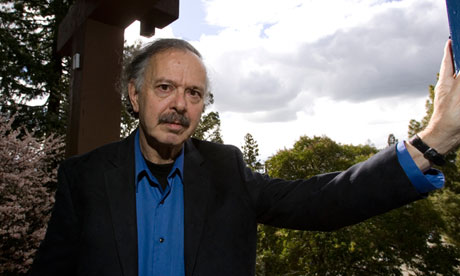
Prof Richard MullerProf Richard Muller considers himself a converted sceptic following the study’s surprise results. Photograph: Dan Tuffs for the Guardian

The Earth’s land has warmed by 1.5C over the past 250 years and “humans are almost entirely the cause”, according to a scientific study set up to address climate change sceptics’ concerns about whether human-induced global warming is occurring.

Prof Richard Muller, a physicist and climate change sceptic who founded the Berkeley Earth Surface Temperature (Best) project, said he was surprised by the findings. “We were not expecting this, but as scientists, it is our duty to let the evidence change our minds.” He added that he now considers himself a “converted sceptic” and his views had undergone a “total turnaround” in a short space of time.

“Our results show that the average temperature of the Earth’s land has risen by 2.5F over the past 250 years, including an increase of 1.5 degrees over the most recent 50 years. Moreover, it appears likely that essentially all of this increase results from the human emission of greenhouse gases,” Muller wrote in an opinion piece for the New York Times.

Can scientists in California end the war on climate change?
Study finds no grounds for climate sceptics’ concerns
Video: Berkeley Earth tracks climate change
Are climate sceptics more likely to be conspiracy theorists?

The team of scientists based at the University of California, Berkeley, gathered and merged a collection of 14.4m land temperature observations from 44,455 sites across the world dating back to 1753. Previous data sets created by Nasa, the US National Oceanic and Atmospheric Administration, and the Met Office and the University of East Anglia’s climate research unit only went back to the mid-1800s and used a fifth as many weather station records.

The funding for the project included $150,000 from the Charles G Koch Charitable Foundation, set up by the billionaire US coal magnate and key backer of the climate-sceptic Heartland Institute thinktank. The research also received $100,000 from the Fund for Innovative Climate and Energy Research, which was created by Bill Gates.

Unlike previous efforts, the temperature data from various sources was not homogenised by hand – a key criticism by climate sceptics. Instead, the statistical analysis was “completely automated to reduce human bias”. The Best team concluded that, despite their deeper analysis, their own findings closely matched the previous temperature reconstructions, “but with reduced uncertainty”.

Last October, the Best team published results that showed the average global land temperature has risen by about 1C since the mid-1950s. But the team did not look for possible fingerprints to explain this warming. The latest data analysis reached much further back in time but, crucially, also searched for the most likely cause of the rise by plotting the upward temperature curve against suspected “forcings”. It analysed the warming impact of solar activity – a popular theory among climate sceptics – but found that, over the past 250 years, the contribution of the sun has been “consistent with zero”. Volcanic eruptions were found to have caused short dips in the temperature rise in the period 1750–1850, but “only weak analogues” in the 20th century.

“Much to my surprise, by far the best match came to the record of atmospheric carbon dioxide, measured from atmospheric samples and air trapped in polar ice,” said Muller. “While this doesn’t prove that global warming is caused by human greenhouse gases, it is currently the best explanation we have found, and sets the bar for alternative explanations.”

Muller said his team’s findings went further and were stronger than the latest report published by the Intergovernmental Panel on ClimateChange.

In an unconventional move aimed at appeasing climate sceptics by allowing “full transparency”, the results have been publicly released before being peer reviewed by the Journal of Geophysical Research. All the data and analysis is now available to be freely scrutinised at the Bestwebsite. This follows the pattern of previous Best results, none of which have yet been published in peer-reviewed journals.

When the Best project was announced last year, the prominent climate sceptic blogger Anthony Watts was consulted on the methodology. He stated at the time: “I’m prepared to accept whatever result they produce, even if it proves my premise wrong.” However, tensions have since arisen between Watts and Muller.

Early indications suggest that climate sceptics are unlikely to fully accept Best’s latest results. Prof Judith Curry, a climatologist at the Georgia Institute of Technology who runs a blog popular with climate sceptics and who is a consulting member of the Best team, told the Guardian that the method used to attribute the warming to human emissions was “way over-simplistic and not at all convincing in my opinion”. She added: “I don’t think this question can be answered by the simple curve fitting used in this paper, and I don’t see that their paper adds anything to our understanding of the causes of the recent warming.”

Prof Michael Mann, the Penn State palaeoclimatologist who has faced hostility from climate sceptics for his famous “hockey stick” graph showing a rapid rise in temperatures during the 20th century, said he welcomed the Best results as they “demonstrated once again what scientists have known with some degree of certainty for nearly two decades”. He added: “I applaud Muller and his colleagues for acting as any good scientists would, following where their analyses led them, without regard for the possible political repercussions. They are certain to be attacked by the professional climate change denial crowd for their findings.”

Muller said his team’s analysis suggested there would be 1.5 degrees of warming over land in the next 50 years, but if China continues its rapid economic growth and its vast use of coal then that same warming could take place in less than 20 years.

“Science is that narrow realm of knowledge that, in principle, is universally accepted,” wrote Muller. “I embarked on this analysis to answer questions that, to my mind, had not been answered. I hope that the Berkeley Earth analysis will help settle the scientific debate regarding global warming and its human causes. Then comes the difficult part: agreeing across the political and diplomatic spectrum about what can and should be done.”

Climate Change and the Next U.S. Revolution (ZNet)

Thursday, July 26, 2012

The U.S. heat wave is slowly shaking the foundations of American politics. It may take years for the deep rumble to evolve into an above ground, institution-shattering earthquake, but U.S. society has changed for good.

The heat wave has helped convince tens of millions of Americans that climate change is real, overpowering the fake science and right-wing media – funded by corporate cash – to convince Americans otherwise.

Republicans and Democrats alike also erect roadblocks to understanding climate change. By the politicians’ complete lack of action towards addressing the issue, the “climate change is fake” movement was strengthened, since Americans presumed that any sane government would be actively trying to address an issue that had the potential to destroy civilization.

But working people have finally made up their mind. A recent poll showed that 70 percent of Americans now believe that climate change is real, up from 52 percent in 2010. And a growing number of people are recognizing that the warming of the planet is caused by human activity.

Business Week explains: “A record heat wave, drought and catastrophic wildfires are accomplishing what climate scientists could not: convincing a wide swath of Americans that global temperatures are rising.”

This means that working class families throughout the Midwest and southern states simply don’t believe what their media and politicians are telling them.

It also implies that these millions of Americans are being further politicized in a deeper sense.

Believing that climate change exists implies that you are somewhat aware about the massive consequences to humanity if the global economy doesn’t drastically change, and fast.

This awareness has revolutionary implications. As millions of Americans watch the environment destroyed – for their grandchildren or themselves – while politicians do absolutely nothing in response, or make tiny token gestures – a growing number of Americans will demand political alternatives, and fight to see them created. The American political system as it exists today cannot cope with this inevitable happening.

The New York Times explains why: “…the American political system is not ready to agree to a [climate] treaty that would force the United States, over time, to accept profound changes in its energy [coal, oil], transport [trucking and airline industry] and manufacturing [corporate] sectors.”

In short, the U.S. government will not force corporations to make less profit by behaving more eco-friendly. This is the essence of the problem.

In order for humanity to survive climate change, the economy must be radically transformed; massive investments must be made in renewable energy, public transportation, and recycling, while dirty energy sources must be quickly swept into the dustbin of history.

But the economy is currently owned by giant, privately run corporations, that will continue destroying the earth if it earns them huge profits, and they make massive “contributions” to political parties to ensure this remains so. It’s becoming increasingly obvious that government inaction on climate change is directly linked to the “special interests” of corporations that dominate these governments.

This fact of U.S. politics is present in every other capitalist country as well, which means that international agreements on reducing greenhouse gasses will remain impossible, as each country’s corporations vie for market domination, reducing pollution simply puts them at a competitive disadvantage.

This dynamic has already caused massive delays in the UN’s already inadequate efforts at addressing climate change. The Kyoto climate agreement was the by-product of years of cooperation and planning between many nations that included legally binding agreements to reduce greenhouse gasses. The Bush and Obama administrations helped destroy these efforts.

For example, Instead of building upon the foundation of the Kyoto Protocol, the Obama administration demanded a whole new structure, something that would take years to achieve. The Kyoto framework (itself insufficient) was abandoned because it included legally binding agreements, and was based on multilateral, agreed-upon reductions of greenhouse gasses.

In an article by the Guardian entitled “US Planning to Weaken Copenhagen Climate Deal,” the Obama administration’s UN position is exposed, as he dismisses the Kyoto Protocol by proposing that “…each country set its own rules and to decide unilaterally how to meet its target.”
Obama’s proposal came straight from the mouth of U.S. corporations, who wanted to ensure that there was zero accountability, zero oversight, zero climate progress, and therefore no dent to their profits. Instead of using its massive international leverage for climate justice, the U.S. has used it to promote divisiveness and inaction, to the potential detriment of billions of people globally.

The stakes are too high to hold out any hope that governments will act boldly. The Business Week article below explains the profound changes happening to the climate:

“The average temperature for the U.S. during June was 71.2 degrees Fahrenheit (21.7 Celsius), which is 2 degrees higher than the average for the 20th century, according to the National Oceanic and Atmospheric Administration. The June temperatures made the preceding 12 months the warmest since record-keeping began in 1895, the government agency said.”

Activists who are radicalized by this global problem face a crisis of what to do about it. It is difficult to put forth a positive climate change demand, since the problem is global.  Demanding that governments “act boldly” to address climate change hasn’t worked, and lesser demands seem inadequate.

The environmental rights movement continues to go through a variety of phases: individual and small group eco-“terrorism,” causing property damage to environmentally damaging companies; corporate campaigns that target especially bad polluters with high-profile direct action; and massive education programs that have been highly successful, but fall short when it comes to winning change.

Ultimately, climate activists must come face to face with political and corporate power. Corporate-owned governments are the ones with the power to adequately address the climate change issue, and they will not be swayed by good science, common sense, basic decency, or even a torched planet.

Those in power only respond to power, and the only power capable of displacing corporate power is when people unite and act collectively, as was done in Egypt, Tunisia, and is still developing throughout Europe.

Climate groups cannot view their issue as separate from other groups that are organizing against corporate power. The social movements that have emerged to battle austerity measures are natural allies, as are anti-war and labor activists. The climate solution will inevitably require revolutionary measures, which first requires that alliances and demands are put forward that unite Labor, working people in general, community, and student groups towards collective action.

One possible immediate demand is for environmental activists to unite with Labor groups over a federal jobs program, paid for by taxing the rich, that makes massive investments in jobs that are climate related, such as solar panel production, transportation, building recycling centers, home retro-fitting, etc.

Another demand could be to insist that the government convene the most knowledgeable scientists in the area of clean energy. These scientists should be given all the resources they need in order to collectively create alternative sources of clean energy that would allow for a realistic alternative to the current polluting and toxic sources of energy.

However, any type of immediate demand will meet giant corporate resistance from both political parties. Fighting for a uniting demand will thus strengthen the movement, and for this reason it is important to link climate solutions to the creation of jobs, which are the number one concern of most Americans. This unity will in turn lead allies toward a deeper understanding of the problem, and therefore deeper solutions will emerge that challenge the whole economic structure that is deaf to the needs of humans and the climate and sacrifices everything to the private profit of a few.

Shamus Cooke is a social service worker, trade unionist, and writer for Workers Action (www.workerscompass.org). He can be reached at shamuscooke@gmail.com

http://www.businessweek.com/news/2012-07-18/record-heat-wave-pushes-u-dot-s-dot-belief-in-climate-change-to-70-percent

http://www.nytimes.com/2009/12/13/weekinreview/13broder.html

http://www.guardian.co.uk/environment/2009/sep/15/europe-us-copenhagen

Computers Can Predict Effects of HIV Policies, Study Suggests (Science Daily)

ScienceDaily (July 27, 2012) — Policymakers in the fight against HIV/AIDS may have to wait years, even decades, to know whether strategic choices among possible interventions are effective. How can they make informed choices in an age of limited funding? A reliable, well-calibrated, predictive computer simulation would be a great help.

A visualization generated by an agent-based model of New York City’s HIV epidemic shows the risky interactions of unprotected sex or needle sharing among injection drug users (red), non-injection drug users (blue) and non-users (green). (Credit: Brandon Marshall/Brown University)

Policymakers struggling to stop the spread of HIV grapple with “what if” questions on the scale of millions of people and decades of time. They need a way to predict the impact of many potential interventions, alone or in combination. In two papers to be presented at the 2012 International AIDS Society Conference in Washington, D.C., Brandon Marshall, assistant professor of epidemiology at Brown University, will unveil a computer program calibrated to model accurately the spread of HIV in New York City over a decade and to make specific predictions about the future of the epidemic under various intervention scenarios.

“It reflects what’s seen in the real world,” said Marshall. “What we’re trying to do is identify the ideal combination of interventions to reduce HIV most dramatically in injection drug users.”

In an analysis that he’ll present on July 27, Marshall projects that with no change in New York City’s current programs, the infection rate among injection drug users will be 2.1 per 1,000 in 2040. Expanding HIV testing would drop the rate only 12 percent to 1.9 per 1,000; increasing drug treatment would reduce the rate 26 percent to 1.6 per 1,000; providing earlier delivery of antiretroviral therapy and better adherence would drop the rate 45 percent to 1.2 per 1,000; and expanding needle exchange programs would reduce the rate 34 percent to 1.4 per 1,000. Most importantly, doing all four of those things would cut the rate by more than 60 percent, to 0.8 per 1,000.

Virtual reality, real choices

The model is unique in that it creates a virtual reality of 150,000 “agents,” a programming term for simulated individuals, who in the case of the model, engage in drug use and sexual activity like real people.

Like characters in an all-too-serious video game, the agents behave in a world governed by biological rules, such as how often the virus can be transmitted through encounters such as unprotected gay sex or needle sharing.

With each run of the model, agents accumulate a detailed life history. For example, in one run, agent 89,425, who is male and has sex with men, could end up injecting drugs. He participates in needle exchanges, but according to the built-in probabilities, in year three he shares needles multiple times with another injection drug user with whom he is also having unprotected sex. In the last of those encounters, agent 89,425 becomes infected with HIV. In year four he starts participating in drug treatment and in year five he gets tested for HIV, starts antiretroviral treatment, and reduces the frequency with which he has unprotected sex. Because he always takes his HIV medications, he never transmits the virus further.

That level of individual detail allows for a detailed examination of transmission networks and how interventions affect them.

“With this model you can really look at the microconnections between people,” said Marshall, who began working on the model as a postdoctoral fellow at Columbia University and has continued to develop it since coming to Brown in January. “That’s something that we’re really excited about.”

To calibrate the model, Marshall and his colleagues found the best New York City data they could about how many people use drugs, what percentage of people were gay or lesbian, the probabilities of engaging in unprotected sex and needle sharing, viral transmission, access to treatment, treatment effectiveness, participation in drug treatment, progression from HIV infection to AIDS, and many more behavioral, social and medical factors. They also continuously calibrated it until the model could faithfully reproduce the infection rates among injection drug users that were known to occur in New York between 1992 and 2002.

And they don’t just run the simulation once. They run it thousands of times on a supercomputer at Brown to be sure the results they see are reliable.

Future applications

At Brown, Marshall is continuing to work on other aspects of the model, including an analysis of the cost effectiveness of each intervention and their combinations. Cost is, after all, another fact of life that policymakers and public health officials must weigh.

And then there’s the frustrating insight that the infection rate, even with four strengthened interventions underway, didn’t reduce the projected epidemic by much more than half.

“I actually expected something larger,” Marshall said. “That speaks to how hard we have to work to make sure that drug users can access and benefit from proven interventions to reduce the spread of HIV.”

Marshall’s collaborators on the model include Magdalena Paczkowski, Lars Seemann, Barbara Tempalski, Enrique Pouget, Sandro Galea, and Samuel Friedman.

The National Institutes of Health and the Lifespan/Tufts/Brown Center for AIDS Research provide financial support for the model’s continued development.

Climate Change Could Open Trade Opportunities for Some Vulnerable Nations (Science Daily)

ScienceDaily (July 26, 2012) — Tanzania is one developing country that could actually benefit from climate change by increasing exports of corn to the U.S. and other nations, according to a study by researchers at Stanford University, the World Bank and Purdue University.

The study, published in the Review of Development Economics, shows the African country better known for safaris and Mt. Kilimanjaro has the potential to substantially increase its maize exports and take advantage of higher commodity prices with a variety of trading partners due to predicted dry and hot weather that could affect those countries’ usual sources for the crop. In years that major consumer countries such as the U.S., China and India are forecast to experience severe dry conditions, Tanzania’s weather will likely be comparatively wet. Similarly, in the relatively few years this century that it is expected to have severe dry weather, Tanzania could import corn from trading partners experiencing better growing conditions.

“This study highlights how government policies can influence the impact that we experience from the climate system” said study co-author Noah Diffenbaugh, an assistant professor of environmental Earth system science at Stanford’s School of Earth Sciences and a center fellow at the Stanford Woods Institute for the Environment. “Tanzania is a particularly interesting case, as it has the potential to benefit from climate change if climate model predictions of decreasing drought in East Africa prove to be correct, and if trade policies are constructed to take advantage of those new opportunities.”

Tightening restrictions on crop exports during times of climate instability may seem like a logical way to ensure domestic food availability and price stability. In fact, the study warns, trade restrictions such as those that Tanzania has instituted several times in recent years prevent countries such as Tanzania from buffering its poor citizens in bad climate years and from taking advantage of economic opportunities in good climate years.

The study, the most long-range and detailed of its kind to date uses economic, climatic and agricultural data and computational models to forecast the occurrence of severe dry years during the next nine decades in Tanzania and its key trading partners. The authors began by analyzing historical years in which Tanzania experienced grains surpluses or deficits. They found that a closed trade policy enhanced poverty in both kinds of years, by limiting the ability to offset shortfalls with imports during deficit years and limiting the ability to profit from exports during surplus years.

The authors then attempted to predict how often Tanzania and key trading partners will experience severely dry years in response to continued global warming. Among the predictions: during an average of 96 percent of the years that the U.S. and China are predicted to have extremely dry conditions, Tanzania will not experience similarly dry weather. For India, that percentage increases to 97 percent. Similarly, the study’s climate models suggest that Tanzania is likely to have adequate growing season moisture in most of the years that its key African trading partners experience severe dry weather.

Among Tanzania’s trading partners, the U.S., China, Canada and Russia are most likely to consistently experience adequate growing conditions in years when Tanzania does not. When compared with all of its key trading partners, Tanzania’s dry years during the 21st century will often coincide with non-dry years in the other countries. Having a diverse mix of trading partners could help hedge against a coincidence of severe dry weather within and outside of Africa, the study’s results suggest.

The findings are relevant to grain-growing countries around the world. Those countries stand to profit from exports in years when trading partners are enduring severe dry and / or hot weather. Likewise, they can buffer themselves against bad growing weather at home by importing from grains-rich regions less affected by such weather during that particular year.

“This study highlights the importance of trade in either buffering or exacerbating the effects of climate stresses on the poor,” says Diffenbaugh. “We find that these effects are already taking place in the current climate, and that they could become even more important in the future as the co-occurrence of good and bad years between different regions changes in response to global warming.”

Uma leitura de antropólogos e sociólogos sobre o futuro da Amazônia (Jornal da Ciência)

JC e-mail 4549, de 27 de Julho de 2012.

O enfraquecimento de agências multilaterais de cooperação internacional começa a ameaçar as políticas para conservação da Amazônia Legal. A afirmativa é do presidente do Programa Nova Cartografia Social, Alfredo Wagner de Almeida, que ministrou conferência ontem (26) na 64ª Reunião Anual da Sociedade Brasileira para o Progresso da Ciência (SBPC), realizada na Universidade Federal do Maranhão (UFMA), em São Luís.

Sob o tema “Povos e comunidades tradicionais atingidos por projetos militares”, o antropólogo alertou sobre a ação de sete estados que buscam reduzir a Amazônia Legal, cujos projetos tramitam no Legislativo. Dentre os quais estão o Mato Grosso que prevê retirar a participação de sua área como Amazônia Legal, igualmente a Rondônia, que quer retirar esse título de suas terras da região. Outros estados como Maranhão e Tocantins querem tirar o título de todas suas áreas consideradas Amazônia Legal.

A região engloba uma superfície de aproximadamente 5.217.423 km², o equivalente a cerca de 61% do território brasileiro. Foi instituída com objetivo de definir a delimitação geográfica da região política captadora de incentivos fiscais para promoção do desenvolvimento regional.

“Essa é uma primeira tentativa de reduzir a Amazônia Legal, pois esses estados agora não gozam mais dos benefícios concedidos pelas agências internacionais multilaterais”, analisou Almeida, também conselheiro da SBPC e professor da Universidade do Estado do Amazonas (UEA).

Segundo o pesquisador, os organismos internacionais, até então, eram fontes de recursos para programas de proteção à Amazônia. Tais como, o Projeto Integrado de Proteção às Populações e Terras Indígenas da Amazônia Legal (PPTAL), destinado à demarcação de terras indígenas, fomentado principalmente pelo governo da Alemanha. E o PPG7 (Programa Piloto para Proteção das Florestas Tropicais do Brasil). Foram essas políticas que fortaleceram a criação do Ministério do Meio Ambiente. “Sem o apoio das agências multilaterais as políticas para a Amazônia encolheram”, disse, sem citar valores.

Conforme o antropólogo, a decisão dos estados que querem sair da Amazônia Legal significa para eles “liderar mais terras segundo as quais consideram ser produtivas”, em detrimento da conservação das florestas.

As declarações do antropólogo são baseadas no dossiê “Amazônia: sociedade, fronteiras e políticas”, produzido por Edna Maria Ramos de Castro, socióloga do Núcleo de Altos Estudos Amazônicos, da Universidade Federal do Pará (UFPA), e diretora da SBPC, que intermediou a conferência. A íntegra do documento foi publicada recentemente no Caderno CRH da Bahia.

Terras indígenas – Na avaliação da autora do dossiê, os dispositivos jurídicos desses estados ameaçam as terras indígenas – protagonistas na conservação da biodiversidade que precisam da natureza para sobreviver. “São dispositivos legais, são claros na Constituição, mas essa prática pode levar a uma situação de impasse [da sociedade]”, analisou. Edna citou o caso da polêmica obra da hidrelétrica de Belo Monte que se tornou um ícone de um processo de resistência da sociedade brasileira.

Mudança de paradigma – O antropólogo fez uma leitura sobre o atual modelo político brasileiro administrativo. Ele vê uma mudança de uma política “de proteção” para uma “ideia de protecionismo”. “A distinção entre proteção e protecionismo revela em primeiro lugar o enfraquecimento das agências multilaterais internacionais”, disse. Segundo ele, o protecionismo “erige” fora do âmbito da proteção.

Do ponto de vista de Alfredo Wagner, os sinais de mudança refletem principalmente os desacordos na reunião da Organização Mundial do Comércio (OMC) em dezembro de 2011 em Genebra. Na ocasião, houve sinais de ruptura de acordos internacionais – até então chamados de mercado comum. Um exemplo “é o engavetamento” da chamada Rodada de Doha, em razão de divergência entre as partes sobre subsídios agrícolas concedidos por países desenvolvidos.

Expansão da área militar e infraestrutura – O antropólogo lembra que no auge dos organismos multilaterais a área de segurança, isto é, a dos militares, não era fomentada porque não fazia parte de uma política de mercado único. Ele observa, entretanto, uma mudança a partir de 2009 quando há um deslocamento do modelo e problemas com os militares começam a aparecer, em decorrência da reedição de projetos de fronteiras militarizadas. “A partir daí inicia um capítulo de conflitos”.

Afastamento de fundos internacionais e órgãos reguladores – Segundo ele, o que mais sobressai na “ideia do protecionismo” é a identificação de recursos naturais estratégicos, como commodities agrícolas e minérios, que – sob o argumento de desenvolvimento sustentável – podem ser utilizados para o incremento de grandes obras de infraestrutura.

“Tudo passa a ser interpretado como interesses nacionais. A ideia de bloco vai perdendo força, o que pode explicar as próprias tensões no Mercosul, quando a Venezuela é levada ao bloco em momentos de crise. Esses interesses nacionais passam a se articular de maneira disciplinada sem passar pelas entidades multilaterais”, considera o antropólogo.

Segundo ele, atual ação do Estado brasileiro não passa pelas entidades multilaterais. Reflexo é o afastamento do Fundo Monetário Internacional (FMI) e de duas normas estrangeiras. Uma delas é a Lei de Direitos Humanos Internacional da OEA (Organização dos Estados Americanos). Ele lembra que o Brasil deixou de investir “nessa corte” a partir do momento em que a hidrelétrica de Belo Monte foi condenada pelo órgão. “O Brasil passa a ter uma posição unilateral, semelhante a dos norte-americanos na Guerra do Golfo”, observa o antropólogo. “A ideia do protecionismo vem de forma bastante forte”.

Alfredo Wagner também observa sinais de afastamento da Convenção 169 em que obriga a consulta prévia de comunidades prejudicadas por grandes obras de infraestrutura, por exemplo. Segundo ele, o Brasil é condenado a seis violações em projetos militares. Uma é pela construção do Centro de Lançamentos de Alcântara (CLA) em comunidades quilombolas no Maranhão, sem licenciamento ambiental e sem consulta às comunidades “afetadas”.

Ele alerta também sobre quatro medidas preocupantes em andamento segundo as quais preveem a construção emergencial de hidrelétricas. Um exemplo é a Medida Provisória 558 de 18 de janeiro de 2012 em que prevê redução de unidades protegidas e de conservação de florestas sob o argumento de desenvolvimento. Segundo ele, o Ibama aprovou em apenas cinco dias uma minuta de termo de referência da Eletronorte para construção de uma hidrelétrica em São Luiz de Tapajós. Na prática, foi aprovado o plano de trabalho encaminhado para diagnosticar as obras. “Com o ritmo emergencial para essas obras parece que os direitos são colocados em suspenso”.

Recursos de inconstitucionalidade – Tal MP foi questionada pela Procuradoria Geral da República por uma ADIN (Ação Direta de Inconstitucionalidade). O Ministério Público Federal considerou que as unidades de conservação nas áreas de hidrelétricas são essenciais para minimizar os impactos ambientais dos projetos; e argumentou que qualquer discussão sobre a redução dessas áreas florestais deve ser realizada no Congresso Nacional, a fim de evitar a edição de uma MP. “O Brasil hoje vive o império das Medidas Provisórias que impedem a ampla discussão da sociedade. Isso dá uma ideia de capitalismo autoritário”, disse o antropólogo.

Privatização de terras na Amazônia – Ele também alerta sobre a privatização das terras públicas na Amazônia sob o “eufemismo” de regularização fundiária, via o programa Terra Legal, pela Lei 11.952 de julho de 2009. Encaminhada pela Presidência da República, a medida prevê privatizar 70 milhões de hectares de terras públicas, um volume considerável em relação ao total de 850 milhões de hectares de terras que compõem o Brasil, segundo o antropólogo. Alfredo Wagner alerta sobre a agilidade na titularidade das terras para grandes propriedades que a MP permite, em detrimento dos pequenos proprietários.

Inicialmente, a medida foi questionada pelo Ministério Público por uma ADIN pela justificativa de que ela estabelece “privilégios injustificáveis” em favor de grileiros que no passado se beneficiaram de terras públicas e houve concentração de terras. “Essa MP é tão cruel quanto a Lei de Terras Sarney de 1969”, disse o antropólogo.

Judicialização do Estado – Buscando tranquilizar os ânimos da plateia lotada por alunos, pesquisadores, cientistas, dentre outros – estimada em cerca de 140 pessoas – que temia ser a volta da ditadura militar, o antropólogo respondeu sobre o atual modelo: “Ele não é igual à ditadura militar”, respondeu o atribuindo a um “judicialização do Estado” e de “uma coisa esquisita”.

Na ocasião, o antropólogo usou a frase de sociólogos para explicar uma crise: “O velho ainda não morreu e o novo ainda não nasceu. Mas está havendo uma transformação.”

(Viviane Monteiro – Jornal da Ciência)

Stop bullying the ‘soft’ sciences (L.A.Times)

OP-ED

The social sciences are just that — sciences.

By Timothy D. Wilson

July 12, 2012

Sociology studentA student is seen at the UC Irvine archive doing research for her sociology dissertation. (Los Angeles Times / July 9, 2009)

Once, during a meeting at my university, a biologist mentioned that he was the only faculty member present from a science department. When I corrected him, noting that I was from the Department ofPsychology, he waved his hand dismissively, as if I were a Little Leaguer telling a member of the New York Yankees that I too played baseball.

There has long been snobbery in the sciences, with the “hard” ones (physics, chemistry, biology) considering themselves to be more legitimate than the “soft” ones ( psychology, sociology). It is thus no surprise that many members of the general public feel the same way. But of late, skepticism about the rigors of social science has reached absurd heights.

The U.S. House of Representativesrecently voted to eliminate funding for political science research through the National Science Foundation. In the wake of that action, an opinion writer for the Washington Post suggested that the House didn’t go far enough. The NSF should not fund any research in the social sciences, wrote Charles Lane, because “unlike hypotheses in the hard sciences, hypotheses about society usually can’t be proven or disproven by experimentation.”

Lane’s comments echoed ones by Gary Gutting in the Opinionator blog of the New York Times. “While the physical sciences produce many detailed and precise predictions,” wrote Gutting, “the social sciences do not. The reason is that such predictions almost always require randomized controlled experiments, which are seldom possible when people are involved.”

This is news to me and the many other social scientists who have spent their careers doing carefully controlled experiments on human behavior, inside and outside the laboratory. What makes the criticism so galling is that those who voice it, or members of their families, have undoubtedly benefited from research in the disciplines they dismiss.

Most of us know someone who has suffered from depression and sought psychotherapy. He or she probably benefited from therapies such as cognitive behavioral therapy that have been shown to work in randomized clinical trials.

Problems such as child abuse and teenage pregnancy take a huge toll on society. Interventions developed by research psychologists, tested with the experimental method, have been found to lower the incidence of child abuse and reduce the rate of teenage pregnancies.

Ever hear of stereotype threat? It is the double jeopardy that people face when they are at risk of confirming a negative stereotype of their group. When African American students take a difficult test, for example, they are concerned not only about how well they will do but also about the possibility that performing poorly will reflect badly on their entire group. This added worry has been shown time and again, in carefully controlled experiments, to lower academic performance. But fortunately, experiments have also showed promising ways to reduce this threat. One intervention, for example, conducted in a middle school, reduced the achievement gap by 40%.

If you know someone who was unlucky enough to be arrested for a crime he didn’t commit, he may have benefited from social psychological experiments that have resulted in fairer lineups and interrogations, making it less likely that innocent people are convicted.

An often-overlooked advantage of the experimental method is that it can demonstrate what doesn’t work. Consider three popular programs that research psychologists have debunked: Critical Incident Stress Debriefing, used to prevent post-traumatic stress disorders in first responders and others who have witnessed horrific events; the D.A.R.E. anti-drug program, used in many schools throughout America; and Scared Straight programs designed to prevent at-risk teens from engaging in criminal behavior.

All three of these programs have been shown, with well-designed experimental studies, to be ineffective or, in some cases, to make matters worse. And as a result, the programs have become less popular or have changed their methods. By discovering what doesn’t work, social scientists have saved the public billions of dollars.

To be fair to the critics, social scientists have not always taken advantage of the experimental method as much as they could. Too often, for example, educational programs have been implemented widely without being adequately tested. But increasingly, educational researchers are employing better methodologies. For example, in a recent study, researchers randomly assigned teachers to a program called My Teaching Partner, which is designed to improve teaching skills, or to a control group. Students taught by the teachers who participated in the program did significantly better on achievement tests than did students taught by teachers in the control group.

Are the social sciences perfect? Of course not. Human behavior is complex, and it is not possible to conduct experiments to test all aspects of what people do or why. There are entire disciplines devoted to the experimental study of human behavior, however, in tightly controlled, ethically acceptable ways. Many people benefit from the results, including those who, in their ignorance, believe that science is limited to the study of molecules.

Timothy D. Wilson is a professor of psychology at the University of Virginia and the author of “Redirect: The Surprising New Science of Psychological Change.”

World Bank’s Jim Yong Kim: ‘I want to eradicate poverty’ (The Guardian)

World Bank president says he will bring sense of urgency to efforts to end global poverty in exclusive Guardian interview

Sarah Boseley, health editor, in Washington
guardian.co.uk, Wednesday 25 July 2012 13.48 BST

Jim Yong KimJim Yong Kim, president of the World Bank, speaks at the opening session of the International Aids Conference in Washington on 22 July. Photograph: Jacquelyn Martin/AP

The new president of the World Bank is determined to eradicate globalpoverty through goals, targets and measuring success in the same way that he masterminded an Aids drugs campaign for poor people nearly a decade ago.

Jim Yong Kim, in an exclusive interview with the Guardian, said he was passionately committed to ending absolute poverty, which threatens survival and makes progress impossible for the 1.3 billion people living on less than $1.25 a day.

“I want to eradicate poverty,” he said. “I think that there’s a tremendous passion for that inside the World Bank.”

Kim, who took over at the World Bank three weeks ago and is not only the first doctor and scientist (he is also an anthropologist) to be president but the first with development experience, will set “a clear, simple goal” in the eradication of absolute poverty. Getting there, however, needs progress on multiple, but integrated, fronts.

“The evidence suggests that you’ve got to do a lot of good, good things in unison, to be able to make that happen,” said Kim. “The private sectorhas to grow, you have to have social protection mechanisms, you have to have a functioning health and education system. The scientific evidence strongly suggests that it has to be green – you have to do it in a way that is sustainable both for the environment and financially. All the great themes that we’ve been dealing with here have to come together to eradicate poverty from the face of the Earth.”

Kim, who was previously head of the Ivy League Dartmouth College, is probably best known for his stint at the World Health Organisation (WHO), where he challenged the system to move faster in making Aids drugs available to people with HIV in the developing world who were dying in large numbers. In 2003, he set a target of 3 million people being on treatment by 2005 – thereafter known as “3 by 5”. The target was not met on time, but it did focus minds and rapidly speed up the pace of the rollout, which included setting up clinics and training healthcare staff.

Now, he says, he thinks he can do the same for poverty. “What 3 by 5 did that we just didn’t expect was to set a tempo to the response; it created a sense of urgency. There was pace and rhythm in the way we did things. We think we can do something similar for poverty,” he said.

Asked if he would set a date this time, he said he was sorely tempted, but would not yet. “We don’t know what they will be yet, but [there will be] goals, and counting. We need to keep up and say where we are making successes and why, and when are we going to be held to account next for the level of poverty. If we can build that kind of pace and rhythm into the movement, we think we can make a lot more progress,” he said in his office at the Bank in Washington.

Kim was seen by many as a surprise choice for president. During the election, critics argued there should be an economist at the helm. Some said that, as a doctor, he would focus too much on health.

But Kim, who co-founded Partners In Health, which pioneered sustainable, high-quality healthcare for poor people, first in Haiti and later in Africa, said his three years at the WHO have been the only ones of his career that were solely devoted to health.

“It’s always been about poverty, so for me, making the switch to being here at the Bank is really not that much of a stretch. I’ve been doing this all my life and we’re in a bit of the spotlight because of the stuff we did in healthcare but it was really always about poverty,” he said.

Partners in Health offered HIV and tuberculosis treatment to poor people in Haiti for the first time. “We were trying to make a point. And the point we were trying to make was that just because people are poor shouldn’t mean that they shouldn’t have access to high quality healthcare. It was always based in social justice, it was always based in the notion that people had a right to live a dignified life. The good news is that this place – the Bank – is just full of people like that.”

Kim, who has spent his first weeks talking to Bank staff with expertise in a huge range of areas, strongly believes in the integration of all aspects of development, and says the staff do too. He cites a new hospital Partners built in Rwanda, which led to the building of a road to get there and then the expansion of mobile phone networks in the area. “In a very real sense, we’ve always believed that investing in health means investing in the wellbeing and development of that entire community,” he said.

Speaking to the International Aids Conference in Washington this week – the first World Bank president to do so – Kim told activists and scientists that the end of Aids no longer looked as far-fetched as the 3 by 5 plan had appeared in 2003. Science has delivered tools, such as drugs that not only treat but prevent infection.

But the cost of drugs for life for 15 million or more people is not sustainable, he says. Donors are unlikely to foot the bill. Hard-hit developing countries have to be helped to grow so they can pay for the drugs and healthcare systems they need.

Kim would like the highly active HIV community to broaden its focus. “We’ve had Aids exceptionalism for a long time and Aids exceptionalism has been incredibly important. It has been so productive for all of us,” he said. “But I think that as we go beyond the emergency response and think about the long-term sustainable response, conversations such as how do we spur growth in the private sector have to be part of the discussion.”

Every country wants economic growth, he says, and people want jobs. “If I care about poverty, I have to care a lot about investments in the private sector. The private sector creates the vast majority of jobs in the world and social protection only goes so far,” he said.

Nevertheless, he is a big proponent of social protection policies. “I’ve always been engaged in social protection programmes. But now it is really a signature of the World Bank. We’re very good at helping people look at their public expenditures and we say to them things like, fuel subsidies really aren’t very helpful to the poor – what you really need is to remove fuel subsidies and focus on things like conditional cash transfer plans. The Bank is great at that.”

New to him are climate change and sustainability, he says. “We are watching things happen with one degree changes in ocean temperature that we thought wouldn’t happen until there were two or three degree changes in ocean temperature. These are facts. These are things that have actually happened … I think we now have plenty of evidence that should push us into thinking that this is disturbing data and should spur us to think ever more seriously about clean energy and how can we move our focus more towards clean energy.”

But poor countries are saying they need more energy and we must respect that, he says. “It’s hard to say to them we still do it but you can’t … I think our role is to say the science suggests strongly to us that we should help you looking for clean energy solutions.”

Local Weather Patterns Affect Beliefs About Global Warming (Science Daily)

People living in places experiencing warmer-than-normal temperatures at the time they were surveyed were significantly more likely than others to say there is evidence for global warming. (Credit: © Rafael Ben-Ari / Fotolia)

ScienceDaily (July 25, 2012) — Local weather patterns temporarily influence people’s beliefs about evidence for global warming, according to research by political scientists at New York University and Temple University. Their study, which appears in theJournal of Politics, found that those living in places experiencing warmer-than-normal temperatures at the time they were surveyed were significantly more likely than others to say there is evidence for global warming.

“Global climate change is one of the most important public policy challenges of our time, but it is a complex issue with which Americans have little direct experience,” wrote the study’s co-authors, Patrick Egan of New York University and Megan Mullin of Temple University. “As they try to make sense of this difficult issue, many people use fluctuations in local temperature to reassess their beliefs about the existence of global warming.”

Their study examined five national surveys of American adults sponsored by the Pew Research Center: June, July, and August 2006, January 2007, and April 2008. In each survey, respondents were asked the following question: “From what you’ve read and heard, is there solid evidence that the average temperature on earth has been getting warmer over the past few decades, or not?” On average over the five surveys, 73 percent of respondents agreed that Earth is getting warmer.

Egan and Mullin wondered about variation in attitudes among the survey’s respondents, and hypothesized that local temperatures could influence perceptions. To measure the potential impact of temperature on individuals’ opinions, they looked at zip codes from respondents in the Pew surveys and matched weather data to each person surveyed at the time of each poll. They used local weather data to determine if the temperature in the location of each respondent was significantly higher or lower than normal for that area at that time of year.

Their results showed that an abnormal shift in local temperature is associated with a significant shift in beliefs about evidence for global warming. Specifically, for every three degrees Fahrenheit that local temperatures in the past week have risen above normal, Americans become one percentage point more likely to agree that there is ”solid evidence” that Earth is getting warmer. The researchers found cooler-than-normal temperatures have similar effects on attitudes — but in the opposite direction.

The study took into account other variables that may explain the results — such as existing political attitudes and geography — and found the results still held.

The researchers also wondered if heat waves — or prolonged higher-than-normal temperatures — intensified this effect. To do so, they looked at respondents living in areas that experienced at least seven days of temperatures of 10° or more above normal in the three weeks prior to interview and compared their views with those who experienced the same number of hot days, but did not experience a heat wave.

Their estimates showed that the effect of a heat wave on opinion is even greater, increasing the share of Americans believing in global warming by 5.0 to 5.9 percentage points.

However, Egan and Mullin found the effects of temperature changes to be short-lived — even in the wake of heat waves. Americans who had been interviewed after 12 or more days had elapsed since a heat wave were estimated to have attitudes that were no different than those who had not been exposed to a heat wave.

“Under typical circumstances, the effects of temperature fluctuations on opinion are swiftly wiped out by new weather patterns,” they wrote. “More sustained periods of unusual weather cause attitudes to change both to a greater extent and for a longer period of time. However, even these effects eventually decay, leaving no long-term impact of weather on public opinion.”

The findings make an important contribution to the political science research on the relationship between personal experience and opinion on a larger issue, which has long been studied with varying results.

“On issues such as crime, the economy, education, health care, public infrastructure, and taxation, large shares of the public are exposed to experiences that could logically be linked to attitude formation,” the researchers wrote. “But findings from research examining how these experiences affect opinion have been mixed. Although direct experience — whether it be as a victim of crime, a worker who has lost a job or health insurance, or a parent with children in public schools — can influence attitudes, the impact of these experiences tends to be weak or nonexistent after accounting for typical predictors such as party identification and liberal-conservative ideology.”

“Our research suggests that personal experience has substantial effects on political attitudes,” Egan and Mullin concluded. “Rich discoveries await those who can explore these questions in ways that permit clean identification of these effects.”

Egan is an assistant professor in the Wilf Family Department of Politics at NYU and Mullin is an associate professor in the Department of Political Science at Temple University

Concerns Over Accuracy of Tools to Predict Risk of Repeat Offending (Science Daily)

ScienceDaily (July 24, 2012) — Use of risk assessment instruments to predict violence and antisocial behavior in 73 samples involving 24,827 people: systematic review and meta-analysis

Tools designed to predict an individual’s risk of repeat offending are not sufficient on their own to inform sentencing and release or discharge decisions, concludes a study published on the British Medical Journal website.

Although they appear to identify low risk individuals with high levels of accuracy, the authors say “their use as sole determinants of detention, sentencing, and release is not supported by the current evidence.”

Risk assessment tools are widely used in psychiatric hospitals and criminal justice systems around the world to help predict violent behavior and inform sentencing and release decisions. Yet their predictive accuracy remains uncertain and expert opinion is divided.

So an international research team, led by Seena Fazel at the University of Oxford, set out to investigate the predictive validity of tools commonly used to assess the risk of violence, sexual, and criminal behavior.

They analyzed risk assessments conducted on 24,827 people from 13 countries including the UK and the US. Of these, 5,879 (24%) offended over an average of 50 months.

Differences in study quality were taken into account to identify and minimize bias.

Their results show that risk assessment tools produce high rates of false positives (individuals wrongly identified as being at high risk of repeat offending) and predictive accuracy at around chance levels when identifying risky persons. For example, 41% of individuals judged to be at moderate or high risk by violence risk assessment tools went on to violently offend, while 23% of those judged to be at moderate or high risk by sexual risk assessment tools went on to sexually offend.

Of those judged to be at moderate or high risk of committing any offense, just over half (52%) did. However, of those predicted not to violently offend, 91% did not, suggesting that these tools are more effective at screening out individuals at low risk of future offending.

Factors such as gender, ethnicity, age or type of tool used did not appear to be associated with differences in predictive accuracy.

Although risk assessment tools are widely used in clinical and criminal justice settings, their predictive accuracy varies depending on how they are used, say the authors.

“Our review would suggest that risk assessment tools, in their current form, can only be used to roughly classify individuals at the group level, not to safely determine criminal prognosis in an individual case,” they conclude. The extent to which these instruments improve clinical outcomes and reduce repeat offending needs further research, they add.

What is a carbon price and why do we need one? (The Guardian)

This Q&A is part of the Guardian’s Ultimate climate change FAQ

Grantham Research Institute and 
guardian.co.uk, Monday 16 July 2012 10.38 BST
Parliament House during a pro-carbon tax rally in Canberra, Australia

A pro-carbon tax rally in Canberra, Australia, October 2011. Photograph: Alan Porritt/AFP/Getty Images

A carbon price is a cost applied to carbon pollution to encourage polluters to reduce the amount of greenhouse gas they emit into the atmosphere. Economists widely agree that introducing a carbon price is the single most effective way for countries to reduce their emissions.

Climate change is considered a market failure by economists, because it imposes huge costs and risks on future generations who will suffer the consequences of climate change, without these costs and risks normally being reflected in market prices. To overcome this market failure, they argue, we need to internalise the costs of future environmental damage by putting a price on the thing that causes it – namely carbon emissions.

carbon price not only has the effect of encouraging lower-carbon behaviour (eg using a bike rather than driving a car), but also raises money that can be used in part to finance a clean-up of “dirty” activities (eg investment in research into fuel cells to help cars pollute less). With a carbon price in place, the costs of stopping climate change are distributed across generations rather than being borne overwhelmingly by future generations.

There are two main ways to establish a carbon price. First, a government can levy a carbon tax on the distribution, sale or use of fossil fuels, based on their carbon content. This has the effect of increasing the cost of those fuels and the goods or services created with them, encouraging business and people to switch to greener production and consumption. Typically the government will decide how to use the revenue, though in one version, the so-called fee-and-dividend model – the tax revenues are distributed in their entirety directly back to the population.

The second approach is a quota system called cap-and-trade. In this model, the total allowable emissions in a country or region are set in advance (“capped”). Permits to pollute are created for the allowable emissions budget and either allocated or auctioned to companies. The companies can trade permits between one another, introducing a market for pollution that should ensure that the carbon savings are made as cheaply as possible.

To serve its purpose, the carbon price set by a tax or cap-and-trade scheme must be sufficiently high to encourage polluters to change behaviour and reduce pollution in accordance with national targets. For example, the UK has a target to reduce carbon emissions by 80% by 2050, compared with 1990 levels, with various intermediate targets along the way. The government’s independent advisers, the Committee on Climate Change, estimates that a carbon price of £30 per tonne of carbon dioxide in 2020 and £70 in 2030 would be required to meet these goals.

Currently, many large UK companies pay a price for the carbon they emit through the EU’s emissions trading scheme. However, the price of carbon through the scheme is considered by many economists to be too low to help the UK to meet its targets, so the Treasury plans to make all companies covered by the scheme pay a minimum of £16 per tonne of carbon emitted from April 2013.

Ideally, there should be a uniform carbon price across the world, reflecting the fact that a tonne of carbon dioxide does the same amount of damage over time wherever it is emitted. Uniform pricing would also remove the risk that polluting businesses flee to so-called “pollution havens”‘ – countries where a lack of environmental regulation enables them to continue to pollute unrestrained. At the moment, carbon pricing is far from uniform but a growing number of countries and regions have, or plan to have, carbon pricing schemes in place, whether through cap-and-trade or carbon taxes. These include the European Union, Australia, South Korea, South Africa, parts of China and California.

• This article was written by Alex Bowen of the Grantham Research Institute on Climate Change and the Environment at LSE in collaboration with the Guardian

A Century Of Weather Control (POP SCI)

Posted 7.19.12 at 6:20 pm – http://www.popsci.com


Keeping Pilots Updated, November 1930

It’s 1930 and, for obvious reasons, pilots want regular reports on the weather. What to do? Congress’s solution was to give the U.S. Weather Bureau cash to send them what they needed. It was a lot of cash, too: $1.4 million, or “more than one third the sum it spend annually for all of its work.”

About 13,000 miles of airway were monitored for activity, and reports were regularly sent via the now quaintly named “teletype”–an early fax machine, basically, that let a typed message be reproduced. Pilots were then radioed with the information.

From the article “Weather Man Makes the Air Safe.”


Battling Hail, July 1947

We weren’t shy about laying on the drama in this piece on hail–it was causing millions in damage across the country and we were sick of it. Our writer says, “The war against hail has been declared.” (Remember: this was only two years after World War II, which was a little more serious. Maybe our patriotism just wouldn’t wane.)

The idea was to scatter silver iodide as a form of “cloud seeding”–turning the moisture to snow before it hails. It’s a process that’s still toyed with today.

From the article “The War Against Hail.”


Hunting for a Tornado “Cure,” March 1958

1957 was a record-breaking year for tornadoes, and PopSci was forecasting even rougher skies for 1958. As described by an official tornado watcher: ‘”They’re coming so fast and thick … that we’ve lost count.'”

To try to stop it, researchers wanted to learn more. Meteorologists asked for $5 million more a year from Congress to be able to study tornadoes whirling through the Midwest’s Tornado Alley, then, hopefully, learn what they needed to do to stop them.

From the article “What We’re Learning About Tornadoes.”


Spotting Clouds With Nimbus, November 1963

Weather satellites were a boon to both forecasters and anyone affected by extreme weather. The powerful Hurricane Esther was discovered two days before anything else spotted it, leaving space engineers “justifiably proud.” The next satellite in line was the Nimbus, which Popular Science devoted multiple pages to covering, highlighting its ability to photograph cloud cover 24 hours a day and give us better insight into extreme weather.

Spoiler: the results really did turn out great, with Nimbus satellites paving the way for modern GPS devices.

From the article “The Weather Eye That Never Blinks.”


Saving Money Globally With Forecasts, November 1970

Optimism for weather satellites seemed to be reaching a high by the ’70s, with Popular Science recounting all the disasters predicted–how they “saved countless lives through early hurricane warnings”–and now even saying they’d save your vacation.

What they were hoping for then was an accurate five-day forecast for the world, which they predicted would save billions and make early warnings even better.

From the article “How New Weather Satellites Will Give You More Reliable Forecasts.”


Extreme Weather Alerts on the Radio, July 1979

Those weather alerts that come on your television during a storm–or at least one radio version of those–were documented byPopular Science in 1979. But rather than being something that anyone could tune in to, they were specialized radios you had to purchase, which seems like a less-than-great solution to the problem. But at this point the government had plans to set up weather monitoring stations near 90 percent of the country’s population, opening the door for people to find out fast what the weather situation was.

From the article “Weather-Alert Radios–They Could Save Your Life.”


Stopping “Bolts From the Blue,” May 1990

Here Popular Science let loose a whooper for anyone with a fear of extreme weather: lightning kills a lot more people every year than you think, and sometimes a lightning bolt will come and hit you even when there’s not a storm. So-called “bolts from the blue” were a part of the story on better predicting lightning, a phenomenon more manic than most types of weather. Improved sensors played a major part in better preparing people before a storm.

From the article “Predicting Deadly Lightning.”


Infrared Views of Weather, August 1983

Early access to computers let weather scientists get a 3-D, radar-based view of weather across the country. The system culled information from multiple sources and placed it in one viewable display. (The man pictured looks slightly bored for how revolutionary it is.) The system was an attempt to take global information and make it into “real-time local predictions.”

From the article “Nowcasting: New Weather Computers Pinpoint Deadly Storms.”


Modernizing the National Weather Service, August 1997

A year’s worth of weather detection for every American was coming at the price of “a Big Mac, fries, and a Coke,” the deputy director of the National Weather Service said in 1997. The computer age better tied together the individual parts of weather forecasting for the NWS, leaving a unified whole that could grab complicated meteorological information and interpret it in just a few seconds.

From the article “Weather’s New Outlook.”


Modeling Weather With Computers, September 2001

Computer simulations, we wrote, would help us predict future storms more accurately. But it took (at the time) the largest supercomputer around to give us the kinds of models we wanted. Judging by the image, we might’ve already made significant progress on the weather modeling front.

Researchers Produce First Complete Computer Model of an Organism (Science Daily)

ScienceDaily (July 21, 2012) — In a breakthrough effort for computational biology, the world’s first complete computer model of an organism has been completed, Stanford researchers reported last week in the journal Cell.

The Covert Lab incorporated more than 1,900 experimentally observed parameters into their model of the tiny parasite Mycoplasma genitalium. () (Credit: Illustration by Erik Jacobsen / Covert Lab)

A team led by Markus Covert, assistant professor of bioengineering, used data from more than 900 scientific papers to account for every molecular interaction that takes place in the life cycle of Mycoplasma genitalium, the world’s smallest free-living bacterium.

By encompassing the entirety of an organism in silico, the paper fulfills a longstanding goal for the field. Not only does the model allow researchers to address questions that aren’t practical to examine otherwise, it represents a stepping-stone toward the use of computer-aided design in bioengineering and medicine.

“This achievement demonstrates a transforming approach to answering questions about fundamental biological processes,” said James M. Anderson, director of the National Institutes of Health Division of Program Coordination, Planning and Strategic Initiatives. “Comprehensive computer models of entire cells have the potential to advance our understanding of cellular function and, ultimately, to inform new approaches for the diagnosis and treatment of disease.”

The research was partially funded by an NIH Director’s Pioneer Award from the National Institutes of Health Common Fund.

From information to understanding

Biology over the past two decades has been marked by the rise of high-throughput studies producing enormous troves of cellular information. A lack of experimental data is no longer the primary limiting factor for researchers. Instead, it’s how to make sense of what they already know.

Most biological experiments, however, still take a reductionist approach to this vast array of data: knocking out a single gene and seeing what happens.

“Many of the issues we’re interested in aren’t single-gene problems,” said Covert. “They’re the complex result of hundreds or thousands of genes interacting.”

This situation has resulted in a yawning gap between information and understanding that can only be addressed by “bringing all of that data into one place and seeing how it fits together,” according to Stanford bioengineering graduate student and co-first author Jayodita Sanghvi.

Integrative computational models clarify data sets whose sheer size would otherwise place them outside human ken.

“You don’t really understand how something works until you can reproduce it yourself,” Sanghvi said.

Small is beautiful

Mycoplasma genitalium is a humble parasitic bacterium known mainly for showing up uninvited in human urogenital and respiratory tracts. But the pathogen also has the distinction of containing the smallest genome of any free-living organism — only 525 genes, as opposed to the 4,288 of E. coli, a more traditional laboratory bacterium.

Despite the difficulty of working with this sexually transmitted parasite, the minimalism of its genome has made it the focus of several recent bioengineering efforts. Notably, these include the J. Craig Venter Institute’s 2008 synthesis of the first artificial chromosome.

“The goal hasn’t only been to understand M. genitalium better,” said co-first author and Stanford biophysics graduate student Jonathan Karr. “It’s to understand biology generally.”

Even at this small scale, the quantity of data that the Stanford researchers incorporated into the virtual cell’s code was enormous. The final model made use of more than 1,900 experimentally determined parameters.

To integrate these disparate data points into a unified machine, the researchers modeled individual biological processes as 28 separate “modules,” each governed by its own algorithm. These modules then communicated to each other after every time step, making for a unified whole that closely matched M. genitalium‘s real-world behavior.

Probing the silicon cell

The purely computational cell opens up procedures that would be difficult to perform in an actual organism, as well as opportunities to reexamine experimental data.

In the paper, the model is used to demonstrate a number of these approaches, including detailed investigations of DNA-binding protein dynamics and the identification of new gene functions.

The program also allowed the researchers to address aspects of cell behavior that emerge from vast numbers of interacting factors.

The researchers had noticed, for instance, that the length of individual stages in the cell cycle varied from cell to cell, while the length of the overall cycle was much more consistent. Consulting the model, the researchers hypothesized that the overall cell cycle’s lack of variation was the result of a built-in negative feedback mechanism.

Cells that took longer to begin DNA replication had time to amass a large pool of free nucleotides. The actual replication step, which uses these nucleotides to form new DNA strands, then passed relatively quickly. Cells that went through the initial step quicker, on the other hand, had no nucleotide surplus. Replication ended up slowing to the rate of nucleotide production.

These kinds of findings remain hypotheses until they’re confirmed by real-world experiments, but they promise to accelerate the process of scientific inquiry.

“If you use a model to guide your experiments, you’re going to discover things faster. We’ve shown that time and time again,” said Covert.

Bio-CAD

Much of the model’s future promise lies in more applied fields.

CAD — computer-aided design — has revolutionized fields from aeronautics to civil engineering by drastically reducing the trial-and-error involved in design. But our incomplete understanding of even the simplest biological systems has meant that CAD hasn’t yet found a place in bioengineering.

Computational models like that of M. genitalium could bring rational design to biology — allowing not only for computer-guided experimental regimes, but also for the wholesale creation of new microorganisms.

Once similar models have been devised for more experimentally tractable organisms, Karr envisions bacteria or yeast specifically designed to mass-produce pharmaceuticals.

Bio-CAD could also lead to enticing medical advances — especially in the field of personalized medicine. But these applications are a long way off, the researchers said.

“This is potentially the new Human Genome Project,” Karr said. “It’s going to take a really large community effort to get close to a human model.”

Stanford’s Department of Bioengineering is jointly operated by the School of Engineering and the School of Medicine.

Anarchists attack science (Nature)

Armed extremists are targeting nuclear and nanotechnology workers.

Leigh Phillips
28 May 2012

Investigations of the shooting of nuclear-engineering head Roberto Adinolfi have confirmed the involvement of an eco-anarchist group. P. RATTINI/AFP/GETTY

A loose coalition of eco-anarchist groups is increasingly launching violent attacks on scientists.

A group calling itself the Olga Cell of the Informal Anarchist Federation International Revolutionary Front has claimed responsibility for the non-fatal shooting of a nuclear-engineering executive on 7 May in Genoa, Italy. The same group sent a letter bomb to a Swiss pro-nuclear lobby group in 2011; attempted to bomb IBM’s nanotechnology laboratory in Switzerland in 2010; and has ties with a group responsible for at least four bomb attacks on nanotechnology facilities in Mexico. Security authorities say that such eco-anarchist groups are forging stronger links.

On 11 May, the cell sent a four-page letter to the Italian newspaper Corriere della Sera claiming responsibility for the shooting of Roberto Adinolfi, the chief executive of Ansaldo Nucleare, the nuclear-engineering subsidiary of aerospace and defence giant Finmeccanica. Believed by authorities to be genuine, the letter is riddled with anti-science rhetoric. The group targeted Adinolfi because he is a “sorcerer of the atom”, it wrote. “Adinolfi knows well that it is only a matter of time before a European Fukushima kills on our continent.”

“Science in centuries past promised us a golden age, but it is pushing us towards self-destruction and total slavery,” the letter continues. “With this action of ours, we return to you a tiny part of the suffering that you, man of science, are pouring into this world.” The group also threatened to carry out further attacks.

The Italian Ministry of the Interior has subsequently beefed up security at thousands of potential political, industrial and scientific targets. The measures include assigning bodyguards to 550 individuals.

The Olga Cell, named after an imprisoned Greek anarchist, is part of the Informal Anarchist Federation, which, in April 2011, claimed responsibility for sending a parcel bomb that exploded at the offices of the Swiss nuclear lobby group, Swissnuclear, in Olten. A letter found in the remains of the bomb demanded the release of three individuals who had been detained for plotting an attack on IBM’s flagship nanotechnology facility in Zurich earlier that year. In a situation report published this month, the Swiss Federal Intelligence Service explicitly linked the federation to the IBM attack.

The Informal Anarchist Federation argues that technology, and indeed civilization, is responsible for the world’s ills, and that scientists are the handmaidens of capitalism. “Finmeccanica means bio- and nanotechnology. Finmeccanica means death and suffering, new frontiers of Italian capitalism,” the letter reads.

Gathering momentum
The cell says that it is uniting with eco-anarchist groups in other countries, including Mexico, Chile, Greece and the United Kingdom. Mexico has already seen similar attacks: in August 2011, a group called Individuals Tending Towards Savagery sent a parcel bomb that wounded two nanotechnology researchers at the Monterrey Institute of Technology. One received burns to his legs and a perforated eardrum and the other had his lung pierced by shrapnel (G. Herrera Corral Nature 476,373; 2011). The package contained enough explosive to collapse part of the building, according to police, but failed to detonate properly.

Earlier that year, the same group sent two bombs to the nanotechnology facility at the Polytechnic University of the Valley of Mexico. One was intercepted before anyone could be harmed, but the second detonated, injuring a security guard. It is not clear how closely the group is tied to the Informal Anarchist Federation, but in online forums the two bodies offer “direct support” for each other’s activities and talk of a “blossoming” of a more organized eco-anarchist movement.

In the wake of the Mexican bombings, the Monterrey Institute installed metal detectors, began to use police sniffer dogs and started random inspections of vehicles and packages. After a letter bomb addressed to a nanotechnology researcher at the Polytechnic University of Pachuca in Hidalgo exploded in December last year, the institute installed a perimeter fence and scanners, and campuses across the state heightened security measures.

Italian police investigating the shooting say that they are concerned about the rise in violent action by anarchist groups amid Europe’s economic crisis. On 23 May, for example, members of the Informal Anarchist Federation attacked railway signals in Bristol, UK, causing severe transport delays. An online message from the group said that the targets had been chosen to disrupt employees of the Ministry of Defence and defence-technology businesses in the area, including Raytheon and QinetiQ.

The Swiss report also noted signs of “an increasing degree of international networking between perpetrators”. The level of risk to scientists depends on their field of work, says Simon Johner, a spokesman for the Swiss Federal Intelligence Service. “We are not able to tell them what to do. We can only make them aware of the dangers. It’s up to institutions to take preventative actions.” The agency is working with police forces, businesses and research communities to assess and tackle the threat.

“These people do not represent mainstream opinion. But I am still pretty frightened by this violence,” says Michael Hagmann, a biochemist and head of corporate communications for the Swiss Federal Laboratories for Materials Science and Technology near Zurich, a public-sector partner of the IBM facility that also does nanotechnology research.

“Just a few weeks after the attempted bombing, we were due to have a large conference on nanotechnology and we were really quite nervous” about going ahead with it, Hagmann says. “But we concluded that the public discussion was more important and didn’t want to scare people by having 20 police guarding us. It would have sent the wrong message.”

Nature 485, 561 (31 May 2012) doi:10.1038/485561a

*   *   *

Published online 22 August 2011 | Nature 476, 373 (2011) | doi:10.1038/476373a

Column: World View

Stand up against the anti-technology terrorists

Home-made bombs are being sent to physicists in Mexico. Colleagues around the world should ensure their own security, urges Gerardo Herrera Corral.

Gerardo Herrera Corral

My elder brother, Armando Herrera Corral, was this month sent a tube of dynamite by terrorists who oppose his scientific research. The home-made bomb, which was in a shoe-box-sized package labelled as an award for his personal attention, exploded when he pulled at the adhesive tape wrapped around it. My brother, director of the technology park at the Monterrey Institute of Technology in Mexico, was standing at the time, and suffered burns to his legs and a perforated eardrum. More severely injured by the blast was his friend and colleague Alejandro Aceves López, whom my brother had gone to see in his office to share a cup of coffee and open the award. Aceves López was sitting down when my brother opened the package; he took the brunt of the explosion in his chest, and shrapnel pierced one of his lungs.

Both scientists are now recovering from their injuries, but they were extremely fortunate to survive. The bomb failed to go off properly, and only a fraction of the 20-centimetre-long cylinder of dynamite ignited. The police estimate that the package contained enough explosive to take down part of the building, had it worked as intended.

The next day, I, too, was sent a suspicious package. I have been advised by the police not to offer details of why the package was judged of concern, but it arrived by an unusual procedure, and on a Sunday. It tested positive for explosives, and was taken away by the bomb squad, which declared a false alarm after finding that the parcel contained only books. My first reaction was to leave the country. Now, I am confused as to how I should respond.

As an academic scientist, why was my brother singled out in this way? He does not work in a field that is usually considered high-risk for terrorist activity, such as medical research on animals. He works on computer science, and Aceves López is an expert in robotics. I am a high-energy physicist and coordinate the Mexican contribution to research using the Large Hadron Collider at CERN, Europe’s particle-physics laboratory; I have worked in the field for 15 years.

An extremist anarchist group known as Individuals Tending to Savagery (ITS) has claimed responsibility for the attack on my brother. This is confirmed by a partially burned note found by the authorities at the bomb site, signed by the ITS and with a message along the lines of: “If this does not get to the newspapers we will produce more explosions. Wounding or killing teachers and students does not matter to us.”

In statements posted on the Internet, the ITS expresses particular hostility towards nano­technology and computer scientists. It claims that nanotechnology will lead to the downfall of mankind, and predicts that the world will become dominated by self-aware artificial-intelligence technology. Scientists who work to advance such technology, it says, are seeking to advance control over people by ‘the system’. The group praises Theodore Kaczynski, the Unabomber, whose anti-technology crusade in the United States in 1978–95 killed three people and injured many others.

The group’s rhetoric is absurd, but I urge colleagues around the world to take the threat that it poses to researchers seriously. Information gathered by Mexican federal authorities and Interpol link it to actions in countries including Spain, France and Chile. In April this year, the ITS sent a bomb — similar to the one posted to my brother — to the head of the Nanotechnology Engineering Division at the Polytechnic University of Mexico Valley in Tultitlan, although that device did not explode. In May, the university received a second parcel bomb, with a message reading: “This is not a joke: last month we targeted Oscar Camacho, today the institution, tomorrow who knows? Open fire on nanotechnology and those who support it!”

“I believe that terror should not succeed in establishing fear and imposing conduct.”

The scientific community must be made aware of such organizations, and of their capacity for destruction. Nanotechnology-research institutes and departments, companies and professional associations must beef up their security procedures, particularly on how they receive and accept parcels and letters.

I would like to stand up and speak in this way because I believe that terror should not succeed in establishing fear and imposing conduct that takes us far from the freedom we enjoy. I would like the police to take these events seriously; they are becoming a real threat to society. I would also like to express my solidarity with the Monterrey Institute of Technology — the institution that gave me both financial support to pursue my undergraduate studies and high-level academic training.

To oppose technology is not an unacceptable way to think. We may well debate the desirability of further technical development in our society. Yet radical groups such as the ITS overlook a crucial detail: it is not technology that is the problem, but how we use it. After Alfred Nobel invented dynamite he became a rich man, because it found use in mining, quarrying, construction and demolition. But people can also decide to put dynamite into a parcel and address it to somebody with the intention of killing them.

Gerardo Herrera Corral is a physicist at the Research and Advanced Studies Centre of the National Polytechnic Institute of Mexico in Mexico City.

Climate Change Strikes Especially Hard Blow to Native Americans (PBS)

CLIMATE CHANGE — July 19, 2012 at 3:42 PM EDT

BY: SASKIA DE MELKER AND REBECCA JACOBSON

Watch Native American Communities Plan for Climate Change Future on PBS. See more from PBS NewsHour.

On Thursday’s NewsHour, NewsHour correspondent Hari Sreenivasan moderated a panel discussion on how Native American tribes are coping with climate change.

The panel included four native leaders representing their communities at the First Stewards symposium:

When we began our NewsHour coverage on communities across the United States coping with climate change, we didn’t plan to focus on Native American tribes. But we soon realized that indigenous communities are on the frontlines of America’s climate-related dangers.

Native Americans make up about one percent of the United States population, but they manage more than 95 million acres of land. Their reservations lie in some of the most diverse ecosystems in the country, ranging from Alaska to the coasts of Florida. That diversity – both geographically and culturally – makes them a sort of demographic microcosm of the United States. That means the climate shifts that they are feeling now could give clues to what other Americans can expect might see in the near future.

Recent studies, including those from the National Wildlife Federation ,the EPA, and the USDA, highlight the disproportionate vulnerability of tribes to climate-related hazards such as coastal erosion, rising temperatures and extreme weather. Tribes depend on the land and natural resources for their culture and livelihood. What’s more, reservations often have high rates of poverty, unemployment and a lack of resources that would allow them to adapt to long-term climate changes.

We’ve reported on how rising seas threaten tribal land along the Louisiana coast. We’ve looked at the impact of a depleted salmon population on Northwest tribes. And we recently visited Washington state’s Quileute tribe, which has fought to reclaim land threatened by floods and sea level rise.

View photo essay

Relocating to adapt to environmental threats or disasters declines is not always a viable option for tribes, both because of the connection to their origins but also because they may lack the resources needed to move, said Larry Wasserman, environmental policy manager for the Swinomish tribe in the Pacific Northwest.

“Rather than being a mobile society that can move away from climatic changes, they need to think about how do they stay on this piece of ground and continue to live the lifestyle that they’ve been able to live, and how can their great-great-great-grandchildren do that,” Wasserman said.

Tony Foster, chairman of the Quileute Nation said that native people are in tune with the climate of their homelands and know early on when the balance of the ecosystem has been disrupted. “The Quileute has been here for over 10,000 years,” he said. “We know the layout of the land, and we know the conditions of our environment.”

“Traditional values teach us to be good ancestors,” added Micah McCarty, chairman of the Makah Tribe in Neah Bay, Washington. “Future generations are going to look back at us and say, ‘What did you do about this?'”

That forward thinking is necessary for planning for climate change which is defined over at least a 30-year range and is often modeled on time scales looking more than hundreds of years into the future.

And Jeff Mears, member and environmental area manager for the Oneida tribe in Wisconsin, said it’s important that the tribes are defined by more than their past.

Because many tribes have a unique status as sovereign nations, they can also implement their own initiatives and models for managing their environment. The Swinomish tribe, for example, has developed its own climate adaptation plan.

Tribal governments also want more say at the federal level when it comes to addressing in climate change.

There needs to be more “recognition from western science of the value of traditional ecological knowledge,” McCarty said. “So we need to look at how we can better inform the government of what tribal leaders bring to the table in regard to responding to climate change.”

And that’s the aim of a gathering to be held at the Smithsonian’s National Museum of the American Indian in Washington D.C. this week. The First Stewards symposium will bring together hundreds of indigenous tribal elders, leaders, and scientists from across America to discuss how best to confront past, present, and future adaptation to climate change.

See all of our coverage of how Native American communities are coping with climate change:

Native Lands Wash Away as Sea Levels Rise

Native Americans’ tribal lands along the Louisiana coast are washing away as sea levels rise and marshes sink. We report from Isle de Jean Charles, a community that is slowly disappearing into the sea.

The Northwest’s Salmon People Face a Salmon-less Future

For Northwest tribes, fishing for salmon is more than a food source, it’s a way of life. Now the climate may push the fish towards extinction. Together with KCTS 9 and EarthFix, NewsHour recently visited the Swinomish Indian reservation to see how they are coping.

Climate Change Threatens the ‘Twilight’ Tribe

Washington’s Quileute tribe, thrust into the spotlight by the “Twilight” series,’ has been caught in a struggle to reclaim land threatened by floods and sea level rise. Together with KCTS9 and EarthFix, NewsHour visited the tribe to hear their story.

IMF’s Peter Doyle scorns its ‘tainted’ leadership (BBC)

20 July 2012 Last updated at 11:50 GMT

Christine LagardePeter Doyle claims there was a “fundamental illegitimacy” in Christine Lagarde’s appointment

A top economist at the International Monetary Fund has poured scorn on its “tainted” leadership and said he is “ashamed” to have worked there.

Peter Doyle said in a letter to the IMF executive board that he wanted to explain his resignation after 20 years.

He writes of “incompetence”, “failings” and “disastrous” appointments for the IMF’s managing director, stretching back 10 years.

No one from the Washington-based IMF was immediately available for comment.

Mr Doyle, former adviser to the IMF’s European Department, which is running the bailout programs for Greece, Portugal and Ireland, said the Fund’s delay in warning about the urgency of the global financial crisis was a failure of the “first order”.

In the letter, dated 18 June and obtained by the US broadcaster CNN, Mr Doyle said the failings of IMF surveillance of the financial crisis “are, if anything, becoming more deeply entrenched”.

He writes: “This fact is most clear in regard to appointments for managing director which, over the past decade, have all-too-evidently been disastrous.

“Even the current incumbent [Christine Lagarde] is tainted, as neither her gender, integrity, or elan can make up for the fundamental illegitimacy of the selection process.”

Mr Doyle is thought to be echoing here widespread criticism that the head of the IMF is always a European, while the World Bank chief is always a US appointee.

Mr Doyle concludes his letter: “There are good salty people here. But this one is moving on. You might want to take care not to lose the others.”

The IMF could not be reached immediately by the BBC. However, CNN reported that a Fund spokesman told it that there was nothing to substantiate Mr Doyle’s claims and that the IMF had held its own investigations into surveillance of the financial crisis.

Analysis

image of Andrew WalkerAndrew WalkerBBC World Service Economics correspondent

Peter Doyle’s letter is short but the criticism excoriating. Perhaps the bigger of the two main charges is that the IMF failed to warn enough about the problems that led to the global financial crises.

The IMF has had investigations which have, up to a point, made similar criticisms, but not in such inflammatory terms. The IMF did issue some warnings, but the allegation that they were not sustained or timely enough and were actively suppressed raises some very big questions about the IMF’s role.

Then there is the description of the managing director as tainted. It’s not personal. It’s a familiar attack on a process which always selects a European. It’s still striking, though, to hear it from someone so recently on the inside.