Arquivo da tag: Previsão

How Big Could a Man-Made Earthquake Get? (Popular Mechanics)

Scientists have found evidence that wastewater injection induced a record-setting quake in Oklahoma two years ago. How big can a man-made earthquake get, and will we see more of them in the future?

By Sarah Fecht – April 2, 2013 5:00 PM

hydraulic fracking drilling illustration

Hydraulic fracking drilling illustration. Brandon Laufenberg/Getty Images

In November 2011, a magnitude-5.7 earthquake rattled Prague, Okla., and 16 other nearby states. It flattened 14 homes and many other buildings, injured two people, and set the record as the state’s largest recorded earthquake. And according to a new study in the journal Geology, the event can also claim the title of Largest Earthquake That’s Ever Been Induced by Fluid Injection.”

In the paper, a team of geologists pinpoints the quake’s starting point at less than 200 meters (about 650 feet) from an injection well where wastewater from oil drilling was being pumped into the ground at high pressures. At 5.7 magnitude, the Prague earthquake was about 10 times stronger than the previous record holder: a magnitude-4.8 Rocky Mountain Arsenal earthquake in Colorado in 1967, caused by the U.S. Army injecting a deep well with 148,000 gallons per day of fluid wastes from chemical-weapons testing. So how big can these man-made earthquakes get?

The short answer is that scientists don’t really know yet, but it’s possible that fluid injection could cause some big ones on very rare occasions. “We don’t see any reason that there should be any upper limit for an earthquake that is induced,” says Bill Ellsworth, a geophysicist with the U.S. Geological Survey, who wasn’t involved in the new study.

As with natural earthquakes, most man-made earthquakes have been small to moderate in size, and most are felt only by seismometers. Larger quakes are orders of magnitude rarer than small quakes. For example, for every 1000 magnitude-1.0 earthquakes that occur, expect to see 100 magnitude-2.0s, 10 magnitude-3.0s, just 1 magnitude-4.0, and so on. And just as with natural earthquakes, the strength of the induced earthquake depends on the size of the nearby fault and the amount of stress acting on it. Some faults just don’t have the capacity to cause big earthquakes, whether natural or induced.

How do Humans Trigger Earthquakes?

Faults have two major kinds of stressors: shear stress, which makes two plates slide past each other along the fault line, and normal stress, which pushes the two plates together. Usually the normal stress keeps the fault from moving sideways. But when a fluid is injected into the ground, as in Prague, that can reduce the normal stress and make it easier for the fault to slip sideways. It’s as if if you have a tall stack of books on a table, Ellsworth says: If you take half the books away, it’s easier to slide the stack across the table.

“Water increases the fluid pressure in pores of rocks, which acts against the pressure across the fault,” says Geoffrey Abers, a Columbia University geologist and one of the new study’s authors. “By increasing the fluid pressure, you’re decreasing the strength of the fault.”

A similar mechanism may be behind earthquakes induced by large water reservoirs. In those instances, the artificial lake behind a dam causes water to seep into the pore spaces in the ground. In 1967, India’s Koyna Dam caused a 6.5 earthquake that killed 177 people, injured more than 2000, and left 50,000 homeless. Unprecedented seasonal fluctuations in water level behind a dam in Oroville, Calif., are believed to be behind the magnitude-6.1 earthquake that occurred there in 1975.

Extracting a fluid from the ground can also contribute to triggering a quake. “Think about filling a balloon with water and burying it at the beach,” Ellsworth says. “If you let the water out, the sand will collapse inward.” Similarly, when humans remove large amounts of oil and natural gas from the ground, it can put additional stress on a fault line. “In this case it may be the shear stresses that are being increased, rather than normal stresses,” Ellsworth says.

Take the example of the Gazli gas field in Uzbekistan, thought to be located in a seismically inactive area when drilling began in 1962. As drillers removed the natural gas, the pressure in the gas field dropped from 1030 psi in 1962 to 515 psi in 1976, then down to 218 psi in 1985. Meanwhile, three large magnitude-7.0 earthquakes struck: two in 1976 and one in 1984. Each quake had an epicenter within 12 miles of Gazli and caused a surface uplift of some 31 inches. Because the quakes occurred in Soviet-era Uzbekistan, information about the exact locations, magnitudes, and causes are not available. However, a report by the National Research Council concludes that “observations of crustal uplift and the proximity of these large earthquakes to the Gazli gas field in a previously seismically quiet region strongly suggest that they were induced by hydrocarbon extraction.” Extraction of oil is believed to have caused at least three big earthquakes in California, with magnitudes of 5.9, 6.1, and 6.5.

Some people worry that hydraulic fracturing, or fracking‚Äîwherein high-pressure fluids are used to crack through rock layers to extract oil and natural gas‚Äîwill lead to an increased risk of earthquakes. However, the National Research Council report points out that there are tens of thousands of hydrofracking wells in existence today, and there has only been one case in which a “felt” tremor was linked to fracking. That was a 2.3 earthquake in Blackpool, England, in 2011, which didn’t cause any significant damage. Although scientists have known since the 1920s that humans trigger earthquakes, experts caution that it’s not always easy to determine whether a specific event was induced.

Are Human Activities Making Quakes More Common?

Human activities have been linked to increased earthquake frequencies in certain areas. For instance, researchers have shown a strong correlation between the volume of fluid injected into the Rocky Mountain Arsenal well and the frequency of earthquakes in that area.

Geothermal-energy sites can also induce many earthquakes, possibly due to pressure, heat, and volume changes. The Geysers in California is the largest geothermal field in the U.S., generating 725 megawatts of electricity using steam from deep within the earth. Before The Geysers began operating in 1960, seismic activity was low in the area. Now the area experiences hundreds of earthquakes per year. Researchers have found correlations between the volume of steam production and the number of earthquakes in the region. In addition, as the area of the steam wells increased over the years, so did the spatial distribution of earthquakes.

Whether or not human activity is increasing the magnitude of earthquakes, however, is more of a gray area. When it comes to injection wells, evidence suggests that earthquake magnitudes rise along with the volume of injected wastewater, and possibly injection pressure and rate of injection as well, according to a statement from the Department of Interior.

The vast majority of earthquakes caused by The Geysers are considered to be microseismic events—too small for humans to feel. However, researchers from Lawrence Berkeley National Laboratory note that magnitude-4.0 earthquakes, which can cause minor damage, seem to be increasing in frequency.

The new study says that though earthquakes with a magnitude of 5.0 or greater are rare east of the Rockies, scientists have observed an 11-fold increase between 2008 and 2011, compared with 1976 through 2007. But the increase hasn’t been tied to human activity. “We do not really know what is causing this increase, but it is remarkable,” Abers says. “It is reasonable that at least some may be natural.”

Futuristic predictions from 1988 LA Times Magazine come true… mostly (Singularity Hub)

Written By: 

Posted: 03/28/13 8:52 AM

los-angeles-banner

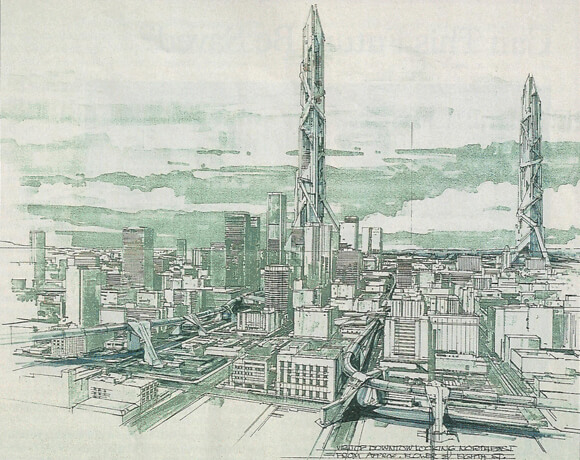
In 2013, a day in the life of a Los Angeles family of four is an amazing testament to technological progress and the idealistic society that can be achieved…or at least that’s what the Los Angeles Times Magazine was hoping for 25 years ago. Back in April 1988, the magazine ran a special cover story called “L.A. 2013″ and presented what a typical day would be like for a family living in the city.

The author of the story, Nicole Yorkin, spoke with over 30 experts and futurists to forecast daily life in 2013 and then wove these into a story akin to those “World of Tomorrow” MGM cartoons from the mid-20th century. But unlike the cartoons which often included far fetched technologies for humor, what’s most remarkable about the 1988 article is just how many of the predictions have actually come to pass, giving some leeway in how accurately the future can be imagined.

For anyone considering what will happen in the next 25 years, the article is worth a read as it serves as an amazing window into how well the future can be predicted in addition to what technology is able to achieve in a short period of time.

LA-2013-banner

Just consider the section on ‘smart cars’ speculated to be “smaller, more efficient, more automated and more personalized” than cars 25 years ago. While experts envisioned that cars would have more Transformer-like abilities to change from a sports car to a beach buggy, the key development in automobile technology will be “a central computer in the car that will control a number of devices.” Furthermore, cars were expected to be equipped with “electronic navigation or map systems,” or GPS systems. Although modern cars don’t have a ‘sonar shield’ that would cause a car to slow down when it came closer to another, parking sensors are becoming common and rearview cameras may soon be required by law.

Though the article doesn’t explicitly predict the Internet and all its consequences per se, computers were implicit to some of the predictions, such as telecommuting, virtual shopping, smart cards for health monitoring, a personalized ‘home newspaper,’ and video chatting. Integrated computers were also expected in the form of smart appliances, wall-to-ceiling computer displays in classrooms, and 3D video conferencing. These technologies exist today thanks to the networked computer revolution that was amazingly only in its infancy in 1988.

LA-2013-robot

‘The Ultimate Appliance’ is the mobile robot expected to be a ‘fixture’ in today’s homes.

But of all the technologies expected to be part of daily life in 2013, the biggest miss by the article comes with robots.

In fact, the mobile robot “Billy Rae” is depicted as an integral component to the household, much like Rosie The Robot was in The Jetsons. In the story, the family communicates with Billy Rae naturally as the mother reads a list of chores for cleaning the house and preparing meals. There’s even a pet canine robot named Max that helps the son learn to read and do math. The robots aren’t necessarily depicted as being super intelligent, but they were still expected to be vital, even being referred to as the “ultimate appliance.”

In recent years, great strides have been made with robots and artificial intelligence, but we are years away from having a maid-like robot that was hoped for in the article. We’re all familiar withcleaning robots like the Roomba and hospitals are starting to utilize healthcare robots.Personal assistants like Siri show that we’re getting closer to the day when people and computers can communicate verbally. But bringing all these technologies together is one of the most challenging problems to be solved, even with the high amounts of expectation and huge market potential that these bots will experience.

In light of this, it’s interesting to compare the predictions in this article to those in French illustrations drawn around 1900, which also include a fair share of robotic automation.

The piece is peppered with utopian speculation, but already on the radar were concerns about the shifting job market, increasing pollution, and the need for quality schooling, public transportation, and affordable housing, issues that have reached or are nearing crisis levels. It’s comforting to know that many of the problems that modern cities face were understood fairly well a quarter of a century ago, but it is sobering to recognize how technologies have been slow in some cases at handling these problems.

Perhaps the greatest lesson from reading the article is that few of the predictions are completely wrong, but the timescale was ambitious. Almost all of the technologies described will get here sooner or later. The real issue then is, what is preventing rapid innovation or broad-scale adoption of technologies?

Not surprisingly, the answers today are the same as they were 25 years ago: time and money.

LA-metro-rail

[images: kla4067/Flickr, LA Times]

Brain scans can now tell who you’re thinking about (Singularity Hub)

Written By: 

Posted: 03/23/13 7:48 AM

[Source: Listal]

[Source: Listal]

Beware stalkers, these neuroscientists can tell who you’re thinking of. Or, at least, the kind of personality he or she might have.

As a social species humans are highly attuned to the behavior of others around them. It’s a survival mechanism, helping us to safely navigate the social world. That awareness involves both evaluating people and predicting how they will behave in different situations in the future (“Uh oh, don’t get him started!”). But just how does the brain represent another person’s personality?

To answer this question a group of scientists at Cornell’s College of Human Ecology (whatever that means) used functional magnetic resonance imaging (fMRI) to measure neuronal activity while people thought about different types of personalities. The 19 participants – all young adults – learned about four protagonists, all of whom had considerably different personalities, based on agreeableness (e.g., “Likes to cooperate with others”) and extraversion (“Is sometimes shy”). They were then presented different scenarios (such as sitting on a bus with no empty seats and watching an elderly person get on) and asked to imagine how each of the four protagonists would react.

Varying degrees of a person's deemed "agreeableness" and "extraversion" combine to produce different brain activation patterns in the brain. [Source: Cerebral Cortex]

Varying degrees of a person’s deemed “agreeableness” and “extraversion” combine to produce different brain activation patterns in the brain. [Source: Cerebral Cortex]

The study’s lead author, Nathan Spreng, said they were “shocked” when they saw the results. The brain scans revealed that each of the four distinct personalities elicited four distinct activity patterns in the medial prefrontal cortex, an area at the front of the brain known to be involved in decision making. In essence, the researchers had succeeded in extracting mental pictures – the personalities of others – that people were thinking of.The study was published in the March 5 issue of Cerebral Cortex.

Sizing up the personality of another or thinking what they’re thinking is unique to social animals and in fact to do so was until recently thought to be uniquely human. But there’s now reason to believe the network – called the ‘default network’ – is a fundamental feature of social mammals in general. As Spreng explained in an email, “Macaque [monkeys] clearly have a similar network, observable even in the rat. All of these mammalian species are highly social.”

The fact that the mental snapshot of others was seen in the neurons of the medial prefrontal cortex means the current study may have implications for autism, Spreng said in a Cornell University news release. “Prior research has implicated the anterior mPFC in social cognition disorders such as autism, and our results suggest people with such disorders may have an inability to build accurate personality models. If further research bears this out, we may ultimately be able to identify specific brain activation biomarkers not only for diagnosing such diseases, but for monitoring the effects of interventions.”

Previous work has shown that brain scans can tell us a lot about what a person’s thinking. With an array of electrodes placed directly on the brain, researchers were able to decode specific words that people were thinking. In another experiment fRMI scans of the visual cortex were used to reconstruct movie trailers that participants were watching.

Much of neuroscience explores how the brain processes the sensory information that guides us through our physical environment. But, for many species, navigating the social environment can be just as important to survival. “For me, an important feature of the work is that our emotions and thoughts about other people are felt to be private experiences,” Spreng said. “In our life, we may choose to share our thoughts and feelings with peers, friends and loved ones. However, [thoughts and feelings] are also physical and biological processes that can be observed. Considering how important our social world is, we know very little about the brain processes that support social knowledge. The objective of this work is to understand the physical mechanisms that allow us to have an inner world, and a part of that is how we represent other people in our mind.”

Everybody Knows. Climate Denialism has peaked. Now what are we going to do? (EcoEquity)

– Tom Athanasiou (toma@ecoequity.org).  April 2, 2013.

It was never going to be easy to face the ecological crisis.  Even back in the 1970s, before climate took center stage, it was clear that we the prosperous were walking far too heavily.  And that “environmentalism,” as it was called, was only going to be a small beginning.  But it was only when the climate crisis pushed fossil energy into the spotlight that the real stakes were widely recognized.  Fossil fuels are the meat and potatoes of industrial civilization, and the need to rapidly and radically reduce their emissions cut right through to the heart of the great American dream.  And the European dream.  And, inevitably, the Chinese dream as well.

Decades later, 81% of global energy is still supplied by the fossil fuels: coal, gas, and oil.[1]  And though the solar revolution is finally beginning, the day is late.  The Arctic is melting, and, soon, as each year the northern ocean lies bare beneath the summer sun, the warming will accelerate.  Moreover, our plight is becoming visible.  We have discovered, to our considerable astonishment, that most of the fossil fuel on the books of our largest corporations is “unburnable” – in the precise sense that, if we burn it, we are doomed.[2]  Not that we know what to do with this rather strange knowledge.  Also, even as China rises, it’s obvious that it’s not the last in line for the promised land.  Billions of people, all around the world, watch the wealthy on TV, and most all of them want a drink from the well of modern prosperity.  Why wouldn’t they?  Life belongs to us all, as does the Earth.

The challenge, in short, is rather daunting.

The denial of the challenge, on the other hand, always came ready-made.  As Francis Bacon said so long ago, “what a man would rather were true, he more readily believes.”  And we really did want to believe that ours was still a boundless world.  The alternative – an honest reckoning – was just too challenging.  For one thing, there was no obvious way to reconcile the Earth’s finitude with the relentless expansion of the capitalist market.  And as long as we believed in a world without limits, there was no need to see that economic stratification would again become a fatal issue.  Sure, our world was bitterly riven between haves and have-nots, but this problem, too, would fade in time.  With enough growth – the universal balm – redistribution would never be necessary.  In time, every man would be a king.

The denial had many cheerleaders.  The chemical-company flacks who derided Rachel Carson as a “hysterical woman” couldn’t have known that they were pioneering a massive trend.  Also, and of course, big money always has plenty of mouthpieces.  But it’s no secret that, during the 20th Century, the “engineering of consent” reached new levels of sophistication.  The composed image of benign scientific competence became one of its favorite tools, and somewhere along the way tobacco-industry science became a founding prototype of anti-environmental denialism.  On this front, I’m happy to say that the long and instructive history of today’s denialist pseudo-science has already been expertly deconstructed.[3]  Given this, I can safely focus on the new world, the post-Sandy world of manifest climatic disruption in which the denialists have lost any residual aura of scientific legitimacy, and have ceased to be a decisive political force.  A world in which climate denialism is increasingly seen, and increasingly ridiculed, as the jibbering of trolls.

To be clear, I’m not claiming that the denialists are going to shut up anytime soon.  Or that they’ll call off their suicidal, demoralizing campaigns.  Or that their fogs and poisons are not useful to the fossil-fuel cartel.  But the battle of the science is over, at least as far as the scientists are concerned.  And even on the street, hard denialism is looking pretty ridiculous.  To be sure, the core partisans of the right will fight on, for the win and, of course, for the money.[4]  And they’ll continue to have real weight too, for just as long as people do not believe that life beyond carbon is possible.  But for all this, their influence has peaked, and their position is vulnerable.  They are – and visibly now – agents of a mad and dangerous ideology.  They are knaves, and often they are fools.[5]

As for the rest of us, we can at least draw conclusions, and make plans.

As bad as the human prospect may be – and it is quite bad – this is not “game over.”  We have the technology we need to save ourselves, or most of it in any case; and much of it is ready to go.  Moreover, the “clean tech” revolution is going to be disruptive indeed.  There will be cascades of innovation, delivering opportunities of all kinds, all around the world.  Also, our powers of research and development are strong.  Also, and contrary to today’s vogue for austerity and “we’re broke” political posturing, we have the money to rebuild, quickly and on a global scale.  Also, we know how to cooperate, at least when we have to.  All of which is to say that we still have options.  We are not doomed.

But we are in extremely serious danger, and it is too late to pretend otherwise.  So allow me to tip my hand by noting Jorgen Randers’ new book, 2052: A Global Forecast for the Next Forty Years.[6]  Randers is a Norwegian modeler, futurist, professor, executive, and consultant who made his name as co-author of 1972’s landmark The Limits to Growth.  Limits, of course, was a global blockbuster; it remains the best-selling environmental title of all times.  Also, Limits has been relentlessly ridiculed (the early denialists cut their teeth by distorting it[7]) so it must be said that – very much contrary to the mass-produced opinions of the denialist age – its central, climate-related projections are holding up depressingly well.[8]

By 2012 (when he published 2052) Randers had decided to step away from the detached exploration of multiple scenarios that was the methodological core of Limits, and to make actual predictions.  After a lifetime of frustrated efforts, these predictions are vivid, pessimistic and bitter.  In a nutshell, Randers doesn’t expect anything beyond what he calls “progress as usual,” and while he expects it to yield a “light green” buildout (e.g., solar on a large scale) he doesn’t think it will suffice to stabilize the climate system.  Such stabilization, he grants, is still possible, but it would require concerted global action on a scale that neither he nor Dennis Meadows, the leader of the old Limits team, see on today’s horizon.  Let’s call that kind of action global emergency mobilization.  Meadows, when he peers forwards, sees instead “many decades of uncontrolled climatic disruption and extremely difficult decline.”[9]  Randers is more precise, and predicts that we will by 2052 wake to find ourselves on a dark and frightening shore, knowing full well that our planet is irrevocably “on its way towards runaway climate change in the last third of the twenty-first century.”

This is an extraordinary claim, and it requires extraordinary evidence.[10]  Such evidence, unfortunately, is readily available, but for the moment let me simply state the public secret of this whole discussion.  To wit: we (and I use this pronoun advisedly) can still avoid a global catastrophe, but it’s not at all obvious that we will do so.  What is obvious is that stabilizing the global climate is going to be very, very hard.  Which is a real problem, because we don’t do hard anymore.  Rather, when confronted with a serious problem, we just do what we can, hoping that it will be enough and trying our best not to offend the rich.  In truth, and particularly in America, we count ourselves lucky if we can manage governance at all.

This essay is about climate politics after legitimate skepticism.  Climate politics in a world where, as Leonard Cohen put it, “everybody knows.”  What does this mean?  In the first place, it means that we’ve reached the end of what might be called “environmentalism-as-usual.”  This point is widely understood and routinely granted, as when people say something like “climate is not a merely environmental problem,” but my concern is a more particular one.  As left-green writer Eddie Yuen astutely noted in a recent book on “catastrophism,” the problems of the environmental movement are to a very large degree rooted in “the pairing of overwhelmingly bleak analysis with inadequate solutions.”[11]  This is exactly right.

The climate crisis demands a “new environmentalism,” and such a thing does seem to be emerging.  It’s final shape is unknowable, but one thing is certain – the environmentalism that we need will only exist when its solutions and strategies stand up to its own analyses.  The problem is that this requires us to take our “overwhelmingly bleak” analyses straight, rather than soft-pedaling them so that our “inadequate solutions” might look good.  Pessimism, after all, is closely related to realism.  It cannot just be wished away.

Soft-pedaling, alas, has long been standard practice, on both the scientific and the political sides of the climate movement.  Examples abound, but the best would have to be the IPCC itself, the U.N’s Intergovernmental Panel on Climate Change.  The world’s premier climate-science clearinghouse, the IPCC is often attacked from the right, and has developed a shy and reticent culture.  Even more importantly, though, and far more rarely noted, is that the IPCC is conservative by definition and by design.[12]  It almost has to be conservative to do its job, which is to herd the planet’s decision makers towards scientific realism.  The wrinkle is that, at this point, this isn’t even close to being good enough, not at least in the larger scheme.  At this point, we need strategic realism as well as baseline scientific realism, and it demands a brutal honesty in which underlying scientific and political truths are clearly drawn and publicly expressed.

Yet when it comes to strategic realism, we balk.  The first impulse of the “messaging” experts is always to repeat their perennial caution that sharp portraits of the danger can be frightening, and disempowering, and thus lead to despair and passivity.  This is an excellent point, but it’s only the beginning of the truth, not the end.  The deeper problem is that the physical impacts of climate disruption – the destruction and the suffering – will continue to escalate.  “Superstorm Sandy” was bad, but the future will be much worse.  Moreover, the most severe suffering will be far away, and easy for the good citizens of the wealthy world to ignore.  Imagine, for example, a major failure of the Indian Monsoon, and a subsequent South Asian famine.  Imagine it against a drumbeat background in which food is becoming progressively more expensive.  Imagine the permanence of such droughts, and increasing evidence of tipping points on the horizon, and a world in which ever more scientists take it upon themselves to deliver desperate warnings.  The bottom line will not be the importance of communications strategies, but rather the manifest reality, no longer distant and abstract, and the certain knowledge that we are in deep trouble.  And this is where the dangers of soft-pedaling lie.  For as people come to see the scale of the danger, and then to look about for commensurate strategies and responses, the question will be if such strategies are available, and if they are known, and if they are plausible.  If they’re not, then we’ll all going, together, down the road “from aware to despair.”

Absent the public sense of a future in which human resourcefulness and cooperation can make a decisive difference, we assuredly face an even more difficult future in which denial fades into a sense of pervasive hopelessness.  The last third of the century (when Randers is predicting “runaway climate change”) is not so very far away.  Which is to say that, as denialism collapses – and it will – the challenge of working out a large and plausible response to the climate crisis will become overwhelmingly important.  If we cannot imagine such a response, and explain how it would actually work, then people will draw their own conclusions.  And, so far, it seems that we cannot.  Even those of us who are now climate full-timers don’t have a shared vision, not in any meaningful detail, nor do we have a common sense of the strategic initiatives that could make such a vision cohere.

The larger landscape is even worse.  For though many scientists are steeling themselves to speak, the elites themselves are still stiff and timid, and show few signs of rising to the occasion.  Each month, it seems, there’s another major report on the approaching crisis – the World Bank, the National Intelligence Council, and the International Energy Agency have all recently made hair-raising contributions – but they never quite get around to the really important questions.  How should we contrive the necessary global mobilization?  What conditions are needed to absolutely maximize the speed of the clean-tech revolution?  By what strategy will we actually manage to keep the fossil-fuels in the ground?  What kind of international treaties are necessary, and how shall we establish them?  What would a fast-enough global transition cost, and how shall we pay for it?  What about all those who are forced to retreat from rising waters and drying lands?  How shall they live, and where?  How shall we talk about rights and responsibilities in the Greenhouse Century?  And what about the poor?  How shall they find futures in a climate-constrained world?  Can we even imagine a world in which they do?

In the face of such questions, you have a choice.  You can conclude that we’ll just have to do the best we can, and then you can have a drink.  Or maybe two.  Or you can conclude that, despite all evidence to the contrary, enough of us will soon awaken to reality.  What’s certain is that, all around us, there is a vast potentiality – for reinvention, for resistance, for redistribution, and for renewal of all kinds – and that it could at any time snap into solidity.  And into action.

Forget about “hope.”  What we need now is intention.

***

About a decade ago, in San Francisco, I was on a PBS talk show with, among others, Myron Ebell, chief of climate propaganda at the Competitive Enterprise Institute.  Ebell is an aggressive professional, and given the host’s commitment to phony balance he was easily able to frame the conversation.[13]  The result was a travesty, but not an entirely wasted time, at least not for me.  It was instructive to speak, tentatively, of the need for global climate justice, and to hear, in response, that I was a non-governmental fraud that was only in it for the money.  Moreover, as the hour wore on, I came to appreciate the brutal simplicity of the denialist strategy.  The whole point is to suck the oxygen out of the room, to weave such a tangle of confusionism and pseudo-debate that the Really Big Question – What is to be done? – becomes impossible to even ask, let alone discuss.

When Superstorm Sandy slammed into the New York City region, Ebell’s style of hard denialism took a body blow, though obviously it has not dropped finally to the mat.  Had it done do, the Big Question, in all its many forms, would be buzzing constantly around us.  Clearly, that great day has not yet come.  Still, back in November of 2012, when Bloomberg’s Business Week blared “It’s Global Warming, Stupid” from its front cover, this was widely welcomed as a overdue milestone.  It may even be that Michael Tobis, the editor of the excellent Planet 3.0, will prove correct in his long-standing, half-facetious prediction that 2015 will be the date when “the Wall Street Journal will acknowledge the indisputable and apparent fact of anthropogenic climate change; the year in which it will simply be ridiculous to deny it.”[14]  Or maybe not.  Maybe that day will never come.  Maybe Ebell’s style of well-funded, front-group denialism will live on, zombie-like, forever.  Or maybe (and this is my personal prediction) hard climate denialism will soon go the way of creationism and far-right Christianity, becoming a kind of political lifestyle choice, one that’s dangerous but contained.  One that’s ultimately more dangerous to the right than it is to the reality-based community.

If so, then at some point we’re going to have to ask ourselves if we’ve been so long distracted by the hard denialists that we’ve missed the parallel danger of a “soft denialism.”  By which I mean the denialism of a world in which, though the dangers of climate change are simply too ridiculous to deny, they still – somehow – are not taken to imply courage, and reckoning, and large-scale mobilization.  This is a long story, but the point is that, now that the Big Question is finally on the table, we’re going to have to answer it.  Which is to say that we’re going to have to face the many ways in which political timidity and small-bore realism have trained us to calibrate our sense of what must be done by our sense of what can be done, which these days is inadequate by definition.

And not just because of the denialists.

George Orwell once said that “To see what is in front of one’s nose needs a constant struggle.”[15]  As we hurtle forward, this struggle will rage as never before.  The Big Question, after all, changes everything.  Another way of saying this is that our futures will be shaped by the effort to avoid a full-on global climate catastrophe.  Despite all the rest of the geo-political and geo-economic commotion that will mark the 21st Century (and there’ll be plenty) it will be most fundamentally the Greenhouse Century.  We know this now, if we care to, though still only in preliminary outline.  The details, inevitably, will surprise us all.

The core problem, of course, will be “ambition” – action on the scale that’s actually necessary, rather than the scale that is or appears to be possible.  And here, the legacies of the denialist age – the long-ingrained habits of soft-pedaling and strained optimism – will weigh heavily.  Consider the quasi-official global goal (codified, for example, in the Copenhagen Accord) to hold total planetary warming to 2°C (Earth surface average) above pre-industrial levels.  This is the so-called “2°C target.”  What are we to do with it in the post-denialist age?  Let me count the complications: One, all sorts of Very Important People are now telling us it’s going to all but impossible to avoid overshooting 2°C.[16]  Two, in so doing, they are making a political and not a scientific judgment, though they’re not always clear on this point.  (It’s probably still technically possible to hold the 2°C line – if we’re not too unlucky – though it wouldn’t be easy under the best of circumstances.)[17]  Three, the 2°C line, which was once taken to be reasonably safe, is now widely seen (at least among the scientists) to mark the approximate point of transition from “dangerous” to “extremely dangerous,” and possibly to altogether unmanageable levels of warming.[18]  Four, and finally, it’s now widely recognized that any future in which we approach the 2°C line (which we will do) is one in which we also have a real possibility of pushing the average global temperature up by 3°C, and if this were to come to pass we’d be playing a very high-stakes game indeed, one in which uncontrolled positive feedbacks and worst-case scenarios were surrounding us on every side.

The bottom line is today as it was decades ago.  Greenhouse-gas emissions were increasing then, and they are increasing now.  In late 2012, the authoritative Global Carbon Project reported that, since 1990, they had risen by an astonishing 58 percent.[19]  The climate system has unsurprisingly responded with storms, droughts, ice-melt, conflagrations and floods.  The weather has become “extreme,” and may finally be getting our attention.  In Australia, according to the acute Mark Thomson of the Institute for Backyard Studies in Adelaide, the crushing heatwave of early 2013 even pushed aside “the idiot commentariat” and cleared the path for a bit of 11th-hour optimism: “Another year of this trend will shift public opinion wholesale.  We’re used to this sort of that temperature now and then and even take a perverse pride in dealing with it, but there seems to be a subtle shift in mood that ‘This Could Be Serious.’”  Let’s hope he’s right.  Let’s hope, too, that the mood shift that swept through America after Sandy also lasts, and leads us, too, to conclude that ‘This Could Be Serious.’  Not that this alone would be enough to support a real mobilization – the “moral equivalent of war” that we need – but it would be something.  It might even lead us to wonder about our future, and about the influence of money and power on our lives, and to ask how serious things will have to get before it becomes possible to imagine a meaningful change of direction.

The wrinkle is that, before we can advocate for a meaningful change of direction, we have to have one we believe in, one that we’re willing to explain in global terms that actually scale to the problem.  None of which is going to be easy, given that we’re fast approaching a point where only tales of existential danger ring true.  (cf the zombie apocalypse).  The Arctic ice, as noted above, offers an excellent marker.  In fact, the first famous photos of Earth from space – the “blue marble” photos taken in 1972 by the crew of the Apollo 17 – allow us to anchor our predicament in time and in memory.  For these are photos of an old Earth now passed away; they must be, because they show great expanses of ice that are nowhere to be found.  By August of 2012 the Arctic Sea’s ice cover had declined by 40%,[20] a melt that’s easily large enough to be visible from space.  Moreover, beneath the surface, ice volume is dropping even more precipitously.  The polar researchers who are now feverishly evaluating the great melting haven’t yet pushed the entire scientific community to the edge of despair, though they have managed to inspire a great deal of dark muttering about positive feedbacks and tipping points.  Soon, it seems, that muttering will become louder.  Perhaps as early as 2015, the Arctic Ocean will become virtually ice free for the first time in recorded history.[21]  When it does, the solar absorptivity of the Arctic waters will increase, and shift the planetary heat balance by a surprisingly large amount, and by so doing increase the rate of  planetary warming.  And this, of course, will not be end of it.  The feedbacks will continue.  The cycles will go on.

Should we remain silent about such matters, for risk of inflaming the “idiot commentariat?”  It’s absurd to even ask.  The suffering is already high, and if you know the science, you also know that the real surprise would be an absence of positive feedbacks.  The ice melt, the methane plumes, the drying of the rainforests – they’re all real.  Which is to say that there are obviously tipping points before us, though we do not and can not know how much time will pass before they force themselves upon our attention.  The real question is what we must do if we would talk of them in good earnest, while at the same time speaking, without despair and effectively, about the human future.


[1] Jorgen Randers, 2052: A Global Forecast for the Next Forty Years, Chelsea Green, 2012, page 99.

[2] Begin at the Carbon Track Initiative’s website.  http://www.carbontracker.org/

[3] Two excellent examples: Naomi Oreskes, Erik M. M. Conway, Merchants of Doubt: How a Handful of Scientists Obscured the Truth on Issues from Tobacco Smoke to Global Warming, Bloomsbury Press, 2011,  Chris Mooney, The Republican War on Science, Basic Books, 2006.

[4] See, for example, Suzanne Goldenberg, “Secret funding helped build vast network of climate denial thinktanks,” February 14, 2013, The Guardian.

[5] “Lord Monckton,” in particular, is fantastic.  See http://www.youtube.com/watch?v=w833cAs9EN0

[6] Randers, 2012.  See also Randers’ essay and video at the University of Cambridge 2013 “State of Sustainability Leadership,” athttp://www.cpsl.cam.ac.uk/About-Us/What-is-Sustainability-Leadership/The-State-of-Sustainability-Leadership.aspx

[7] Ugo Bardi, in The Limits to Growth Revisited (Springer Briefs, 2011) offers this summary:

“If, at the beginning, the debate on LTG had seemed to be balanced, gradually the general attitude on the study became more negative. It tilted decisively against the study when, in 1989, Ronald Bailey published a paper in “Forbes” where he accused the authors of having predicted that the world’s economy should have already run out of some vital mineral commodities whereas that had not, obviously, occurred.

Bailey’s statement was only the result of a flawed reading of the data in a single table of the 1972 edition of LTG. In reality, none of the several scenarios presented in the book showed that the world would be running out of any important commodity before the end of the twentieth century and not even of the twenty-first. However, the concept of the “mistakes of the Club of Rome” caught on. With the 1990s, it became commonplace to state that LTG had been a mistake if not a joke designed to tease the public, or even an attempt to force humankind into a planet-wide dictatorship, as it had been claimed in some earlier appraisals (Golub and Townsend 1977; Larouche 1983). By the end of the twentieth century, the victory of the critics of LTG seemed to be complete. But the debate was far from being settled.”

[8] See, for example, Graham Turner, “A Comparison of The Limits to Growth with Thirty Years of Reality.” Global Environmental Change, Volume 18, Issue 3, August 2008, Pages 397–411.  An unprotected copy (without the graphics) can be downloaded at www.csiro.au/files/files/plje.pdf.  Also

[9] In late 2012, Dennis Meadows said that “In the early 1970s, it was possible to believe that maybe we could make the necessary changes.  But now it is too late.  We are entering a period of many decades of uncontrolled climatic disruption and extremely difficult decline.”  See Christian Parenti, “The Limits to Growth’: A Book That Launched a Movement,” The Nation, December 24, 2012.

[11] Eddie Yuen, “The Politics of Failure Have Failed: The Environmental Movement and Catastrophism,” in Catastrophism: The Apocalyptic Politics of Collapse and Rebirth, Sasha Lilley, David McNally, Eddie Yuen, James Davis, with a foreword by Doug Henwood. PM Press 2012.  Yuen’s whole line is “the main reasons that [it] has not led to more dynamic social movements; these include catastrophe fatigue, the paralyzing effects of fear; the pairing of overwhelmingly bleak analysis with inadequate solutions, and a misunderstanding of the process of politicization.” 

[12] See Glenn Scherer, “Special Report: IPCC, assessing climate risks, consistently underestimates,” The Daily Climate, December 6, 2012.   More formally (and more interestingly) see Brysse, Oreskes, O’Reilly, and Oppenheimer, “Climate change prediction: Erring on the side of least drama?,” Global Environmental Change 23 (2013), 327-337.

[13] KQED-FM, Forum, July 22, 2003.

[14] Michael Tobis, editor of Planet 3.0, is amusing on this point.  He notes that “many data-driven climate skeptics are reassessing the issue,” that “In 1996 I defined the turning point of the discussion about climate science (the point where we could actually start talking about policy) as the date when theWall Street Journal would acknowledge the indisputable and apparent fact of anthropogenic climate change; the year in which it would simply be ridiculous to deny it.  My prediction was that this would happen around 2015… I’m not sure the WSJ has actually accepted reality yet.  It’s just starting to squint in its general direction.  2015 still looks like a good bet.”  See http://planet3.org/2012/08/07/is-the-tide-turning/

[15] The Collected Essays, Journalism and Letters of George Orwell: In Front of Your Nose, 1945-1950, Sonia Orwell and Ian Angus, Editors / Paperback / Harcourt Brace Jovanovich, 1968, p. 125.

[16] See for example, Fatih Birol and Nicholas Stern, “Urgent steps to stop the climate door closing,” The Financial Times, March 9, 2011.  And see Sir Robert Watson’s Union Frontiers of Geophysics Lecture at the 2012 meeting of the American Geophysical Union, athttp://fallmeeting.agu.org/2012/events/union-frontiers-of-geophysics-lecture-professor-sir-bob-watson-cmg-frs-chief-scientific-adviser-to-defra/

[17] I just wrote “probably still technically possible.”  I could have written “Excluding the small probability of a very bad case, and the even smaller probability of a very good case, it’s probably still technically possible to hold the 2°C line, though it wouldn’t be easy.”  This, however, is a pretty ugly sentence.  I could also have written “Unless we’re unlucky, and the climate sensitivity turns out be on the high side of the expected range, it’s still technically possible to hold the 2°C line, though it wouldn’t be easy, unless we’re very lucky, and the climate sensitivity turns out to be on the low side.”  Saying something like this, though, kind of puts the cart before the horse, since I haven’t said anything about “climate sensitivity,” or about how the scientists think about probability – and of course it’s even uglier.  The point, at least for now, is that climate projections are probabilistic by nature, which does not mean that they are merely “uncertain.”  We know a lot about the probabilities.

[18] See Kevin Anderson, a former director of Britain’s Tyndall Center, who has been unusually frank on this point.  His views are clearly laid out in a (non-peer-reviewed) essay published by the Dag Hammarskjold Foundation in Sweden.  See “Climate change going beyond dangerous – Brutal numbers and tenuous hope” in Development Dialog #61, September 2012, available at http://www.dhf.uu.se/wordpress/wp-content/uploads/2012/10/dd61_art2.pdf.  For a peer-reviewed paper, see Anderson and Bows, “Beyond ‘dangerous’ climate change: emission scenarios for a new world.”  Philosophical Transactions of The Royal Society, (2011) 369, 20-44 and for a lecture, see “Are climate scientists the most dangerous climate skeptics?” a Tyndall Centre video lecture (September 2010) at http://www.tyndall.ac.uk/audio/are-climate-scientist-most-dangerous-climate-sceptics.

[19] “The challenge to keep global warming below 2°C,” Glen P. Peters, et. al., Nature Climate Change (2012) 3, 4–6 (2013) doi:10.1038/nclimate1783.  December 2, 2012.  This figure might actually be revised upward, as 2012 saw the second-largest annual  concentration increase on record (http://climatedesk.org/2013/03/large-rise-in-co2-emissions-sounds-climate-change-alarm/)

[20] The story of the photos is on Wikipedia – see “blue marble.”  For the latest on the Arctic ice, see the “Arctic Sea Ice News and Analysis” page that the National Snow and Ice Data Center — http://nsidc.org/arcticseaicenews/

[21] Climate Progress is covering the “Arctic Death Spiral” in detail.  See for example Joe Romm, “NOAA: Climate Change Driving Arctic Into A ‘New State’ With Rapid Ice Loss And Record Permafrost Warming,” Climate Progress, Dec 6, 2012.  Give yourself a few hours and follow the links.

Climate Maverick to Retire From NASA (N.Y.Times)

Michael Nagle for The New York Times. James E. Hansen of NASA, retiring this week, reflected in a window at his farm in Pennsylvania.

By 

Published: April 1, 2013

His departure, after a 46-year career at the space agency’s Goddard Institute for Space Studies in Manhattan, will deprive federally sponsored climate research of its best-known public figure.

At the same time, retirement will allow Dr. Hansen to press his cause in court. He plans to take a more active role in lawsuits challenging the federal and state governments over their failure to limit emissions, for instance, as well as in fighting the development in Canada of a particularly dirty form of oil extracted from tar sands.

“As a government employee, you can’t testify against the government,” he said in an interview.

Dr. Hansen had already become an activist in recent years, taking vacation time from NASA to appear at climate protests and allowing himself to be arrested or cited a half-dozen times.

But those activities, going well beyond the usual role of government scientists, had raised eyebrows at NASA headquarters in Washington. “It was becoming clear that there were people in NASA who would be much happier if the ‘sideshow’ would exit,” Dr. Hansen said in an e-mail.

At 72, he said, he feels a moral obligation to step up his activism in his remaining years.

“If we burn even a substantial fraction of the fossil fuels, we guarantee there’s going to be unstoppable changes” in the climate of the earth, he said. “We’re going to leave a situation for young people and future generations that they may have no way to deal with.”

His departure, on Wednesday, will end a career of nearly half a century working not just for a single agency but also in a single building, on the edge of the Columbia University campus.

From that perch, seven floors above the diner made famous by “Seinfeld,” Dr. Hansen battled the White House, testified dozens of times in Congress, commanded some of the world’s most powerful computers and pleaded with ordinary citizens to grasp the basics of a complex science.

His warnings and his scientific papers have drawn frequent attack from climate-change skeptics, to whom he gives no quarter. But Dr. Hansen is a maverick, just as likely to vex his allies in the environmental movement. He supports nuclear power and has taken stands that sometimes undercut their political strategy in Washington.

In the interview and in subsequent e-mails, Dr. Hansen made it clear that his new independence would allow him to take steps he could not have taken as a government employee. He plans to lobby European leaders — who are among the most concerned about climate change — to impose a tax on oil derived from tar sands. Its extraction results in greater greenhouse emissions than conventional oil.

Dr. Hansen’s activism of recent years dismayed some of his scientific colleagues, who felt that it backfired by allowing climate skeptics to question his objectivity. But others expressed admiration for his willingness to risk his career for his convictions.

Initially, Dr. Hansen plans to work out of a converted barn on his farm in Pennsylvania. He has not ruled out setting up a small institute or taking an academic appointment.

He said he would continue publishing scientific papers, but he will no longer command the computer time and other NASA resources that allowed him to track the earth’s rising temperatures and forecast the long-run implications.

Dr. Hansen, raised in small-town Iowa, began his career studying Venus, not the earth. But as concern arose in the 1970s about the effects of human emissions of greenhouse gases, he switched gears, publishing pioneering scientific papers.

His initial estimate of the earth’s sensitivity to greenhouse gases was somewhat on the high side, later work showed. But he was among the first scientists to identify the many ways the planet is likely to respond to rising temperatures and to show how those effects would reinforce one another to produce immense changes in the climate and environment, including a sea level rise that could ultimately flood many of the world’s major cities.

“He’s done the most important science on the most important question that there ever was,” said Bill McKibben, a climate activist who has worked closely with Dr. Hansen.

Around the time Dr. Hansen switched his research focus, in the 1970s, a sharp rise in global temperatures began. He labored in obscurity over the next decade, but on a blistering June day in 1988 he was called before a Congressional committee and testifiedthat human-induced global warming had begun.

Speaking to reporters afterward in his flat Midwestern accent, he uttered a sentence that would appear in news reports across the land: “It is time to stop waffling so much and say that the evidence is pretty strong that the greenhouse effect is here.”

Given the natural variability of climate, it was a bold claim to make after only a decade of rising temperatures, and to this day some of his colleagues do not think he had the evidence.

Yet subsequent events bore him out. Since the day he spoke, not a single month’s temperatures have fallen below the 20th-century average for that month. Half the world’s population is now too young to have lived through the last colder-than-average month, February 1985.

In worldwide temperature records going back to 1880, the 19 hottest years have all occurred since his testimony.

Again and again, Dr. Hansen made predictions that were ahead of the rest of the scientific community and, arguably, a bit ahead of the evidence.

“Jim has a real track record of being right before you can actually prove he’s right with statistics,” said Raymond T. Pierrehumbert, a planetary scientist at the University of Chicago.

Dr. Hansen’s record has by no means been spotless. Even some of his allies consider him prone to rhetorical excess and to occasional scientific error.

He has repeatedly called for trying the most vociferous climate-change deniers for “crimes against humanity.” And in recent years, he stated that excessive carbon dioxide emissions might eventually lead to a runaway greenhouse effect that would boil the oceans and render earth uninhabitable, much like Venus.

His colleagues pointed out that this had not happened even during exceedingly warm episodes in the earth’s ancient past. “I have huge respect for Jim, but in this particular case, he overstated the risk,” said Daniel P. Schrag, a geochemist and the head of Harvard’s Center for the Environment, who is nonetheless deeply worried about climate change.

Climate skeptics have routinely accused Dr. Hansen of alarmism. “He consistently exaggerates all the dangers,” Freeman Dyson, the famed physicist and climate contrarian,told The New York Times Magazine in 2009.

Perhaps the biggest fight of Dr. Hansen’s career broke out in late 2005, when a young political appointee in the administration of George W. Bush began exercising control over Dr. Hansen’s statements and his access to journalists. Dr. Hansen took the fight public and the administration backed down.

For all his battles with conservatives, however, he has also been hard on environmentalists. He was a harsh critic of a failed climate bill they supported in 2009, on the grounds that it would have sent billions into the federal government’s coffers without limiting emissions effectively.

Dr. Hansen agrees that a price is needed on carbon dioxide emissions, but he wants the money returned to the public in the form of rebates on tax bills. “It needs to be done on the basis of conservative principles — not one dime to make the government bigger,” said Dr. Hansen, who is registered as a political independent.

In the absence of such a broad policy, Dr. Hansen has been lending his support to fights against individual fossil fuel projects. Students lured him to a coal protest in 2009, and he was arrested for the first time. That fall he was cited again after sleeping overnight in a tent on the Boston Common with students trying to pressure Massachusetts into passingclimate legislation.

“It was just humbling to have that solidarity and support from this leader, this lion among men,” said Craig S. Altemose, an organizer of the Boston protest.

Dr. Hansen says he senses the beginnings of a mass movement on climate change, led by young people. Once he finishes his final papers as a NASA employee, he intends to give it his full support.

“At my age,” he said, “I am not worried about having an arrest record.”

Secretário da ONU pede urgência na criação de metas globais para o clima (G1/Globo Natureza)

JC e-mail 4699, de 05 de Abril de 2013.

Ban Ki-moon disse que será tarde demais se nada for feito até 2015. Data é limite para criar acordo global que reduza emissão de gases-estufa

O secretário-geral da ONU, Ban Ki-moon, declarou nesta quarta-feira (3) em Mônaco que será “tarde demais” para salvar o meio ambiente, se não forem adotadas medidas vinculantes até 2015 para o clima.

“As palavras não foram seguidas por ações. Logo será tarde demais. Nossos padrões de consumo são incompatíveis com a saúde do planeta”, indicou Ban Ki-moon, diante de uma plateia de personalidades. “Devemos agir agora, se quisermos que em 2050 o planeta continue a ser habitável para os seus nove bilhões de pessoas”, argumentou.

Ele se refere à criação de um novo tratado (ou protocolo) previsto para ser assinado em 2015 e entrar em vigor a partir de 2020, quando o Protocolo de Kyoto perder sua validade. Assim, todos países pretendem terão que cumprir metas para reduzir os gases de efeito estufa e conter a elevação da temperatura do planeta.

Dos noventa objetivos adotados pela comunidade internacional relacionados a questões ambientais nos últimos 20 anos, apenas quatro registraram progressos significativos, lamentou o secretário das Nações Unidas.

Problemas ambientais

Segundo a agência de notícias France Presse, ele destacou como problemas atuais a diminuição da biodiversidade, a redução dos recursos pesqueiros, a maior acidez dos oceanos e o aumento das emissões de gases do efeito estufa. “Temos que acelerar nossa dinâmica. Precisamos desenvolver o que estamos testando em tubos de ensaio há 40 anos. Para isso, devemos adotar medidas de incentivos eficazes, e principalmente colocar um preço sobre as emissões de carbono”, declarou.

“Também devemos adotar, até 2015, um instrumento universal e jurídico vinculante relativo ao clima, de modo que todos os países adotem medidas adicionais para reduzir os efeitos da mudança climática”, instou o secretário-geral das Nações Unidas.

Homenagens em Mônaco

Ban também prestou homenagem à Fundação Prince Albert II de Mônaco, que “é respeitada em todo o mundo pelo trabalho que faz nas áreas da biodiversidade, da água e na luta contra as mudanças climáticas”.

“No momento em que a terra e os oceanos sofrem pressões sem precedentes, em particular devido ao crescimento da população global e às mudanças climáticas, é nossa responsabilidade agir de forma decisiva para preparar para o futuro”, declarou por sua vez o príncipe Albert de Mônaco.

Para o pequeno principado, a visita oficial de Ban Ki-moon marca o 20º aniversário da entrada do Mônaco na Organização das Nações Unidas, em 28 de maio de 1993. “Eu lembro com carinho o orgulho que ele sentiu por esse reconhecimento”, disse o soberano em referência a seu pai, o príncipe Rainier III.

Ban Ki-moon, que iniciou nesta semana um giro europeu com uma visita aos pequenos principados de San Marino e Andorra, também visitará a Espanha e a Holanda. Ele se reunirá na quinta-feira (4) em Mônaco com o chefe de governo.

Survey Shows Many Republicans Feel America Should Take Steps to Address Climate Change (Science Daily)

Apr. 2, 2013 — In a recent survey of Republicans and Republican-leaning Independents conducted by the Center for Climate Change Communication (4C) at George Mason University, a majority of respondents (62 percent) said they feel America should take steps to address climate change. More than three out of four survey respondents (77 percent) said the United States should use more renewable energy sources, and of those, most believe that this change should begin immediately.

The national survey, conducted in January 2013, asked more than 700 people who self-identified as Republicans and Republican-leaning Independents about energy and climate change.

“Over the past few years, our surveys have shown that a growing number of Republicans want to see Congress do more to address climate change,” said Mason professor Edward Maibach, director of 4C. “In this survey, we asked a broader set of questions to see if we could better understand how Republicans, and Independents who have a tendency to vote Republican, think about America’s energy and climate change situation.”

Other highlights from the survey include the following:

  • Republicans and Republican-leaning Independents prefer clean energy as the basis of America’s energy future and say the benefits of clean energy, such as energy independence (66 percent) saving resources for our children and grandchildren (57 percent), and providing a better life for our children and grandchildren (56 percent) outweigh the costs, such as more government regulation (42 percent) or higher energy prices (31 percent).
  • By a margin of 2 to 1, respondents say America should take action to reduce its fossil fuel use.
  • Only one third of respondents agree with the Republican Party’s position on climate change, while about half agree with the party’s position on how to meet America’s energy needs.
  • A large majority of respondents say their elected representatives are unresponsive to their views about climate change.

“The findings from this survey suggest there is considerable support among conservatives for accelerating the transition away from fossil fuels and toward clean renewable forms of energy, and for taking steps to address climate change,” said Maibach. “Perhaps the most surprising finding, however, is how few of our survey respondents agreed with the Republican Party’s current position on climate change.”

The report can be downloaded at: http://climatechangecommunication.org

The report is based on findings from a nationally representative survey conducted by the George Mason University Center for Climate Change Communication. A total of 726 adults (18+) were interviewed between January 12th and January 27th, 2013. The average margin of error for the survey +/- 4 percentage points at the 95% confidence level.

The Tar Sands Disaster (N.Y.Times)

OP-ED CONTRIBUTOR

By THOMAS HOMER-DIXON

Published: March 31, 2013

WATERLOO, Ontario

Rick Froberg

IF President Obama blocks the Keystone XL pipeline once and for all, he’ll do Canada a favor.

Canada’s tar sands formations, landlocked in northern Alberta, are a giant reserve of carbon-saturated energy — a mixture of sand, clay and a viscous low-grade petroleum called bitumen. Pipelines are the best way to get this resource to market, but existing pipelines to the United States are almost full. So tar sands companies, and the Alberta and Canadian governments, are desperately searching for export routes via new pipelines.

Canadians don’t universally support construction of the pipeline. A poll by Nanos Research in February 2012 found that nearly 42 percent of Canadians were opposed. Many of us, in fact, want to see the tar sands industry wound down and eventually stopped, even though it pumps tens of billions of dollars annually into our economy.

The most obvious reason is that tar sands production is one of the world’s most environmentally damaging activities. It wrecks vast areas of boreal forest through surface mining and subsurface production. It sucks up huge quantities of water from local rivers, turns it into toxic waste and dumps the contaminated water into tailing ponds that now cover nearly 70 square miles.

Also, bitumen is junk energy. A joule, or unit of energy, invested in extracting and processing bitumen returns only four to six joules in the form of crude oil. In contrast, conventional oil production in North America returns about 15 joules. Because almost all of the input energy in tar sands production comes from fossil fuels, the process generates significantly more carbon dioxide than conventional oil production.

There is a less obvious but no less important reason many Canadians want the industry stopped: it is relentlessly twisting our society into something we don’t like. Canada is beginning to exhibit the economic and political characteristics of a petro-state.

Countries with huge reserves of valuable natural resources often suffer from economic imbalances and boom-bust cycles. They also tend to have low-innovation economies, because lucrative resource extraction makes them fat and happy, at least when resource prices are high.

Canada is true to type. When demand for tar sands energy was strong in recent years, investment in Alberta surged. But that demand also lifted the Canadian dollar, which hurt export-oriented manufacturing in Ontario, Canada’s industrial heartland. Then, as the export price of Canadian heavy crude softened in late 2012 and early 2013, the country’s economy stalled.

Canada’s record on technical innovation, except in resource extraction, is notoriously poor. Capital and talent flow to the tar sands, while investments in manufacturing productivity and high technology elsewhere languish.

But more alarming is the way the tar sands industry is undermining Canadian democracy. By suggesting that anyone who questions the industry is unpatriotic, tar sands interest groups have made the industry the third rail of Canadian politics.

The current Conservative government holds a large majority of seats in Parliament but was elected in 2011 with only 40 percent of the vote, because three other parties split the center and left vote. The Conservative base is Alberta, the province from which Prime Minister Stephen Harper and many of his allies hail. As a result, Alberta has extraordinary clout in federal politics, and tar sands influence reaches deep into the federal cabinet.

Both the cabinet and the Conservative parliamentary caucus are heavily populated by politicians who deny mainstream climate science. The Conservatives have slashed financing for climate science, closed facilities that do research on climate change, told federal government climate scientists not to speak publicly about their work without approval and tried, unsuccessfully, to portray the tar sands industry as environmentally benign.

The federal minister of natural resources, Joe Oliver, has attacked “environmental and other radical groups” working to stop tar sands exports. He has focused particular ire on groups getting money from outside Canada, implying that they’re acting as a fifth column for left-wing foreign interests. At a time of widespread federal budget cuts, the Conservatives have given Canada’s tax agency extra resources to audit registered charities. It’s widely assumed that environmental groups opposing the tar sands are a main target.

This coercive climate prevents Canadians from having an open conversation about the tar sands. Instead, our nation behaves like a gambler deep in the hole, repeatedly doubling down on our commitment to the industry.

President Obama rejected the pipeline last year but now must decide whether to approve a new proposal from TransCanada, the pipeline company. Saying no won’t stop tar sands development by itself, because producers are busy looking for other export routes — west across the Rockies to the Pacific Coast, east to Quebec, or south by rail to the United States. Each alternative faces political, technical or economic challenges as opponents fight to make the industry unviable.

Mr. Obama must do what’s best for America. But stopping Keystone XL would be a major step toward stopping large-scale environmental destruction, the distortion of Canada’s economy and the erosion of its democracy.

Thomas Homer-Dixon, who teaches global governance at the Balsillie School of International Affairs, is the author of “The Upside of Down: Catastrophe, Creativity and the Renewal of Civilization.”

Unearthed: The Fracking Facade (Top Documentary Films)

A video exposing a flawed claim often abused in the sales pitch for promoting shale gas development across the world:

“With a history of 60 years, after nearly a million wells drilled, there are no documented cases that hydraulic fracturing (fracking) has lead to the contamination of groundwater.”

Brought to you by the team behind the upcoming South African feature documentary, Unearthed, that is investigating natural gas development and the controversial method of extraction known as fracking from a global perspective. Should South Africa and other countries drill down?

Watch the full documentary now


The Mathematics of Averting the Next Big Network Failure (Wired)

BY NATALIE WOLCHOVER, SIMONS SCIENCE NEWS

03.19.13 – 9:30 AM

Data: Courtesy of Marc Imhoff of NASA GSFC and Christopher Elvidge of NOAA NGDC; Image: Craig Mayhew and Robert Simmon of NASA GSFC

Gene Stanley never walks down stairs without holding the handrail. For a fit 71-year-old, he is deathly afraid of breaking his hip. In the elderly, such breaks can trigger fatal complications, and Stanley, a professor of physics at Boston University, thinks he knows why.

“Everything depends on everything else,” he said.

Original story reprinted with permission from Simons Science News, an editorially independent division of SimonsFoundation.org whose mission is to enhance public understanding of science by covering research developments and trends in mathematics and the physical and life sciences.

Three years ago, Stanley and his colleagues discovered the mathematics behind what he calls “the extreme fragility of interdependency.” In a system of interconnected networks like the economy, city infrastructure or the human body, their model indicates that a small outage in one network can cascade through the entire system, touching off a sudden, catastrophic failure.

First reported in 2010 in the journal Nature, the finding spawned more than 200 related studies, including analyses of the nationwide blackout in Italy in 2003, the global food-price crisis of 2007 and 2008, and the “flash crash” of the United States stock market on May 6, 2010.

“In isolated networks, a little damage will only lead to a little more,” said Shlomo Havlin, a physicist at Bar-Ilan University in Israel who co-authored the 2010 paper. “Now we know that because of dependency between networks, you can have an abrupt collapse.”

While scientists remain cautious about using the results of simplified mathematical models to re-engineer real-world systems, some recommendations are beginning to emerge. Based on data-driven refinements, new models suggest interconnected networks should have backups, mechanisms for severing their connections in times of crisis, and stricter regulations to forestall widespread failure.

“There’s hopefully some sweet spot where you benefit from all the things that networks of networks bring you without being overwhelmed by risk,” said Raissa D’Souza, a complex systems theorist at the University of California, Davis.

Power, gas, water, telecommunications and transportation networks are often interlinked. When nodes in one network depend on nodes in another, node failures in any of the networks can trigger a system-wide collapse. (Illustration: Leonardo Dueñas-Osorio)

To understand the vulnerability in having nodes in one network depend on nodes in another, consider the “smart grid,” an infrastructure system in which power stations are controlled by a telecommunications network that in turn requires power from the network of stations. In isolation, removing a few nodes from either network would do little harm, because signals could route around the outage and reach most of the remaining nodes. But in coupled networks, downed nodes in one automatically knock out dependent nodes in the other, which knock out other dependent nodes in the first, and so on. Scientists model this cascading process by calculating the size of the largest cluster of connected nodes in each network, where the answer depends on the size of the largest cluster in the other network. With the clusters interrelated in this way, a decrease in the size of one of them sets off a back-and-forth cascade of shrinking clusters.

When damage to a system reaches a “critical point,” Stanley, Havlin and their colleagues find that the failure of one more node drops all the network clusters to zero, instantly killing connectivity throughout the system. This critical point will vary depending on a system’s architecture. In one of the team’s most realistic coupled-network models, an outage of just 8 percent of the nodes in one network — a plausible level of damage in many real systems — brings the system to its critical point. “The fragility that’s implied by this interdependency is very frightening,” Stanley said.

However, in another model recently studied by D’Souza and her colleagues, sparse links between separate networks actually help suppress large-scale cascades, demonstrating that network models are not one-size-fits-all. To assess the behavior of smart grids, financial markets, transportation systems and other real interdependent networks, “we have to start from the data-driven, engineered world and come up with the mathematical models that capture the real systems instead of using models because they are pretty and analytically tractable,” D’Souza said.

In a series of papers in the March issue of Nature Physics, economists and physicists used the science of interconnected networks to pinpoint risk within the financial system. In one study, an interdisciplinary group of researchers including the Nobel Prize-winning economist Joseph Stiglitz found inherent instabilities within the highly complex, multitrillion-dollar derivatives market and suggested regulations that could help stabilize it.

Irena Vodenska, a professor of finance at Boston University who collaborates with Stanley, custom-fit a coupled network model around data from the 2008 financial crisis. Her and her colleagues’ analysis, published in February in Scientific Reports, showed that modeling the financial system as a network of two networks — banks and bank assets, where each bank is linked to the assets it held in 2007 — correctly predicted which banks would fail 78 percent of the time.

“We consider this model as potentially useful for systemic risk stress testing for financial systems,” said Vodenska, whose research is financially supported by the European Union’s Forecasting Financial Crisis program. As globalization further entangles financial networks, she said, regulatory agencies must monitor “sources of contagion” — concentrations in certain assets, for example — before they can cause epidemics of failure. To identify these sources, “it’s imperative to think in the sense of networks of networks,” she said.

Leonardo Dueñas-Osorio, a civil engineer at Rice, visited a damaged high-voltage substation in Chile after a major earthquake in 2010 to gather information about the power grid’s response to the crisis. (Photo: Courtesy of Leonardo Dueñas-Osorio)

Scientists are applying similar thinking to infrastructure assessment. Leonardo Dueñas-Osorio, a civil engineer at Rice University, is analyzing how lifeline systems responded to recent natural disasters. When a magnitude 8.8 earthquake struck Chile in 2010, for example, most of the power grid was restored after just two days, aiding emergency workers. The swift recovery, Dueñas-Osorio’s researchsuggests, occurred because Chile’s power stations immediately decoupled from the centralized telecommunications system that usually controlled the flow of electricity through the grid, but which was down in some areas. Power stations were operated locally until the damage in other parts of the system subsided.

“After an abnormal event, the majority of the detrimental effects occur in the very first cycles of mutual interaction,” said Dueñas-Osorio, who is also studying New York City’s response to Hurricane Sandy last October. “So when something goes wrong, we need to have the ability to decouple networks to prevent the back-and-forth effects between them.”

D’Souza and Dueñas-Osorio are collaborating to build accurate models of infrastructure systems in Houston, Memphis and other American cities in order to identify system weaknesses. “Models are useful for helping us explore alternative configurations that could be more effective,” Dueñas-Osorio explained. And as interdependency between networks naturally increases in many places, “we can model that higher integration and see what happens.”

Scientists are also looking to their models for answers on how to fix systems when they fail. “We are in the process of studying what is the optimal way to recover a network,” Havlin said. “When networks fail, which node do you fix first?”

The hope is that networks of networks might be unexpectedly resilient for the same reason that they are vulnerable. As Dueñas-Osorio put it, “By making strategic improvements, can we have what amounts to positive cascades, where a small improvement propagates much larger benefits?”

These open questions have the attention of governments around the world. In the U.S., the Defense Threat Reduction Agency, an organization tasked with safeguarding national infrastructure against weapons of mass destruction, considers the study of interdependent networks its “top mission priority” in the category of basic research. Some defense applications have emerged already, such as a new design for electrical network systems at military bases. But much of the research aims at sorting through the mathematical subtleties of network interaction.

“We’re not yet at the ‘let’s engineer the internet differently’ level,” said Robin Burk, an information scientist and former DTRA program manager who led the agency’s focus on interdependent networks research. “A fair amount of it is still basic science — desperately needed science.”

Original story reprinted with permission from Simons Science News, an editorially independent division of SimonsFoundation.org whose mission is to enhance public understanding of science by covering research developments and trends in mathematics and the physical and life sciences.

Mudanças climáticas afetam previsões astrológicas dos índios amazônicos (UOL Notícias)

Carlos A. Moreno

Da EFE, no Rio de Janeiro

31/03/201311h59

Crianças da aldeia ticuna brincam no Rio Solimões, no Amazonas; os ticunas são uma das tribos afetadas pelas mudanças climáticasCrianças da aldeia ticuna brincam no Rio Solimões, no Amazonas; os ticunas são uma das tribos afetadas pelas mudanças climáticas. Patrícia Santos – 30.nov.1999/Folhapress

As previsões que os índios da Amazônia brasileira fazem com a ajuda dos astros para determinar o melhor momento para plantar ou pescar, entre outras atividades, se veem afetadas pelas mudanças climáticas, segundo constatou um estudo realizado com diferentes etnias indígenas no Brasil.

“Os xamãs passaram a se queixar que suas previsões estavam perdendo a exatidão e, a partir dessas indagações, descobrimos que alguns fenômenos provocados pelas mudanças climáticas afetavam seus cálculos”, explicou à Agência Efe o astrônomo Germano Afonso, coordenador do estudo.

Segundo o especialista, que é doutor em Astronomia e Mecânica Celeste pela francesa Universidade Pierre et Marie Curie, os índios da Amazônia ainda utilizam o conhecimento astrológico ancestral para determinar seu calendário e programar, entre outras coisas, a melhor data para plantar, colher, caçar, pescar e, até mesmo, realizar seus rituais religiosos.

Afonso, que construiu e opera – com ajuda dos índios – um observatório solar na Amazônia, explicou que a observação ou não de diferentes constelações, assim como o deslocamento das mesmas, fazem com que os xamãs prevejam os momentos de chuva e seca, das cheias dos rios, da fertilidade da terra e da procriação dos peixes.

“No entanto, nas tribos com as quais trabalhamos, os próprios xamãs admitem que suas previsões não estavam sendo exatas, já que as chuvas se antecipavam ou se atrasavam e os rios secavam antes do tempo previsto. O curioso é que eles mesmos culpavam às mudanças climáticas”, declarou o astrônomo, que é professor da Universidade do Estado do Paraná e autor de diferentes obras sobre o assunto, como “O Céu dos Índios Tembé”.

A equipe coordenada por Afonso e contratada pela Fundação de Apoio à pesquisa no Estado do Amazonas (Fapeam) para estudar o assunto decidiu contrastar o conhecimento indígena de diferentes etnias – Tukano, Tupé, Dessana, Baré, Tuyuka, Baniwa e Tikuna – com as medições meteorológicas da região para tentar identificar as falhas nas previsões.

“Com essa análise percebemos que alguns fenômenos provocados pelas mudanças climáticas estavam desvirtuando as previsões, tendo em vista que a chuva se atrasava ou se antecipava por fenômenos como El Niño e o desmatamento”, apontou o especialista, que passou a morar em São Gabriel da Cachoeira, uma cidade amazônica na qual confluem várias etnias e onde construiu o Observatório Solar Indígena.

Afonso esclareceu que esse problema não pode ser atribuído diretamente ao aquecimento global, mas também aos fenômenos que causam o efeito estufa e os que são provocados pelo mesmo, como o desmatamento da Amazônia, a poluição ambiental e a construção de represas na floresta.

Tais fenômenos, segundo os especialistas, alteram os períodos de chuva e de cheia dos rios na Amazônia, que já não podem ser previstos a partir do conhecimento astronômico acumulado por séculos e transmitido oralmente entre os índios.

Após a constatação do problema, os pesquisadores responsáveis pelo estudo iniciaram um projeto para transmitir aos xamãs alguns conhecimentos científicos e, com isso, ajudá-los a corrigir suas previsões.

“Estamos usando cálculos astronômicos modernos e as informações recolhidas pelas estações meteorológicas da região para ajudá-los a aperfeiçoar seus cálculos”, explicou Afonso.

“Recuperamos o conhecimento astrológico que eles transmitem oralmente e comparamos com dados científicos para fazer alguns ajustes e permitir que as previsões sejam mais precisas”, completou.

De acordo com Afonso, com previsões mais exatas, os índios seguirão confiando em sua capacidade de interpretar os astros e na precisão de seus conhecimentos – o melhor, sem se afastarem de sua cultura.

“Mas só transmitimos os dados que podem ajudá-los. Não nos introduzimos mais. Não queremos invadir, deslegitimar e nem modificar nada de sua cultura. O projeto tem dois objetivos claros: recuperar o conhecimento astrológico dos índios e ajudá-los a melhorar suas previsões. Trata-se de uma troca”, exaltou o pesquisador.

Segundo o astrônomo, essa troca teve uma boa recepção devido ao fato de que a maioria de seus colaboradores no projeto são universitários e indígenas, alguns filhos ou netos de caciques e xamãs das tribos onde nasceram.

Latour: “No estaba escrito que la ecología fuera un partido” (El País)

ENTREVISTA

“No estaba escrito que la ecología fuera un partido”

Sociólogo, antropólogo, filósofo y director científico del Instituto de Estudios Políticos de París.

Bruno Latour tiene una mirada ácida y provocadora de la sociedad y el medio ambiente.

MIGUEL MORA 25 MAR 2013 – 11:52 CET19

Bruno Latour. / MANUEL BRAUN

¿Ha servido para algo el activismo ecológico? ¿Han forjado los verdes una política común? ¿Escuchan los políticos a los científicos cuando alertan sobre el cambio climático? ¿Puede la Tierra soportar más agresiones? El sociólogo, antropólogo y filósofo francés Bruno Latour(Beaune, 1947) lleva más de 20 años reflexionando sobre estos asuntos, y su pronóstico es desolador. A su juicio, la llegada de los ecologistas a la política ha sido un fracaso porque los verdes han renunciado al debate inteligente, los políticos se limitan a aplicar viejas recetas sin darse cuenta de que la revolución se ha producido ya y fue “una catástrofe”: ocurrió en 1947, cuando la población mundial superó el número que garantizaba el acceso a los recursos. Según Latour, es urgente poner en marcha una nueva forma de hacer ecología política, basada en una constitución que comprometa a gobernantes, científicos y ciudadanos a garantizar el futuro de la Tierra. Esta idea es una de las propuestas de su libro Políticas de la naturaleza. Por una democracia de las ciencias, publicado en Francia en 1999 y que ahora edita en español RBA.

Latour, aire de sabio despistado, recibe a El País Semanal en su caótico y enorme despacho del Instituto de Estudios Políticos de París, del que es director científico y director adjunto desde 2007.

PREGUNTA: Este libro se publicó en Francia hace ya 14 años. ¿Sigue suscribiendo lo que escribió?

RESPUESTA: Casi todo, sí. Pero las cosas no han mejorado. He seguido trabajando en lo mismo, pero con otro tono. Hoy debo de ser el único que se ocupa de estas cuestiones, de una filosofía política que exige una verdadera política ecologista. Lo que no ha funcionado es que pensé que iba a ser un libro fundador para los ecologistas. ¡Y ha sido un fracaso total! Los ecologistas han desaparecido.

P: En Francia al menos hay verdes en el Gobierno.

R: Sí, pero tienen una visión muy estrecha de la ecología, no reflexionan ni sobre la economía ni sobre la sociedad. La ecología está limitada a las cuestiones de la naturaleza, cuando en realidad no tiene nada que ver con eso. Hay que elegir entre naturaleza y política. Desgraciadamente, se ha intentado hacer una política ecologista que no ha producido nada bueno porque se ha basado en la lucha tradicional, que tenía como objetivo torpedear la política o, mejor, someterla; en cierto modo, los verdes actúan como un tribunal que trata de definir una especie de soberanía.

P: ¿De superioridad moral o natural?

R: Sí, pero sobre todo de estupidez. Evidentemente, el tomar la naturaleza como un fin no ha hecho más que debilitar la posición de los ecologistas, que nunca han sido capaces de hacer política; en fin, auténtica política en el sentido de la tradición socialista, en la que se hubieran debido inspirar. No han hecho el trabajo que el socialismo primero, el marxismo después y luego la socialdemocracia hicieron. No ha habido, para nada, un trabajo de invención intelectual, de exploración; han preferido “el escaparate”. Puede que no hubiera otra solución, pues no estaba escrito que la ecología se fuera a convertir en un partido.

“Hay una ecología profunda con un gran papel en EE UU y alemania”

P: ¿Entonces el ecologismo es hoy una especie de ac­­tivismo sin conexión científica?

R: Ha habido movimientos interesantes gracias a una casuística muy concreta, importante en lo que concierne a los animales, las plantas, los dientes de los elefantes, el agua, los ríos, etcétera. Han mostrado además gran energía en las cuestiones locales, pero sin afrontar las cuestiones de la política, de la vida en común. Por eso el ecologismo sigue siendo marginal, justo en un momento en que las cuestiones ecológicas se han convertido en un asunto de todos. Y se da una paradoja: la ecología se ocupa de temas minúsculos relacionados con la naturaleza y la sociedad mientras que la cuestión de la Tierra, la presencia de la Tierra en la política, se hace cada vez más apremiante. Esa urgencia, que ya era acuciante hace 10 o 15 años, lo es mucho más ahora.

P: ¿Quizá ha faltado formar una Internacional Verde?

R: No se ha hecho porque los ecologistas pensaban que la Tierra iba a unificar todos estos movimientos. Han surgido un montón de redes, basadas en casos concretos, como Greenpeace. Hay asociaciones, pero nada a nivel político. La internacional sigue siendo la geopolítica clásica de los Estados nación. No ha habido reflexión sobre la nueva situación. Existe una ecología profunda, deep ecology, en Francia prácticamente inexistente, que ha tenido un papel importante en Alemania, en los países escandinavos y en Norteamérica. Pero está muy poco politizada.

P: Estamos ante un fracaso político y ante una mayor conciencia de los científicos. ¿Y los ciudadanos?

R: Paradójicamente, esa dolorosa pelea sobre el clima nos ha permitido progresar. En cierto modo, la querella ha tenido un papel importante en una “comprensión renovada” por parte del público de la realidad científica. El problema es que intentamos insertar las cuestiones ecológicas en el viejo modelo “ciencia y política”. Desde este punto de vista, incluso los científicos más avanzados siguen intentando poner estas cuestiones dentro del marco de esa situación superada que intento criticar. Este es el tema del libro, y en ese sentido sigue de actualidad.

P: En Francia hay una identificación entre ecologismo y territorio. José Bové, por ejemplo, es un proteccionista a ultranza. Es rara esta evolución de la ecología hacia el nacionalismo, ¿no?

R: Sí, pero al mismo tiempo es útil e interesante replantearse lo que es el territorio, el terruño, por usar la palabra francesa. Los ecologistas siempre se han mostrado indecisos sobre el carácter progresista o reaccionario de su apego a la tierra, porque la expresión en francés puede significar cosas muy distintas. Pero es importante, porque es una de las dimensiones de la cuestión ecológica, tanto de la progresista como de la arcaica. Ese era uno de los objetivos fundamentales del libro, saber si hemos sido realmente modernos alguna vez. Hay aspectos regresivos en el apego al terruño, y a la vez hay otros muy importantes sobre la definición de los límites, de los entornos en los cuales vivimos, que son decisivos para el porvenir. Una vez más, los verdes han omitido trabajar esa cuestión. Pero el problema de la orientación, de la diferencia entre el apego reaccionario o progresista a la tierra, es fundamental. Si vemos movimientos como Slow Food, nos preguntamos si están adelantados o retrasados, porque tienen aspectos regresivos. Pero si se piensa en el tema de los circuitos de distribución, ¿por qué las lasañas inglesas tendrían que estar hechas con caballo rumano y transitar por 25 intermediarios? No es una tontería: si tomamos caballo francés, rumano o turco, las cuestiones de pertenencia y de límites se convierten en cuestiones progresistas.

El antropólogo iconoclasta

Bruno Latour nació en la Borgoña, donde surgen los vinos más caros del planeta. Su padre era viticultor. De ahí sus pecualiares análisis sobre el terruño y la tradición. Cursó Antropología y Sociología. Su formación es tan variopinta como los centros donde ha impartido clase, desde la Escuela de Minas de París hasta la London School of Economics y la cátedra de Historia de Harvard.

Escritor incansable, es autor de una treintena de libros de ensayo, todos los últimos editados por Harvard, por los que circulan la tierra, la sociedad, la guerra, la energía, la ciencia, la tecnología, la modernidad y los medios de comunicación.

Su último proyecto está conectado con el llamado medialab, un espacio donde desarrollar conexiones entre las tecnologías digitales, la sociología y los estudios científicos.

P: Su libro llama a superar los esquemas de izquierda y derecha. Pero no parece que eso haya cambiado mucho.

R: El debate afronta un gran problema. Hay una inversión de las relaciones entre el marco geográfico y la política: el marco ha cambiado mucho más que la política. Las grandes negociaciones internacionales manifiestan esa inercia de la organización económica, legal y política, mientras que el marco, lo que antes llamábamos la Tierra, la geografía, cambia a velocidad asombrosa. Esa mutación es difícil de comprender por la gente acostumbrada a la historia de antes, en la cual había humanos que se peleaban, como en el siglo XX: hombres haciéndose la guerra dentro de un marco geográfico estable desde la última glaciación. Es una razón demasiado filosófica. Así que preferimos pensar que tenemos tiempo, que todo está en su sitio, que la economía es así, que el derecho internacional es así, etcétera. Pero incluso los términos para señalar las aceleraciones rápidas han cambiado, volcándose hacia la naturaleza y los glaciares. El tiempo que vivimos es el del antropoceno, y las cosas ya no son como antes. Lo que ha cambiado desde que escribí el libro es que en aquel momento no teníamos la noción del antropoceno. Fue una invención muy útil de Crutzen, un climatólogo, pero no existía entonces, me habría ayudado mucho.

P: ¿Y qué fue de su propuesta de aprobar una constitución ecológica?

R: Intenté construir una asociación de parlamentarios y lanzar una constitución para que las cuestiones de la energía empezaran a ser tratadas de otro modo. Intentaba abrir un debate, que naturalmente no ha tenido lugar. El debate sobre la Constitución empezó bien, se consideró una gran invención de la democracia europea. El problema es que ya no se trata de la cuestión de la representación de los humanos, sino que ese debate atañe a los innumerables seres que viven en la Tierra. Me parecía necesario en aquel momento, y ahora más incluso, hacer un debate constitucional. ¿Cómo sería un Parlamento dedicado a la política ecológica? Tendrá que crearse, pero no reflexionamos lo suficiente sobre las cuestiones de fondo.

P: ¿Las grandes conferencias medioambientales resuelven algo?

R: El problema es que la geopolítica organizada en torno a una nación, con sus propios intereses y nivel de agregación, está mal adaptada a las cuestiones ecológicas, que son transnacionales. Todo el mundo sabe eso, los avances no pueden plasmarse ya a base de mapas, no jugamos en territorios clásicos. Así, desde Copenhague 2009 hay una desafección por las grandes cumbres, no solo porque no se consigue decidir nada, sino también porque nos damos cuenta de que el nivel de decisión y agregación política no es el correcto. De hecho, las ciudades, las regiones, las naciones, las provincias, toman a menudo más iniciativas que los Estados.

P: Francia es uno de los países más nuclearizados del mundo. Los ecologistas braman. ¿Le parece bien?

R: Los ecologistas se han obstinado en la cuestión nuclear, pero nadie ha venido a explicarnos por qué lo nuclear es antiecológico, mientras mucha gente seria considera que el átomo es una de las soluciones, a largo plazo no, pero a corto plazo sí. De nuevo estamos ante la ausencia total de reflexión política por parte de los ecologistas, que militan contra lo nuclear sin explicar por qué. Por consiguiente, no hemos avanzado un centímetro. De hecho, en este momento hay un gran debate público sobre la transición energética, y los verdes siguen siendo incapaces de comprender nada, incluso de discutir, porque han moralizado la cuestión nuclear. Cuando se hace ética, no hay que hacer política, hay que hacer religión.

P: ¿Está realmente en cuestión la supervivencia de la especie?

R: La especie humana se las apañará. Nadie piensa que vaya a desaparecer, ¿pero la civilización? No se sabe lo que es una Tierra a seis u ocho grados, no lo hemos conocido. Hay que remontarse centenares de millones de años. El problema no se abordaba con la misma urgencia cuando escribí el libro en 1999, se hablaba aún de las generaciones futuras. Ahora hablamos de nuestros hijos. No hay una sola empresa que haga un cálculo más allá de 2050, es el horizonte más corto que ha habido nunca. La mutación de la historia es increíblemente rápida. Ahora se trata de acontecimientos naturales, mucho más rápidos que los humanos. Es inimaginable para la gente formada en el siglo XX, una novedad total.

P: ¿Es la globalización? ¿O más que eso?

R: Tiene relación con la globalización, pero no por la extensión de las conexiones entre los humanos. Se trata de la llegada de un mundo desagradable que impide la globalización real: es un conflicto entre globos. Nos hemos globalizado, y eso resulta tranquilizador porque todo está conectado y hace de la Tierra un planeta pequeño. Pero que un gran pueblo sea aplastado al chocar con otra cosa tranquiliza menos.

La especie humana se las apañará. nadie piensa que va a desaparecer”

P: ¿Y el malestar que sentimos, la indignación, tiene que ver con ese miedo?

R: Ese catastrofismo siempre ha existido; siempre ha habido momentos de apocalipsis, de literatura de la catástrofe; pero al mismo tiempo existe un sentimiento nuevo: no se trata del apocalipsis de los humanos, sino del final de recursos, en un sentido, creo, literal.

P: ¿Nos hemos zampado el planeta?

R: La gente que analiza el antropoceno dibuja esquemas de este tipo (muestra un famoso gráfico de población y recursos). Esto se llama “la gran aceleración”, ocurrió en 1947. La revolución ya ha tenido lugar, y es una de las causas de esa nueva ansiedad. La gente sigue hablando de la revolución, desesperándose porque no llega, pero ya está aquí. Es un acontecimiento pasado y de consecuencias catastróficas. Eso también nubla la mente de progresistas y reaccionarios. ¿Qué significa vivir en una época en la cual la revolución ha ocurrido ya y cuyos resultados son catastróficos?

P: ¿No querrá decir que la austeridad es la solución?

R: Ya existe el concepto del decrecimiento feliz, no sé si la tienen en España… ¡Sí! Ustedes están muy adelantados sobre decrecimiento.

P: Estamos en plena vanguardia, pero del infeliz.

R: Es uno de los grandes temas del momento, la crisis económica es decrecimiento no deseado, desigualmente repartido; y hay algo más: austeridad no es necesariamente la palabra, sino ascetismo. Sería la visión religiosa, o espiritual, de la austeridad. Eso se mezcla con las nuevas visiones geológicas de los límites que debemos imponernos…

P: ¿Habla del regreso al campo o de reconstruir el planeta?

R: No me refiero a volver al campo, sino a otra Tierra.

P: ¿La tecnología es la única brújula?

R: La tecnología se encuentra en esa misma situación. Existe una solución muy importante de la geoingeniería, que considera que la situación es reversible, que se pueden recrear artificialmente unas condiciones favorables tras haberlas destruido sin saberlo. Así ha surgido un inmenso movimiento de geoingeniería en todas partes. Ya que es la energía de la Tierra, podemos mandar naves espaciales, modificar la acidez de las aguas del mar, etcétera. Hacer algo que contrarreste lo que se hizo mal. Si hemos podido modificar la Tierra, podemos modificarla en el otro sentido, lo que es un argumento peligroso, porque la podemos destrozar por segunda vez.

P: ¿No se regenerará sola?

R: Sí, ¡pero sin humanos! Se regenerará sola mientras no haya humanos. Puede deshacerse de nosotros, es una de las hipótesis, volviéndose invivible, pero eso no sería muy positivo. La era de los límites puede llegar hasta la extinción.

P: ¿Acabaremos fatal?

R: La historia no está repleta de ejemplos favorables. No se sabe. No hay nada en la naturaleza humana que favorezca la reflexión, por lo cual la solución solo puede ser mala.

P: Algunos temen que acabaremos devorados por los chinos.

R: Los chinos tienen más problemas que nosotros y corren el peligro de comerse a sí mismos por el suelo, el agua y el aire. No nos amenazan, desaparecerán antes que nosotros.

P: Žižek dice que nuestros problemas provienen de la mediocridad intelectual de Alemania y Francia, que esa es la razón principal de la decadencia actual. ¿Qué piensa?

R: Es una estupidez. Ocurren muchas más cosas intelectualmente en Europa que en América, infinitamente más. Por ejemplo, en arte, en filosofía, en ciencias, en urbanismo. Es insensato decir cosas así, pero es que Žižek es un viejo cretino, una especie de cosa de extrema izquierda, fruto del agotamiento de la extrema izquierda, de su decadencia final, de la cual es el síntoma. Por otra parte, es un chico muy majo. La extrema izquierda se ha equivocado tanto sobre el mundo que al final todos estos viejos de extrema izquierda no tienen otra cosa que hacer salvo vomitar sobre el mundo, como hace Alain Badiou en Francia.

P: ¿Prefiere a Marine Le Pen?

R: No soy político, no puedo responder a esta pregunta, no me interesa.

P: ¿No le gusta hablar de política?

R: Sí hablo de política, he escrito un libro sobre política, ¡que yo sepa!,Las políticas de la naturaleza.

P: ¿No le interesa la política de todos los días?

R: La de todos los días sí, pero no la de los partidos, son agitaciones superficiales, sobre todo en Francia, donde ya no hay verdaderamente política.

P: Critica a la extrema izquierda, ¿y nada a la extrema derecha?

R: Se agita, intenta agarrarse a un clavo ardiendo, pero no tiene mucha importancia. No es ahí donde las cosas están en juego.

P: ¿Cree que es residual?

R: No, no es residual, puede desarrollarse y provocar daños, tanto como la extrema izquierda; el no pensar siempre provoca daños, pero no es eso lo que va a solucionar los problemas de la Tierra, la economía, las ciudades, el transporte y la tecnología.

P: ¿Qué escenario prevé para 2050? ¿Qué Tierra, qué humanidad?

R: Ese no es mi trabajo, mi trabajo consiste en prepararnos para las guerras. Las guerras ecológicas van a ser muy importantes y tenemos que preparar nuestros ejércitos de un modo intelectual y humano. Ese es mi trabajo.

P: ¿Habrá guerras violentas por el clima?

R: La definición misma de guerra va a cambiar, estamos en una situación en la cual no podemos ganar contra la Tierra, es una guerra asimétrica: si ganamos, perdemos, y si perdemos, ganamos. Así pues, esta situación crea obligaciones a multitud de gente y antes que nada a los intelectuales.

P: ¿La batalla principal es esa?

R: Si no tenemos mundo, no podemos hacer gran cosa, ni siquiera la revolución. Cuando se lee a Marx, uno se queda impresionado por lo que dice sobre los humanos. En esta época, la cuestión de la ciencia y del margen geográfico, más la presencia de miles de millones de personas, conforma un escenario crucial. Antes teníamos otros problemas, pero este no.

P: ¿Así que se trata de ser o no ser?

R: En cada informe científico, las previsiones son peores, el plan más pesimista siempre aparece. Hay que tener en cuenta eso. Son previsiones extremas, pero de momento son las únicas válidas. No se trata de una guerra mundial, sino de una acumulación de guerras mundiales. Es parecido al invierno nuclear de la guerra fría, una situación de cataclismo, pero con algunas ventajas: es más radical, pero más lento, tenemos mucha capacidad de invención, 9.000 millones de personas y muchas mentes inteligentes. Pero también es un reto. Por tanto, es una cuestión de alta política y no de naturaleza. La política viene primero.

P: ¿Tiene la sensación de estar solo?

R: Lo que era complicado en este libro era crear el vínculo entre ciencia y política, y no puedo decir que haya convencido a mucha gente. Si además se hace el vínculo entre la religión y las artes, es más difícil. Gente como Sloterdijk sería muy capaz de comprenderlo. Sin embargo, muchos intelectuales siguen en el siglo XX, como Žižek. Permanecen en un contexto, en un ideal revolucionario, de decepción. Están decepcionados con los humanos.

P: ¿Cree que los humanos se dejarán ayudar?

R: Primero hay que ayudar a la Tierra. En el antropoceno ya no se puede hacer la distinción entre los humanos y la Tierra.

P: ¿Y sus estudiantes están listos para la lucha?

R: En mi escuela soy el único en dar clases sobre cuestiones donde no entra la política en el sentido clásico. Hay un curso o dos sobre cuestiones ecológicas. Es culpa mía, no he trabajado lo suficiente como para cambiar las cosas. Llevamos mucho retraso.

Germany Has Created An Accidental Empire (Social Europe)

25/03/2013 BY ULRICH BECK

ulrich_beckAre we now living in a German Europe? In an interview with EUROPP editors Stuart A Brown and Chris Gilson, Ulrich Beck discusses German dominance of the European Union, the divisive effects of austerity policies, and the relevance of his concept of the ‘risk society’ to the current problems being experienced in the Eurozone.

How has Germany come to dominate the European Union?

Well it happened somehow by accident. Germany has actually created an ‘accidental empire’. There is no master plan; no intention to occupy Europe. It doesn’t have a military basis, so all the talk about a ‘Fourth Reich’ is misplaced. Rather it has an economic basis – it’s about economic power – and it’s interesting to see how in the anticipation of a European catastrophe, with fears that the Eurozone and maybe even the European Union might break down, the landscape of power in Europe has changed fundamentally.

First of all there’s a split between the Eurozone countries and the non-Eurozone countries. Suddenly for example the UK, which is only a member of the EU and not a member of the Eurozone, is losing its veto power. It’s a tragic comedy how the British Prime Minister is trying to tell us that he is still the one who is in charge of changing the European situation. The second split is that among the Eurozone countries there is an important division of power between the lender countries and the debtor countries. As a result Germany, the strongest economic country, has become the most powerful EU state.

Are austerity policies dividing Europe?

Indeed they are, in many ways. First of all we have a new line of division between northern European and southern European countries. Of course this is very evident, but the background from a sociological point of view is that we are experiencing the redistribution of risk from the banks, through the states, to the poor, the unemployed and the elderly. This is an amazing new inequality, but we are still thinking in national terms and trying to locate this redistribution of risk in terms of national categories.

At the same time there are two leading ideologies in relation to austerity policies. The first is pretty much based on what I call the ‘Merkiavelli’ model – by this I mean a combination of Niccolò Machiavelli and Angela Merkel. On a personal level, Merkel takes a long time to make decisions: she’s always waiting until some kind of consensus appears. But this kind of waiting makes the countries depending on Germany’s decision realise that actually Germany holds the power. This deliberate hesitation is quite an interesting strategy in terms of the way that Germany has taken over economically.

The second element is that Germany’s austerity policies are not based simply on pragmatism, but also underlying values. The German objection to countries spending more money than they have is a moral issue which, from a sociological point of view, ties in with the ‘Protestant Ethic’. It’s a perspective which has Martin Luther and Max Weber in the background. But this is not seen as a moral issue in Germany, instead it’s viewed as economic rationality. They don’t see it as a German way of resolving the crisis; they see it as if they are the teachers instructing southern European countries on how to manage their economies.

This creates another ideological split because the strategy doesn’t seem to be working so far and we see many forms of protest, of which Cyprus is the latest example. But on the other hand there is still a very important and powerful neo-liberal faction in Europe which continues to believe that austerity policies are the answer to the crisis.

Is the Eurozone crisis proof that we live in a risk society?

Yes, this is the way I see it. My idea of the risk society could easily be misunderstood because the term ‘risk’ actually signifies that we are in a situation to cope with uncertainty, but to me the risk society is a situation in which we are not able to cope with the uncertainty and consequences that we produce in society.

I make a distinction between ‘first modernity’ and our current situation. First modernity, which lasted from around the 18th century until perhaps the 1960s or 1970s, was a period where there was a great deal of space for experimentation and we had a lot of answers for the uncertainties that we produced: probability models, insurance mechanisms, and so on. But then because of the success of modernity we are now producing consequences for which we don’t have any answers, such as climate change and the financial crisis. The financial crisis is an example of the victory of a specific interpretation of modernity: neo-liberal modernity after the breakdown of the Communist system, which dictates that the market is the solution and that the more we increase the role of the market, the better. But now we see that this model is failing and we don’t have any answers.

We have to make a distinction between a risk society and a catastrophe society. A catastrophe society would be one in which the motto is ‘too late’: where we give in to the panic of desperation. A risk society in contrast is about the anticipation of future catastrophes in order to prevent them from happening. But because these potential catastrophes are not supposed to happen – the financial system could collapse, or nuclear technology could be a threat to the whole world – we don’t have the basis for experimentation. The rationality of calculating risk doesn’t work anymore. We are trying to anticipate something that is not supposed to happen, which is an entirely new situation.

Take Germany as an example. If we look at Angela Merkel, a few years ago she didn’t believe that Greece posed a major problem, or that she needed to engage with it as an issue. Yet now we are in a completely different situation because she has learned that if you look into the eyes of a potential catastrophe, suddenly new things become possible. Suddenly you think about new institutions, or about the fiscal compact, or about a banking union, because you anticipate a catastrophe which is not supposed to happen. This is a huge mobilising force, but it’s highly ambivalent because it can be used in different ways. It could be used to develop a new vision for Europe, or it could be used to justify leaving the European Union.

How should Europe solve its problems?

I would say that the first thing we have to think about is what the purpose of the European Union actually is. Is there any purpose? Why Europe and not the whole world? Why not do it alone in Germany, or the UK, or France?

I think there are four answers in this respect. First, the European Union is about enemies becoming neighbours. In the context of European history this actually constitutes something of a miracle. The second purpose of the European Union is that it can prevent countries from being lost in world politics. A post-European Britain, or a post-European Germany, is a lost Britain, and a lost Germany. Europe is part of what makes these countries important from a global perspective.

The third point is that we should not only think about a new Europe, we also have to think about how the European nations have to change. They are part of the process and I would say that Europe is about redefining the national interest in a European way. Europe is not an obstacle to national sovereignty; it is the necessary means to improve national sovereignty. Nationalism is now the enemy of the nation because only through the European Union can these countries have genuine sovereignty.

The fourth point is that European modernity, which has been distributed all over the world, is a suicidal project. It’s producing all kinds of basic problems, such as climate change and the financial crisis. It’s a bit like if a car company created a car without any brakes and it started to cause accidents: the company would take these cars back to redesign them and that’s exactly what Europe should do with modernity. Reinventing modernity could be a specific purpose for Europe.

Taken together these four points form what you could say is a grand narrative of Europe, but one basic issue is missing in the whole design. So far we’ve thought about things like institutions, law, and economics, but we haven’t asked what the European Union means for individuals. What do individuals gain from the European project? First of all I would say that, particularly in terms of the younger generation, more Europe is producing more freedom. It’s not only about the free movement of people across Europe; it’s also about opening up your own perspective and living in a space which is essentially grounded on law.

Second, European workers, but also students as well, are now confronted with the kind of existential uncertainty which needs an answer. Half of the best educated generation in Spanish and Greek history lack any future prospects. So what we need is a vision for a social Europe in the sense that the individual can see that there is not necessarily social security, but that there is less uncertainty. Finally we need to redefine democracy from the bottom up. We need to ask how an individual can become engaged with the European project. In that respect I have made a manifesto, along with Daniel Cohn-Bendit, called “We Are Europe”, arguing that we need a free year for everyone to do a project in another country with other Europeans in order to start a European civil society.

A more detailed discussion of the topics covered in this article is available in Ulrich Beck’s latest book, German Europe (Polity 2013). This interview was first published on EUROPP@LSE

Security Risks of Extreme Weather and Climate Change (Science Daily)

Feb. 11, 2013 — A Harvard researcher is pointing toward a new reason to worry about the effects of climate change — national security.

Hurricane Katrina. Predicted changes in extremes include more record high temperatures; fewer but stronger tropical cyclones; wider areas of drought and increases in precipitation; increased climate variability; Arctic warming and attendant impacts; and continued sea level rise as greenhouse warming continues and even accelerates. (Credit: NOAA)

A new report co-authored by Michael McElroy, the Gilbert Butler Professor of Environmental Studies, and D. James Baker, a former administrator of the National Oceanic and Atmospheric Administration, connects global climate change, extreme weather, and national security. During the next decade, the report concludes, climate change could have wide-reaching effects on everything from food, water, and energy supplies to critical infrastructure and economic security.

“Over the last century, the trend has been toward urbanization — to concentrate people in smaller areas,” McElroy said. “We’ve built an infrastructure — whether it’s where we build our homes or where we put our roads and bridges — that fits with that trend. If the weather pattern suddenly changes in a serious way, it could create very large problems. Bridges may be in the wrong place, or sea walls may not be high enough.”

Possible effects on critical infrastructure, however, only scratch the surface of the security concerns.

On an international scale, the report points to recent events, such as flooding in Pakistan and sustained drought in eastern Africa, that may be tied to changing weather patterns. How the United States responds to such disasters — whether by delivering humanitarian aid or through technical support — could affect security.

“By recognizing the immediacy of these risks, the U.S. can enhance its own security and help other countries do a better job of preparing for and coping with near-term climate extremes,” Baker said.

The report suggests that climate changes could even have long-reaching political effects.

It’s possible, McElroy said, that climate changes may have contributed to the uprisings of the Arab Spring by causing a rise in food prices, or that the extended drought in northern Mexico has contributed to political instability and a rise in drug trafficking in the region.

“We don’t have definitive answers, but our report raises these questions, because what we are saying is that these conditions are likely to be more normal than they were in the past,” McElroy said. “There are also questions related to sea-level rise. The conventional wisdom is that sea level is rising by a small amount, but observations show it’s rising about twice as fast as the models suggested. Could it actually go up by a large amount in a short period? I don’t think you can rule that out.”

Other potential effects, McElroy said, are tied to changes in an atmospheric circulation pattern called the Hadley circulation, in which warm tropical air rises, resulting in tropical rains. As the air moves to higher latitudes, it descends, causing the now-dry air to heat up. Regions where the hot, dry air returns to the surface are typically dominated by desert.

The problem, he said, is that evidence shows those arid regions are expanding.

“The observational data suggest that the Hadley circulation has expanded by several degrees in latitude,” McElroy said. “That’s a big deal, because if you shift where deserts are by just a few degrees, you’re talking about moving the southwestern desert into the grain-producing region of the country, or moving the Sahara into southern Europe.”

The report is the result of the authors’ involvement with Medea, a group of scientists who support the U.S. government by examining declassified national security data useful for scientific inquiry. In recent decades, the group has worked with officials in the United States and Russia to declassify data on climatic conditions in the Arctic and thousands of spy satellite images. Those images have been used to study ancient settlement patterns in the Middle East and changes in Arctic ice.

“I would be reluctant to say that our report is the last word on short-term climate change,” McElroy said. “Climate change is a moving target. We’ve done an honest, useful assessment of the state of play today, but we will need more information and more hard work to get it right. One of the recommendations in our report is the need for a serious investment in measurement and observation. It’s really important to keep doing that, otherwise we’re going to be flying blind.”

The study was conducted with funds provided by the Central Intelligence Agency. Any opinions, findings, conclusions, or recommendations expressed in this material are those of the authors and do not necessarily reflect the view of the CIA or the U.S. government.

Report: Climate Extremes: Recent Trends with Implications for National Security at www.environment.harvard.edu/climate-extremes

Na avaliação de especialistas, pré-sal deve trazer benefícios econômicos e científicos para o Brasil (Jornal da Ciência)

JC e-mail 4665, de 15 de Fevereiro de 2013.

Viviane Monteiro

O país não pode perder a oportunidade de utilizar os royalties do petróleo para investir em educação e em pesquisas científicas

Apesar dos riscos ambientais, a exploração do petróleo da camada pré-sal deve assegurar ao país, em longo prazo, novos patamares de desenvolvimento, tanto econômico quanto cientifico e tecnológico. Essa é a opinião que prevalece entre especialistas e pesquisadores da área de petróleo do Instituto Alberto Luiz Coimbra de Pós-Graduação e Pesquisa de Engenharia da Universidade Federal do Rio de Janeiro (Coppe-UFRJ), da Universidade Federal do Espírito Santo (UFES) e da Escola Politécnica da Universidade de São Paulo (Poli-USP).

Para eles, o Brasil não pode perder a oportunidade de explorar o pré-sal e nem de utilizar os royalties do petróleo extraído dessa camada profunda para investir em educação e em pesquisas científicas e tecnológicas. Um dos objetivos desses investimentos deve ser produzir energias limpas e renováveis, que devem substituir o combustível fóssil no período “pós-petróleo”, o que deve ocorrer nas próximas cinco décadas, aproximadamente.

Diante da exploração do pré-sal, o diretor de tecnologia e inovação da Coppe/UFRJ, Segen Estefen, diz que o Brasil deve se tornar um dos líderes mundiais na produção de tecnologias de ponta tanto para a exploração de petróleo quanto para o desenvolvimento de energias limpas e renováveis. A exploração do pré-sal, segundo ele acredita, representa uma janela de oportunidades para o Brasil figurar entre os maiores produtores de petróleo do mundo, tornando-se um dos “pelotões” de frente da Organização dos Países Exportadores de Petróleo (OPEP).

Nos últimos dois anos, o país passou da 18ª para a 13ª posição no ranking dos produtores de petróleo, conforme o relatório “Statistical Review of World Energy 2011”, da empresa britânica British Petroleum (BP). Com as descobertas das jazidas do pré-sal, as estimativas para as reservas nacionais de petróleo cresceram de 8 bilhões de barris, por volta de 2006, para algo entre 60 bilhões e 70 bilhões, atualmente. Ao colocar esses números na ponta do lápis, Segen calcula que tais cifras representariam uma receita de US$ 4 trilhões para o país, levando-se em conta o preço atual (US$ 100) do barril de petróleo. Ou seja, é um montante similar ao valor corrente do Produto Interno Bruto (PIB) nacional de R$ 4,143 trilhões, em 2011.

Em termos de reservas de petróleo, o pesquisador e professor Eustáquio Vinícius de Castro, do Laboratório de Petróleo da UFES, concorda que o pré-sal colocará o Brasil entre os cinco maiores produtores do petróleo do mundo, como Arábia Saudita, Estados Unidos e Venezuela. “A tecnologia a ser desenvolvida para atender à exploração do pré-sal deve ser estendida, também, para outras áreas, sobretudo as indústrias metal-mecânica e a de química ambiental”, diz.

Como exemplo, Castro cita equipamentos de perfuração de áreas ultraprofundas capazes de suportar fortes pressões, que podem ser utilizados pela construção civil; e agentes químicos (aditivos) que devem estar presente nos aparelhos para remoção de impurezas e purificação do óleo do pré-sal. “Esses aditivos, inclusive, podem ser utilizados na purificação de água residual, gerada por empresas fabricantes de tinta, na despoluição de rios ou de esgotos urbanos”, acrescenta.

Modelo norueguês – Também defensor da exploração do pré-sal, o professor Ricardo Cabral de Azevedo, do Departamento de Engenharia de Minas e de Petróleo da Poli/USP, aconselha o Brasil a adotar o modelo da Noruega na extração do petróleo da camada pré-sal e evitar a chamada “doença holandesa”. “Outros países que tiveram grandes reservas a explorar e produzir são exemplos do que devemos ou não fazer no Brasil”, explica. “A Holanda, por exemplo, sofreu o que ficou sendo conhecido como ‘doença holandesa’, porque sua economia se tornou excessivamente dependente do petróleo. Já a Noruega se transformou radicalmente e hoje é um dos países com maior IDH [Índice de Desenvolvimento Humano] do mundo”, lembra.

Até então, a Noruega era um dos países mais pobres da Europa, cujas finanças dependiam principalmente de exportações de commodities, como minérios e peixes enlatados. A virada da economia norueguesa ocorreu a partir de 1969, quando foram descobertas grandes reservas de petróleo no Mar do Norte e a receita foi dirigida principalmente para saúde e educação. Hoje, esse país europeu detém a terceira maior renda per capita do mundo (US$ 59,3 mil) e o IDH mais alto do planeta.

Royalties para educação e CT&I – Assim, para fazer frente aos desafios que se apresentam na extração do petróleo na camada pré-sal no Brasil, os especialistas reforçam a necessidade de destinar parte significativa da receita dessa atividade para educação, ciência, tecnologia e inovação, seguindo o modelo norueguês. Aliás, essa é uma bandeira levantada pela comunidade científica, representada pela Sociedade Brasileira para o Progresso da Ciência (SBPC).

Os especialistas são unânimes em afirmar que o país precisa aproveitar as riquezas do pré-sal a fim de conquistar novos patamares de desenvolvimento, dar um salto na qualidade na educação e melhorar o capital humano – lembrando que um dia as reservas do petróleo acabarão. “Lembramos que são reservas muito grandes, mas finitas”, alerta Azevedo. “Cabe a nós transformá-las em um legado permanente, investindo na educação e no desenvolvimento do nosso país”, defende.

Já o diretor de tecnologia e inovação da Coppe/UFRJ, Estefen, acrescenta que o país precisa preparar o terreno, na área de pesquisas científicas e tecnológicas, para o período pós-petróleo. Nesse caso, ele considera fundamental assegurar investimentos para ampliar consideravelmente as pesquisas e estudos científicos para o desenvolvimento de tecnologias para produção de energias limpas e renováveis, lembrando que há um esforço de vários países em prol da redução de emissões em médio prazo. Vale destacar que o petróleo é um combustível fóssil que contribui significativamente para o aumento do efeito estufa.

Para o pesquisador da UFES, Castro, que considera positiva a proposta de criação do fundo do pré-sal (fundo soberano) – para o qual deve ser destinada metade da receita do óleo a ser extraído de águas ultraprofundas para educação – a exploração do pré-sal precisa ser inteligente, com responsabilidade ambiental e investimento em educação. “O petróleo traz muita riqueza, mas pode trazer, também, muita pobreza e muito dano ambiental”, lembra. “Por isso, a exploração tem de ser de forma inteligente, com responsabilidade ambiental e investimento em educação.” Hoje as riquezas do petróleo são distribuídas a estados, municípios e União por intermédio de royalties. Pela lei em vigor, os recursos devem ser investidos na parte social do país, “mas as prefeituras fazem mau uso dos recursos”, avalia.

Explorar o pré-sal requer esforços científicos e tecnológicos, considerando que os reservatórios estão a quase sete mil metros de profundidade a partir do nível do mar, com destaque para as Bacias de Santos (SP) e de Campos (RJ). Para fazer frente a esses desafios, Estefen diz que o país precisa mobilizar a comunidade científica nacional, seu conhecimento disponível, criar novos laboratórios, formar capital humano e gerar empregos de qualidade. “Extrair o petróleo do pré-sal vai demandar grande esforço tecnológico, esforços que vão ajudar o Brasil a conquistar novos patamares de desenvolvimento, futuramente”, diz. “Isto é, se usarmos bem os recursos do pré-sal, vamos educar as crianças, desenvolver a indústria, a ciência e a tecnologia. Se seguir tal receituário, o Brasil deverá se destacar no cenário internacional como um dos líderes tecnológicos, dentre os quais figuram Estados Unidos, Japão e países europeus”, conclui.

Pesquisadores analisam os custos ambientais da exploração profunda
Ao colocar na balança os benefícios que as riquezas do pré-sal podem proporcionar ao país e os eventuais custos ambientais, pesquisadores avaliam que o Brasil não pode renunciar à exploração do petróleo em águas profundas, unilateralmente, mesmo reconhecendo que a queima do petróleo contribui para o aquecimento global. Isso não significa que o processo de exploração do pré-sal desconsidere os danos ambientais.

O diretor de tecnologia e inovação da Coppe/UFRJ, Segen Estefen, insiste em dizer que todas as pesquisas em andamento vislumbram a proteção do meio ambiente, em uma tentativa de dar mais segurança às operações. “Não faz sentido o Brasil se beneficiar do petróleo por três ou quatro décadas, mas deixar o país em uma situação ruim para o meio ambiente”, explica.

Hoje os pesquisadores da Coppe, por exemplo, trabalham, simultaneamente, com assuntos ligados tanto à produção de petróleo, nos dias atuais, quanto a outras tecnologias que podem ser usadas na era “pós-petróleo”. Estudam, entre outros aspectos, a produção de eletricidade pelas ondas do mar – uma energia limpa e renovável – aproveitando a mesma estrutura montada e financiada pela indústria do petróleo para desenvolver conhecimento para o período pós-petróleo.

Para o especialista da Coppe/UFRJ, o Brasil não pode renunciar ao óleo do pré-sal porque essa “é uma riqueza importante para o Brasil” por ser uma fonte de energia competitiva. Dessa forma, ele acrescenta, a extração do pré-sal deverá render frutos positivos ao país. “No Brasil, ainda com tanta desigualdade, não podemos abdicar dessas riquezas”, diz. “Se não forem exploradas, talvez, daqui a 50 anos o preço do petróleo não valha metade dos valores atuais.” Por enquanto, Estefen acrescenta, não existe nenhum combustível capaz de substituir o petróleo e nem previsões para os próximos 20 anos, aproximadamente. Além disso, a demanda por essa energia tende a aumentar muito em função do aumento da população e da demanda de países, principalmente nos países asiáticos.

Demonstrando a mesma opinião, o professor Ricardo Cabral de Azevedo, do Departamento de Engenharia de Minas e de Petróleo da Escola Politécnica da Universidade de São Paulo (Poli/USP), considera ideal o país investir no conhecimento para substituir o uso do combustível fóssil, paulatinamente, em uma tentativa de minimizar os impactos ambientais. “O fato é que sempre haverá riscos, nessa ou em qualquer outra atividade, mas o ser humano ainda precisa do petróleo”, lembra. “Desse modo, o fundamental é procurarmos reduzi-los ao máximo. Aí também as experiências do passado são fundamentais, para aprendermos com os erros já cometidos.”

O eventual retorno socioeconômico proporcionado pela exploração de petróleo na camada pré-sal compensam os riscos ambientais, na observação do pesquisador e professor Eustáquio Vinícius de Castro, do Laboratório de Petróleo da Universidade Federal do Espírito Santo (UFES). “Compensam desde que as coisas aconteçam de forma inteligente e sustentável e com racionalidade no processo de produção”, diz. ” Hoje, as empresas petrolíferas, que no passado foram mais poluentes, adotam mais segurança no processo de extração do petróleo, mesmo que alguns problemas aconteçam de vez em quando”.

Dimensão – O petróleo na camada pré-sal ocupa, aproximadamente, uma área de 800 km de comprimento por 200 km de largura, acompanhando a linha do litoral sudeste brasileiro. Segundo dados da Petrobras, desde 2006, foram perfurados mais de 80 poços, tanto na Bacia de Santos quanto na de Campos, com índice “de sucesso exploratório” acima de 80%. A estimativa é de que outras 19 novas plataformas entrem em operação até 2016; e outras 19 entrem em atividade até 2020. Segundo dados de suas assessoria de imprensa, a companhia petrolífera, líder na exploração do pré-sal, encomendou ainda 21 plataformas de produção e 28 sondas de exploração marítima a serem construídas até 2020 no País, além de 49 navios-tanque e centenas de barcos de apoio e serviços offshore.

Statistical Physics Offers a New Way to Look at Climate (Science Daily)

Mar. 5, 2013 — Statistical physics offers an approach to studying climate change that could dramatically reduce the time and brute-force computing that current simulation techniques require. The new approach focuses on fundamental forces that drive climate rather than on “following every little swirl” of water or air.

Two views, two approaches to simulation. Computer-generated images of a planet’s “zonal velocity” (the west-to-east component of wind) use direct numerical simulation (the traditional approach, left) and direct statistical simulation. The latter has limits, but its development is at a very early stage. (Credit: Marston lab/Brown University)

Scientists are using ever more complex models running on ever more powerful computers to simulate Earth’s climate. But new research suggests that basic physics could offer a simpler and more meaningful way to model key elements of climate.

The research, published in the journal Physical Review Letters, shows that a technique called direct statistical simulation does a good job of modeling fluid jets, fast-moving flows that form naturally in oceans and in the atmosphere. Brad Marston, professor of physics at Brown University and one of the authors of the paper, says the findings are a key step toward bringing powerful statistical models rooted in basic physics to bear on climate science.

In addition to the Physical Review Letters paper, Marston will report on the work at a meeting of the American Physical Society to be held in Baltimore this later month.

The method of simulation used in climate science now is useful but cumbersome, Marston said. The method, known as direct numerical simulation, amounts to taking a modified weather model and running it through long periods of time. Moment-to-moment weather — rainfall, temperatures, wind speeds at a given moment, and other variables — is averaged over time to arrive at the climate statistics of interest. Because the simulations need to account for every weather event along the way, they are mind-bogglingly complex, take a long time run, and require the world’s most powerful computers.

One practical advantage of the new approach: the ability to model climate conditions from millions of years ago without having to reconstruct the world’s entire weather history.Direct statistical simulation, on the other hand, is a new way of looking at climate. “The approach we’re investigating,” Marston said, “is the idea that one can directly find the statistics without having to do these lengthy time integrations.”

It’s a bit like the approach physicists use to describe the behavior of gases.

“Say you wanted to describe the air in a room,” Marston said. “One way to do it would be to run a giant supercomputer simulation of all the positions of all of the molecules bouncing off of each other. But another way would be to develop statistical mechanics and find that the gas actually obeys simple laws you can write down on a piece of paper: PV=nRT, the gas equation. That’s a much more useful description, and that’s the approach we’re trying to take with the climate.”

Conceptually, the technique focuses attention on fundamental forces driving climate, instead of “following every little swirl,” Marston said. A practical advantage would be the ability to model climate conditions from millions of years ago without having to reconstruct the world’s entire weather history in the process.

The theoretical basis for direct statistical simulation has been around for nearly 50 years. The problem, however, is that the mathematical and computational tools to apply the idea to climate systems aren’t fully developed. That is what Marston and his collaborators have been working on for the last few years, and the results in this new paper show their techniques have good potential.

The paper, which Marston wrote with University of Leeds mathematician Steve Tobias, investigates whether direct statistical simulation is useful in describing the formation and characteristics of fluid jets, narrow bands of fast-moving fluid that move in one direction. Jets form naturally in all kinds of moving fluids, including atmospheres and oceans. On Earth, atmospheric jet streams are major drivers of storm tracks.

For their study, Marston and Tobias simulated the jets that form as a fluid moves on a hypothetical spinning sphere. They modeled the fluid using both the traditional numerical technique and their statistical technique, and then compared the output of the two models. They found that the models generally arrived at similar values for the number of jets that would form and the strength of the airflow, demonstrating that statistical simulation can indeed be used to model jets.

There were limits, however, to what the statistical model could do. The study found that as pace of adding and removing energy to the fluid system increased, the statistical model started to break down. Marston and Tobias are currently working on an expansion of their technique to deal with that problem.

Despite the limitation, Marston is upbeat about the potential for the technique. “We’re very pleased that it works as well as it did here,” he said.

Since completing the study, Marston has integrated the method into a computer program called “GCM” that he has made easily available via Apple’s Mac App Store for other researchers to download. The program allows users to build their own simulations, comparing numerical and statistical models. Marston expects that researchers who are interested in this field will download it and play with the technique on their own, providing new insights along the way. “I’m hoping that citizen-scientists will also explore climate modeling with it as well, and perhaps make a discovery or two,” he said.

There’s much more work to be done on this, Marston stresses, both in solving the energy problem and in scaling the technique to model more realistic climate systems. At this point, the simulations have only been applied to hypothetical atmospheres with one or two layers. Earth’s atmosphere is a bit more complex than that.

“The research is at a very early stage,” Marston said, “but it’s picking up steam.”

Related app:http://www.brown.edu/Research/Environmental_Physics/Environmental_Physics/Code.html

Journal Reference:

  1. S. M. Tobias, J. B. Marston. Direct Statistical Simulation of Out-of-Equilibrium JetsPhysical Review Letters, 2013 DOI: 10.1103/PhysRevLett.110.104502

Ten Times More Hurricane Surges in Future, New Research Predicts (Science Daily)

Mar. 18, 2013 — By examining the frequency of extreme storm surges in the past, previous research has shown that there was an increasing tendency for storm hurricane surges when the climate was warmer. But how much worse will it get as temperatures rise in the future? How many extreme storm surges like that from Hurricane Katrina, which hit the U.S. coast in 2005, will there be as a result of global warming? New research from the Niels Bohr Institute show that there will be a tenfold increase in frequency if the climate becomes two degrees Celcius warmer.

The results are published in the scientific journal, Proceedings of the National Academy of Science,PNAS.

The extreme storm surge from Superstorm Sandy in the autumn 2012 flooded large sections of New York and other coastal cities in the region. New research shows that such hurricane surges will become more frequent in a warmer climate. (Credit: © Leonard Zhukovsky / Fotolia)

Tropical cyclones arise over warm ocean surfaces with strong evaporation and warming of the air. The typically form in the Atlantic Ocean and move towards the U.S. East Coast and the Gulf of Mexico. If you want to try to calculate the frequency of tropical cyclones in a future with a warmer global climate, researchers have developed various models. One is based on the regional sea temperatures, while another is based on differences between the regional sea temperatures and the average temperatures in the tropical oceans. There is considerable disagreement among researchers about which is best.

New model for predicting cyclones

“Instead of choosing between the two methods, I have chosen to use temperatures from all around the world and combine them into a single model,” explains climate scientist Aslak Grinsted, Centre for Ice and Climate at the Niels Bohr Institute at the University of Copenhagen.

He takes into account the individual statistical models and weights them according to how good they are at explaining past storm surges. In this way, he sees that the model reflects the known physical relationships, for example, how the El Niño phenomenon affects the formation of cyclones. The research was performed in collaboration with colleagues from China and England.

The statistical models are used to predict the number of hurricane surges 100 years into the future. How much worse will it be per degree of global warming? How many ‘Katrinas’ will there be per decade?

Since 1923, there has been a ‘Katrina’ magnitude storm surge every 20 years.

10 times as many ‘Katrinas’

“We find that 0.4 degrees Celcius warming of the climate corresponds to a doubling of the frequency of extreme storm surges like the one following Hurricane Katrina. With the global warming we have had during the 20th century, we have already crossed the threshold where more than half of all ‘Katrinas’ are due to global warming,” explains Aslak Grinsted.

“If the temperature rises an additional degree, the frequency will increase by 3-4 times and if the global climate becomes two degrees warmer, there will be about 10 times as many extreme storm surges. This means that there will be a ‘Katrina’ magnitude storm surge every other year,” says Aslak Grinsted and he points out that in addition to there being more extreme storm surges, the sea will also rise due to global warming. As a result, the storm surges will become worse and potentially more destructive.

Journal Reference:

  1. Aslak Grinsted, John C. Moore, and Svetlana Jevrejeva.Projected Atlantic hurricane surge threat from rising temperaturesPNAS, March 18, 2013 DOI:10.1073/pnas.1209980110

Faltam cinco dias para um alerta global pela consciência ambiental (WWF/Envolverde)

18/3/2013 – 10h50

por Redação do WWF Brasil

n12 300x183 Faltam cinco dias para um alerta global pela consciência ambientalNo próximo sábado, 23 de março, às 20h30 (hora local), milhares, talvez bilhões de pessoas apagarão as luzes de suas casas, comércios, repartições, monumentos e outros logradouros importantes num ato simbólico de alerta contra as mudanças no clima.

É a nona edição da Hora do Planeta, um movimento que começou tímido na Austrália e hoje envolve milhares de cidades em mais de 152 países. Aqui o País a Hora do Planeta é promovida pelo WWF-Brasil e o objetivo é superar os números do ano passado, atraindo para a Hora do Planeta todas as capitais estaduais e o Distrito Federal, e ultrapassando a marca de 131 cidades participantes em 2012.

Sua cidade pode seguir o exemplo das muitas que já o fizeram e se inscrever enviando um email para cidades@wwf.org.br e assinando o Termo de Adesão. Escolas e instituições também não podem ficar de fora.

Sua participação pessoal é fundamental para o sucesso da Hora do Planeta. Não podemos mais consumir o equivalente a um planeta e meio de recursos para nossa subsistência na Terra. Adote práticas sustentáveis desde já e depois do 23 de março. Recicle. Reduza. Reutilize. É possível adotar mudanças simples no seu estilo de vida, que terão um grande impacto global. Evite desperdício de água e energia. Recorra a fontes alternativas, como solar e eólica, se possível. Use menos o carro e prefira o transporte público, a bicicleta e andar a pé. Coma menos carne vermelha. Consuma produtos locais, sempre que possível orgânicos. Informe-se mais sobre o tema. Nosso futuro comum está em perigo e as mudanças climáticas em curso ameaçam toda a vida na Terra. Sua consciência é a maior arma para combatê-las.

Acompanhe a Hora do Planeta no Brasil através dos nossos canais no Facebook, Twitter e YouTube. Divulgue a nossa mensagem. E veja aqui os desafios do “Eu vou se você for” — pessoas propondo alternativas para que todos adotem um estilo de vida mais correto ecologicamente (e de quebra mais saudável!).

Junte-se a nós. A Hora do Planeta já começou e não pode terminar quando as luzes se acenderem no sábado.

* Publicado originalmente no site WWF Brasil.

Não faltam avisos: cuidado com o clima (Envolverde)

Ambiente

18/3/2013 – 11h05

por Washington Novaes*

clima 300x225 Não faltam avisos: cuidado com o clima

Foto: Divulgação/ Internet

É preciso insistir e insistir: as grandes cidades brasileiras – mas não apenas elas – precisam criar com urgência políticas do clima que as habilitem a enfrentar com eficiência os “desastres naturais”, cada vez mais frequentes e intensos e que provocam um número cada vez maior de mortos e outras vítimas; precisam arrancar do fundo das gavetas projetos que permitam evitar inundações em áreas urbanas; criar planos diretores que incorporem as novas informações nessa área; rever os padrões de construção, já obsoletos, concebidos em outras épocas, para condições climáticas muito mais amenas – e que se mostram cada vez mais vulneráveis a desabamentos; incorporar as universidades nessa busca de formatos científicos e tecnológicos.

Segundo este jornal (21/2), de 12 locais alagados em uma semana no mês passado na cidade de São Paulo, 11 já sofriam com inundações há 20 anos – entre eles, alguns dos pontos com mais veículos e pessoas, como o Vale do Anhangabaú, a Avenida 23 de Maio, a Rua Turiaçu. E a Prefeitura de São Paulo promete desengavetar 79 obras antienchentes, algumas delas abafadas há 15 anos. Inacreditável. O governo do Estado assegura que vai trabalhar em 14 piscinões (outros 30 caberão a parcerias público-privadas), além de aplicar mais R$ 317 milhões em desassoreamento do Rio Tietê, onde já foi gasto R$ 1,7 bilhão (terá de gastar muito mais enquanto não decidir atuar nas dezenas de afluentes do rio sob o asfalto, que carregam sedimentos, lixo, esgotos, etc.). A população paulistana ficará muito grata – ela e 1 milhão de pessoas que entram e saem diariamente da cidade (Estado, 27/2).

Enquanto não houver uma ação enérgica na área do clima e na revisão dos padrões de construção em toda parte, continuaremos assim, como nas últimas semanas: obra irregular provoca desabamento de prédio na Liberdade e mata pedestre (1.ª/3); edifício de 20 andares desaba no Rio e arrasta mais dois, com 22 mortos (25/1); desabamento de lajes em construção de 13 pavimentos em São Bernardo do Campo mata duas pessoas (6/2); enchente em fábrica mata quatro em Sorocaba; inundação no Rio mata cinco pessoas (8/3); homem salva três pessoas e morre junto com um estudante, levados pela enxurrada durante temporal de cinco horas no Ipiranga, quando caiu um terço da chuva prevista para o mês e fez transbordar o Tamanduateí (11/3); deslizamento na moderna Rodovia dos Imigrantes mata uma pessoa e interrompe o tráfego (22/2), numa chuva de 183,4 milímetros, algumas vezes mais do que o índice médio de chuvas em um mês na região. Até o Arquivo Nacional, no Rio de Janeiro, perdeu mais de 130 caixas de documentos históricos num temporal no centro da cidade (10/3).

Não pode haver ilusões. O Brasil já está em quinto lugar entre os países que mais têm sofrido com desastres climáticos. O Semiárido, em outubro último, teve o mês mais seco em 83 anos, segundo o Operador Nacional do Sistema Elétrico (Estado, 31/10); 10 milhões de pessoas foram atingidas em mais de 1300 municípios. O Painel Intergovernamental sobre Mudanças Climáticas, órgão da Convenção do Clima, este ano só divulgará parte de seu novo relatório, mas seu secretário-geral, Rajendra Pachauri, já adverte que é preciso “espalhar a preocupação”, de vez que, com o aumento da temperatura, até 2050, entre 2 e 2,4 graus Celsius, o nível dos oceanos se elevará entre 0,4 e 1,4 metro – mas poderá ser mais, com o avanço do degelo no Ártico (Guardian, 28/2).

Não é por acaso, assim, que o sistema escolar público dos Estados Unidos já tenha, este ano, incorporado as questões do clima a seu currículo para os alunos. E que o Conselho da União Europeia tenha aprovado 20% do seu orçamento – ou 960 bilhões – para políticas e ações nessa área. Porque as informações são altamente preocupantes. Como as da Organização das Nações Unidas para a Alimentação e a Agricultura (9/3) de que duplicou, de 1970 para cá, a superfície de terras afetadas pela seca no mundo; ou a de que as emissões de dióxido de carbono CO2 por desmatamento, atividades agrícolas e outros formatos, entre 1990 e 2010, cresceram muito – e o Brasil responde por 25,8 bilhões de toneladas equivalentes de CO2, seguido pela Indonésia (13,1 bilhões de toneladas) e pela Nigéria (3,8 bilhões).

Os problemas com o clima, diz a Universidade de Reading (1.º/3), indicam que será preciso aumentar a produtividade na agricultura em 12% a partir de 2016, para compensar as perdas e as mudanças nos ambientes. A vegetação nas latitudes mais ao norte da América está mudando, começa a assemelhar-se à das áreas mais ao sul, segundo a Nasa (UPI, 12/3), que analisou o período 1982-2011; e lembra que as atividades no campo terão de adaptar-se. Também há alterações muito fortes em outras regiões, como nos Rios Tigre e Eufrates, que em sete anos (2003-2010) perderam 144 quilômetros cúbicos de água, equivalentes ao volume do Mar Morto (O Globo, 14/2).

Em toda parte as informações inquietam. Universidades da Flórida, por exemplo (Huffpost Miami, 12/3), alertam que será preciso transplantar três grandes estações de tratamento de esgotos no sul do Estado para evitar que elas fiquem “confinadas em ilhas” em menos de 50 anos, por causa da elevação do nível do mar. O almirante Samuel J. Locklear III, comandante da frota norte-americana no Pacífico, diz que essa elevação do nível dos oceanos “é a maior ameaça à segurança”. E que China e Índia precisam preparar-se para socorrer e evacuar centenas de milhares ou milhões de pessoas.

Retornando ao início deste artigo: as cidades brasileiras não podem adiar o enfrentamento das mudanças do clima, principalmente quanto a inundações e deslizamentos de terras (o Brasil tem mais de 5 milhões de pessoas em áreas de risco). Segundo a revista New Scientist (20/10/2012), 32 mil pessoas morreram no mundo, entre 2004 e 2010, em eventos dessa natureza (em terremotos, 80 mil). Não faltam avisos.

Washington Novaes é jornalista.

** Publicado originalmente no site O Estado de S. Paulo.

Obama Will Use Nixon-Era Law to Fight Climate Change (Bloomberg)

By Mark Drajem – Mar 15, 2013 12:50 PM GMT-0300

Daniel Acker/Bloomberg. Similar analyses could be made for the oil sands that would be transported in TransCanada Corp.’s Keystone XL pipeline, and leases to drill for oil, gas and coal on federal lands, such as those for Arch Coal Inc. and Peabody Energy Corp.

President Barack Obama is preparing to tell all federal agencies for the first time that they should consider the impact on global warming before approving major projects, from pipelines to highways.

The result could be significant delays for natural gas- export facilities, ports for coal sales to Asia, and even new forest roads, industry lobbyists warn.

“It’s got us very freaked out,” said Ross Eisenberg, vice president of the National Association of Manufacturers, a Washington-based group that represents 11,000 companies such as Exxon Mobil Corp. (XOM) and Southern Co. (SO) The standards, which constitute guidance for agencies and not new regulations, are set to be issued in the coming weeks, according to lawyers briefed by administration officials.

In taking the step, Obama would be fulfilling a vow to act alone in the face of a Republican-run House of Representatives unwilling to pass measures limiting greenhouse gases. He’d expand the scope of a Nixon-era law that was first intended to force agencies to assess the effect of projects on air, water and soil pollution.

“If Congress won’t act soon to protect future generations, I will,” Obama said last month during his State of the Union address. He pledged executive actions “to reduce pollution, prepare our communities for the consequences of climate change, and speed the transition to more sustainable sources of energy.”

Illinois Speech

The president is scheduled to deliver a speech on energy today at the Argonne National Laboratory in Lemont, Illinois. He is pressing Congress to create a $2 billion clean-energy research fund with fees paid by oil and gas producers.

While some U.S. agencies already take climate change into account when assessing projects, the new guidelines would apply across-the-board to all federal reviews. Industry lobbyists say they worry that projects could be tied up in lawsuits or administrative delays.

For example, Ambre Energy Ltd. is seeking a permit from the Army Corps of Engineers to build a coal-export facility at the Port of Morrow in Oregon. Under existing rules, officials weighing approval would consider whether ships in the port would foul the water or generate air pollution locally. The Environmental Protection Agency and activist groups say that review should be broadened to account for the greenhouse gases emitted when exported coal is burned in power plants in Asia.

Keystone Pipeline

Similar analyses could be made for the oil sands that would be transported in TransCanada Corp. (TRP)’s Keystone XL pipeline, and leases to drill for oil, gas and coal on federal lands, such as those for Arch Coal Inc. (ACI) and Peabody Energy Corp. (BTU)

If the new White House guidance is structured correctly, it will require just those kinds of lifecycle reviews, said Bill Snape, senior counsel at the Center for Biological Diversity inWashington. The environmental group has sued to press for this approach, and Snape says lawsuits along this line are certain if the administration approves the Keystone pipeline, which would transport oil from Canada’s tar sands to the U.S. Gulf Coast.

“The real danger is the delays,” said Eisenberg of the manufacturers’ group. “I don’t think the answer is ever going to be ‘no,’ but it can confound things.”

Lawyers and lobbyists are now waiting for the White House’s Council on Environmental Qualityto issue the long bottled-up standards for how agencies should address climate change under the National Environmental Policy Act, signed into law by President Richard Nixon in 1970.

Environmental Impact

NEPA requires federal agencies to consider and publish the environmental impact of their actions before making decisions. Those reviews don’t mandate a specific course of action. They do provide a chance for citizens and environmentalists to weigh in before regulators decide on an action — and to challenge those reviews in court if it’s cleared.

“Each agency currently differs in how their NEPA reviews consider the climate change impacts of projects, as well as how climate change impacts such as extreme weather will affect projects,” Taryn Tuss, a Council on Environmental Quality spokeswoman, said in an e-mail. “CEQ is working to incorporate the public input we received on the draft guidance, and will release updated guidance when it is completed.”

‘Major Shakeup’

The new standards will be “a major shakeup in how agencies conduct NEPA” reviews, said Brendan Cummings, senior counsel for the Center for Biological Diversity in San Francisco.

The White House is looking at requiring consideration of both the increase in greenhouse gases and a project’s vulnerability to flooding, drought or other extreme weather that might result from global warming, according to an initial proposal it issued in 2010. Those full reports would be required for projects with 25,000 metric tons of carbon dioxide equivalent emissions or more per year, the equivalent of burning about 100 rail cars of coal.

The initial draft exempted federal land and resource decisions from the guidance, although CEQ said it was assessing how to handle those cases. Federal lands could be included in the final standards.

The White House guidance itself won’t force any projects to be stopped outright. Instead, it’s likely to prompt lawsuits against federal projects on these grounds, and increase the probability that courts will step in and order extensive reviews as part of the “adequate analysis” required in the law, said George Mannina, an attorney at Nossaman LLP in Washington.

Next Administration

“The question is: Where does this analysis take us?” he said. “Adequate analysis may be much broader than the agency and applicant might consider.”

While the Obama administration’s guidance could be easily rescinded by the next administration, the court rulings that stem from these cases will live on as precedents, Mannina said.

Lobbying groups such as the U.S. Chamber of Commerce, American Petroleum Institute and the National Mining Association weighed in with the White House against including climate in NEPA, a law initially aimed at chemical leaks or air pollution.

“Not only will this result in additional delay of the NEPA process, but will result in speculative and inaccurate modeling that will have direct impacts on approval of specific projects,” the National Mining Association in Washington wrote in comments to the White House in 2010.

Leases Challenged

The group represents Arch Coal (ACI) and Peabody, both based in St. Louis. Leases that theDepartment of Interior issued for those companies to mine for coal in Wyoming are facing lawsuits from environmental groups, arguing that the agency didn’t adequately tally up the effect on global warming from burning that coal.

Given Obama’s pledge to address global warming, “this is a massive contradiction,” said Jeremy Nichols, director of climate at WildEarth Guardians in Denver, which filed lawsuits against the leases.

Arch Coal referred questions to the mining group.

Beth Sutton, a Peabody spokeswoman, said in an e-mail, “We believe the current regulatory approach to surface mine permits is appropriate and protects the environment.”

Since CEQ first announced its proposal, more than three dozen federal approvals were challenged on climate grounds, including a highway project in North Carolina, a methane-venting plan for a coal mine in Colorado, and a research facility in California, according to a chart compiled by the Center for Climate Change Law at Columbia University.

Next Target

The next target is TransCanada (TRP)’s application to build the 1,661-mile (2,673-kilometer) Keystone pipeline. The Sierra Club and 350.org drew 35,000 people to Washington last month to urge Obama to reject the pipeline. Meanwhile, the NEPA review by the State Department included an initial analysis of carbon released when the tar sands are refined into gasoline and used in vehicles.

It stopped short, however, of saying the project would result in an increase in greenhouse gas emissions. With or without the pipeline, the oil sands will be mined and used as fuel, the report said. That finding is likely to be disputed in court if the Obama administration clears the project.

“Keystone is ground zero,” said Snape, of the Center for Biological Diversity. “Clearly this will come into play, and it will be litigated.”

Any actions by the administration now on global warming would pick up on a mixed record over the past four years.

Cap-and-Trade

While Obama failed to get Congress to pass cap-and-trade legislation, the EPA reversed course from the previous administration and ruled that carbon-dioxide emissions endanger public health, opening the way for the agency to regulate it.

Using that finding, the agency raised mileage standards for automobiles and proposed rules for new power plants that would essentially outlaw the construction of new coal-fired power plants that don’t have expensive carbon-capture technology.

Environmentalists such as the Natural Resources Defense Council say the most important action next will be the EPA’s rules for existing power plants, the single biggest source of carbon-dioxide emissions. The NEPA standards are separate from those rules, and will affect how the federal government itself is furthering global warming.

“Agencies do a pretty poor job of looking at climate change impacts,” Rebecca Judd, a legislative counsel at the environmental legal group Earthjustice in Washington. “A thorough guidance would help alleviate that.”

Social Warfare (Foreign Policy)

Budget hawks’ plans to cut funding for political and social science aren’t just short-sighted and simple-minded — they’ll actually hurt national security.

BY SCOTT ATRAN | MARCH 15, 2013

With the automatic sequestration cuts geared up to slash billions of dollars from domestic programs, military funding, social services, and government-sponsored scientific research — including about a 6 percent reduction for the National Institutes of Health (NIH) and the National Science Foundation (NSF) — policymakers and professionals are scrambling to stave off the worst by resetting priorities. In a major speech last month, House majority leader Eric Cantor (R-VA), proposed outright to defund political and social science: “Funds currently spent by the government on social science — including on politics of all things — would be better spent on curing diseases,” he said, echoing a similar proposal he made in 2009. Florida Governor Rick Scott has made a similar push, proposing to divert state funds from disciplines like anthropology and psychology “to degrees where people can get jobs,” especially in technology and medicine. Those are fighting words, but they’re also simple-minded.

Social science may sound like a frivolous expenditure to legislative budget hawks, but far from trimming fat, defunding these programs would fundamentally undercut core national interests. Like it or not, social science research informs everything from national security to technology development to healthcare and economic management. For example, we can’t decide which drugs to take, unless their risks and benefits are properly assessed, and we can’t know how much faith to have in a given science or engineering project, unless we know how much to trust expert judgment. Likewise, we can’t fully prepare to stop our adversaries, unless we understand the limits of our own ability to see why others see the world differently. Despite hundreds of billions of taxpayer dollars poured into the global war on terrorism, radicalization against our country’s core interests continues to spread — and social science offers better ways than war to turn the tide.

In support of Rep. Cantor’s push to defund political and social science, a recent article in theAtlantic notes that “money [that] could have gone to towards life-saving cancer research” instead went to NSF-sponsored projects that “lack real-world impact” such as “the $750,000 spent studying the ‘sacred values‘ involved in cultural conflict.” Perhaps the use of words like “sacred” or “culture” incites such scorn, but as often occurs in many denunciations of social science, scant attention is actually paid to what the science proposes or produces. In fact, the results of this particular project — which I direct — have figured into numerous briefings to the National Security Staff at the White HouseSenate and House committees, the Department of State and Britain’s Parliament, and the Israeli Knesset (including the prime minister and defense minister). In addition, the research offices of the Department of Defense have also supported my team’s work, which figures prominently in recent strategy assessments that focus on al Qaeda and broader problems of radicalization and political violence.

Let me try to explain just exactly what it is that we do. My research team conducts laboratory experiments, including brain imaging studies — supported by field work with political leaders, revolutionaries, terrorists, and others — that show sacred values to be core determinants of personal and social identity (“who I am” and “who we are”). Humans process these identities as moral rules, duties, and obligations that defy the utilitarian and instrumental calculations ofrealpolitik or the marketplace. Simply put, people defending a sacred value will not trade its incarnation (Israel’s settlements, Iran’s nuclear fuel rods, America’s guns) for any number of iPads, or even for peace.

The sacred values of “devoted actors,” it turns out, generate actions independent of calculated risks, costs, and consequences — a direct contradiction of prevailing “rational actor” models of politics and economics, which focus on material interests. Devoted actors, in contrast, act because they sincerely and deeply believe “it’s the right thing to do,” regardless of risks or rewards. Practically, this means that such actors often harness deep and abiding social and political commitments to confront much stronger foes. Think of the American revolutionaries, who were willing to sacrifice “our lives, our fortunes and our sacred honor” in the fight for liberty against the greatest military power of the age — or modern suicide bombers willing to sacrifice everything for their cause.

Sacred values — as when land becomes “Holy Land” — sustain the commitment of revolutionaries and some terrorist groups to resist, and often overcome, more numerous and better-equipped militaries and police that function with measured rewards like better pay or promotion. Our research with political leaders and general populations also shows that sacred values — not political games or economics — underscore intractable conflicts like those between the Israelis and the Palestinians that defy the rational give-and-take of business-like negotiation. Field experiments in Israel, Palestine, Nigeria, and the United States indicate that commitment to such values can motivate and sustain wars beyond reasonable costs and casualties.

So what are the practical implications of these findings? Perhaps most importantly, our research explains why efforts to broker peace that rely on money or other material incentives are doomed when core values clash. In our studies with colleagues in Afghanistan, India, Indonesia, Iran, the Levant, and North Africa, we found that offers of material incentives to compromise on sacred values often backfire, actually increasing anger and violence toward a deal. For example, a 2010 study of attitudes toward Iran’s nuclear program found that most Iranians do not view the country’s nuclear program as sacred. But for about 13 percent of the population, the program has been made sacred through religious rhetoric. This group, which tends to be close to the regime, now believes a nuclear program is bound up with the national identity and with Islam itself. As a result, offering these people material rewards or punishments to abandon the program only increases their anger and support for it. Predictably, new sanctions, or heightened perception of sanctions, generate even more belligerent statements and actions by the regime to increase the pace, industrial capacity, and level of uranium enrichment. Of course, majority discontent with sanctions may yet force the regime to change course, or to double down on repression.

Understanding how this process plays out over time is a key to helping friends, thwarting enemies, and managing conflict. The ultimate goal of such research is to help save lives, resources, and national treasure. And by generating psychological knowledge about how culturally diverse individuals and groups advance values and interests that are potentially compatible or fundamentally antagonistic to our own, it can help keep the nation’s citizens, soldiers, and potential allies out of harm’s way. Our related research on the spiritual and material aspects of environmental disputes between Native American and majority-culture populations in North America andCentral America has also revealed surprising but practical ways to reduce conflict andsustainably manage forest commons and wildlife.

The would-be defunders of social science denounce an ivory tower that seems to exist only in their imagination — willfully ignoring evidence-based reasoning and results in order to advance a political agenda. Only $11 million of the NSF’s $7 billion-plus budget goes to political science research. It is exceedingly doubtful that getting rid of the entire NSF political science budget, which is equal to 0.5 percent of the cost of a single B-2 bomber, would really help to produce life-saving cancer research, where testing for even a single drug can cost more to develop than a B-2. Not that we must choose between either, mind you.

Social science is in fact moving the “hard” sciences forward. Consider the irony: a close collaborator on the “sacred values” project, Robert Axelrod, former president of the American Political Science Association, recently produced a potentially groundbreaking cancer study based on social science modeling of cancer cells as cooperative agents in competition with communities of healthy cells. Independent work by cancer researchers in the United States and abroad hasestablished that the cooperation among tumor cells that Axelrod and colleagues proposed does in fact take place in cell lines derived from human cancers, which has significant implications for the development of effective treatments.

Research from other fields of social science, including social and cognitive psychology and anthropology, continue to have deep implications for an enormous range of human problems: including how to better design and navigate transportation and communication networks, or manage airline crews and cockpits; on programming robots for industry and defense; on modeling computer systems and cybersecurity; on reconfiguring emergency medical care and diagnoses; in building effective responses to economic uncertainty; and enhancing industrial competitiveness and innovation. For example, perhaps the greatest long-term menace to the security of U.S. industry and defense is cyberwarfare, where the most insidious and hard-to-manage threat may stem not from hardware or software vulnerabilities but from “wetware,” the inclinations and biases of socially interacting human brains — as in just doing a friend a favor (like “click this link” or “can I borrow your flash drive?”). In recognition of that fact, Axelrod has suggested to the White House and Defense Department an “honor code” encouraging individuals to not only maintain cybersecurity themselves, but also not to lapse into doing favors for friends and to report such lapses in others.

Elected officials have the mandate to set priorities for research funding in the national interest. Ever since Abraham Lincoln established the National Academy of Sciences, however, a clear priority has been to allow scientific inquiry fairly free rein — to doubt, challenge, and ultimately change received wisdom if based on solid logic and evidence. What Rep. Cantor and like-minded colleagues seem to be saying is that this is fine, but only in the fields they consider expedient: in technology, medicine, and business. (Though possibly they mean to make an exception for the lucrative social science of polling, which can help to sell almost anything — even terrible ideas like defunding the rest of social science.)

It’s stunning to think that these influential politicians and the people who support them don’t want evidence-based reasoning and research to inform decisions concerning the nature and needs of our society — despite the fact that the vast majority of federal and state legislation deals with social issues, rather than technology or defense. To be sure, there is significant waste and wrongheadedness in the social sciences, as there is in any science (in fact, in any evolutionary process that progresses by trial and error), including, most recently, billions spent on possibly misleading use of mice in cancer research.

But those who would defund social science seriously underestimate the relationship between the wide-ranging freedom of scientific research and its pointed impact, and between theory and practice: Where disciplined imagination sweeps broadly to discover, say, that devoted actors do not respond to material incentives or disincentives (e.g., sanctions) in the same way that rational actors do, or that communities of people and body cells may share deep underlying organizational principles and responses to threats from outside aggressors, such knowledge can have a profound influence on our lives and wellbeing.

Even before they revolted in 1776, the American colonists may have already enjoyed the world’s highest standard of living. But they wanted something different: a free and progressive society, which money couldn’t buy. “Money has never made man happy, nor will it,” gibed Ben Franklin, but “if a man empties his purse into his head no one can take it away from him; an investment in knowledge always pays the best interest.” He founded America’s first learned society “to improve the common stock of knowledge,” which called for inquiry into many practical matters as well as “all philosophical Experiments that Light into the Nature of Things … and multiply the Conveniences or Pleasures of Life.” George Washington, Thomas Jefferson, John Adams, Alexander Hamilton, Thomas Paine, James Madison, and John Marshall all joined Franklin’s society and took part in the political, social, and economic revolution it helped spawn. Like the Founding Fathers, we want our descendants to be able to envision great futures for our country and a better world for all. For that, our children need the broad understanding of how the world works that the social sciences can provide — not just a technical education for well-paying jobs.

Pobre previsão do tempo (Folha de S.Paulo)

15/03/2013 – 03h01

Michel Laub

Num artigo publicado na Folha em 2010 (http://goo.gl/fLVDJ), João Moreira Salles discutiu a hipervalorização das humanidades no Brasil, em detrimento de disciplinas como matemática, física e engenharia. Um dos efeitos da distorção, acrescento, é a pouca familiaridade –do público, dos intelectuais, da imprensa– com o discurso técnico e científico. E, por consequência, a docilidade com que são aceitas falácias nessas áreas.

Exemplos: propaganda de governo (números para todos os gostos), dietas da moda (pesquisas com todo tipo de metodologia e patrocínio), tratamentos de saúde (custo-benefício muitas vezes discutível) e até planilhas de futebol (nas quais um volante que só dá passes curtos terá índice de acerto maior que um lançador vertical).

De minha parte, resolvi testar um discurso científico bastante presente no cotidiano: o da meteorologia. Durante 28 dias de janeiro último, anotei erros e acertos do “Jornal do Tempo” (http://jornaldotempo.uol.com.br).

Um trabalho leigo, por certo, e consciente de que o serviço em questão não é representativo do setor no país ou no mundo. A home page do “Jornal do Tempo” apresenta dados que são uma média, um resumo –como na previsão da TV– de registros mais detalhados, inclusive em algumas de suas páginas internas.

Ocorre que médias são a face pública da meteorologia, o tal discurso –em tom seguro e cordial– que nos orienta a escolher a roupa de manhã, a levar ou não o guarda-chuva. E aí, assim como alguma lógica basta para perceber furos em trabalhos estatísticos, não é preciso ser expert para afirmar que há muita imprecisão no ramo.

As temperaturas do meu caderninho quase sempre estiveram dentro dos intervalos previstos na véspera (23 em 28 ocorrências). Comparadas à previsão da semana anterior, o índice cai para 17 em 28. Se botarmos lado a lado o intervalo previsto sete dias antes e o previsto no próprio dia, há diferença em 28 de 28.

Já nas condições atmosféricas, cuja conferência é mais difícil –da minha casa em Pinheiros, não tenho como saber se fui traído por uma garoa enquanto dormia ou algo assim–, houve 15 erros em 28.

São coisas aparentemente sem importância: um ou dois graus a mais, sol durante algumas horas num dia “fechado e chuvoso, com poucas trovoadas”. Mas há reparos objetivos senão aos métodos de medição, ao menos à forma como o resultado é exposto.

Assim, cravar uma temperatura única numa cidade como São Paulo, com seus morros e depressões, paraísos verdes e infernos de concreto em 1,5 milhão de quilômetros quadrados, é inexato por princípio. Igualmente a previsão do tempo numa só frase, que contempla tanto o pé d’água rápido e inofensivo quanto o dilúvio e o caos, dependendo da estrutura do bairro onde se está (“sol, alternando com chuva em forma de pancadas isoladas”).

A questão fica mais complexa quando transcende o território do erro, que é humano e aceitável. E da própria meteorologia, aqui citada apenas como sintoma. A autoridade que emana do discurso científico não se limita a influenciar debates acadêmicos sobre química ou astronomia.

Trata-se, também, de um fenômeno das ciências humanas. Seus desdobramentos políticos, econômicos e morais na sociedade como um todo não são desprezíveis. Foram teorias racialistas que justificaram a escravidão. Foi uma doutrina de incentivo à competição tecnológica que criou as armas nucleares.

No caso do aquecimento global, a grande bandeira científica de hoje, antes de tudo há um imperativo de bom senso: é mais inteligente viver de forma harmônica com a natureza, com menos emissão de carbono, desmatamento e desperdício consumista. Também imagino que previsões de climatologia sejam mais precisas do que, digamos, as da moça que descreve as condições do Sudeste inteiro em dez segundos no “Jornal Nacional”. Mas é fato que a revista “Time” alertou sobre a “nova era glacial” em 1974. E deu uma capa célebre, dez anos depois, sobre a hoje contestada ligação entre infarto e gema de ovo.

Os dois textos reproduziam uma conjectura científica influente à época. É recomendável seguir as que o são hoje –afinal, é o que mais próximo temos de certezas fora do fanatismo religioso ou ideológico. Apenas é bom, como dúvida saudável, em qualquer área de conhecimento vendido como infalível, lembrar da pobre previsão do tempo.

When It Rains These Days, Does It Pour? Has the Weather Become Stormier as the Climate Warms? (Science Daily)

Mar. 17, 2013 — There’s little doubt — among scientists at any rate — that the climate has warmed since people began to release massive amounts greenhouse gases to the atmosphere during the Industrial Revolution.

But ask a scientist if the weather is getting stormier as the climate warms and you’re likely to get a careful response that won’t make for a good quote.

There’s a reason for that.

“Although many people have speculated that the weather will get stormier as the climate warms, nobody has done the quantitative analysis needed to show this is indeed happening,” says Jonathan Katz, PhD, professor of physics at Washington University in St. Louis.

In the March 17 online version ofNature Climate Change, Katz and Thomas Muschinksi, a senior in physics who came to Katz looking for an undergraduate thesis project, describe the results of their analysis of more than 70 years of hourly precipitation data from 13 U.S. sites looking for quantitative evidence of increased storminess.

They found a significant, steady increase in storminess on the Olympic Peninsula in Washington State, which famously suffers from more or less continuous drizzle, a calm climate that lets storm peaks emerge clearly.

“Other sites have always been stormy,” Katz says, “so an increase such as we saw in the Olympic Peninsula data would not have been detectable in their data.”

They may also be getting stormier, he says, but so far they’re doing it under cover.

The difference between wetter and stormier

“We didn’t want to know whether the rainfall had increased or decreased,” Katz says, “but rather whether it was concentrated in violent storm events.”

Studies that look at the largest one-day or few-day precipitation totals recorded in a year, or the number of days in which in which total precipitation is above a threshold, measure whether locations are getting wetter, not whether they’re getting stormier, says Katz.

To get the statistical power to pick up brief downpours rather than total precipitation, Muschinski and Katz needed to find a large, fine-grained dataset.

“So we poked around,” Katz says, “and we found what we were looking for in the National Oceanic and Atmospheric Administration databases.”

NOAA has hourly precipitation data going back to 1940 or even further for many locations in the United States. Muschniski and Katz chose 13 sites that had long runs of data and represented a broad range of climates, from desert to rain forest.

They then tested the hypothesis that storms are becoming more frequent and intense by taking different measurements of the “shape” formed by the data points for each site.

Measuring these “moments” as they’re called, is a statistical test commonly used in science, says Katz, but one that hasn’t been applied to this problem before.

“We found a significant steady increase in stormy activity on the Olympic Peninsula,” Katz says. “We know that is real.”

“We found no evidence for an increase in storminess at the other 12 sites,” he said, “but because their weather is intrinsically stormier, it would be more difficult to detect a trend like that at the Olympic Peninsula even if it were occurring.”

The next step, Katz says, is to look at a much large number of sites that might be regionally averaged to reveal trends too slow to be significant for one site.

“There are larger databases,” he says, “but they’re also harder to sift through. Any one site might have half a million hourly measurements over the period we’re looking at, and to get good results. we have to devise an algorithm tuned to the database to filter out spurious or corrupted data.”

You could call that a rainy-day project.

Journal Reference:

  1. T. Muschinski, J. I. Katz. Trends in hourly rainfall statistics in the United States under a warming climateNature Climate Change, 2013; DOI:10.1038/nclimate1828

Bombshell: Recent Warming Is ‘Amazing And Atypical’ And Poised To Destroy Stable Climate That Enabled Civilization (Climate Progress)

By Joe Romm on Mar 8, 2013 at 12:44 pm

New Science Study Confirms ‘Hockey Stick’: The Rate Of Warming Since 1900 Is 50 Times Greater Than The Rate Of Cooling In Previous 5000 Years

Temperature change over past 11,300 years (in blue, via Science, 2013plus projected warming this century on humanity’s current emissions path (in red, via recent literature).

A stable climate enabled the development of modern civilization, global agriculture, and a world that could sustain a vast population. Now, the most comprehensive “Reconstruction of Regional and Global Temperature for the Past 11,300 Years” ever done reveals just how stable the climate has been — and just how destabilizing manmade carbon pollution has been and will continue to be unless we dramatically reverse emissions trends.

Researchers at Oregon State University (OSU) and Harvard University published their findings today in the journal Science. Their funder, the National Science Foundation, explains in a news release:

With data from 73 ice and sediment core monitoring sites around the world, scientists have reconstructed Earth’s temperature history back to the end of the last Ice Age.

The analysis reveals that the planet today is warmer than it’s been during 70 to 80 percent of the last 11,300 years.

… during the last 5,000 years, the Earth on average cooled about 1.3 degrees Fahrenheit–until the last 100 years, when it warmed about 1.3 degrees F.

In short, thanks primarily to carbon pollution, the temperature is changing 50 times faster than it did during the time modern civilization and agriculture developed, a time when humans figured out where the climate conditions — and rivers and sea levels — were most suited for living and farming. We are headed for 7 to 11°F warming this century on our current emissions path — increasing the rate of change 5-fold yet again.

By the second half of this century we will have some 9 billion people, a large fraction of whom will be living in places that simply can’t sustain them —  either because it is too hot and/or dry, the land is no longer arable, their glacially fed rivers have dried up, or the seas have risen too much.

We could keep that warming close to 4°F — and avoid the worst consequences — but only with immediate action.

This research vindicates the work of Michael Mann and others showing that recent warming is unprecedented in magnitude, speed, and cause during the past 2000 years — the so-called Hockey Stick — and in fact extends that back to at least 4000 years ago. I should say “vindicates for the umpteenth time” (see “Yet More Studies Back Hockey Stick“).

Lead author Shaun Marcott of OSU told NPR that the paleoclimate data reveal just how unprecedented our current warming is: “It’s really the rates of change here that’s amazing and atypical.” He noted to the AP, “Even in the ice age the global temperature never changed this quickly.”

And the rate of warming is what matters most, as Mann noted in an email to me:

This is an important paper. The key take home conclusion is that the rate and magnitude of recent global warmth appears unprecedented for *at least* the past 4K and the rate *at least* the past 11K. We know that there were periods in the past that were warmer than today, for example the early Cretaceous period 100 million yr ago. The real issue, from a climate change impacts point of view, is the rate of change—because that’s what challenges our adaptive capacity. And this paper suggests that the current rate has no precedent as far back as we can go w/ any confidence—11 kyr arguably, based on this study.

Katharine Hayhoe, an atmospheric scientist at Texas Tech University, told the AP:

We have, through human emissions of carbon dioxide and other heat-trapping gases, indefinitely delayed the onset of the next ice age and are now heading into an unknown future where humans control the thermostat of the planet.

Unfortunately, we have decided to change the setting on the thermostat from “Very Stable, Don’t Adjust” to “Hell and High Water.” It is the single most self-destructive act humanity has ever undertaken, but there is still time to aggressively slash emissions and aim for a setting of “Dangerous, But Probably Not Fatal.”